Choosing the wrong poster size wastes money, paper, and potential impact.
Standard dimensions exist for good reasons. ISO A-series formats dominate international markets while North American printing follows ANSI specifications-yet most designers don’t know which size fits their specific needs.
This guide breaks down print dimensions, aspect ratios, and cost factors across every poster category. You’ll learn how viewing distance determines minimum size requirements, why custom dimensions increase costs by 40%, and which formats work best for retail displays versus outdoor advertising.
Whether you’re printing movie posters, event materials, or commercial displays, understanding standard poster measurements prevents costly reprints and ensures your message reaches viewers at the right scale.
Standard Poster Sizes
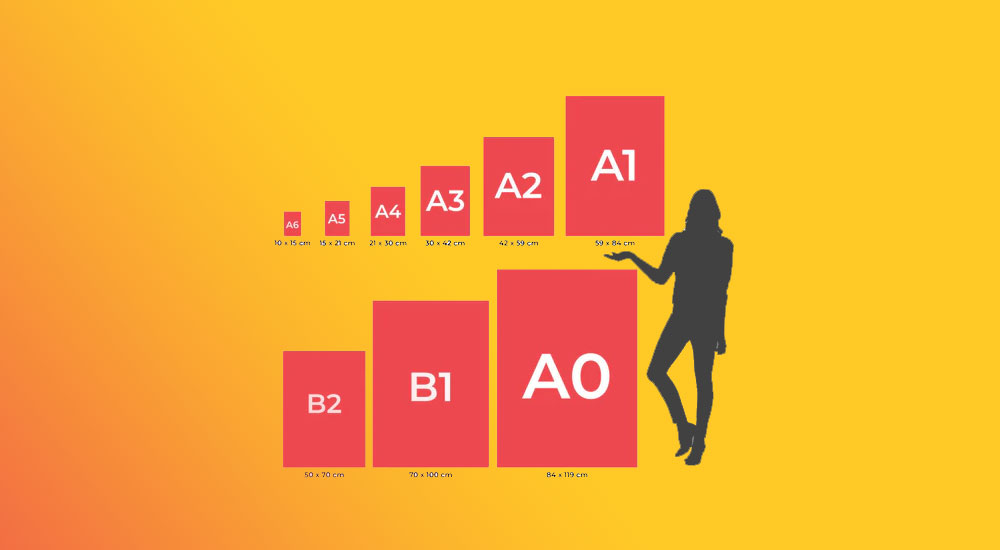
| Poster Size Name | Dimensions (inches) | Dimensions (cm) | Usage | Aspect Ratio |
|---|---|---|---|---|
| A0 | 33.1 x 46.8 | 84.1 x 118.9 | Large posters, Exhibitions | 1:1.41 |
| A1 | 23.4 x 33.1 | 59.4 x 84.1 | Smaller posters, Indoors | 1:1.41 |
| A2 | 16.5 x 23.4 | 42.0 x 59.4 | Small posters, Notices | 1:1.41 |
| A3 | 11.7 x 16.5 | 29.7 x 42.0 | Flyers, Presentations | 1:1.41 |
| A4 | 8.3 x 11.7 | 21.0 x 29.7 | Handouts, Small Notices | 1:1.41 |
| B0 | 39.4 x 55.7 | 100.0 x 141.4 | Largest standard size posters | 1:1.41 |
| B1 | 27.8 x 39.4 | 70.7 x 100.0 | Outdoor advertising | 1:1.41 |
| Movie | 27 x 40 | 68.6 x 101.6 | Movie posters | 1:1.48 |
| Bus Stop (Bus Shelter) | 40 x 60 | 101.6 x 152.4 | Outdoor advertising | 1:1.50 |
| Billboard | 48 x 96 | 121.9 x 243.8 | Large-scale advertising | 1:2.00 |
What are the standard poster sizes for printing?
ISO A-series dominates global markets: A0 (841 × 1189 mm), A1 (594 × 841 mm), A2 (420 × 594 mm), A3 (297 × 420 mm).
North American standards include 18 × 24 inches, 24 × 36 inches, and the classic 27 × 40 inches movie poster format used since the 1980s.
Commercial printers maintain ±3mm cutting tolerances. Bleed areas require 3-5mm extensions beyond trim lines to prevent white edges after cutting.
Print shops follow these specifications because standardized paper formats reduce waste and lower production costs by 20-30% compared to custom dimensions.
ISO A-Series Standards
A-series sizes use the golden ratio principle (1:√2 aspect ratio).
Each size represents exactly half the area of the previous size. A1 is half of A0, A2 is half of A1, maintaining consistent proportions when scaled.
European commercial printing defaults to these dimensions. Most design software includes A-series presets in document templates.
North American Poster Formats
The 18 × 24 inch format serves retail displays and classroom posters.
24 × 36 inches handles trade shows, events, and gallery exhibitions. Movie theaters use 27 × 40 inches for lobby displays (the “one-sheet” standard).
These measurements don’t align with ISO standards, creating conversion challenges for international printing projects.
Commercial Printing Tolerances
Professional print facilities accept dimensional variance up to 3mm on any edge.
Bleed requirements vary: digital printing needs 3mm minimum, offset printing requires 5mm. This extra space gets trimmed after printing to ensure alignment reaches the edge.
Text and logos should stay 10mm inside the trim line (the “safety zone”) to prevent accidental cropping.
Poster Size Categories by Application
What poster sizes work best for different display purposes?
Small formats (A4-A3) suit indoor retail displays viewed from 3-5 feet.
Medium formats (A2, 18×24 inches) handle event advertising where viewers stand 6-10 feet away. Large formats (A1, A0, 24×36 inches) serve trade shows and outdoor settings with 10-20 foot viewing distances.
Billboard dimensions (14×48 feet) require special large-format printing equipment and different resolution specifications than standard posters.
Small Format Posters

A3 (11.7 × 16.5 inches) and A4 (8.3 × 11.7 inches) work for point-of-sale displays in retail environments.
Minimum DPI requirements: 300 for professional results. Lower resolution creates visible pixelation at close viewing distances.
Coffee shops, offices, and indoor bulletin boards commonly use these dimensions because standard desktop printers handle them without specialized equipment.
Medium Format Posters
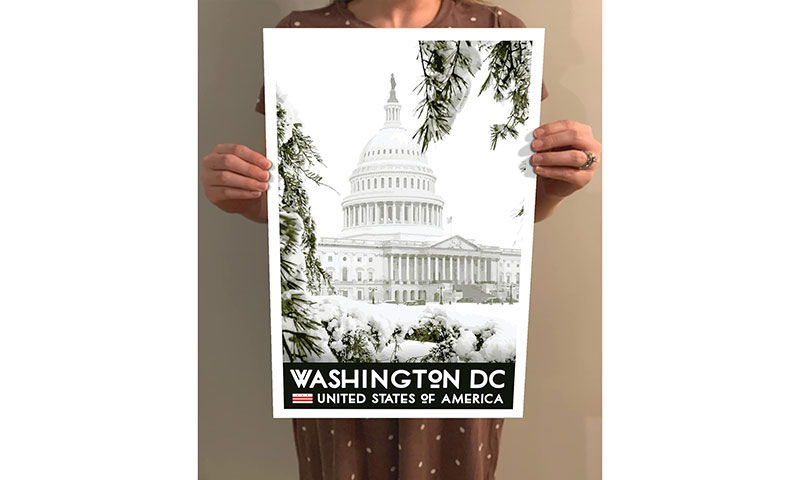
A2 (16.5 × 23.4 inches) and 18 × 24 inches serve event promotion, gallery displays, and conference materials.
Viewing distances of 5-8 feet determine optimal text sizing. Body text needs 16pt minimum; headlines should reach 36-48pt for readability.
Typography choices matter more at this size. Sans-serif fonts maintain legibility better than decorative options for informational content.
Large Format Posters
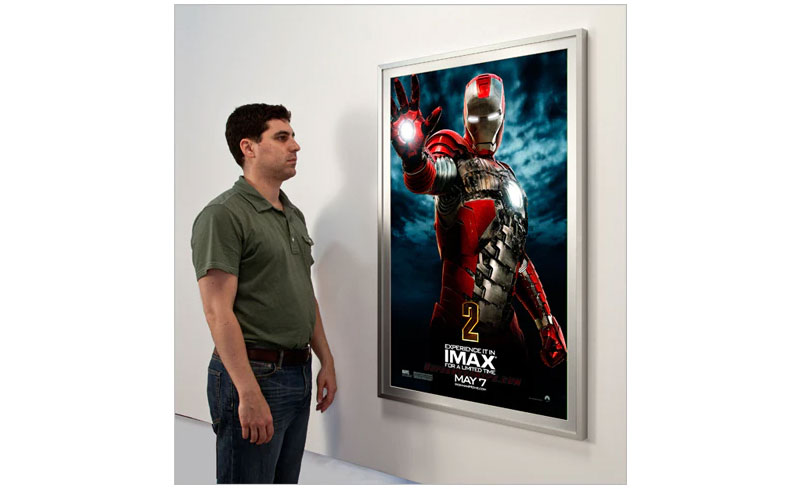
A1 (23.4 × 33.1 inches), A0 (33.1 × 46.8 inches), and 24 × 36 inches dominate trade show booths and outdoor advertising installations.
Wide-format printers handle these dimensions. Ink coverage affects production costs-solid backgrounds cost 40% more than designs with white space.
Visual hierarchy becomes critical at this scale. A single focal point should dominate the composition, readable from 15-20 feet away.
Billboard Specifications
Standard billboard sizes: 14 × 48 feet (bulletin), 10.5 × 36 feet (poster panel), 12 × 25 feet (junior poster).
Resolution requirements drop dramatically. 10-20 DPI suffices because viewers see these from 50+ feet at highway speeds.
Design principles shift entirely. Maximum 7 words total. One massive image. High contrast colors only.
File sizes reach 500MB-2GB due to physical dimensions, even at low resolution. Vector graphics prevent quality loss at extreme scales.
Custom Poster Size Options
Can poster sizes be customized for specific requirements?
Digital printing technology accommodates non-standard dimensions between 8-60 inches wide, limited only by printer capabilities and paper roll capacity.
Wide-format printers max out at 60 inches for desktop models, 120+ inches for industrial machines.
Custom sizing increases per-unit costs 15-40% versus standard dimensions because it creates paper waste and requires manual cutting adjustments.
Digital Printing Capabilities
Modern wide-format printers handle continuous lengths up to 150 feet from paper rolls.
Maximum width varies by equipment: 24″, 36″, 44″, 60″ represent common printer sizes in professional shops. Anything wider requires specialized industrial machines costing $50,000+.
Minimum custom poster size: typically 6 × 8 inches. Smaller dimensions waste too much paper on feed/bleed margins.
Aspect Ratio Adjustments
Aspect ratios preserve image proportions when resizing. Common ratios: 2:3 (standard print), 16:9 (digital displays), 1:1 (square format).
Changing from one ratio to another crops content. Converting 16:9 to 4:3 removes 25% of horizontal content or adds black bars.
Design software calculates this automatically, but photographers and designers need to anticipate cropping when shooting or creating artwork for specific dimensions.
The rule of thirds helps position key elements safely inside various aspect ratios.
Cost Implications
Custom dimensions increase waste. A 23 × 35 inch custom poster wastes 15-20% more paper than a standard 24 × 36 inch print.
Premium pricing applies: expect $3-8 extra per poster for non-standard sizes. Bulk orders (100+ units) reduce this penalty to 10-15% above standard pricing.
Some print shops refuse custom dimensions entirely, preferring to focus on high-volume standard sizes for efficiency.
Movie Poster Size Standards
What are the official movie poster dimensions?
The “one-sheet” movie poster measures 27 × 40 inches (686 × 1016 mm), standardized by the Motion Picture Association in 1910 for theater lobby displays.
Bus shelter advertisements use 40 × 60 inches. Theatrical standees reach 41 × 81 inches for life-size character displays.
International markets maintain different specifications that don’t convert cleanly to Imperial measurements.
One-Sheet Standard
27 × 40 inches became the theatrical standard because it fit existing poster cases in 1900s movie palaces.
Modern theater lobbies still use this dimension. Poster collecting markets value one-sheets higher than other formats due to cultural significance and scarcity.
Poster design for movies follows strict composition rules: title treatment occupies bottom third, key art dominates upper two-thirds, billing block runs along the bottom edge.
International Movie Poster Formats
UK quad posters measure 30 × 40 inches (762 × 1016 mm), oriented horizontally unlike vertical US one-sheets.
Japanese B2 posters: 20.3 × 28.7 inches (515 × 728 mm). These often feature alternative artwork not used in Western markets.
European markets generally use A1 (594 × 841 mm) or custom dimensions near that size, creating conversion headaches for international film distribution.
Bus Shelter and Outdoor Formats
Bus shelter posters standardized at 40 × 60 inches to fit existing advertising frames in urban transit systems.
These use backlit displays, requiring special translucent printing materials and different color theory considerations. RGB designs look different when backlit versus reflective surfaces.
CMYK conversions for backlit displays need saturation adjustments of 10-15% to compensate for light transmission effects.
Digital Poster Size Requirements
What dimensions should digital posters use for online display?
Digital posters use pixel-based dimensions instead of inches or millimeters.
Social media platforms enforce specific sizes: Instagram posts (1080 × 1080 px), Pinterest pins (1000 × 1500 px), Facebook ads (1200 × 628 px). Each platform crops or rejects images outside these specifications.
Resolution requirements differ entirely from print. Screens need 72-96 PPI, while print requires 300 DPI minimum for sharp output.
Social Media Platform Specifications
Instagram feed posts: 1080 × 1080 px (square), 1080 × 1350 px (portrait), 1080 × 566 px (landscape).
Pinterest demands vertical formats. 1000 × 1500 px (2:3 ratio) performs best in feeds, though the platform accepts up to 1000 × 2100 px for infographics.
Twitter/X optimal size: 1200 × 675 px (16:9 ratio). Facebook event covers: 1920 × 1005 px.
Web Display Considerations
Responsive design requires multiple image sizes for different screen resolutions.
Retina displays need 2× pixel density. A 600px wide image needs a 1200px source file to appear sharp on high-DPI screens.
JPEG compression reduces file sizes by 60-80% with minimal visible quality loss. PNG maintains transparency but creates files 3-5× larger than equivalent JPEGs.
File Format Selection
Bitmap formats (JPEG, PNG) work for photographs and complex gradients.
Vector formats (SVG, PDF) scale infinitely without quality degradation. Perfect for text-heavy posters and geometric designs.
File size targets: under 500KB for web posters to prevent slow loading. Mobile connections struggle with anything exceeding 1MB.
Poster Size Selection Criteria
How do you choose the right poster size?
Viewing distance dictates minimum dimensions using the formula: poster height (inches) = viewing distance (feet) × 0.55.
Content density matters. Text-heavy designs need larger formats for readability. Image-focused posters work in smaller sizes.
Budget constraints limit options since large-format printing costs $8-15 per square foot, while small posters run $0.50-2 per unit.
Viewing Distance Calculations
10-foot viewing distance requires 5.5-inch minimum poster height for comfortable reading.
Highway billboards viewed from 300+ feet need 8-10 foot tall letters. Indoor retail posters viewed from 5 feet work fine at 18 × 24 inches.
Typography size scales with poster dimensions. Minimum body text: 1/100th of poster height.
Content Density Analysis
Text-heavy informational posters need 24 × 36 inches minimum to maintain 14pt+ body text.
Image-dominant designs compress successfully into smaller formats. A photograph with a single headline works at 11 × 17 inches.
White space requirements increase with poster size to prevent cluttered appearance at large dimensions.
Budget and Production Factors
Small format printing (A4-A3): $0.50-3 per poster in quantities of 100+.
Medium format (18×24, A2): $3-8 per unit. Large format (24×36, A1, A0): $8-25 per unit depending on material and finishing.
Digital printing handles small quantities economically. Offset printing requires 500+ unit minimum but drops per-unit costs by 40-60%.
Display Location Requirements
Indoor venues limit maximum dimensions. Standard door width (36 inches) caps practical poster width at 30 inches to allow installation clearance.
Outdoor installations need weather-resistant materials. Vinyl, polycarbonate, or laminated paper withstands rain and UV exposure beyond 6 months.
Temporary displays (1-4 weeks) use paper stock. Permanent installations (6+ months) require rigid substrates like foam board or aluminum composite.
Poster Size and Aspect Ratio Relationships
What aspect ratios work with common poster sizes?
Aspect ratios express proportional relationships as simplified fractions: 24 × 36 inches = 2:3 ratio, 18 × 24 inches = 3:4 ratio.
ISO A-series maintains constant √2 ratio (1:1.414) across all sizes from A0 to A10.
Cropping between different ratios removes content. Converting 16:9 to 4:3 loses 25% of horizontal area or adds empty bars.
Common Ratio Standards
Movie posters use approximately 2:3 ratio (27:40 actual). Poster design traditions favor vertical orientations for better wall display.
Digital displays prefer 16:9 (widescreen) or 9:16 (mobile vertical). Square formats (1:1) dominate social media feeds due to Instagram’s influence.
Golden ratio (1:1.618) appears in 24 × 39 inches custom sizes, though few printers stock this dimension.
Maintaining Proportions
Scale and proportion preservation prevents image distortion when resizing.
Design software automatically calculates constrained proportions when holding Shift while dragging corners. Manual ratio entry risks stretching.
Framing standard sizes (16×20, 18×24, 24×36 inches) match common poster dimensions, eliminating custom frame costs of $50-150.
Conversion Challenges
Aspect ratio mismatches create cropping decisions. Photographers should shoot with final poster ratio in mind.
Letterboxing (black bars) maintains full image but wastes poster space. Cropping loses content but fills the frame.
Symmetry and balance in compositions survive ratio changes better than asymmetric layouts with edge-placed elements.
Printing Specifications by Poster Size
What print settings differ across poster sizes?
Resolution requirements scale with dimensions: A4 at 300 DPI = 2480 × 3508 pixels, A0 requires 9933 × 14043 pixels at 300 DPI.
Color mode selection matters. CMYK serves offset printing, RGB fits digital displays.
Paper weight affects durability and perceived quality. 80 lb glossy works for indoor temporary posters, 14pt cardstock handles light outdoor use.
Resolution Standards
300 DPI minimum for professional print quality at arm’s length viewing distances.
Large posters viewed from 10+ feet tolerate 150 DPI without visible quality loss. Billboard printing uses 10-20 DPI due to extreme viewing distances.
Pixel density calculations: multiply final inches by target DPI. 24 × 36 inch poster at 300 DPI needs 7200 × 10800 pixel source file.
Color Management
CMYK four-color process handles most printing. Pantone spot colors cost extra ($0.50-2 per color) but ensure brand color accuracy within ±2 Delta E.
Color psychology influences effectiveness, but printing capabilities limit color palettes. CMYK gamut excludes certain vibrant hues achievable in RGB.
Complementary color schemes create maximum contrast, while analogous colors produce harmonious results in print design.
Material Selection
Paper weights: 80 lb gloss (thin, budget), 100 lb gloss (standard quality), 14pt cardstock (premium).
Vinyl materials withstand outdoor weather 12+ months. Costs $4-8 per square foot versus $1-3 for paper.
Lamination adds $1-3 per poster but increases lifespan 300%. Matte laminate reduces glare in brightly-lit spaces.
International Poster Size Standards
Do poster sizes vary between countries?
ISO 216 governs European poster dimensions through A-series and B-series measurements in millimeters.
North America follows ANSI standards with inch-based measurements incompatible with ISO without conversion.
Japan maintains JIS B-series (B0: 1030 × 1456 mm, B1: 728 × 1030 mm) positioned between ISO A and B series.
Regional Standard Differences
ISO A-series: used in Europe, Asia (except Japan), South America, Africa. Based on A0 = 1 square meter.
ANSI sizes: US, Canada, parts of Mexico. Based on 8.5 × 11 inch letter size, scaled proportionally.
Conversion creates non-standard dimensions. 24 × 36 inches equals 609.6 × 914.4 mm (not matching any ISO size).
Cross-Border Printing Challenges
Design templates need regional versions. A poster optimized for A1 won’t fit 24×36 inch frames.
Shipping costs increase with size. A0 posters require $25-40 international shipping versus $8-15 for A3.
Grid systems and baseline grids adapt to different size standards, affecting typographic hierarchy decisions.
Adaptation Strategies
Create designs with 10% flexible edge zones to accommodate multiple standard sizes without content loss.
Use vector graphics and proportional font spacing to enable clean scaling between size systems.
Test prints at multiple sizes before bulk production. A layout working at A1 might fail at 18×24 inches due to different aspect ratios.
Poster Size Cost Factors
How does poster size affect printing costs?
Printing costs scale with surface area: 18 × 24 inches (432 sq in) costs 60% of 24 × 36 inches (864 sq in) at identical specifications.
Quantity discounts apply. 100-unit orders cost 40-50% less per unit than single prints.
Finishing options (lamination, mounting, framing) add 40-200% to base printing costs depending on materials selected.
Size-Based Pricing
Small format (A4-A3): $0.50-3 per unit in quantities of 50+.
Medium format (A2, 18×24): $3-8 per unit. Large format (A1, A0, 24×36): $8-25 per unit.
Jumbo sizes (40×60+) require specialized equipment, adding $50-150 setup fees plus $15-30 per square foot.
Material Cost Variations
Standard paper: $0.10-0.50 per square foot. Canvas: $2-4 per square foot. Metal prints: $15-25 per square foot.
Premium substrates multiply costs 3-10× versus basic paper stock.
Fonts for posters don’t affect printing costs, but licensing fees apply when using commercial typefaces ($20-200 per font family).
Finishing Premium
Lamination: $1-3 per poster (adds 300% lifespan). UV coating: $0.50-1.50 per poster.
Foam board mounting: $5-15 depending on size. Aluminum composite mounting: $15-40 for rigidity in outdoor installations.
Custom framing: $50-250 depending on frame quality and poster size. Standard size frames cost $15-40 at retail.
Poster Size Templates and Tools
What tools help determine poster sizes?
Adobe Illustrator includes artboard presets for international standard sizes (A-series, ANSI, custom).
Photoshop provides document templates with proper bleed settings and resolution guidelines for each size category.
Online calculators convert between measurement units, calculate pixel requirements, and determine viewing distance recommendations.
Design Software Presets
Illustrator’s “New Document” dialog lists 40+ preset sizes including movie posters, trade show displays, and international standards.
Design templates prevent common mistakes like insufficient resolution or missing bleeds.
Making posters becomes faster using templates with pre-established graphic design principles like proximity and repetition.
Calculation Tools
DPI calculators determine required pixel dimensions for target print sizes.
Aspect ratio calculators prevent distortion when converting between dimension standards.
Cost estimators on print shop websites factor size, quantity, materials, and finishing into instant quotes.
Physical Prototyping
Cardboard mockups cost under $5 for scale testing before production.
Test prints at 25-50% scale verify visual hierarchy readability and color palette effectiveness.
Mood boards help visualize poster size in actual display context, preventing scale misjudgments that plague first-time poster creators.
FAQ on Poster Sizes
What is the most common poster size?
24 × 36 inches dominates North American markets for commercial and retail displays. This dimension fits standard frames, handles medium viewing distances effectively, and balances printing costs with visual impact for most applications.
How do I calculate the right poster size for my space?
Use the viewing distance formula: poster height (inches) = viewing distance (feet) × 0.55. Measure from where viewers typically stand to your wall, multiply by 0.55, and that’s your minimum poster height requirement.
What’s the difference between A1 and 24×36 poster sizes?
A1 measures 594 × 841 mm (23.4 × 33.1 inches) following ISO standards. 24×36 inches (609.6 × 914.4 mm) follows North American ANSI specifications. They’re close but not identical-frames designed for one won’t fit the other.
Do poster sizes affect printing costs significantly?
Absolutely. Printing costs scale with surface area. A 24×36 inch poster costs 60% more than 18×24 inches at identical specifications. Custom dimensions add 15-40% premium due to paper waste and manual cutting adjustments.
What resolution do I need for different poster sizes?
Print quality requires 300 DPI for posters viewed up close (A4-A2 sizes). Medium distance viewing tolerates 150 DPI. Large format posters and billboards viewed from 10+ feet work fine at 72-100 DPI.
Can I print digital designs at any poster size?
Pixel dimensions limit maximum print size. A 3000 × 4500 pixel image prints sharply at 10 × 15 inches (300 DPI) but looks pixelated at 24 × 36 inches. Calculate required pixels by multiplying target dimensions by your target DPI.
What poster size works best for movie posters?
The standard “one-sheet” measures 27 × 40 inches, established by Motion Picture Association specifications. This format fits traditional theater poster cases and remains the collector’s preferred dimension for authentic theatrical releases.
Are custom poster sizes more expensive than standard sizes?
Custom dimensions increase costs 15-40% per unit because they create paper waste and require manual setup adjustments. Standard sizes (18×24, 24×36, A-series) maximize paper utilization and benefit from automated production workflows.
What’s the largest poster size I can print at home?
Desktop printers max out at 13 × 19 inches. Professional wide-format printers handle up to 60 inches wide with unlimited length from paper rolls. Anything beyond 60 inches requires industrial printing equipment.
How do international poster sizes differ from US sizes?
Europe and most countries use ISO A-series (A0, A1, A2) measured in millimeters. North America uses inch-based ANSI standards (18×24, 24×36). The dimensions don’t convert cleanly-A1 doesn’t equal any standard US size.
Conclusion
Understanding poster sizes transforms how you approach print projects, from selecting dimensions that match viewing distances to avoiding costly custom format premiums.
Standard measurements like A-series and ANSI specifications exist because they reduce waste and streamline production workflows.
Resolution requirements, aspect ratios, and material choices directly impact both visual quality and budget. A 24 × 36 inch poster at 300 DPI delivers professional results for medium-distance viewing, while billboard formats tolerate dramatically lower resolution due to extended viewing distances.
Whether you’re designing movie posters, retail displays, or event materials, matching poster dimensions to your specific application prevents reprints and maximizes impact.
Choose standard formats when possible, calculate viewing distance requirements, and invest in proper resolution for your target size.
If you liked this article about poster sizes, you should check out this article about how to make a poster.
There are also similar articles discussing how to make a beer poster, how to create a poster in PowerPoint, how to make a wanted poster, and making a poster in Word.
And let’s not forget about articles on how to make a movie poster, how to hang a poster, how to frame a poster, and how to flatten a poster.

Renowned for his expertise in logo design and visual branding, Bogdan has developed a multitude of logos for various clients.
His skills extend to creating posters, vector illustrations, business cards, and brochures. Additionally, Bogdan's UI kits were featured on marketplaces like Visual Hierarchy and UI8.
He also wrote in the past years on sites like Design Your Way, WebDesignerDepot, WPDean, Designmodo, Speckyboy, Slider Revolution, and more.
- Canva vs Figma: Which Should Designers Actually Use? - 6 August 2026
- The Dualshockers Logo History, Colors, Font, And Meaning - 4 August 2026
- Elegant Cormorant Garamond Font Pairing Inspiration - 3 August 2026

Bogdan Sandu is a seasoned designer who has been designing websites since 2008. Renowned for his expertise in logo design and visual branding, Bogdan has developed a multitude of logos for various clients. His skills extend to creating posters, vector illustrations, business cards, and brochures. Additionally, Bogdan's UI kits were featured on marketplaces like Visual Hierarchy and UI8. He also wrote in the past years on sites like Design Your Way, WebDesignerDepot, WPDean, Designmodo, Speckyboy, Slider Revolution, and more.
You Might Also Like