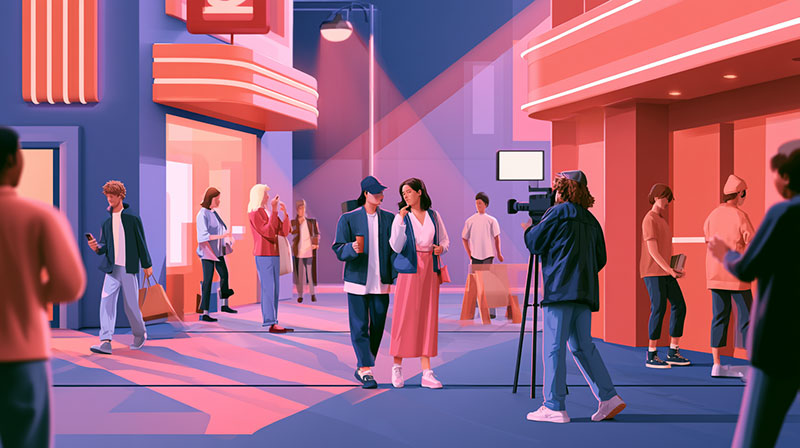
Animation can make abstract ideas easier to follow, especially when a message involves software, data, or invisible processes. Still, some brand moments need a real face, measured breathing, natural posture, and physical surroundings. Live-action video carries authority when trust must form quickly. Viewers read the facial expressions, hand movements, lighting, and the environment before every line lands. Those cues make a message feel witnessed, not manufactured.
Trust Requires Real Faces
For founder updates, patient guidance, hiring films, or customer stories, live action video production can capture voice, expression, product handling, and surroundings in one credible frame. This format helps viewers assess sincerity through eye contact, pace, body language, and environmental context, without forcing them to imagine who stands behind the claim.
Products Need Physical Proof
Some products need their weight, scale, texture, or real-world functionality demonstrated before buyers can feel confident about investing in them. A screen tool may animate cleanly, but a device, garment, package, or machine benefits from demonstration. Shoppers want to see grip, fit, finish, and movement. Camera footage answers those practical concerns with fewer words.
Services Need Human Context
Service brands often sell reassurance before any contract begins. A real team, consultation room, intake process, or workspace can reduce hesitation. Animation may explain steps with tidy timing, but it cannot show calm presence, careful listening, or steady attention as directly. For clinics, schools, agencies, and local providers, those signals matter.
Emotion Needs Presence
Emotion lives in small physical changes. A pause, a smile, a careful breath, or a softened expression can say more than a polished line. That matters for health, finance, education, family, and community messages. Animation can feel warm, but live footage often creates a sense of closeness faster when empathy needs to resonate.
Credibility Needs Evidence
Many brands claim quality, care, speed, or expertise. Real footage can support those claims with visible proof. A clean treatment room, a trained technician, an active classroom, or an organized production floor shows standards in motion. Viewers still make their own judgments, but the brand gives concrete signals rather than broad promises.
Testimonials Need Restraint
Customer videos work best when they feel measured and authentic. Heavy staging can make honest praise sound rehearsed. A simple interview, paired with relevant footage, often performs better than a glossy concept. The goal is not flawlessness. The goal is a credible account from someone who resembles an actual buyer.
Culture Needs Specific Detail
Hiring content, investor updates, and internal films depend on behavioral proof. Real offices, routines, rituals, and team dynamics reveal how a company functions. Animation can state values, but cameras show habits. Viewers notice whether people seem focused, hurried, comfortable, or engaged. Those observations shape belief more than broad statements about company culture.
Animation Still Has Strengths
Animation remains useful for abstract systems, invisible processes, early prototypes, or subjects that are hard to film. It can compress time, organize data, and remove visual noise. A brand should choose animation when clarity requires strict control. The stronger format depends on what the audience must believe, feel, or understand after watching.
Budget Should Follow Purpose
Live-action budgets vary depending on with location, crew size, lighting, sound, talent, editing, and revision needs. Smaller shoots can still work when the message stays focused. Larger productions make sense for multiple scenes, polished lighting, or paid media assets. Spending should support the communication goal, not pull attention away from it.
Distribution Changes the Choice
A homepage video may need warmth and authority. A product page may need proof. A sales presentation may need speed and clarity. Social clips need strong opening visuals and quick recognition. Live footage works well when a channel rewards faces, settings, and visible use. Each placement should guide length, framing, captions, and pacing.
Decision Checklist
A brand should consider live action if trust, proof, people, location, physical use, or emotional detail drives its message. Animation may be better for abstract, sensitive, imaginary, or difficult-to-film subjects. Strong campaigns can combine both. Real footage carries credibility, while animated overlays can clarify data, labels, or process steps.
Conclusion
Live-action video works best when viewers need to believe what they see. It gives products scale, services presence, teams identity, and customer stories credibility. Animation still has clear value, yet cameras capture physical detail that drawn visuals often miss. The right choice begins with the audience’s doubts, questions, or concerns. If real people and places answer that need faster, live action is usually the stronger option.

Renowned for his expertise in logo design and visual branding, Bogdan has developed a multitude of logos for various clients.
His skills extend to creating posters, vector illustrations, business cards, and brochures. Additionally, Bogdan's UI kits were featured on marketplaces like Visual Hierarchy and UI8.
He also wrote in the past years on sites like Design Your Way, WebDesignerDepot, WPDean, Designmodo, Speckyboy, Slider Revolution, and more.
- Canva vs PowerPoint: Which Is Better for Presentations? - 22 September 2026
- How to Install Fonts on Mac (Step-by-Step Guide) - 20 September 2026
- From Mockup to Code: How AI-Augmented Development Speeds Up the Design Handoff - 19 September 2026

Bogdan Sandu is a seasoned designer who has been designing websites since 2008. Renowned for his expertise in logo design and visual branding, Bogdan has developed a multitude of logos for various clients. His skills extend to creating posters, vector illustrations, business cards, and brochures. Additionally, Bogdan's UI kits were featured on marketplaces like Visual Hierarchy and UI8. He also wrote in the past years on sites like Design Your Way, WebDesignerDepot, WPDean, Designmodo, Speckyboy, Slider Revolution, and more.
You Might Also Like