


Some magazine covers get talked about for a week. Us Weekly covers get talked about for decades.
Since its relaunch as a weekly celebrity news magazine in 2000, Us Weekly has produced cover after cover that shaped how we think about Hollywood gossip, celebrity relationships, and pop culture. From the Brad Pitt and Jennifer Aniston breakup to Britney Spears’ public crisis, these newsstand covers didn’t just report entertainment news. They drove it.
But what actually makes a Us Weekly cover work? Why do some issues sell millions while others get passed over?
This article breaks down the most talked-about Us Weekly magazine covers of all time. You’ll see what made each one hit, how the cover design c
Best Us Weekly Covers
Brad Pitt & Jennifer Aniston Split (January 2005)

Why This Cover Stands Out
This is the Us Weekly cover that changed celebrity tabloid journalism forever. Brad Pitt and Jennifer Aniston had been Hollywood’s golden couple since their 2000 wedding. When the split happened, every entertainment magazine raced to cover it.
Us Weekly got there fast. And the cover lines were electric.
The issue sold massively at newsstands. It wasn’t just celebrity gossip anymore. It felt personal to millions of readers who had followed the couple for years.
The Story Behind the Cover
Pitt and Aniston announced their separation in January 2005 after seven years together. The couple released a joint statement to People magazine, but it was Us Weekly that turned the breakup into a full-blown cultural event.
Within weeks, paparazzi photos surfaced of Pitt with his Mr. & Mrs. Smith co-star Angelina Jolie in Kenya. The “love triangle” storyline wrote itself.
Us Weekly ran cover after cover about Aniston in the months that followed. The tabloid essentially created the “Sad Jen” character, a version of Aniston perpetually heartbroken and longing for children. That narrative persisted in celebrity news headlines for over a decade.
Cover Design and Layout
The anatomy of this magazine cover followed Us Weekly’s signature formula. Big, glossy celebrity photo. Bold sans-serif headlines. Bright color palette against a clean background.
The masthead sat at the top in its standard red lettering, giving way to what mattered most: the faces of America’s favorite couple, now apart.
Cultural Impact and Public Reaction
This cover turned celebrity breakup coverage into its own genre. Before Pitt-Aniston, tabloids gossiped about relationships. After it, they narrated them like soap operas.
Us Weekly’s circulation reached 1.9 million by 2007, largely on the back of this ongoing story. Competing magazines like Star, In Touch, and Life & Style all mimicked the approach. And online gossip sites like TMZ, launched the same year, pushed conversation about Hollywood couples even further.
Newsstand Performance
The Pitt-Aniston coverage became the single most profitable storyline in Us Weekly’s history at the time. Every issue featuring Jennifer Aniston on the cover sold above average. The magazine kept running variations for years. In Touch, OK!, and Star followed suit, running their own Pitt-Aniston reunion covers well into the 2020s.
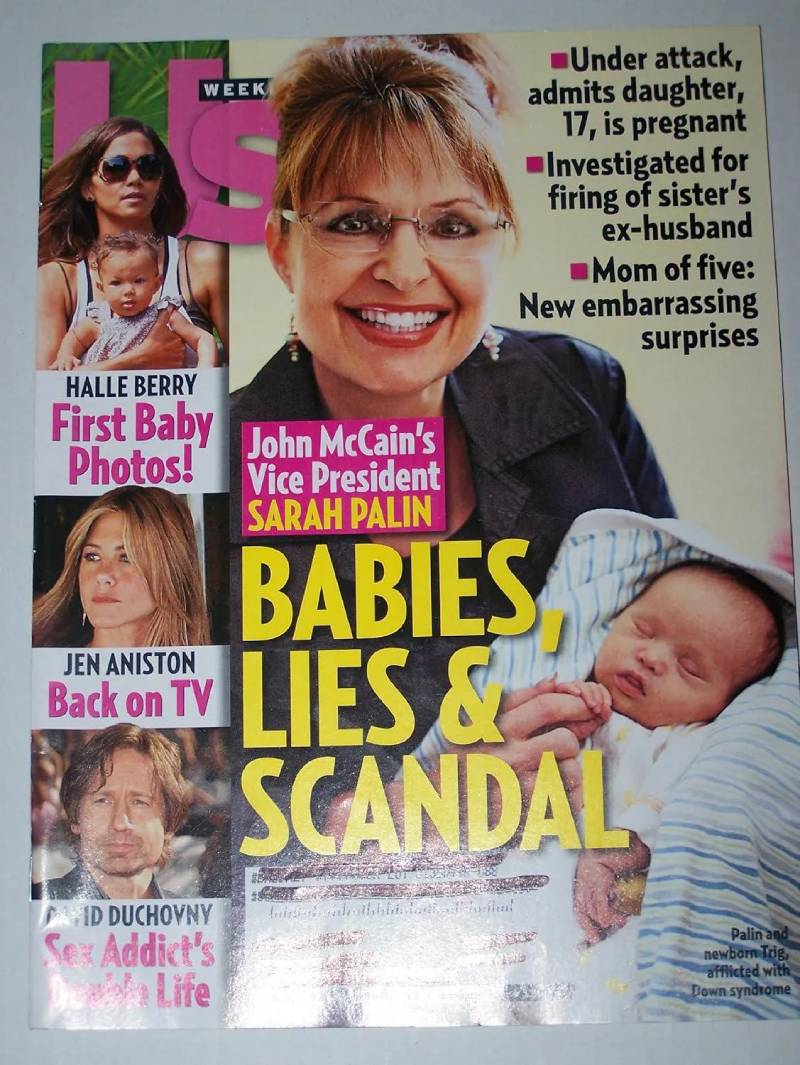
Sarah Palin: “Babies, Lies & Scandal” (September 2008)
Why This Cover Stands Out
This is the cover that cost Us Weekly over 10,000 subscribers in a single week. Putting a political figure on the front of a celebrity entertainment magazine was already unusual. The headline made it explosive.
The Story Behind the Cover
The September 5, 2008 issue featured Alaska Governor Sarah Palin with the headline “Babies, Lies & Scandal.” It landed during the Republican National Convention, right after John McCain announced Palin as his VP pick.
Senior Editor Bradley Jacobs later said the “lies” referred to bloggers who had speculated about the parentage of Palin’s child. But nothing on the cover itself made that distinction.
Readers felt blindsided. For comparison, the June 2008 issue had featured Barack and Michelle Obama with the far gentler headline “Why Barack Loves Her.”
Cover Design and Layout
The layout followed the standard Us Weekly typography playbook. Large photo. Big, punchy text. But the word choices here did the heavy lifting.
“Babies, Lies & Scandal” in bold type against Palin’s face. No softening language. No “exclusive interview” qualifier. Just three words designed to grab attention at the grocery store magazine rack.
The emphasis was placed entirely on controversy. Even the font weight felt heavier than usual.
Cultural Impact and Public Reaction
Conservative readers canceled subscriptions in droves. The backlash was swift and loud. Us Weekly ended up sending apology emails to lost subscribers and offering five free issues to win them back.
The incident proved that celebrity magazines couldn’t wade into politics without consequences. It also showed how much power a single magazine cover still held in 2008, even as digital media was rising.
Newsstand Performance
Despite losing subscribers, the issue sold well at newsstands. Controversy drives impulse buys. But the long-term subscriber loss hurt the magazine’s bottom line. It became a case study in how balance matters when you’re trying to sell entertainment to a broad audience.
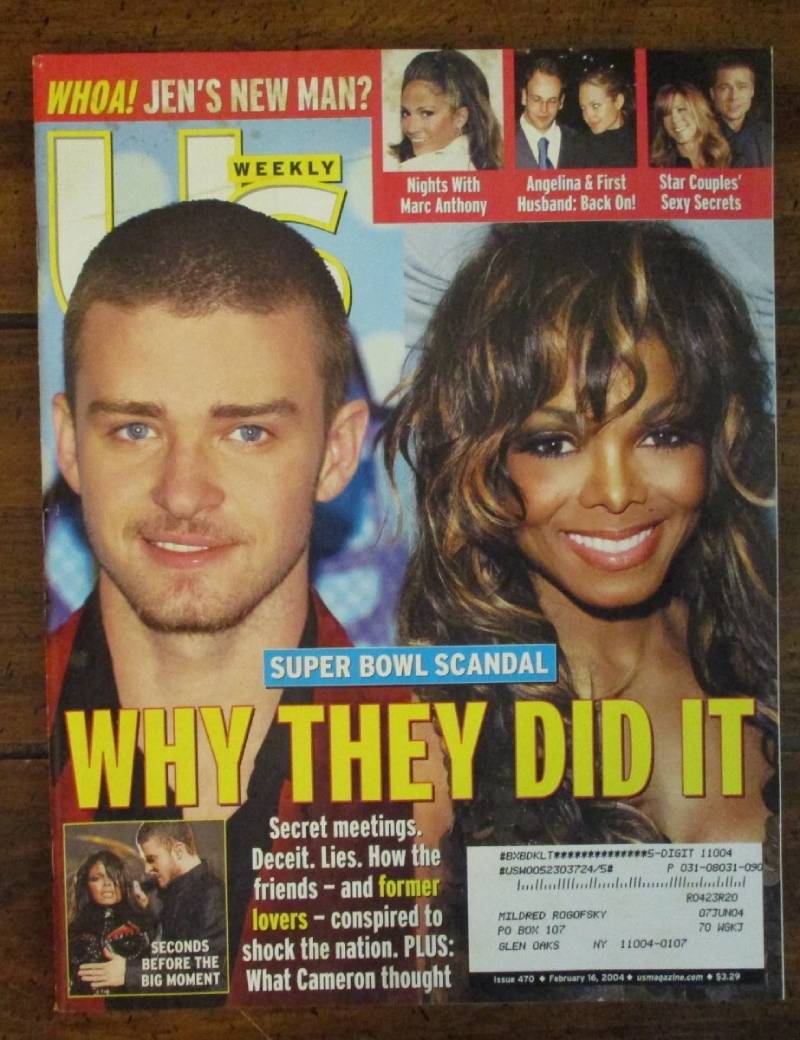
Janet Jackson Super Bowl Fallout (February 2004)
Why This Cover Stands Out
This is the best-selling Us Weekly issue ever. Janet Jackson’s Super Bowl halftime show wardrobe malfunction dominated every news cycle for weeks. And Us Weekly captured the moment better than anyone.
The Story Behind the Cover
During the Super Bowl XXXVIII halftime performance on February 1, 2004, Justin Timberlake pulled off part of Jackson’s costume, briefly exposing her. The FCC received over 500,000 complaints. CBS was fined $550,000.
Us Weekly jumped on the story immediately. The magazine had photos, quotes, and behind-the-scenes details that readers couldn’t find anywhere else at the time. Remember, this was before Twitter, before Instagram. Magazines still broke stories.
Cover Design and Layout
The cover used a high-impact celebrity photo with bold, oversized headlines. The visual hierarchy was clear: Jackson’s face first, then the headline, then secondary cover lines.
Color choices leaned into urgency. Red and yellow tones alongside the standard Us Weekly branding. The whole thing screamed “pick me up right now.”
Cultural Impact and Public Reaction
The cover arrived at the intersection of celebrity culture and national news. It wasn’t just a tabloid story. Congress held hearings. The FCC changed broadcast regulations.
Jackson’s career took a significant hit. Timberlake’s didn’t. That double standard became part of the cultural conversation for years.
Newsstand Performance
Record-breaking. The Janet Jackson cover holds the all-time sales record for a single Us Weekly issue. Newsstand copies sold out at Walmart, grocery chains, and magazine racks across the country. It proved that when entertainment news crosses into mainstream news territory, print magazines can still move enormous numbers.
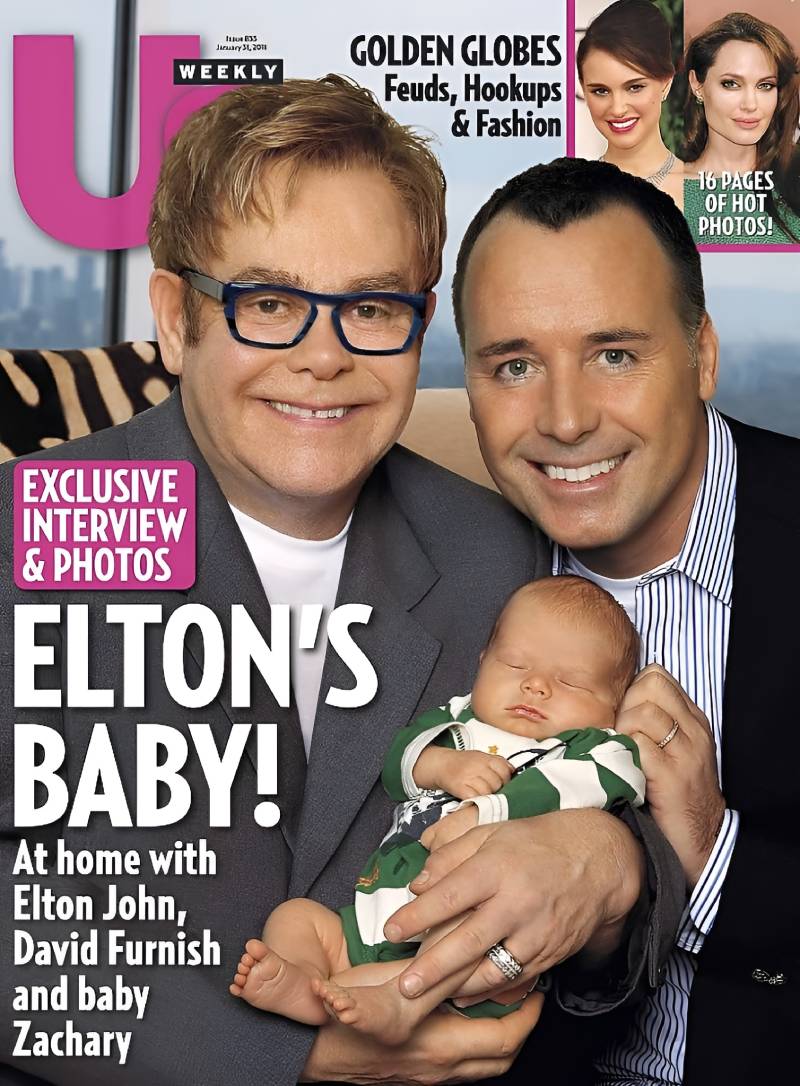
Elton John & David Furnish with Baby Zachary (January 2011)
Why This Cover Stands Out
Not because of the photo itself, which showed two parents holding their newborn son. It stands out because an Arkansas grocery chain censored it with a “Family Shield” normally used for adult content.
The Story Behind the Cover
The January 2011 issue featured Elton John and his partner David Furnish holding baby Zachary, who was born on Christmas Day via a surrogate mother. John told the magazine he’d “never felt anything like it.”
A Harps Food Store in Mountain Home, Arkansas placed an opaque shield over every copy, blocking the image from view. The shield read: “Family Shield. To protect young Harps shoppers.”
A shopper named Jennifer Huddleston photographed the shielded copies and tweeted the image. It went viral within hours.
Cover Design and Layout
The original cover was warm and simple. Two parents, one baby. Standard color palette for Us Weekly. Nothing provocative in the framing or composition.
That’s what made the censorship so jarring. There was nothing to shield children from, unless you considered a same-sex couple holding their child to be inappropriate. Which is exactly the point people made.
Cultural Impact and Public Reaction
GLAAD contacted Harps corporate immediately. Complaints flooded in from across the country. Within 24 hours, Harps President Kim Eskew issued a statement, removed the shields, and said the company’s “true intention is not to offend anyone.”
The incident became a national talking point about LGBTQ+ representation in mainstream media. It also showed how social media could hold retailers accountable almost overnight.
Newsstand Performance
The controversy boosted sales significantly. People who might not have bought the issue picked it up specifically because of the news coverage. It became one of the most talked-about iconic magazine covers of 2011.
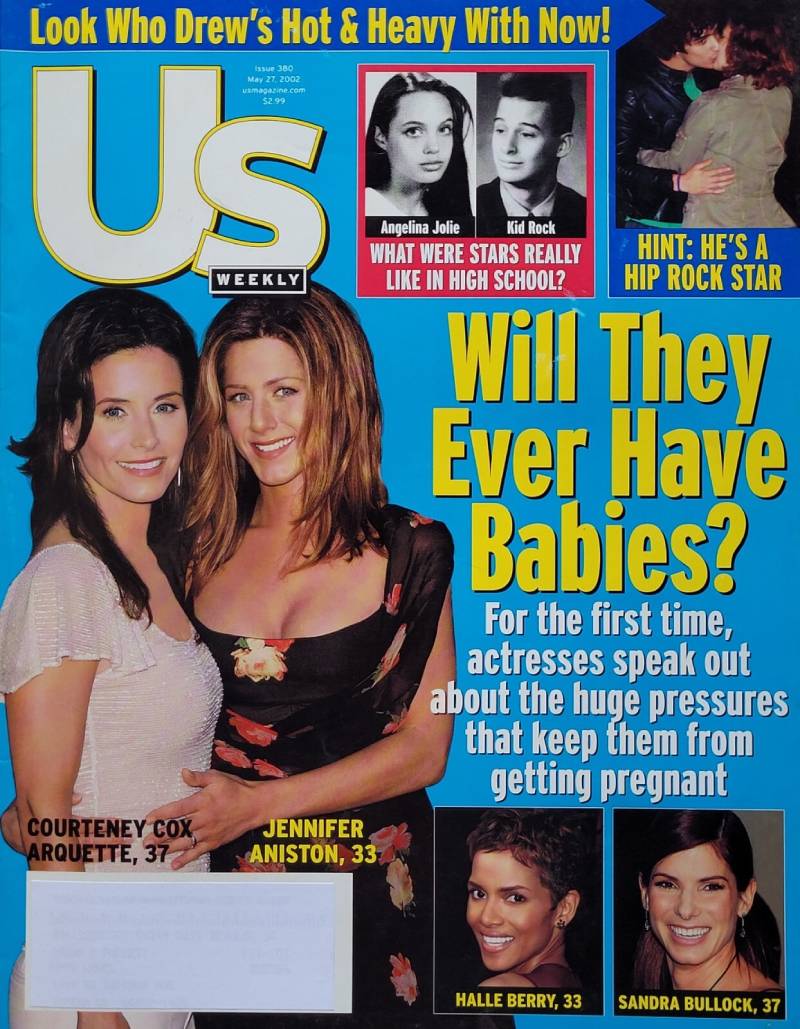
Jennifer Aniston & Courteney Cox: “Will They Ever Have Babies?” (May 2002)
Why This Cover Stands Out
This cover marked the moment Us Weekly found its voice. Under new editor Bonnie Fuller, the magazine shifted from a standard entertainment publication into something completely different. Trashy, glossy, photo-heavy, and impossible to put down.
The Story Behind the Cover
Two Friends stars on the cover with a provocative question about their personal lives. The headline promised gossip. The actual article was a reported piece about the stigma pregnant actresses face in Hollywood.
That gap between the sensational cover headline and the more thoughtful story inside became a Us Weekly signature. The covers sold copies. The content was sometimes better than you’d expect.
Cover Design and Layout
Fuller’s redesign showed everywhere. Glossier paper stock than competing tabloids. Contrast between the bright cover photo and bold headline text. The whole thing looked more like a “real” magazine than the supermarket tabloids it sat next to.
The typographic hierarchy was sharp. Main headline huge, sub-headlines smaller, and secondary cover stories running along the sides.
Cultural Impact and Public Reaction
This cover launched what became a 20-year obsession with Jennifer Aniston’s personal life. The “will she have babies” question followed Aniston through two marriages and beyond.
It also set the template for modern celebrity magazine covers. Big photo. Invasive question. Readers buy it. Repeat every week.
Newsstand Performance
Strong sales that validated Fuller’s new direction. Us Weekly’s readership jumped dramatically during this period, eventually reaching over 12 million readers per issue.
Barack & Michelle Obama: “Why Barack Loves Her” (June 2008)
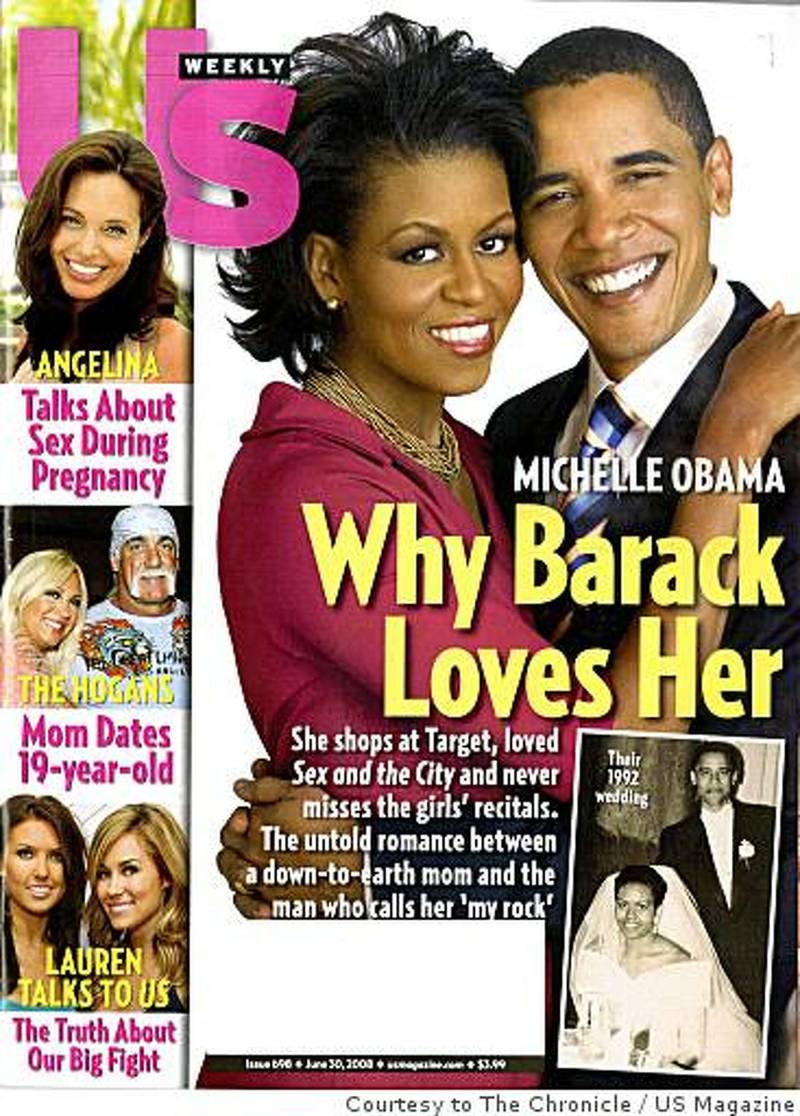
Why This Cover Stands Out
A sitting U.S. senator running for president on the cover of a celebrity gossip magazine. That was new territory. And the tone was the polar opposite of what came three months later with Sarah Palin.
The Story Behind the Cover
The June 19, 2008 issue framed the Obamas as a love story. “Why Barack Loves Her” read more like a celebrity couple profile than a political feature. The magazine treated them as A-list celebrities first, politicians second.
It was a smart editorial choice that matched the cultural moment. Obama was a phenomenon, and the couple had genuine star power.
Cover Design and Layout
The photo showed Barack and Michelle together, smiling, looking like any other attractive Hollywood couple. The color choices were warm. The design felt aspirational rather than scandalous.
Compared to the typical Us Weekly cover that leans on drama and conflict, this one was remarkably positive. No exclamation points. No “exclusive” or “shocking.” Just a simple love story headline.
Cultural Impact and Public Reaction
The Obama cover sold well and drew mostly positive attention. But it created a direct contrast with the Palin cover that followed in September, making that issue’s backlash even more intense.
It also proved that celebrity magazines could cover politics successfully, as long as they found the celebrity angle first.
Newsstand Performance
Above-average sales. The Obamas brought new readers to Us Weekly who might not normally pick up a tabloid magazine. The issue attracted attention from mainstream news outlets, which gave it extra visibility.
Britney Spears: “Help Me” (March 2007)
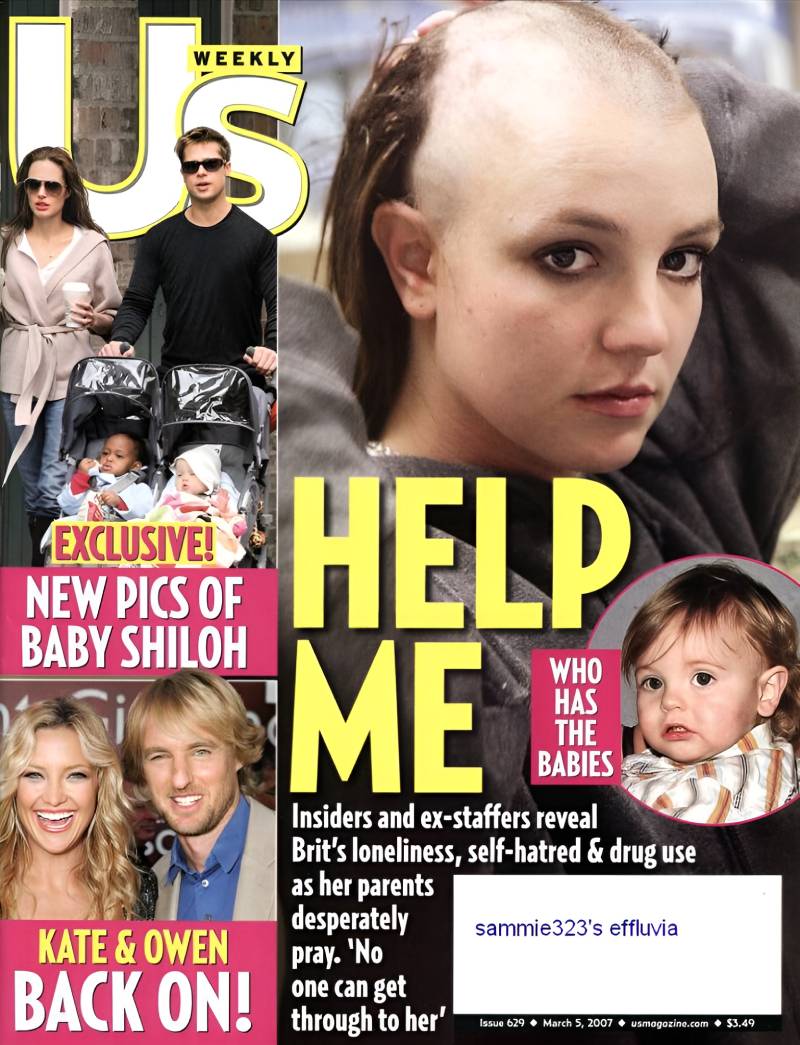
Why This Cover Stands Out
Us Weekly ran Britney Spears on its cover more than almost any other celebrity during 2007. But the “Help Me” issue was the one that captured a public crisis in real time. A bald Britney with a vacant expression stared out from magazine racks everywhere.
The Story Behind the Cover
On February 16, 2007, Spears walked into a Tarzana, California hair salon and shaved her own head after the stylist refused to do it. Over 70 paparazzi photographers were outside documenting every moment.
Days later, she attacked a paparazzo’s car with an umbrella.
Us Weekly ran the “Help Me” cover with a photo of the newly bald singer. The magazine covered her custody battle with Kevin Federline, her brief rehab stints, and what they called her “out-of-control behavior.”
Cover Design and Layout
The cover was deliberately stark. Spears’ face filled most of the frame. The “Help Me” headline was simple and direct. No decorative elements. No secondary stories competing for attention.
The focal point was Britney’s expression. Everything else on the cover existed to support that single image. It was effective print design in the most uncomfortable way possible.
Cultural Impact and Public Reaction
This cover, and the dozens that followed throughout 2007-2008, fueled a media frenzy that many now view as exploitative. Us Weekly’s coverage contributed to a narrative that Spears needed to be “saved,” which eventually led to the conservatorship her father controlled for 13 years.
The documentary Framing Britney Spears (2021) directly addressed how magazines like Us Weekly profited from her breakdown. Wesley Morris, formerly of Us Weekly, acknowledged in the film that the coverage was deeply problematic.
Newsstand Performance
Every Britney cover sold. The magazine’s circulation hit its peak during this period, partly because of the constant Spears coverage. It was profitable. But looking back, the human cost is hard to ignore.
Brad Pitt (1995)

Why This Cover Stands Out
Before Us Weekly became the tabloid powerhouse it is today, the magazine was still a monthly entertainment publication in the mid-1990s. The Brad Pitt cover from 1995 represents that earlier era, when the magazine functioned more like a traditional People Magazine competitor.
The Story Behind the Cover
1995 was Pitt’s biggest year. Seven and 12 Monkeys both released, cementing him as Hollywood’s top leading man. The Us cover capitalized on that moment, featuring a young Pitt at the height of his star power.
The magazine was still called just “Us” at that point. It wouldn’t become “Us Weekly” until the 2000 relaunch under Jann Wenner’s direction.
Cover Design and Layout
The 1990s layout was simpler. Less aggressive typography. Fewer cover lines. The design aesthetic leaned closer to minimalist design compared to the cluttered covers that came later.
Pitt’s photo dominated, with clean text and limited headlines. It looked like a proper entertainment magazine, not a supermarket tabloid.
Cultural Impact and Public Reaction
The cover captured a pre-internet celebrity culture where magazine photos were often the primary way fans connected with their favorite actors. No Instagram. No Twitter. Just glossy print.
Newsstand Performance
Solid for the era. Brad Pitt was a reliable cover seller throughout the 1990s across multiple publications, from Rolling Stone to Vanity Fair.
Kevin Costner: Post-Divorce Exclusive (September 2023)
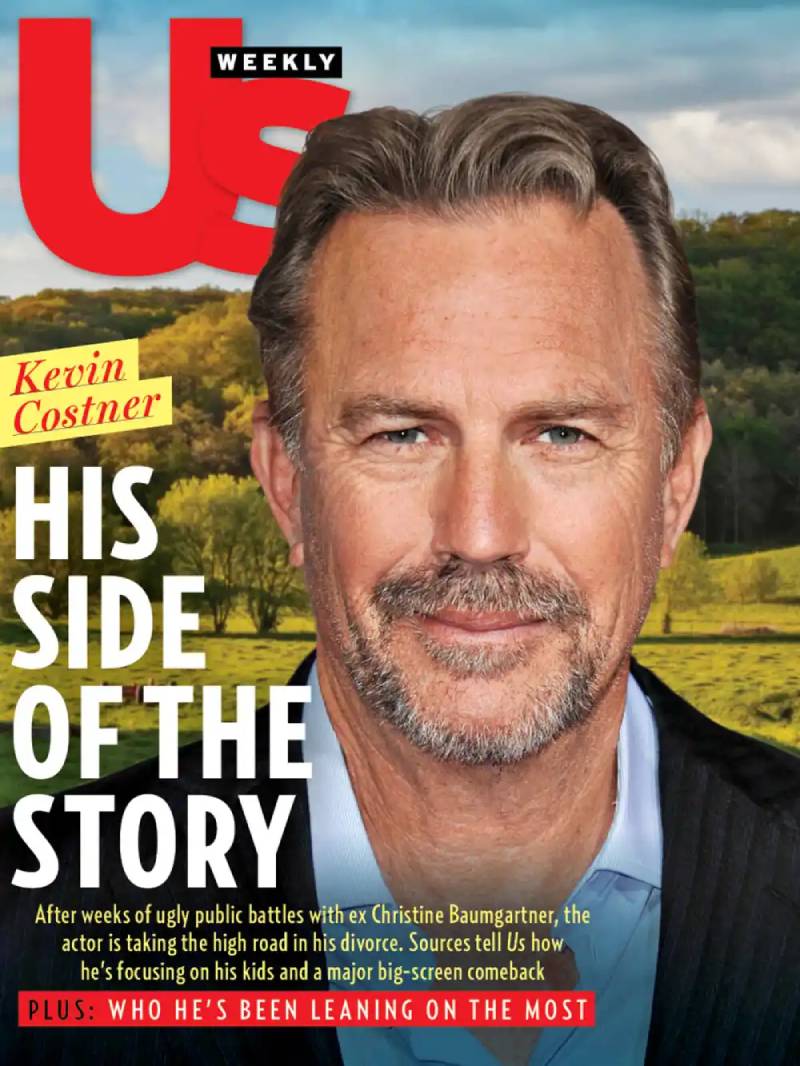
Why This Cover Stands Out
Kevin Costner’s messy divorce from Christine Baumgartner dominated entertainment news in 2023. Us Weekly secured exclusive coverage that connected with readers who remembered Costner from his 1990s peak and his comeback with Yellowstone.
The Story Behind the Cover
Costner and Baumgartner’s divorce became public in May 2023 after 18 years of marriage. The proceedings turned contentious over child support payments and their Carpinteria, California estate.
Us Weekly’s September 2023 cover caught the actor in a candid moment, with headlines teasing exclusive details about the split and what came next for the Yellowstone star.
Cover Design and Layout
Standard modern Us Weekly format. Large photo, bold headline text, multiple secondary cover lines running along the left and bottom edges. The alignment of text elements followed the magazine’s current grid, keeping things readable at newsstand distance.
Cultural Impact and Public Reaction
The Costner cover tapped into the Yellowstone cultural moment. His departure from the hit show added drama beyond the divorce itself. Readers were invested in both the personal and professional storylines.
Newsstand Performance
Above average. Celebrity divorce covers tend to sell well at grocery stores and airport shops, especially when the stars involved are in the middle of a career resurgence.
Kim Kardashian & Kanye West Wedding (June 2014)
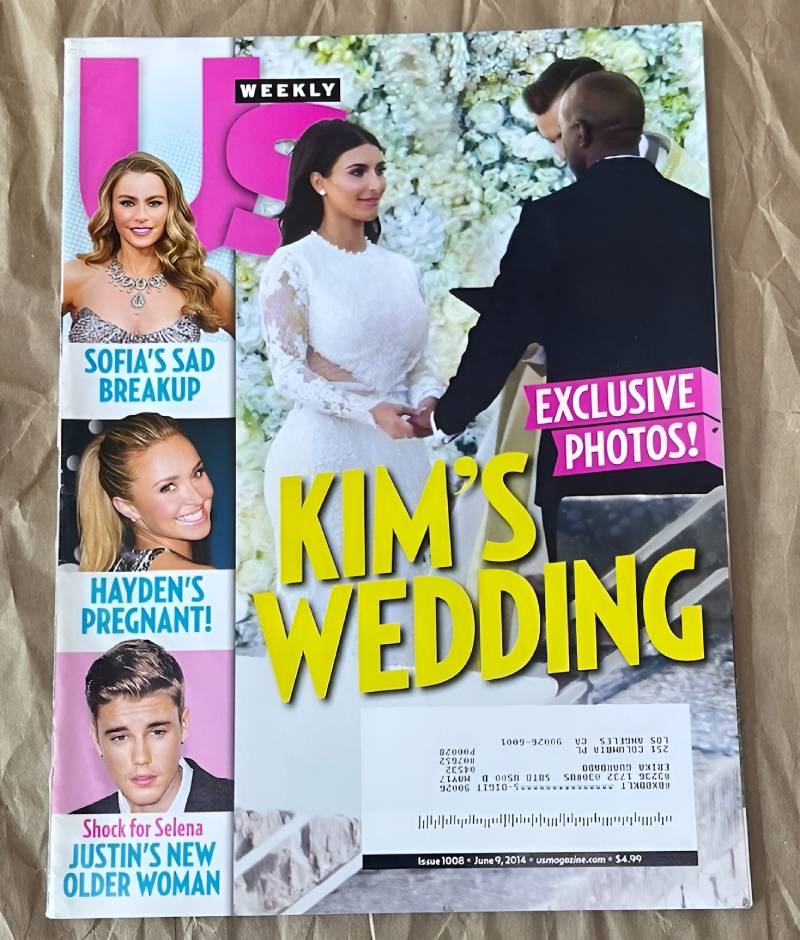
Why This Cover Stands Out
By 2014, Us Weekly had fully embraced the Kardashian-Jenner family as cover fixtures. The Kim and Kanye wedding cover was the biggest celebrity wedding story of the year, and the magazine went all in.
The Story Behind the Cover
Kim Kardashian and Kanye West married on May 24, 2014 at Forte di Belvedere in Florence, Italy. The ceremony cost a reported $2.8 million, not counting the week of pre-wedding events in Paris.
Kardashian wore a custom Givenchy Haute Couture gown. Andrea Bocelli sang “Ave Maria” as she walked down the aisle. Celebrity guests included John Legend, Chrissy Teigen, and Jaden Smith.
Us Weekly ran exclusive photos and insider details across multiple issues.
Cover Design and Layout
Wedding covers always get the premium treatment. Bright, warm tones. The couple front and center. The headline focused on exclusivity: the word “exclusive” matters when every competing magazine is chasing the same photos.
The saturation was cranked up on the photo, making everything look more glamorous than reality. Standard practice for wedding cover shoots across the Entertainment Weekly and Us Weekly universe.
Cultural Impact and Public Reaction
The Kimye wedding cover solidified Us Weekly’s position as the go-to source for reality TV celebrity coverage. The Kardashians weren’t just gossip fodder anymore. They were the magazine’s biggest franchise.
It also marked a shift in how celebrity weddings were monetized. Exclusive photo deals with magazines were already standard, but the Kardashian coverage turned it into a multi-week content event.
Newsstand Performance
Strong sales. Kardashian covers were consistently among the magazine’s best performers throughout the 2010s, and the wedding issue was no exception. Digital edition downloads also spiked, reflecting the shift toward online magazine consumption that was well underway by 2014.
FAQ on Us Weekly Covers
What is the best-selling Us Weekly cover of all time?
The Janet Jackson Super Bowl cover from February 2004 holds the record. It outsold every other issue in the magazine’s history. The halftime show incident drove massive newsstand sales across the country before social media even existed.
How often does Us Weekly release a new cover?
Us Weekly publishes 52 issues per year, one every week. Each issue features a new cover story focused on celebrity news, Hollywood gossip, or entertainment exclusives. The magazine has maintained this weekly schedule since its 2000 relaunch under Wenner Media.
Who has appeared on the most Us Weekly covers?
Jennifer Aniston holds that distinction. Her personal life, from the Brad Pitt divorce to relationship updates, has driven cover stories for over two decades. Kim Kardashian, Britney Spears, and Taylor Swift also rank among the most frequent cover subjects.
Where can I buy back issues of Us Weekly magazine?
Back issues are available through DiscountMags, eBay, and Amazon. Digital editions can be purchased on Barnes & Noble’s Nook platform or through Magzter. Collectors also find vintage copies at estate sales and specialty magazine shops online.
How much does a Us Weekly subscription cost?
An annual digital subscription runs about $51.99 per year, roughly $1.00 per issue. Monthly plans cost around $9.99. Single issues sell for $6.99 each. First-time subscribers typically get a 14-day free trial on digital editions.
What is the standard Us Weekly magazine cover size?
Us Weekly uses a standard magazine cover size of approximately 8 x 10.875 inches. This is the typical trim size for American weekly publications sold at newsstands. It fits standard grocery store magazine rack displays.
Who founded Us Weekly and when did it start?
The New York Times Company launched the magazine as “Us” in 1977. Jann Wenner acquired it in 1986. It became “Us Weekly” in March 2000 when it shifted from a monthly to a weekly format. American Media Inc. bought it in 2017.
Has Us Weekly ever lost subscribers over a controversial cover?
Yes. The September 2008 Sarah Palin cover with the headline “Babies, Lies & Scandal” cost the magazine over 10,000 subscribers. The editorial team sent apology emails and offered five free issues to win readers back.
What makes a Us Weekly cover different from People Magazine?
Us Weekly leans harder into gossip, paparazzi photos, and dramatic headlines. People Magazine covers tend to focus on human interest and celebrity profiles with a softer tone. Us Weekly’s photo-heavy layout targets a younger, more pop-culture-driven audience.
Are Us Weekly covers available in digital format?
Yes. Digital editions are sold through Barnes & Noble Nook, Magzter, Apple News, and Amazon. Each issue downloads automatically for subscribers on the morning of release. The digital version includes the same cover design, celebrity photos, and entertainment content as print.
Conclusion
The best Us Weekly covers tell us as much about pop culture as they do about the celebrities on them. From Brad Pitt and Jennifer Aniston’s breakup to Janet Jackson’s record-breaking issue, each cover captured a moment that millions of readers couldn’t look away from.
These tabloid cover stories shaped how we consume celebrity gossip. They turned Hollywood relationships into weekly entertainment for newsstand shoppers across the country.
Print magazine circulation has dropped sharply since the mid-2000s. But the covers still matter. Digital editions on Apple News and Magzter keep the format alive for a new generation of readers.
Whether you’re a collector hunting magazine back issues on eBay or a casual reader scrolling through the latest celebrity news, Us Weekly’s cover archive remains a time capsule of American celebrity culture at its most addictive.

Renowned for his expertise in logo design and visual branding, Bogdan has developed a multitude of logos for various clients.
His skills extend to creating posters, vector illustrations, business cards, and brochures. Additionally, Bogdan's UI kits were featured on marketplaces like Visual Hierarchy and UI8.
He also wrote in the past years on sites like Design Your Way, WebDesignerDepot, WPDean, Designmodo, Speckyboy, Slider Revolution, and more.
- Canva vs PowerPoint: Which Is Better for Presentations? - 22 September 2026
- How to Install Fonts on Mac (Step-by-Step Guide) - 20 September 2026
- From Mockup to Code: How AI-Augmented Development Speeds Up the Design Handoff - 19 September 2026

Bogdan Sandu is a seasoned designer who has been designing websites since 2008. Renowned for his expertise in logo design and visual branding, Bogdan has developed a multitude of logos for various clients. His skills extend to creating posters, vector illustrations, business cards, and brochures. Additionally, Bogdan's UI kits were featured on marketplaces like Visual Hierarchy and UI8. He also wrote in the past years on sites like Design Your Way, WebDesignerDepot, WPDean, Designmodo, Speckyboy, Slider Revolution, and more.
You Might Also Like


