

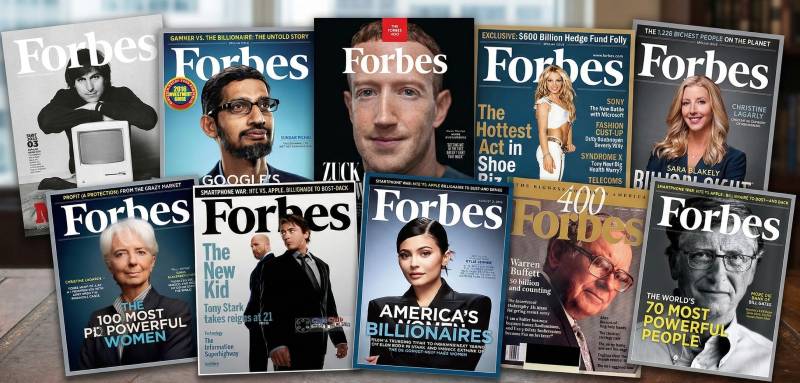
Every Forbes magazine cover tells a story about who holds power, who’s making money, and who’s changing the game. Since B.C. Forbes launched the publication in 1917, the front page has featured everyone from Wall Street titans and tech billionaires to pop stars and fictional characters.
These covers aren’t just editorial photography. They’re cultural snapshots that track how business, wealth, and celebrity have shifted over the past century.
Some sparked massive debate. Others became collector’s items. A few damaged the magazine’s own credibility.
In this article, we break down the most iconic Forbes cover stories, the design choices behind them, and why certain issues still get talked about years after they hit the newsstand. Whether you’re into business journalism, what makes a good magazine cover, or just curious about the faces that defined each era of the Forbes billionaires list, you’ll find it here.
Best Forbes Magazine Covers
Bill Gates (November 2011)
Why This Cover Stands Out
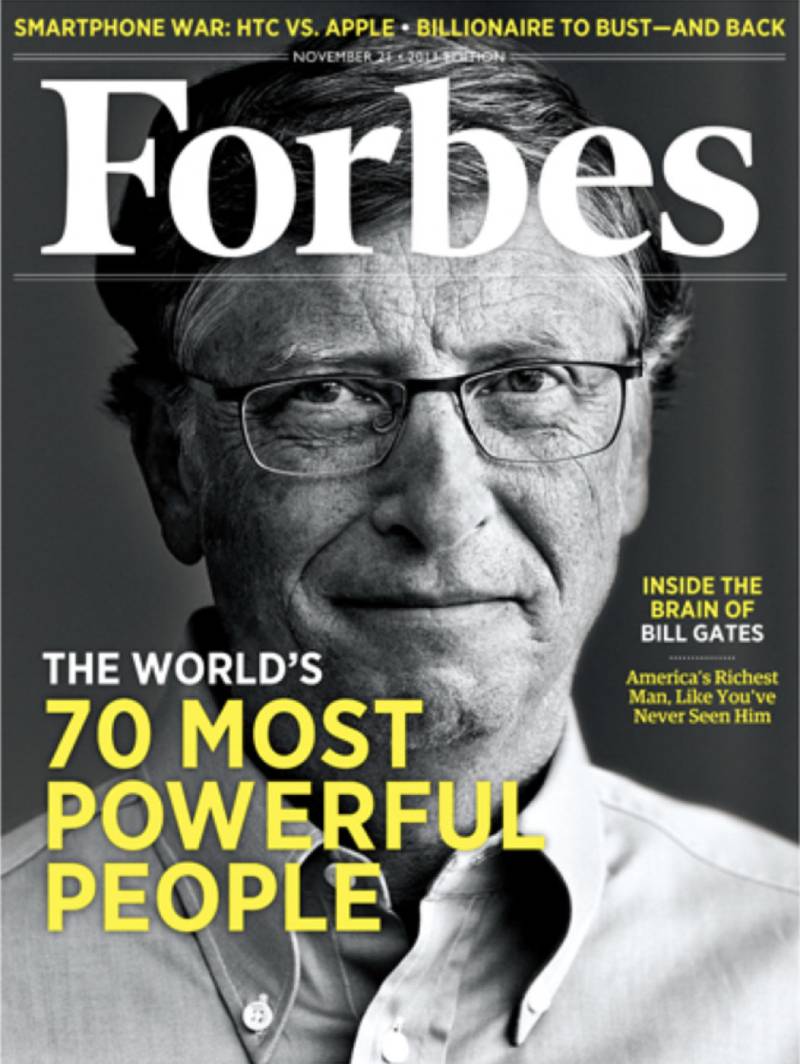
This wasn’t just another billionaire portrait. Forbes ran this cover during a period when Gates had shifted his entire public identity from tech mogul to global health advocate. The story profiled his work on vaccine distribution in developing nations through the Bill & Melinda Gates Foundation.
It hit different because Gates had already given away $28 billion by that point. He would have been the world’s richest person by a wide margin if he’d kept his money.
The Cover Story
The feature, titled “With Vaccines, Bill Gates Changes The World Again,” explored how Gates applied his business thinking to public health problems. He wanted to cut childhood death rates by 80% within 25 years.
Forbes called his philanthropic shift “the most productive midlife crisis in history.”
Cover Design Breakdown
The cover followed the classic Forbes layout. Bold red typography for the masthead, clean portrait photography, and minimal text. Gates was shot in a relaxed setting, without the corporate suit. This was intentional. The whole point was to separate this version of Gates from his Microsoft years.
The visual hierarchy kept things tight. Name. Headline. One supporting line. Nothing cluttered.
Cultural Impact
This cover reinforced a new narrative about wealth in America. The idea that the richest people should give most of it away was gaining traction. Gates and Warren Buffett had launched The Giving Pledge the previous year, asking billionaires to commit at least half their fortunes to charity.
For the Forbes brand, this was a signal. Wealth wasn’t just about accumulation anymore. It was about what you did with it.
Who Was Featured
Bill Gates, co-founder of Microsoft, co-chair of the Bill & Melinda Gates Foundation. Forbes had ranked him as the world’s wealthiest person for 18 of the 24 years between 1995 and 2017.
When It Was Published
November 21, 2011.
Warren Buffett (January 1993)
Why This Cover Stands Out
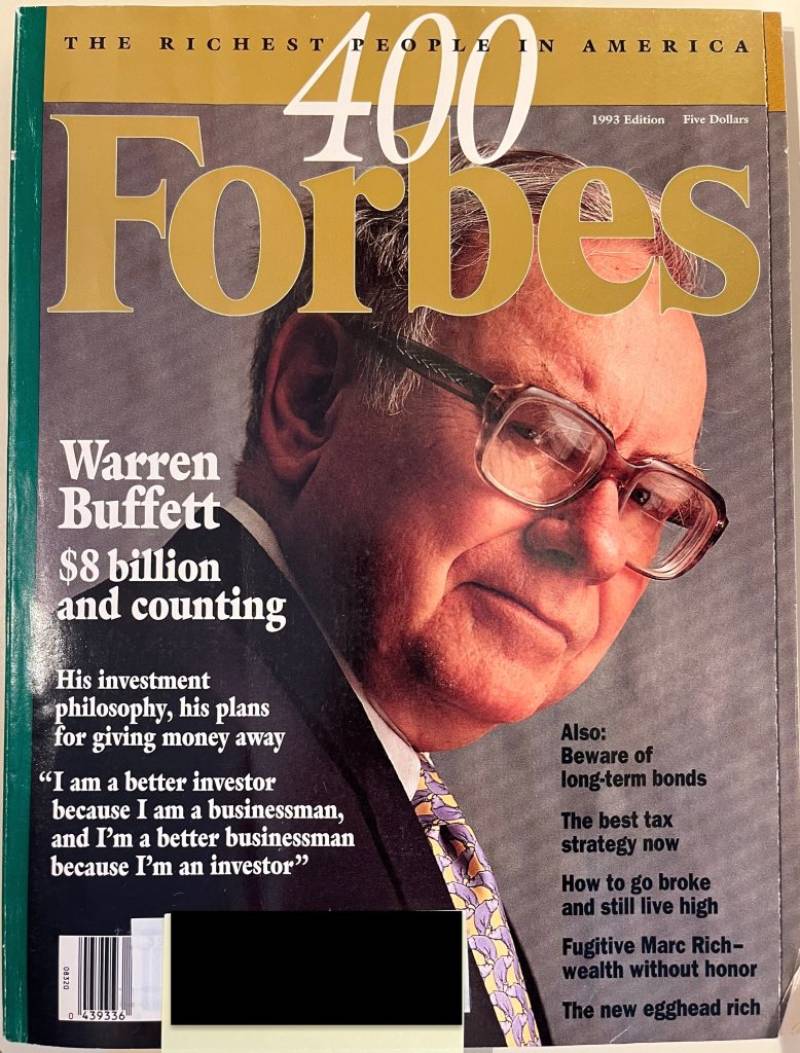
Buffett was already a legend by 1993, but this cover caught him at a moment when Berkshire Hathaway was gaining serious mainstream attention. He holds the record for the most appearances on a Forbes cover, and this early-90s issue is one of the most collected.
The Cover Story
The feature focused on Buffett’s investment philosophy and his growing influence on Wall Street. His approach to value investing, buying undervalued companies and holding them long-term, was already producing massive returns for Berkshire Hathaway shareholders.
Cover Design Breakdown
Classic early-90s print design aesthetic. Warm lighting, traditional portrait composition. The color palette leaned conservative, matching Buffett’s no-nonsense persona. The masthead dominated the top, as it did with most business magazine covers of that era.
Cultural Impact
Buffett’s consistent presence on Forbes covers helped shape the “Oracle of Omaha” brand. His regular appearances became almost expected. If you were reading Forbes in the 90s and early 2000s, you were seeing Buffett’s face multiple times.
He became the face of patient, long-term investing for an entire generation of readers.
Who Was Featured
Warren Buffett, chairman and CEO of Berkshire Hathaway. Consistently ranked among the top three wealthiest Americans on the Forbes 400 list.
When It Was Published
January 1993.
Steve Jobs (Multiple Appearances)
Why This Cover Stands Out
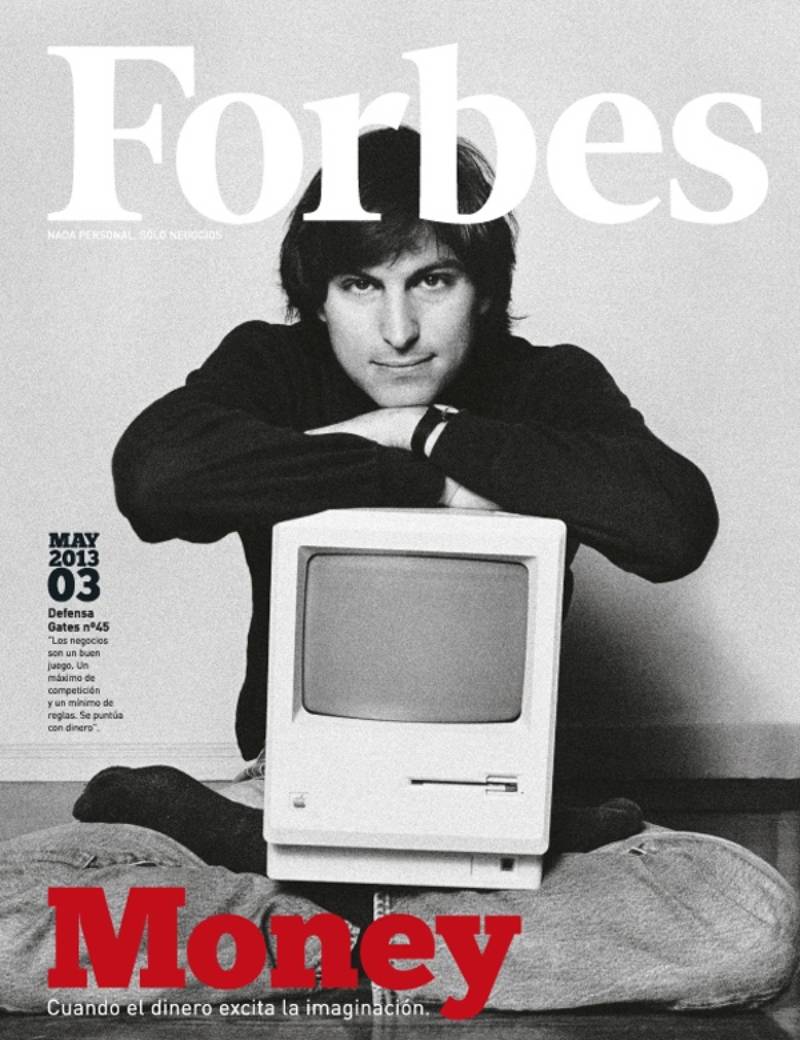
Steve Jobs appeared on Forbes multiple times across different decades, each cover marking a different chapter. The early ones captured him as a young tech disruptor. The later ones framed him as a visionary who reshaped entire industries.
The Cover Story
Stories ranged from Apple’s corporate turnarounds to the launch of game-changing products. The focus always circled back to Jobs’ ability to see what consumers wanted before they knew it themselves. His profiles read more like character studies than traditional business journalism.
Cover Design Breakdown
Jobs covers consistently used high-contrast photography with clean backgrounds. Minimal cover lines. The design reflected Jobs’ own philosophy of simplicity. Most featured him in his signature black turtleneck against a solid background, creating a strong focal point with zero distractions.
Cultural Impact
These covers documented the rise of Silicon Valley as the new center of American power. Jobs on Forbes wasn’t just a magazine cover. It was a cultural marker, proof that tech entrepreneurs had replaced oil barons and Wall Street titans as the most influential people in the country.
Who Was Featured
Steve Jobs, co-founder and CEO of Apple Inc. Also founder of Pixar and NeXT.
When It Was Published
Multiple issues from the 1980s through 2011.
Kylie Jenner “Self-Made Billionaire” (August 2018)

Why This Cover Stands Out
This is probably the most controversial Forbes cover in the magazine’s history. The publication called Kylie Jenner the “youngest self-made billionaire ever,” and the internet lost it. Even Dictionary.com weighed in, tweeting the definition of “self-made.”
The backlash was immediate and brutal.
The Cover Story
Forbes estimated Jenner’s fortune at $900 million, largely from Kylie Cosmetics, which she owned 100%. The headline read: “At 21, she’s set to be the youngest-ever self-made billionaire. Welcome to the era of extreme fame leverage.”
Then in 2020, Forbes published a follow-up investigation claiming the Jenner team had inflated financial figures. The magazine revoked her billionaire status, alleging that tax returns provided to journalists were “likely forged.”
Cover Design Breakdown
The cover used a tight close-up of Jenner. Warm tones, soft lighting. The serif font for the headline paired with the classic Forbes logo in its standard position. The layout was clean but the content was provocative, and that tension between traditional business magazine alignment and pop culture subject matter made it unforgettable.
Cultural Impact
This cover triggered a genuine cultural debate about wealth, privilege, and what “self-made” actually means. Critics pointed out that Jenner grew up in one of the most famous and wealthy families in America.
It also highlighted how influencer culture and social media had rewritten the rules of business. Kylie Cosmetics was built almost entirely through Instagram marketing, no traditional advertising needed.
The fallout damaged Forbes’ credibility around wealth verification. That part still stings for the publication.
Who Was Featured
Kylie Jenner, founder of Kylie Cosmetics, media personality, and member of the Kardashian-Jenner family.
When It Was Published
August 2018 (America’s Women Billionaires issue).
Iron Man / Tony Stark (May 2008)

Why This Cover Stands Out
Forbes put a fictional character on its cover. That alone is enough to make this list. Tony Stark appeared as part of the Forbes Fictional 15, a recurring list that ranked the wealthiest characters in fiction. But giving Iron Man actual cover real estate was a bold move for a serious financial publication.
The Cover Story
The feature played it straight. Forbes valued Stark Industries at $20.3 billion in annual sales and placed Tony Stark’s personal net worth at around $9.4 billion. They discussed his defense contracts, his renewable energy investments, and his corporate leadership.
All for a character who doesn’t exist. And it worked.
Cover Design Breakdown
The cover featured Stark in his Iron Man suit, rendered with the same editorial treatment Forbes gives to real CEOs. Standard grid system layout, standard headline placement. The joke was that there was no visual joke. Forbes treated the fictional billionaire with complete seriousness, and that emphasis on authenticity is what made the cover so memorable.
Cultural Impact
This cover dropped just as the first Iron Man movie hit theaters in 2008. It was a clever piece of cross-promotion between Marvel Studios and Forbes. But it also showed that Forbes understood pop culture marketing in a way that other business publications didn’t.
The Fictional 15 list itself became a beloved annual tradition for the magazine.
Who Was Featured
Tony Stark / Iron Man, fictional CEO of Stark Industries (Marvel Comics / Marvel Cinematic Universe).
When It Was Published
May 2, 2008.
Sara Blakely – Youngest Self-Made Female Billionaire (March 2012)
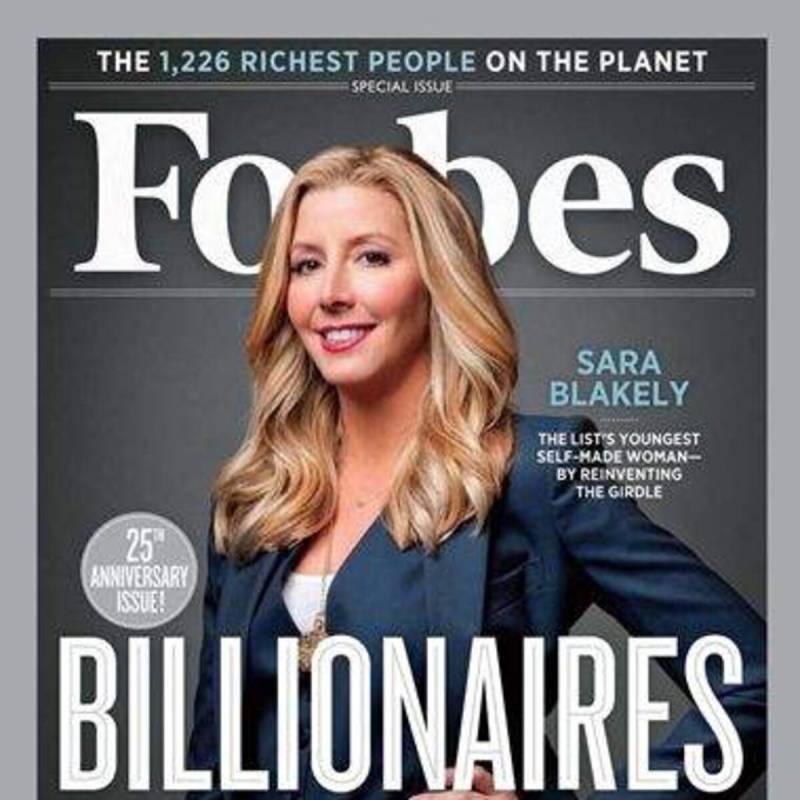
Why This Cover Stands Out
Sara Blakely started Spanx with $5,000 in savings while selling fax machines door-to-door. By 2012, she was on the cover of Forbes as the youngest self-made female billionaire in the world. No outside investors. No business degree. Just a cut pair of pantyhose and a lot of persistence.
That’s a genuinely wild trajectory.
The Cover Story
Forbes detailed Blakely’s rise from a struggling salesperson to a billionaire who owned 100% of her company. Spanx had generated $4 million in its first year and $10 million in its second. The Oprah endorsement on her “Favorite Things” list had been a turning point. By the time the cover ran, Blakely was also making waves as a philanthropist, having founded the Sara Blakely Foundation in 2006.
Cover Design Breakdown
The cover was shot with bright, energetic lighting that reflected Blakely’s personality. She wasn’t posed in a boardroom or behind a desk. The whole approach felt different from typical billionaire profiles, more human, less corporate. The balance between the headline and image gave equal weight to her story and her face.
Cultural Impact
This cover became a reference point for female entrepreneurship. Blakely proved you didn’t need venture capital or Silicon Valley connections to build a billion-dollar business. In 2013, she became the first self-made female billionaire to sign the Giving Pledge, alongside Gates and Buffett.
Blackstone later acquired a majority stake in Spanx in 2021, valuing the company at $1.2 billion. Blakely celebrated by giving every employee $10,000 and two first-class plane tickets.
Who Was Featured
Sara Blakely, founder of Spanx, philanthropist, and guest shark on Shark Tank.
When It Was Published
March 26, 2012.
Britney Spears (August 2001)
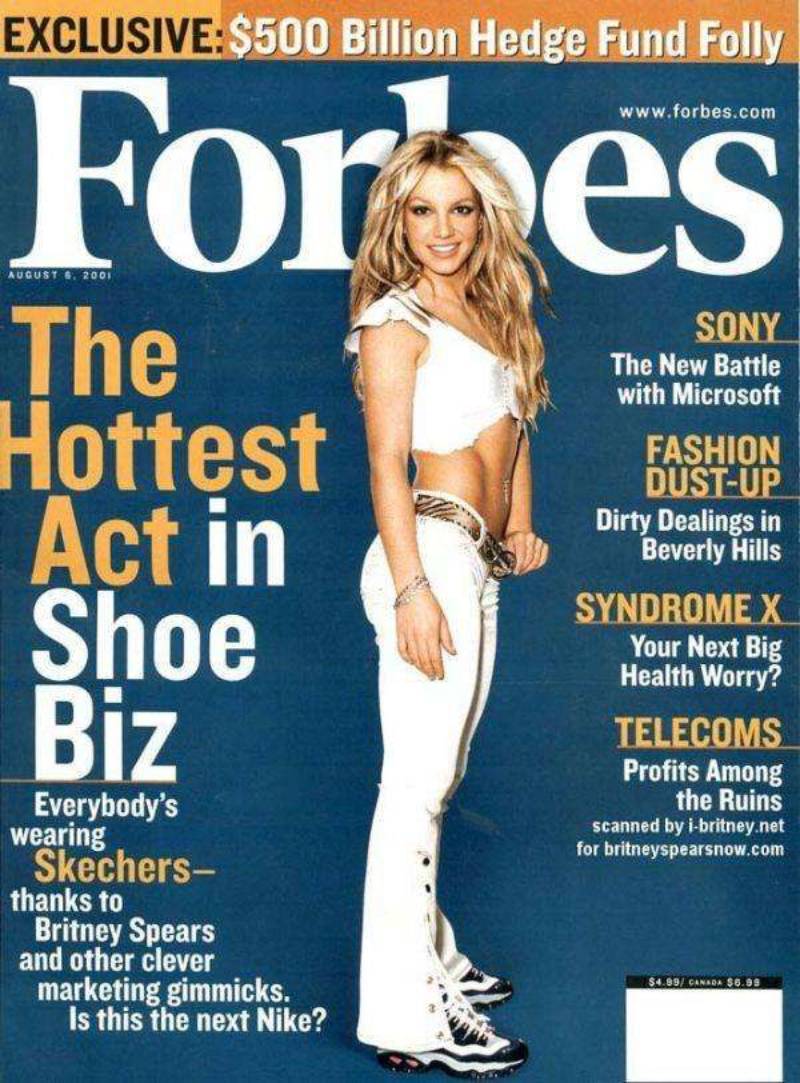
Why This Cover Stands Out
Forbes putting a pop star on its cover in 2001 was a statement. This wasn’t Rolling Stone or Vogue. This was a business magazine, and putting Britney Spears on it said: the entertainment industry is serious money, and we’re going to cover it that way.
The Cover Story
The issue examined Spears as a business entity. At the time, she was one of the highest-earning entertainers in the world, with revenue flowing from album sales, concert tours, endorsement deals, and merchandise licensing. Forbes was interested in the machine behind the pop star.
Cover Design Breakdown
The photography was glossy and pop-culture-forward, a departure from the usual CEO headshots. The hue and lighting choices were warmer and more editorial than typical Forbes covers. The font pairings stayed consistent with the Forbes brand, but the overall feel was clearly aimed at a broader audience.
Cultural Impact
This cover signaled that Forbes was expanding its definition of “business leader” to include entertainment moguls and cultural figures. It paved the way for future covers featuring celebrities like Ashton Kutcher, Jay-Z, and the Kardashians.
Who Was Featured
Britney Spears, singer, performer, and one of the best-selling music artists of all time.
When It Was Published
August 6, 2001.
Mark Zuckerberg (January 2016)

Why This Cover Stands Out
By 2016, Zuckerberg had transformed Facebook from a college social network into one of the most valuable companies on Earth. This cover captured him at a time when the platform’s influence on global communication, politics, and advertising was peaking.
The Cover Story
Forbes profiled Zuckerberg’s evolving role from tech wunderkind to corporate leader. The story covered Facebook’s aggressive growth strategy, its push into mobile, and the acquisition of Instagram and WhatsApp. The piece also touched on his philanthropic goals through the Chan Zuckerberg Initiative.
Cover Design Breakdown
Clean, modern minimalist design. The portrait used cool tones and sharp focus. Very little clutter. The white space around the text gave the cover a confident, uncluttered feel. The overall composition reflected the tech-forward aesthetic Facebook itself was pushing at the time.
Cultural Impact
This cover captured Zuckerberg right before the public narrative around Facebook started to turn. Within two years, the Cambridge Analytica scandal would reshape how people thought about the platform. Looking at this cover now feels like a time capsule of peak tech optimism.
Who Was Featured
Mark Zuckerberg, co-founder and CEO of Facebook (now Meta Platforms). He was the youngest person to appear on the Forbes Billionaires List when he debuted at age 23.
When It Was Published
January 2016.
Sundar Pichai (2016)
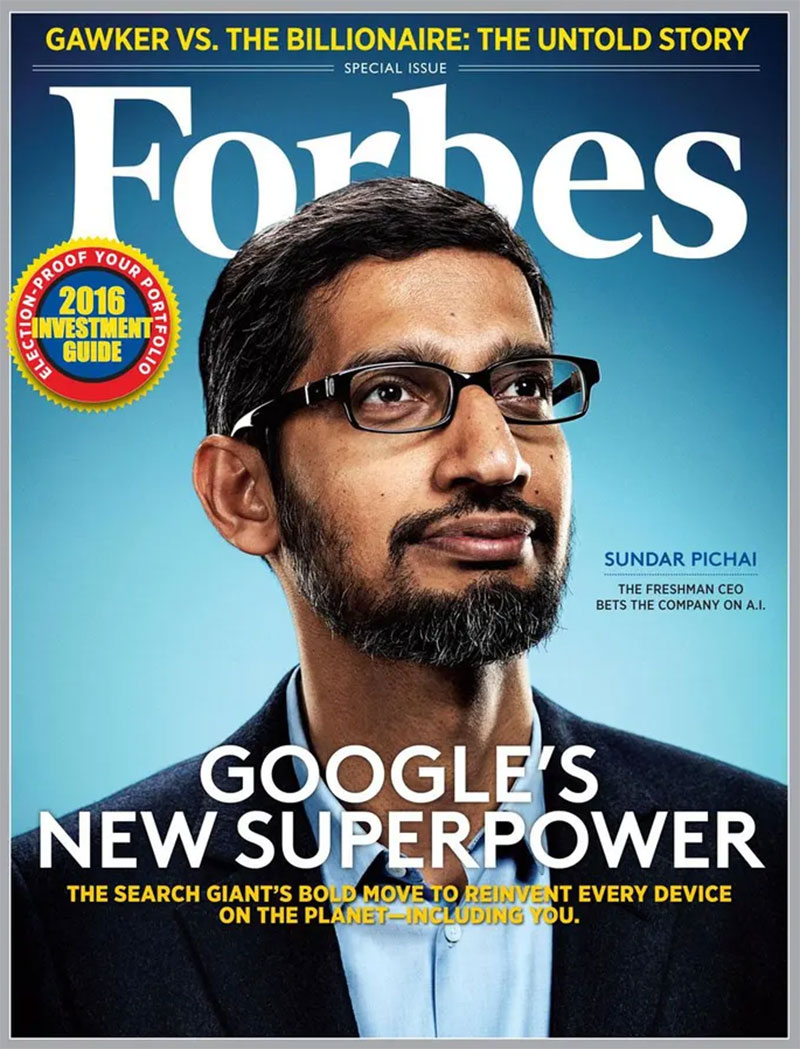
Why This Cover Stands Out
This was Pichai’s big moment as the public face of Google. The cover positioned him not as a manager but as someone trying to reshape the world’s second-most-valuable company through artificial intelligence. For a CEO who prefers to stay out of the spotlight, this was a rare deep-dive profile.
The Cover Story
Forbes described Pichai as “a brainy product guy” with plans to reinvent Google’s core products using AI. The feature covered Google’s push into machine learning, voice assistants, and hardware. It also explored how Pichai’s leadership style differed from his predecessors, Larry Page and Sergey Brin.
Cover Design Breakdown
The portrait was straightforward and professional. Neutral background. Steady gaze. The typographic hierarchy was clean, with a strong headline and minimal supporting text. The whole anatomy of the magazine cover followed standard Forbes conventions, but the simplicity worked well for a subject who doesn’t seek attention.
Cultural Impact
Pichai’s cover reflected a larger shift in tech leadership. The era of flashy, personality-driven founders was giving way to quieter, engineering-focused executives. His Forbes feature also put Google’s AI ambitions in the mainstream conversation years before ChatGPT made AI a household topic.
Who Was Featured
Sundar Pichai, CEO of Google (later CEO of Alphabet Inc.). Born in Chennai, India. Educated at IIT Kharagpur, Stanford, and Wharton.
When It Was Published
June 2017.
FAQ on Forbes Magazine Covers
Who has appeared on the most Forbes covers?
Warren Buffett holds the record. The Berkshire Hathaway chairman has graced the Forbes front page more than any other person, reflecting decades of influence on investing, wealth rankings, and American business culture.
How does Forbes choose who goes on the cover?
Forbes selects cover subjects based on business impact, wealth creation, and current relevance. The editorial team conducts financial verification and interviews. Timing matters too, covers often align with the Forbes 400 or billionaires list releases.
What was the most controversial Forbes magazine cover?
The Kylie Jenner “self-made billionaire” cover in August 2018. Forbes later retracted the claim in 2020, alleging her team had inflated financial figures. The fallout sparked debate about celebrity net worth verification and media credibility.
Has a fictional character ever been on a Forbes cover?
Yes. Tony Stark (Iron Man) appeared on the May 2008 cover as part of the Forbes Fictional 15 list. Forbes valued Stark Industries at $20.3 billion in annual revenue and treated the feature with complete editorial seriousness.
What is the standard Forbes magazine cover size?
The print edition uses a standard magazine cover size of approximately 8 x 10.5 inches. Digital covers vary depending on the platform, but the proportions stay consistent with the traditional print layout.
How often does Forbes release new covers?
Forbes publishes eight print issues per year. Digital covers appear more frequently on forbes.com. Special editions like the 30 Under 30 and World’s Billionaires issues each get their own dedicated cover treatment.
Can you buy old Forbes magazine covers?
Yes. Vintage Forbes issues are available through collector sites and auction platforms. Covers featuring major business leaders like Bill Gates or Steve Forbes tend to sell at higher prices, especially early editions from the publication’s history.
What makes a Forbes cover design different from other magazines?
Forbes uses a signature red masthead, bold typeface, and clean portrait photography. The layout prioritizes readability and authority over flashy design elements. Cover lines are kept minimal compared to entertainment publications.
Are Forbes digital covers different from print covers?
Often, yes. Digital covers sometimes feature different photography or exclusive online-only subjects. The Forbes Asia and Forbes Africa editions also run region-specific covers that differ from the main U.S. print edition.
Who was the youngest person to appear on a Forbes cover?
Malala Yousafzai appeared at just 17 years old. Among business figures, Kylie Jenner was 20 when she landed her cover, while Mark Zuckerberg first appeared on the Forbes billionaires list at 23.
Conclusion
Forbes magazine covers have documented over a century of shifts in business, technology, and cultural influence. From Warren Buffett’s record-breaking appearances to the Kylie Jenner controversy, each cover photo reflects what the publication considers worth paying attention to at any given moment.
The design choices matter just as much as the people featured. Clean editorial photography, bold headline treatments, and that signature red masthead have made Forbes instantly recognizable on any newsstand.
Some covers celebrate billionaire profiles and wealth rankings. Others spark public debate about privilege, verification, and who gets to call themselves self-made.
Whether you’re studying magazine publishing trends, collecting vintage back issues, or just curious about the business leaders who shaped each era, Forbes cover archives remain one of the most reliable records of who held financial power and when. The front page of Forbes is, and always has been, a mirror of American ambition.

Renowned for his expertise in logo design and visual branding, Bogdan has developed a multitude of logos for various clients.
His skills extend to creating posters, vector illustrations, business cards, and brochures. Additionally, Bogdan's UI kits were featured on marketplaces like Visual Hierarchy and UI8.
He also wrote in the past years on sites like Design Your Way, WebDesignerDepot, WPDean, Designmodo, Speckyboy, Slider Revolution, and more.
- Jujutsu Kaisen Font Generator - 12 October 2026
- The Windsurf Logo History, Colors, Font, And Meaning - 10 October 2026
- How to Remove Background From Product Photos (No Photoshop) - 10 October 2026

Bogdan Sandu is a seasoned designer who has been designing websites since 2008. Renowned for his expertise in logo design and visual branding, Bogdan has developed a multitude of logos for various clients. His skills extend to creating posters, vector illustrations, business cards, and brochures. Additionally, Bogdan's UI kits were featured on marketplaces like Visual Hierarchy and UI8. He also wrote in the past years on sites like Design Your Way, WebDesignerDepot, WPDean, Designmodo, Speckyboy, Slider Revolution, and more.
You Might Also Like


