

A stronger online creative identity comes from one thing: showing the same style, voice and expertise everywhere a client might find you. Designers who do this get hired on reputation, not just on a single portfolio piece. Talent still matters, but in a crowded field it rarely speaks for itself, so the way you present your work online has become part of the work.
What is designer personal branding?
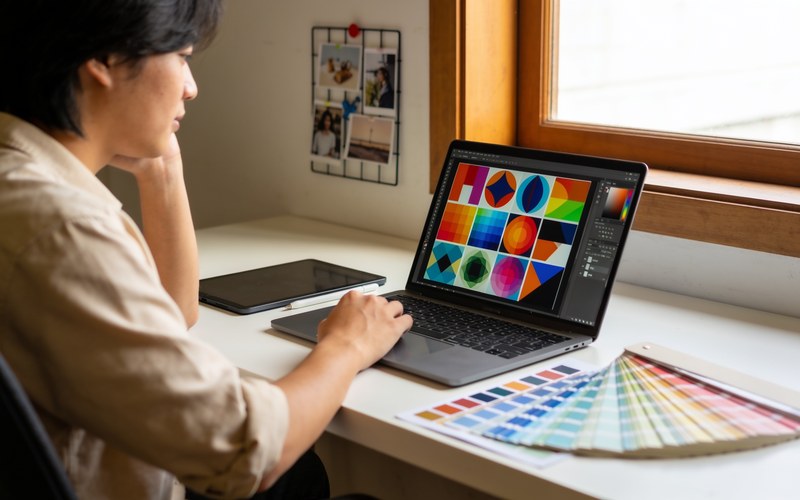
Designer personal branding is the deliberate process of shaping how people perceive you as a creative professional online. It goes beyond a logo or a polished profile. It is the consistent expression of your style, values, expertise and personality across every digital touchpoint.
Done well, it helps you attract better clients, land the opportunities you actually want, charge higher rates and build a community around your work. The next sections explain why it carries so much weight and how to build it step by step.
Why does an online creative identity matter for designers?
Clients and collaborators increasingly hire people, not just portfolios. When someone searches for a designer, they look at the quality of the work, but also at the story behind it, the process, the voice and how consistent everything feels.
A clear identity does four things for you:
- It separates you from thousands of other designers.
- It builds trust and perceived expertise before any conversation starts.
- It creates passive discovery through search engines and social algorithms.
- It supports your career whether you work at an agency, freelance or in-house.
Without it, even excellent work can stay invisible or forgettable. That is why the first thing to fix is the visual and verbal system behind everything you publish.
How do you build a consistent visual and professional identity?
Align every visual and written element of your online presence so your work, personality and expertise feel like one thing. Start with a restrained color palette that reflects your taste, and pair it with one or two typefaces that feel authentic to your practice. If you want to test combinations before committing, a UI color scheme generator speeds up the experiment, and the thinking behind it is covered in this piece on the role of color psychology in brand identity.
Your verbal identity needs the same treatment. Pick a tone you can keep up, for example precise and process-oriented, and use it in bios, project descriptions and captions. When the visual and verbal systems support each other, your presence stops reading like a pile of random posts and starts reading as a deliberate brand.
How do you choose a username that fits your creative brand?
Choose one handle and use it on every platform where you publish, such as Behance, Dribbble, Instagram and LinkedIn. A consistent, memorable username makes you easier to find, share and remember, and that recognition adds up to professional credibility over time.
Prioritize clarity, availability and relevance to your creative focus. If you are short on ideas, a username generator can give you options to check for availability. Mismatched handles across platforms dilute your brand and make you harder to find, so it is worth settling this early.
How do you keep your creative identity consistent across platforms?
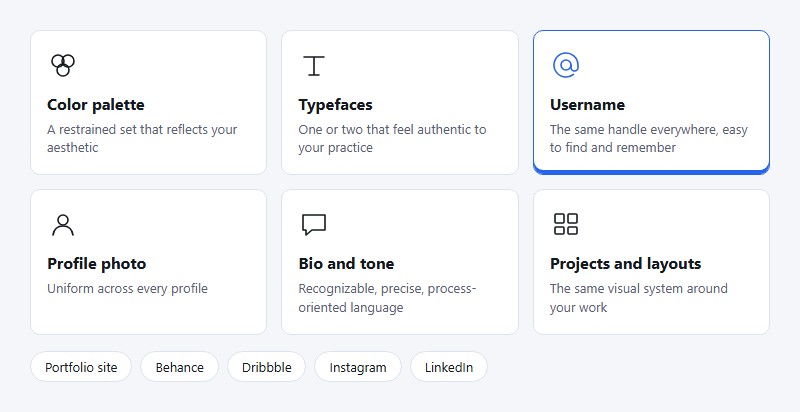
Apply the same palette, typography, imagery style and professional tone to your portfolio website, Behance, Dribbble, Instagram, LinkedIn and any other profile. This applies whether you are a graphic designer, a branding specialist or a web designer.
Small details do most of the work here. A uniform profile photo, similar project layouts and the same bio language create instant recognition and signal reliability. When every platform reflects the same system and voice, your work becomes memorable instead of fragmented, and clients trust that the person they see in one place is the person they will meet in the next.
If you are still deciding where your work should live first, this article on what makes a designer stand out internationally looks at the portfolio side in more depth.
How do you turn an online identity into a strong creative presence?
You turn it into a presence by combining three things: a consistent visual system, a focused niche and a professional portfolio website, then sharing content on your platforms regularly. A niche matters because it tells people exactly what to hire you for.
Show your process and your case studies, not only finished images. Explain the problem, the decisions you made and what changed for the client. Engage with other designers thoughtfully, comment on their work with something specific, and answer questions in your field. Over time these habits turn scattered profiles into a recognizable, trusted presence that attracts the clients you want. This walkthrough from a creator who works on personal branding for creatives shows how the pieces fit together in practice.

Common mistakes in building a designer brand
- Using a different username on each platform, which breaks discoverability.
- Changing the color palette or typefaces from one profile to the next.
- Posting only polished final images and never showing process.
- Writing the bio in a different voice on every site.
- Trying to appeal to every type of client instead of picking a niche.
Each of these is easy to fix once you spot it, and none of them requires a rebrand from scratch.
Frequently asked questions
How long does it take to build an online creative identity?
The visual system and username can be settled in a few days. The reputation part builds slowly, because it comes from sharing work and process consistently over months.
Do I need a personal website, or are social profiles enough?
Social profiles help people find you, but a portfolio website gives you one place that you fully control. Link your profiles to it so every path ends in the same place.
Should freelancers and in-house designers both care about personal branding?
Yes. A clear identity supports a freelance, agency or in-house career, because it is portable between jobs and between clients.
Where to start with your creative identity this week
Pick one handle, one palette and one pair of typefaces, then update your portfolio, Behance, Dribbble, Instagram and LinkedIn profiles to match. Once the basics are aligned, work on finding the right people to show them to, and this guide to client outreach tips for freelancers is a sensible next read.

Renowned for his expertise in logo design and visual branding, Bogdan has developed a multitude of logos for various clients.
His skills extend to creating posters, vector illustrations, business cards, and brochures. Additionally, Bogdan's UI kits were featured on marketplaces like Visual Hierarchy and UI8.
He also wrote in the past years on sites like Design Your Way, WebDesignerDepot, WPDean, Designmodo, Speckyboy, Slider Revolution, and more.
- What Is the Best Lightweight DaVinci Resolve Alternative for Object Removal on Low-End PCs? - 23 November 2026
- Logo Quiz - 22 November 2026
- The LinkedIn Logo History, Colors, Font, and Meaning - 20 November 2026

Bogdan Sandu is a seasoned designer who has been designing websites since 2008. Renowned for his expertise in logo design and visual branding, Bogdan has developed a multitude of logos for various clients. His skills extend to creating posters, vector illustrations, business cards, and brochures. Additionally, Bogdan's UI kits were featured on marketplaces like Visual Hierarchy and UI8. He also wrote in the past years on sites like Design Your Way, WebDesignerDepot, WPDean, Designmodo, Speckyboy, Slider Revolution, and more.
You Might Also Like


