

That split second when you spot a magazine on the newsstand and it stops you cold. Iconic magazine covers possess this rare power to freeze time, capture cultural moments, and become visual anchors in our collective memory.
From Vogue’s groundbreaking fashion photography to Rolling Stone’s rebellious celebrity portraits, legendary magazine covers have shaped how we see the world. They’ve launched careers, sparked controversies, and defined entire decades through bold visual storytelling.
These covers aren’t just pretty pictures slapped on publications. They’re calculated masterpieces that blend typography, photography, and design psychology to create instant recognition and emotional connection.
This deep dive reveals the design secrets behind history’s most memorable magazine covers. You’ll discover how legendary publications like Time, National Geographic, and Harper’s Bazaar crafted covers that transcended their original purpose to become cultural artifacts.
We’ll examine the typography choices, color psychology strategies, and compositional techniques that transformed simple cover stories into unforgettable visual statements.
Iconic Magazine Covers
Life Magazine – V-J Day in Times Square (1945)

Alfred Eisenstaedt captured Navy sailor George Mendonsa kissing dental assistant Greta Zimmer Friedman on August 14, 1945, moments after Japan’s surrender.
Visual Impact & Design Elements
Shot with a Leica IIIa at 5:51 PM. Strong contrast between white nurse uniform and dark sailor suit. Diagonal composition with Friedman’s bent body creating dynamic movement against Times Square backdrop.
Cultural Context & Historical Significance
President Truman announced Japan’s surrender that Tuesday, ending WWII after 3.5 years. Times Square erupted as blackout restrictions lifted citywide.
Subject & Story Behind the Cover
Eisenstaedt followed Mendonsa kissing multiple women during celebrations. Friedman worked nearby as dental assistant, stepped outside during commotion. Identities confirmed in 2012 through forensic analysis.
Media Industry Impact
Published August 27, 1945 in 12-page “Victory Celebrations” feature. Full-page spread but not cover placement. Became Life’s most recognizable image despite internal positioning.
Public Reception & Controversy
Initially celebrated as embodying victory and homecoming. Modern analysis reframes as non-consensual contact. Friedman later described feeling overpowered during unwelcome encounter.
Legacy & Lasting Influence
Established visual shorthand for spontaneous national celebration. Continues generating debate about consent and wartime ethics while remaining history textbook staple.
National Geographic – Afghan Girl (1985)

Steve McCurry’s portrait of 12-year-old refugee Sharbat Gula became the magazine’s most recognized photograph through her penetrating green eyes.
Visual Impact & Design Elements
Nikon FM2, Kodachrome 64 film, 105mm lens. Direct gaze creates psychological intensity through precise focal point placement. Red headscarf provides color theory contrast against weathered features.
Cultural Context & Historical Significance
Soviet invasion of Afghanistan (1979) displaced 3 million refugees to Pakistan by 1984. Gula’s family fled Nangarhar province when she was six, walking across mountains to Nasir Bagh camp.
Subject & Story Behind the Cover
McCurry photographed girls in makeshift school tent. Cultural restrictions limited access to Afghan women. Teacher encouraged Gula to reveal face “so world would see her story.”
Media Industry Impact
June 1985 cover called “most recognized photograph” in magazine history. Sold 6.8 million copies. Only image used three times on National Geographic covers (1985, 2002, 2013).
Public Reception & Controversy
Image humanized Afghan conflict globally. Post-9/11 interest increased during US military campaign. Critics questioned consent and cultural exploitation of vulnerable refugee child.
Legacy & Lasting Influence
Established template for humanitarian photography. Gula remained anonymous until 2002 search. Now lives in Italy after Taliban threats, continues symbolizing refugee struggles worldwide.
Rolling Stone – John Lennon and Yoko Ono (1980)

Annie Leibovitz photographed the couple on December 8, 1980, just hours before Lennon’s assassination. Image shows naked Lennon curled against clothed Yoko on their bed.
Visual Impact & Design Elements
Black and white composition emphasizes vulnerability and intimacy. Lennon’s fetal position creates emotional movement toward Ono. Strong contrast between nude and clothed figures.
Cultural Context & Historical Significance
Lennon emerged from five-year hiatus with “Double Fantasy” album. December 8 assassination by Mark Chapman shocked global music community. Photo taken during final interview session.
Subject & Story Behind the Cover
Leibovitz requested both strip for callback to 1968 “Two Virgins” cover. Ono declined nudity, keeping pants. “The three of us knew it was profound right away,” Leibovitz recalled.
Media Industry Impact
January 22, 1981 cover appeared without text. Named best magazine cover of previous 40 years (2005) by American Society of Magazine Editors. Established Leibovitz as premier portrait photographer.
Public Reception & Controversy
Cover stood above flood of Lennon tributes. Image interpreted as love, vulnerability, and mortality. Some criticized nudity as exploitative during grief period.
Legacy & Lasting Influence
Became template for intimate celebrity portraiture. Influenced decades of magazine photography. Continues selling at auction for gun violence prevention charities.
Time – “Is God Dead?” (1966)
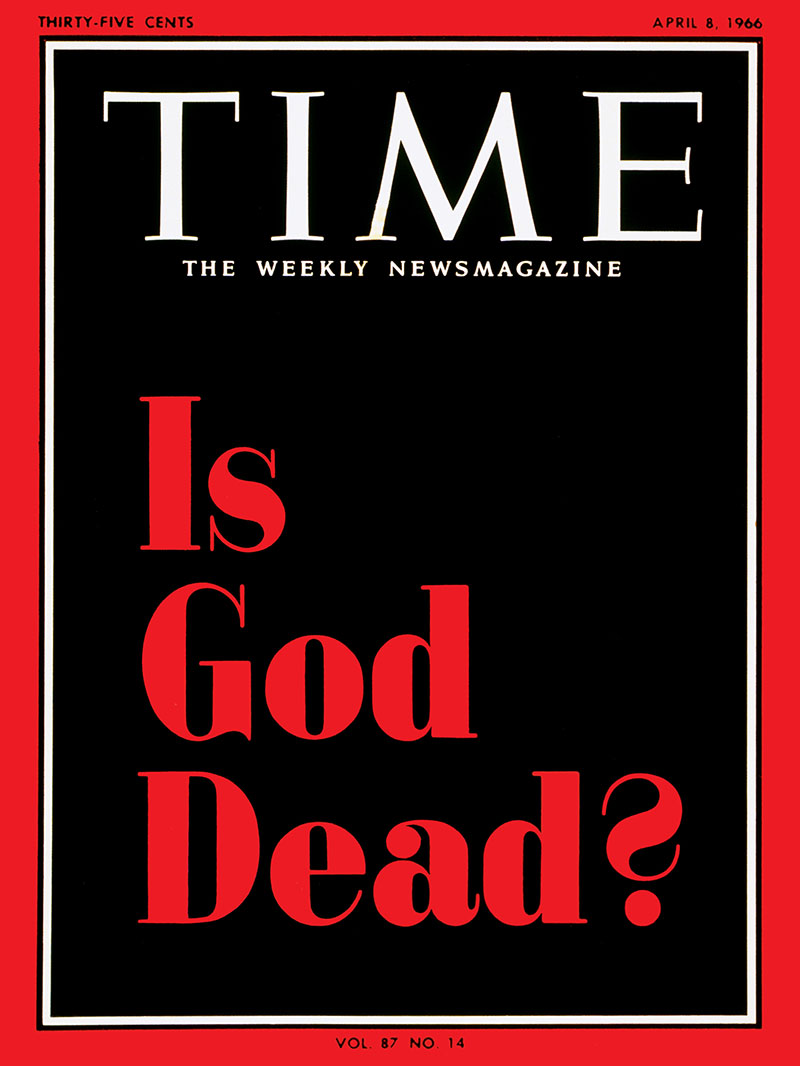
Time’s April 8, 1966 cover featured bold red text on black background, questioning religious faith during cultural upheaval.
Visual Impact & Design Elements
Stark typography against solid black created maximum visual impact. No imagery allowed text to dominate. Sans-serif font emphasized modern questioning tone.
Cultural Context & Historical Significance
Mid-1960s counterculture challenged traditional religious authority. Civil rights movement, Vietnam War, sexual revolution questioned established institutions. Academic theology increasingly secular.
Subject & Story Behind the Cover
Cover story examined declining church attendance and theological debates. Harvard theologian Harvey Cox’s “The Secular City” influenced discussion of religion’s role in modern society.
Media Industry Impact
Generated massive newsstand sales and subscription cancellations. Became Time’s most controversial cover to that point. Established magazine’s willingness to tackle taboo subjects.
Public Reception & Controversy
Religious leaders denounced cover as blasphemous. Thousands of angry letters flooded Time offices. Some stores refused to display issue. Counter-protests supported free inquiry.
Legacy & Lasting Influence
Established precedent for provocative magazine covers addressing cultural tensions. Influenced subsequent religious and philosophical magazine journalism. Referenced during ongoing faith-secularism debates.
Vogue – Twiggy (1967)

Diana Vreeland transformed 17-year-old Lesley Lawson into fashion icon through Vogue’s promotion of her radical new look.
Visual Impact & Design Elements
Extreme close-up photography emphasized Twiggy’s pixie features. Bold eye makeup and short-cropped hair created androgynous appeal. High-contrast lighting amplified dramatic effect.
Cultural Context & Historical Significance
Swinging London defined 1960s youth culture. Fashion moved from adult sophistication to teenage rebellion. Twiggy represented shift from curvy 1950s ideals to boyish figures.
Subject & Story Behind the Cover
Discovered by hairdresser Nigel Davies, renamed from Lesley Lawson. 91-pound frame and 31-22-32 measurements redefined fashion beauty standards. Vreeland declared her “face of the decade.”
Media Industry Impact
Multiple Vogue covers throughout 1967. Sales increased dramatically with Twiggy features. Established Vreeland’s influence in creating fashion trends rather than following them.
Public Reception & Controversy
Young women embraced boyish aesthetic. Older critics condemned unhealthy thinness promotion. Medical professionals warned about anorexia influence on teenagers.
Legacy & Lasting Influence
Established template for waif-like fashion models. Influenced decades of beauty standards debates. Continues affecting discussions about body image in fashion media.
Sports Illustrated – Swimsuit Issue Debut (1964)
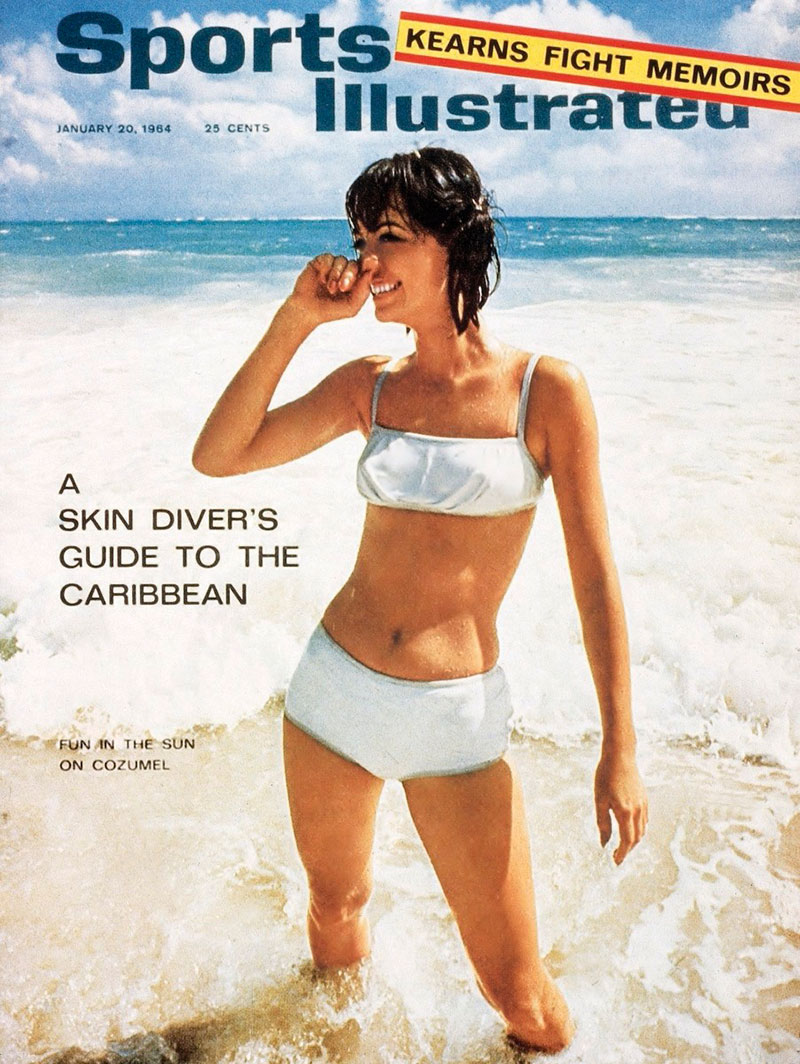
First annual swimsuit issue launched January 20, 1964, featuring model Babette March in white bikini on Mexican beach.
Visual Impact & Design Elements
Full-color beach photography emphasized athletic health over fashion. Natural lighting and ocean backdrop created aspirational lifestyle imagery. Clean composition focused attention on model.
Cultural Context & Historical Significance
Winter sports coverage traditionally dominated January issues. Magazine needed newsstand appeal during slow sports period. Beach culture growing with increased leisure time.
Subject & Story Behind the Cover
March photographed in Cozumel, Mexico by Heinz Kluetmeier. Issue included five-page swimsuit spread. Concept developed to fill dead sports winter months with appealing content.
Media Industry Impact
Issue sold out nationwide. Became annual tradition generating significant revenue. Transformed Sports Illustrated from pure sports magazine to broader lifestyle publication.
Public Reception & Controversy
Male readers embraced new direction. Some criticized sexualization in sports context. Women’s groups questioned objectification in athletic magazine.
Legacy & Lasting Influence
Created billion-dollar franchise for Sports Illustrated. Launched careers of supermodels including Christie Brinkley, Kathy Ireland, Kate Upton. Established template for specialty magazine issues.
Playboy – Marilyn Monroe (1953)
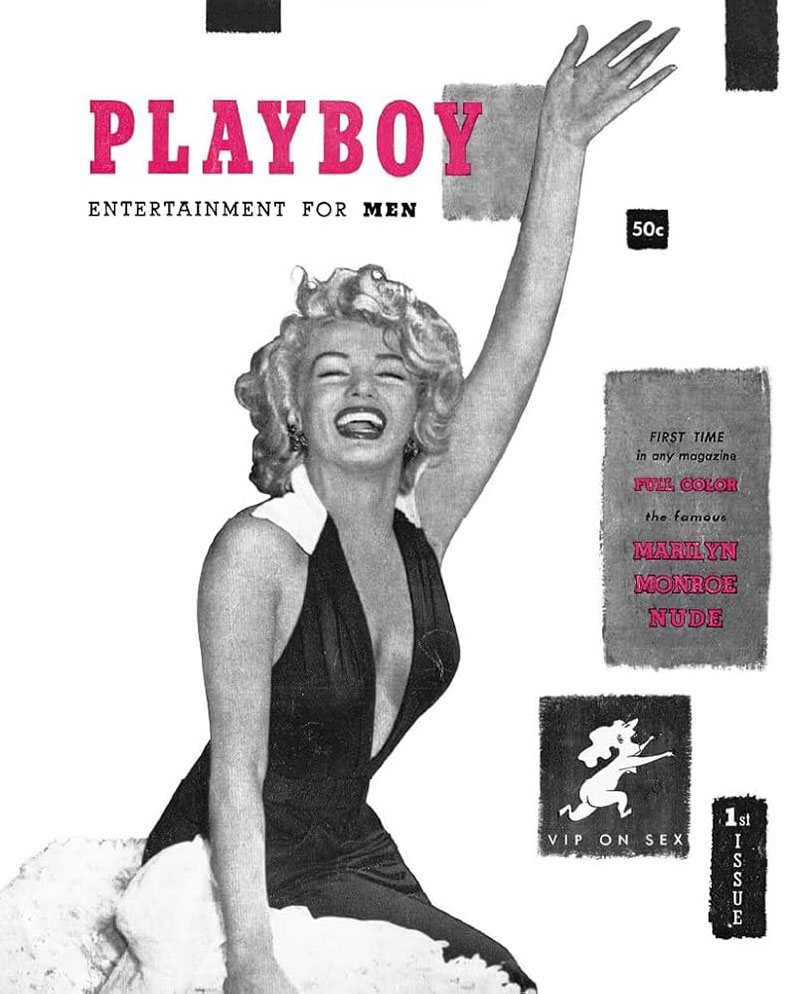
Hugh Hefner launched Playboy in December 1953 with Marilyn Monroe nude photographs as centerfold, establishing magazine’s cultural impact.
Visual Impact & Design Elements
Tom Kelley’s 1949 calendar photographs featured Monroe on red velvet backdrop. Soft lighting created glamorous appeal. Color palette emphasized warmth and sensuality.
Cultural Context & Historical Significance
Post-war America experienced sexual attitude shifts. Suburban prosperity created leisure magazine market. Monroe represented new Hollywood glamour and sexuality.
Subject & Story Behind the Cover
Hefner purchased rights to calendar photos without Monroe’s permission. She had posed for $50 in 1949 when financially desperate. Images appeared without her knowledge or compensation.
Media Industry Impact
First issue sold 53,673 copies despite no advertising or distribution deals. Established Playboy as major publishing force. Created template for men’s lifestyle magazines.
Public Reception & Controversy
Conservative groups condemned pornographic content. Newsstand sales exceeded expectations. Monroe’s star power drove initial circulation success.
Legacy & Lasting Influence
Established Playboy brand worth billions. Influenced men’s magazine industry for decades. Monroe association remains central to magazine’s historical identity.
Mad Magazine – Alfred E. Neuman “What, Me Worry?” (1956)

Harvey Kurtzman and Bill Gaines created satirical mascot representing carefree irreverence toward authority and social conventions.
Visual Impact & Design Elements
Norman Mingo’s illustration featured gap-toothed, freckled face with mischievous grin. Bright colors and exaggerated features created memorable character design. Typography matched irreverent tone.
Cultural Context & Historical Significance
1950s conformity culture created appetite for rebellious humor. Cold War tensions and social restrictions generated need for satirical release. Youth culture emerging as distinct market.
Subject & Story Behind the Cover
Character evolved from earlier “The Idiot” figure in 19th-century advertising. Kurtzman refined design for Mad’s satirical purposes. “What, Me Worry?” became lasting catchphrase.
Media Industry Impact
Mad reached peak circulation of 2.8 million by 1973. Established satirical magazine genre. Influenced comedy writing and political satire for generations.
Public Reception & Controversy
Parents and educators criticized subversive influence on children. Young readers embraced anti-authority message. Became counterculture symbol during 1960s protests.
Legacy & Lasting Influence
Influenced comedy legends including “Saturday Night Live” creators. Established template for satirical publications. Alfred E. Neuman remains pop culture icon representing rebellious humor.
Newsweek – “The Death of Privacy” (1970)

Newsweek’s July 27, 1970 cover examined how technology and mass communication threatened private lives during rapid social change.
Visual Impact & Design Elements
Bold red typography dominated black background. Question format created immediate reader engagement. Stark contrast emphasized urgency of privacy concerns.
Cultural Context & Historical Significance
Early computer databases and electronic surveillance emerged during Cold War paranoia. Credit reporting, government files, and electronic monitoring expanded rapidly in late 1960s corporate America.
Subject & Story Behind the Cover
Feature article explored declining individual privacy rights. Addressed growing concerns about data collection, government surveillance, and corporate information gathering threatening personal autonomy.
Media Industry Impact
Generated substantial newsstand sales through provocative question format. Established template for technology-focused social commentary in news magazines.
Public Reception & Controversy
Privacy advocates praised early warning about surveillance risks. Technology optimists criticized fear-mongering about beneficial innovations. Issue sparked ongoing debates about digital privacy rights.
Legacy & Lasting Influence
Predicted modern privacy debates by decades. Remains relevant during contemporary social media and government surveillance discussions. Established privacy as legitimate news magazine topic.
Esquire – Andy Warhol in Campbell’s Soup (1969)

George Lois designed May 1969 cover showing Warhol drowning in Campbell’s Tomato Soup can, creating iconic Pop art commentary.
Visual Impact & Design Elements
Surreal imagery combined photo-realistic Warhol with enlarged soup can. Red and white color palette matched Campbell’s branding. Visual hierarchy emphasized Warhol’s vulnerability.
Cultural Context & Historical Significance
Pop art movement peaked in late 1960s. Warhol’s soup can paintings (1962) established mass-produced imagery as fine art. Cover coincided with “The Final Decline and Total Collapse of American Avant-Garde” feature story.
Subject & Story Behind the Cover
Lois convinced Warhol to pose for conceptual shoot. Image referenced artist’s famous soup can series while suggesting drowning in commercial success. Photographer positioned Warhol appearing submerged in soup.
Media Industry Impact
Became one of Esquire’s most recognizable covers. Elevated magazine’s art world credibility. Influenced celebrity portrait photography for decades.
Public Reception & Controversy
Art critics embraced meta-commentary on commercialism. General public found image surreal yet accessible. Became collectors’ item among Pop art enthusiasts.
Legacy & Lasting Influence
Established template for conceptual celebrity portraiture. Referenced continuously in art history discussions. Remains symbol of 1960s Pop art movement.
Harper’s Bazaar – Diana Vreeland Era Covers (1960s)

Fashion editor Diana Vreeland revolutionized magazine design during 1962-1971 tenure, creating theatrical, artistic fashion photography.
Visual Impact & Design Elements
High-contrast photography with dramatic lighting. Bold typography treatments. Experimental layouts challenged traditional magazine design conventions.
Cultural Context & Historical Significance
1960s fashion revolution coincided with social upheaval. Youth culture demanded fresh aesthetic approaches. Vreeland understood fashion as cultural expression beyond mere clothing.
Subject & Story Behind the Cover
Vreeland collaborated with photographers like Richard Avedon and Irving Penn. Emphasized fantasy and emotion over literal fashion documentation. Created “Why Don’t You?” feature suggesting lifestyle aspirations.
Media Industry Impact
Circulation increased dramatically under Vreeland’s direction. Established Harper’s Bazaar as cultural authority beyond fashion. Influenced decades of magazine art direction.
Public Reception & Controversy
Fashion industry praised innovative approaches. Some readers found content too avant-garde. Vreeland’s vision occasionally clashed with commercial requirements.
Legacy & Lasting Influence
Established template for fashion magazine artistry. Influenced contemporary publications like Interview and i-D. Vreeland’s aesthetic continues inspiring fashion photographers.
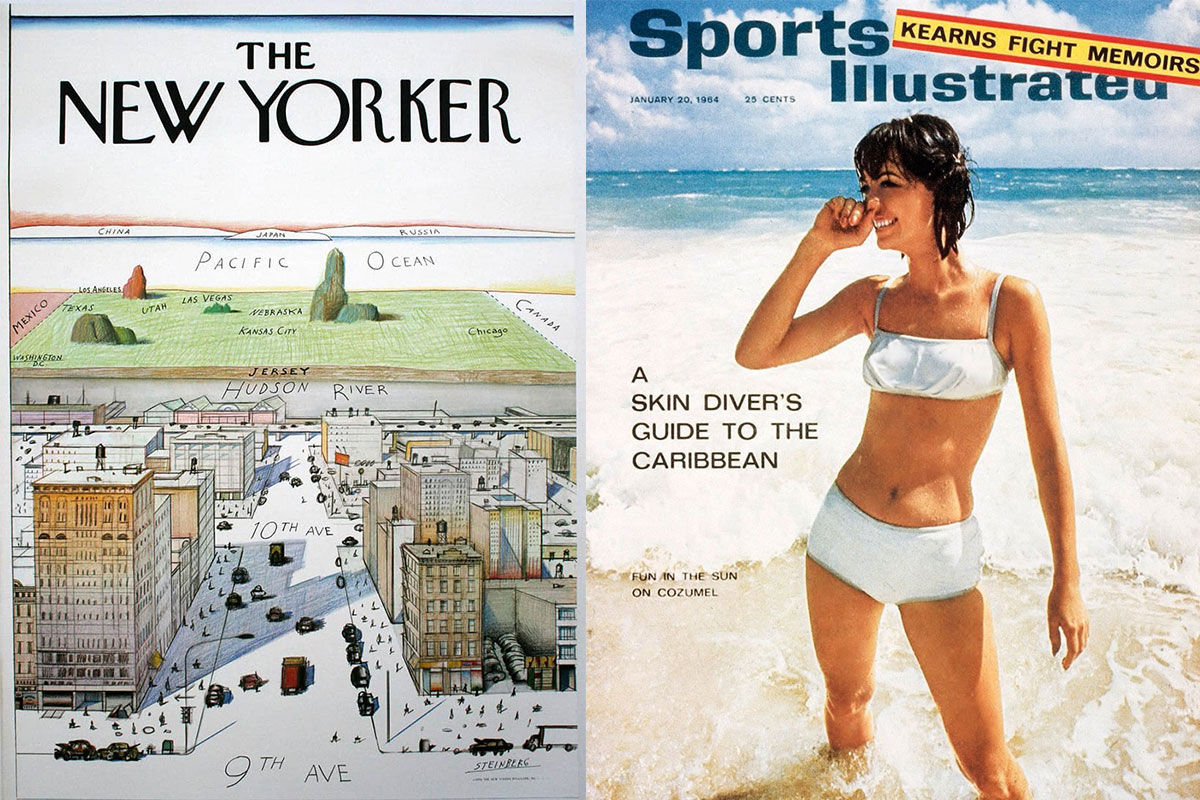
The New Yorker – “View of the World from 9th Avenue” (1976)
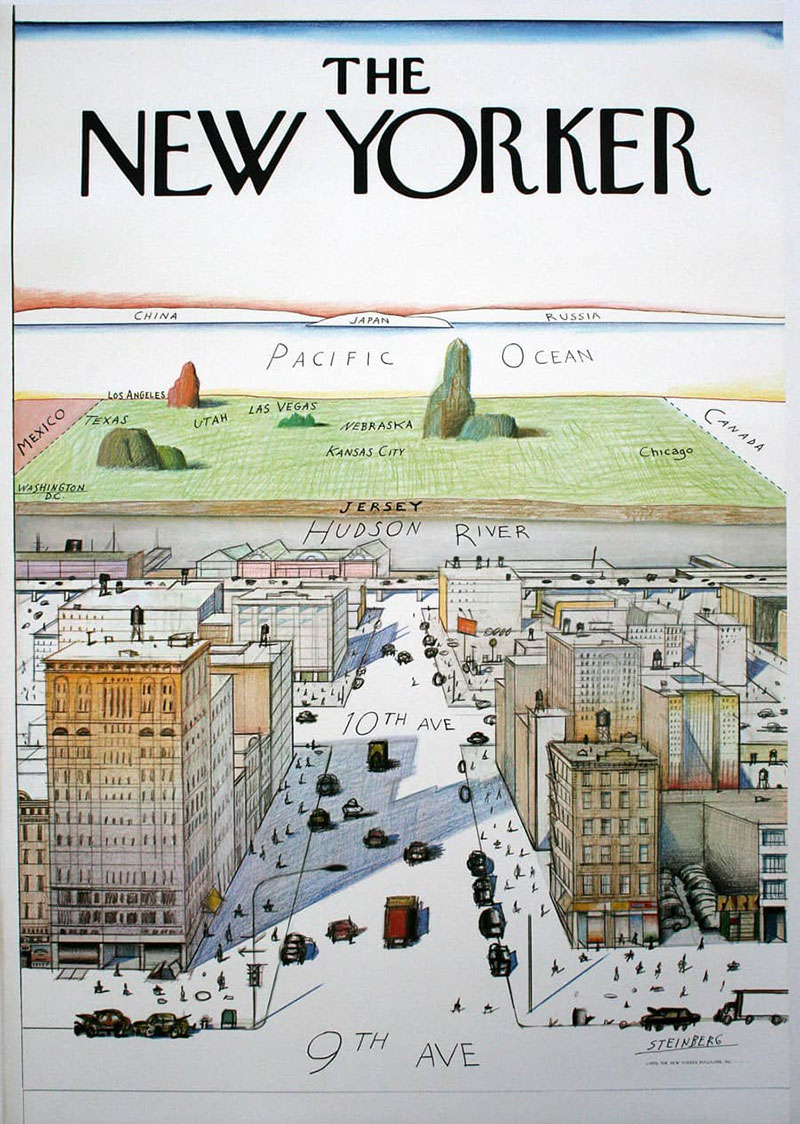
Saul Steinberg’s March 29, 1976 cover illustrated Manhattan-centric worldview with exaggerated geographical perspective.
Visual Impact & Design Elements
Detailed foreground showed Manhattan streets and buildings. Background compressed entire world into small strip. Scale and proportion distortion created humorous effect.
Cultural Context & Historical Significance
Mid-1970s New York faced financial crisis and urban decay. Cover captured stereotypical Manhattan provincialism during city’s decline. Reflected East Coast intellectual perspective.
Subject & Story Behind the Cover
Steinberg created pen-and-ink illustration showing view from magazine’s offices. Image humorously depicted how New Yorkers perceived geographical importance of their city.
Media Industry Impact
Became most reproduced New Yorker cover in history. Generated numerous parodies and adaptations. Established visual shorthand for urban provincialism.
Public Reception & Controversy
New Yorkers embraced self-deprecating humor. Other regions criticized East Coast arrogance. Image sparked discussions about American regionalism.
Legacy & Lasting Influence
Continues appearing in urban studies and geography textbooks. Inspired countless parodies for other cities. Remains symbol of metropolitan narcissism.
Vanity Fair – Pregnant Demi Moore (1991)
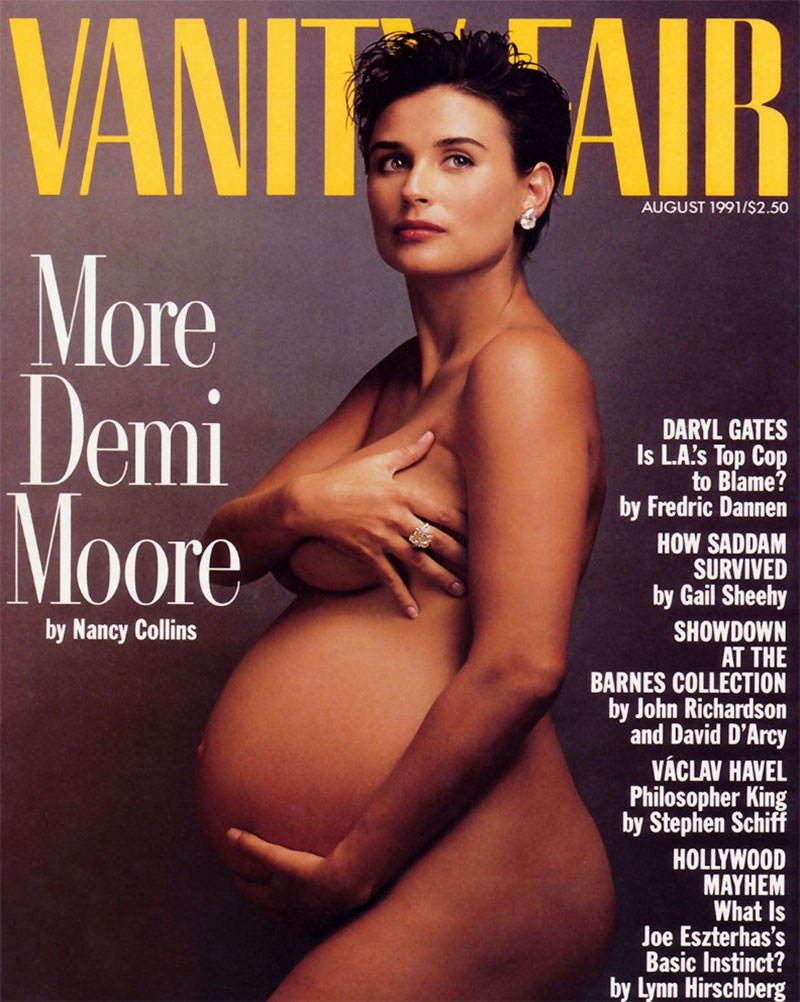
Annie Leibovitz photographed nude pregnant actress for August 1991 cover, challenging taboos about pregnancy and celebrity image.
Visual Impact & Design Elements
Black and white portrait emphasized Moore’s pregnant form. Minimal styling focused attention on pregnancy. Intimate lighting created goddess-like appearance.
Cultural Context & Historical Significance
Early 1990s celebrity culture increasingly personal. Pregnancy traditionally hidden from public view. Women’s liberation encouraged body positivity movements.
Subject & Story Behind the Cover
Moore agreed to nude maternity shoot at seven months pregnant. Leibovitz positioned actress covering breasts while displaying pregnant belly. Image challenged conventional modesty expectations.
Media Industry Impact
Cover generated massive newsstand sales. Many stores placed issues behind counters due to nudity. Established celebrity pregnancy as marketable content.
Public Reception & Controversy
Feminists praised celebration of pregnant female body. Conservative groups condemned inappropriate public nudity. Parodies appeared across popular culture.
Legacy & Lasting Influence
Normalized celebrity pregnancy coverage. Influenced maternity fashion and photography. Became template for artistic pregnancy portraiture.
People – First Issue with Mia Farrow (1974)
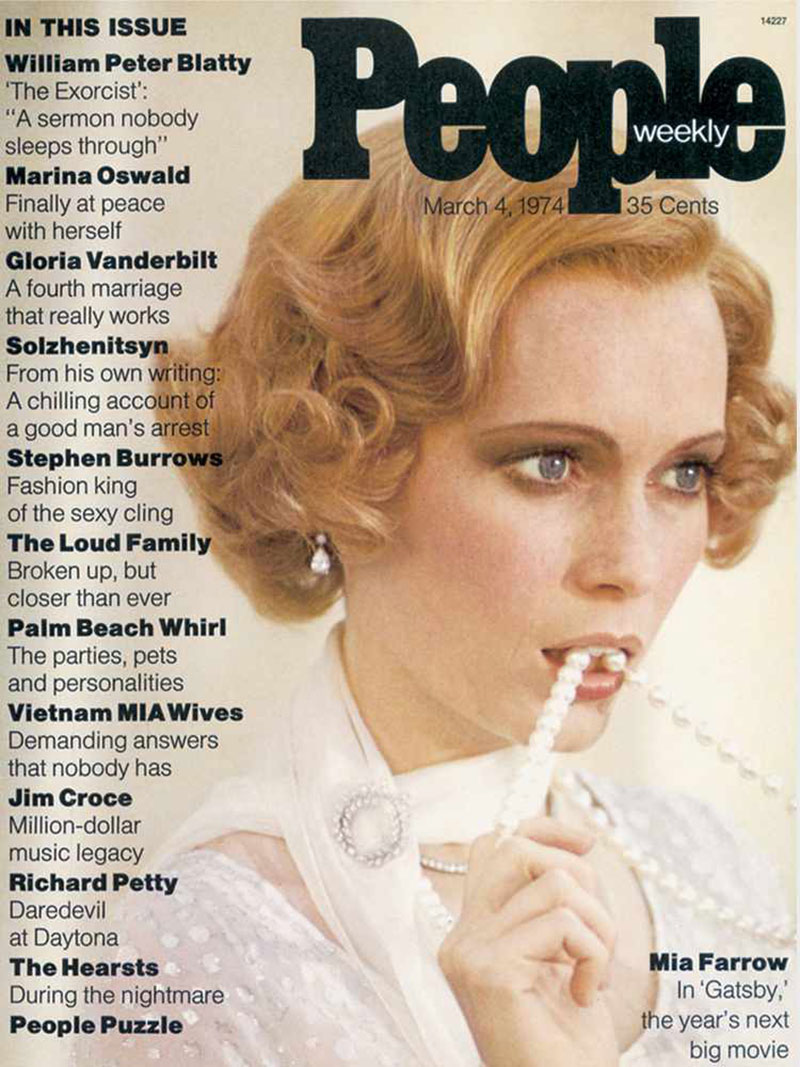
Time Inc. launched People magazine March 4, 1974, featuring Mia Farrow cover story during transition from art films to mainstream success.
Visual Impact & Design Elements
Close-up color photograph emphasized Farrow’s distinctive features. Clean sans-serif font created accessible feel. Simple layout prioritized celebrity image over complex design.
Cultural Context & Historical Significance
Celebrity culture expanding beyond Hollywood trade publications. Television creating new levels of fame. Public demanded personal details about famous figures.
Subject & Story Behind the Cover
Farrow featured during career resurgence with “The Great Gatsby.” Story covered personal life including Woody Allen relationship. Represented magazine’s human interest approach.
Media Industry Impact
First issue sold 1.25 million copies. Established People as major celebrity publication. Created template for personality-driven journalism.
Public Reception & Controversy
Readers embraced celebrity focus over hard news. Critics dismissed magazine as superficial. Success proved market demand for celebrity content.
Legacy & Lasting Influence
Created billion-dollar celebrity media industry. Influenced entertainment journalism standards. Established celebrity coverage as legitimate magazine category.
GQ – First Male Fashion Cover (1980s)

GQ transitioned from trade publication to consumer lifestyle magazine, establishing male fashion photography standards during 1980s relaunch.
Visual Impact & Design Elements
Professional male model photography emphasized sophisticated styling. High production values with careful attention to menswear details. Clean typography reinforced upscale positioning.
Cultural Context & Historical Significance
1980s corporate culture demanded professional appearance standards. Men increasingly interested in fashion beyond basic clothing. Economic prosperity supported luxury menswear market.
Subject & Story Behind the Cover
Magazine transformed from industry trade publication to consumer lifestyle focus. Featured professional male models in designer clothing. Emphasized career success and style connection.
Media Industry Impact
Circulation grew dramatically with lifestyle focus. Advertising revenue increased through luxury brand partnerships. Established men’s fashion as legitimate magazine category.
Public Reception & Controversy
Professional men embraced style guidance. Some criticized focus on superficial appearance. Successfully challenged masculine stereotypes about fashion interest.
Legacy & Lasting Influence
Created template for men’s lifestyle publications. Influenced male fashion photography aesthetics. Established GQ as menswear authority for decades.
FAQ on Iconic Magazine Covers
What makes a magazine cover iconic?
Memorable magazine covers combine powerful photography, strategic typography, and cultural timing. They capture defining moments, feature compelling subjects, and use visual hierarchy to create instant recognition. The best covers transcend their original purpose to become cultural artifacts.
Which magazine has the most famous covers?
Time magazine leads with covers featuring historical figures and major events. Vogue follows closely with groundbreaking fashion photography and celebrity portraits. Rolling Stone’s rebellious covers and National Geographic’s stunning photography also rank among the most recognized cover designs worldwide.
How do magazines choose cover models?
Magazines select cover subjects based on current relevance, newsstand appeal, and target audience demographics. Celebrity status, trending topics, and seasonal relevance influence decisions. Publishers analyze circulation data and market research to predict which faces will drive sales and engagement.
What role does color psychology play in magazine covers?
Colors trigger emotional responses and influence purchasing decisions. Red creates urgency and excitement. Blue suggests trust and reliability. Cover photography often uses complementary color schemes to make subjects pop against backgrounds, ensuring maximum visual impact on crowded newsstands.
How has digital media affected magazine cover design?
Digital platforms demand covers optimized for small screens and social media sharing. Designers now create covers with bolder typography elements, simplified compositions, and high contrast to ensure readability across devices. Traditional newsstand appeal remains important for print circulation.
What typography techniques work best for magazine covers?
Successful magazine covers use sans-serif fonts for headlines and readable body text. Typography hierarchy guides reader attention through strategic sizing, weight, and placement. Cover headlines must remain legible when partially obscured by other magazines on stands.
How do magazines measure cover success?
Publishers track newsstand sales, circulation numbers, and digital engagement metrics. Covers generating high social media shares and subscriber growth indicate success. Focus groups and A/B testing help predict which cover concepts will resonate with target demographics before publication.
What are common magazine cover composition mistakes?
Cluttered layouts, poor font spacing, and weak focal points reduce cover effectiveness. Overcrowding text elements and ignoring the rule of thirds creates visual chaos. Successful covers maintain clear hierarchy and strategic white space.
How long does creating a magazine cover take?
Professional magazine covers require 2-4 weeks from concept to completion. This includes photo shoots, design iterations, and approval processes. Breaking news covers can be created in hours when necessary. Editorial photography sessions often happen months before publication dates.
What printing considerations affect magazine cover design?
Print design requires understanding CMYK color limitations and paper quality effects. Designers must account for ink bleed, DPI requirements, and how colors appear on different paper stocks. Newsstand lighting conditions influence color and contrast decisions.
Conclusion
Iconic magazine covers represent the perfect marriage of editorial vision and design mastery. From Time’s historic portraits to National Geographic’s breathtaking photography, these covers demonstrate how strategic graphic design principles create lasting cultural impact.
The most successful covers balance scale and proportion with compelling subject matter. They understand that effective logo design principles apply to magazine branding, creating instant recognition through consistent visual identity.
Modern magazines continue evolving their cover strategies. Digital platforms demand designs optimized for mobile screens while maintaining newsstand appeal. Publishers now consider grid systems and minimalist design approaches to cut through information overload.
Whether studying Vogue’s fashion photography or Rolling Stone’s rebellious layouts, these legendary covers prove that great design transcends trends. They become visual time capsules, preserving cultural moments through thoughtful composition and bold creative vision.

Renowned for his expertise in logo design and visual branding, Bogdan has developed a multitude of logos for various clients.
His skills extend to creating posters, vector illustrations, business cards, and brochures. Additionally, Bogdan's UI kits were featured on marketplaces like Visual Hierarchy and UI8.
He also wrote in the past years on sites like Design Your Way, WebDesignerDepot, WPDean, Designmodo, Speckyboy, Slider Revolution, and more.
- Jujutsu Kaisen Font Generator - 12 October 2026
- The Windsurf Logo History, Colors, Font, And Meaning - 10 October 2026
- How to Remove Background From Product Photos (No Photoshop) - 10 October 2026

Bogdan Sandu is a seasoned designer who has been designing websites since 2008. Renowned for his expertise in logo design and visual branding, Bogdan has developed a multitude of logos for various clients. His skills extend to creating posters, vector illustrations, business cards, and brochures. Additionally, Bogdan's UI kits were featured on marketplaces like Visual Hierarchy and UI8. He also wrote in the past years on sites like Design Your Way, WebDesignerDepot, WPDean, Designmodo, Speckyboy, Slider Revolution, and more.
You Might Also Like


