


Since 1974, People Magazine covers have documented celebrity culture, national tragedies, and pop culture moments that defined entire generations. Some sold millions of copies. Others changed how we talk about difficult topics like domestic abuse and chronic illness.
From the Princess Diana tribute issue to the annual Sexiest Man Alive reveal, these cover photos did more than sell magazines at the newsstand. They shaped public conversations.
In this article, you’ll find the most memorable People Magazine cover stories ever published. We break down the design choices, the cultural impact, and what made each one resonate with millions of readers. Whether you’re interested in entertainment journalism history or just want to revisit the covers that stopped you in the checkout line, this is the list.
The Best People Magazine Covers of All Time
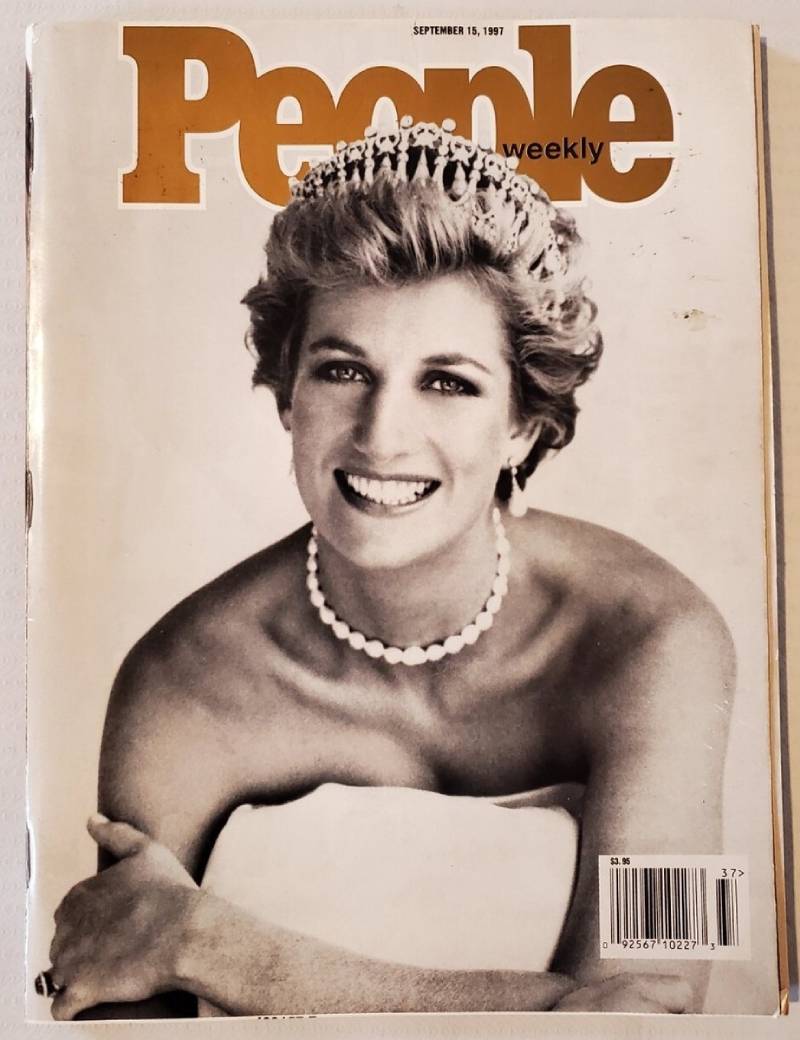
Princess Diana Tribute Cover (September 15, 1997)
The Story Behind This Cover
Princess Diana died on August 31, 1997, in a Paris car crash. She was 36.
People Magazine pulled together a tribute issue within days. The cover featured Diana wearing a tiara and pearl necklace, smiling. It was a photo that felt warm and personal, not staged or stiff.
What made this issue different from anything People had done before? It ran without a single cover line. No headlines. No teasers. Just her name and the years 1961-1997. That’s it. The first and only time People has ever done this.
Cover Design and Layout
The design team made a bold call. They stripped everything away.
No competing text. No sidebar features. The masthead sat at the top as usual, but below it was just Diana. The focal point was entirely on her face. The simplicity of the layout gave the image more emotional weight than any headline could.
Took me a while to realize how unusual that choice was. Magazine covers live and die by their cover lines. Removing them was a huge risk for newsstand sales.
Cultural Impact
Diana had appeared on the cover of People 59 times before this issue, more than any other person in the magazine’s history. But this one hit different.
Two billion people watched her funeral. The cover became something people kept, not just read. It turned into a collectible, a keepsake. You still see them selling on eBay for a premium today.
Why This Cover Stands Out
The restraint. Most celebrity tribute covers try to say too much. This one said almost nothing and communicated everything. The emphasis was on Diana herself, not on the magazine’s take.
Sales and Reception
This issue sold 3.1 million copies, making it the highest-selling tribute cover in People Magazine history at the time. It remains one of the best-selling individual magazine issues ever published.
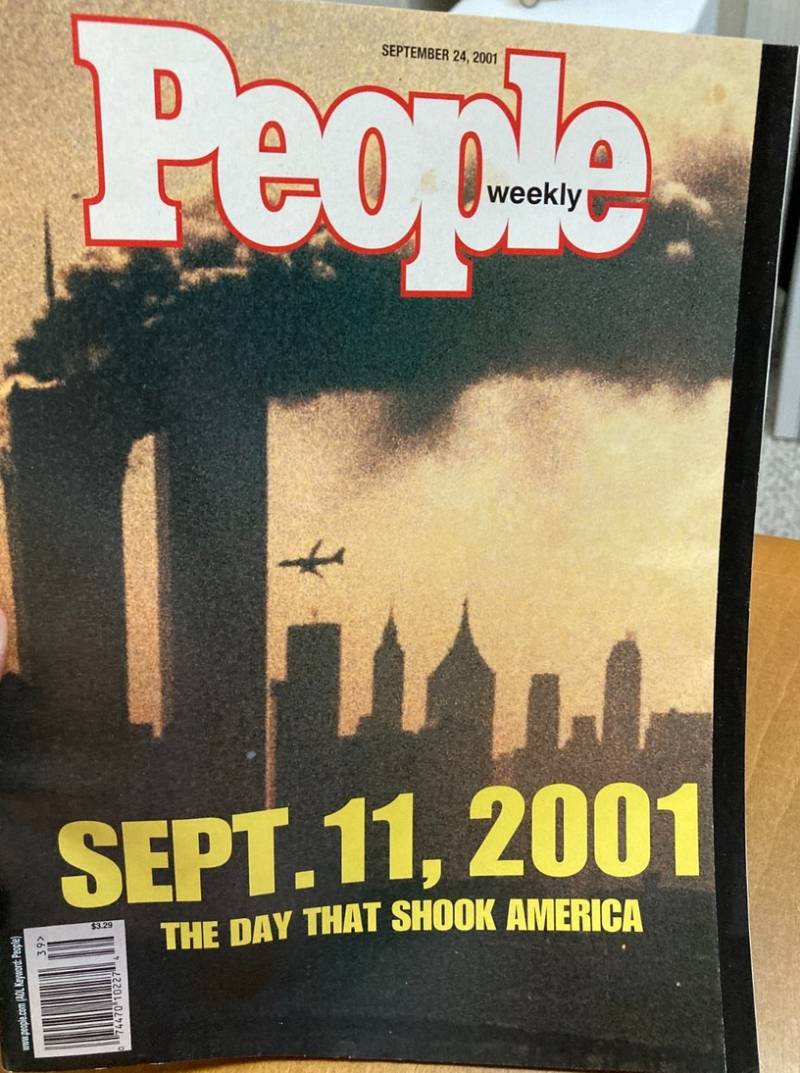
September 11 Special Issue (September 24, 2001)
The Story Behind This Cover
On September 11, 2001, the editors at People scrapped whatever issue they had in progress. They rebuilt an entire magazine from scratch in less than 24 hours.
The cover showed the smoking Twin Towers with the headline “The Day That Shook America.” It was the first magazine to hit newsstands after the attacks. That turnaround time is still hard to believe.
Cover Design and Layout
The cover photo was a wide shot of the World Trade Center towers engulfed in smoke. Bold white text ran across the lower portion of the image.
There was no celebrity on the cover. No portrait. Just the event itself. The visual hierarchy pushed the image forward and let the headline do minimal work. It didn’t need to sell the story. Everyone already knew.
Cultural Impact
This issue wasn’t about entertainment or celebrity gossip. It featured stories of first responders, survivors, and families affected by the attacks. Rudy Giuliani. The heroes of Flight 93.
People Magazine shifted its entire identity for one week. It became a news publication. And readers responded.
Why This Cover Stands Out
Speed and purpose. The editorial team produced a full magazine in under a day, focused entirely on real people caught in a national tragedy. No fluff. No filler.
Sales and Reception
With over 4 million copies sold, this is the best-selling issue in People Magazine’s entire history. It beat every Sexiest Man Alive issue. Every Most Beautiful issue. Every celebrity exclusive.
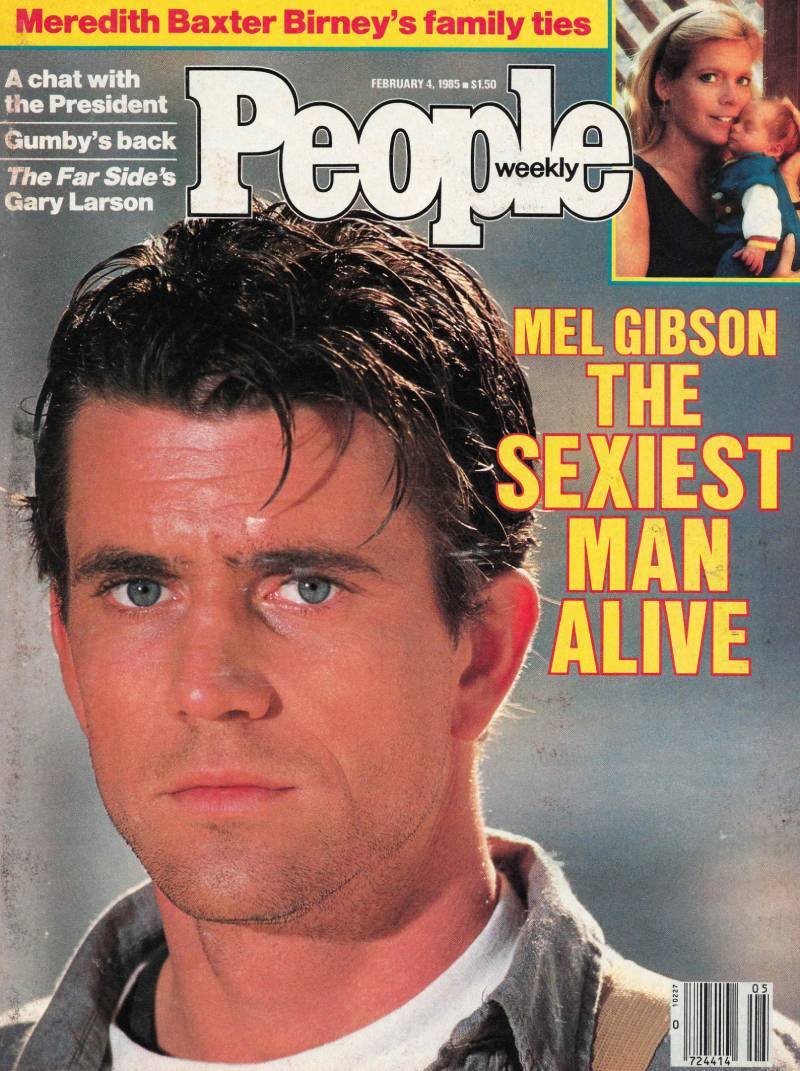
Mel Gibson, First Sexiest Man Alive (February 1985)
The Story Behind This Cover
The Sexiest Man Alive franchise started almost by accident. A People writer was profiling Mel Gibson and casually described him as “the sexiest man alive” in her copy. Another version of the story says a staffer blurted it out during an editorial meeting.
Either way, the editors liked the phrase enough to put it on the cover. Gibson was 29 at the time, riding high on the Mad Max films.
Cover Design and Layout
Gibson appeared with wet, disheveled hair and piercing blue eyes. The photo was a straightforward close-up portrait. The cover line “Sexiest Man Alive” appeared in bold typography that would become the franchise’s signature look.
The anatomy of this magazine cover was fairly standard for the era. But the concept behind it was entirely new.
Cultural Impact
This one cover launched a 40-year tradition. Every November, the Sexiest Man Alive announcement generates massive media coverage. It turned a single editorial choice into People Magazine’s most recognized annual feature.
Winners since Gibson include Brad Pitt, George Clooney (twice), Denzel Washington, Dwayne Johnson, and most recently Jonathan Bailey in 2025.
Why This Cover Stands Out
It created a cultural institution from a throwaway line. The profile itself wasn’t even that flattering. But the title stuck, and People built an entire franchise around it.
Sales and Reception
The original 1985 issue wasn’t a record-breaker in terms of raw sales. But it established the template for what would become People’s most profitable annual issue. The Sexiest Man Alive edition consistently ranks among the magazine’s top sellers each year.
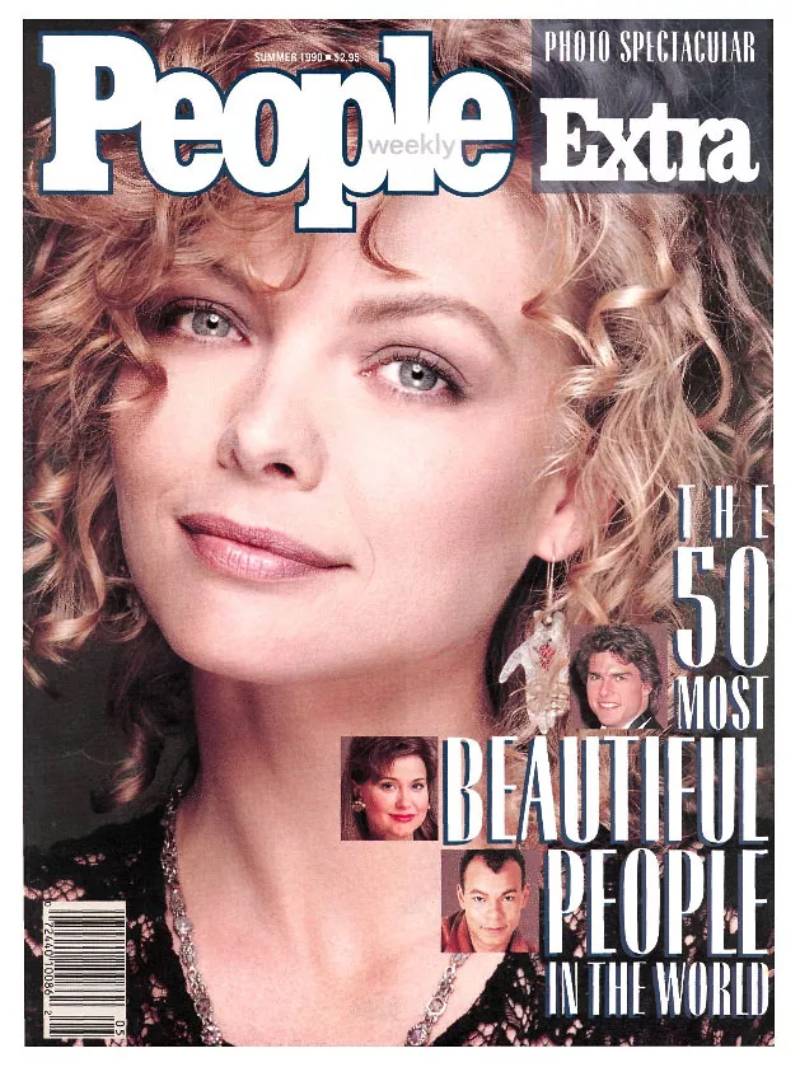
Michelle Pfeiffer, First Most Beautiful Person (1990)
The Story Behind This Cover
In 1990, People Magazine launched its “50 Most Beautiful People in the World” issue. Michelle Pfeiffer was the first person to land the cover.
She was 32, coming off an incredible run of critically acclaimed performances in Dangerous Liaisons, The Fabulous Baker Boys, and Married to the Mob. She had just won a Golden Globe and earned back-to-back Oscar nominations.
Cover Design and Layout
The cover featured a clean, glamorous portrait of Pfeiffer. The layout leaned into bright, warm tones. Understanding color psychology matters here, because the warm palette made the cover feel approachable and inviting rather than cold or editorial.
The cover lines were kept relatively simple, letting Pfeiffer’s image carry the issue.
Cultural Impact
This issue created People’s second major annual franchise. The Most Beautiful list (now called the Beautiful Issue) has featured Julia Roberts a record five times, along with stars like Halle Berry, Angelina Jolie, and Lupita Nyong’o.
Pfeiffer herself appeared in the issue six times throughout the 1990s, a record for that decade.
Why This Cover Stands Out
It started a tradition. Like the Sexiest Man Alive, the Beautiful Issue became a cultural touchstone. But this first one felt genuine. Pfeiffer wasn’t just famous for being beautiful. She was at the peak of her acting career.
Sales and Reception
The inaugural Most Beautiful issue performed well on newsstands and proved the concept had legs. People expanded the list from 50 to 100 in 2005 and rebranded it as the Beautiful Issue in 2018.
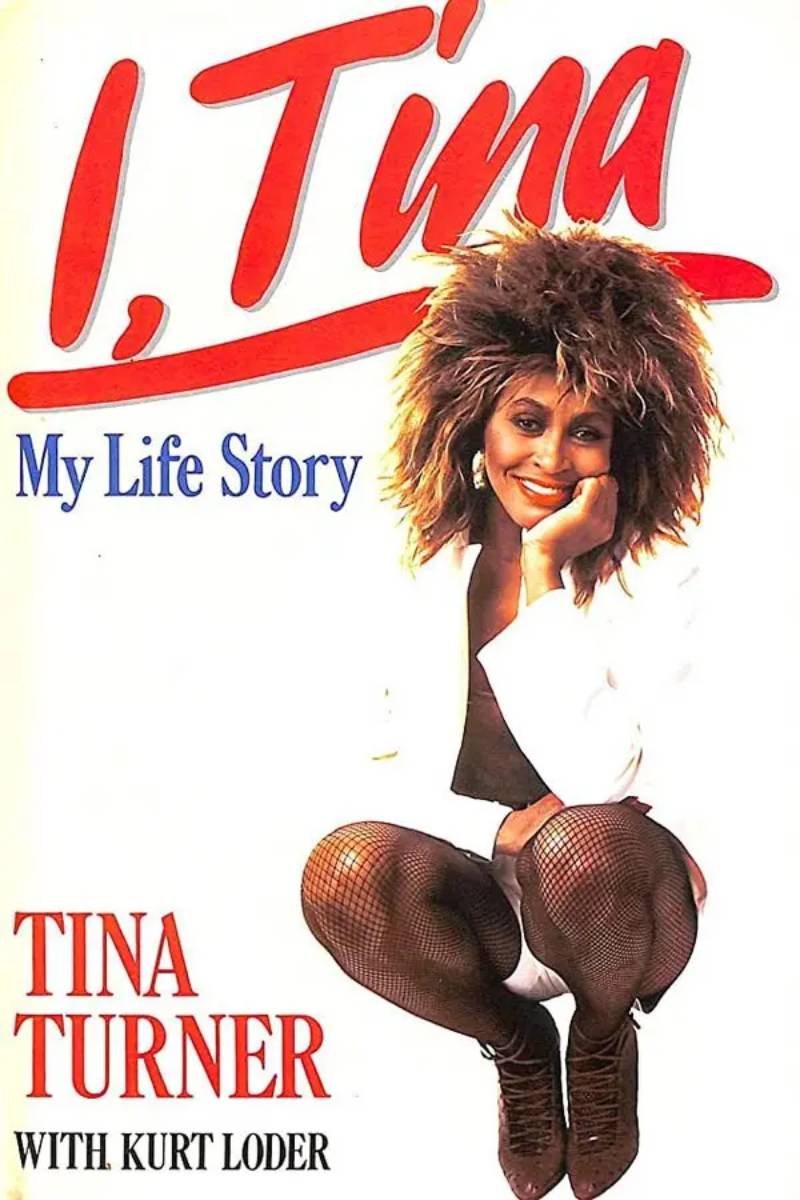
Tina Turner’s Domestic Abuse Story (December 1981)
The Story Behind This Cover
In 1981, Tina Turner sat down with People Magazine music editor Carl Arrington and did something almost nobody did back then. She talked openly about domestic violence.
Turner described 16 years of abuse during her marriage to Ike Turner. Broken nose. Broken jaw. Burns from hot coffee thrown in her face. She told the magazine, “I was living a life of death.”
This was five years after she fled the relationship with 36 cents and a Mobil credit card.
Cover Design and Layout
The cover showed Tina looking confident and forward-facing. The design didn’t lean into victimhood. It positioned her as someone who survived, not someone who was broken. The contrast between the gravity of her story and the strength in her photo was the whole point.
Cultural Impact
At a time when domestic violence was barely discussed publicly, Turner’s People interview broke a barrier. Ruth Glenn, who later became CEO of the National Coalition Against Domestic Violence, credits Turner’s willingness to speak out as a turning point.
The interview led to Turner’s 1986 autobiography “I, Tina,” which became a bestseller and was adapted into the 1993 film “What’s Love Got to Do With It” starring Angela Bassett.
Why This Cover Stands Out
This wasn’t a celebrity puff piece. It was real storytelling that changed how the public discussed abuse. People Magazine ran a serious, unflinching human interest story when most entertainment magazines wouldn’t touch the subject.
Sales and Reception
The issue generated significant attention and helped rebuild Tina Turner’s public profile as a solo artist. Three years later, she released Private Dancer, which went five-times Platinum and won her three Grammy Awards.
Michael J. Fox Parkinson’s Diagnosis (1998)

The Story Behind This Cover
Michael J. Fox chose People Magazine to publicly disclose his Parkinson’s disease diagnosis. He had been diagnosed in 1991 at age 29 but kept it private for seven years.
The cover story was a major exclusive. Fox was still a household name from Back to the Future and Spin City, so the revelation shocked readers.
Cover Design and Layout
The cover featured a warm, intimate portrait of Fox. No dramatic lighting. No clinical feel. The design choices kept things personal and relatable. The font treatment on the cover headlines was straightforward, letting the story sell itself.
Cultural Impact
Fox’s decision to go public through People transformed the conversation around Parkinson’s disease. He went on to establish the Michael J. Fox Foundation, which has since funded over $2 billion in Parkinson’s research.
The cover didn’t just break news. It changed how a disease was perceived and funded.
Why This Cover Stands Out
Celebrity health disclosures are common now. In 1998, they weren’t. Fox trusted People with one of the biggest personal stories in entertainment, and the magazine handled it with care.
Sales and Reception
The issue was a strong newsstand performer and generated widespread media coverage. It remains one of the most referenced People cover stories when discussing celebrity health advocacy.
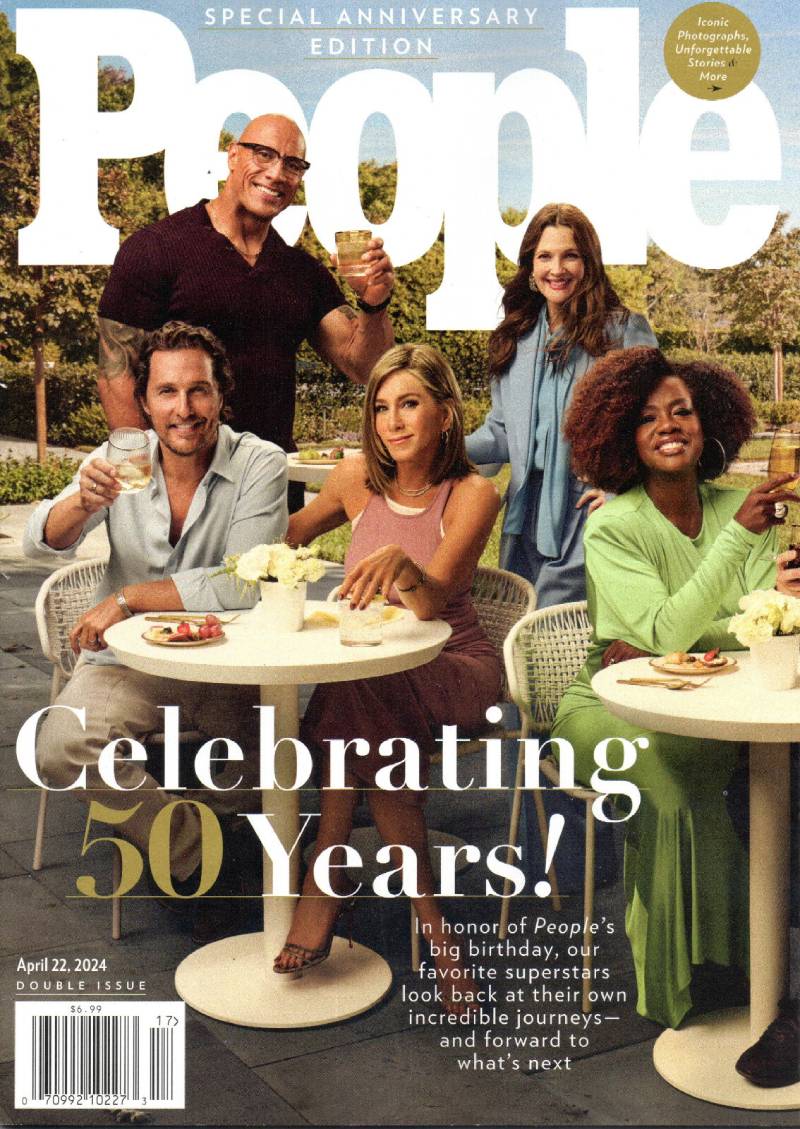
50th Anniversary Issue (April 2024)
The Story Behind This Cover
For its 50th birthday, People Magazine went big. The cover featured 11 cover stars, including Jennifer Aniston, Oprah Winfrey, Dwayne Johnson, Viola Davis, Reese Witherspoon, Serena Williams, Michael J. Fox, Nicole Kidman, John Legend, Drew Barrymore, and Matthew McConaughey.
Combined, these cover stars hold 14 Primetime Emmys, 16 Golden Globes, five Oscars, four Tonys, and 14 Grammys.
Cover Design and Layout
Fitting 11 people on a single cover is a layout challenge. The design team arranged the stars in a group portrait format, balancing scale and proportion so no single person dominated the frame.
The standard magazine cover size doesn’t give you much room to work with when you have this many subjects. But the layout pulled it off cleanly.
Cultural Impact
The issue served as a retrospective on People’s influence over five decades. It highlighted the magazine’s biggest scoops, from Princess Diana’s 59 covers to the September 11 issue to the very first Sexiest Man Alive.
Why This Cover Stands Out
Anniversary issues can feel self-congratulatory. This one worked because it focused on the people who defined the magazine, not the magazine itself.
Sales and Reception
The 50th anniversary issue was marketed as a collector’s edition and received positive coverage from entertainment media outlets. It included features on “The Next Power Players” and a retrospective titled “How People Changed My Life.”
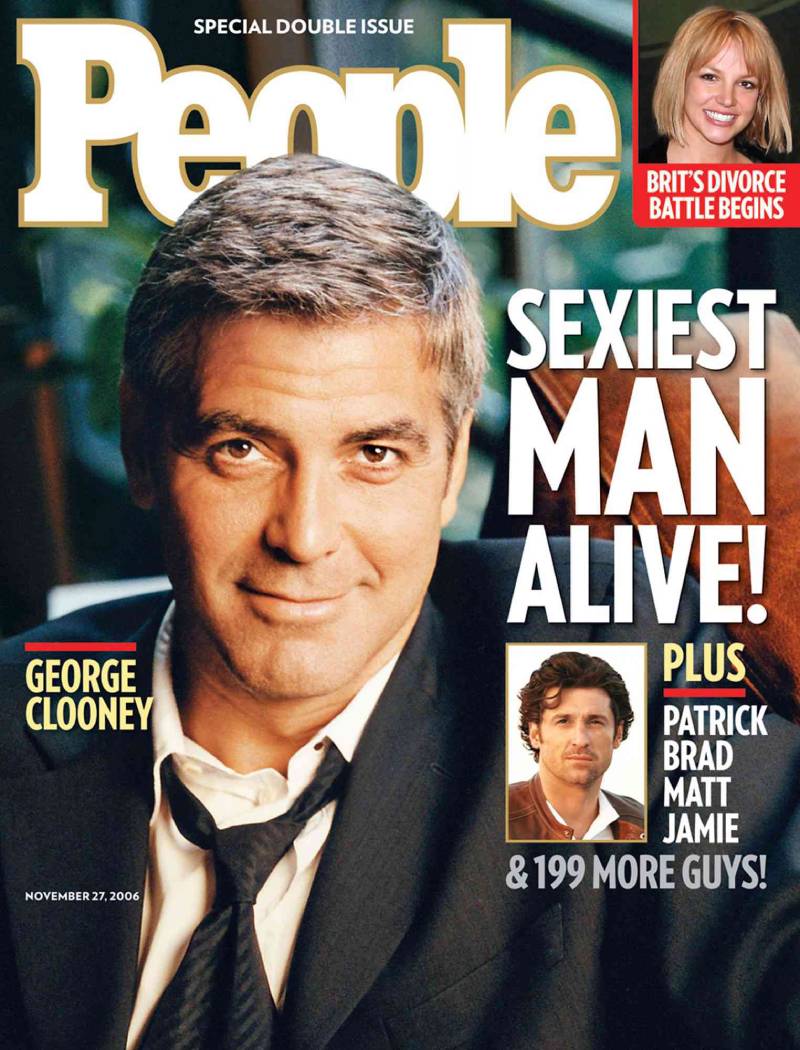
George Clooney, Sexiest Man Alive (2006)
The Story Behind This Cover
George Clooney became only the second person to win the Sexiest Man Alive title twice, first in 1997 and again in 2006. That same year, he won his first Oscar for Best Supporting Actor in Syriana.
By 2006, Clooney had appeared in the Sexiest Man Alive issue 22 times total, though only twice on the actual cover.
Cover Design and Layout
The 2006 cover was a classic People portrait. Clooney in a suit, direct eye contact, minimal background clutter. The cover lines called attention to the double win. The design was confident and clean, similar to how iconic magazine covers tend to favor simplicity over complexity.
Cultural Impact
Clooney’s second win confirmed that the Sexiest Man Alive title wasn’t just about the hot new thing. It could acknowledge staying power. Brad Pitt and Johnny Depp also received the title twice, but Clooney’s double win came with a nine-year gap that felt more like a career arc.
Why This Cover Stands Out
It validated the repeat winner concept. Before Clooney’s second win, the idea of crowning someone twice seemed redundant. After it, the franchise had a new dimension.
Sales and Reception
The Sexiest Man Alive issues consistently rank among People’s top-selling editions. Clooney’s 2006 cover was no exception, performing well at newsstands during a year when the actor’s cultural profile was at its peak.
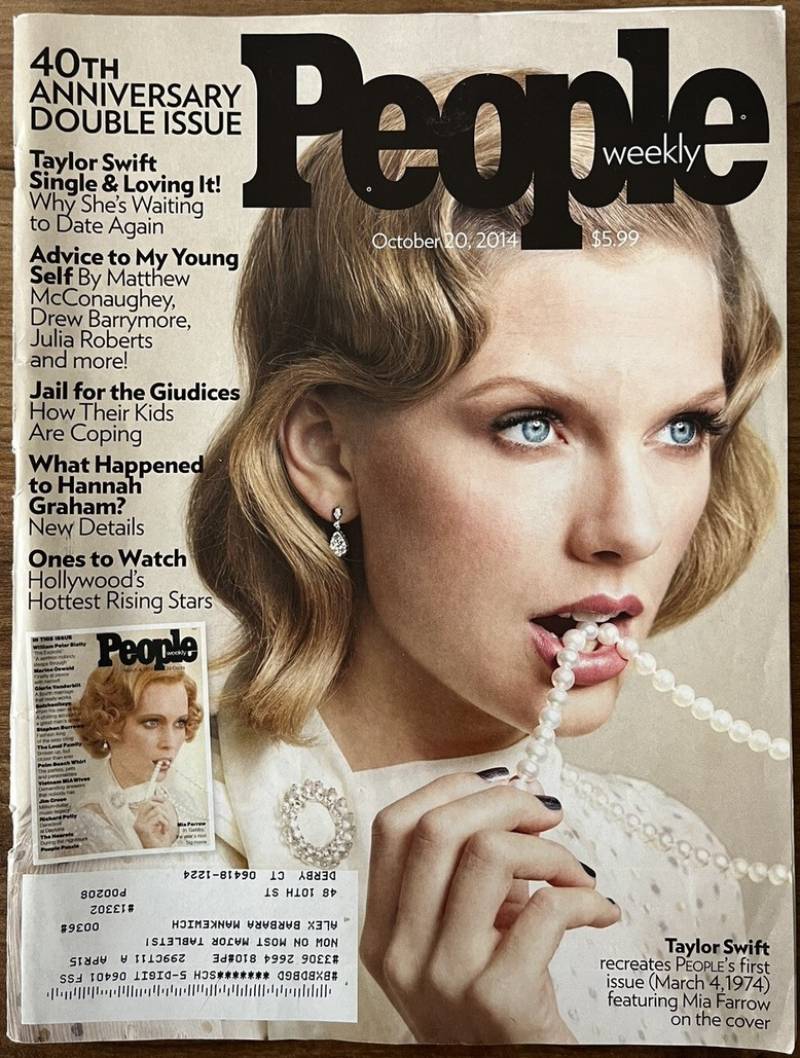
Taylor Swift Recreating the Mia Farrow Cover (2014, 40th Anniversary)
The Story Behind This Cover
For People’s 40th anniversary in 2014, Taylor Swift recreated the magazine’s very first cover from 1974, which featured Mia Farrow. Swift posed in a similar style and composition to the original shot.
It was a deliberate callback. The original 1974 cover marked the beginning of People Magazine as a publication. Having Swift, one of the biggest pop culture figures of the 2010s, mirror it was a smart editorial choice.
Cover Design and Layout
The layout mimicked the original as closely as possible. Same framing. Similar color tone. The elements that make a good magazine cover were all here, but filtered through a nostalgic lens. The side-by-side comparison between 1974 and 2014 showed how much (and how little) cover design had changed over four decades.
Cultural Impact
The cover created a bridge between two eras. Mia Farrow represented old Hollywood. Taylor Swift represented the new media landscape. Putting them in visual conversation made for a compelling anniversary statement.
Why This Cover Stands Out
Recreation covers can feel gimmicky. This one didn’t, because the original was genuinely the first People cover ever printed. The historical connection was real.
Sales and Reception
As an anniversary edition, the issue performed well and generated significant online discussion. Swift’s massive fanbase amplified the cover’s visibility across social media platforms.
Jonathan Bailey, First Openly Gay Sexiest Man Alive (November 2025)
The Story Behind This Cover
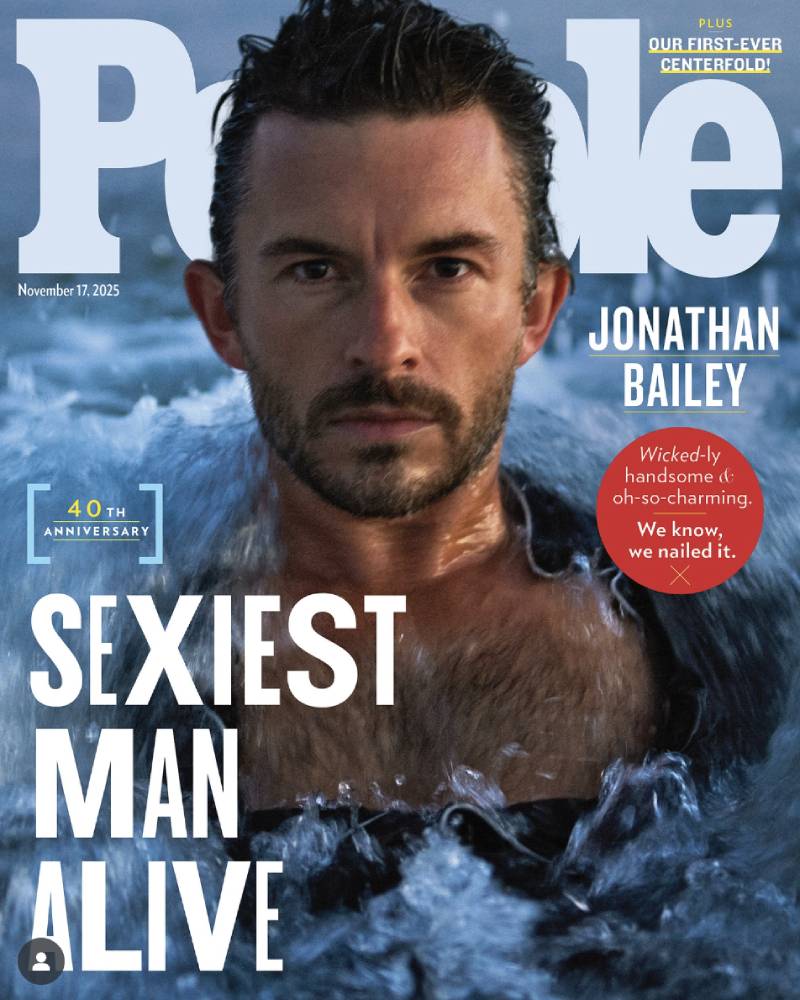
In November 2025, People named Bridgerton and Wicked star Jonathan Bailey as its Sexiest Man Alive. The announcement was made on The Tonight Show with Jimmy Fallon. Bailey was 37.
He became the first openly gay man to receive the title in the franchise’s 40-year history. The issue also featured the magazine’s first-ever centerfold, which went to musician Role Model (Tucker Pillsbury).
Cover Design and Layout
The cover followed the Sexiest Man Alive template. Portrait photo. Bold title text. Clean background. People doesn’t reinvent the wheel with these covers, and that consistency is part of the brand. The color palette leaned warm, matching the celebratory tone of the issue.
Cultural Impact
Bailey’s selection was widely praised for its inclusivity. He told People, “It’s a huge honor. Obviously, I’m incredibly flattered. And it’s completely absurd.” The choice reflected a shift in how mainstream media defines attractiveness and sex appeal.
Previous winners were overwhelmingly straight, white actors. While the franchise had diversified with picks like Denzel Washington (1996), Dwayne Johnson (2016), and Michael B. Jordan (2020), Bailey’s selection marked another first.
Why This Cover Stands Out
It pushed the Sexiest Man Alive franchise forward. After 40 years, the title still had new ground to break. The addition of a centerfold feature also showed People was willing to evolve the format.
Sales and Reception
The 40th anniversary Sexiest Man Alive edition generated strong social media engagement. TikTok edits of the centerfold reveal and Bailey’s Tonight Show appearance racked up hundreds of thousands of views. The issue was marketed as a special anniversary edition with exclusive interviews and retrospective content.
FAQ on People Magazine Covers
Who has appeared on the most People Magazine covers?
Princess Diana holds the record with 59 cover appearances. Her first was in 1981, previewing her royal wedding. Her final cover, the September 1997 tribute issue, became the highest-selling tribute cover in the magazine’s history.
What is the best-selling People Magazine issue ever?
The September 11, 2001 issue sold over 4 million copies. The editorial team produced the entire magazine in under 24 hours. It was the first publication to reach newsstands after the attacks.
When did the Sexiest Man Alive cover start?
People launched the Sexiest Man Alive feature in February 1985 with Mel Gibson on the cover. The phrase started as an off-handed comment by a writer. It became the magazine’s most recognized annual franchise.
How much are old People Magazine covers worth?
Most back issues sell for $5 to $20. Special editions and celebrity tribute covers fetch more. The 1997 Princess Diana tribute and early Sexiest Man Alive issues regularly sell for $30 to $100 depending on condition.
Who picks the Sexiest Man Alive each year?
The editors at People Magazine make the selection. They track candidates throughout the year based on cultural relevance, reader response, and public profile. There’s no formal vote or scientific process behind the decision.
What was the first People Magazine cover ever published?
The debut issue dropped on March 4, 1974, featuring actress Mia Farrow. She was starring in The Great Gatsby at the time. Taylor Swift recreated this cover for the magazine’s 40th anniversary in 2014.
How often does People Magazine release a new cover?
People is a weekly publication, so a new cover hits newsstands every week. That adds up to roughly 52 cover stories per year. Digital editions on People.com often feature additional online-exclusive cover variations.
What is the Most Beautiful People issue?
Launched in 1990 with Michelle Pfeiffer, this annual issue names the year’s most beautiful celebrities. Julia Roberts holds the record with five cover appearances. The list expanded from 50 to 100 names in 2005.
Can you buy old People Magazine covers online?
Yes. Back issues are available on eBay, Amazon, Etsy, and Pocketmags. Collectors focus on celebrity cover photos, special edition issues, and historically significant covers. Condition and rarity affect pricing the most.
Has People Magazine ever put a non-celebrity on the cover?
Yes, several times. The September 11 issue featured everyday heroes and first responders instead of Hollywood celebrities. People regularly highlights human-interest stories, putting ordinary people at the center of major cover stories.
Conclusion
The best People Magazine covers did more than sell copies at the newsstand. They captured moments that mattered, from Princess Diana’s tribute to Tina Turner breaking her silence on abuse to the very first Sexiest Man Alive announcement in 1985.
Each cover photo on this list shaped celebrity news and entertainment journalism in its own way. Some launched annual franchises like the Beautiful Issue. Others documented national tragedies with speed and care that print media rarely achieves.
What separates a forgettable weekly magazine issue from an iconic one? It usually comes down to timing, design choices, and a story readers actually need to hear.
These covers prove that even in a digital age, a single printed image paired with the right headline can still stop people in their tracks.

Renowned for his expertise in logo design and visual branding, Bogdan has developed a multitude of logos for various clients.
His skills extend to creating posters, vector illustrations, business cards, and brochures. Additionally, Bogdan's UI kits were featured on marketplaces like Visual Hierarchy and UI8.
He also wrote in the past years on sites like Design Your Way, WebDesignerDepot, WPDean, Designmodo, Speckyboy, Slider Revolution, and more.
- Canva vs PowerPoint: Which Is Better for Presentations? - 22 September 2026
- How to Install Fonts on Mac (Step-by-Step Guide) - 20 September 2026
- From Mockup to Code: How AI-Augmented Development Speeds Up the Design Handoff - 19 September 2026

Bogdan Sandu is a seasoned designer who has been designing websites since 2008. Renowned for his expertise in logo design and visual branding, Bogdan has developed a multitude of logos for various clients. His skills extend to creating posters, vector illustrations, business cards, and brochures. Additionally, Bogdan's UI kits were featured on marketplaces like Visual Hierarchy and UI8. He also wrote in the past years on sites like Design Your Way, WebDesignerDepot, WPDean, Designmodo, Speckyboy, Slider Revolution, and more.
You Might Also Like


