


Most weekly news magazines play it safe with their front pages. The Week magazine covers don’t.
Since the US edition launched in April 2001, The Week has built a cover archive that reads like a timeline of modern history. From 9/11 to the financial crisis to political shake-ups, each issue’s cover captures the biggest story of that week through illustrated art and sharp editorial choices.
Howard McWilliam, the magazine’s primary cover artist since 2007, brought a caricature-driven style that set The Week apart from photo-heavy competitors like Time and Newsweek. That look became the publication’s signature.
This article breaks down the most notable covers in the magazine’s history. You’ll see what made each one work, the design decisions behind them, and why they still hold up years later.
Best The Week Magazine Covers
“The Quiet Presidency” – May 4, 2001

Cover Story
The debut issue of The Week’s US edition landed on newsstands in April 2001. George W. Bush was just 100 days into office.
The cover labeled his early term “The quiet presidency.” It feels almost eerie looking back. The nation was at peace. Partisan tensions from the Clinton impeachment had cooled off. Nobody knew what was coming five months later.
William Falk, editor-in-chief since day one, launched the American edition from New York City. The UK version had been running since 1995 under founder Jolyon Connell.
Cover Design Breakdown
Early covers for The Week used a more traditional news magazine layout. Photography-based, clean typography, and the now-signature red masthead already in place.
The design was simpler compared to what came later. No illustrated caricatures yet. That shift happened after Howard McWilliam joined as cover artist in 2007.
Why This Cover Stands Out
It marks the beginning. The very first US edition cover. Every magazine archive collector looks for this one.
And the irony of calling Bush’s presidency “quiet” just months before September 11 gives it a weight nobody intended at the time.
Historical Context
The Week was born from a British publishing model. Dennis Publishing, founded by Felix Dennis, backed the UK edition. Future plc later acquired the title in 2021. The American edition launched as a weekly news digest pulling perspectives from both domestic and international media.
Where to Find This Issue
eBay listings for first edition copies pop up occasionally. Pocketmags and Zinio carry digital back issues, though the earliest editions may not be available digitally.
“America Under Attack” – September 21, 2001

Cover Story
Five months after launch, The Week faced its biggest cover story. The September 11 attacks changed everything for every publication in the country.
The Week’s September 21 issue captured the immediate aftermath. The cover story summarized dozens of viewpoints from across global media, which was exactly what the magazine was built to do.
Cover Design Breakdown
This cover used stark, direct photography. No need for clever emphasis or artistic tricks. The images spoke for themselves.
The visual hierarchy was stripped down. Minimal cover lines. The red masthead sat above imagery that needed no explanation.
Why This Cover Stands Out
Every major magazine, from Time to Newsweek to The New Yorker, produced defining 9/11 covers. The Week’s version stood apart because it wasn’t trying to be a single definitive take. It compiled multiple perspectives into one issue.
That approach became the magazine’s identity going forward.
Historical Context
The Week had only published a handful of US issues when 9/11 happened. The attacks proved the magazine’s format was built for exactly this kind of moment. A non-partisan roundup of every major opinion and report, distilled into something a reader could finish in an hour.
Where to Find This Issue
Collector interest is high for any September 2001 magazine issue. Check eBay and specialty magazine dealers. Digital versions may be available through Pocketmags.
The D.C. Sniper Attacks – October 18, 2002
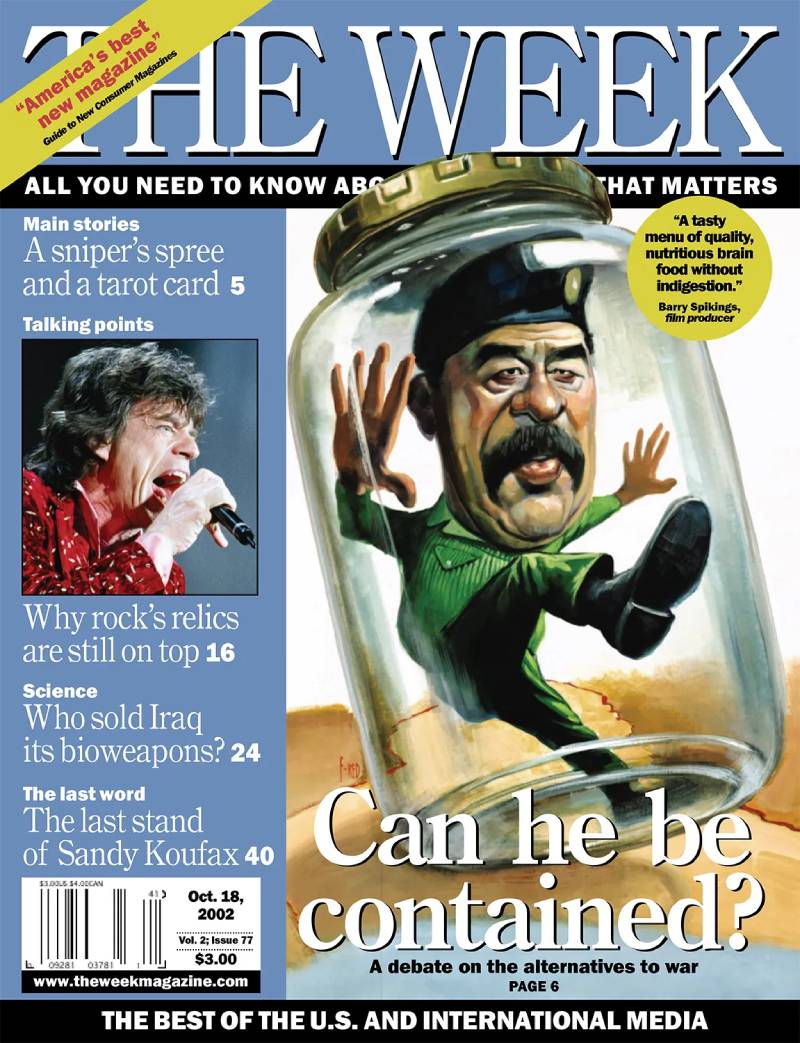
Cover Story
For three terrifying weeks in October 2002, a pair of snipers terrorized the Washington D.C. metro area. Ten people were killed. Three more seriously wounded.
The Week’s October 18 cover captured the panic that gripped the entire region. Schools locked down. Gas stations put up tarps. People zigzagged across parking lots.
Cover Design Breakdown
The cover art leaned into the fear and confusion. Bold headline treatment with a tight color palette that felt urgent without being sensational.
The layout kept things focused. One dominant image. Limited cover lines. The masthead stayed consistent.
Why This Cover Stands Out
It captured a story that was unfolding in real time. Nobody knew when the attacks would stop, and that uncertainty bled through the cover design. The Week had to go to print without knowing the ending.
Historical Context
The snipers, John Allen Muhammad and Lee Boyd Malvo, were arrested on October 24. The Week’s cover hit at the peak of public terror, making it one of the most time-capsule issues from that era.
Where to Find This Issue
Back issues from 2002 show up on eBay. Digital archives through Zinio or Pocketmags may have this issue available.
The Iraq War – May 9, 2003

Cover Story
Just eight days after Bush’s infamous “Mission Accomplished” speech on the USS Abraham Lincoln, The Week’s May 9 cover examined the early days of the Iraq occupation.
The magazine pulled analysis from both pro-war and anti-war commentators. That bipartisan approach gave readers something that most other news magazines didn’t bother with at the time.
Cover Design Breakdown
The cover used dramatic imagery tied to the conflict. Strong contrast between headline text and background image. The design team understood that war covers need to hit hard without looking exploitative.
Why This Cover Stands Out
While other publications like Time and Newsweek were largely cheerleading the early invasion, The Week’s format forced it to include skeptical voices from day one. That editorial decision aged very well.
Historical Context
U.S. troops would fight in Iraq for eight more years. The “Mission Accomplished” banner became one of the most mocked political images in modern history. The Week’s early skepticism, baked into its multi-perspective format, was ahead of the curve.
Where to Find This Issue
Available through back issue dealers and occasionally on eBay. Digital copies may exist on Pocketmags.
The Bush Reelection – November 19, 2004
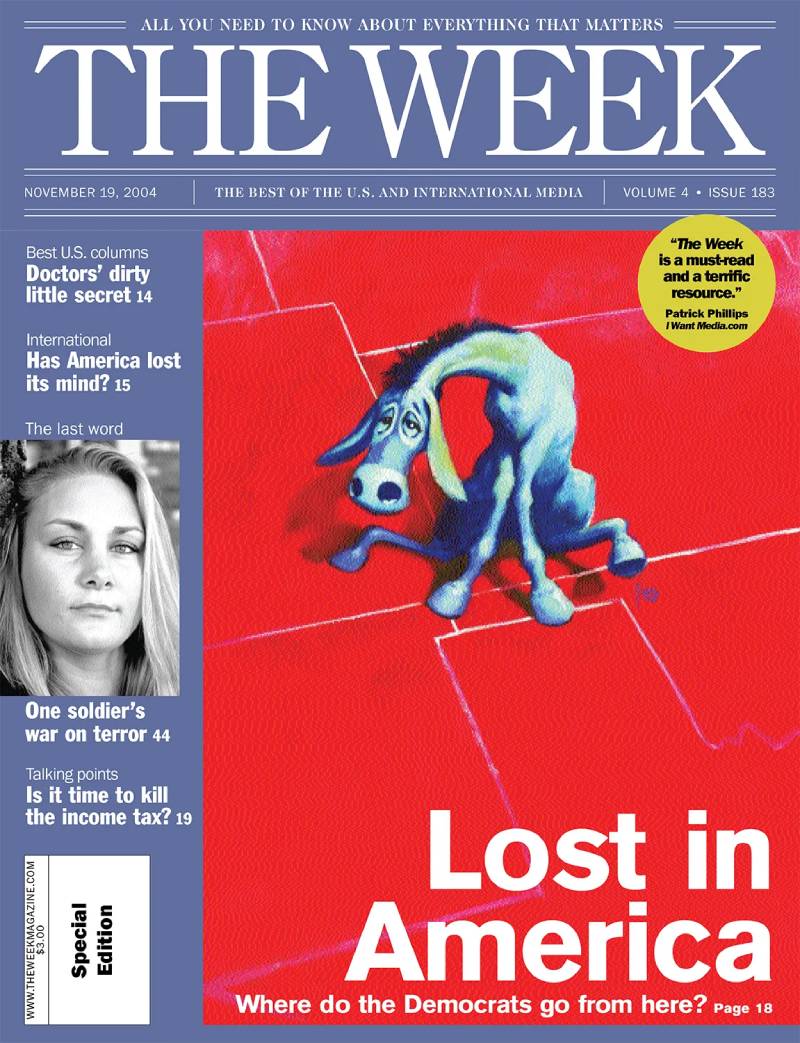
Cover Story
Bush won a second term in a tightly contested race against John Kerry. The November 19 cover broke down what the victory meant for both parties.
The issue analyzed the electoral map, the role of “values voters,” and what a second Bush term would look like on issues from Iraq to Social Security reform.
Cover Design Breakdown
Election covers for The Week tend to use strong portrait imagery. The focal point sits squarely on the winning candidate with supporting cover lines that tease the multi-angle analysis inside.
Why This Cover Stands Out
The 2004 election was deeply polarizing. The Week’s cover had to represent both the triumph and the disappointment without taking sides. That’s harder than it sounds.
Historical Context
This was the first post-9/11 presidential election. National security dominated the debate. The Week’s coverage reflected how divided the country had become in just three years.
Where to Find This Issue
Back issues from the 2004 election cycle are collectible. Check eBay, Pocketmags, or Zinio for digital access.
Hurricane Katrina Aftermath – December 9, 2005

Cover Story
Hurricane Katrina devastated New Orleans in late August 2005. The Week’s December issue revisited the disaster months later, examining the slow government response and the human cost that lingered long after the storm passed.
Cover Design Breakdown
Katrina covers across the magazine industry relied heavily on photojournalism. The Week’s version used storytelling through imagery that showed the scale of destruction.
The design avoided clutter. Readers didn’t need multiple cover lines to understand what this issue was about.
Why This Cover Stands Out
Most magazines covered Katrina in September. The Week returned to the story in December, when public attention had already moved on. That editorial choice showed a commitment to following stories past their initial news cycle.
Historical Context
Katrina killed over 1,800 people and caused $125 billion in damage. The government’s response, particularly FEMA’s failures, became a defining political crisis of the Bush presidency.
Where to Find This Issue
Available through eBay sellers and digital magazine platforms like Pocketmags.
Midterm Elections Shake-Up – November 3, 2006
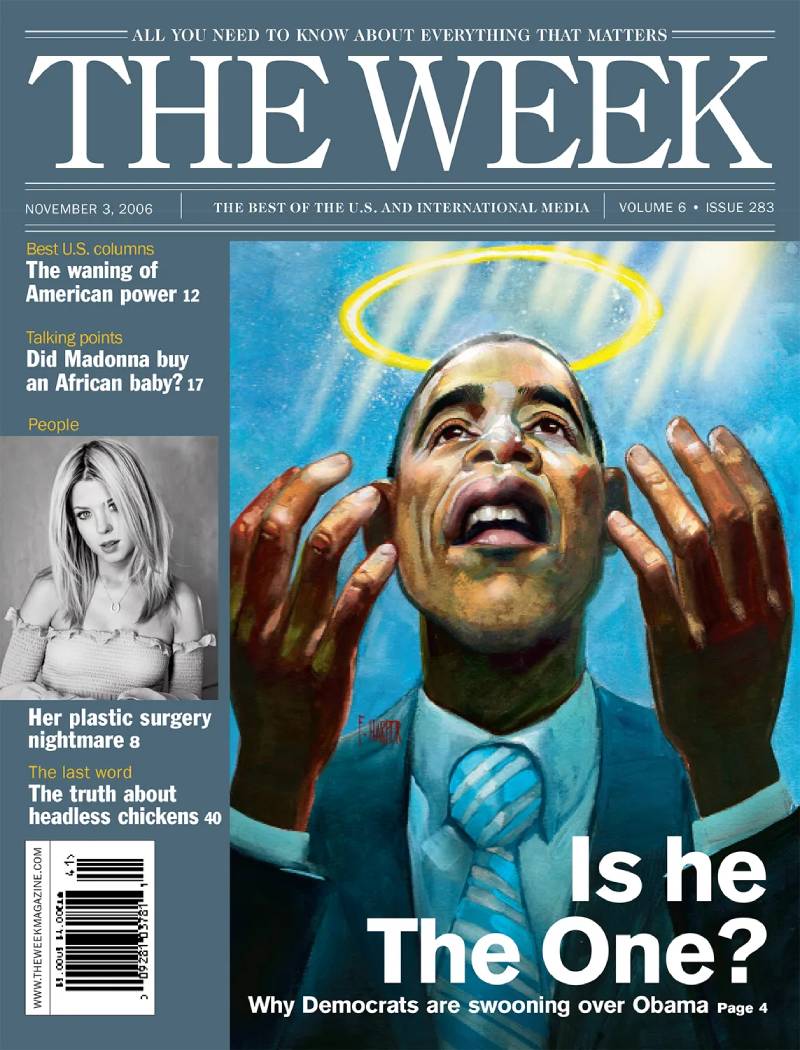
Cover Story
Democrats swept the 2006 midterm elections, taking control of both the House and Senate. Nancy Pelosi became the first female Speaker of the House.
The Week’s November 3 cover captured the political earthquake. The issue compiled commentary from conservative, liberal, and centrist outlets, giving readers the full picture of what the results meant.
Cover Design Breakdown
Political cover art at The Week often uses balance between competing elements. Both parties get visual representation on election covers. The headline drives the reader’s eye toward the dominant story.
Why This Cover Stands Out
It marked a clear political turning point. The Iraq War, congressional scandals, and public frustration with the Bush administration all converged in one election night.
Historical Context
The 2006 midterms were widely seen as a referendum on the Iraq War. Donald Rumsfeld resigned as Defense Secretary the next day. The Week’s cover captured the shift in real time.
Where to Find This Issue
Back issues from 2006 are available through eBay and digital archives on Pocketmags or Zinio.
The Financial Crisis – September 12, 2008
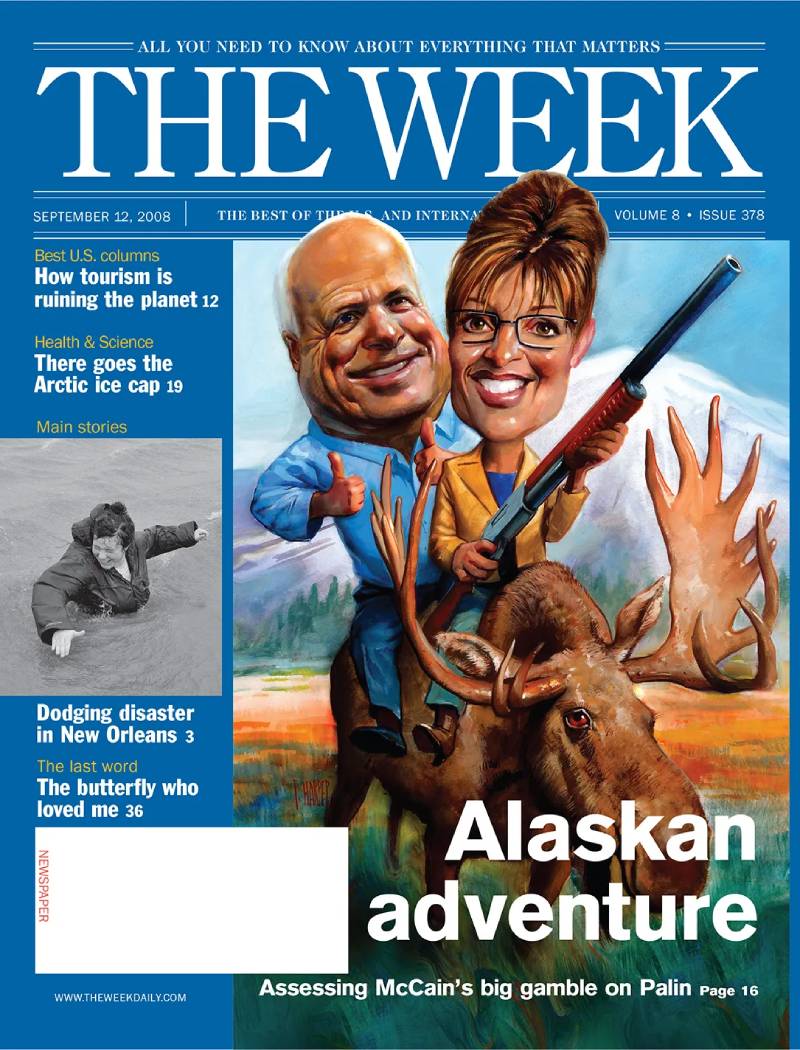
Cover Story
Lehman Brothers collapsed. The housing market imploded. The entire global financial system looked like it was about to fall apart.
The Week’s September 12, 2008 cover tackled the Wall Street meltdown head-on. The issue pulled together analysis from financial journalists, economists, and political commentators worldwide.
Cover Design Breakdown
This cover used dramatic visual language. Dark tones, bold red accents from the masthead, and stark headline font choices that communicated urgency.
The overall look matched the gravity of the moment. No playful illustrations here.
Why This Cover Stands Out
The financial crisis was one of those rare stories where everyone agreed something massive was happening. The Week’s cover didn’t need to convince anyone. It just had to keep up with events moving faster than any weekly publication could track.
Historical Context
The 2008 financial crisis led to the worst recession since the Great Depression. Millions lost their homes. Unemployment peaked at 10%. The crisis reshaped American politics and led directly to Barack Obama’s election two months later.
Where to Find This Issue
Highly sought by collectors. Check eBay, back issue dealers, or digital platforms like Pocketmags and Zinio.
The Death of Osama bin Laden – May 13, 2011
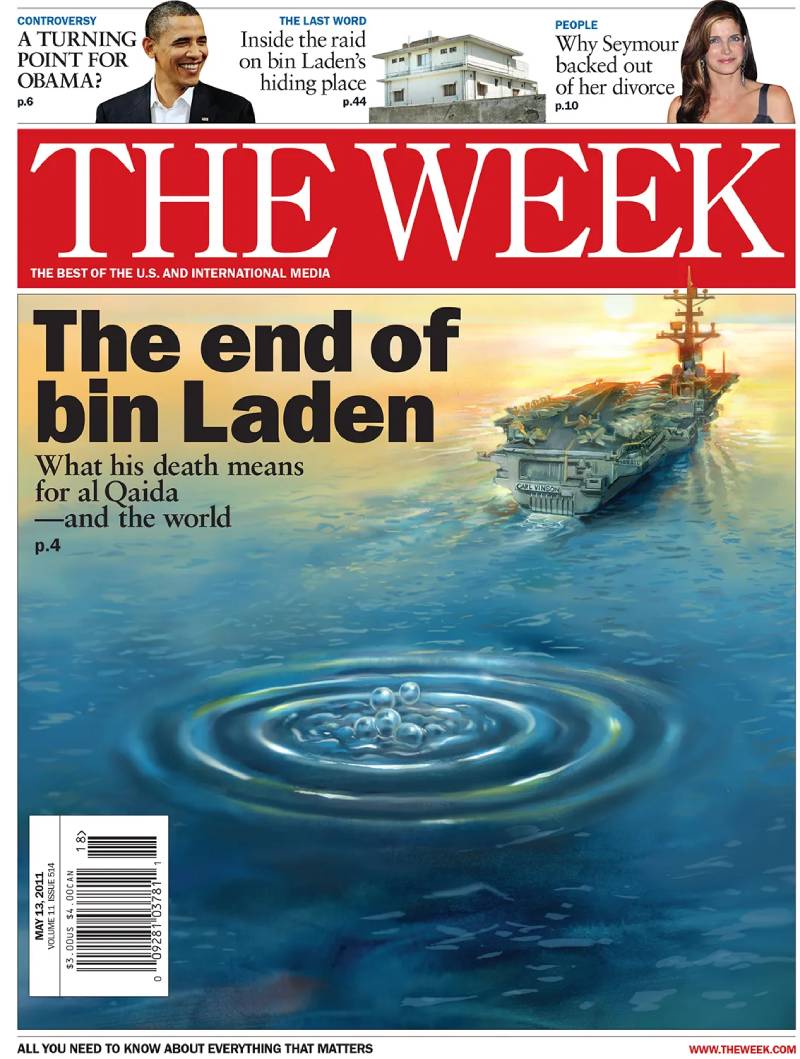
Cover Story
Navy SEALs killed Osama bin Laden in Abbottabad, Pakistan on May 2, 2011. Nearly ten years after 9/11, the most wanted man in the world was dead.
The Week’s May 13 cover dissected the raid, the political implications, and what it meant for the War on Terror going forward.
Cover Design Breakdown
This cover needed to feel definitive. The design team likely used a single powerful image or illustration with minimal text. When the story is this big, less is more on the cover page.
Howard McWilliam had been the magazine’s primary cover illustrator since 2007. His caricature-driven style brought a distinct editorial voice to covers that set The Week apart from photo-heavy competitors like Time Magazine or Newsweek.
Why This Cover Stands Out
It closed a chapter. The 9/11 attacks defined the first decade of The Week’s existence as a US publication. The bin Laden cover bookended that story in a way that few other issues could match.
Historical Context
The raid was carried out by SEAL Team Six at a compound near a Pakistani military academy. The operation took about 40 minutes. President Obama announced the news late on a Sunday night, and crowds gathered at the White House and Ground Zero.
Where to Find This Issue
This is one of the most collectible issues from 2011. Available through eBay, collector sites, and digital magazine platforms.
The Trayvon Martin Case – April 20, 2012
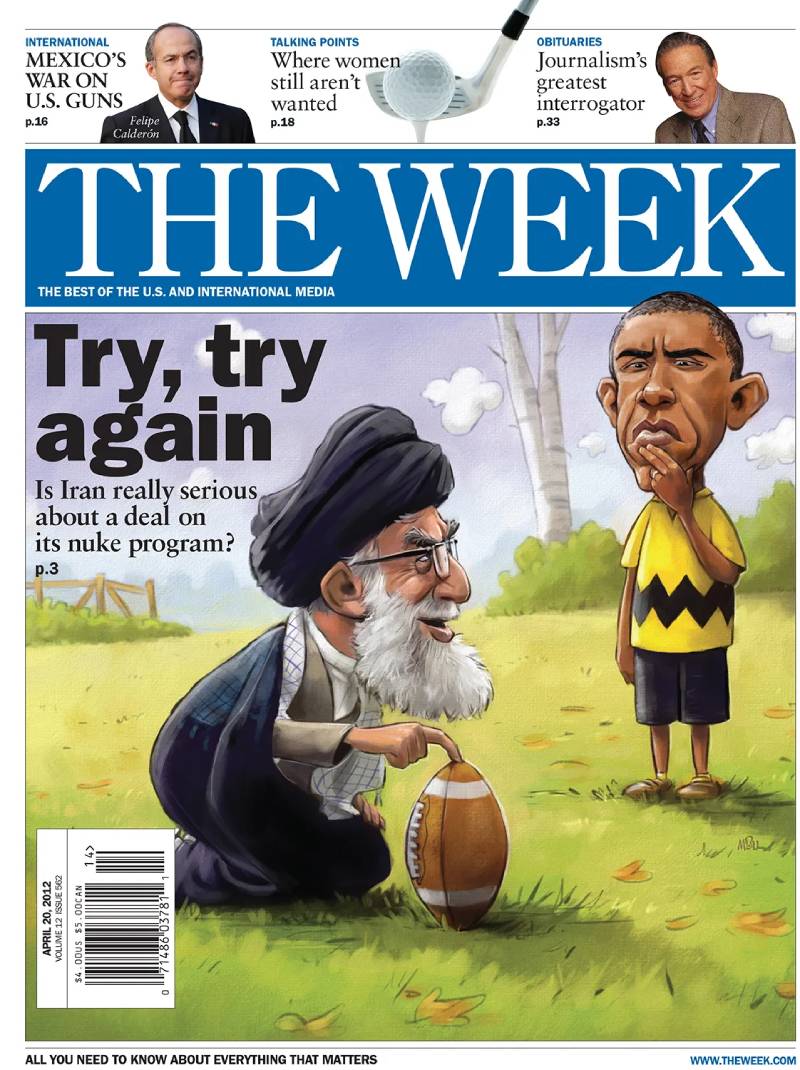
Cover Story
The shooting of Trayvon Martin by George Zimmerman in February 2012 became a national flashpoint on race, gun laws, and the criminal justice system.
The Week’s April 20 cover examined the case from every angle. Conservative outlets defended Zimmerman’s right to self-defense. Liberal outlets called it a clear case of racial profiling. The Week presented both sides without editorializing.
Cover Design Breakdown
Sensitive subjects require careful cover design. The layout likely used restrained color choices and thoughtful image selection to avoid sensationalism while still communicating the weight of the story.
McWilliam’s illustrated covers don’t always suit every subject. Some stories demand a different approach, and the design team knows when to pull back from caricature.
Why This Cover Stands Out
The Martin case was one of the earliest stories in what became a decade-long national reckoning with racial injustice. This cover arrived before Black Lives Matter existed as an organized movement. Looking at it now, it reads as a preview of everything that followed.
Historical Context
Zimmerman was acquitted in July 2013. The verdict sparked protests nationwide and is widely cited as a catalyst for the Black Lives Matter movement. The Week’s early coverage of the case showed the magazine’s ability to spot stories with lasting significance.
Where to Find This Issue
Check eBay for print copies. Digital back issues may be available through Pocketmags or Zinio.
FAQ on The Week Magazine Covers
Who designs The Week magazine covers?
Howard McWilliam has been the primary cover artist since 2007. His illustrated caricatures define the magazine’s look for both the US and UK editions. Other illustrators like Neil Davies also contribute covers, especially for the UK version.
How often does The Week release a new cover?
The Week is a weekly news magazine. A new issue with a fresh cover drops every week. That adds up to roughly 52 covers per year across both the US and UK editions published by Future plc.
Why does The Week use illustrations instead of photos?
The illustrated style comes from a British tradition of political satire seen in magazines like Private Eye and Punch. It gives The Week a distinct identity on the newsstand compared to photo-driven competitors like Time and Newsweek.
Where can I find back issues of The Week?
Digital back issues are available through Pocketmags and Zinio. Print copies show up on eBay and specialty magazine dealers. The Week’s own website also offers subscription access to current and recent issues.
What was the first US edition cover of The Week?
The debut US issue launched in April 2001. The cover featured George W. Bush under the headline “The quiet presidency.” William Falk served as editor-in-chief from that first issue and still holds the role.
Are The Week’s US and UK covers different?
Yes. Each edition gets its own cover tailored to regional news. Howard McWilliam illustrates for both, but the subjects and cover stories differ. The UK edition launched in 1995, six years before the US version.
What size is a typical The Week magazine cover?
The Week uses a compact magazine cover size, smaller than standard publications like Time. The digest format makes it easy to carry and read quickly, which fits the magazine’s purpose as a weekly news summary.
Has The Week ever published a book of its covers?
Yes. “The Art of The Week” by Howard McWilliam came out in 2017. It collects over 350 sketches and finished paintings from ten years of covers, including alternate versions that never went to print.
What makes The Week’s cover design unique?
The red masthead is the signature element. Elmwood, a design consultancy, later developed it into a full brand system. Combined with McWilliam’s caricatures, it creates a look no other weekly newsmagazine has.
Can I submit cover art to The Week?
The Week works with established illustrators on assignment. There’s no open submission process for cover art. McWilliam and a small group of freelance artists handle the bulk of cover illustration work for both editions.
Conclusion
The Week magazine covers tell a story that goes beyond any single issue. Each one is a snapshot of the news cycle it was built around, filtered through editorial illustration and tight cover design.
From the debut US edition in 2001 to recent print issues, the magazine has maintained a consistent visual identity. The red masthead, McWilliam’s caricatures, and the digest format all work together.
What separates The Week from other newsweekly publications is the non-partisan approach baked into every cover story. No single viewpoint dominates.
Whether you’re a magazine collector hunting back issues on eBay or a subscriber checking the latest cover on Pocketmags, these covers reward a closer look. They capture how the world felt in a given week. And that’s hard to fake.

Renowned for his expertise in logo design and visual branding, Bogdan has developed a multitude of logos for various clients.
His skills extend to creating posters, vector illustrations, business cards, and brochures. Additionally, Bogdan's UI kits were featured on marketplaces like Visual Hierarchy and UI8.
He also wrote in the past years on sites like Design Your Way, WebDesignerDepot, WPDean, Designmodo, Speckyboy, Slider Revolution, and more.
- Jujutsu Kaisen Font Generator - 12 October 2026
- The Windsurf Logo History, Colors, Font, And Meaning - 10 October 2026
- How to Remove Background From Product Photos (No Photoshop) - 10 October 2026

Bogdan Sandu is a seasoned designer who has been designing websites since 2008. Renowned for his expertise in logo design and visual branding, Bogdan has developed a multitude of logos for various clients. His skills extend to creating posters, vector illustrations, business cards, and brochures. Additionally, Bogdan's UI kits were featured on marketplaces like Visual Hierarchy and UI8. He also wrote in the past years on sites like Design Your Way, WebDesignerDepot, WPDean, Designmodo, Speckyboy, Slider Revolution, and more.
You Might Also Like


