

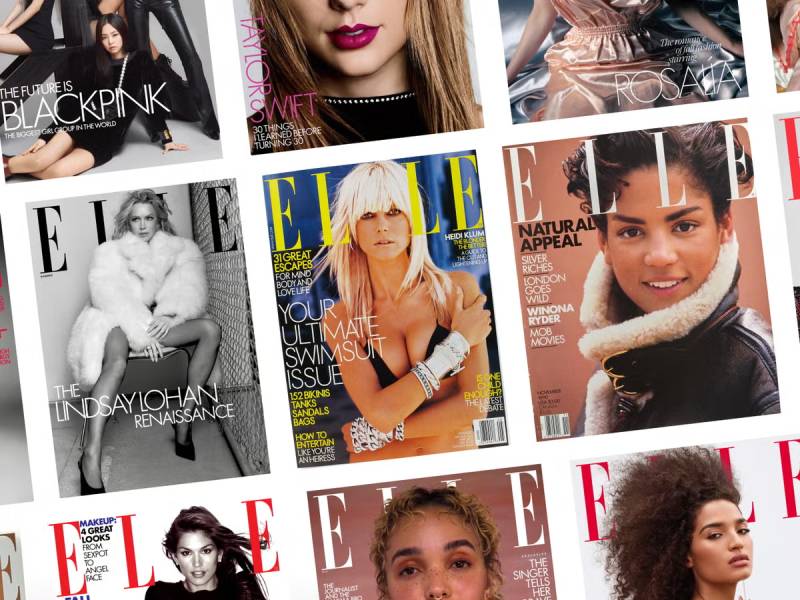
Since 1945, Elle magazine covers have shaped how we think about fashion photography, celebrity culture, and editorial design. From Brigitte Bardot in postwar Paris to Naomi Campbell launching Elle Afrique in 2026, every cover tells a story bigger than the person on it.
But what actually makes an Elle cover work? And why do some stick in your memory for decades while others disappear the week after they hit the newsstand?
This article breaks down 10 of the best Elle covers ever published. You’ll find the photographers behind the shoots, the styling choices that defined each era, and the cultural moments that turned a glossy front page into something people still talk about years later.
Best Elle Magazine Covers
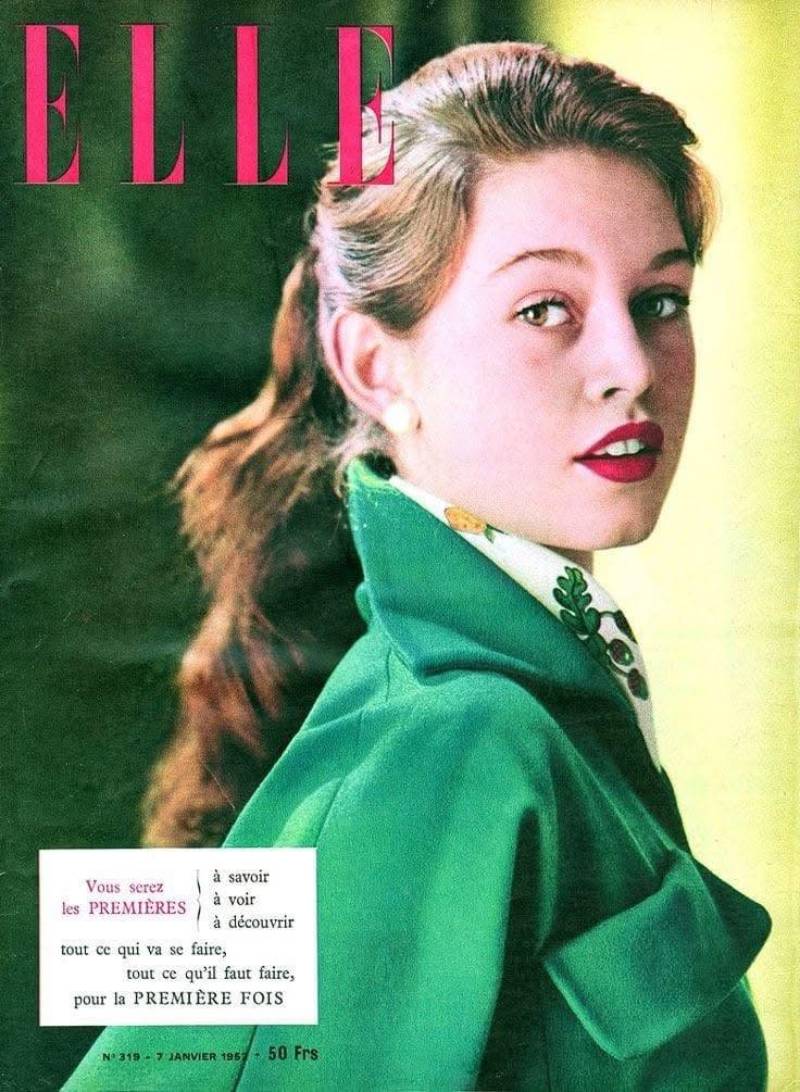
Brigitte Bardot – Elle France, January 1952
Cover Star
Brigitte Bardot was just 17 when she landed the cover of Elle France. She’d already appeared on the magazine in 1950, at age 15, but this particular issue came right before her screen debut in Manina, the Girl in the Bikini.
That timing matters. Bardot wasn’t yet a household name. She was a trained ballet dancer turned young model, and Elle’s editors saw something in her that the rest of the world would catch up to a few years later.
The Shoot
The cover photography reflected Elle France’s editorial style in the early 1950s, a period when the Hearst publication was still a weekly magazine under founder Helene Gordon-Lazareff. Bardot’s look was fresh and youthful, with styling that leaned into the post-war Parisian fashion sensibility.
Professional photographer Sam Levin would later contribute to shaping Bardot’s visual identity. But at this point, the aesthetic was simple. No haute couture drama, just raw potential on a glossy magazine cover.
Cultural Impact
This cover helped launch one of the biggest style icons of the 20th century. Bardot went on to influence fashion trends for decades, from the Bardot neckline to popularizing the bikini. Philosopher Simone de Beauvoir later called her a “locomotive of women’s history.”
But it started here. On the front page of a French fashion publication, before Hollywood came calling.
Design Breakdown
Elle France in the early 1950s used a clean, editorial-forward layout. The masthead sat prominently at the top, and the cover lines were minimal compared to modern standards. Think lots of breathing room, tight type, and a single striking image.
The color theory at play was restrained. Warm tones, soft skin, not much competing for your attention.
Why It Stands Out
Because it captured a star before she became one. That’s rare. Most iconic covers feature people already at the top. This one caught Bardot on the way up, and looking back, you can see exactly why she made it.
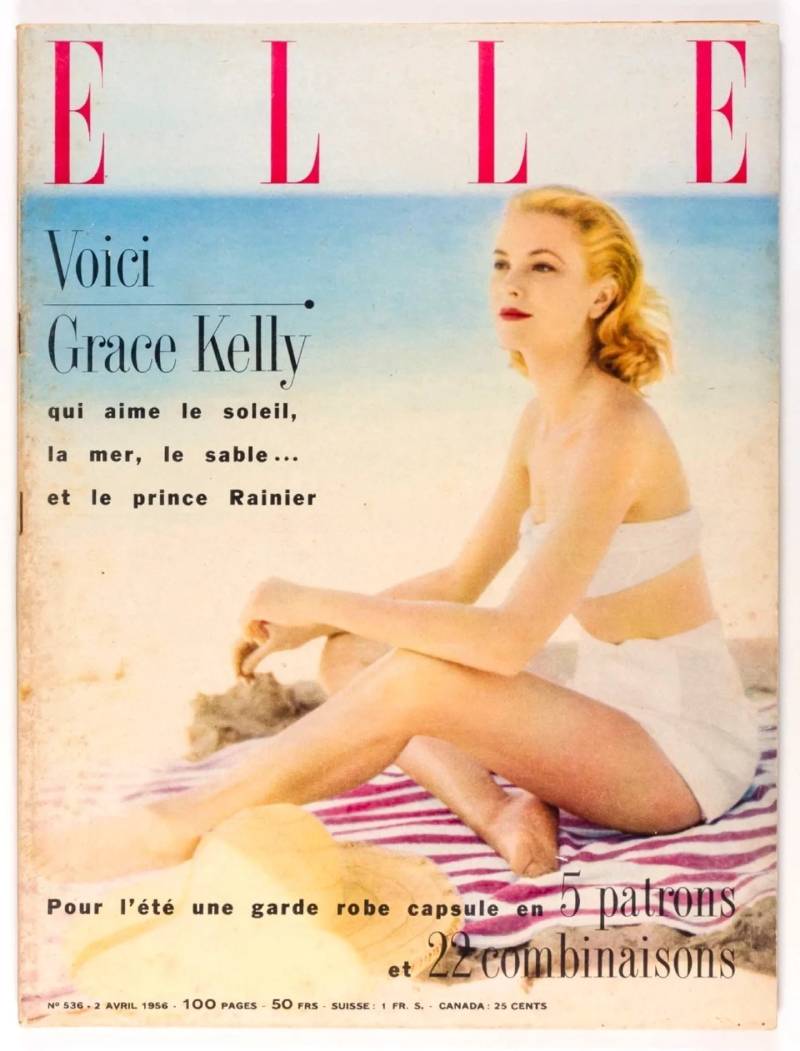
Grace Kelly – Elle France, April 1956
Cover Star
Grace Kelly appeared on the cover of Elle France on April 2, 1956. Just days later, she married Prince Rainier III of Monaco and left Hollywood behind forever.
At this point, Kelly was already an Oscar-winning actress. She’d taken home Best Actress for The Country Girl in 1955 and had just finished filming High Society with Frank Sinatra and Bing Crosby.
The Shoot
The cover captured Kelly in that very specific window between movie star and princess. Her beauty editorial look was polished, understated, and timelessly elegant, which honestly described everything Kelly did.
Over 30 million people would watch her wedding on television that month. Elle France got her right before the world claimed her completely.
Cultural Impact
This cover is a snapshot of a cultural moment that doesn’t really exist anymore. A Hollywood actress becoming actual royalty. The public obsession was enormous.
Kelly’s influence on fashion would last for decades. Her wedding dress by Helen Rose, her Hermes bag (later renamed the Kelly bag), her whole aesthetic. It all starts to crystallize right around the time this cover was shot.
Design Breakdown
Elle France in the mid-1950s maintained a strong sense of visual hierarchy. The cover image dominated the layout, with the title and cover lines working around it rather than competing against it.
The overall balance was careful. Nothing flashy, nothing overdone. It let Kelly’s face do the work.
Why It Stands Out
Timing. You can’t manufacture this kind of moment. An actress days away from becoming a princess, photographed at the exact peak of public fascination with her life. That’s what makes this one of the best Elle magazine covers in the publication’s history.
Yasmin Le Bon – Elle US, September 1985
Cover Star
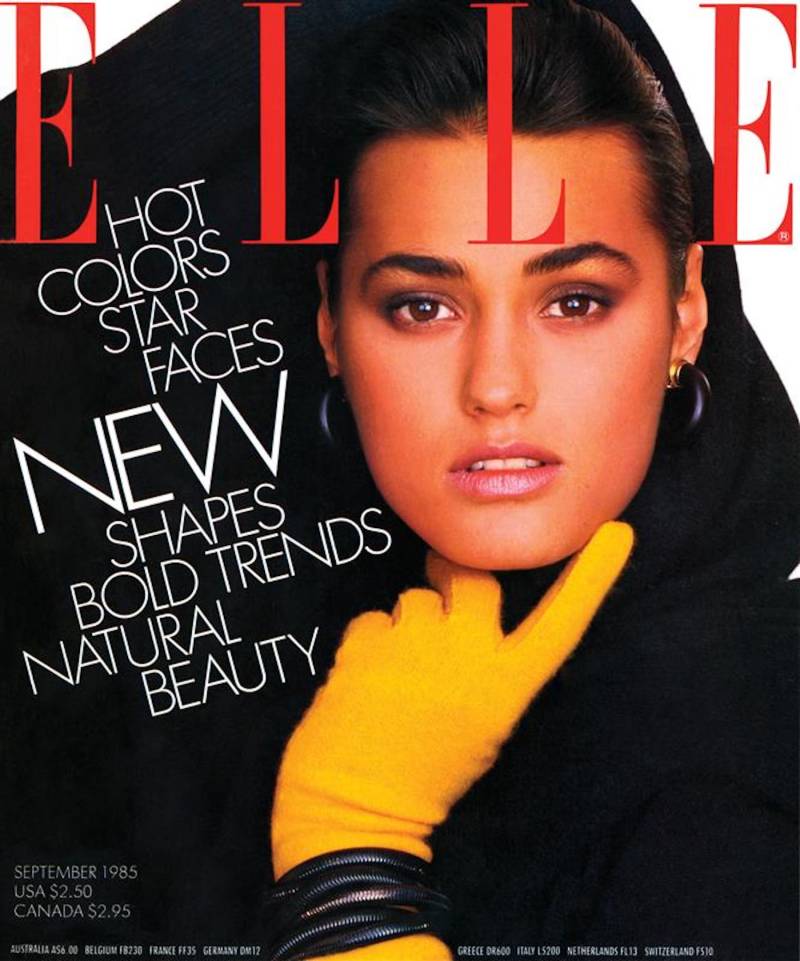
Yasmin Le Bon (still Yasmin Parvaneh at the time) was the face that launched the American edition of Elle. She was barely in her twenties and had been scouted just a few years earlier.
That same year, she married Duran Duran’s Simon Le Bon. But this cover wasn’t about celebrity connections. It was about bringing a European-inspired aesthetic to the American newsstand.
The Shoot
Gilles Bensimon photographed the cover. He also served as creative director for the US launch, working alongside founding editor Regis Pagniez. The two had been planning the magazine’s debut from hotel lobbies, treating the whole thing like a mission.
Le Bon wore oversized hoop earrings and knits. The styling was casual and fresh, nothing like the typical American fashion cover at the time (which usually meant a close-up of a smiling blonde).
Cultural Impact
This cover changed how American fashion magazines looked. Bensimon’s approach was cinematic and European, mixing high-end with high street. It was so different from what Vogue and Harper’s Bazaar were doing that nobody even tried to copy it at first.
The issue was a hit from day one. Elle US succeeded immediately, and this cover set the emphasis for everything that followed.
Design Breakdown
The layout broke from American fashion magazine conventions. Where competitors used tight headshots, Elle US went with a more dynamic composition. The typography was bolder, the image treatment more editorial.
The color palette leaned warm. Earthy tones, copper hair, golden light. It felt lived-in rather than sterile.
Why It Stands Out
It’s the one that started it all for Elle in America. Forty years later, the magazine is still going. And this cover remains the reference point for what made Elle different from every other women’s fashion magazine on the rack.
Linda Evangelista – Elle US, August 1989
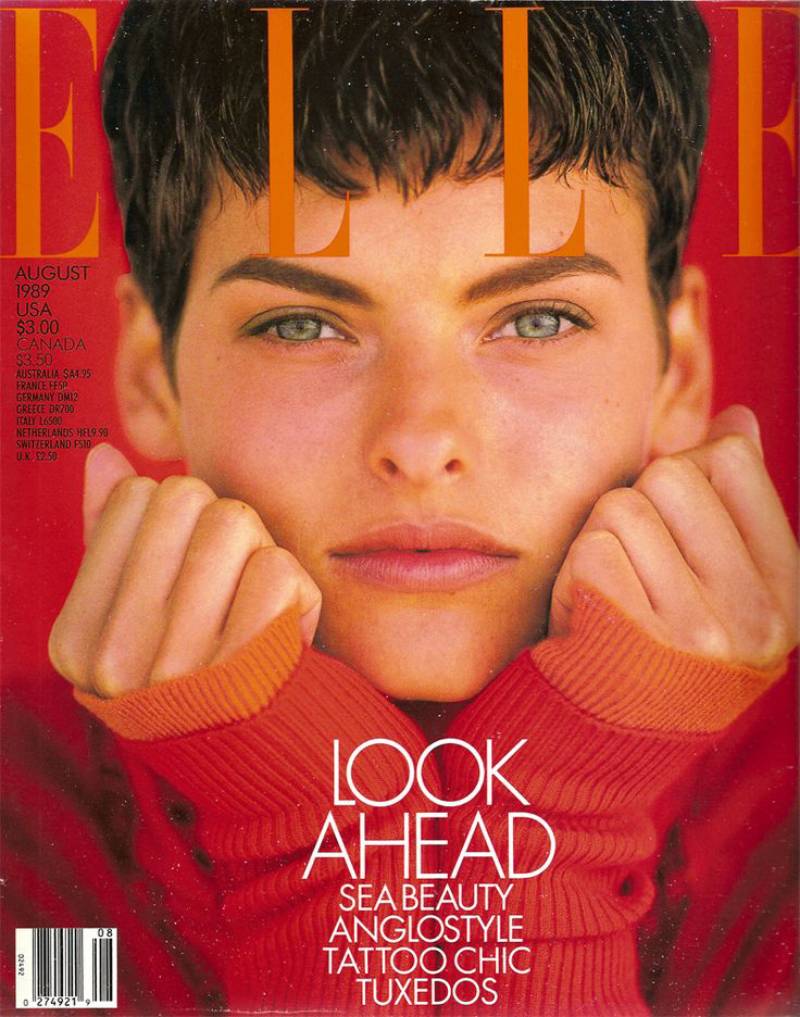
Cover Star
Linda Evangelista was in the middle of becoming one of the most recognizable supermodels on the planet when she covered Elle US in August 1989. She’d already been working with top fashion photographers and was a regular presence in editorial spreads for major publications.
This was the late ’80s supermodel era, and Evangelista was at its center.
The Shoot
Gilles Bensimon handled much of Elle US’s cover photography during this period. His signature style, location-based shoots with natural light and flowing movement, gave these covers a warmth and energy that studio work couldn’t match.
The styling was peak late-’80s fashion editorial. Bold but not overdone.
Cultural Impact
Evangelista would famously say she didn’t get out of bed for less than $10,000 a day. That quote defined an era. And covers like this one helped build the mythology around supermodels like her, Naomi Campbell, Christy Turlington, and Cindy Crawford.
The fashion photography of this period treated models like genuine stars, not just clothes hangers. Elle was a big part of that shift.
Design Breakdown
Late-’80s Elle US covers had a specific look. Strong contrast between the cover image and the background. Clean type. Cover lines that sold the story without cluttering the page.
The alignment of text elements was precise, keeping the reader’s eye moving naturally from the image to the headlines.
Why It Stands Out
It captures the golden age of supermodels at full speed. There’s an energy to this period of Elle that later issues never quite replicated. And Evangelista? She was the person you wanted on your cover if you cared about credibility.
Claudia Schiffer – Elle US, June 1994
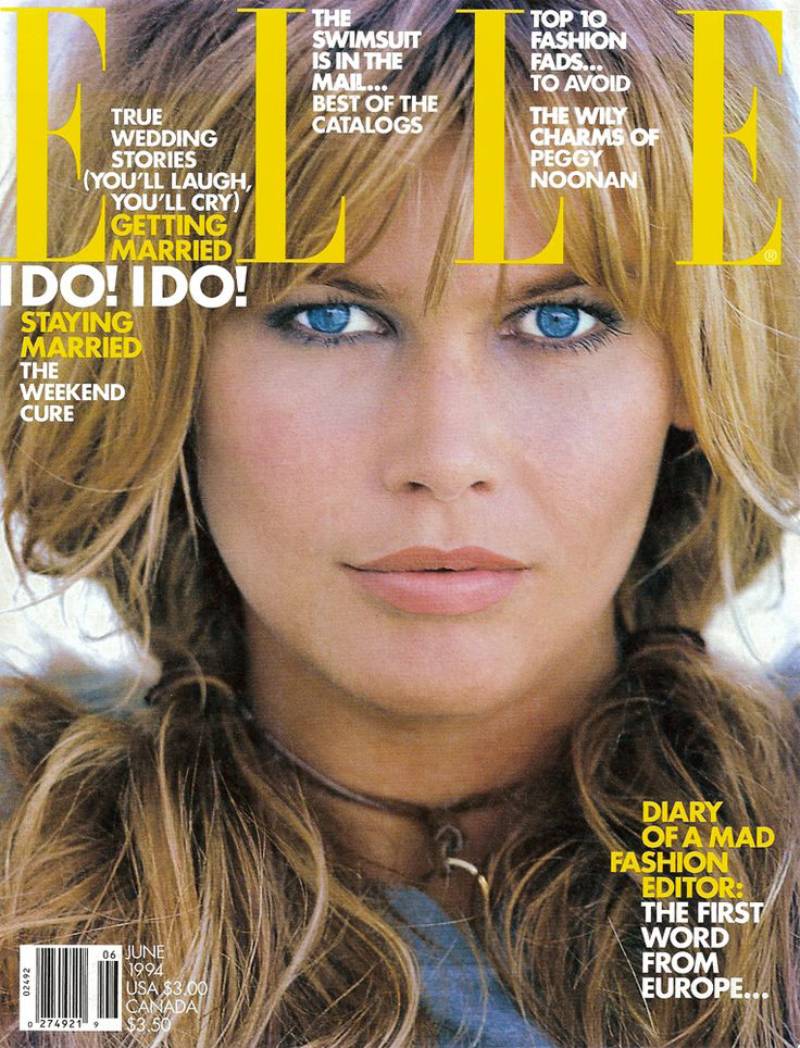
Cover Star
Claudia Schiffer was already one of the world’s most famous models by the time she covered Elle US in June 1994. She’d been the face of Chanel, had appeared on hundreds of magazine covers globally, and was frequently compared to Brigitte Bardot.
At 23, she was at the absolute peak of her modeling career.
The Shoot
The mid-’90s cover shoot aesthetic for Elle was still driven by Bensimon’s visual language, though the magazine was beginning to shift. The styling reflected the era’s move toward simpler, less accessorized looks.
The beauty editorial elements were polished but not overdone. Natural makeup, clean hair, minimal jewelry.
Cultural Impact
Schiffer was a commercial supermodel in the truest sense. She represented the bridge between ’80s excess and ’90s minimalism. This cover landed right at that transition point.
She was also a major presence on Vogue covers and nearly every other fashion publication during this period.
Design Breakdown
By 1994, Elle US had settled into a mature design language. The magazine cover layout was confident, with a clear focal point on the cover star and supporting cover lines that didn’t crowd the composition.
The font choices were clean and readable, a departure from the more experimental type treatments some competitors were trying.
Why It Stands Out
It’s Claudia Schiffer at the height of her powers, on a magazine that understood how to photograph supermodels better than almost anyone. Simple as that.
Lea T – Elle Brazil, December 2011
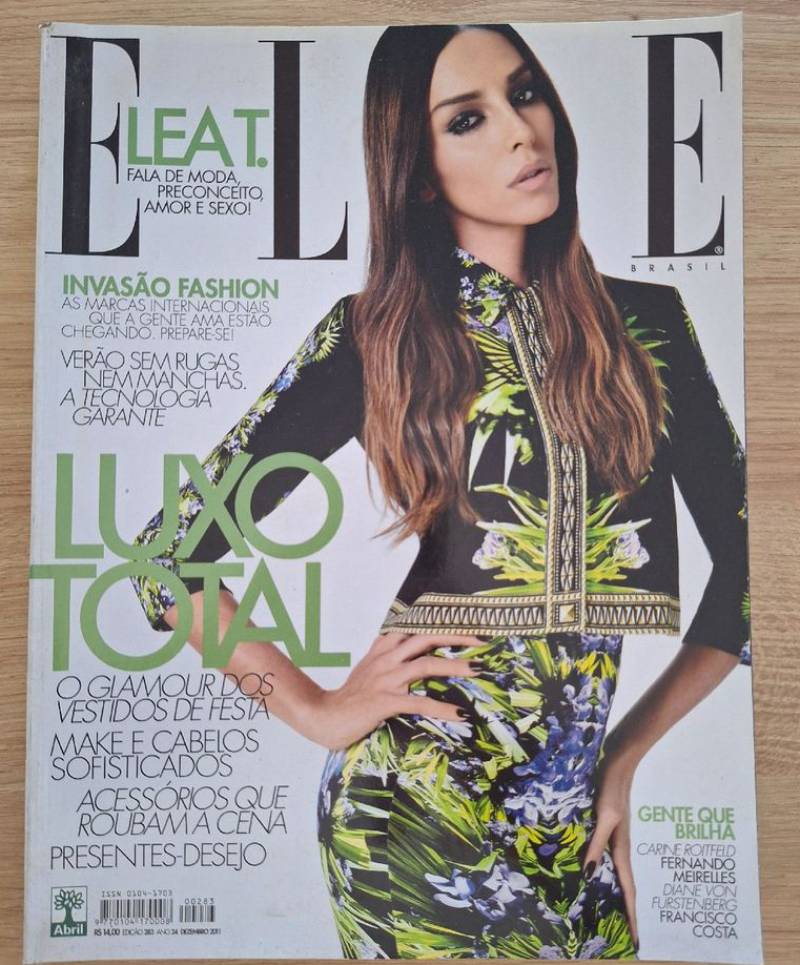
Cover Star
Lea T made history with this cover. She became the first openly transgender model to appear on the cover of a major commercial fashion magazine anywhere in the world.
Born Leandra Medeiros Cerezo, the Brazilian-Italian model was the daughter of former football player Toninho Cerezo. She’d been discovered by Givenchy designer Riccardo Tisci, who made her the face of the brand in 2010.
The Shoot
Photographer Fabio Bartelt captured the cover. Lea T wore a jacket and skirt from Givenchy’s 2012 resort collection, a natural choice given her close relationship with the house and Tisci.
The styling was elegant and straightforward. No gimmicks, no “statement” framing. Just a beautiful model on a fashion magazine cover.
Cultural Impact
This was enormous. Elle Brazil didn’t just put a transgender model on their cover for attention. They did it because Lea T was a legitimate fashion figure who’d already walked runways and appeared in campaigns for Givenchy, Benetton, and Philipp Plein.
The cover opened doors. Valentina Sampaio followed on Elle Brazil in 2016. Hari Nef made the cover of Elle UK in 2016. And Lea T herself went on to lead the Brazilian team at the 2016 Rio Olympics opening ceremony.
Design Breakdown
The cover design was clean and modern. Strong saturation in the image, with the Elle masthead and cover lines positioned to complement rather than compete.
No special labels, no flags. The design treated this exactly like any other cover, which was the whole point.
Why It Stands Out
Because it was first. And because it was done right. Not as a stunt, but as a genuine editorial choice that recognized talent. That’s what makes a good magazine cover. Lea T earned it.
BLACKPINK – Elle US, October 2020

Cover Star
Lisa, Jennie, Rose, and Jisoo of BLACKPINK landed their first US magazine cover with Elle’s October 2020 issue. The timing was perfect. Their debut album The Album was dropping October 2 via Interscope Records.
Each member also got their own solo cover, making it a five-cover issue total.
The Shoot
Korean photographer Kim Hee June captured the covers, with styling by Park Minhee. Each member represented a different luxury fashion house: Lisa in Celine, Jennie in Chanel, Rose in Saint Laurent, and Jisoo in Dior.
The fashion photography was bold, colorful, and unapologetically K-pop in its aesthetic. Nina Garcia, who has served as editor-in-chief since 2017, personally championed the cover.
Cultural Impact
BLACKPINK was already the biggest girl group in the world. But an American Elle cover cemented them in the Western fashion press in a way social media numbers alone couldn’t.
The cover also reflected how fashion magazines were expanding their definition of who belongs on the front of a glossy print magazine. K-pop had arrived, and the fashion industry was finally paying attention.
Design Breakdown
The group cover used a horizontal composition with all four members. The analogous color relationships between the designer outfits created visual cohesion across the frame.
The solo covers each had their own distinct hue and mood, but shared a consistent layout structure that tied them together as a set.
Why It Stands Out
It was BLACKPINK’s introduction to the American fashion magazine world. And instead of doing one cover with the group crammed together, Elle gave each member her own space. That kind of respect matters, and fans noticed.
Zendaya – Elle US, December 2020/January 2021
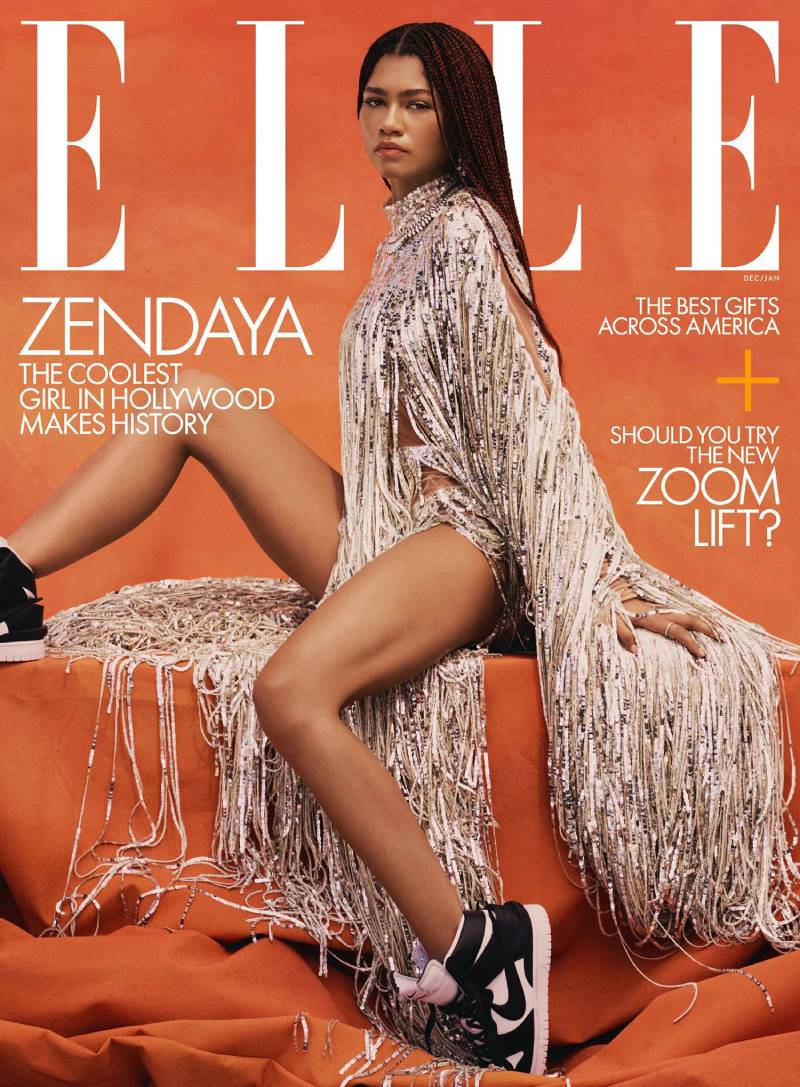
Cover Star
Zendaya was 24 and fresh off an Emmy win for Euphoria when she covered the double December/January issue of Elle US. She was the youngest person ever to win Outstanding Lead Actress in a Drama Series at that point.
Her relationship with stylist Law Roach was already one of the most talked-about partnerships in fashion.
The Shoot
Photographer Micaiah Carter shot the cover. The image showed Zendaya in a Valentino Haute Couture dress paired with Nike sneakers, a mix-and-match choice that generated a lot of opinions online.
The cover story featured styling from Law Roach, with additional looks from Giambattista Valli, Alexandre Vauthier, Armani Prive, and Chanel.
Cultural Impact
This cover was part of Zendaya’s rapid rise from Disney Channel star to legitimate fashion and acting force. She’d already done Vogue Hong Kong and InStyle that same year. The Elle cover added to an increasingly stacked portfolio.
The sneakers-with-couture choice also became a conversation starter about editorial styling and who controls the creative direction of celebrity cover shoots.
Design Breakdown
The cover used warm lighting and a saturated background that created a strong sense of movement and energy. The typographic hierarchy kept the focus on Zendaya’s name and the cover story headline.
The casual footwear against the formal dress created a deliberate tension in the composition. Whether you loved it or not, your eye stopped there.
Why It Stands Out
Zendaya was everywhere in 2020, but this cover captured a specific confidence. She wasn’t just modeling clothes. She was making choices. And that energy, that control over her own image, is what made it memorable.
Rosalia – Elle US, September 2025
Cover Star
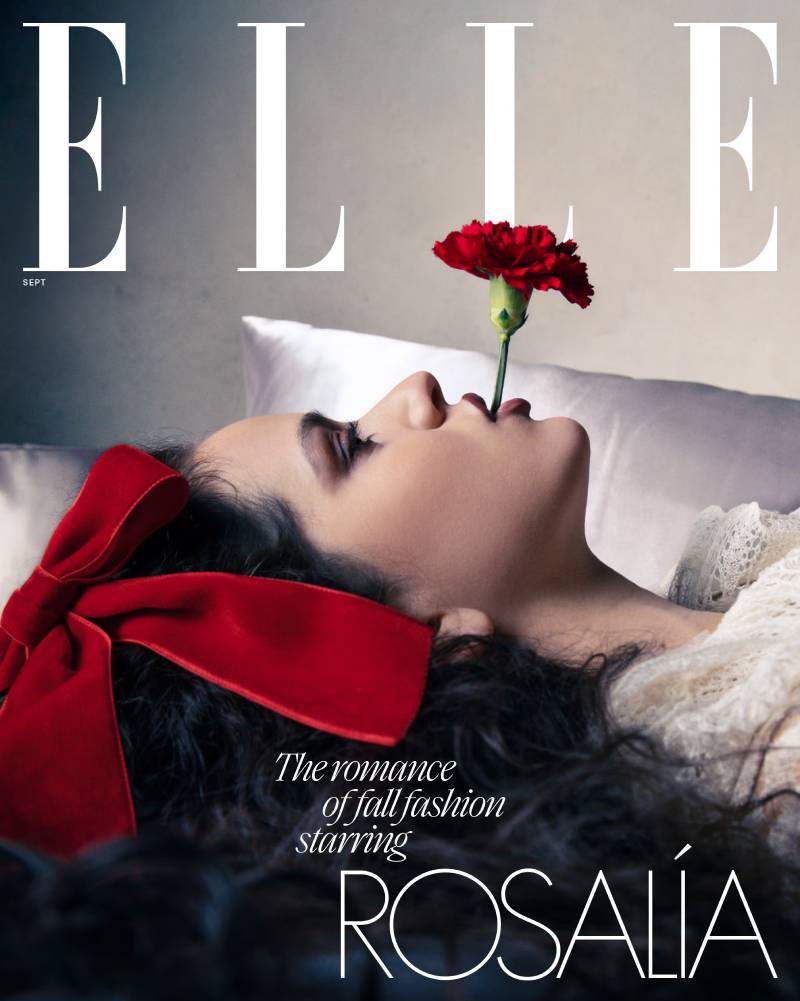
Spanish singer Rosalia graced the cover of Elle US’s September 2025 issue, which also happened to be the magazine’s 40th anniversary issue. Five years after her first Elle cover appearance, Rosalia returned as a Grammy Award-winning artist with global reach.
The Shoot
Photographers Inez van Lamsweerde and Vinoodh Matadin captured the covers. Styled by Alex White, Rosalia wore pieces from Miu Miu, including a red oversized Jennifer Behr bow that set the gothic, romantic tone.
The creative direction drew inspiration from Francisco de Goya’s work, giving the fashion photography a surreal, painterly quality that most iconic magazine covers can only dream of achieving.
Cultural Impact
Choosing Rosalia for the 40th anniversary September issue was a statement. September is traditionally the biggest issue of the year for any fashion magazine. Giving it to a Spanish artist (rather than an American actress or model) showed how global the fashion conversation has become.
The covers were widely praised online, with fashion commentators calling them some of the best work Inez and Vinoodh had done in years.
Design Breakdown
The duo of covers used a bold profile composition, which is unusual for a major fashion cover. Most editors avoid profiles because they’re harder to sell on the newsstand. But the framing worked here because of the dramatic styling and color choices.
Deep reds against dark backgrounds. A monochrome color scheme punctuated by the bright Miu Miu accents. It looked more like a gallery piece than a newsstand cover.
Why It Stands Out
It’s proof that fashion magazine covers can still surprise you. The Goya-inspired concept, the unconventional profile angle, the gothic styling. Everything about it took risks that a 40th anniversary issue probably shouldn’t take. And it paid off completely.
Naomi Campbell – Elle Afrique Francophone, February 2026
Cover Star
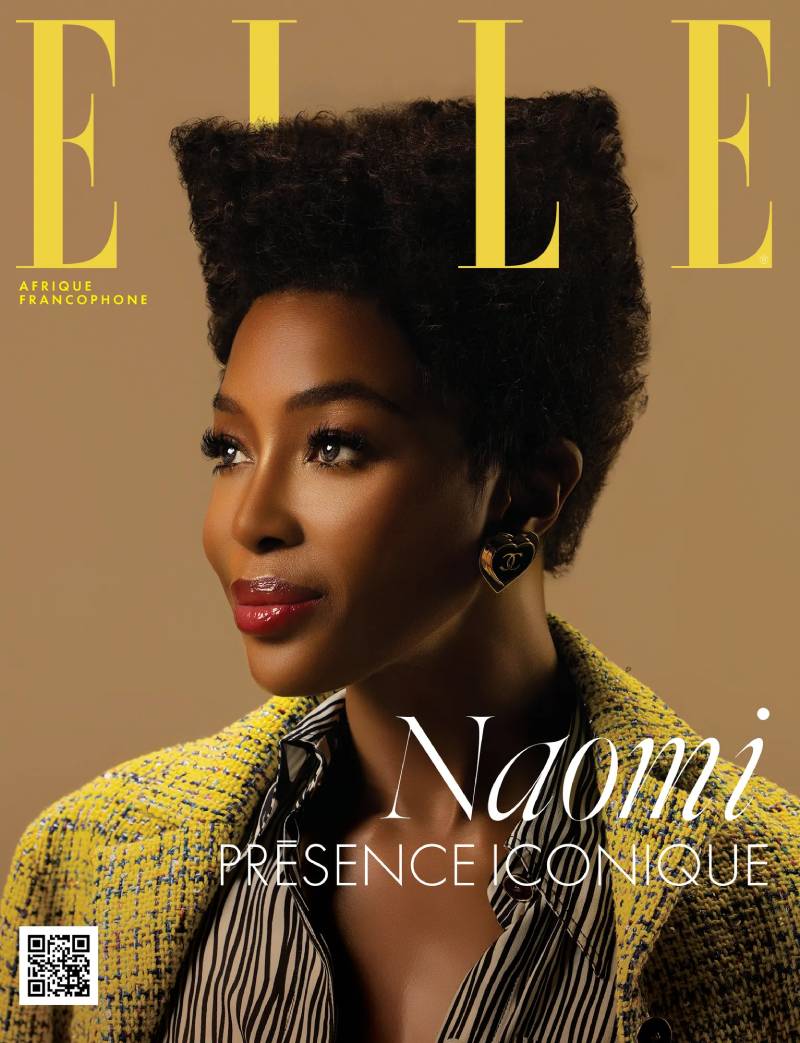
Naomi Campbell fronts the inaugural issue of Elle Afrique Francophone, the magazine’s newest and largest territorial edition. The publication covers 23 French-speaking African countries, making it the biggest geographic edition in the entire Elle network.
Campbell has campaigned for years for a major fashion magazine dedicated to Africa. She first publicly called for a Vogue Africa back in 2018.
The Shoot
South African photographer Trevor Stuurman captured the cover. Law Roach handled the styling, putting Campbell in a yellow tweed jacket and striped shirt from Chanel’s Spring 2026 pre-collection.
Campbell wore a short afro for the shoot. The look was clean, confident, and deliberate in every detail.
Cultural Impact
This is a landmark moment for fashion media in Africa. Led by Franco-Ivorian publisher Frederique Nanan, the magazine plans to expand into English-speaking African markets like Nigeria, Ghana, Kenya, and South Africa by late 2026.
The inaugural issue featured “Elle La Liste,” a profile of 24 African women shaping fashion, culture, entrepreneurship, and innovation across the continent. That’s not filler content. That’s a clear editorial mission statement.
When compared with other flagship launches like Time Magazine covers or National Geographic covers, this debut carries similar weight in terms of cultural significance.
Design Breakdown
The cover design is striking. The yellow Chanel outfit pops against a controlled background, creating immediate complementary color tension. The masthead introduces the new “Elle Afrique Francophone” branding cleanly.
Everything about the layout signals authority. This isn’t a test run. It’s a fully realized fashion magazine cover that stands alongside any other Elle international edition.
Why It Stands Out
It’s the first issue of the first pan-African Elle. Naomi Campbell, who spent years pushing for exactly this kind of publication, is on the cover wearing Chanel and styled by one of fashion’s biggest names. The whole thing feels like it was always supposed to happen. It just took the industry a long time to catch up.
FAQ on Elle Magazine Covers
Who was on the first ever Elle magazine cover?
Yolande Bloin appeared on the first Elle France cover on November 21, 1945. She wore a design by Elsa Schiaparelli. For the US edition, Yasmin Le Bon graced the debut cover in September 1985, photographed by Gilles Bensimon.
How often does Elle change its cover star?
Elle US publishes monthly, so a new cover star appears roughly every four weeks. Some issues feature multiple covers with different celebrities or models. The September issue is typically the biggest and most talked-about edition each year.
What is the standard size of an Elle magazine cover?
Elle US currently uses a trim size of 9 inches by 10 7/8 inches, which is slightly wider than the standard 8.5 by 11 inch magazine cover size. European editions like Elle France and Elle UK typically follow A4 dimensions (8.27 by 11.7 inches).
Who decides who appears on Elle magazine covers?
Nina Garcia has served as editor-in-chief of Elle US since 2017. She makes the final call on cover stars, working with the creative team, fashion editors, and photographers. Cover decisions often tie to upcoming film releases, album launches, or fashion moments.
How many international editions of Elle exist?
Elle has over 50 international editions worldwide, published by the Lagardere Group and Hearst Corporation. The newest is Elle Afrique Francophone, launched in February 2026, covering 23 French-speaking African countries.
What makes a good Elle magazine cover?
Strong fashion photography, a recognizable cover star, and clean editorial design. The best covers balance the masthead, cover lines, and main image without clutter. If you want to dig deeper, check out the principles behind what makes a good magazine cover.
Can you buy old Elle magazine covers or back issues?
Yes. Vintage Elle issues are sold on eBay, Etsy, and specialty magazine shops. Collectors especially look for 1980s and 1990s covers featuring supermodels like Claudia Schiffer, Linda Evangelista, and Cindy Crawford. Prices depend on condition and rarity.
Does Elle only put celebrities on its covers?
Not always. While celebrity covers drive newsstand sales, Elle has featured professional models, musicians, and cultural figures. Lea T made history as the first transgender cover model for Elle Brazil in 2011. The magazine also runs model-only covers for certain international editions.
How has Elle’s cover design changed over the years?
Early Elle France covers used simple layouts with hand-drawn type and illustration-style photography. By the 1980s, the US edition introduced bolder colors and full-bleed images. Today, Elle covers use cleaner grid systems and more negative space.
Where can I see a full archive of Elle magazine covers?
There’s no single official archive. Coverjunkie.com maintains a curated collection of creative Elle covers from various editions. Getty Images hosts over 700 cover-related photos. And theFashionSpot forums have detailed threads covering vintage Elle US issues from the 1980s onward.
Conclusion
The best Elle magazine covers do more than sell issues on the newsstand. They mark cultural shifts, launch careers, and push the boundaries of fashion editorial design.
From Brigitte Bardot’s early Elle France appearance to Naomi Campbell fronting the new Elle Afrique Francophone edition, each cover reflects the moment it was made. The photographers, the styling, the creative direction. All of it matters.
What separates Elle from competitors like Harper’s Bazaar or Cosmopolitan is a willingness to take risks. Putting Lea T on a cover in 2011. Giving BLACKPINK five covers in a single issue. Choosing a Goya-inspired concept for a 40th anniversary.
These weren’t safe choices. They were the right ones.
And that’s what keeps people paying attention to Elle covers, decade after decade.

Renowned for his expertise in logo design and visual branding, Bogdan has developed a multitude of logos for various clients.
His skills extend to creating posters, vector illustrations, business cards, and brochures. Additionally, Bogdan's UI kits were featured on marketplaces like Visual Hierarchy and UI8.
He also wrote in the past years on sites like Design Your Way, WebDesignerDepot, WPDean, Designmodo, Speckyboy, Slider Revolution, and more.
- The Windsurf Logo History, Colors, Font, And Meaning - 10 October 2026
- How to Remove Background From Product Photos (No Photoshop) - 10 October 2026
- How Designers can Build a Stronger Online Creative Identity - 9 October 2026

Bogdan Sandu is a seasoned designer who has been designing websites since 2008. Renowned for his expertise in logo design and visual branding, Bogdan has developed a multitude of logos for various clients. His skills extend to creating posters, vector illustrations, business cards, and brochures. Additionally, Bogdan's UI kits were featured on marketplaces like Visual Hierarchy and UI8. He also wrote in the past years on sites like Design Your Way, WebDesignerDepot, WPDean, Designmodo, Speckyboy, Slider Revolution, and more.
You Might Also Like


