


Ask ten people what color do red and blue make and you’ll get two confident, contradictory answers. One camp says purple. The other swears magenta.
Both are right. The difference comes down to whether you’re mixing pigment or light.
Paint and ink follow subtractive rules, landing on purple or violet. Screens follow additive rules, landing on magenta.
This guide sorts out the confusion for good. You’ll get the exact RGB, hex, and CMYK values, the wavelength science behind each result, and how the ratio of red to blue shifts the final hue.
By the end, you’ll know which answer applies to your project, whether you’re painting a canvas, printing packaging, or picking a color on a screen.
What Color Do Red and Blue Make

Red and blue make purple. Mix them as paint, ink, or pigment and the result is a purple, sometimes called violet.
Combine them as light on a screen instead and you get magenta. The medium decides the outcome, not the two colors.
| Medium | How the colors combine | Result |
|---|---|---|
| Paint, ink, pigment | Subtractive | Purple (violet) |
| Light, screens, LEDs | Additive | Magenta |
Both counts as a secondary color. Neither red nor blue can be built from other hues, which is why they sit on the primary side, while red plus blue produces something new.
Why Do Red and Blue Make Purple in Paint But Magenta on Screens
Paint and screens run on opposite systems. Pigment starts from white and removes wavelengths, so red and blue paint reflect a narrow violet band. Light starts from black and adds wavelengths, so red and blue light stack into magenta.
This is the core split in basic color theory. Same two inputs, two color models, two answers.
Subtractive (CMYK, paint): pigment absorbs light, you see what bounces back.
Additive (RGB, screens): light sources emit, your eye sums what arrives.
How Subtractive Color Mixing Works
Pigment absorbs, then reflects. Red pigment soaks up most greens and blues. Blue pigment soaks up most reds and yellows.
- What’s left after both absorb is a slim reflected band
- That leftover band reads as violet or purple
- Muddier pigments absorb more, so the purple darkens toward brown
How Additive Color Mixing Works
Red light and blue light hit your cone cells at the same time. With no green channel firing, your brain fills the gap and calls it magenta.
Screens never mix physical paint. They just switch red and blue sub-pixels on together, which is why the on-screen result looks brighter and pinker than mixed pigment.
What Shade of Purple Do Red and Blue Make
Equal red and blue lands on a balanced violet. The exact shade depends almost entirely on which red you start with.
Warm reds carry hidden yellow. Mix a warm red like cadmium with blue and the yellow fights the purple, giving a dull, grayish, muddy result that frustrates most beginners.
The fix: reach for a cool, magenta-leaning red (quinacridone types). Cool red plus blue produces a clean, saturated purple with real chroma instead of mud.
How Do Red and Blue Ratios Change the Result
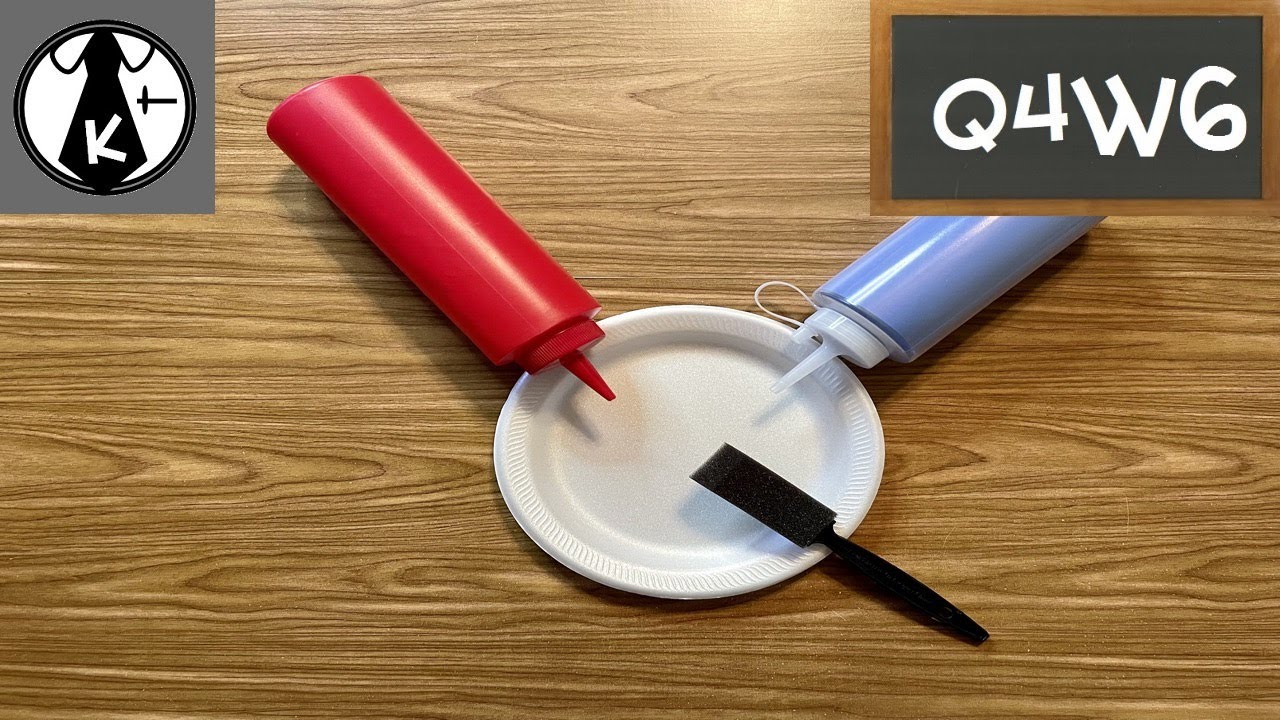
Proportion slides the mix along the purple range. More red pulls toward warm plum. More blue pulls toward cold indigo.
| Red-to-blue ratio | Resulting color |
|---|---|
| 2 : 1 | Red-violet, plum, closer to magenta |
| 1 : 1 | True purple, the midpoint |
| 1 : 2 | Blue-violet, drifting toward indigo |
Tiny shifts matter here. A single extra drop of blue can swing a swatch from grape to nearly navy.
What RGB and Hex Values Do Red and Blue Produce
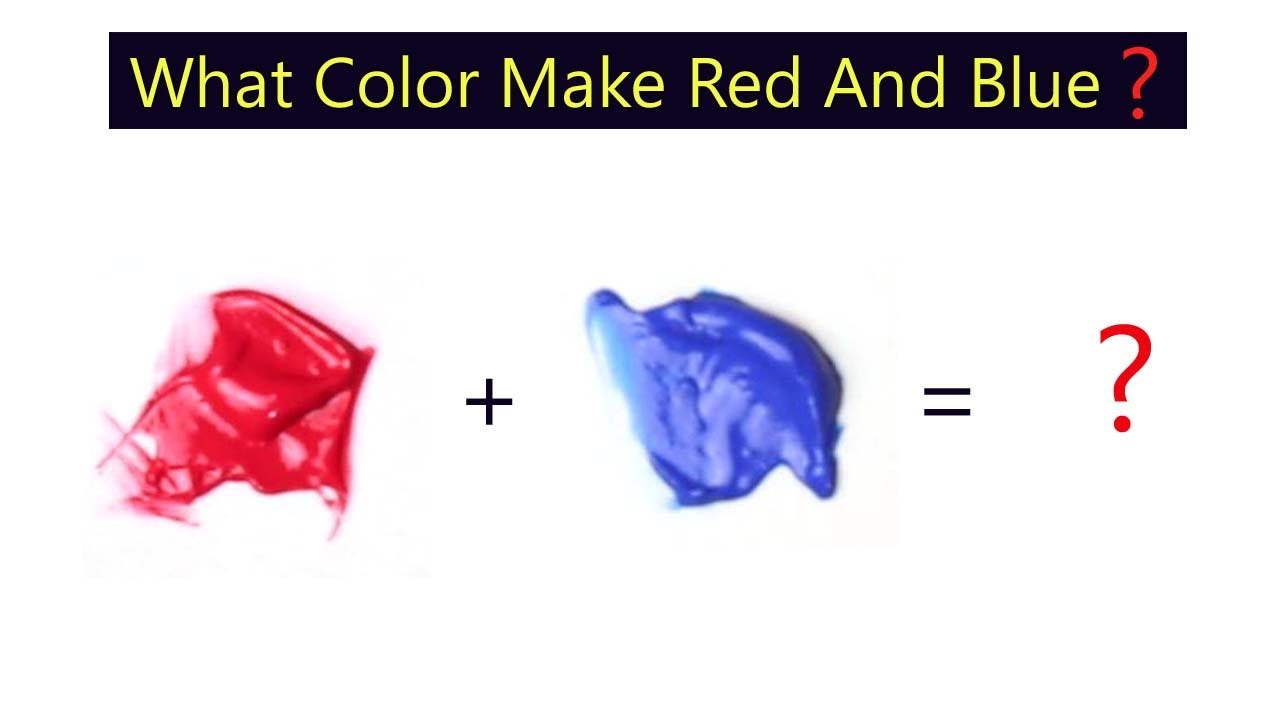
On screen, pure RGB red and blue combine into magenta at 255, 0, 255, hex #FF00FF. The green channel stays at zero, and that missing green is exactly why you get magenta instead of a soft purple.
| Color | RGB | Hex code |
|---|---|---|
| Red | 255, 0, 0 | #FF0000 |
| Blue | 0, 0, 255 | #0000FF |
| Full mix (magenta) | 255, 0, 255 | #FF00FF |
| Web purple | 128, 0, 128 | #800080 |
Want a calmer purple? Pull both values down. Halving red and blue to 128, 0, 128 gives the standard CSS “purple,” a deeper, less electric hue.
One catch worth knowing: sRGB, the default color space for the web, only reproduces roughly 35% of the visible spectrum, according to screen-calibration references like Screenlab. Your on-screen magenta is real, but it’s a slice of what the eye can actually see. A tool that turns RGB values into hex saves the manual math.
What CMYK Values Do Red and Blue Produce in Print
Print doesn’t own red and blue inks. CMYK rebuilds them from cyan, magenta, and yellow, so a printed purple leans mostly on magenta plus cyan.
Screen purple: built from emitted red and blue light.
Print purple: built from magenta and cyan ink absorbing light.
The gamut gap bites here. The CMYK range is close to half the size of RGB, per the Toward design studio, so a punchy screen purple often prints duller than the preview.
Photoshop and InDesign flag this with an out-of-gamut warning before you commit. Running artwork through an RGB to CMYK conversion early prevents the muddy-purple surprise at the press. Serious brand purples usually get locked to a Pantone spot color so they stay consistent across every print run.
Purple, Violet, and Magenta: What’s the Difference
People swap these three words freely, but they aren’t the same. Violet is a real wavelength. Purple and magenta are inventions of the brain.
| Term | Type | Where it comes from |
|---|---|---|
| Violet | Spectral | Real light, roughly 380–450 nm |
| Purple | Non-spectral | Brain blends red and blue |
| Magenta | Non-spectral | Red and blue light, no green |
Violet sits at the short end of the visible spectrum. Britannica and NASA both put it near 380-450 nm, just below blue at 450-495 nm, making it the shortest wavelength the human eye can register.
Magenta appears nowhere on that spectrum. Because it needs red (620-750 nm) and blue at opposite ends firing together, no single wavelength produces it, which is why you never spot magenta in a rainbow.
Isaac Newton split white light with a prism back in 1665 and mapped these bands. His work still explains why a given hue refracts at its own angle, and why red-and-blue purples sit on the color wheel as a bridge rather than a spectral stripe.
Where Does Red and Blue Mixing Show Up in Real Work

Red-and-blue purple turns up in four working arenas: graphic design, painting, print production, and web interfaces. Each one handles the same mix through a different tool and a different color model.
The stakes aren’t small. The global graphic design market is projected to pass $56 billion by the end of 2025, according to NMSC, and color decisions sit at the center of most of that output.
| Field | How the mix shows up | Typical tool |
|---|---|---|
| Graphic design | Picking purple swatches | Figma, Illustrator |
| Painting | Mixing violet from few tubes | Tube pigments |
| Matching a brand purple | Pantone, CMYK | |
| Web / UI | Hex purples in code | CSS, design tokens |
Graphic Design
Screen-first, RGB all the way. Designers rarely mix a purple by hand here. They pull it from a picker in Figma, Photoshop, or Adobe Illustrator.
- Purple gets chosen by hex or RGB value, not by blending
- Dialing the saturation of that purple up or down tunes it fast
- Everything stays additive until export
Figma is the primary tool for 83% of professional UI designers, per the UX Tools 2024 survey. Microsoft, Netflix, and Spotify all run design work through it.
Painting
Painters earn their purple. A limited palette forces you to mix violet from two tubes instead of buying it premixed.
Cool red plus blue gives clean purple. Warm red plus blue gives mud. That single choice decides the whole result.
From one good purple, artists build a full range using a tint and shade approach, adding white for tints and black or blue for deeper shades.
Print Production
The Pantone Matching System spans over 2,100 standardized colors, and brand purples usually get locked to one of them.
Why brands bother: a spot color prints identically in Richmond or Tokyo.
The CMYK problem: a bright screen purple can shift dull once it hits process ink.
Cadbury’s chocolate wrappers use a specific purple (a fixed Pantone spot color) so the shade never drifts across factories. Running values through a Pantone-to-CMYK translation catches the shift before the run. This precision matters most in packaging work, where the color is the brand.
Web and UI
On the web, purple is just a string of characters. Twitch’s brand purple is #9146FF, and that hex code renders the same in every browser that reads it.
Modern web design stores these values as design tokens, so one purple variable updates an entire product at once.
Teams keep the full set in a shared color palette, pairing each hex purple with accessible text contrast so buttons and links stay readable.
FAQ on What Color Do Red And Blue Make
What color do red and blue make?
Red and blue make purple. That holds for paint, ink, and pigment. On a screen, where you mix light instead of pigment, the same two colors make magenta.
Do red and blue make purple or magenta?
Both, depending on the medium. Pigment mixing (subtractive) gives purple or violet. Light mixing (additive) gives magenta. The color model decides the answer, not the two starting colors.
Why do red and blue make purple in paint but magenta on a screen?
Paint absorbs light and reflects a narrow violet band. Screens emit red and blue light together with no green channel, so your eye reads that combination as magenta instead.
What is the RGB value of red and blue combined?
Full red (255, 0, 0) plus full blue (0, 0, 255) gives magenta at 255, 0, 255. Halving both to 128, 0, 128 produces the standard web purple.
What hex code do red and blue make?
Combined at full strength, red (#FF0000) and blue (#0000FF) produce magenta, hex #FF00FF. For a calmer purple, #800080 is the common CSS value used across websites.
Why does my red and blue paint look muddy or brown?
Your red is probably warm. Cadmium and similar warm reds hide yellow, which fights the blue. Switch to a cool, magenta-leaning red for a clean, saturated purple.
What shade of purple do red and blue make?
Equal parts land on a balanced violet. More red pushes toward plum and red-violet. More blue drifts toward blue-violet and indigo. The ratio controls the shade.
Are purple and violet the same color?
No. Violet is a real wavelength on the visible spectrum, roughly 380-450 nm. Purple is non-spectral, a color your brain builds when red and blue arrive together.
What do red and blue light make?
Red and blue light combine into magenta. Because this is additive mixing, the result looks brighter and pinker than mixed paint, and it appears nowhere on a natural rainbow.
What CMYK values make purple from red and blue?
Print rebuilds purple from magenta and cyan ink, not red and blue. A typical purple runs high magenta with moderate cyan, though the exact CMYK recipe shifts by printer.
Conclusion
So what color do red and blue make? Purple when you mix pigment, magenta when you mix light. One question, two correct answers, split by the medium.
The color wheel places purple as a secondary color, sitting between its two primary parents. That much stays constant.
What changes is the system. Subtractive mixing on canvas and paper reflects a violet band. Additive mixing on screens stacks red and blue channels into a brighter result.
The ratio is your control dial. Lean red for plum, lean blue for indigo, split it evenly for a true violet.
Whether you’re matching a Pantone spot color for print or dropping a hex value into CSS, knowing which model you’re in saves you from muddy surprises.

Renowned for his expertise in logo design and visual branding, Bogdan has developed a multitude of logos for various clients.
His skills extend to creating posters, vector illustrations, business cards, and brochures. Additionally, Bogdan's UI kits were featured on marketplaces like Visual Hierarchy and UI8.
He also wrote in the past years on sites like Design Your Way, WebDesignerDepot, WPDean, Designmodo, Speckyboy, Slider Revolution, and more.
- The Windsurf Logo History, Colors, Font, And Meaning - 10 October 2026
- How to Remove Background From Product Photos (No Photoshop) - 10 October 2026
- How Designers can Build a Stronger Online Creative Identity - 9 October 2026

Bogdan Sandu is a seasoned designer who has been designing websites since 2008. Renowned for his expertise in logo design and visual branding, Bogdan has developed a multitude of logos for various clients. His skills extend to creating posters, vector illustrations, business cards, and brochures. Additionally, Bogdan's UI kits were featured on marketplaces like Visual Hierarchy and UI8. He also wrote in the past years on sites like Design Your Way, WebDesignerDepot, WPDean, Designmodo, Speckyboy, Slider Revolution, and more.
You Might Also Like


