Before photography dominated visual media, vintage illustrators shaped how we saw the world through their brushes and pens. These masters of commercial art created the images that sold products, told stories, and defined entire eras of visual culture.
From Norman Rockwell’s heartwarming Americana to J.C. Leyendecker’s elegant fashion illustrations, these artists worked during the golden age of illustration when magazines, advertisements, and books relied heavily on hand-drawn artwork. Their influence extends far beyond their original medium.
Understanding these artistic pioneers reveals how visual storytelling evolved and why certain illustration techniques remain timeless. This exploration will introduce you to the most influential vintage illustrators, their signature styles, and the lasting impact they’ve had on modern graphic design movements.
You’ll discover the techniques that made their work so compelling and learn how today’s designers continue drawing inspiration from these masters of traditional illustration methods.
Great vintage illustrators
Tom Haugomat
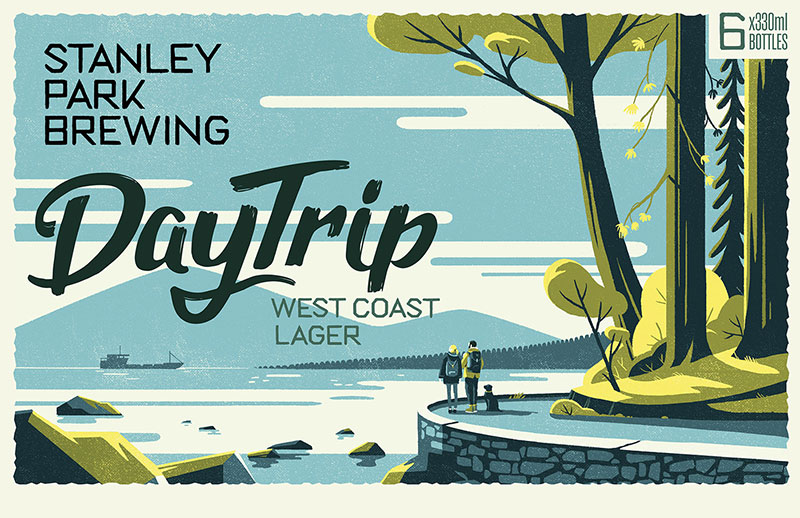
French illustrator (born 1985) specializing in minimalist vintage illustration with cinematic influences. Known for clean lines, pastel palettes, and stripped-back commercial art reminiscent of 1950s-60s advertising.
Notable Illustration Works
Major campaigns for Evian, California Avocados, and Tesco Finest range. Editorial work in XXI, Le Monde, and European publications. Gallery exhibitions alongside commercial projects maintain artistic integrity.
Artistic Style & Techniques
Uses vector graphics and digital painting with muted color palettes featuring abundant light. Strong visual hierarchy and strategic white space create atmospheric depth.
Historical Context & Influence
Gobelins animation school graduate who worked as film director with Bruno Mangyoku before transitioning to illustration. Cinematic background informs his static composition approach, bridging traditional and digital techniques.
Commercial Applications
Represented by Handsome Frank (London) and Tiphaine agency (Paris). Works span advertising, editorial, publishing, and packaging for international clients seeking vintage aesthetic with contemporary appeal.
Eric Comstock’s
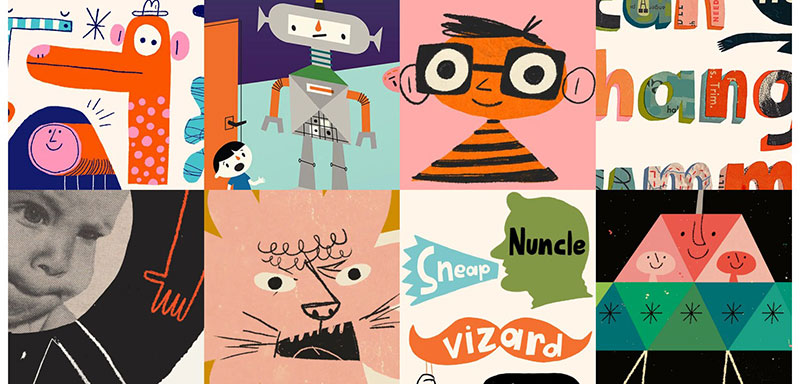
American illustrator and creative director with retro mid-century modern aesthetic. Worked in advertising for 11 years before transitioning to freelance illustration and children’s books.
Notable Illustration Works
- “Charlie Piechart and The Case of The Missing Pizza Slice” series
- Amazon Editor’s Pick Best Books for Ages 6-8
- Society of Illustrators Original Art Show featured work
- Kirkus Starred Review and Publishers Weekly acclaim
Artistic Style & Techniques
Bright analogous colors (orange, turquoise, olive green) with weathered, vintage textures. Digital renderings feature simplified characters with dot-eyes and moon-sliver smiles for accessibility.
Historical Context & Influence
Part of contemporary mid-century illustration revival, drawing from 1950s packaging design and vintage commercial art. Represents successful bridge between historical traditions and modern digital publishing.
Commercial Applications
Clients include Land of Nod, Hallmark, Shutterfly, TeNeues, Moda Fabrics, Oopsy Daisy. Works across children’s publishing, greeting cards, and textile design, adapting vintage aesthetics for contemporary markets.
Caroline Church
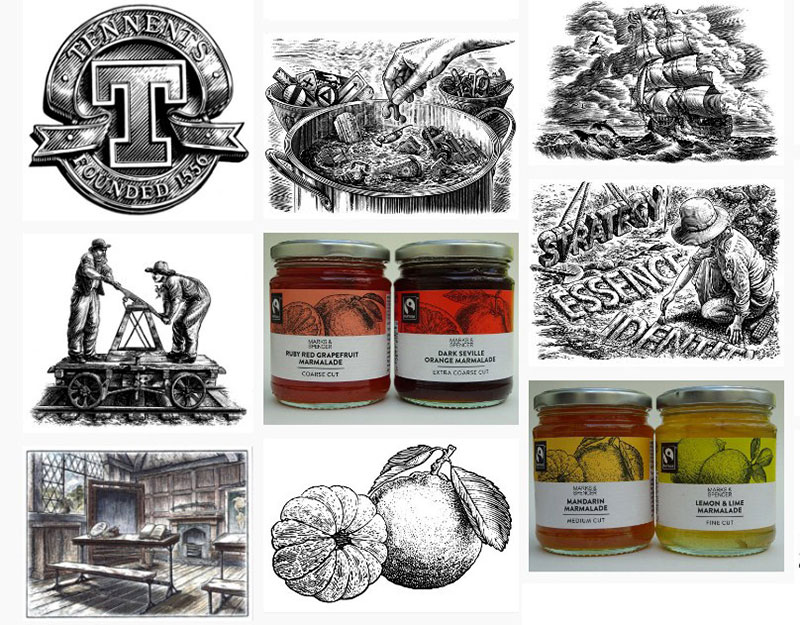
British scraperboard artist (Twickenham-based) specializing in 19th century engraved style. Chelsea School of Art graduate with additional wood engraving training at Royal Academy Schools.
Notable Illustration Works
Commercial projects for Domino’s, DDB Helsinki, and Virgin emphasizing traditional packaging feel. Creates detailed scraperboard illustrations replicating vintage woodcut engravings and historical prints.
Artistic Style & Techniques
Traditional scraperboard: white clay card covered in black ink, scraped with craft knife to reveal white marks underneath. Occasionally adds digital color washes in Photoshop for contemporary applications while maintaining authentic engraved appearance.
Historical Context & Influence
Influenced by iconic engravers Thomas Bewick and Gustav Dore. Work connects directly to 19th century printmaking traditions, offering authentic historical aesthetic for modern commercial applications.
Commercial Applications
Ideal for brands requiring traditional, time-honored visual identity. Packaging design, historical publications, and projects where authentic engraved look conveys heritage and craftsmanship values.
PawelJonca

Polish illustrator and architect (Warsaw-based) specializing in computer-generated vintage illustration. Educated as architect, chose illustration career focusing on editorial and commercial work.
Notable Illustration Works
Regular contributor to iMagazine (formerly Moje Jabłuszko) since 2008. Work featured in major Polish publications including Przekrój, Wprost, and Newsweek. International recognition through RetroSupply and design publications.
Artistic Style & Techniques
Combines Picasso-style Cubism influences with Saul Bass aesthetics and healthy retro twist. Uses Corel Painter and Adobe Creative Cloud to create textured, vintage-inspired digital illustrations with geometric elements.
Historical Context & Influence
Represents contemporary Polish design renaissance, bringing architectural precision to illustration. Work bridges Eastern European design traditions with international commercial illustration standards.
Commercial Applications
Editorial illustration for magazines and publishing. Architectural background informs structural approach to graphic design principles, suitable for cultural, architectural, and design-focused clients.
Adam Nickel
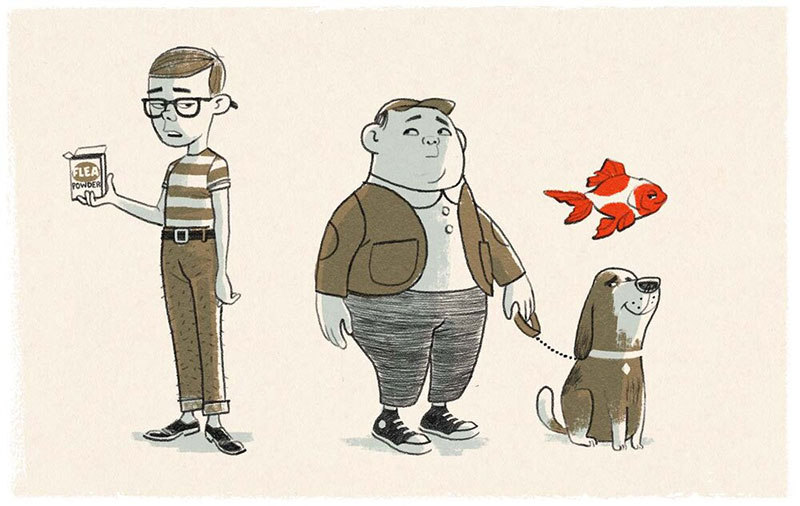
Brisbane-based Australian illustrator influenced by mid-century era design. Known for motorcycle-themed illustrations and vintage aesthetic with distinctive textures and color palettes.
Notable Illustration Works
- Collaboration with Zoe Foster Blake on Australian Book Industry Award-winning series
- Work for The Guardian, Men’s Health, Wall Street Journal
- Deus Ex Machina lifestyle brand illustrations
- Gallery of Modern Art “The Motorcycle” exhibition contributions
Artistic Style & Techniques
References 1950s iconography with painterly, hand-done approach while maintaining mid-century aesthetic. Strong contrast and vintage color palettes create authentic period feel.
Historical Context & Influence
Influenced by Katsuhiro Otomo, Al Parker, and J.C. Leyendecker. Personal motorcycle ownership (1955 Triumph Thunderbird) informs authentic vintage transportation illustrations.
Commercial Applications
Works across children’s books, advertising, editorial illustration. Motorcycle enthusiast background makes him ideal for automotive, lifestyle, and transportation-themed projects requiring authentic vintage feel.
Ralph Cosentino
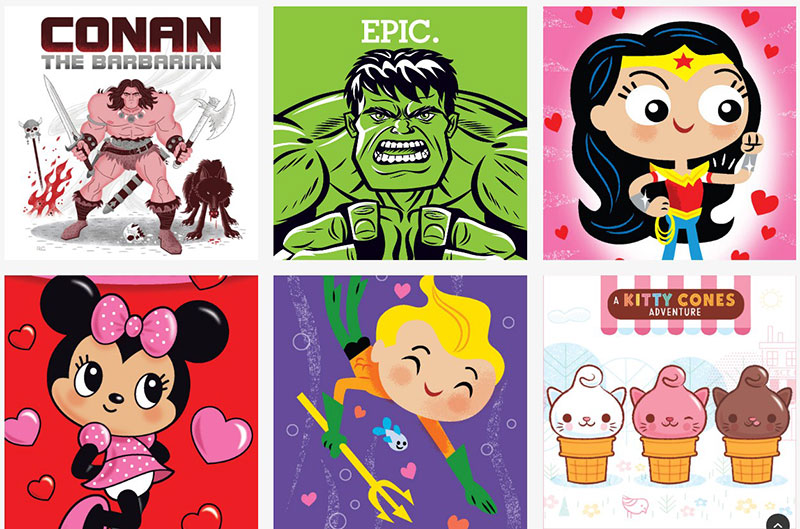
American author and illustrator (Hudson, Ohio) specializing in children’s book illustration with vintage comic book influences. Creates character-driven work with retro superhero aesthetics.
Notable Illustration Works
- “The Marvelous Misadventures of Fun-Boy” (Viking Children’s Books)
- Batman, Superman, Wonder Woman origin series for Viking
- “The Story of Honk-Honk-Ashoo and Swella-Bow-Wow”
- Work translated into multiple languages worldwide
Artistic Style & Techniques
Digital renderings with wide-set dot-eyes and moon-sliver smiles. Takes inspiration from 1950s advertising and vintage Japanese pop culture. Characters feature simplified, accessible design suitable for young audiences.
Historical Context & Influence
Fun-Boy character gives direct nod to 1950s advertising aesthetics combined with vintage Japanese pop culture elements. Work continues tradition of character-based illustration for children’s entertainment.
Commercial Applications
Children’s publishing, toy design, licensing. Founded U.F.O. Toys company for character merchandising. Work suitable for educational materials, character development, and family entertainment properties.
Mary Kate McDevitt
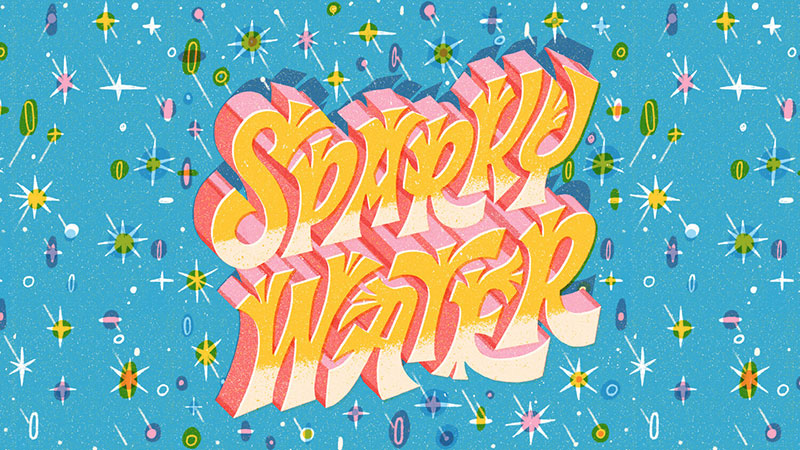
Philadelphia-based illustrator and lettering artist specializing in vintage hand-lettering with handcrafted aesthetic. Tyler School of Art graduate focusing on illustrative lettering with retro character details.
Notable Illustration Works
- Hand-lettering guidebook “Hand-Lettering Ledger”
- Vintage Hand-Lettering Skillshare courses
- Editorial work for O Magazine, Mental Floss
- Edith Blyton stories collection artwork
Artistic Style & Techniques
Hand-drawn, colorful lettering with vintage ephemera inspiration. Combines typography with illustration, using traditional tools alongside digital refinement. Strong font psychology understanding.
Historical Context & Influence
Draws from vintage packaging, old painted signs, and worn ephemera. Represents contemporary revival of hand-lettering traditions in digital age, maintaining craft authenticity.
Commercial Applications
- Target, Chronicle Books, Sesame Street, Nintendo collaborations
- Teaching at Tyler School of Art and Skillshare platform
- Book covers, stationery, greeting cards, brand identity projects
Travis Coburn

Canadian illustrator (Toronto-based) with 1940s comic book art influences. Art Center College of Design graduate specializing in Russian avant-garde inspired commercial illustration.
Notable Illustration Works
Work for Apple, Nike, Adidas, Arsenal FC, Mercedes Benz, BMW, Volvo, McLaren. Editorial clients include Time, Fortune, Rolling Stone, Popular Mechanics, Scientific American, Esquire, GQ, Field & Stream.
Artistic Style & Techniques
Unique blend of 1940s comic book art, Russian avant-garde movement, and 1950s-60s printed materials. Complex process involving painting, digital design, and hand silkscreening creates distinctive textured appearance.
Historical Context & Influence
Work connects to Russian Constructivism and American golden age comics. Represents contemporary interpretation of mid-century graphic design movements with modern commercial applications.
Commercial Applications
Motion graphics for Dyson, Nike, Los Angeles Chamber of Commerce. Film and television imagery. Represented by Dutch Uncle agency. Works across automotive, sports, technology, and lifestyle brands requiring retro-futuristic aesthetic.
Timba Smits

Australian illustrator and creative director (London-based) specializing in contemporary graphic pop art with mid-century influences. The Church of London creative director known for retro poster design and vintage illustrations.
Notable Illustration Works
Creative direction for Little White Lies and Huck magazines. 71A Gallery exhibitions and speaking events. Independent publisher of Wooden Toy Quarterly magazine. Work featured internationally across advertising and editorial.
Artistic Style & Techniques
Bold, visually expressive style using iPad/Procreate and iMac/Wacom setup. Combines traditional hand-drawing influences with digital tools. Mid-century color theory and vintage texture applications.
Historical Context & Influence
Draws from 1940s-60s visual culture including toys, games, movies, and music. Self-described traditionalist maintaining “pencil is mightier than mouse” philosophy while embracing necessary digital tools.
Commercial Applications
Adobe, AirBnB, Apple, Canon, Disney, ESPN, Nike, Penguin Random House clients. Works across editorial, advertising, publishing, and brand identity. Suitable for entertainment, technology, and lifestyle brands seeking authentic vintage appeal.
Patrick Leger
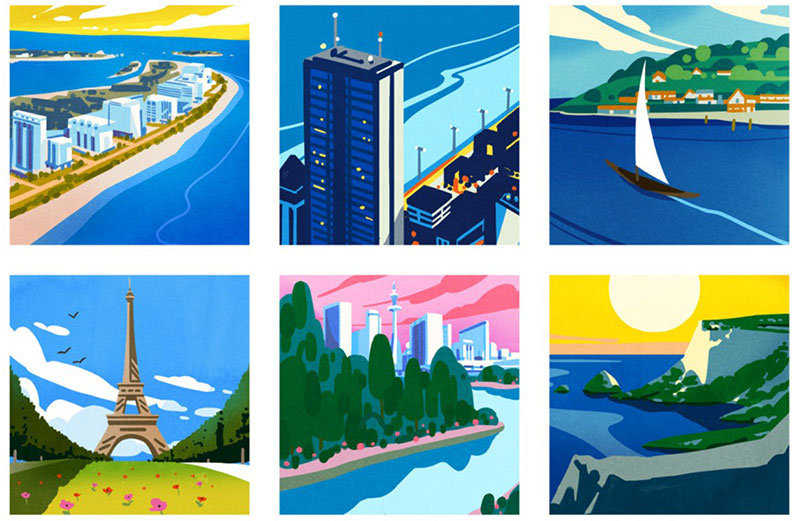
Brooklyn-based illustrator (working since 2007) specializing in dramatic film-influenced illustration with practiced linework. Known for blending cinematic composition with vintage aesthetic reminiscent of golden age illustration.
Notable Illustration Works
- Editorial work for The New York Times, The New Yorker, Washington Post, Bloomberg, Vanity Fair
- Publishing clients include Random House, HarperCollins, Simon & Schuster, The Folio Society
- Animation projects for Cartoon Network, Disney, Lucasfilm, Turner Broadcasting
- Commercial work for Apple, Google, Amazon, Airbnb
Artistic Style & Techniques
Uses swift, precisely-inked lines with half-tone color theory separations. Creates chiseled character designs with dramatic lighting inspired by film noir aesthetics. Digital techniques achieve authentic vintage comic book and pulp illustration appearance.
Historical Context & Influence
Work connects to 1940s comic book tradition and golden age advertising illustration. Represents contemporary interpretation of classic American illustration with modern editorial and commercial applications.
Commercial Applications
Cross-platform work spanning editorial, books, advertising, and animation design. Suitable for entertainment, publishing, and media clients requiring sophisticated vintage narrative illustration with contemporary edge.
Migy Blanco
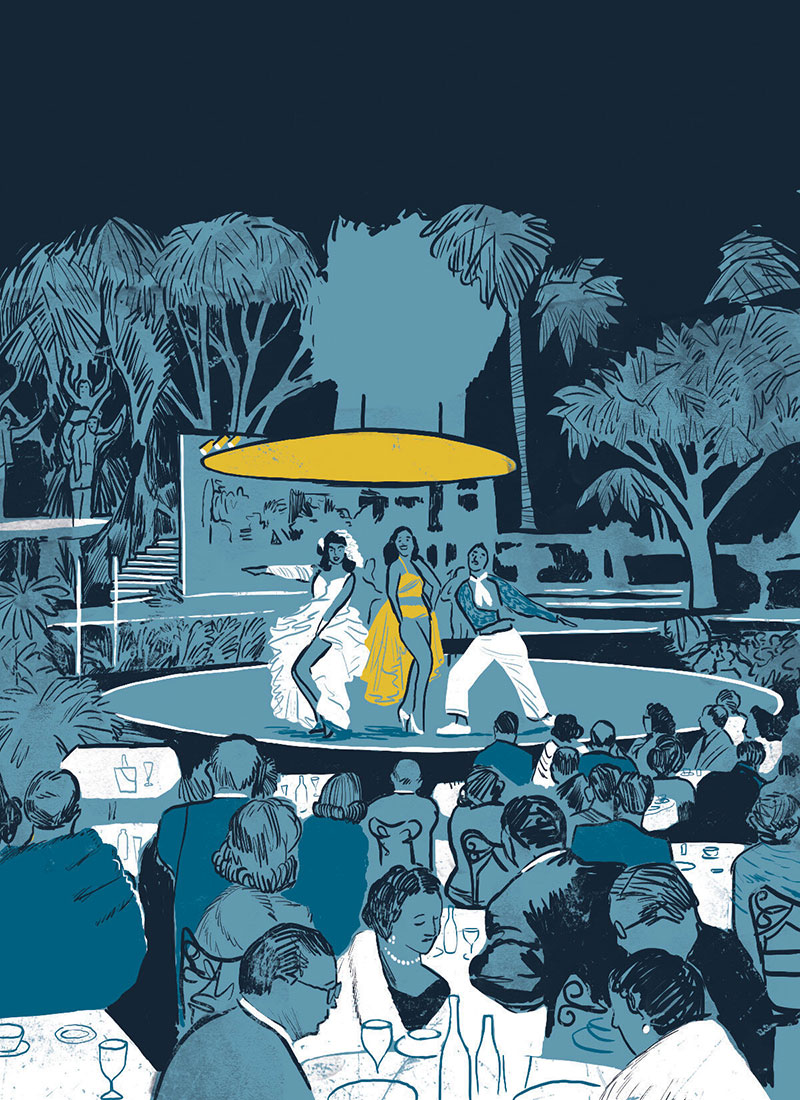
British illustrator (born Salford, England) who developed bold, magical children’s book style during 10-year residence in Buenos Aires. Currently UK-based, creating eye-catching work influenced by South American vibrancy.
Notable Illustration Works
- “Cinderella’s Stepsister and the Big Bad Wolf” children’s book series
- “Old MacDonald’s Things That Go” and other educational books
- Publishing work with Simon & Schuster, Little Tiger Press, Nosy Crow
- Commercial illustration for Nickelodeon and Mac User magazine
Artistic Style & Techniques
Distinctive color palette featuring vibrant South American influences. Bold, magical aesthetic suitable for children’s literature with fresh, modern approach to traditional storytelling illustration.
Historical Context & Influence
Represents contemporary children’s book illustration influenced by global cultural experiences. Work bridges British illustration tradition with Latin American color sensibilities.
Commercial Applications
Children’s publishing, educational materials, brand identity for family-oriented companies. Advertising work demonstrates versatility across editorial illustration and character design for youth markets.
Tavis Coburn
Matthew Laznicka
Wisconsin-based illustrator (Black Earth) educated at Milwaukee Institute of Art & Design. After 13 years as in-house designer and illustrator in Milwaukee and Minneapolis, transitioned to freelance illustration specializing in retro aesthetic with contemporary perspective.
Notable Illustration Works
Portfolio features extensive editorial and lifestyle illustration work through IllustrationX representation. Creates people and portrait illustrations for commercial applications with distinctive vintage movie poster influences.
Work demonstrates expertise in character design and narrative illustration suitable for entertainment industry clients.
Artistic Style & Techniques
Obsessed with retro illustration from the past, weaving contemporary perspective with 1950s B-movie poster flair. Uses digital design techniques to achieve authentic vintage aesthetic with modern technical precision.
Strong understanding of scale and proportion evident in dramatic character compositions and focal point emphasis.
Historical Context & Influence
Inspired by classical illustration from second half of 20th century, particularly 1940s-70s pulp and B-movie poster art. Represents continuation of American commercial illustration tradition updated for contemporary markets.
Work connects to golden age of magazine illustration when dramatic character portrayal dominated commercial art.
Commercial Applications
Suitable for entertainment industry, publishing, and lifestyle brands requiring authentic vintage movie poster aesthetic. Editorial work demonstrates versatility across advertising and publishing sectors seeking nostalgic appeal with professional execution.
Tavis Coburn
Canadian illustrator (Toronto-based) and Art Center College of Design graduate specializing in 1940s comic book art influences combined with Russian avant-garde movement aesthetics. Creates work for leading international publishing, advertising, and music companies.
Notable Illustration Works
- High-profile clients: Apple, Nike, Adidas, Arsenal FC, Mercedes Benz, BMW, Volvo, McLaren
- Editorial work: Time, Fortune, Rolling Stone, Popular Mechanics, Scientific American, Esquire, GQ
- Motion graphics projects for Dyson, Nike, Los Angeles Chamber of Commerce
- Film and television imagery for Canadian productions
Artistic Style & Techniques
Unique blend of 1940s comic book art, Russian avant-garde movement, and printed materials from 1950s-60s. Complex process involves painting, digital design, and hand silkscreening to achieve distinctive textured appearance.
Work demonstrates strong movement and rhythm principles with bold gradient applications.
Historical Context & Influence
Draws from Russian Constructivism and American golden age comics. Work represents contemporary interpretation of mid-century graphic design movements with modern commercial applications.
Childhood inspiration from G.I. Joe toy packaging demonstrates connection to consumer culture nostalgia and vintage advertising aesthetics.
Commercial Applications
Represented by Dutch Uncle agency. Awards include top honors from Society of Publication Designers, Society of Illustrators, and American Illustration. Works across automotive, sports, technology, and lifestyle brands requiring retro-futuristic aesthetic with sophisticated execution.
Shag (Josh Agle)
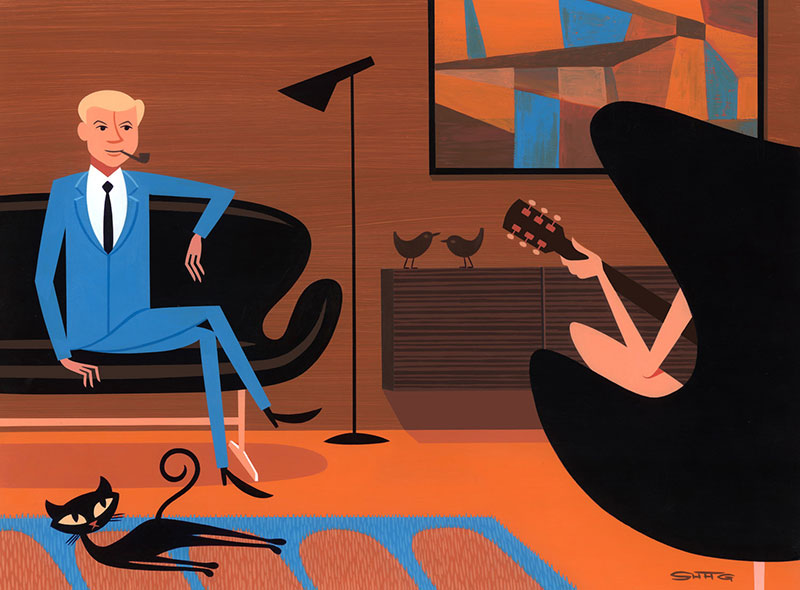
American painter and illustrator (born 1962, Sierra Madre, California) specializing in mid-century modern lifestyle illustration. Known for martini-clutching characters in angular, brightly colored Palm Springs-inspired settings.
Notable Illustration Works
- Solo exhibitions in United States, Europe, Japan, Australia, South America
- Commercial work for Disney Studios, Disneyland, Lucasfilm, Warner Brothers, CBS Studios
- Editorial illustration for Time, Forbes, Entertainment Weekly
- Pink Panther film brand identity work
Artistic Style & Techniques
Draws from 1960s advertising illustration, Bossa Nova album art, and Disney animation. Sharp vector graphics style with angular lines and vivid saturation. Characters feature period-appropriate fashion and settings celebrating consumer culture.
Historical Context & Influence
Work directly references Art Deco and mid-century advertising aesthetics. Represents “lowbrow” art movement bringing fine art sensibility to commercial illustration traditions.
Commercial Applications
The Shag Store in Palm Springs demonstrates successful artist branding. Works across entertainment, hospitality, lifestyle brands seeking sophisticated retro appeal with contemporary attitude and humor.
Matthew Laznicka

Wisconsin-based illustrator (Black Earth) educated at Milwaukee Institute of Art & Design. After 13 years as in-house designer and illustrator in Milwaukee and Minneapolis, transitioned to freelance illustration specializing in retro aesthetic with contemporary perspective.
Notable Illustration Works
Portfolio features extensive editorial and lifestyle illustration work through IllustrationX representation. Creates people and portrait illustrations for commercial applications with distinctive vintage movie poster influences.
Work demonstrates expertise in character design and narrative illustration suitable for entertainment industry clients.
Artistic Style & Techniques
Obsessed with retro illustration from the past, weaving contemporary perspective with 1950s B-movie poster flair. Uses digital design techniques to achieve authentic vintage aesthetic with modern technical precision.
Strong understanding of scale and proportion evident in dramatic character compositions and focal point emphasis.
Historical Context & Influence
Inspired by classical illustration from second half of 20th century, particularly 1940s-70s pulp and B-movie poster art. Represents continuation of American commercial illustration tradition updated for contemporary markets.
Work connects to golden age of magazine illustration when dramatic character portrayal dominated commercial art.
Commercial Applications
Suitable for entertainment industry, publishing, and lifestyle brands requiring authentic vintage movie poster aesthetic. Editorial work demonstrates versatility across advertising and publishing sectors seeking nostalgic appeal with professional execution.
Eduardo Recife
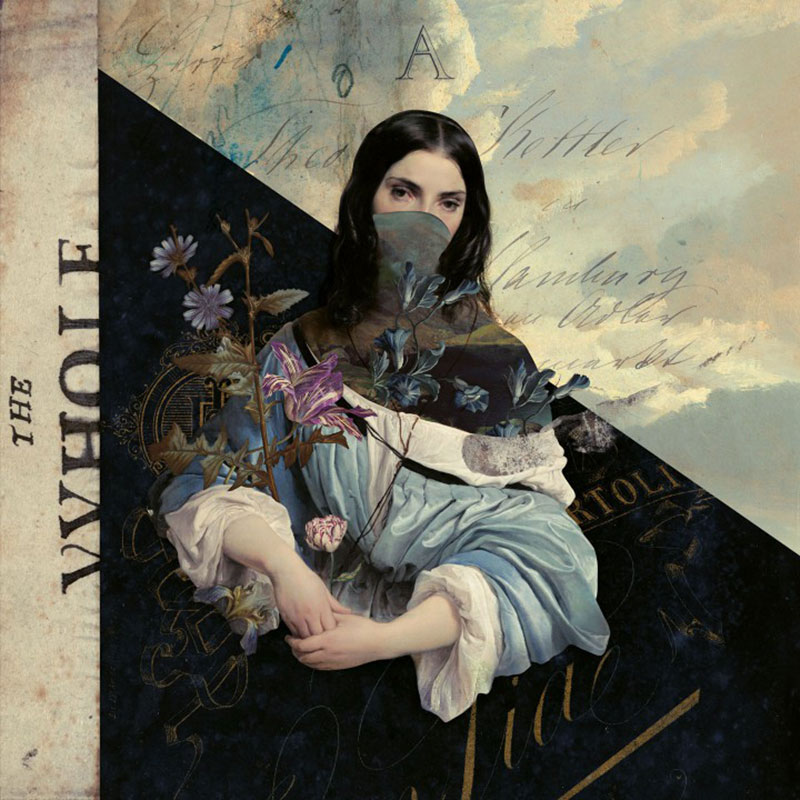
Brazilian artist, illustrator, and typographer (born 1980) known for distinct collage style combining vintage imagery, magazine cuts, textures, and symbolic details. Creator of 35 typefaces, majority offered as freeware.
Notable Illustration Works
- Commercial clients include The New York Times, Nike, YouTube, FIFA, HBO, Volkswagen
- Awards: Cannes Lion Gold (2011), American Illustration (2009), Young Illustrations Award (2014)
- Work featured in 70+ international publications
- FIFA World Cup official artwork commission
Artistic Style & Techniques
Combines vintage imagery with magazine cutouts, textures, stains, and intricate symbols. Typography expertise evident in extensive font creation. Creates visually complex compositions requiring close examination for full appreciation.
Historical Context & Influence
Work explores themes of love, truth, and human experience through collage methodology. Represents contemporary approach to mixed media illustration with strong graphic design principles foundation.
Commercial Applications
Misprinted Type brand demonstrates successful creative entrepreneurship. Work spans editorial, advertising, entertainment, and typography licensing across international markets requiring authentic handmade aesthetic.
Edward McGowan

Edinburgh-based illustrator characterized by hand-crafted aesthetic featuring rough textures and bright colors. Creates vintage-inspired work with contemporary commercial applications.
Notable Illustration Works
Portfolio demonstrates range across editorial, commercial, and personal projects. Work featured in design publications and commercial campaigns requiring authentic vintage texture.
Artistic Style & Techniques
Hand-crafted approach emphasizing texture and tactile quality. Bright color applications with deliberately rough, artisanal finish that distinguishes work from polished digital illustration.
Historical Context & Influence
Represents Scottish contribution to international vintage illustration movement. Work connects to traditional craft methods while serving contemporary commercial needs.
Commercial Applications
Suitable for brands emphasizing authenticity, craftsmanship, and artisanal quality. Editorial work demonstrates versatility across publishing and advertising sectors.
Vince Ray

British illustrator known for vintage car and motorcycle design inspiration, particularly 1950s aesthetics. Creates original compositions in retro printed fashion style categorized as lowbrow art.
Notable Illustration Works
Popular figure in art scene with work implemented in tattoo designs, various graphics, and comics. Guitar design work includes custom instrument graphics and guitar string line development.
Artistic Style & Techniques
Invention of original compositions using retro printed fashion methodology. Work demonstrates strong connection to automotive design principles and vintage racing aesthetics.
Historical Context & Influence
Draws inspiration from 1950s car and motorcycle culture, representing continued influence of American automotive design on international illustration.
Commercial Applications
Music industry work, particularly guitar and instrument design. Tattoo and graphic design applications for automotive, music, and lifestyle brands seeking authentic vintage motorcycle culture aesthetic.
Keith Tatum
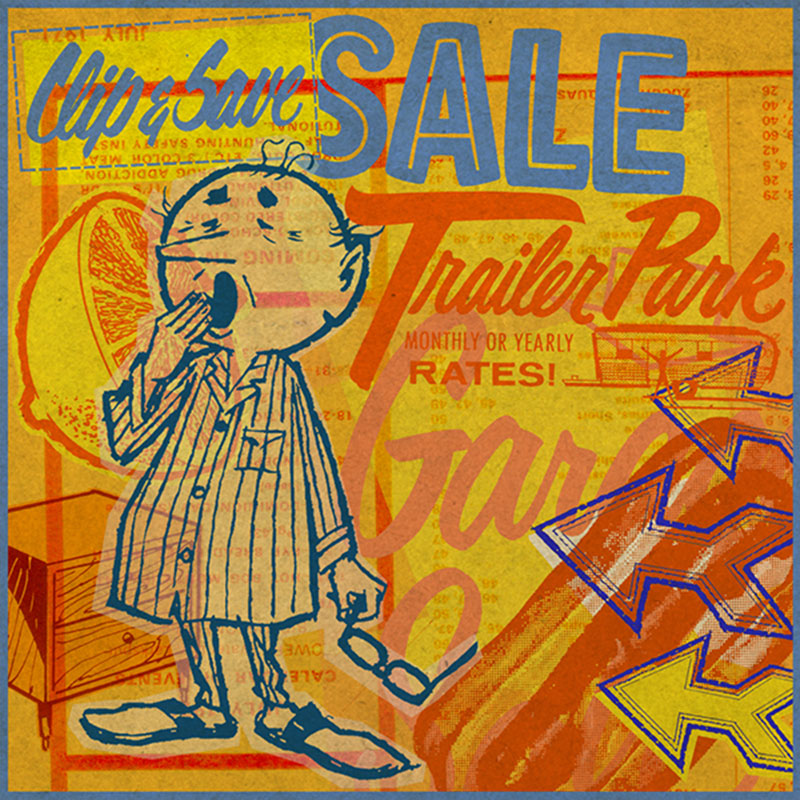
Illustrator specializing in hybrid vintage calligraphy and design combining old-school lettering traditions with contemporary applications. Creates designs facilitating “virtual voyage back in time.”
Notable Illustration Works
Designs suitable for various craft applications demonstrating versatility across multiple media. Work emphasizes nostalgic journey through historical typography elements.
Artistic Style & Techniques
Hybrid approach combining vintage calligraphy techniques with modern design sensibilities. Strong kerning and leading understanding evident in lettering work.
Historical Context & Influence
Connects to traditional American sign painting and calligraphy traditions. Represents preservation of hand-lettering skills in digital age.
Commercial Applications
Craft industry applications, custom lettering projects, brand identity work for companies seeking authentic handmade lettering aesthetic over digital typeface solutions.
Anne Taintor
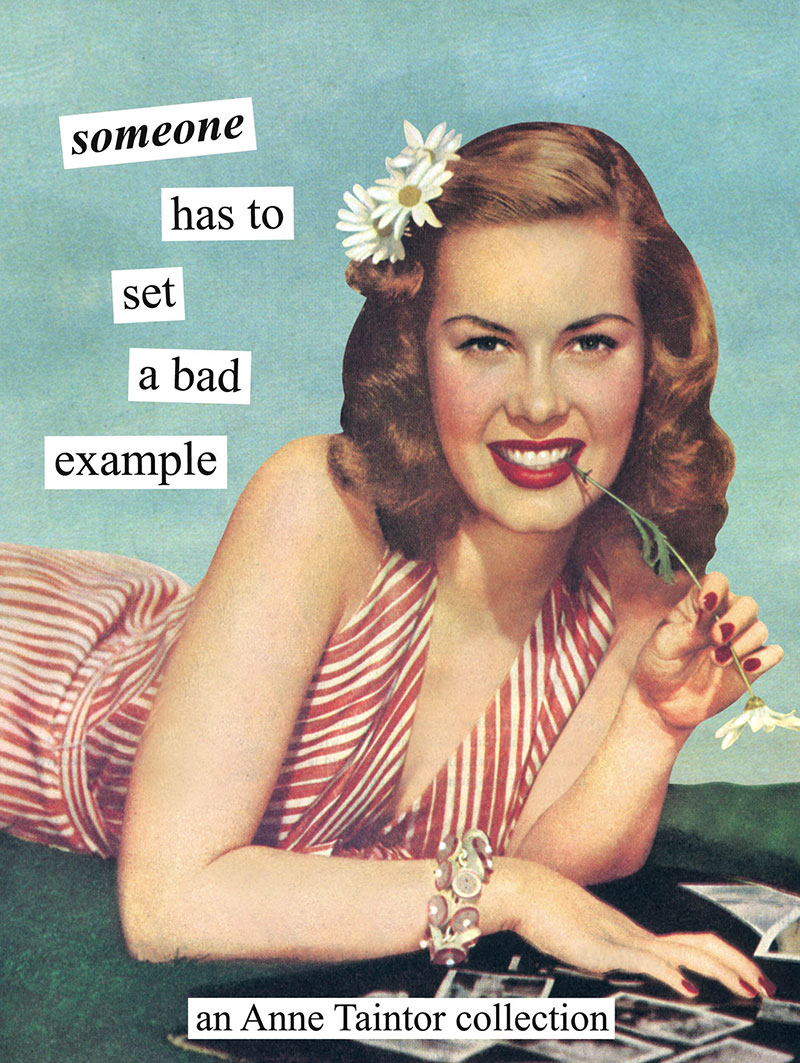
American illustrator known for vintage image collages with humorous modern commentary. Specializes in domestic stereotype themes using Mid-Century visual elements with contemporary wit.
Notable Illustration Works
Work combines vintage imagery with modern captions creating social commentary through visual contrast. Featured in various commercial and editorial applications.
Artistic Style & Techniques
Collage methodology using authentic vintage photographs and illustrations combined with contemporary text overlay. Creates cognitive dissonance through juxtaposition of historical imagery with modern sensibilities.
Historical Context & Influence
Work connects to Pop Art tradition and feminist art critique of domestic imagery. Represents contemporary recontextualization of mid-century advertising and lifestyle photography.
Commercial Applications
Greeting cards, home decor, social media content, and lifestyle brands seeking humorous vintage aesthetic with contemporary edge. Appeals to audiences appreciating ironic commentary on traditional gender roles.
FAQ on Vintage Illustrators
Who are the most famous vintage illustrators?
Norman Rockwell, J.C. Leyendecker, N.C. Wyeth, and Maxfield Parrish dominated the golden age of illustration. These masters created iconic commercial art for magazines like The Saturday Evening Post.
Their work defined American visual culture through traditional illustration methods and expert use of color theory.
What defines vintage illustration style?
Vintage illustration features hand-drawn artwork, rich textures, and traditional techniques predating digital methods. Artists used ink, watercolor, and gouache with careful attention to visual hierarchy.
Classic characteristics include detailed linework, muted color palettes, and nostalgic themes reflecting period-specific art styles.
When was the golden age of illustration?
The golden age spanned roughly 1880-1950, peaking during 1900-1940. This era coincided with magazine publishing growth and commercial art demand.
Artists like Arthur Rackham and Edmund Dulac created timeless works during this period using graphic design principles that influence modern designers.
What tools did vintage illustrators use?
Traditional artists relied on brushes, pens, watercolors, gouache, and oil paints. They worked on paper, canvas, and illustration board without digital assistance.
Scraperboard, engraving tools, and airbrushes created unique textures. These classic art tools produced authentic vintage aesthetic impossible to replicate digitally completely.
How do vintage illustrators influence modern design?
Contemporary designers study vintage techniques for typography, balance, and composition principles. Many modern artists recreate vintage aesthetics using digital tools.
Commercial illustration continues borrowing from historical graphic design movements like Art Nouveau and Art Deco for branding projects.
What’s the difference between vintage and retro illustration?
Vintage illustration refers to authentic historical artwork created during specific periods. Retro illustration mimics vintage styles using contemporary techniques and modern perspectives.
Vintage pieces are original artifacts, while retro work represents nostalgic interpretation. Both influence current minimalist design and commercial applications.
Which vintage illustration movements were most influential?
Art Nouveau, Art Deco, and the American golden age illustration dominated different periods. Each movement established distinct visual languages still referenced today.
Swiss design and Bauhaus design later influenced how vintage aesthetics merged with modernist principles.
How can I learn vintage illustration techniques?
Study master works by analyzing their composition, contrast, and color application. Practice traditional media like watercolor and ink before attempting digital recreation.
Understanding focal point placement and historical context helps develop authentic vintage aesthetic while maintaining contemporary relevance.
What makes vintage book illustration special?
Vintage book illustrations integrated seamlessly with typography elements and page layout. Artists considered white space and text flow carefully.
Hand-drawn illustrations created intimate connection between image and story. This integration influenced modern book cover design and editorial layout.
Where can I find vintage illustration inspiration?
Historical archives, museum collections, and antique publications offer authentic examples. Online databases preserve digitized works from golden age illustrators.
Study famous graphic designers who bridged vintage and modern eras. Analyze how they adapted traditional techniques for contemporary commercial art applications.
Conclusion
The legacy of vintage illustrators continues shaping contemporary visual culture through their timeless techniques and artistic vision. These masters established foundations that modern designers still reference today.
From Tom Haugomat’s minimalist approach to Eduardo Recife’s complex collage work, contemporary artists bridge historical methods with digital innovation. Their success demonstrates how traditional illustration principles remain relevant across changing technologies.
Understanding Gestalt principles and the rule of thirds helps appreciate why classic compositions feel so compelling. These fundamental design concepts transcend specific eras or tools.
Modern commercial applications continue drawing from Art Nouveau, Art Deco, and mid-century aesthetics. Whether creating poster design or packaging design, designers recognize vintage illustration’s enduring appeal.
The artistic heritage explored here offers invaluable inspiration for anyone seeking to understand how visual storytelling evolved. These illustrators proved that combining technical skill with creative vision creates work that resonates across generations, informing everything from logo design principles to contemporary motion graphics.

Renowned for his expertise in logo design and visual branding, Bogdan has developed a multitude of logos for various clients.
His skills extend to creating posters, vector illustrations, business cards, and brochures. Additionally, Bogdan's UI kits were featured on marketplaces like Visual Hierarchy and UI8.
He also wrote in the past years on sites like Design Your Way, WebDesignerDepot, WPDean, Designmodo, Speckyboy, Slider Revolution, and more.
- Canva vs Photoshop: When Does Each Make Sense? - 12 September 2026
- Briefing 3D Game Animation: Rigs, Clip Lists and Engine Handoffs - 11 September 2026
- The Webflow Logo History, Colors, Font, And Meaning - 10 September 2026

Bogdan Sandu is a seasoned designer who has been designing websites since 2008. Renowned for his expertise in logo design and visual branding, Bogdan has developed a multitude of logos for various clients. His skills extend to creating posters, vector illustrations, business cards, and brochures. Additionally, Bogdan's UI kits were featured on marketplaces like Visual Hierarchy and UI8. He also wrote in the past years on sites like Design Your Way, WebDesignerDepot, WPDean, Designmodo, Speckyboy, Slider Revolution, and more.
You Might Also Like