


Between 1936 and 2000, Life magazine covers defined how Americans saw their own history. Every week, a single photograph on a newsstand told you what mattered.
Margaret Bourke-White’s Fort Peck Dam. Philippe Halsman’s Marilyn Monroe portrait. NASA’s Apollo 11 moonwalk. These weren’t just magazine covers. They were cultural timestamps, shot by some of the greatest photojournalists of the 20th century.
Over its run, Life published more than 2,000 covers. Some captured wartime photography that changed public opinion. Others introduced celebrity portraits that became permanent fixtures in American pop culture.
This article breaks down the most famous Life magazine covers ever printed. You’ll find the story behind each shot, who took it, why it mattered, and what collectors pay for original copies today.
Best Life Magazine Covers
Fort Peck Dam (November 23, 1936)

Photographer and Story Behind the Shot
Margaret Bourke-White shot this cover on assignment from publisher Henry Luce. She was sent to Montana to photograph New Deal construction projects along the Missouri River.
What she brought back was something else entirely. The editors expected industrial construction photos. They got a full documentary about American frontier life in the surrounding boomtowns.
The image shows the massive concrete spillway piers of Fort Peck Dam, towering like ancient monuments. Two tiny workers at the base give you a sense of scale. Bourke-White shot it looking upward, which made the structures feel almost castle-like.
Why This Cover Matters
This was the very first cover of Life magazine. It set the tone for decades of visual storytelling through photojournalism.
Bourke-White was one of four original photographers hired for the publication, alongside Alfred Eisenstaedt, Thomas McAvoy, and Peter Stackpole. She became the first female war correspondent and the first woman photographer authorized to fly on a combat mission.
The cover photo later represented the 1930s in the U.S. Postal Service’s Celebrate the Century stamp series.
Design and Layout Breakdown
The debut issue featured the now-famous red and white Life logo positioned at the top. The layout was simple, direct. No cluttered cover lines or competing headlines.
Just the photograph doing all the heavy lifting. This approach to what makes a good magazine cover would define Life’s signature style for decades. The bold typography of the masthead against Bourke-White’s stark imagery created an immediate visual hierarchy that readers could recognize from across a newsstand.
Cultural and Historical Context
America was deep in the Great Depression. The Fort Peck Dam was a massive Public Works Administration project, a symbol of Roosevelt’s New Deal optimism.
Luce’s choice was strategic. The image projected machine-age progress at a time when the country badly needed hope. It told readers: this magazine will show you the world through pictures.
Collector Value and Rarity
As Life’s inaugural issue, this is one of the most sought-after vintage magazine editions among collectors. Condition matters a lot here. A well-preserved copy with intact mailing label can fetch several hundred dollars at auction.
Bourke-White’s original prints of the dam photograph have sold at major auction houses and are held in permanent collections at the Metropolitan Museum of Art, the National Gallery of Art, and the Art Institute of Chicago.
Marilyn Monroe (April 7, 1952)
Photographer and Story Behind the Shot
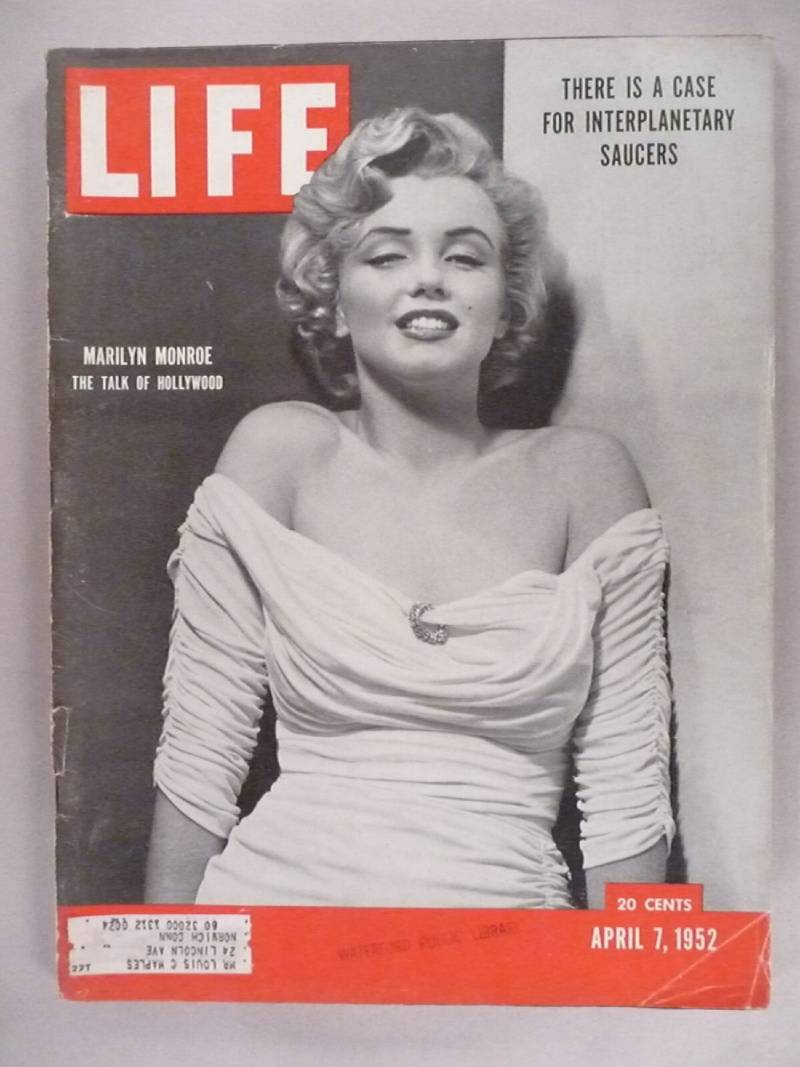
Philippe Halsman photographed a young actress who was just beginning to break through. He drove to the outskirts of Los Angeles to her modest two-room apartment. What struck him wasn’t the glamour. It was the books on her shelves: Dostoyevsky, Freud, a history of Fabian Socialism.
And two dumbbells on the floor.
The resulting portrait captured Monroe in an off-the-shoulder gown, looking directly at the camera. Halsman would later say he took hundreds of photos of her, noting that her appeal was completely genuine.
Why This Cover Matters
This was Marilyn Monroe’s debut on the Life cover. She appeared six times total while she was alive, but this first one remains the most collectible.
Here’s the funny part. If you look closely at the upper right corner of the original issue, you’ll spot a cover line that reads: “There Is a Case for Interplanetary Saucers.” One of the most incongruous combinations of image and text in magazine cover history.
Design and Layout Breakdown
The cover uses a tight portrait crop with warm tones. Monroe’s gaze pulls you in immediately, creating a strong focal point.
Life kept the layout clean. The red logo at top, Monroe’s face dominating the frame, and minimal text. This is a good example of how emphasis works in editorial design. Everything serves the portrait.
Cultural and Historical Context
In 1952, Monroe was transitioning from pin-up model to serious Hollywood contender. This cover helped cement that shift. Life recognized her appeal early, and Halsman’s portrait photography gave her something beyond the usual cheesecake shots.
She’d go on to become arguably the most photographed woman of the 20th century. But this was the moment American pop culture really started paying attention.
Collector Value and Rarity
Halsman’s original silver gelatin prints from this shoot have sold at Sotheby’s with estimates between 5,000 and 7,000 EUR. The magazine issue itself is one of the most traded Life editions on the collector market.
Condition and completeness (all pages, no clipping) drive the price. Copies in very good condition regularly sell for $100 to $300.
JFK and Jackie Bouvier (July 20, 1953)
Photographer and Story Behind the Shot
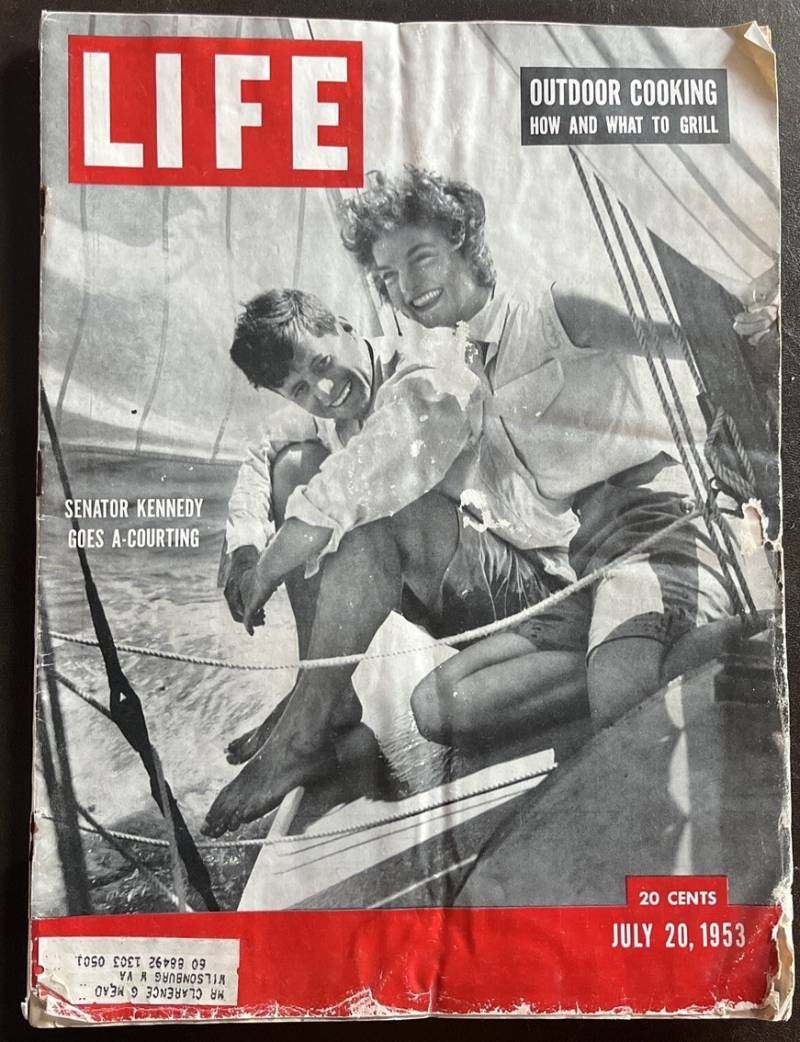
Hy Peskin captured then-Senator John F. Kennedy and his fiancee Jacqueline Bouvier in a candid, joyful moment. The caption read “Senator Kennedy Goes A-Courting.”
The couple looked young, energetic, and deeply American. Less than ten years later, JFK would be sworn in as President.
Why This Cover Matters
This cover launched one of Life magazine’s longest-running relationships with a public figure. The Kennedys appeared on the cover multiple times across the years. A 1958 family portrait with baby Caroline. A 1959 cover featuring Jackie with the line “A Front Runner’s Appealing Wife.”
The last time they appeared together was in 1964, in still frames from the Zapruder film.
Design and Layout Breakdown
The photograph relies on natural light and candid body language. No studio setup. The composition feels spontaneous, which was exactly the point.
Life used minimal cover text, letting the image and the couple’s easy chemistry carry the page. The balance between the two figures gives the cover a relaxed, almost snapshot quality that made it feel intimate.
Cultural and Historical Context
America was entering the Eisenhower years. Kennedy was still a young senator from Massachusetts, not yet a household name. This cover introduced the couple to a mass audience well before the 1960 presidential campaign.
Looking back, the image radiates a kind of optimism that’s impossible to separate from what came after. The assassination, the Camelot mythology, the loss of innocence. It all starts here, with a smiling couple on a magazine cover.
Collector Value and Rarity
Kennedy-related Life issues are among the most collected in the entire run. This particular issue sits in the mid-range, typically $50 to $150 depending on condition. The assassination issues from November 1963 tend to command higher prices.
The Beatles (August 28, 1964)
Photographer and Story Behind the Shot
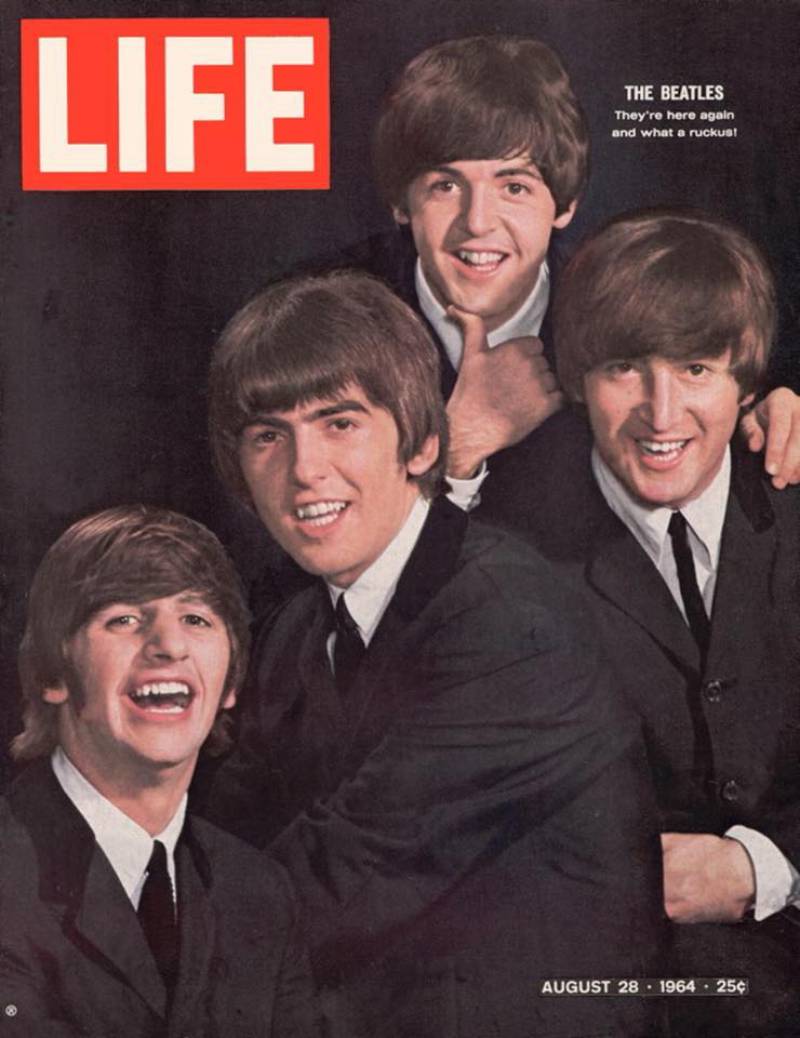
The August 28, 1964, issue featured John, Paul, George, and Ringo at the peak of the British Invasion. Photographer John Loengard had earlier shot the famous swimming pool photograph at the Deauville Hotel in Miami that February, though that image ended up as a small feature rather than the cover.
The cover itself shows the four band members in a more composed portrait. Loengard later admitted the editor-in-chief initially thought the Beatles “weren’t serious enough” to be on the cover at all.
Why This Cover Matters
By August 1964, Beatlemania had taken over the United States. Their appearance on the Ed Sullivan Show earlier that year drew 73 million viewers. This Life cover captured the cultural frenzy in real time.
The magazine ran multiple Beatles features throughout the 1960s, including coverage of the Sgt. Pepper era and solo careers. But this first proper cover marked the moment Life acknowledged rock and roll as a serious cultural force.
Design and Layout Breakdown
The cover paired the band’s recognizable mop-top look with Life’s trademark red banner. It’s a classic example of how contrast between subject matter and a publication’s established look can create something memorable.
Four young faces, a simple background, the Life logo. Nothing competing for attention.
Cultural and Historical Context
The Beatles reshaped American pop culture in 1964. Their sound, look, and attitude influenced everything from music to fashion to hairstyles. Life magazine, historically focused on photojournalism and serious news, covering a rock band was itself newsworthy.
This cover sits at the intersection of two eras: Life’s mid-century authority and the emerging youth culture that would define the rest of the decade.
Collector Value and Rarity
Beatles-related Life issues are consistently popular among both music memorabilia collectors and vintage magazine enthusiasts. This August 1964 issue typically sells between $30 and $100 depending on condition, with near-mint copies pushing higher.
Embryo, 18 Weeks (April 30, 1965)
Photographer and Story Behind the Shot
Swedish photographer Lennart Nilsson spent over a decade developing techniques to photograph the stages of human reproduction from fertilization to just before birth. When he first pitched the idea to Life’s editors, they were skeptical it could be done at all.
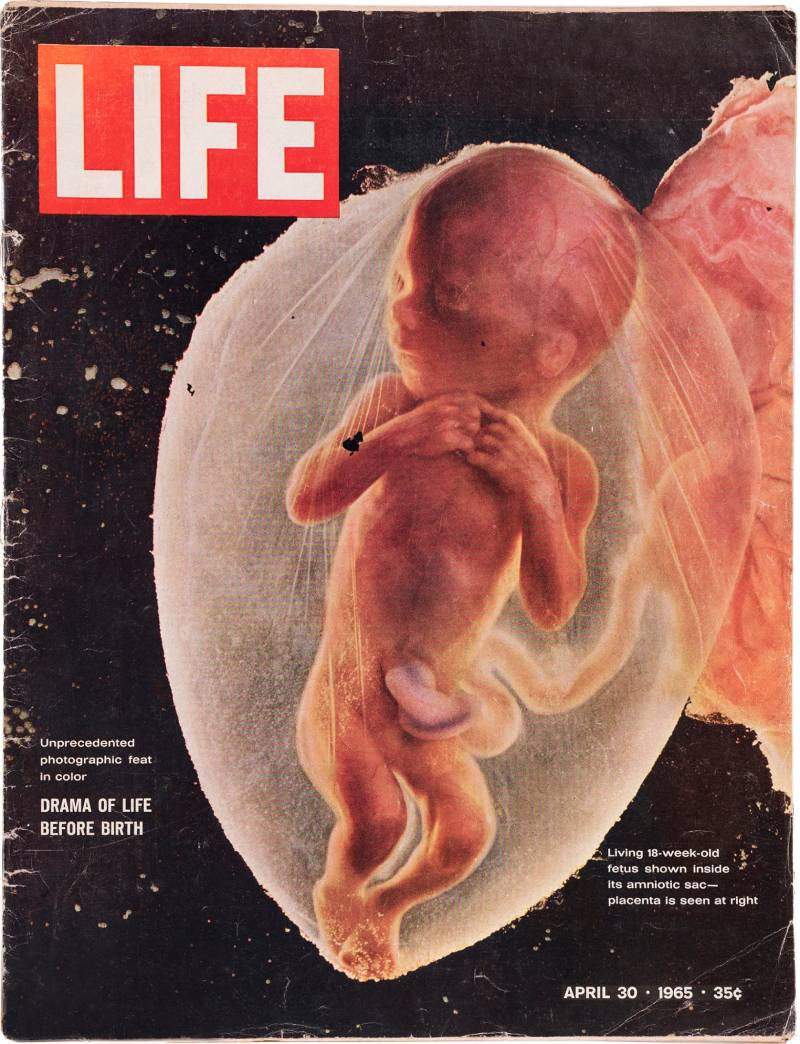
It took years. But the result was something nobody had ever seen before: color photographs of a living fetus inside the womb.
Why This Cover Matters
This was a genuine scientific breakthrough presented through magazine photography. The image of an 18-week-old embryo, curled and illuminated against a dark background, changed how people thought about prenatal life.
The issue sold out almost immediately. Eight million copies gone in days. It remains one of the best-selling single issues in Life magazine history.
Design and Layout Breakdown
The cover is almost entirely black, with the small, glowing embryo at center. It’s a radical departure from typical magazine cover conventions. No competing images, no busy layout.
The use of dark negative space and a single illuminated subject creates a dramatic effect. The color palette is naturally warm, amber and soft pinks against absolute black.
Cultural and Historical Context
Published during a period of rapid medical and scientific advancement, this cover made complex science accessible to millions. Nilsson’s work went on to be published in the book “A Child Is Born,” which has been translated into dozens of languages and remains in print.
The photograph also sparked ongoing ethical and philosophical conversations about the beginning of life that continue to this day.
Collector Value and Rarity
Despite the massive print run, good-condition copies are moderately collectible. The issue typically sells for $20 to $60. Its significance is more cultural than monetary, though complete issues with the full photo essay intact are worth more.
Vietnam War Medic (February 11, 1966)
Photographer and Story Behind the Shot
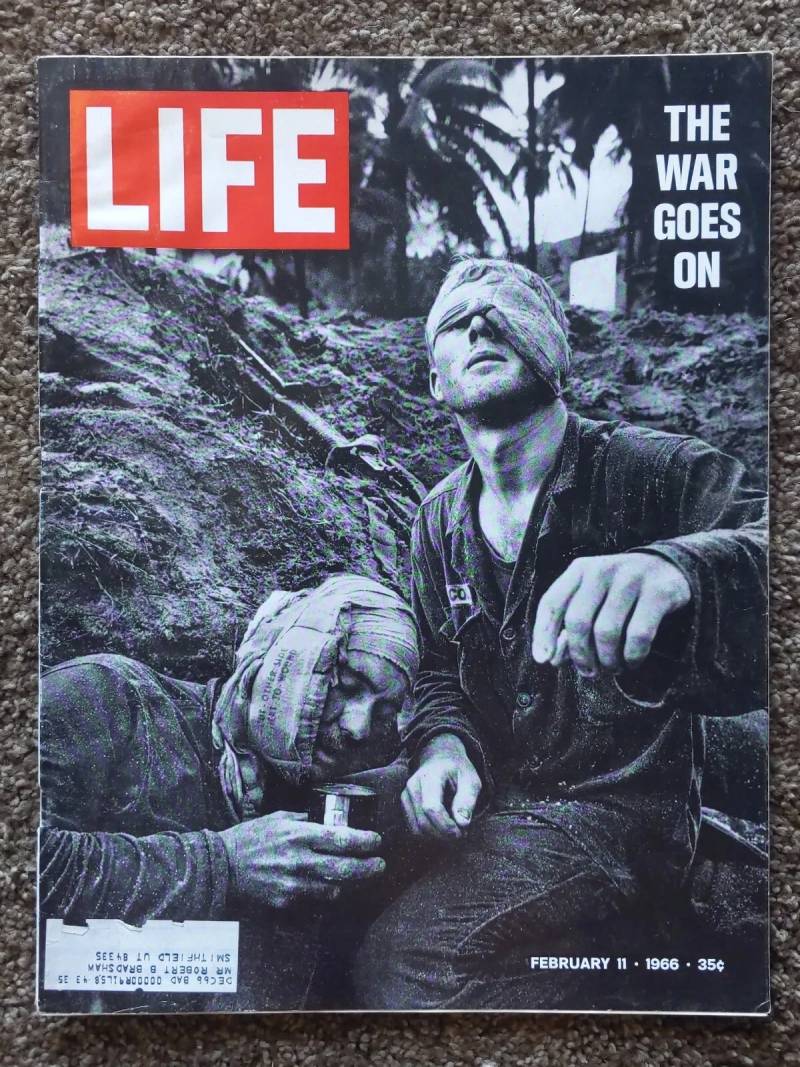
Associated Press combat photographer Henri Huet was working an assignment in An Thi, Vietnam, when he encountered Army medic Thomas Cole in the trenches. Cole’s head was wrapped in bandages from his own wounds, but he kept treating his fellow soldiers.
Huet was moved by Cole’s quiet determination. He photographed the young medic as part of a 12-image series that ran inside the issue.
Why This Cover Matters
This photograph is widely considered one of the most powerful wartime images ever published. It won Huet the Robert Capa Gold Medal, one of photojournalism’s highest honors.
Life magazine’s Vietnam War coverage became some of the most influential war photography of the 20th century, with photographers like Huet and Larry Burrows bringing the reality of combat into American living rooms every week.
Design and Layout Breakdown
The cover shows Cole’s bandaged face in close crop. The composition is tight, direct, and deeply human. There’s no distance between the viewer and the subject.
Life’s editors made the right call putting this on the cover with minimal text. The emotional weight of the photograph needed no supporting headline to land.
Cultural and Historical Context
By 1966, American public opinion on Vietnam was starting to shift. Images like this one played a direct role in that change. Life’s willingness to show the raw human cost of war, not just the politics, gave its coverage a moral authority that few other publications matched.
Henri Huet himself was killed in 1971 when his helicopter was shot down over Laos. He was 43.
Collector Value and Rarity
Vietnam-era Life issues are steadily collected, particularly those with significant combat photography. This issue ranges from $25 to $75 depending on condition. Complete copies with the full photo essay are preferred.
Robert F. Kennedy on Oregon Beach (June 14, 1968)

Photographer and Story Behind the Shot
Life photographer Bill Eppridge took this photograph of presidential candidate Robert F. Kennedy jogging down a beach in Oregon. The composition is striking: Kennedy runs away from the camera, alone on the sand, a solitary figure against the ocean.
Days after this picture was taken, Eppridge followed Kennedy to California. He was there at the Ambassador Hotel when the senator was assassinated.
Why This Cover Matters
The image works on two levels. At the time, it showed a vigorous candidate full of energy and promise. In hindsight, a man walking away from the camera takes on an entirely different meaning.
Eppridge’s Ambassador Hotel photographs of the assassination aftermath became some of the most published news images of the 1960s.
Design and Layout Breakdown
This cover breaks a basic rule of magazine design: the subject doesn’t make eye contact with the reader. Kennedy faces away, which should weaken the image. Instead, it makes it more compelling.
The composition uses the natural lines of the beach and ocean to frame Kennedy’s figure. It feels cinematic.
Cultural and Historical Context
1968 was one of the most turbulent years in American history. Martin Luther King Jr. was assassinated in April. Bobby Kennedy in June. The Tet Offensive shook confidence in the Vietnam War. Cities burned.
This cover, published just days before Kennedy’s death, captures a fleeting moment of hope in a year that had very little of it.
Collector Value and Rarity
Given its historical timing, this issue is highly sought after. Good-condition copies sell for $40 to $100. Issues from the week following the assassination are also heavily collected.
Neil Armstrong, Apollo 11 (August 11, 1969)
Photographer and Story Behind the Shot
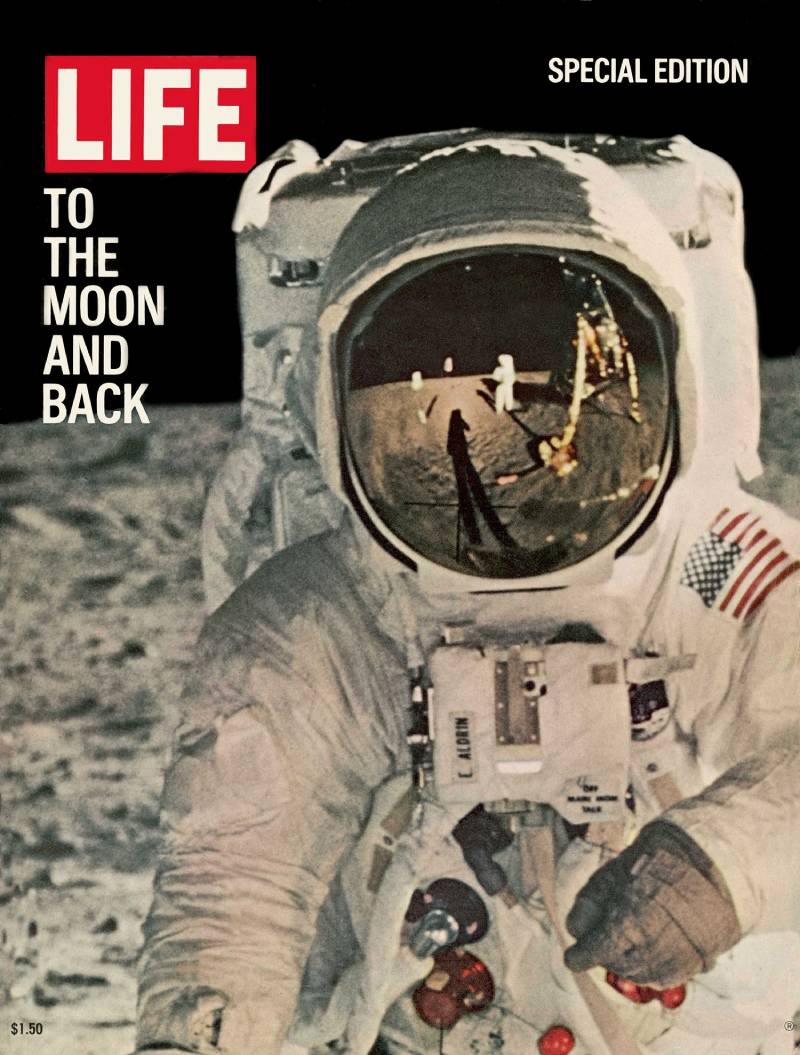
The special edition cover featured NASA photography of the Apollo 11 mission. The now-famous image shows Buzz Aldrin on the lunar surface with Neil Armstrong and the Lunar Module Eagle reflected in his visor.
Life had followed the space program closely since before President Kennedy’s 1961 challenge to land on the moon. This issue was the payoff.
Why This Cover Matters
Five hundred million people watched the moon landing on television. Life’s special edition, titled “To the Moon and Back,” gave readers what television couldn’t: high-quality color photographs, detailed accounts, and a comprehensive visual record of the mission.
The 96-page special issue included profiles of all three astronauts and large-format photos throughout. It sold massively.
Design and Layout Breakdown
The cover uses a full-bleed photograph of the lunar surface. The Life logo and “To the Moon and Back” headline sit against the black of space. The masthead works here because there’s nothing else competing for your eye.
It’s one of the most reproduced magazine covers of all time.
Cultural and Historical Context
Apollo 11 launched on July 16, 1969. Armstrong stepped onto the moon on July 20. The mission lasted 8 days, 3 hours. The crew splashed down in the Pacific Ocean southwest of Hawaii on July 24.
For Life magazine, this was the culmination of years of Space Race coverage. The publication had documented every major milestone, from Mercury through Gemini to Apollo.
Collector Value and Rarity
The August 11, 1969, special edition is one of the most widely collected Life issues. Standard copies in good condition sell for $20 to $50. A CAG-certified copy from the Armstrong Family Collection sold at Heritage Auctions. Signed copies by the astronauts command significantly higher prices.
Dorothy Dandridge (November 1, 1954)
Photographer and Story Behind the Shot
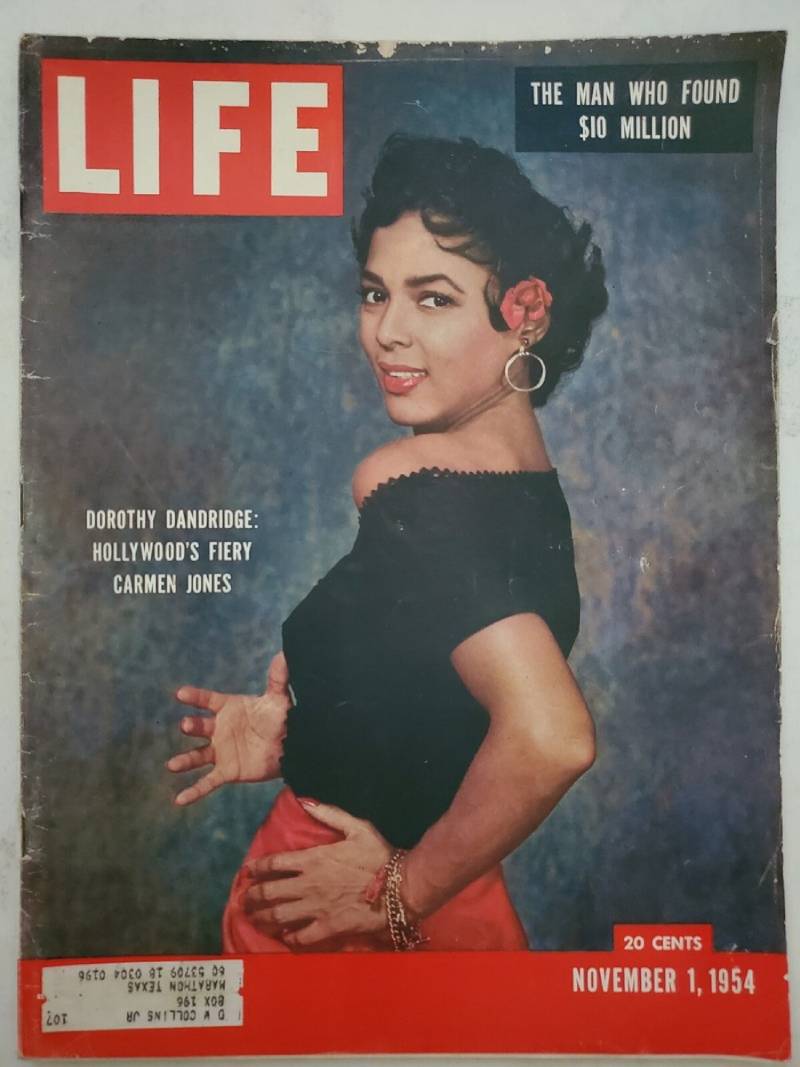
Dorothy Dandridge appeared on the cover dressed as her character from the film Carmen Jones. The photograph captured her at the height of her stardom, right as the film was earning rave reviews and strong box office returns.
She was 32 years old.
Why This Cover Matters
This was the first time an African American woman appeared on the cover of Life magazine. That alone makes it historic.
Dandridge was also the first Black woman nominated for a Best Actress Academy Award, for her role in Carmen Jones. She lost to Grace Kelly. But the nomination, combined with this cover, made her the most visible African American actress in Hollywood at the time.
Design and Layout Breakdown
The cover presents Dandridge in full Hollywood glamour. The lighting, pose, and styling match the editorial standards Life applied to its biggest celebrity portraits.
What’s significant is that Life treated her exactly like any other major star. No qualifying language, no special framing. Just a beautiful actress on the biggest magazine in America. The anatomy of a magazine cover here follows the standard playbook, which was itself the point.
Cultural and Historical Context
This cover appeared just months after the Supreme Court’s Brown v. Board of Education ruling against school segregation. The Civil Rights Movement was gaining momentum. Dandridge’s presence on Life’s cover gave Black Americans a powerful symbol of recognition in mainstream media.
Despite her success, Dandridge struggled to find roles after Carmen Jones. Hollywood’s racism limited her options severely. She died in 1965 at age 42. Halle Berry later portrayed her in the 1999 HBO film and dedicated her own historic Best Actress Oscar to Dandridge’s memory.
Collector Value and Rarity
This is one of the most historically significant Life covers. Collector demand is steady, driven by both magazine enthusiasts and those interested in African American history and the Civil Rights Movement. Good-condition copies sell for $50 to $150.
Winston Churchill (May 21, 1945)
Photographer and Story Behind the Shot
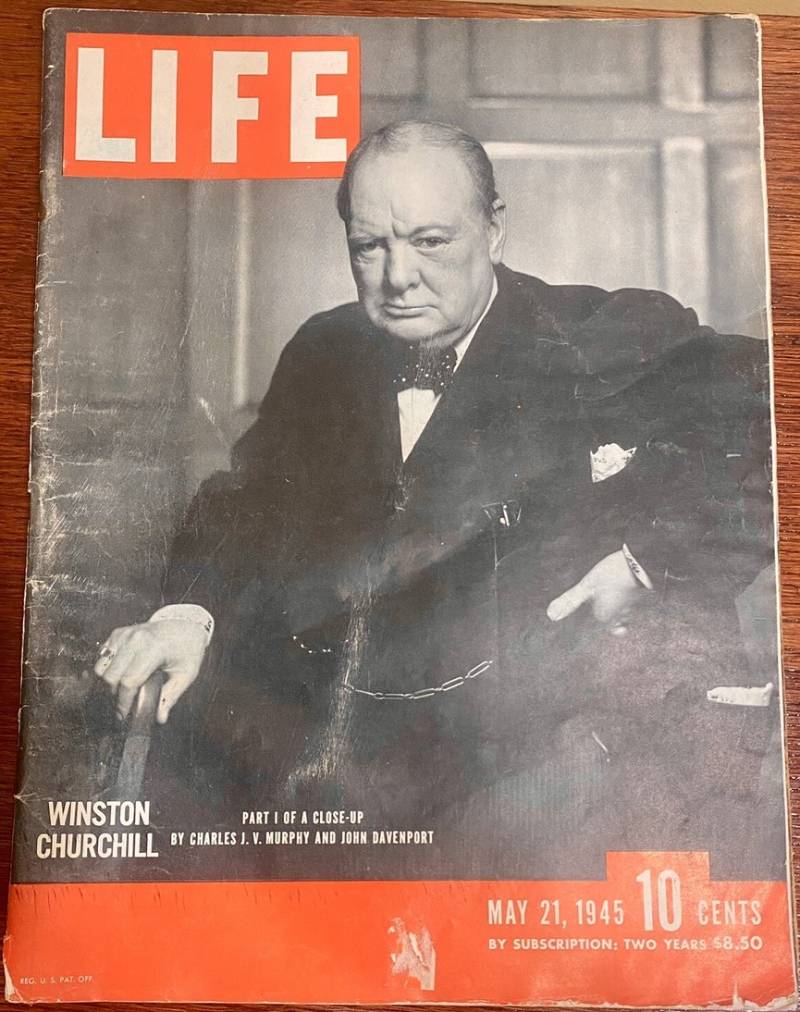
Yousuf Karsh, the Armenian-Canadian portrait photographer, created what would become the definitive Churchill portrait. Karsh was known for his ability to capture the inner character of his subjects through dramatic lighting and careful composition.
The resulting image shows Churchill in a stern, resolute pose. Karsh had famously snatched the cigar from Churchill’s hand just before clicking the shutter, producing that iconic scowl.
Why This Cover Matters
Published as World War II was ending in Europe, this cover captured the face of Allied victory. Churchill’s expression embodied the determination and grit that had carried Britain through the war.
Karsh’s portrait technique, using dramatic lighting and precise posing, made this one of the most recognizable photographs of any world leader in the 20th century.
Design and Layout Breakdown
Dark background. Strong directional light. Churchill fills the frame. The portrait uses classic studio techniques that create depth and gravity.
Life placed the image prominently with minimal distraction. The cover text was secondary to the photograph’s raw power.
Cultural and Historical Context
May 1945. Germany had just surrendered. The war in Europe was over. Churchill was at the peak of his global reputation, though he would lose the British general election just months later.
This cover represents Life magazine at its best, capturing a defining figure at a defining moment. The publication’s wartime photography, by staff photographers and contributors like Karsh, Robert Capa, and W. Eugene Smith, remains some of the most important visual documentation of World War II.
Collector Value and Rarity
WWII-era Life issues are widely collected. The Churchill cover falls in the $30 to $80 range for good-condition copies. Issues from V-E Day and V-J Day command premiums. Karsh’s original prints are held in major museum collections worldwide.
FAQ on Life Magazine Covers
What was the first Life magazine cover?
The debut issue launched on November 23, 1936, featuring Margaret Bourke-White’s photograph of Fort Peck Dam in Montana. Publisher Henry Luce sent her to document New Deal construction projects. That single image set the tone for decades of photojournalism at Life.
How many Life magazine covers were published?
Life published over 2,000 covers during its run as a weekly from 1936 to 1972. It continued as a monthly from 1978 to 2000, adding more. The full archive includes covers shot by photographers like Alfred Eisenstaedt, Philippe Halsman, and Gordon Parks.
What are the most valuable Life magazine covers for collectors?
The 1936 debut issue, Marilyn Monroe’s 1952 cover, and the Apollo 11 special edition from 1969 rank among the most sought-after. Condition drives pricing significantly. Rare vintage editions in near-mint shape can sell for several hundred dollars at auction.
Who were the most famous photographers featured on Life covers?
Margaret Bourke-White, Alfred Eisenstaedt, Philippe Halsman, Robert Capa, and Gordon Parks are the most recognized. These photojournalists shaped how Americans understood major events, from World War II combat photography to the Civil Rights Movement and the Space Race.
What is the standard Life magazine cover size?
The classic weekly edition measured approximately 10.5 by 14 inches, larger than most modern publications. This oversized format gave photographers and editors more room to present striking cover images. You can check precise dimensions using a PX to Inches converter for digital reproductions.
How did Life magazine choose its cover photos?
Editors selected covers based on visual impact, news relevance, and emotional weight. The managing editor had final say. Sometimes a photo essay pitched for inside pages ended up on the cover instead, as happened with Bourke-White’s Fort Peck Dam story.
Did Life magazine only use photographs on its covers?
Mostly, yes. Photography was Life’s identity. But the magazine occasionally used illustrations and paintings, especially in its earlier years. Norman Rockwell contributed artwork, and some special editions featured illustrated covers alongside the usual photojournalism.
Who appeared on the most Life magazine covers?
Presidents and Hollywood stars dominated. John F. Kennedy and his family appeared repeatedly across the 1950s and 1960s. Marilyn Monroe graced the cover six times while alive. Elizabeth Taylor and the Beatles also had multiple appearances.
Is Life magazine still being published?
Life stopped publishing as a regular magazine in 2000. It briefly returned as a newspaper supplement from 2004 to 2007. Today, the Life brand exists primarily as a digital archive managed by the original publisher’s successors, with special edition books released occasionally.
Where can I find original Life magazine back issues?
Online auction sites, antique shops, and specialty dealers stock vintage Life issues. Google Books hosts a free digital archive of many editions. For physical copies, condition and completeness matter most. Always check for intact spines, all pages present, and original mailing labels.
Conclusion
Life magazine covers did something no other publication managed at the same scale. They turned photojournalism into a shared American experience, week after week, for over three decades.
From Yousuf Karsh’s Churchill portrait to Larry Burrows’ Vietnam War photo essays, each cover reflected a specific moment in cultural history. The editorial photography wasn’t decoration. It was documentation.
These vintage magazine editions still hold value today. Collectors chase rare issues. Museums display original prints. And the cover photographers, from Bourke-White to Eisenstaedt to Gordon Parks, remain some of the most studied names in 20th-century visual media.
The weekly news magazine format may be gone. But the images haven’t faded. If anything, they’ve gotten sharper with time.

Renowned for his expertise in logo design and visual branding, Bogdan has developed a multitude of logos for various clients.
His skills extend to creating posters, vector illustrations, business cards, and brochures. Additionally, Bogdan's UI kits were featured on marketplaces like Visual Hierarchy and UI8.
He also wrote in the past years on sites like Design Your Way, WebDesignerDepot, WPDean, Designmodo, Speckyboy, Slider Revolution, and more.
- Canva vs PowerPoint: Which Is Better for Presentations? - 22 September 2026
- How to Install Fonts on Mac (Step-by-Step Guide) - 20 September 2026
- From Mockup to Code: How AI-Augmented Development Speeds Up the Design Handoff - 19 September 2026

Bogdan Sandu is a seasoned designer who has been designing websites since 2008. Renowned for his expertise in logo design and visual branding, Bogdan has developed a multitude of logos for various clients. His skills extend to creating posters, vector illustrations, business cards, and brochures. Additionally, Bogdan's UI kits were featured on marketplaces like Visual Hierarchy and UI8. He also wrote in the past years on sites like Design Your Way, WebDesignerDepot, WPDean, Designmodo, Speckyboy, Slider Revolution, and more.
You Might Also Like


