Ask ten people what color do green and blue make and you will get two answers. Both are right.
Mix them as light and you get bright cyan. Mix them as paint and you land on teal or turquoise instead.
The split comes down to additive versus subtractive mixing, the two systems behind everything from your phone screen to a tube of acrylic.
This guide breaks down exactly what happens in each case, with real RGB values, hex codes, and the wavelength science underneath.
By the end, you will know:
- Why light and paint give different results
- The exact shades green and blue produce, from cyan to aqua
- How the green-to-blue ratio shifts the final color
What Color Do Green and Blue Make?
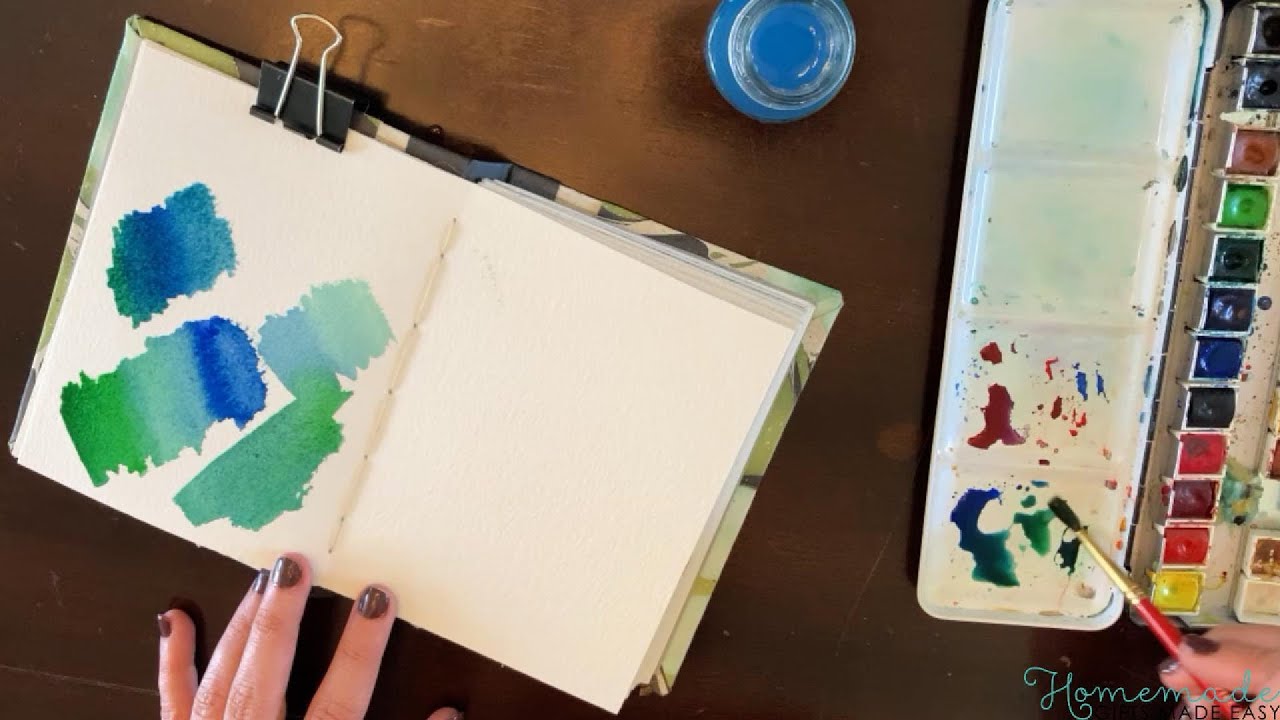
Green and blue make cyan when you mix light, and a blue-green shade like teal when you mix paint. The answer splits two ways because light and pigment follow opposite rules.
On a screen, the result is a bright, clean cyan. In a paint tray, it lands closer to teal or turquoise.
Same two starting colors. Two different outcomes, depending on what you are actually mixing.
| Mixing type | Medium | Result |
|---|---|---|
| Additive | Light (screens) | Cyan |
| Subtractive | Paint, ink | Teal / blue-green |
Why Do Green and Blue Make Different Colors in Light Versus Paint?
Light adds wavelengths together while pigment absorbs them, so the same two colors produce cyan in one system and a darker blue-green in the other. Screens build color up from black. Paint takes color away from white.
This is the core reason a color question can have two correct answers. The RGB color model runs on light. Paint and ink run on the opposite math.
| Property | Additive (light) | Subtractive (pigment) |
|---|---|---|
| Starts from | Black | White |
| Primaries | Red, green, blue | Cyan, magenta, yellow |
| Green + blue gives | Cyan | Teal / blue-green |
| Used in | Phones, TVs, monitors | Printers, painting |
How Additive Mixing Works
Additive color mixing stacks beams of light on top of each other. Red, green, and blue are the three primaries.
- Green light plus blue light overlapping produces cyan
- All three at full strength produces white
- No light at all leaves black
Isaac Newton first split white light into its spectrum in the 1660s, which set up everything we know about mixing light today.
How Subtractive Mixing Works
Subtractive color mixing runs the opposite way. Each pigment absorbs part of the spectrum and reflects the rest.
Green paint and blue paint each soak up a chunk of light. What bounces back to your eye is a darker, muddier blue-green.
That absorption is exactly why paint mixes always look less punchy than the same colors glowing on a screen.
What Color Do Green and Blue Light Make?
Green and blue light make cyan, hex code #00FFFF. Pure green sits at RGB (0, 255, 0) and pure blue at (0, 0, 255). Add them at full strength and you get (0, 255, 255), a bright cyan sitting exactly between the two.
This happens on every screen you own. Each individual pixel fires red, green, and blue subpixels to build every color you see.
Your eye handles it the same way. Green and blue cone cells in the retina fire together, and the brain reads the mix as cyan.
Key point: in the RGB system, cyan is a secondary color, made from two primaries of light.
What Color Do Green and Blue Paint Make?
Green and blue paint make teal, turquoise, or a deep blue-green, depending on the ratio and the exact pigments. The result reads darker and less saturated than screen cyan because pigment absorbs light instead of emitting it.
Reach for Winsor and Newton Phthalo Green next to Ultramarine Blue and the mix leans into a rich, deep teal. Swap the blue for a lighter one and it brightens toward turquoise.
The paint you actually buy changes everything. Pigment load, undertone, and brand all shift the final blue-green result more than most people expect.
Adding a touch of white lifts it toward a soft aqua. A drop of black sinks it into something closer to deep ocean.
What Is Cyan?

Cyan is a greenish-blue color that sits between blue and green on the visible spectrum. It shows up at a wavelength of roughly 490 to 520 nanometers, at the cooler end of what the human eye can see.
Its numbers are clean and worth knowing:
- Hex: #00FFFF
- RGB: (0, 255, 255)
- Role: secondary color in light, primary ink in CMYK printing
You have seen it more than you think. Every color printer runs a cyan cartridge, and pool water reads cyan because of how it absorbs red light.
One thing to flag: a truly pure cyan barely exists in nature. The cyan you see is almost always a blend of overlapping wavelengths, not a single clean one.
What Shades Come From Mixing Green and Blue?

Mixing green and blue produces 5 core shades: cyan, teal, turquoise, aqua, and plain blue-green. Each one comes down to how much green sits against how much blue, plus any white or black in the mix.
Turquoise leans green and bright. Teal sits deeper and more even. Aqua is the palest of the group.
| Shade | Leans | Hex |
|---|---|---|
| Cyan | Even, bright | #00FFFF |
| Teal | Deeper, balanced | #008080 |
| Turquoise | Green side | #40E0D0 |
| Aqua | Light, pale | #00FFFF |
Teal
Teal is a medium to deep blue-green, built by combining blue and green pigment over a white base. Hex #008080.
It carries real commercial weight right now. WGSN and Coloro named teal their Colour of the Year for 2026, and Google Trends searches for teal climbed 9% year over year, per WGSN.
Tiffany and Co. built an entire brand identity on a color in this family, trademarking their robin’s-egg blue back in 1998.
Turquoise
Green-leaning and brighter than teal. Turquoise takes its name from the mineral, and it reads livelier because green carries more of the mix.
Turquoise lands at hex #40E0D0. Push more green in and you drift toward seafoam and spring green.
How Does the Green-to-Blue Ratio Change the Result?
The green-to-blue ratio controls the whole outcome. More green pushes toward turquoise, more blue pulls toward deep teal, and a roughly even split lands on balanced cyan or teal depending on your medium.
Heavy green: turquoise, then spring green as green takes over.
Heavy blue: deep teal, sliding into ocean and navy territory.
Even split: cyan in light, a balanced teal in paint.
White and black act as the other two dials. White lightens the mix toward a pale aqua, while black deepens it into a dark, moody teal.
Shifting the ratio also shifts the saturation and intensity, not just the hue. A little adjustment goes a long way, so mix in small steps and check as you go.
Where Do Green and Blue Sit on the Color Wheel?
Green and blue sit right next to each other on the color wheel, which makes them analogous colors. Their midpoint is the blue-green region, and that neighboring position is exactly why mixing them stays smooth instead of turning muddy.
Colors that border each other share an undertone. Blue-green and blue both carry blue, so the eye reads the shared note first and blends them without any jarring jump.
That shared undertone is the whole reason neighboring colors like these feel calm together.
| Color | Wheel role | Position |
|---|---|---|
| Blue | Primary | Cool anchor |
| Blue-green | Tertiary | Between the two |
| Green | Secondary (yellow + blue) | Cool neighbor |
Blue is one of the traditional primaries. Green is a secondary color, made from yellow and blue in classic painting theory.
Contrast that with complementary pairs, the colors sitting opposite on the wheel. Those clash on purpose. Analogous pairs like green and blue do the opposite and settle into harmony.
The pull toward one hue or the other decides where you land. Slide toward green for turquoise, toward blue for teal.
Where Are Green-Blue Mixes Used in Design and Nature?

Green-blue mixes show up in brand logos, app interfaces, tropical water, peacock feathers, and print ink. The blend reads calm, clean, and trustworthy, which is why designers and nature both lean on it constantly.
Color choice is not a small lever. WGSN research found 98% of people say their buying decisions are swayed by color, and separate studies put color’s impact on first impressions and purchase choices in the 80 to 85% range.
| Setting | Where it appears | Shade |
|---|---|---|
| Branding | Logos, packaging, UI accents | Teal, cyan |
| One of the four process inks | Cyan | |
| Nature | Shallow seas, glacier ice, peacocks | Turquoise, teal |
Design and Branding
Blue-green tones carry a specific message: trust plus a bit of energy. That mix makes them a staple for tech, finance, and healthcare brands.
Brand Finance found blue still dominates Fortune 500 logos at 41%, with a 12% year-over-year jump in companies adding teal, cobalt, and dual-tone blue variants to stand apart.
The teal and blue-green family surfaced across late 2024 and early 2025 runways too, showing up at Elie Saab and other designer labels as an oceanic brand palette.
Why teal reads as calm
Teal borrows blue’s steadiness and green’s freshness at once. That balance is what makes it register as honest and easygoing, a well-documented effect in the study of color and emotion.
Nature and Print
Blue-green is everywhere outdoors. Shallow tropical water, glacier ice, mineral turquoise, and peacock feathers all sit in this exact band.
- Tropical lagoons read turquoise because of how water absorbs red light
- Peacock feathers throw teal through structural color, not pigment
- The mineral turquoise gave the shade its name
On the print side, cyan does heavy lifting as one of the four inks in every color printer. Pantone maintains standardized versions of these blue-green tones so a teal stays the same teal from screen to press.
Analogous schemes like this one turn up in art for the same reason. Monet’s water lily paintings run almost entirely on a cool blue-green spread, a range grounded in solid color theory.
FAQ on What Color Do Green And Blue Make
What color do green and blue make?
They make cyan when mixed as light and a blue-green like teal when mixed as paint. The result depends on whether you are combining light on a screen or pigment in a tray.
Do green and blue make cyan or teal?
Both, in different systems. Green and blue light produce cyan through additive mixing. Green and blue paint produce teal or turquoise through subtractive mixing, since pigment absorbs light instead of emitting it.
What is the hex code for green and blue mixed?
In light, the mix is cyan at #00FFFF, or RGB (0, 255, 255). In paint, teal sits closer to #008080. The two differ because screens and pigment build color in opposite directions.
Why do green and blue make different colors in paint and light?
Light adds wavelengths together and brightens toward white. Pigment absorbs wavelengths and darkens toward black. Same two colors, opposite math, so you get clean cyan on screens and a deeper blue-green in paint.
What color do green and blue make in RGB?
Cyan. In the RGB color model, green (0, 255, 0) plus blue (0, 0, 255) at full strength gives (0, 255, 255). Cyan is a secondary color made from two primaries of light.
How do you make turquoise from green and blue?
Use more green than blue. Turquoise leans to the green side of the blue-green range, so weight the mix toward green and add a little white to brighten it up.
What is the difference between teal and turquoise?
Teal is a deeper, more even blue-green at #008080. Turquoise is lighter, greener, and brighter at #40E0D0. Both come from green and blue, just at different ratios and lightness.
What color do green and blue make with white added?
A pale, soft aqua. White lowers the intensity and lightens the value, pulling teal or cyan toward a washed-out, airy blue-green often seen in coastal and spring palettes.
Are green and blue analogous colors?
Yes. They sit next to each other on the color wheel, sharing a blue undertone. That neighboring position is why mixing them stays harmonious rather than turning muddy or gray.
What color do green and blue make in printing?
Cyan drives blue-green tones in CMYK printing as one of the four process inks. Green and blue pigment combined on paper reflect a deep teal, since ink works by absorbing red light.
Conclusion
So what color do green and blue make? Cyan in light, teal or turquoise in paint.
The gap between those two answers comes down to additive versus subtractive mixing. Screens build color up from black, while pigment pulls it down from white.
On a display, green and blue subpixels fire together to hit cyan at #00FFFF. In a paint tray, the same pair settles into a deeper blue-green.
The green-to-blue ratio does the rest. More green pushes toward turquoise, more blue sinks into teal, and a touch of white lifts the whole thing toward aqua.
Both belong to the same analogous family, sitting side by side on the color wheel.
Now you can predict the result before you ever start mixing.

Renowned for his expertise in logo design and visual branding, Bogdan has developed a multitude of logos for various clients.
His skills extend to creating posters, vector illustrations, business cards, and brochures. Additionally, Bogdan's UI kits were featured on marketplaces like Visual Hierarchy and UI8.
He also wrote in the past years on sites like Design Your Way, WebDesignerDepot, WPDean, Designmodo, Speckyboy, Slider Revolution, and more.
- The Windsurf Logo History, Colors, Font, And Meaning - 10 October 2026
- How to Remove Background From Product Photos (No Photoshop) - 10 October 2026
- How Designers can Build a Stronger Online Creative Identity - 9 October 2026

Bogdan Sandu is a seasoned designer who has been designing websites since 2008. Renowned for his expertise in logo design and visual branding, Bogdan has developed a multitude of logos for various clients. His skills extend to creating posters, vector illustrations, business cards, and brochures. Additionally, Bogdan's UI kits were featured on marketplaces like Visual Hierarchy and UI8. He also wrote in the past years on sites like Design Your Way, WebDesignerDepot, WPDean, Designmodo, Speckyboy, Slider Revolution, and more.
You Might Also Like