Grab a tube of yellow, drop in a little black, and watch the bright color sink into something earthy. So what color do black and yellow make? The answer is olive, a muted yellow-green that sits between green and brown.
Most people expect gray or brown. Olive surprises them.
The result depends on how much black you add, whether you mix pigment or light, and which yellow you start with.
This guide breaks down the exact olive outcome, the RGB and hex values behind it, the paint ratios that shift the shade, and where the color shows up in the real world.
Read on for the full picture.
What Color Do Black and Yellow Make?
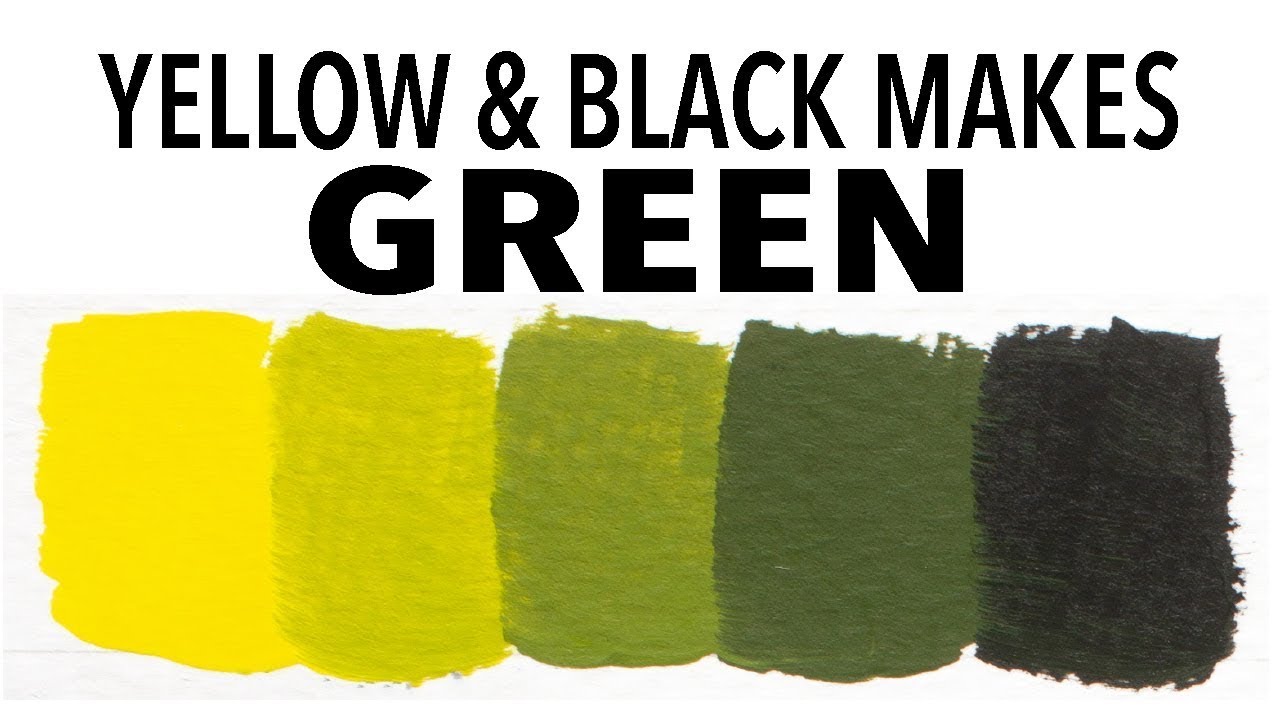
Black and yellow make olive, a dark and muted yellow-green. On a paint palette the mix reads as olive green. On a screen the same pairing reads as a darkened yellow.
The standard hex value for this result is #808000.
Olive is the common name people land on. The exact shade shifts based on how much black gets added to the yellow.
A little black keeps the mix bright and mustard-like. A lot of black pushes it toward a deep, almost brown-green drab.
Why Do Black and Yellow Make Olive?

Black darkens yellow, and darkened yellow drifts green to the eye. Black is not a true color on the wheel. It lowers brightness, and a low-brightness yellow lands in the olive range.
Black carries no hue of its own. Its only job in the mix is to cut the value (the lightness) of whatever it touches.
Pull the brightness out of yellow and the eye stops reading it as yellow. It reads as green instead.
Artists call this the “shadow of yellow” effect. The shaded, low-saturation version of yellow already sits next to green in how we perceive it.
This is basic color theory at work. Value shifts change identity, not just intensity.
How Do Black and Yellow Mix in Paint?

In paint, black and yellow mix through subtraction. Pigments absorb light, so adding black pigment removes reflected wavelengths and leaves a murky olive on the palette.
The result depends on your yellow.
- Cadmium yellow plus black leans warm, toward a golden olive
- Lemon yellow plus black leans cool, toward a sharper yellow-green
- A warm mustard yellow base gives the softest, earthiest olive
Pet peeve worth flagging: black is far stronger than yellow. It kills the yellow fast.
Add black in tiny amounts. A dab too much and the whole mix goes to mud.
How Does the Mixing Ratio Change the Result?
The black-to-yellow ratio decides the exact olive you get. Small amounts of black keep the mix bright. Heavy black drops it into deep olive drab territory.
Black and yellow are never a true 50/50 by eye. Black overpowers yellow, so useful ratios stay yellow-heavy.
| Ratio | Result | Reads As |
|---|---|---|
| Mostly yellow, trace black | Soft mustard olive | Warm, bright |
| Roughly balanced by eye | Mid olive (#808000) | Classic olive |
| Heavy black | Deep olive drab | Near brown-black |
More Yellow Than Black
Mustard-leaning olive. A trace of black knocks the glare off yellow without erasing it.
This ratio keeps warmth and works well for autumn and earth-toned palettes.
More Black Than Yellow
Olive drab bordering on brown-black. Push past the halfway point and the yellow nearly vanishes.
You get a heavy, military-style tone. Useful, but hard to walk back once mixed.
What Are the RGB and Hex Values of Black and Yellow Mixed?
Yellow is RGB(255, 255, 0), hex #FFFF00. Black is RGB(0, 0, 0), hex #000000. Average the two and you get olive.
| Color | RGB | Hex |
|---|---|---|
| Yellow | 255, 255, 0 | #FFFF00 |
| Black | 0, 0, 0 | #000000 |
| Olive (50/50) | 128, 128, 0 | #808000 |
| Deeper olive | 77, 77, 0 | #4D4D00 |
Shift more black into the blend and the numbers slide down toward #6B6B00, then #4D4D00.
For print, the olive #808000 converts to roughly 0, 0, 100, 50 in CMYK. On screen it stays in the RGB model.
Do Black and Yellow Make the Same Color in Light and in Paint?
The result lands in the same olive family, but the two systems get there differently. Screen color and palette color follow opposite rules.
Additive (RGB light): you cannot add black light. You lower yellow’s brightness instead, which gives a dark yellow-olive.
Subtractive (CMYK and paint): black pigment physically absorbs light and darkens yellow into an olive-green.
A monitor and a printed swatch can show the same hex code and still look slightly off from each other. Screens emit light. Paper reflects it.
That gap is why designers proof olive on the actual output before committing.
What Colors Are Similar to the Black and Yellow Mix?
The mix sits in the olive family, close to several named greens. The one you land on depends on your starting yellow and how much black went in.
| Color | Hex | How It Differs |
|---|---|---|
| Olive | #808000 | The direct black-plus-yellow result |
| Olive drab | #6B8E23 | More green, slightly brighter |
| Dark khaki | #BDB76B | Lighter, more tan |
| Army green | #4B5320 | Deeper, more black |
Neighbors worth knowing include khaki and army green. Both carry that same muted, earthy weight.
Where people get confused: olive is not pure green and it is not brown.
It sits between them. Enough yellow to stay green-adjacent, enough black to lose all the brightness.
How Do You Mix Black and Yellow in Digital Design Tools?
On screen, set a pure yellow, then lower its brightness in the HSB picker until it reaches olive. Most tools land on #808000 without a separate black layer.
You never add a literal black swatch. You pull the brightness value down instead.
Photoshop and Illustrator
Drop the B value in HSB. Both apps let you dial olive by hand.
- Set Hue near 60 (yellow)
- Lower Brightness until the swatch reads olive
- Use a Multiply blend layer to darken yellow the way paint does
A yellow-to-olive gradient works well when you want the shift to feel gradual.
Procreate and Figma
Skip the mixing math. Type the hex code straight into the color picker.
Fastest route: paste #808000 for a clean olive, or #6B6B00 for a deeper one.
Both apps hold that value across layers, so the tone stays consistent as you build.
Where Is the Black and Yellow Olive Mix Used?

Olive shows up wherever a color needs to read as rugged, earthy, or understated. Military gear made it famous, and fashion kept it in rotation.
| Field | Use | Read |
|---|---|---|
| Military | Uniforms, field gear | Function, camouflage |
| Fashion | Jackets, cargo pants | Earthy neutral |
| Interiors | Walls, upholstery | Warm, grounded |
| Product design | Vintage and outdoor goods | Rugged heritage |
Real example: the US Army built olive drab into decades of standard-issue uniforms and the M-1965 field jacket.
Camouflage patterns lean on the same muted olive because it disappears against foliage and moss green ground cover.
In fashion and interiors, olive works as an anchor tone. It pairs with tan, cream, and black without fighting them.
Automotive and gear brands reach for olive when they want a vintage, outdoor signal. Think field-ready over flashy.
FAQ on What Color Do Black And Yellow Make
What color do black and yellow make when mixed?
Black and yellow make olive, a dark, muted yellow-green. Black lowers the brightness of yellow, and low-brightness yellow reads as olive green rather than a lighter mustard tone.
What color does black and yellow paint make?
On a palette, the two pigments make a murky olive. Because black absorbs light through subtractive mixing, even a small amount pulls bright yellow down into a dull, earthy green.
Is the black and yellow mix closer to green or brown?
It lands between them, closer to a yellow-green. Enough yellow keeps it green-adjacent. Enough black strips the brightness, which stops the eye from reading it as pure yellow.
What is the hex code for black and yellow mixed?
The standard result is #808000, or RGB(128, 128, 0). Add more black and the value drops toward #6B6B00, then #4D4D00, giving a progressively deeper olive.
Do black and yellow make olive or khaki?
They make olive. Khaki is lighter and more tan because it carries less black and often some added white. Pure black plus yellow stays in the darker olive range.
How much black should you add to yellow?
Start with a trace. Black is far stronger than yellow, so a tiny dab shifts the mix fast. Add gradually until you reach the olive depth you want.
What color do black and white make instead?
Black and white make gray, not olive. If you want that neutral result rather than a green tone, see what black and white make for the full breakdown.
Why does darkened yellow look green?
Yellow sits next to green on the perception scale. Lowering its value (brightness) removes the glare that signals yellow, and the eye reads the shaded version as a green olive.
Does the mix differ on screen versus on paper?
Both land in the olive family, but they get there differently. Screens lower yellow’s brightness in RGB, while paint physically darkens it through CMYK pigment, so swatches can look slightly off.
What colors go well with the black and yellow olive mix?
Olive pairs cleanly with tan, cream, black, and burnt orange. It works as an earthy anchor tone, which is why fashion and interiors lean on it so often.
Conclusion
So what color do black and yellow make? The mix produces olive, a desaturated yellow-green that carries the standard hex value #808000.
Black has no hue of its own. It only lowers the value of yellow, which pushes the shade toward green.
Your ratio decides the outcome. A trace of black gives a soft, mustard-leaning tone, while heavier black drops the blend into deep olive drab.
The system matters too. Subtractive pigment mixing on a palette and additive brightness control on screen both reach the olive family, though the swatches can differ.
Olive sits near khaki, army green, and dark khaki on the color wheel.
Add black slowly, test as you go, and the olive lands right where you want it.

Renowned for his expertise in logo design and visual branding, Bogdan has developed a multitude of logos for various clients.
His skills extend to creating posters, vector illustrations, business cards, and brochures. Additionally, Bogdan's UI kits were featured on marketplaces like Visual Hierarchy and UI8.
He also wrote in the past years on sites like Design Your Way, WebDesignerDepot, WPDean, Designmodo, Speckyboy, Slider Revolution, and more.
- How Designers can Build a Stronger Online Creative Identity - 9 October 2026
- Minecraft Font Generator - 8 October 2026
- How Top Meta Ad Creative Is Designed for E-commerce Brands - 8 October 2026

Bogdan Sandu is a seasoned designer who has been designing websites since 2008. Renowned for his expertise in logo design and visual branding, Bogdan has developed a multitude of logos for various clients. His skills extend to creating posters, vector illustrations, business cards, and brochures. Additionally, Bogdan's UI kits were featured on marketplaces like Visual Hierarchy and UI8. He also wrote in the past years on sites like Design Your Way, WebDesignerDepot, WPDean, Designmodo, Speckyboy, Slider Revolution, and more.
You Might Also Like