


Mix two calm colors and you rarely get a loud one back.
So what color do gray and purple make? They make a muted, dusty purple, the family most people know as mauve or heather.
The catch is that “gray-purple” is not one fixed shade. The undertone of the gray, the ratio you use, and whether you mix paint or pixels all move the result.
This guide walks through the whole range, with real hex codes and mixing steps you can copy.
You will learn:
- Why gray mutes purple instead of changing its hue
- How warm and cool grays pull the mix in different directions
- Named shades, screen vs paint behavior, and colors that pair well
What Color Do Gray and Purple Make?

Gray and purple make a muted, dusty purple that most people call mauve or heather.
The gray pulls brightness and vividness out of the purple. What is left reads soft, grayed, and a little dusty.
Names in this family cover a real range: grayish purple, dusty purple, mauve, heather, and lilac gray.
Quick reference: classic mauve sits near #E0B0FF, or RGB (224, 176, 255), per HTML Color Codes.
The exact shade shifts with three things. The gray’s undertone, the ratio you use, and whether you are mixing pigment or light.
Why Does Adding Gray Mute Purple?
Gray has no hue of its own. So it lowers a color’s saturation without adding a new color to the mix.
In basic color theory, what you add decides what you get:
| Mix | You add | Effect |
|---|---|---|
| Tint | White | Lighter purple |
| Shade | Black | Darker purple |
| Tone | Gray | Muted, dusty purple |
Adding gray makes a tone. That is the whole mechanism behind the dusty look.
Pure purple runs near full saturation. Mauve #E0B0FF drops to about 31% saturation at a hue near 276 degrees, according to Color-Name.
Mixing purple with a true color shifts the hue instead. Gray only drains the chroma and leaves the purple where it was.
How Does the Type of Gray Change the Mix?
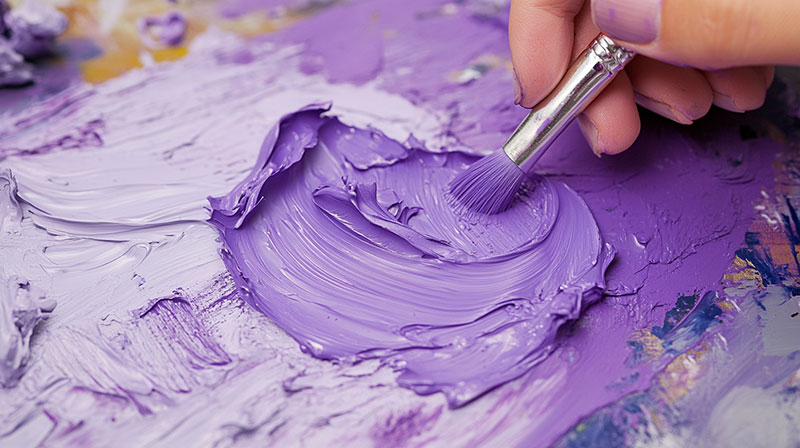
The gray’s undertone steers the result. Warm gray and cool gray pull the purple in two different directions.
Warm Gray and Purple
Warm gray leans red or yellow. It pushes the mix toward mauve and dusty rose-purple.
The result reads soft and slightly pinkish-brown.
Cool Gray and Purple
A cool gray leans blue. It pushes the mix toward slate gray territory and heather.
Payne’s grey is the blue-leaning gray artists reach for here. It is usually ultramarine blue plus black, per Liquitex, which is why it cools a purple so fast.
How Do Mixing Ratios Change the Shade?
Proportion moves the result across a whole range:
Mostly gray, a little purple: a barely tinted greige-purple that reads almost neutral.
Equal parts: a clear dusty or muted purple, the classic mauve zone.
Mostly purple, a little gray: a rich, slightly grayed purple that still keeps its identity.
One thing catches people out. The gray’s lightness sets the final value more than the purple does, so a pale gray lifts the whole mix.
What Are the Named Gray-Purple Shades and Their Hex Codes?
The mix covers a named range, from pink-leaning mauve to blue-leaning heather.
| Name | Hex | Reads as |
|---|---|---|
| Mauve | #E0B0FF | Pink-leaning, dusty |
| Purple Mauve | #604B62 | Deep, cool, gray undertone |
| Heather | #A484AC | Soft mid purple-gray |
| Purple Heather | #BAB8D3 | Pale blue-gray |
Purple Heather maps to Pantone 14-3911 TCX, sold under the market name Misty Lavender, per Color-Name.
Print and textile teams lean on Pantone names like this because a hex code alone drifts between screens.
Does Gray and Purple Make a Different Color on Screen Than in Paint?
Yes. Pigment and light mix by opposite rules, so “graying” a purple happens two different ways.
| Model | How gray works | Result |
|---|---|---|
| Paint (subtractive) | Gray pigment absorbs light, mutes the purple | Dusty mauve |
| Screen (additive) | You lower saturation in the picker | Same grayed purple, no pigment |
| Print (CMYK) | Gray comes from black plus a tint | Muted purple on press |
In Photoshop or Figma, drag a purple swatch toward the center of the picker. The RGB values desaturate and you land on the same dusty purple.
CMYK printing adds a third path, where the gray you see is really black ink plus a light color tint.
How Do You Mix Gray and Purple in Paint?
The method is short:
- Make a gray first from black and white, or use a tube gray like Payne’s grey or neutral gray.
- Add the gray to the purple in small amounts. Gray takes over fast.
- Lean the gray warm or cool before you mix, since that decides the final direction.
- Acrylic and gouache hold the mixed tone. Watercolor lifts lighter as it dries, so mix it a touch stronger.
Winsor & Newton and Liquitex both sell Payne’s grey as a ready blue-gray, which saves you mixing a cool gray from scratch every time.
Where Are Gray-Purple Colors Used?
Gray-purple shows up wherever a color needs to read calm and understated. It works as an accent or as a full backdrop.
| Field | How it shows up | Named example |
|---|---|---|
| Interiors | Bedroom and dining walls, upholstery | Benjamin Moore Cinnamon Slate |
| Fashion | Heather knits, dusty purple formalwear | Farrow & Ball tones in styling |
| Weddings | Soft grayed purple palettes | Mauve and dusty rose schemes |
| Branding | Quiet, modern identities | Quiet-luxury logos |
Benjamin Moore named Cinnamon Slate, a heathered plum, its 2025 Color of the Year, per The Interior Collective.
Designers now treat mauve as a leading neutral for 2026 and beyond, not a passing trend, according to House Beautiful.
Farrow & Ball’s Peignoir and Dead Salmon are two soft mauves designers color-drench whole rooms with, per Homes & Gardens.
For events, grayed purples anchor a lot of current wedding color palettes because they read soft without going pastel-sweet.
What Colors Pair Well With Gray-Purple?
Gray-purple sits between warm and cool, so it takes a wide set of partners.
Neutrals: cream, taupe, and soft white keep the gray-purple as the focus.
Analogous: dusty blue and muted rose sit right beside it and hold the soft mood.
Warm accents: mustard, sage green, or brass warm it up and stop it reading cold.
Grounding darks: charcoal and deep plum give a pale mauve the edge it needs.
Figma’s color guides back this up, listing sage green (#B2C495), cream, charcoal, and silver as clean matches for mauve.
One rule holds across all of it. Muted tones pair best with other muted tones, so keep the partners in the same soft register or the mauve starts to look washed out.
FAQ on What Color Do Gray And Purple Make
What color do gray and purple make?
They make a muted, dusty purple, usually called mauve or heather. The gray lowers the purple’s saturation, so the result reads soft and grayed instead of bright.
Is gray and purple the same as mauve?
Close, yes. Mauve is one grayed purple in that family. Classic mauve sits near #E0B0FF, but heather, dusty lilac, and lilac gray also count as gray-purple mixes.
Does gray make purple lighter or darker?
It depends on the gray. A light gray lifts the value and makes a paler tone. A dark gray deepens it. Either way, saturation drops and the purple looks muted.
Why does adding gray mute purple?
Gray has no hue of its own, so it drains chroma without adding a new color. Purple plus gray creates a tone, which is any hue softened toward neutral.
What is the hex code for gray-purple?
There isn’t one code, since it’s a range. Common references are mauve #E0B0FF, heather #A484AC, and Purple Heather #BAB8D3, which maps to Pantone 14-3911.
Does warm gray or cool gray change the result?
Yes. Warm gray pushes the mix toward mauve and dusty rose-purple. Cool gray, like Payne’s grey, pushes it toward slate and heather with a bluer feel.
How do I mix gray and purple in paint?
Add gray to purple in small amounts, since gray takes over fast. Use a tube gray like Payne’s grey, or mix black and white first, then adjust.
Is gray-purple different on screen than in paint?
Yes. Paint mixes by subtraction, so pigment mutes the purple. On screen you lower saturation in the RGB picker instead, but you land on the same dusty result.
What colors go with gray-purple?
Cream, taupe, and soft white keep it central. Sage green, mustard, and brass warm it up. Charcoal grounds pale mauve so it doesn’t wash out.
Is mauve a warm or cool color?
It sits between both. Blue undertones make it cool, while pink undertones add warmth. That balance is why mauve works in warm and cool palettes alike.
Conclusion
So what color do gray and purple make? A grayish purple in the mauve and heather range, softened by the neutral pulling saturation out of the hue.
The shade you land on is never random. Undertone, mixing ratio, and medium decide whether it leans dusty rose or cool slate.
Warm gray drifts toward pink. Cool gray, like Payne’s grey, drifts toward blue.
On a screen you desaturate in the RGB picker. In paint you add the gray a little at a time and watch it take over.
Keep a few reference codes handy, like #E0B0FF for mauve, and pair the result with muted tones so it stays soft.
Now the dusty purple works for you, not by accident.

Renowned for his expertise in logo design and visual branding, Bogdan has developed a multitude of logos for various clients.
His skills extend to creating posters, vector illustrations, business cards, and brochures. Additionally, Bogdan's UI kits were featured on marketplaces like Visual Hierarchy and UI8.
He also wrote in the past years on sites like Design Your Way, WebDesignerDepot, WPDean, Designmodo, Speckyboy, Slider Revolution, and more.
- How to Install Fonts on Mac (Step-by-Step Guide) - 20 September 2026
- From Mockup to Code: How AI-Augmented Development Speeds Up the Design Handoff - 19 September 2026
- The Beehiiv Logo History, Colors, Font, And Meaning - 18 September 2026

Bogdan Sandu is a seasoned designer who has been designing websites since 2008. Renowned for his expertise in logo design and visual branding, Bogdan has developed a multitude of logos for various clients. His skills extend to creating posters, vector illustrations, business cards, and brochures. Additionally, Bogdan's UI kits were featured on marketplaces like Visual Hierarchy and UI8. He also wrote in the past years on sites like Design Your Way, WebDesignerDepot, WPDean, Designmodo, Speckyboy, Slider Revolution, and more.
You Might Also Like


