Montserrat’s geometric clarity makes it a workhorse typeface, but choosing the wrong companion font turns that strength into visual chaos.
Montserrat font pairing examples reveal how this Buenos Aires-inspired sans-serif transforms across contexts. The right combination creates instant visual hierarchy, while poor choices flatten your design into monotony.
This guide examines proven pairing fonts with Montserrat, from elegant serifs to functional sans options. You’ll see exactly which combinations work for editorial projects, which serve corporate environments, and which deliver premium aesthetics.
Each pairing includes technical specifications like weight recommendations, size ratios, and leading adjustments. You’ll understand not just what works, but why it works and how to implement it across both digital and print applications.
Best Montserrat Font Pairing Options
Montserrat and Lora
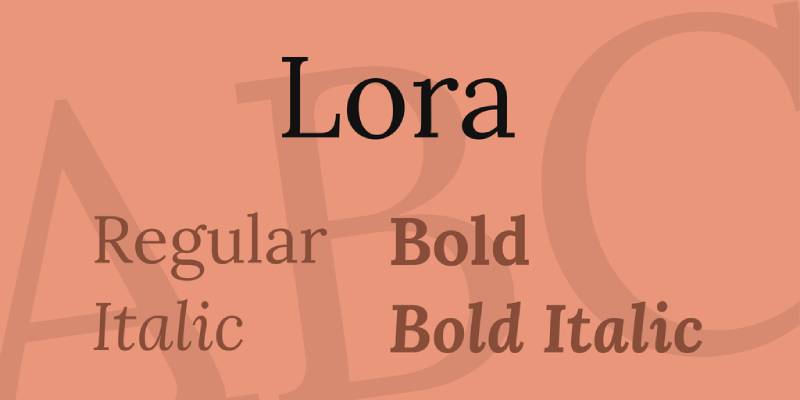
This pairing creates an immediate visual hierarchy between geometric precision and calligraphic warmth.
Montserrat’s clean geometric structure sits beside Lora’s brushed curves and moderate contrast.
Visual characteristics
The geometric sans-serif font provides angular clarity while the serif font delivers organic flow.
Montserrat’s uniform stroke width contrasts Lora’s varied letterforms. Both share high x-heights, which maintains optical balance across sizes. Lora’s calligraphic roots add personality without sacrificing on-screen readability.
Use case applications
Digital platforms: Editorial websites, blog layouts, portfolio sites
Print materials: Magazine spreads, annual reports, literary publications
Brand categories: Creative agencies, cultural institutions, boutique businesses
The pairing works for projects requiring sophistication mixed with approachability.
Readability considerations
Lora excels in body text at 16px and above.
Montserrat handles headlines effectively from 24px to 72px. Both fonts maintain legibility at smaller sizes, though Lora performs better in extended reading contexts. Tracking adjustments rarely needed due to natural font spacing.
Technical pairing details
Montserrat Bold (700) pairs with Lora Regular (400) for strong heading-to-body typographic hierarchy.
Line height: 1.5 for body text, 1.2 for headlines. Recommended size ratio: 2.5:1 for title-to-body relationships. Both fonts load efficiently as web fonts and scale predictably across devices.
Design context
Brand personalities: Artistic, editorial, thoughtful
Industry verticals: Publishing, education, cultural sectors
Design aesthetic: Contemporary with traditional undertones, minimalist design sensibility
The combination supports brands wanting refined yet accessible typography systems.
Montserrat and Merriweather
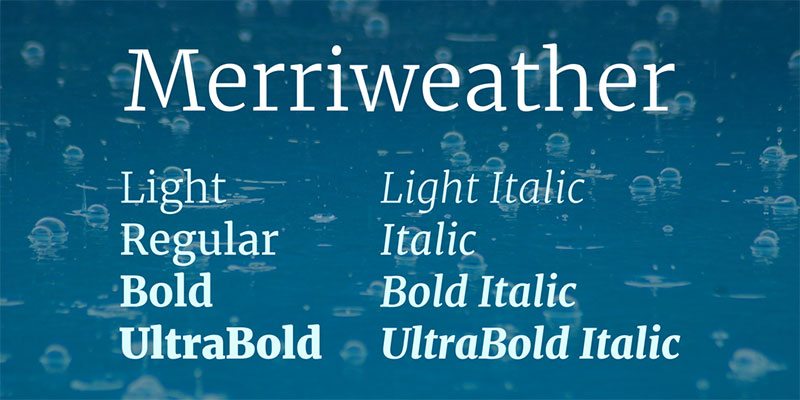
Screen-optimized serif meets geometric sans in this highly functional pairing.
Visual characteristics
Both typefaces feature large x-heights and open apertures. Merriweather’s slightly condensed letterforms and sturdy serifs provide texture against Montserrat’s geometric clarity. The mild diagonal stress in Merriweather adds subtle dynamism without disrupting the clean geometry of Montserrat.
Use case applications
Digital platforms: Content-heavy websites, news portals, documentation sites
Print materials: Technical documents, business reports, newsletters
Brand categories: Technology companies, professional services, educational platforms
Created specifically for screen reading, this pairing dominates web-first projects.
Readability considerations
Merriweather performs exceptionally in body text from 14px upward.
The large x-height ensures clarity even at smaller sizes. Montserrat works across heading levels without fatigue. Both maintain legibility in challenging conditions like mobile screens or lower resolutions. Minimal kerning adjustments required.
Technical pairing details
Montserrat Medium (500) to Bold (700) for headings, Merriweather Regular (400) for body.
Leading recommendations: 1.6 for Merriweather body text, 1.15 for Montserrat headlines. Size ratios of 2:1 or 2.25:1 maintain clear hierarchy. Both fonts are web-optimized with extensive character sets supporting multilingual content.
Design context
Brand personalities: Professional, trustworthy, modern
Industry verticals: Corporate, technology, media
Design aesthetic: Clean, functional, contemporary
Suitable for brands prioritizing readability and professional appearance over decorative elements.
Montserrat and Open Sans
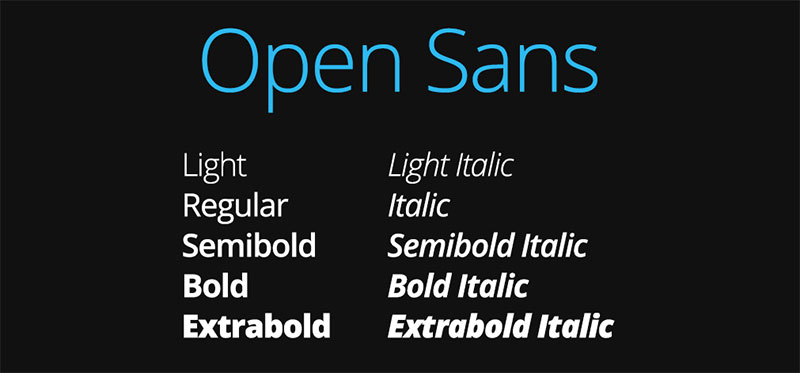
Two humanist-influenced sans-serifs that shouldn’t work together but create surprising harmony through weight differentiation.
Visual characteristics
While both are sans-serif, Open Sans brings softer, more organic curves compared to Montserrat’s geometric structure. The contrast lies in their different approaches to letterform construction. Open Sans has a neutral yet friendly appearance with slightly wider proportions than Montserrat’s condensed geometry.
Use case applications
Digital platforms: User interfaces, mobile apps, SaaS products
Print materials: Corporate communications, instructional materials
Brand categories: Tech startups, healthcare, finance
This pairing thrives in environments requiring maximum clarity and accessibility.
Readability considerations
Both fonts designed for screen readability.
Open Sans particularly effective for small UI text (12px-14px). Montserrat better suited for emphasis and headings due to stronger geometric character. Use significant weight differences to establish hierarchy since style variety between them is subtle.
Technical pairing details
Montserrat Bold (700) or Black (900) for headings, Open Sans Regular (400) or Light (300) for body.
Extreme weight contrast essential for this pairing to function. Line height: 1.5-1.6 for body, 1.1-1.2 for headlines. Both fonts support extensive character sets and perform consistently across platforms.
Design context
Brand personalities: Approachable, transparent, efficient
Industry verticals: Technology, healthcare, government services
Design aesthetic: Functional, accessible, minimalist
Best for projects where accessibility and usability take precedence over stylistic expression.
Montserrat and Roboto
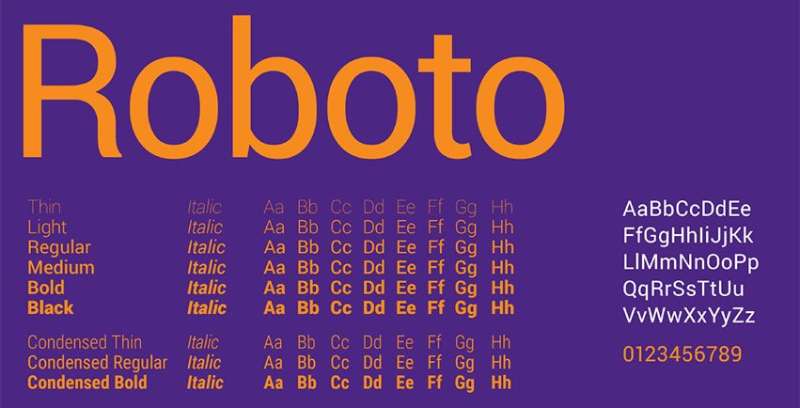
Android’s native font meets Buenos Aires urban typography in a pairing that feels simultaneously global and specific.
Visual characteristics
Roboto’s slightly geometric feel with friendly curves complements Montserrat’s more rigid geometric structure. Both have similar x-heights but different character widths. Roboto settles into natural widths while Montserrat maintains tighter, more uniform spacing. The combination creates rhythm through subtle width variation.
Use case applications
Digital platforms: Android apps, web design projects, progressive web apps
Print materials: Modern brochures, product catalogs
Brand categories: Technology, retail, lifestyle brands
Particularly effective for projects requiring cross-platform consistency.
Readability considerations
Roboto engineered for mobile-first reading experiences.
Works exceptionally well at 14-16px for body text. Montserrat provides strong headline presence from 20px upward. Both fonts maintain legibility across device types. Natural letter spacing in both reduces need for tracking adjustments.
Technical pairing details
Montserrat SemiBold (600) to Bold (700) for headings, Roboto Regular (400) for body text.
Size ratios: 2:1 to 2.5:1 maintain clear distinction. Line height: 1.5 for body, 1.2 for headings. Both fonts offer extensive weight ranges (9+ weights each), providing flexibility for complex typographic systems.
Design context
Brand personalities: Modern, international, systematic
Industry verticals: Technology, e-commerce, consumer apps
Design aesthetic: Contemporary, clean, globally accessible
Supports brands seeking neutral yet distinctive typographic systems that translate across cultures.
Montserrat and Playfair Display
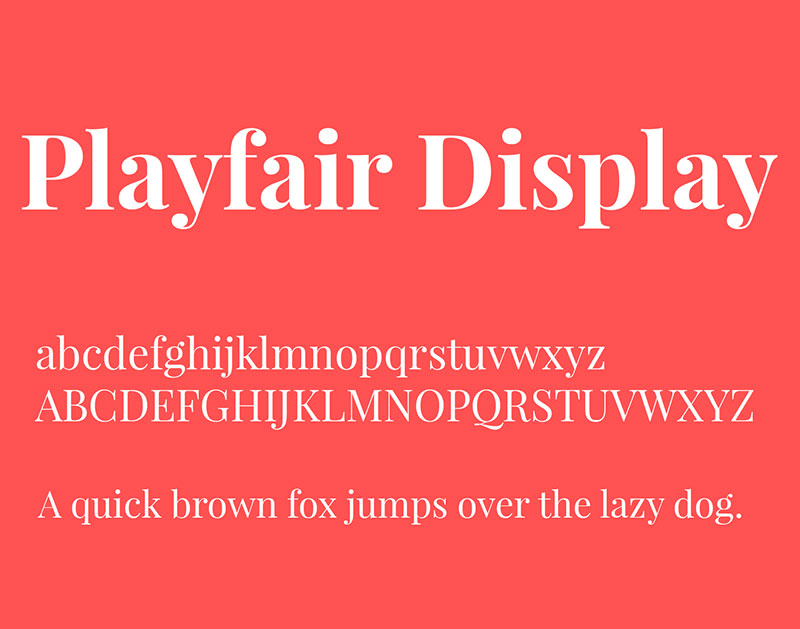
High-contrast transitional serif meets geometric sans in a pairing that screams luxury and confidence.
Visual characteristics
Playfair Display’s delicate hairlines and bold strokes create dramatic emphasis against Montserrat’s even stroke weight. The Bauhaus design-influenced geometry of Montserrat provides stability for Playfair’s elegant expressiveness. This combination maximizes contrast between typeface styles.
Use case applications
Digital platforms: Fashion e-commerce, lifestyle blogs, boutique websites
Print materials: Wedding invitations, luxury packaging design, editorial spreads
Brand categories: Fashion, beauty, luxury goods, cultural events
Reserved for projects where elegance and sophistication are primary objectives.
Readability considerations
Playfair Display works best in large sizes (36px+) due to delicate strokes.
Not recommended for extended body text. Montserrat handles body text and secondary information effectively. Use Playfair exclusively for headlines and short emphatic statements. The pairing requires careful size relationships to maintain readability.
Technical pairing details
Playfair Display Black (900) or Bold (700) for headlines, Montserrat Regular (400) to Medium (500) for supporting text.
Large size differentials required (3:1 or greater ratios). Line height: 1.1 for Playfair headlines to maintain drama, 1.5 for Montserrat body. Letter spacing adjustments may be needed for Playfair at larger sizes.
Design context
Brand personalities: Elegant, confident, upscale
Industry verticals: Fashion, luxury retail, fine dining, arts
Design aesthetic: Postmodern design influences, high-contrast, editorial
The pairing communicates premium positioning and aesthetic refinement.
Montserrat and Source Sans Pro
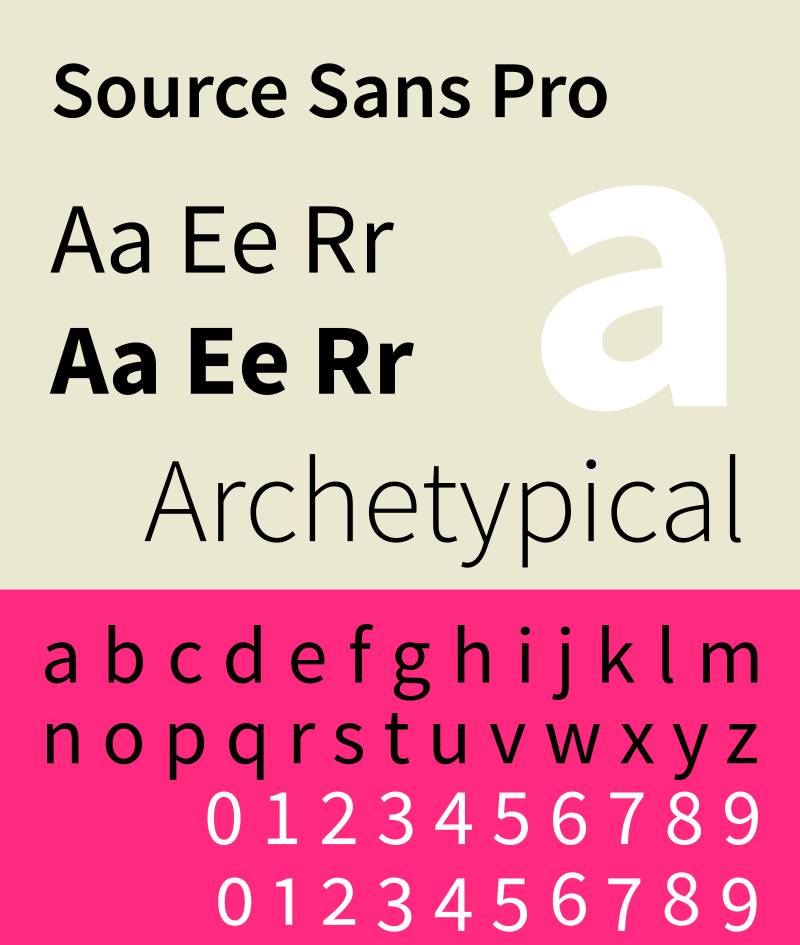
Adobe’s first open-source typeface combines with Montserrat for a professional, UI-focused pairing.
Visual characteristics
Source Sans Pro’s humanist construction with slightly narrower proportions complements Montserrat’s geometry. Both fonts share excellent clarity but achieve it through different means. Source Sans Pro’s subtle stroke modulation adds warmth to Montserrat’s mechanical precision.
Use case applications
Digital platforms: Enterprise software, dashboards, data visualization
Print materials: Technical documentation, corporate reports
Brand categories: B2B software, financial services, professional tools
Designed for environments prioritizing function and clarity.
Readability considerations
Source Sans Pro optimized for UI contexts and small text sizes.
Performs well from 11px upward. Montserrat provides hierarchy through weight and size variation. Both fonts handle dense information layouts effectively. Extensive language support makes this pairing suitable for international products.
Technical pairing details
Montserrat SemiBold (600) for primary headings, Source Sans Pro Regular (400) for body text.
Weight range in both fonts allows for complex information hierarchies. Line height: 1.5-1.6 for body text, 1.2-1.3 for headings. Both fonts include variable fonts versions for precise weight control.
Design context
Brand personalities: Professional, technical, reliable
Industry verticals: Enterprise software, fintech, professional services
Design aesthetic: Functional, systematic, interface-oriented
This pairing supports complex information architectures requiring maximum legibility.
Montserrat and Raleway
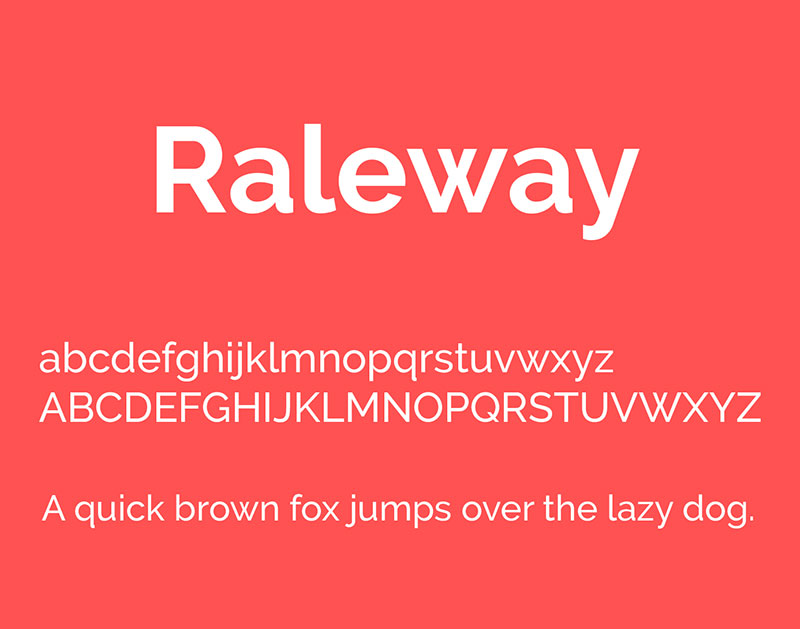
Two geometric sans-serifs from different eras create a sophisticated monochromatic pairing.
Visual characteristics
Both fonts share geometric foundations but Raleway’s elegant simplicity contrasts with Montserrat’s urban edge. Raleway originally designed as a single thin weight, maintains refined proportions across its extended family. The pairing works through weight and spacing differentiation rather than style contrast.
Use case applications
Digital platforms: Portfolio sites, creative agency websites, web showcases
Print materials: Business cards, minimal branding systems
Brand categories: Design studios, creative professionals, architectural firms
Works for brands wanting cohesive geometric typography without serif contrast.
Readability considerations
Both fonts perform well in headlines.
Raleway’s lighter weights work for longer text passages. Montserrat’s heavier weights provide stronger visual anchors. Use Raleway Regular to Light for body text, Montserrat Bold to Black for headings. Significant size differences essential to establish clear hierarchy.
Technical pairing details
Montserrat Bold (700) or ExtraBold (800) for headlines, Raleway Regular (400) or Light (300) for body.
Size ratios of 2.5:1 or greater recommended. Line height: 1.5-1.7 for body text, 1.1-1.2 for headlines. Both fonts include extensive weight ranges. Consider using Raleway Dots variant for special display purposes.
Design context
Brand personalities: Refined, contemporary, design-conscious
Industry verticals: Creative services, architecture, premium retail
Design aesthetic: Minimalist, geometric, elegant simplicity
The pairing speaks to audiences valuing restrained sophistication.
Montserrat and Nunito

Geometric meets rounded humanist in a friendly, approachable combination.
Visual characteristics
Nunito’s rounded terminals soften Montserrat’s angular geometry. The contrast between sharp and soft creates visual interest while maintaining overall warmth. Both fonts have similar x-heights but different character in their curves and terminals. Nunito adds personality without being overly casual.
Use case applications
Digital platforms: Educational websites, children’s products, community platforms
Print materials: Event flyers, casual branding, educational materials
Brand categories: Education, family services, lifestyle brands
Perfect for contexts requiring approachability without sacrificing professionalism.
Readability considerations
Nunito’s rounded forms maintain legibility across sizes.
Works effectively for body text from 14px upward. Montserrat provides structure and emphasis in headings. The pairing feels less formal than other combinations but remains functional. Both fonts handle various reading contexts well.
Technical pairing details
Montserrat Bold (700) for headings, Nunito Regular (400) or SemiBold (600) for body text.
Line height: 1.5-1.6 for body, 1.2 for headlines. Size ratios: 2:1 to 2.25:1. Both fonts offer Nunito Sans variant for additional flexibility. The combination provides warmth while maintaining clear information hierarchy.
Design context
Brand personalities: Friendly, accessible, welcoming
Industry verticals: Education, healthcare, community services
Design aesthetic: Contemporary, warm, human-centered
This pairing communicates openness and approachability.
Montserrat and Poppins
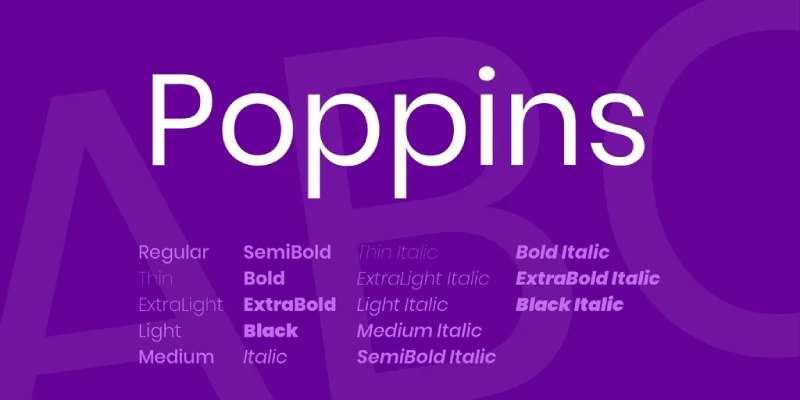
Two geometric sans-serifs with international recognition create a modern, globally-minded pairing.
Visual characteristics
Poppins supports both Latin and Devanagari writing systems, giving it international scope. Both fonts share geometric foundations but Poppins features rounder forms and more open counters. The combination works through subtle character differences rather than dramatic contrast.
Use case applications
Digital platforms: International websites, startup landing pages, mobile apps
Print materials: Modern branding, advertising materials
Brand categories: Technology startups, digital products, global brands
Particularly effective for projects requiring multilingual support.
Readability considerations
Poppins’ open forms enhance on-screen readability.
Works well for body text from 14px upward. Montserrat provides stronger geometric presence for headlines. Both fonts maintain clarity across device types. Their similar construction means hierarchy must come from weight and size differences.
Technical pairing details
Montserrat Bold (700) to ExtraBold (800) for headings, Poppins Regular (400) to Medium (500) for body.
Significant weight differentiation essential. Line height: 1.5-1.6 for body text, 1.2 for headlines. Both fonts offer extensive weight ranges. Size ratios of 2:1 or greater recommended to establish clear visual hierarchy.
Design context
Brand personalities: Modern, international, forward-thinking
Industry verticals: Technology, startups, digital services
Design aesthetic: Contemporary, clean, globally accessible
This pairing supports brands with international audiences or multilingual requirements.
Montserrat and Libre Baskerville
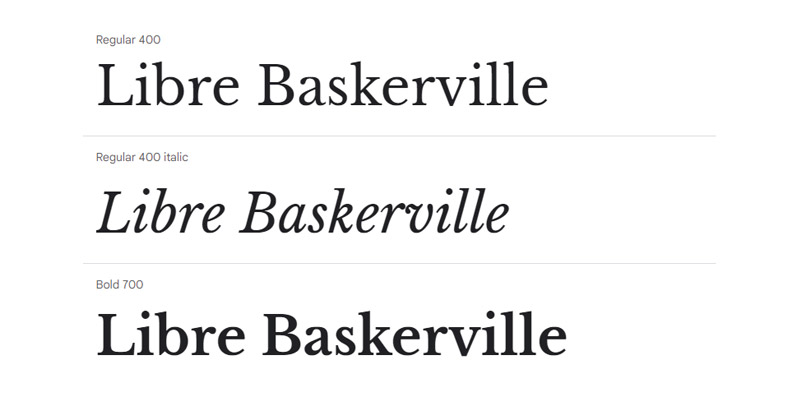
Classic Baskerville revival meets geometric sans for traditional-meets-modern contrast.
Visual characteristics
Libre Baskerville’s wide counterforms and classic serif structure contrast sharply with Montserrat’s condensed geometry. The serif font brings traditional elegance while the sans-serif provides contemporary grounding. This pairing maximizes style contrast for visual impact.
Use case applications
Digital platforms: Professional blogs, portfolio sites, editorial content
Print materials: Formal documents, certificates, traditional branding
Brand categories: Legal services, academic institutions, traditional businesses
Works where tradition and modernity need to coexist.
Readability considerations
Libre Baskerville optimized for screen reading despite classical roots.
Works effectively for body text from 16px upward. Montserrat handles headings and navigational elements. The combination provides easy reading while maintaining formal appearance. Both fonts support extended character sets.
Technical pairing details
Montserrat Bold (700) for headings, Libre Baskerville Regular (400) for body text.
Line height: 1.6-1.7 for body text to accommodate serif details, 1.2 for headlines. Size ratios: 2:1 to 2.5:1 maintain clear hierarchy. The combination of condensed sans and wider serif creates interesting spatial rhythm.
Design context
Brand personalities: Traditional, trustworthy, established
Industry verticals: Legal, academic, financial services
Design aesthetic: Classic with contemporary elements
This pairing bridges traditional and modern design sensibilities.
Montserrat and DM Sans
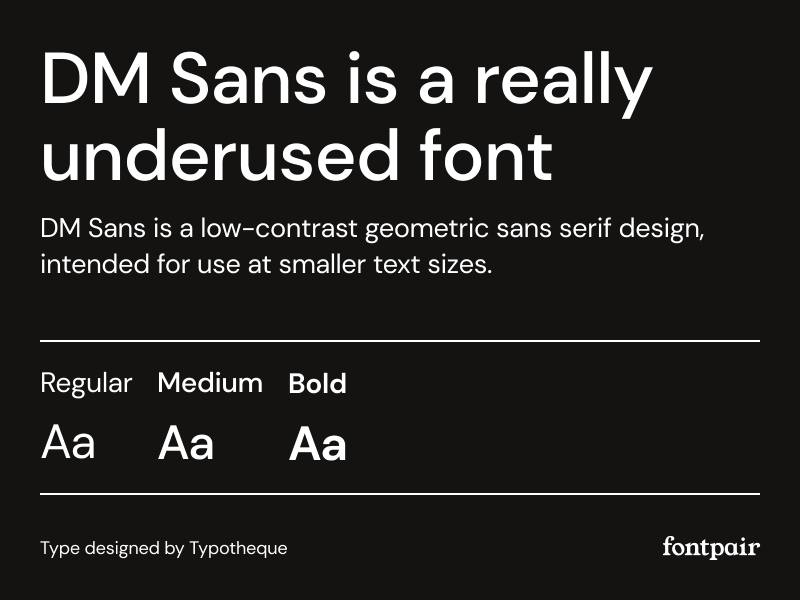
Two low-contrast sans-serifs designed for different purposes create a subtle, functional pairing.
Visual characteristics
DM Sans designed specifically for small text sizes brings refined proportions to complement Montserrat’s display-oriented geometry. Both fonts maintain clarity but DM Sans features slightly more open spacing and wider letterforms. The pairing works through purposeful size and weight relationships.
Use case applications
Digital platforms: UI design, mobile interfaces, text-heavy applications
Print materials: Dense information layouts, technical documentation
Brand categories: SaaS products, productivity tools, data platforms
Optimized for environments with extensive textual content.
Readability considerations
DM Sans excels in body text from 12px upward.
Its low-contrast design prevents eye strain in extended reading. Montserrat provides stronger presence for headings and callouts. Both fonts handle small sizes remarkably well. The combination prioritizes function over decorative elements.
Technical pairing details
Montserrat SemiBold (600) to Bold (700) for headings, DM Sans Regular (400) for body text.
Line height: 1.5-1.6 for body, accommodating tight leading for information density. Size ratios: 1.75:1 to 2.25:1. Both fonts support extensive character sets. Consider using DM Sans Medium (500) for subheadings.
Design context
Brand personalities: Efficient, professional, focused
Industry verticals: Enterprise software, productivity tools, technical platforms
Design aesthetic: Functional, systematic, information-dense
This pairing serves projects where readability and information hierarchy are paramount.
Montserrat and PT Serif

Russian Federation’s typeface project meets Argentine urban typography.
Visual characteristics
PT Serif’s transitional serif design with humanistic terminals provides organic warmth against Montserrat’s mechanical geometry. Both fonts designed for digital use but bring different cultural influences. The combination creates interesting tension between structural approaches.
Use case applications
Digital platforms: International news sites, multilingual publications, cultural content
Print materials: Bilingual documents, international communications
Brand categories: Media, cultural organizations, international NGOs
Particularly effective for projects requiring Cyrillic support alongside Latin.
Readability considerations
PT Serif designed harmoniously with PT Sans family.
Works well for body text across sizes. Montserrat provides strong hierarchical presence. Both fonts support extensive language coverage including Cyrillic. The pairing handles multilingual content effectively.
Technical pairing details
Montserrat Bold (700) for headings, PT Serif Regular (400) for body text.
Line height: 1.5-1.6 for body text, 1.2 for headlines. Size ratios: 2:1 to 2.5:1. Both fonts include comprehensive character sets. Consider using PT Serif’s multiple weights for complex hierarchies.
Design context
Brand personalities: International, cultural, accessible
Industry verticals: Media, publishing, cultural institutions
Design aesthetic: Contemporary with classical influences, culturally diverse
This pairing serves organizations with international or multicultural audiences.
Montserrat and Work Sans
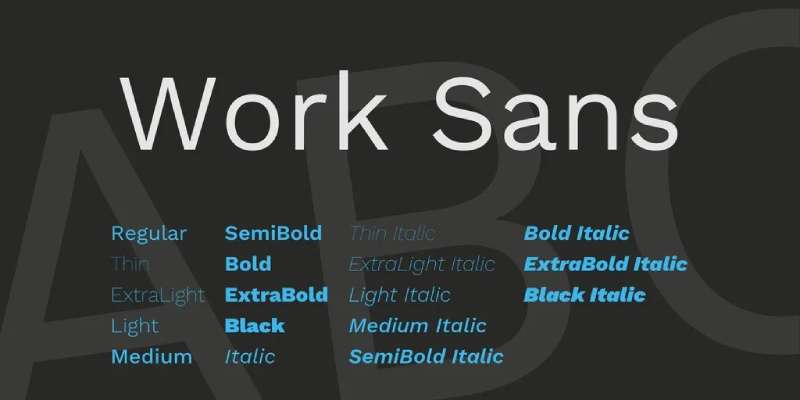
Two sans-serifs with different construction philosophies create workplace-appropriate pairing.
Visual characteristics
Work Sans designed for screen displays brings slightly wider proportions than Montserrat’s condensed geometry. Both fonts maintain clarity but achieve it differently. Work Sans has more humanist influence while Montserrat stays strictly geometric. The subtle contrast works through proportion differences.
Use case applications
Digital platforms: Corporate websites, productivity apps, professional networks
Print materials: Office communications, corporate reports, internal documents
Brand categories: Professional services, corporate entities, business tools
Named appropriately for professional environments.
Readability considerations
Work Sans optimized for on-screen reading across sizes.
Functions well from 12px upward. Montserrat provides emphasis and hierarchy through weight variation. Both fonts maintain legibility in challenging viewing conditions. The pairing feels professional without being sterile.
Technical pairing details
Montserrat SemiBold (600) to Bold (700) for headings, Work Sans Regular (400) for body text.
Line height: 1.5 for body text, 1.2-1.3 for headlines. Size ratios: 2:1 to 2.25:1 maintain clear distinction. Both fonts offer extensive weight ranges. Work Sans includes 9 weights providing flexibility.
Design context
Brand personalities: Professional, reliable, contemporary
Industry verticals: Business services, corporate, professional software
Design aesthetic: Clean, functional, office-appropriate
The pairing supports professional contexts requiring approachable yet serious typography.
Montserrat and Karla
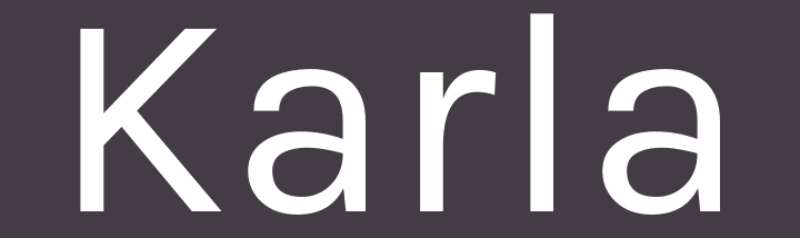
Geometric sans meets grotesque sans in a pairing that works through subtle character differences.
Visual characteristics
Karla’s grotesque characteristics (referring to sans-serif fonts from around 1815) provide historical depth to Montserrat’s modern geometry. Both fonts maintain clean lines but Karla features more humanist warmth. The combination creates visual interest without dramatic style shifts.
Use case applications
Digital platforms: Portfolio sites, design blogs, creative showcases
Print materials: Independent publications, creative branding
Brand categories: Design studios, creative freelancers, indie brands
Works for creative professionals wanting cohesive sans-serif systems.
Readability considerations
Karla designed for both display and text use.
Works effectively across size ranges. Montserrat provides stronger geometric presence for emphasis. Both fonts maintain legibility without fatigue. The pairing feels less corporate than other sans-serif combinations.
Technical pairing details
Montserrat Bold (700) for headings, Karla Regular (400) for body text.
Line height: 1.5-1.6 for body text, 1.2 for headlines. Size ratios: 2:1 to 2.5:1 recommended. Both fonts designed by talented typographers. Consider using Karla’s italic for emphasis within body text.
Design context
Brand personalities: Creative, independent, design-aware
Industry verticals: Design services, creative industries, cultural projects
Design aesthetic: Modern with historical awareness, understated sophistication
This pairing appeals to design-conscious audiences valuing typographic nuance.
Montserrat and Inter
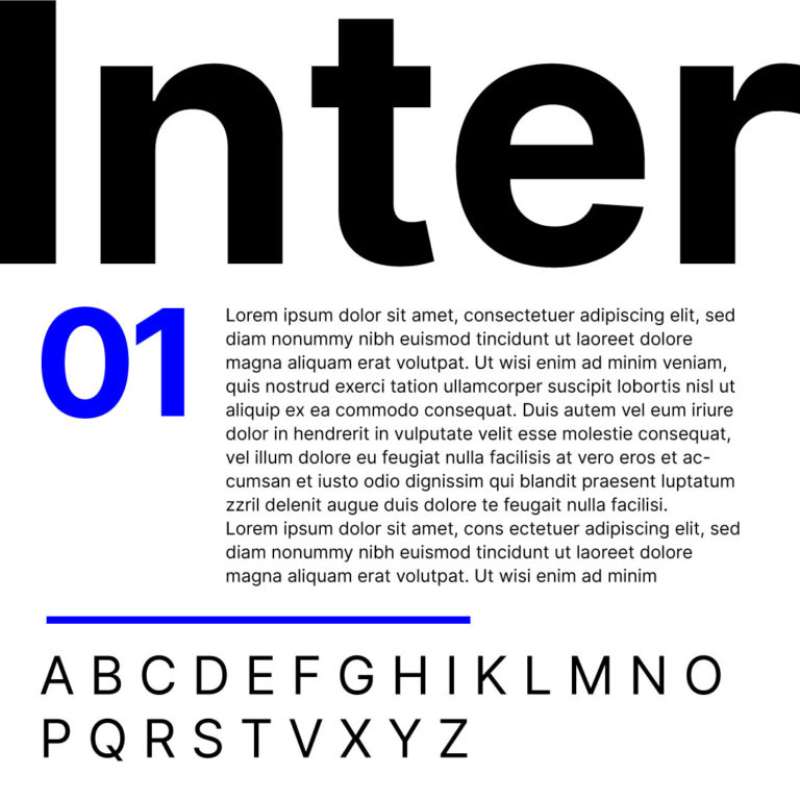
Two internationally-minded sans-serifs create a pairing optimized for digital interfaces.
Visual characteristics
Inter designed specifically for computer screens brings extreme clarity to small sizes. Both fonts feature geometric foundations but Inter has wider spacing and more open counters. Montserrat provides display impact while Inter handles interface text and dense information.
Use case applications
Digital platforms: Web applications, software interfaces, data dashboards
Print materials: Technical documentation, user manuals
Brand categories: Software products, digital tools, technical platforms
Engineered for functional digital environments.
Readability considerations
Inter optimized for 11px upward display.
Its tall x-height and open spacing maximize clarity at small sizes. Montserrat handles larger display contexts. Both fonts support comprehensive character sets and extensive language coverage. The pairing prioritizes legibility above stylistic expression.
Technical pairing details
Montserrat SemiBold (600) to Bold (700) for headings, Inter Regular (400) for body text.
Line height: 1.5 for body text accommodating Inter’s tall x-height, 1.2 for headlines. Size ratios: 1.75:1 to 2.25:1. Both fonts include variable font versions for precise optical sizing. Inter includes display and text variants.
Design context
Brand personalities: Technical, precise, international
Industry verticals: Software, fintech, enterprise tools
Design aesthetic: Interface-focused, systematic, globally accessible
This pairing serves products requiring maximum clarity across international user bases and complex interfaces.
FAQ on Montserrat Font Pairing Examples
What fonts pair best with Montserrat?
Serifs like Merriweather, Lora, and Playfair Display create strong contrast with Montserrat’s geometric structure. Sans-serif options like Roboto and Open Sans work when you differentiate through weight.
The key is matching x-heights while providing clear style distinction for proper visual hierarchy.
Why shouldn’t I pair Montserrat with other geometric sans-serifs?
Pairing similar geometric sans-serif fonts creates weak hierarchy. Both typefaces compete rather than complement.
You need significant weight differences or style contrast to establish clear information architecture. Serif fonts provide that distinction naturally.
What’s the ideal size ratio for Montserrat font pairings?
Use 2:1 to 2.5:1 ratios between headlines and body text for most pairings. High-contrast combinations like Montserrat with Playfair Display require 3:1 or greater.
Smaller ratios (1.75:1) work for functional interfaces where information density matters more than dramatic emphasis.
Which Montserrat weights work best for headings?
Bold (700) handles most heading contexts effectively. SemiBold (600) works for subtle hierarchies in corporate environments.
ExtraBold (800) to Black (900) suit display purposes and high-impact designs. Regular (400) to Medium (500) work for body text or supporting information.
Can Montserrat work for body text?
Montserrat functions adequately for body text but wasn’t optimized for extended reading. Its condensed proportions and geometric construction create more visual density than humanist alternatives.
Use it for short paragraphs, UI copy, or secondary text. Pair with reading-optimized typefaces for long-form content.
What line height should I use with Montserrat?
Set 1.5 to 1.6 for body text when using reading-optimized companions. Headlines work at 1.1 to 1.2 for tighter, more impactful presentation.
Adjust based on weight and size. Heavier weights need more leading to prevent visual crowding.
Does Montserrat support multiple languages?
Montserrat includes extensive Latin character coverage supporting Western, Central, and Eastern European languages. It lacks Cyrillic or extensive international scripts.
Pair with fonts like PT Serif or Inter for multilingual projects requiring broader language support beyond Latin alphabets.
Which industries use Montserrat font pairings most?
Technology companies, creative agencies, and modern retail brands favor Montserrat combinations. Fashion and luxury sectors use it with high-contrast serifs like Playfair Display.
Corporate and professional services pair it with functional companions like Source Sans Pro or Roboto for web design projects.
How do I choose between serif and sans-serif pairings?
Choose serifs for editorial content, traditional sectors, or when you need strong style contrast. Sans-serif pairings work for tech interfaces, modern brands, or functional applications.
Consider your audience expectations and content type. Serifs signal sophistication while sans options prioritize clarity.
Are Montserrat font pairings accessible?
Montserrat maintains good legibility at standard sizes. Pair with high-legibility body fonts like Open Sans or Roboto for maximum accessibility.
Ensure sufficient size contrast, avoid light weights below 16px, and maintain proper color contrast ratios per WCAG guidelines.
Conclusion
These Montserrat font pairing examples demonstrate how geometric sans-serifs transform through strategic companion choices. The right combination amplifies readability while establishing clear brand identity.
Start with high x-height serifs like Merriweather or Lora for editorial projects. They match Montserrat’s proportions while providing essential style contrast.
Corporate environments benefit from functional pairings with Source Sans Pro or Inter. These combinations prioritize legibility over decorative appeal.
Luxury brands should explore high-contrast options like Playfair Display. The dramatic difference between delicate serifs and geometric structure creates premium positioning.
Remember that successful typography depends on technical execution. Set proper size ratios, adjust kerning where needed, and test across devices before finalizing.
Your font choices communicate before words do. Choose combinations that reinforce your message rather than distract from it.

Renowned for his expertise in logo design and visual branding, Bogdan has developed a multitude of logos for various clients.
His skills extend to creating posters, vector illustrations, business cards, and brochures. Additionally, Bogdan's UI kits were featured on marketplaces like Visual Hierarchy and UI8.
He also wrote in the past years on sites like Design Your Way, WebDesignerDepot, WPDean, Designmodo, Speckyboy, Slider Revolution, and more.
- How to Install Fonts on Mac (Step-by-Step Guide) - 20 September 2026
- From Mockup to Code: How AI-Augmented Development Speeds Up the Design Handoff - 19 September 2026
- The Beehiiv Logo History, Colors, Font, And Meaning - 18 September 2026

Bogdan Sandu is a seasoned designer who has been designing websites since 2008. Renowned for his expertise in logo design and visual branding, Bogdan has developed a multitude of logos for various clients. His skills extend to creating posters, vector illustrations, business cards, and brochures. Additionally, Bogdan's UI kits were featured on marketplaces like Visual Hierarchy and UI8. He also wrote in the past years on sites like Design Your Way, WebDesignerDepot, WPDean, Designmodo, Speckyboy, Slider Revolution, and more.
You Might Also Like