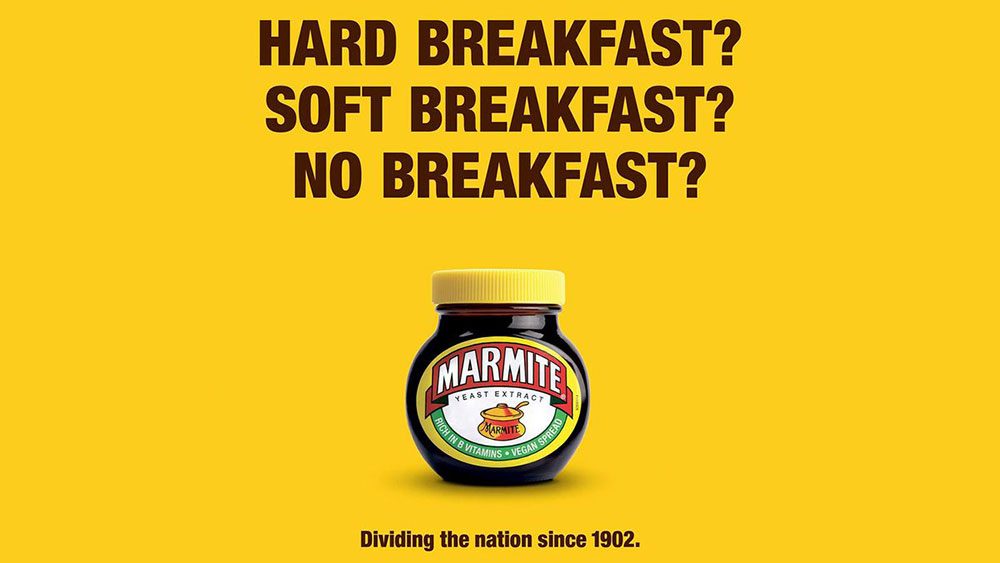
The font you choose for an ad does more work than the headline.
Before a single word registers, your typeface has already told the reader whether your brand is cheap or premium, trustworthy or forgettable. That’s not opinion. Monotype research shows typeface choices shift consumer responses by up to 13%.
Picking the best fonts for advertising means understanding which typefaces hold up at billboard scale, stay legible in a 320px mobile banner, and signal the right brand positioning before anyone reads the copy.
This guide covers the 10 most effective advertising typefaces in use today, from Helvetica and Futura to Gotham, Montserrat, and Proxima Nova. You’ll learn what makes each one work structurally, where it performs best across print and digital ad formats, and what to avoid.
No filler. Just the fonts that actually move the needle in brand advertising.
The Best Fonts For Advertising
Typography in advertising isn’t decoration. It’s function. The typeface you choose determines whether your headline gets read, whether a brand feels trustworthy, and whether a call-to-action converts. Research by AIGA found that font choices directly affect how expensive or cheap a product appears to consumers, which means picking wrong has real commercial consequences.
These 10 typefaces consistently perform across print ads, digital campaigns, billboard formats, and brand identity work. Each one is listed here because of structural reasons, not aesthetics.
—
Helvetica
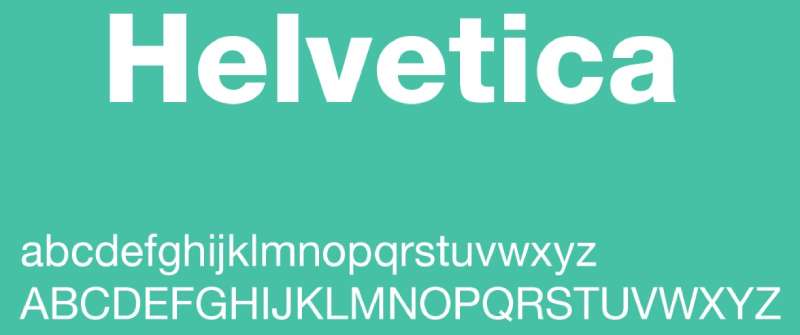
Helvetica is a neo-grotesque sans-serif font designed by Max Miedinger and Eduard Hoffmann in 1957, released by the Haas Type Foundry in Switzerland. It delivers neutral, high-legibility letterforms across advertising formats at any scale.
Helvetica suits brand advertising and headline copy because of its tall x-height and tight letter-spacing, which keep letterforms readable at both large poster sizes and small print runs. BMW, American Airlines, Lufthansa, and the New York City subway system all use it, covering both high-visibility signage and print campaigns.
What makes Helvetica suitable for advertising?
Helvetica’s x-height is tall relative to its cap height, which increases legibility at distance. Its closed apertures in letters like “c” and “e” give it a dense, solid appearance that reads clearly on fast-moving media like transit ads and outdoor signage.
Stroke contrast is minimal, meaning weight is distributed evenly across letterforms, which prevents thin strokes from disappearing at small sizes or under poor print conditions.
Key attributes:
| Attribute | Value |
| Classification | Neo-grotesque sans-serif |
| Designer | Max Miedinger, Eduard Hoffmann, 1957 |
| Weight range | 34 weights across the full family (Neue Helvetica) |
| Variable font | No (Neue Helvetica Now includes variable) |
| Recommended sizes | 14px+ for body; 36px+ for display |
| Letter-spacing default | Tight |
| License | Commercial (Monotype) |
| Available on | Adobe Fonts, Monotype, MyFonts |
| Price | Subscription or one-time desktop license |
How does Helvetica perform in advertising contexts?
At headline sizes (36px and above), Helvetica’s even stroke weight and tight spacing create strong visual density without heavy bold treatment. At smaller sizes, the closed apertures can reduce legibility on low-DPI screens, making it less ideal for small digital ad copy below 14px.
For print campaigns specifically, it has been the go-to for mass-market advertising since the 1960s, with documented use in campaigns across consumer goods, government communications, and transit systems in over 30 countries.
What are the best pairings for Helvetica in advertising?
Helvetica pairs with Garamond for contrast between neutral sans-serif headlines and warm serif body copy. It also works with Bodoni when a luxury contrast is needed, placing the editorial weight of Bodoni against Helvetica’s utility. The Helvetica + Garamond combination is standard in editorial advertising; Helvetica + Bodoni is less common but effective for upmarket campaigns.
What are the limitations of Helvetica for advertising?
Narrow apertures reduce legibility on screen at sizes below 14px. The commercial license through Monotype is costly for smaller studios, and the typeface’s ubiquity can reduce distinctiveness in brand advertising where differentiation matters.
Helvetica – Recommended Use Cases Within Advertising
- Best for: Brand identity ads, transit and outdoor advertising, corporate print campaigns
- Avoid for: Small digital ad body copy below 14px, brands needing distinctive visual personality
- Optimal weight: Regular for body copy; Bold or Black for headlines
- Optimal size range: 16px–24px for supporting text; 36px+ for headlines
—
Futura
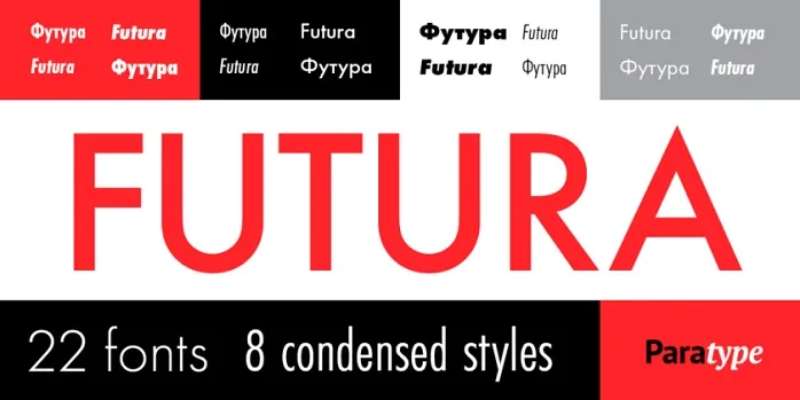
Futura is a geometric sans-serif designed by Paul Renner in 1927, released by the Bauer Type Foundry in Germany. It delivers clean, low-contrast letterforms built on near-perfect circles, triangles, and squares.
Futura suits headline-driven advertising because its near-even stroke weight and geometric structure maintain impact at large display sizes without relying on weight alone. IKEA, Volkswagen, Absolut, and Crayola have all used it in advertising. The plaque left on the Moon during Apollo 11 was set in Futura.
What makes Futura suitable for advertising?
Stroke weight is near-uniform throughout, which means letterforms remain consistent across printing techniques and substrates. Tall ascenders create strong vertical rhythm in headlines, making Futura visually impactful even at a single weight.
Its x-height is relatively small, which limits readability in long body copy but sharpens contrast in headline-to-body pairings. Myfonts describes the family as well-suited to “space-sensitive environments” where letterforms need to stay legible at surprisingly small sizes.
Key attributes:
| Attribute | Value |
| Classification | Geometric sans-serif |
| Designer | Paul Renner, 1927 |
| Weight range | Light to Extra Bold; condensed variants available |
| Variable font | Yes (Futura Now, Monotype 2020) |
| Recommended sizes | 24px+ for headlines; avoid for extended body copy |
| Letter-spacing default | Wide relative to cap height |
| License | Commercial (Monotype / Bauer) |
| Available on | Adobe Fonts (Futura PT), Monotype, MyFonts |
| Price | Subscription or one-time desktop license |
How does Futura perform in advertising contexts?
At large display sizes, Futura’s geometric letterforms create high visual precision. The near-circular “O” and geometric “A” are immediately distinctive on billboards and outdoor formats. Performance drops for long-form ad copy: the small x-height and monotone strokes reduce comfort in text blocks beyond 2–3 lines.
The Futura Now variable version (released by Monotype in 2020) adds optical size variants for Headline and Text use cases, directly addressing the original family’s limitations in digital advertising formats.
What are the best pairings for Futura in advertising?
Futura pairs with Garamond for a strong geometric-serif contrast that covers both high-impact headlines and readable body text. It also works with Georgia when a warmer serif tone is needed for supporting copy, reducing the coldness of Futura’s strict geometry. Futura + Garamond is widely used in editorial advertising; Futura + Bodoni is considered a design risk because both are cold and low-contrast.
What are the limitations of Futura for advertising?
The small x-height limits legibility in body copy below 16px. Commercial licensing through Monotype is required for all advertising use, which adds cost. The free Futura PT on Adobe Fonts covers only a subset of the full family, missing condensed weights useful for tight ad layouts.
Futura – Recommended Use Cases Within Advertising
- Best for: Headline-driven print ads, billboard campaigns, product packaging, fashion and lifestyle branding
- Avoid for: Extended body copy in digital ads, small-format text below 16px
- Optimal weight: Bold or Extra Bold for headlines; Medium for subheadings
- Optimal size range: 28px+ for ad headlines; 18px–24px for subheadings
—
Gotham
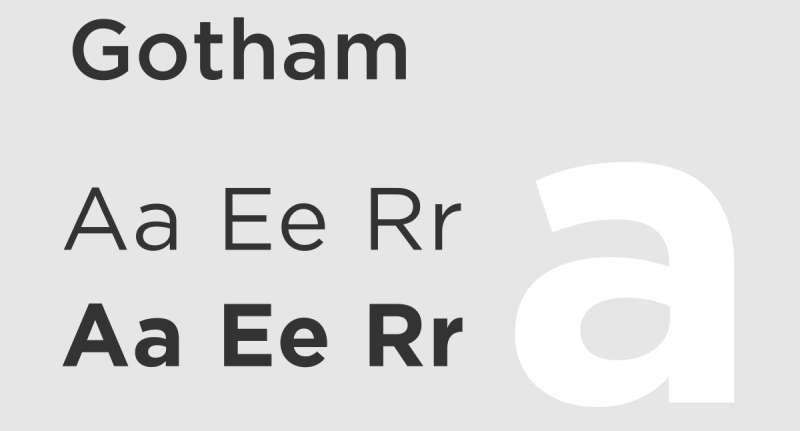
Gotham is a geometric sans-serif designed by Tobias Frere-Jones in 2000, released through Hoefler & Co. (now owned by Monotype) in 2002. It renders high-legibility letterforms with wide apertures across print and digital advertising formats.
Gotham works best in campaign-level advertising because it supports 8 weights across 4 widths (216 total styles), giving a single family enough range to cover all hierarchy levels in a campaign without switching typefaces. Barack Obama’s 2008 campaign used it as the primary campaign font; Netflix used it until 2018 when they created a custom replacement to reduce licensing costs.
What makes Gotham suitable for advertising?
Gotham has a high x-height and wide apertures in letters like “c,” “e,” and “a.” Wide apertures reduce character misreads at speed, which matters in advertising formats where readers have limited viewing time (outdoor, transit, digital display).
Its geometry is tempered by the irregularities of mid-century architectural hand lettering, giving it a warmth that pure geometric fonts like Futura lack. That warmth makes it approachable in consumer-facing advertising, not just institutional or governmental use.
Key attributes:
| Attribute | Value |
| Classification | Geometric sans-serif |
| Designer | Tobias Frere-Jones, 2000 |
| Weight range | Thin to Ultra (8 weights); 4 widths; 216 total styles |
| Variable font | No |
| Recommended sizes | 12px+ for body; 24px+ for headlines |
| Letter-spacing default | 0 (neutral) |
| License | Commercial (Hoefler & Co. / Monotype) |
| Available on | Hoefler & Co., MyFonts, Adobe Fonts |
| Price | Subscription (Cloud.typography for web); desktop license available |
How does Gotham perform in advertising contexts?
At headline sizes, Gotham’s wide apertures maintain character distinction even at viewing distances. Its even stroke weight and high x-height mean it holds up well in reversed-out text on dark backgrounds, a common requirement in digital display advertising.
In digital ads specifically, the Book and Medium weights perform well at 14px–18px for supporting copy. The Narrow and Extra Narrow widths make it useful for space-constrained ad formats like mobile banners.
What are the best pairings for Gotham in advertising?
Gotham pairs with Mercury (a Hoefler & Co. serif) for editorial-style advertising, a pairing used widely in American magazine campaigns. It also works with Garamond when a warmer, more classical body font is needed. The Gotham + Mercury combination is standard practice; Gotham + Garamond is less conventional but effective for heritage brand advertising.
What are the limitations of Gotham for advertising?
Licensing is expensive. Web use requires a separate Cloud.typography subscription, desktop and web licenses are not interchangeable. The typeface’s ubiquity in political and corporate advertising since 2008 has reduced its distinctiveness in consumer brand contexts.
Gotham – Recommended Use Cases Within Advertising
- Best for: Campaign-level brand advertising, digital display ads, magazine and editorial campaigns
- Avoid for: Budget-limited projects where licensing costs are a constraint; brands needing strong visual distinctiveness
- Optimal weight: Book for body copy; Bold or Black for CTAs and headlines
- Optimal size range: 14px–18px for supporting copy; 30px+ for headlines
—
Garamond
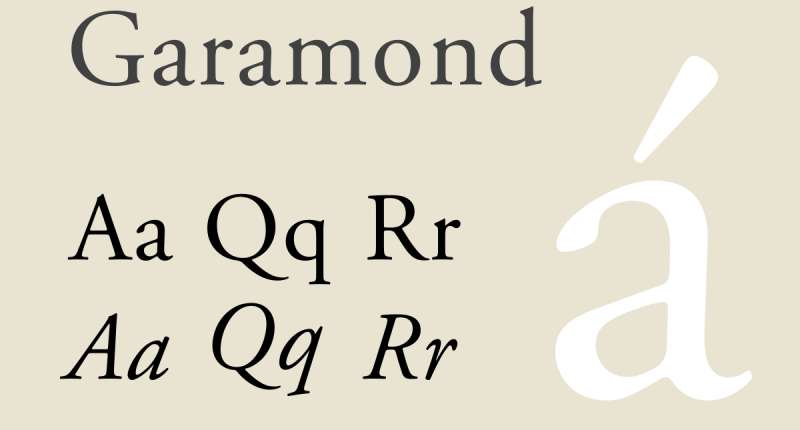
Garamond is an old-style serif font originating from the work of 16th-century punchcutter Claude Garamond, with the most common digital versions being Adobe Garamond Pro (Robert Slimbach, 1989) and Monotype Garamond. It delivers high legibility in print with a low x-height and consistent stroke rhythm.
Garamond suits print-focused advertising because its compact letterforms remain readable even at small sizes in print media. Apple used it as their corporate typeface for years, particularly in product documentation and advertising supporting text. Research and editorial brands including university presses and Time magazine have long relied on it for body-heavy advertising material.
What makes Garamond suitable for advertising?
Garamond’s moderate stroke contrast and bracketed serifs create smooth horizontal reading flow. Its letter-spacing is naturally open, which reduces crowding in multi-line print ad copy without requiring manual tracking adjustments. The italic weight is particularly well-regarded, with rhythmic calligraphic strokes that work well for pull quotes and taglines in print ads.
Key attributes:
| Attribute | Value |
| Classification | Old-style serif |
| Designer | Claude Garamond (original); Robert Slimbach (Adobe Garamond Pro, 1989) |
| Weight range | Regular, Italic, Bold, Bold Italic (Adobe Garamond Pro) |
| Recommended sizes | 9pt+ for print body; 18px+ for digital |
| Letter-spacing default | Slightly open |
| License | Commercial (Adobe); EB Garamond available under OFL (free) |
| Available on | Adobe Fonts; EB Garamond on Google Fonts |
| Price | Included in Adobe subscription; EB Garamond free |
How does Garamond perform in advertising contexts?
Garamond excels in print advertising with dense body copy, magazine layouts, and premium editorial contexts. It maintains legibility at 9pt in print, smaller than most sans-serifs can handle cleanly. On screen at sizes below 16px, the low x-height and thin strokes can reduce legibility, making it better suited to print than digital display advertising.
What are the best pairings for Garamond in advertising?
Garamond pairs with Futura for a geometric-classic contrast that covers modern headlines with classical body copy. It also works with Helvetica when a neutral sans-serif headline is needed against a more humanist body. The Garamond + Futura combination is a design standard for premium editorial advertising; Garamond + Helvetica is more utilitarian but widely used.
What are the limitations of Garamond for advertising?
The low x-height creates legibility issues on screen below 16px. The limited weight range in most digital versions (typically 4 styles) restricts typographic hierarchy in multi-level ad layouts. EB Garamond (the free version) lacks the refined optical sizing of Adobe Garamond Pro.
Garamond – Recommended Use Cases Within Advertising
- Best for: Print ad body copy, luxury brand advertising, editorial and magazine campaigns
- Avoid for: Digital display ads with small supporting text; mobile advertising formats
- Optimal weight: Regular for body copy; Italic for taglines and pull quotes
- Optimal size range: 9pt–12pt for print; 18px+ for digital
—
Bodoni
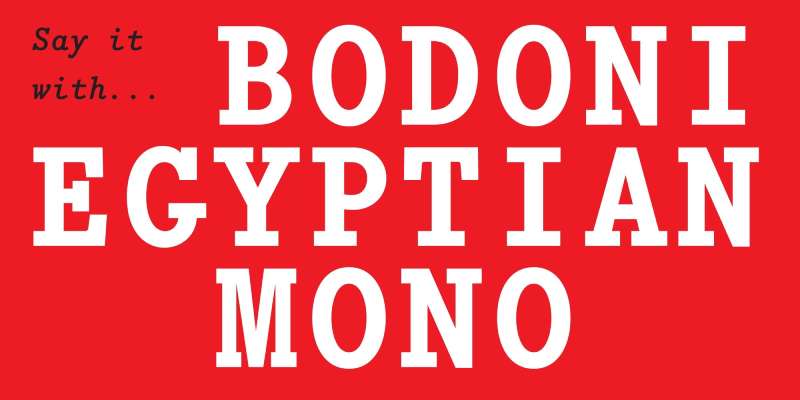
Bodoni is a modern serif font originally designed by Giambattista Bodoni in 1798, with digital versions including Bauer Bodoni (Heinrich Jost, 1926) and ITC Bodoni. It produces extreme stroke contrast, with very thick verticals and very thin horizontals.
Bodoni works best for luxury and fashion advertising headlines because high stroke contrast at large sizes creates visual drama that signals premium positioning. Vogue, Calvin Klein, and Louis Vuitton have all used Bodoni-influenced typefaces in their advertising. Research by AIGA suggests serif fonts with high contrast are perceived as more expensive by consumers.
What makes Bodoni suitable for advertising?
The extreme contrast between thick (vertical) and thin (horizontal) strokes creates a sharp, high-contrast silhouette at display sizes. At 36pt and above, letterforms remain crisp and graphically strong. The slightly condensed letter width allows large text to fit within standard advertising formats without line breaks that disrupt visual flow.
Key attributes:
| Attribute | Value |
| Classification | Modern (Didone) serif |
| Designer | Giambattista Bodoni, 1798; various digital revivals |
| Optical sizes | Yes (ITC Bodoni 6, 12, 72 optimized for different sizes) |
| Recommended sizes | 24pt+ for display; ITC Bodoni 12 for 12pt use |
| License | Commercial (varies by version) |
| Available on | Adobe Fonts, Monotype, MyFonts |
| Price | Subscription or one-time purchase depending on version |
How does Bodoni perform in advertising contexts?
At headline sizes of 36pt+, Bodoni’s stroke contrast creates maximum visual impact and perceived luxury. Below 18pt, thin strokes break down in a phenomenon designers call “dazzle,” where the high contrast makes letterforms vibrate visually and become harder to read.
For digital advertising, Bodoni performs poorly in body copy but remains strong as a pure headline font in static ads, social media visuals, and high-end print campaigns.
What are the best pairings for Bodoni in advertising?
Bodoni pairings work best with neutral sans-serifs that don’t compete with its drama. Futura provides geometric contrast at body weight. Helvetica works as a utilitarian body font that lets Bodoni headlines dominate. Both pairings follow the same principle: let Bodoni be the hero, keep the supporting font restrained.
What are the limitations of Bodoni for advertising?
Thin strokes degrade below 18pt in print and below 22px on screen, causing the “dazzle” effect. It is unsuitable for any body copy in advertising material. The weight range in most versions is limited, preventing its use across full campaign hierarchies without a secondary typeface.
Bodoni – Recommended Use Cases Within Advertising
- Best for: Luxury brand headlines, fashion campaign typography, high-end print ads
- Avoid for: Body copy at any size; digital ads with small or reversed-out text
- Optimal weight: Regular or Bold for headlines only
- Optimal size range: 36pt+ for print headlines; 48px+ for digital display
—
Trajan
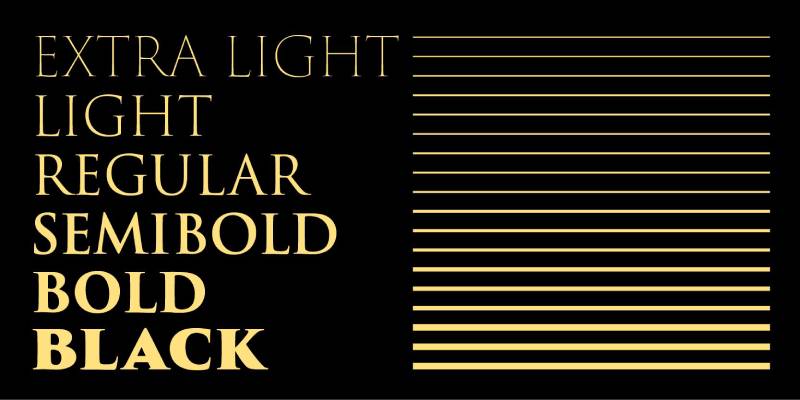
Trajan is a display serif font designed by Carol Twombly in 1989, released by Adobe. It is an all-capitals typeface based on the Roman square capitals carved on Trajan’s Column in Rome, with no lowercase characters.
Trajan suits prestige and institutional advertising because its monumental Roman letterforms signal authority and permanence. It appears on movie posters for Gladiator, Titanic, and The Da Vinci Code. Universities, political campaigns, and law firms use it in brand advertising contexts requiring a sense of established authority.
What makes Trajan suitable for advertising?
Letter proportions follow classical Roman capitals with relatively wide characters and consistent optical spacing. This produces balanced all-caps settings without requiring manual kerning adjustments in headline use. The absence of lowercase is a structural constraint, but it also enforces visual consistency across all-caps advertising headlines.
Key attributes:
| Attribute | Value |
| Classification | Display serif (based on Roman inscriptional capitals) |
| Designer | Carol Twombly, 1989 |
| Weight range | Regular, Bold (Trajan Pro adds additional weights) |
| Letter-spacing default | Wide (classical Roman proportions) |
| License | Commercial (Adobe) |
| Available on | Adobe Fonts |
| Price | Included in Adobe subscription |
How does Trajan perform in advertising contexts?
At display sizes of 36pt+, Trajan delivers high visual authority through wide letter proportions and classical serif structure. The typeface performs best in all-caps headline settings. Its performance drops sharply in mixed-case settings (no lowercase) and it has no viable use in body copy.
What are the best pairings for Trajan in advertising?
Trajan pairs with Garamond for classical editorial advertising where both serif voices stay harmonious without competing. It also works with a neutral sans-serif like Gill Sans for body copy, separating the monumental headline register from a more readable supporting layer.
What are the limitations of Trajan for advertising?
No lowercase characters make it impossible to use for anything beyond headlines or short taglines. Its heavy association with movie posters and entertainment marketing has weakened its distinctiveness in general brand advertising. Two weights in the base family limit typographic hierarchy.
Trajan – Recommended Use Cases Within Advertising
- Best for: Prestige brand headlines, institutional advertising, entertainment and film marketing
- Avoid for: Body copy; any context requiring lowercase; brands targeting younger audiences
- Optimal weight: Regular for balanced headline use; Bold for maximum presence
- Optimal size range: 36pt+ for print; 48px+ for digital
—
Gill Sans
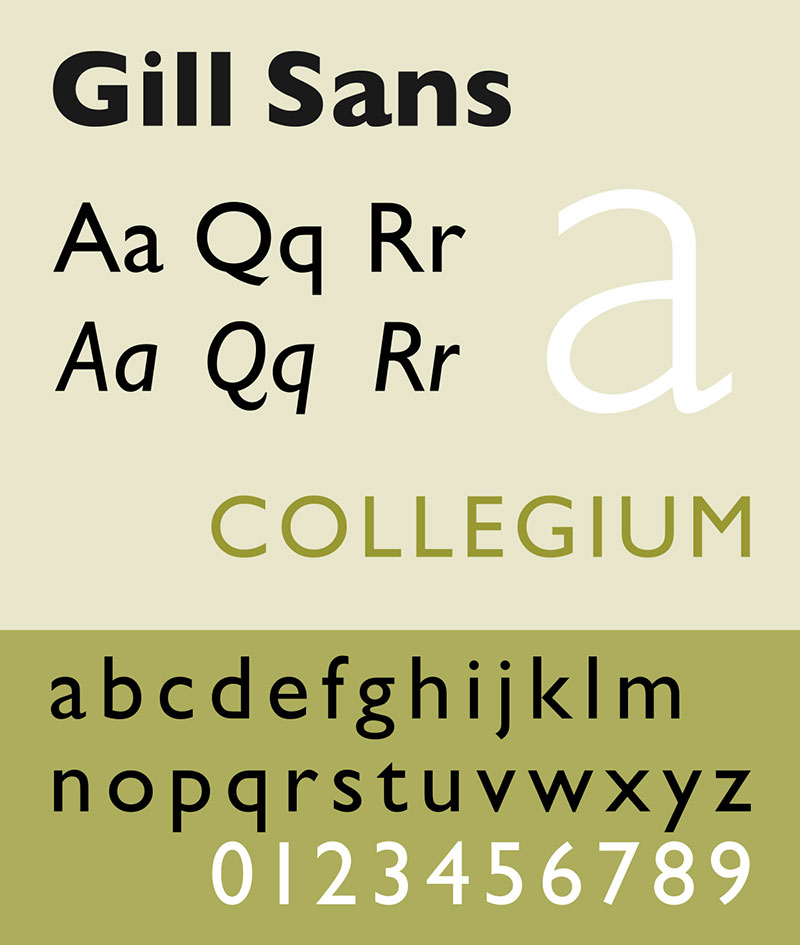
Gill Sans is a humanist sans-serif font designed by Eric Gill in 1926, released by Monotype Corporation in 1928. It delivers sans-serif letterforms with Roman capital proportions and a humanist lowercase rooted in Carolingian script.
Gill Sans works best in editorial and consumer brand advertising because its Roman capital proportions give it warmth that geometric sans-serifs lack, while maintaining the cleanliness expected of a sans-serif type. Penguin Books and the London and North Eastern Railway have used it as their primary advertising typeface for decades. The BBC used it as an on-screen typeface into the 2000s.
What makes Gill Sans suitable for advertising?
The two-story lowercase “a” and “g” — based on Carolingian script — make individual letter recognition faster than in geometric sans-serifs where “a” and “g” use single-story forms that can be confused at speed. This directly improves scanability in advertising copy read quickly.
Gill Sans has 14 styles in the family, covering a practical range for campaign typography without requiring a secondary typeface for body and headline use.
Key attributes:
| Attribute | Value |
| Classification | Humanist sans-serif |
| Designer | Eric Gill, 1926 (released 1928) |
| Weight range | 14 styles including Light, Regular, Bold, Ultra Bold, Condensed |
| Recommended sizes | 10pt+ for print body; 14px+ for digital |
| Letter-spacing default | 0 |
| License | Commercial (Monotype); bundled with macOS and some Microsoft products |
| Available on | Adobe Fonts, Monotype, system font (Mac) |
| Price | Included in Adobe subscription; free on macOS |
How does Gill Sans perform in advertising contexts?
Gill Sans maintains clarity at 10pt in print, making it viable for small-text elements in ads like legal disclaimers and product details. Its humanist construction means it avoids the mechanical coldness of Futura or Helvetica, making it better suited to consumer brand advertising that targets warmth over authority.
What are the best pairings for Gill Sans in advertising?
Gill Sans pairs naturally with Garamond or Caslon, where both fonts share a humanist, warm character. It also works with Playfair Display when a more editorial contrast between headline and body is needed. Gill Sans + Garamond is considered a classic British design pairing; Gill Sans + Playfair Display is more contemporary.
What are the limitations of Gill Sans for advertising?
Its association with mid-century British design gives it a retro quality that can feel dated in modern technology or fashion brand campaigns. The system font version (macOS, Gill Sans MT on Windows) differs subtly from the full Monotype family, which can create inconsistencies across design teams using different platforms.
Gill Sans – Recommended Use Cases Within Advertising
- Best for: Consumer brand advertising, food and lifestyle campaigns, editorial print ads
- Avoid for: Tech, fintech, and luxury fashion advertising; brands requiring a contemporary or forward-looking identity
- Optimal weight: Regular for body copy; Bold for headlines and CTAs
- Optimal size range: 10pt–14pt for print body; 14px–20px for digital supporting copy
—
Bebas Neue
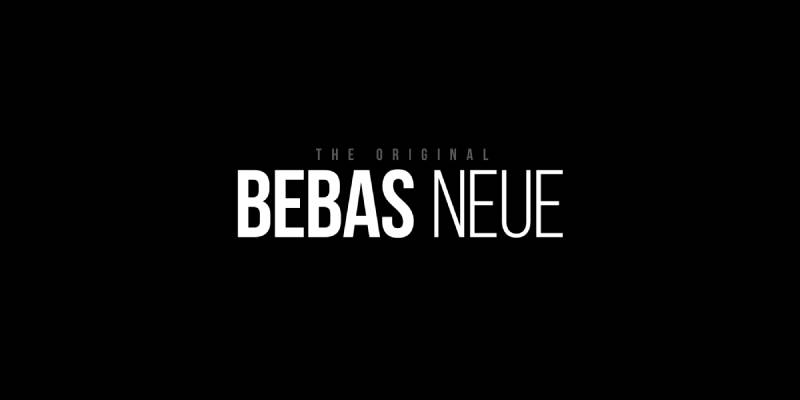
Bebas Neue is a display sans-serif designed by Ryoichi Tsunekawa, originally released in 2010 through Dharma Type and expanded into a full family by Fontfabric in 2014. It is an all-caps typeface with tall, tightly spaced letterforms and even stroke weight throughout.
Bebas Neue works best in high-impact headline advertising because its condensed, all-caps structure generates strong vertical rhythm at large display sizes. It is licensed under the SIL Open Font License (OFL), meaning free commercial use. That combination of visual impact and zero licensing cost makes it one of the most widely used display fonts in modern advertising.
What makes Bebas Neue suitable for advertising?
Letter height is tall relative to width, creating a condensed silhouette that fits long words into headline widths without line breaks. Even stroke weight means letterforms stay consistent across offset printing, digital screens, and large-format banner printing without thin strokes degrading.
Extended Latin support covers over 80 languages, making it viable for global advertising campaigns without switching typefaces by region.
Key attributes:
| Attribute | Value |
| Classification | Display sans-serif (all-caps) |
| Designer | Ryoichi Tsunekawa, 2010 |
| Weight range | 5 weights (Thin to Bold) in the Fontfabric expanded family |
| Variable font | No |
| Recommended sizes | 36px+ for headlines; 60px+ recommended for display |
| Letter-spacing default | Tight |
| License | OFL (free for commercial use) |
| Available on | Google Fonts, Adobe Fonts, Fontfabric |
| Price | Free (OFL); Pro version available from Fontfabric |
How does Bebas Neue perform in advertising contexts?
At 60px and above, Bebas Neue delivers maximum visual weight without requiring bold treatment. Its even stroke weight means it prints cleanly on textured surfaces like fabric banners and outdoor vinyl, where thin-stroke typefaces lose detail. Scanability is high in headline use because the tall, condensed letterforms create strong visual separation from surrounding elements.
What are the best pairings for Bebas Neue in advertising?
Bebas Neue pairs with Montserrat for a high-contrast headline-to-body combination within the same geometric register. It also works with Roboto as a neutral, highly legible body font that doesn’t compete with the bold headline. Bebas Neue + Montserrat is the most common pairing in digital advertising; Bebas Neue + Roboto is simpler and performs better on mobile formats.
What are the limitations of Bebas Neue for advertising?
No lowercase characters restrict use to headlines and short taglines. The base free version (Google Fonts) contains only one weight (Regular), limiting typographic hierarchy. The full 5-weight family requires the Fontfabric Pro version at additional cost.
Bebas Neue – Recommended Use Cases Within Advertising
- Best for: Headline-driven social media ads, banner advertising, sports and fitness brand campaigns, YouTube thumbnail text
- Avoid for: Any body copy; premium luxury brand advertising where all-caps condensed forms read as aggressive
- Optimal weight: Regular or Bold for headlines
- Optimal size range: 48px–120px for digital ads; 60pt+ for print headlines
—
Montserrat
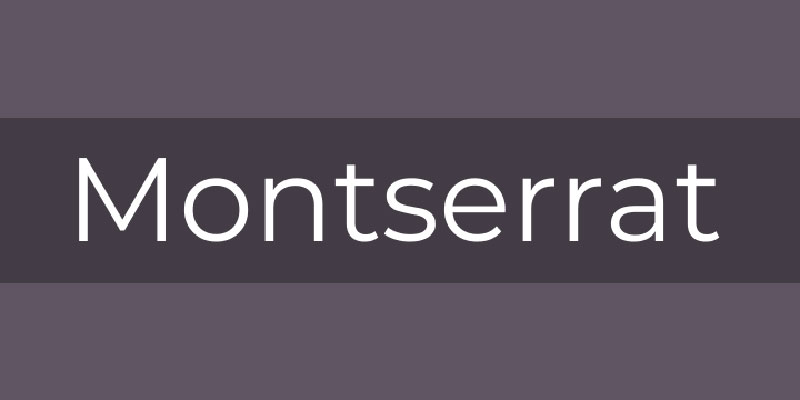
Montserrat is a geometric sans-serif font designed by Julieta Ulanovsky, released in 2011 and updated with an expanded 18-weight family in 2017. It is available free under the OFL through Google Fonts. The design is based on urban signage from the Montserrat neighborhood in Buenos Aires.
Montserrat suits digital advertising formats because it supports 18 weights (Thin 100 to Black 900), enabling a single typeface family to cover all typographic hierarchy levels within a campaign. Airbnb, Netflix, and numerous tech brands have used it in digital advertising, particularly for social media and mobile campaigns where variable weight coverage matters.
What makes Montserrat suitable for advertising?
18 weights from Thin (100) to Black (900) with matching italics means the full campaign hierarchy — from large display headlines down to small legal copy — can use one typeface. This reduces rendering inconsistencies across platforms.
The x-height is moderate-to-high, supporting legibility in both headline and supporting text use. Open apertures in letters like “c,” “e,” and “a” maintain character distinction at small digital ad sizes, including mobile banner formats.
Key attributes:
| Attribute | Value |
| Classification | Geometric sans-serif |
| Designer | Julieta Ulanovsky, 2011 |
| Weight range | Thin 100 to Black 900 (18 weights with italics) |
| Variable font | Yes |
| Recommended sizes | 12px+ for body; 24px+ for headlines |
| Letter-spacing default | Slightly wide |
| License | OFL (free for commercial use) |
| Available on | Google Fonts |
| Price | Free |
How does Montserrat perform in advertising contexts?
In digital advertising, Montserrat renders cleanly across screen types from mobile (320px wide) to large desktop displays. The variable font version supports responsive ad formats where weight adjusts dynamically to fit different container sizes without loading additional font files.
Its slightly wide default letter-spacing improves legibility in digital banner ads, where crowded text causes high bounce rates and low engagement.
What are the best pairings for Montserrat in advertising?
Montserrat pairings typically use a contrasting serif for body copy. It works well with Merriweather for digital content ads that require extended readable body text. It also pairs with Lora when a slightly warmer, more editorial serif tone is needed for supporting copy. Montserrat + Merriweather is a widely adopted pairing in content marketing advertising; Montserrat + Lora is common in lifestyle and wellness brand ads.
What are the limitations of Montserrat for advertising?
Its widespread free availability means it appears across a very high volume of digital content, reducing distinctiveness in competitive advertising categories. The slightly wide letter-spacing that helps legibility on screen requires manual tightening for print ad layouts where economy of space matters.
Montserrat – Recommended Use Cases Within Advertising
- Best for: Digital display advertising, social media ads, mobile campaigns, responsive digital ad formats
- Avoid for: Premium luxury brands where the typeface’s widespread free use undermines exclusivity
- Optimal weight: Regular (400) for body; SemiBold (600) for subheadings; Bold (700) or ExtraBold (800) for CTAs
- Optimal size range: 14px–20px for body copy; 28px+ for headlines
—
Proxima Nova
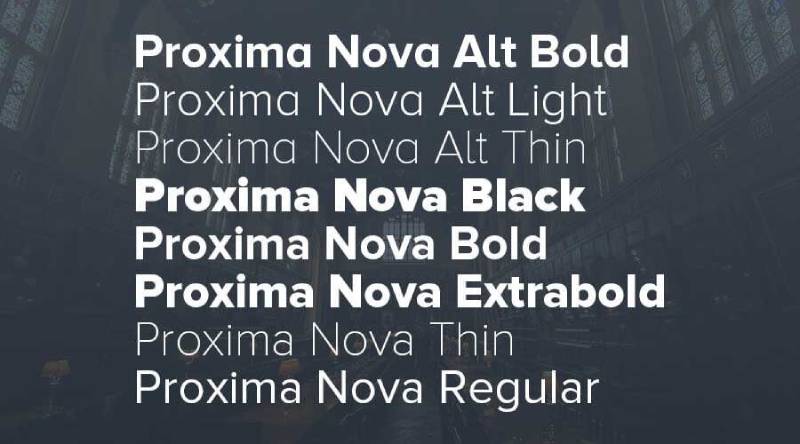
Proxima Nova is a geometric-humanist sans-serif font designed by Mark Simonson, with the first version (Proxima Sans) released in 1994 and the current Proxima Nova released in 2005 through Mark Simonson Studio. It blends geometric structure with humanist character proportions.
Proxima Nova suits web and digital advertising because its 80-font family (covering 5 widths with matching italics) provides full campaign coverage in a single typeface. Since the mid-2010s, it has been the most popular commercial font on the web, used by Spotify, BuzzFeed, Airbnb, Wired, and Mashable in digital advertising campaigns.
What makes Proxima Nova suitable for advertising?
Proxima Nova bridges the design gap between pure geometric fonts (Futura, Gotham) and humanist sans-serifs (Gill Sans, Frutiger). Its letterforms are geometric in structure but have the open apertures and proportional variation of humanist designs, which improves legibility at smaller sizes and on screen.
The family covers Greek, Cyrillic, Vietnamese, Arabic, Thai, Devanagari, Hangeul, Tamil, and Hebrew scripts, making it one of the most globally versatile advertising typefaces available commercially.
Key attributes:
| Attribute | Value |
| Classification | Geometric-humanist sans-serif |
| Designer | Mark Simonson, 2005 |
| Weight range | Thin to Black (6 weights); 5 widths; 80 total fonts |
| Variable font | No |
| Recommended sizes | 12px+ for body; 24px+ for headlines |
| Letter-spacing default | 0 (neutral) |
| License | Commercial (Mark Simonson Studio / Adobe Fonts) |
| Available on | Adobe Fonts, Mark Simonson Studio, MyFonts |
| Price | Included in Adobe subscription; individual weights available commercially |
How does Proxima Nova perform in advertising contexts?
Proxima Nova renders cleanly on high-DPI screens used in modern mobile and desktop advertising. At 14px, individual character distinction remains high due to open apertures. It maintains consistent weight appearance across different browsers and operating systems, which matters in digital display advertising where rendering varies by device.
What are the best pairings for Proxima Nova in advertising?
Proxima Nova pairs with Playfair Display for digital editorial advertising that requires a serif contrast. It also works with Merriweather for content-heavy digital ad formats where body copy legibility is the priority. Both pairings follow the same logic: use Proxima Nova at the display level and bring in a serif at the body level for reading contrast.
What are the limitations of Proxima Nova for advertising?
Its dominance in web design since 2015 has made it one of the most recognized typefaces online, reducing distinctiveness in digital advertising. No variable font version is available, which means loading multiple font weights for responsive campaigns increases page load time. Licensing is commercial and not included in free design tool subscriptions.
Proxima Nova – Recommended Use Cases Within Advertising
- Best for: Digital display ads, web-based advertising, email marketing campaigns, tech and SaaS brand advertising
- Avoid for: Print-heavy campaigns where its screen-optimized design offers no advantage; brands in competitive digital spaces where distinctiveness matters
- Optimal weight: Regular for body copy; Semibold or Bold for CTAs; Black for headlines
- Optimal size range: 14px–18px for body; 28px+ for headlines
What Makes a Font Effective for Advertising?
Typeface choices can increase positive consumer responses by up to 13%, according to Monotype research. That’s a measurable lift from a single design decision.
Most of what makes a font work in advertising comes down to three structural variables: x-height, aperture width, and stroke contrast. Get those wrong, and no amount of clever copy saves the ad.
| Structural Attribute | What It Affects | Critical For |
| X-height | Legibility at small sizes and distance | Mobile ads, transit, billboards |
| Aperture width | Character distinction at speed | Display ads, digital banners |
| Stroke contrast | Rendering consistency across substrates | Print, outdoor, screen |
How does x-height affect ad readability?
X-height is the vertical measurement of lowercase letters relative to uppercase. A tall x-height keeps letterforms open at small sizes, which directly determines whether an ad stays readable when scaled down to a mobile banner or viewed at distance on a transit poster.
Helvetica’s tall x-height is one of the structural reasons it became the default for outdoor and transit advertising globally. Garamond’s comparatively low x-height explains why it performs well in print but struggles below 16px on screen.
- High x-height fonts (Helvetica, Gotham, Montserrat): viable at 12px digital and legible at 30+ meters outdoors
- Low x-height fonts (Garamond, Futura): optimal for 9pt+ print use; lose clarity at small digital sizes
- Display fonts (Bebas Neue, Trajan): effective at 48px+; not suitable for body copy at any size
How does stroke contrast change at different advertising sizes?
Stroke contrast is the ratio between the thickest and thinnest parts of a letterform. Research published in Springer’s legibility studies (2022) found that stroke contrast matters more than serif presence when determining legibility across different contexts.
Low-contrast fonts (Helvetica, Futura, Gotham) have near-even stroke weight throughout. They print consistently across offset, digital, and large-format vinyl because there are no thin strokes to disappear or break.
High-contrast fonts (Bodoni, Didot) produce what designers call “dazzle” below 18pt in print and below 22px on screen. Thin horizontal strokes break down, making letterforms vibrate and reducing reading speed.
Brands using consistent typography across marketing see up to a 30% increase in consumer engagement, according to industry research cited by MGMagazine (2025). Stroke consistency across formats is a direct driver of that consistency.
—
How Do Serif and Sans-Serif Fonts Perform Differently in Advertising?
A 2024 study published in the International Journal of Human-Computer Interaction tested 246 participants and found no statistically significant readability difference between serif and sans-serif fonts on screen. What differs is perception, and in advertising, perception is the product.
Wichita State University research found serif fonts like Garamond and Times New Roman consistently signal tradition, respectability, and authority. Sans-serif fonts like Helvetica and Gotham signal modernity and efficiency. Neither is objectively better. Both perform specific jobs.
What font types do luxury brands use in advertising?
Primary classification: modern serif (Didone). Key examples: Bodoni-influenced typefaces at Vogue and Harper’s Bazaar; Didot at Dior and Chanel.
Luxury brands use high-contrast serifs because extreme stroke contrast at large display sizes signals exclusivity. AIGA research found that consumers perceive serif typography as more expensive than rounded or bold sans-serif alternatives.
The structural reason works both ways. Bodoni’s high contrast and slightly condensed letterforms require large sizes (36pt+) to stay legible, which forces luxury ads to use generous whitespace. That whitespace itself communicates premium positioning.
| Brand Category | Font Classification | Real Example |
| Luxury fashion | Modern serif (Didone) | Vogue (Bodoni-style), Dior |
| Premium retail | Old-style serif | Tiffany & Co. (Garamond-adjacent) |
| Prestige entertainment | Inscriptional serif | Film posters (Trajan) |
What font types do tech brands use in advertising?
Sans-serif fonts dominate tech advertising. Clean, modern sans-serif fonts render clearly across all screen sizes from smartwatches to TV displays, and their low stroke contrast means no rendering inconsistency between devices.
Google Ads data from March 2023 found that ads using sans-serif fonts received 12% more clicks than equivalent ads using serif fonts. That difference holds up across display formats.
- Spotify: custom Circular (geometric sans-serif, large x-height for mobile)
- Netflix: moved from Gotham to custom Netflix Sans in 2018 to cut licensing costs
- Airbnb: uses Cereal, a custom humanist sans-serif built for 5 weights to cover full hierarchy
Over 83% of Fortune 500 companies use proprietary or customized typefaces for brand identity (Font and Typeface Market Research Report, 2024). Custom sans-serifs built for specific screen contexts are the dominant pattern in tech advertising.
—
What Role Does Font Licensing Play in Advertising Typography?
In 2023, Production Type filed a copyright infringement lawsuit against Nike for using their Kreuz Light font across videos and social media without proper licensing. Nike held desktop and digital-audio licenses only. Different platforms require different license types, and the per-infringement exposure can reach $150,000 per font file under U.S. copyright law.
Approximately 68% of U.S. digital marketing agencies purchase commercial font licenses for branding projects (Font and Typeface Market Research Report, 2024). The other 32% are either using OFL-licensed fonts or running unlicensed risk.
What are the main font license types in advertising?
Desktop license: covers print, static image formats, and logos. Most foundry desktop licenses explicitly allow commercial logo use, but not web embedding or digital ad HTML5 deployment.
Digital ad license: required for HTML5 ads and email marketing. Monotype calls these “Digital Marketing Communications” licenses, priced by licensed impressions.
Web font license: required for embedding a font via CSS on any website. Not interchangeable with a desktop license. Netflix’s shift to a custom typeface in 2018 was partly driven by the cost of maintaining separate web, mobile app, and desktop licenses for Gotham at global scale.
OFL (SIL Open Font License): covers all commercial use including print, digital, and advertising with no impression limits. Bebas Neue and Montserrat are OFL-licensed, making them zero-licensing-cost for any advertising use.
What are the risks of using the wrong font license in advertising?
About 70% of websites now use some form of self-hosted font (HTTP Archive, 2024). Many do so without verifying whether their desktop license covers web embedding, which it typically does not.
The three most common licensing errors in advertising:
- Using a desktop-only license to embed fonts in HTML5 display ads
- Using a web license for broadcast TV spots (requires a separate broadcast license)
- Assuming a rented/subscription font covers outdoor advertising production (most rental licenses explicitly exclude this)
Adobe Fonts (included in Creative Cloud) clears all fonts in its library for personal and commercial use across print and digital. Google Fonts operates under OFL, covering all advertising use. Both are safe defaults for agencies without dedicated font licensing management.
—
How Does Font Choice Affect Brand Identity in Advertising Campaigns?
Spotify spent an estimated $200,000+ developing its custom Circular typeface. The investment was justified by one structural requirement: Circular’s large x-height and open apertures had to remain readable at 10px on mobile and scale to 100px on billboard without a second typeface.
That’s the real function of font choice in brand advertising. Not aesthetics. Coverage.
How does font psychology shape brand perception in ads?
Studies from Wichita State University show that geometric sans-serifs signal modernity and forward movement, while old-style serifs like Garamond communicate tradition and intellectual authority. That’s why Apple used Garamond for years in product documentation and advertising, then switched to a humanist sans-serif as the brand pivoted from creative professional tool to mass consumer product.
The psychology of fonts in advertising operates before the reader processes any text. A reader scanning a full-page print ad registers the typeface character before reading the headline.
- Geometric sans-serif (Futura, Gotham): efficiency, precision, modernity
- Humanist sans-serif (Gill Sans, Proxima Nova): warmth, approachability, trust
- Modern serif (Bodoni, Didot): luxury, exclusivity, drama
- Old-style serif (Garamond, Caslon): tradition, authority, credibility
How does typographic consistency build brand recognition across ad formats?
Brands using consistent typography across their marketing see up to a 30% increase in consumer engagement (MGMagazine, 2025). Consistency means the same typeface, weights, and spacing across print, digital, outdoor, and social formats.
The Obama 2008 campaign used Gotham exclusively across all materials, from yard signs to TV spots to digital ads. The typographic consistency created visual recognition without a recognizable logo. That single-typeface discipline is why Gotham became associated with authority and credibility across U.S. institutional advertising for the decade that followed.
Achieving that consistency requires a typeface family with enough weight range to cover all hierarchy levels. Gotham’s 216 total styles (8 weights, 4 widths) allowed the entire Obama campaign to run on one family. Proxima Nova’s 80 fonts served the same function for Airbnb, BuzzFeed, and Wired across their digital advertising systems.
Using a font pairing generator or established font combinations helps identify which secondary typefaces share x-height and stroke character with a primary brand font, maintaining visual cohesion when a single family doesn’t cover all use cases.
—
How Do Advertising Formats Determine Font Selection?
Ad creatives loading in under 2 seconds deliver 39% more clicks than slower-loading ads, according to advertising performance data from Zebracat (2025). Variable fonts reduce typography file sizes by 35–45% (Font and Typeface Market, 2024), making them a structural choice in programmatic display advertising, not just a design one.
Format determines font. Not brand preference. Not aesthetic taste. The physical constraints of each advertising surface set hard requirements for typeface selection.
What fonts work best for outdoor and billboard advertising?
Bold, even-stroke sans-serifs with tall x-heights are the dominant choice for outdoor formats. Helvetica Bold, Futura Bold, and Gotham Black all meet the structural requirements: readable at 50+ meter viewing distance, consistent on large-format vinyl printing, legible under variable lighting conditions.
Thin-stroke or high-contrast fonts fail on billboards because vinyl printing at 300+ DPI large format compresses fine details. A Bodoni thin stroke that renders cleanly at 600 DPI on coated magazine stock becomes invisible when printed on a billboard substrate.
Billboard typography follows three non-negotiable rules:
- Minimum 70pt equivalent weight at standard viewing distance
- Maximum 7 words per visual to allow reading at speed
- No script or decorative fonts (fine strokes disappear at scale)
What fonts work best for digital display and social media ads?
Mobile ad spend reached $514 billion in 2025, accounting for 58% of all global ad spend (Zebracat, 2025). The majority of digital display impressions now render on mobile screens at 320px–428px width, which sets the minimum size requirement at 14px for body copy and 24px for headlines.
At those dimensions, open apertures become critical. Fonts with closed apertures in letters like “c” and “e” (Helvetica, older grotesque designs) can cause character misreads at 14px on standard-DPI Android screens. Gotham, Montserrat, and Proxima Nova all use wide apertures specifically suited to digital display at small sizes.
For social media ad formats, the practical hierarchy is:
- Headline: 28px–48px, Bold or Black weight, high-contrast display font or heavy sans-serif
- Supporting copy: 14px–18px, Regular or Medium weight, open-aperture sans-serif
- CTA text: 16px–20px, SemiBold or Bold, same family as supporting copy
What fonts work best for print advertising?
Print advertising in magazines and newspapers operates at resolutions of 300–600 DPI, which fundamentally changes the typographic requirements from digital. High-contrast serifs that fail on screen render cleanly in print, and the reading context (sustained, close-distance reading) makes serif body copy perform better than in display formats.
Garamond reads clearly at 9pt in print, smaller than any sans-serif can handle cleanly in the same context. That’s why editorial advertising in magazines like Vogue, Time, and National Geographic consistently uses serif body typography even when headline fonts are sans-serif.
For magazine advertising and print brochures, the standard pairing is:
- Geometric or humanist sans-serif at 24pt+ for headlines
- Old-style or transitional serif at 9pt–12pt for body copy
- Same sans-serif family in Light or Regular for subheadings
The flyer and promotional print context differs. Body copy is minimal and headline impact dominates, which is why display-class fonts like Bebas Neue and bold weights of Montserrat appear in flyer advertising where they would be inappropriate in editorial contexts.
—
How Do Variable Fonts and Font Pairing Improve Advertising Typography?
By 2024, more than 54% of modern web browsers support variable font formats that allow a single font file to contain up to 9 adjustable weight or width variations (Font and Typeface Market Report, 2024). Variable fonts reduce typography file sizes by 35–45%, directly improving load time in programmatic digital ads where speed determines click-through rates.
Variable font adoption in advertising is no longer a forward-looking trend. It’s a performance decision with documented load-time impact.
What structural rules govern effective font pairing in advertising?
Effective font pairing in advertising follows one non-negotiable rule: paired fonts must share at least one structural attribute while differing in classification. Matching x-heights between a headline and body font creates visual cohesion even when the typeface styles are structurally different (serif vs. sans-serif).
Pairs that share x-height but differ in stroke contrast:
- Futura (low contrast, geometric) + Garamond (moderate contrast, old-style serif)
- Gotham (low contrast, geometric) + Mercury (moderate contrast, editorial serif)
- Montserrat (low contrast, geometric) + Merriweather (moderate contrast, screen-optimized serif)
Pairs that fail in advertising contexts typically combine two high-contrast or two geometric fonts that compete for visual attention rather than create hierarchy. Bodoni + Futura is the most cited example: both are cold, precise, and visually dominant, leaving body copy with no clear reading register.
How does font spacing affect advertising legibility?
Font spacing in advertising requires format-specific adjustment. Default letter-spacing optimized for editorial reading becomes too loose for billboard viewing distance and too tight for small digital banner text.
Outdoor and billboard formats: reduce tracking by 5–10% from default to tighten visual grouping at distance. Wide default tracking creates awkward word breaks when viewed fast.
Digital display ads: maintain or increase tracking by 2–5% for body copy below 16px to improve character separation at low resolution. For bold headline text above 36px, reduce tracking slightly to offset the visual spread that heavy weights create.
Print body copy: default letter-spacing is typically correct. Manual tracking adjustments for print body text under 12pt risk disrupting the optical spacing the typeface designer built in at that size.
IBM built Plex with spacing calibrated across Sans, Serif, and Mono variants for use in both UI interfaces and printed materials. The family is open-source and covers 110+ languages, making it a zero-licensing-cost option for global advertising campaigns that need spacing consistency across all formats.
FAQ on The Best Fonts For Advertising
What is the best font for advertising?
Helvetica is the most widely used advertising font globally. Its tall x-height, neutral character, and even stroke weight make it readable across print, digital, and outdoor formats. Gotham and Futura are strong alternatives for campaigns needing a more geometric, modern tone.
What fonts do most brands use in ads?
Most brands use geometric or humanist sans-serifs. Helvetica, Gotham, Futura, and Proxima Nova appear across consumer, tech, and retail advertising campaigns. Over 83% of Fortune 500 companies use proprietary or customized typefaces built on these same classifications.
Are serif fonts good for advertising?
Yes, in specific contexts. Serif fonts like Garamond and Bodoni work well in print advertising, luxury brand campaigns, and editorial formats. They signal authority and premium positioning. Avoid them in small digital ad copy below 16px, where thin strokes lose clarity on screen.
What font is best for billboard advertising?
Bold sans-serif fonts with even stroke weight perform best on billboards. Helvetica Bold, Futura Bold, and Gotham Black stay legible at 50+ meters. Script and decorative fonts fail at scale because fine strokes disappear on large-format vinyl printing substrates.
What is the most readable font for digital ads?
Montserrat and Proxima Nova are the top performers in digital advertising. Both have wide apertures in letters like “c” and “e,” which prevent character misreads at 14px on mobile screens. Google Ads data from 2023 showed sans-serif fonts generate 12% more clicks than serif alternatives.
Can I use Google Fonts in advertising?
Yes. Google Fonts are licensed under the SIL Open Font License, which permits free commercial use across print, digital, and advertising formats with no impression limits. Montserrat, Bebas Neue, and Lato are among the most used Google Fonts in advertising campaigns.
What font is used in luxury brand advertising?
Luxury brands rely on high-contrast serif fonts. Bodoni and Didot-style typefaces appear in Vogue, Dior, and Chanel campaigns. AIGA research found that consumers perceive high-contrast serif typography as more expensive than rounded or bold sans-serif alternatives.
How many fonts should I use in an ad?
Two fonts maximum. One for headlines, one for body copy. A single font pairing with strong contrast between classification (geometric sans-serif headline, humanist serif body) covers all hierarchy levels without creating visual noise or competing focal points.
Do variable fonts help in digital advertising?
Variable fonts reduce typography file sizes by 35–45%, improving load time in programmatic ads. Ad creatives loading under 2 seconds deliver 39% more clicks. A single variable font file covers all weight variations, eliminating the need to load multiple font files per campaign format.
What font should I avoid in advertising?
Avoid high-contrast serif fonts in small digital formats, thin-weight fonts on outdoor vinyl, and decorative or script fonts in any context requiring fast readability. Comic Sans, Papyrus, and most display novelty fonts undermine brand credibility in professional advertising contexts.
Conclusion
This conclusion is for an article presenting the best fonts for advertising, and the core takeaway is straightforward: typeface selection is a structural decision, not a stylistic one.
X-height, stroke contrast, aperture width, and weight range determine whether your typography holds up across print campaigns, digital display formats, and outdoor advertising at scale.
Helvetica dominates because of its consistency. Gotham wins in campaign-level work because of its weight range. Bebas Neue earns its place in headline advertising because it’s zero-cost and high-impact. Each font earns its position through measurable performance, not reputation alone.
Match your typeface to your format first. Then to your brand positioning. Pair a geometric sans-serif headline with a humanist serif body, check your font licensing for each ad medium, and test before committing to a full campaign rollout.
The right choice is always the one that communicates clearly at the size and distance your audience actually sees it.

Renowned for his expertise in logo design and visual branding, Bogdan has developed a multitude of logos for various clients.
His skills extend to creating posters, vector illustrations, business cards, and brochures. Additionally, Bogdan's UI kits were featured on marketplaces like Visual Hierarchy and UI8.
He also wrote in the past years on sites like Design Your Way, WebDesignerDepot, WPDean, Designmodo, Speckyboy, Slider Revolution, and more.
- Canva vs PowerPoint: Which Is Better for Presentations? - 22 September 2026
- How to Install Fonts on Mac (Step-by-Step Guide) - 20 September 2026
- From Mockup to Code: How AI-Augmented Development Speeds Up the Design Handoff - 19 September 2026

Bogdan Sandu is a seasoned designer who has been designing websites since 2008. Renowned for his expertise in logo design and visual branding, Bogdan has developed a multitude of logos for various clients. His skills extend to creating posters, vector illustrations, business cards, and brochures. Additionally, Bogdan's UI kits were featured on marketplaces like Visual Hierarchy and UI8. He also wrote in the past years on sites like Design Your Way, WebDesignerDepot, WPDean, Designmodo, Speckyboy, Slider Revolution, and more.
You Might Also Like