The Red Stripe logo is one of the most recognized marks in the Caribbean beer industry. It represents Desnoes & Geddes, a Jamaican brewery that started operations in 1918 and launched the Red Stripe brand in 1928. The logo itself features a bold diagonal red band across a white or light background, paired with clean, confident lettering. It has gone through several updates since the late 1920s, but the core identity stays the same: red stripe, bold text, Jamaican pride.
Within the broader world of beer logos, Red Stripe sits in a unique position. Most lager brands lean heavily on crests, coats of arms, or old-world European styling. Red Stripe doesn’t. Its branding borrows more from mid-century commercial design with a focus on clean lines and direct messaging. The current version keeps that tradition alive with a combination mark format, and the brand has been through at least four to five noticeable logo iterations since 1928.
What Is the Red Stripe Logo?
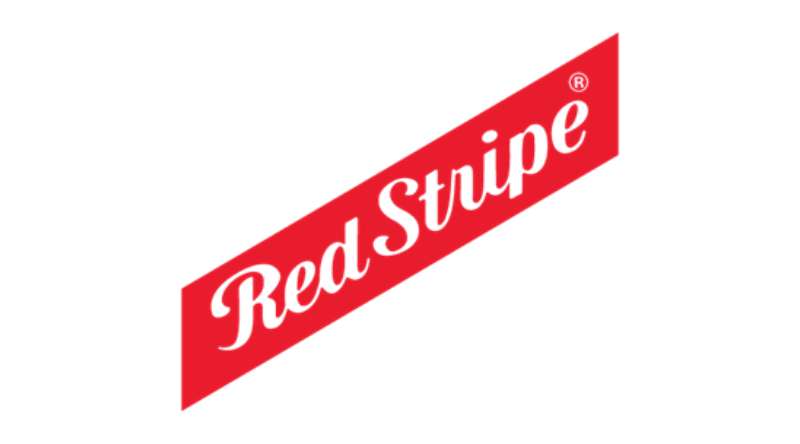
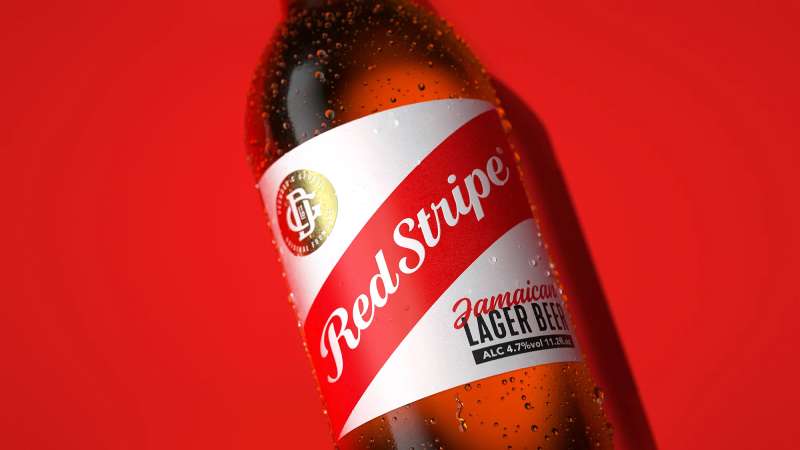
The Red Stripe logo is a combination mark featuring the brand name “Red Stripe” in bold uppercase lettering laid over or near a prominent diagonal red band. It was first used in the late 1920s by Desnoes & Geddes in Kingston, Jamaica. The design communicates Jamaican energy and straightforward beer branding without extra decoration.
Here’s what defines the logo at a technical level:
- Design Type: Combination mark (wordmark plus graphic element)
- Primary Elements: Diagonal red stripe graphic, bold sans-serif wordmark, minimal background framing
- Official Introduction Date: 1928 (original branding), with the most recognizable version tied to the stubby bottle introduced in 1965
- Designer/Agency: Original designer is not publicly documented. Updates have been managed internally and under Heineken’s brand team since 2015
- Trademark Status: Registered trademark owned by Desnoes & Geddes (Heineken subsidiary)
- Color Palette: Red (#C8102E approximate), White (#FFFFFF), with some versions incorporating gold or brown tones on bottle labels
- Usage Context: Bottle labels, can designs, tap handles, advertising materials, merchandise, digital platforms, and event sponsorship signage
How Has the Red Stripe Logo Evolved Over Time?
Red Stripe’s branding has shifted from ornate, British-influenced label designs in the 1920s and 1930s to the stripped-down, instantly recognizable diagonal stripe mark used today. Each update tightened the layout, simplified the typography, and leaned harder into the red-and-white color scheme.
The number of full redesigns sits around four to five, depending on how you count regional label variations.
Original Red Stripe Label (1928–1937)
Years Active: 1928–1937
The first Red Stripe label was dense and decorative. It followed the British ale tradition, because that’s exactly what the beer was at the time: a heavy, dark ale.
The label used multiple fonts and ornamental borders. Colors were muted. Think dark reds, creams, and browns. Not much about this label screamed “Caribbean.” It looked like it could have come from any English pub.
Took me a while to find clear images of these early labels, actually. They’re not well documented. But the ones that exist show a beer brand still figuring out its identity.
Reformulated Lager Era (1938–1964)
Years Active: 1938–1964
Paul Geddes and Bill Martindale reformulated Red Stripe into a pale lager in the mid-1930s. The label changed to match.
Out went the heavy Victorian styling. The diagonal red stripe became more prominent. The color palette shifted to brighter reds and cleaner whites. The lettering got bolder and more readable.
This is where Red Stripe started looking like Red Stripe. There’s an interesting connection here, too. Old photos of the Galena Brewing Company in Illinois (which brewed its own “Red Stripe” beer before Prohibition) show a red stripe painted on the brewery wall. The similarities between 1930s Galena labels and 1940s Desnoes & Geddes labels are hard to ignore.
Jamaica gained independence from Britain in 1962, and the brand leaned into that national pride hard.
Stubby Bottle Identity (1965–1992)
Years Active: 1965–1992
This is the one people picture when they think of Red Stripe. The iconic short, squat brown bottle with the painted-on label.
The diagonal red stripe became THE defining feature. No more fussy borders or extra decoration. Just the brand name, the red band, and a clean white background on the bottle itself.
The sans-serif font used for “RED STRIPE” was heavy and confident. No serif throwbacks, no scripts. Direct and clean.
The stubby bottle shape did a lot of the work here. It stood out on shelves because nothing else looked like it. When Red Stripe was exported to the U.S. in 1985 in standard green bottles, consumers rejected it. They wanted the stubby. That tells you how deeply the packaging design had merged with the logo identity.
Diageo and Global Expansion Era (1993–2014)
Years Active: 1993–2014
Guinness Brewing (later Diageo) acquired a controlling stake in Desnoes & Geddes in 1993. The logo got minor refinements during this period, but nothing dramatic.
Colors became slightly more standardized for international markets. The brand name lettering was tightened. Some label versions added gold accents or additional text about Jamaican heritage.
The biggest change wasn’t really the logo. It was distribution. The mark appeared on cans, tap handles, and promotional materials worldwide. That kind of exposure demands consistency, so the brand tightened its brand guidelines during this era.
Heineken Ownership and Current Logo (2015–Present)
Years Active: 2015–Present
Heineken acquired Red Stripe in 2015 and moved production back to Jamaica in 2016. The current logo keeps the diagonal stripe front and center.
The lettering is cleaner and slightly more modern than the Diageo era. The red feels a touch more saturated. And the overall layout is tighter, which makes it work better at small sizes on digital screens and social media.
The stubby bottle remains. That was a smart call. You don’t mess with something that’s basically become a cultural artifact.
What Do the Design Elements of the Red Stripe Logo Mean?
The diagonal red band is the most defining element. It’s not just a graphic choice. It directly references the brand name and creates instant recognition even without the text.
According to some accounts, the name “Red Stripe” was inspired by the red stripe on the trousers of Jamaican police officers, which symbolized authority and national identity.
Why Did Red Stripe Choose These Specific Colors?

The brand works with a tight palette. Red dominates. White supports. Occasional gold or brown accents appear on specific label versions.
Based on color theory and how brands in the beverage industry typically use color psychology, the choices break down like this:
- Red (approximately #C8102E): Energy, excitement, appetite stimulation. Red is one of the most common colors in food and beverage branding for a reason. It grabs attention fast. There’s a reason so many other red logos exist across industries.
- White (#FFFFFF): Cleanliness, simplicity, contrast. The white background gives the red stripe room to breathe and ensures readability from a distance.
- Gold/Brown accents (varies by label): Heritage, warmth, connection to the beer itself. These appear on some bottle label versions but aren’t part of the core logo.
The red and white combination also works well from a complementary color standpoint. High contrast, high readability. Nothing subtle about it.
What Typography Style Is Used in the Red Stripe Logo?
The wordmark uses a bold, condensed sans-serif typeface. The exact typeface isn’t publicly documented as a named commercial font, which suggests it’s either custom or heavily modified.
The letters are uppercase, tightly spaced, with strong vertical strokes. There’s no playfulness in the kerning, no decorative touches. Straight, bold, and functional.
It reads well at both large and small sizes. That matters when your logo needs to work on everything from a 12-ounce bottle to a festival banner.
What Are the Hidden Meanings in the Red Stripe Logo?
Look, there’s not a lot of buried symbolism here, and I think that’s the point. The diagonal stripe breaks the expected horizontal or vertical orientation most beer brand logos use.
That angle creates a sense of movement. Your eye follows the stripe, which means you spend a fraction of a second longer looking at the label. The simplicity is itself the statement: no crests, no animals, no elaborate backgrounds. Just a stripe and a name. The psychology of shapes tells us that diagonal lines create tension and energy, which fits a beer brand that’s all about good times and Caribbean vibes.
How Does the Red Stripe Logo Compare to Competitor Logos?
Most Caribbean and import lager brands go in completely different directions with their branding. Red Stripe’s stripped-down approach makes it an outlier.
The Corona logo leans on a painted, hand-drawn feel with its crown graphic and script-like lettering. The Heineken logo uses a star emblem inside a more traditional badge shape. The Guinness logo has an entire harp as its main symbol, which is about as ornate as you can get.
Red Stripe doesn’t compete on that level of detail. It wins on simplicity. A stripe and bold text. That’s it.
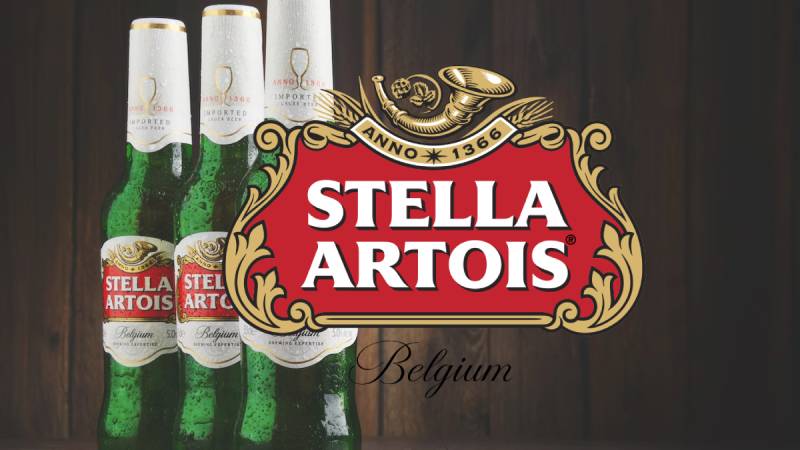
Compare it to the Carlsberg logo or the Stella Artois logo, both of which use elaborate crests and multi-layered compositions. Red Stripe looks modern next to those, even though it’s almost 100 years old.
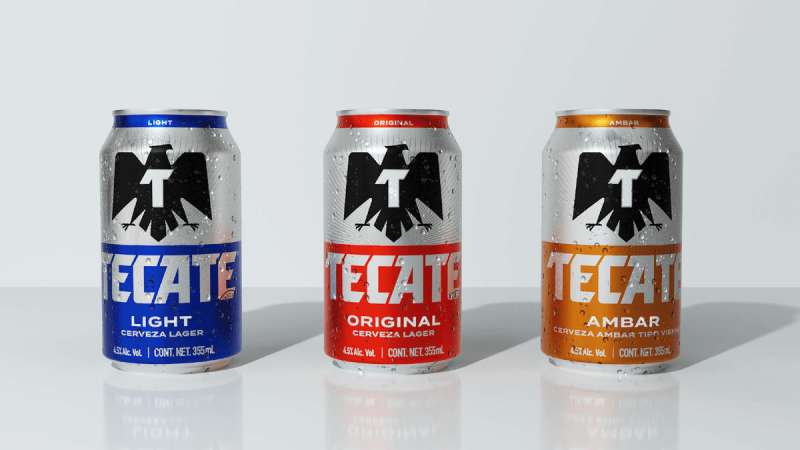
The Modelo logo and Dos Equis logo share a similar era of origin but went the opposite route with heraldic and historical design elements. Red Stripe’s minimalist approach was unusual for its time and remains unusual now.
What Are the Technical Specifications of the Red Stripe Logo?
Official Color Codes (approximate, based on brand analysis):
- Primary Red: Hex: #C8102E, RGB: (200, 16, 46), CMYK: (0, 92, 77, 22), Pantone: 186 C (approximate)
- White: Hex: #FFFFFF, RGB: (255, 255, 255), CMYK: (0, 0, 0, 0)
- Gold Accent (label variants): Hex: #C8A951 (approximate), RGB: (200, 169, 81)
Dimensions and Proportions:
The diagonal stripe typically runs at roughly a 25- to 30-degree angle from bottom-left to upper-right. The wordmark sits either overlapping the stripe or positioned directly adjacent to it, depending on the application.
Minimum size requirements and clear space specifications aren’t publicly available outside of Heineken’s internal brand style guide, but standard practice would require at least the height of one letter “R” as clear space around the mark. The logo works in both horizontal lockups (for cans and digital) and more vertical compositions (for bottle labels).
For print applications, a minimum DPI of 300 would be standard. Digital use typically requires PNG or SVG formats. The logo is available as vector graphics (EPS, AI, SVG) through official brand asset requests.
What Cultural Impact Has the Red Stripe Logo Had?
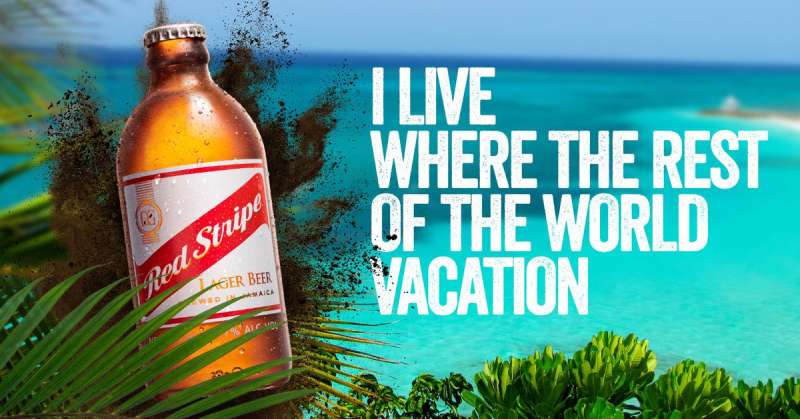
Red Stripe became an unofficial symbol of Jamaica itself. That’s not an exaggeration.
The brand has been the unofficial beer of the Notting Hill Carnival since 1976. It sponsored Reggae Sumfest, the Jamaica national bobsled team, and numerous underground music events across the UK.
When the “Hooray, beer!” ad campaign launched in 2001, the logo got massive exposure in North America. People who had never been to Jamaica recognized the Red Stripe branding from commercials and bar signage.
The stubby bottle with its painted label became a collector’s item. Vintage Red Stripe bottles and memorabilia trade hands online regularly. Concert posters featuring the logo alongside reggae artists are especially popular.
How Does the Red Stripe Logo Fit Into the Overall Brand Identity?
The logo doesn’t exist in isolation. It’s part of a system that includes the stubby bottle shape, the painted-on label technique, the red-white-gold color scheme, and a tone of voice centered on laid-back Caribbean energy.
Everything ties back to Jamaica. The storytelling in Red Stripe’s branding connects the beer to reggae, beach culture, national sports teams, and the general idea that life should be enjoyed at a slower pace.
Under Heineken’s ownership, the brand identity has been formalized more than ever. But they were smart enough not to overhaul it. The logo, the bottle, the colors. All kept. New elements were layered around them, not on top of them.
Red Stripe’s visual identity pulls from many of the same graphic design principles that make other long-lived brands work: strong visual hierarchy, limited color palette, and repetition of key design elements across all touchpoints.
How Should the Red Stripe Logo Be Used?
If you need the official Red Stripe logo for a project, you’ll need to go through proper channels. The brand is owned by Desnoes & Geddes, which is a subsidiary of Heineken International.
Official usage rules (based on standard brand practice):
- Don’t alter the colors, proportions, or angle of the diagonal stripe
- Don’t place the logo on busy backgrounds that reduce readability
- Maintain clear space around the logo at all times
- Don’t pair the logo with competing beer brands in the same visual space
- Use official files only. Don’t recreate the logo from scratch
Logo files in vector and raster formats can sometimes be found on brand asset platforms like Brandfetch or SeekLogo for reference purposes. But for any commercial use, you’ll need a licensing agreement with Heineken or Desnoes & Geddes.
The Red Stripe name, logo, and diagonal stripe design are all registered trademarks. Using them without permission for commercial products, promotional materials, or anything that implies endorsement would be a trademark violation. If you’re a bar or restaurant looking to use Red Stripe branding on menus or signage, your distributor usually has approved materials available.
FAQ on The Red Stripe Logo
What Does the Red Stripe Logo Look Like?
The Red Stripe logo features a bold diagonal red band across a white background, paired with uppercase sans-serif lettering. It’s a combination mark. Clean, direct, no fuss.
The diagonal angle runs roughly 25 to 30 degrees. You can’t miss it on a shelf.
When Was the Red Stripe Logo First Introduced?
The original Red Stripe branding appeared in 1928 when Desnoes & Geddes launched the beer in Kingston, Jamaica.
That first version looked nothing like today’s mark. It was ornate, British-influenced, and built for a dark ale. The recognizable diagonal stripe design came later.
Who Designed the Red Stripe Beer Logo?
The original designer isn’t publicly credited. Early label work followed standard brewery conventions of the 1920s.
Modern updates have been handled under Heineken International’s brand team since the 2015 acquisition. No named agency has taken public credit for the current version.
What Colors Are Used in the Red Stripe Logo?
Red and white. That’s the core. Some bottle label variants include gold or brown accents, but the logo itself stays with red (approximately #C8102E) and white (#FFFFFF).
The red signals energy and appetite. The white gives it breathing room.
Has the Red Stripe Logo Changed Over the Years?
Yes, several times. The brand went from a decorative Victorian-era label to the stripped-down diagonal stripe we know today.
The biggest visual shift happened around 1965 with the stubby bottle introduction. That’s when the logo really became iconic. Each update after that was more of a refinement than a full redesign.
What Font Does the Red Stripe Logo Use?
The wordmark uses a bold, condensed sans-serif typeface. It’s likely custom or heavily modified, since no publicly available font matches it exactly.
The letters are uppercase with tight spacing. Strong vertical strokes, no decorative elements. Built for readability at any size.
What Does the Diagonal Stripe in the Logo Represent?
It’s the brand name made literal. The “red stripe” IS the red stripe.
Some sources say the name references the red stripe on Jamaican police trousers, a symbol of authority and national pride. The diagonal angle adds energy and breaks the predictable horizontal patterns most beer labels follow.
Is the Red Stripe Logo Trademarked?
Yes. The Red Stripe name, logo, and diagonal stripe design are all registered trademarks owned by Desnoes & Geddes, a Heineken subsidiary.
Using the mark without permission for commercial purposes would be a trademark violation. Your distributor can provide approved materials for bar or restaurant use.
Where Can I Download the Official Red Stripe Logo?
Brand asset platforms like Brandfetch and SeekLogo host reference versions in PNG, SVG, and EPS formats.
For any commercial use, you need licensing approval from Heineken or Desnoes & Geddes directly. Reference downloads are fine for mockups, not for production.
How Does the Red Stripe Logo Compare to Other Beer Brand Logos?
It’s simpler than most. Competitors like Guinness, Stella Artois, and Modelo use elaborate crests, heraldic symbols, or detailed illustrations.
Red Stripe wins on directness. A stripe and a name. That simplicity actually makes it stand out more, not less, in the crowded Jamaican lager and Caribbean beer market.
Conclusion
The Red Stripe logo proves that effective beer branding doesn’t need complexity. A diagonal stripe, bold lettering, and a two-color scheme have carried this Jamaican lager for nearly a century.
From its 1928 origins under Desnoes & Geddes to its current life within the Heineken family, the logo evolution tracked the brand’s growth from Kingston local to global export.
The stubby bottle design sealed the deal. That painted label became inseparable from Caribbean beer culture, reggae sponsorships, and Jamaican national identity.
Few alcohol brand marks achieve that level of brand recognition with so little visual information. Red Stripe kept it simple, and it worked.

Renowned for his expertise in logo design and visual branding, Bogdan has developed a multitude of logos for various clients.
His skills extend to creating posters, vector illustrations, business cards, and brochures. Additionally, Bogdan's UI kits were featured on marketplaces like Visual Hierarchy and UI8.
He also wrote in the past years on sites like Design Your Way, WebDesignerDepot, WPDean, Designmodo, Speckyboy, Slider Revolution, and more.
- The Cursor Logo History, Colors, Font, And Meaning - 24 September 2026
- Top 7 Web Design Subscription Services That Replace Full-Time Hires - 24 September 2026
- Canva vs PowerPoint: Which Is Better for Presentations? - 22 September 2026

Bogdan Sandu is a seasoned designer who has been designing websites since 2008. Renowned for his expertise in logo design and visual branding, Bogdan has developed a multitude of logos for various clients. His skills extend to creating posters, vector illustrations, business cards, and brochures. Additionally, Bogdan's UI kits were featured on marketplaces like Visual Hierarchy and UI8. He also wrote in the past years on sites like Design Your Way, WebDesignerDepot, WPDean, Designmodo, Speckyboy, Slider Revolution, and more.
You Might Also Like