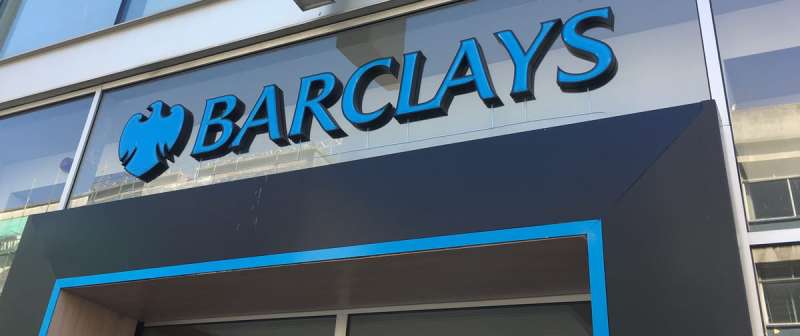
The Barclays logo is one of the most recognized symbols in global banking, built around a spread eagle emblem paired with a bold wordmark. The design has been part of the bank’s public identity for decades, representing both institutional authority and financial stability. Few bank logos carry as much visual history as this one.
Within the broader story of bank logos, Barclays sits in rare company. It’s one of the few major financial institutions that kept an animal symbol through multiple redesigns rather than moving toward purely abstract or typographic marks. That’s a deliberate choice, and it says a lot about how the brand thinks about heritage versus modernity.
The current version of the logo was introduced in 1999, designed by Lambie-Nairn. It features a simplified, stylized blue eagle above the “Barclays” wordmark in a custom sans-serif typeface. The bank itself was founded in 1690, and the logo has gone through roughly six major iterations since the eagle was first formally adopted in the early 20th century.
What Is the Barclays Logo?
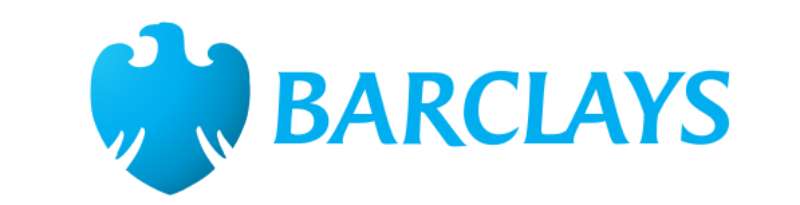
The Barclays logo is a combination mark consisting of a spread eagle symbol in Barclays Blue (Pantone 280) above a sans-serif wordmark. It was officially introduced in its current form in 1999, designed by Lambie-Nairn, and represents the bank’s heritage through heraldic symbolism while maintaining a clean, modern look.
- Design Type: Combination mark (symbol + wordmark)
- Primary Elements: Spread eagle icon, custom sans-serif logotype
- Official Introduction Date: 1999 (current version)
- Designer/Agency: Lambie-Nairn
- Trademark Status: Registered trademark, Barclays PLC
- Color Palette: Barclays Blue (#00aeef primary brand; deeper navy #003b6f for logo applications), White (#ffffff)
- Usage Context: Branch signage, digital banking platforms, credit and debit cards, marketing materials, sponsorship assets, corporate communications
How Has the Barclays Logo Evolved Over Time?
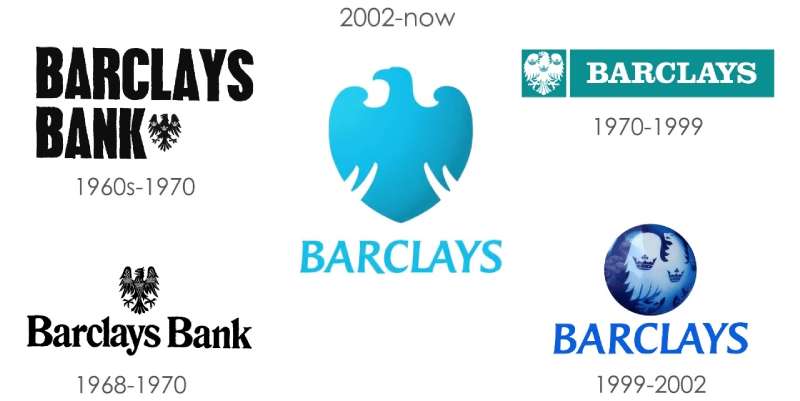
The logo has moved from ornate heraldic illustration to refined, flat design over roughly a century.
The eagle has been central to nearly every version since the early 1900s.
Each redesign simplified the mark further while keeping the core symbol intact.
Original Barclays Logo (Early 1900s–1950s)
- Years Active: Early 1900s–1950s
- Design Description: Detailed heraldic spread eagle, highly illustrative with fine linework and decorative lettering
- Color Scheme: Black and white, used primarily in print
- Designer: Unknown
- Context: Adopted to reflect the bank’s merger history and heraldic British banking tradition
- Key Changes from Previous: First formal use of the eagle as a primary brand symbol
- Cultural Significance: Rooted in British heraldry, projecting solidity and institutional authority during a period when banking trust was built on visible tradition
Mid-Century Barclays Logo (1950s–1969)
- Years Active: 1950s–1969
- Design Description: Simplified eagle, reduced detail, beginning to move toward a more graphic form
- Color Scheme: Black, some early use of blue in printed materials
- Designer: Unknown
- Context: Post-war modernization of British institutions; banks were updating their visual identities to appear more contemporary
- Key Changes from Previous: Less illustrative, slightly more abstracted eagle shape
- Cultural Significance: Part of a broader shift in British corporate identity toward cleaner, more functional design
1969 Barclays Logo Redesign (1969–1986)
- Years Active: 1969–1986
- Design Description: Bold, graphic eagle rendered in flat blue. One of the first uses of a strong, consistent blue as the primary brand color. Wordmark appeared in a serif typeface below
- Color Scheme: Blue and white
- Designer: Designed in the context of a wider corporate identity push
- Context: Barclays was expanding internationally and launching Barclaycard, the UK’s first credit card. A stronger, more recognizable visual identity was needed
- Key Changes from Previous: Flat graphic style replaced illustrative detail; blue became the dominant brand color for the first time
- Cultural Significance: Marked Barclays’ transition from regional British bank to international financial institution
1986 Barclays Logo Update (1986–1999)
- Years Active: 1986–1999
- Design Description: Refined eagle with cleaner geometry. Wordmark updated to a transitional serif, reflecting the corporate design trends of the 1980s
- Color Scheme: Blue and white
- Designer: Not publicly attributed
- Context: The financial sector was going through significant deregulation in the UK (the “Big Bang” of 1986). Banks updated their identities to signal modernization
- Key Changes from Previous: More geometric eagle; updated typeface styling
- Cultural Significance: Reflected the confidence of British banking during the deregulation era
Current Barclays Logo (1999–Present)
- Years Active: 1999–present
- Design Description: Streamlined eagle with smooth curves, positioned above a custom sans-serif wordmark. The eagle is rendered in a single flat blue, facing right
- Color Scheme: Barclays Blue (#003b6f) and white
- Designer: Lambie-Nairn
- Context: Designed for the digital age, with scalability and screen reproduction as primary concerns
- Key Changes from Previous: Full move to sans-serif typography; eagle is more aerodynamic and minimal; works across digital and physical applications
- Cultural Significance: Represents Barclays’ positioning as a forward-looking global bank while maintaining its historical symbol
What Do the Design Elements of the Barclays Logo Mean?
The eagle is the core of everything. It signals strength, vision, and authority, which are qualities banks have relied on heraldic imagery to communicate for centuries.
The spread wings specifically suggest readiness and reach, fitting for a bank operating across dozens of countries.
The sans-serif wordmark keeps the overall mark grounded and contemporary, preventing the eagle from reading as purely historical.
Why Does the Eagle Appear in the Barclays Logo?
The spread eagle has roots in British and European heraldry, where it traditionally symbolized power, imperial authority, and protection.
Barclays adopted it in the early 20th century partly through the heraldic connections of its founding Quaker families, who had accumulated significant social standing by the 1700s.
It also connects to a broader tradition of eagle use across financial institutions globally, though Barclays’ version is distinctive in its consistent single-color treatment and wing shape.
Why Did Barclays Choose These Specific Colors?
- Barclays Blue (Deep Navy, #003b6f)
- Pantone: Pantone 280 C
- Symbolic meaning: Trust, stability, professionalism
- Psychological impact: Blue is the dominant color in global banking because it reduces anxiety and signals reliability. Darker blues specifically read as authoritative rather than approachable
- Brand connection: Consistent with the visual language of major UK and global financial institutions
- White (#ffffff)
- Symbolic meaning: Clarity, transparency, simplicity
- Psychological impact: Creates contrast, improves legibility, and gives the mark room to breathe across digital and print applications
- Brand connection: Standard counter-color in financial branding; keeps the logo clean at small sizes
Understanding color psychology helps explain why Barclays has stayed with blue across every major redesign. It’s not just tradition. It’s the most trusted color in financial services, and switching away from it would require rebuilding significant brand recognition.
What Typography Style Is Used in the Barclays Logo?
The current wordmark uses a custom sans-serif typeface commissioned alongside the 1999 redesign.
It has slightly humanist proportions rather than being purely geometric, which makes it feel approachable without being informal.
The letterforms are even-weighted with open apertures, which helps legibility at small sizes on digital screens and card embossing.
Earlier versions used serif typefaces, which reinforced the traditional banking look. The 1999 shift to sans-serif was a deliberate signal of modernization, separating Barclays from the more conservative visual language of older British institutions.
Good typography in a bank logo has to work at two extremes: massive branch signage and tiny card print. Barclays’ current typeface handles both reasonably well, though it’s not particularly distinctive on its own. The eagle does most of the recognition work.
What Are the Hidden Meanings in the Barclays Logo?
The eagle faces right, which in Western heraldic tradition typically signals forward movement and progress rather than looking back.
The wing spread is deliberately symmetrical, suggesting balance and stability. Asymmetric eagle designs read as more aggressive or dynamic, which wouldn’t fit a retail banking brand.
There’s no intentionally hidden imagery in the Barclays mark in the way that, say, the FedEx arrow works. The symbolism is straightforward and traditional rather than subliminal. Lambie-Nairn’s stated direction was refinement of an existing symbol rather than a conceptual reinvention.
How Does the Barclays Logo Compare to Competitor Logos?
Barclays is unusual among major UK banks for keeping an animal symbol this long. Most competitors have moved toward abstract marks or pure wordmarks, making the eagle a genuine differentiator in the category.
The HSBC logo uses a geometric hexagon derived from a flag motif, completely abstract and globally neutral. The Royal Bank of Scotland logo moved through various iterations before settling on a typographic approach. Lloyds Bank uses a black horse, another animal symbol, but with very different connotations of strength and stubbornness versus the eagle’s more aerial, authoritative feel.
Compared to American counterparts, the JP Morgan Chase logo uses an abstract octagon, while the Bank of America logo works with a flag-inspired geometric mark. Neither uses figurative imagery. The Wells Fargo logo is the closest American parallel, using a stagecoach as a heritage symbol, though it’s more illustrative and less adaptable to minimal digital contexts than the Barclays eagle.
Within European banking, the Deutsche Bank logo is a masterclass in abstract symbol design, a diagonal slash inside a square that works at any size. The BNP Paribas logo and the Societe Generale logo both use abstract marks. The ING logo keeps a lion but renders it in a very flat, modern way similar to Barclays’ treatment of the eagle.
The UBS logo uses three keys as its symbol, representing confidence, security, and discretion. It’s a more conceptually loaded mark than Barclays’ eagle, but both approaches work because the symbols have clear connections to the brand’s stated values.
The Standard Chartered logo and the Citigroup logo both rely on typographic solutions with minimal symbolic elements, reflecting the global trend toward wordmark-dominant branding in financial services.
What Are the Technical Specifications of the Barclays Logo?
Official Color Codes
- Primary Color: Barclays Blue (Deep Navy)
- Hex: #003b6f
- RGB: (0, 59, 111)
- CMYK: (100, 47, 0, 56)
- Pantone: 280 C
- Secondary Color: Barclays Light Blue (Digital/Brand)
- Hex: #00aeef
- RGB: (0, 174, 239)
- CMYK: (100, 27, 0, 6)
- Pantone: 299 C
- Neutral: White
- Hex: #ffffff
- RGB: (255, 255, 255)
- CMYK: (0, 0, 0, 0)
Dimensions and Proportions
- Aspect ratio: Approximately 1:1.4 (eagle width to full lockup height)
- Minimum size requirements: Eagle symbol minimum 16px height for digital; 5mm for print
- Clear space: Minimum clear space equal to the cap-height of the wordmark on all sides
- File formats: Vector graphics (SVG, EPS, AI) for primary usage; PNG with transparency for digital applications; JPEG for photographic backgrounds
- Minimum DPI for print: 300 DPI for all printed materials
What Cultural Impact Has the Barclays Logo Had?
The Barclays eagle is one of a handful of financial logos that most British adults can identify without the wordmark present.
That kind of standalone symbol recognition is rare and takes decades to build.
Barclays’ long-running Premier League sponsorship (2001–2016) put the eagle in front of football audiences across 212 countries, compressing decades of brand exposure into a relatively short period.
The Barclays Center in Brooklyn, New York carries the name without the full logo in many contexts, which shows the brand has enough equity that the name alone carries weight in markets where the banking products aren’t even available.
Among British consumers, the eagle has cultural associations that go beyond banking. It appears in protest imagery, parody, and commentary in ways that mark it as a genuinely embedded cultural symbol rather than just a corporate mark. That’s actually a sign of strong logo design. When people bother to reuse or subvert a mark, it means the original has real presence.
How Does the Barclays Logo Fit Into the Overall Brand Identity?
The logo sits at the center of a broader visual system that includes the light blue (#00aeef) as a digital accent color, a custom typeface family used across all brand communications, and a set of graphic patterns derived from the eagle’s wing geometry.
The eagle appears in isolation on cards and app icons, while the full lockup (eagle + wordmark) is used for signage and formal communications.
Barclays’ brand guidelines specify distinct logo treatments for retail banking, Barclays Corporate, Barclays Investment Bank, and Barclaycard, each with adjusted color and size hierarchies but all anchored by the same eagle symbol.
The overall system is coherent. The eagle provides recognition across all sub-brands while the color and typography variations create enough differentiation to separate the product lines. It’s a good example of a master brand architecture working effectively.
A strong brand style guide is what keeps a system like this consistent across thousands of touchpoints, from ATM screens to stadium signage to mobile apps. Barclays has maintained this consistency more effectively than several of its competitors over the past two decades.
How Should the Barclays Logo Be Used?
Official Usage Guidelines
- Do: Use the logo on approved white or dark blue backgrounds. Maintain minimum clear space. Use only approved color versions (full color, white reverse, single-color blue). Download assets from Barclays’ official brand portal for authorized partners
- Don’t: Alter the eagle’s proportions. Apply unapproved colors or gradients. Recreate the logo from scratch. Place the logo on busy photographic backgrounds without a clear space buffer. Stretch, rotate, or add effects to any part of the mark
Where to Access Official Logos
Authorized partners and journalists can request assets through Barclays’ official media and brand portal. The general public cannot download official, trademark-protected files for commercial use. Using unofficial versions downloaded from third-party sites for commercial purposes carries trademark infringement risk.
Licensing and Trademark Protection
The Barclays eagle and wordmark are registered trademarks of Barclays PLC in the UK, EU, US, and numerous other jurisdictions. Any commercial use without written authorization from Barclays’ legal team is prohibited. Editorial and journalistic use (news articles, commentary, reviews) generally falls under fair use provisions in most jurisdictions, but this doesn’t extend to merchandise, advertising, or branding applications. If in doubt, contact Barclays’ brand team directly before use.
FAQ on The Barclays Logo
What does the Barclays logo represent?
The Barclays logo features a spread eagle, a heraldic symbol traditionally associated with authority and strength.
It reflects the bank’s British heritage and its roots in Quaker merchant families dating back to 1690.
The clean blue-and-white color scheme signals trust and professionalism.
When was the current Barclays logo designed?
The current version was introduced in 1999, designed by Lambie-Nairn.
It replaced a more detailed eagle with a streamlined, flat mark built for digital applications and large-scale signage.
It remains unchanged today.
Why does Barclays use an eagle in its logo?
The Barclays eagle symbol connects to British heraldic tradition, where spread eagles represented power and institutional standing.
It was formally adopted in the early 20th century and has anchored every major logo iteration since.
No other major UK bank uses the same symbol.
What colors are used in the Barclays logo?
The primary color is a deep navy, Pantone 280 C (hex #003b6f).
A lighter blue, hex #00aeef, appears across digital brand applications.
White is used as the background and contrast color. Understanding color theory explains why blue dominates financial branding globally.
What font does Barclays use in its logo?
Barclays uses a custom sans-serif font commissioned as part of the 1999 redesign.
It has humanist proportions with even stroke weights, making it legible at small sizes on cards and screens.
It’s not publicly available.
Has the Barclays logo changed much over the years?
The Barclays logo evolution spans roughly six major versions since the early 1900s.
Each redesign simplified the eagle further.
The core symbol stayed consistent, but the typography shifted from serif to sans-serif in 1999, and illustrative detail gave way to flat graphic design.
Where can I download the official Barclays logo?
Official Barclays logo vector files are available to authorized partners through Barclays’ brand portal.
The general public cannot use trademark-protected files commercially.
Using unofficial PNG or SVG versions downloaded from third-party sites for commercial purposes carries real legal risk.
How does the Barclays logo compare to other bank logos?
Most major competitors use abstract marks or pure wordmarks. Barclays is one of the few that kept a figurative animal symbol through every redesign.
Among blue logos in financial services, the Barclays eagle is one of the most immediately recognizable.
What are the Barclays logo brand guidelines?
The logo must appear on approved backgrounds only, with clear space equal to the wordmark cap-height on all sides.
Color alterations, distortion, and unofficial recreations are prohibited.
Barclays maintains separate logo treatments for retail, corporate, investment banking, and Barclaycard divisions.
Is the Barclays logo trademarked?
Yes. The eagle symbol and wordmark are registered trademarks of Barclays PLC across the UK, EU, US, and multiple other jurisdictions.
Editorial use is generally permitted under fair use provisions.
Commercial use without written authorization from Barclays is not allowed.
Conclusion
The Barclays logo is a rare case of a financial institution keeping a figurative symbol relevant across more than a century of design shifts.
The spread eagle, the Pantone 280 navy, the custom sans-serif wordmark – each element serves a function within the broader Barclays corporate identity.
Nothing is decorative for its own sake.
For anyone studying bank logo design or financial brand consistency, Barclays is worth paying close attention to.
The Lambie-Nairn 1999 redesign in particular shows how to modernize a heraldic symbol without stripping its meaning.

Renowned for his expertise in logo design and visual branding, Bogdan has developed a multitude of logos for various clients.
His skills extend to creating posters, vector illustrations, business cards, and brochures. Additionally, Bogdan's UI kits were featured on marketplaces like Visual Hierarchy and UI8.
He also wrote in the past years on sites like Design Your Way, WebDesignerDepot, WPDean, Designmodo, Speckyboy, Slider Revolution, and more.
- NBA Team Color Codes - 26 July 2026
- The Figma Logo History, Colors, Font, And Meaning - 25 July 2026
- Canva for Teams Review: Is It Worth the Business Plan? - 24 July 2026

Bogdan Sandu is a seasoned designer who has been designing websites since 2008. Renowned for his expertise in logo design and visual branding, Bogdan has developed a multitude of logos for various clients. His skills extend to creating posters, vector illustrations, business cards, and brochures. Additionally, Bogdan's UI kits were featured on marketplaces like Visual Hierarchy and UI8. He also wrote in the past years on sites like Design Your Way, WebDesignerDepot, WPDean, Designmodo, Speckyboy, Slider Revolution, and more.
You Might Also Like