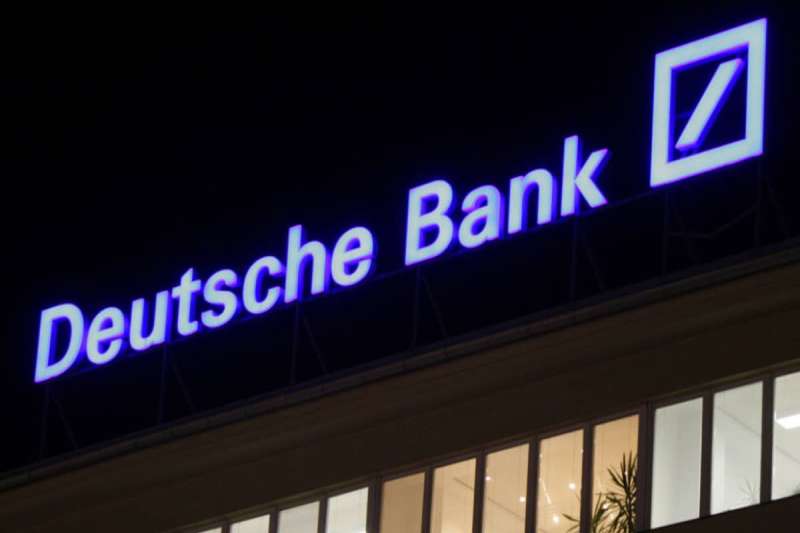
The Deutsche Bank logo is one of the most recognized symbols in global finance. Designed in 1974 by Anton Stankowski, it features a bold diagonal slash inside a square frame, rendered in the bank’s signature deep blue. The design has remained largely unchanged for over 50 years, a rare feat in corporate branding. Deutsche Bank itself was founded in Berlin in 1870, and the logo has gone through just a handful of iterations since the Stankowski mark was introduced.
What Is the Deutsche Bank Logo?
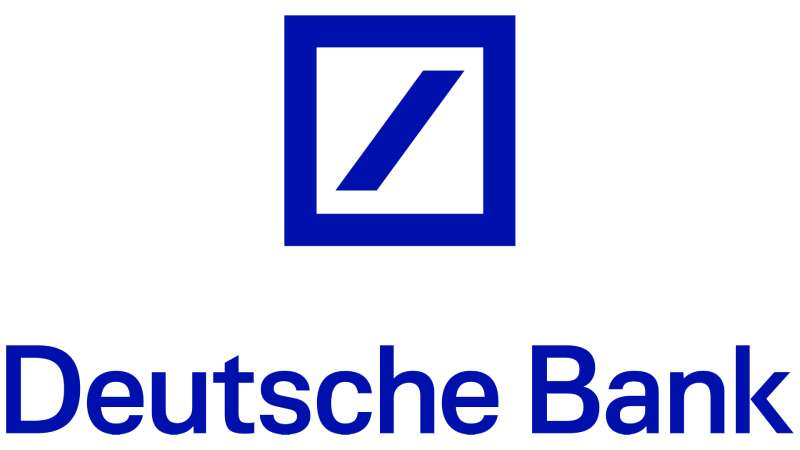
The Deutsche Bank logo is a geometric abstract mark consisting of a white diagonal line inside a dark blue square, designed by Anton Stankowski in 1974. It represents growth and stability, and has served as the bank’s primary visual identity across all global markets since its introduction.
- Design Type: Abstract icon combined with wordmark (combination mark)
- Primary Elements: Blue square frame, white diagonal slash, custom sans-serif wordmark
- Official Introduction Date: 1974
- Designer/Agency: Anton Stankowski (Stankowski + Duschek); refreshed in 2019 with support from Pentagram
- Trademark Status: Registered trademark of Deutsche Bank AG globally
- Color Palette: Deutsche Bank Blue (#0018A8), White (#FFFFFF), Black (#000000)
- Usage Context: Branch signage, digital platforms, marketing materials, annual reports, merchandise, employee communications
How Has the Deutsche Bank Logo Evolved Over Time?
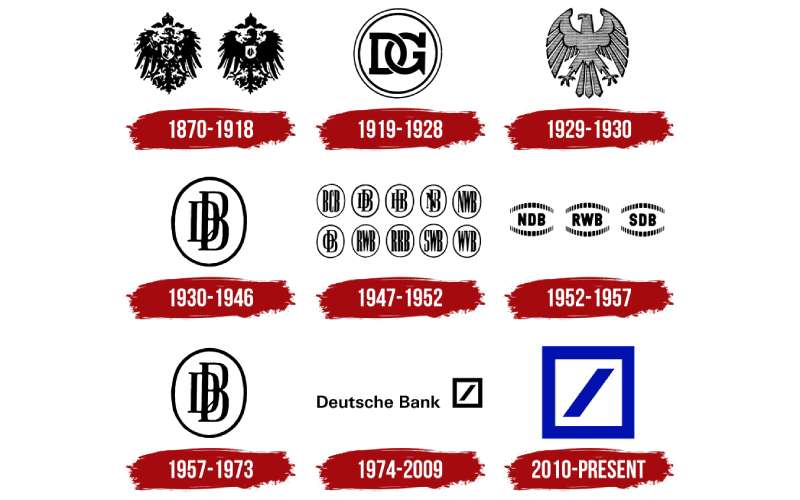
The Deutsche Bank logo has stayed remarkably consistent since 1974. The Stankowski mark replaced earlier wordmark-only treatments, and apart from a 2019 refinement to the typeface and proportions, the core symbol hasn’t changed.
Original Deutsche Bank Wordmark (1870–1973)
- Years Active: 1870–1973
- Design Description: Text-only treatments with traditional serif letterforms; no standalone symbol
- Color Scheme: Black and white, typical of printing-era corporate identity
- Designer: Unknown; institutional design by committee
- Context: Founded in Berlin in 1870 to facilitate German foreign trade, the bank relied on text-based identity common across European financial institutions of the era
- Key Changes from Previous: N/A (founding identity)
- Cultural Significance: Reflected the conservative, text-first approach of 19th-century banking institutions
Stankowski Logo (1974–2018)
- Years Active: 1974–2018
- Design Description: Bold blue square containing a white diagonal slash rising from lower-left to upper-right; wordmark in custom sans-serif set below
- Color Scheme: Deutsche Bank Blue, White
- Designer: Anton Stankowski
- Context: Introduced during a period when European corporations were moving toward bold, geometric identity systems influenced by Swiss design and the Bauhaus design movement
- Key Changes from Previous: Replaced text-only marks with a standalone geometric symbol; introduced a consistent color system
- Cultural Significance: Became one of the most enduring abstract bank logos in the world; widely cited in design education as an example of effective corporate identity
Refined Deutsche Bank Logo (2019–Present)
- Years Active: 2019–present
- Design Description: Subtle refinements to the square proportions and wordmark spacing; the core symbol remained intact
- Color Scheme: Updated Deutsche Bank Blue (#0018A8), White
- Designer: Internal brand team with Pentagram involvement
- Context: Part of a broader repositioning under CEO Christian Sewing, focused on signaling stability and renewed strategic direction
- Key Changes from Previous: Tighter proportions, modernized wordmark weight, updated digital-first color specifications
- Cultural Significance: Confirmed the bank’s commitment to its original identity rather than chasing rebranding trends
What Do the Design Elements of the Deutsche Bank Logo Mean?
The diagonal slash inside the square is the logo’s core visual statement. It communicates upward movement, financial growth, and forward direction, all within a contained, stable frame that signals institutional reliability.
The square itself isn’t accidental. It grounds the dynamic slash, creating a visual tension between movement and structure.
Stankowski was deliberate about this. The slash doesn’t escape the square; it works within it. That relationship is the whole point.
What Does the Diagonal Slash Symbolize?
The slash represents growth and momentum. Rising from bottom-left to top-right, it follows the natural reading direction of Western audiences, reinforcing a sense of progress.
Stankowski described it as representing a “slash of growth” contained within a frame of stability. The symbol works because it’s both dynamic and bounded.
It’s also worth noting how well the mark holds up at small sizes. That kind of scalability doesn’t happen by accident.
What Is the Historical Context Behind the Symbol?
The 1970s were a turning point in corporate identity. Brands were moving away from ornate heraldic marks toward clean, geometric symbols. Deutsche Bank’s mark fits squarely within this shift, influenced by the broader graphic design movements of that era.
Stankowski was a central figure in German graphic design and a direct link to the Constructivist tradition. His work on the logo reflected Constructivism values: geometry, clarity, function over decoration.
Why Did Deutsche Bank Choose These Specific Colors?

- Deutsche Bank Blue (#0018A8)
- Color Name: Deutsche Bank Blue
- Hex: #0018A8
- Pantone: Pantone 286 C (approximate)
- Symbolic Meaning: Trust, stability, authority
- Psychological Impact: Blue is the dominant color in financial branding globally because it triggers associations with reliability and calm; see more on how color psychology works in practice
- Brand/Industry Connection: Positions the bank as serious and dependable rather than aggressive or speculative; consistent with how most major blue logos in finance operate
- White (#FFFFFF)
- Color Name: White
- Hex: #FFFFFF
- Symbolic Meaning: Clarity, transparency, precision
- Psychological Impact: Creates maximum contrast with the blue, making the slash immediately readable
- Brand/Industry Connection: Reinforces the clean, no-nonsense positioning the bank has maintained since the 1970s
What Typography Style Is Used in the Deutsche Bank Logo?
The wordmark uses a custom sans-serif font, closely related to Futura in its geometric structure. It’s clean, neutral, and doesn’t compete with the icon.
The typography is set in a consistent weight, with generous tracking that gives the name room to breathe. Nothing about it feels rushed.
In the 2019 refinement, the wordmark weight was adjusted slightly. More optically balanced, better suited to digital applications. Your mileage may vary on whether the change is noticeable without a side-by-side comparison.
What Are the Hidden Meanings in the Deutsche Bank Logo?
There’s no elaborate hidden message here. Stankowski was a rigorous designer, not a puzzle-maker. The symbol means exactly what it looks like: growth within a stable structure.
That said, some have noted that the framed slash creates a subtle letter “D” shape when you squint at the negative space. Intentional? Stankowski never confirmed it.
The real depth in this logo is in its restraint. It says a lot by showing very little, which is harder to pull off than most people realize.
How Does the Deutsche Bank Logo Compare to Competitor Logos?
Deutsche Bank’s logo stands out in the financial sector for its age and consistency. Most major banks have rebranded multiple times; Deutsche Bank has held its core symbol for over 50 years. That kind of continuity is rare.
The HSBC logo uses a hexagonal device derived from a flag, bold and recognizable but more illustrative. The Barclays logo features a stylized eagle, leaning into heritage and tradition. The UBS logo uses three keys, a symbol borrowed from its heraldic origins.
Deutsche Bank went a different route entirely: pure geometry, no historical reference, no illustrative element. In the context of the 1970s, it was a bold move. Looking at it now, next to the BNP Paribas logo or the Societe Generale logo, it still feels modern.
The JP Morgan Chase logo uses a similar approach with its octagon symbol, geometric and abstract, though it arrived decades later. The Citigroup logo with its red arc is expressive and warm, a clear contrast to Deutsche Bank’s cool, structural approach.
Among European banks, the UniCredit logo and the ING logo both use abstract marks, but neither has the same historical weight or longevity. The Standard Chartered logo leans on a wordmark without a strong standalone symbol.
Bottom line: in a sector full of rebrands and identity pivots, Deutsche Bank’s commitment to Stankowski’s original mark is one of the more interesting stories in financial branding.
What Are the Technical Specifications of the Deutsche Bank Logo?
Official Color Codes
- Primary Color: Deutsche Bank Blue
- Hex: #0018A8
- RGB: (0, 24, 168)
- CMYK: (100, 86, 0, 34)
- Pantone: 286 C
- Secondary Color: White
- Hex: #FFFFFF
- RGB: (255, 255, 255)
- CMYK: (0, 0, 0, 0)
- Alternate Color: Black
- Hex: #000000
- RGB: (0, 0, 0)
- CMYK: (0, 0, 0, 100)
Dimensions and Proportions
- Aspect Ratio: The square symbol maintains a 1:1 ratio; the full lockup (symbol + wordmark) typically runs approximately 5:1 (width to height)
- Minimum Size Requirements: The symbol should not appear smaller than 16px in digital applications; minimum 6mm in print
- Clear Space Specifications: A clear space equal to the height of the square symbol is required on all sides
- Official Usage Guidelines: Full specifications are outlined in Deutsche Bank’s official brand guidelines, available to partners and vendors on request; the symbol should never be altered, rotated, or used without the approved color palette
- File Formats: Official assets are distributed as vector graphics (SVG, EPS, AI) for scalable use and as high-resolution raster files for specific applications; DPI requirements for print are typically 300 or higher
What Cultural Impact Has the Deutsche Bank Logo Had?
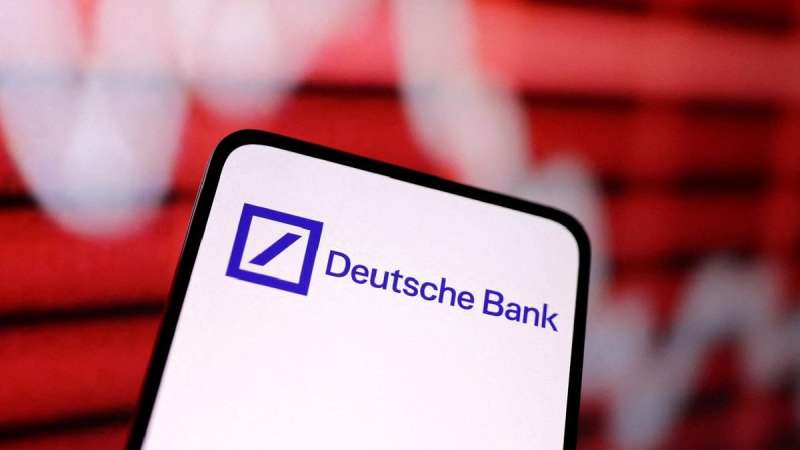
Anton Stankowski’s mark became a reference point in corporate identity design almost immediately after its introduction.
It’s regularly cited in design education alongside marks by Paul Rand and Saul Bass as examples of how geometry alone can carry meaning. The simplicity is the point. That lesson isn’t always obvious until you’ve tried to design something simple yourself and failed.
The logo also played a role in establishing blue as the defining color of global banking. Deutsche Bank wasn’t the first to use blue, but the intensity and consistency of its application, decade after decade, reinforced the association between deep blue and financial authority.
Beyond design circles, the mark became a cultural shorthand for German financial power during the latter half of the 20th century. Its presence on buildings, sponsorships, and global advertising built a recognition factor that few corporate symbols from the same era have maintained.
The fact that it survived the 2008 financial crisis, multiple CEO changes, and the general pressure toward rebrand-as-strategy is itself a kind of cultural statement. Someone, at some point, kept saying no to the redesign proposals. That restraint matters.
How Does the Deutsche Bank Logo Fit Into the Overall Brand Identity?
The logo is the anchor of a broader identity system built around consistency, restraint, and a narrow color palette. Every touchpoint, from branch signage to digital interfaces, references back to the blue square and its proportions.
The brand style guide extends the logo’s geometry into layout decisions, using grid structures and white space that echo the clean lines of the Stankowski mark. The visual hierarchy across Deutsche Bank’s communications consistently places the logo as the dominant identifier, with supporting typography and photography kept deliberately subordinate.
The wordmark and symbol almost always appear together in official communications, though the icon is occasionally used alone in contexts where the brand is already well established. That flexibility is intentional and carefully governed.
Related brand elements include the typeface system, the photographic style guidelines, and a set of approved secondary colors for specific product lines. None of these compete with the primary blue-and-white identity.
The result is a brand that feels unified across 58 countries. That kind of consistency doesn’t happen without strict internal standards and a genuine belief that the original design is worth protecting.
How Should the Deutsche Bank Logo Be Used?
Official Usage Guidelines
- Do: Use approved color versions only (blue on white, white on blue, black on white)
- Do: Maintain required clear space on all sides
- Do: Use official vector files provided by Deutsche Bank’s brand team
- Do: Follow minimum size requirements for both print and digital
- Don’t: Rotate, stretch, or distort the symbol or wordmark
- Don’t: Recreate the logo from scratch; always use official assets
- Don’t: Place the logo on busy backgrounds or patterned surfaces without an approved clearance zone
- Don’t: Use the logo in unofficial colors or apply gradient effects to the mark
- Don’t: Combine the Deutsche Bank logo with other logos without written approval
Where to Access Official Logo Files
Official logo files are available through Deutsche Bank’s partner and vendor portals. Third parties, press outlets, and approved agencies can request access through the bank’s communications department. Unauthorized downloads from third-party sites carry the risk of outdated or incorrect file versions, which can create compliance issues in official contexts.
Licensing and Trademark Protection
The Deutsche Bank logo and its associated visual identity are registered trademarks of Deutsche Bank AG. Use by external parties requires written authorization. The trademark is protected in all major markets globally, and the bank actively monitors and enforces its brand standards. Any use that implies endorsement, affiliation, or partnership without authorization is a trademark violation.
FAQ on The Deutsche Bank Logo
Who Designed the Deutsche Bank Logo?
Anton Stankowski, a German graphic designer working through Stankowski + Duschek, created the logo in 1974.
His background in Constructivist design heavily influenced the final mark. The 2019 refinement involved Pentagram, though the core symbol stayed untouched.
What Does the Deutsche Bank Logo Symbol Mean?
The diagonal slash inside the square represents growth and upward momentum contained within a stable structure.
Stankowski described it as a visual balance between progress and reliability. It’s one of the cleaner pieces of financial brand identity symbolism from that era.
What Color Is the Deutsche Bank Logo?
The primary color is Deutsche Bank Blue, with the hex code #0018A8, approximately Pantone 286 C.
White is used for the slash element. Black appears in some alternate logo versions for specific print or co-branding applications.
What Font Does the Deutsche Bank Logo Use?
The wordmark uses a custom geometric sans-serif typeface closely related to Futura in structure and weight.
It’s neutral, clean, and deliberately subordinate to the icon. The logo typography was refined slightly in 2019 for better optical balance in digital contexts.
When Was the Deutsche Bank Logo Introduced?
The current logo system was introduced in 1974, replacing earlier text-only wordmark treatments the bank had used since its founding in Berlin in 1870.
It’s been the bank’s primary visual identity for over 50 years.
Has the Deutsche Bank Logo Ever Changed?
The core symbol has never changed. A refinement in 2019 adjusted the wordmark proportions and updated the blue to meet digital color standards.
For a major global institution, that level of logo consistency across five decades is genuinely unusual.
Where Can I Download the Deutsche Bank Logo?
Official logo files are available through Deutsche Bank’s partner and vendor portals only.
Third-party download sites often carry outdated versions. For press use, the bank’s communications department handles official asset requests directly.
Is the Deutsche Bank Logo Trademarked?
Yes. The Deutsche Bank logo is a registered trademark of Deutsche Bank AG, protected across all major global markets.
Unauthorized use, especially anything implying brand affiliation, is a trademark violation. Written authorization is required for any external usage.
What Design Movement Influenced the Deutsche Bank Logo?
The logo draws directly from the geometric abstraction of Constructivism and the rational clarity of minimalist design.
Stankowski was a key figure in postwar German graphic design, and his work sat at the intersection of fine art and corporate identity systems.
How Does the Deutsche Bank Logo Compare to Other Bank Logos?
Most competitors, including Bank of America and Wells Fargo, have rebranded multiple times.
Deutsche Bank’s mark has stayed consistent since 1974, which is rare. Among global bank logos, it’s one of the few purely geometric abstract symbols still in active use at this scale.
Conclusion
The Deutsche Bank logo is a case study in what corporate identity looks like when a design decision is made once and defended consistently for over five decades.
Anton Stankowski’s blue square and diagonal slash have outlasted market crises, leadership changes, and countless rebranding trends across the financial sector.
The brand visual identity works because it commits fully to a single idea: growth within structure. No gradients, no gradual drift toward softer aesthetics, no chasing what competitors were doing.
For anyone studying logo design principles or financial sector branding, Deutsche Bank AG remains one of the cleaner examples of geometric abstraction done right and kept right.

Renowned for his expertise in logo design and visual branding, Bogdan has developed a multitude of logos for various clients.
His skills extend to creating posters, vector illustrations, business cards, and brochures. Additionally, Bogdan's UI kits were featured on marketplaces like Visual Hierarchy and UI8.
He also wrote in the past years on sites like Design Your Way, WebDesignerDepot, WPDean, Designmodo, Speckyboy, Slider Revolution, and more.
- The Windsurf Logo History, Colors, Font, And Meaning - 10 October 2026
- How to Remove Background From Product Photos (No Photoshop) - 10 October 2026
- How Designers can Build a Stronger Online Creative Identity - 9 October 2026

Bogdan Sandu is a seasoned designer who has been designing websites since 2008. Renowned for his expertise in logo design and visual branding, Bogdan has developed a multitude of logos for various clients. His skills extend to creating posters, vector illustrations, business cards, and brochures. Additionally, Bogdan's UI kits were featured on marketplaces like Visual Hierarchy and UI8. He also wrote in the past years on sites like Design Your Way, WebDesignerDepot, WPDean, Designmodo, Speckyboy, Slider Revolution, and more.
You Might Also Like