The JP Morgan Chase logo is one of the most recognized symbols in global banking. It represents JPMorgan Chase & Co., the largest financial institution in the United States by assets. The logo functions as the visual cornerstone of a brand trusted by millions of consumers, businesses, and institutional clients worldwide. Its design history reflects broader shifts in how major financial institutions have approached corporate identity over the past century.
Within the history of financial institution branding, few logos carry as much weight. The Chase octagon symbol has been studied, copied, and referenced across the industry as a benchmark for what a bank logo can accomplish: instant recognition, minimal complexity, and lasting authority.
The current logo was introduced in 2005 following the merger of JPMorgan Chase and Bank One. The geometric symbol was originally designed in 1961 by renowned designer Tom Geismar of the firm Chermayeff & Geismar. Since its founding roots in the early 19th century, the organization has gone through several distinct logo iterations before arriving at today’s version.
What Is the JP Morgan Chase Logo?
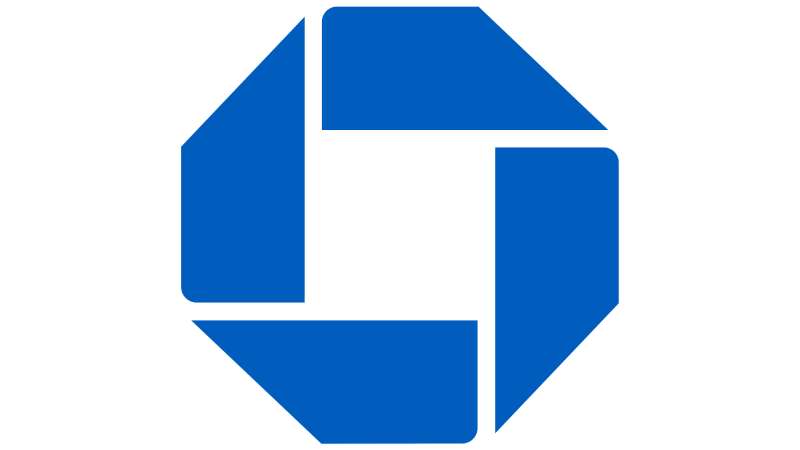
The JP Morgan Chase logo is a combination mark featuring a bold blue octagon symbol paired with the wordmark “Chase.” Tom Geismar of Chermayeff & Geismar designed the geometric emblem in 1961. It was formally adopted for the merged entity in 2005 and represents stability, precision, and financial authority.
- Design Type: Combination mark (abstract symbol + wordmark)
- Primary Elements: Blue octagon symbol, custom sans-serif wordmark
- Official Introduction Date: 1961 (symbol); 2005 (current combined entity usage)
- Designer/Agency: Tom Geismar, Chermayeff & Geismar
- Trademark Status: Registered trademark of JPMorgan Chase & Co.
- Color Palette: Chase Blue (#117ACA), White (#FFFFFF)
- Usage Context: Branches, credit cards, digital banking platforms, ATMs, marketing materials, mobile apps, and corporate communications
How Has the JP Morgan Chase Logo Evolved Over Time?
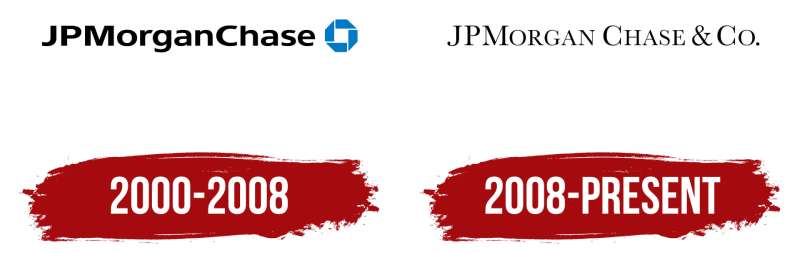
The brand’s visual identity has gone through several major changes since the 19th century. The most significant shift came in 1961 with the introduction of the octagon symbol, which survived multiple mergers and remained the core visual anchor through to 2005 and beyond.
Original Chase Manhattan Bank Logo (1955–1961)
- Years Active: 1955–1961
- Design Description: Text-based logotype, typographic wordmark without a distinct symbol
- Color Scheme: Black and white, standard print-era palette
- Designer: Not formally credited to a design firm
- Context: Used following the 1955 merger of Chase National Bank and The Bank of the Manhattan Company
- Key Changes from Previous: Unified the two merging entities under one name and visual system
- Cultural Significance: Marked the beginning of Chase’s transformation into a modern financial institution
Chermayeff & Geismar Octagon Logo (1961–2005)
- Years Active: 1961–2005 (with refinements)
- Design Description: Abstract octagon composed of interlocking geometric forms suggesting motion and continuity; paired with “Chase” wordmark
- Color Scheme: Blue and white
- Designer: Tom Geismar, Chermayeff & Geismar
- Context: Commissioned as part of a corporate identity overhaul for Chase Manhattan Bank, one of the first major American banks to adopt abstract symbol-based branding
- Key Changes from Previous: Replaced the text-only approach with a bold geometric symbol, fundamentally changing how the bank presented itself visually
- Cultural Significance: Became one of the most influential bank logos in American design history; studied widely in design programs as an example of effective corporate identity
JPMorgan Chase Combined Logo (2005–Present)
- Years Active: 2005–present
- Design Description: The original 1961 octagon symbol retained; typography refined; “Chase” wordmark used for consumer banking, “JPMorgan” for institutional and investment banking
- Color Scheme: Chase Blue (#117ACA), White
- Designer: Based on original Geismar design; updated internally
- Context: Introduced following the 2004 merger of JPMorgan Chase and Bank One Corporation, completed in 2005
- Key Changes from Previous: Cleaner typography, more consistent digital application, separation of Chase consumer brand from JPMorgan institutional brand
- Cultural Significance: Represents the consolidation of two major American banking giants into one of the world’s largest financial institutions
What Do the Design Elements of the JP Morgan Chase Logo Mean?
The octagon symbol at the center of the Chase identity is not decorative. It was designed with specific intent. Each element carries meaning tied to the bank’s values, its industry, and the era in which it was created.
The geometric form suggests precision and structure. Those are qualities a financial institution actively wants associated with its name.
What Does the Chase Octagon Symbol Represent?
The symbol is made up of two overlapping forms that create a sense of movement within a contained shape.
This conveys continuity and flow, the idea that money and value are always in motion but always within control.
Tom Geismar has described the symbol as representing the dynamic nature of modern banking. The interlocking forms also suggest a network, which maps well onto how a bank actually operates.
Why Did JP Morgan Chase Choose These Specific Colors?
- Chase Blue
- Hex: #117ACA
- Pantone: Pantone 285 C (approximate)
- RGB: (17, 122, 202)
- Symbolic Meaning: Trust, stability, authority
- Psychological Impact: Blue consistently performs well in color psychology research as a trust-building color, making it the default choice across financial services
- Brand/Industry Connection: Blue is dominant across blue logos in the banking sector; Chase’s specific shade is distinctive enough to own within the space
- White
- Hex: #FFFFFF
- Symbolic Meaning: Clarity, transparency, openness
- Psychological Impact: Creates contrast that sharpens legibility at all sizes
- Brand/Industry Connection: Used as the primary background and negative space within the octagon symbol itself
What Typography Style Is Used in the JP Morgan Chase Logo?
The Chase wordmark uses a custom sans-serif typeface. It’s clean, slightly condensed, and built for legibility at both small and large sizes.
The letterforms are geometric but not cold. There’s a slight warmth in the weight distribution that keeps it from feeling purely mechanical.
Over the decades, the typography has been refined rather than replaced. The current version reads crisply on mobile screens, which wasn’t a consideration back in 1961 but matters enormously now. If you’re interested in how typography shapes brand perception, Chase is a good case study in long-term consistency.
What Are the Hidden Meanings in the JP Morgan Chase Logo?
The octagon is sometimes interpreted as representing the eight directions of a compass, suggesting global reach. That wasn’t Geismar’s stated intention, but it’s a reading that has stuck.
The interlocking forms within the symbol create a subtle sense of depth. Look at it long enough and you start to see a three-dimensional pipe or tunnel shape. Whether that’s intentional or not, it adds visual interest that keeps the symbol from feeling flat.
The negative space within the octagon is as deliberate as the positive form. Good use of white space is a hallmark of marks designed to last, and this one has lasted over 60 years.
How Does the JP Morgan Chase Logo Compare to Competitor Logos?
Chase sits in a distinct position among major bank logos. Most competitors rely heavily on wordmarks or simple geometric shapes paired with conventional color choices. Chase’s octagon is genuinely abstract, which was unusual in 1961 and remains relatively rare today.
Compare it directly to others in the sector:
- Bank of America logo: Uses a flag-like symbol with red, white, and blue. More overtly patriotic, less abstract. The design language is warmer and more approachable but less architecturally precise than Chase’s octagon.
- Wells Fargo logo: Relies on a stagecoach emblem, leaning into historical narrative and legacy. Very different strategic position, built on heritage rather than modernism.
- Citigroup logo: The red arc above the “i” in Citi is memorable but far simpler. It trades geometric complexity for a single, bold punctuation mark.
- HSBC logo: The red and white hexagon is perhaps the closest in spirit to Chase’s geometric approach. Both use abstract shapes to signal global, modern banking.
- Barclays logo: The spread eagle mark is more figurative. Like Wells Fargo, it leans on historical symbolism rather than pure abstraction.
What Chase does better than most is maintain a symbol that works independently of the wordmark. Remove “Chase” from the logo and the octagon still communicates clearly. That’s a harder achievement than it looks.
What Are the Technical Specifications of the JP Morgan Chase Logo?
Official Color Codes
- Primary Color: Chase Blue
- Hex: #117ACA
- RGB: (17, 122, 202)
- CMYK: (92, 40, 0, 21)
- Pantone: Pantone 285 C (approximate; exact values are proprietary)
- Secondary Color: White
- Hex: #FFFFFF
- RGB: (255, 255, 255)
- CMYK: (0, 0, 0, 0)
Dimensions and Proportions
- Aspect Ratio: The symbol is designed on a near-square format; the full combination mark (symbol + wordmark) is approximately 4:1 width-to-height
- Minimum Size Requirements: The octagon symbol should not be reproduced smaller than 16px in digital contexts to maintain legibility of internal detail
- Clear Space Specifications: Minimum clear space equal to the height of the “C” in the Chase wordmark on all sides
- File Formats: Official assets are available in vector graphics formats (SVG, EPS, AI) for scalable use, and JPEG and PNG for digital contexts
- Resolution: Print applications require a minimum of 300 DPI to maintain sharpness of the octagon’s geometric edges
What Cultural Impact Has the JP Morgan Chase Logo Had?

The Chase octagon is regularly cited in design history as one of the most successful corporate identity projects of the 20th century. It’s included in curricula at design schools as an example of how abstract geometric forms can carry institutional weight.
When Tom Geismar and Ivan Chermayeff were building their reputation as among the famous graphic designers of their era, the Chase Manhattan commission was a key project. It helped establish the idea that a bank could have a progressive, modern visual identity rather than something that looked like it came off a 19th-century banknote.
The logo has also had an indirect cultural impact through sheer ubiquity. Chase has over 4,700 branches and processes millions of card transactions daily. That octagon appears on credit cards, ATMs, storefronts, and apps constantly. At that scale, a logo stops being just a mark and becomes part of the visual fabric of everyday life.
It influenced a wave of financial institution rebranding through the 1960s and 70s, as competitors realized that abstract symbols could be as effective as traditional emblems. You can trace a direct line from the Chase commission to the broader shift in how American corporations thought about visual identity.
How Does the JP Morgan Chase Logo Fit Into the Overall Brand Identity?
The logo is one piece of a larger system. JPMorgan Chase operates two primary consumer-facing brands: “Chase” for retail banking and “JPMorgan” for investment banking and asset management. The octagon symbol belongs exclusively to the Chase side of this.
The brand guidelines for Chase are strict about how the symbol and wordmark interact. They don’t allow the octagon to be recolored, distorted, or used decoratively outside the approved system.
The full brand identity network includes the logo, the blue color system, the custom typography, a defined photography style, and specific tone-of-voice guidelines for copy. The logo anchors all of it. Everything else in the system is built to support and extend the visual authority the octagon establishes.
The brand style guide also specifies how the Chase and JPMorgan names are used in different contexts, keeping the two identities distinct even while they operate under the same parent company. That separation is deliberate, since institutional investors and retail banking customers have very different expectations and the visual language needs to meet each audience where they are.
How Should the JP Morgan Chase Logo Be Used?
Official Usage Guidelines
- Do use the approved full-color version on white or light backgrounds
- Do use the all-white reversed version on Chase Blue backgrounds
- Do maintain required clear space on all sides
- Do use vector files for print to preserve edge quality
- Don’t recolor the octagon or wordmark outside approved color variations
- Don’t stretch or alter the proportions of the symbol
- Don’t use the logo on busy photographic backgrounds without an approved treatment
- Don’t recreate the logo from scratch; always use official supplied assets
Where to Access Official Logo Files
Official logo assets are not publicly distributed. Media organizations and authorized partners can request files through JPMorgan Chase’s media relations team. Unauthorized use of the Chase or JPMorgan trademarks is subject to legal action under U.S. trademark law.
Licensing and Trademark Protection
The Chase octagon symbol and the “Chase” and “JPMorgan” wordmarks are registered trademarks of JPMorgan Chase & Co. Any use in editorial, educational, or comparative contexts should follow fair use guidelines. Commercial use, co-branding, or any application that might suggest endorsement by JPMorgan Chase requires explicit written permission from the company’s legal department.
If you’re a vendor or partner, the brand team will provide specific usage guidance and approved assets as part of the onboarding process. Don’t pull logo files from third-party sites; the versions floating around online are frequently the wrong color, wrong format, or outdated.
FAQ on the JP Morgan Chase Logo
What Does the JP Morgan Chase Logo Look Like?
It’s a combination mark: a bold blue octagon symbol paired with the “Chase” wordmark in a clean sans-serif typeface.
The octagon is abstract, made of interlocking geometric forms. Simple, but immediately recognizable across branches, cards, and digital platforms.
Who Designed the Chase Bank Logo?
Tom Geismar of Chermayeff & Geismar designed the octagon symbol in 1961.
It was one of the first major abstract corporate identity projects in American banking history and remains largely unchanged today.
What Year Was the JP Morgan Chase Logo Introduced?
The octagon symbol debuted in 1961 for Chase Manhattan Bank.
The current version, used under the JPMorgan Chase name following the Bank One merger, was formally adopted in 2005.
What Color Is the Chase Bank Logo?
Chase Blue is the primary brand color, hex code #117ACA.
It sits within a monochrome color system, pairing that distinctive blue with white. Blue was chosen for its strong association with trust and financial stability.
What Does the Chase Octagon Symbol Mean?
The interlocking geometric forms suggest movement and continuity within a stable, contained structure.
Tom Geismar described it as representing the dynamic nature of modern banking. Some interpret it as a compass, hinting at global reach, though that wasn’t the stated intent.
Has the JP Morgan Chase Logo Ever Changed?
The core octagon symbol has stayed remarkably consistent since 1961. That’s over six decades with no major redesign.
Typography and digital applications have been refined over time, but the Chase bank visual identity has never undergone a full rebrand the way many competitors have.
What Font Does the Chase Logo Use?
Chase uses a custom sans-serif font in its wordmark.
The letterforms are geometric, slightly condensed, and built for legibility at small sizes. It works well across digital and print without losing clarity.
How Does the Chase Logo Compare to Other Bank Logos?
Chase’s abstract octagon is more geometrically complex than most competitors. The BNP Paribas logo and Deutsche Bank logo also use abstract marks, but Chase’s symbol predates both and remains the clearest example of the approach done well.
What Are the Official Color Codes for the JP Morgan Chase Logo?
Chase Blue: Hex #117ACA, RGB (17, 122, 202), CMYK (92, 40, 0, 21), approximately Pantone 285 C.
White (#FFFFFF) is used for the symbol’s internal negative space and reversed applications on blue backgrounds.
Can I Use the JP Morgan Chase Logo on My Website?
No, not without permission. The Chase octagon and JPMorgan wordmarks are registered trademarks.
Editorial and educational use may fall under fair use, but any commercial application or co-branding requires written approval from JPMorgan Chase’s legal team. Always use official supplied assets, not third-party downloads.
Conclusion
The JP Morgan Chase logo is a rare case of corporate identity done right the first time and left alone.
Tom Geismar’s 1961 octagon has survived mergers, rebrands, and decades of shifting design trends without needing a rescue.
That kind of Chase bank brand consistency is harder to achieve than a flashy redesign, and far more valuable long-term.
For anyone studying financial institution branding or logo design principles, Chase is one of the clearest examples of geometric abstraction working at institutional scale.

Renowned for his expertise in logo design and visual branding, Bogdan has developed a multitude of logos for various clients.
His skills extend to creating posters, vector illustrations, business cards, and brochures. Additionally, Bogdan's UI kits were featured on marketplaces like Visual Hierarchy and UI8.
He also wrote in the past years on sites like Design Your Way, WebDesignerDepot, WPDean, Designmodo, Speckyboy, Slider Revolution, and more.
- The Windsurf Logo History, Colors, Font, And Meaning - 10 October 2026
- How to Remove Background From Product Photos (No Photoshop) - 10 October 2026
- How Designers can Build a Stronger Online Creative Identity - 9 October 2026

Bogdan Sandu is a seasoned designer who has been designing websites since 2008. Renowned for his expertise in logo design and visual branding, Bogdan has developed a multitude of logos for various clients. His skills extend to creating posters, vector illustrations, business cards, and brochures. Additionally, Bogdan's UI kits were featured on marketplaces like Visual Hierarchy and UI8. He also wrote in the past years on sites like Design Your Way, WebDesignerDepot, WPDean, Designmodo, Speckyboy, Slider Revolution, and more.
You Might Also Like