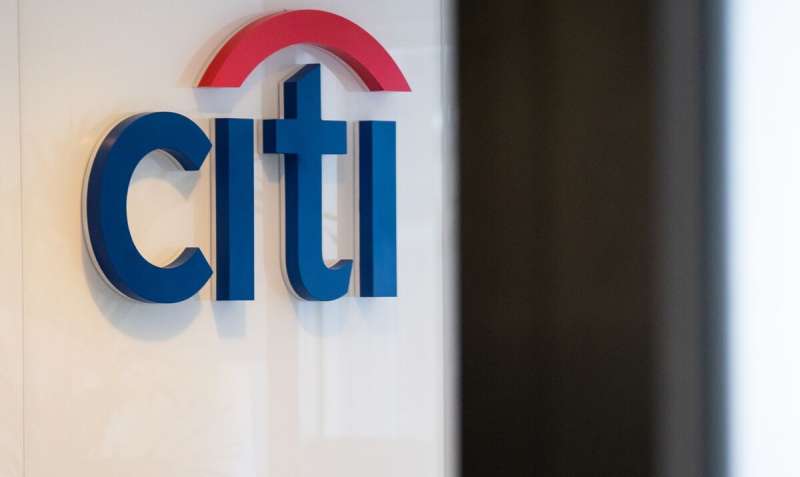
The Citigroup logo is one of the most recognized symbols in global banking. It combines a clean wordmark with a distinctive red arc above the letter “i,” creating a mark that signals both financial authority and accessibility. Citi has refined this identity through several decades, though the core visual logic has stayed largely consistent since the early 2000s. The current version reflects a deliberate push toward simplicity, rooted in the kind of corporate design thinking that emerged from late-20th-century brand consolidations.
Among bank logos, Citi’s stands out for using restraint where competitors often default to shields, eagles, or complex emblems. It sits in an interesting place historically – born from a merger between two giants, yet managing to feel intentional rather than compromised.
What is the Citigroup Logo?
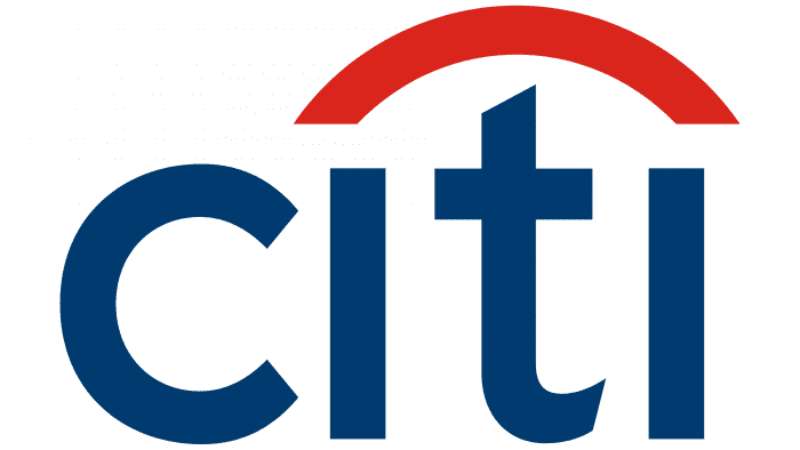
The Citigroup logo is a blue wordmark reading “citi” in a custom sans-serif typeface, paired with a red arc above the letter “i.” Introduced in its current refined form in 2007 and developed with input from design consultancy Pentagram, it functions as a combination mark representing the bank’s global identity.
- Design Type: Combination mark (wordmark + symbol)
- Primary Elements: Lowercase “citi” wordmark, red arc symbol positioned over the “i”
- Official Introduction Date: 1998 (initial Citi brand), refined in 2007
- Designer/Agency: Paula Scher at Pentagram (key contributor to modern version)
- Trademark Status: Registered trademark of Citigroup Inc.
- Color Palette: Citi Blue (#003B70), Citi Red (#D11242)
- Usage Context: Banking products, credit cards, digital platforms, branch signage, corporate communications, and marketing materials worldwide
How Has the Citigroup Logo Evolved Over Time?
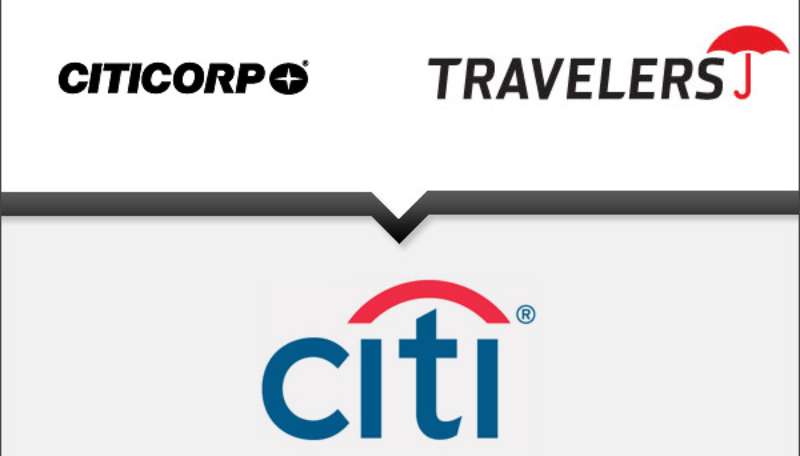
Citi’s visual identity has gone through roughly four major phases since Citicorp’s founding era, moving from formal bank-style crests toward the stripped-down wordmark it uses today.
Each shift tracked closely with the bank’s strategic direction – mergers, market expansions, and eventually a need to look more like a consumer brand than an old-school financial institution.
Early Citicorp Identity (1812–1976)
- Years Active: 1812–1976
- Design Description: Formal, crest-based marks typical of early American banking institutions. Text-heavy, conservative presentation.
- Color Scheme: Navy and gold tones
- Designer: Unknown (institutional in-house design)
- Context: Founded as City Bank of New York in 1812; identity reflected traditional banking gravitas
- Key Changes from Previous: N/A (originating identity)
- Cultural Significance: Communicated institutional stability during a period when trust in banking required formal visual cues
Citicorp Modernization (1976–1998)
- Years Active: 1976–1998
- Design Description: Introduction of a cleaner typographic approach, dropping the crest. The name “Citicorp” and “Citibank” began appearing in more modern sans-serif treatments.
- Color Scheme: Blue primary
- Designer: Various agencies across this period
- Context: Citicorp was expanding globally and needed a more internationally legible identity
- Key Changes from Previous: Loss of heraldic elements; shift toward cleaner, typographic-driven mark
- Cultural Significance: Reflected the broader move in corporate design away from crests and toward international modernism
Post-Merger Citi Brand Launch (1998–2007)
- Years Active: 1998–2007
- Design Description: The merger of Citicorp and Travelers Group in 1998 produced the first version of the red arc logo. The Travelers umbrella symbol was incorporated, and “citi” became the primary wordmark.
- Color Scheme: Blue wordmark, red arc (inherited from Travelers’ red umbrella)
- Designer: Developed through merger integration design teams
- Context: The Citigroup merger was one of the largest in financial history at that time
- Key Changes from Previous: Introduction of the red arc; first use of lowercase “citi” as standalone mark
- Cultural Significance: The arc subtly carried the Travelers umbrella legacy while standing on its own as a new, forward-looking symbol
Current Refined Logo (2007–Present)
- Years Active: 2007–present
- Design Description: Simplified version that dropped the Travelers umbrella entirely. Clean lowercase wordmark with the red arc sitting cleanly above the “i.” Custom typeface with slight optical adjustments.
- Color Scheme: Citi Blue (#003B70), Citi Red (#D11242)
- Designer: Pentagram (Paula Scher)
- Context: Citi was repositioning itself as a consumer-facing global bank, not just an institutional financial services firm
- Key Changes from Previous: Removed Travelers umbrella reference; tightened proportions; refined typography
- Cultural Significance: Represents the post-merger identity solidified – clean, modern, and globally readable
What Do the Design Elements of the Citigroup Logo Mean?
The logo works through two elements: the wordmark and the arc. Together they create a mark that’s both instantly readable and subtly layered with meaning.
The arc is the most talked-about element. It looks simple, but it does a lot of work.
What Does the Red Arc Symbolize?
The arc originally descended from the Travelers Group red umbrella – a symbol of protection and coverage.
After the merger branding was cleaned up, the arc shed the umbrella association and took on a more open meaning: a bridge, a horizon, forward motion.
Some designers read it as a smile. Others see it as a reference to a global arc – fitting for a bank operating in over 160 countries. The official line from Citi leans toward the idea of optimism and crossing into new possibilities.
Why Did Citigroup Choose These Specific Colors?
Citi Blue (#003B70)
- Color Name: Deep navy blue
- Pantone: Pantone 289
- Symbolic Meaning: Trust, stability, financial authority
- Psychological Impact: Instills confidence; blue is the most commonly used color in blue logos across the financial sector precisely because of this
- Brand Connection: Aligns Citi with the broader visual language of global banking
Citi Red (#D11242)
- Color Name: Vibrant crimson red
- Pantone: Pantone 186
- Symbolic Meaning: Energy, urgency, action
- Psychological Impact: Creates contrast and draws the eye directly to the arc – making it the focal point of the mark. Understanding color psychology helps explain why this pairing is so effective: blue grounds the logo while red activates it.
- Brand Connection: Inherited from Travelers Group; now functions as Citi’s signature differentiator among red logos in finance
What Typography Style Is Used in the Citigroup Logo?
The wordmark uses a custom sans-serif font developed specifically for Citi.
It’s based on a humanist sans-serif structure – meaning the letterforms have optical warmth rather than the mechanical coldness of purely geometric typefaces. The lowercase setting was a deliberate choice to make the brand feel approachable, not corporate-stiff.
Kerning and letter spacing were carefully adjusted to make the four-letter wordmark read cleanly at every size, from a mobile app icon to a building façade.
The font has remained largely consistent since 2007, with minor optical refinements over time.
What Are the Hidden Meanings in the Citigroup Logo?
The most discussed “hidden” element is the arc’s double reading: protection (umbrella legacy) and optimism (forward arc/bridge).
There’s also the lowercase choice. Most major banks still use capitalized wordmarks – Citi’s lowercase “citi” was a subtle signal of accessibility, a move away from institutional stiffness that few financial brands had the confidence to make at that scale.
Whether intentional or not, the arc above the “i” also resembles a dot replacement – turning the letter into something slightly playful. It’s a small detail, but it softens the entire mark in a way that a standard dot wouldn’t.
How Does the Citigroup Logo Compare to Competitor Logos?
Citi’s approach is notably minimal compared to most major bank competitors. No shield, no eagle, no complex geometry – just type and a single curved line.
Compare it to the JP Morgan Chase logo, which uses a bold abstract octagon, or the Bank of America logo with its red-white-blue flag reference. Both carry more visual complexity.
The Wells Fargo logo leans into heritage with its stagecoach imagery. HSBC uses a geometric hexagon mark derived from its house flag. Barclays has its eagle. Deutsche Bank uses a sliced square.
Citi sits closest in spirit to UBS in terms of restraint, though UBS leans even more abstract with its three keys mark.
Among global banks, Citi’s wordmark-first approach is relatively rare. It bets entirely on name recognition – which, at Citi’s scale, is a reasonable bet.
What Are the Technical Specifications of the Citigroup Logo?
Official Color Codes
Primary Color: Citi Blue
Secondary Color: Citi Red
- Hex: #D11242
- RGB: (209, 18, 66)
- CMYK: (0, 91, 68, 18)
- Pantone: 186 C
Dimensions and Proportions
- Aspect Ratio: Approximately 4:1 (width to height) for the standard horizontal lockup
- Minimum Size Requirements: 0.75 inches wide for print; 54px wide for digital use (per standard brand guidelines)
- Clear Space: A minimum clear space equal to the height of the “i” character on all sides
- Official Usage Guidelines: The logo should not be stretched, recolored, or have elements separated. The arc and wordmark function as a single unit. Brand guidelines specify approved colorways: full color, all-white (reversed), and all-black (single color) versions only.
- File Formats: Official assets available as vector graphics (SVG, EPS, AI) for print, and optimized PNG/JPEG for digital. Always use vector source files where possible to avoid bitmap quality loss at larger sizes.
What Cultural Impact Has the Citigroup Logo Had?

Citi’s logo has become one of the more recognizable marks in global finance – not because it’s flashy, but because it’s everywhere.
The naming rights deal with Citi Field in New York (home of the Mets) put the arc logo in front of millions of people who might never step into a branch.
Citi Bike in New York City carries the logo across thousands of rental bicycles daily – making it one of the more unusual ambient brand presences in urban design.
The 2008 financial crisis tested the logo’s cultural weight. Citigroup became synonymous with too-big-to-fail institutions, and the mark was inescapable during news coverage of the bailout period. That’s the tricky thing about a strong brand – it carries the bad news just as visibly as the good.
Among tech company logos and financial brand identities studied in design programs, Citi’s arc frequently comes up as a case study in how a merger-born symbol can evolve into something that feels original.
How Does the Citigroup Logo Fit Into the Overall Brand Identity?
The logo is the anchor of a wider identity system that includes a custom typeface, a strict color palette, photography guidelines, and iconography standards.
The arc shows up beyond the logo itself – it appears in motion graphics, environmental design, and as a standalone graphic device in marketing materials.
Citi’s brand style guide governs how the logo interacts with everything from credit card design to app interfaces. The system is built for scale: it has to work across consumer banking, institutional investment, wealth management, and retail products simultaneously.
Typography plays a major role in the extended system. The custom wordmark typeface has a companion text family used across communications, maintaining visual unity across touchpoints.
The visual hierarchy in Citi’s branded materials almost always leads with the logo, then color, then type – a consistent approach that builds recognition across wildly different contexts, from mobile banking UI to stadium signage.
How Should the Citigroup Logo Be Used?
Official Usage Guidelines
Do’s:
- Use approved color versions only: full color, reversed white, or single-color black
- Maintain required clear space around the logo at all times
- Scale proportionally – never stretch or compress
- Use official vector source files for print and high-resolution applications
- Follow minimum size requirements to preserve legibility
Don’ts:
- Don’t separate the arc from the wordmark
- Don’t recreate the logo in unauthorized colors
- Don’t add drop shadows, outlines, or effects to the logo
- Don’t place the logo on backgrounds that reduce contrast or legibility
- Don’t use low-resolution raster files where vector versions are available
Where to Access Official Logo Files
Official Citigroup logo assets are available through Citi’s brand portal, accessible to employees, authorized vendors, and approved partners. Third-party use requires written permission from Citigroup’s brand or legal teams.
Press and media assets are sometimes available through Citigroup’s investor relations and media contact pages.
Licensing and Trademark Protection
The Citigroup logo and “Citi” name are registered trademarks of Citigroup Inc. Unauthorized use – including in apps, merchandise, or marketing materials – constitutes trademark infringement.
Any commercial use outside of authorized partnerships requires direct licensing approval. This applies to digital use, print design, packaging design, and any other application where the Citi mark appears alongside a commercial product or service.
FAQ on The Citigroup Logo
What does the red arc in the Citigroup logo mean?
The red arc traces back to the Travelers Group umbrella symbol from the 1998 merger with Citicorp.
Over time it shed that association. Today Citi describes it as representing optimism and forward motion – a bridge rather than a protective cover.
When was the current Citi logo introduced?
The core identity – lowercase wordmark plus red arc – launched in 1998 following the Citicorp-Travelers merger.
The version in use today was refined in 2007, with cleaner proportions and the Travelers umbrella fully removed from the design.
Who designed the Citigroup logo?
Paula Scher of Pentagram played a central role in shaping the modern Citi visual identity.
The 1998 merger mark involved multiple design teams. Scher’s contribution came in the 2007 refinement that produced the clean, minimal version still in use.
What font does the Citigroup logo use?
Citi uses a custom humanist sans-serif typeface developed specifically for the brand – it’s not a standard off-the-shelf font.
The letterforms are optically adjusted for consistency across sizes, from credit card embossing to building signage.
What are the official Citigroup logo colors?
Two colors. Citi Blue at #003B70 (Pantone 289 C) and Citi Red at #D11242 (Pantone 186 C).
Blue handles the wordmark. Red is reserved exclusively for the arc – a pairing that creates immediate visual contrast and strong brand recognition.
Has the Citigroup logo always looked this way?
No. Early Citicorp identities used formal, crest-based marks typical of 19th and early 20th-century bank branding.
The shift to a modern wordmark happened gradually across the late 20th century, accelerating sharply after the 1998 Travelers merger introduced the arc.
Why does the Citi logo use lowercase letters?
Lowercase was a deliberate choice to make the brand feel more approachable – less like a traditional financial institution, more like a consumer-facing company.
It was an unusual move for a major bank at the time. Most competitors stuck with capitalized wordmarks to project authority.
What is the difference between the Citibank and Citigroup logos?
Citibank is the consumer banking arm; Citigroup is the parent holding company. Both use the same core arc-and-wordmark identity.
Citibank materials read “citi” with the arc. Citigroup corporate communications sometimes include the full “Citigroup” name in supporting text, but the primary mark stays consistent.
How does the Citigroup logo compare to other major bank logos?
It’s notably minimal. The BNP Paribas logo, Societe Generale logo, and most European bank identities carry more visual complexity.
Citi bets entirely on typographic recognition plus one simple symbol – a confident approach that few institutions at its scale have matched.
Can I download and use the Citigroup logo?
Not freely. The Citi logo is a registered trademark of Citigroup Inc. Unauthorized commercial use constitutes infringement.
Official assets are available through Citi’s brand portal for employees and approved partners. Press use requires contact with Citigroup’s media relations team directly.
Conclusion
The Citigroup logo is a case study in how corporate rebranding can produce something that outlasts the circumstances that created it.
What started as a merger necessity – combining Citicorp and Travelers Group identities – evolved into one of the most recognizable marks in global financial services.
The red arc, the lowercase wordmark, the tight Citi brand identity system: none of it happened by accident.
At every stage, the logo evolution tracked the bank’s strategic direction, from institutional giant to consumer-facing global brand.

Renowned for his expertise in logo design and visual branding, Bogdan has developed a multitude of logos for various clients.
His skills extend to creating posters, vector illustrations, business cards, and brochures. Additionally, Bogdan's UI kits were featured on marketplaces like Visual Hierarchy and UI8.
He also wrote in the past years on sites like Design Your Way, WebDesignerDepot, WPDean, Designmodo, Speckyboy, Slider Revolution, and more.
- Canva vs PowerPoint: Which Is Better for Presentations? - 22 September 2026
- How to Install Fonts on Mac (Step-by-Step Guide) - 20 September 2026
- From Mockup to Code: How AI-Augmented Development Speeds Up the Design Handoff - 19 September 2026

Bogdan Sandu is a seasoned designer who has been designing websites since 2008. Renowned for his expertise in logo design and visual branding, Bogdan has developed a multitude of logos for various clients. His skills extend to creating posters, vector illustrations, business cards, and brochures. Additionally, Bogdan's UI kits were featured on marketplaces like Visual Hierarchy and UI8. He also wrote in the past years on sites like Design Your Way, WebDesignerDepot, WPDean, Designmodo, Speckyboy, Slider Revolution, and more.
You Might Also Like