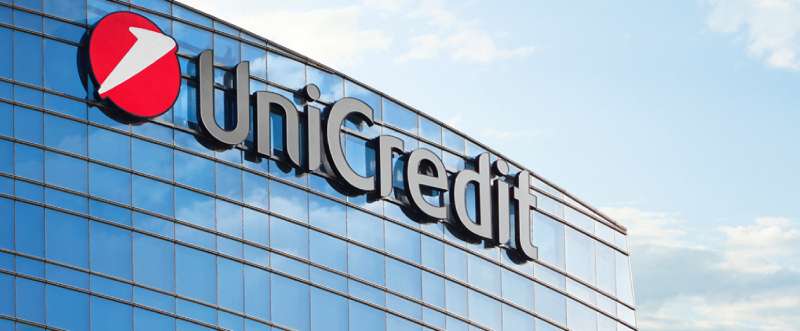
The UniCredit logo is the official visual mark of UniCredit S.p.A., one of Europe’s largest banking groups. It combines a bold red wordmark with a distinctive geometric symbol, together representing the bank’s pan-European reach and financial authority. UniCredit has gone through several identity shifts since its formation, with its current logo reflecting the group’s unified brand strategy across more than a dozen countries.
In the broader history of bank logos, UniCredit’s mark stands out for its clarity. Where many financial institutions lean on crests, monograms, or abstract symbols with little context, UniCredit opted for something cleaner and more direct. The current identity was part of a deliberate push to create consistency across what had been a patchwork of regional banks, each with its own visual history.
The bank itself was founded in 1998 through the merger of several Italian credit institutions. Since then, the logo has gone through at least three significant iterations, tracking the group’s expansion from an Italian regional player into a major European financial force.
What Is the UniCredit Logo?
The UniCredit logo is a combination mark featuring a red wordmark paired with a stylized geometric emblem introduced during the bank’s 2000s brand consolidation. It was developed to create a unified identity across the group’s European subsidiaries and reflects the bank’s positioning as an accessible, modern financial institution.
- Design Type: Combination mark (wordmark + abstract symbol)
- Primary Elements: Geometric red arc/loop symbol, custom sans-serif wordmark
- Official Introduction Date: Current identity launched in 2016 (with prior versions from 2008)
- Designer/Agency: Developed internally with external brand consultancy input; the 2016 refresh was handled with agency support (specific agency not publicly confirmed)
- Trademark Status: Registered trademark across EU and international markets under UniCredit S.p.A.
- Color Palette: Primary red (#E30613), white (#FFFFFF), occasional dark navy in applications
- Usage Context: Branch signage, digital banking platforms, marketing materials, employee communications, sponsorships, and financial documents across 13+ countries
How Has the UniCredit Logo Evolved Over Time?
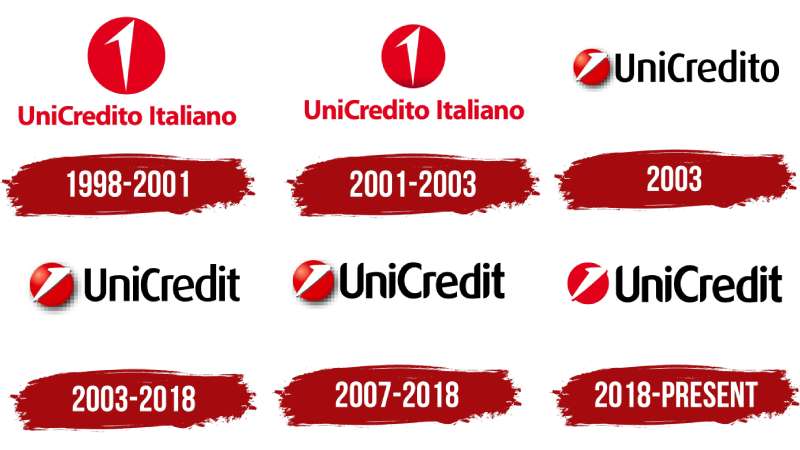
UniCredit’s visual identity has shifted three times in roughly 25 years, each change tied to a major structural moment in the bank’s growth. The move from regional Italian bank to pan-European institution pushed each redesign toward greater simplicity and cross-market legibility.
Original UniCredit Logo (1998–2007)
- Years Active: 1998–2007
- Design Description: The early logo used a stylized lowercase wordmark with a decorative arc element sitting above the text. It had a softer, more traditional feel suited to Italian banking conventions of the era.
- Color Scheme: Deep red and white
- Designer: Not publicly attributed
- Context: Created at the time of the group’s formation through mergers of Credito Italiano, Rolo Banca, and others. The identity needed to unify institutions with very different local personalities.
- Key Changes from Previous: N/A (founding identity)
- Cultural Significance: Signaled the creation of a new kind of Italian banking group, one built on consolidation rather than single-bank tradition
Revised UniCredit Logo (2008–2015)
- Years Active: 2008–2015
- Design Description: Following the acquisition of HypoVereinsbank and Bank Austria, UniCredit overhauled its identity. The symbol became a more defined geometric loop, and the wordmark was updated to feel more international. Less ornate, more structured.
- Color Scheme: Bright red (#E30613) and white
- Designer: Not publicly confirmed
- Context: The bank had grown into a genuine European operation by this point. The 2008 redesign was about making the brand legible from Munich to Bucharest, not just Milan.
- Key Changes from Previous: Cleaner symbol geometry, updated typeface, dropped decorative elements
- Cultural Significance: Marked UniCredit’s shift from Italian bank to European institution
Current UniCredit Logo (2016–Present)
- Years Active: 2016–present
- Design Description: The current version is the most refined iteration. The symbol, a flowing red arc that suggests connection and continuity, sits alongside a clean, confident wordmark in a custom sans-serif. Everything unnecessary was removed.
- Color Scheme: UniCredit Red (#E30613) and white
- Designer: Refined with external brand consultancy input under internal creative direction
- Context: Launched as part of a broader brand strategy refresh under new group leadership. The bank was rationalizing its subsidiary structure and needed a mark that could function consistently across all markets.
- Key Changes from Previous: Smoother symbol, tighter spacing, improved digital legibility, more consistent application across subsidiaries
- Cultural Significance: Represents UniCredit’s mature identity as a consolidated European bank, no longer a federation of local brands
What Do the Design Elements of the UniCredit Logo Mean?

The UniCredit logo works through reduction. Every element that remains is there for a reason, and the overall effect is a mark that reads as confident and stable without being rigid or cold.
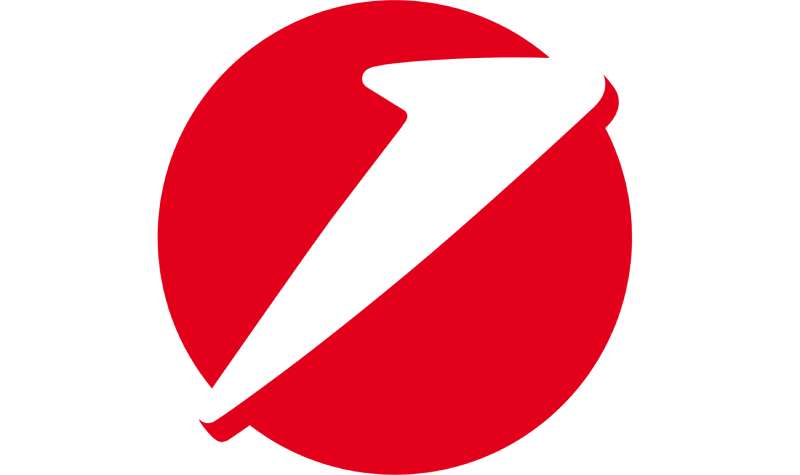
The arc symbol is the most discussed element. It suggests movement and connection, two things a bank operating across borders needs to communicate.
The wordmark does the heavy lifting on recognition. Clean letterforms with no unnecessary detail.
What Does the Symbol in the UniCredit Logo Represent?
The arc or loop form in the UniCredit mark has been interpreted as a stylized “U” for UniCredit, though the bank has also described it as representing connectivity and the idea of bringing people and resources together.
Whether or not that reading feels organic, the shape does what a good logo symbol should: it’s simple enough to work at small sizes, distinctive enough to stand apart from competitors, and flexible enough to function across signage, screens, and print.
Within graphic design principles, the form demonstrates solid use of emphasis, with the red symbol drawing the eye before the wordmark is read.
Why Did UniCredit Choose These Specific Colors?
- UniCredit Red
- Hex: #E30613
- Pantone: Pantone 485 C
- Symbolic meaning: Energy, confidence, action
- Psychological impact: Red triggers urgency and attention. In banking, it’s a deliberate counter to the blue-heavy norms of the sector. UniCredit uses it to stand out.
- Brand/industry connection: Red is relatively rare among European banks, which makes it a strong differentiator. Compare to the blues of BNP Paribas, Deutsche Bank, or Barclays.
- White
- Hex: #FFFFFF
- Symbolic meaning: Clarity, transparency, openness
- Psychological impact: Creates breathing room and prevents the red from feeling aggressive
- Brand/industry connection: Standard background color for financial communications; signals cleanliness and order
The red-on-white combination also performs well in contrast terms, which matters for accessibility across digital and print contexts. Understanding color theory helps explain why this pairing works so reliably across different media.
What Typography Style Is Used in the UniCredit Logo?
The wordmark uses a custom sans-serif typeface with clean geometry and open letterforms.
The characters are spaced confidently, not cramped. The weight is medium-bold, heavy enough to read at distance but not so heavy it loses refinement at small sizes.
UniCredit has not publicly named the specific font used in the wordmark. It appears to be a bespoke cut or a heavily modified version of a geometric sans-serif font family. The typography has remained consistent through the 2016 refresh, which suggests the bank views it as a stable brand asset rather than something to iterate on frequently.
Good kerning is visible throughout the wordmark. The letters sit at a comfortable distance from each other, and the overall tracking feels deliberate rather than default.
What Are the Hidden Meanings in the UniCredit Logo?
There’s no confirmed hidden element in the UniCredit logo in the way that, say, the FedEx arrow is hidden between the E and the x. But the arc symbol carries layered intent.
It functions simultaneously as a stylized “U,” a symbol of connection, and a geometric form that suggests forward motion.
Whether those readings were all planned or emerged through interpretation is hard to say. The bank’s official communications have leaned into the “connection” narrative most consistently.
The Gestalt principles are quietly at work here too. The eye naturally closes the open arc into a complete form, which creates a sense of completeness and unity even though the shape is technically open.
How Does the UniCredit Logo Compare to Competitor Logos?
UniCredit’s red-and-white identity is genuinely distinctive within European banking. Most major competitors default to blue, and the few that use red do so in different ways. The comparison reveals clear strategic choices about positioning and brand personality.
UniCredit vs. HSBC: HSBC uses a red hexagon mark, also bold and geometric. Both banks went for red, but HSBC’s mark is more architectural and symmetrical. UniCredit’s arc feels more fluid. HSBC’s identity is arguably more globally recognized, but UniCredit’s is more distinctive within European markets specifically.
UniCredit vs. ING: ING uses orange, which is adjacent to red on the spectrum but warmer and less formal. ING’s identity trends younger and more approachable. UniCredit reads as more traditional despite the color choice.
UniCredit vs. Societe Generale: Societe Generale uses red and black with a square symbol. Both marks aim at authority, but Societe Generale’s identity feels heavier. UniCredit’s arc keeps things lighter.
UniCredit vs. UBS: UBS uses a key symbol on a red background, a completely different visual language. UBS signals tradition and exclusivity. UniCredit signals accessibility and scale.
Across the bank logo landscape, UniCredit’s mark holds its own. It’s clean enough for digital, distinctive enough to stand out in a branch environment, and flexible enough to work across 13+ countries without feeling misplaced.
What Are the Technical Specifications of the UniCredit Logo?
Official Color Codes
- Primary Color: UniCredit Red
- Hex: #E30613
- RGB: (227, 6, 19)
- CMYK: (0, 97, 92, 11)
- Pantone: 485 C
- Secondary Color: White
- Hex: #FFFFFF
- RGB: (255, 255, 255)
- CMYK: (0, 0, 0, 0)
- Accent Color: Dark Navy (used in specific applications)
- Hex: #1A1A2E (approximate; not always in official primary palette)
- RGB: (26, 26, 46)
- CMYK: (44, 44, 0, 82)
Dimensions and Proportions
- Aspect ratio: Approximately 4:1 (wordmark with symbol in horizontal lockup)
- Minimum size requirements: Symbol alone: minimum 16px height for digital use; full lockup: minimum 80px width
- Clear space specifications: A minimum clear space equal to the height of the “U” character should be maintained around all sides of the logo
- Official usage guidelines: UniCredit publishes brand guidelines for subsidiaries and partners; the mark should not be distorted, recolored outside approved palette, or placed on backgrounds that reduce legibility. The logo should always appear in UniCredit Red on white, or reversed white on red. Dark backgrounds require the reversed version.
- File formats available: The mark is available as vector graphics (SVG, EPS, AI) for scalable use, and as raster formats including PNG for digital applications. JPEG versions exist but are not recommended for logo use due to compression artifacts on the red-white boundary.
- DPI requirements: 300 DPI minimum for print; 72–96 DPI for standard screen use
What Cultural Impact Has the UniCredit Logo Had?
UniCredit’s red identity has become genuinely recognizable across Central and Eastern Europe in a way that most banking brands simply aren’t.
In markets like Bulgaria, Romania, and Croatia, UniCredit Bulbank and its sister banks were among the first Western-style financial institutions many customers encountered after the 1990s transition period. The logo carried significant weight as a symbol of stability and international backing.
In Italy, the brand is woven into everyday financial life. UniCredit branches appear in most mid-sized Italian cities, and the red arc has the kind of ambient recognition that comes from decades of consistent presence.
The bank’s sponsorship activity has also driven logo visibility. UniCredit has been a major sponsor of UEFA Champions League football, which put the red wordmark in front of hundreds of millions of viewers across multiple seasons. That kind of exposure doesn’t just build awareness, it builds the association between the mark and high-stakes, high-quality performance.
From a design history perspective, UniCredit’s visual identity choices reflect broader shifts in graphic design movements within corporate branding: the move away from ornate, crest-based bank logos toward flat, geometric marks that prioritize digital legibility and cross-cultural readability.
How Does the UniCredit Logo Fit Into the Overall Brand Identity?
The logo is the anchor of a larger brand system. It connects to a consistent color palette, typographic standards, and visual language that runs across everything from mobile banking apps to branch interiors to sponsorship banners at football stadiums.
UniCredit’s brand guidelines are structured to maintain consistency across subsidiaries in different countries that historically had their own brand personalities. The logo acts as the unifying element, the one constant across HypoVereinsbank in Germany, Bank Austria in Austria, and UniCredit Bank in Russia (prior to exit).
The brand style guide dictates how the mark interacts with other elements: approved color backgrounds, co-branding rules with UEFA and other partners, digital adaptation guidelines for app icons and favicons.
Within the system, the logo also works alongside a broader visual language that uses color palette consistency and typographic standards to create a coherent experience. The visual hierarchy in UniCredit’s communications always puts the logo in a position of authority, whether that’s top-left on digital interfaces or centered on branch signage.
The overall brand identity has been described internally as positioning UniCredit as “the bank for Europe’s backbone,” serving businesses and individuals across the continent’s most productive economies. The logo’s clean, confident aesthetic is designed to support that positioning without having to state it explicitly.
How Should the UniCredit Logo Be Used?
UniCredit’s brand guidelines are not fully public, but the bank does provide official brand assets to partners, vendors, and press through its corporate communications channels.
- Official usage do’s:
- Use the approved red-on-white or white-on-red versions
- Maintain the required clear space around the mark
- Use vector formats for print and large-format applications
- Follow co-branding guidelines when pairing with partner logos
- Use only files sourced from UniCredit’s official brand portal or press kit
- Official usage don’ts:
- Do not recolor the logo outside approved palette options
- Do not stretch, distort, or rotate the mark
- Do not place the logo on complex or patterned backgrounds without approved treatment
- Do not use outdated logo versions from pre-2016 in new materials
- Do not reproduce the mark below minimum size thresholds
- Do not add drop shadows, outlines, or other unauthorized effects
- Where to access official logos: UniCredit’s official press portal at unicreditgroup.eu provides downloadable assets for media use. Vendors and partners should request files directly through their UniCredit relationship contact.
- Licensing information: The UniCredit logo is a registered trademark. Any use beyond editorial or journalistic reference requires written permission from UniCredit S.p.A. Unauthorized commercial use of the trademark is prohibited under EU and international trademark law.
- Trademark protection: The mark is protected across EU member states and internationally through UniCredit’s trademark registrations. The combination of the arc symbol and wordmark is protected both as a combined mark and, in key markets, as individual elements.
FAQ on The UniCredit Logo
What does the UniCredit logo look like?
The UniCredit logo is a combination mark: a flowing red arc symbol paired with a clean, custom sans-serif wordmark.
The design is minimal. Red on white, nothing decorative. It reads instantly at any size, from a mobile app icon to a building facade.
What color is the UniCredit logo?
The primary color is UniCredit Red, hex #E30613, which corresponds to Pantone 485 C.
White is the standard background. Together, the two colors create strong visual contrast, which is why the mark works across both digital platforms and physical signage without modification.
Has the UniCredit logo changed over the years?
Yes. The UniCredit brand identity has gone through three main versions since the group formed in 1998.
Each redesign tracked a major structural shift, from Italian regional bank to pan-European financial institution. The current version, refined in 2016, is the most stripped-back iteration yet.
What does the symbol in the UniCredit logo represent?
The arc symbol functions as a stylized “U” and also communicates connection and forward movement.
UniCredit’s official communications lean into the connectivity reading. Whether that was the original design intent or a later narrative, it holds up visually. The shape works on its own without explanation.
Who designed the UniCredit logo?
UniCredit has not publicly credited a specific designer or agency for the current logo.
The 2016 brand refresh involved external consultancy support alongside internal creative direction. This is common practice for large European financial institutions managing corporate identity across multiple subsidiaries and markets.
What font does UniCredit use in its logo?
The wordmark uses what appears to be a custom or heavily modified geometric sans-serif typeface.
UniCredit has never publicly named the specific font. The letterforms are clean and open, with confident spacing. The x-height is generous, which helps legibility at smaller sizes across digital applications.
How does the UniCredit logo compare to other European bank logos?
Most major European banks use blue. UniCredit’s red identity is a deliberate departure from that norm.
Compared to the Royal Bank of Scotland logo or the Standard Chartered logo, UniCredit’s mark feels more geometric and modern. The Commonwealth Bank of Australia logo is the closest visual parallel in terms of using a bold geometric symbol at scale.
Where can I download the official UniCredit logo?
Official logo files are available through UniCredit’s corporate press portal at unicreditgroup.eu.
Partners and vendors should request assets directly through their UniCredit contact. The mark is available in bitmap and vector formats. Using unofficial versions risks trademark infringement.
Is the UniCredit logo trademarked?
Yes. The UniCredit logo is a registered trademark of UniCredit S.p.A., protected across EU member states and internationally.
Both the combined mark and individual elements carry protection. Any use beyond editorial or journalistic reference requires written permission. Trademark violations are enforced under EU and international intellectual property law.
Why did UniCredit choose red for its logo?
Red is rare in European banking, which is exactly the point. It creates immediate differentiation on a street where competitors use blue and grey.
From a color psychology standpoint, red signals energy and confidence. For a bank trying to project accessibility rather than old-money exclusivity, it’s a deliberate and effective choice.
Conclusion
The UniCredit logo is a case study in purposeful simplicity, built to carry a pan-European banking group’s identity across dozens of markets without losing coherence.
The red arc, the clean wordmark, the consistent color palette – none of it is accidental.
From its 1998 origins through the 2016 brand refresh, each iteration reflected real structural change within UniCredit Group. The current mark earns its place among the strongest examples of financial institution branding in Europe.
It’s not flashy. It doesn’t need to be.

Renowned for his expertise in logo design and visual branding, Bogdan has developed a multitude of logos for various clients.
His skills extend to creating posters, vector illustrations, business cards, and brochures. Additionally, Bogdan's UI kits were featured on marketplaces like Visual Hierarchy and UI8.
He also wrote in the past years on sites like Design Your Way, WebDesignerDepot, WPDean, Designmodo, Speckyboy, Slider Revolution, and more.
- The Cursor Logo History, Colors, Font, And Meaning - 24 September 2026
- Top 7 Web Design Subscription Services That Replace Full-Time Hires - 24 September 2026
- Canva vs PowerPoint: Which Is Better for Presentations? - 22 September 2026

Bogdan Sandu is a seasoned designer who has been designing websites since 2008. Renowned for his expertise in logo design and visual branding, Bogdan has developed a multitude of logos for various clients. His skills extend to creating posters, vector illustrations, business cards, and brochures. Additionally, Bogdan's UI kits were featured on marketplaces like Visual Hierarchy and UI8. He also wrote in the past years on sites like Design Your Way, WebDesignerDepot, WPDean, Designmodo, Speckyboy, Slider Revolution, and more.
You Might Also Like