The ten biggest challenges when starting an ecommerce business are data security, customer experience, cart abandonment, customer trust, conversions, inventory, pricing, shipping costs, delivery speed and tool choice, with personalization pressure on top. None of them is a reason to hold back, because every one has a practical fix. Online shopping has replaced the trip to the store for many products, which opens the market to new sellers and also raises the bar for what a first-time store has to get right. Knowing the problems before you launch is cheaper than finding them with paying customers. If you are still at the planning stage, these ideas for starting an e-commerce business are a useful companion.
How do you protect an online store from data breaches?
Treat security as a launch requirement, not a later upgrade. A hacked store loses revenue, data and visibility, and it also exposes customers’ personal and financial details, which damages a reputation you have barely started to build. Mercado Libre, a Latin American marketplace, has disclosed an incident where data on 300,000 members was exposed, so large and established companies are not immune either. Regular penetration testing helps find weaknesses before attackers do.
According to an article published by BlueSnap, data thieves usually go after the easy targets. Stores built on popular open-source software are a typical example: once an attacker finds a flaw in a library or program, they search for every site using it, then steal data, plant malware or take control of the system. The same article makes the case that you should secure the site before a breach happens, not after. A basic protection plan looks like this:
- install a file integrity monitoring program
- use intrusion detection and intrusion prevention systems
- keep whoever handles IT updated on security issues so they can respond at once if a breach happens
Security also feeds the next problem on the list, because shoppers only stay with stores they believe are safe.
How do you deliver a good customer experience?
Customer experience is everything a shopper meets in dealing with your business, from the first product photo to the support reply. A great product is not enough on its own. Buyers cannot touch what they are buying, so photos, descriptions and a smooth site do the work a shop assistant would do in a store.
Customers who have a bad experience tend to move to a competitor, and winning them back is hard. Satisfied ones return and recommend you. Building the site is not easy either: visitors must understand the main functions quickly, product data must flow correctly, and the images must be good. A tool such as Removal.AI can clean up product photographs and prepare them for catalogs and visuals, and you can also learn how to remove the background from product photos without specialist software. The link between layout and sales is covered in more detail in this piece on web design and conversion rates.
Why do customers abandon their carts, and how do you win them back?
Cart abandonment happens when a shopper adds products to the basket and leaves without checking out. It is normal. Over 70% of carts are abandoned, according to BlueCart, so you are not doing something uniquely wrong.
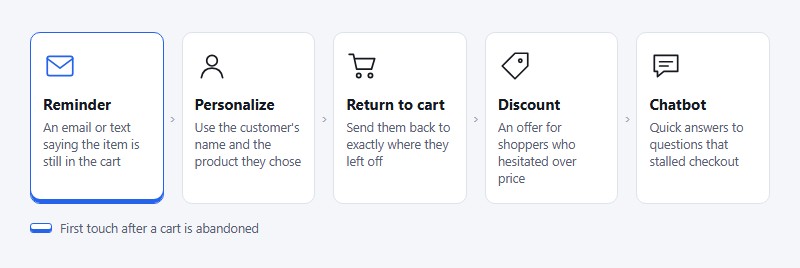
The reasons vary. Some people use the cart as a wish list for later. Others add items to keep an eye on the price, feel second thoughts about the purchase, or find checkout too stressful. You cannot prevent all of it, but you can recover part of the lost revenue. Send an email or text reminding the shopper the item is still in the cart, personalize it, and bring them back to the exact spot where they left. A discount or a chatbot that answers quick questions can tip the decision. For the email side, see these email marketing strategies for ecommerce stores.
How do you build customer trust and loyalty?
Loyalty is a customer’s commitment to your brand, and a loyal customer picks you over competitors because of your service, your range or something else that sets you apart. For a new store, trust comes first, and it is built in small, repeated ways.
Be reachable. A chat box or a social media channel where people can send a message and get a timely answer shows who is behind the store. Keep your promises too. If you say delivery takes a week and it takes two, the customer feels misled. If you promise ten days and deliver in five, you gain credibility. Under-promising and over-delivering costs little and keeps people coming back. For more on the topic, read how to build business credibility online.
How do you improve ecommerce conversion rates?
Start with trust, because shoppers who cannot tell whether your company is real will not buy. Visitors wonder if the product photos show the real thing and who they could complain to if the order goes wrong. Removing those doubts raises conversions.
Conversion rate optimization (CRO) helps you get more out of the traffic and leads you already have, which supports steady, long-term growth. You can apply it to the homepage, pricing page, blog and landing pages, and landing pages are the easiest place to run tests. Two cautions apply. CRO testing needs plenty of traffic to give reliable answers, so focus on high-traffic pages. And seasonality can skew results: a pool company testing from spring to summer will see changes driven by buying intent, not by the test.
How do you manage inventory as a new store?
Inventory management means knowing the quantity, location and price of everything you can sell. Many businesses, even large ones, lack the processes for it, and for a new seller juggling buying, storing and pricing it is easy to lose track.
E-commerce inventory management software lets you see what is overstocked, in stock, understocked or sold out, and it helps with warehousing and financial decisions. Inventory is directly tied to finance: once you know what you hold, you can see the revenue potential of each pallet, and everything else falls into place more easily. If stock risk worries you, print on demand is one way to sell without holding inventory.
How do you set the right prices and shipping fees?
Aim for the balance between prices low enough to attract buyers and margins high enough to keep the business healthy. Lower prices can widen your customer base but cut profit, while higher prices push shoppers to look elsewhere, and online buyers compare. This is where eCommerce pricing strategies come in.
Manufacturers often give a suggested retail price (SRP), which is a sensible starting point you can adapt. Shipping needs the same care: compare packaging materials and carriers until you find a reliable low-cost option, and use durable packaging so goods arrive intact. Customers who like your prices and shipping costs are more likely to buy again.
How do you handle shipping and delivery costs and speed?
Expect shipping to be one of your biggest costs, and expect customers to want it cheap or free. In practice the seller usually absorbs the cost, which comes straight off income. Even paid expedited delivery does not always fix slow transit, and delivery speed can make or break sales depending on your business.
Shoppers also want purchases quickly without leaving home, which pushes stores toward same-day or next-day delivery. To compete, speed up your own operations: be ready to get the item from your supplier, pack it and load it onto a transport vehicle as soon as checkout completes. The practical answer is to make the delivery procedure more efficient at each handoff.
How do you choose the right ecommerce tools?
Choose tools for the specific job you need done, not for the length of their feature lists. Stores with an existing platform, or those that want to improve a single area such as customer care, add tools to raise efficiency and productivity.
Tools can support marketing, conversion, growing demand and repeat customers. Shopify is a widely used example of a platform that stores build on. If you go that route, this guide to building and promoting a Shopify website is a good next read.
How much personalization do customers expect?
More each year, and it is hard to copy once you do it well. When experiences are personalized for many individual customers using their private data, competitors struggle to recreate them, which can give a lasting advantage. McKinsey reports that customized experiences boost customer loyalty and revenue.
A 2019 Trends in Personalization Report by Researchscape International and Evergage, Inc. found that most marketers use personalization to improve customer experience. The catch is data. New technology allows more precise messaging, but rules are tightening and storing all that customer data is difficult, so personalize without crossing into privacy problems.
Frequently asked questions
What is the hardest challenge when starting an ecommerce business?
It depends on the business, but trust and conversions are common early hurdles. New stores have no reviews or reputation, so shoppers need extra reassurance before buying.
How can a new store reduce cart abandonment?
Send a personalized reminder by email or text, return shoppers to their cart, and consider a discount or chatbot. You cannot eliminate abandonment, only recover part of it.
Do small stores need penetration testing?
Any store that handles customer data is a target, and testing helps find weaknesses before attackers do. Start with monitoring and intrusion detection, then test regularly as you grow.
Which ecommerce challenge should you fix first?
Pick the one that already shows up in your store. Check your security basics, look at where carts are being abandoned, and review shipping costs against your margins. Fix that single problem, measure the effect, then move to the next.

Renowned for his expertise in logo design and visual branding, Bogdan has developed a multitude of logos for various clients.
His skills extend to creating posters, vector illustrations, business cards, and brochures. Additionally, Bogdan's UI kits were featured on marketplaces like Visual Hierarchy and UI8.
He also wrote in the past years on sites like Design Your Way, WebDesignerDepot, WPDean, Designmodo, Speckyboy, Slider Revolution, and more.
- What Is the Best Lightweight DaVinci Resolve Alternative for Object Removal on Low-End PCs? - 23 November 2026
- Logo Quiz - 22 November 2026
- The LinkedIn Logo History, Colors, Font, and Meaning - 20 November 2026

Bogdan Sandu is a seasoned designer who has been designing websites since 2008. Renowned for his expertise in logo design and visual branding, Bogdan has developed a multitude of logos for various clients. His skills extend to creating posters, vector illustrations, business cards, and brochures. Additionally, Bogdan's UI kits were featured on marketplaces like Visual Hierarchy and UI8. He also wrote in the past years on sites like Design Your Way, WebDesignerDepot, WPDean, Designmodo, Speckyboy, Slider Revolution, and more.
You Might Also Like