Remote design teams are now a normal way to build a brand, and freelance designers are a central part of them. Instead of hiring everyone into one office, companies assemble distributed teams of in-house staff and freelancers who work from different cities and time zones. Zapier, GitLab and Automattic have shown that a company can grow without a headquarters, and design work, which depends on files and feedback rather than a shared room, suits that model well.
Why are companies building remote design teams?
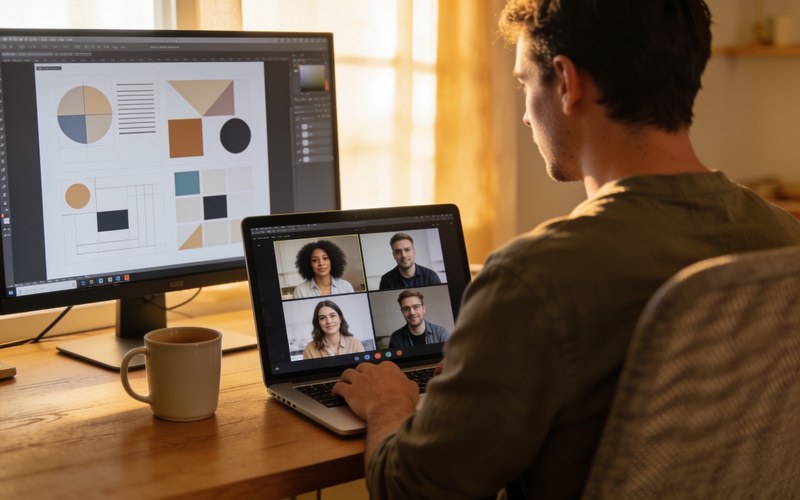
Because location no longer limits who you can hire. Zapier has been fully remote since it started, and its approach lets it recruit designers, developers and marketers wherever they live. Other well-known companies have also loosened office requirements, which shows the shift is not limited to startups.
For design teams, remote work brings three practical gains:
- Access to a global talent pool, so you are not restricted to your local hiring market.
- Flexible scale: a new product landing page or a full brand overhaul can be staffed when it comes up.
- Lower fixed costs, with no office space and fewer full-time salaries to carry.
Those gains explain why freelancers keep getting pulled into these teams, and what they offer is specific.
What do freelance designers bring to a remote team?
Speed, specialization and flexibility. Traditional agency models can mean long timelines, layers of approval and costs that do not fit fast-moving projects, while freelancers work differently.
| Advantage | What it means in practice |
| Speed | Short onboarding and fewer meetings, so work starts quickly |
| Specialization | An expert for exactly what you need, not a generalist |
| Agility | A logo now, a website redesign next month, a social campaign later, each with the right person |
Many companies combine freelancers with in-house teams rather than replacing them: staff keep brand knowledge and continuity, and freelancers add focused skills on demand. If you are weighing structures, this comparison of full outsourcing and team augmentation helps.
How do you find the right freelance designers?
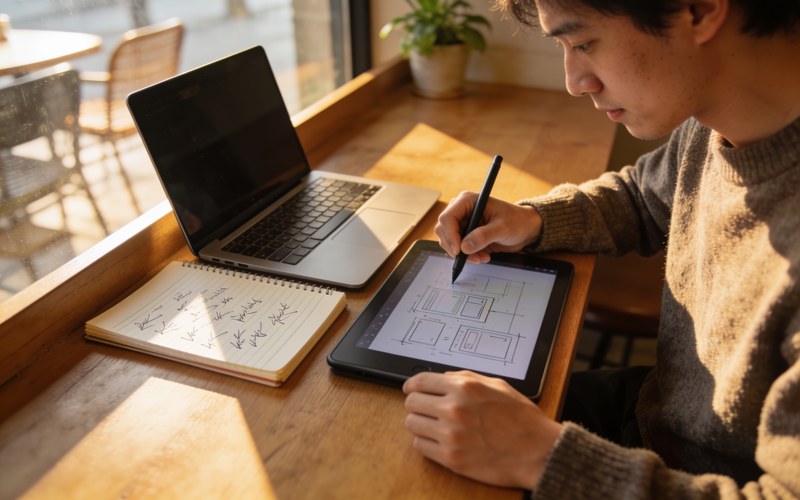
The hard part is not hiring freelancers, it is hiring the right ones. Open platforms are crowded with weak portfolios and generic, AI-generated proposals, so separating strong designers from the rest takes effort.
Companies used to rely on referrals or weeks of vetting. A growing alternative is to use places where designers prove their skills before they are hired (see for yourself), which reduces guesswork. Whatever route you choose, review real work, run a small paid test project and check how the designer communicates, because those three signals predict more than a resume does.
If you are on the other side of the table, these client outreach tips for freelancers cover how to get noticed.
How do remote teams and freelancers collaborate well?
Remote collaboration works when the team writes things down and agrees on how to work. The idea that distributed teams struggle to collaborate is mostly a myth, as long as the right tools and habits are in place.
- Use async communication. Distributed teams like Zapier and GitLab lean on documentation, using tools such as Slack, Notion and Loom to keep work moving instead of scheduling endless meetings.
- Set clear expectations in the brief. Freelancers cannot read minds, and good creative direction produces better results.
- Trust the specialist. Give freelancers creative freedom instead of micromanaging every pixel.
For a deeper look at running this day to day, see how to approach managing remote freelance design teams and a list of online collaboration tools.
How should you structure a remote design team that includes freelancers?
Give each person a clear role and a clear owner. A common setup is an in-house design lead who owns brand standards and reviews all work, with freelancers assigned to specific deliverables such as a landing page, an icon set or a campaign. The lead keeps the context, and the freelancers bring depth in one area.
Keep the working agreements short and written down:
- Where briefs, files and approved assets live.
- How feedback is given, and by when each round is expected.
- Which hours overlap, if any, and how urgent requests are flagged.
- How work is handed over at the end, including source files.
Pricing and contracts deserve the same clarity. If you work with freelancers on a continuing basis, ideas from monthly retainer billing for freelance designers show how both sides can keep the arrangement predictable.
What are the challenges of remote design work?
The common problems are time zones, unclear feedback and slow handoffs. A designer in another region may be offline when you need a change, so decide on overlap hours or a clear turnaround time. Feedback needs to be specific and collected in one place, and files need a shared structure so nobody hunts for the latest version. These are process problems, and a simple written workflow solves most of them.
There is also a human side. Remote workers can feel disconnected, so regular check-ins and credit for good work matter. For a look at why many designers prefer this setup, read why creative minds work better with remote collaboration.
Frequently asked questions
Are remote design teams cheaper than in-house teams?
Often, because you avoid office costs and can pay for specialists only when needed. Rates vary by skill and region, so compare quotes rather than assuming.
Can freelancers work well alongside in-house designers?
Yes, if the brand guidelines, files and feedback process are shared. Give freelancers the same briefs and assets as the staff team.
How do I keep brand consistency across a distributed team?
Keep a central style guide, a shared component library and one place for approved assets. Review all work against them before it ships.
What should you do before hiring your first remote designer?
Write a clear brief, decide how feedback will be given and run a small paid test project. If it goes well, expand the relationship. The best designers are not waiting in your city, and a clear process lets you work with them wherever they are.

Renowned for his expertise in logo design and visual branding, Bogdan has developed a multitude of logos for various clients.
His skills extend to creating posters, vector illustrations, business cards, and brochures. Additionally, Bogdan's UI kits were featured on marketplaces like Visual Hierarchy and UI8.
He also wrote in the past years on sites like Design Your Way, WebDesignerDepot, WPDean, Designmodo, Speckyboy, Slider Revolution, and more.

Bogdan Sandu is a seasoned designer who has been designing websites since 2008. Renowned for his expertise in logo design and visual branding, Bogdan has developed a multitude of logos for various clients. His skills extend to creating posters, vector illustrations, business cards, and brochures. Additionally, Bogdan's UI kits were featured on marketplaces like Visual Hierarchy and UI8. He also wrote in the past years on sites like Design Your Way, WebDesignerDepot, WPDean, Designmodo, Speckyboy, Slider Revolution, and more.
You Might Also Like