
An independent online store can compete with Amazon, eBay and AliExpress in search by not trying to beat them on scale. Target specific, high-intent keywords the marketplaces handle poorly, build content around one niche, keep the site fast and mobile-friendly, mark up products with structured data, and use brand story and real reviews to earn trust and links. Marketplaces win on selection, pricing and marketing budgets. A smaller store wins on focus, expertise and a clear point of view, and search rewards that when the page answers a specific need better.
Which keywords should an independent store target?
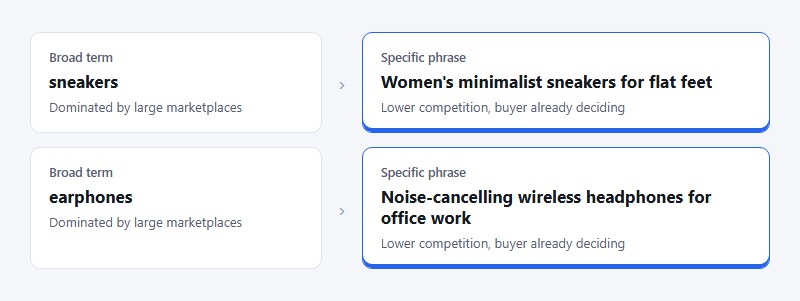
Target descriptive, commercial keywords instead of broad ones. A search for “sneakers” or “earphones” is dominated by large platforms, and the person searching may not be close to buying. A phrase like “women’s minimalist sneakers for flat feet” or “noise-cancelling wireless headphones for office work” has less competition and signals a shopper who already knows what they want.
Use a keyword research tool to find queries with moderate volume and clear buying intent, then apply them across category pages, product descriptions and blog content. Each page should aim at one main phrase and its close variations. If you are not sure where to start, working with an SEO agency for e-commerce can shorten the trial-and-error phase, whether you hand over the whole job or just the audit. If you are weighing that option, see what to know before choosing an SEO agency.
How do content hubs help a small store rank?
A content hub is a group of connected articles, guides, videos and comparisons that cover one topic in depth. Marketplaces invest heavily in product listings and much less in helpful content for narrow interests, which leaves room for a specialist store.
A store selling home coffee equipment could publish guides on making different types of coffee, comparison charts for espresso machines and advice on setting up and maintaining grinders. Together these show real expertise, bring in organic traffic from people who are researching and keep visitors on the site longer. The next step is making sure the site itself can carry that content.
What technical SEO matters most for e-commerce?
Speed, a stable layout and a good mobile experience matter most. Google looks at Core Web Vitals, which measure loading speed, responsiveness and visual stability, and technical weaknesses can pull rankings down no matter how good the content is.
- Compress product images and use modern formats.
- Lazy-load images and elements below the first screen.
- Use a content delivery network (CDN) to reduce latency.
- Remove CSS and JavaScript that the design does not use.
Mobile is just as important. With mobile-first indexing, search engines judge the mobile version of your pages, so a slow or awkward phone experience limits visibility. If your store feels sluggish, fixing what makes a website slow is a good first project, and the way design affects ranking is covered in the impact of user experience on search engine rankings.
How does schema markup help product pages?
Schema markup gives search engines structured information about a page, which can make it eligible for rich results such as star ratings and price details. For stores, Product, Review and BreadcrumbList are the most useful types.
Rich results do not guarantee a higher position, but they can make a listing stand out and attract more clicks, which helps when a marketplace ranks above you. Structured data also helps search engines understand the key attributes of each product. Always validate the markup with Google’s testing tools and keep it in line with what the page shows.
The video below from Shopify covers ecommerce SEO basics and fits well alongside these tactics.

Why does brand story matter for e-commerce SEO?
A distinctive brand earns links and mentions that a generic store never gets. Your About page, blog and product descriptions are the places to communicate your mission, values and voice, and a recognizable style gives other sites a reason to reference you.
Backlinks remain one of the most important ranking signals, and people link to stores they find interesting or trustworthy. Writing product descriptions that sound like a person who knows the product, instead of copying a manufacturer’s text, is a practical start. For ideas on earning links through design and content, read these web design tips to attract natural backlinks.
How should you structure an e-commerce site for SEO?
Group products into logical category pages, link from blog posts to relevant product pages and keep navigation easy to follow. A clear architecture helps search engines crawl the site and helps shoppers find what they want. It also passes link value to your most important pages.
Keep the depth shallow so key products are only a few clicks from the home page, and use descriptive anchor text for internal links. If you plan a redesign, improving your website design without losing SEO rankings explains how to avoid breaking existing structure.
Do customer reviews help SEO?
Yes. Reviews build trust, improve conversions and add fresh, relevant text to product pages. Ask for them through post-purchase emails and loyalty programs, and do not only chase positive comments, because a mix of ratings looks more credible. Display them on the product page and mark them up with review schema. For wording ideas, see these review request email templates.
Should an online store publish articles and guides?
Yes, because editorial content reaches people who are interested in a topic but not yet ready to buy. A guide to choosing a grinder can introduce a shopper to your brand months before they purchase. Link naturally from these guides to the related products and categories, and the store catches traffic that marketplace listings never will.
How do you track and improve e-commerce SEO results?
Watch organic traffic, keyword rankings and conversions, and review them on a regular schedule. Test titles, descriptions and page layouts, keep what works and change what does not. Flexibility is one of the biggest advantages a smaller store has over a marketplace.
Frequently asked questions
Can a small store really outrank Amazon?
Not for every term. For specific, niche queries and informational searches, a focused store with strong content can rank well. Aim to win where the marketplaces are weak instead of everywhere.
How long does e-commerce SEO take to work?
It usually takes months, not weeks, and the timeline depends on competition and site quality. Technical fixes can show results sooner than new content.
Do I need an agency?
Not necessarily. Many owners handle the basics themselves and bring in help for audits, technical work or large content plans.
What should you do first?
Pick ten specific product-related phrases, improve the pages that target them, fix the biggest speed problem on mobile and add product schema. Once those are done, start a small content hub around your strongest category. The goal is not to surpass the platforms in scale but to be the better answer for a narrower question.

Renowned for his expertise in logo design and visual branding, Bogdan has developed a multitude of logos for various clients.
His skills extend to creating posters, vector illustrations, business cards, and brochures. Additionally, Bogdan's UI kits were featured on marketplaces like Visual Hierarchy and UI8.
He also wrote in the past years on sites like Design Your Way, WebDesignerDepot, WPDean, Designmodo, Speckyboy, Slider Revolution, and more.

Bogdan Sandu is a seasoned designer who has been designing websites since 2008. Renowned for his expertise in logo design and visual branding, Bogdan has developed a multitude of logos for various clients. His skills extend to creating posters, vector illustrations, business cards, and brochures. Additionally, Bogdan's UI kits were featured on marketplaces like Visual Hierarchy and UI8. He also wrote in the past years on sites like Design Your Way, WebDesignerDepot, WPDean, Designmodo, Speckyboy, Slider Revolution, and more.
You Might Also Like