- Airbnb ads almost never show the product. No search bar, no listing page, no price. That absence is the strategy.From the 2014 Belong Anywhere rebrand to the Icons launch in May 2024, the work runs on host photography, animated miniature sets and one proprietary sans-serif.What this page covers:
- Campaign breakdowns with the agency, year and market behind each one
- Layout, palette and typography analysis of the print and out-of-home work
- How the TV commercials diverge from the posters
- The design rules worth stealing
Every campaign named here carries a credit and a date.
Airbnb advertising spans 18 years, 5 lead creative partners and 8 flagship campaigns, from the 2014 Belong Anywhere rebrand to the Icons launch in May 2024. The work runs on host-generated photography, animated miniature sets and one proprietary sans-serif.
Media has shifted hard over that span: national TV and out-of-home dominated the 2016 to 2021 period, paid social carries most of the weight now.
This page covers the campaigns by name, with the agency, year and market behind each one, plus the layout, palette and typography decisions holding them together.
Airbnb Advertising at a Glance
Airbnb has advertised since 2008 and worked mainly with TBWAChiatDay Los Angeles, VCCP Berlin, BUCK and its own in-house creative studio. Its best-known campaigns are Belong Anywhere, Live There, Made Possible by Hosts and Icons. The visual signature combines Rausch coral, Airbnb Cereal and full-bleed photography.
Attribute Value First major campaign Wall and Chain (2014), VCCP Berlin with Psyop New York Lead agencies TBWAChiatDay LA (2014-2017), VCCP Berlin, BUCK, in-house studio (2020-present) Best-known taglines “Belong Anywhere” (2014), “Don’t Go There. Live There.” (2016), “Made Possible by Hosts” (2021), “Airbnb It” (2022) Primary media TV, out-of-home, cinema, print, YouTube, Instagram Awards D&AD Pencil 2015, Cannes Lion 2017, 4 Bronze Lions at Cannes 2025 Visual signature Rausch coral #FF5A5F, the Belo mark, Airbnb Cereal, warm interior photography Airbnb spent $2.6 billion on sales and marketing in 2025, up from $2.1 billion in 2024, according to PhocusWire. That equals 21% of revenue.
Which Airbnb Ad Campaigns Are the Most Famous?
Seven campaigns define the brand’s advertising: Wall and Chain (2014), Is Mankind? (2015), Live There (2016), We Accept (2017), Made Possible by Hosts (2021), Airbnb It and Get an Airbnb (2022-2025), and Icons (2024). Each carries a different creative device and a different agency credit.
Wall and Chain (2014)

VCCP Berlin created Wall and Chain for the 25th anniversary of the fall of the Berlin Wall, with animation by Psyop New York and direction from Marie Hyon and Marco Spier. The film tells the true story of a West German border guard who books an Airbnb hosted by a friend of his East German counterpart.
Flat vector illustration, muted greys against warm ochre, no product shot until the final frame.
Within one month the film passed 8 million views and 130 press hits across 15 countries, per the Shorty Awards entry. D&AD awarded it a Pencil for Animation for Film Advertising in 2015.
Is Mankind? (2015)

Global brand campaign, TBWAChiatDay LA, July 2015.
The spot asks whether mankind is, in fact, kind. Copy carries the entire idea: two words split apart and reassembled, delivered over documentary footage of strangers hosting strangers.
It sits at the outer edge of what a booking platform can say without naming a product. Airbnb never showed a listing page in it.
Live There (2016-2017)

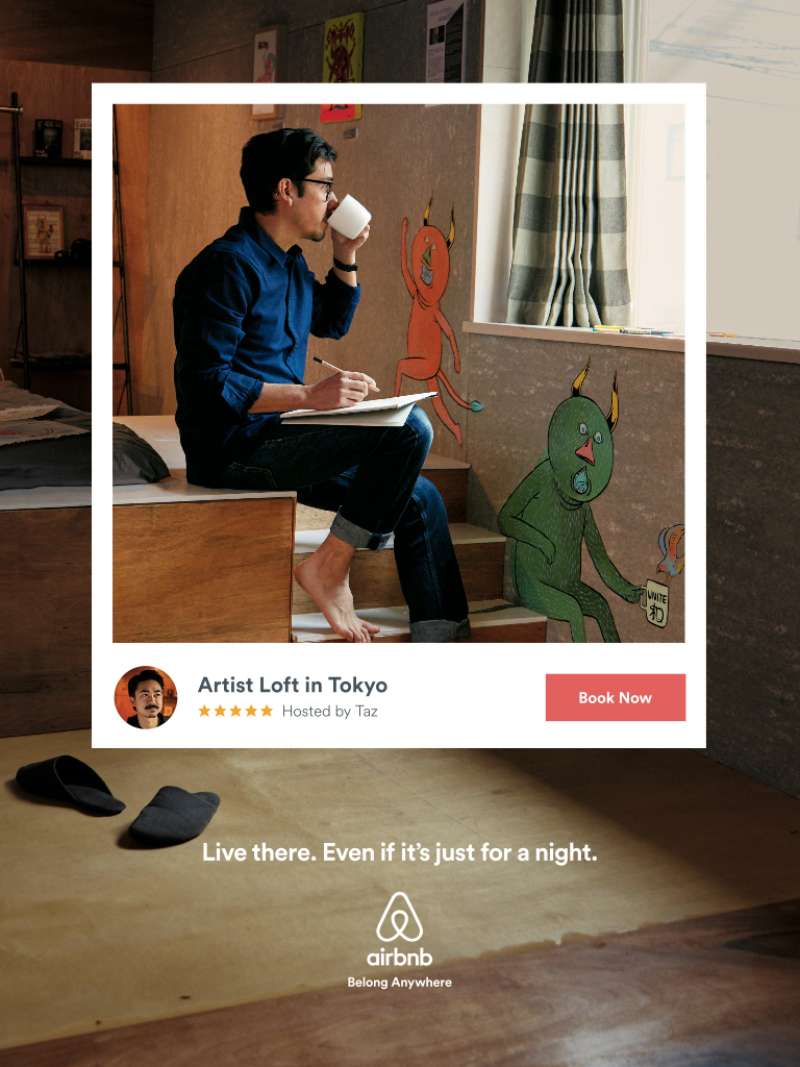
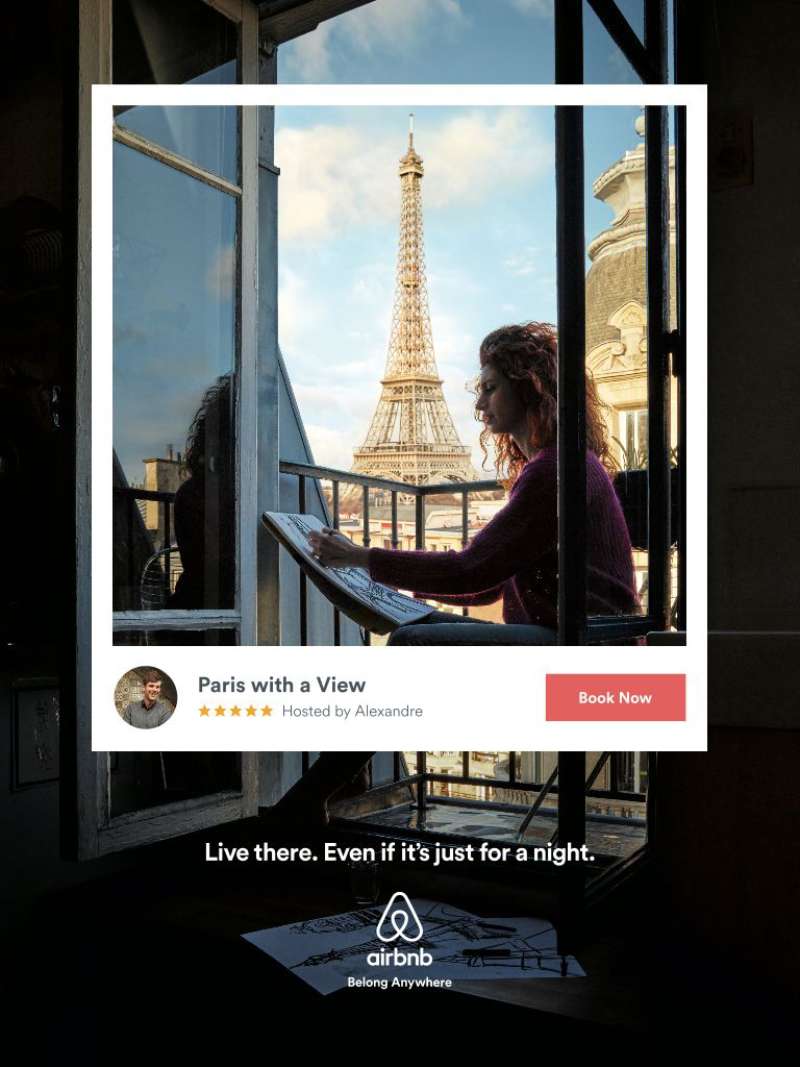
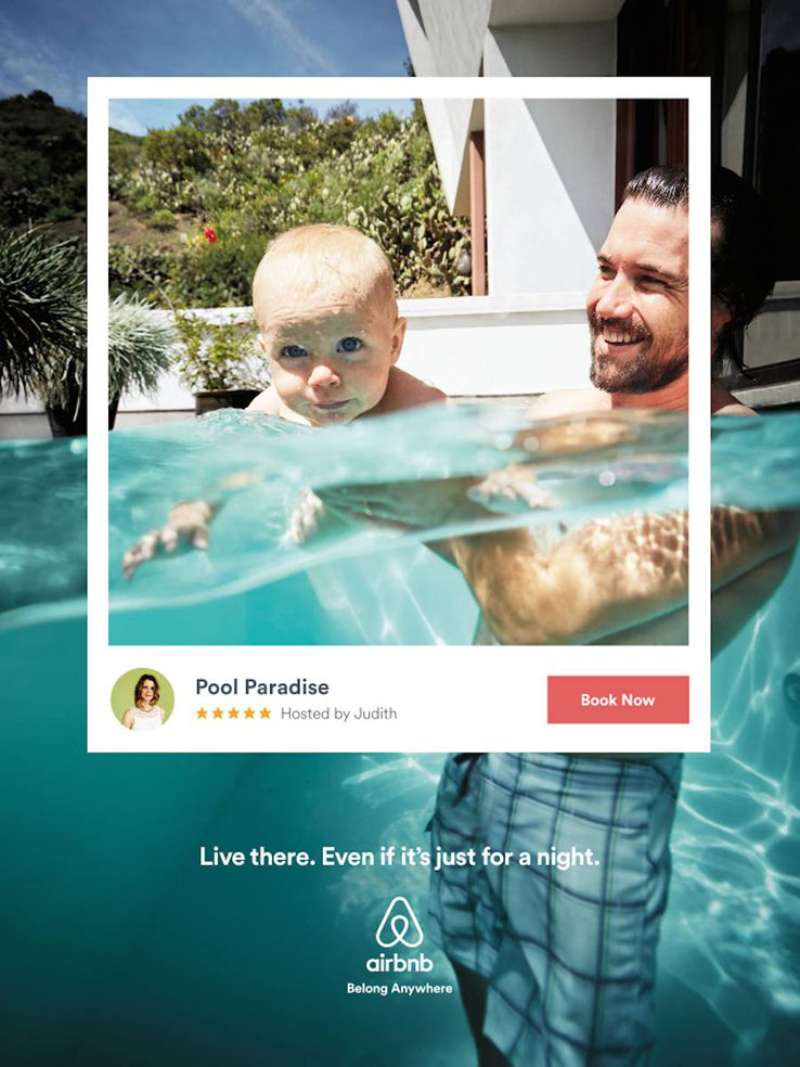
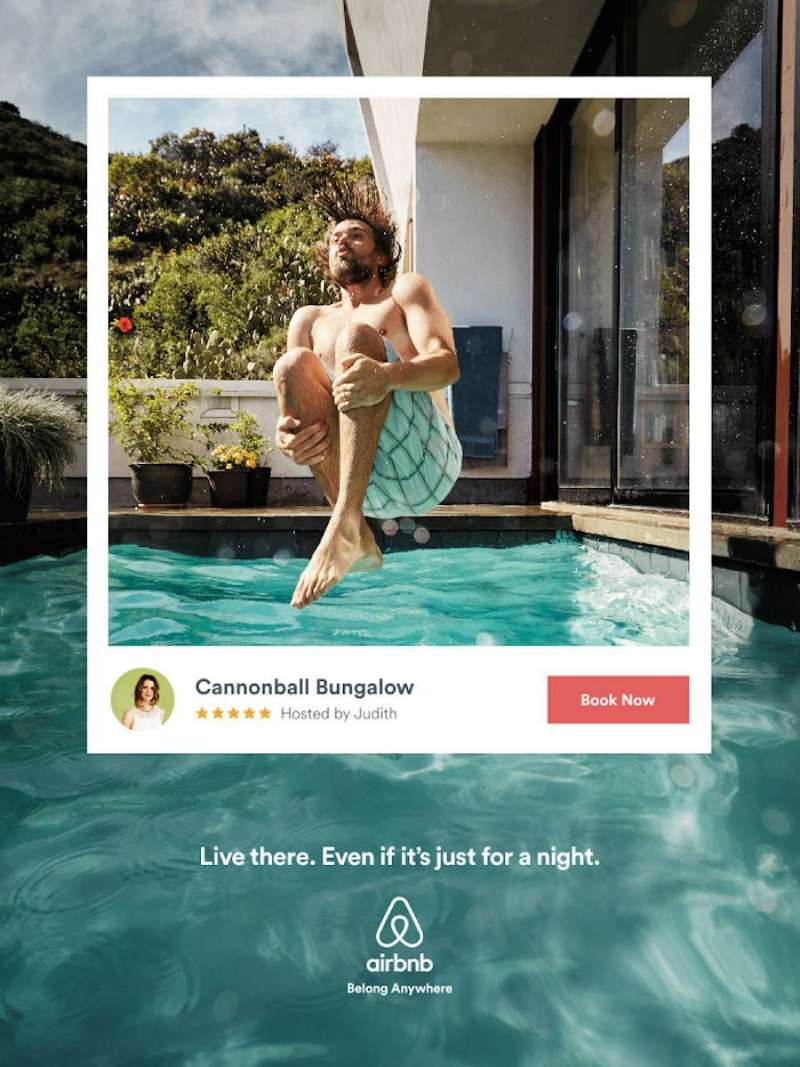
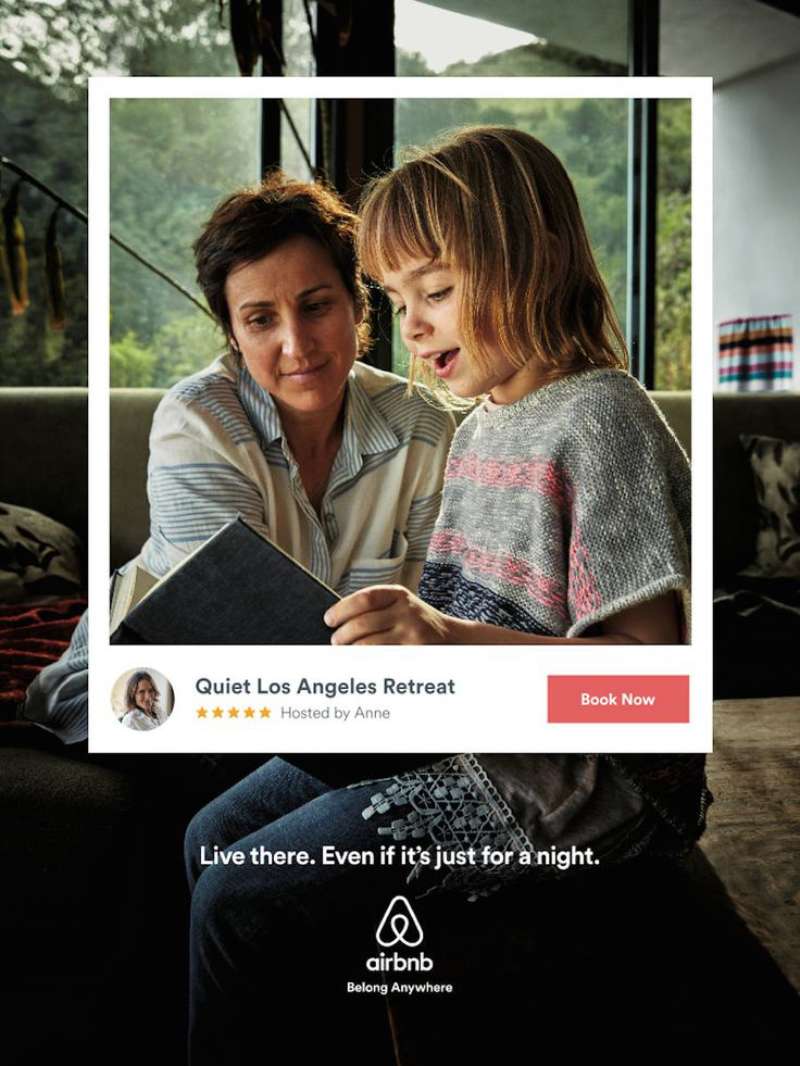
TBWAChiatDay LA built Live There as Airbnb’s largest brand campaign to that point, running across the US, UK, France, Germany, Korea, China and Australia. The anthem film was written by John Figone, art directed by Rafael Goncalves and directed by Anna Sandilands and Ewan McNicol through RSA. Print ads closed with “Live there. Even if it’s just for a night.”
The print work uses one full-bleed interior photograph, a two-line headline set low left, and the Belo at roughly 4% of the frame. Airbnb committed 30% of the campaign budget to digital, then-CMO Jonathan Mildenhall told Campaign.
We Accept (2017)

Airbnb bought a 30-second Super Bowl LI slot days before the game, in response to the proposed US travel ban. Ad Age reported the buy; Fortune reported the spot came together in three days.
Format: portrait photography, white text, no voiceover, one hashtag. Nothing else on screen.
iSpot ranked it the 7th most digitally engaging ad of Super Bowl LI, at 3.83% digital share of voice.
Made Possible by Hosts (2021-2022)
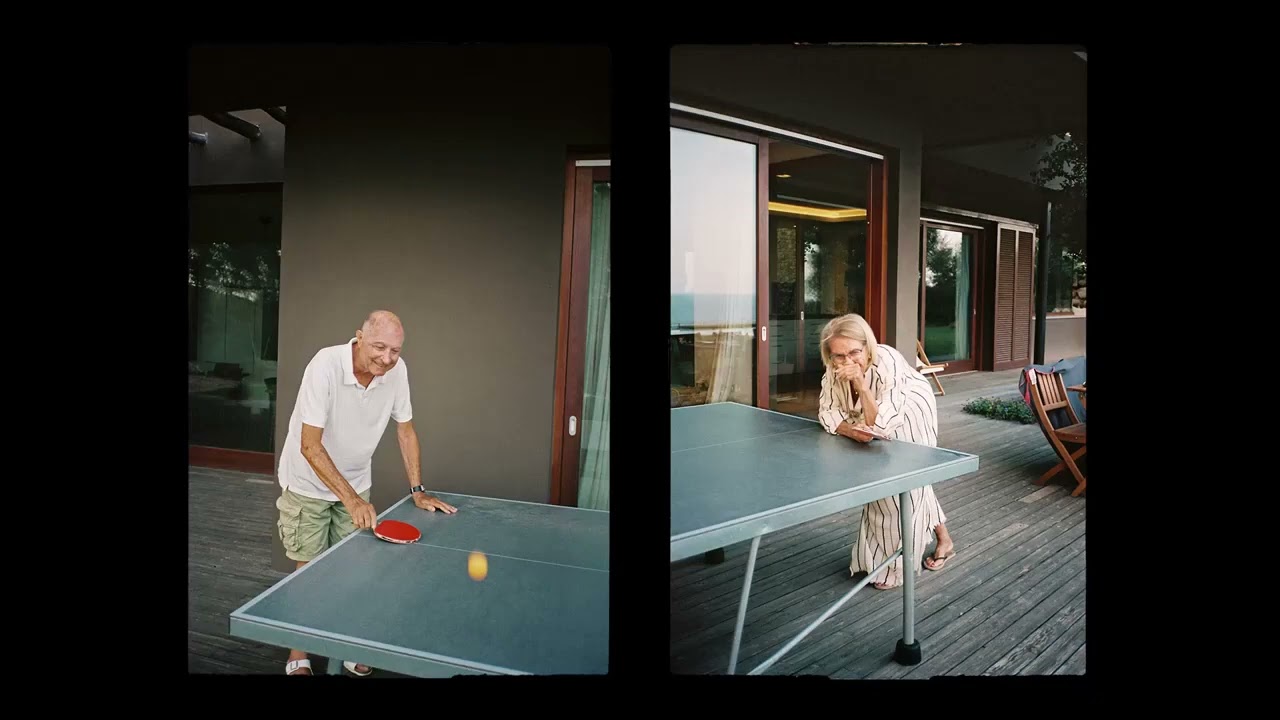
Airbnb’s first large-scale brand campaign in five years launched 22 February 2021 across TV in the US, UK, Australia, Canada and France, plus YouTube and social in nearly every market. Photographers booked real stays and submitted the footage; no actors, no scripts.
Spend: roughly $8.78 million on US TV in the first week alone, per iSpot.tv data cited by Skift.
Result: platform traffic rose almost 20% in the seven campaign countries in Q4 2021 against Q4 2019, ahead of non-campaign markets, Airbnb told Marketing Week.
Airbnb It and Get an Airbnb (2022-2025)
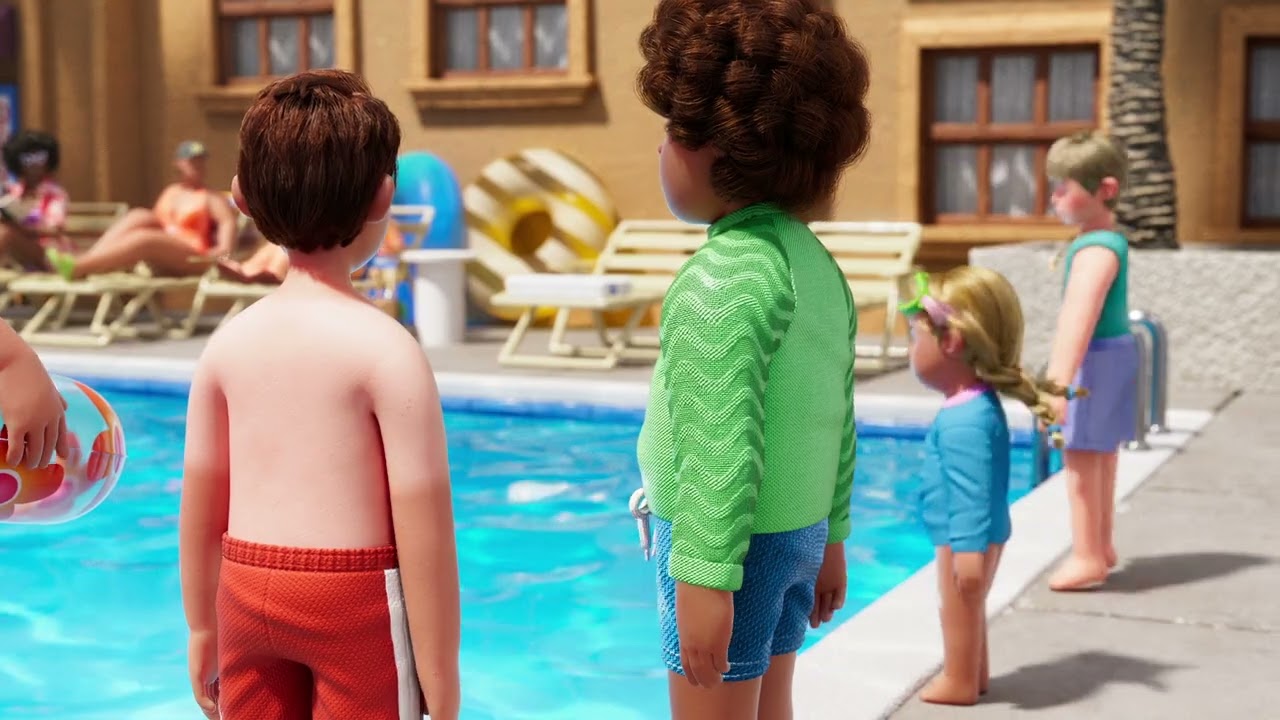
Both campaigns come from the in-house creative studio with animation by BUCK, creative directed by Joe Mullen with Ege Soyuer, Andy Lyon, Kyle Strope and Tony Legato. Airbnb It targets prospective hosts. Get an Airbnb targets first-time guests and positions the product directly against hotels.
The look is isometric miniature architecture on a white cyclorama, each set modelled on a real listing. Rooms fold, flip and swap in a single continuous camera move.
Airbnb’s sales and marketing spend hit $1.08 billion in the first half of 2024, up 13.9% year over year, Digiday reported. Global marketing head Hiroki Asai described the mix as predominantly social.
Airbnb Icons (2024-2025)

Icons launched in May 2024 as a set of pop-culture stays: the Up house, the X-Mansion from X-Men ’97, Prince’s Purple Rain home, the Musee d’Orsay. Weber Shandwick handled the PR-led rollout.
The program carried more than 4,000 experiences priced under $100, built for cultural visibility rather than direct revenue.
Icons took four Bronze Lions at Cannes 2025 across Media, PR and Brand Experience & Activation, part of 11 wins across five major shows that year.
How Do Airbnb Print Ads Work Visually?
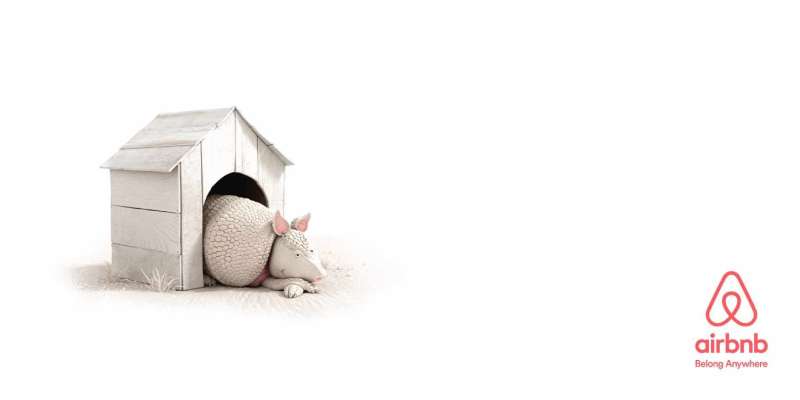
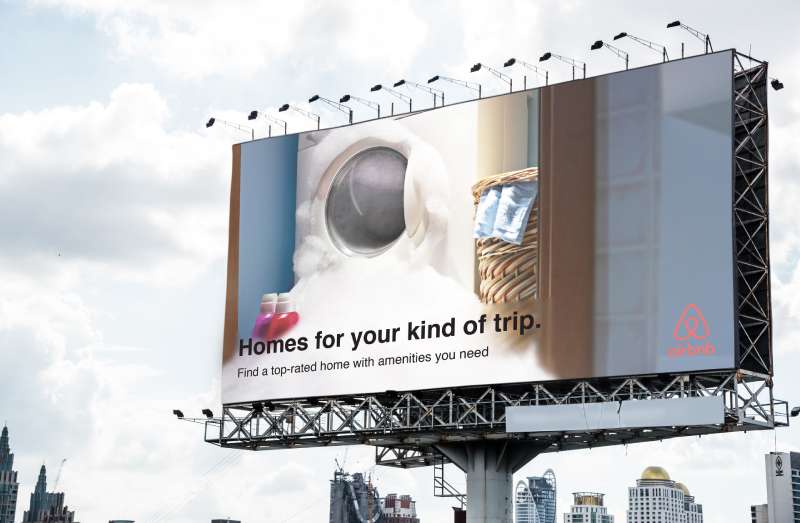
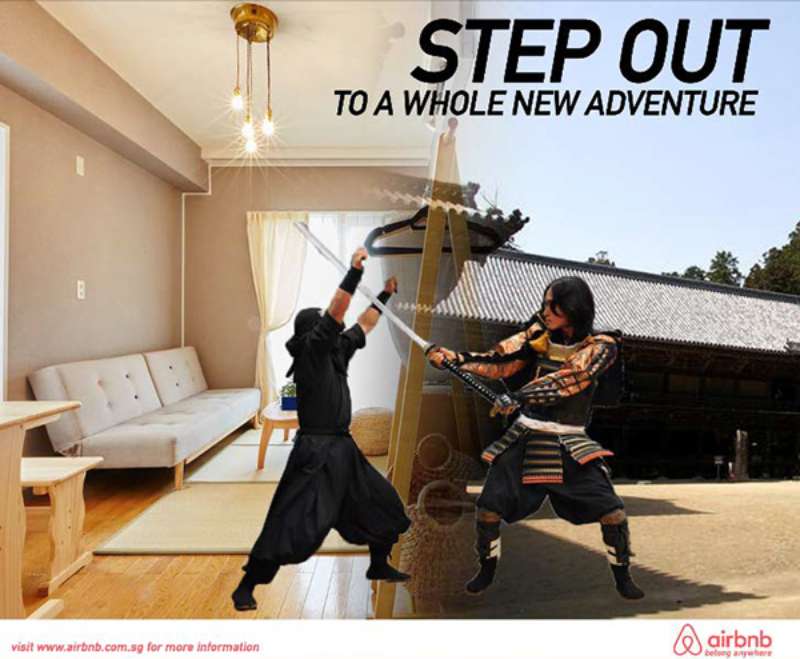
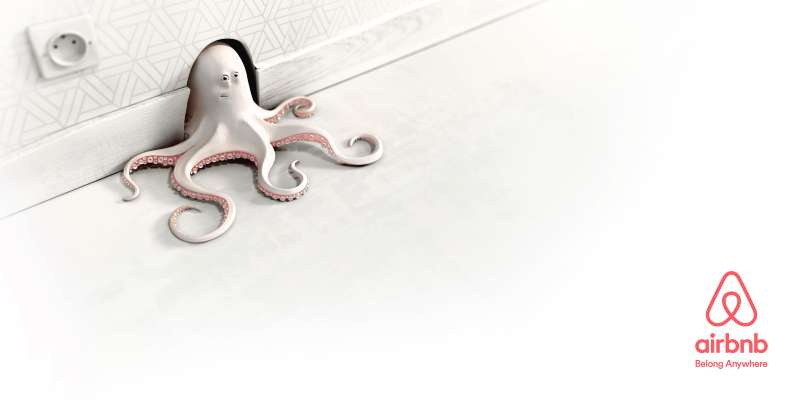
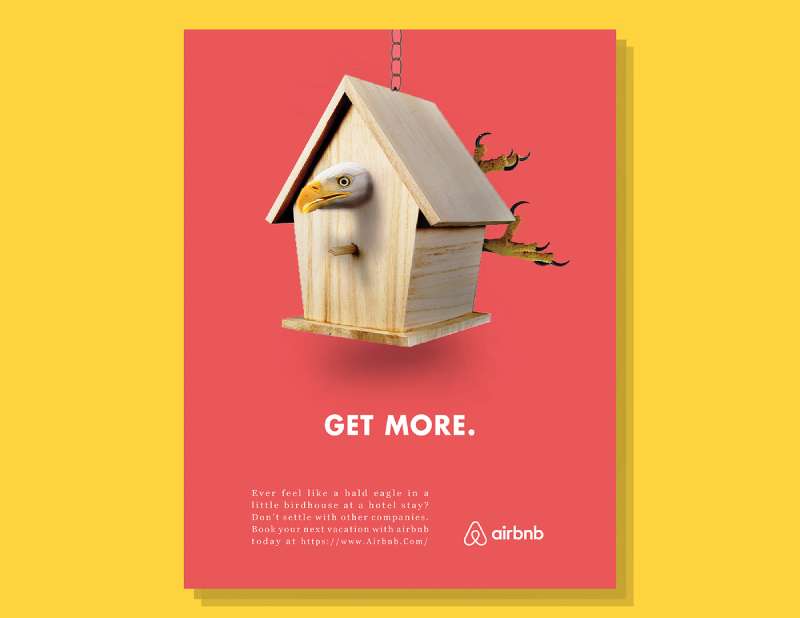
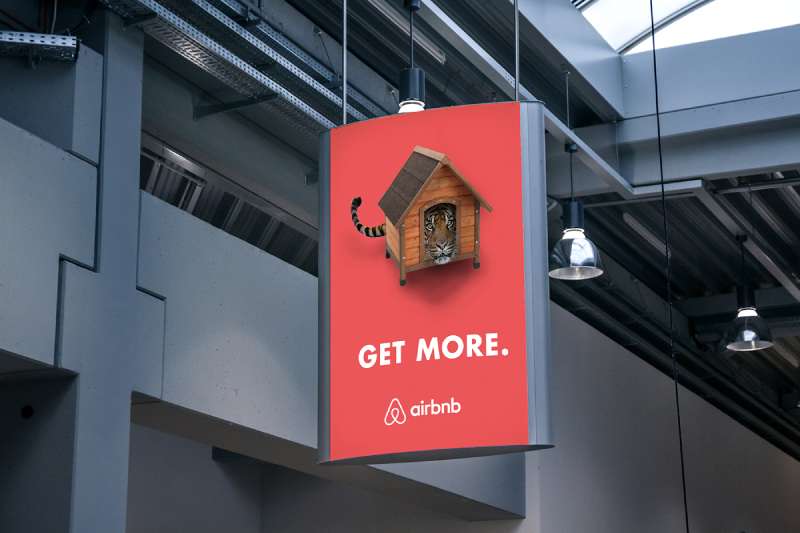
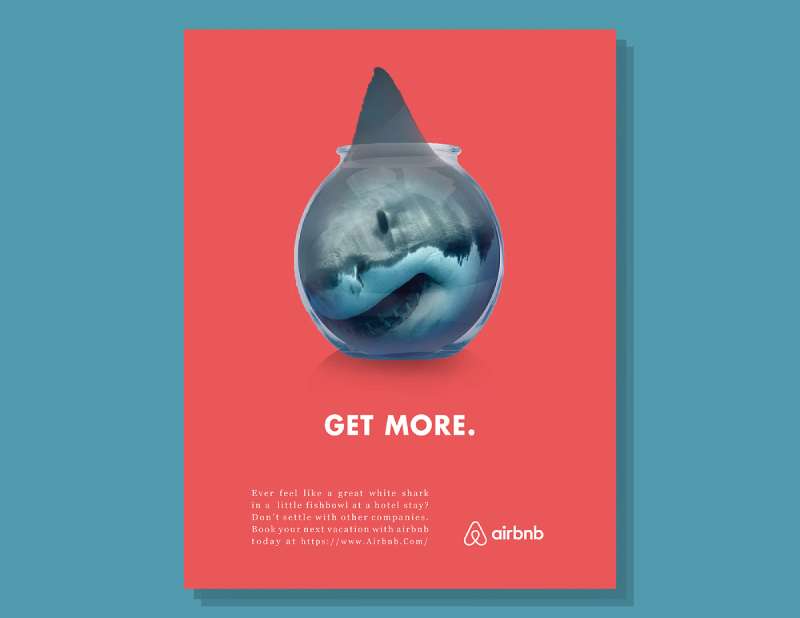
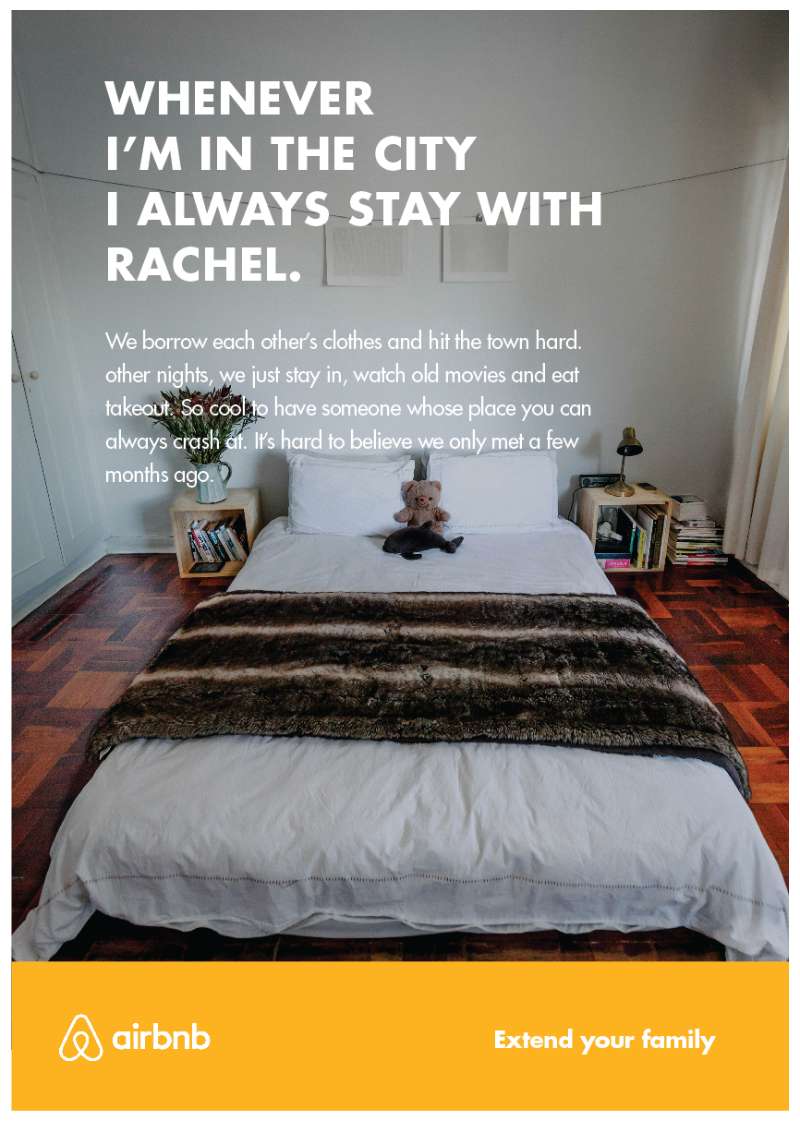
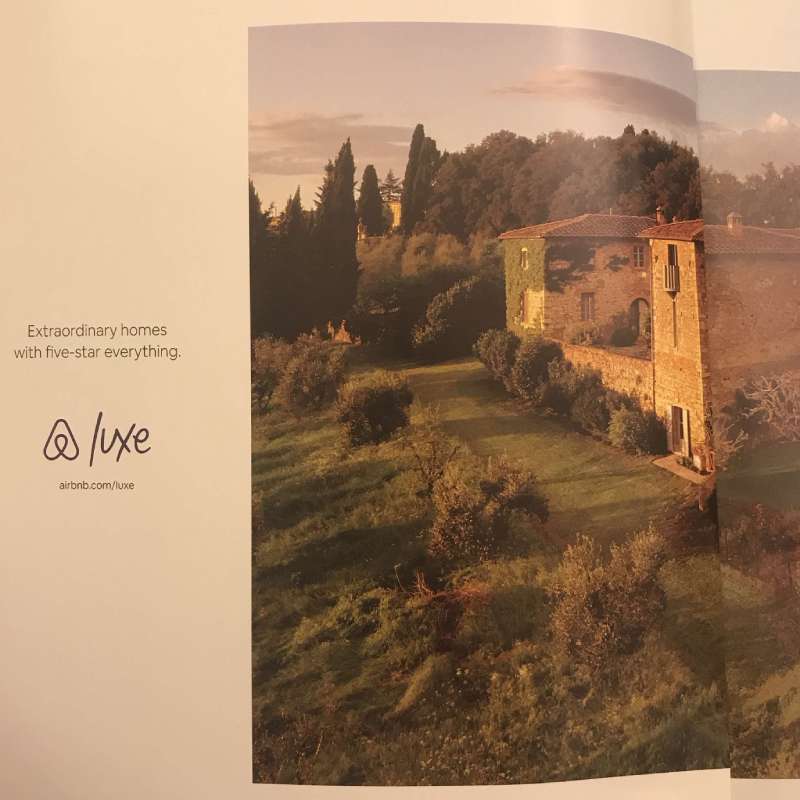
Airbnb print ads run one photograph edge to edge, one short headline, and the Belo lockup at small scale in a bottom corner. Text occupies under 15% of the frame in most executions. The palette stays inside the photograph itself; Rausch appears only in the mark and occasional rules.
Image-to-text ratio: roughly 85:15, which forces the photograph to carry the argument and leaves the copy to name it.
Type: Airbnb Cereal in Book and Medium, rarely above two weights in a single layout. Cereal’s tall lowercase letter height relative to its capitals keeps short headlines legible at billboard distance and at thumbnail size, which is exactly what the “from button to billboard” brief demanded.
Placement: headline anchored low-left, below the optical center, so the eye lands on the room first and the sentence second. That ordering is the whole visual hierarchy of the layout.
Look, the restraint here is not decoration. Fewer elements means the photograph reads in the 1.5 seconds a poster gets. Generous empty margin around the type does more work than any graphic device would.
Cereal itself is a geometric sans-serif typeface with humanist detailing, built by Dalton Maag over roughly 18 months and launched 15 May 2018 in six weights. It replaced a mix of Helvetica Neue and system fonts.
One honest limitation: the format collapses when the photograph is weak. There is no typographic structure holding it up, no underlying grid system doing visible work. A mediocre interior shot produces a mediocre ad.
How Do Airbnb TV Commercials Differ From Its Print Ads?
Airbnb TV commercials use narrative and animation; print uses a single static frame. Since 2022 the majority of Airbnb film work is animated rather than shot, which reverses the brand’s 2014-2021 documentary approach. The tagline placement stays constant across both.
Wall and Chain, VCCP Berlin, 2014
Four minutes of 2D animation from Psyop, directed by Marie Hyon and Marco Spier. Two former border guards meet through a booking. No product interface appears until the endframe.
Landslide, Made Possible by Hosts, 2021
Photographer Cole travels the New England coast with his family. Still photographs cut to a Fleetwood Mac track, with no dialogue and no on-screen graphics until the tagline card.
Get an Airbnb, BUCK, 2023
Three 30-second spots. A hotel pool crowded with kids flips into a private thatched-roof villa. Each miniature set replicates a real listing down to the furniture. This is motion graphics doing comparative advertising without naming the competitor.
Surrounded, BUCK, 2025
The campaign leaves the white cyclorama for a full-frame forest. Shallow depth of field, atmospheric particles, and a home nested inside the environment instead of floating on a stage.
The constant across all four: the product is never demonstrated. Airbnb sells the feeling of the stay, which is narrative-driven design applied to a booking platform.
How Has Airbnb Advertising Evolved Since 2008?
Airbnb advertising has moved through four phases: no paid brand work before 2014, agency-led emotional storytelling from 2014 to 2017, a performance-marketing detour in 2019, and in-house brand campaigns from 2021 onward. The 2014 rebrand marks the structural break.
Period Strategic shift Representative campaign 2008-2013 Cursive blue wordmark, no brand advertising None 2014-2017 Belo launch, agency-led emotional film Wall and Chain, Live There 2019-2020 Performance marketing on Google, weak returns Search and biddable only 2021-2026 In-house studio, brand over performance Made Possible by Hosts, Icons The July 2014 brand overhaul by DesignStudio replaced the cursive wordmark with the Belo and set Belong Anywhere as the platform line. Everything after it inherits that system.
Airbnb’s 2019 lean into paid search did not deliver what the company expected, per Skift. Hiroki Asai arrived from Apple in July 2020 and pushed the budget back toward brand.
Roughly 90% of Airbnb traffic arrives direct or through free search listings, according to BTIG figures cited by Skift, which is why the brand can afford to spend on visual identity instead of bidding.
Which Agencies Created Airbnb Advertising?
Five organizations produced the bulk of Airbnb’s advertising. DesignStudio built the identity in 2014. TBWAChiatDay LA held the global account from September 2014 to 2017. VCCP Berlin created Wall and Chain. BUCK animates the current campaigns. The in-house studio directs everything since 2021.
Organization Role Years DesignStudio, London Rebrand, Belo, brand film 2013-2014 TBWAChiatDay LA Global creative agency of record 2014-2017 VCCP Berlin Wall and Chain campaign 2014 Dalton Maag Airbnb Cereal typeface 2016-2018 BUCK Animation for Airbnb It, Get an Airbnb, Experiences 2022-present Jonathan Mildenhall became CMO in 2014 after running global creative at Coca-Cola, and he appointed TBWAChiatDay. Airbnb split with the agency in 2017; Kantar Media put Airbnb’s US measured media at roughly $65 million in the final year of that relationship.
Hiroki Asai runs marketing today. He spent 18 years at Apple as VP of Global Marketing Communications and holds a BA in graphic design from Cal Poly San Luis Obispo, which shows in how tightly the ad work tracks the documented brand rules.
What Can Designers Learn From Airbnb Ads?
Airbnb’s advertising rewards five specific craft decisions: a single dominant photograph, a two-weight type system, a mark small enough to disappear, copy that names a feeling rather than a feature, and one animation language reused across years.
- Give the photograph 85% of the frame and let the headline arrive second
- Lock the type system to two weights of one typeface and stop adding
- Scale the mark down until it stops competing with the image
- Write the tagline as an instruction, not a description (“Live there”, “Airbnb it”)
- Build one animation world and reuse it for three years instead of restarting each quarter
- Set the headline below the optical center so the room reads first
The Belo is worth studying on its own terms. Four readings compressed into one rounded form is aggressive use of the counter shapes inside a mark, and the internet mocked it for a week in July 2014. It survived because the system around it never wavered.
The reusable lesson: consistency beats novelty. Airbnb has run the same type hierarchy since 2018 and the same mark since 2014.
How Do Airbnb Ads Compare to Vrbo and Booking.com Ads?
Airbnb advertises the stay; Vrbo advertises the absence of a host; Booking.com advertises price and volume. Airbnb spent $2.6 billion on sales and marketing in 2025 against Booking Holdings’ $8.2 billion, and still outdraws both on direct traffic.
Vrbo’s creative names the difference explicitly. Its 2023 spots shifted messaging from “Whole Vacation Homes” to “Private Vacation Rentals”, and the 2024 Rooster and Spaceship films mocked eccentric listings without naming Airbnb. The BBB’s National Advertising Division later ruled against a Vrbo claim implying all Airbnb stays include a host present.
Booking.com runs celebrity-led performance creative at scale. Its parent spends 30% of revenue on marketing; Airbnb spends 21%.
The design gap is real. Vrbo’s ads are shot documentary-style with real families and carry more on-screen copy per frame. Airbnb’s are animated, near-wordless and built on one continuous camera language.
Airbnb’s approach has more in common with other platform brands that moved creative in-house than with its direct rivals; Uber ads follow a similar path from agency-led film toward internal studios, and the emotional-storytelling model Mildenhall imported traces back to Coca-Cola ads of the early 2010s.
What Makes Airbnb Advertising Work?
Airbnb advertising works because the same small set of decisions has held for over a decade. One mark. One typeface at two weights. One coral. Photography or animation given almost the whole frame.
The story the brand tells about itself has changed four times since 2014, moving from belonging to living like a local to hosting to category expansion. The design system underneath it has not.
That gap is the actual lesson. Messaging is allowed to move; the color system and type are not.
For anyone building a campaign, the takeaway is unglamorous. Pick a small kit of visual rules, then defend them through every strategy change your marketing team throws at you.
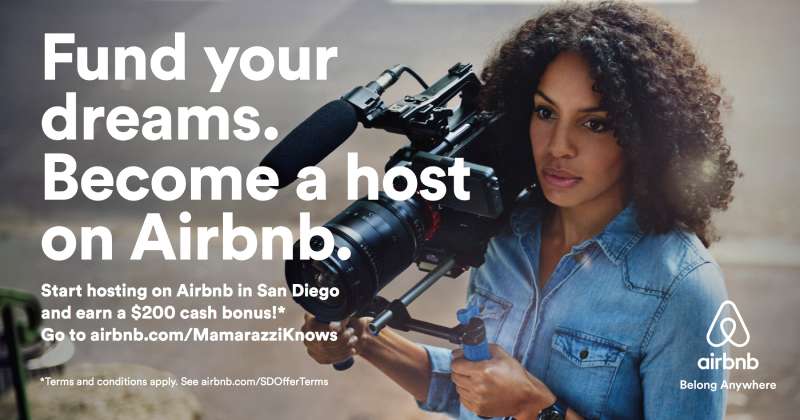
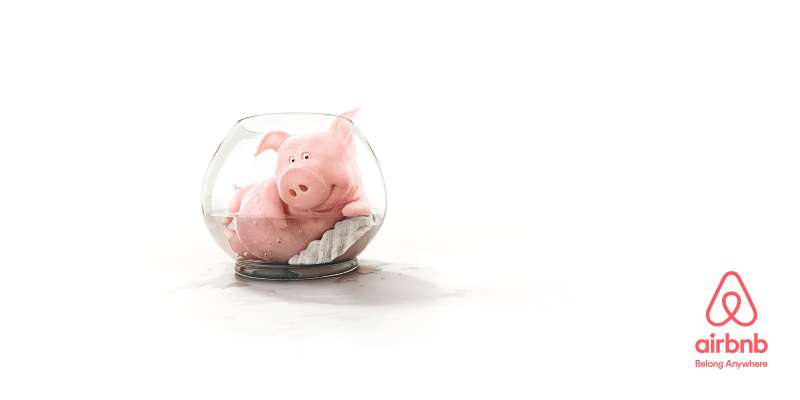
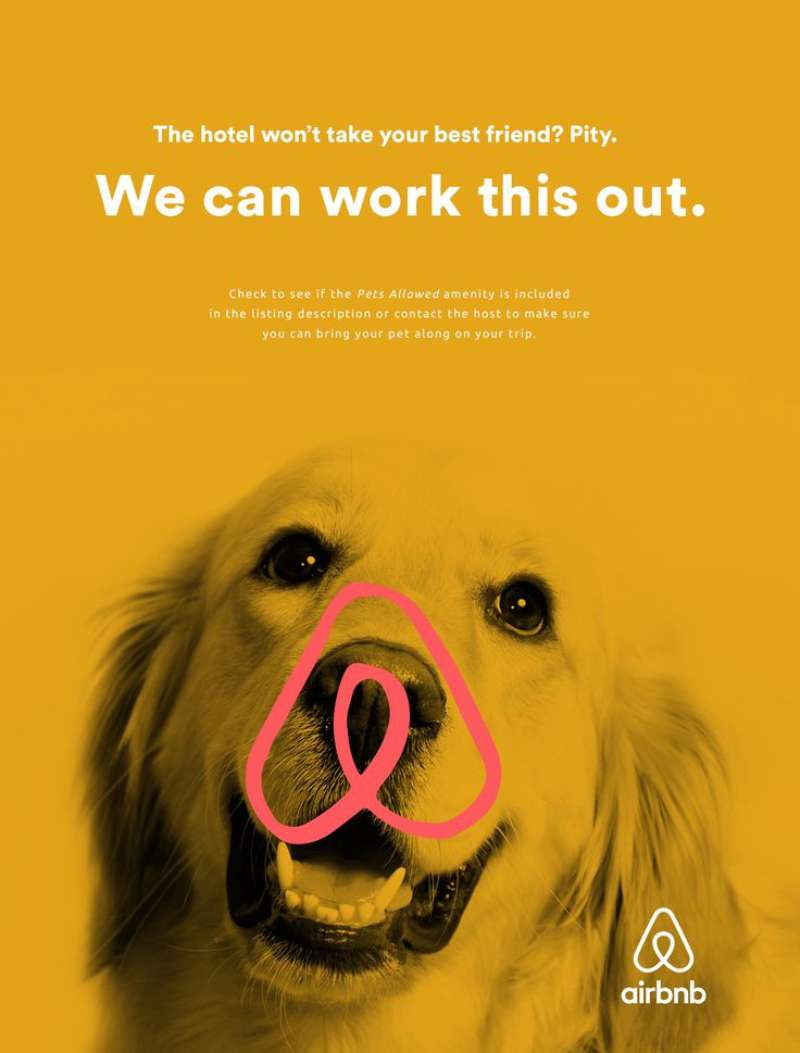
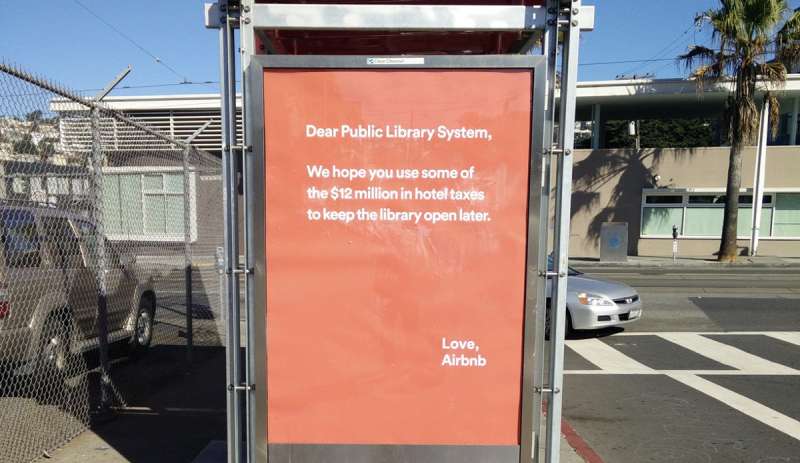
Airbnb Ads Examples




FAQ on Airbnb Ads
Who creates Airbnb ads?
Airbnb’s in-house creative studio writes and directs most current work. BUCK animates, Weber Shandwick runs PR launches. TBWAChiatDay Los Angeles held the global account from 2014 to 2017, and VCCP Berlin made Wall and Chain.
What font do Airbnb ads use?
Airbnb Cereal, a custom geometric sans-serif built by Dalton Maag and launched on 15 May 2018 in six weights. It replaced Helvetica Neue across the platform. The brand type brief was “from button to billboard”.
What color do Airbnb ads use?
Rausch, hex #FF5A5F, a warm coral named after the San Francisco street where the founders rented their first air mattress. Ads keep it to the mark and small accents. Photography supplies everything else.
What is the Belo in Airbnb ads?
The Belo is the Airbnb logo, designed by DesignStudio and launched on 16 July 2014. It merges a person, a location pin, a heart and the letter A, and sits small in every layout.
Has Airbnb run a Super Bowl ad?
Once. We Accept aired in the second quarter of Super Bowl LI on 5 February 2017, bought days before kickoff. iSpot ranked it the seventh most digitally engaging spot of that game.
How much does Airbnb spend on advertising?
Airbnb reported $2.6 billion in sales and marketing for 2025, up from $2.1 billion in 2024, per PhocusWire. That equals 21% of revenue. Booking Holdings spent $8.2 billion the same year.
Why are Airbnb ads animated?
Animation lets Airbnb compare itself to hotels without filming either. BUCK’s isometric miniature sets, each modelled on a real listing, fold and flip in one continuous camera move. The style has run since 2022.
What song plays in Airbnb commercials?
Licensed catalogue tracks, rarely original score. Made Possible by Hosts leaned on Fleetwood Mac. The Get an Airbnb pool spot used a Kelis track, per iSpot. The Grand Adventure used Magical Mystery Tour.
Where can I watch old Airbnb commercials?
Airbnb’s own library at video.withairbnb.com sorts spots by campaign. Ads of the World and AdForum carry the TBWAChiatDay credits. iSpot.tv logs air dates and estimated US TV spend per commercial.
Has Airbnb won advertising awards?
Yes. Wall and Chain took a D&AD Pencil in 2015. Until We All Belong won a Cannes Lion in 2017. Icons collected four Bronze Lions at Cannes 2025 across Media, PR and Brand Experience.
Conclusion
Airbnb ads reward study because the constraints stay visible. Airbnb Cereal at two weights, Rausch on the Belo, and a photograph or animation handed the rest of the frame.
The messaging has swung from Live There to Made Possible by Hosts to open anti-hotel comparison. The visual system absorbed every one of those turns.
Three habits carry over to any brand:
- Credit each campaign with an agency, a year and a market
- Keep the mark small enough to lose an argument with the image
- Let one animation language run for years instead of quarters
TBWAChiatDay, VCCP Berlin, Dalton Maag and BUCK each added a layer. The in-house studio guards it now, and the Cannes Lions keep arriving.
Steal the discipline, not the coral.

Renowned for his expertise in logo design and visual branding, Bogdan has developed a multitude of logos for various clients.
His skills extend to creating posters, vector illustrations, business cards, and brochures. Additionally, Bogdan's UI kits were featured on marketplaces like Visual Hierarchy and UI8.
He also wrote in the past years on sites like Design Your Way, WebDesignerDepot, WPDean, Designmodo, Speckyboy, Slider Revolution, and more.
- Canva vs PowerPoint: Which Is Better for Presentations? - 22 September 2026
- How to Install Fonts on Mac (Step-by-Step Guide) - 20 September 2026
- From Mockup to Code: How AI-Augmented Development Speeds Up the Design Handoff - 19 September 2026

Bogdan Sandu is a seasoned designer who has been designing websites since 2008. Renowned for his expertise in logo design and visual branding, Bogdan has developed a multitude of logos for various clients. His skills extend to creating posters, vector illustrations, business cards, and brochures. Additionally, Bogdan's UI kits were featured on marketplaces like Visual Hierarchy and UI8. He also wrote in the past years on sites like Design Your Way, WebDesignerDepot, WPDean, Designmodo, Speckyboy, Slider Revolution, and more.
You Might Also Like