Dell ads have made the same argument since 1985. Show the machine, state the price, skip the theater.
That plainness produced one of the most repeated catchphrases in television history, plus a print style built on white space, a single blue, and a tilted letter E.
Here you get the campaigns by name, with the agency, year and market behind each one.
- Flagship work, from the PC’s Limited magazine ads to Alienware’s Parallel Realities
- Layout, typography and palette analysis of the print advertisements
- The agencies and creatives responsible, from DDB Chicago to VML
Plus the six habits worth stealing for your own advertising design.
Dell advertising spans 41 years, 6 lead agencies and 8 flagship campaigns, from the 1985 PC’s Limited Turbo PC magazine ads to Alienware’s “Parallel Realities” in October 2025. The work runs on one repeated device: an ordinary person standing next to a plainly priced machine.
Media has moved from mail-order catalog spreads to national television, YouTube, and retail activations across 35 Indian cities.
This page covers the campaigns by name, with the agency, year and market behind each one, plus the layout and typography decisions that carry them.
Dell Advertising at a Glance
Dell has advertised since 1985, working primarily with DDB Chicago, Y&R New York and VML. Its best-known campaigns are “Be Direct,” “Dude, You’re Getting a Dell” and “The power to do more.” The visual signature combines one blue, a white ground and the canted “E.”
| Attribute | Value |
|---|---|
| First major campaign | PC’s Limited Turbo PC magazine ads, 1985 |
| Lead agencies | DDB Chicago, Lowe Lintas, Mother New York, Y&R New York, VMLY&R / VML |
| Best-known taglines | “Be Direct” (1998), “Easy as Dell” (2001), “Yours is Here” (2007), “The power to do more” (2011) |
| Primary media | Computer magazines, mail-order catalogs, national TV, YouTube, out-of-home, retail |
| Primary markets | United States, United Kingdom, India, Australia |
| Recognition | TED Ads Worth Spreading top ten, 2013 (“Annie”); Alienware Area 52 documented by WARC |
| Visual signature | Dell blue on white, canted “E,” product at or below optical center |
| Recurring copy device | The price stated outright in the headline |
Which Dell Ad Campaigns Are the Most Famous?
Six campaigns define Dell advertising: the PC’s Limited direct ads (1985), Be Direct (1998), Dell4me (1999), Dude You’re Getting a Dell (2000 to 2003), The power to do more (2011 onward) and Alienware Parallel Realities (2025). Each one changed the layout, not just the message.
PC’s Limited Direct Magazine Ads (1985 to 1987)
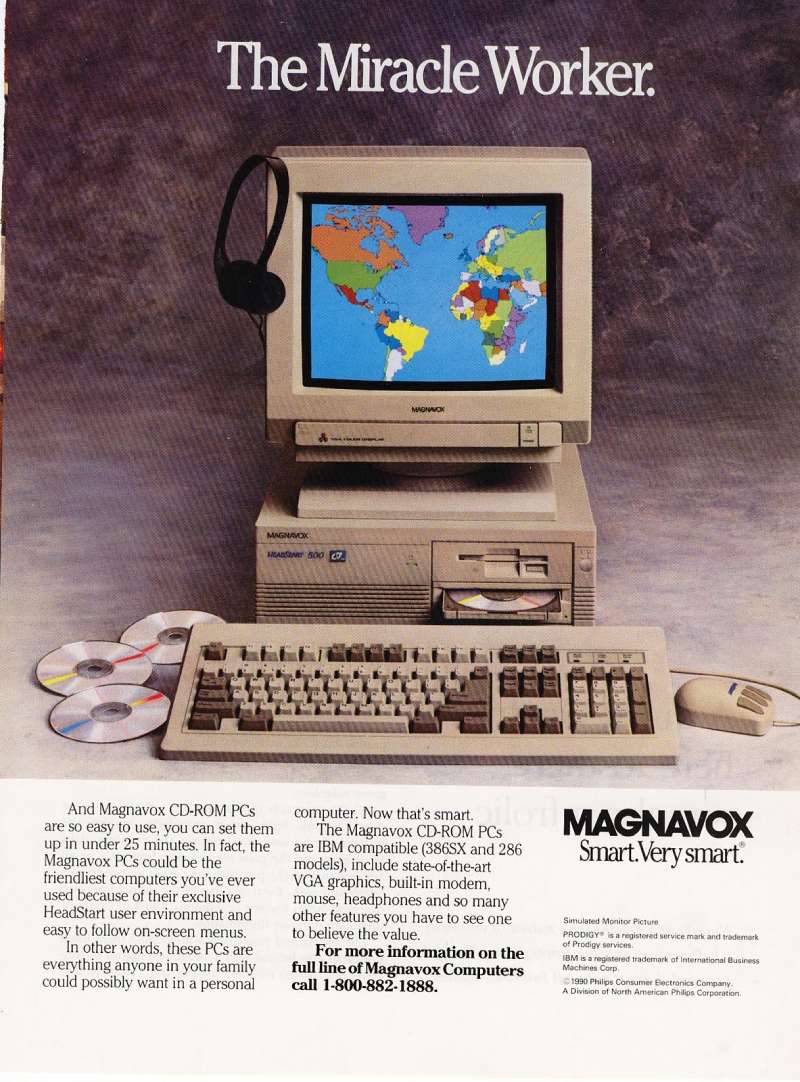
Michael Dell ran these in the back pages of national computer magazines from his Austin base, selling the Turbo PC by phone with customized components.
The layout was a spec sheet with a photo on top. Intel 8088, 640 kilobytes of RAM, eight expansion slots, price, phone number. No headline in the modern sense.
The company grossed $6 million in its first year, according to Encyclopedia.com.
Be Direct (1998 to 2001)

Budget: $70 million, worldwide.
Argument: no retailer, no markup, order straight from Austin.
Follow-up: Dell4me, a $30 million push themed “Your thoughts exactly,” aimed at individual buyers after service complaints went public.
Print executions leaned hard on empty white ground and a single machine, which is the closest Dell ever got to real minimalist design.
Dude, You’re Getting a Dell (2000 to 2003)

DDB Chicago built the campaign around Steven, played by Ben Curtis, across roughly 20 television spots aimed at students and their parents.
Sales rose 100 percent and market share grew 16.5 percent (Mental Floss). Curtis was dropped in February 2003 after a marijuana arrest in New York.
Worth remembering: the character existed before the line. DDB New York and Lowe Lintas developed Steven first, and the catchphrase only landed in his fourth spot.
The Power To Do More (2011 to 2016)

Y&R New York carried this one across newspapers, magazines, billboards, airport walls and TV starting July 2011, timed to Dell’s shift from hardware vendor to services company.
“Annie,” about a girl who wants to fly, made TED’s ten best global ads of 2013.
“Meet Thomas: Creator of an Alternate Universe” pulled 2.5 million YouTube views in three weeks.
The 2010 logo update that enclosed the wordmark in a blue circle shipped alongside this platform.
Welcome to Now and There’s an Innovator in All of Us (2019 to 2021)
VMLY&R made both, in partnership with Intel. “Tourists” followed visitors to the Great Barrier Reef uploading photos that get analyzed for reef damage.
Biscuit Filmworks handled production on “There’s an Innovator in All of Us,” with Framestore on effects and Duotone on music.
Format shift: customer proof replaced product demo. The machine is barely on screen.
Alienware Parallel Realities (2025)

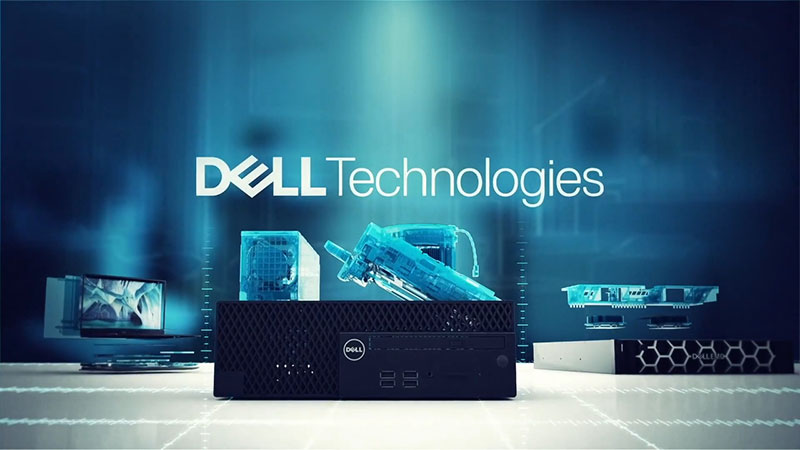
VML published this in the United States in October 2025 for Alienware and Dell Technologies.
The idea: glitch other brands’ commercials. Alienware worked with Ford, Wendy’s and Aflac to interrupt their own spots with gaming footage.
Gamers get treated as explorers rather than spec readers, which is a real departure for a category built on frame-rate charts.
Dell Ads From the India Festive Season (2024 to 2025)

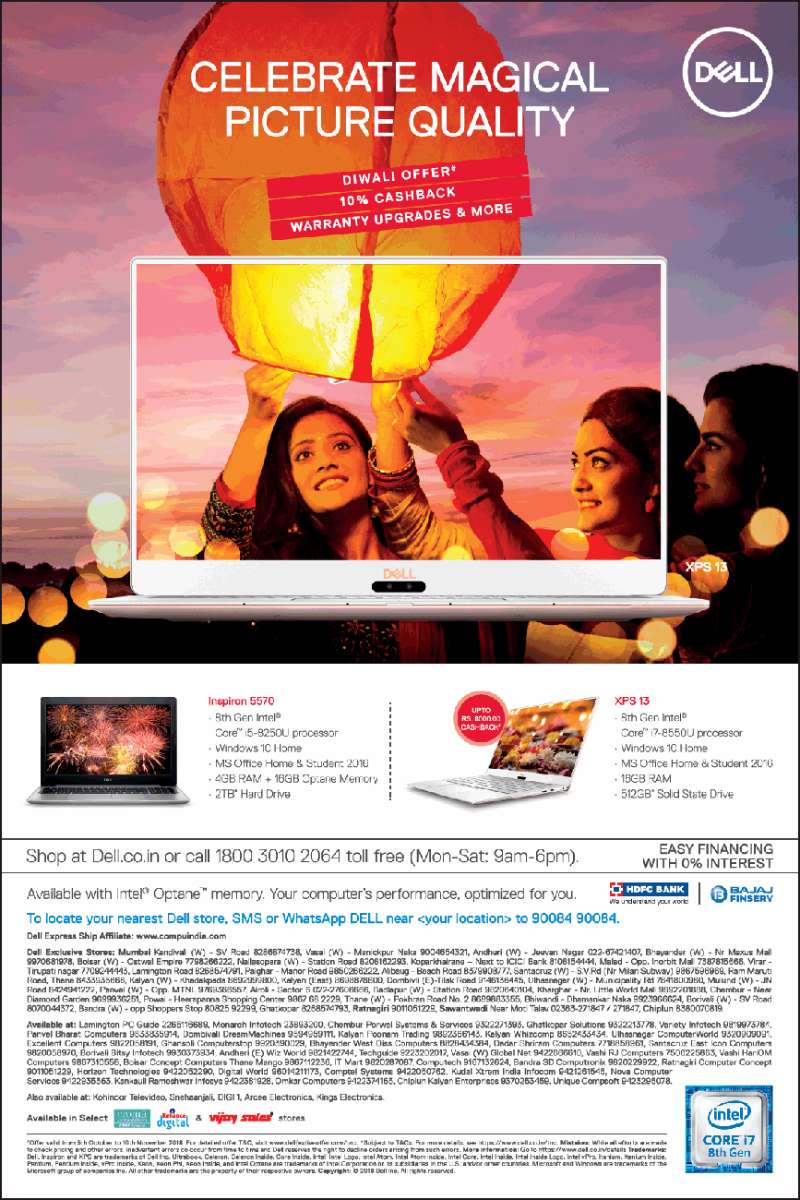
“Sweets,” made by VML, follows a young man rediscovering a forgotten kheer recipe with an Inspiron 14 Plus and his grandmother.
It ran in Hinglish, Tamil, Telugu, Bengali and Marathi, with on-ground activations in 35 cities and 60 locations.
VML India followed with a seven-video Back to School campaign in 2025. Dell has held India’s Most Trusted Brand position in the TRA Brand Trust Report for six consecutive years.
How Do Dell Print Ads Work Visually?
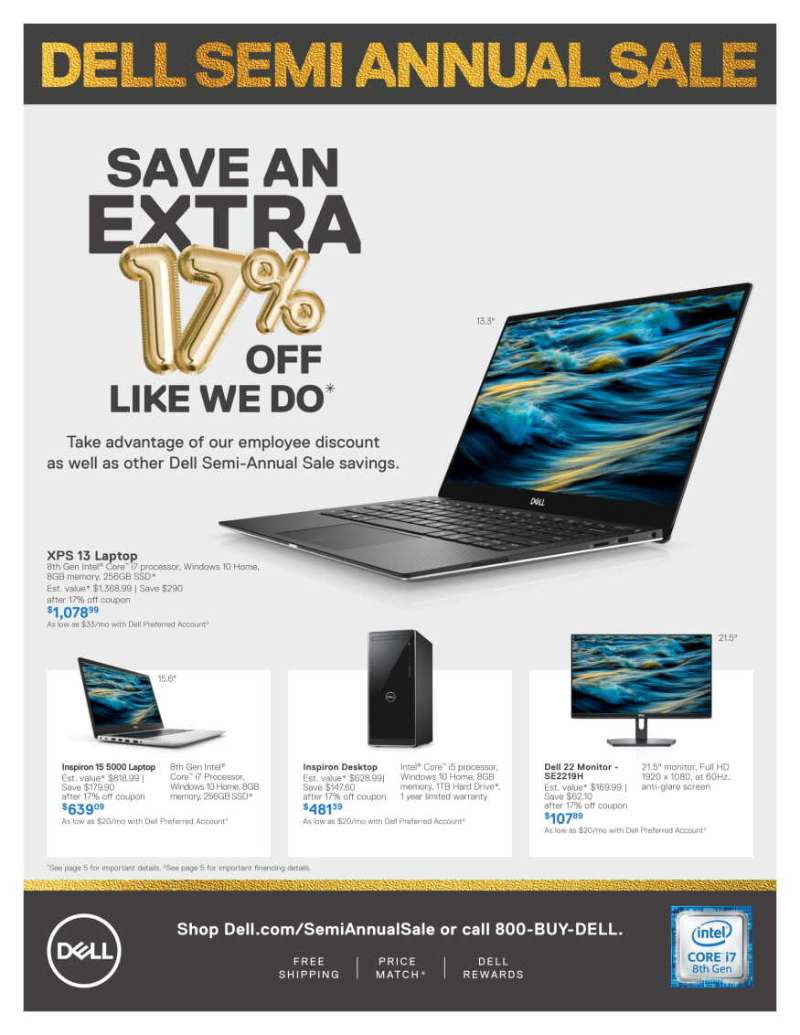
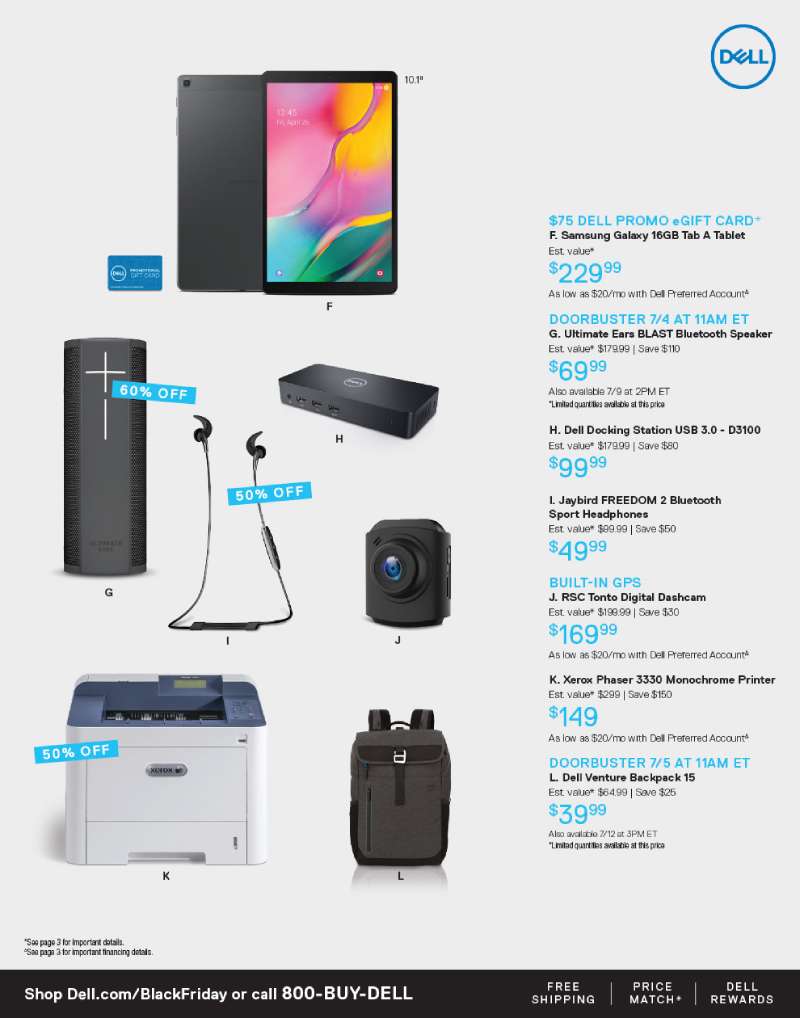
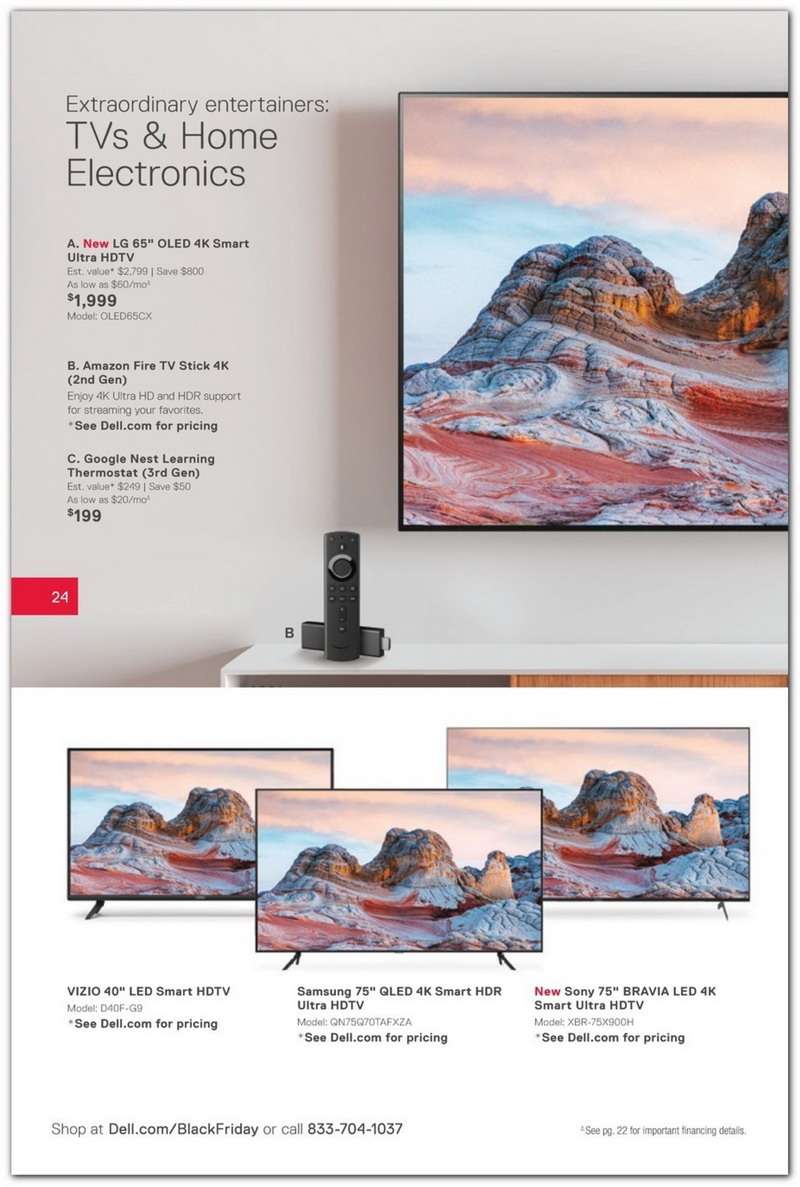
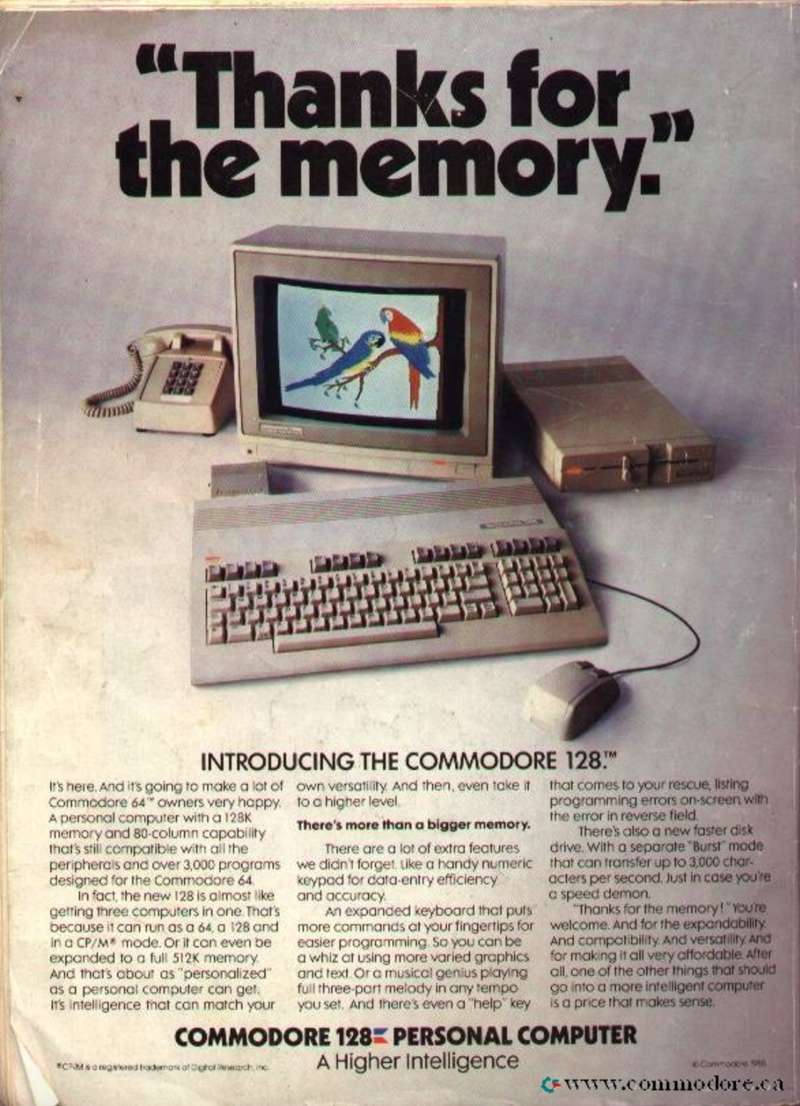
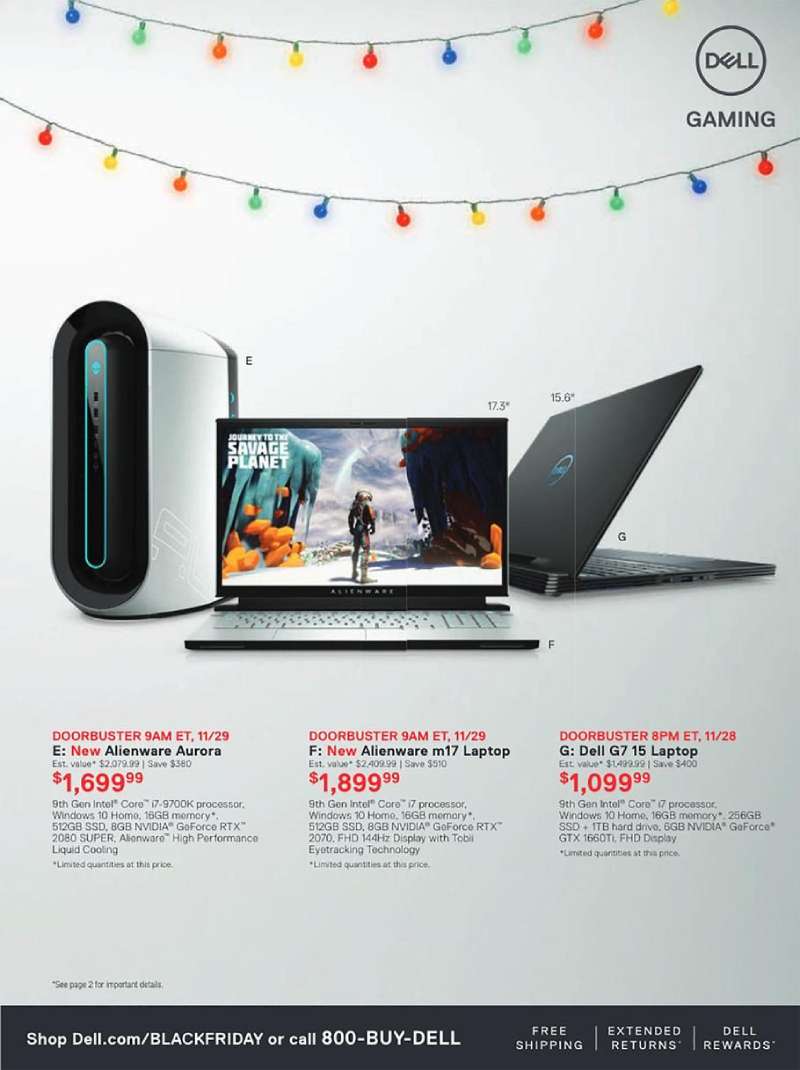
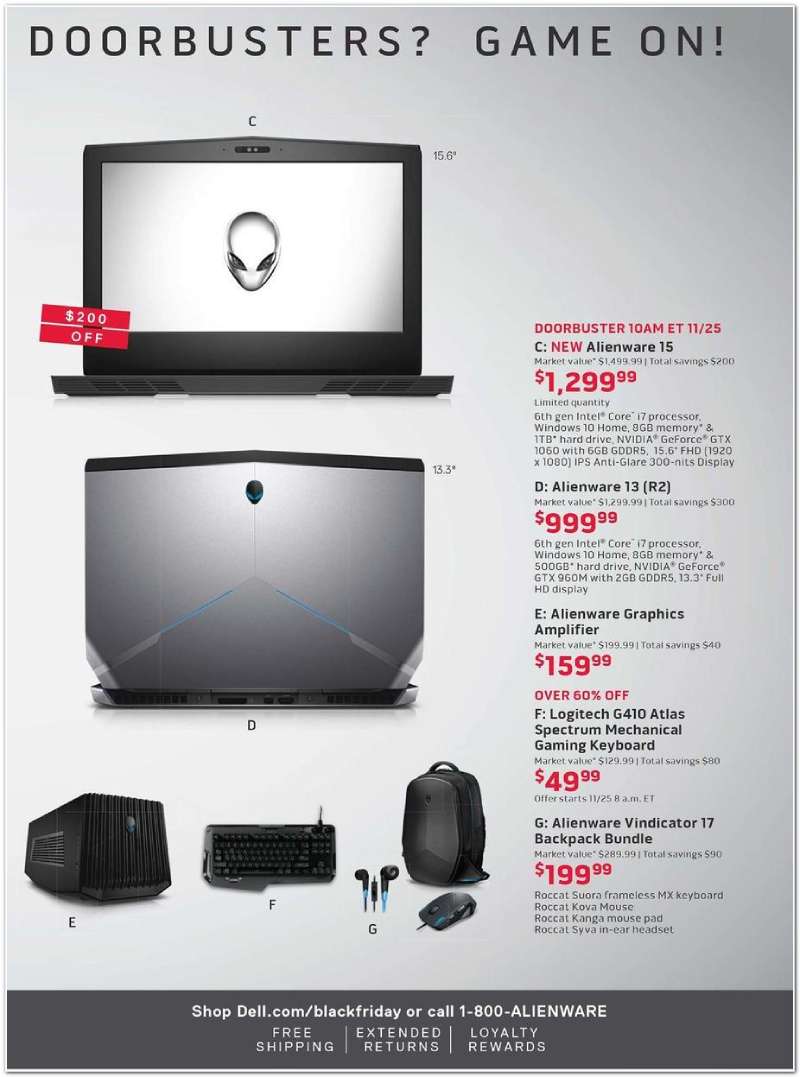
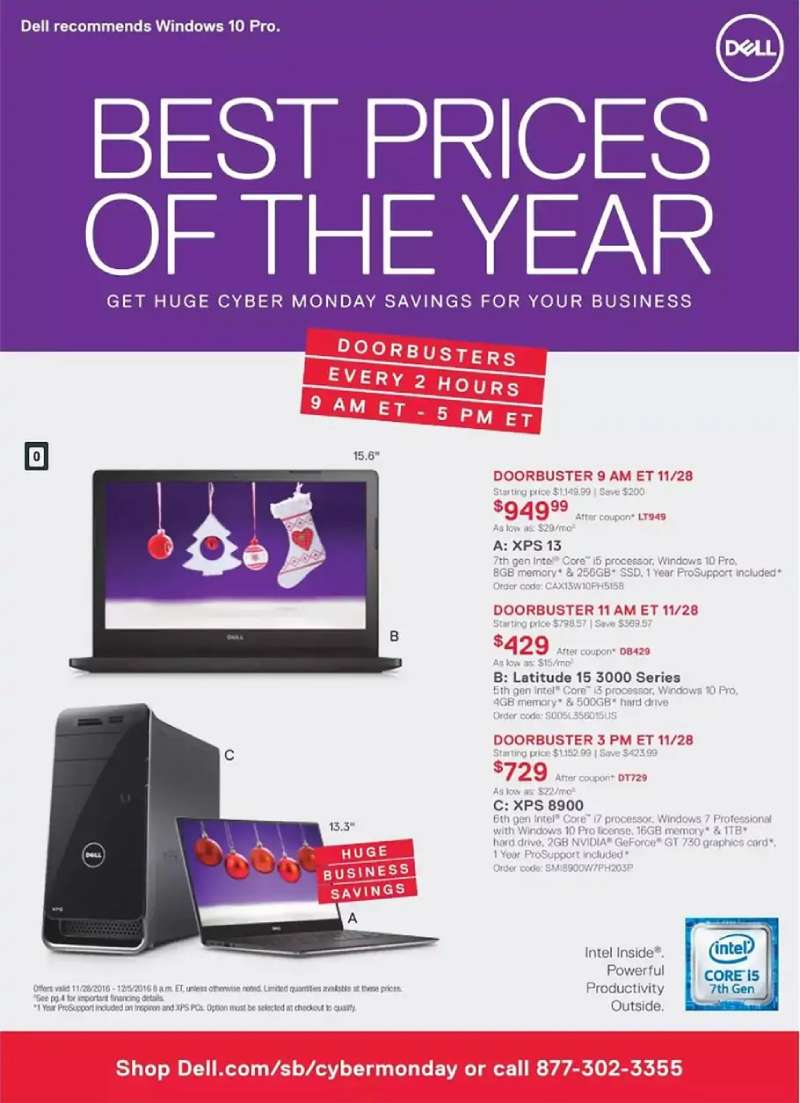
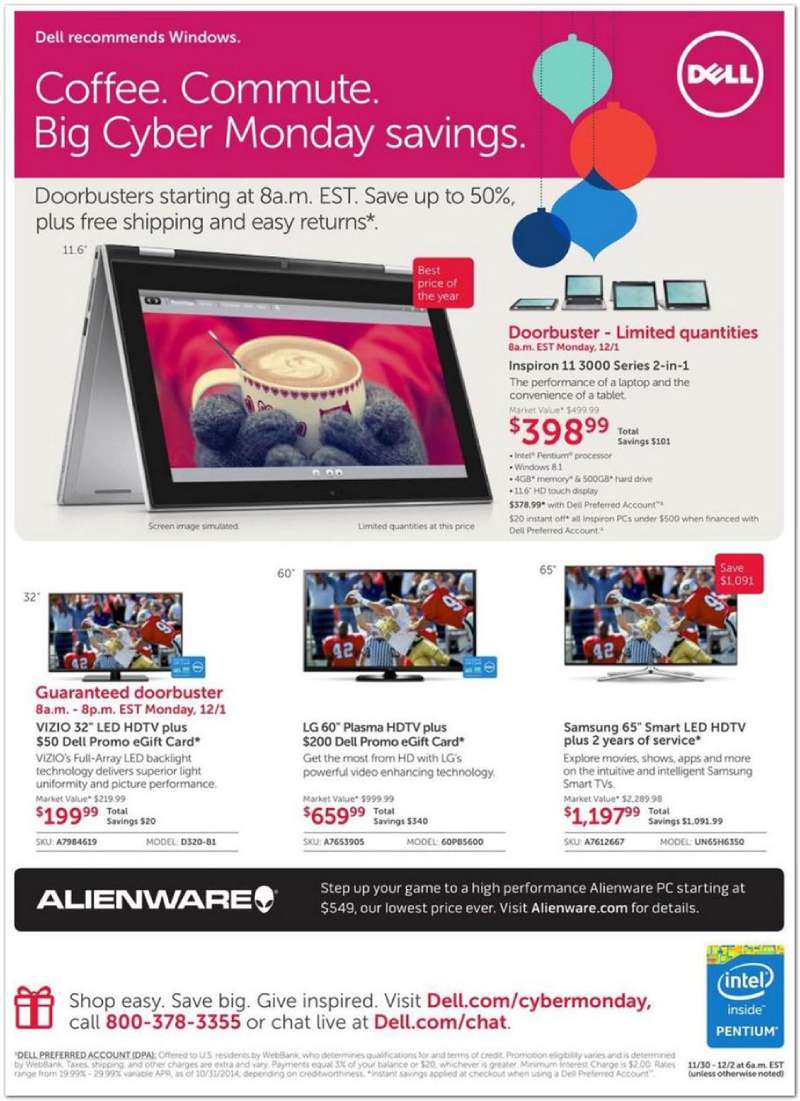
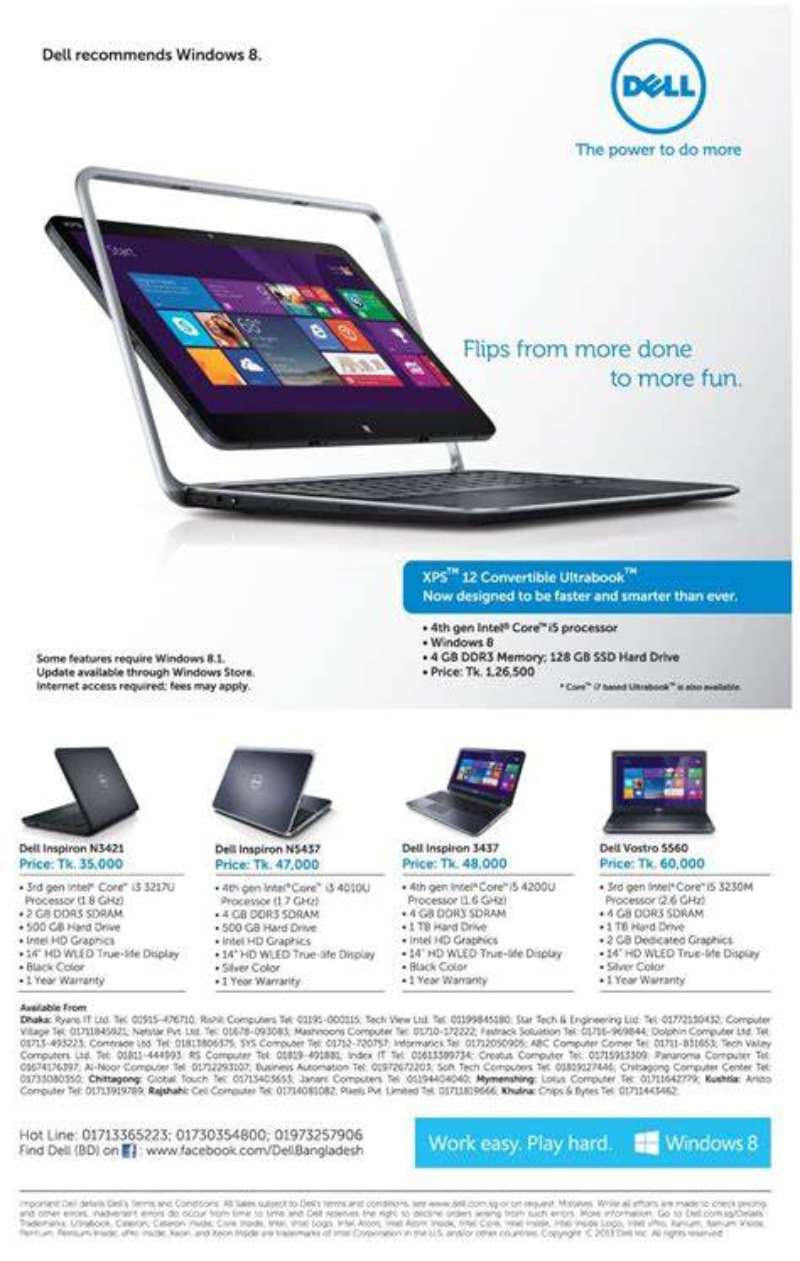
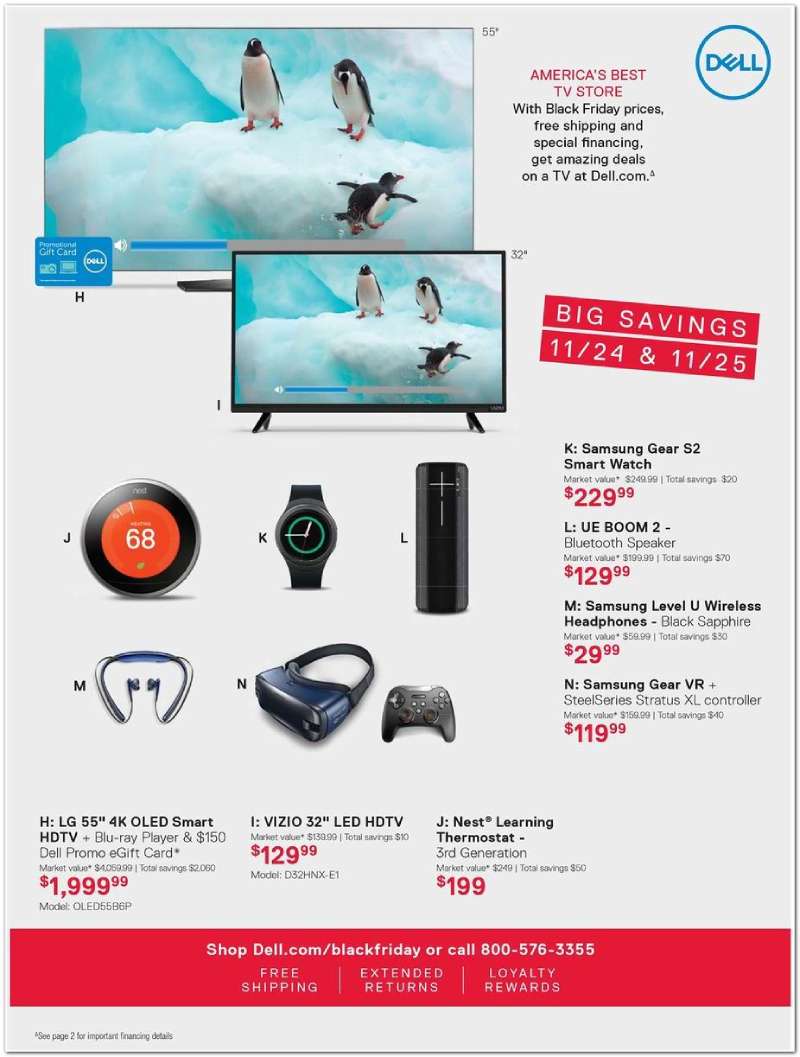
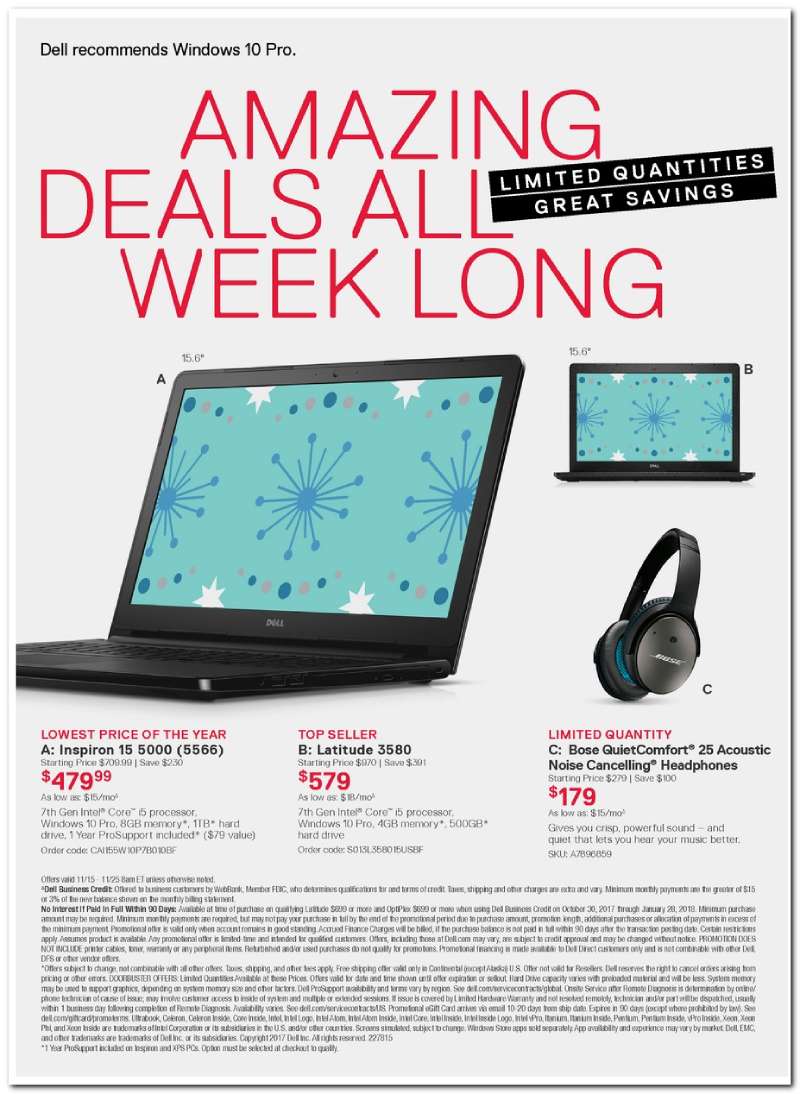
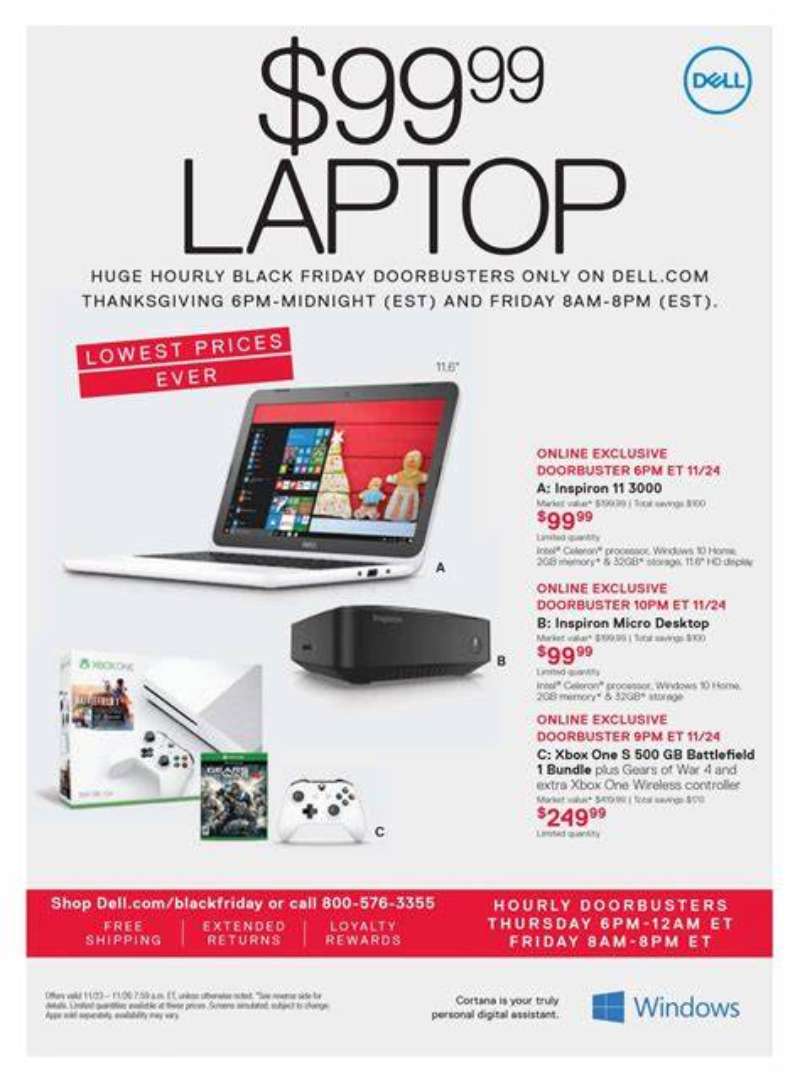
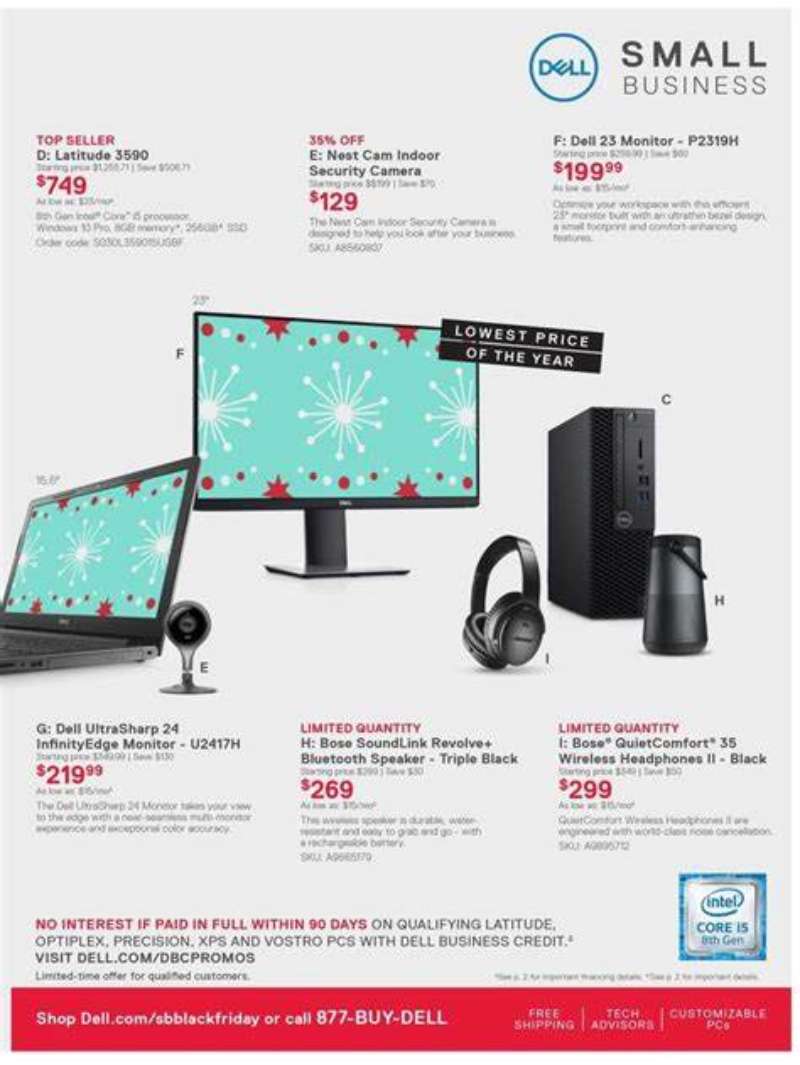
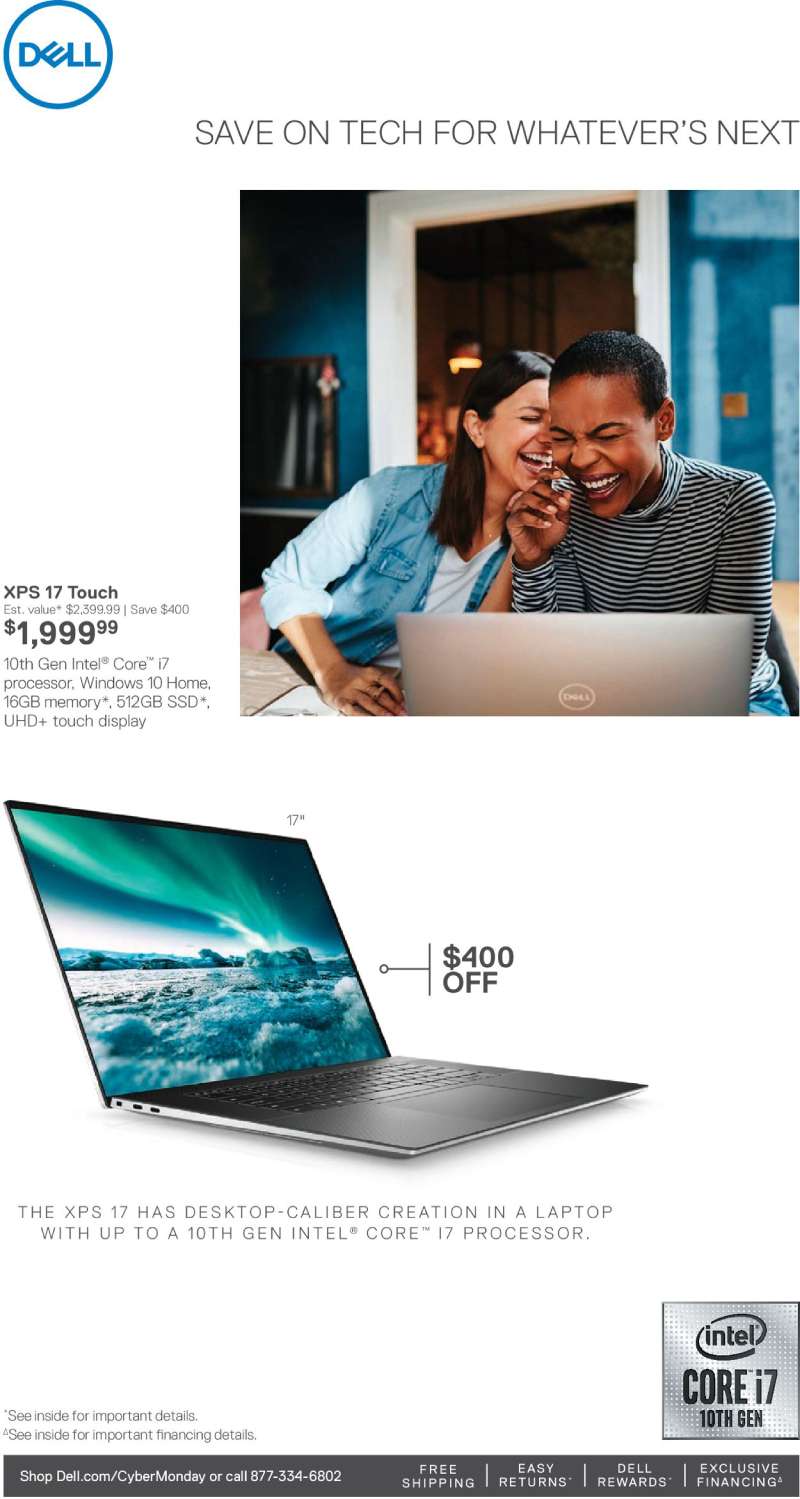
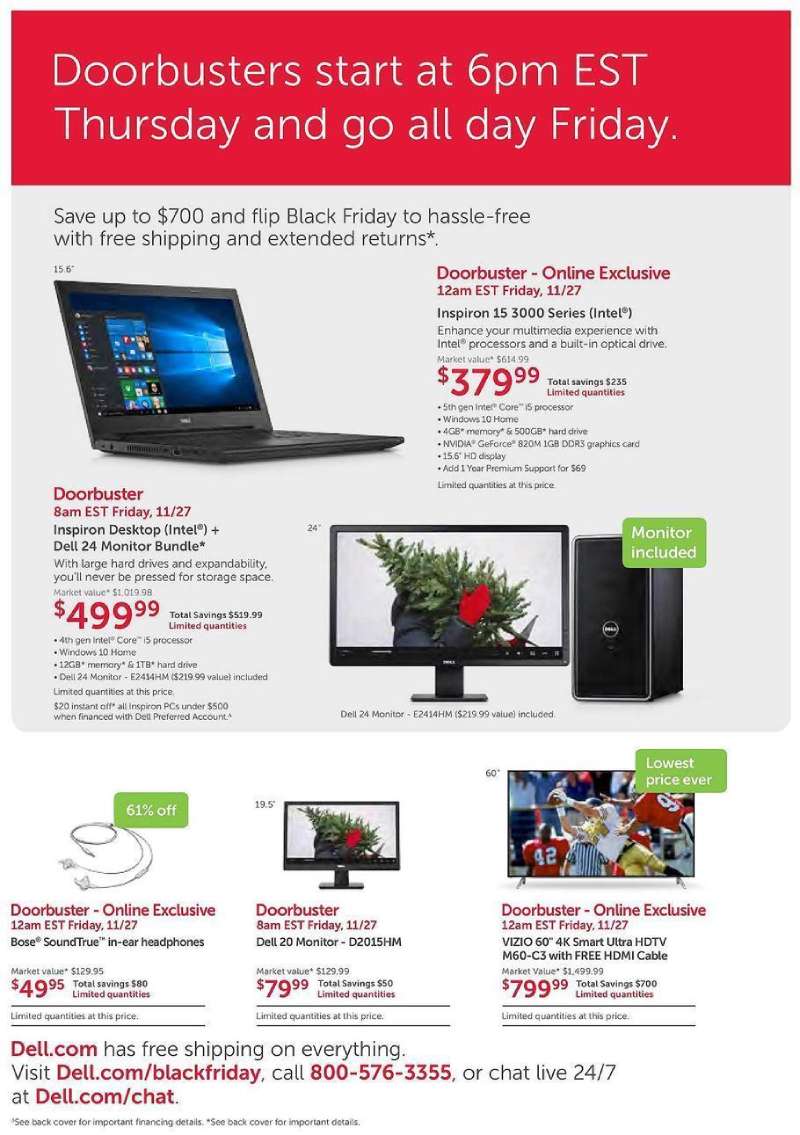
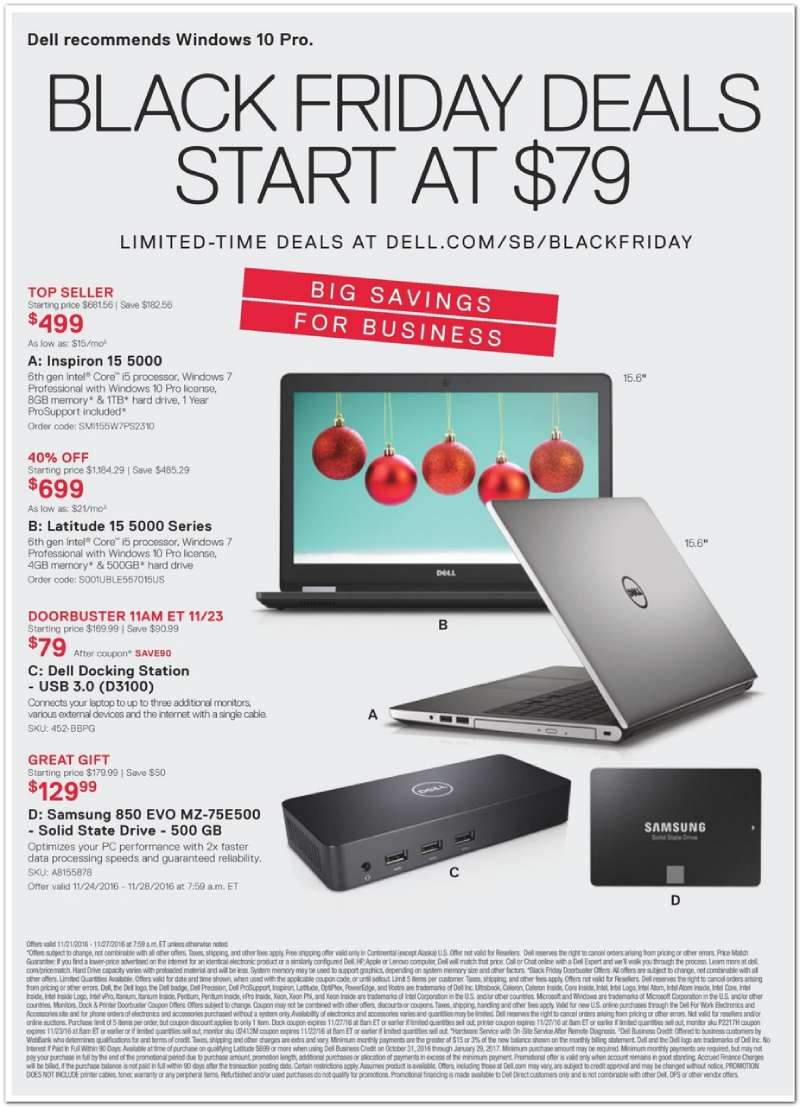
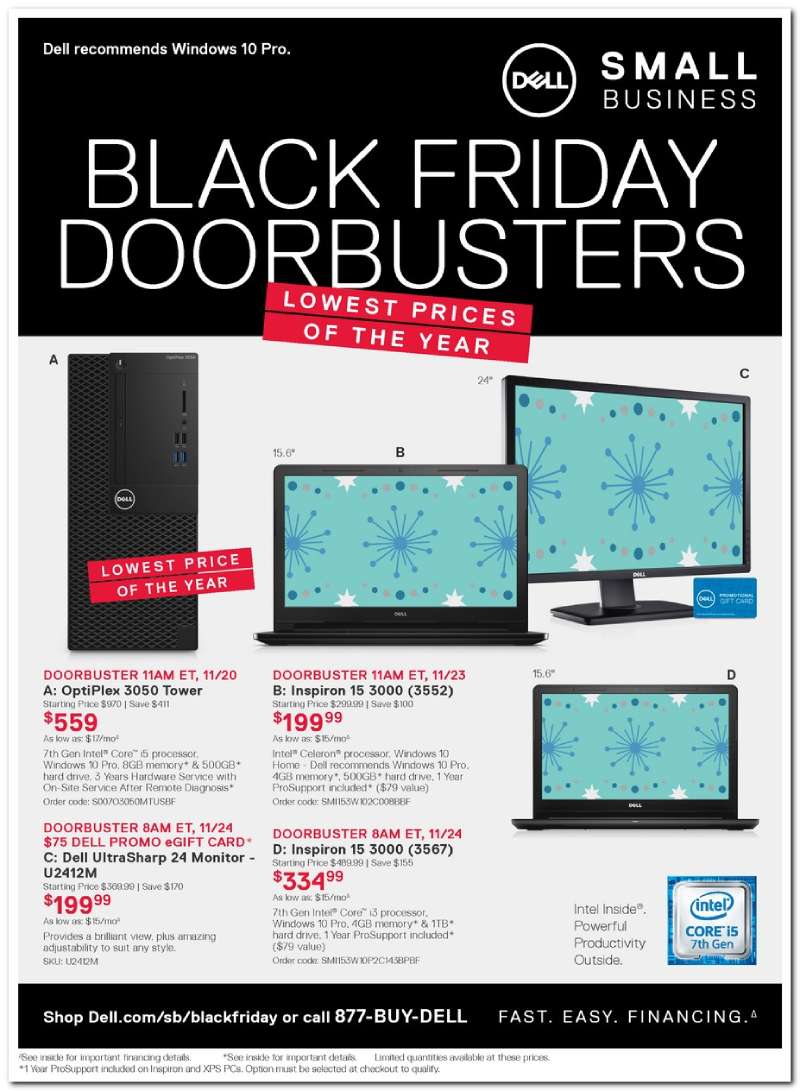
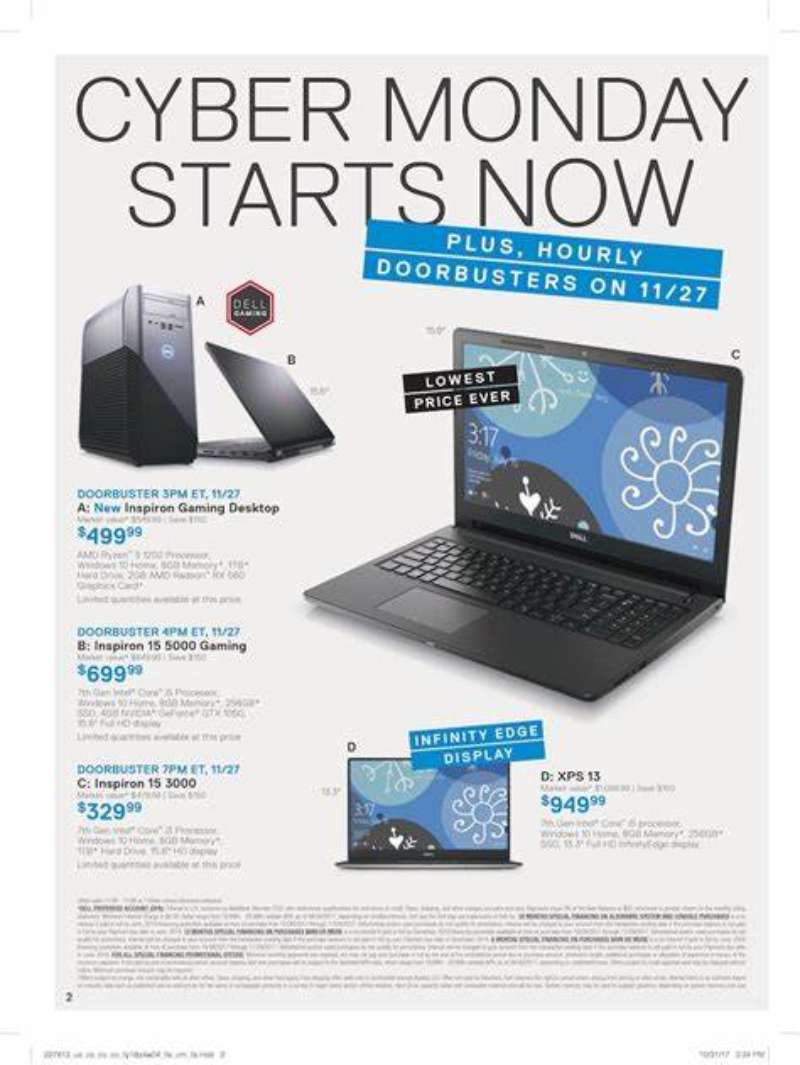
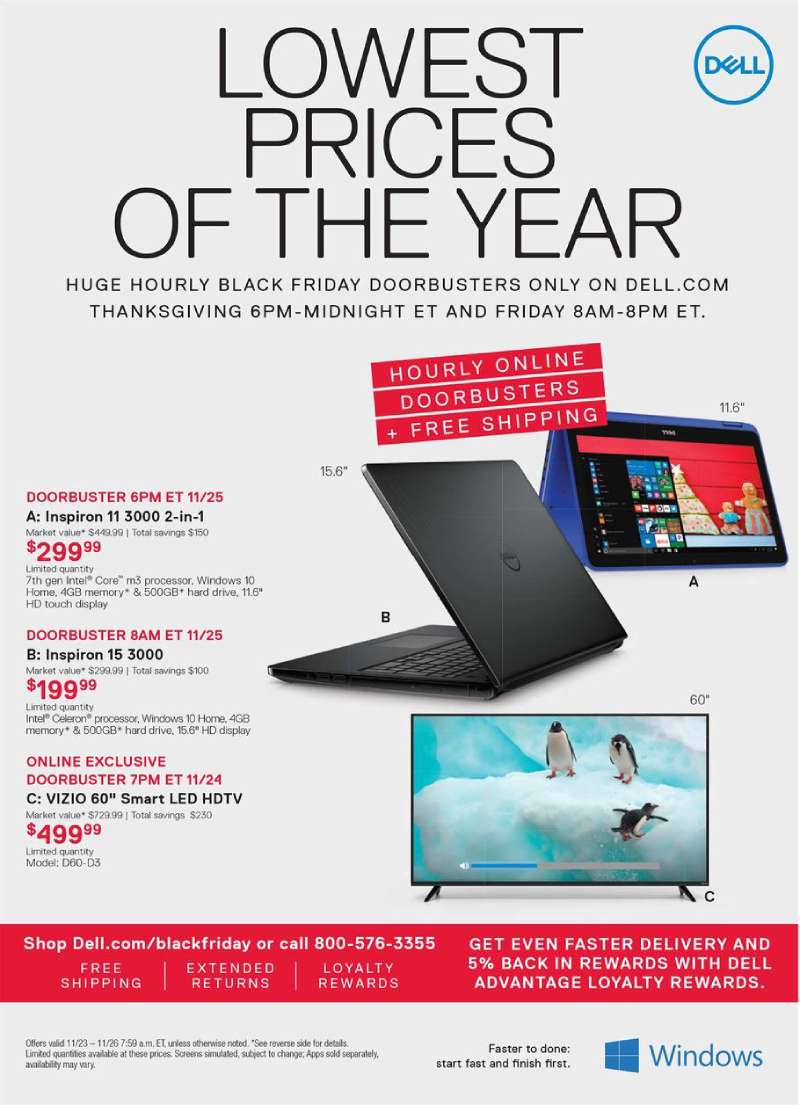
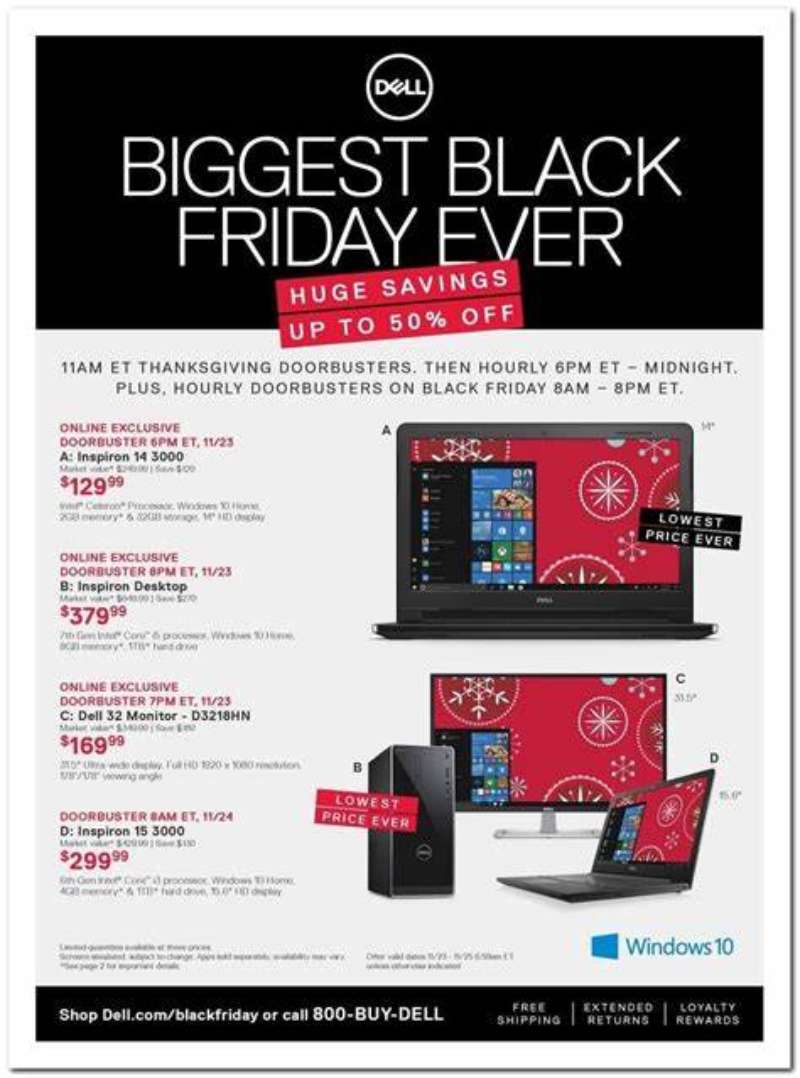
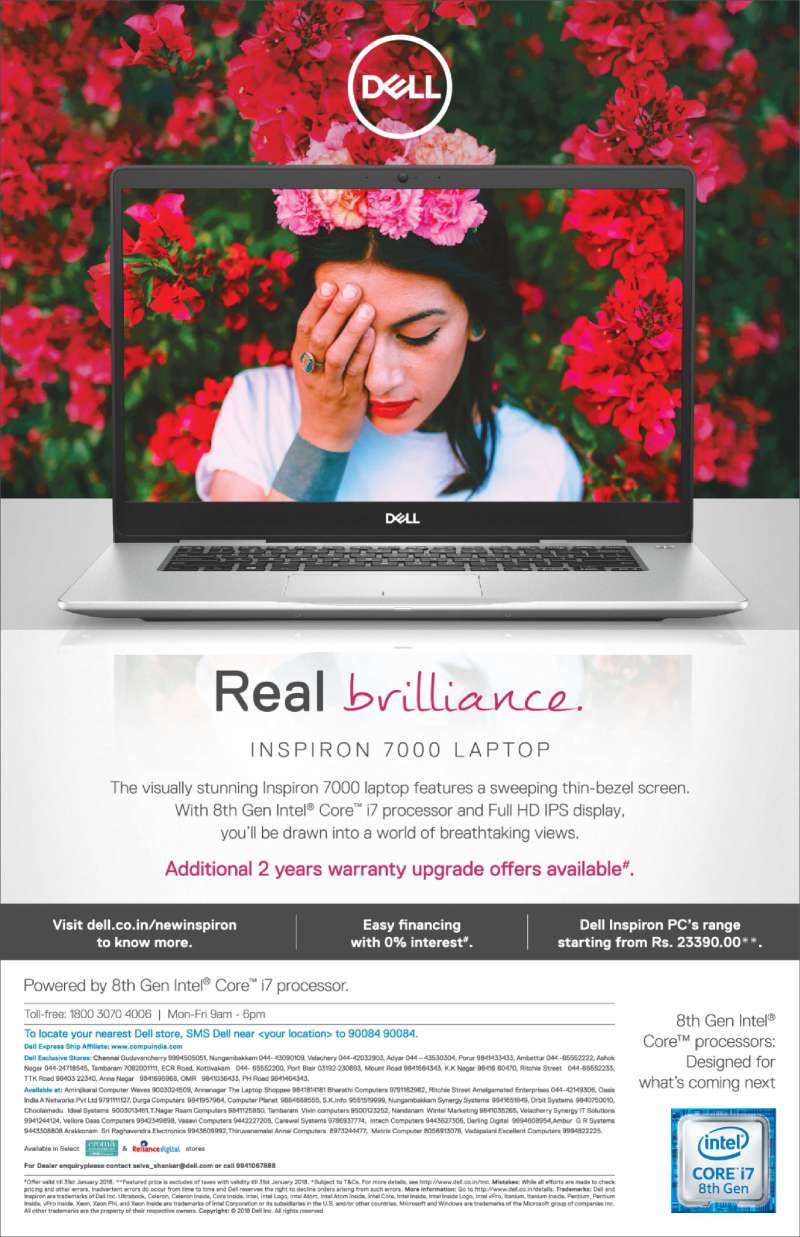
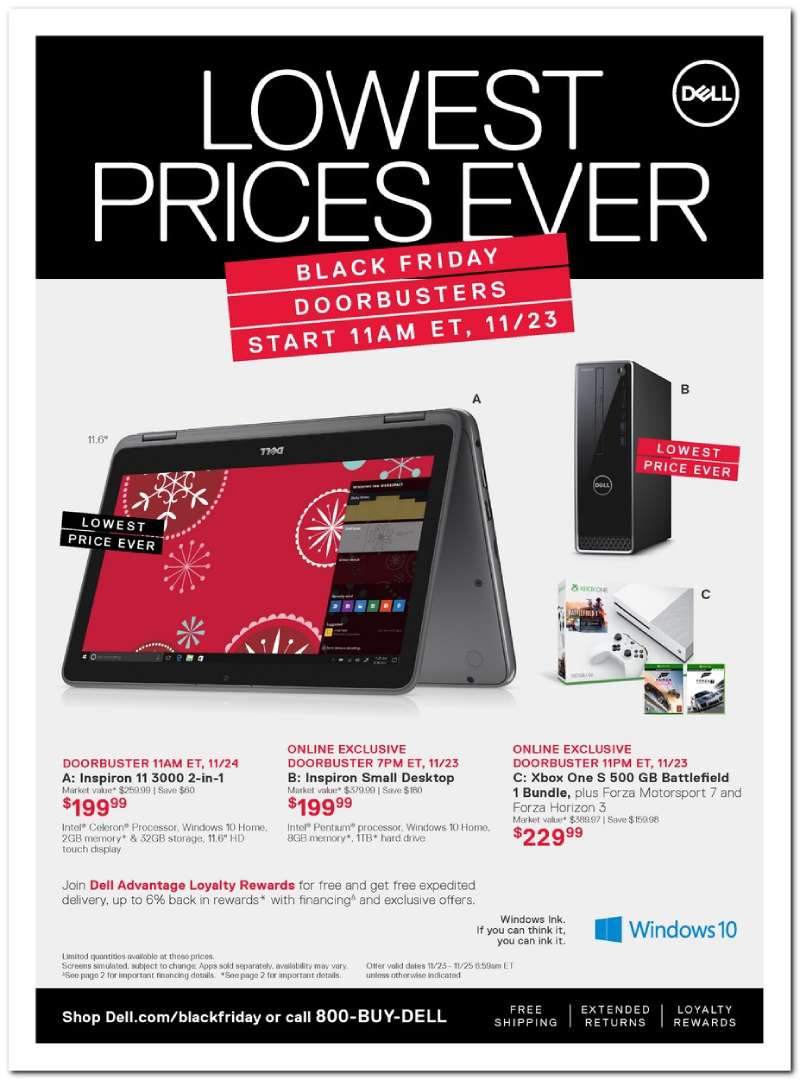
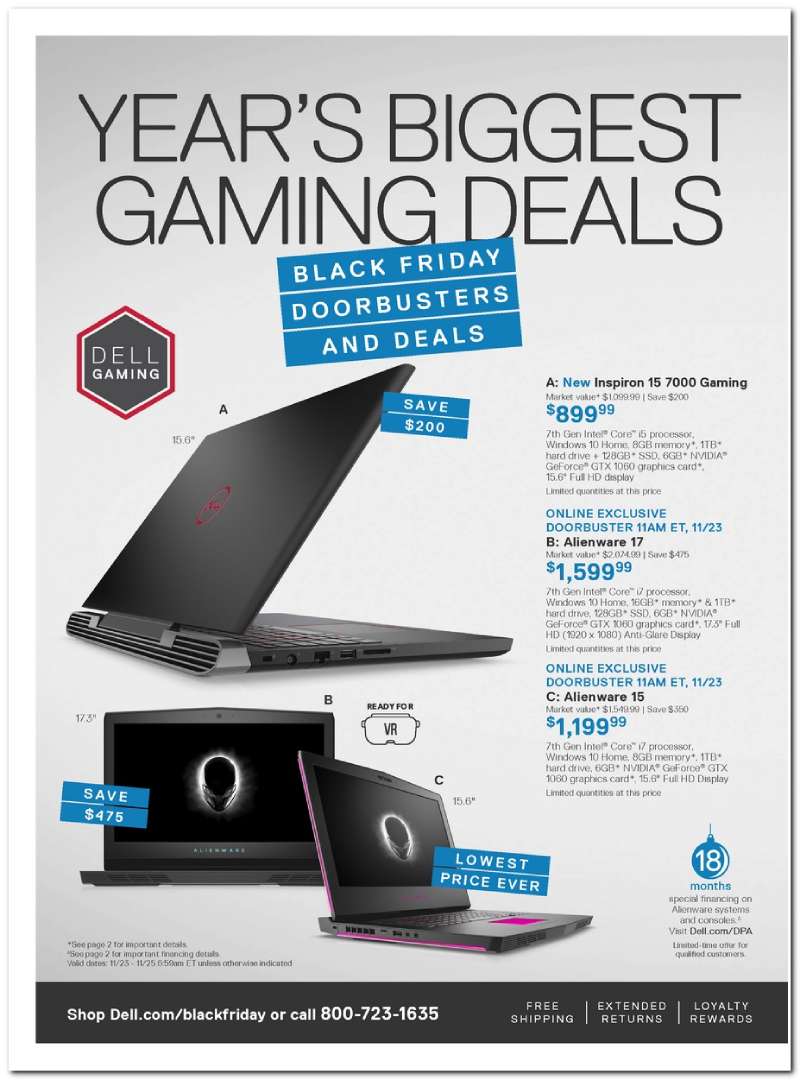
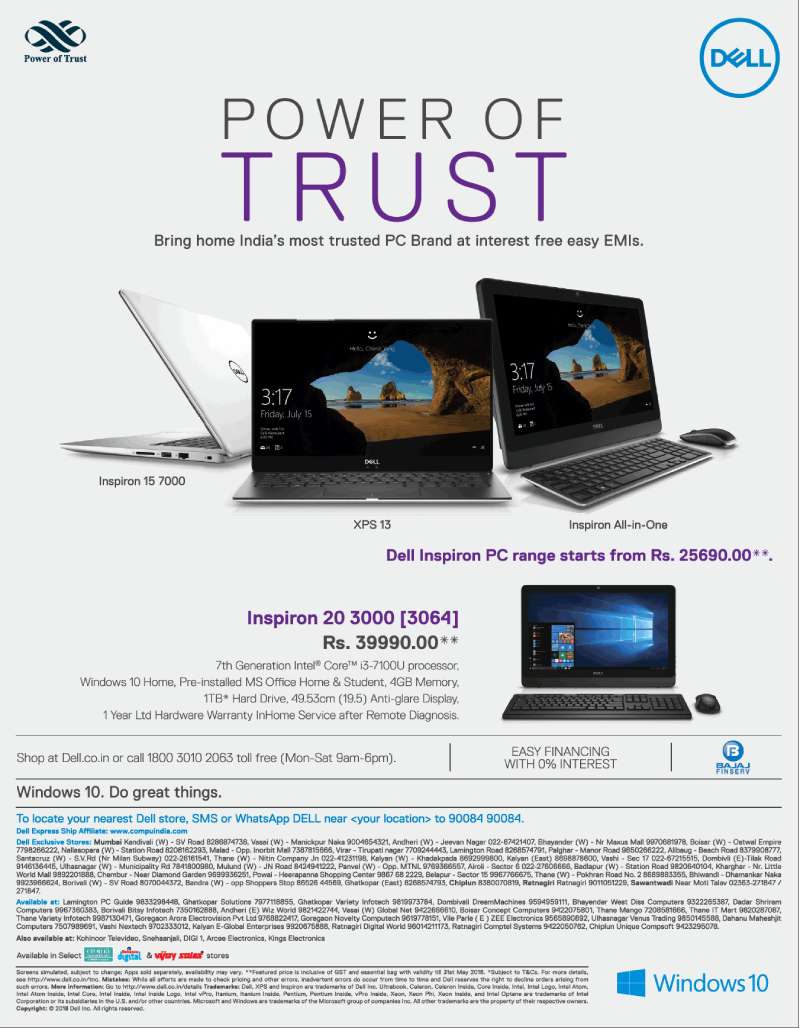
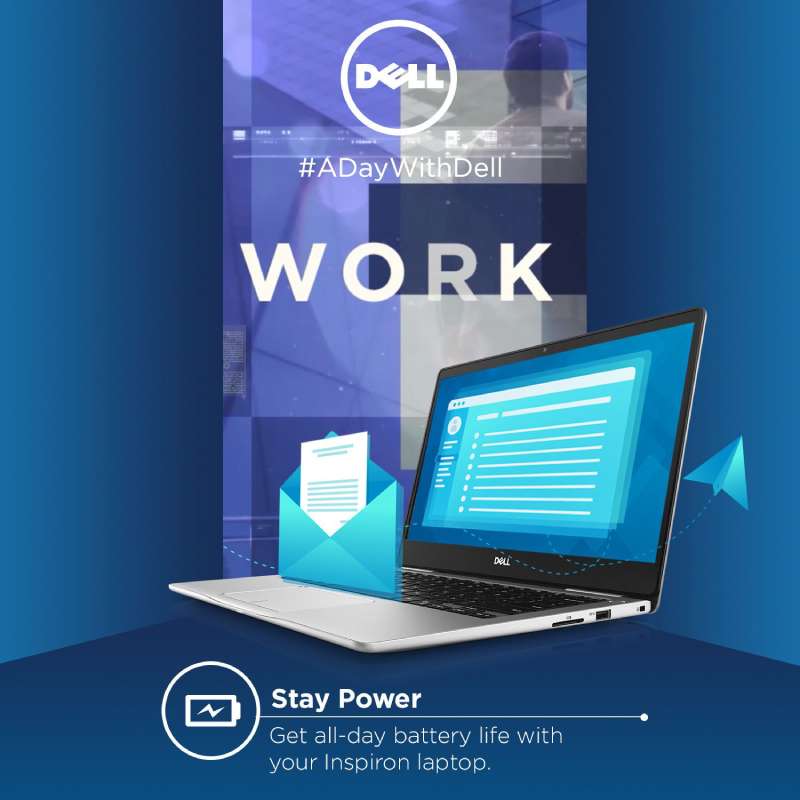
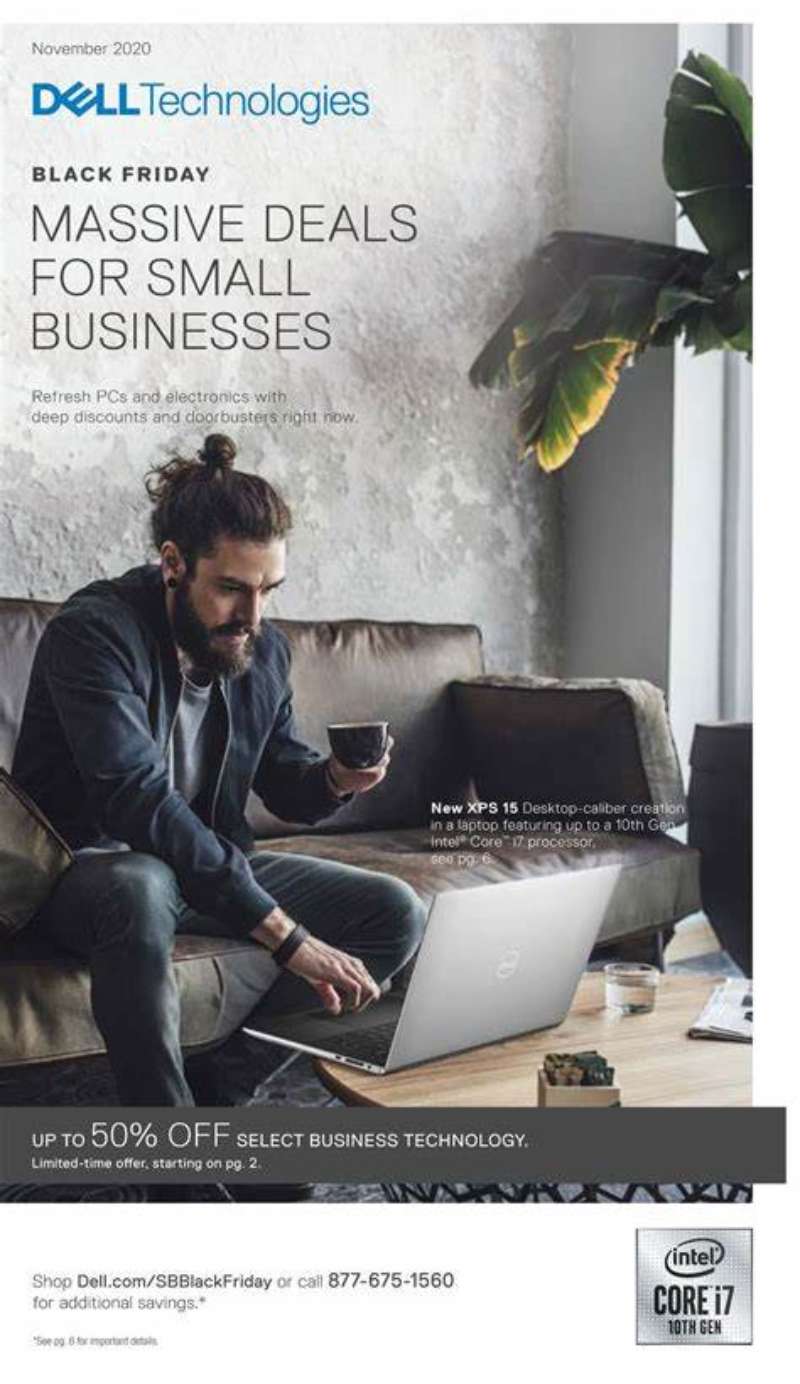
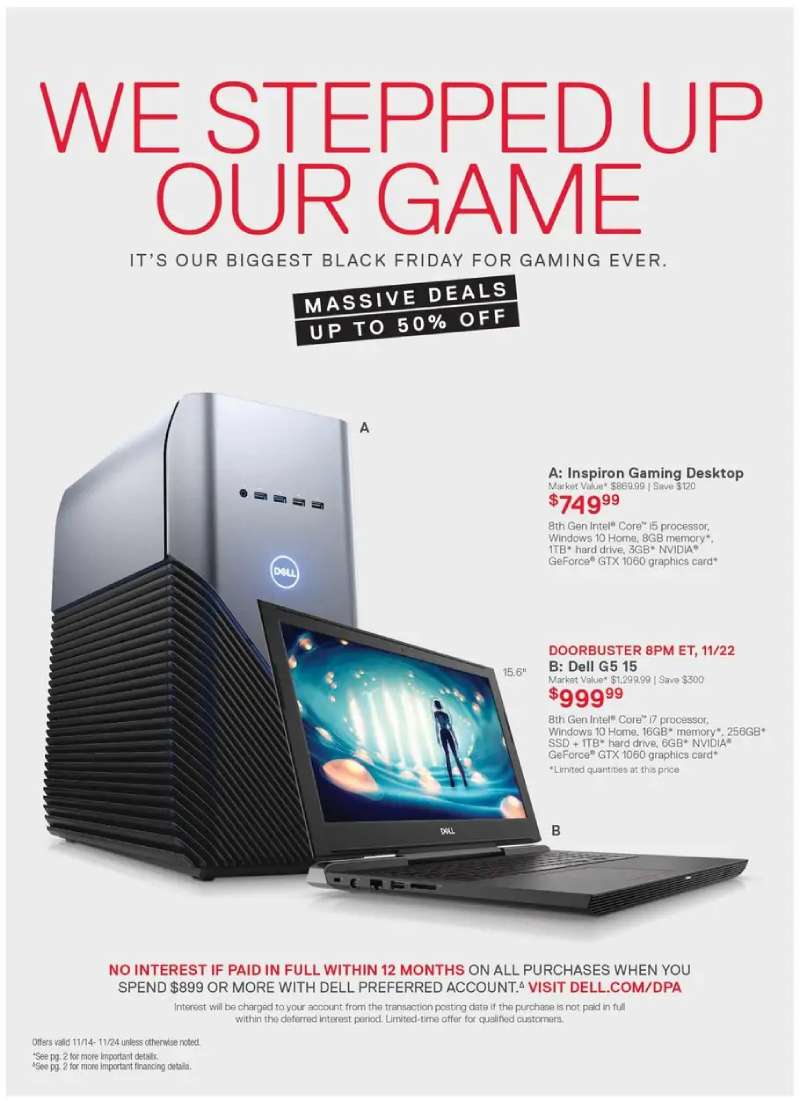
Dell print ads run a three-element layout: product photograph, short headline, price. The palette is one blue against white with black body copy. The logo sits small in a bottom corner. Negative space carries most of the page.
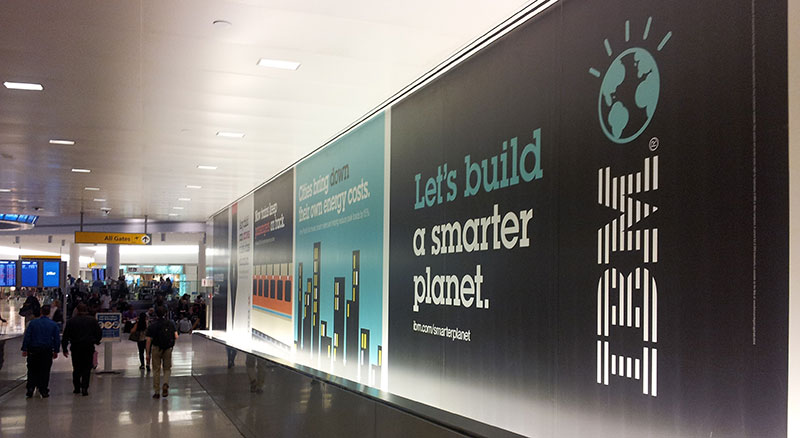
The product is the hero, never the logo. Compare that to IBM or Intel work from the same years, where the mark dominates.
Image-to-text ratio sits near 60/40 in the consumer work and flips in the enterprise work, where the argument needs sentences.
Type is a story in itself. Dell ran a custom version of Museo, a slab serif, for years, then moved to Dell Replica (a custom cut of LL Replica) after the 2016 identity work, with Roboto for digital surfaces.
Two corporate faces, one used for print and campaign work, one for screens. That split is more common than most brand guidelines admit.
The canted “E” is the anchor of the whole system. Siegel+Gale designed it in 1992, tilting the letter to suggest, in Michael Dell’s phrasing, the world turning on its ear.
Layout rules that repeat across the print work:
- Product silhouette placed slightly below the optical center
- Headline set in one weight, no italics, no second face
- Price given in numerals inside the headline block
- Generous margins on all four sides
Anyone studying the use of white space in commercial work will find the 1998 to 2001 run useful. It is deliberately underfilled.
The grid system underneath is a plain two-column arrangement, and the visual hierarchy almost never varies: machine, headline, price, logo.
How Do Dell TV Commercials Differ From Its Print Ads?
Dell television commercials sell a person, not a specification. Print states the price. Film builds a character arc across 30 to 90 seconds, with the product appearing late and briefly. The tonal range is wider on film, from comic (Steven) to earnest (Annie).
Dude, You’re Getting a Dell (DDB Chicago, 2000 to 2003). Steven interrupts a family, a classroom or a store to close the sale. Shot flat and bright, sitcom lighting, no music bed. The line lands as the small print rolls.
Annie (Y&R New York, 2012). A girl builds toward flight. Selected by TED as one of the ten best global ads of that year, with Jim Elliott credited as chief creative officer at Y&R New York.
Meet Thomas (Y&R New York, 2013). A district manager writes a novel on his commute using a Dell XPS 12. Two and a half million views in three weeks.
Tourists (VMLY&R, with Intel). Visitors photograph the Great Barrier Reef, the images get processed at speed, damaged sections surface. Post by Nomad, color by Company 3, sound by Sound Lounge.
Sweets (VML India, September 2024). A sweet-shop visit turns into a recipe rescue. Interactive video, distributed on YouTube, Facebook, Instagram, Amazon and Spotify.
The film work is where Dell does actual storytelling, and where the brand’s motion graphics discipline (lower thirds, end cards, logo animation) does the identity work that a static page handles with the wordmark alone.
How Has Dell Advertising Evolved Since 1985?
Dell advertising has passed through five phases in 41 years: direct mail order, category leadership, mass-market comedy, enterprise storytelling, and AI-era product simplification. Each phase changed the media mix before it changed the visual language.
| Decade | Strategic shift | Representative campaign |
|---|---|---|
| 1980s | Sell direct, price in the headline | PC’s Limited Turbo PC ads, 1985 |
| 1990s | Attack the retail markup | “Be Direct,” 1998 |
| 2000s | Reach students and parents | “Dude, You’re Getting a Dell,” 2000 |
| 2010s | Sell services through human stories | “The power to do more,” 2011 |
| 2020s | AI PCs and a single-name product line | “Parallel Realities,” 2025 |
The taglines track the same arc. Be direct (1998), Easy as Dell (2001), Get more out of now (2004), It’s a Dell (2005), Purely You (2006), Yours is Here (2007), The power to do more (2011).
Two identity moments matter for anyone reading the ads as design objects.
2016: Brand Union, part of WPP, built the architecture separating Dell, Dell Technologies and Dell EMC, slimming the wordmark strokes and importing Replica from the EMC side.
2025: at CES, Dell dissolved XPS, Inspiron, Latitude and Precision into Dell, Dell Pro and Dell Pro Max. A naming rebranding move that drew immediate comparisons to Apple’s iPhone tiers.
One cooperative campaign sits outside the timeline. In 2015 Dell split a $70 million “PC Does What?” push with Microsoft, Intel, HP and Lenovo, with no brand logos leading the creative.
Which Agencies Created Dell Advertising?
Six agencies account for most recognized Dell work. DDB Chicago created “Dude, You’re Getting a Dell” in 2000. Y&R New York created “The power to do more” in 2011. VMLY&R created “Welcome to Now” and VML created “Parallel Realities” for Alienware in 2025.
| Agency | Work | Years |
|---|---|---|
| DDB Chicago | “Dude, You’re Getting a Dell” | 2000 to 2003 |
| Lowe Lintas and DDB New York | Steven character, pre-catchphrase spots | 2000 |
| Mother New York / Mother London | Pop-up storybook film, print work | 2007 to 2009 |
| Y&R New York | “The power to do more,” Annie, Beginnings | 2011 to 2016 |
| VMLY&R and VML | Welcome to Now, Sweets, Parallel Realities | 2018 to 2025 |
| Brand Union (WPP) | Dell Technologies identity system | 2016 |
Named people behind the work: Wayne Best served as chief creative officer at VMLY&R New York and chief creative lead on Dell. Justin Ebert and Niraj Zaveri ran executive creative director duties on the Welcome to Now films. Jim Elliott held the chief creative officer role at Y&R New York during “Annie.”
Scale is the part designers underestimate. VML reported governing the refreshed identity across 500 Dell team members and 550 creatives from 36 agencies.
Tocquigny, an Austin shop founded in 1980, handled Dell business-to-business and digital work starting in the early 1990s. Wunderman New York and Mediacom appear in the archive record for 2010 and 2011.
Dell Technologies spends over $100 million a year across digital, print and national TV and appears on more than 250 media properties, per MediaRadar. Ad Age put US spending at $413 million in 2012.
What Can Designers Learn From Dell Ads?
Five habits carry across four decades of Dell work, and all five transfer to any product page or poster where the object has to sell itself.
- Put the price in the headline when price is the actual argument
- Limit the palette to one blue, white and black, then stop adding
- Set the tagline in a single weight and let the canted “E” do the identity work
- Anchor the product below the optical center instead of dead center
- Cast an ordinary person rather than a spokesmodel
- Keep the mark small enough that the machine reads first
The counter-lesson matters too. Dell lost its most valuable asset in a single news cycle in 2003, because the campaign was welded to one performer.
Anyone choosing fonts for advertising can study the Museo-to-Replica switch as a case in how a slab serif reads warm in print and a grotesque reads current on screen.
The psychology of color argument here is blunt rather than clever. Blue signals reliability in enterprise technology, and Dell has refused to move off it since 1989.
How Do Dell Ads Compare to HP Ads?
Dell and HP advertise the same category with opposite instincts. Dell sells the transaction. HP sells the output.
Dell’s print work states a configuration and a number, a habit inherited from the 1985 magazine ads and never fully abandoned. HP built its recognizable run around what comes out of the machine, with hands, prints and photographs doing the persuading.
The competitive framing shows up in the campaigns themselves. Dell overtook HP as the largest US personal computer seller, lost the position in 2002, and regained it within a year, and both companies advertised through that fight.
Then in 2015 they shared a stage. Dell, HP, Lenovo, Microsoft and Intel split the $70 million “PC Does What?” campaign, which ran with no brand hierarchy at all.
For the neighboring comparisons, the HP ads archive shows the output-first approach, Lenovo ads track a third route through design-led product photography, and the older IBM ads plus Intel ads show what corporate-mark dominance looked like in the same decades.
What Makes Dell Advertising Work?
The through line is refusal to decorate. A machine, a short headline, a number, and a small mark in the corner.
That discipline came from necessity in 1985, when the whole business model was a phone number in the back of a magazine, and it survived every platform change since.
The film work adds a person to the frame but keeps the same restraint, letting the character carry the minute and the product close it.
For anyone studying advertising design in the technology category, the useful takeaway is not the comedy or the casting. It is that the layout has barely changed in forty years, and it still reads.
Dell Ads Examples

FAQ on Dell Ads
How much does Dell spend on advertising?
Ad Age put US spending at $413 million in 2012.
MediaRadar currently tracks Dell Technologies at over $100 million a year across digital, print and national television, running on more than 250 media properties.
Why is the E in the Dell logo tilted?
Siegel+Gale drew the canted “E” in 1992. Michael Dell described it as the world turning on its ear.
Every redesign since, including the 2016 Brand Union version, kept the tilt and changed everything around it.
What was the “PC Does What?” campaign?
A 2015 joint push worth $70 million, split between Dell, HP, Lenovo, Microsoft and Intel.
It launched in the US and China, promoted no individual brand, and argued that modern laptops had outgrown their reputation.
What was Dell4me?
A $30 million campaign themed “Your thoughts exactly,” launched after public complaints about Dell’s direct sales service.
It moved the copy away from technical specifications toward what buyers actually did with the machine.
Have Dell ads won awards or industry recognition?
“Annie,” made by Y&R New York, landed on TED’s list of the ten best global advertisements of 2013.
Alienware’s Area 52 event in Australia is documented as a case study by WARC.
What music has appeared in Dell commercials?
Mick Jagger’s “Charmed Life” scored the 2008 Super Bowl spot for the (PRODUCT) RED XPS One.
A separate US campaign featured Dell factory workers singing “Lollipop,” the Julius Dixon song.
Does Dell advertise differently in India?
Yes. VML India builds market-specific work, including the festive film “Sweets,” released in Hinglish, Tamil, Telugu, Bengali and Marathi.
Dell has held the top position in the TRA Brand Trust Report for six consecutive years there.
Who has directed Dell commercials?
Samuel Bayer directed “Slap,” the 2008 Super Bowl spot.
Filip Tellander directed a run of films for Y&R New York, and Hoodi Freyr directed the XPS 16 work out of VML Copenhagen in 2024.
Did Dell advertise before it was called Dell?
Yes, as PC’s Limited from 1985, in the back pages of national computer magazines.
The ads sold the Turbo PC by phone with configurable components and grossed $6 million in the first year.
Where do Dell out-of-home ads usually appear?
Airports and transit hubs. The 2011 brand launch ran across newspapers, magazines, billboards and airport walls before the television flight started.
Later work added signage at Austin International Airport and Times Square.
Conclusion
Dell ads reward close reading more than most technology advertising does. The layout is boring on purpose, and that is exactly the point.
Four decades of work out of Round Rock run on one repeated move. The machine takes the space, the wordmark takes a corner.
The Dell Dude sold a price to parents. “The power to do more” sold a customer story to enterprise buyers. The current run sells an AI PC under the Dell Pro name.
The frame barely shifted across all three.
Steal the restraint. Hold one blue, set one typeface at one weight, and let the product read before the brand identity does.
That is the takeaway from every Dell print advertisement and television commercial worth studying.

Renowned for his expertise in logo design and visual branding, Bogdan has developed a multitude of logos for various clients.
His skills extend to creating posters, vector illustrations, business cards, and brochures. Additionally, Bogdan's UI kits were featured on marketplaces like Visual Hierarchy and UI8.
He also wrote in the past years on sites like Design Your Way, WebDesignerDepot, WPDean, Designmodo, Speckyboy, Slider Revolution, and more.
- Canva vs PowerPoint: Which Is Better for Presentations? - 22 September 2026
- How to Install Fonts on Mac (Step-by-Step Guide) - 20 September 2026
- From Mockup to Code: How AI-Augmented Development Speeds Up the Design Handoff - 19 September 2026

Bogdan Sandu is a seasoned designer who has been designing websites since 2008. Renowned for his expertise in logo design and visual branding, Bogdan has developed a multitude of logos for various clients. His skills extend to creating posters, vector illustrations, business cards, and brochures. Additionally, Bogdan's UI kits were featured on marketplaces like Visual Hierarchy and UI8. He also wrote in the past years on sites like Design Your Way, WebDesignerDepot, WPDean, Designmodo, Speckyboy, Slider Revolution, and more.
You Might Also Like