One red dot, one headline weight, 180 markets. That is the whole system behind Lenovo ads, and it has barely moved since 2010.
Most tech advertising ages badly. Lenovo’s does not, because the rules were written before the campaigns were.
This page works through the campaigns by name, with the agency, year and market attached to each one.
You will find:
- Seven flagship campaigns, from For Those Who Do to Backing Every Business
- Print layouts broken down by grid, palette and logo placement
- TV spots with their directors, agencies and running specs
- Six applicable takeaways for your own layouts
By the end you will know why the work holds together across two decades and 14 languages.
Lenovo advertising covers 16 years of global campaigns, 6 named lead agencies and 7 flagship platforms, from For Those Who Do in 2010 to Backing Every Business in 2026. The work runs on declarative headlines, user-as-hero photography and one signature red.
This page covers the campaigns by name, with the agency, year and market behind each one, plus the layout, typeface and color decisions that hold them together.
- Campaign-by-campaign breakdown, 2010 to 2026
- Print and TV analysis, separated because the two behave differently
- Agency credits, with who made what and when
Lenovo Advertising at a Glance
Lenovo has advertised globally since 2010, working primarily with Saatchi & Saatchi, Zeno Group, VML Atlanta and Design Bridge and Partners. Its best-known campaigns are For Those Who Do, Goodweird and Work for Humankind. The visual signature combines signature red, black hardware and one sans-serif headline weight.
| Attribute | Value |
|---|---|
| First global campaign | “For Those Who Do,” 2010, US-led, Saatchi & Saatchi |
| Lead agencies | Saatchi & Saatchi, Zeno Group, VML Atlanta, Design Bridge and Partners, Portal A, DLKW Lowe |
| Best-known taglines | “For Those Who Do” (2010), “Smarter Technology for All” (2019), “Reach Your Impossible” (2024), “Smarter AI for All” (2024) |
| Primary media | Print, TV, cinema, OOH, digital, social, esports broadcast |
| Primary markets | 180 markets. Key: US, China, UK, Germany, India, Brazil, Japan |
| Visual signature | Signature red logo lockup, matte black hardware, red TrackPoint, single-weight sans headlines |
| Recurring copy device | Second-person address plus a plain verb (“do,” “you,” “get back up”) |
Which Lenovo Ad Campaigns Are the Most Famous?
Seven campaigns define Lenovo advertising: For Those Who Do (2010), Goodweird (2015), Smarter Technology for All (2019), Work for Humankind (2021), Evolve Small (2021), Reach Your Impossible with its Always Get Back Up film (2024), and YOU (2024). Each carries a different agency and a different visual system.
For Those Who Do (2010 to 2015)
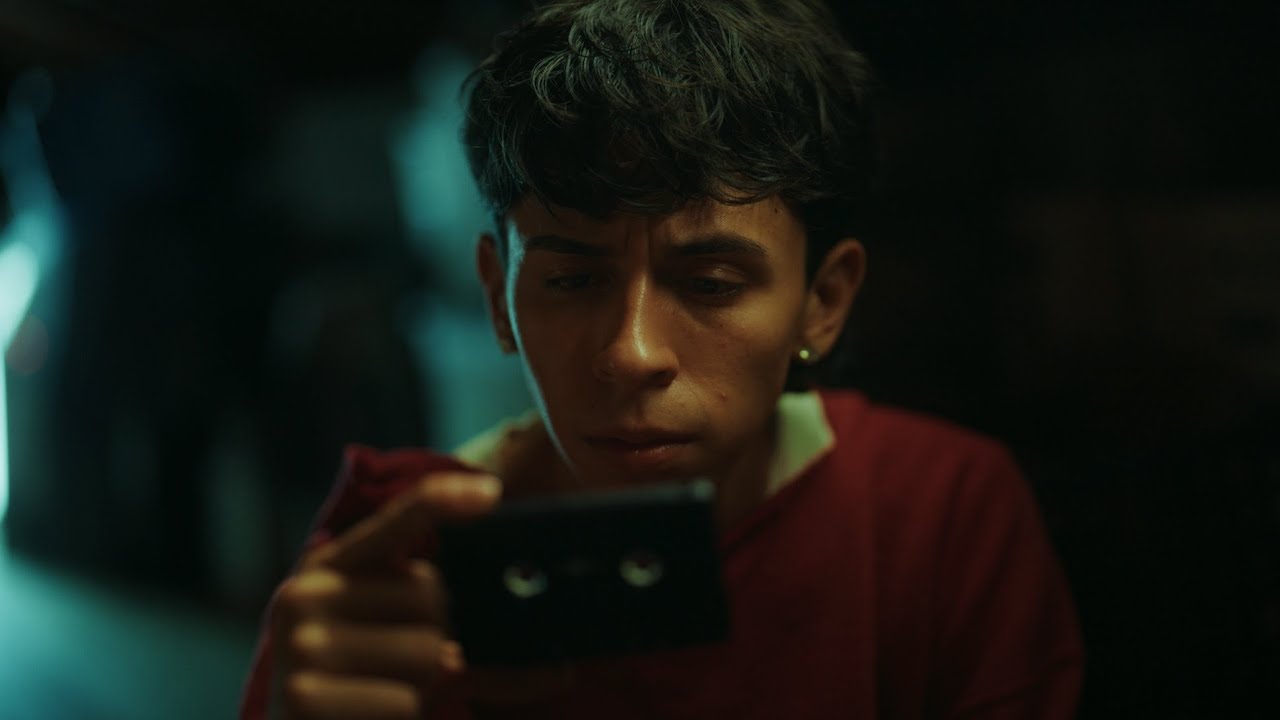
For Those Who Do launched in the United States in 2010, created by Saatchi & Saatchi. It was Lenovo’s first campaign to run globally, and it skipped China, where “do” carries connotations of manual labor.
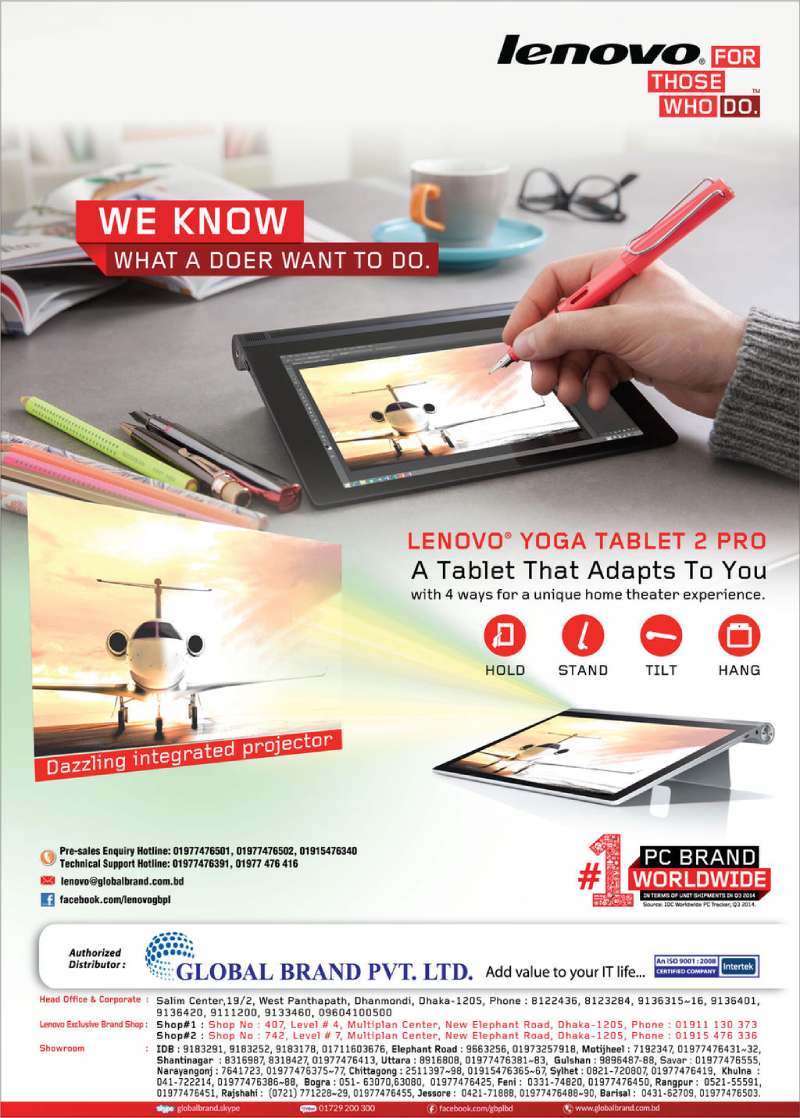
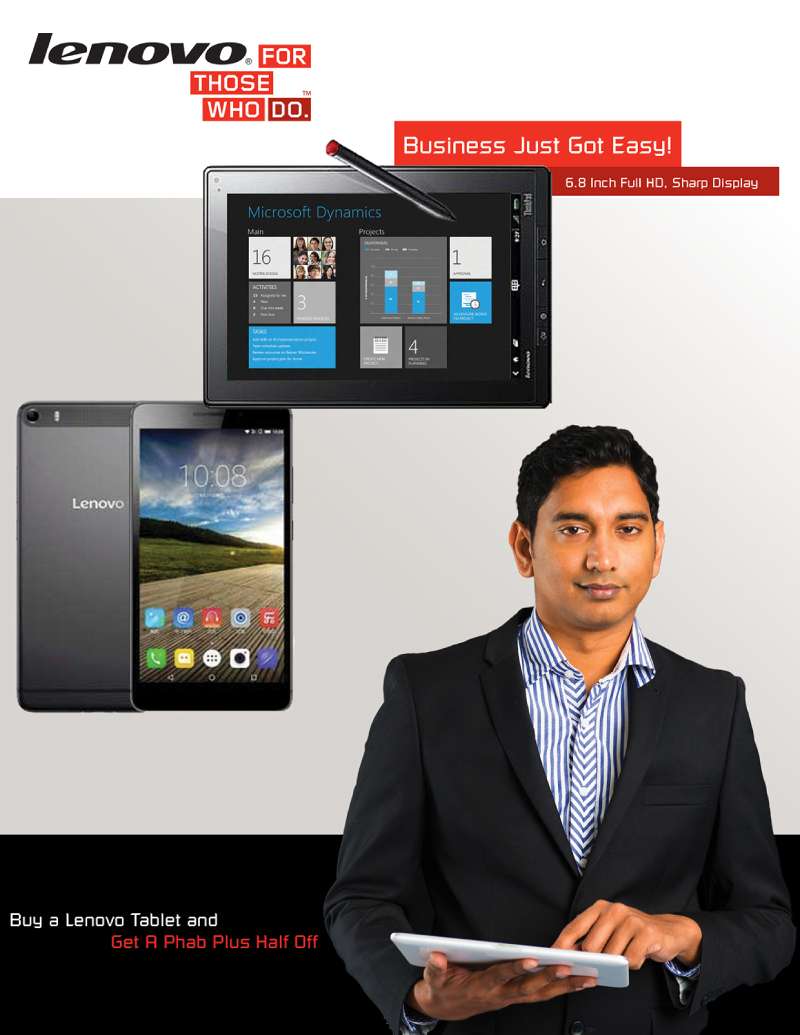
The print work sits on a strict grid: product isolated on white, headline set flush left in a single sans weight, red logo bottom right. Copy addresses the reader as a “doer”, targeting the 18 to 25 demographic, per Wikipedia’s campaign record.
Lenovo kept its existing “Imagine” slogan in the Chinese domestic market throughout the same period.
Goodweird (2015 to 2016)

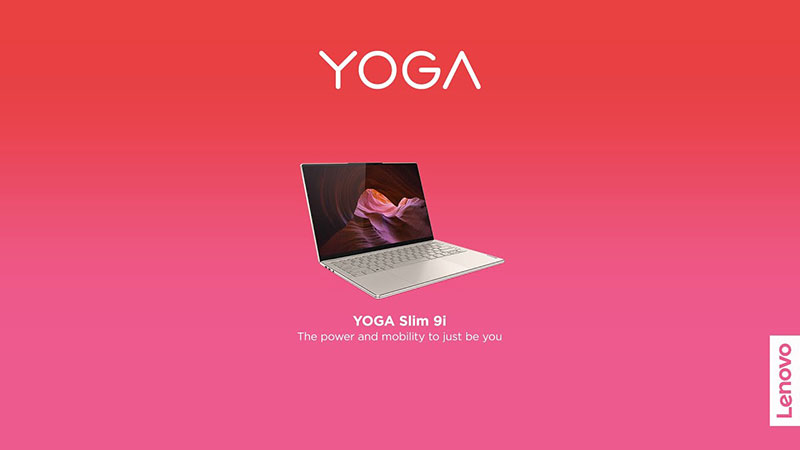
The premise: Yoga convertibles are strange, and strange is the selling point.
- Launched: September 30, 2015, global, Yoga convertibles and tablets
- Agency model: Blast Radius on digital build, DLKW Lowe on the Pioneers brand film, Portal A on creator video
- Hook: the Yoga hinge, built from more than 800 parts across 4 modes
Russian creator EeOneGuy’s Goodweird film passed 2.8 million views in under 48 hours (Convince & Convert). A parallel VICE partnership pulled 45 million views in six weeks and 550,000 clicks to Lenovo.com, per NewsCred.
Smarter Technology for All (2019 to 2024)

Lenovo ran this one in 12 markets and 14 languages across OOH, cinema, TV, digital and social, according to LBBOnline. Ben Tricklebank directed for Furlined.
The campaign was built in-house rather than by an outside shop, and it is the point where the tagline became a locked lockup element. Lenovo’s own brand guidance states the tagline must never be recreated, realigned or restacked.
Quinn O’Brien, then VP of worldwide brand, described it as the north star for the company’s creative decisions.
Work for Humankind (2021 to 2024)

Zeno Group built the campaign around a single location: Robinson Crusoe Island, 700km off the Chilean coast, population 900.
Volunteers did their normal jobs from a Lenovo-built tech hub and gave their spare hours to conservation work. The numbers Zeno reports:
- 4,500+ global applicants, 16 selected
- Island internet raised from 1 Mbps to 200 Mbps
- 1,000+ donated volunteer hours over eight weeks
- AI camera-trap processing hit 415,000 photos per day
Evolve Small (2021 to 2024)
Queen Latifah joined as ambassador in October 2022, fronting a program of grants, mentorship and AI-generated custom ads for small business owners across North America.
The mechanic was the creative: winners received billboard and social placements featuring an AI-customized Queen Latifah endorsement of their own business.
Earned impressions topped 465 million, with a 3-point lift in unaided awareness and close to a 50% engagement rate on the ad generator site (Shorty Awards submission data).
Reach Your Impossible and Always Get Back Up (2024 to 2025)

Lenovo Legion introduced Reach Your Impossible as a gaming brand platform in 2024. The Always Get Back Up film followed in 2025, made by Design Bridge and Partners, with media planning by Assembly Global and VFX supervision by Covert.
| Asset | Spec |
|---|---|
| Hero film | 45 seconds, TV and VOD, scored to “Big Dawgs” by Hanumankind |
| Cutdowns | One 30s, three 15s, three 6s for social |
| Reach | 180 markets across UK, US, EMEA, APAC and LAS |
The premise runs against category convention: it shows losing, repeatedly, instead of flawless gameplay.
YOU (2024 to 2026)

VML Atlanta shot human beings the way product photographers shoot hardware. Headlines read “Introducing The Andre” and “Introducing The Aiko”.
Emily Ketchen, CMO of Lenovo’s Intelligent Devices Group, led the brief. Jared Kozel, VML Atlanta’s chief creative officer, framed the idea as launching a person rather than a laptop.
Direction came from Drew Kirsch at Tomorrow, Los Angeles, with editing at Cut & Run in New York.
Lenovo Print Ads for the ThinkPad Line
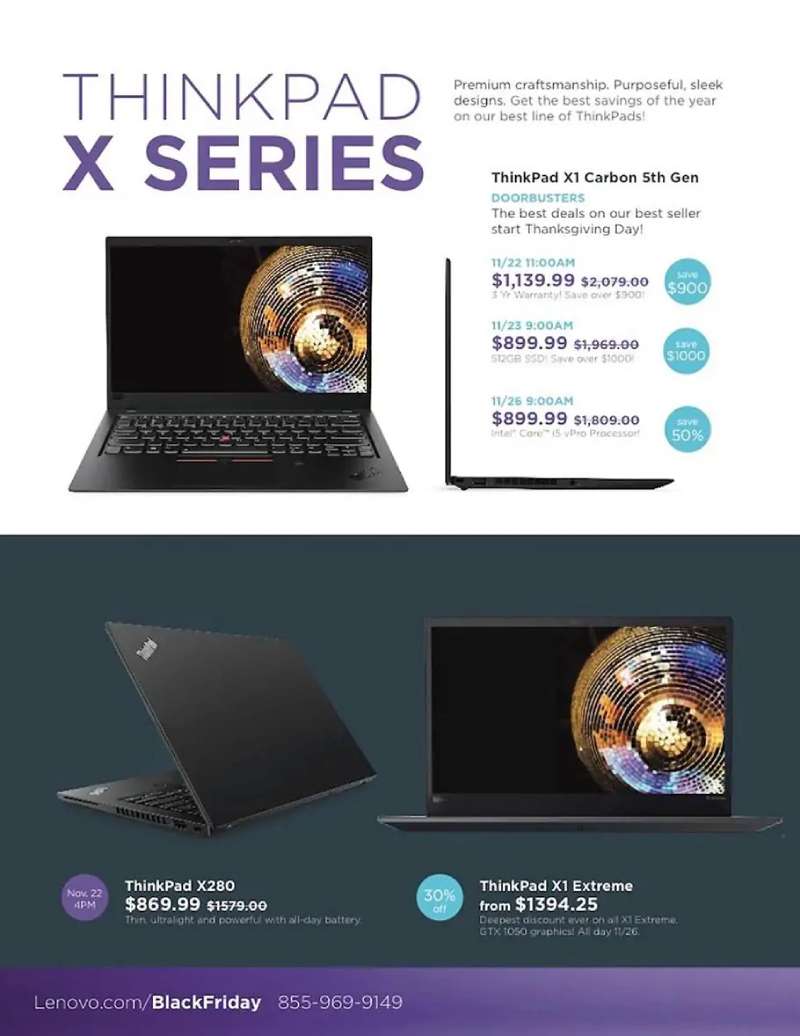
ThinkPad print work is the most visually consistent body of Lenovo advertising, because the product itself supplies the art direction.
Richard Sapper designed the original in 1990 on a bento box premise: a plain black box that reveals its complexity only when opened. The red TrackPoint survived only because Sapper shipped it as “IBM Magenta” and edged the hue back toward red across later revisions.
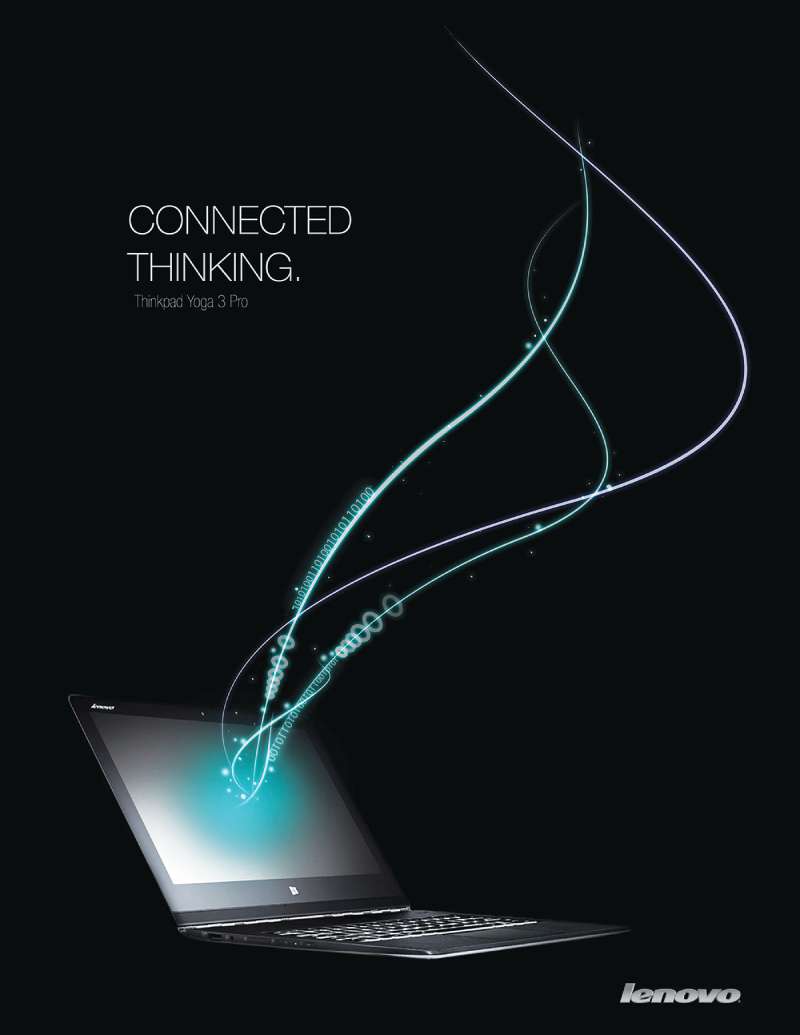
Print ads for the line lean on that one red dot as the only chromatic accent against black hardware and grey backgrounds.
How Do Lenovo Print Ads Work Visually?
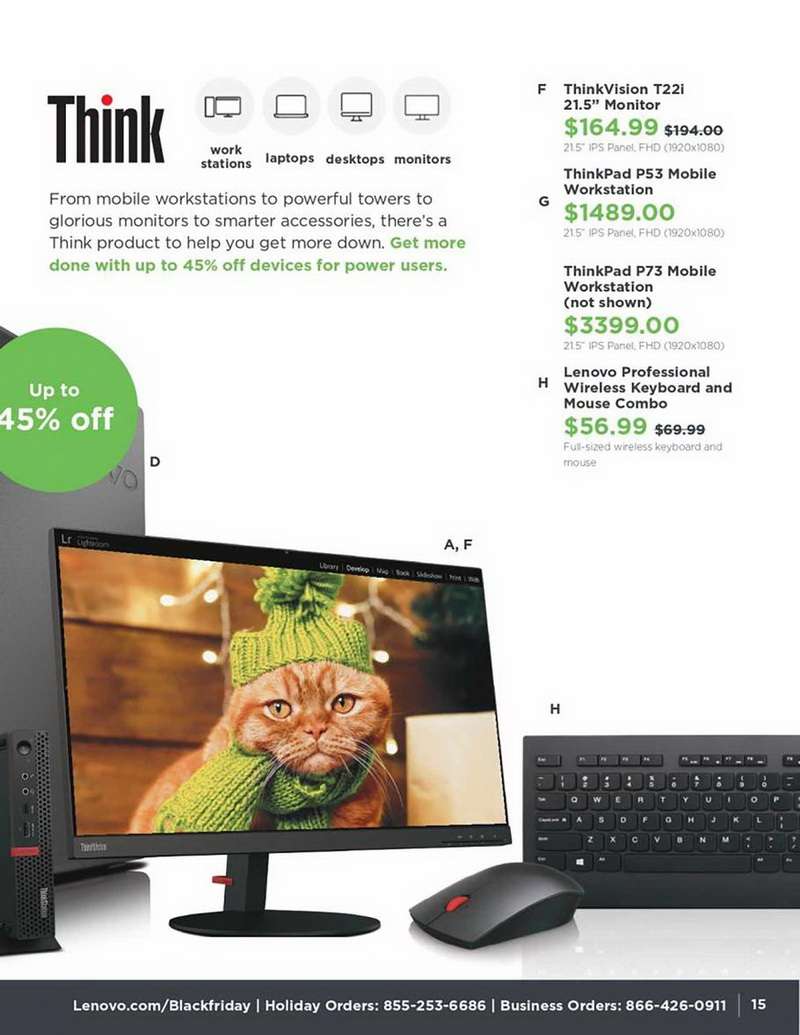
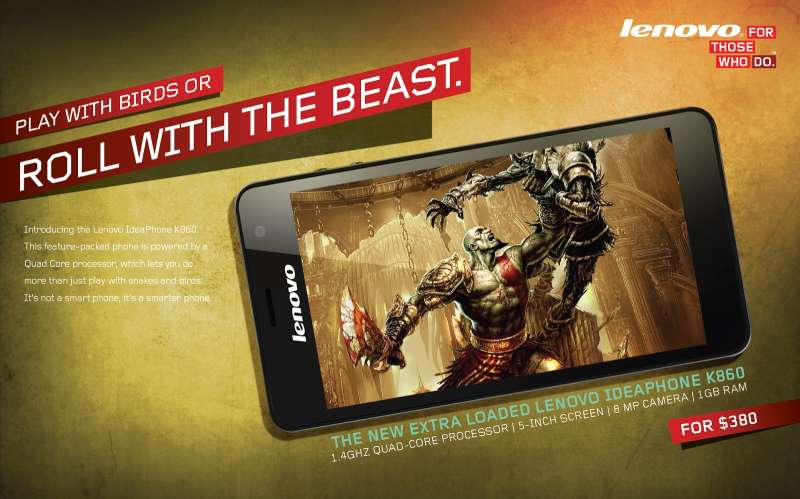
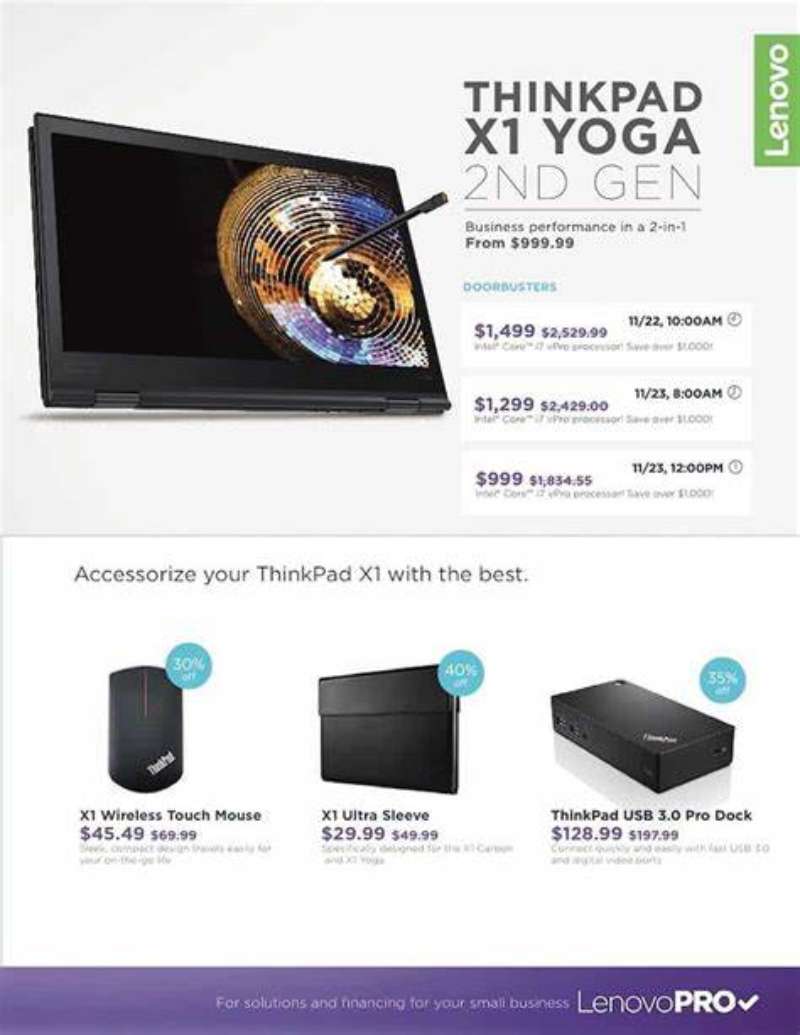
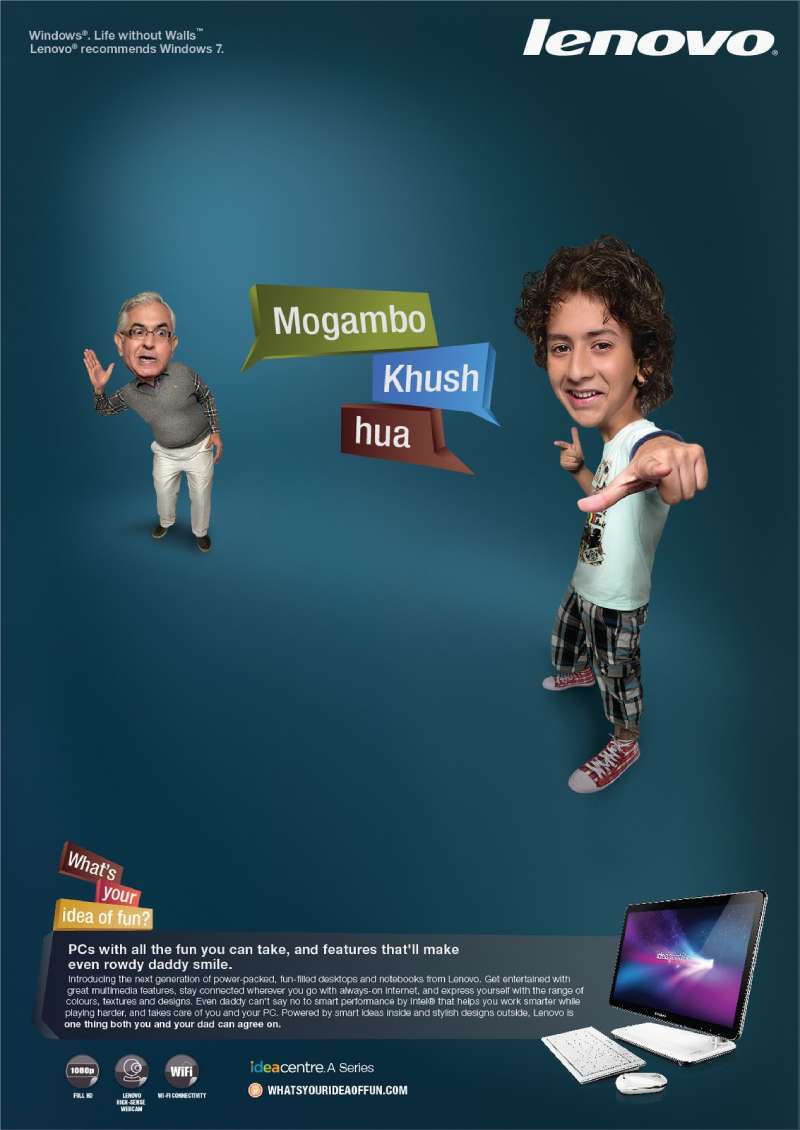
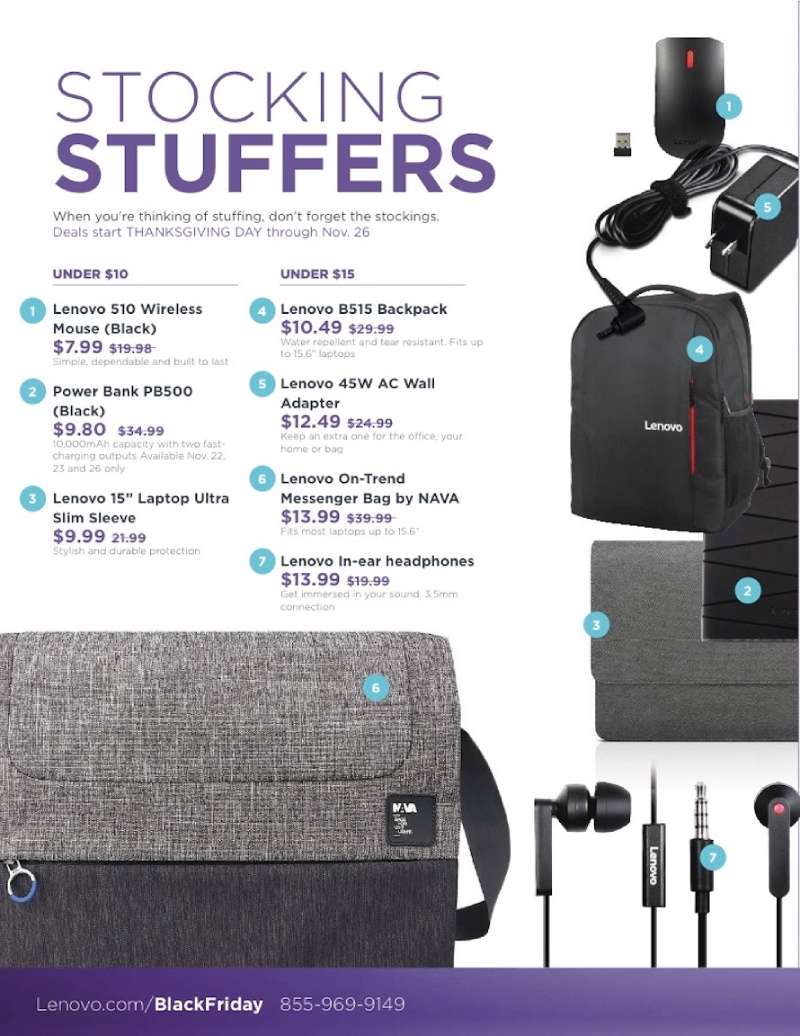
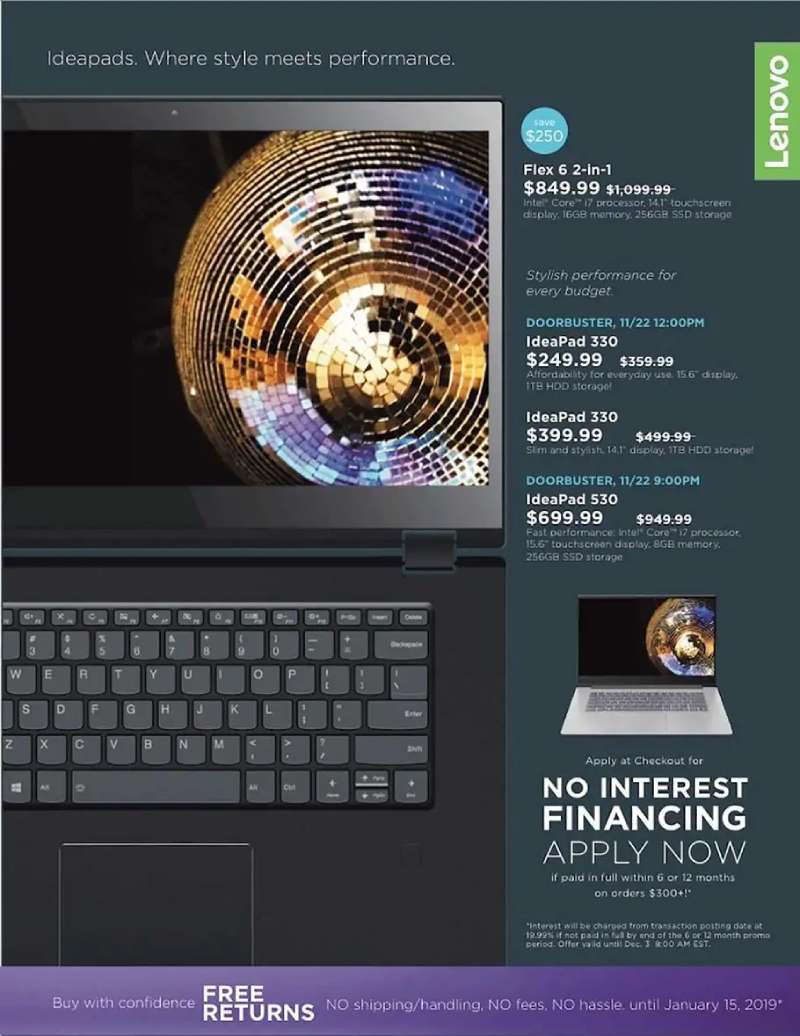
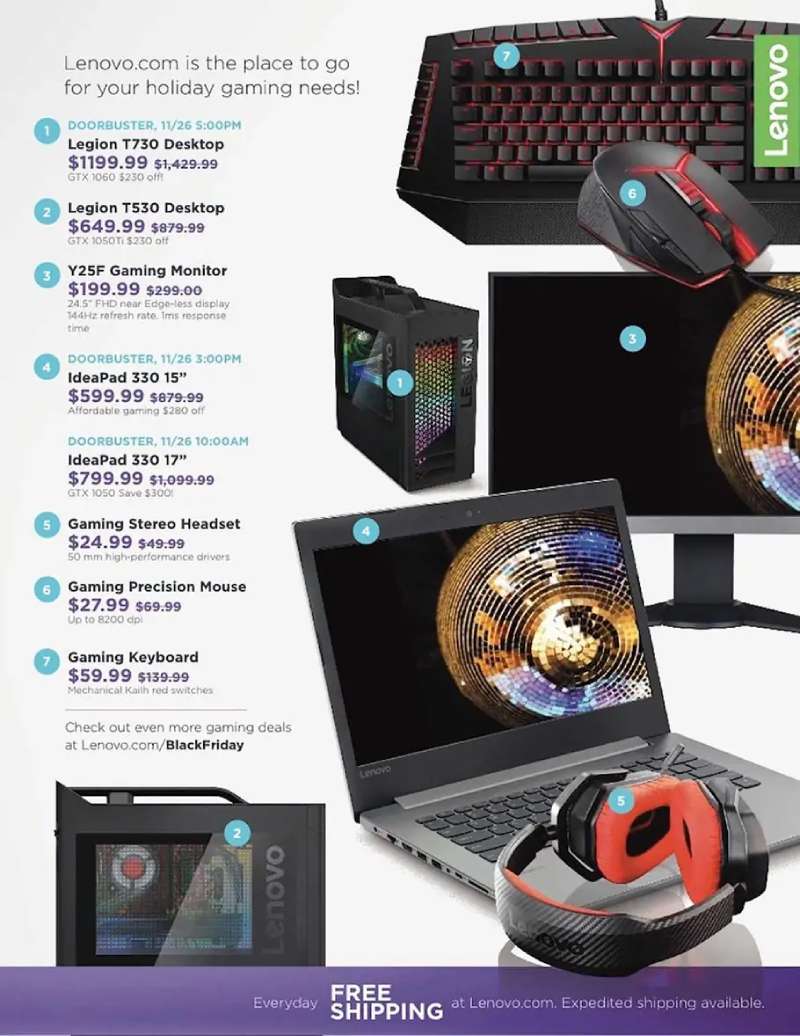
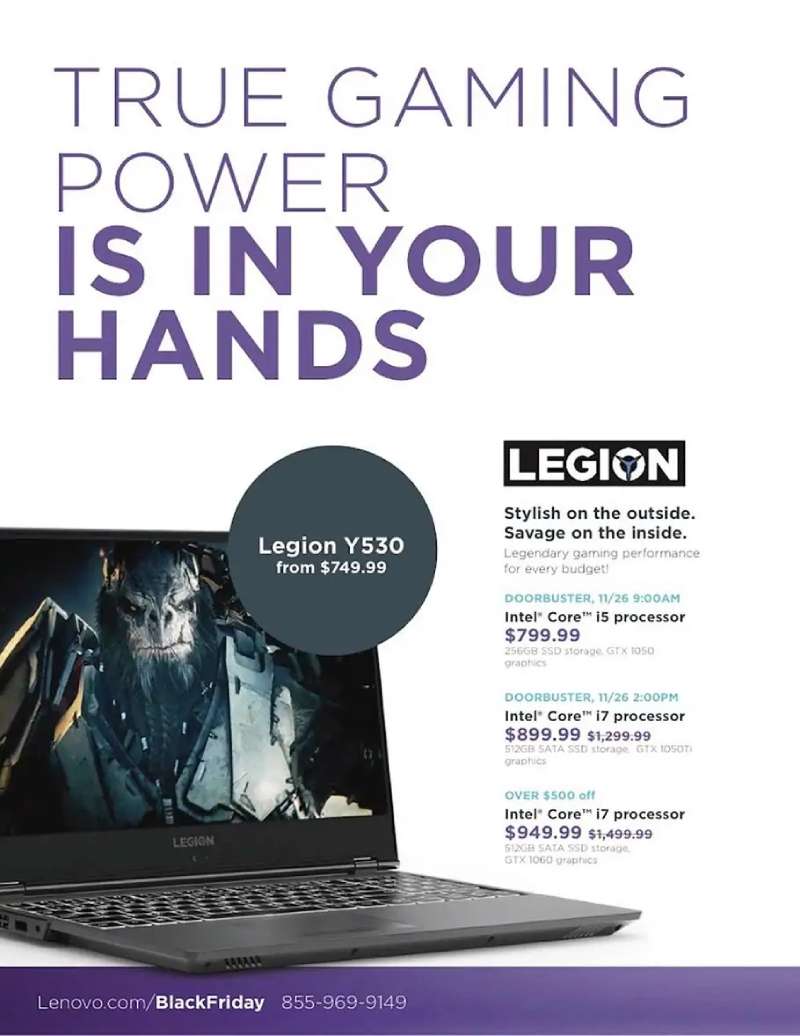
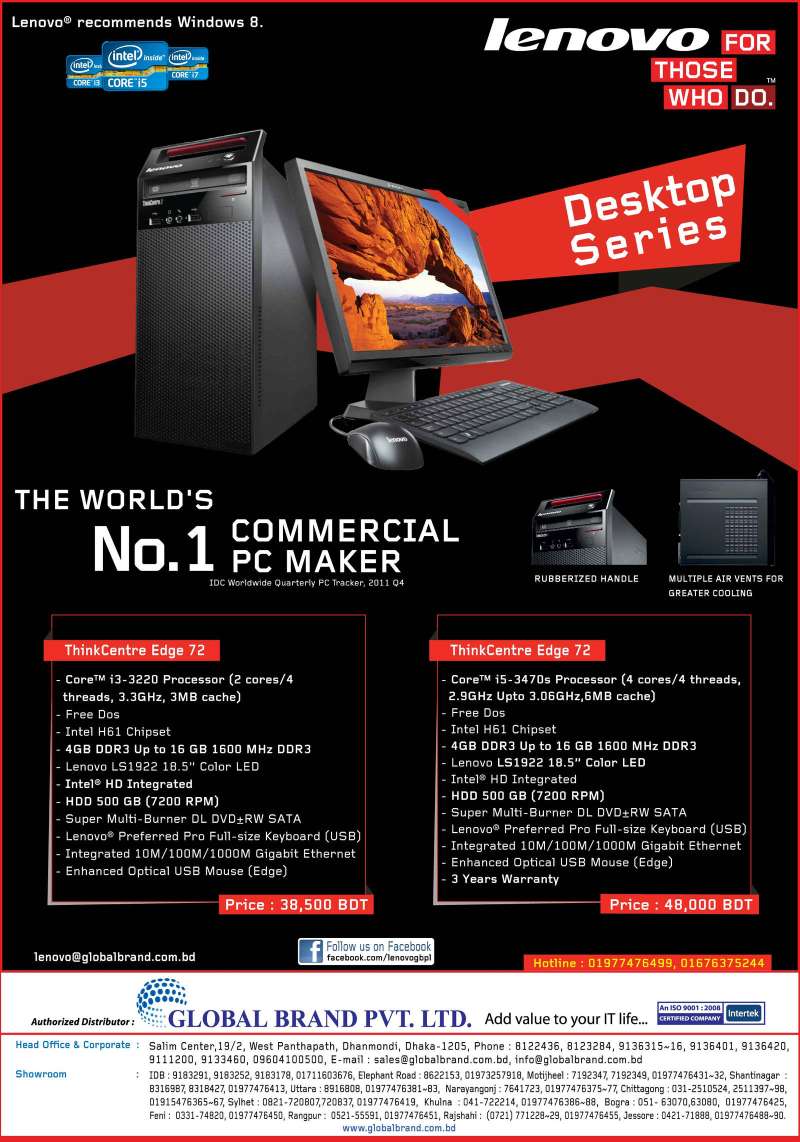
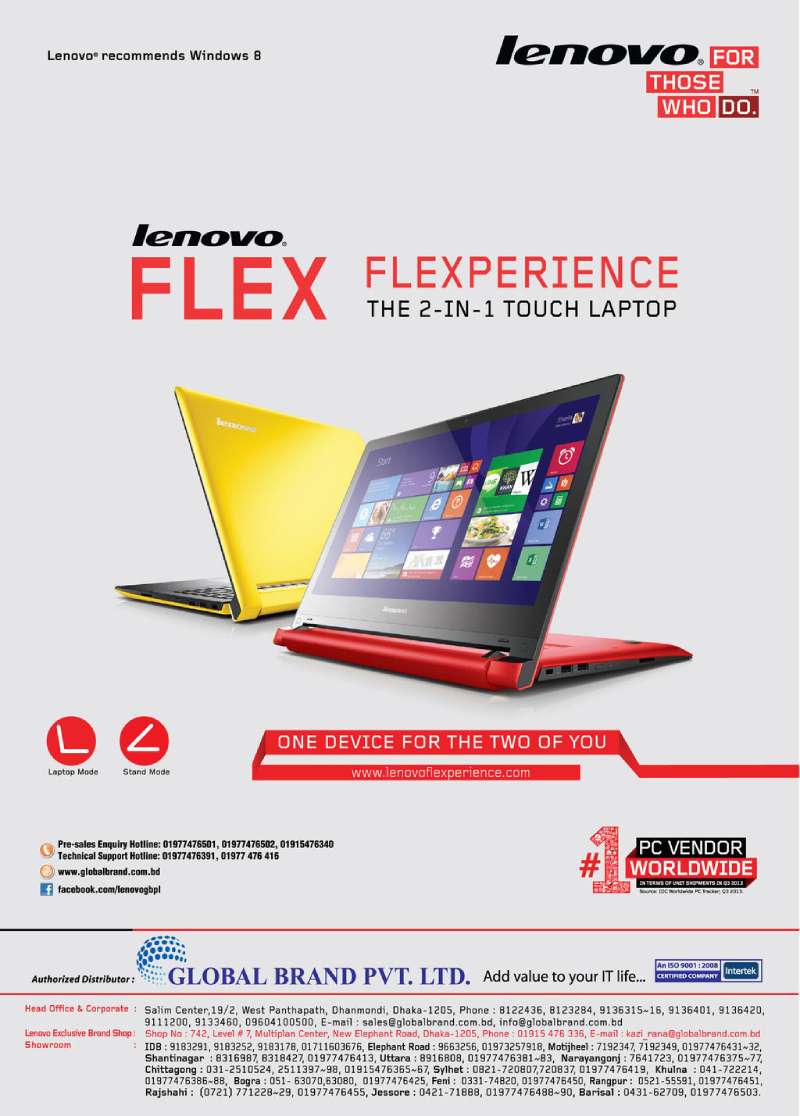
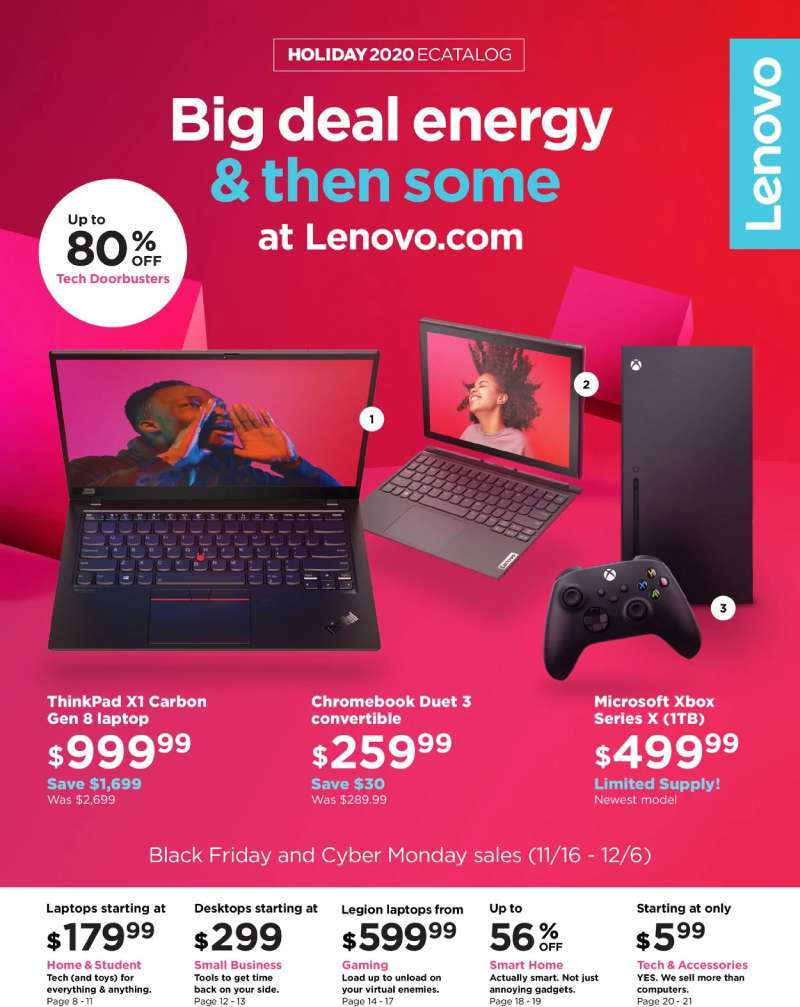
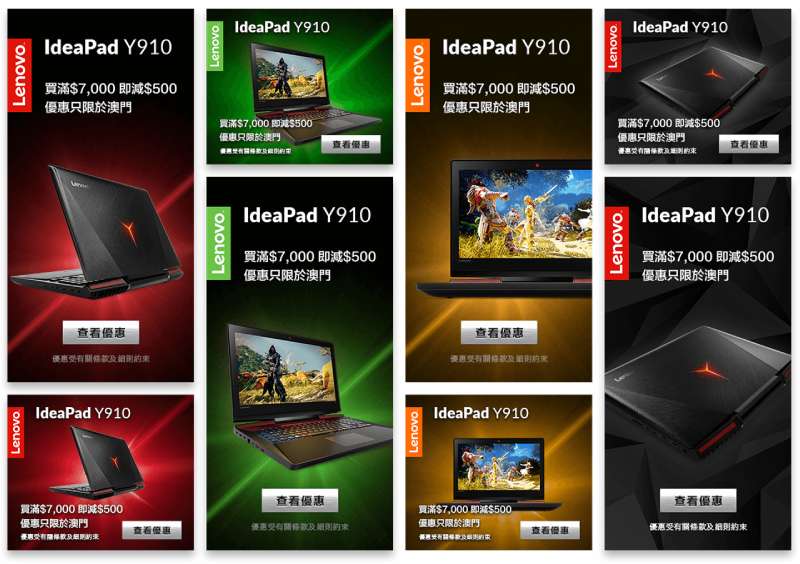
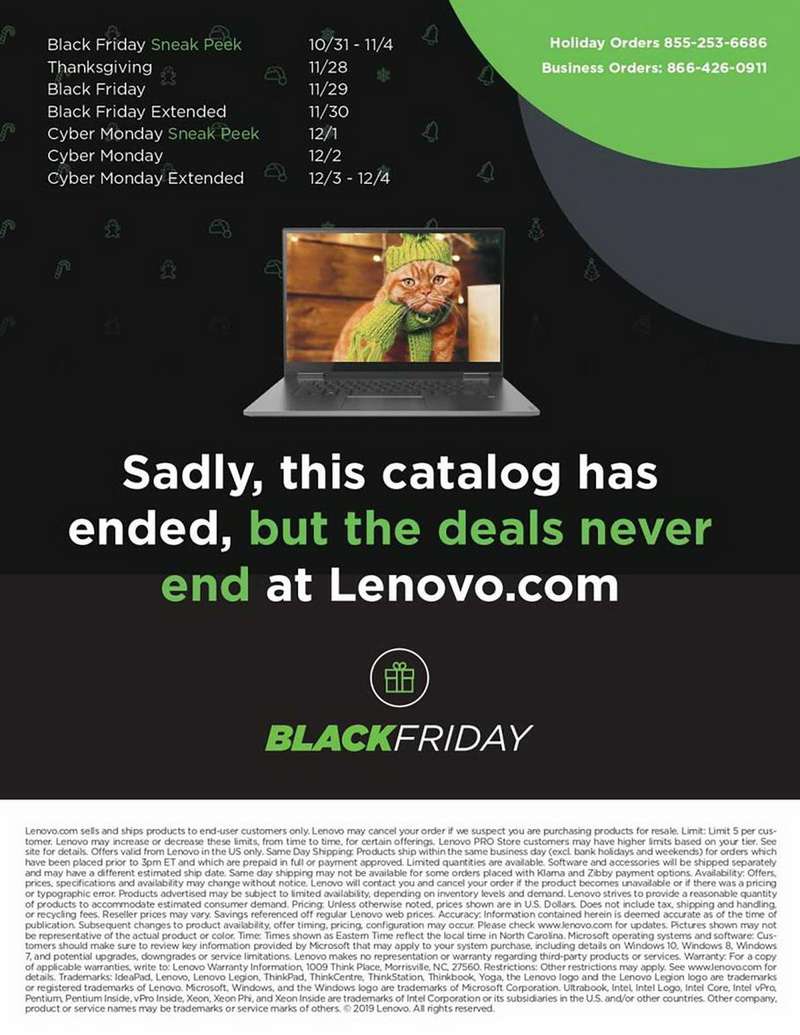
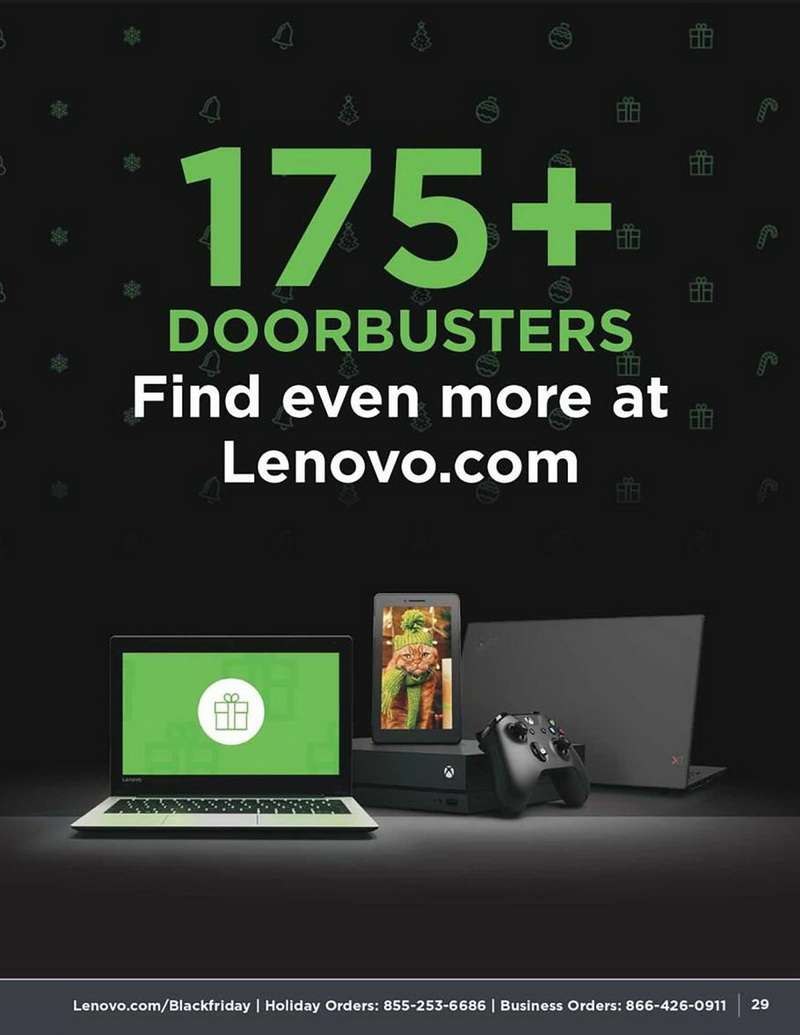
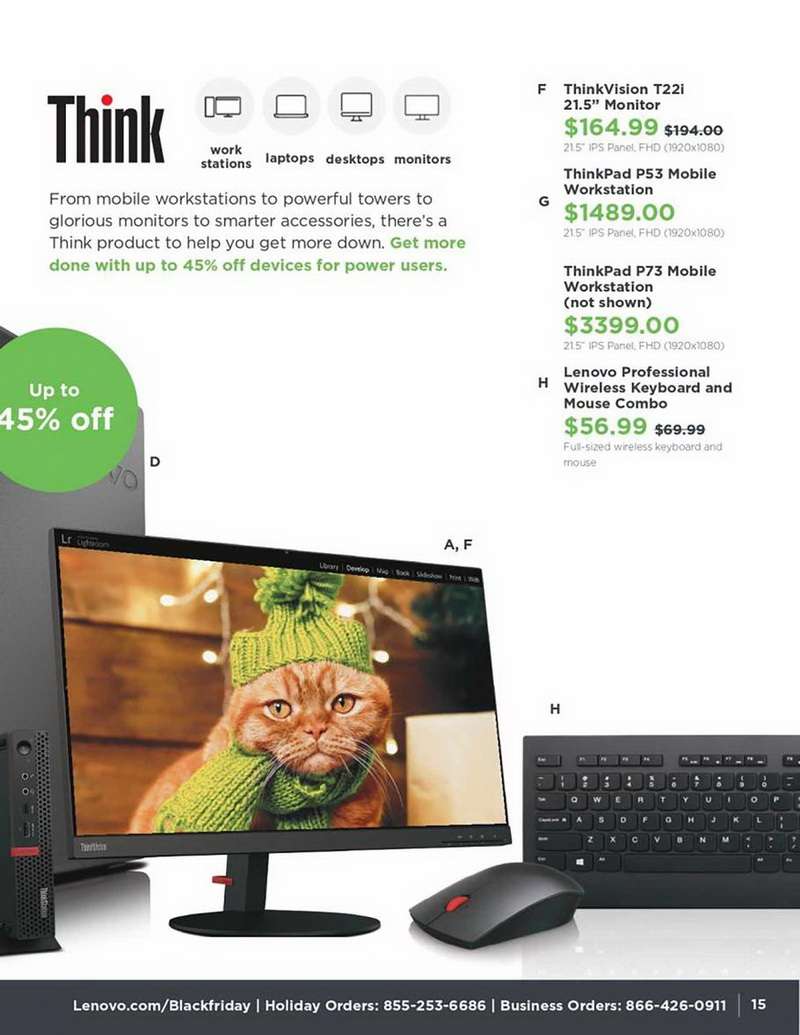
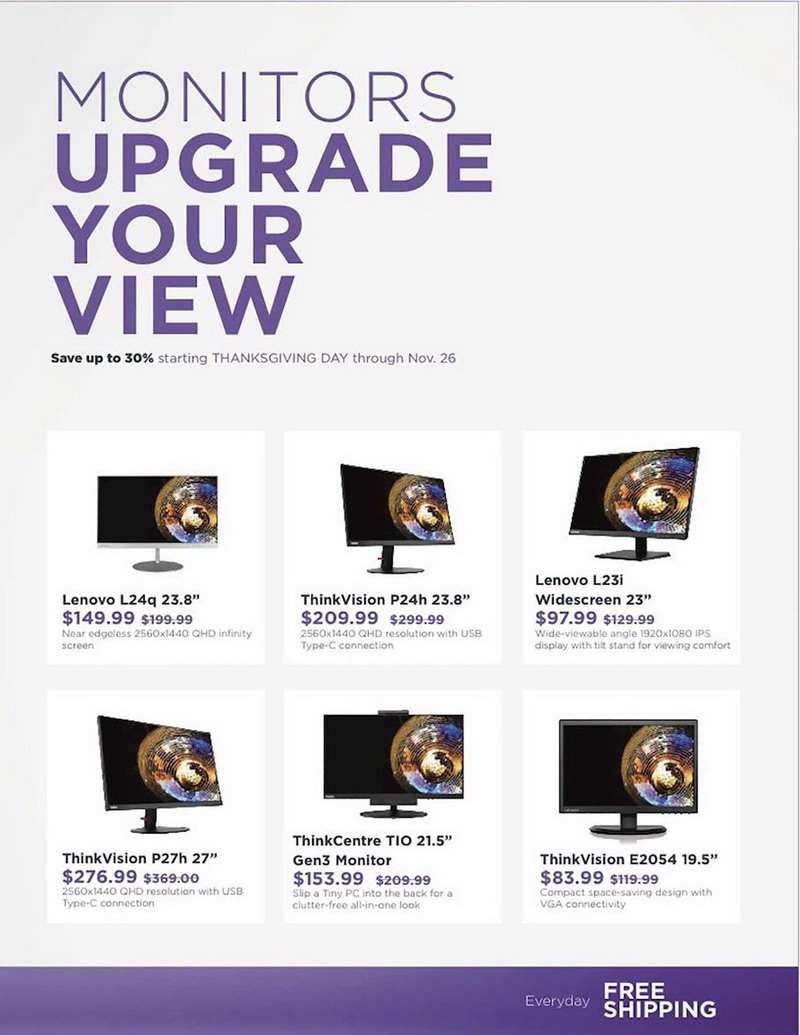
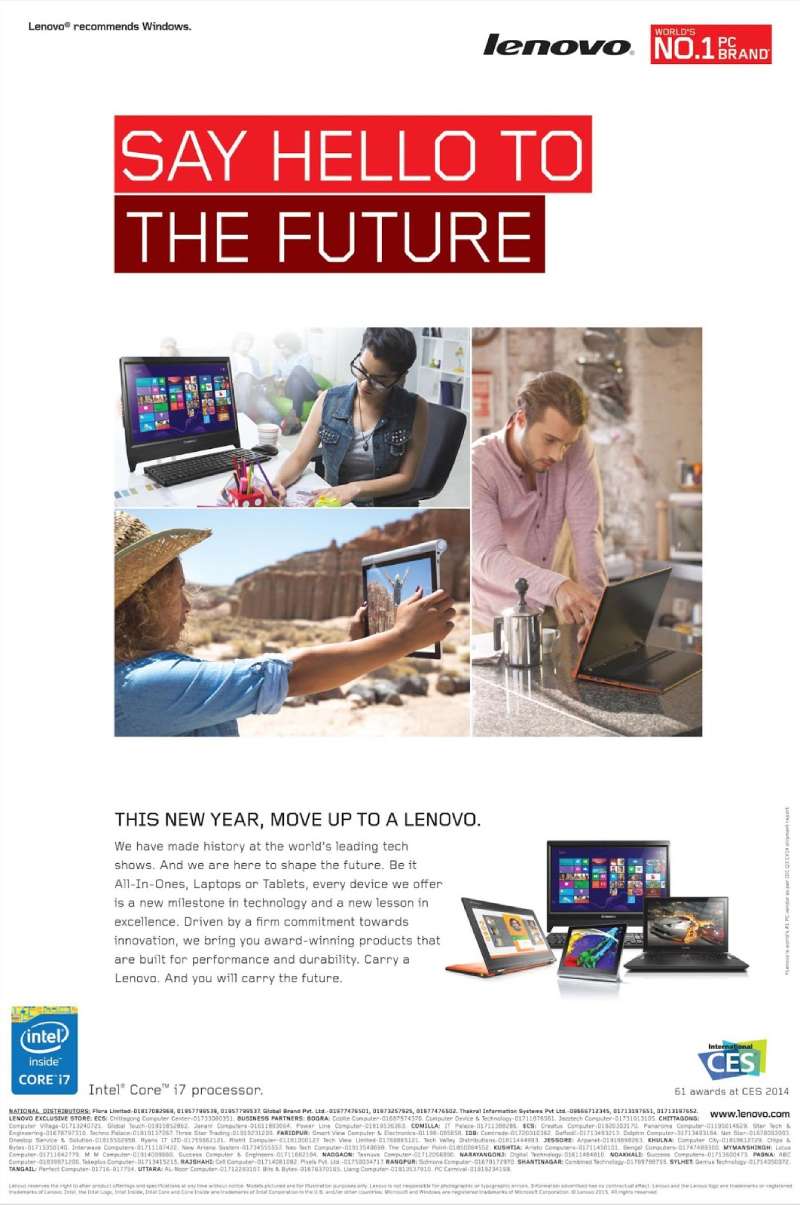
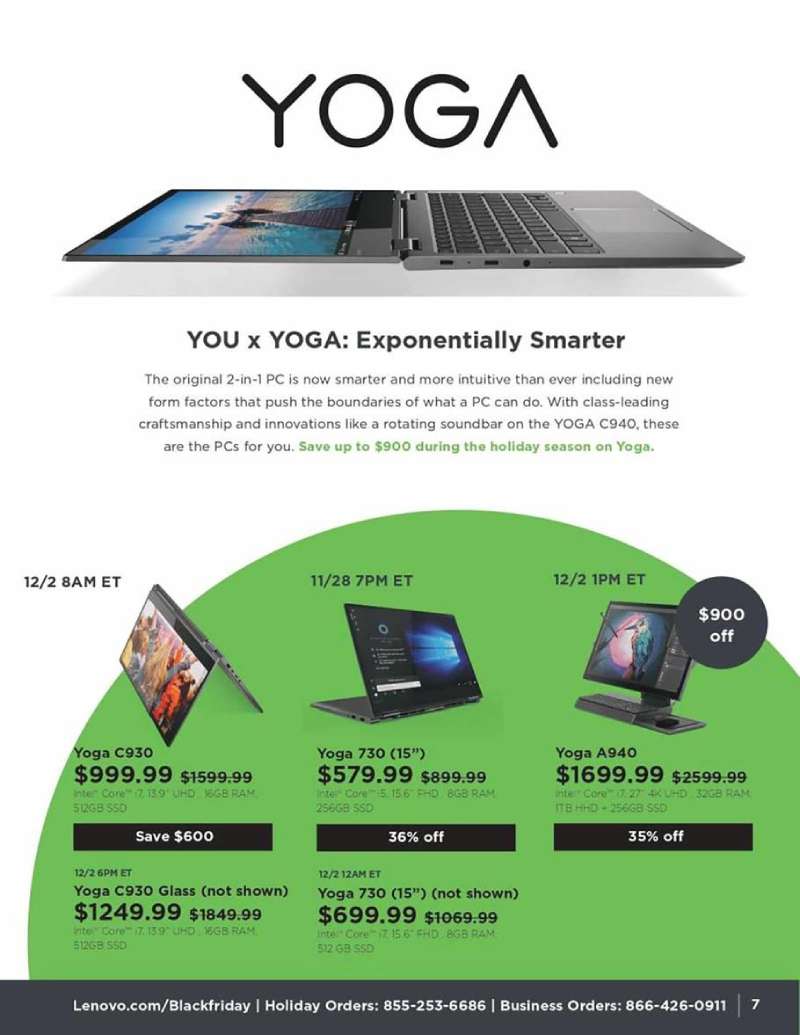
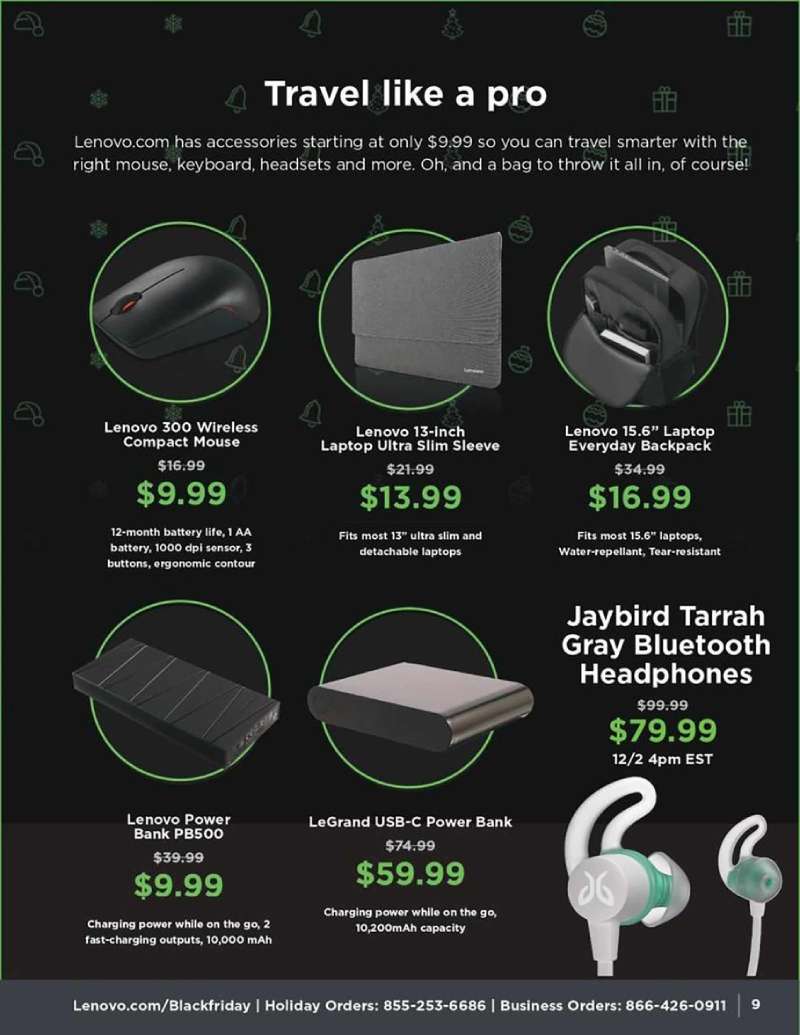
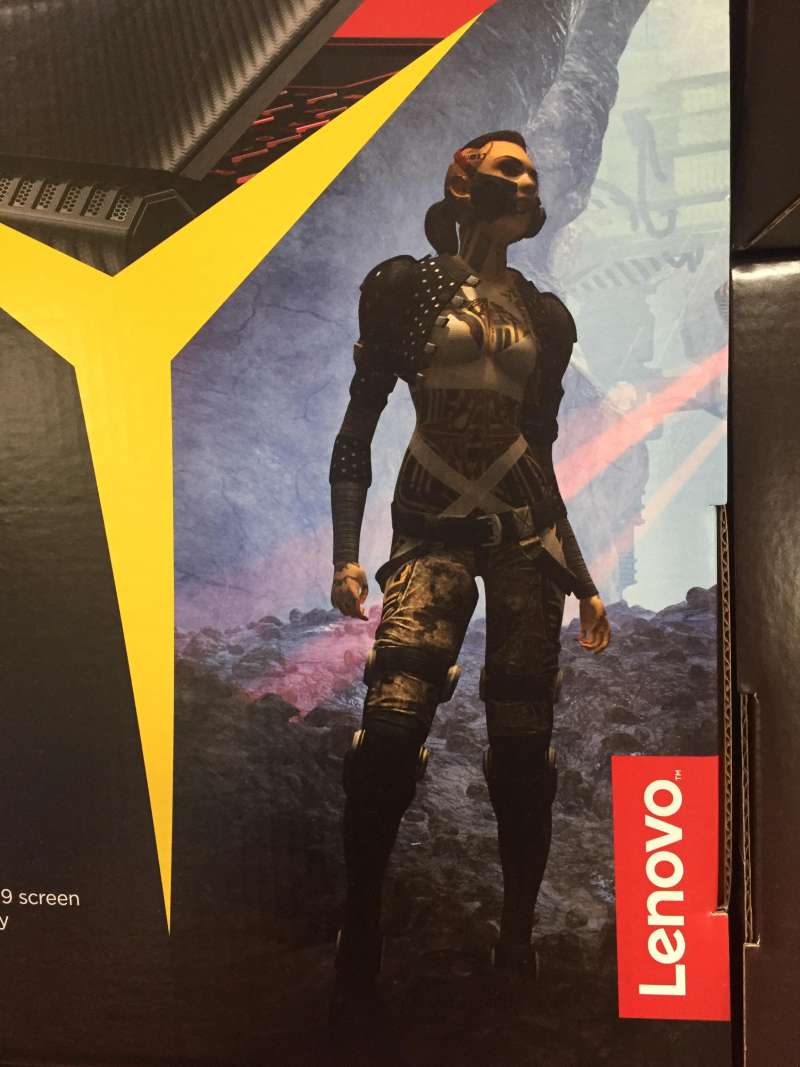
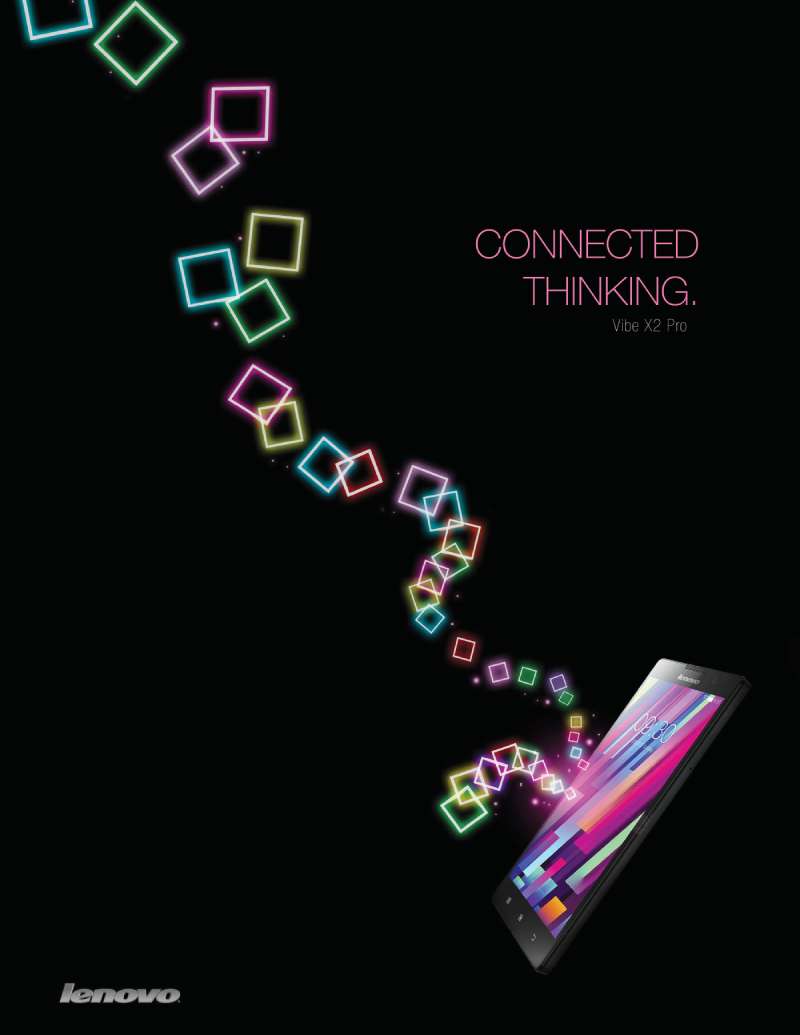
Lenovo print ads follow a 3-element system: isolated product, single-weight sans headline, red logo lockup in a fixed corner. Backgrounds stay neutral. The palette runs black, white, grey and one red. Copy blocks sit below the optical center, never above the product.
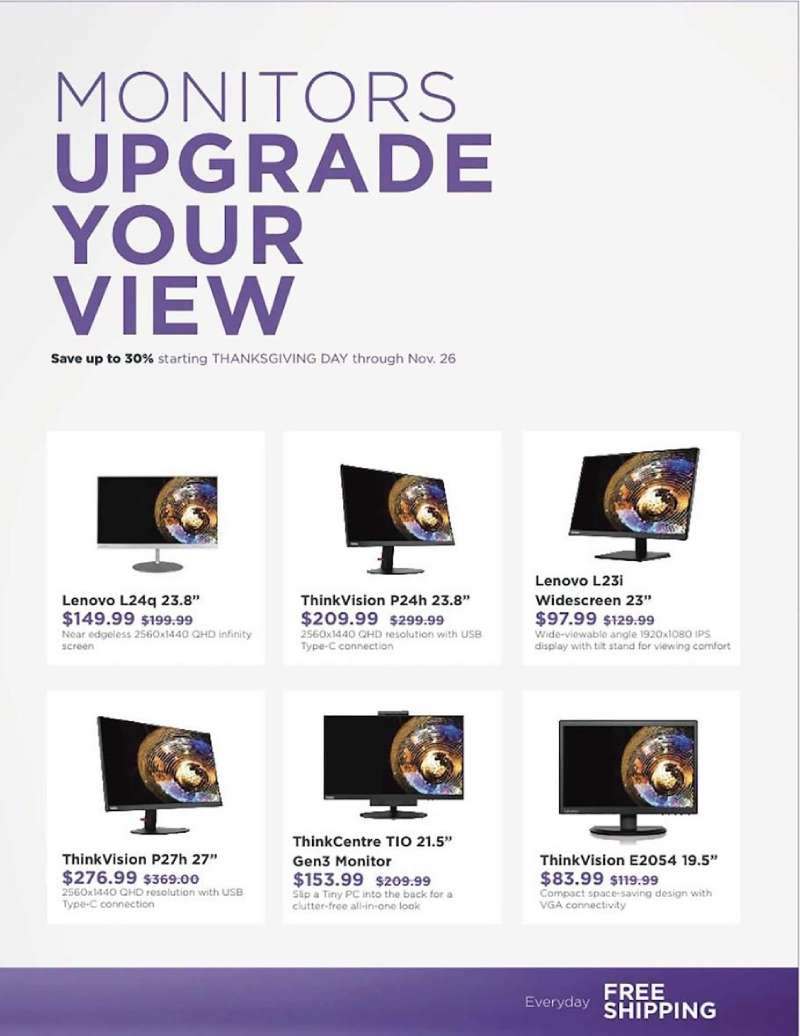
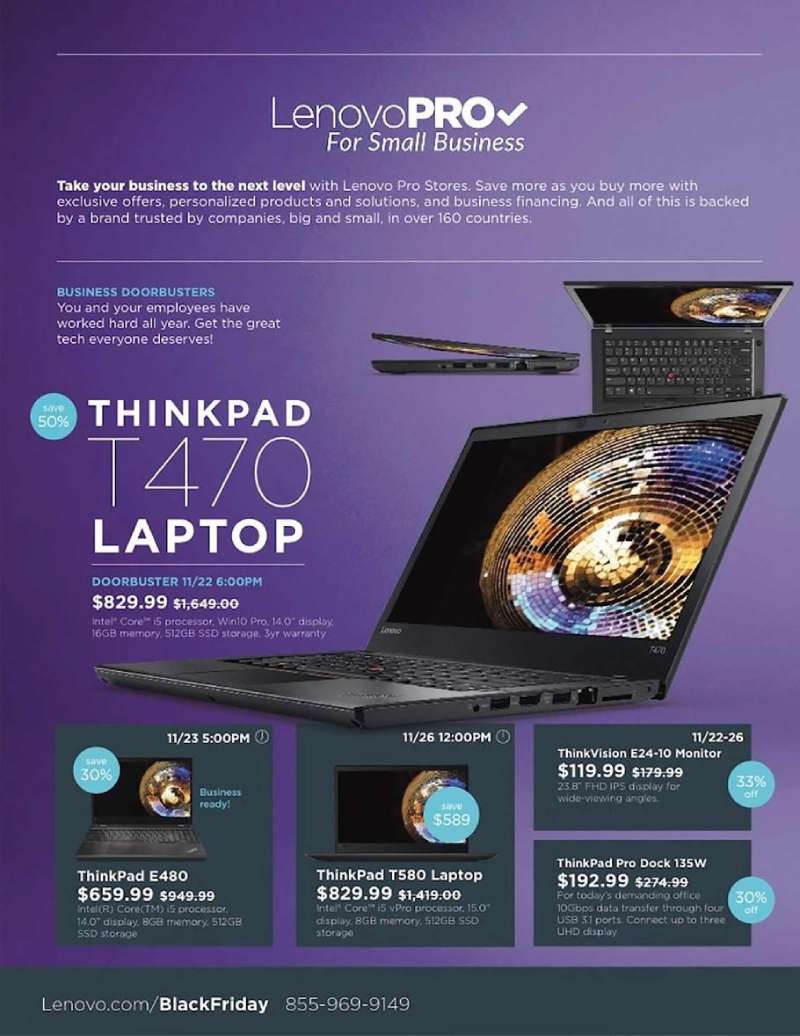
Image-to-text ratio: roughly 70/30 in consumer work, closer to 50/50 in ThinkPad B2B pages where spec copy has to appear.
The visual hierarchy is deliberately flat by tech-category standards. One headline, one product, one logo, and almost nothing competing for third place.
Typography: the brand runs a geometric sans-serif font at a single weight for headlines, which keeps the typographic hierarchy dependent on size and position rather than weight contrast.
Color: the signature red does one job only, marking the logo and occasionally the TrackPoint. Everything else is neutral, which is why the color palette reads as disciplined rather than sparse.
Generous white space around the product is doing the heavy lifting. Remove it and the layouts collapse into ordinary retail pages.
Lenovo’s brand guidance formalizes all of this, specifying bottom-alignment and top-alignment logo lockups depending on where the mark sits in the composition. That kind of rule set is what separates a functioning system from a loose set of brand guidelines.
How Do Lenovo TV Commercials Differ From Its Print Ads?
Lenovo TV work carries narrative that print never attempts. Print states a product fact. Film builds a character arc across 30 to 105 seconds. The red logo appears only in the end card, and the product often does not appear until the final third.
Always Get Back Up (2025)
Design Bridge and Partners, 45 seconds. Three gamers fail repeatedly across escalating scenarios, scored to Big Dawgs by Hanumankind. The Legion Pro 7i appears late. It ran across TV and video-on-demand in 180 markets.
Smarter Technology for All anthem (2019)
Directed by Ben Tricklebank at Furlined. Customer stories intercut across markets, cut for cinema and TV in 14 languages. The film ends on the locked tagline lockup rather than a product shot.
YOU anthem (2024)

Directed by Drew Kirsch at Tomorrow. Real B2B and B2C users are lit and framed as products, with “Introducing The Andre” style supers. Editorial by Cut & Run, music by Walker.
Film gives Lenovo room for storytelling that a single page cannot hold, and the motion graphics in the end cards do the identity work that a static logo lockup does in print.
How Has Lenovo Advertising Evolved Since 2005?
Lenovo advertising moved through 4 phases after the IBM Personal Computing Division acquisition in 2005: inherited ThinkPad equity, product-led global expansion, purpose-led brand work, and AI positioning. Each phase changed who the ads addressed.
| Period | Strategic shift | Representative campaign |
|---|---|---|
| 2005 to 2009 | Absorb IBM equity, keep ThinkPad design language intact | Olympic sponsorship, Turin 2006 and Beijing 2008 |
| 2010 to 2015 | First global platform, consumer expansion, celebrity integration | “For Those Who Do,” Ashton Kutcher as product engineer, 2013 |
| 2015 to 2019 | Creator-led social, category-contrarian tone | Goodweird |
| 2019 to 2024 | Purpose and social impact as brand proof | Work for Humankind, Evolve Small |
| 2024 onward | AI positioning, person at the center of the frame | “YOU,” “Smarter AI for All” |
Kobe Bryant fronted K900 smartphone spots in China and other Asian markets in 2013, a market-specific move that never crossed into Western media.
The 2005 IBM deal also handed Lenovo a working visual identity it did not have to invent, which is why ThinkPad advertising changed far less than consumer advertising did.
Which Agencies Created Lenovo Advertising?
Saatchi & Saatchi created For Those Who Do for Lenovo in 2010. Zeno Group created Work for Humankind for Lenovo in 2021. VML Atlanta created YOU for Lenovo in 2024. Design Bridge and Partners created Always Get Back Up for Lenovo Legion in 2025.
| Agency | Campaign | Year |
|---|---|---|
| Saatchi & Saatchi | “For Those Who Do” | 2010 |
| DLKW Lowe, Blast Radius, Portal A | “Goodweird” | 2015 |
| Lenovo in-house brand team | “Smarter Technology for All” | 2019 |
| Zeno Group | “Work for Humankind” | 2021 |
| VML Atlanta | “YOU” | 2024 |
| Design Bridge and Partners | “Always Get Back Up” | 2025 |
In-house matters here. Lenovo built Smarter Technology for All internally, and Quinn O’Brien publicly credited the in-house team’s speed over external agencies for a 12-market launch.
Named individuals carry more of the work than agency names suggest: Richard Sapper on ThinkPad industrial design, David Hill as lead designer from 1995 to 2017, Emily Ketchen and Gerald Youngblood on the marketing side.
What Can Designers Learn From Lenovo Ads?
Limit the palette to neutrals plus one brand color, and give that color exactly one job.
- Lock the logo lockup to fixed positions and write the rule down, the way Lenovo specifies top and bottom alignment variants
- Set headlines in one weight and let size and placement carry the hierarchy instead of bold-versus-light contrast
- Isolate the product on a neutral field before adding any environmental context
- Place the copy block below the optical center, which is where every Lenovo print layout puts it
- Address the reader in second person with a plain verb, not an abstract noun
- Build the grid first, because consistent grid systems are what let a campaign run across 180 markets without falling apart
The last one is the least glamorous and the most useful. A campaign that survives localization into 14 languages was structured for it from the layout stage, not fixed later.
Anyone choosing type for this kind of work will find the same logic behind most fonts for advertising: legibility at billboard distance beats personality every time.
How Do Lenovo Ads Compare to Dell and HP Ads?
All three sell commodity hardware into overlapping markets, and all three solved the differentiation problem differently.
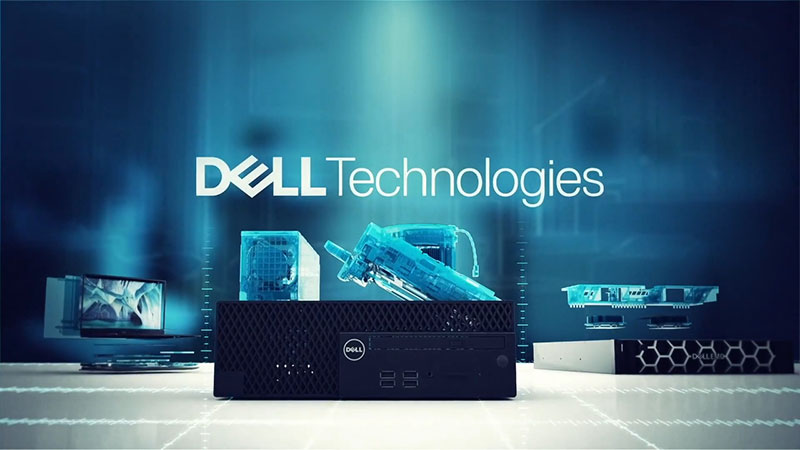
Lenovo built its consumer advertising on second-person address and social-impact platforms, which is why Work for Humankind and Evolve Small carry more brand weight than any single product launch. Dell ads historically leaned on spokesperson-led direct response and, later, on enterprise-solution messaging with tighter product framing.
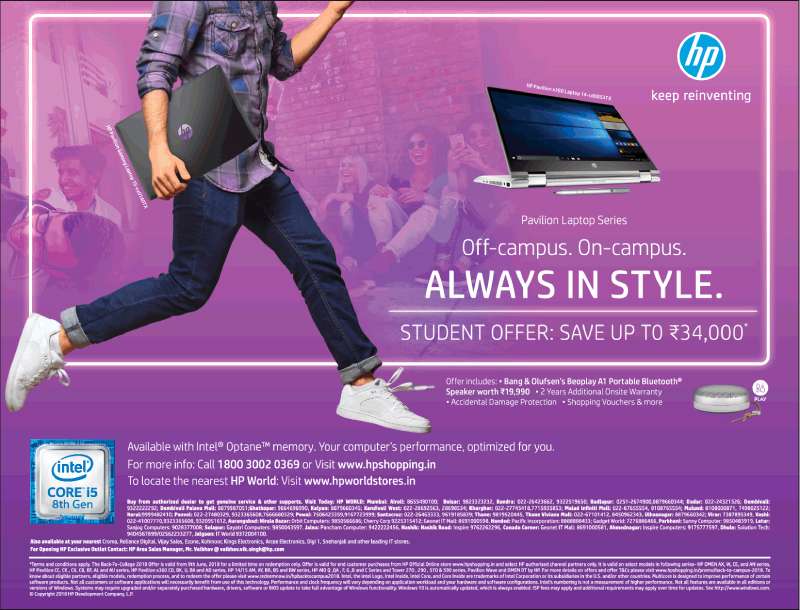
HP ads pushed harder into design-led consumer work and printing category storytelling, running warmer color and looser layout than either competitor.
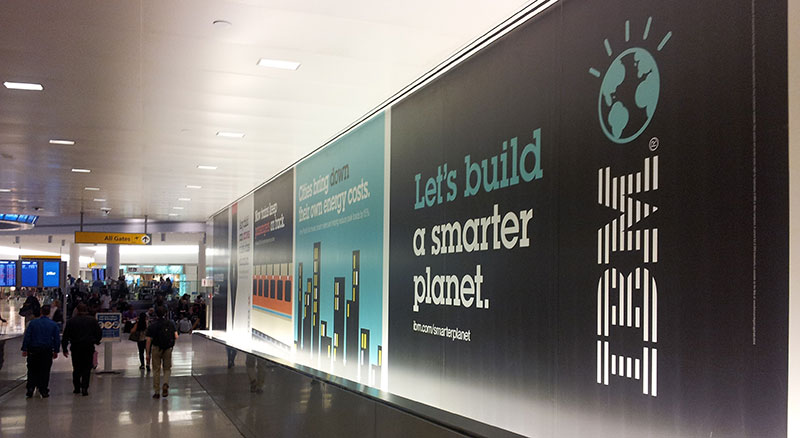
The inheritance question separates Lenovo from both. IBM ads established the ThinkPad’s black-box austerity long before Lenovo owned the brand, and Lenovo has spent 20 years deciding how much of that restraint to keep.
Gaming is where the comparison shifts entirely. Legion competes with ASUS ROG, MSI, Razer and Alienware, and its advertising sits closer to component brands like NVIDIA ads in tone than to anything in the mainstream PC category.
What Makes Lenovo Advertising Work?
Restraint, repeated for 16 years across 180 markets.
The system is small enough to survive translation: one red, one headline weight, one product per frame, one verb aimed at the reader. Nothing in it depends on a joke landing or a celebrity staying relevant.
That discipline is also the limitation. The work rarely surprises, and next to more expressive competitors it can read as cautious.
What it buys instead is recognition. A page from 2011 and a film from 2025 belong to the same brand without sharing a single visual device beyond the mark and the color, which is the actual test of a minimalist design system rather than a minimalist-looking layout.
Most campaigns fail that test within three years. Lenovo’s has not.
Lenovo Ads Examples

FAQ on Lenovo Ads
What is Lenovo’s current advertising slogan?
Smarter Technology for All, launched in 2019 and extended to Smarter AI for All in 2024. Emily Ketchen has described the newer line as the same brand platform narrowed onto the individual user rather than the category.
Why did For Those Who Do never run in China?
The verb was the problem. “Do” carries connotations of manual labor in Chinese, an association Lenovo did not want on the brand, so its domestic market kept the existing Imagine slogan instead.
What colors does Lenovo use in its ads?
Signature red, black, white and grey. Brand guidance describes the red as representing the heart of the company, which is a fairly literal application of color psychology. The 2015 identity added blue, green, orange and pink for container fills.
Does Lenovo work with influencers and creators?
Yes, and it started early. Portal A produced Goodweird films with EeOneGuy in Russia, Matthew Santoro in the US and The Viral Fever in India. Catalyst ran a separate Legion influencer program across gaming and tech creators.
Who runs marketing at Lenovo?
Emily Ketchen is CMO and VP of the Intelligent Devices Group and International Markets. Gerald Youngblood holds the North America CMO role. David Roman and Quinn O’Brien led global brand work through the 2010s.
What is the Lenovo Portal in the AI campaigns?
A visual storytelling device introduced with the Smarter AI for All work in 2024. It reworks the shape of the logo container into a frame that campaign imagery passes through, per Lenovo’s own campaign notes.
How does Lenovo market Legion to gamers who dislike ads?
Mostly by not advertising at them. Karan Kapur of Lenovo has said the best way to market a gaming brand is to not market it, pushing spend toward creators, teams and Esports World Cup activations instead.
Has Lenovo advertising won awards?
Zeno Group lists Work for Humankind as award-winning, and both that campaign and Evolve Small were submitted at the Shorty Awards. Ads of the World, part of the Clio Network, archives 48 Lenovo campaigns with credits.
Does Lenovo advertise Motorola under its own name?
No. Lenovo acquired Motorola Mobility from Google in 2014 for $2.9 billion and kept the Moto brand running as a separate identity, with its own campaigns, its own wordmark and its own retail positioning.
Where does Lenovo launch its biggest campaigns?
At owned events, not broadcast slots. The YOU campaign launched at Lenovo Innovation World in Berlin. Tech World took over Sphere in Las Vegas for CES 2026, with further product news at MWC 2026.
Conclusion
Studied together, Lenovo ads read less like a portfolio and more like a rulebook that happened to produce campaigns.
ThinkPad, Yoga and Legion each get a different tone. None of them gets a different grid.
Saatchi & Saatchi set the copy voice in 2010. Zeno Group proved the brand could carry social-impact work. VML Atlanta turned users into the product shot.
The through line is art direction that refuses to compete with itself, which is why the print design still functions in a portfolio review fifteen years later.
Steal the constraints, not the layouts. A locked palette, one type weight and a fixed logo position will outlast whichever visual trend your brand positioning is chasing this quarter.

Renowned for his expertise in logo design and visual branding, Bogdan has developed a multitude of logos for various clients.
His skills extend to creating posters, vector illustrations, business cards, and brochures. Additionally, Bogdan's UI kits were featured on marketplaces like Visual Hierarchy and UI8.
He also wrote in the past years on sites like Design Your Way, WebDesignerDepot, WPDean, Designmodo, Speckyboy, Slider Revolution, and more.
- The Windsurf Logo History, Colors, Font, And Meaning - 10 October 2026
- How to Remove Background From Product Photos (No Photoshop) - 10 October 2026
- How Designers can Build a Stronger Online Creative Identity - 9 October 2026

Bogdan Sandu is a seasoned designer who has been designing websites since 2008. Renowned for his expertise in logo design and visual branding, Bogdan has developed a multitude of logos for various clients. His skills extend to creating posters, vector illustrations, business cards, and brochures. Additionally, Bogdan's UI kits were featured on marketplaces like Visual Hierarchy and UI8. He also wrote in the past years on sites like Design Your Way, WebDesignerDepot, WPDean, Designmodo, Speckyboy, Slider Revolution, and more.
You Might Also Like