A rebrand changes how people see a company or a product. Sometimes that means a new logo and a fresh color palette. Sometimes it means a new name and a different spot in the market.
Researchers don’t treat it as a single act. Muzellec and Lambkin (European Journal of Marketing, 2006) drew on a sample of 166 companies that changed their corporate brand and described a range. Evolutionary changes to logo and slogan sit at one end, revolutionary changes to name and position at the other.
What Is Rebranding?

Brand managers use the term for a deliberate change to a brand’s name, visual identity, messaging or positioning, made to reshape how an audience perceives a company or product. The scope varies a lot. A new color palette sits on the light end, a new name and a new business model on the heavy end.
A marketing campaign leaves the brand itself untouched, and that is the line between the two.
What a Rebrand Changes
Name, visual identity, messaging and positioning can each change alone or together. The name is the obvious one, and it drags the domain and the legal entity along with it. Visual identity means logo, typography, color and imagery. Messaging covers the tagline, the brand voice and the story told to customers. Positioning is the quietest layer, meaning who the brand serves and what it claims to do better.
Name and positioning are the hardest layers to reverse once customers have absorbed them. Swapping the logo and keeping everything else is the lightest version.
Positioning is where most rebrands should start. A change in how the brand is positioned against its competitors comes before any logo work, or the new look has nothing to express.
Once that decision exists, it needs a carrier. That means the visual identity built around the old logo and palette, rebuilt for the new promise.
What Rebranding Is Not
A single campaign or ad creative doesn’t count. Neither does redesigning one asset, like a website template, or a temporary promotional name swap.
IHOP’s 2018 switch to IHOb falls in that last group. The chain temporarily changed its name to promote burgers (Associated Press, 2018), and the change was never permanent.
What Are the Types of Rebranding?

Practitioner guides usually sort rebranding into partial and comprehensive, and some add the brand refresh as a separate type. Academic research treats it as a spectrum instead.
That spectrum comes from Muzellec and Lambkin (European Journal of Marketing, 2006), who studied a sample of 166 rebranded companies and sorted the changes into evolutionary and revolutionary.
Evolutionary change is hard for outsiders to spot. Revolutionary change shows up as a new corporate name and a redefined position.
A working split follows the depth of change.
| Type | What changes | What stays | Main risk |
|---|---|---|---|
| Brand refresh | Logo, colors, typography, tone | Name, positioning, audience | Too light to fix a positioning problem |
| Partial rebrand | Positioning, messaging, parts of the identity | Name, core offer | Old and new assets clash |
| Full rebrand | Name, identity, positioning | Little beyond the legal entity | Lost recognition and brand equity |
| Merger-driven rebrand | Name and identity of one or both brands | Depends on the deal | Two customer bases, one unclear promise |
A merger-driven rebrand is defined by its trigger, not its depth, so it can land at either end of the spectrum.
Rebranding vs Brand Refresh vs Repositioning
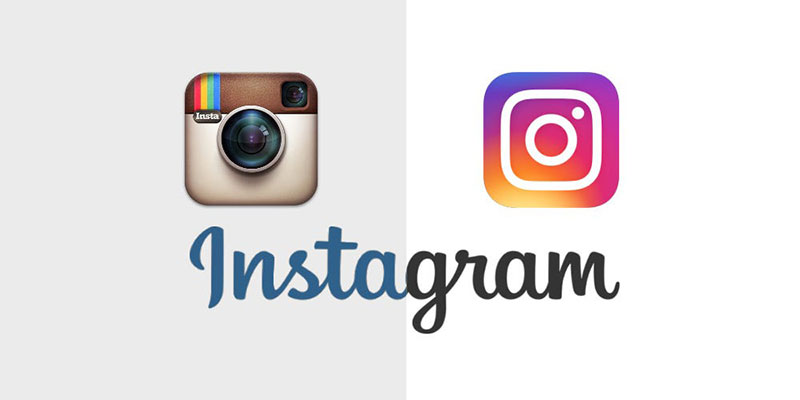
What separates them is what the audience sees change.
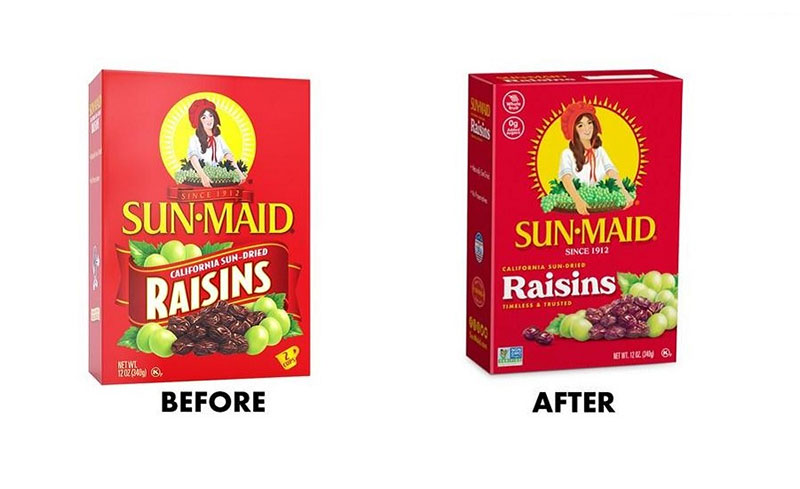
A refresh is the facelift version. Visuals or messaging get updated and the core identity stays put. Repositioning changes the claim the brand makes, and the identity can survive that untouched. A rebrand goes further and changes the identity itself, usually with a new position behind it.
The line sits at positioning. Change the look and the brand has refreshed. Change what the brand claims to be and it has rebranded.
Corporate Rebranding vs Product Rebranding
Philip Morris Companies became Altria Group in January 2003, while its operating companies kept their own names (IndustryWeek; Associated Press, 2003).
That is corporate rebranding at the parent level only.
Product rebranding works one level down, where a single product gets a new name, package or position and the parent brand carries on unchanged.
Why Do Companies Rebrand?
The triggers overlap a lot, so one rebrand often has more than one behind it.
Mergers and acquisitions are the obvious case. Two brands become one, or a parent absorbs a smaller name. Reputation damage works differently, since the old name carries associations the company can’t shake. Some companies rebrand because the current look and voice speak to customers they no longer want, or because the identity predates what the business now does. A trademark dispute can force a new name or logo outright. And expansion plays in too, when the old name limits what the company can sell or where.
Beverages made up about 60% of Dunkin’ Donuts’ sales when it announced in 2018 that Dunkin’ Donuts would become Dunkin’ from January 2019 (Associated Press).
The name had stopped describing the business. That is the expansion trigger in its plainest form.
Meta shows how triggers stack. Facebook announced the new parent name on October 28, 2021, saying the old brand could not represent everything the company built (Connect 2021).
The announcement came after whistleblower testimony to a US Senate hearing earlier that month, and critics read it as a reputation move (NME, 2021). Both readings were in circulation on launch day.
The decision rule is short. Rebrand when the problem is the name or the positioning, and refresh when only the visuals are dated.
The questions worth settling before a rebrand starts are mostly about the problem, not the logo.
When a Rebrand Is the Wrong Fix
A rebrand does nothing when the cause sits outside the brand. Boredom with the current logo doesn’t justify one, and neither does a new executive’s preference or a bid for attention with no business problem behind it. Poor service or a weak product won’t be fixed by one either.
Muzellec and Lambkin found that a change in marketing aesthetics affects brand equity less than factors such as employee behaviour.
If customers complain about service, a new logo repeats the complaint under a new name.
How Does the Rebranding Process Work?
A rebrand moves from brand audit to positioning and messaging, then through naming and clearance, identity design and internal alignment, and finally rollout.
- Audit the current brand. Map how customers, staff and competitors describe it, and list what carries equity and must stay. Skip this and the new identity can discard the one asset customers actually recognize.
- Set positioning and messaging. Decide the audience, the promise and the voice before any design starts. When visuals lead, the logo ends up with no strategy behind it.
- Choose and clear the name. Run trademark, domain and handle checks on every candidate. Teams get burned when a favorite name is announced before anyone searches for conflicts.
- Design the identity and write the guidelines. Logo, typography and color come first, with Pantone references fixing brand colors for print. Guidelines written after launch mean teams improvise in the meantime.
- Align staff and partners. Brief everyone who speaks for the brand before the public sees it. Nobody wants employees learning about the change from the announcement.
- Launch and roll out. Switch every touchpoint on a planned schedule. Half-changed assets leave two brands live at once.
Clearing a New Name Before It Goes Public
As of October 2026, federal trademark searches run through the USPTO’s Trademark Search system. The USPTO retired its older TESS database on November 30, 2023.
The federal register is only one layer. Unregistered marks can hold common-law rights from actual use, so state databases and a plain web search belong in the same pass.
Candidates also need a domain, social handles and a check in each market, which a structured naming process builds in from the start.
Airbnb launched its Belo logo on July 16, 2014, and designers immediately compared it to the mark of Automation Anywhere. Both companies called the overlap a coincidence, and Automation Anywhere began moving to a new design (Dezeen, 2014).
A similarity check on the logo, not only the name, belongs in this stage.
Getting Staff Aligned Before Launch
Muzellec and Lambkin advise managing a corporate rebrand holistically, with every stakeholder on board and particular attention to employee reactions.
In practice, customer-facing staff get briefed first on the reason for the change, then handed the new guidelines and scripts. A leadership Q and A, such as a town hall, gives everyone else a place to ask questions.
Rolling Out Across Touchpoints
Launch order matters more than launch size. Internal systems go first. Owned channels like the website, packaging and signage follow, and paid media and press come last.
Keep a rebranding checklist of every touchpoint, including legal documents, email signatures, app store listings, social profiles and vehicles.
The old brand usually survives in the one place nobody listed.
How Much Does Rebranding Cost and How Long Does It Take?

Rebranding cost scales with scope, and published price ranges disagree by an order of magnitude for the same company size. Timelines run from weeks for the design work to years for a physical rollout.
The agency price pages retrieved quote very different small-business totals, and none cite a survey method. Treat any single figure from them as a quote, not a benchmark.
The timeline figures that do carry a named source are these. A partial rebrand takes 3 to 6 months (Oficina Economica de Galicia, 2026), and a full one runs 6 months to a year or more (same office). Work limited to strategy, identity and guidelines comes in at 8 to 12 weeks (Crafted NY, agency FAQ).
What Drives Cost
Agency and strategy fees cover the audit, positioning, naming and identity design. Naming brings its own legal bill for trademark searches, registrations and entity filings. Physical assets such as signage, packaging, uniforms and vehicles sit on top of that. Digital assets cover the website, app store listings, email and ad accounts, and internal rollout covers training, staff briefings and document updates.
Documents cost too. A written set of brand guidelines is its own deliverable, and it has to be reviewed and distributed before launch.
A brand refresh skips naming, trademark work and most legal filings. When the positioning is sound, it is the cheaper fix.
Why the Timelines Disagree
Eight to twelve weeks and six months to a year are both right. They count different things.
Crafted NY counts strategy, identity and guidelines. The Galicia office describes the whole process, rollout included.
Burger King launched its 2021 identity in January and expected the restaurant rollout to run over the following few years (Design Week, 2021). The design project was the short part.
What Are the Risks of Rebranding?
Customers can lose the link between the new name or look and the old one, and habit purchases stop. The name carries accumulated recognition, so changing it puts brand equity at risk. Search visibility can drop too, because old URLs lose their place until redirects are mapped and processed. And since the change touches every asset, the unlisted ones surface late and push costs over budget.
Muzellec and Lambkin warn that a new corporate name can nullify years of effort and seriously damage or even destroy brand equity.
Weight Watchers renamed itself WW in September 2018 and launched the new name under a “Weight Watchers reimagined” line that linked the old and new identities. CMO Australia reported in 2019 that the transformation had gone through ups and downs, and that WW’s global chief brand officer described a rethink of its marketing as a result.
The highest exposure sits with brands customers recognize by sight, not by reading, such as packaged goods, retail fronts and app icons.
Reversal is a documented outcome, not a hypothetical.
Which Rebranding Examples Worked and Which Were Reversed?
Burger King’s 2021 identity held. Tropicana, Gap and Cracker Barrel each reversed a visual change within two months, and Twitter’s move to X remains disputed on value.
| Company | Year | What changed | Outcome |
|---|---|---|---|
| Burger King | 2021 | Logo, packaging, uniforms, signage | Kept, rollout over several years |
| Tropicana | 2009 | Pure Premium packaging | Reversed in under 2 months |
| Gap | 2010 | Logo | Reversed in about a week |
| Twitter (X) | 2023 | Name and logo | No reversal in retrieved coverage, value loss disputed |
| Cracker Barrel | 2025 | Logo | Reversed in about a week |
Rebrands That Held
Burger King announced its first full rebrand in 20 years in January 2021. It replaced a logo dating from 1999 and drew the new look from the brand’s 1969 to 1994 period (Design Week, 2021).
The result is a flat logo with the name between two buns, set in a custom typeface called Flame. It carries through packaging, uniforms and signage in a warm palette.
Published outcome figures for this rebrand are scarce. What the record shows is reception: the design review site Brand New rated the logo well (BusinessDay, 2021).
Readers who want a wider set can browse a list of companies that went through a rebrand.
Rebrands That Were Reversed
Tropicana’s 2009 packaging change hurt fast. Pure Premium unit sales fell 20% and dollar sales fell about $33 million between January 1 and February 22, according to Advertising Age, citing Information Resources. The company scrapped the new packaging on February 23, and Minute Maid and Florida’s Natural gained double-digit unit sales in the same window.
Gap’s new logo went live in the first week of October 2010 and was dropped by October 12 (CNNMoney, 2010). Gap’s North America president said the company had handled the change the wrong way and that crowdsourcing a replacement was a poor fit.
Cracker Barrel unveiled a text-only logo in 2025, without the barrel and the seated Old Timer. That was August 19, and its shares fell more than 12% in one day (CNN, 2025). It announced the reversal on August 26, 2025.
For further cases that went wrong, see a longer list of rebranding failures.
Twitter is the contested case. Elon Musk announced the switch from the Twitter name and bird logo to X on July 23, 2023, the X logo replaced the bird the next day, and the sources disagree on what was lost.
Brand Finance put the Twitter brand at about $4 billion, while Vanderbilt University estimated $15 billion to $20 billion (Time, 2023). The coverage does not reconcile the two.
The reversals all changed or dropped the visual cue customers used to spot the brand at a glance. Tropicana lost its orange with a straw, Gap its blue box, Cracker Barrel its barrel and Old Timer.
Burger King went the other way and pulled from its own history. Twitter, which dropped both bird and name, shows the pattern is a tendency, not a rule.
How Do You Measure a Rebrand and Protect Search Visibility?
Measure a rebrand against a baseline taken before launch. Brand recognition and customer sentiment matter, and so does branded search demand. On the website side, permanent redirects do the protecting and, for a domain change, so does the Change of Address tool.
Brand Metrics to Track
Take a reading before launch and again at fixed points afterward, with the same questions and the same type of sample. A rollout that runs for years needs checkpoints inside it.
- Aided and unaided brand recognition
- Brand awareness among the target audience
- Branded search impressions and clicks
- Direct traffic
- Net Promoter Score
Net Promoter Score asks how likely a customer is to recommend the company on a zero to 10 scale. Promoters answer 9 or 10, passives 7 or 8, and detractors anything lower, and the score is the share of promoters minus the share of detractors (Bain and Company).
Kantar BrandZ values the Global Top 100 brands by combining financial performance with consumer perception (Kantar, 2026). Most companies sit outside that ranking, so it is a reference point, not a working metric.
Whichever metrics you pick, ways to measure how the brand performs after launch work only when the baseline exists. Tracking traffic alone misses a recognition loss that has not reached the website yet.
What Happens to Search Visibility After a Name or Domain Change
Google’s site move documentation (last updated August 20, 2026) says permanent redirects do not cause a loss of PageRank. It also says rankings can fluctuate while Google reprocesses the new URLs, and that most pages of a medium-sized site take a few weeks or more to move.
A rebrand usually bundles a new domain, a new CMS and a new layout. Google advises doing them one at a time.
- Use server-side 301 or 308 redirects from each old URL to its matching new URL, in one hop where possible.
- Keep the redirects for as long as possible, generally at least 1 year.
- Run the Change of Address tool after the move and redirects are live. It applies to a domain or subdomain change only.
- Submit a request for every verified variant of the old domain, including subdomains and the www and non-www versions.
- Skip the tool for HTTP to HTTPS, www switches, or path moves within a domain.
The usual mistake is pointing many old URLs at the new homepage. Google says this can confuse users and may be treated as a soft 404.
Monitor the Index Coverage report and the search queries report in Google Search Console, on both the old and new sites.
Rebranding FAQ
Should a small business rebrand?
Only when the name or positioning blocks growth. A dated logo alone calls for a brand refresh, which costs less and keeps the recognition the business has already built.
How often should a company rebrand?
No fixed interval applies. A trigger justifies a rebrand, such as a merger, a new target audience or a name that no longer fits, while a calendar does not.
Some companies run rebranding cycles to stay current, but visual refreshes can come more often than a change of name.
Is it better to rebrand with an agency or in-house?
An agency fits a full rebrand that needs research, naming and positioning. An in-house team fits a refresh built on existing guidelines.
The two combine well. Burger King’s 2021 rebrand came from its in-house creative team working with Jones Knowles Ritchie New York (BusinessDay, 2021).
How do you announce a rebrand to customers?
Tell staff first, then customers. A rebrand announcement states the reason for the change, what stays the same and the date it takes effect.
Send it through owned channels before press, so customers hear it from the brand itself.
Who Should Own the Rebranding Decision?
One person should own it, with authority over name, positioning and budget, because the decision cuts across design, legal and staff. Split ownership leaves the gaps between those layers unguarded.
Sign-off on positioning comes before any design work. The name has to clear before anything is announced, and staff get briefed before launch.
That order follows reversibility. Two logo changes were reversed within about a week, while a domain move holds its redirects for at least 1 year (Google Search Central), so the name is the hardest layer to take back.
Every sign-off point adds time to the schedule, which is the trade-off for catching problems before customers see them.
Google’s site move guidance, last updated August 20, 2026, sets that one-year figure, and a change there would revise this order.
Teams ready to plan the work can start with strategies for carrying out a rebrand.

Renowned for his expertise in logo design and visual branding, Bogdan has developed a multitude of logos for various clients.
His skills extend to creating posters, vector illustrations, business cards, and brochures. Additionally, Bogdan's UI kits were featured on marketplaces like Visual Hierarchy and UI8.
He also wrote in the past years on sites like Design Your Way, WebDesignerDepot, WPDean, Designmodo, Speckyboy, Slider Revolution, and more.
- Best Visual Regression Testing Tools for Web and App Design in 2026 - 13 October 2026
- Jujutsu Kaisen Font Generator - 12 October 2026
- The Windsurf Logo History, Colors, Font, And Meaning - 10 October 2026

Bogdan Sandu is a seasoned designer who has been designing websites since 2008. Renowned for his expertise in logo design and visual branding, Bogdan has developed a multitude of logos for various clients. His skills extend to creating posters, vector illustrations, business cards, and brochures. Additionally, Bogdan's UI kits were featured on marketplaces like Visual Hierarchy and UI8. He also wrote in the past years on sites like Design Your Way, WebDesignerDepot, WPDean, Designmodo, Speckyboy, Slider Revolution, and more.
You Might Also Like