Ask 150 people to draw a logo they see every week and roughly 1 in 5 will put a hat on the Foot Locker referee. He has never worn one. That finding comes from Signs.com’s Branded in Memory study and reframes the whole question of what makes a good logo.
People do not store logos accurately. They store colour, silhouette, and a rough sense of shape.
Which means a mark gets judged on how it survives bad conditions: a 16-pixel favicon, a single-colour embroidery, a two-second glance at a crowded shelf.
Not on how it looks blown up on a white artboard.
What Makes a Good Logo
A good logo is an identifying mark that stays recognisable, reproducible, and appropriate at every size and in every medium the brand actually uses.
Recognition comes first. Decoration comes a distant second.
Paul Rand, in his 1991 AIGA essay Logos, Flags, and Escutcheons, argued that a logo identifies rather than sells, and that it takes its meaning from the quality of the thing it stands for, not the other way around.
That reframes the whole evaluation. A mark is not judged on whether it looks impressive in a presentation deck. It is judged on whether people can find the brand on a shelf, in a search result, or on a 20-pixel-high mobile navigation bar.
Logo, Logotype, Brandmark, Brand Identity
Four terms that get used interchangeably and shouldn’t be:
| Term | What it refers to | Example |
|---|---|---|
| Logotype (wordmark) | The brand name set as a designed piece of lettering | Coca-Cola script |
| Brandmark (symbol) | The non-typographic symbol used alone | Nike swoosh |
| Logo | Umbrella term covering both, plus lockups of the two | Adidas trefoil plus name |
| Brand identity | The full system: mark, colour, type, imagery, rules | Apple’s entire visual system |
The logo is the signature. The identity is the handwriting, the paper, and the letterhead.
The Test a Logo Has to Pass
Identification under bad conditions.
- Small size, poor lighting, two-second glance, cluttered surroundings
- Reduced to one colour, reversed out of a dark background, embroidered on fabric
- Sitting next to four competitors doing roughly the same thing
Rand’s Enron mark makes the point in reverse. It was a technically excellent piece of design, and after the 2001 collapse it became known as the “crooked E”. Nothing about the drawing changed. The thing it identified did.
What Are the Core Traits of an Effective Logo
An effective logo is simple, memorable, versatile, appropriate to its category, and durable across a decade or more. Those 5 traits show up in almost every serious treatment of the subject, including David Airey’s Logo Design Love, and they are the working checklist most studios use.
They also fight each other. That tension is the actual job.
| Trait | What it protects against | How it gets tested |
|---|---|---|
| Simple | Fuzzy recall, detail loss at small sizes | Scale-down and squint tests |
| Memorable | Being confused with a competitor | Draw-from-memory recall test |
| Versatile | Broken reproduction in print, embroidery, favicons | Mono, reversed, 16px renders |
| Appropriate | Category mismatch and tonal wrongness | Competitor grid comparison |
| Durable | Looking dated inside 3 years | Trend audit against the last decade |
Where the Traits Contradict Each Other
Simple versus distinctive: strip a mark far enough and you land on a shape someone else already owns.
Appropriate versus differentiated: matching category convention makes a brand legible, and also makes it invisible.
Research published in Psychology & Marketing in 2025 by Cardamone and colleagues used eye-tracking to look at exactly this trade-off, testing packaging that conformed to category colour codes against packaging that deliberately broke them. Conformity aids category recognition. Differentiation aids brand recall. You pick which one you need.
Which Trait Dominates by Category
Weighting shifts with where the mark lives.
- Consumer app: versatility wins, because the icon is the primary touchpoint and it renders at 29px in Settings
- Law firm or private bank: appropriateness and durability win, because the audience reads instability as risk
- Sports club or brewery: memorability wins, and complexity is often tolerated or expected
General logo design principles hold across all three. The ranking of those principles does not.
How Simplicity Affects Recognition and Recall
Simple marks are recalled more accurately than complex ones, but even the simplest famous logos are remembered far less precisely than most people assume.
Signs.com’s Branded in Memory study asked more than 150 Americans to redraw 10 famous logos with no reference, producing over 1,500 drawings across roughly 80 hours. Around 80% picked the correct brand colours. Shapes fell apart.
Recall accuracy from that study:
- 20% drew Apple’s mark near-perfectly
- 18% managed Burger King, 12% managed Adidas
- 6% produced a near-perfect Starbucks siren, the worst score in the set
- Nearly half thought the Starbucks siren wears no crown, and she does
Colour is the sticky part. Form is the fragile part. That single finding explains why a distinctive palette is worth more to a small brand than an intricate symbol, and it is why the Target logo outperformed almost everything else in the set.
Simplicity Has a Floor
Reduce too far and the mark stops belonging to anyone.
A plain circle, a generic swoosh, or a bare geometric monogram is weak as a trademark and weaker as a memory hook. Distinctiveness is a legal requirement, not just an aesthetic preference.
The counter-evidence is real. Tang, Huang and Zhang, publishing in the International Journal of Research in Marketing in 2025, found that complex logos raise perceived brand luxuriousness, with field evidence from real brands backing the lab work. Burberry reverting to its Equestrian Knight design in 2023 sits squarely in that camp.
The Two Findings Do Not Actually Conflict
Read together, the recall research and the luxury research answer different questions.
Simplicity buys accurate recall and cheap reproduction. Complexity buys perceived craft and heritage. A separate 2025 study in the Journal of Business Research found simple marks read as competent while complex marks read as warm, which is the same trade-off wearing different clothes.
A challenger brand fighting for recognition needs recall. A heritage house with recognition already banked can spend it on ornament.
What Disappears First When a Mark Shrinks
The usual casualties:
- Gradient meshes and soft drop shadows, which turn to mud
- Hairlines under roughly 0.25pt, which vanish in print and alias on screen
- Fine internal detail in figures and faces (the Starbucks crown problem)
- More than 3 colours, which stops being a palette and starts being noise
The minimalist design approach that dominated the 2010s was not purely fashion. It was partly a response to screens.
Why a Logo Works at Every Size and in Every Medium
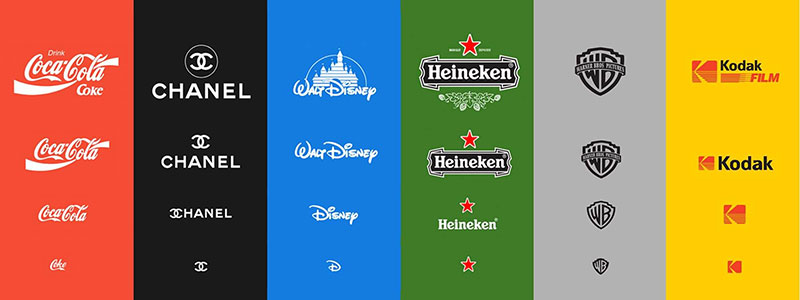
A logo works everywhere because it is designed against the hardest reproduction case first, not the easiest. The hardest case is usually a 16-pixel favicon or a single-colour embroidery, and both are decided before any colour work begins.
Google’s own account of its 2015 identity work makes the economics visible. The team built a full-colour variant weighing 305 bytes against roughly 14,000 bytes for the old serif logotype, which had needed a text-based fallback on low-bandwidth connections (Google Design, 2015). The redesign to Product Sans was a distribution decision as much as an aesthetic one.
The Digital Floor Sizes That Decide the Design
| Context | Spec | Constraint it creates |
|---|---|---|
| Browser favicon | 16×16 and 32×32 px | Icon must read as a solid silhouette |
| App Store icon | 1024×1024 px, opaque, no alpha | No transparency, no hand-rounded corners |
| Google Play icon | 512×512 px, 32-bit, no transparency | Full-bleed square, system applies the mask |
| Android adaptive icon | 108×108 dp layers, 66 dp safe zone | Key artwork clipped outside the safe zone |
Android’s numbers are the strictest. Google’s developer documentation states the logo element should sit at 48×48 dp or larger and must not exceed 66×66 dp, because the outer 18 dp on each side is reserved for masking and parallax effects.
Layered Icons Changed the Brief in 2025
Apple announced Liquid Glass at WWDC on 9 June 2025, shipping across iOS 26, iPadOS 26 and macOS 26.
App icons are now layered assets that respond to system lighting, and they render in default, dark, clear and tinted variants. Apple released Icon Composer to build them.
Practical effect: a mark that only works as one flat coloured shape on one background now fails a platform requirement, not just a design review.
Physical Reproduction Sets the Real Detail Limit
Screens are forgiving compared to a stitched polo shirt.
- Embroidery: fine gaps close up, small counters fill in, gradients are impossible
- Screen printing: each colour is a separate screen and a separate cost
- Engraving and etching: line weight only, no tonal value
- Vehicle wraps and signage: viewed at distance and at speed, silhouette is everything
This is why the master file is built as vector graphics rather than as a bitmap. Raster artwork has a fixed DPI and a fixed pixel grid, and neither survives being scaled up for a building sign.
Black First, Colour Last
Most studios draw the mark in solid black before touching a palette.
If the shape only works because of its colours, the shape does not work. Colour then gets applied to a form already proven in mono, reversed, and at 16px.
Clear Space and Minimum Size
Clear space gets defined in a unit taken from the mark itself, usually the height of a letter or the width of the symbol.
Defining it that way means the white space scales with the logo instead of breaking at every new size.
Where the Rule Gets Broken
Crowded app store listings, footers with six partner logos jammed together, and email signatures are the three places minimum-size rules collapse first.
Documenting a hard floor in millimetres and pixels is the only thing that holds.
How Colour Choice Works in a Logo
Colour choice works through appropriateness to the brand’s positioning, not through fixed universal meanings. Bottomley and Doyle, publishing in Marketing Theory in 2006, showed that when people understand how a brand is positioning itself, they judge colours congruent with that position as more appropriate. Congruence beats symbolism.
Most popular color psychology content skips that qualifier and sells fixed meanings instead. Red means passion, blue means trust, green means growth. The research is considerably more conditional than the infographics.
Accessibility Is Where Colour Actually Breaks
Congenital colour vision deficiency affects roughly 8% of males and 0.5% of females, a figure reported consistently across the clinical literature including the review published in Eye in 2010.
Red and green paired at similar values is the classic failure. Roughly 1 in 12 men cannot separate them reliably.
Run any candidate color palette through a color contrast checker before signing it off, and check the mono version at the same time.
The Exemption Nobody Expects
WCAG does not require logos to meet contrast ratios.
The W3C’s own understanding documents for Success Criteria 1.4.3 and 1.4.11 state that text forming part of a logo or brand name has no contrast requirement, on the assumption that corporate identity imposes its own constraints. W3C also flags the obvious problem with that exemption: logos frequently act as interactive elements, such as the home link in a site header, and the exemption offers users nothing there.
Position worth taking: treat the 3:1 non-text contrast threshold as a design target for any logo that doubles as a UI control, even though the standard lets you skip it.
Colour Systems Get Chosen in Production Order
Spot colour first, screen colour second.
| System | Used for | Defined in the guidelines as |
|---|---|---|
| Pantone | Print, signage, merchandise, packaging | The master reference colour |
| CMYK | Four-colour process printing | Closest achievable match to the spot |
| RGB / HEX | Screens, web, app, video | Separate values, not a conversion |
Picking the Pantone first and deriving CMYK and RGB from it keeps the physical and digital versions in the same family. Doing it the other way round produces a print colour nobody approved.
Category Convention Versus Standing Out
Blue saturates finance and enterprise software. Green owns health, sustainability and a good chunk of banking. Red dominates fast food.
Those conventions carry real information, and abandoning them costs recognition. Adopting them costs distinctiveness.
Coca-Cola’s red and IBM’s blue are the textbook cases of colour and positioning locked together over decades, to the point where the colour does independent identification work.
How Typography and Lettering Affect Logo Quality

Typography decides logo quality because most logos are mostly letters. Wordmarks and combination marks make up the bulk of commercial identity work, and the difference between a professional mark and a cheap one usually sits in the spacing and the letterform corrections, not in the symbol.
Google built an entire proprietary typeface, Product Sans, for its September 2015 identity, and applied optical corrections to it. The uppercase G is pulled inwards slightly where the bowl meets the crossbar, purely for legibility. That level of adjustment is what “custom lettering” means in practice.
Three Routes to a Wordmark
| Route | Cost and control | Main risk |
|---|---|---|
| Custom lettering | Highest cost, full ownership | Budget and timeline |
| Licensed typeface, modified | Moderate cost, strong result | Licence terms on derivatives |
| Free font, unmodified | Lowest cost, zero distinctiveness | Another brand using the identical setting |
The middle route is where most good work happens. A licensed face gets redrawn: terminals adjusted, joins cleaned, one letter rebuilt, spacing rebuilt entirely.
Kerning Is the Tell
Automatic tracking never gets a wordmark right. Set at logo scale, the gaps between letter pairs read as uneven even when the metrics say they are equal.
Manual kerning pair by pair, plus optical corrections to overshoot on round letters, is the single clearest separator between a designed wordmark and a typed one.
Awkward pairs to watch: AV, To, LT, Ya, and anything involving a capital followed by a lowercase round.
Display Faces Fail at Small Sizes
A display font is drawn for headline scale. Tight apertures, extreme contrast and delicate serifs are features at 60pt and defects at 12pt.
Text faces and geometric sans-serif font designs hold up better under reduction, which is why so many wordmarks converged on them.
Coca-Cola’s Spencerian script font is the counterexample that proves the rule. It survives because a century of exposure has trained recognition of the shape, not the letters.
Licensing Is Where Cheap Logos Get Expensive
Font licences split by usage type, and the splits are not intuitive.
- Desktop, web, app, ePub, server and broadcast are typically separate purchases
- Most EULAs cap the number of seats or workstations
- Some foundries licence only for personal use, which excludes commercial websites entirely
- Sublicensing rights to a client are often restricted, which matters for freelance handover
US law makes the position stranger. Font software is protected by copyright as software, while the typeface design itself is not copyrightable, which is why lookalike fonts are legal and unlicensed font files are not.
Getting font licensing documented at handover, with the receipt, protects the client from a claim two years after launch. Converting the wordmark to outlines does not remove the obligation to have licensed the font used to create it.
What Are the Types of Logos and When Each Type Works
There are 7 recognised logo types: wordmark, lettermark, pictorial mark, abstract mark, mascot, combination mark, and emblem. Type selection follows name length, existing recognition, and reproduction context rather than taste.
| Type | Best fit | Main constraint |
|---|---|---|
| Wordmark | Distinctive, short brand names | Fails past roughly 12 characters |
| Lettermark | Long or unwieldy legal names | Initials carry no meaning on their own |
| Pictorial mark | Concrete, ownable subject matter | Needs recognition before it stands alone |
| Combination mark | New brands with no equity yet | Two elements to maintain and space |
| Emblem | Heritage, institutions, sports, brewing | Detail collapses at icon sizes |
Why New Brands Rarely Start With a Symbol Alone
A standalone symbol only works once enough people already connect it to the name.
Nike ran the swoosh alongside the wordmark for years before dropping the name. Apple did the same. Starting with a bare abstract mark asks an audience to remember a shape attached to nothing, which is why combination marks dominate early-stage identity work.
Sequence that works: combination mark at launch, icon-only variant reserved for app and social use, standalone symbol earned later.
Emblems Have a Small-Size Problem
Emblems lock the name inside the shape. Crests, seals and badges cannot separate the two.
That is a genuine advantage on a bottle label or a stadium wall, and a genuine failure at 32px. Most university logos live with exactly this tension, which is why institutions increasingly maintain a simplified digital mark alongside the full arms.
Type Choice Follows the Name, Not the Mood Board
Long names push toward lettermarks. Generic names push toward distinctive symbols, because the word alone cannot do identification work.
- Retail scale: the Walmart logo pairs wordmark and spark, working from receipt to store facade
- Convenience and signage: the 7-Eleven logo survives on illuminated signs, cups, and pumps
- Gaming and hardware: the Nintendo logo stays a pure wordmark inside a racetrack frame
Each of those three sits in a different type category, and each was chosen against a different reproduction problem.
Mascots Are Underrated and Badly Suited to Interfaces
Mascots build warmth and work hard in advertising, packaging and local business.
They also carry the most detail of any type, which makes them the worst performers as favicons and app icons. Brands that use them successfully almost always maintain a separate simplified icon for digital surfaces.
Reasonable default: if the mark will spend most of its life inside a digital interface, a mascot is the wrong choice regardless of how much the client likes it.
How Shape, Balance, and Negative Space Affect Memorability
Shape carries memory better than detail. A mark that reads as one clean silhouette gets stored and retrieved faster than a mark built from several competing parts.
The FedEx wordmark is the standard reference. Lindon Leader designed it in 1994 as senior design director at Landor Associates, and ArtCenter College of Design records that the mark has since won over 40 design awards, largely on the strength of one piece of empty space.
Optical Balance Beats Mathematical Centring
The eye and the ruler disagree.
Centre a triangle mathematically inside a circle and it looks low. Designers shift it up until it looks right, then leave it there.
The same correction runs through letterforms. Round characters overshoot the cap height, horizontal strokes are drawn thinner than verticals, and neither adjustment shows up in the coordinates.
Formal balance and formal symmetry are starting points, not verdicts.
Negative Space Is a Working Element
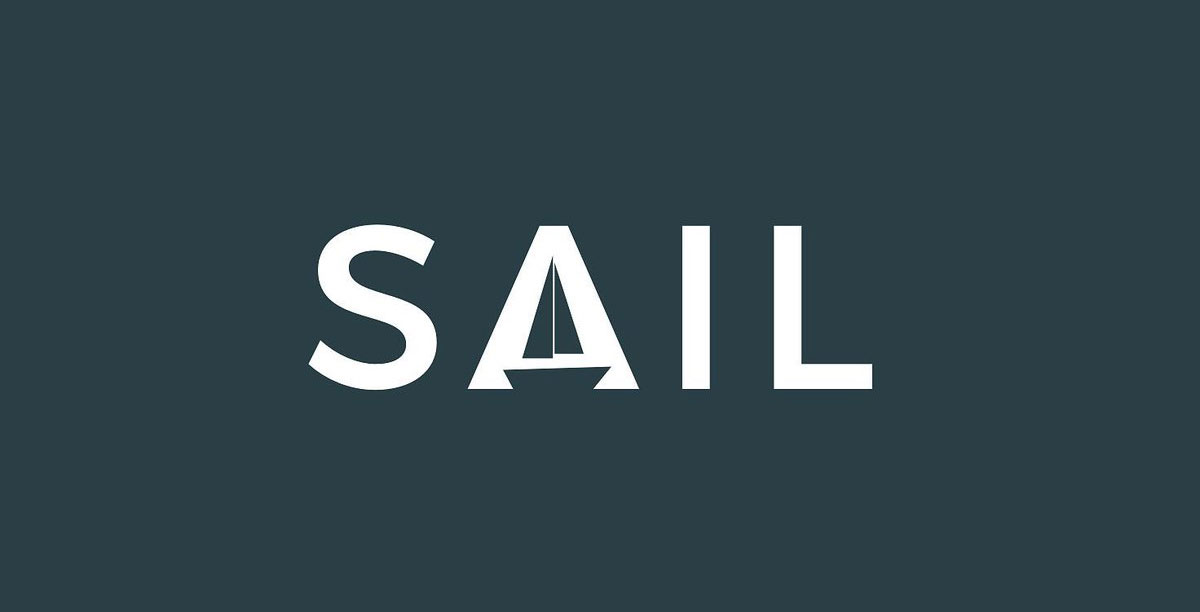
Leader told CNN the arrow was not the goal. He was exploring tightly spaced letters in an internal critique and noticed what the gap between the E and the x was doing.
Creative Review reported the letterforms started from a blend of Univers 67 Bold Condensed and Futura Bold, redrawn because neither face produced the arrow without damaging the shapes.
Two things follow from that. Negative space works through figure-ground separation, one of the Gestalt principles that governs how people group visual information. And it usually gets found during exploration rather than specified in a brief.
The Golden Ratio Claim, Handled Honestly

Most golden ratio diagrams laid over famous logos are reconstructions made after the fact.
Fast Company’s investigation into the claim quoted Edmund Harriss of the University of Arkansas mathematics department stating plainly that the ratio is not the universal formula behind aesthetic beauty. Designers on the other side argue it remains useful for setting relationships between curve radii and element sizes.
Sensible position: the golden ratio is a proportioning tool some designers find useful during construction, and a post-rationalisation device when it appears in the presentation deck.
Construction Grids Do Real Work
Circles, squares and consistent stroke weights give a mark internal logic that survives redrawing at any size.
That is what grid systems contribute to a symbol: repeatable geometry, documented so the artwork can be rebuilt exactly rather than traced.
The limit: grids produce consistency, not personality. A mark drawn entirely to the grid and never optically corrected reads as stiff.
The Silhouette and the Focal Point
Fill the mark solid black. Whatever remains legible is what people will actually recognise.
A working mark has one focal point. Two competing focal points split attention and slow recognition.
Angular Versus Rounded Forms
Category expectation does most of the work here.
- Angular, hard-edged forms read as precise, technical, industrial
- Rounded forms read as approachable, soft, consumer-facing
- Asymmetric compositions read as dynamic, and are harder to lock into a grid
The psychology of shapes gets oversold in the same way colour meaning does. Shape associations are real, contextual, and weaker than positioning.
Deliberate asymmetry works when the imbalance resolves. It fails when it just looks like nobody aligned the artwork.
What Separates a Timeless Logo From a Trend-Driven One

Durability comes from keeping the recognisable asset intact while updating everything around it. The documented rebrand failures of the past 20 years share one mechanism: the company removed the specific element customers used to find the product.
Three cases, three decades, one pattern.
| Brand | What was removed | Documented outcome |
|---|---|---|
| Tropicana, 2009 | Orange-with-straw icon | Unit sales down 20%, reverted in weeks |
| Gap, 2010 | Serif name in the blue box | Withdrawn after 6 days |
| Cracker Barrel, 2025 | “Old Timer” character | Roughly $94M market value lost, reversed in 8 days |
Tropicana Removed the Search Cue
Tropicana launched redesigned Pure Premium packaging design on 8 January 2009, backed by a $35 million campaign from Arnell.
Information Resources Inc. data reported by Advertising Age put unit sales down 20% and dollar sales down 19% between 1 January and 22 February, roughly $33 million.
Competitors gained. Minute Maid, Florida’s Natural and Tree Ripe all picked up volume in the same window. Tropicana announced the reversal on 23 February 2009.
Gap Changed the Mark and Nothing Else
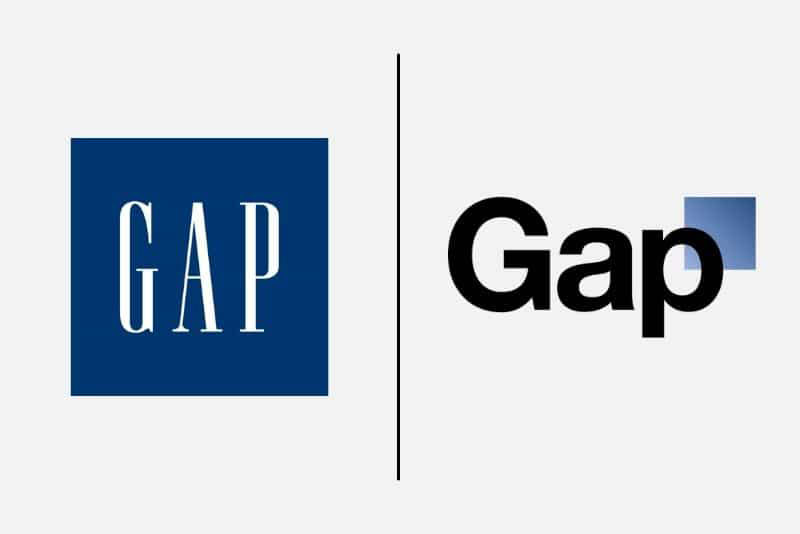
Gap replaced its 1990 blue box logo on 6 October 2010 with a Helvetica wordmark and a small gradient square behind the p, designed by Laird & Partners.
The old logo returned on 12 October 2010.
The diagnostic detail: no product change, no strategy change, no leadership change accompanied it. A logo change with nothing behind it reads to customers as a change of values, because there is nothing else it could be signalling.
Cracker Barrel Is the Recent Data Point
Cracker Barrel unveiled a simplified wordmark on 18 August 2025, dropping the Old Timer figure.
The Hill reported the share price fall wiped roughly $94 million from market value within a day. The company restored the original logo on 26 August 2025.
The traffic figure is the one that matters. CFO Craig Pemmelis told investors on 17 September 2025 that comparable traffic had fallen about 8% since 19 August, against roughly 1% for the first half of that month.
Jaguar Took the Opposite Route and Still Got Hit
Jaguar unveiled a new geometric wordmark and a redesigned leaping-cat mark in November 2024, ahead of an all-electric launch.
Managing director Rawdon Glover told the Financial Times the intended message was lost in the reaction. Branding specialists interviewed by Business Insider split on the work itself, but agreed it changed too many variables at once.
Cross-case conclusion: removing heritage cues and adding unfamiliar ones produce the same failure when both happen in a single announcement. Sequence protects a rebrand more than restraint does.
The Blanding Pattern
A large share of corporate marks converged on geometric sans-serif wordmarks through the 2010s, drawing on the neutrality that Swiss design made canonical in the 1960s.
Neutral is cheap to reproduce and legible everywhere. It is also interchangeable, which is the whole complaint.
Trade-off in one line: the marks that survive decades tend to hold one irregular, non-neutral element that nothing else in the category has.
Refinement Versus Replacement
Refinement adjusts weight, spacing, colour values and construction while leaving the recognisable asset alone. Replacement removes it.
- Refinement: redrawing curves, tightening spacing, adding a mono and layered icon variant
- Replacement: new symbol, new name treatment, new category cues
Shell, Mercedes-Benz and other long-lived car logos have been refined many times over a century without ever losing the core shape.
How a Logo Functions Inside a Brand Identity System
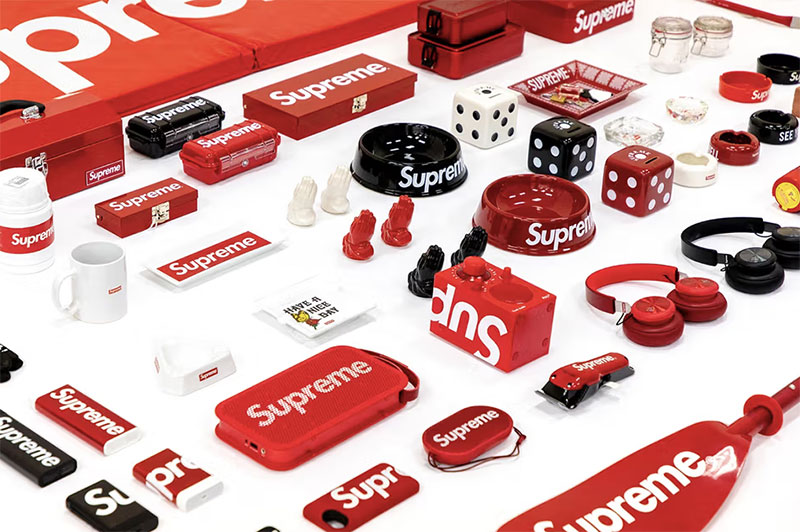
A logo is one component of an identity system, and it degrades quickly without the rest of the system documented around it. Lucidpress, now Marq, surveyed over 400 brand management experts for its State of Brand Consistency Report and found 81% of companies dealing with off-brand content.
The mark is rarely the problem. The absence of rules around it usually is.
What the System Actually Contains
Seven components, minimum:
- Primary mark plus approved variants
- Icon or app-mark version
- Colour system across spot, process and screen
- Type system for headings, body and interface
- Imagery and illustration rules
- Layout and spacing conventions
- Tone of voice
The mark supplies recognition. The rest supplies unity across touchpoints that never appear side by side.
Lockups Are the Piece Teams Get Wrong
A lockup is a fixed arrangement of the mark with other elements, drawn once and never rebuilt by hand.
| Lockup | Used for |
|---|---|
| Horizontal | Website headers, email signatures, letterhead |
| Stacked | Square formats, social avatars, merchandise |
| Icon only | App icons, favicons, profile images |
| Co-branded | Partnerships, sponsorships, event materials |
Without supplied lockups, someone in sales will retype the name next to the symbol in PowerPoint, and that version will end up in a client deck.
Guidelines Are the Deliverable, Not the Logo
A logo handed over without usage rules drifts within months.
Well-built brand guidelines document minimum sizes, clear space, approved colourways, misuse examples, and the exact file to use in each context.
Larger organisations extend that into a full brand style guide covering voice, photography and layout, because the mark alone cannot hold an identity together across 40 people and 12 channels.
What Consistency Is Worth
Lucidpress research from 2019 put the revenue increase associated with consistent brand presentation at up to 33%, up from 23% in the 2016 edition.
A separate Lucidpress survey found 68% of respondents credited brand consistency with 10 to 20% of their revenue growth.
Treat these as directional. They come from surveys of marketers rather than audited accounts, and the samples differ between editions. The direction is consistent across both; the precise figure is not.
Motion Is Now Part of the Spec
Identity systems increasingly ship with animation rules alongside static artwork.
App launch screens, video stings and interface transitions all need a defined behaviour, which puts motion graphics inside the identity brief rather than downstream of it.
Why Logos Fail
Logos fail for reasons that have nothing to do with taste. Unintended readings, cultural collisions, trademark conflicts, and missing source files account for most of the expensive failures, and all four are avoidable before launch.
Unintended Readings Surface After Launch
Shapes people did not intend get spotted within hours of a public rollout.
Three recurring causes: tight negative space between letterforms, abstract symbols that resolve into something else when rotated, and monograms whose letters overlap into a third shape.
The fix is procedural. Show the mark cold to people outside the project, rotated, mirrored, and at small size, and ask what they see before telling them what it is.
Cultural and Language Collisions
Colour meaning, hand gestures, animals and religious symbols all shift across markets.
Any mark going international needs a native-speaker review per market, covering both the symbol and the name as it appears in the wordmark.
Cheap insurance: a single round of local review costs less than one production run of signage.
Trademark Conflicts Are the Most Expensive Failure
A conflict discovered after rollout means reprinting everything.
Rolex opposed a figurative black crown mark filed by the Danish company PWT A/S, and the EU General Court dismissed Rolex’s action in case T-726/21 on 18 January 2023. Even a heavily protected crown symbol did not automatically block a competing crown.
Read that both ways. Distinctive symbols are harder to defend than owners assume, and generic ones are close to indefensible.
Raster-Only Delivery
A logo delivered as a JPEG with no vector master is a logo the client does not really own.
JPEG compression also introduces artefacts around hard edges, which is exactly where a logo lives.
Warning sign at handover: the designer sends a folder of PNGs and JPEGs and no AI, EPS or SVG file.
Clichés That Signal a Category Instead of a Company
- Swooshes and abstract orbits
- Globes for anything vaguely international
- Handshakes, leaves, and lightbulbs
- App-icon gradient squares in purple and blue
None of these are wrong in isolation. All of them place the brand in a crowd, and the whole point of a mark is to leave one.
Test for it directly: put the mark in a grid with 8 competitors and see whether anyone can pick it out.
How to Test a Logo Before Launch
Testing a logo before launch means running it through reproduction conditions, competitor context, and legal clearance in that order. Most failures are caught by the first three tests, which take under an hour.
The Test Sequence
- Black and white: fill solid, check it still reads
- Squint: blur it and see what shape survives
- Scale-down: render at 16px and at thumb size on a phone
- Reverse-out: white on dark, and on a photograph
- Recall sketch: show for 5 seconds, ask people to draw it
- Competitor grid: place it among rivals, not on white
- Real context: signage, packaging, app icon, invoice
Skipping straight to step 7 with a beautiful mockup is how bad marks get approved.
Platform Tools Do Part of This for You
Apple’s App Store Connect supports product page optimisation tests, letting a team run up to three icon variants against the current one, shown randomly to a defined user group and evaluated in App Analytics.
Constraints in Apple’s documentation: creative assets only, no metadata, and the app has to be in the Ready for Distribution state.
Google Play Console offers equivalent store listing experiments for the Play icon.
What User Testing Reveals and What It Does Not
Reveals: recognition speed, recall accuracy, misreadings, category associations.
Does not reveal: whether the mark is any good.
Preference polling produces the average of what people already know, which is a reliable route to a familiar and forgettable result. Ask what people see, not which one they like.
Clearance Happens Before Final Approval
Run the search before the client falls in love with the mark, not after.
- USPTO trademark search for US conflicts
- EUIPO eSearch for EU conflicts
- Reverse image search on the symbol itself
- Company registers in the primary trading markets
A clearance search is not a legal opinion. It surfaces obvious conflicts, and a trademark attorney handles the judgement calls about confusing similarity.
Domain and Handle Availability
Check the domain and the social handles in the same pass as the trademark search.
Finding the name is clear but the handle is taken changes the naming decision, and it is cheaper to know on day one.
What Legal and File Requirements a Finished Logo Meets
A finished logo is registrable, owned in writing, and delivered as an editable vector master with a documented export set. Proper file delivery includes all required source files, production exports, and usage documentation. Miss any of the three and the client has paid for artwork they cannot fully control.
Distinctiveness Decides Registrability
US trademark law sorts marks along a spectrum, and position on it determines whether protection is available at all.
| Category | Protection | Example type |
|---|---|---|
| Generic | None, ever | The product’s own name |
| Descriptive | Only with acquired distinctiveness | Plain description of the goods |
| Suggestive | Protectable without proof | Hints at a quality |
| Arbitrary or fanciful | Strongest protection | Invented or unrelated words |
Design marks follow the same logic. A common geometric shape sits near the descriptive end, and a distinctive drawn symbol sits near the arbitrary end.
What Registration Costs
The USPTO restructured trademark fees on 18 January 2025, retiring TEAS Plus and TEAS Standard in favour of a single base application at $350 per class.
Surcharges apply: $200 per class for custom free-form descriptions instead of the Trademark ID Manual, $200 per class for each additional 1,000 characters, and $100 per class for insufficient information.
EUIPO’s basic online fee is €850 for the first class, €50 for the second and €150 for each class from the third, with registration lasting 10 years and renewable indefinitely.
Word Mark or Design Mark
A standard character mark protects the name in any typeface. A design mark protects the specific artwork.
Brands that expect to refine the logo usually file both, because the design registration is tied to the drawing submitted.
Ownership Does Not Transfer Automatically
In Community for Creative Non-Violence v. Reid (490 U.S. 730, 1989), the US Supreme Court held that an independent contractor retains authorship by default, and that work-for-hire status turns on common-law agency factors rather than on what the parties called the arrangement.
Practical consequence for a commissioned logo: without a written assignment signed before or at delivery, the freelance designer may still own the copyright in the artwork.
Retroactive labelling does not fix it. The assignment clause belongs in the contract, not the invoice.
The File Set a Client Should Receive
Master and working files:
- Layered vector source (AI or equivalent)
- SVG for web and interface use
- EPS and print-ready PDF for suppliers
Exports: PNG at several sizes with transparency, favicon set, 1024px App Store icon, 512px Play icon, plus mono, reversed and single-colour variants of each lockup.
Add the licence receipt for any commercial typeface used, and the guidelines document. That package is what “finished” means.
When Standard Logo Rules Do Not Apply
The simplicity and scalability rules assume a brand that lives across many surfaces and needs to be found fast. Five categories break that assumption, and applying the standard rules to them produces worse work, not better.
Heritage Marks and Coats of Arms

Complexity is the message for institutions selling continuity.
Crests, seals and founding dates communicate age, and stripping them out removes the asset. Many beer logos carry heraldic detail, medals and 19th-century dates for exactly this reason.
Workaround, not compromise: keep the full arms for primary use and maintain a separate reduced mark for digital surfaces.
Sports Clubs Answer to Their Supporters

Club badges belong to fans in a way corporate marks do not.
Detail, mascots and traditional colours survive because changing them triggers organised resistance. Across NFL logos and other league identities, the design constraint is emotional ownership rather than reproduction.
Luxury Controls Its Own Reproduction
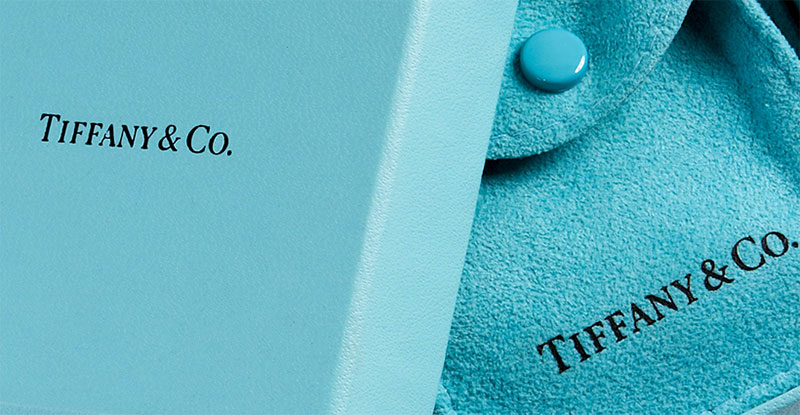
Luxury houses print their own packaging, run their own boutiques, and rarely hand artwork to third-party suppliers.
Tight control means the mark never has to survive an unknown production process, which is one reason ornate lettering and fine detail persist in the category. Deep, restrained palettes and gold logos hold up here because the substrate is chosen alongside the mark.
Regulated and Certification Marks
Some marks are mandated in form and cannot be redesigned at all.
- Safety and hazard symbols with fixed geometry
- Certification marks with licensed usage rules
- Government agency identities set by statute
Regulatory copy requirements also crowd the artwork, which is why many pharmaceutical logos stay plain. The mark competes for space with mandatory information.
Personal Brands, Local Business, and Internal Tools
Three cases where the standard advice inverts:
- Personal brands: a portrait or signature outperforms an abstract symbol, because the person is the product
- Local trades: a mascot and a plainly readable name beat a clever monogram on a van
- Internal B2B tools: the mark lives inside one interface, so app-icon behaviour matters and signage never will
Charities sit slightly apart again. Many nonprofit logos carry pictorial imagery because the cause needs communicating to people with no prior relationship, which is a heavier job than identification alone.
FAQ on What Makes A Good Logo
How much does a professional logo cost?
Pricing spans from under $100 for template output to six figures for a full identity programme at a major consultancy. The variable is scope: research, concept rounds, guidelines, and file delivery, not the drawing itself.
How long does the logo design process take?
A focused small-business project runs a few weeks. Corporate identity work runs months, because trademark clearance, stakeholder review, and application testing all sit on the critical path alongside the design work.
How many concepts should a designer present?
Fewer than most clients expect. Presenting 3 developed directions, each argued against the brief, produces better decisions than 15 thumbnails. A mood board handles exploration earlier, before anything gets drawn properly.
Are AI-generated logos safe to use commercially?
Legally weaker than they look. The US Copyright Office confirmed in its March 2023 registration guidance that works whose traditional elements of authorship were produced by a machine lack human authorship and will not be registered.
Can a logo be trademarked before the business launches?
Yes. The USPTO accepts intent-to-use applications, which reserve the filing date before the mark is used in commerce. A statement of use, with its own fee, follows once trading begins.
Does one application protect a logo in multiple countries?
The Madrid Protocol routes a single application to multiple member countries through WIPO. The USPTO fee for Madrid applications rose to $600 per class in the January 2025 restructure. Each designated country still examines separately.
What is a responsive logo system?
A set of staged reductions rather than one file scaled down. Full lockup for wide formats, name-only at medium sizes, symbol alone for app icons and favicons, each drawn deliberately for its context.
Does a logo need a separate favicon design?
Usually yes. Shrinking the full mark to 16px produces mush, so the favicon gets built from a single distinctive element, most often the symbol or one letter from the wordmark.
Should a logo include a tagline?
Keep it as a separate lockup, never baked into the primary mark. Taglines change every few years. Locking one into the artwork forces a logo revision every time marketing shifts position.
Can a logo be protected without registering it?
Partially. Copyright in the artwork exists from creation, and unregistered trademark rights accrue through use in some jurisdictions. Neither gives the enforcement leverage of a registered mark at the USPTO or EUIPO.
Conclusion
The honest answer to what is a good logo is one nobody has to defend twice. If the mark keeps coming back for review, the problem is usually the positioning underneath it.
Order of operations matters more than talent here.
- Run the trademark clearance search before the second concept round
- Draw in black, at 16px, before anyone picks a colour palette
- Write the brand guidelines while the reasoning is still fresh
Expect the constraint most studios underestimate: the mark will spend years being rebuilt by people who never met you. Interns, printers, franchisees, agencies.
Your vector master and your usage rules are what survive that. The drawing is only half the deliverable.

Renowned for his expertise in logo design and visual branding, Bogdan has developed a multitude of logos for various clients.
His skills extend to creating posters, vector illustrations, business cards, and brochures. Additionally, Bogdan's UI kits were featured on marketplaces like Visual Hierarchy and UI8.
He also wrote in the past years on sites like Design Your Way, WebDesignerDepot, WPDean, Designmodo, Speckyboy, Slider Revolution, and more.
- How to Install Fonts on Mac (Step-by-Step Guide) - 20 September 2026
- From Mockup to Code: How AI-Augmented Development Speeds Up the Design Handoff - 19 September 2026
- The Beehiiv Logo History, Colors, Font, And Meaning - 18 September 2026

Bogdan Sandu is a seasoned designer who has been designing websites since 2008. Renowned for his expertise in logo design and visual branding, Bogdan has developed a multitude of logos for various clients. His skills extend to creating posters, vector illustrations, business cards, and brochures. Additionally, Bogdan's UI kits were featured on marketplaces like Visual Hierarchy and UI8. He also wrote in the past years on sites like Design Your Way, WebDesignerDepot, WPDean, Designmodo, Speckyboy, Slider Revolution, and more.
You Might Also Like