Ads, sales decks, and press messaging tend to drift apart within a few months. A brand narrative is the strategy construct that keeps them on one through-line. It links a company’s origin, purpose, values, and audience into one continuing story, and marketing, sales, and PR teams lean on it long after any single campaign ends.
There’s a limit to how much of it a company can script, though. A 2019 meta-analysis in the Journal of Business Research (64 articles, 138 effect sizes) found that stories told by users persuade more strongly than stories produced by professionals (van Laer, Feiereisen, and Visconti).
What Is a Brand Narrative?
Origin, purpose, values, and audience get linked into one continuing story. That story then guides everything the brand says, and that’s what people mean by the term.
It sits above any single campaign. ContentGrip puts the right size somewhere larger than a tagline and smaller than a brand book.
The test is recognition. Someone should spot the same through-line in a 15-second video and in a support reply written at 11pm (Adogy’s framing), with the sales email somewhere in between.
Inside the narrative you’ll find the origin and purpose, the beliefs behind decisions, the audience and the tension they face, and the change the brand promises them.
Outside it sit the tagline, a single campaign, and the About page. Each of those carries a piece of the narrative, but none of them is the narrative.
Core Components of a Brand Narrative

Start with origin, meaning where the company came from and what it saw that others missed. Purpose comes next. That’s the reason the company exists beyond revenue, and Sinek puts it at the center of his Golden Circle.
Values only count when they show up as behavior. A slogan on a wall doesn’t qualify.
The audience is the protagonist. Helms Workshop and beehiiv both cast the customer as the hero and the brand as the guide, which is a useful habit to borrow.
Then there’s the conflict, the problem the audience is stuck with, and the resolution, which is what changes for them once the brand is in the picture.
Conflict has layers. Donald Miller’s Building a StoryBrand splits it into external (the tangible problem), internal (how it feels), and philosophical (why it shouldn’t be that way). His argument is that most brands only speak to the external one.
Proof sits under everything else, and it’s the layer most narratives skip. ContentGrip lists credible proof as one of the parts of a working narrative, next to a human tension, a clear belief, and a role the audience understands.
A metric will do. So will a customer quote or a documented product behavior. Without any of them, the narrative is just an assertion.
How a Brand Narrative Differs From a Brand Story, Messaging, and Positioning
A brand story is one bounded account that lives inside the narrative. Messaging, positioning, and voice are separate layers. They cover what the brand claims, where it sits against competitors, and how it sounds.
| Construct | Scope | How fast it changes |
|---|---|---|
| Brand narrative | Overall storyline and beliefs | Slowest, shifts with market and culture |
| Brand story | One bounded account, often the origin | Fixed once written |
| Brand messaging | Claims per audience and channel | Updated per campaign |
| Brand positioning | Market slot against competitors | Reviewed when rivals move |
| Brand voice | How the brand sounds | Stable across channels |
Brand Narrative vs. Brand Story
Sources disagree on where the line falls, and the disagreement runs in a few directions.
Kontentino and Ramotion both nest the story inside the narrative, tying it to specific events or the About page. Fabrique goes another way and argues the brand sets the story while the audience owns the narrative, which keeps expanding as people reinterpret it.
Unruly splits them by time. The story looks backward at where you came from, and the narrative looks forward to where you’re going.
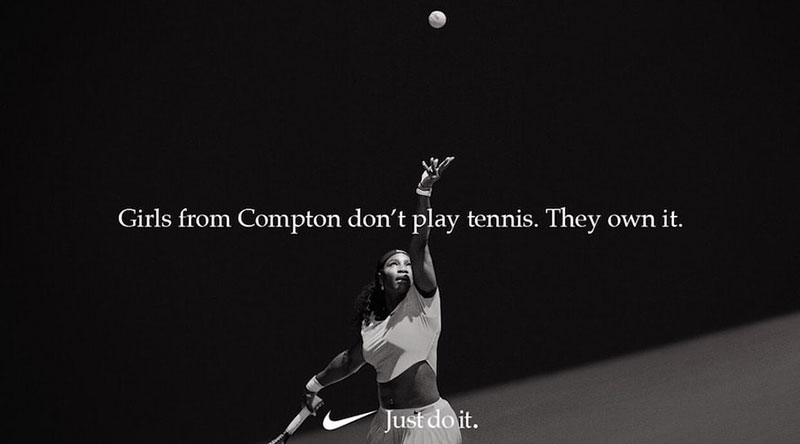
Fabrique’s example is Nike’s “Just Do It.” It tells no single story and backs the same idea through many, from embracing challenges to questioning stereotypes to chasing the nebulous “it.”
The views are less opposed than they look. Ramotion says stakeholders influence the narrative and Fabrique says the audience owns it, so both deny the brand full control.
My guess is the split comes from one word doing two jobs. Sometimes it means a document a brand writes, and sometimes it means what audiences make of the brand.
This article takes the practical middle. Write the narrative down as the brand’s owned spine, then judge it by whether outsiders can retell it.
Brand Narrative vs. Messaging, Positioning, and Voice
Each of the layers beneath the narrative answers a different question.
Messaging is the set of claims tuned to one audience or channel. It changes per campaign while the narrative underneath stays put.
Positioning is the market position a brand claims against rivals. That’s a competitive decision, and the narrative gives people a reason to believe it.
Voice is how the brand sounds. The same narrative can be told in a formal or a playful voice without changing what it says.
Messaging shifts with the audience, and voice shifts with the channel. Positioning only moves when a competitor does. The narrative changes slowest of all.
Jean-Noel Kapferer’s brand identity prism is the closest neighbor. It maps six facets of identity (physique, personality, culture, relationship, reflection, self-image), and the narrative draws on them without being one of them.
The physique facet covers visual identity, meaning logo, palette, and typography. That’s how the narrative gets seen, not what it says.
Which Framework Fits a Brand Narrative Best?
No single framework wins. StoryBrand suits customer-facing copy and the Golden Circle suits purpose. The hero’s journey works for long-form identity stories, and Freytag’s pyramid works for a single campaign arc.
| Framework | Origin | Structure | Best fit |
|---|---|---|---|
| StoryBrand | Donald Miller, Building a StoryBrand | 7 parts, customer as hero | Website, sales, and ad copy |
| Golden Circle | Simon Sinek, Start with Why | 3 rings: why, how, what | Defining purpose first |
| Hero’s journey | Joseph Campbell (1949), Christopher Vogler (1992) | 17 or 12 stages | Brand films, founder arcs |
| Freytag’s pyramid | Gustav Freytag (1863) | 5 stages | One campaign or launch |
StoryBrand
Miller’s book lays out seven parts. A character has a problem, meets a guide, gets a plan, is called to action, avoids failure, and ends in success.
The customer is the hero and the brand is the guide, which is why the resulting BrandScript suits sales pages and ads. It forces customer-centered clarity, and a team can brief from a one-page script.
The downside is that it’s a messaging script. It says little about company origin or beliefs, and a guide-only brand role flattens a purpose-led story.
Golden Circle
Sinek’s own site describes concentric rings, with why at the center, how in the middle, and what on the outside. He applies it to leadership, hiring, product development, sales, and marketing alike.
It’s the fastest way to get purpose into one sentence, and it works inside the company as well as in ads.
It has no slot for an audience or a conflict, though. It defines a belief but not a story, so use it to start and don’t expect it to finish.
Hero’s Journey
Campbell’s model has 17 stages. The version most people actually use has 12.
Campbell described the 17 in The Hero with a Thousand Faces (1949), grouped into Departure, Initiation, and Return. The 12-stage version is Vogler’s later adaptation for screenwriters, published in The Writer’s Journey (1992).
Vancouver Film School’s overview notes that the Joseph Campbell Foundation cautions against reading the stages as a rigid sequence every myth must follow.
It suits a founder story or brand film with a real transformation in it. It breaks when the brand has no journey to tell and the stages get invented to fill the map.
Freytag’s Pyramid
Gustav Freytag described five parts in Die Technik des Dramas (1863): exposition, rising action, climax, falling action, and denouement.
He built it from classical and Shakespearean five-act plays, and Editor World points out it fits the modern novel less neatly.
It gives you a clear peak of tension and it’s simple enough to brief a film team in a minute. But it shapes a bounded story, not an ongoing narrative with no final denouement, and tension arcs suit launches more than everyday communication.
A Decision Rule for Choosing
Match the framework to the job in front of the team.
- Customer-facing copy where the reader has to see themselves in it calls for StoryBrand.
- Stating why the company exists is a Golden Circle job.
- For a long-form brand film or a founder arc, go with the hero’s journey.
- One campaign with a clear peak fits Freytag’s pyramid.
The default here is the Golden Circle first to set purpose, then StoryBrand to express it to customers. Reach for the other two only when a specific piece needs an arc.
Stacking all four produces competing protagonists, a customer hero in one document and a founder hero in another.
How to Write a Brand Narrative, Step by Step
The order matters more than people expect, so here’s the sequence from audit through to testing on outsiders.
- Audit existing assets. Pull the website, sales deck, ads, email templates, and support replies, and mark every place the claims contradict each other.
- Set purpose before product. Helms Workshop’s framework opens with the problem the brand exists to solve, not with what it sells.
- Name the audience and their conflict. Surveys, customer feedback, and social interactions surface the pain points, according to beehiiv’s guide.
- Choose a structure. Match the framework to the job, then fill only the slots it has.
- Draft the master statement as one paragraph covering origin, purpose, audience, conflict, and resolution.
- Attach proof. Give each claim a metric, a customer quote, or a documented product behavior.
- Get internal sign-off. The people who will repeat the narrative need to see it before customers do.
- Document it and test it. Write it down, then run the retell test covered at the end of this article.
A workable master statement runs in four beats. Why the company exists, who it serves, what stands in their way, and what changes when they use it.
Adogy offers a quick check on step two. If the team can’t finish a purpose sentence without drifting into category jargon, the purpose isn’t defined yet.
Write the final statement into your team’s brand guidelines, next to voice rules and approved short versions. A narrative that lives only in a slide deck disappears the next time the team changes.
Where a Brand Narrative Appears Across Channels
It shows up on the website About page, in advertising, in sales decks, during employee onboarding, on social media, and in PR. ContentGrip adds executive interviews, creator briefs, and product launches to the list.
- The About page is the one place the story runs long, with origin and purpose in full.
- Advertising carries one belief per execution, with conflict and resolution compressed into seconds.
- A sales deck puts the audience’s conflict first and proof second. The product comes last.
- Onboarding explains values as behaviors a new hire can act on.
- Social media gets fragments that point back to the same belief.
- PR relies on a message map that keeps spokespeople on one through-line.
Map the channels to the customer journey. Ads meet people before they know the brand, the About page meets them while they compare, and the sales deck meets them at the decision.
Employees are an audience too. Brandy’s glossary counts internal unity among the results of consistent execution.
Purpose, the audience and their conflict, and the proof points stay fixed everywhere. Length, format, and vocabulary flex, and so does which proof point leads.
Brand Narrative Examples From Real Campaigns

Apple’s Think Different (1997), Dove’s Campaign for Real Beauty (2004), Patagonia’s purpose rewrite (2018 to 2022), and Airbnb’s Belong Anywhere (2014) are all well documented, and each shows the pattern a little differently.
Apple: Think Different (1997)
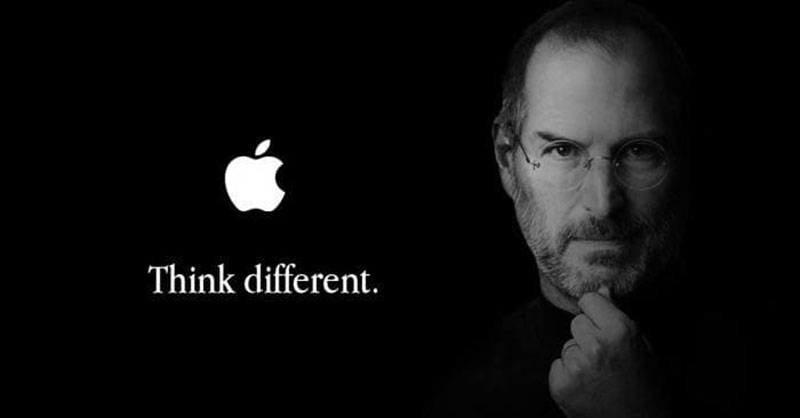
Two 60-second TV spots aired during ABC’s broadcast of Toy Story on September 28, 1997, per Apple’s press release of September 26, 1997. The agency was TBWA Chiat/Day, the team behind the 1984 Macintosh ad.
Steve Jobs said the campaign celebrated the soul of the brand, which he described as “the desire to change the world for the better.” According to Luerzer’s Archive, the goal was to shift brand perception fast.
The release framed the work as a return to core values, not a product announcement.
Dove: Campaign for Real Beauty (2004)
Dove’s 2004 study surveyed around 3,200 women across 10 countries and found that only 2% described themselves as beautiful (Unilever and the ICMR case study).
That number became the conflict in the narrative. The campaign launched globally in 2004, and the Dove Self-Esteem Fund followed in 2006, per Unilever.
Research first, slogan second.
Patagonia: Purpose Rewrite (2018 to 2022)
Patagonia changed its stated purpose in 2018 to “We’re in business to save our home planet.”
The values were already written into its corporate charter as a California benefit corporation. In 2022, ownership moved into a purpose trust that holds all voting stock, plus a collective that receives profits not reinvested in the business, as Patagonia’s ownership page states.
So the words give anyone a purpose statement to quote, and the legal mechanism makes it hard to drop.
Airbnb: Belong Anywhere (2014)
The line launched in July 2014 with the Belo symbol, which stands for people, places, love, and Airbnb (Fortune). Chief marketing officer Jonathan Mildenhall persuaded the founders to promote it from an internal mission statement to the public tagline (Fortune).
A co-creation project called Create Airbnb also let users make their own versions of the Belo (Marketing Magazine).
Reception was rough. TechCrunch was openly dismissive of the concept, and the symbol drew instant mockery.
A decade later, Creative Review notes the Belo has become a familiar sight on phones and websites, and in ads too.
What the Four Cases Share
Dove backed its claim with research, Patagonia with a legal structure, and Airbnb with a co-created symbol. None of them leaned on advertising alone.
Apple is the outlier. Its proof arrived later, which the next section covers.
Why Brand Narratives Fail and How to Test One
Most failures come down to a handful of causes, and a retell test catches the majority of them before launch.
Common Failure Modes
Channel drift is the usual one. Adogy notes messaging quietly shifts depending on who wrote the asset that week.
Then there’s the self-centered story, where the brand plays the hero and the customer has no role. Unsupported claims are a close relative, a purpose with no metric, quote, or behavior behind it. And jargon can swallow a purpose sentence until it dissolves into category buzzwords.
Drift is common. Lucidpress’s 2019 survey of more than 200 organizations found 81% deal with off-brand content.
The payoff figures disagree across survey waves. In 2019, respondents expected 33% revenue growth from consistent branding, up from 23% in an earlier wave, while the 2021 edition reports 10 to 20%.
All of them are self-reported estimates from a brand-template vendor’s own surveys. Read them as direction, not forecast.
When a Brand Narrative Will Not Fix the Problem
A narrative sets direction. It does not repair a weak product or a pricing problem.
Luerzer’s Archive notes Apple had no new product to launch in 1997, so Think Different reset perception first, and the iMac arrived the following year. A product that isn’t ready yet is the case where that sequencing matters.
Price-driven buyers are another. Fortune’s reporter admitted she first doubted Airbnb’s belonging idea because she mostly used the service to save money.
And if no proof exists yet, publish the narrative internally first and let results accumulate.
A Retell Test Before Launch
ContentGrip’s test is whether people outside marketing can retell the core idea in their own words.
Hand the narrative to a sales rep, a new hire, and a customer, then ask each to explain it back without looking.
If it’s working, they restate the purpose and the audience’s problem. The words differ and the idea doesn’t.
If it isn’t, they list features instead of beliefs, their versions contradict each other, or they can’t say who the brand is for.
After launch, measure how the brand performs against the goals the narrative was written for.
Brand Narrative FAQ
Why is a brand narrative important?
Buyers get a reason to choose the company that has nothing to do with being cheapest, according to Adogy. It also makes every later asset easier to write, because the ad, the deck, and the support reply all start from the same through-line.
Who writes the brand narrative?
Usually a marketing or brand lead drafts it. Founders, sales, and support supply the origin, the audience’s conflict, and the proof.
Leadership signs off before the final statement goes into the brand guidelines.
How long should a brand narrative statement be?
One paragraph for the master version, roughly the length of an About page introduction. Add a one-sentence version for ads and decks, since those formats can’t carry the full paragraph.
Do B2B companies and small businesses need a brand narrative?
Yes. Sales decks and small-team websites drift the same way consumer ads do, because different people write them at different times.
A one-page narrative is enough at that scale.
Should a brand narrative be written in-house or by an agency?
Draft it in-house. Founders and sales staff hold the origin and the proof, and an agency can’t invent either.
Bring an agency in for structure, outside audience research, or when the internal team can’t agree on the purpose.
Who Owns a Brand Narrative After Launch?
One named owner, usually the marketing or brand lead, should hold the narrative after launch and approve every change to its purpose, audience, conflict, or proof.
Name the owner first, then write the change rule, then retest retelling after each new channel or team. An owner comes first because a change rule without one goes unenforced. The retest comes last because it needs a rule to measure against.
The trade-off is speed. Changes to the core wait for one approver, while channel teams keep their freedom over format and vocabulary.
With ownership settled, the next build is the identity system that expresses the narrative, and this walkthrough on creating a brand identity is the natural place to start.

Renowned for his expertise in logo design and visual branding, Bogdan has developed a multitude of logos for various clients.
His skills extend to creating posters, vector illustrations, business cards, and brochures. Additionally, Bogdan's UI kits were featured on marketplaces like Visual Hierarchy and UI8.
He also wrote in the past years on sites like Design Your Way, WebDesignerDepot, WPDean, Designmodo, Speckyboy, Slider Revolution, and more.
- The Windsurf Logo History, Colors, Font, And Meaning - 10 October 2026
- How to Remove Background From Product Photos (No Photoshop) - 10 October 2026
- How Designers can Build a Stronger Online Creative Identity - 9 October 2026

Bogdan Sandu is a seasoned designer who has been designing websites since 2008. Renowned for his expertise in logo design and visual branding, Bogdan has developed a multitude of logos for various clients. His skills extend to creating posters, vector illustrations, business cards, and brochures. Additionally, Bogdan's UI kits were featured on marketplaces like Visual Hierarchy and UI8. He also wrote in the past years on sites like Design Your Way, WebDesignerDepot, WPDean, Designmodo, Speckyboy, Slider Revolution, and more.
You Might Also Like