Uber ads split into two personalities.
The rides work is quiet and cinematic. Uber Eats is loud, absurd and stacked with celebrities.
Both sit on the same black-and-white system built in 2018, and that tension is the interesting part.
What follows, grouped by campaign with the agency, year and market attached:
- The flagship brand platforms, from Doors Are Always Opening to There Are Drivers In Your Area
- Six Uber Eats Super Bowl commercials, one of which took a Cannes Lions Grand Prix
- The design breakdown: U Frame composition, the Uber Move typeface, palette rules, outdoor layouts
By the end you will know who made each ad, and why the layouts still hold at billboard scale.
Uber advertising covers 16 years, 6 lead agencies and 5 flagship brand platforms, from the 2010 line “Everyone’s Private Driver” to the suburban film work that launched in October 2025.
The delivery side runs on celebrity comedy. The rides side runs on quiet narrative film. Both sit on the same black-and-white design system introduced in 2018.
This page groups the ads by campaign, names the agency, year and market behind each, and breaks down the composition, typography and color decisions that hold the work together.
Uber Advertising at a Glance
Uber has advertised since 2010 and works mainly with Special Group Australia, Special US and Mother New York. Its best-known platforms are Tonight I’ll Be Eating, Get Almost Almost Anything and the Uber Eats Super Bowl series. The brand’s visual identity combines a black field, the Uber Move wordmark and a U-shaped frame.
| Attribute | Value |
|---|---|
| First major campaign | Doors Are Always Opening, 2018, by 72andSunny Los Angeles |
| Lead agencies | Special Group Australia, Special US (Uber account won 2020), Mother London, Mother New York |
| Best-known taglines | “Everyone’s Private Driver” (2010), “Tonight I’ll Be Eating” (2018), “Get Almost, Almost Anything” (2023), “There Are Drivers In Your Area” (2025) |
| Primary media | TV, out-of-home, programmatic DOOH, social, audio, in-app |
| Awards | Cannes Lions Media Grand Prix 2026; Bronze Entertainment Lion for Sport 2019; D&AD, Spikes Asia, LIA |
| Visual signature | Monochrome field, white Uber Move type, U Frame composition, Safety Blue accent |
Which Uber Ad Campaigns Are the Most Famous?
Five campaigns define Uber advertising: Doors Are Always Opening (2018), Tonight I’ll Be Eating (2018 to 2023), Get Almost Almost Anything (2023), the Uber Eats Super Bowl series (2021 to 2026) and There Are Drivers In Your Area (2025). Three came out of Australia. Two were built for the United States.
Doors Are Always Opening (2018 to 2019)
Doors Are Always Opening launched in September 2018 across the United States, created by 72andSunny Los Angeles. It was the largest campaign in Uber’s history at that point, and it debuted during NBC’s Giants vs Cowboys broadcast.
The media plan ran TV, digital banners and out-of-home in major US cities, according to Ad Age. Uber never disclosed the spend.
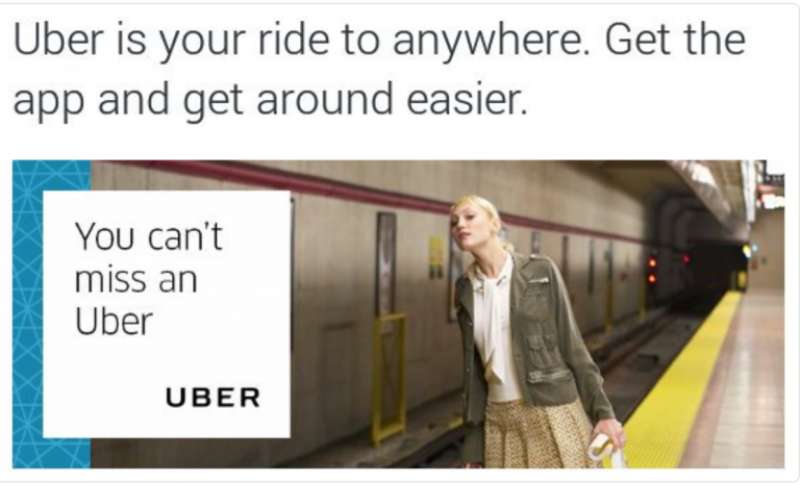
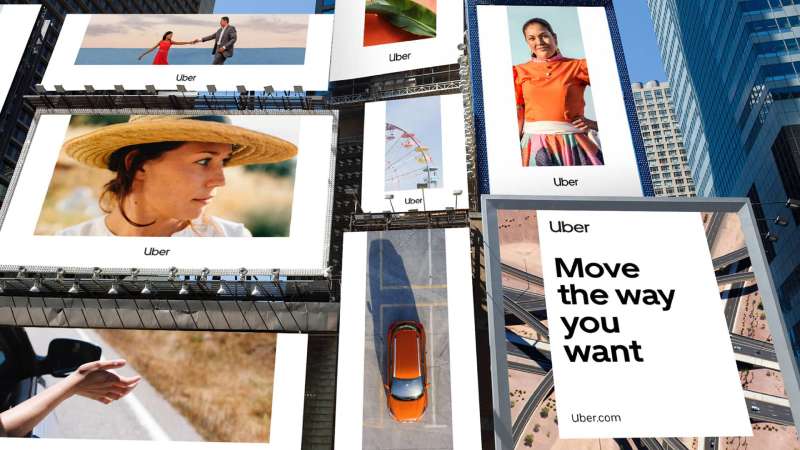
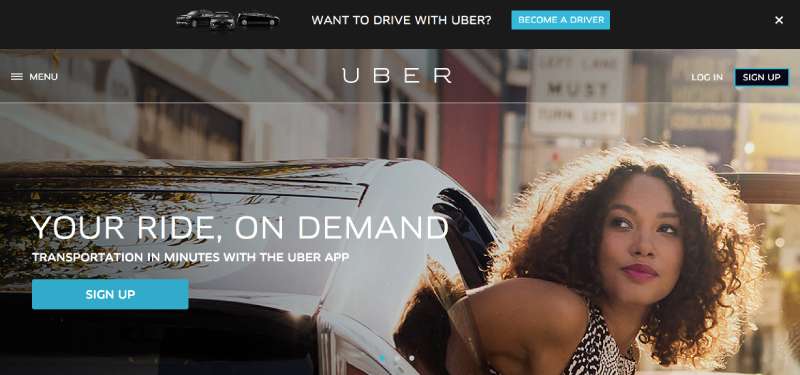
Design-wise this is the first campaign to use the post-rebrand system at scale: images wrapped in a white U-shaped margin, type set in Uber Move, almost nothing else on the page.
Tonight I’ll Be Eating (2018 to 2023)

Origin: created by Special Group Australia for Uber Eats, then exported to New Zealand, Taiwan, Japan, Mexico and Brazil.
Format: two famous people, one line each, delivered deadpan to camera. Kim Kardashian West with Sharon Strzelecki. Elton John with Lil Nas X. Mark Hamill with Patrick Stewart, directed by Guy Shelmerdine.
Expansion: Special took the platform to the US and Canada in 2020, and by then it was running in eight countries.
The Australian Open Ambush execution won a Bronze Entertainment Lion for Sport at Cannes in 2019, in a category that handed out 29 Lions from 702 entries.
Get Almost, Almost Anything (2023 to 2025)

Special Australia launched the platform in January 2023 with a joke about limits: long legal-style disclaimers listing everything Uber Eats does not deliver.
The rollout included 40 product films and more than 20 out-of-home executions, fronted first by Kris and Kendall Jenner, then Tom Felton and Nicola Coughlan, then Jason Alexander in 2024.
CAASie reports the outdoor work doubled purchase consideration and landed in the top 15% of food delivery ads globally. In the Netherlands alone the brand served 7.6 million programmatic DOOH ads.
Self-deprecation is the copy device here, and it only works because the layouts are so plain. Long body copy on a flat color field, no imagery competing for attention.
Uber Eats Super Bowl Commercials (2021 to 2026)
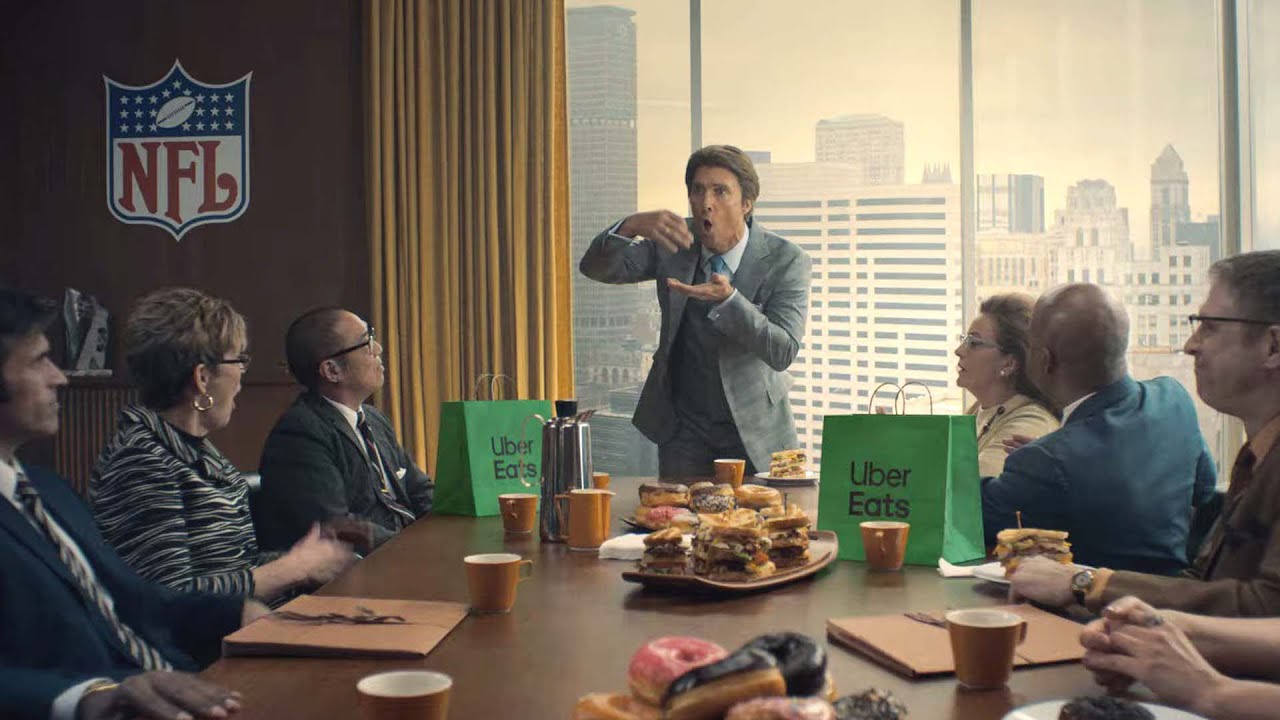
Uber Eats has run six consecutive Super Bowl spots, all through Special US, all built on a celebrity ensemble and an absurd premise.
| Year | Spot | Talent |
|---|---|---|
| 2021 | Debut | Cardi B, Mike Myers, Dana Carvey |
| 2022 | Uber Don’t Eats | Jennifer Coolidge, Gwyneth Paltrow, Trevor Noah, Nicholas Braun |
| 2024 | Don’t Forget Uber Eats | Jennifer Aniston, David Schwimmer, Usher, Jelly Roll, David and Victoria Beckham |
| 2025 | Football Is for Food | Matthew McConaughey, Kevin Bacon, Greta Gerwig, Sean Evans |
| 2026 | Build Your Own Super Bowl | Matthew McConaughey, Bradley Cooper, Parker Posey |
The Build Your Own Super Bowl extension
For Super Bowl LX, Special US moved the ad inside the Uber Eats app and let fans assemble their own cut from a library of celebrity scenes, with more than 1,000 possible combinations.
The campaign took the Media Grand Prix at Cannes Lions 2026 and produced a record sales day that beat the previous record by 36 million dollars, per LBB. The jury awarded 45 Lions from 1,432 entries.
There Are Drivers In Your Area (2025 to present)
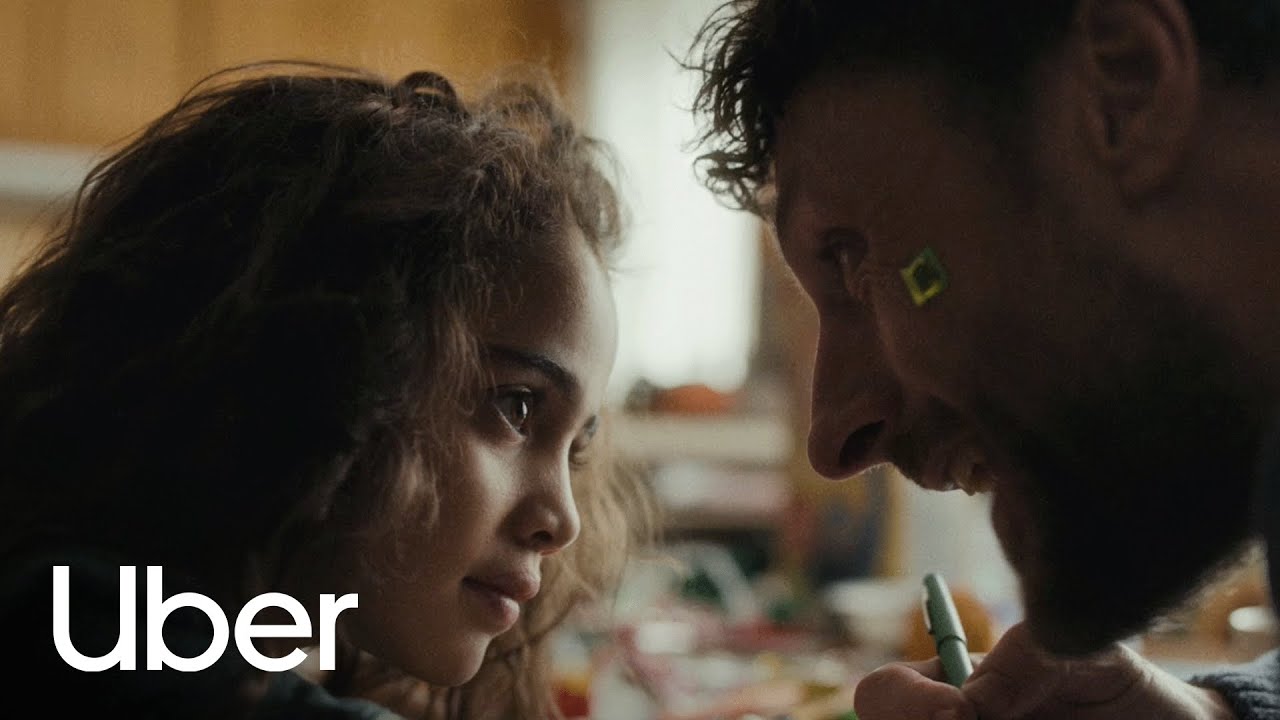
Mother New York created this one, its first US work for Uber, and pointed it squarely at suburban riders who own cars.
The hero film, In Good Time, runs two minutes, follows a couple across years of rides, and uses the app’s ETA countdown as the narrative spine. Michael Spiccia directed through MJZ, scored to Billie Eilish.
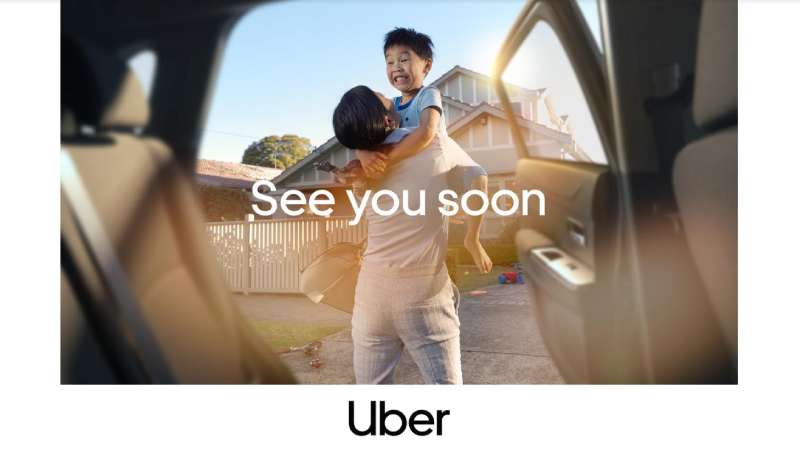
Three fifteen-second cuts sit underneath it: Airport Dad, Clock, Tired Dog. The rollout covered aerial, dynamic and traditional OOH, social and audio.
It extends “Your Uber Driver Is Minutes Away”, which Mother London made for Northern England in 2024.
Uber Eats Print and Outdoor Ads From Australia and New Zealand
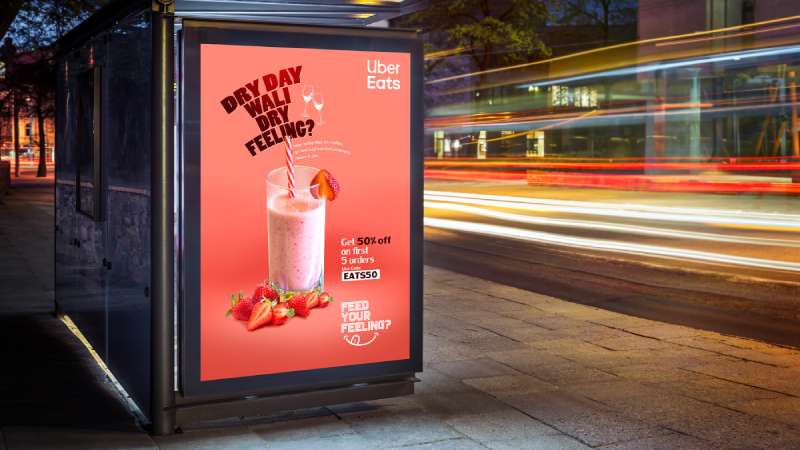
The ANZ market produced most of the brand’s physical poster and outdoor design work, usually through Special with media partners MediaCom, oOh!media and JCDecaux.
- A 3D anamorphic giraffe billboard built with oOh!media and Blockhead
- Dog-height billboards placed at eye level for pets, via JCDecaux Creative Solutions
- Disclaimer posters listing undeliverable items in dense small type
Common thread: the media format is the joke, not a container for one.
How Do Uber Print Ads Work Visually?
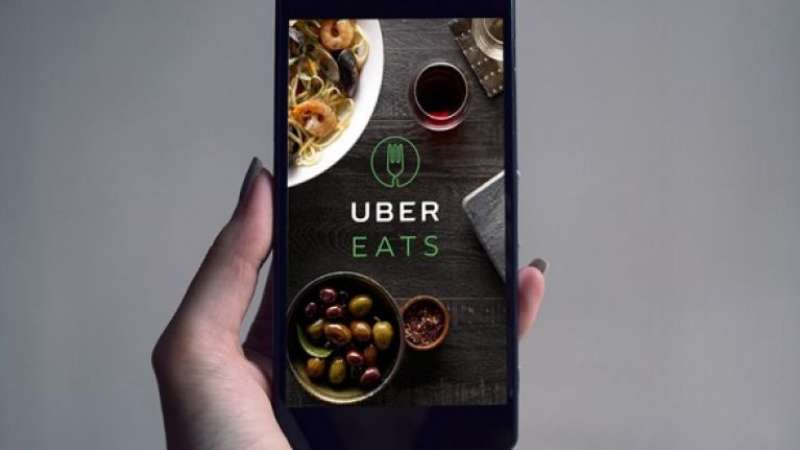
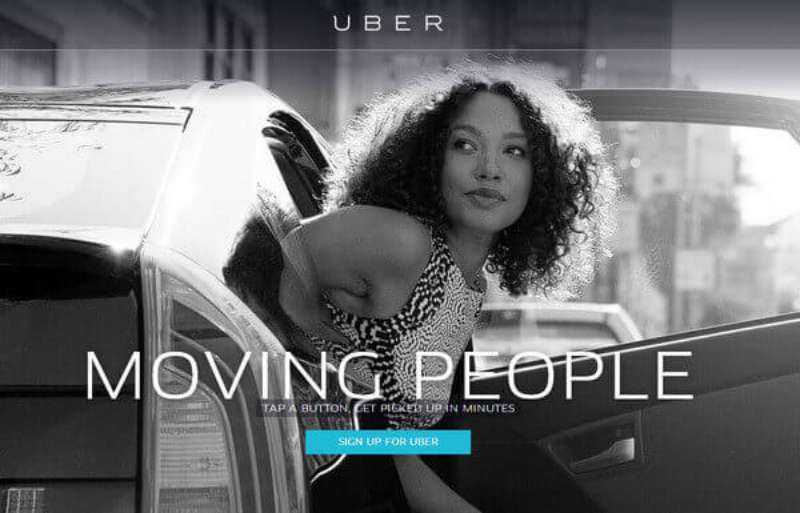
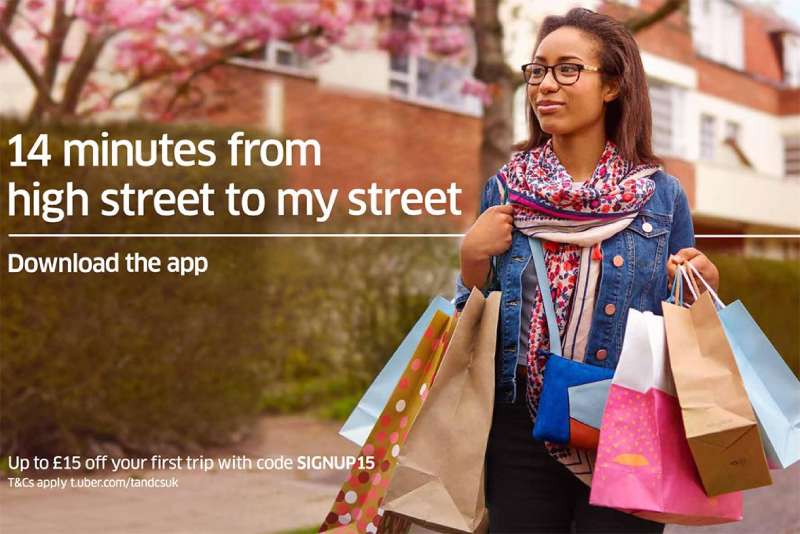
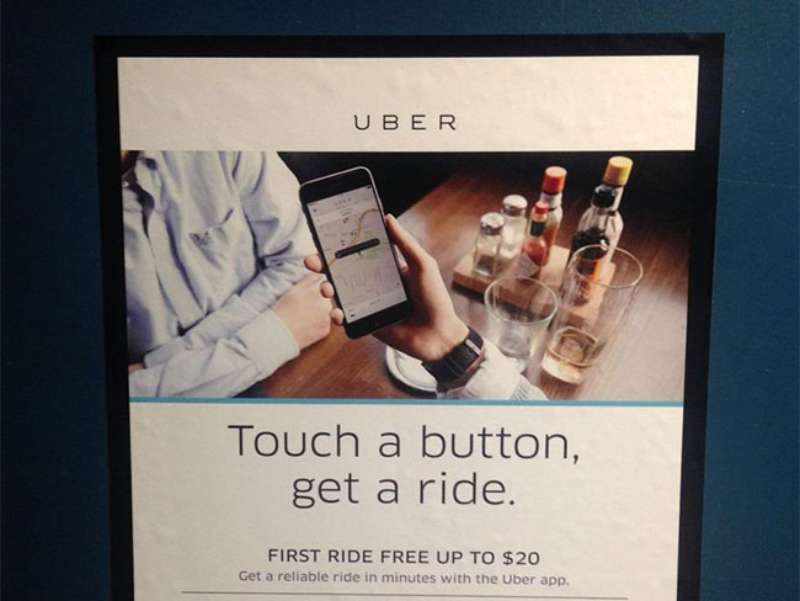
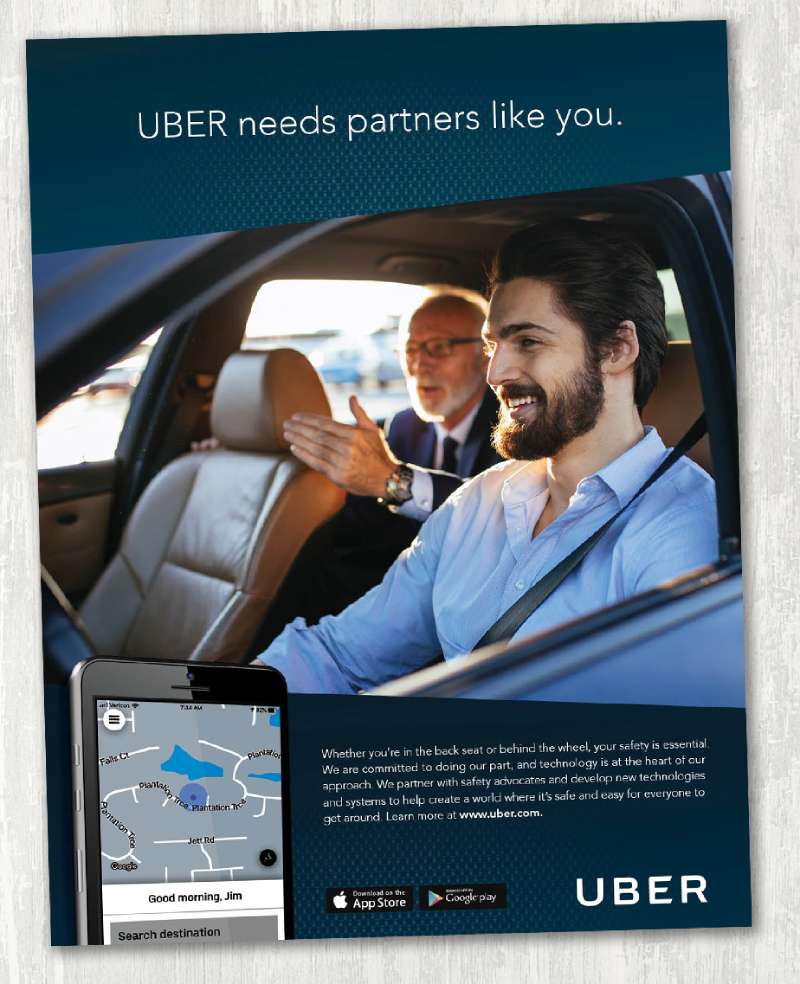
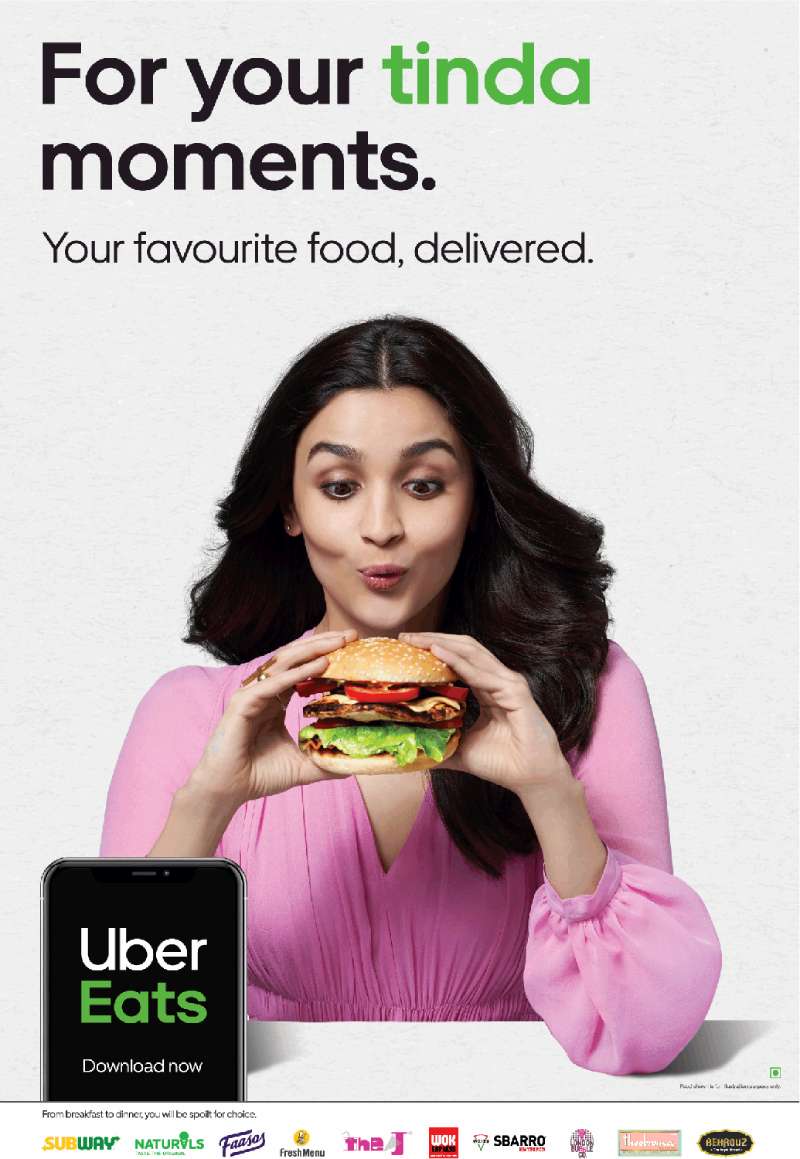
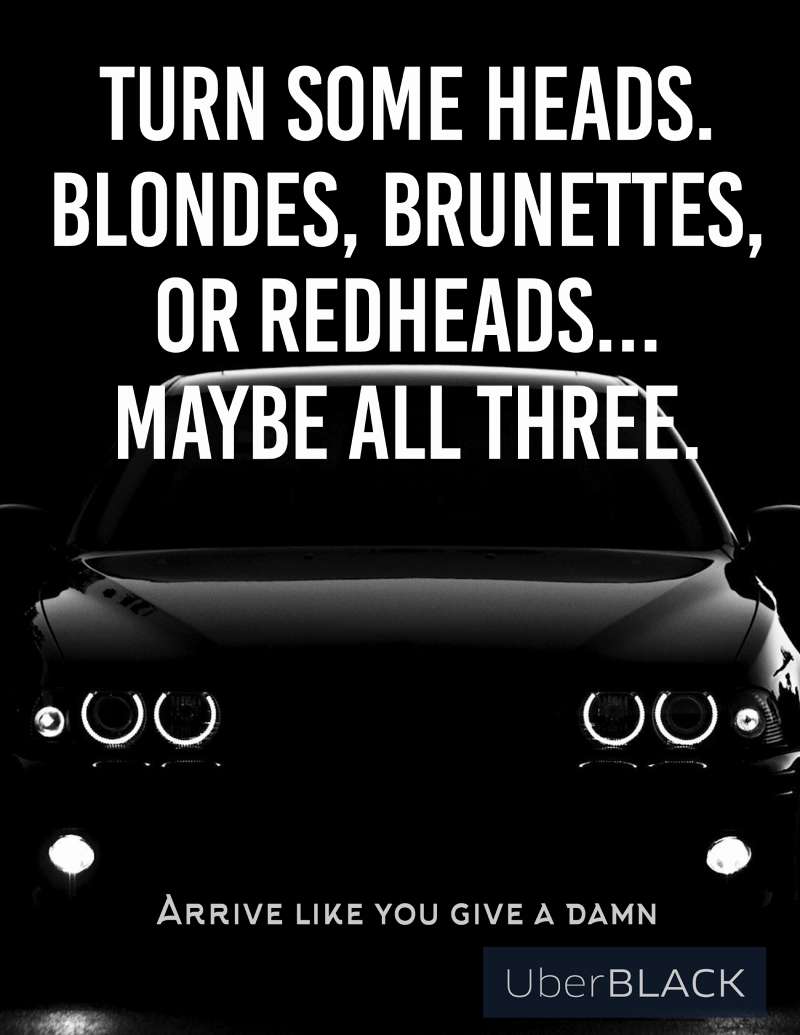
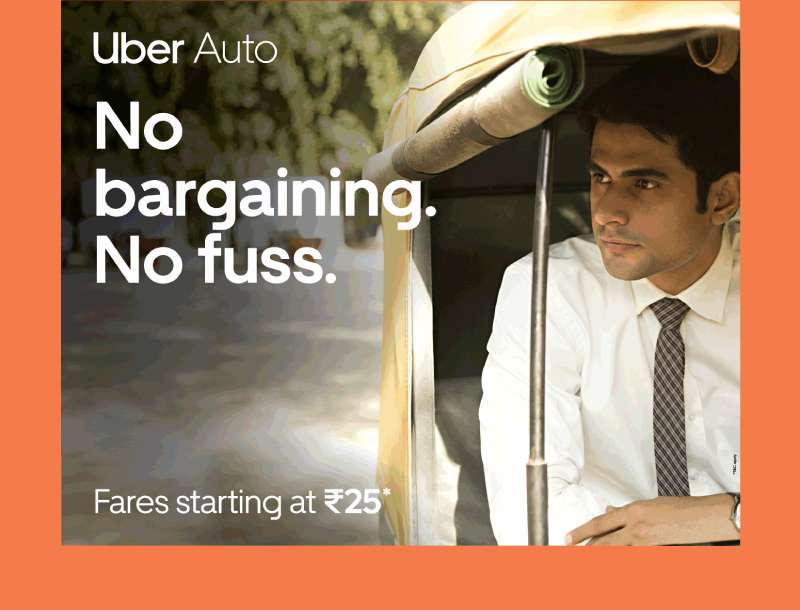
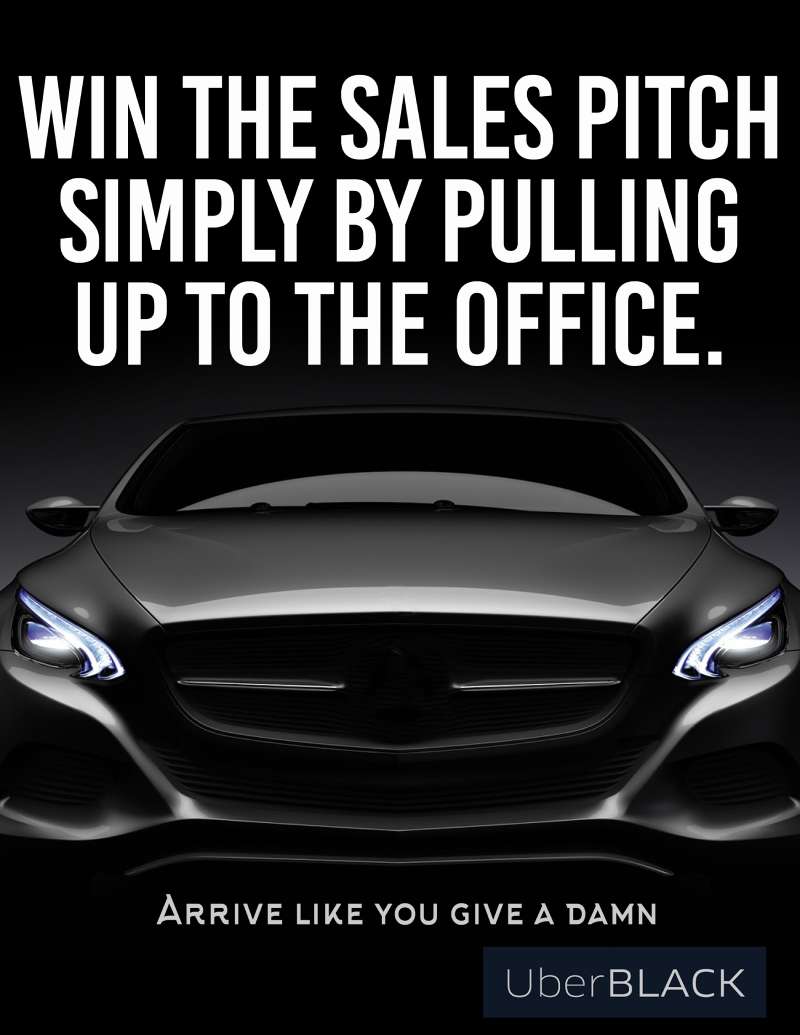
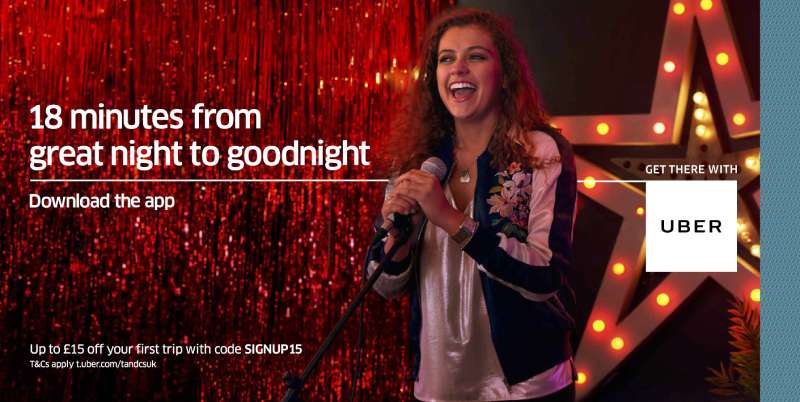
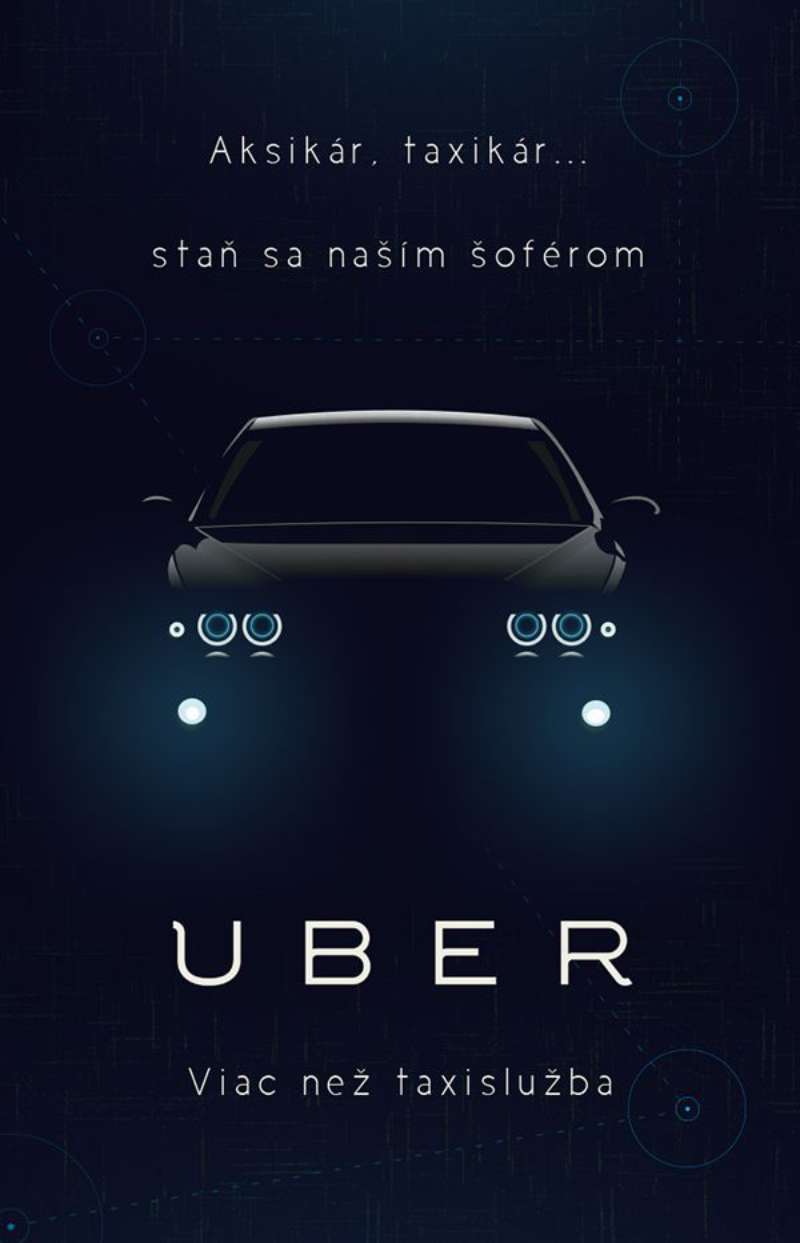
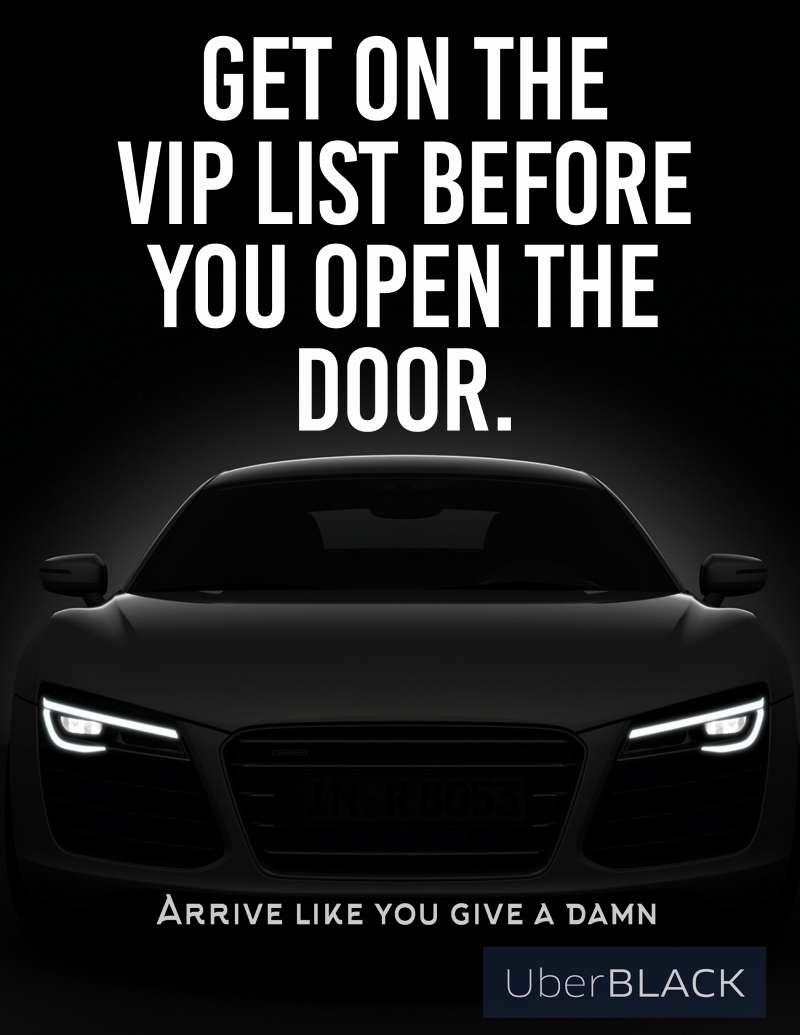
Uber print ads use a black or single-color field, one photograph or product shot, and a short line set in Uber Move. Image-to-text ratio sits heavily toward image. The wordmark parks in a corner at small scale and never competes with the headline.
The palette
Black is the base. Uber’s own research found people already associated the brand with it, so the 2018 system leaned in rather than fighting it.
The near-monochrome scheme exists for legibility. High tonal contrast survives a bus shelter at night and a 3-inch phone screen equally well.
Safety Blue is the one exception, a bespoke shade Wolff Olins developed to flag safety information.
The U Frame
Wolff Olins built the composition around a single device. Peter Markatos, then Uber’s executive director of brand, asked how the imagery could be made ownable. The answer was a typographic margin of negative space shaped like a U.
The image sits inside it. The type sits under it. That framing device does the identity work so the logo does not have to shout.
The typeface
Uber Move is a geometric sans serif with grotesque details, drawn by Jeremy Mickel at MCKL alongside the wordmark itself.
It covers 13 languages across 4 weights and 2 optical sizes, Display for headlines and Text for interface elements.
The font is proprietary. Uber Move is not on Google Fonts or Adobe Fonts, and the licensing is exclusive to Uber Technologies.
Designers on Twitter tore into the letter spacing of the wordmark when it launched in September 2018, specifically the fit around the round b and e. That criticism never went away and the wordmark never changed.
Hierarchy and copy blocks
Headline first, product second, brand third. The reading order is fixed across markets, which is what lets local teams swap imagery without breaking the system.
Wolff Olins described the goal as “beyond simple”: one global structure, localized through content instead of through color and pattern. Those rules live in the brand guidelines, not in each market’s head.
How Do Uber TV Commercials Differ From Its Print Ads?
Uber’s TV work carries dialogue, celebrities and plot. The print work carries none of those. Film gets 30 to 120 seconds and uses talent as the hook, while print and outdoor get one idea and a line of type.
In Good Time (2025)
Two minutes, directed by Michael Spiccia via MJZ for Mother New York. A couple meets in a suburban bar with six minutes left on an ETA, and the ride countdown marks every turn in the relationship from there.
Billie Eilish’s “When the Party’s Over” runs underneath. Mother’s CCO Oriel Davis-Lyons called the track the final piece of the puzzle.
Football Is for Food (2025)
A 60-second Super Bowl spot in which Matthew McConaughey argues that football exists to sell food, citing the Caesars Superdome as evidence.
Special US treated the spot as a season finale rather than a standalone, running teasers with Martha Stewart and Charli XCX for weeks beforehand.
Tonight I’ll Be Eating (2020)
Mark Hamill and Patrick Stewart circle each other in a dark warehouse with baseball bats, trading orders instead of threats. Guy Shelmerdine directed through Smuggler.
Runtime is 45 seconds, supported by two 15-second cuts of the pair playing air hockey and Connect Four.
The structural difference
TV sells the range. Print sells the proposition. Uber Eats film work spends its time on who is ordering, while the outdoor work spends its time on what shows up.
That split is also why the narrative approach only appears on the rides side of the brand after 2024.
How Has Uber Advertising Evolved Since 2010?
Uber advertising moved through 4 phases: a luxury positioning from 2010, a reputational reset in 2018, a delivery-led celebrity era from 2018 to 2024, and a return to narrative brand film from 2024 onward.
| Period | Strategic shift | Representative work |
|---|---|---|
| 2010 to 2015 | Premium car service, no mass advertising | “Everyone’s Private Driver” |
| 2016 to 2018 | Reputation repair after leadership change | Doors Are Always Opening, 72andSunny |
| 2018 to 2023 | Uber Eats leads with celebrity comedy | Tonight I’ll Be Eating, Special Group |
| 2024 to 2026 | Unified platform storytelling, suburban expansion | On Our Way; There Are Drivers In Your Area |
The 2018 rebrand is the hinge. Everything before it used Clan Pro and a symbol that riders read as an abstract shape rather than a U.
The 2024 “On Our Way” platform, announced by CMO Jill Hazelbaker in July 2024, pulled rides and delivery under one line for the first time.
Which Agencies Created Uber Advertising?
Six organizations built the modern Uber advertising record. Wolff Olins designed the identity, MCKL drew the type, and Special Group, Mother, 72andSunny and MJZ produced the campaigns.
Special Group and Special US
Special Group Australia created Tonight I’ll Be Eating for Uber Eats in 2018. Special US, the American arm, was set up specifically to service the Uber account after winning it in 2020.
Special US has now made six Super Bowl commercials for Uber Eats. Kelsey Hodgkin serves as CEO and partner, with Tom Martin and Julian Schreiber as Australian co-CCOs.
Mother London and Mother New York
Mother London made “Bring It”, Uber Eats’ first UK brand campaign, directed by Stacy Wall.
Mother New York became agency of record and created There Are Drivers In Your Area in 2025.
Wolff Olins and MCKL
Wolff Olins redesigned Uber’s identity in 2018 with Forest Young as creative director and Molly Watson leading verbal identity.
MCKL, run by Jeremy Mickel in Los Angeles, drew Uber Move. Mickel developed the typeface and the wordmark in parallel, so the brand typography and the logotype share the same construction.
Production partners
- MJZ: produced In Good Time with director Michael Spiccia
- Biscuit Filmworks: produced the 2026 Super Bowl work with director Steve Rogers
- Smuggler: produced the Hamill and Stewart films with Guy Shelmerdine
- Revolver and The Glue Society: produced the 2019 Australian Open Ambush
What Can Designers Learn From Uber Ads?
Uber’s work rewards restraint at the layout level and risk at the idea level. The design system never changes. The joke does.
- Build one compositional device and repeat it until it reads as ownership, the way the U Frame does
- Set the headline and the wordmark in the same typeface at different weights instead of pairing two families
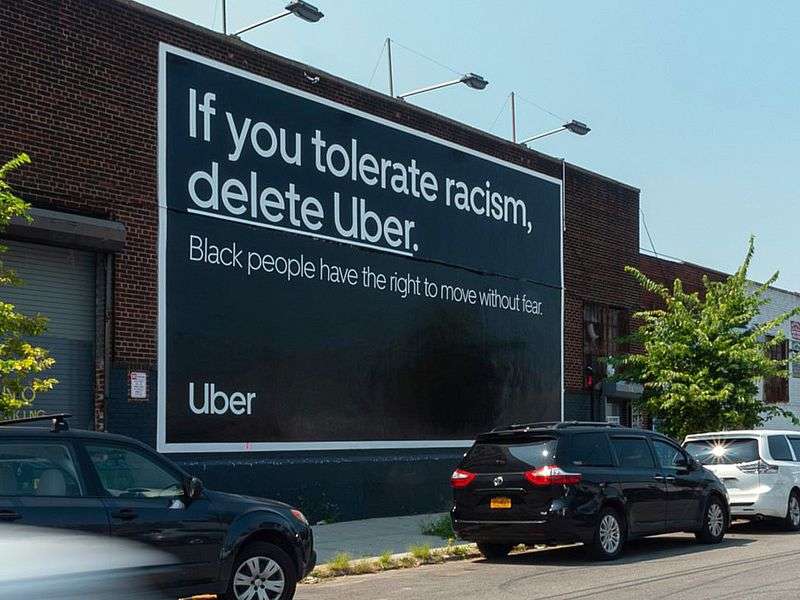
- Keep outdoor to a single idea, because billboard typography fails the moment a second message enters the frame
- Anchor the palette to two values and reserve a third color for functional information only
- Localize through imagery and copy, never through restructuring the layout
- Choose advertising typefaces that hold at 3 inches and at 30 feet, since the same asset ships to both
The stripped-back approach here is not a style preference. It is a distribution decision made by a brand shipping the same asset to 40 countries.
How Do Uber Ads Compare to Airbnb and FedEx Ads?
Uber, Airbnb and FedEx all sell an invisible service, and each solved that problem differently.
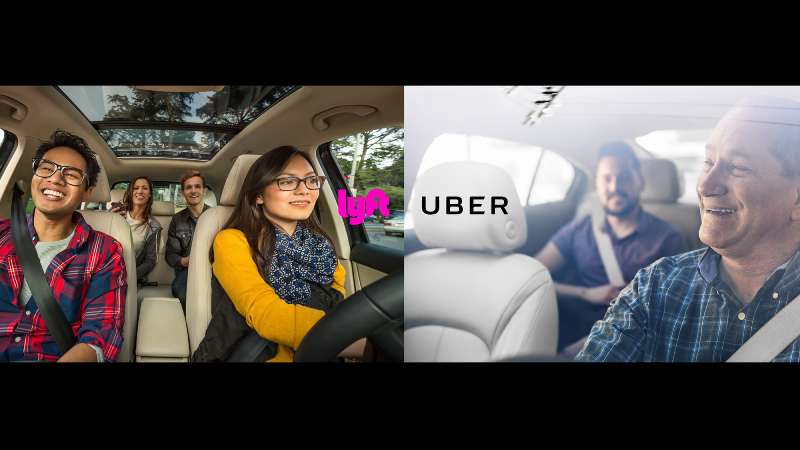
Airbnb ads photograph the destination and let the product disappear entirely, which works because the stay is the thing being bought. Uber cannot do that, since the ride is the thing being bought and a car interior is not aspirational, so the work photographs people instead.
FedEx advertising takes the opposite route with visual puns built around the package and the arrow. Uber Eats borrowed that logic for its ANZ outdoor work, where the format itself carries the gag.
Against telecom brands, the gap is bigger. Verizon ads lead with coverage claims and network data. Uber never argues on specifications, because riders judge the service on whether a car arrived, not on numbers in a headline.
Uber Advertising also sells media rather than just buying it. The division passed a 1.5 billion dollar annual revenue run rate in Q1 2025, growing over 60% year over year, across a platform of 180 million users and 13.2 billion trips a year.
What Makes Uber Advertising Work?
The design system is locked. The creative brief is not.
Every ad sits on the same black field, uses the same type at the same weights, and puts the wordmark in the same place. That repetition does the recognition work, so the writing gets to be strange without the brand losing its shape.
Black also carries the association riders already had, which is color psychology applied backwards: research first, palette second.
Most brands run this the other way around. They lock the message and loosen the layout, then wonder why nothing accumulates.
Uber’s advertising design holds because the frame never moves.
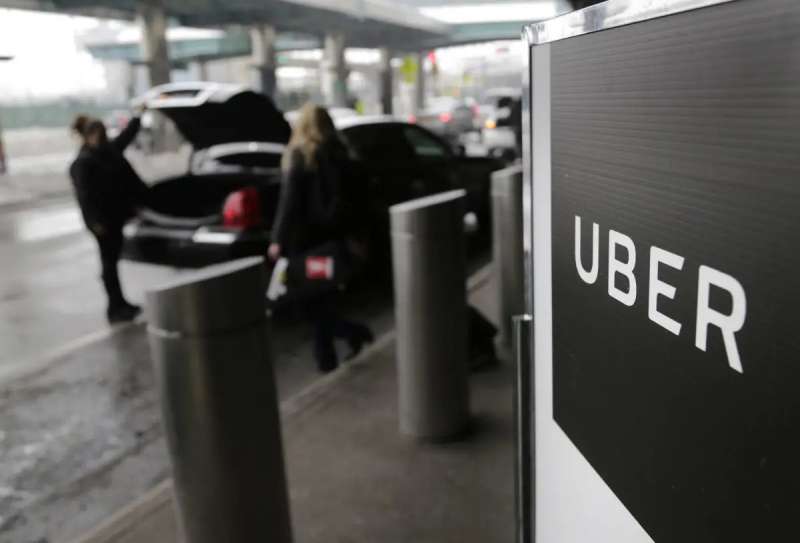
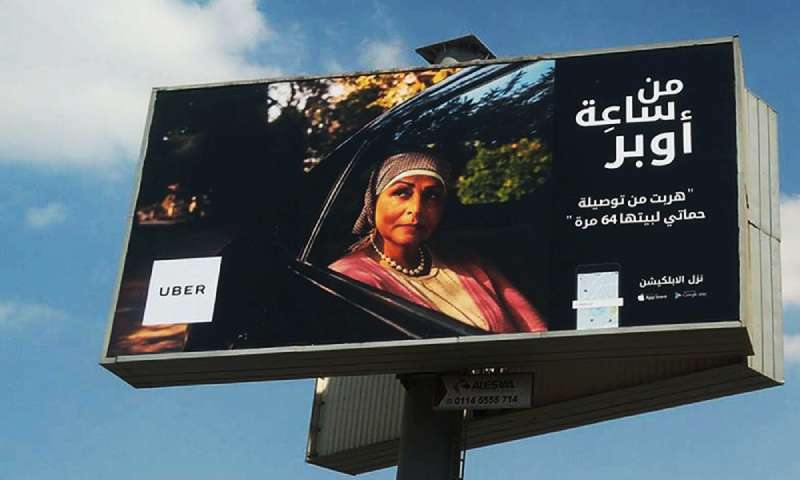
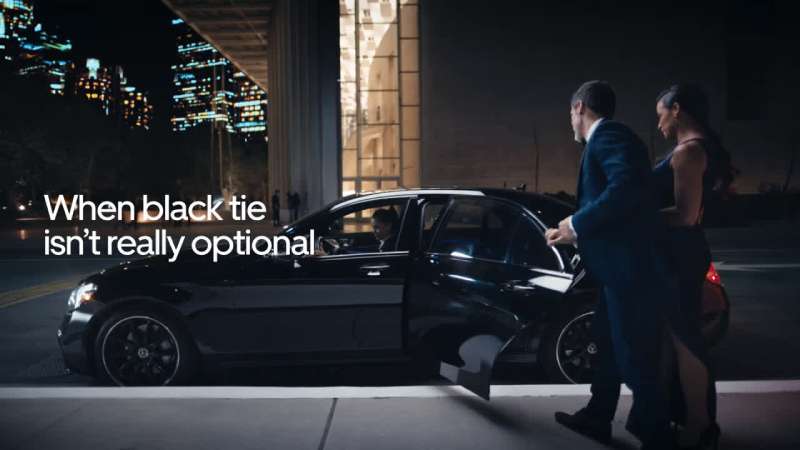
Uber Ads Examples
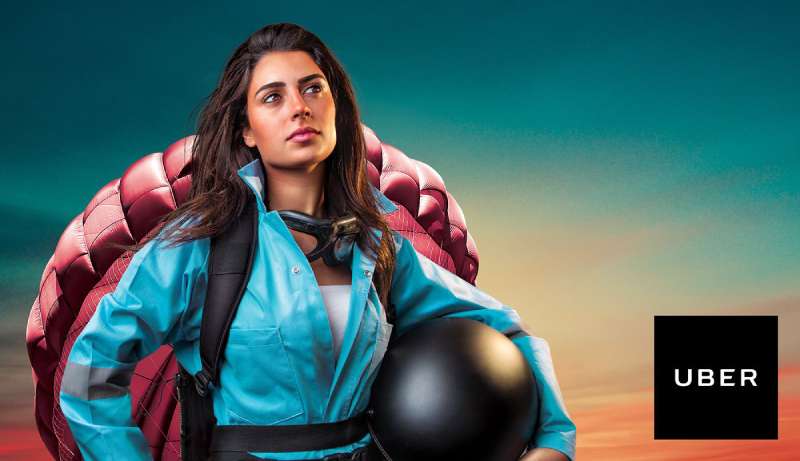
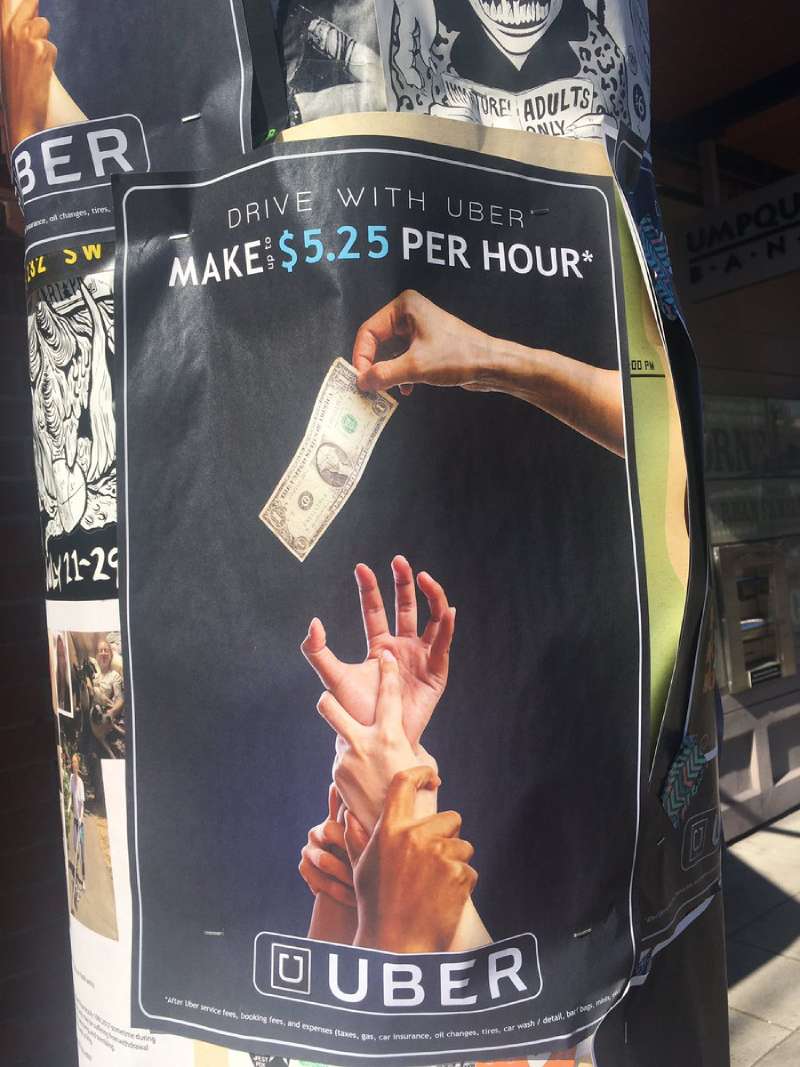
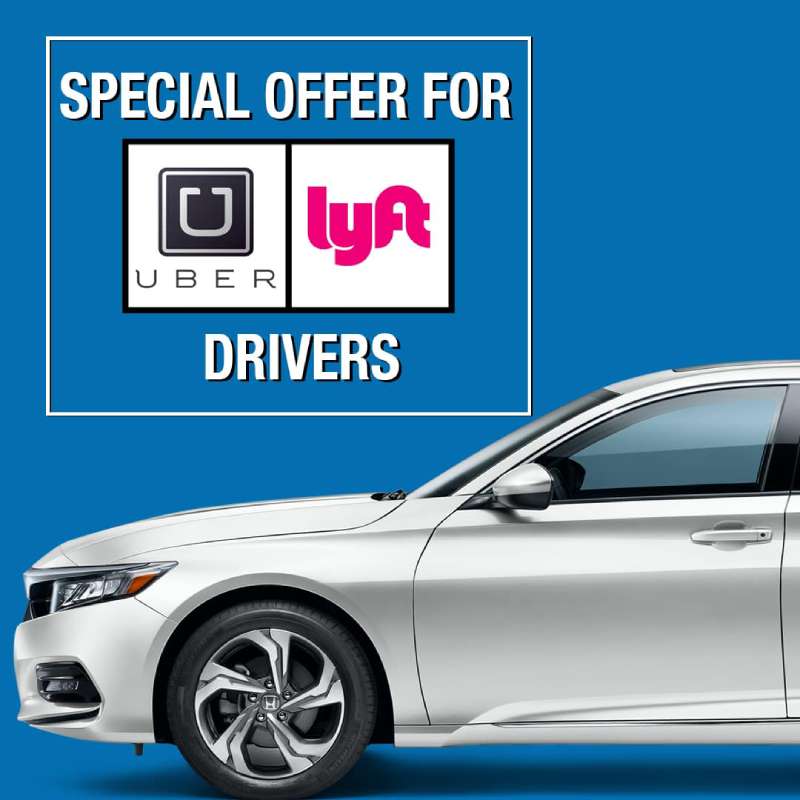

FAQ on Uber Ads
What was Uber’s first advertising slogan?
“Everyone’s Private Driver.” It ran from 2010, when the company operated a few dozen limo drivers in San Francisco. The line sold luxury and exclusivity, which stopped making sense once UberX opened the platform to regular cars in 2012.
Has Uber run a Super Bowl ad for its rides app?
No. Every Super Bowl buy has gone to Uber Eats, starting in 2021. The rides brand uses other national moments instead, including the 2021 Olympics opening ceremony, where the Go Get It tagline launched.
What is Uber OOH advertising?
Digital screens mounted on the roofs of active drivers’ cars. Uber built the network through a 2020 partnership with Adomni. Because the screens move, the creative gets geo-targeted in real time based on where the car actually is.
How much does it cost to advertise on Uber?
Uber publishes no rate card. Journey Ads sell programmatically through Google Display & Video 360 and The Trade Desk, available across 10 European markets since June 2025. Sponsored listings inside Uber Eats run on auction pricing.
What song plays in the Uber “In Good Time” commercial?
Billie Eilish’s “When the Party’s Over,” released in 2018. Oriel Davis-Lyons, chief creative officer at Mother New York, said the track was the last piece that made the two-minute edit work.
Does Uber make its ads in-house?
Partly. Brand campaigns come from outside agencies. Uber Advertising opened an in-house Creative Studio in June 2025, but that team builds branded content for advertisers running on Uber’s own platforms, not the company’s own commercials.
How long are Uber Eats Super Bowl commercials?
Sixty seconds in-game. The 2025 spot ran in the second quarter. Each one arrives after weeks of 15-second and 30-second teasers on social, which do most of the setup the main film then pays off.
Does Uber advertise to recruit drivers?
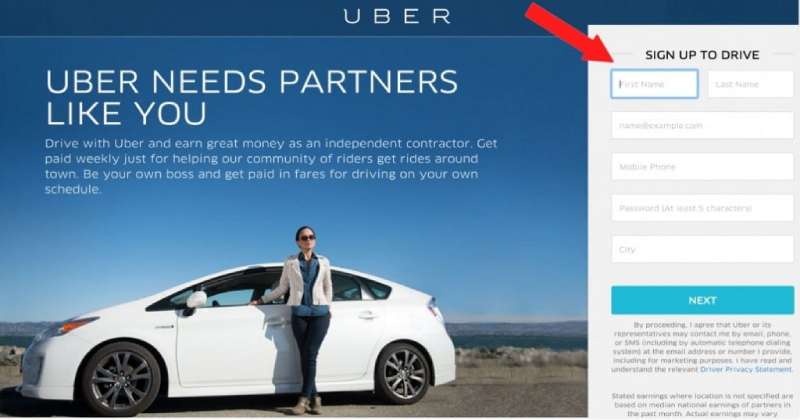
Yes, and it has since the early days. Bloomberg documented Uber running driver recruitment ads on the backs of New York City buses in 2014, pitched at cab drivers and anyone else holding a license.
Which sports events does Uber sponsor?
Uber Eats sponsored the Australian Open, which produced the 2019 Ambush work. Uber signed as a sponsor of the Milano Cortina 2026 Winter Games and partnered with LA28 and Team USA as official rideshare and delivery partner.
How do Uber Eats ads compare to DoorDash ads?
Both fight for the same February audience. The 2026 Super Bowl put Uber Eats, DoorDash, Instacart and a first-time Grubhub buy in the same broadcast, which pushed Uber Eats toward an in-app interactive format rather than a bigger celebrity list.
Conclusion
Uber ads reward study because the constraints are visible. Strip a rideshare campaign back to a wordmark and one sentence, and the copywriting has nowhere to hide.
That is the practical lesson for anyone working in out-of-home or delivery service marketing. The system carries the recognition. The line carries the idea.
Worth tracking as you go back through the work: who signed it, what year, which market.
Special US behaves differently from Mother New York, and both behave differently from the rules Wolff Olins set in 2018.
Save the layouts you like. Note the art direction choices, the spacing, the point size relationships between headline and product.
Then borrow the discipline rather than the jokes. The jokes already belong to Uber.

Renowned for his expertise in logo design and visual branding, Bogdan has developed a multitude of logos for various clients.
His skills extend to creating posters, vector illustrations, business cards, and brochures. Additionally, Bogdan's UI kits were featured on marketplaces like Visual Hierarchy and UI8.
He also wrote in the past years on sites like Design Your Way, WebDesignerDepot, WPDean, Designmodo, Speckyboy, Slider Revolution, and more.
- Canva vs PowerPoint: Which Is Better for Presentations? - 22 September 2026
- How to Install Fonts on Mac (Step-by-Step Guide) - 20 September 2026
- From Mockup to Code: How AI-Augmented Development Speeds Up the Design Handoff - 19 September 2026

Bogdan Sandu is a seasoned designer who has been designing websites since 2008. Renowned for his expertise in logo design and visual branding, Bogdan has developed a multitude of logos for various clients. His skills extend to creating posters, vector illustrations, business cards, and brochures. Additionally, Bogdan's UI kits were featured on marketplaces like Visual Hierarchy and UI8. He also wrote in the past years on sites like Design Your Way, WebDesignerDepot, WPDean, Designmodo, Speckyboy, Slider Revolution, and more.
You Might Also Like