Toothpaste advertising is supposed to be boring. Colgate ads keep proving otherwise, from a Super Bowl spot that never sells toothpaste to a Cannes-winning Thai film about a single mother.
The brand has advertised since 1896, through 5 lead agencies and dozens of markets. The visual signature has barely moved: red field, italic wordmark, one smile.
What follows is campaign by campaign, with the agency, year and market behind each one, plus the design analysis most galleries skip.
- Famous campaigns, from The Colgate Comedy Hour to Not Every Smile Starts as a Smile
- How the print ads are built, and where the TV commercials break from them
- What designers can borrow from a 130-year-old visual identity
Colgate advertising covers 130 years, 5 lead agencies and more than a dozen flagship campaigns, from the 1896 Ribbon Dental Cream press ads to VML Paris and its 2025 film “Not Every Smile Starts as a Smile”. The work runs on one repeated device: the smile used as product proof.
This page covers the campaigns, with the agency, year and market behind each one, plus the layout, palette and typography decisions that hold the whole thing together.
Colgate Advertising at a Glance
Colgate has advertised since 1896, working mainly with Young & Rubicam, Red Fuse Communications and VML. Its best-known campaigns are The Colgate Comedy Hour, Every Drop Counts and Smile Strong. The visual signature combines a red field, a white italic wordmark and a single lit smile.
| Attribute | Value |
|---|---|
| First major campaign | Colgate’s Ribbon Dental Cream press ads, 1896 |
| Lead agencies | Young & Rubicam, Red Fuse Communications, VMLY&R, VML, Soho Square Bangkok |
| Best-known taglines | “It cleans your breath while it cleans your teeth” (1940s), “The Colgate ring of confidence” (1960s), “Do More For Your Mouth” (2019), “Smile Strong” (2020) |
| Primary media | Magazine print, network TV, outdoor, cinema, digital video |
| Awards | Cannes Lions Silver and Bronze 2024, D&AD Pencil 2024, Clio Bronze 2024, Cannes Lions Silver 2025 |
| Visual signature | Red and white palette, italic sans-serif wordmark, arc smile, tube at the optical center |
Colgate-Palmolive raised advertising spending 15% in 2024 after a 19% rise in 2023, against net sales of $20.1 billion.
Global toothpaste market share sat at 41.4% and manual toothbrush share at 32.2% at the end of 2024, according to the company’s fourth quarter results.
Which Colgate Ad Campaigns Are the Most Famous?
The 6 campaigns that define Colgate advertising are The Colgate Comedy Hour (1950-1955), Every Drop Counts (2014-2016), Close Talker (2019), Smile Strong (2020-2023), The Boxer (2024) and Not Every Smile Starts as a Smile (2025). Each one shifted the brand’s medium, market or creative device.
The Colgate Comedy Hour (1950-1955)

The Colgate Comedy Hour ran on NBC from September 10, 1950 to December 25, 1955 across the United States, produced under Colgate-Palmolive-Peet. The variety show rotated hosts including Eddie Cantor, Dean Martin, Jerry Lewis, Bob Hope and Abbott and Costello, and carried spots for Colgate toothpaste, Palmolive soap, Halo shampoo and Fab.
Commercial breaks used animated jingle sequences rather than live-action product shots, which put the tube itself at the center of a flat, high-contrast frame.
The show ran 221 episodes over 6 seasons. Colgate-Palmolive-Peet carried a $3 million annual talent and production bill in season two, rising to $6 million by season four, per the Museum of Broadcast Communications.
First Color Broadcast
The Donald O’Connor episode of November 22, 1953 became the first sponsored network program telecast in color. Red and white packaging finally read as red and white on screen.
Every Drop Counts (2014-2016)

Origin: Y&R Peru created the 60-second film “Agua” in 2014 for Latin America, written by Erick Galvan and Jose Rivera.
Expansion: The spot ran in Colombia, Brazil and Mexico before a 30-second US and Canadian cut aired during Super Bowl 50 in February 2016.
Argument: Turning off the tap while brushing saves close to 3,000 gallons of water a year.
A man brushes while hands reach under the running faucet to fill a cup and wash fruit. No smile, no tube, no product claim until the endframe. Colgate later reported a sales lift across the franchise that it attributed to the spot’s reach.
Colgate Total “Close Talker” (2019)

Super Bowl LIII inventory ran between $5.1 million and $5.3 million for 30 seconds, and Colgate bought a slot in the third quarter for the relaunch of Colgate Total.
Red Fuse Communications, the WPP unit built solely for Colgate-Palmolive brands, created the spot. Bryan Buckley of Hungry Man directed it, with Luke Wilson standing far too close to his colleagues.
- Tagline: “Do More For Your Mouth”
- Shot in extreme close-up, so faces fill the frame and the product never appears until the final second
Smile Strong (2020-2023)

Smile Strong launched as a global brand platform in 2020, with VMLY&R handling creative across markets. The United Arab Emirates outdoor run appeared in March 2020, followed by installments in Malaysia, the Philippines and Australia.
The platform moved Colgate from product claim to optimism as a positioning, using documentary portraits instead of studio smiles.
- Hear Gear (Australia): VMLY&R and Steeden built rugby headgear that channels sound to hearing implants
- Free Your Smile (2023): The Colgate Smile Study surveyed 4,000 people across 8 Asia-Pacific markets and found 94% wanted to smile more freely
The Boxer (2024)

The best Colgate film of the last decade contains no toothpaste.
Soho Square Bangkok made The Boxer for the Thai market in 2024, with media by Wavemaker Thailand. The film follows Alisa “Tri” Yoohanngoh, a single mother and professional boxer, as a referee’s count is intercut with the costs of raising a child alone.
Casting is the craft story here. Street casting won a D&AD Pencil, and the edit took a Silver Cannes Lion in Film Craft alongside a Bronze in Film Lions and a Clio Bronze.
Not Every Smile Starts as a Smile (2025)

VML France in Paris launched the campaign in the United Kingdom in April 2025 for a two-week run, with Peter Funch shooting stills and film of children mid-tantrum at the bathroom sink.
Posters ran near homes and stations, family magazines carried the print, and QR codes routed parents to brushing guidance. Tooth decay is the leading cause of hospital admission for British children aged 5 to 9.
Results reported by VML: 1.2 million impressions in 24 hours, a 35% engagement increase among UK families and a 65% lift in Colgate Kids brand recall. The work took a Silver Lion at Cannes in 2025.
Colgate Print Ads From the Ribbon Dental Cream Era (1896-1940s)

Colgate & Company sold the first toothpaste in a collapsible tube in 1896, and the press advertising that followed did the job of explaining what a tube even was.
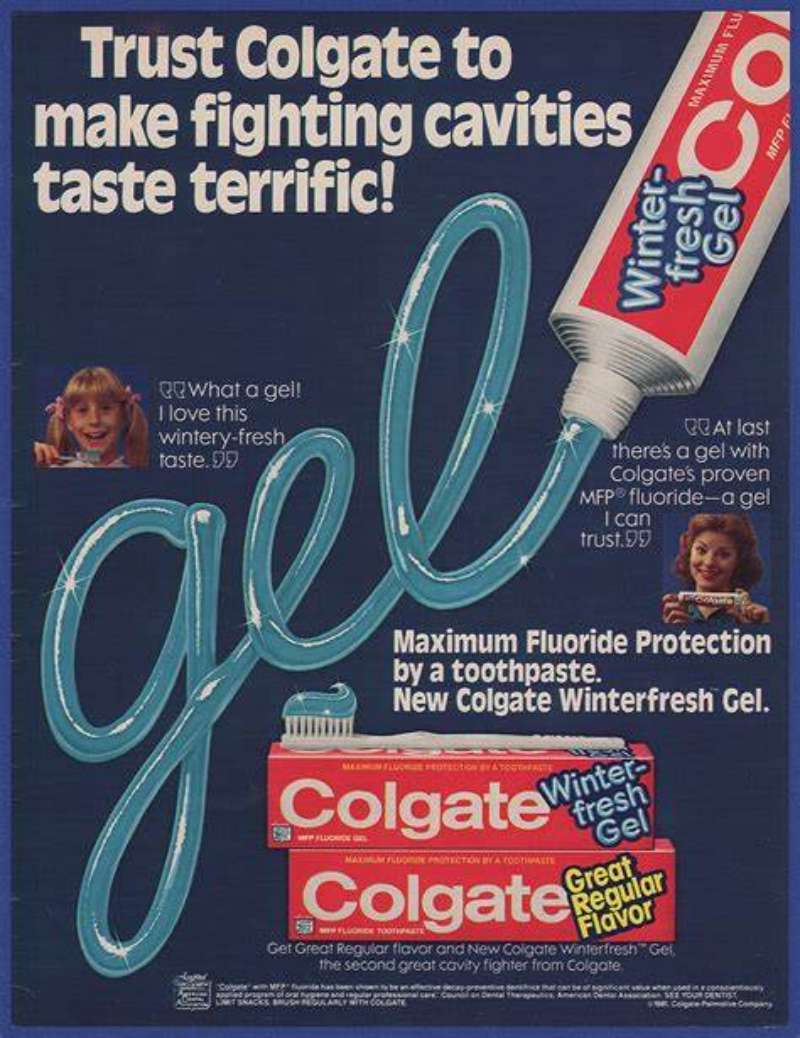
1910, Ladies’ Home Journal: long body copy arguing that a medicinal taste was not proof of effectiveness.
1929: “Cleans Teeth Best”, with the 25 cent price set larger than the brand name.
1940s: “It cleans your breath while it cleans your teeth”, the line that fixed dual-benefit copy as the category default.
How Do Colgate Print Ads Work Visually?
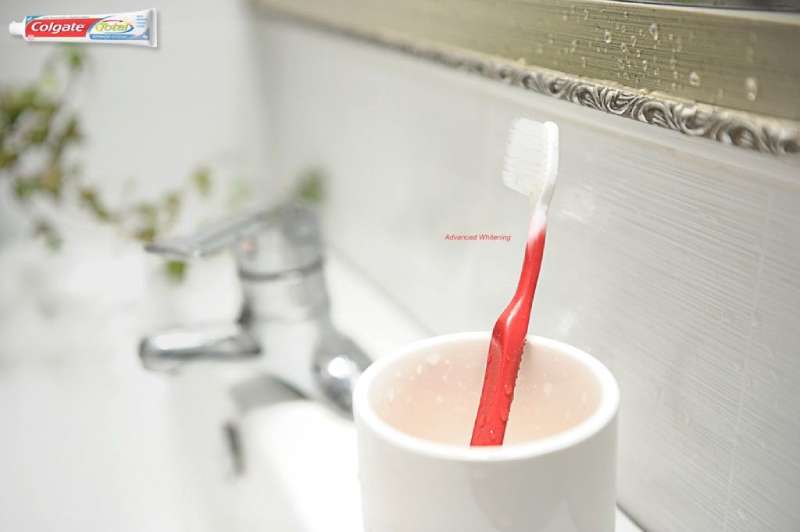
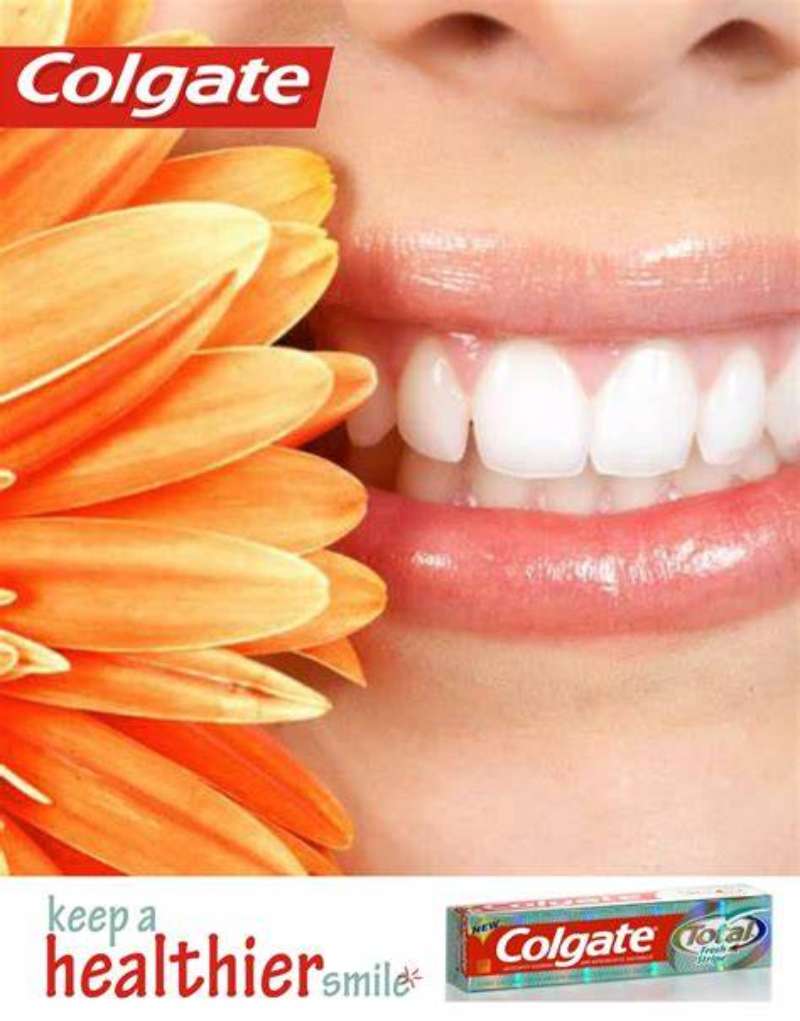
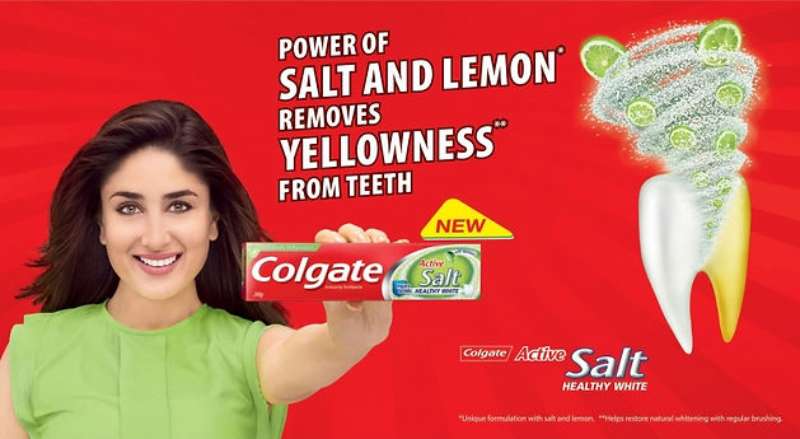
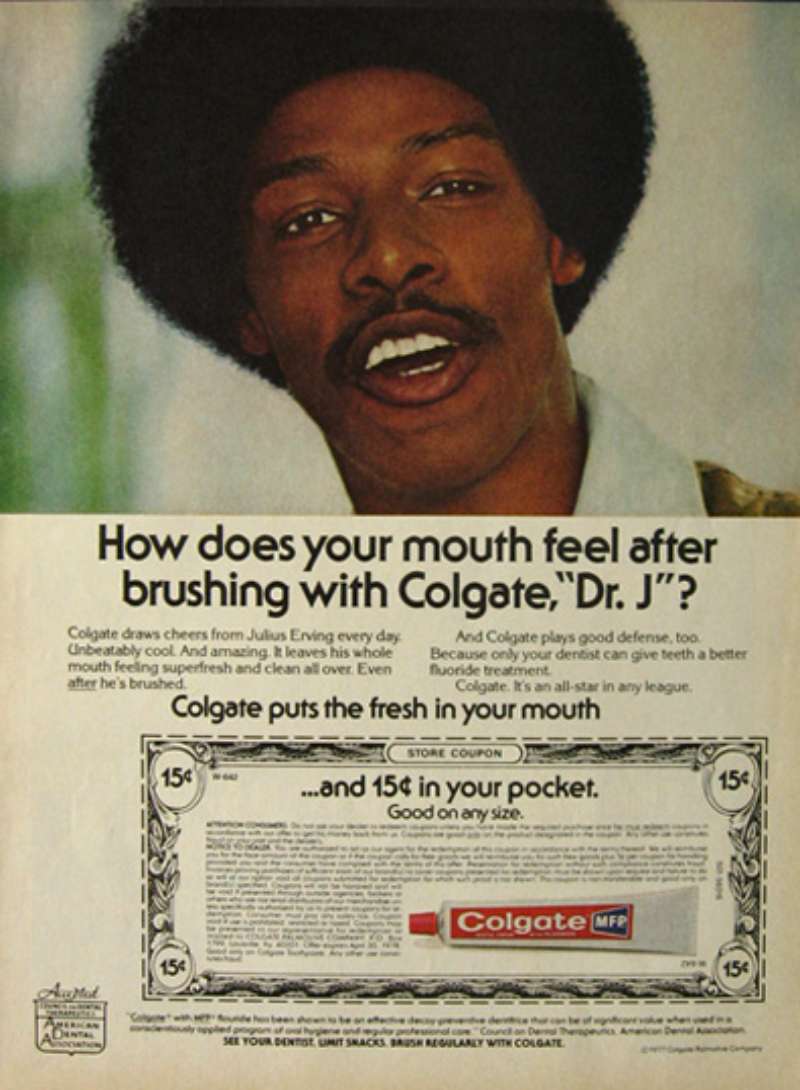
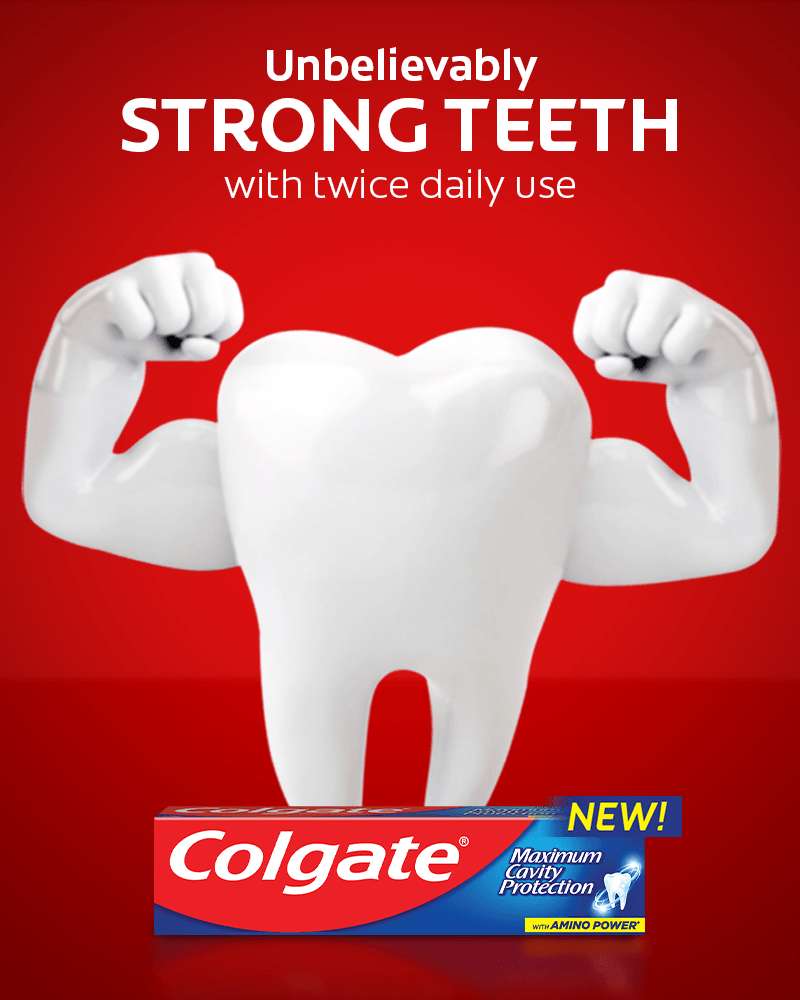
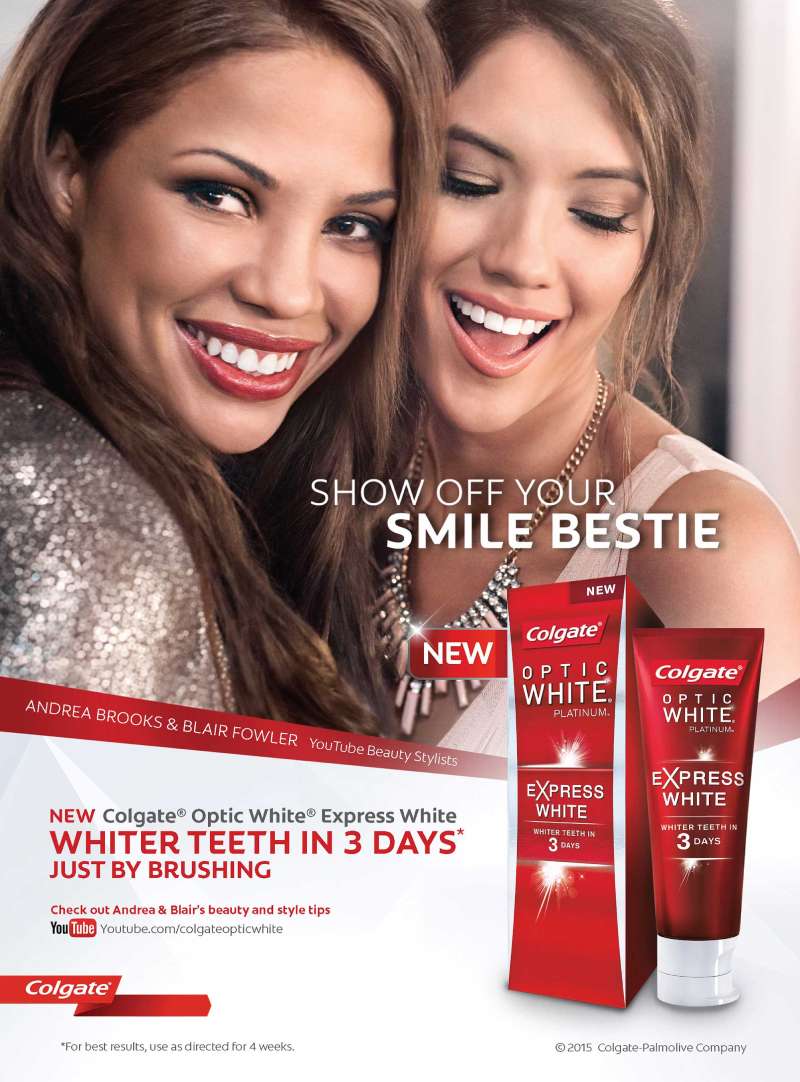
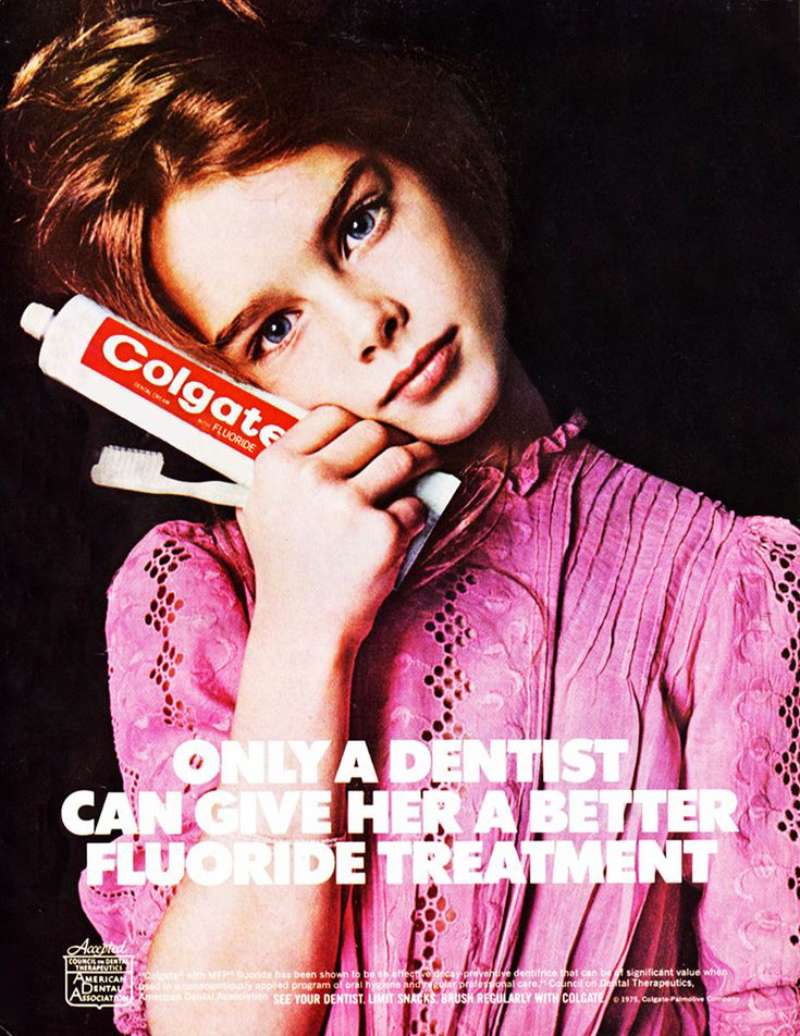
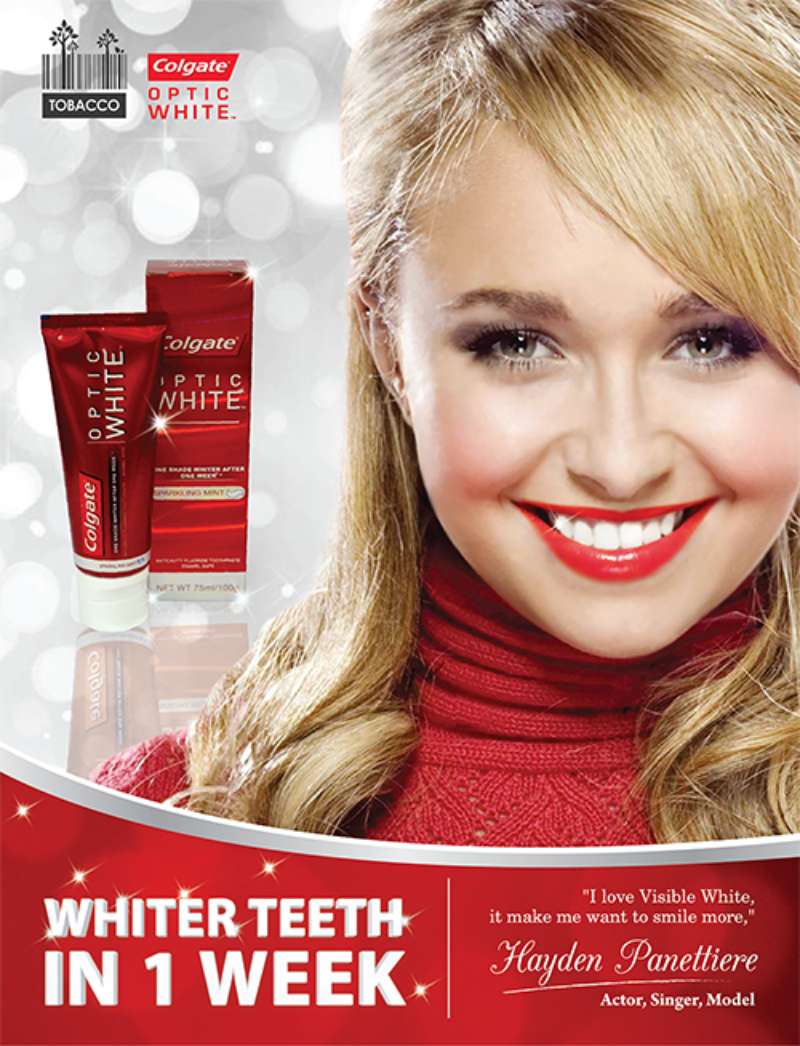
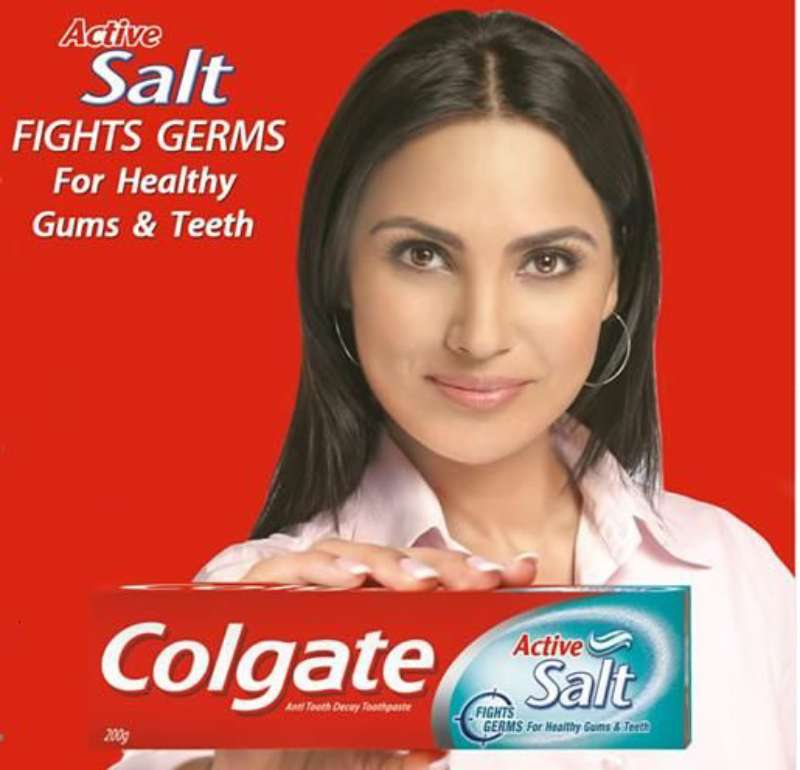
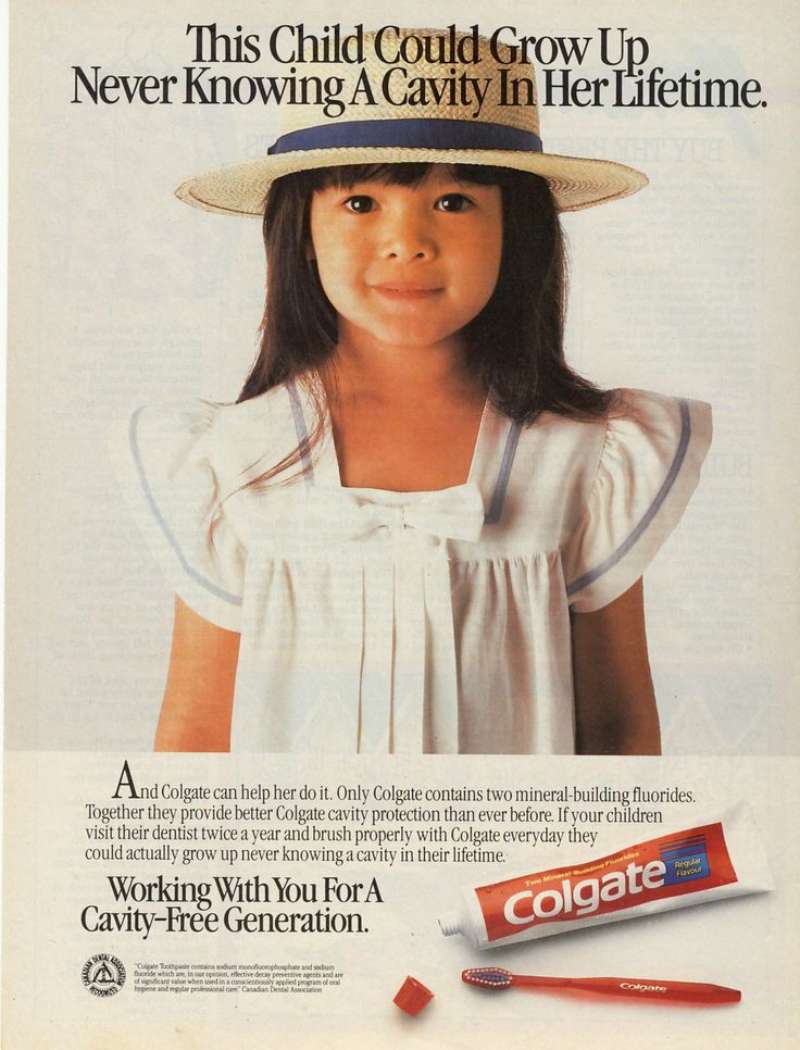
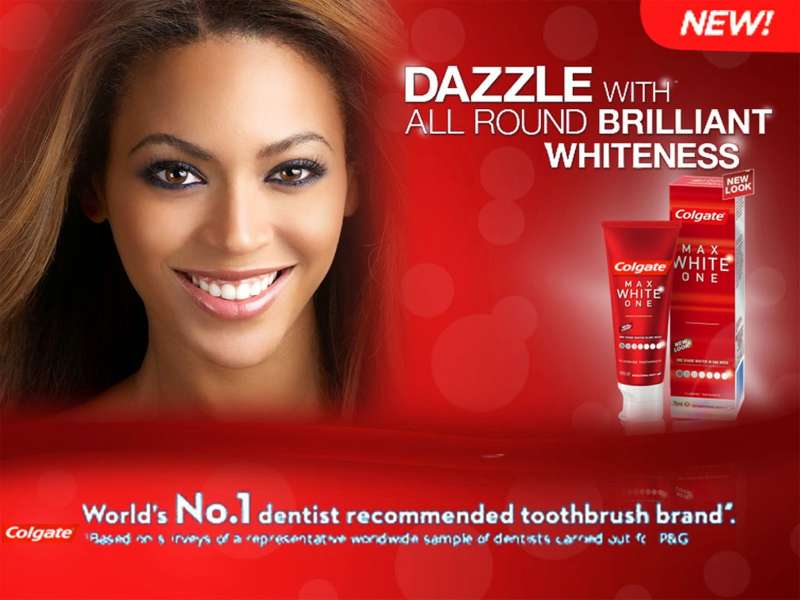
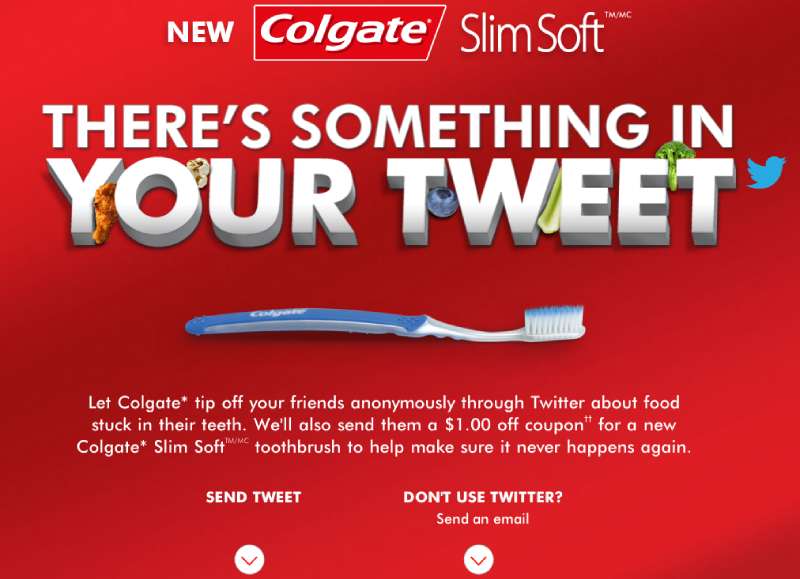
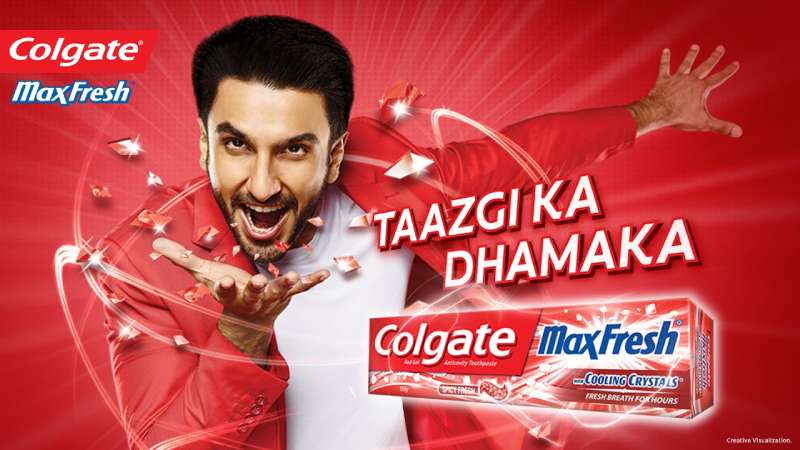
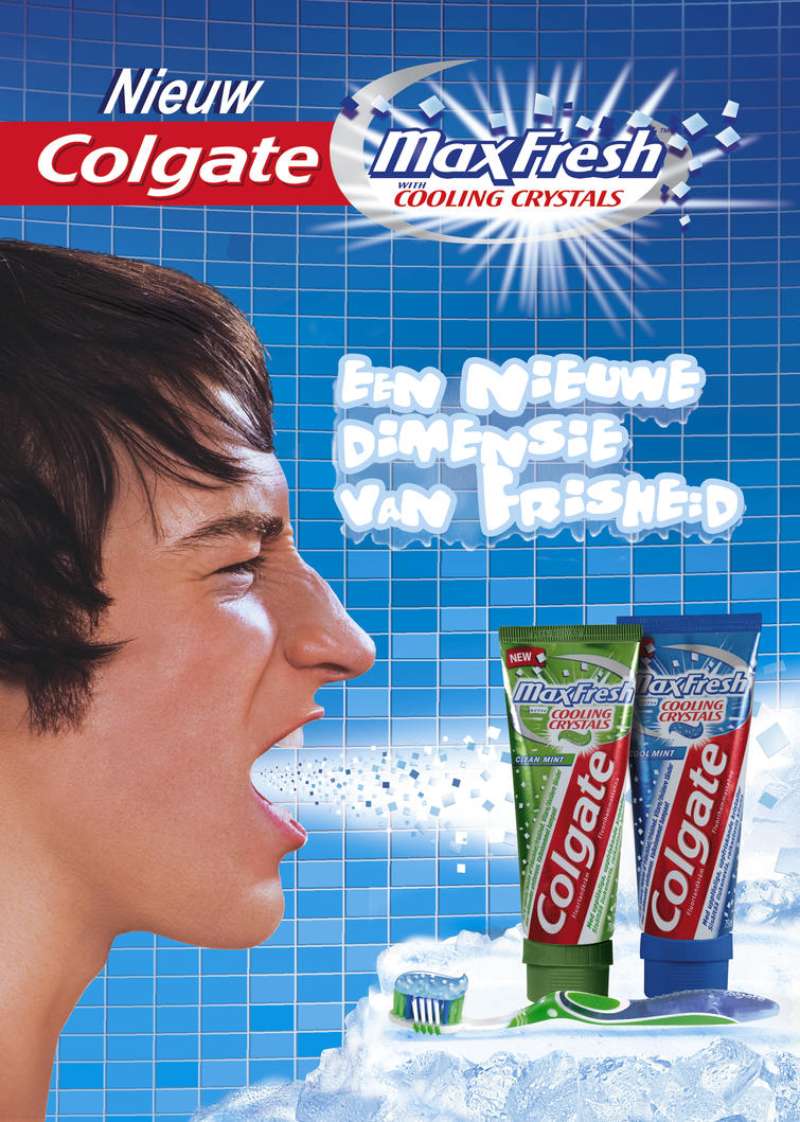
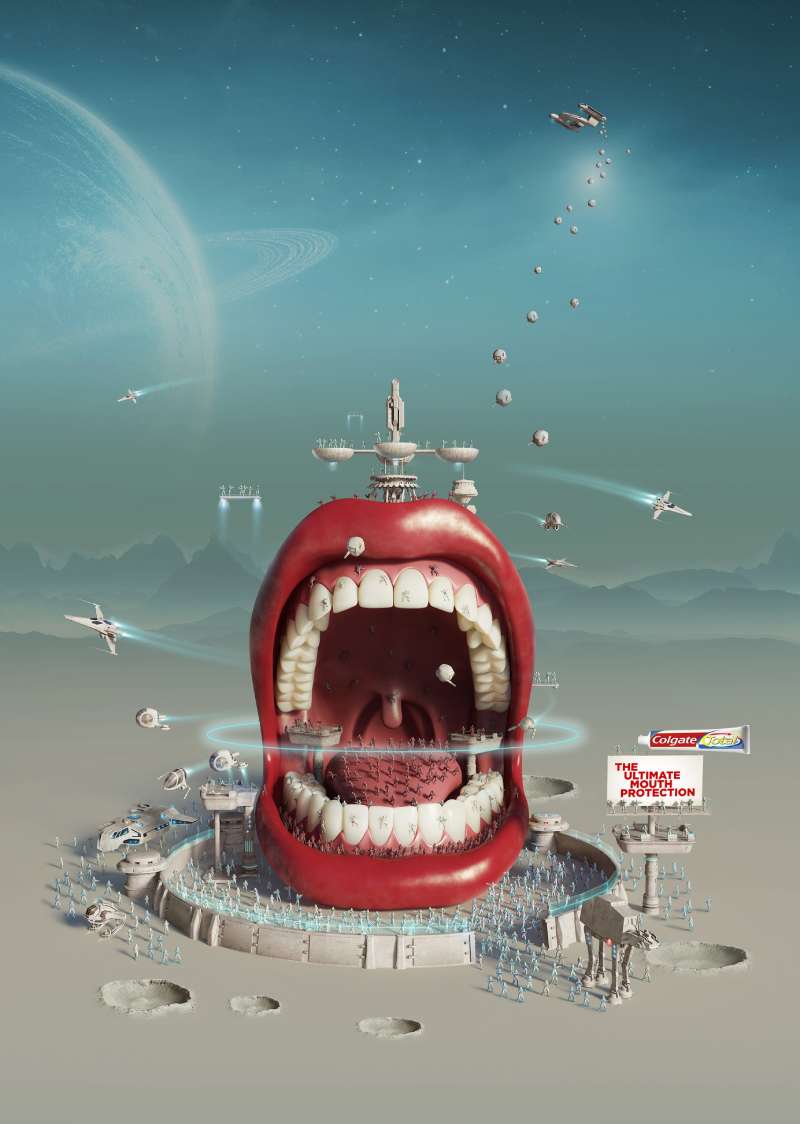
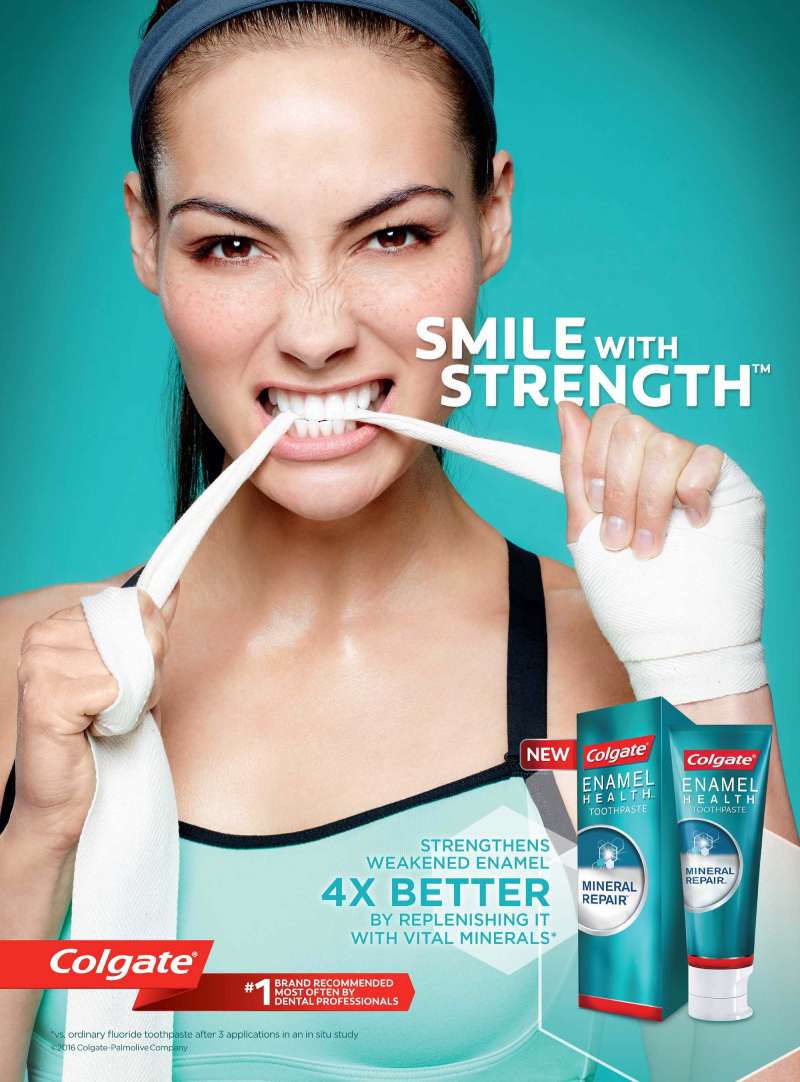
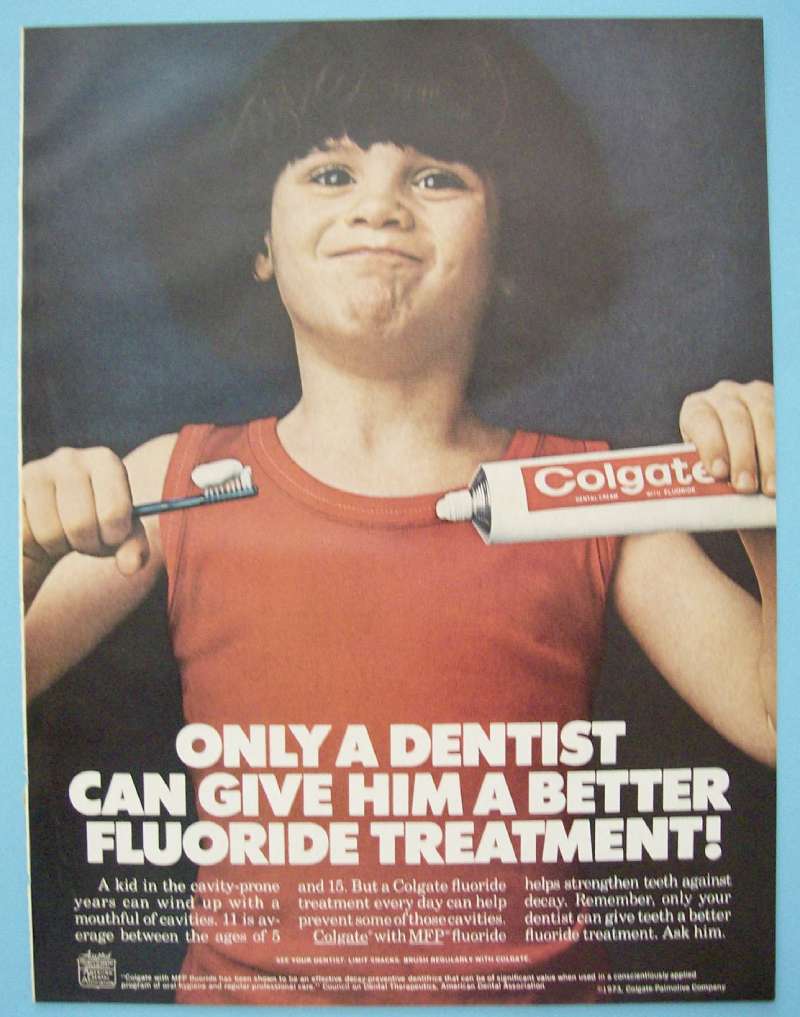
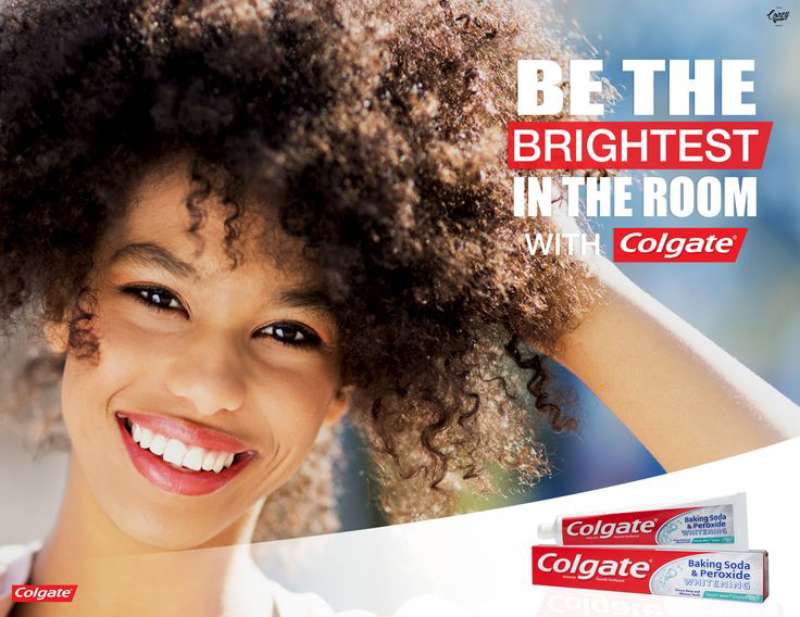
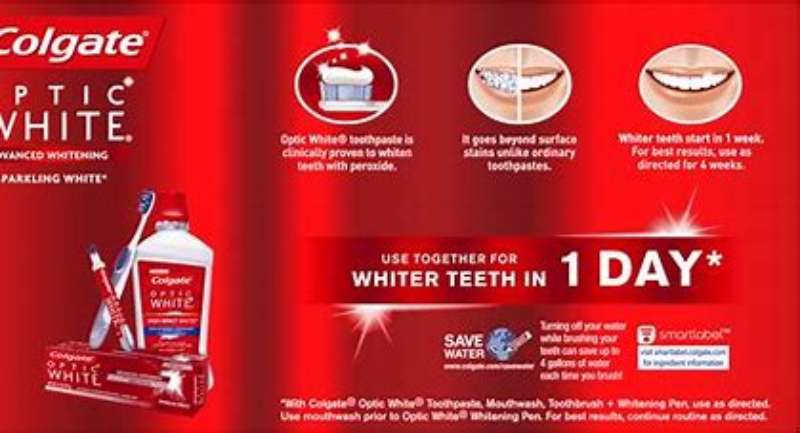
Colgate print ads use a red field, a white italic wordmark and one dominant object, usually a mouth or a tube. Copy sits below the optical center in short blocks. The palette rarely exceeds red, white and a single skin tone, which keeps reproduction consistent across markets and paper stocks.
Red carries the whole system. It signals urgency and appetite in the study of how color affects perception, and it separates Colgate from the blue-green convention that most oral care brands still use.
The wordmark is a custom italic typeface with no serifs, tightened at the terminals and set at a single weight. Colgate almost never runs a second weight in the same layout.
Layouts are built on one idea per page. The single point that pulls the eye first is the mouth, the tube or the object standing in for the mouth, and everything else recedes.
Latin American work from Y&R Chile and Y&R Brazil pushed this further between 2010 and 2012. The Toothpick and Smile executions dropped the product entirely and let the empty area around the subject carry the joke.
Where the Logo Sits
The brand mark lands bottom-right in roughly every Colgate press ad since the 1960s. Placement never competes with the image, which is why the red block reads as a signature rather than a headline.
How Do Colgate TV Commercials Differ From Its Print Ads?
Colgate TV commercials add a narrative arc that print cannot carry, and they delay the product to the final frame. Print states the benefit immediately. Film builds a situation, holds it for 20 seconds, then resolves it with the tube. The palette also loosens on screen, since red no longer has to do the identification work alone.
Every Drop Counts (2016, Y&R Peru, 30 seconds). A man brushes, the tap runs, and strangers appear at the faucet to drink and wash. The pack shows up in the last two seconds.
Close Talker (2019, Red Fuse Communications, directed by Bryan Buckley, 30 seconds). Luke Wilson works an office at conversational distance minus about ten inches. The comedy is entirely blocking and lens choice.
The Boxer (2024, Soho Square Bangkok, long form). A boxing count intercut with a single mother’s daily arithmetic. No product until the endframe.
Not Every Smile Starts as a Smile (2025, VML France, 30 seconds, director Peter Funch). Toddlers scream, parents persist, and the film ends on brushing advice rather than a claim.
Long-form narrative construction is what separates the award-winning Colgate film work from the press work, and it is also why the two rarely share a layout.
How Has Colgate Advertising Evolved Since 1896?
Colgate advertising moved through 5 phases: product education in magazines, single-sponsor television, ingredient proof, global message consolidation, and purpose-led film. Each shift was driven by a competitive threat, most notably Crest and fluoride in 1955.
| Period | Strategic shift | Representative work |
|---|---|---|
| 1890s-1940s | Explain the tube, then the dual benefit | Ribbon Dental Cream press ads |
| 1950s | Own an entertainment property outright | The Colgate Comedy Hour |
| 1960s-1980s | Name the ingredient, sell the proof | Gardol, MFP, “ring of confidence” |
| 1990s-2000s | One agency, one message worldwide | Y&R global consolidation, Colgate Total launch |
| 2010s-2020s | Behavior change and lived reality | Every Drop Counts, The Boxer |
The identity followed the same curve. The 1897 mark stacked “Colgate’s” over “Ribbon Dental Cream” in a custom rounded sans on red, the 1963 version added “plus MFP” on a blue trapezoid, and the 2018 mark reduced everything to the wordmark plus an arc smile.
Anyone tracing how brand marks change across decades will find Colgate unusually disciplined. Six revisions in 130 years, none of them a full rebuild.
Collectors treat the 1910-1940 press work as a category of its own, and it sits comfortably alongside other advertising from the pre-television era in terms of copy length and engraving quality.
Which Agencies Created Colgate Advertising?
Young & Rubicam won all of Colgate-Palmolive’s worldwide advertising in November 1995, in what the company called the largest agency consolidation in industry history. WPP later built Red Fuse Communications as a dedicated unit, and VML now leads global creative.
| Agency | Role | Notable work |
|---|---|---|
| Young & Rubicam | Global agency of record from 1995 | Every Drop Counts, Latin American press campaigns |
| Red Fuse Communications | WPP unit serving only Colgate-Palmolive | Close Talker, Super Bowl LIII |
| VMLY&R / VML | Global creative after the WPP mergers | Smile Strong, Not Every Smile Starts as a Smile |
| Soho Square Bangkok | Thai market creative | The Boxer |
| Wavemaker | Media planning and buying | Thailand and United Kingdom campaigns |
Y&R Sao Paulo produced the Smile print campaign in Brazil in September 2012, with Rui Branquinho as chief creative director and Lucio Cunha shooting.
Y&R Chile produced Toothpick, Tongue and Finger in May 2010, a three-execution press run built entirely on substitution.
VML France in Paris created the 2025 UK campaign under chief creative officer Dimitri Guerassimov, with Wavemaker planning the media.
The relationship has not always been smooth. Adweek reported in 2011 that Colgate-Palmolive had grown frustrated with Y&R’s output and had started shifting work to sister shops inside WPP.
What Can Designers Learn From Colgate Ads?
Colgate press advertising teaches 5 transferable rules: restrict the palette, isolate one object, keep the wordmark at one weight, place copy below the optical center, and let the mouth do the work the logo would otherwise do.
- Limit the set of colors you commit to to red, white and one flesh tone
- Isolate a single object and cut everything that competes with it
- Set the tagline in the brand face at one weight, never two
- Push the logo to the bottom-right corner and leave it there across every execution
- Build tonal separation between elements rather than adding a second accent color
- Delay the product in film, state it immediately in print
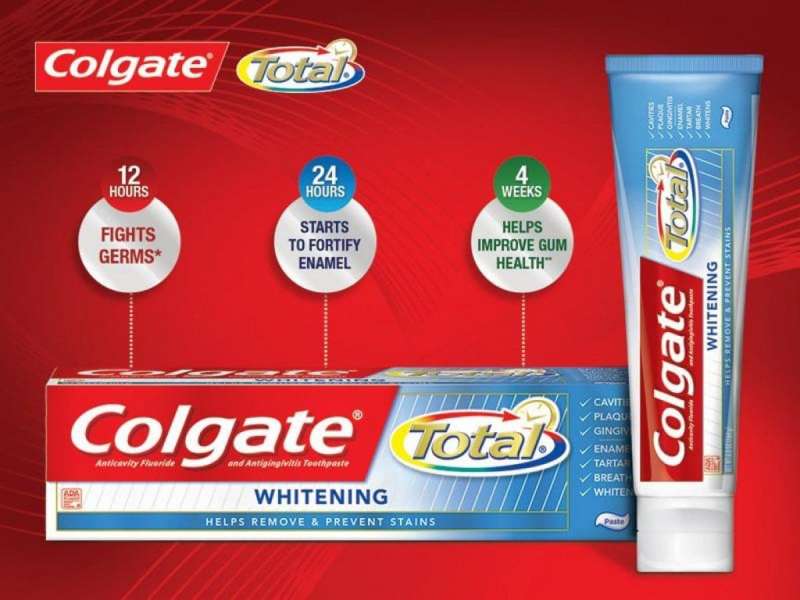
The pattern also holds in how the physical pack is designed. Shelf and page use the same red field, so a Colgate ad photographed in a supermarket aisle still reads as a Colgate ad.
Category convention is worth breaking on purpose. Colgate sits in a blue-and-mint aisle and refuses to join it, which is the cheapest form of controlling what a viewer notices first available to any brand.
How Do Colgate Ads Compare to Listerine Ads?
Colgate and Listerine sell adjacent products with opposite creative logic. Colgate advertises the outcome, a smile, and keeps the product out of frame until the end. Listerine advertises the sensation, the sting, and keeps the bottle visible throughout.
Palette follows strategy. Colgate holds red and white across 130 years, while Listerine advertising runs amber, blue and green depending on the variant, which forces the layout to carry brand recognition through the bottle silhouette instead of color.
Copy length splits them too. Colgate press ads since 1960 average under 15 words of body copy. Listerine still runs argument-driven layouts with a claim and a proof point.
The comparison sharpens against Procter and Gamble’s advertising output, where Crest built its entire 1955 launch on the fluoride claim and pushed Colgate out of the number one toothpaste position in the United States for the first time.
Household brands under the same parent company follow different rules again. Tide advertising leans on stain demonstration, a device Colgate has never used, because plaque does not photograph.
What Makes Colgate Advertising Work?
Consistency at the identity level, licence at the execution level.
The red field, the italic wordmark and the smile have not meaningfully changed since the tube was invented, which is why a Thai boxing film and a British bathroom tantrum both read as the same brand.
Everything above that layer is negotiable. Copy length, medium, tone, market and casting all shift, and the work wins awards precisely where it abandons category convention.
Kantar ranks Colgate as the only consumer goods brand bought by more than half the world’s households, at 55.9% penetration. That number is the argument. Discipline in the identity buys freedom in the advertising.
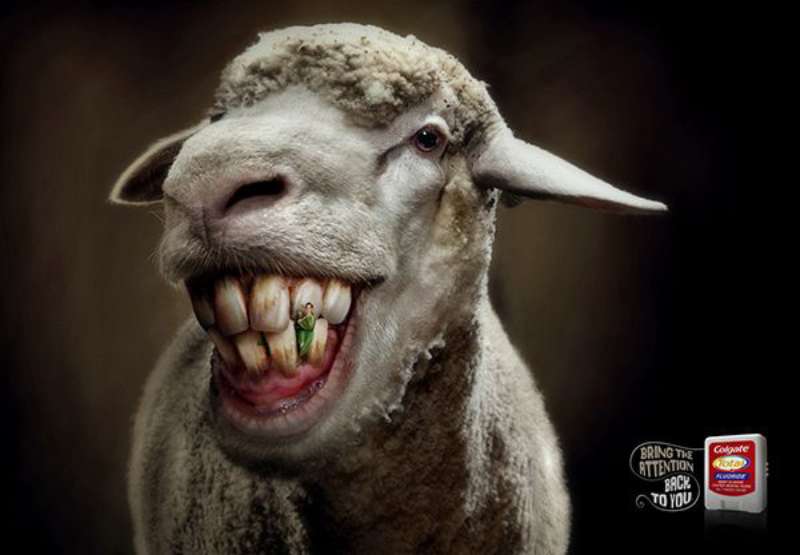
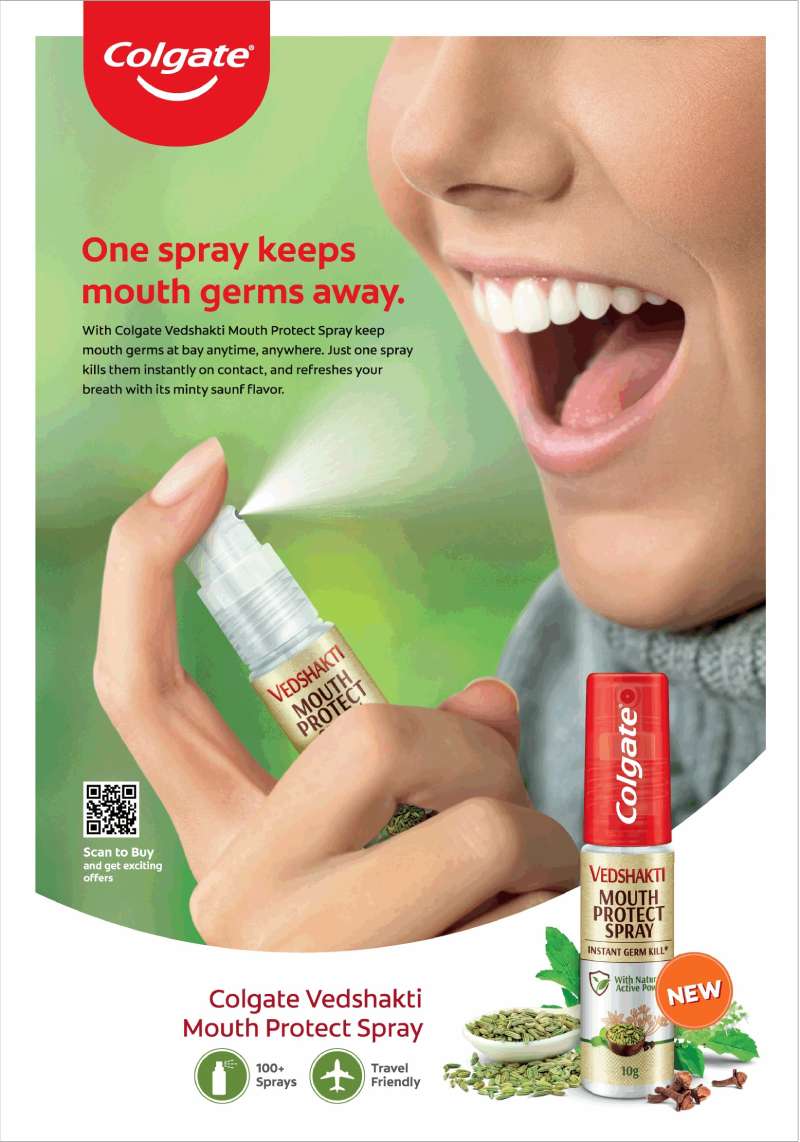
Colgate Ads Examples




FAQ on Colgate Ads
Has Colgate ever run a Super Bowl ad?
Twice. Colgate debuted at Super Bowl 50 in 2016 with the Every Drop Counts water conservation spot, then returned at Super Bowl LIII in 2019 for the Colgate Total relaunch.
Sister brand Speed Stick ran in 2013.
What is Colgate’s most famous slogan?
“It cleans your breath while it cleans your teeth”, in use from the 1940s, is still the most quoted line.
“The Colgate ring of confidence” followed in the 1960s. Later taglines include “Do More For Your Mouth” and “Smile Strong”.
What typeface is used in Colgate advertising?
The wordmark is custom italic lettering rather than a licensable font, which is why nobody sells it.
Headlines usually sit in a plain sans at a single weight, keeping the lettering a brand commits to subordinate to the image.
Do Colgate ads still appear in magazines?
Yes. The 2025 UK campaign ran in family magazines and on posters near homes and stations.
Trade placements continue in titles like Dental Economics. Print sits well behind digital video in spend, but it has not stopped.
Which directors and photographers have shot Colgate ads?
Bryan Buckley of Hungry Man directed the 2019 Super Bowl spot. Peter Funch shot the 2025 UK campaign as both photographer and director.
Lucio Cunha photographed the 2012 Brazilian Smile press campaign for Y&R Sao Paulo.
Has Colgate advertising ever been criticized?
The 2016 water conservation spot drew the sharpest response.
HuffPost calculated that the roughly $5 million media buy equalled about 4.2 million gallons of bottled water, which struck readers as awkward for an ad about waste.
Which country produces the most award-winning Colgate ads?
Thailand and Latin America outperform the United States.
Soho Square Bangkok took Cannes Lions, a D&AD Pencil and a Clio for The Boxer in 2024, and Y&R Peru originated the water conservation film that later reached the Super Bowl.
Does Colgate use dentists in its advertising?
Dentist endorsement is the oldest device in the brand’s copy.
The 1873 Antiseptic Dental Powder label already claimed recommendation by leading dentists, and Colgate still runs a professional program aimed at the dental community.
How does Colgate advertise toothbrushes compared with toothpaste?
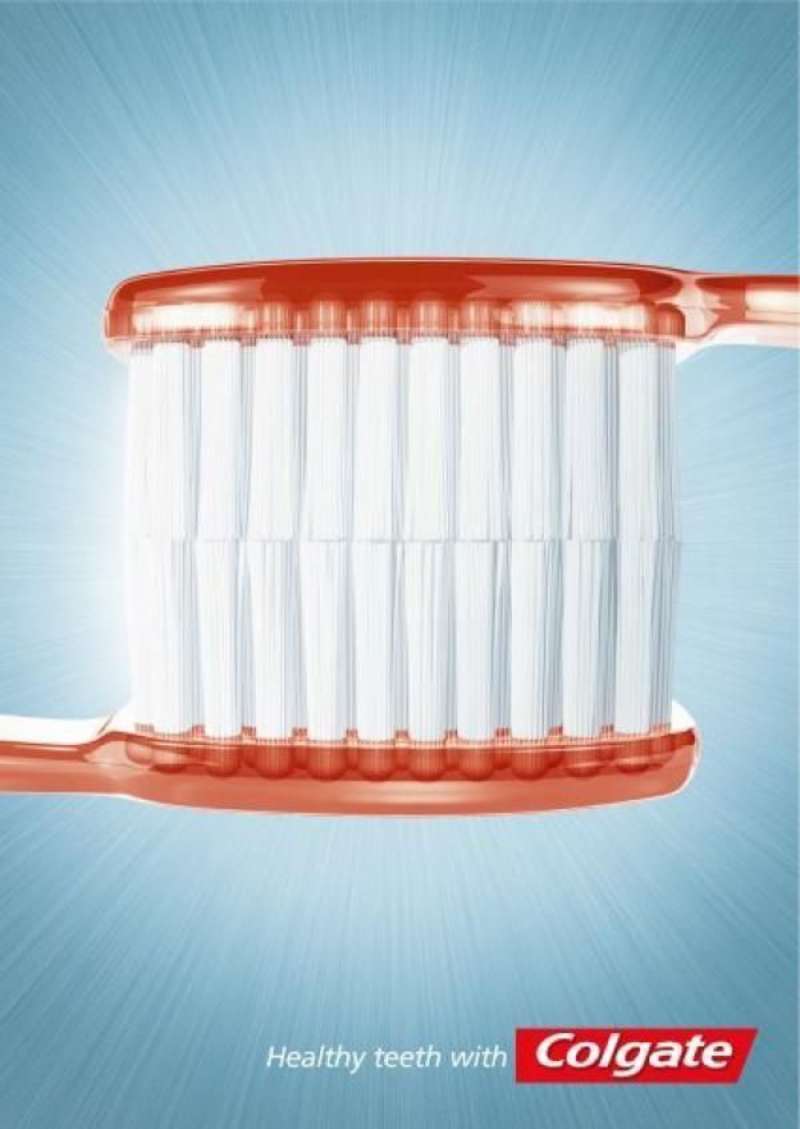
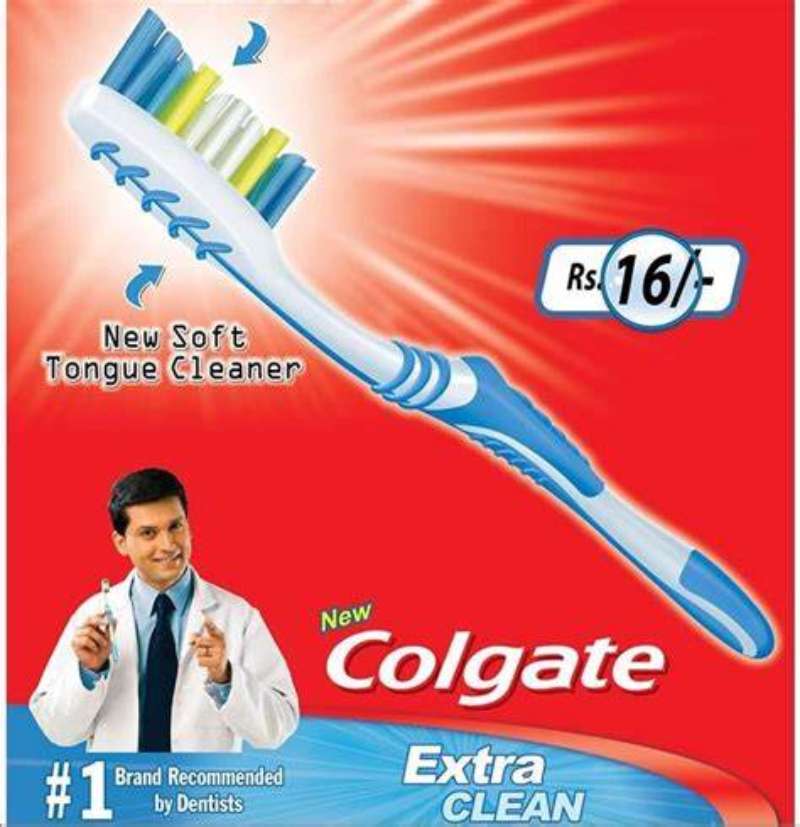
Toothpaste ads sell an outcome, usually a smile. Toothbrush ads sell form, showing bristle geometry and handle shape in close-up.
Colgate held 41.4% global toothpaste share and 32.2% toothbrush share at the end of 2024.
Can Colgate ads be used in a design portfolio?
For study and teaching, Duke’s Hartman Center permits reproduction of its archived ads with a citation.
Commercial or published use is different. Duke does not hold copyright on most of them, so permission has to come from the rights holder.
Conclusion
Colgate ads reward close reading more than most oral care work does. Strip away the product claims and what remains is a print ad layout built on one object, one palette and almost no copy.
That restraint is deliberate. Colgate-Palmolive has spent 130 years teaching the eye to find a red rectangle in a supermarket aisle, so recognition does the selling before a single word is read.
The creative teams change constantly. Y&R Peru, Red Fuse Communications, Soho Square Bangkok and VML have all worked inside the same narrow visual rules and still produced wildly different films.
Copy that approach. Lock the identity, then let the art direction go somewhere uncomfortable, which is where the awards have consistently been.

Renowned for his expertise in logo design and visual branding, Bogdan has developed a multitude of logos for various clients.
His skills extend to creating posters, vector illustrations, business cards, and brochures. Additionally, Bogdan's UI kits were featured on marketplaces like Visual Hierarchy and UI8.
He also wrote in the past years on sites like Design Your Way, WebDesignerDepot, WPDean, Designmodo, Speckyboy, Slider Revolution, and more.
- Canva vs PowerPoint: Which Is Better for Presentations? - 22 September 2026
- How to Install Fonts on Mac (Step-by-Step Guide) - 20 September 2026
- From Mockup to Code: How AI-Augmented Development Speeds Up the Design Handoff - 19 September 2026

Bogdan Sandu is a seasoned designer who has been designing websites since 2008. Renowned for his expertise in logo design and visual branding, Bogdan has developed a multitude of logos for various clients. His skills extend to creating posters, vector illustrations, business cards, and brochures. Additionally, Bogdan's UI kits were featured on marketplaces like Visual Hierarchy and UI8. He also wrote in the past years on sites like Design Your Way, WebDesignerDepot, WPDean, Designmodo, Speckyboy, Slider Revolution, and more.
You Might Also Like