The five box styles that give custom printing the most to work with are pillow boxes, rigid boxes, display boxes, gable boxes and sleeve boxes. Each combines a printable surface with a shape that gets noticed, which is why they come up so often for brands that want packaging to do some of the selling. The box is the first thing a buyer touches, so its style shapes brand image, customer experience and, in the end, sales. This guide covers what each style offers, which products suit it and which printing methods it takes well. For the wider picture, see how small businesses compete with big brands through packaging design.
Why does the choice of product box matter for custom printing?
Printing only pays off when the box underneath it supports the design. A strong print on a flimsy or awkward box still feels cheap, while a well-chosen structure gives your logo, colors and product information room to work. Presentation also has a cost side: this look at the hidden cost of poor packaging shows what weak boxes do to a brand. In a crowded market, the combination of a distinctive box and a clean print is what separates your product from the next one on the shelf. The five styles below each solve that problem in a different way.
What are pillow boxes and what do they suit?
Printed pillow packaging boxes have a curved, sleek shape and flat panels that are easy to print on. The flat sides take a logo, a design and text easily, so the box works like a small billboard for jewelry, cosmetics or apparel.
For a modern, clean look, pillow boxes can be printed with digital, offset or UV printing. Color choice matters too. Pastels suggest calm and earth tones suit cosmetics, while bold combinations such as black and gold fit perfume and formal wear. Pillow boxes are a sensible first step if you want a distinctive shape without the cost of premium construction, and the next style goes the other way.
Why are rigid boxes used for premium products?
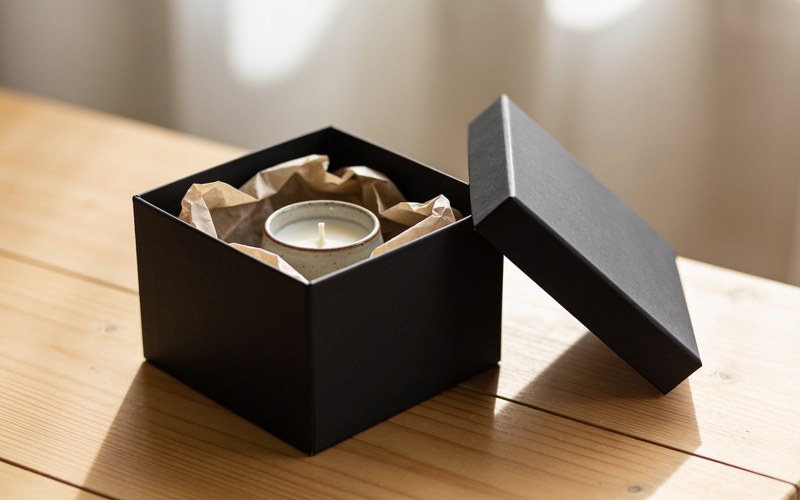
Rigid boxes feel premium on their own. Their sturdy construction signals quality and raises the perceived value of whatever sits inside, and printed graphics push that further. The smooth surface takes crisp, vibrant reproduction of logos and product information.
That is why rigid boxes suit high-end goods and gifts, where the unboxing moment is part of the product. They also leave a memorable impression that encourages repeat purchases. Premium chocolate makers commonly pack gift sets in printed rigid boxes, and the same approach can add a touch of luxury to ordinary items in almost any industry.
How do display boxes help products sell at the counter?
Display boxes sit on counters, shelves and points of sale, so they are seen by shoppers at the moment of decision. Their large, flat panels, such as the side walls or a raised lid, act as a billboard for the brand message.
That unobstructed space is ideal for high-resolution images, logos, product information and taglines. Brand colors printed across the panels make the box easier to spot and raise the perceived value of small and medium-sized products such as candy, cosmetics and small electronics.
What makes gable boxes stand out on a shelf?
Gable boxes have a house-like shape with a handle-style top, which draws attention on retail shelves and during shipping. Retail, gift and luxury brands pick them when the design needs a lot of surface for detailed artwork.
They are made from kraft, cardboard or paperboard, so the surfaces are smooth enough for full-color, high-resolution prints and a range of finishes. The material takes digital, offset and flexographic printing, which gives you options at different budgets and run sizes.
Why are sleeve boxes a cost-efficient printing option?
A sleeve box has a simple two-part design: an inner tray, often plain, and an outer sleeve that carries the print. The sleeve is a large blank canvas, ideal for high-resolution digital or offset printing of detailed graphics, product information and messaging without distortion.
The cost benefit is the best part. You can use a generic, inexpensive inner tray and put the printing budget into a striking sleeve, which still feels premium. For seasonal or limited-edition runs only the sleeve needs updating, not the whole package.
How do the five printed box styles compare?
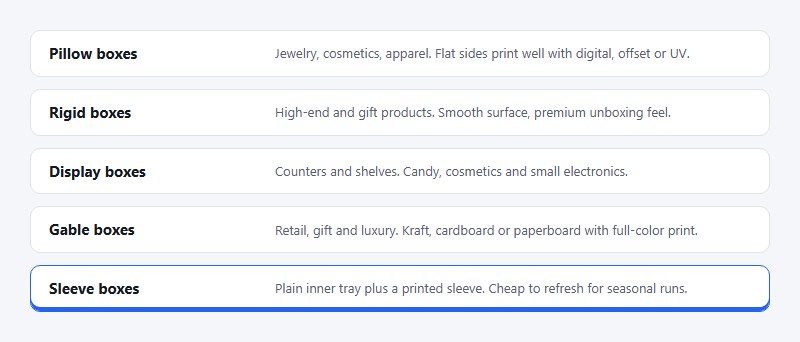
The graphic gives the short version. Pillow boxes suit light, small items. Rigid boxes carry the premium feel. Display boxes sell at the counter, gable boxes win attention on shelves and in transit, and sleeve boxes stretch a small printing budget the furthest. Pick based on where the buyer will meet the box first: a shelf, a counter, a doorstep or a gift table.
What should you check before ordering printed boxes?
Four things decide most box projects. First, fit: the box must hold the product securely, because a good print on a loose box still looks careless. Second, the print method against your run size, since digital, offset, flexographic and UV printing suit different quantities and finishes. Third, the surface: kraft, cardboard and paperboard take ink differently from the smooth wrap of a rigid box. Fourth, how often the design will change. If you expect seasonal updates, a sleeve box limits what you have to reprint. Ask for a printed sample before approving a full run.
Frequently asked questions
Which printing methods work best on custom boxes?
Digital, offset and UV printing suit pillow and sleeve boxes, and digital, offset and flexographic printing suit gable boxes. Rigid boxes take crisp, vibrant graphics well because of their smooth surface.
Which box style is the cheapest to refresh?
Sleeve boxes. Only the printed outer sleeve changes between seasons or limited editions, while the plain inner tray stays the same.
Which box style suits gifts?
Rigid boxes are the usual choice for gifts because the construction and surface feel luxurious and improve the unboxing experience. Gable boxes are another option for gift and luxury brands.
Which printed box should you choose first?
Match the box to your product and your buyer, then design the print for that surface. If you are unsure, order a short run of sleeve or pillow boxes first, check how the print looks in your customers’ hands and move to rigid boxes once the brand is established.

Renowned for his expertise in logo design and visual branding, Bogdan has developed a multitude of logos for various clients.
His skills extend to creating posters, vector illustrations, business cards, and brochures. Additionally, Bogdan's UI kits were featured on marketplaces like Visual Hierarchy and UI8.
He also wrote in the past years on sites like Design Your Way, WebDesignerDepot, WPDean, Designmodo, Speckyboy, Slider Revolution, and more.

Bogdan Sandu is a seasoned designer who has been designing websites since 2008. Renowned for his expertise in logo design and visual branding, Bogdan has developed a multitude of logos for various clients. His skills extend to creating posters, vector illustrations, business cards, and brochures. Additionally, Bogdan's UI kits were featured on marketplaces like Visual Hierarchy and UI8. He also wrote in the past years on sites like Design Your Way, WebDesignerDepot, WPDean, Designmodo, Speckyboy, Slider Revolution, and more.
You Might Also Like