Small businesses can compete with big brands on packaging by being more focused, not by spending more. A consistent look, a good unboxing moment, materials that protect the product and a few personal touches make a small brand look professional at a modest cost. Packaging works as branding, customer service and marketing at once, so every decision about it carries weight beyond the box itself.
Why does product packaging matter for small businesses?
Because packaging is often the first physical contact a customer has with your brand, and it shapes whether the product feels trustworthy. A handmade soap brand in a custom-printed kraft box looks premium and still stays affordable. Good packaging helps a small business:
- Build trust and credibility
- Reflect the quality of the product
- Make a memorable first impression
- Stand apart from competitors
- Look professional
For a deeper look at what goes wrong when this is neglected, read about the hidden cost of poor packaging. The first practical lever is branding.
How can custom packaging build your brand?
By making your name, colors and style recognizable at a glance. Big brands invest heavily in packaging, and small ecommerce brands can get similar results by working with a custom packaging manufacturer to produce professional boxes. A few choices carry most of the effect:
- Custom prints. A logo, name and tagline on the box make it recognizable.
- Brand colors and fonts. Using the same ones across all packaging helps customers connect with the brand.
- Unique shapes or styles. Even small changes, such as pillow boxes or gable boxes, catch the eye.
- Eco-friendly branding. Recyclable materials can become part of your story for customers who care about the environment.
A small coffee shop, for example, can print its logo on cups. If you are choosing formats, our guide to custom printed boxes for brands compares styles. Once the box looks right, attention moves to what happens when it is opened.
How do you improve the unboxing experience on a budget?
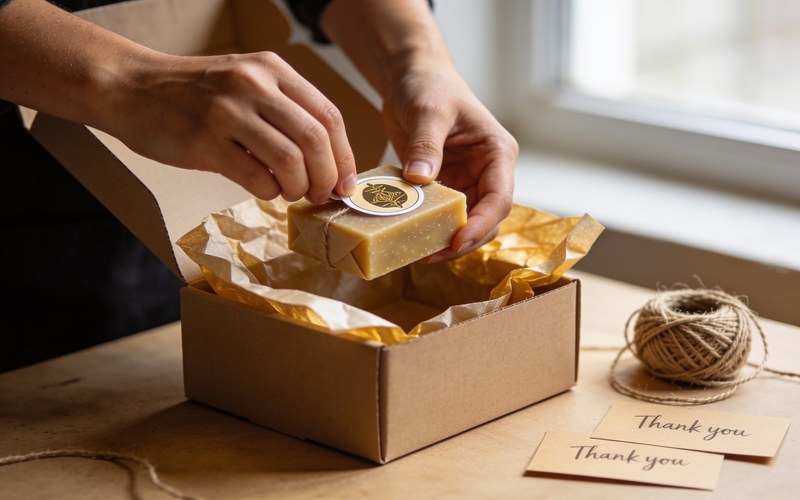
Focus on a few touches that customers notice immediately, since big brands put effort into unboxing and small ones can match it without luxury prices. Useful ones are:
- Easy-to-open design. Custom boxes that open simply make customers happy.
- Protective inserts. They keep items secure and organized.
- Personal touches like thank-you cards, custom stickers or tissue paper make customers feel valued.
- A stylish presentation encourages customers to share their unboxing on social media.
A jewelry business, for instance, can pack pieces in pillow boxes with branded tissue and a small thank-you card for a premium feel without high costs. Stickers are especially flexible, and the piece on stickers as a design tool shows how far they go.
How can packaging help a small business stand out?
By being distinctive where competitors look alike. Packaging helps small businesses differentiate in several ways:
- Creative designs. Bright colors or a minimal style can separate your product from the shelf next to it.
- Seasonal packaging. Limited-edition boxes for holidays or events make products feel special.
- Material choices. Kraft paper, corrugated boxes or plain cardboard can position your brand as the eco-friendly option.
Differentiation matters because customers remember what looks different. Colors do much of the work here, and the basics of color psychology in brand identity help you choose ones that match your message.
How do you protect products and keep packaging sustainable?
Choose packaging that is strong enough for shipping and made from materials you can defend. Big brands use sturdy packaging to protect products, and a small business can do the same. Sustainable packaging options include:
- Corrugated boxes. Lightweight yet strong enough for shipping.
- Food-safe coatings. They protect food items while keeping packaging eco-friendly.
- Soy-based and water-based inks. Lower-impact options for printing.
- Right-size packaging. It prevents movement during shipping and reduces material waste.
A small candle business, for example, can ship in corrugated boxes lined with recycled crinkle paper, which keeps products safe and adds a sustainable touch. For ideas that suit a specific product, see these candle packaging designs.
What are cost-effective packaging strategies for small businesses?
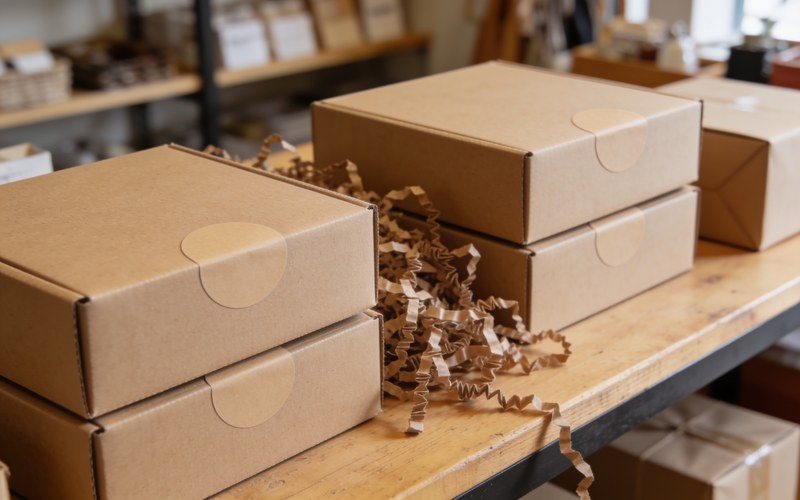
Budget is the main challenge for most small businesses, and a few approaches cut cost without cutting quality. The table compares the common ones.
| Strategy | How it saves money | Example |
| Minimalist design | One-color prints cost less and still look modern | Single-color logo on a plain box |
| Stickers and labels | Plain or kraft boxes with branded stickers replace full-color printing | Subscription boxes in plain mailers with branded stickers |
| Multi-purpose packaging | One box style across several products lowers per-unit cost | A single mailer size for a product range |
Spend more on packaging for best-sellers and premium products, and keep the rest simple.
How does packaging work as small business marketing?
It advertises for you every time a package leaves the building or lands on a doorstep. The main benefits are:
- Free advertising. Customers carrying branded packaging spread awareness.
- Social media exposure. Eye-catching packaging encourages customers to share photos.
- Interactive features such as QR codes can prompt social sharing.
- Brand consistency. Matching packaging across all products builds a stronger identity.
Custom gable boxes for a bakery, for example, work as both packaging and marketing.
What creative small business packaging ideas work well?
The ideas below make packaging feel high-end without much extra spend:
- Eco-friendly kraft packaging: affordable, recyclable and popular.
- Custom inserts: protect fragile products and add a premium look.
- Minimalist black-and-white packaging: elegant and cost-effective.
- Thank-you notes and stickers as a personal touch.
- Seasonal or limited-edition designs that create excitement.
- Transparent windows that show the product without opening the box.
- Reusable packaging that customers keep using.
- Branded tissue paper or ribbons for a customized finish.
What packaging tips help small businesses stay competitive?
- Keep designs simple, since clean packaging often looks more professional.
- Know your target audience and design for them.
- Put your values on the box, for example your eco-friendly approach.
- Make sure the packaging is practical and protective.
- Invest more in best-sellers and premium lines.
- Choose colors that reflect the brand’s message.
- Ask customers for feedback and adjust the design over time.
Frequently asked questions
How much should a small business spend on packaging?
There is no fixed share, but it should match the product’s price and positioning. A premium product justifies richer packaging, while a low-cost item may only need a branded sticker.
Is eco-friendly packaging worth it for a small brand?
Often yes, because many customers support businesses that care about the environment and recyclable materials can become part of the story. Make sure the claim is accurate and that the packaging still protects the product.
What is the cheapest way to make packaging look branded?
Plain kraft or mailer boxes with branded stickers, tissue paper or a printed card. This gives a consistent look without a full print run.
What should a small business do first about packaging?
Look at your current package the way a customer does and note what feels generic or unprotected. Then fix one thing, such as adding branded tissue or a sticker, and compare customer response over the next few orders. Small, steady improvements add up to a brand that holds its own next to bigger names.

Renowned for his expertise in logo design and visual branding, Bogdan has developed a multitude of logos for various clients.
His skills extend to creating posters, vector illustrations, business cards, and brochures. Additionally, Bogdan's UI kits were featured on marketplaces like Visual Hierarchy and UI8.
He also wrote in the past years on sites like Design Your Way, WebDesignerDepot, WPDean, Designmodo, Speckyboy, Slider Revolution, and more.
- How to Design Marketing Materials That People Actually Keep - 27 November 2026
- Behind the Logo: What Font Does Starbucks Use? - 26 November 2026
- Visual Hierarchy in Short Videos: How to Guide Attention Across a Sequence - 26 November 2026

Bogdan Sandu is a seasoned designer who has been designing websites since 2008. Renowned for his expertise in logo design and visual branding, Bogdan has developed a multitude of logos for various clients. His skills extend to creating posters, vector illustrations, business cards, and brochures. Additionally, Bogdan's UI kits were featured on marketplaces like Visual Hierarchy and UI8. He also wrote in the past years on sites like Design Your Way, WebDesignerDepot, WPDean, Designmodo, Speckyboy, Slider Revolution, and more.
You Might Also Like