Rudolf Dassler once joked that the long tail on the leaping cat cost him extra in advertising space. That instinct for what a mark costs and what it earns runs through 78 years of Puma ads.
Puma has worked with 13 named agencies since 1948, from Droga5 to adam&eveDDB, across print, TV, cinema and out-of-home.
This page covers the campaigns by name, with the agency, year and market behind every one.
You also get the design layer most galleries skip:
- Layout, copy-to-image ratio and where the copy block sits
- The custom all-caps wordmark and the Formstrip
- Palette rules, from Puma Red to the black and white base
Puma has advertised since 1948, the year Rudolf Dassler founded the company in Herzogenaurach, Germany. The work runs through 13 named agencies and 8 flagship campaigns, from the 1978 Lite Rider running ads to Go Wild in 2025.
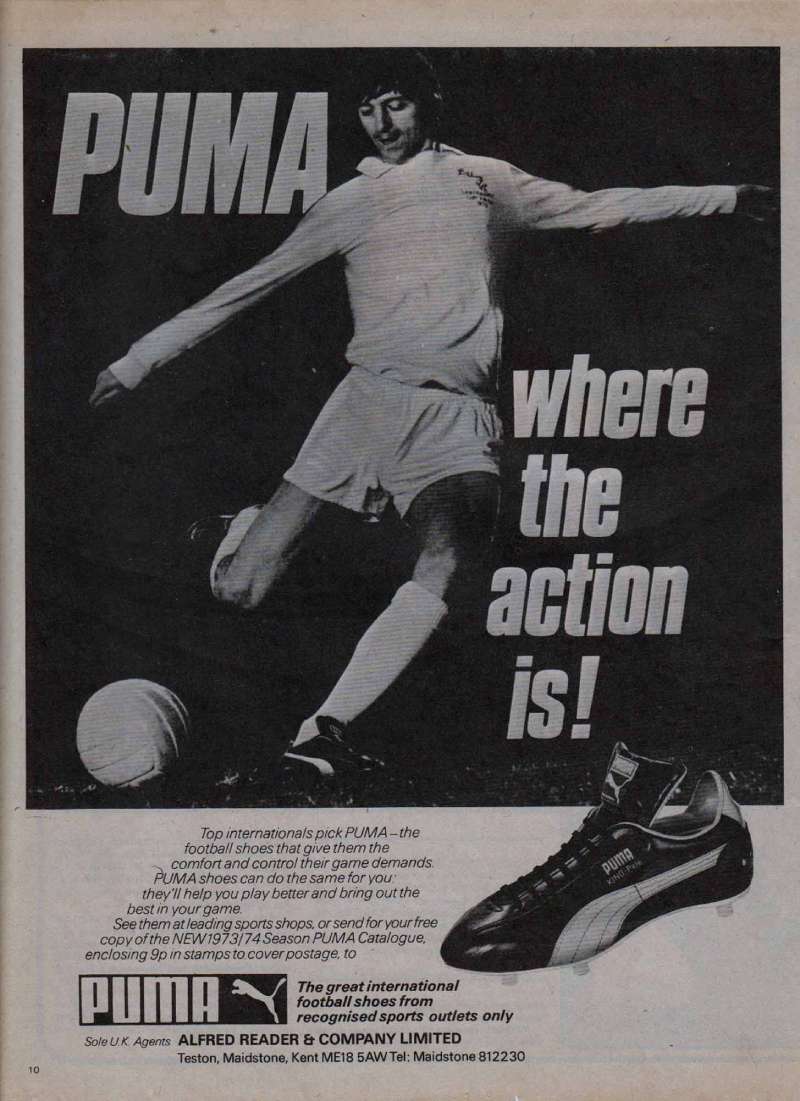
Puma print work leans on one product silhouette, a black and white base with a single red accent, and short copy set in the brand’s custom all-caps wordmark.
This page covers those campaigns by name, with the agency, year and market behind each one, plus the layout, typeface and color decisions that hold them together.
Puma Advertising at a Glance
Puma has run paid advertising since the 1950s and works today with adam&eveDDB on creative and Havas International on media. Its best known campaigns are After Hours Athlete, Forever Faster and Go Wild. The visual signature combines the leaping cat, the Formstrip and Puma Red.
| Attribute | Value |
|---|---|
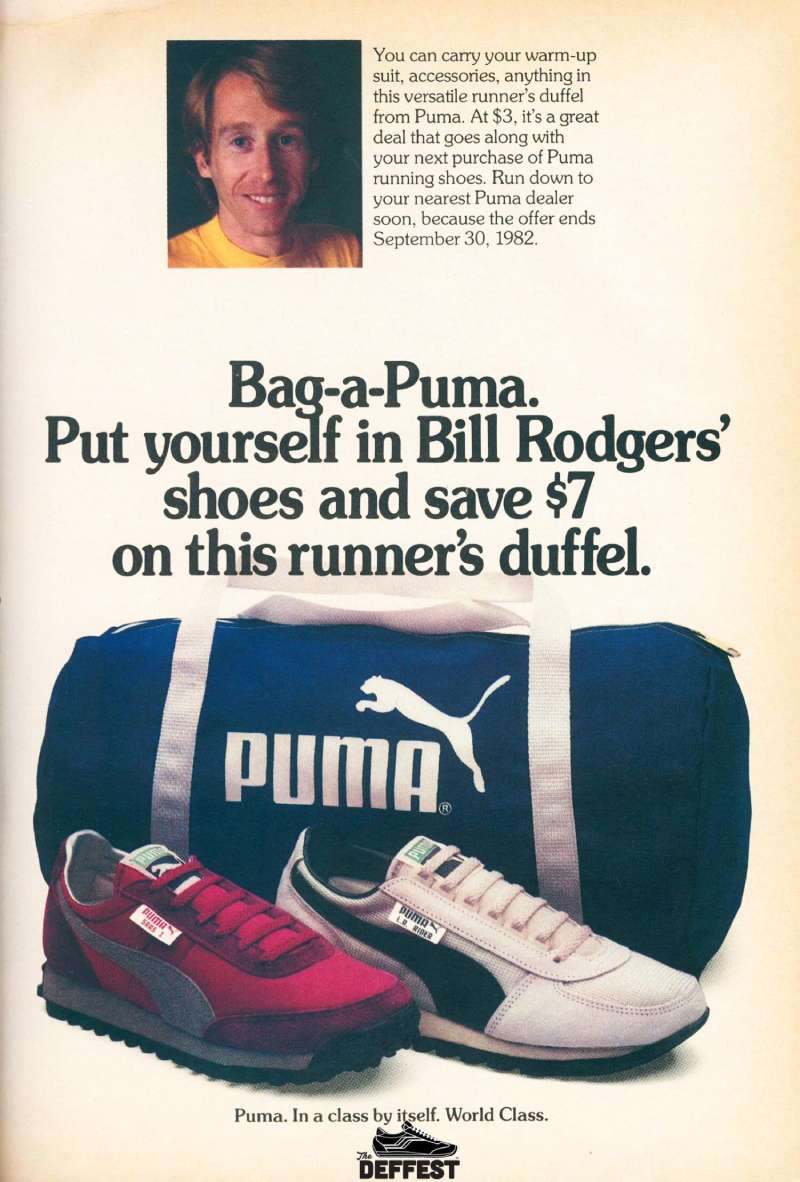
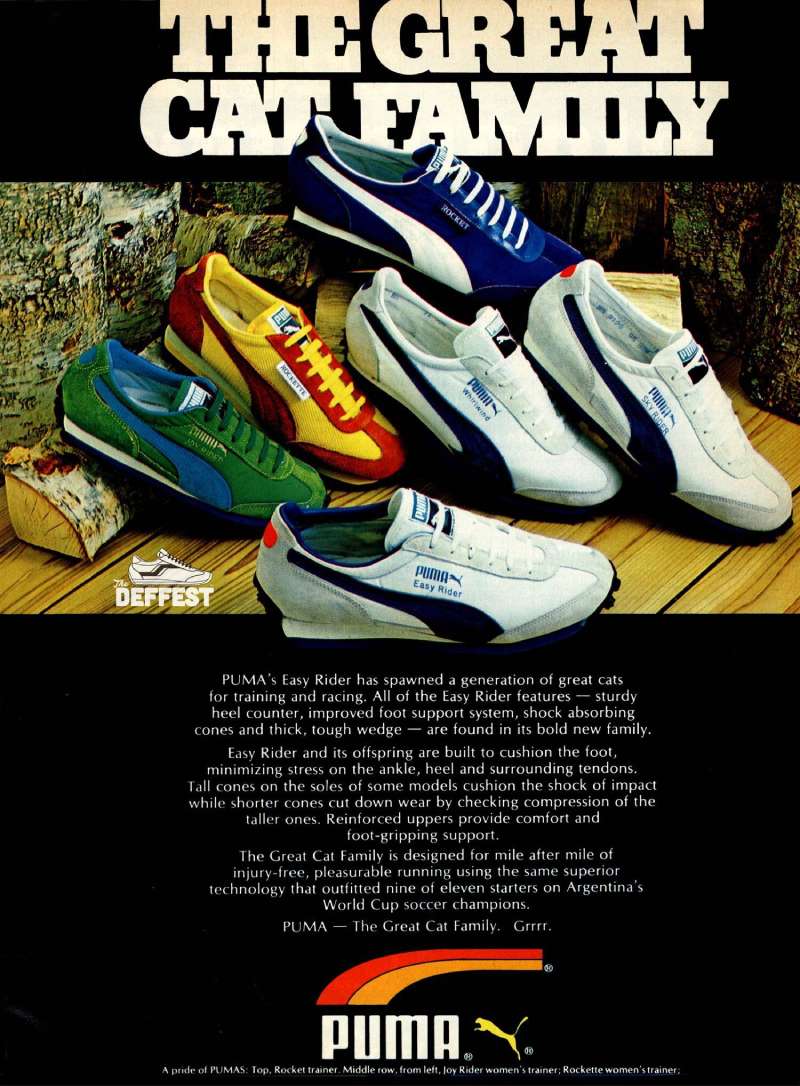
| First major campaign | Lite Rider and Easy Rider running print ads, 1978, United States |
| Lead agencies | Droga5 (2009-2012), JWT New York (2014-2016), MATTE (2024), adam&eveDDB (2024-present), Havas International (media, 2019-present) |
| Best-known taglines | “Love=Football” (2010), “Forever Faster” (2014), “She Moves Us” (2021), “See The Game Like We Do” (2024), “Go Wild” (2025) |
| Primary media | Print, TV, cinema, out-of-home, social film, 3D billboards |
| Awards | Cannes Lions Film Craft Grand Prix 2011, D&AD Wood Pencil 2011, Cannes Lions Bronze 2026 |
| Visual signature | Black base, Puma Red #E42524, custom all-caps wordmark, leaping cat top right |
| Marketing spend | EUR 1.74 billion in marketing and retail expenses in 2024, or 19.7% of sales (Puma Annual Report 2024) |
Which Puma Ad Campaigns Are the Most Famous?
Puma’s most famous campaigns are Love=Football (2010), After Hours Athlete (2010), Forever Faster (2014), Fenty x Puma (2015), She Moves Us (2021), See The Game Like We Do (2024) and Go Wild (2025). Seven agencies produced them across print, film and out-of-home.
Love=Football and the Hardchorus (2009-2011)

The Hardchorus film reached 5 million views in two weeks and pulled comments from fans in 121 countries, according to the campaign’s own effectiveness write-up.
Droga5 built the idea around a Valentine’s Day that fell on a match day, filming hard-core supporters singing Savage Garden’s “Truly Madly Deeply” in a UK version and Umberto Tozzi’s “Ti Amo” for Italy.
- Design device: a football replaces a word in the lockup, so the equation reads as an image rather than a slogan
- Extension: Syrup produced the Journey of Football TV spot for Puma Teamsport in the same platform
After Hours Athlete (2010-2011)

Droga5 New York created After Hours Athlete for Puma Social, a footwear line aimed at people who play pool, darts and ping pong rather than marathons.
Copy device: flat, deadpan lines with no exclamation marks. Two ran everywhere: “It’s a lot more fun to take a 5am cab than a 5am run” and “Give 75 per cent.”
Craft: Ringan Ledwidge directed, Ben Seresin shot it handheld, and Nash Kato of Urge Overkill read the voiceover.
The film took the Film Craft Grand Prix at Cannes Lions 2011 and a Wood Pencil at D&AD the same year.
Forever Faster (2014-2016)

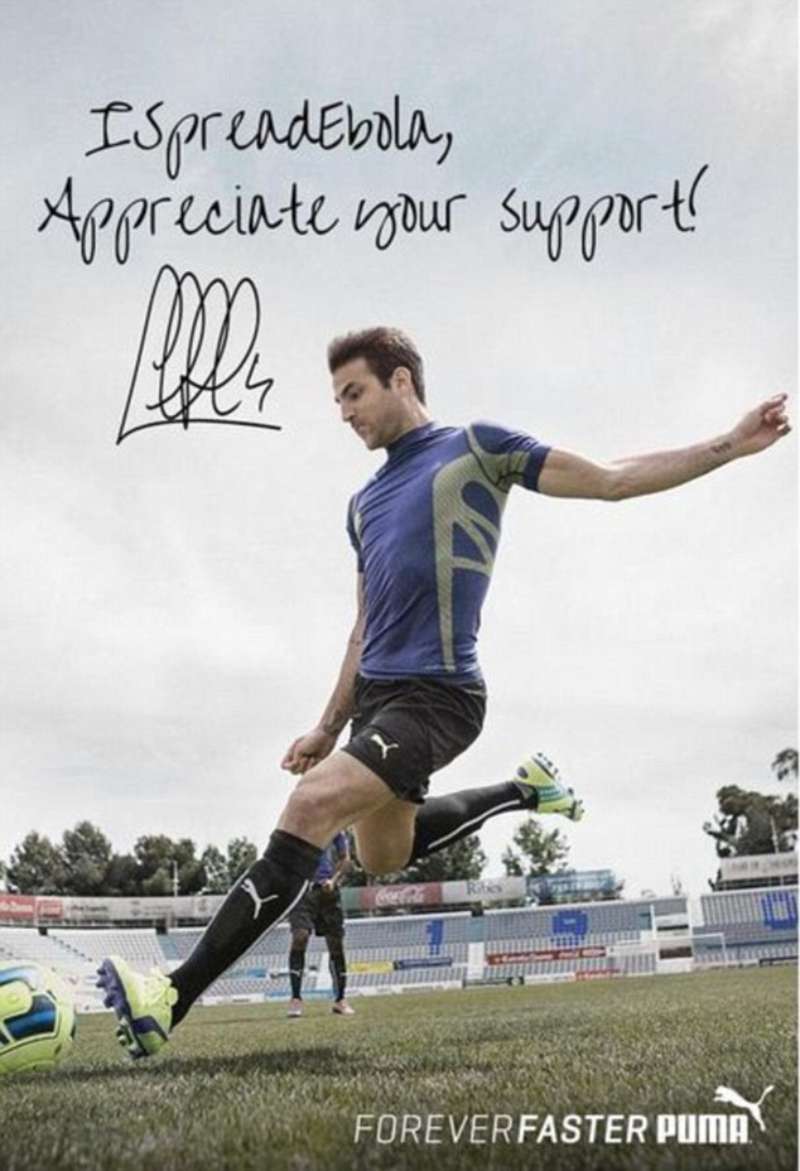
Forever Faster launched in August 2014 as a global repositioning after Puma drifted into lifestyle and lost performance credibility. Three agencies split the work.
| Agency | Role | Output |
|---|---|---|
| JWT New York | Creative and TV | “Calling All Troublemakers” hero spot, print series |
| DigitasLBi Boston | Digital and social | “Faster Delivery” films, Twitter Flock to Unlock |
| ZenithOptimedia | Media | Global buy running into Rio 2016 |
The cast set the tone: Usain Bolt, Mario Balotelli, Sergio Aguero, Marta, Rickie Fowler, Lexi Thompson and Scuderia Ferrari. Troublemakers, not role models.
Fenty x Puma With Rihanna (2015-2018)
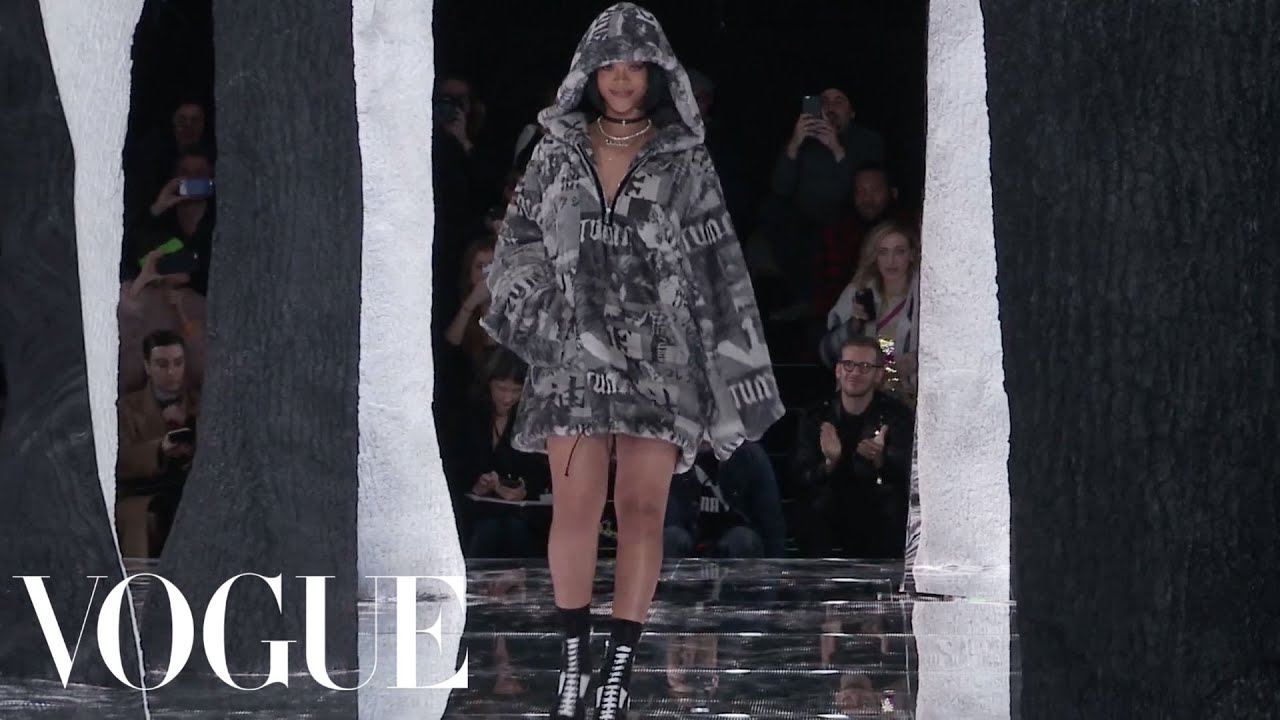
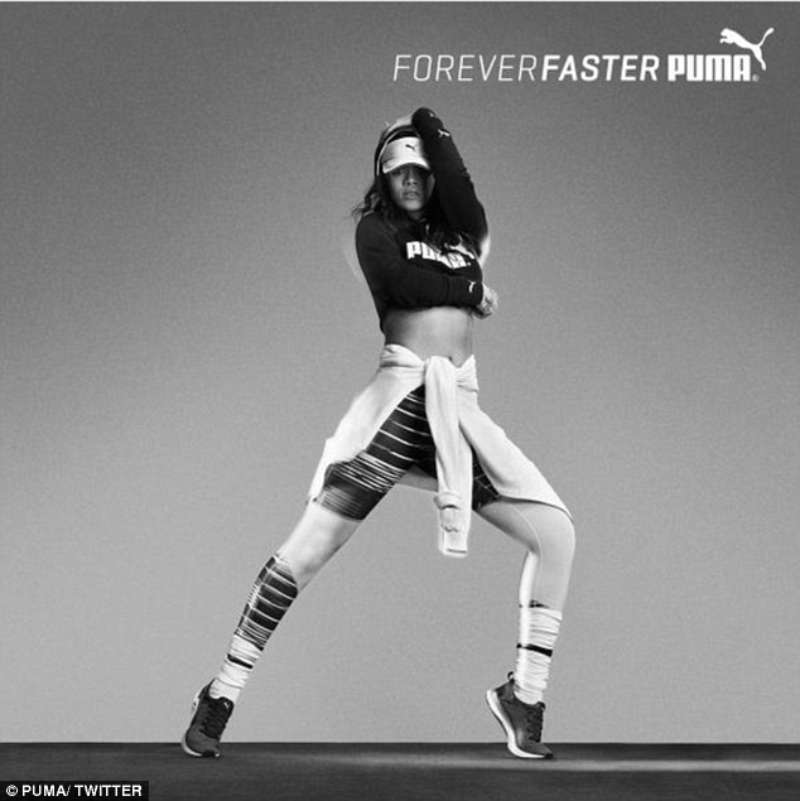
Rihanna joined as creative director of Puma Women in December 2014. The Creeper, a platformed Suede, dropped in September 2015 and sold out online in three hours.
Footwear News named it Shoe of the Year in 2016, the third sneaker ever to take the award.
- Puma’s Q4 2015 sales hit roughly $975 million, a 17.1% jump on Q4 2014 (Bloomberg)
- Footwear was the strongest category in Q3 2016 with sales up 16.4%, largely on the Fenty line (Footwear News)
She Moves Us (2021-2023)

Dua Lipa fronted it. That was the whole media strategy for the first six weeks.
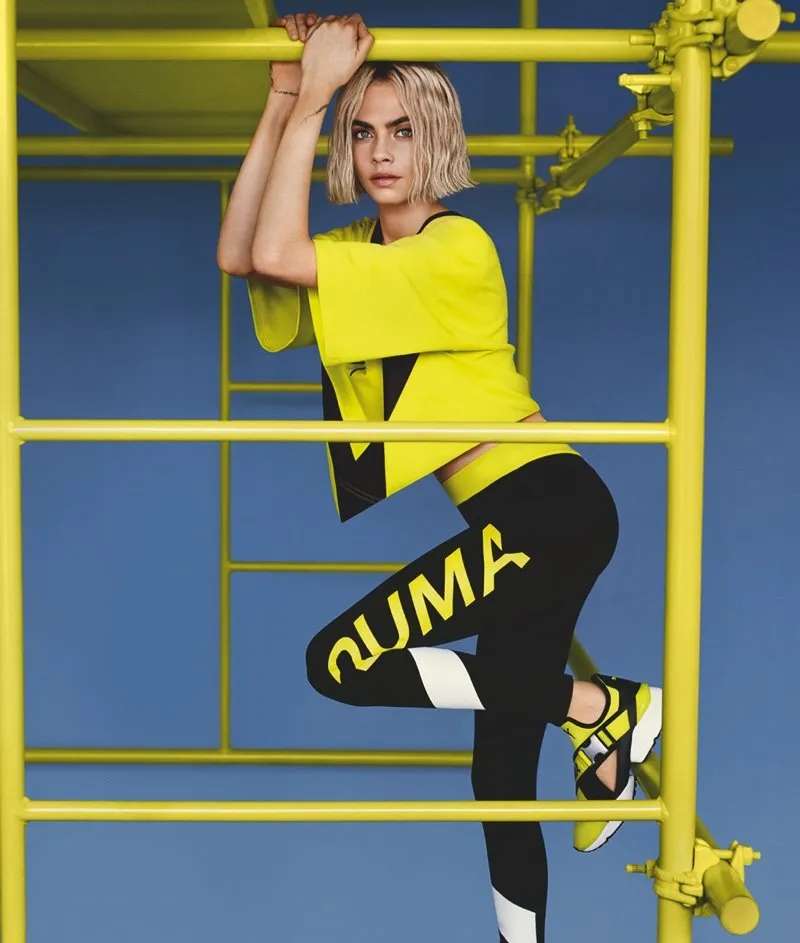
Puma launched She Moves Us on 1 March 2021 as a year-long content platform rather than a burst, running talks, interviews and films with Winnie Harlow, Cara Delevingne, Skylar Diggins-Smith, Nikita Parris and Yaroslava Mahuchikh alongside a partnership with the global fund Women Win.
Production credit: Sweet Rickey produced the 2022 film, directed by Yaara Sumeruk, cut to Lipa’s single “Electricity”.
Forever. Faster. See The Game Like We Do (2024)
MATTE, a New York creative company, built Puma’s first worldwide brand campaign in a decade, launched April 2024 with Mondo Duplantis, Karsten Warholm, Neymar Jr and Breanna Stewart.
Havas International handled the media, including a 3D activation at Piccadilly Circus and city takeovers timed to the Paris Olympics.
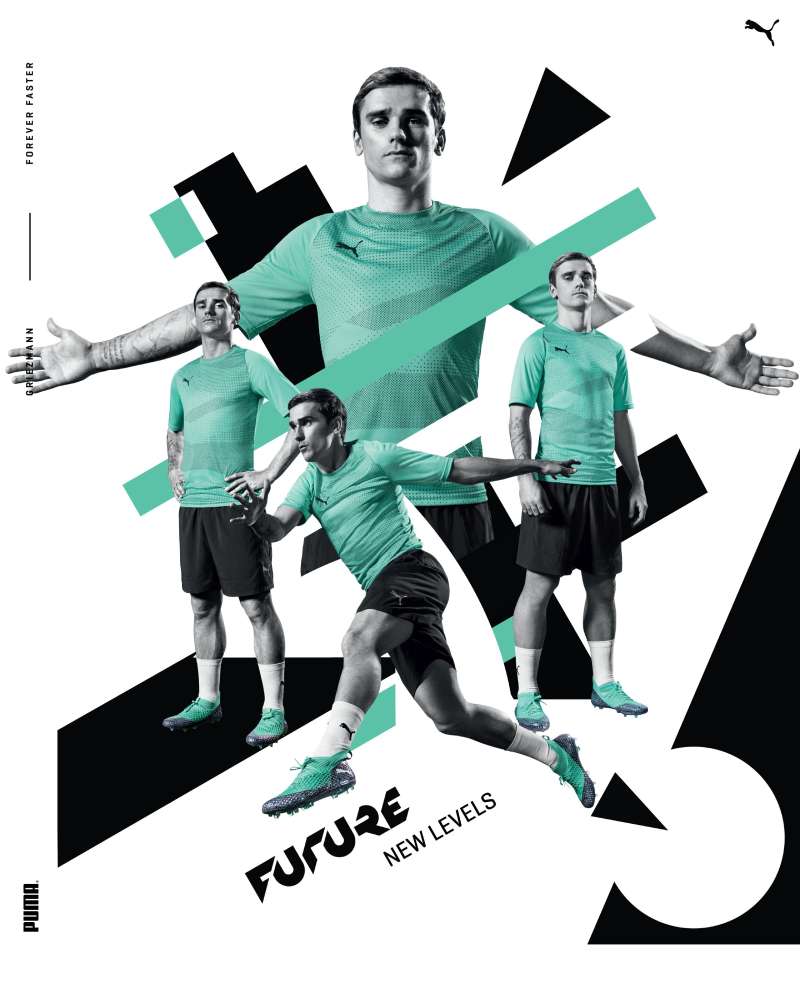
A second chapter landed in June 2024 for UEFA Euro 2024 and Copa America, featuring Jack Grealish, Antoine Griezmann, Christian Pulisic and Javier “Chicharito” Hernandez.
Go Wild (2025-2026)

adam&eveDDB won Puma’s global creative account in December 2024 and delivered Go Wild on 20 March 2025, with the account run from the agency’s London and Berlin offices.
The hero film drops athletes entirely and follows everyday runners, who morph into animals mid-stride as the runner’s high hits.
Puma raised marketing investment 40% against 2024 to support it. In pre-tests the ad ranked in the top 5% for effectiveness in the US, China and Germany, and the top 25% globally.
System1 scored the spot 4.3 stars in China and 4.1 in India, where it hit 100% Brand Fluency, their measure of fast brand recognition.
Puma Print Ads From the 1970s and 1980s
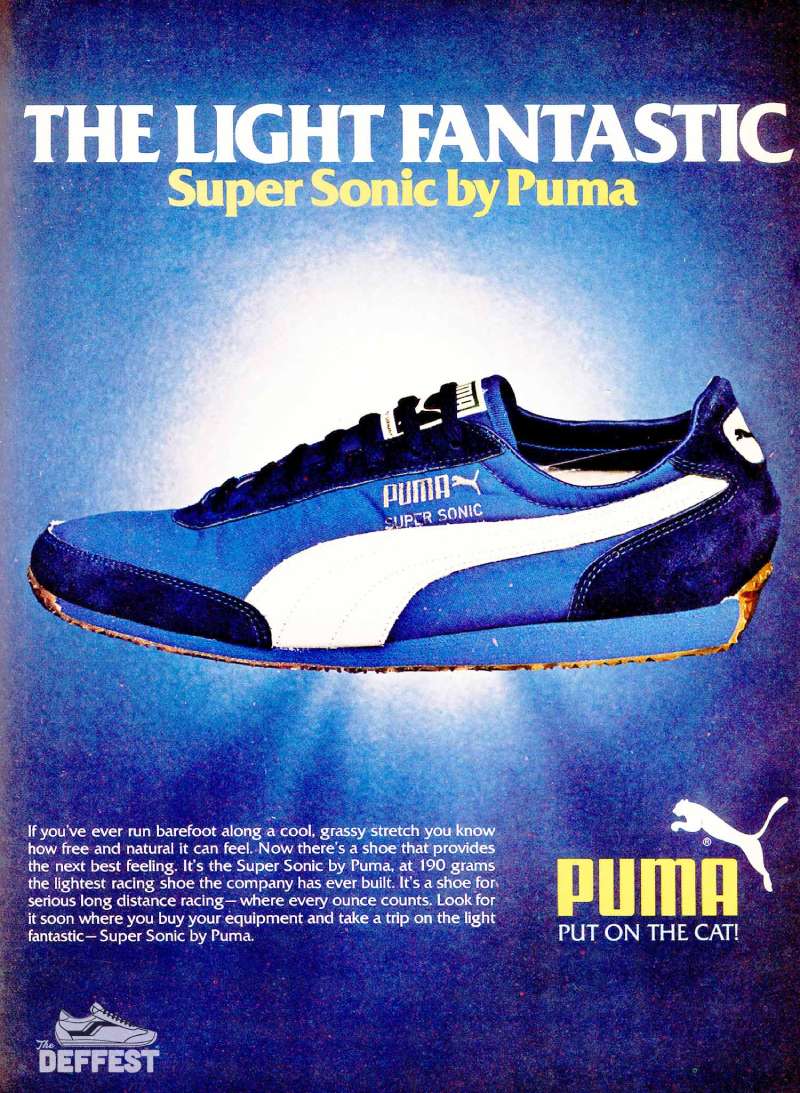
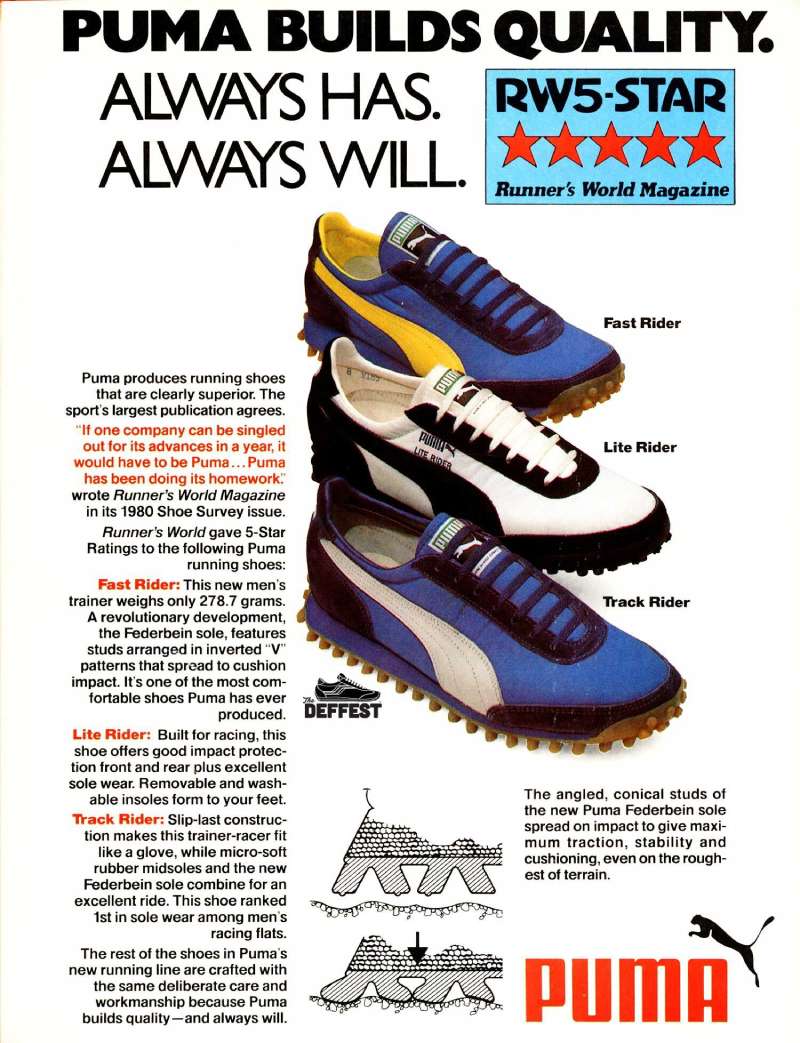
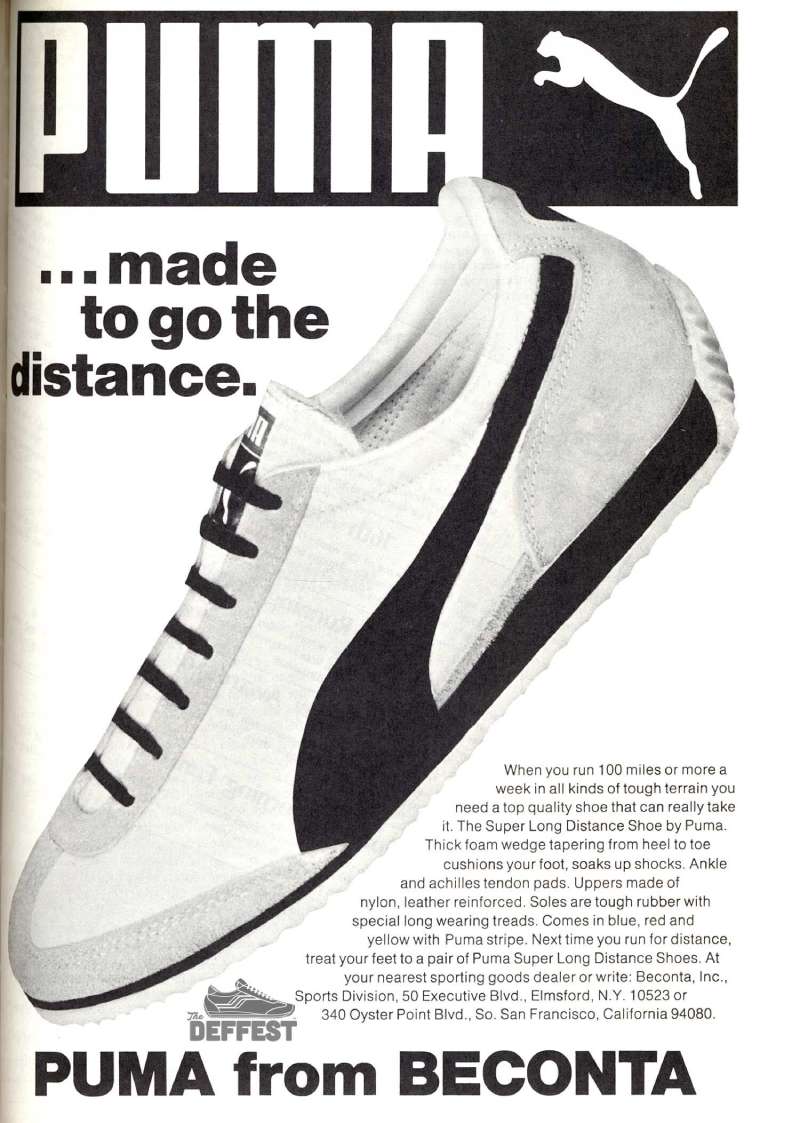
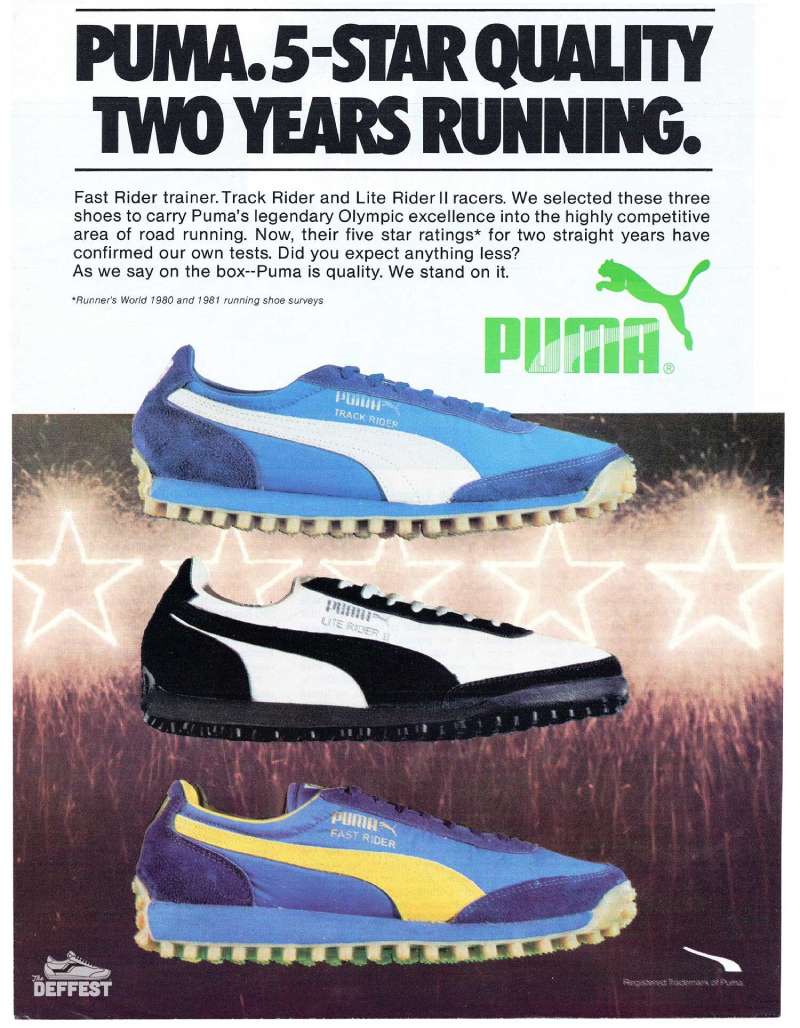
Running: the 1978 Lite Rider ads ran long body copy about angled sole cones and race-day stress, set beside a single shoe on white.
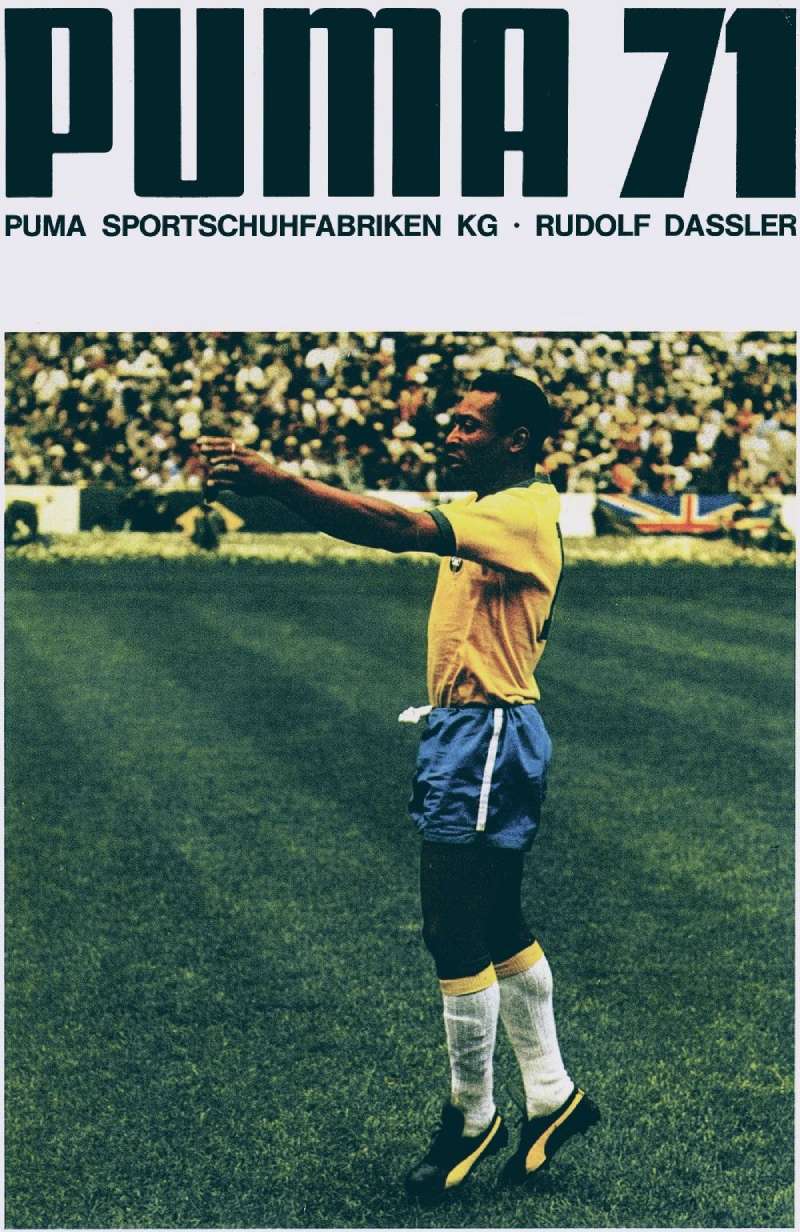
Football: Manchester United boot ads circulated around 1978, and the Pele-endorsed King range carried its own print series from 1971.
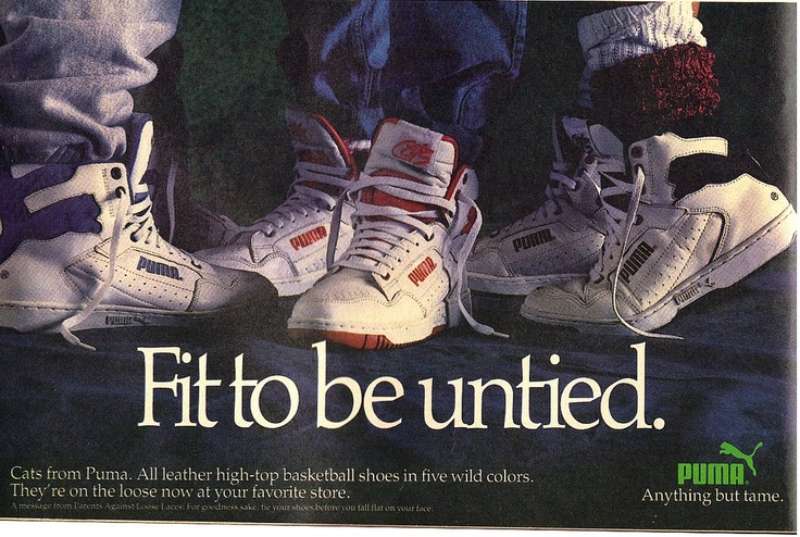
Tennis: Boris Becker signed in 1984, and the Becker Ace shoe ads ran through the late 1980s with Martina Navratilova, who joined in 1983.
How Do Puma Print Ads Work Visually?
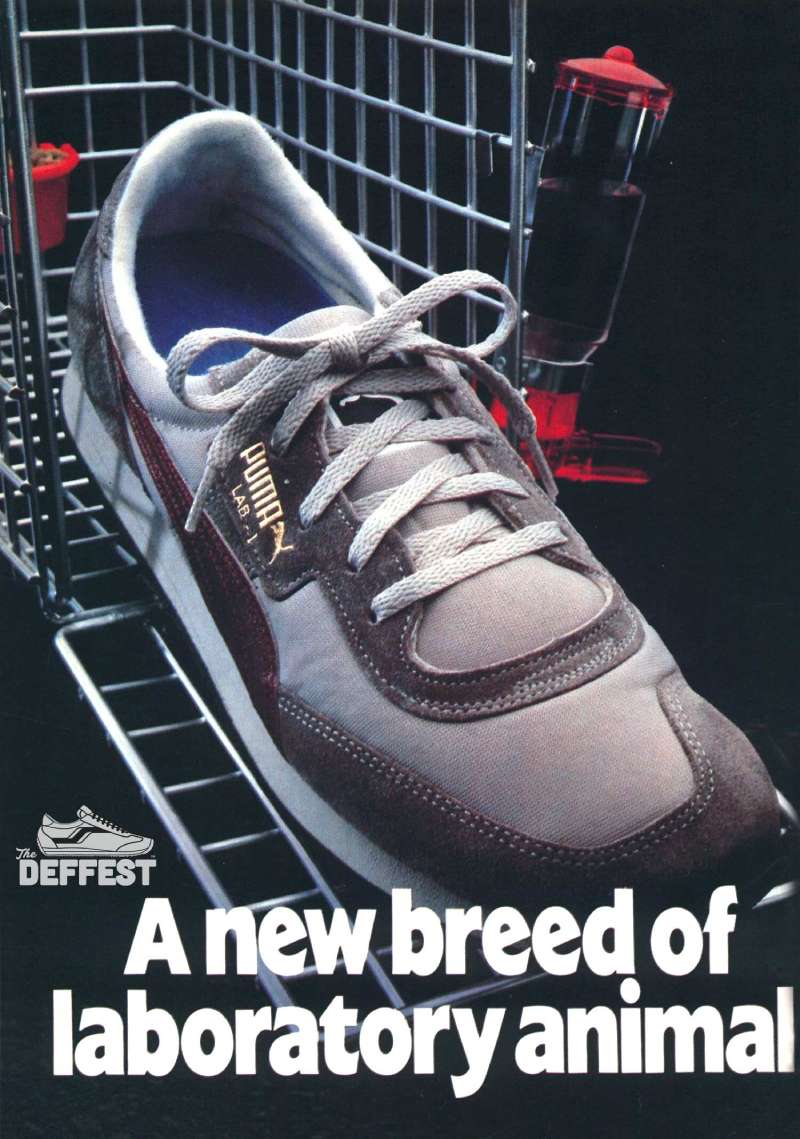
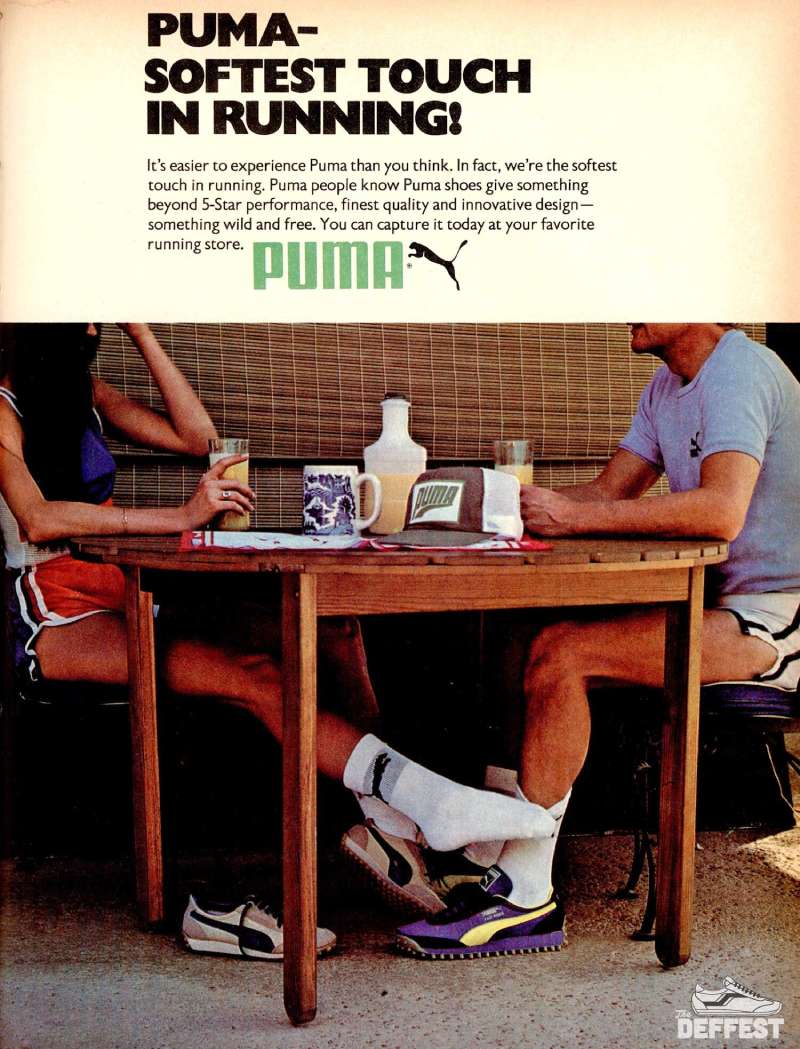
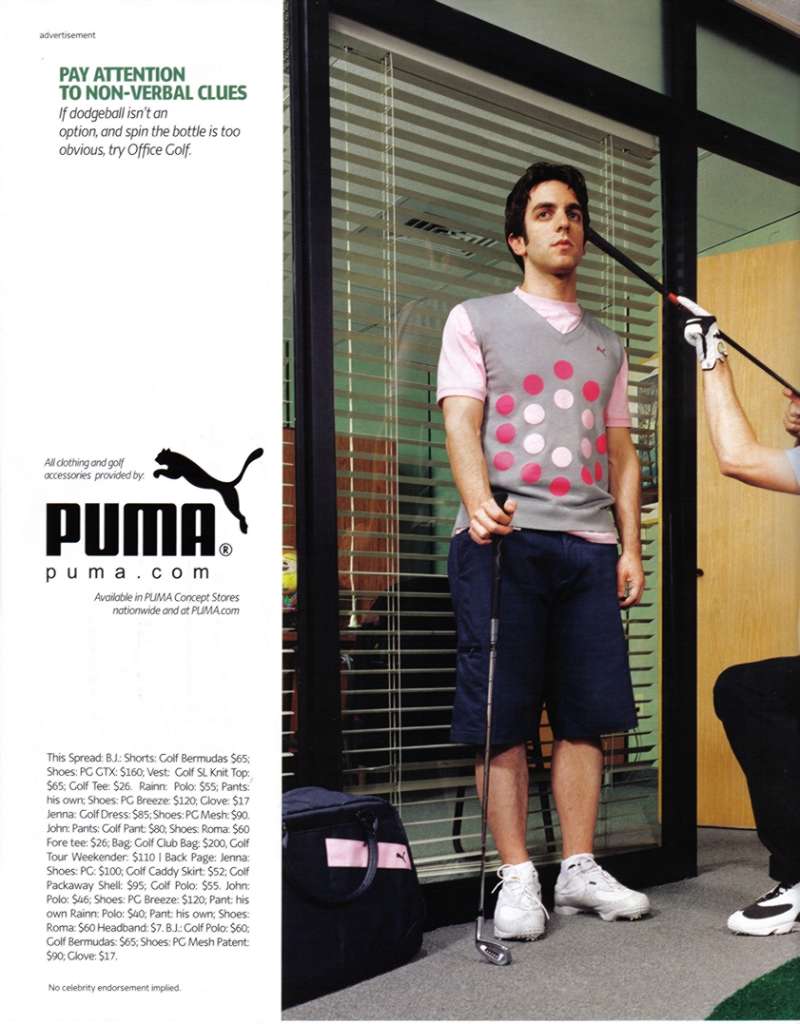
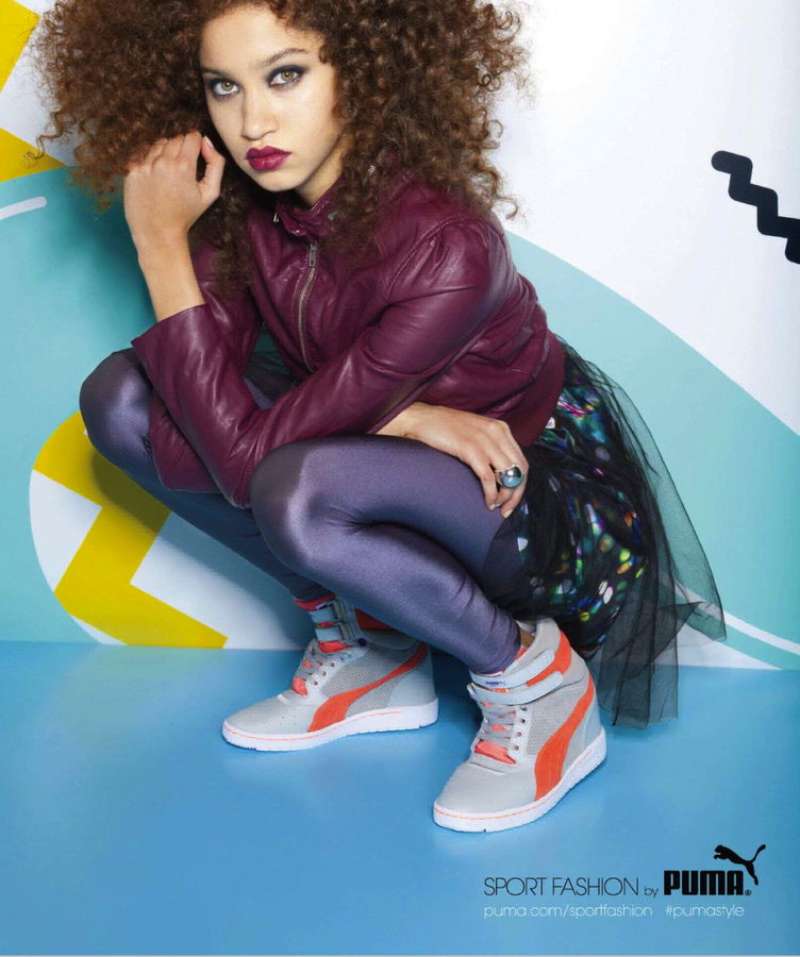
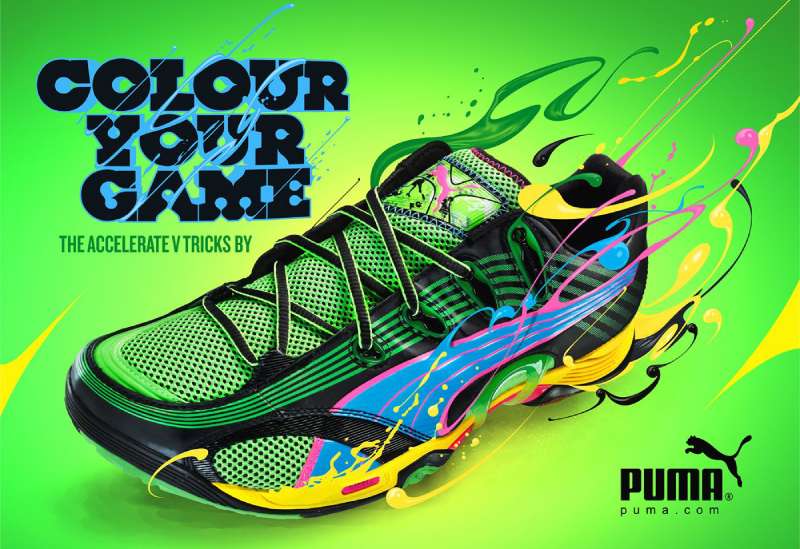
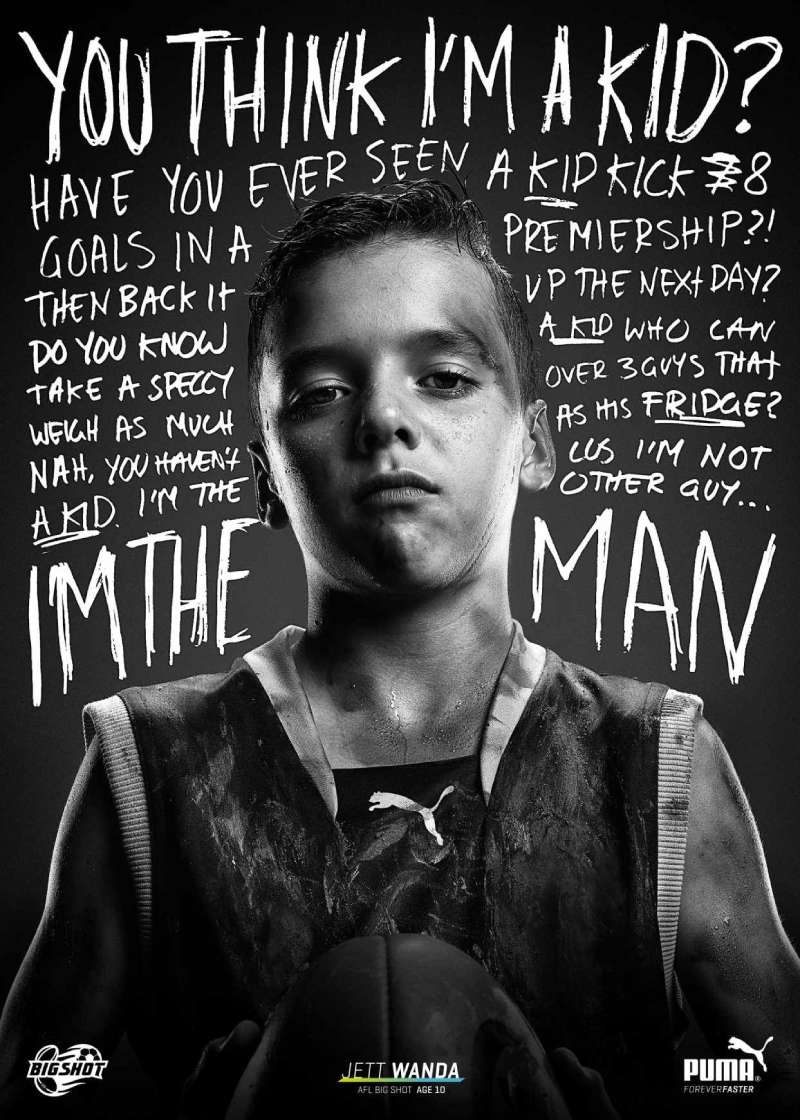
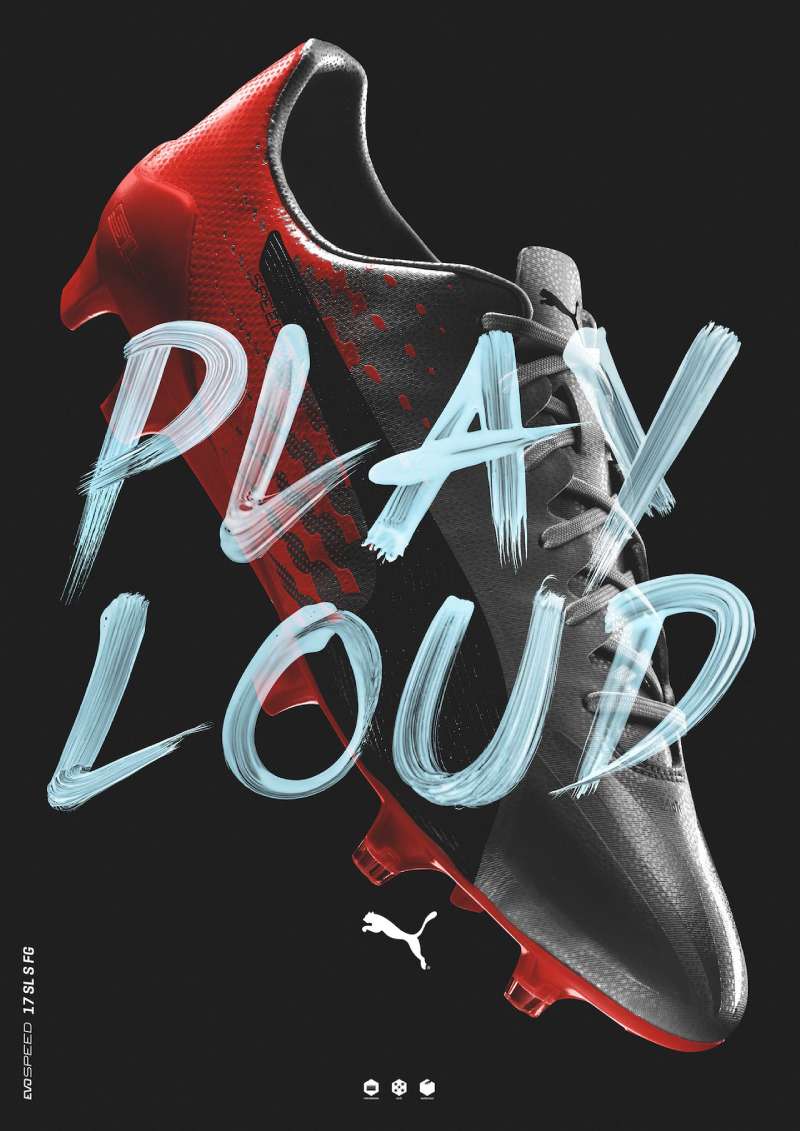
Puma print ads use a single product silhouette on flat black or white, one accent in Puma Red #E42524, and a short copy block set below the optical center. The leaping cat sits top right at small scale, never as the focal point.
The palette is close to monochrome by default. Black, white, one red. That restraint is what lets a suede upper or a Formstrip read at thumbnail size, and it is why the layouts survive the jump from a magazine spread to a bus shelter.
Typographically the brand runs a custom all-caps sans-serif with rounded terminals and a flat-topped A. It is not sold commercially, though Quandor Regular and FF Softsoul Std Bold sit close. Puma sets the tagline at one weight and lets scale carry the visual hierarchy instead of stacking three type styles.
Where the eye goes: product first, copy second, mark third. The After Hours Athlete posters proved you can invert that safely once, because the joke lives in the line, not the shoe.
Generous white space does most of the heavy lifting in the running and tennis work. Puma tends to crop tighter than Nike and leave more air than Adidas, which gives the layouts a calmer contrast between figure and ground.
The wordmark itself is set tight. Anyone rebuilding a Puma layout should check the kerning against the original rather than trusting default metrics, because the rounded letterforms fake a looser fit than they actually have.
How Do Puma TV Commercials Differ From Its Print Ads?
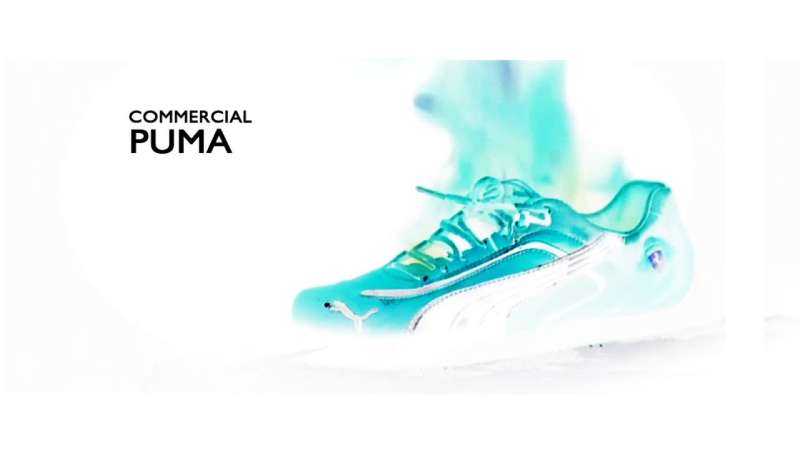
Puma TV work carries narrative and music, while the print carries product and copy. The films run 30 to 120 seconds, use licensed or original tracks, and rarely show a shoe in close-up before the final five seconds. Print reverses that order completely.
After Hours Athlete, 2010, Droga5
Two-day shoot across Manhattan and New Jersey on a modest budget. Handheld camera, bar light, rapid cuts between pool, ping pong and 4am cab rides. The end tag animates the Puma Social lockup, one of the few times the brand uses motion graphics as a punchline rather than a sign-off.
Calling All Troublemakers, 2014, JWT New York

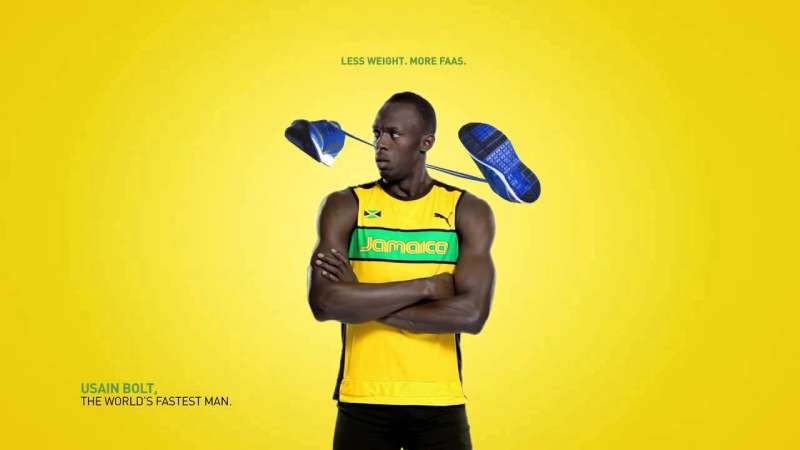
The Forever Faster hero spot cuts Usain Bolt and Mario Balotelli into a hot tub scene and dares the viewer to misbehave. Voiceover does the work. No product shots until the last beat, which is unusual for a repositioning film.
Go Wild, 2025, adam&eveDDB
Runners transform into animals mid-stride, set to a classic western pop track. The film avoids grit and effort tropes and plays joy instead, which is a real shift in category storytelling for a running ad.
How Has Puma Advertising Evolved Since 1948?
Puma advertising moved through 6 phases: founder-era product notices, athlete-led sport proof in the 1960s and 1970s, endorsement print in the 1980s, lifestyle and viral work in the 2000s, performance repositioning in the 2010s, and joy-led brand platforms from 2024.
| Decade | Strategic shift | Representative work |
|---|---|---|
| 1948-1969 | Product credentials, dealer-led | Formstrip patent 1958, leaping cat mark 1968 |
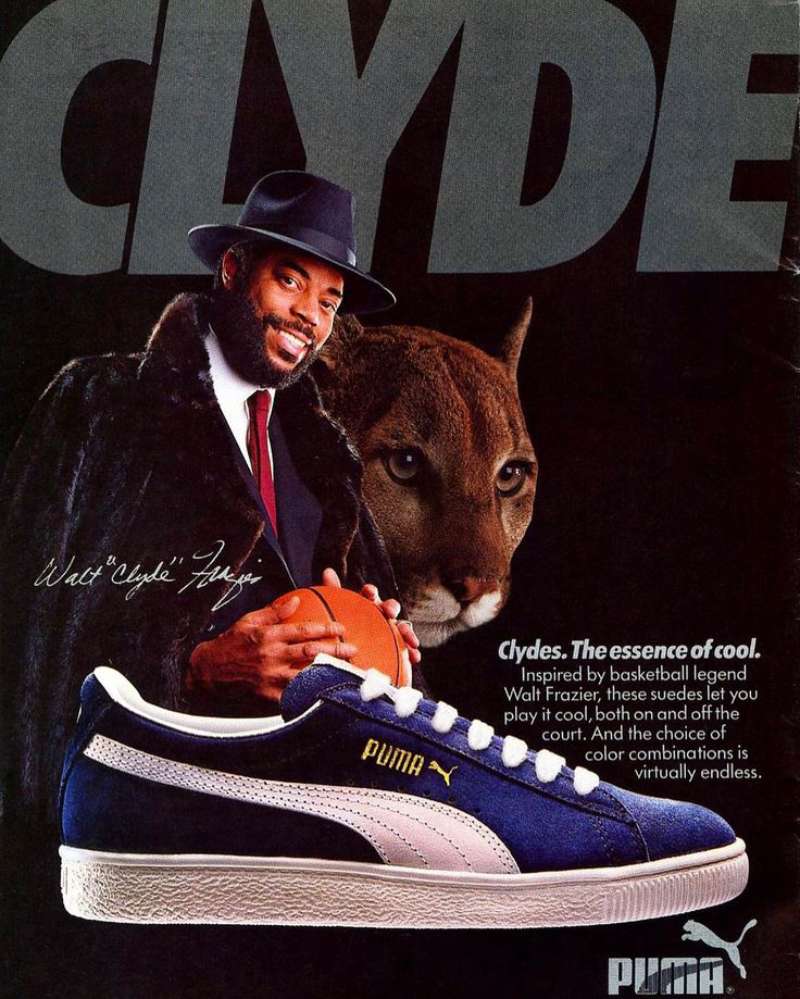
| 1970s | Athlete proof over paid media | Pele King boots 1970, Clyde 1973, Lite Rider print 1978 |
| 1980s-1990s | Endorsement print in sport titles | Becker Ace tennis ads, Navratilova series |
| 2000s-2012 | Lifestyle, humor, early social | “Love=Football,” After Hours Athlete |
| 2014-2023 | Performance repositioning, celebrity co-creation | “Forever Faster,” Fenty x Puma, “She Moves Us” |
| 2024-2026 | Single global brand platform | “See The Game Like We Do,” “Go Wild” |
The 1968 Mexico City Olympics gave Puma its most reproduced image without an ad budget behind it. Tommie Smith raised his fist wearing Puma spikes, and the brand’s visual identity has referenced that moment in campaign films ever since.
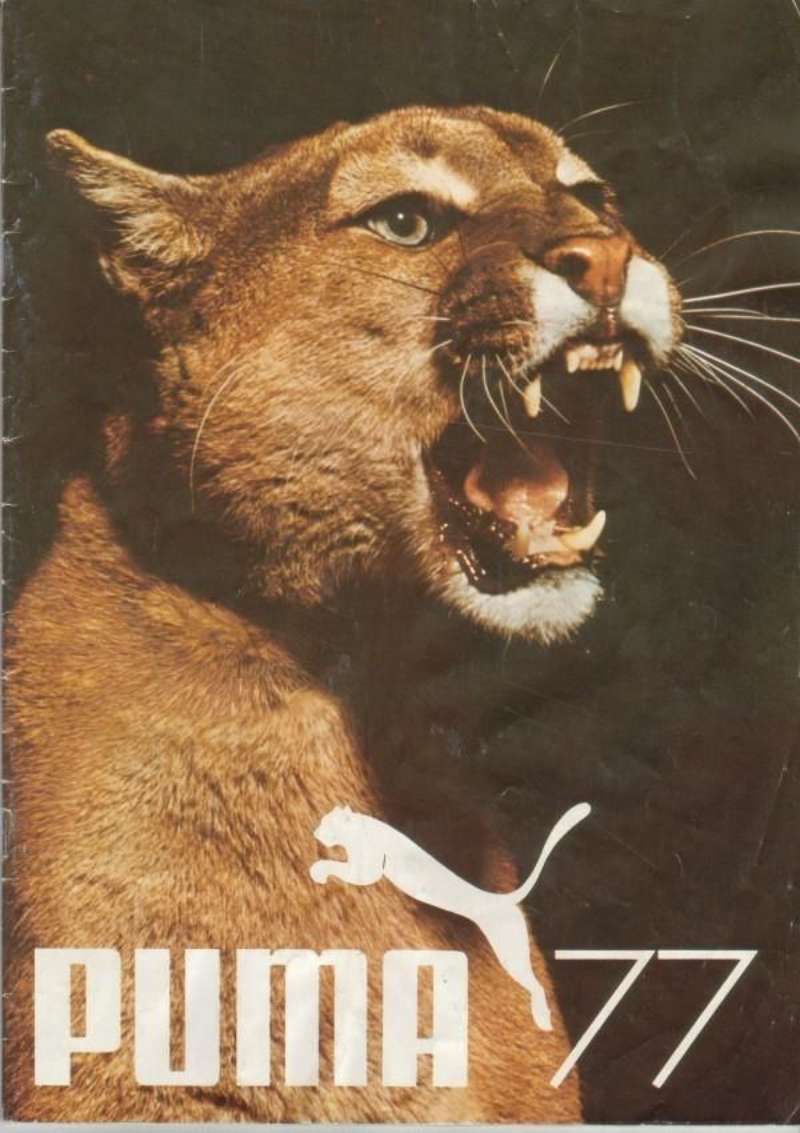
Worth noting that Puma’s cat mark barely changed across those six phases. The 1978 lockup is essentially what you see on a 2026 billboard, which is more discipline than most sportswear brands manage.
Which Agencies Created Puma Advertising?
Droga5 created After Hours Athlete for Puma in 2010. JWT New York created Forever Faster in 2014. MATTE created See The Game Like We Do in 2024. adam&eveDDB created Go Wild in 2025. Havas International has bought Puma’s global media since 2019.
| Agency | Campaign | Year |
|---|---|---|
| Droga5 New York | “After Hours Athlete,” Hardchorus | 2010-2011 |
| Syrup | “Journey of Football” | 2010 |
| JWT New York | “Forever Faster” | 2014 |
| MATTE | “Forever. Faster. See The Game Like We Do” | 2024 |
| adam&eveDDB | “Go Wild” | 2025 |
| Way Agency Paris | “Marseille, C’est Nous” | 2026 |
Grey produced the Puma Dance Dictionary, Leo Burnett produced Run Navi, Ogilvy produced the Love Run print series, and Euro RSCG produced Escape Your Genetics. Regional shops handle most of the print output while global film sits with one lead agency at a time.
Way Agency Paris took a Bronze Lion in Cultural Engagement at Cannes 2026 for Marseille, C’est Nous, a reminder that Puma’s club-level work often outperforms its global work on craft.
Consistency across that many shops comes from written brand guidelines rather than from a single art director, which is the only realistic way to run 120 markets.
What Can Designers Learn From Puma Ads?
Puma layouts reward restraint. Five habits transfer directly to poster, press and out-of-home work.
- Lead with the product silhouette, not the mark
- Limit the palette to black, white and one accent, then hold that color palette across every execution in the campaign
- Set the tagline in one weight of a single sans-serif and let scale build the hierarchy
- Place the copy block below the optical center so the product owns the top two thirds
- Park the leaping cat at small scale in a fixed corner, the way logo design principles recommend for any mark that has to survive shrinking
- Write the line before the layout, because the After Hours Athlete posters only work if the copy lands first
The last one is the hard part. Puma’s best print is copy-led, and copy-led poster design fails badly when the writing is average.
How Do Puma Ads Compare to Adidas Ads?
Puma and Adidas were founded by brothers in the same town, and their advertising still splits along the same line. Adidas builds around team and collective identity, with the three stripes used as a graphic system across the whole frame. Puma builds around the individual, and keeps its mark small.
Adidas runs denser layouts and heavier type. Puma runs more air, fewer words and one accent color. Neither approach is better, though Puma’s discipline makes its work easier to recognize at 200 pixels wide.
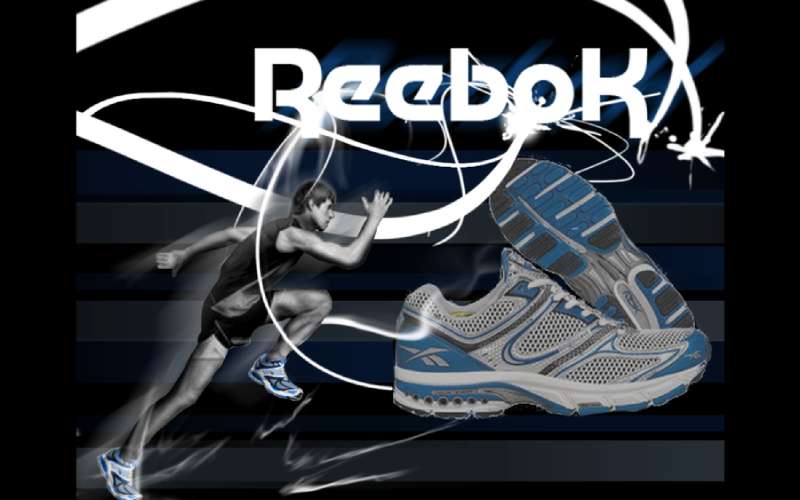
Against Reebok ads, Puma looks restrained. Reebok leans harder on nostalgia and color blocking. New Balance advertising sits closer to Puma’s minimalism but drops the celebrity entirely, and Adidas advertising outspends both by a wide margin.
Puma’s answer to that spending gap has been craft, not volume. One Grand Prix in 2011 bought more attention than a decade of category-standard product ads would have.
What Makes Puma Advertising Work?
Puma wins when it stops competing on volume and competes on tone.
The brand cannot outspend its rivals, so the work that lands is the work with a point of view: a deadpan line about a 5am cab, a runner turning into an animal, a chorus of supporters singing a love song badly.
The visual system carries the rest. One silhouette, one accent color, one weight of type, and a mark small enough to stay out of the way.
That restraint is closer to minimalist design than to sportswear convention, and it is the reason a 1978 running ad and a 2025 film still look like they came from the same building.
Whether the current reset protects that is an open question. Turnarounds tend to eat tone first.
Puma Ads Examples
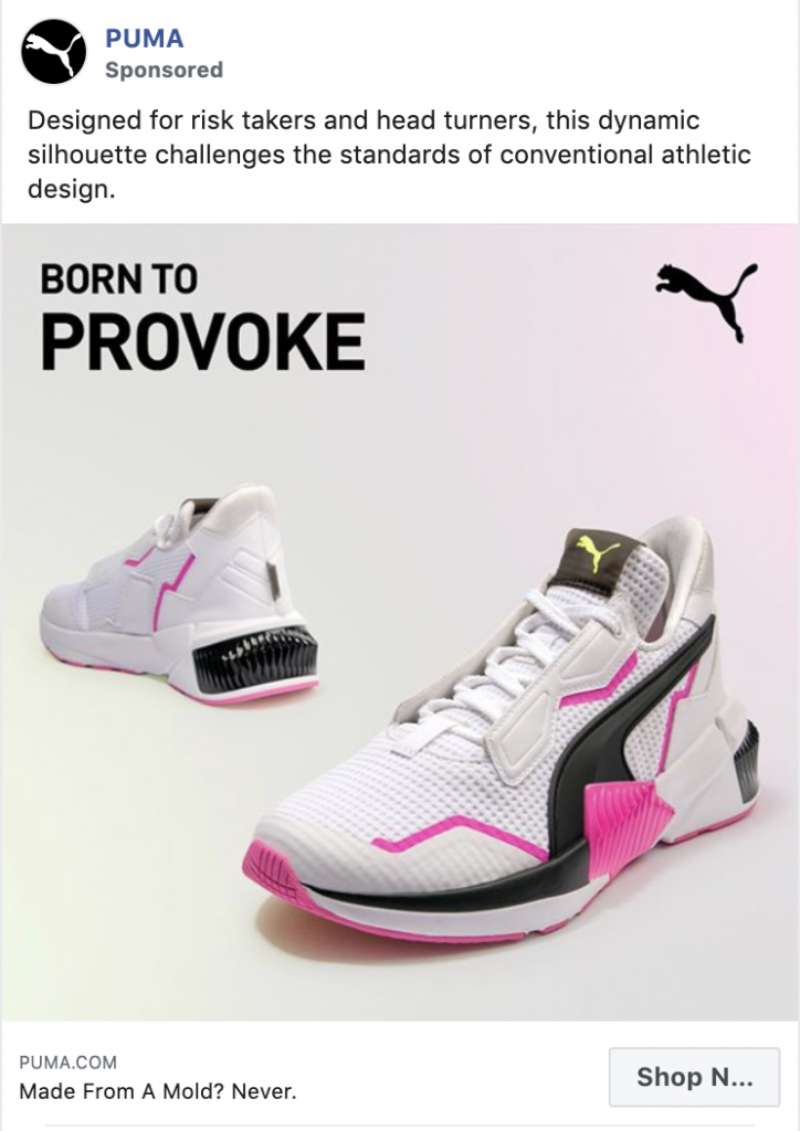
FAQ on Puma Ads
What is Puma’s current advertising slogan?
Go Wild, launched 20 March 2025. It replaced Forever Faster, which had run as the brand line since 2014 and returned briefly in 2024 as Forever. Faster. See The Game Like We Do.
Who created the Go Wild campaign?
adam&eveDDB, working out of its London and Berlin offices. The agency won Puma’s global creative account in December 2024. Havas International bought the media, including YouTube, DAZN, Prime, ESPN and Netflix placements.
What is the most awarded Puma ad?
After Hours Athlete, made by Droga5 New York for Puma Social. It took the Film Craft Grand Prix at Cannes Lions 2011 and a Wood Pencil at D&AD the same year.
Has Puma ever run a Super Bowl ad?
No. Puma builds its media calendar around football and athletics, launching brand chapters near the UEFA Euro, Copa America and the Olympics rather than buying an NFL audience in February.
Where can I see old Puma print ads?
The PUMA Archive in Herzogenaurach holds the originals and publishes films from them. Ads of the World and AdsSpot index campaigns by agency and year, with Puma entries going back to 2003.
What font is used in Puma ads?
A custom all-caps sans-serif typeface the brand does not license. Quandor Regular and FF Softsoul Std Bold sit closest commercially, though neither carries the flat-topped A that makes the wordmark recognisable.
How much does Puma spend on advertising?
Marketing and retail expenses reached EUR 1.74 billion in 2024, or 19.7% of sales, per Puma’s annual report. The brand then raised marketing investment 40% in 2025 to fund the Go Wild rollout.
Did Puma use AI to make a commercial?
Yes. In March 2025 Puma released a one-minute film built with Monks and NVIDIA, where AI agents handled ideation, scriptwriting and video generation across a five-week production.
Which celebrities have appeared in Puma ads?
Usain Bolt, Pele, Walt “Clyde” Frazier, Boris Becker, Rihanna, Dua Lipa, Neymar Jr, Breanna Stewart, Mondo Duplantis, A$AP Rocky and Rose of Blackpink, who fronted the Speedcat revival.
Why do Puma ads use so much black?
Black is the brand’s primary color and makes the leaping cat readable at any size. Puma Red #E42524 supplies the single accent, a restraint rooted in basic color psychology rather than trend.
Conclusion
Puma ads reward a second look. The strongest of them, from the After Hours Athlete posters to the Go Wild film, work because someone wrote the line before anyone opened a layout file.
Six decades of art direction sit behind that, most of it made in Herzogenaurach and shipped to more than 120 markets.
What transfers to your own work is the discipline, not the budget.
- One product silhouette, cropped tight
- A single accent over a black and white base
- One tagline, set once, at one weight
Puma has spent 78 years proving that a leaping cat at 40 pixels beats a mark at 400. Take that lesson, not the sneakers.

Renowned for his expertise in logo design and visual branding, Bogdan has developed a multitude of logos for various clients.
His skills extend to creating posters, vector illustrations, business cards, and brochures. Additionally, Bogdan's UI kits were featured on marketplaces like Visual Hierarchy and UI8.
He also wrote in the past years on sites like Design Your Way, WebDesignerDepot, WPDean, Designmodo, Speckyboy, Slider Revolution, and more.
- The Windsurf Logo History, Colors, Font, And Meaning - 10 October 2026
- How to Remove Background From Product Photos (No Photoshop) - 10 October 2026
- How Designers can Build a Stronger Online Creative Identity - 9 October 2026

Bogdan Sandu is a seasoned designer who has been designing websites since 2008. Renowned for his expertise in logo design and visual branding, Bogdan has developed a multitude of logos for various clients. His skills extend to creating posters, vector illustrations, business cards, and brochures. Additionally, Bogdan's UI kits were featured on marketplaces like Visual Hierarchy and UI8. He also wrote in the past years on sites like Design Your Way, WebDesignerDepot, WPDean, Designmodo, Speckyboy, Slider Revolution, and more.
You Might Also Like