The best fitness app development company for you depends on what the app has to do: connect to wearables, serve a corporate wellness program, personalize training with machine learning, build a community, or meet healthcare compliance rules. This list covers five companies, Stormotion, VitalTech Partners, FlexCore Development, MotionCraft Studios and PulseWave Technologies, with what each one focuses on and who it suits. A short guide to choosing a partner and the technical issues unique to health apps follows the list.
Which companies build fitness apps?
The table gives a quick comparison. Each company is covered in more detail below.
| Company | Main focus | Suits projects that need |
| Stormotion | Health-focused mobile apps and IoT connectivity | Wearables, Bluetooth devices, real-time health data |
| VitalTech Partners | Enterprise fitness platforms | Corporate wellness and healthcare organizations |
| FlexCore Development | AI and machine learning personalization | Adaptive training, form analysis, smart recommendations |
| MotionCraft Studios | Social and community features | Challenges, groups, retention through connection |
| PulseWave Technologies | Medical-grade fitness apps | Regulated health data and provider integration |
Details on each follow, in the same order.
Stormotion
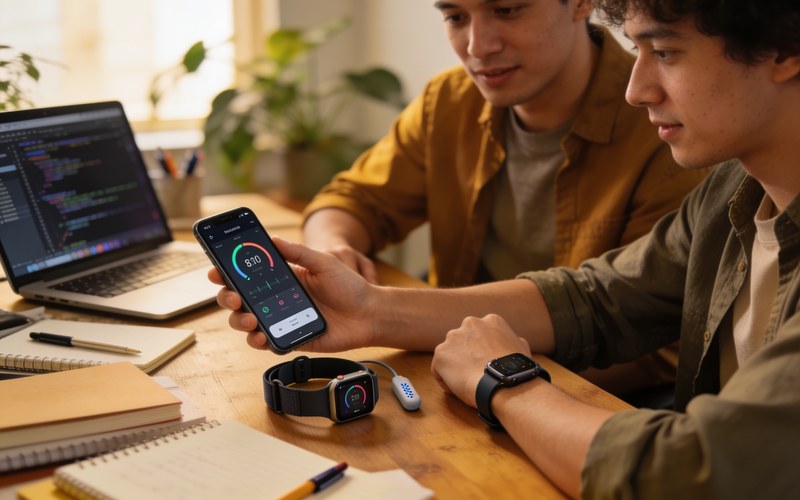
Stormotion is a development company with experience in health-focused mobile solutions and IoT connectivity. Its team works with Bluetooth Low Energy protocols, wearable device integration and the backend systems that real-time health data needs. Its projects span workout tracking, nutrition monitoring, wellness coaching and broader health platforms.
The company emphasizes testing and quality assurance, so apps behave reliably when people depend on them mid-workout. It also describes its working style as collaborative: the team acts as a strategic partner and helps shape the product vision and user experience from concept through launch.
Best for: products that connect to wearables or Bluetooth devices. Ask for a scoped estimate, since no pricing is listed here.
VitalTech Partners
VitalTech Partners focuses on enterprise-level fitness solutions for corporate wellness programs and healthcare organizations. It builds platforms meant to handle thousands of concurrent users while meeting the privacy and security standards of healthcare settings.
Reporting and analytics are a strength. Organizations can track population health trends and measure how well a program works. The company also builds administrative tools alongside the user-facing app, so one project covers both the people exercising and the team running the program.
Best for: employers and healthcare organizations running wellness programs at scale.
FlexCore Development
FlexCore Development builds personalized fitness experiences with artificial intelligence and machine learning. Its apps typically include smart workout recommendations, adaptive training programs and coaching that changes as the user’s performance and preferences change.
It is a fit for projects with real algorithmic work, such as analyzing exercise form with computer vision or recommending nutrition from metabolic data. Clients value technology that feels helpful in use, not gimmicky.
Best for: apps where personalization is the main selling point.
MotionCraft Studios
MotionCraft Studios specializes in fitness apps with strong social and community features, built on the idea that many people stay motivated through other people. Typical features include virtual workout groups, challenges, social sharing and community support.
The studio’s approach centers on long-term retention. It builds tools that help users find workout partners, join interest-based communities and stay accountable. The apps often become hubs for a community instead of individual trackers.
Best for: products where community and accountability drive engagement.
PulseWave Technologies
PulseWave Technologies works on medical-grade fitness applications that meet strict regulatory requirements while staying accessible to ordinary consumers. Its team has experience with healthcare providers, physical therapists and medical device manufacturers, building apps that connect consumer fitness tracking with professional monitoring.
The result looks like a consumer fitness app but handles sensitive health data under the security and compliance standards healthcare requires. For design guidance in this area, see this overview of healthcare UI/UX design.
Best for: apps that share data with clinicians or fall under healthcare compliance.
How do you choose a fitness app developer?
Match the company’s specialty to your hardest requirement first. A strong social app builder and a medical-grade builder solve different problems, and hiring the wrong one costs months.
Beyond specialty, a good partner understands motivation and habit formation, not only code. Fitness apps succeed or fail on engagement, so the developer should be able to talk about retention as comfortably as architecture. Experience with wearable integration, real-time data processing and secure backends for health information is the other thing to look for. For a wider primer on the design side, read this quick guide to designing health apps.
Before you sign, ask each candidate:
- Which wearables and health platforms have they integrated before?
- How do they handle sensitive health data and privacy requirements?
- What does their testing process cover, including offline use?
- Who will work on the project, and how often will you review progress?
What technical challenges are specific to health apps?
Fitness apps have to handle real-time sensor data, offline functionality, cross-device synchronization and integration with health platforms such as Apple HealthKit or Google Fit. Each of these needs specialized knowledge, and a gap in any one is visible to users right away.
Reliability matters most during workouts. Connectivity can be spotty and users are focused on exercise, not troubleshooting, so the app has to keep working. Testing under realistic conditions helps, and this article on testing mobile apps across real mobile networks explains why.
Data visualization is the other big one. Users need to see progress and spot trends quickly, and presenting complex health data in a clear, motivating way often decides whether they keep using the app or switch to something simpler.
Frequently asked questions
What should a fitness app development company have experience with?
Look for experience with wearable and Bluetooth integration, real-time data handling, offline behavior and secure storage of health data. Examples of past projects in your category are more useful than a general portfolio.
Do I need a specialist for medical-grade features?
If your app shares data with clinicians or handles information covered by healthcare regulations, yes. Companies such as PulseWave focus on that compliance work.
How can I tell if the claims on a company’s site are accurate?
Ask for references, check independent review sites and request live demos of shipped apps. Treat any list, including this one, as a starting point for your own research.
Is community functionality worth building?
For many fitness products it is, because social features help retention. It adds moderation and infrastructure work, so decide early whether community is central or optional.
Which fitness app partner should you contact first?
Write down the one requirement that makes your app different, whether that is wearables, personalization, community, enterprise reporting or compliance. Then contact the company from the list whose specialty matches it, and ask for a scoped proposal and two comparable case studies before you compare prices.

Renowned for his expertise in logo design and visual branding, Bogdan has developed a multitude of logos for various clients.
His skills extend to creating posters, vector illustrations, business cards, and brochures. Additionally, Bogdan's UI kits were featured on marketplaces like Visual Hierarchy and UI8.
He also wrote in the past years on sites like Design Your Way, WebDesignerDepot, WPDean, Designmodo, Speckyboy, Slider Revolution, and more.
- Logo Quiz - 22 November 2026
- The LinkedIn Logo History, Colors, Font, and Meaning - 20 November 2026
- How to Design Landing Pages That Convert Visitors into Email Subscribers - 20 November 2026

Bogdan Sandu is a seasoned designer who has been designing websites since 2008. Renowned for his expertise in logo design and visual branding, Bogdan has developed a multitude of logos for various clients. His skills extend to creating posters, vector illustrations, business cards, and brochures. Additionally, Bogdan's UI kits were featured on marketplaces like Visual Hierarchy and UI8. He also wrote in the past years on sites like Design Your Way, WebDesignerDepot, WPDean, Designmodo, Speckyboy, Slider Revolution, and more.
You Might Also Like