A sneaker that has barely changed since 1917 has almost nothing new to say about itself. Converse ads solved that problem a century ago by handing the frame to the wearer instead.
The through line runs from the Converse Basketball Yearbook in 1922 to Choose Your Weapon in 1986, Grandmama in 1991, Made By You in 2015 and Love, Chuck in 2025.
Every campaign here comes with the agency, the year and the market behind it, because an unlabelled gallery of Chuck Taylor posters teaches nobody anything.
What you get:
- Campaign breakdowns across print, TV and out-of-home
- The composition, palette and type decisions holding each ad together
- Six takeaways from the sneaker advertising playbook you can apply to client work
Converse advertising spans 104 years, at least 7 lead agencies and 9 flagship campaigns, from the first Converse Basketball Yearbook in 1922 to the Love, Chuck film narrated by Tyler, the Creator in 2025. The work runs on one repeated device: the wearer, not the brand, signs the ad.
This page covers the campaigns that matter, grouped by name, with the agency, year and market behind each one, plus the composition, palette and type choices that make them work.
Converse Advertising at a Glance
Converse has advertised since 1922, working primarily with Butler, Shine, Stern & Partners, Anomaly and McCann New York. Its best-known campaigns are Choose Your Weapon, Grandmama and Made By You. The visual signature combines monochrome photography, worn canvas and the All Star ankle patch.
| Attribute | Value |
|---|---|
| First major campaign | Converse Basketball Yearbook, 1922, edited by Chuck Taylor from 1932 to 1968 |
| Lead agencies | Houston Effler (1991-1996), Butler, Shine, Stern & Partners (2001-2007), Anomaly (2013-2019), McCann New York (2024), WORKS studio (2023-2025) |
| Best-known taglines | “Choose Your Weapon” (1986), “Made By You” (2015), “Forever Chuck” (2017), “Create Next” (2022), “Go Do That” (2025) |
| Primary media | Print yearbooks, TV, cinema, out-of-home, social film, a recording studio |
| Primary markets | North America, Western Europe, Greater China. Nike states in its FY2025 10-K that it does not own the Converse trademarks in Japan |
| Awards | One Show Merit Award, Branded Entertainment: Music, for Three Artists One Song. D&AD 2015 Outdoor Advertising entry for Made By You |
| Visual signature | Black and white portraiture, product shot at extreme scale, chevron and star patch, condensed sans-serif captions |
| Recurring copy device | First-person testimonial. The wearer supplies the credit line |
Which Converse Ad Campaigns Are the Most Famous?
The 7 campaigns that define Converse advertising are the Converse Basketball Yearbook (1922-1983), Choose Your Weapon (1986), Grandmama (1991), Brand Democracy (2004), Three Artists One Song (2008-2014), Made By You (2015) and Forever Chuck (2017). Create Next and Love, Chuck carry the platform into the 2020s.
Converse Basketball Yearbook (1922-1983)

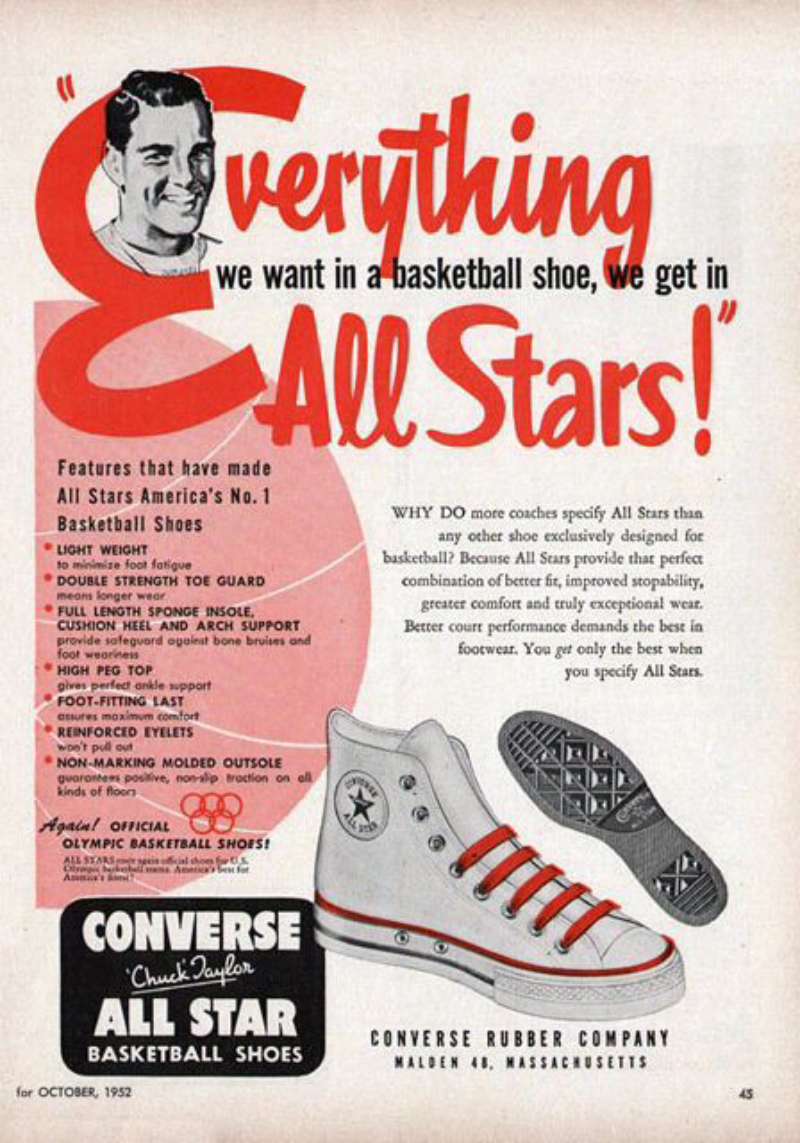
The Converse Basketball Yearbook was an annual 52-page publication that ran without a break from 1922 to 1983, listing All-American selections, coaching notes and team photographs. Chuck Taylor launched it and edited it from 1932 to 1968.
Design read: a 9 by 12 inch page, one hero halftone per spread, and the product relegated to a boxed line drawing in the corner. The ad is the editorial. Converse paid for the paper and let the sport fill it.
Encyclopedia.com records that Taylor ran clinics for Converse for over 30 years, the first at North Carolina State University in 1922. By the 1960s Converse held roughly 70 to 80 percent of the basketball shoe market.
Choose Your Weapon (1986-1989)

Choose Your Weapon launched the Converse Weapon in 1986 across the United States, built on the Larry Bird and Magic Johnson rivalry. The campaign gave each athlete a team-colored version of the same shoe: Lakers purple and gold for Johnson, Celtics black and white for Bird.
The key poster stages both men back to back, holding the sneakers at chest height like drawn pistols. Two figures, one axis, mirrored posture. Symmetry does the work that a headline would normally do, and the tagline sits small at the base of the frame.
Isiah Thomas, Kevin McHale, Bernard King and Mark Aguirre were added to the roster in team colorways, which turned a single color palette decision into the entire media plan.
Grandmama (1991-1996)

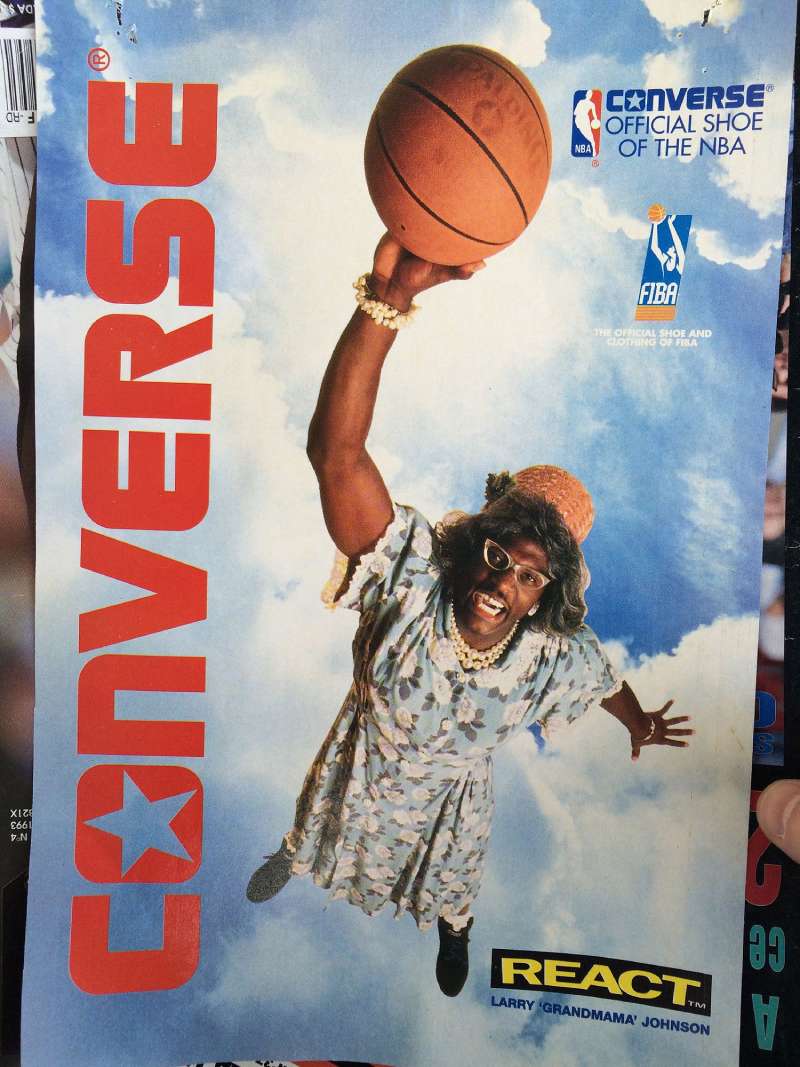
Houston Effler created Grandmama for Converse in 1991, pitched by Pete Favat and Rich Herstek to launch the Aero-Glide basketball shoe. Larry Johnson, the number one pick in the 1991 draft, played his own grandmother in a floral dress, pearls and cat-eye glasses.
Herstek told Yahoo Sports the logic plainly: no human being could beat Michael Jordan, so they went to fantasy instead. The original spot was filmed at Greiner Middle School in Dallas.
The print work is unusual for a sneaker ad of the period. Full-bleed character portrait, product almost absent, headline set in a heavy sans with the joke carried entirely by the photograph.
Johnson took Grandmama onto an episode of Family Matters. Fans wore Grandmama masks to Charlotte Hornets games, which is the rare case of a logo being replaced in the public mind by a costume.
Brand Democracy and the Converse Gallery (2004)

Butler, Shine, Stern & Partners built Brand Democracy for Converse in 2004, one of the first campaigns to run consumer-made films as paid advertising. Wearers shot 24-second pieces about their Chucks and Converse aired them.
The design decision was to strip the frame. No brand furniture, no lower thirds, no logo bug. A single end card carried the wordmark, which made the amateur footage read as evidence instead of content.
BSSP also produced the Future Originals broadcast work, directed by Lance Acord through Park Pictures, scored with a punk cover of the Laverne & Shirley theme.
Three Artists One Song and Rubber Tracks (2008-2015)

Converse built a music platform instead of buying music. Two parts:
- Three Artists One Song: started with My Drive Thru in June 2008, made by Julian Casablancas, Santigold and Pharrell Williams for the brand centennial
- Rubber Tracks: a free recording studio opened in Brooklyn in July 2011 under CMO Geoff Cottrill, giving unsigned musicians studio time at no cost
My Drive Thru reached over 750,000 streams and ranked among the ten most-shared videos on its first day, with 30-second and 60-second cinema and TV cuts debuting on 14 July 2008. Later installments paired Mick Jones and Paul Simonon of The Clash with Frank Ocean and Diplo.
The One Club awarded the series a Merit Award in Branded Entertainment: Music. The visual system was almost nothing: black sleeve, white type, one star.
Made By You (2015)

Anomaly created Made By You for Converse in March 2015, running in 41 cities across 5 continents. The campaign photographed over 200 pairs of worn Chuck Taylors as studio portraits, each signed by its owner, from Patti Smith and Futura to anonymous wearers.
Every portrait uses the same setup: single shoe or pair, plain ground, hard even light, no feet. Removing the body forces the eye onto surface damage, and the scuffs become the copy. The signature is the only typography in the frame.
Converse turned station takeovers, sequential billboards and painted murals into exhibition space, per The One Club case, plus lightboxes in high-footfall locations and a New York exhibition using Google Cardboard. This is poster design operating as a gallery hang.
Forbes reported it as the brand’s largest and most expensive initiative to date. Cottrill said Converse was seeing 13,000 to 15,000 tags a day at the time, which is what the campaign was built to formalise.
Forever Chuck (2017)
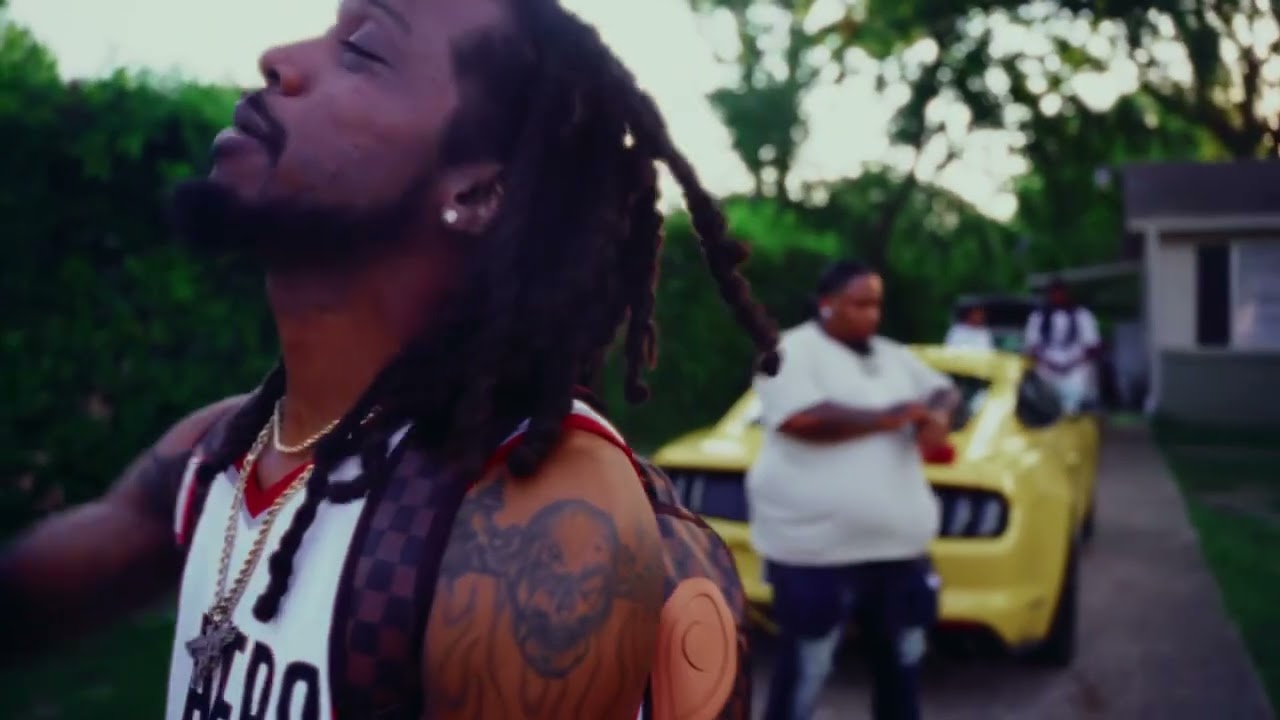
Forever Chuck launched on 13 February 2017 for the Chuck Taylor centenary, structured as three short films on YouTube, Instagram Stories and Snapchat. Chapter one was directed by Karim Huu Do with Millie Bobby Brown interviewing costume designer Stephanie Collie about Chucks in film.
Cast: Millie Bobby Brown, Maisie Williams, Yara Shahidi, Vince Staples, Winnie Harlow, Jordan Clarkson, graffiti artist Spanto.
Fast Company called out the stark imagery and quick-cut edit, noting it carried the hallmarks of a fashion ad rather than a sneaker ad. Chapter two moved the story to Los Angeles street culture.
CMO Julien Cahn described the approach to Business Insider as playing high and low at the same time, which explains the casting of famous brand ambassadors next to unknowns in the same 30 seconds.
Create Next, Love Chuck and the Carson Collages (2022-2025)
Create Now, Create Next premiered on 6 October 2022 with 20 short films by 20 creatives, cut to 6, 15 and 30-second lengths for Instagram, TikTok, Spotify and YouTube. McCann New York produced We Create Next in February 2024.
WORKS studio built the Create Next wordmark and a flexible type system for Fall 2023, then art directed the Spring 2025 heritage campaign with David Carson, using scans of Converse advertisements, technical sketches and material studies as collage material for the Wave, Omni and Omega Trainer launch.
Love, Chuck arrived in February 2025 as a 30-second film narrated by Tyler, the Creator, featuring Charli XCX, Lil Yachty, Vince Staples, Shai Gilgeous-Alexander and Olympic skateboarder Alexis Sablone.
Regional Converse Ads From Asia-Pacific Markets
Regional adaptation is a structural part of Converse advertising, not an afterthought.
Hong Kong took Made By You into MTR station takeovers in 2015, localised by Razorfish with Mindshare on media and traditional Chinese subtitles across video, site and social. Australia ran Love, Chuck through Hopeful Monsters in 2025, adding street posters and billboards carrying local in-jokes plus a 40-guest backyard set by artist May-A in Sydney’s Inner West.
Japan is the exception. Nike’s FY2025 10-K states it does not own the Converse trademarks in Japan and earns no Japanese revenue there, so Japanese Converse advertising is a separate creative lineage entirely.
How Do Converse Print Ads Work Visually?
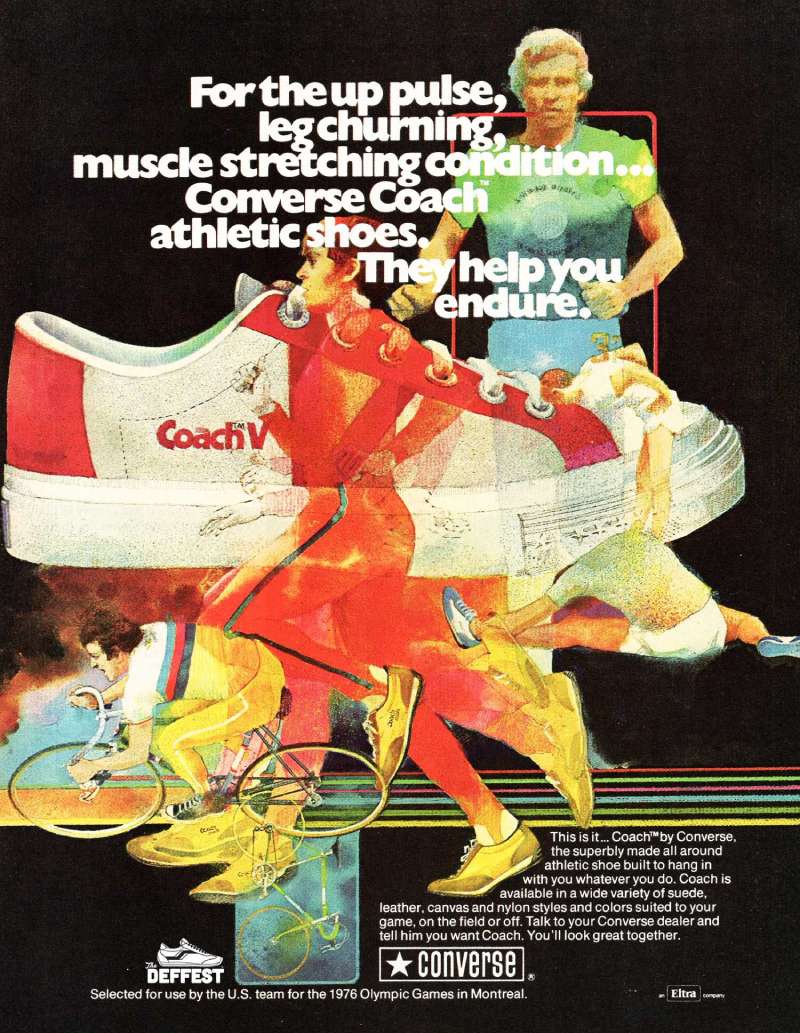
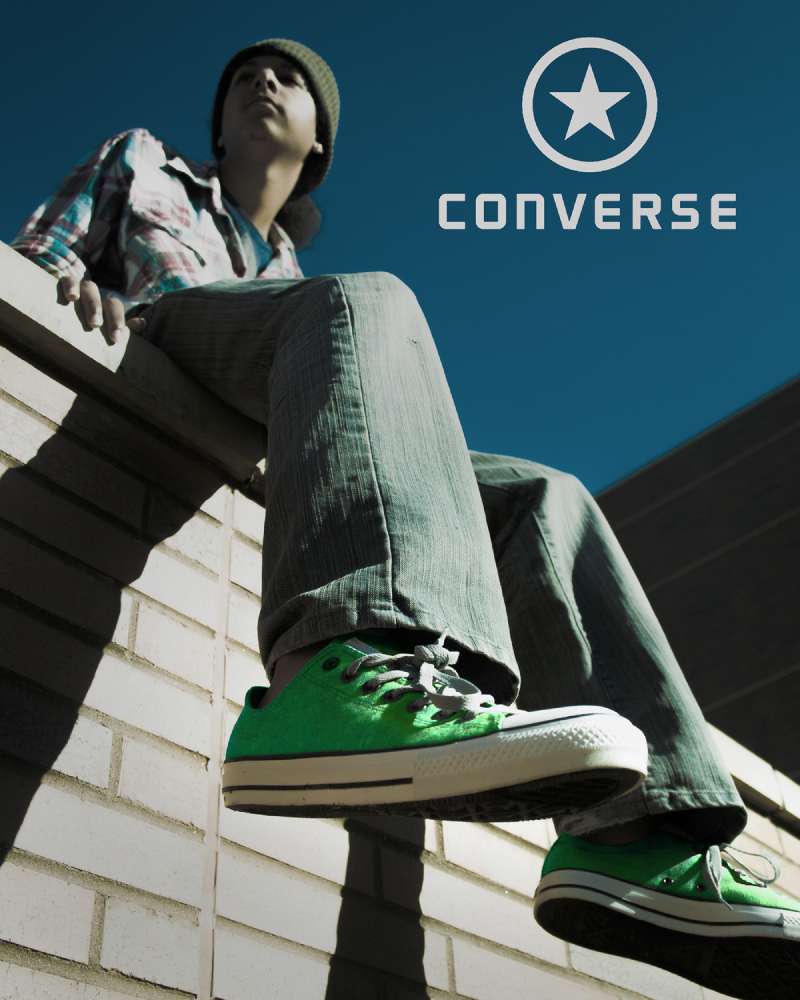
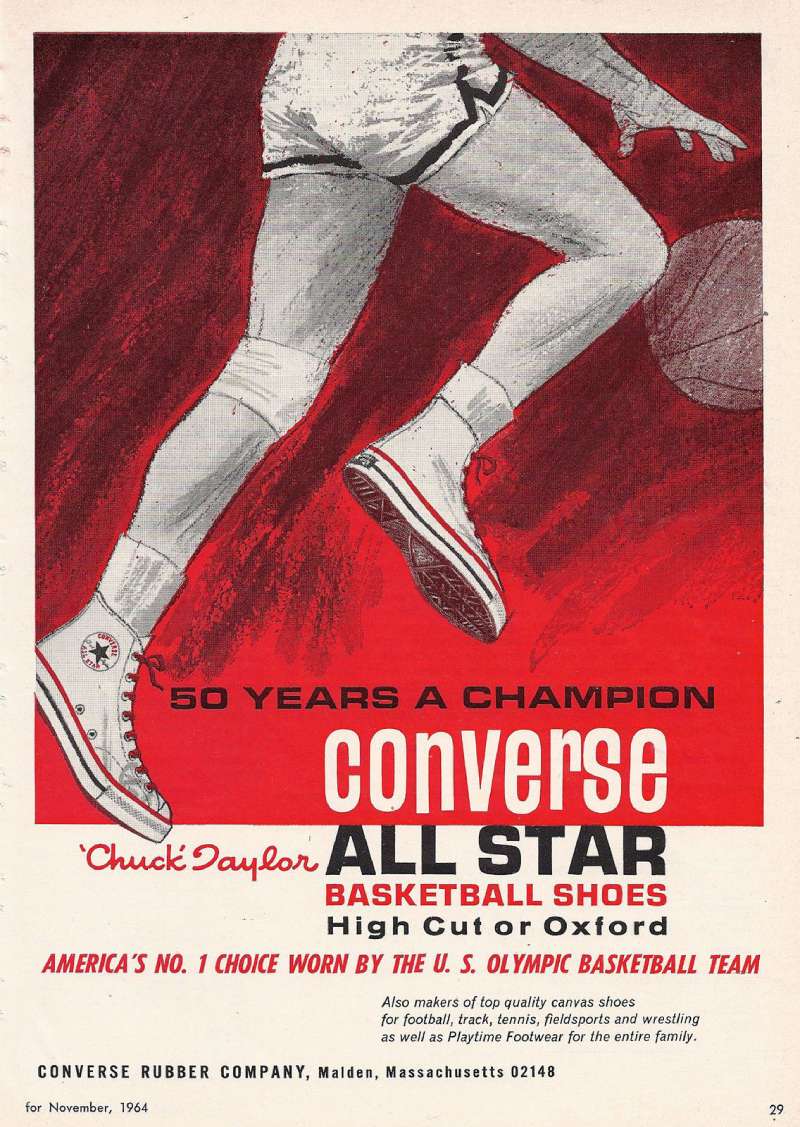
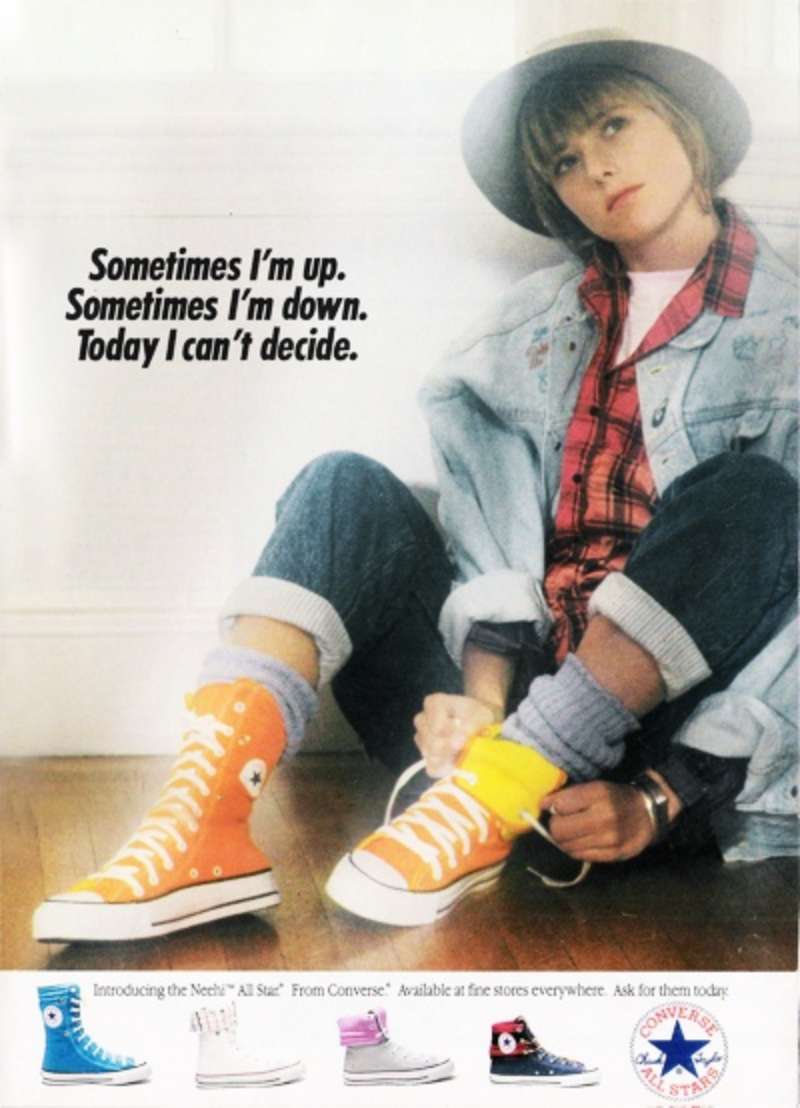
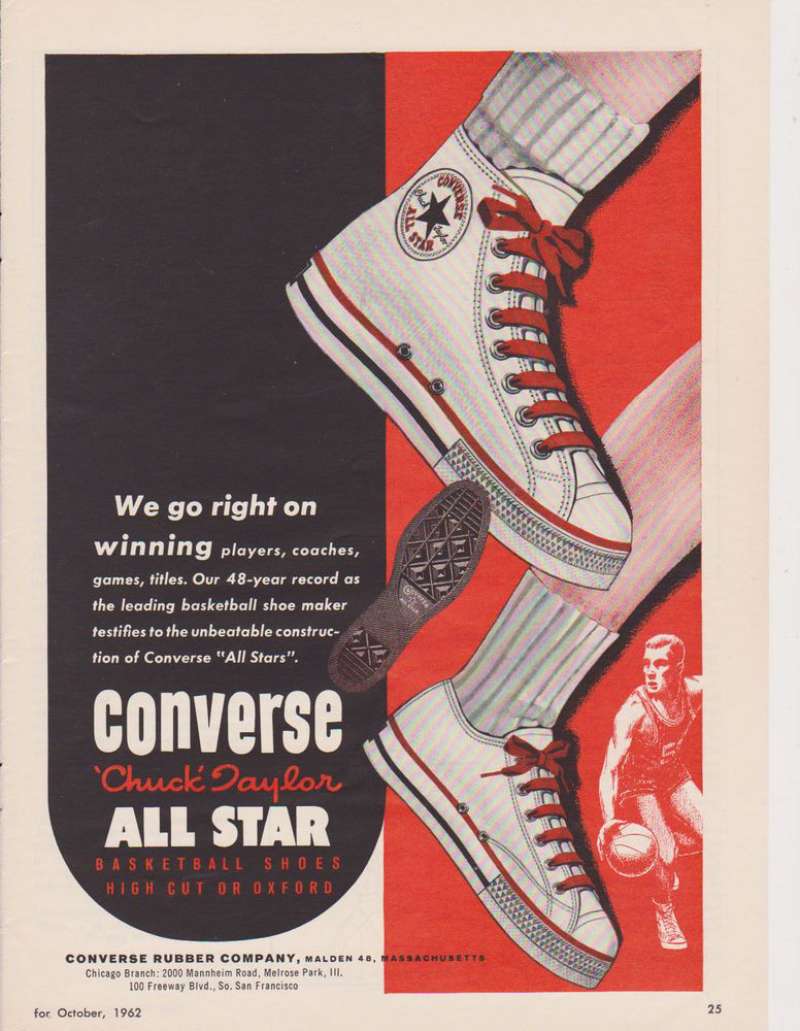
Converse print ads use three repeatable moves: one subject on a plain ground, extreme product scale, and type demoted to a caption. The palette is usually black, white and one canvas colour. The All Star patch functions as the signature rather than a badge in the corner.
Start with the ground. Most Made By You portraits and most Weapon-era ads sit the subject on flat seamless backdrop, so the white space around the shoe carries the composition and there is nothing competing for attention.
Scale is the second move. A canvas high top printed 40 inches tall on a billboard reads as sculpture, and that jump in scale and proportion is doing the persuading before any copy is read.
Type is deliberately weak in the typographic hierarchy. A condensed sans-serif font in one weight, set small, usually bottom-left or bottom-centre, with the wordmark near it. Converse almost never sets a large headline. Nothing annoys me more than a sneaker ad that shouts, and this brand mostly refuses to.
The palette is close to monochrome colors in the archive work, with the 1986 Weapon posters as the exception where team colour becomes the message. High tonal contrast is the constant.
The 2025 Carson collages break the pattern on purpose. Torn edges, overlapping scans, deliberate asymmetry and type set off the baseline, which puts the campaign closer to Grunge design than to the clean 2015 studio work.
For out-of-home, the type choice is governed by legibility at distance rather than taste, and the fonts used on billboards in the Made By You rollout are wide-aperture and single-weight for that reason. WORKS built the Fall 2023 system as a toolkit precisely so regional teams could hold the grid systems steady while swapping assets.
How Do Converse TV Commercials Differ From Its Print Ads?
Converse commercials add narrative and humour that the print work refuses. Print states a fact about a shoe. The films tell a joke, stage a rivalry, or run a first-person monologue.
Choose Your Weapon, 1986. Magic Johnson arrives at Larry Bird’s outdoor court in French Lick, Indiana, steps out of a limousine and challenges Bird to one-on-one. No voiceover product claim until the final seconds.
Grandmama, 1991. Houston Effler, agency. Larry Johnson tells the camera the Aero-Glides are so light his grandmother could beat you in them, then morphs into Grandmama and dunks over a schoolyard defence. Shot at Greiner Middle School, Dallas.
Future Originals, mid-2000s. Butler, Shine, Stern & Partners. Director Lance Acord, Park Pictures. Kids improvise with objects, one girl tapes crushed soda cans to orange high tops and taps in them, all scored to a punk cover of the Laverne & Shirley theme.
Love, Chuck, February 2025. A 30-second film narrated by Tyler, the Creator, cutting between Charli XCX, Lil Yachty, Vince Staples, Shai Gilgeous-Alexander and Alexis Sablone, closing on the line Go Do That.
Across all four, the film work leans on storytelling and the print work leans on evidence. Same brand, two different jobs.
How Has Converse Advertising Evolved Since 1922?
Converse advertising has moved through 5 distinct strategies: sport authority (1922-1968), signature athlete endorsement (1969-1996), consumer-generated content (2001-2010), platform building through music and portraits (2011-2019), and creator-led cultural marketing (2020-2026).
| Decade | Strategic shift | Representative campaign |
|---|---|---|
| 1920s-1930s | Own the sport’s documentation | Converse Basketball Yearbook, clinics from 1922 |
| 1940s-1960s | Official-supplier authority | Olympic basketball shoe, 1936 through 1968 |
| 1970s-1980s | Signature athlete rivalry | Pro Leather with Julius Erving, then Choose Your Weapon |
| 1990s | Character comedy over technology | Grandmama, Aero-Glide |
| 2000s | Hand the camera to the wearer | Brand Democracy, Three Artists One Song |
| 2010s | Portrait as out-of-home exhibition | Made By You, Forever Chuck |
| 2020s | Creator platform plus archive revival | Create Next, Love Chuck, Carson heritage collages |
The commercial backdrop shifted hard in the 2020s. Nike acquired Converse in July 2003 for just over $305 million when the brand was doing roughly $205 million in revenue after a January 2001 bankruptcy filing.
Converse revenue then ran $2.4 billion in FY2023, $2.1 billion in FY2024 and $1.7 billion in FY2025, down 19 percent, per Nike’s own reporting. FY2025 demand creation expense rose 11 percent on higher brand marketing, then fell 44 percent in the second quarter of FY2026 as Nike cut spend.
Fourth-quarter FY2026 Converse revenue was $244 million, down 32 percent. The brand now sits near 2.5 percent of Nike’s total revenue, which is the context for every creative decision it makes in 2026.
Which Agencies Created Converse Advertising?
Seven organisations account for most recognised Converse advertising. Each held a specific era and a specific medium.
- Houston Effler created Grandmama for Converse in 1991, with Pete Favat and Rich Herstek leading the pitch under VP of marketing Joanna Jacobson
- Butler, Shine, Stern & Partners created Brand Democracy and Future Originals for Converse between 2001 and 2007, with John Butler and Mike Shine as creative directors
- Anomaly New York created Made By You for Converse in 2015 under CCO Mike Byrne, with creative directors Fabian Berglund and Ida Gronblom
- McCann New York created We Create Next for Converse in February 2024
- WORKS studio built the Create Next identity system for Converse in 2023 and directed the Spring 2025 heritage campaign with David Carson
- Razorfish and Mindshare adapted Made By You for Hong Kong in 2015
- Hopeful Monsters activated Love, Chuck in Australia in 2025
Production credits matter as much as agency credits here. Iconoclast produced the Made By You film with directors We Are From LA and cinematographer Alexis Zabe. Park Pictures produced Future Originals with Lance Acord.
WORKS is the interesting case, because a studio was given the brand guidelines role that an agency normally holds, which is why the 2023-2025 output looks consistent across markets.
What Can Designers Learn From Converse Ads?
Six takeaways transfer directly to commercial work, whatever you are selling.
- Photograph the object alone on a plain ground before you consider a set
- Set the tagline small in one weight and let the image carry the volume
- Limit the palette to black, white and the product’s own colour
- Use wear, damage and age as content instead of retouching them out
- Give the credit line to the customer, not the brand
- Break your own system once per cycle, the way the Carson collages broke the 2015 studio look
The last one is the hardest to sell to a client. Converse ran a clean, controlled print design language for a decade and then handed the archive to a designer known for tearing pages apart. Both versions read as Converse. That only works because the underlying assets, canvas shoe and star patch, are strong enough to survive the treatment.
How Do Converse Ads Compare to Vans Ads?
Converse and Vans sell adjacent products to overlapping audiences and advertise almost oppositely. Converse builds around a single silhouette that has barely changed since 1917, so its campaigns argue for continuity: the same shoe, a hundred years of different wearers.
Vans ads argue for participation instead. Skate footage, event documentation, Off The Wall as a permission slip rather than a claim, and a visual identity that tolerates far more colour and pattern than Converse allows itself.
The difference shows up hardest in casting. Converse put Millie Bobby Brown and Vince Staples in the same 2017 film to widen the tent. Vans typically casts from inside the sport.
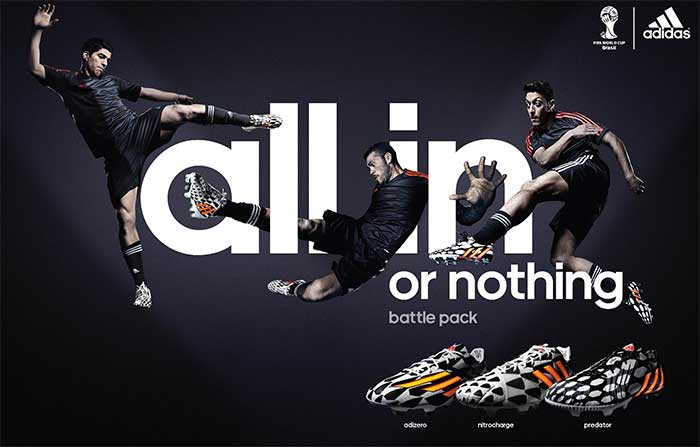
Against the other rivals, the contrast is cleaner still. Adidas ads run on scale and stadium-level sponsorship, Puma ads lean on speed and celebrity heat, and New Balance ads have spent the last few years converting an anti-fashion reputation into a fashion one. Converse is the only one of the four whose flagship campaign in 2015 consisted of photographs of shoes its customers had already ruined.
What Makes Converse Advertising Work?
One structural decision explains a century of output: the brand refuses to claim the credit.
The yearbooks credited the sport. Choose Your Weapon credited two rivals. Brand Democracy credited the customer with the camera. Made By You literally printed the owner’s signature under the shoe.
That choice solves the problem every heritage product faces. A shoe that has not changed since 1917 cannot advertise on features, so it advertises on the people who wear it, and the campaign never runs out of material.
The design language follows from the strategy. Plain ground, one subject, small type, high contrast, no shouting. It works because the product is simple enough to survive being photographed honestly.
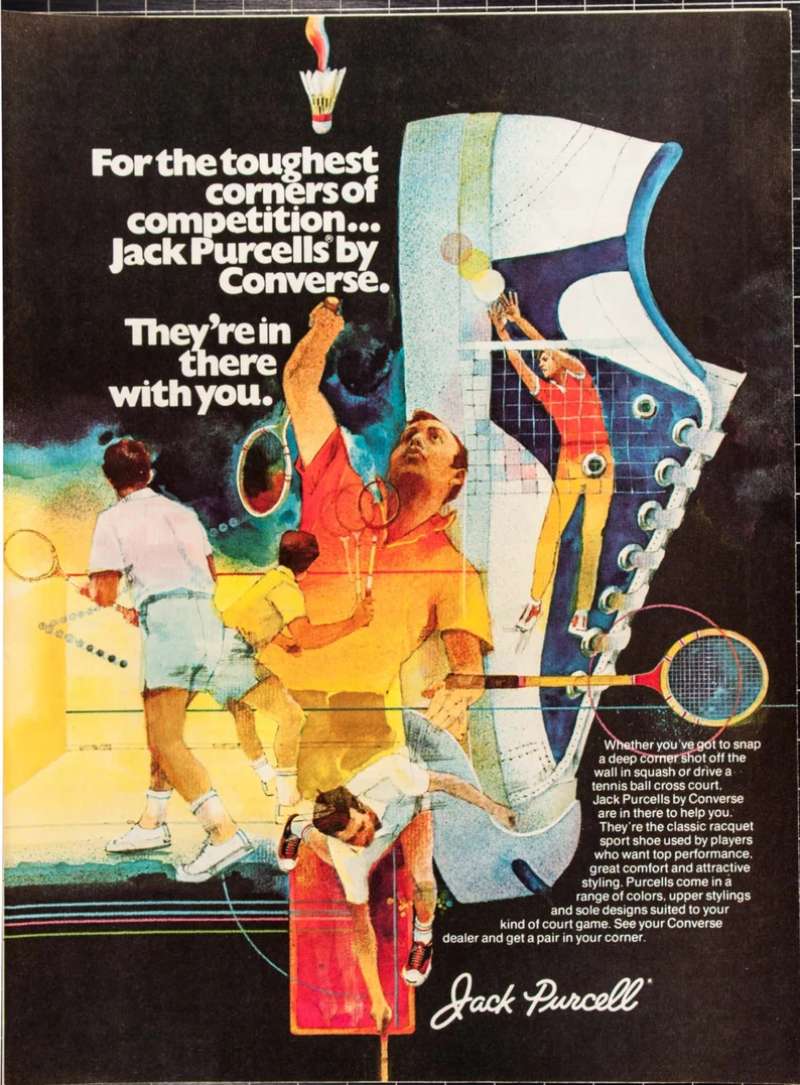
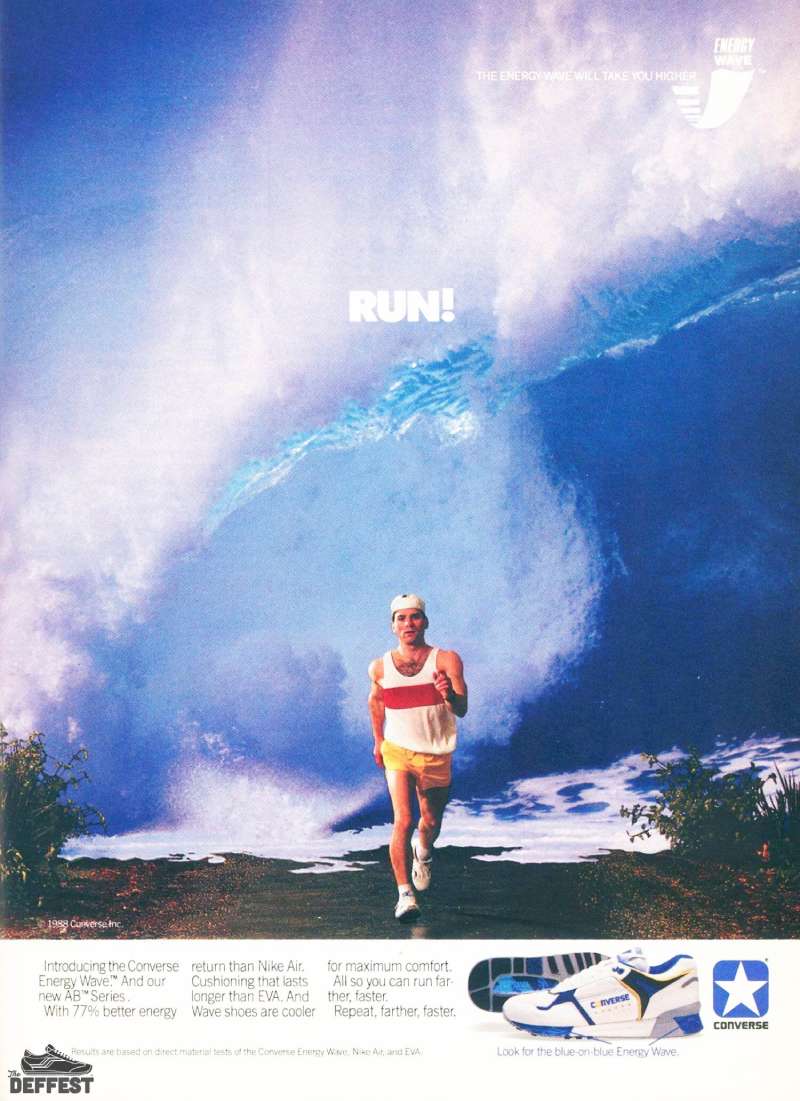
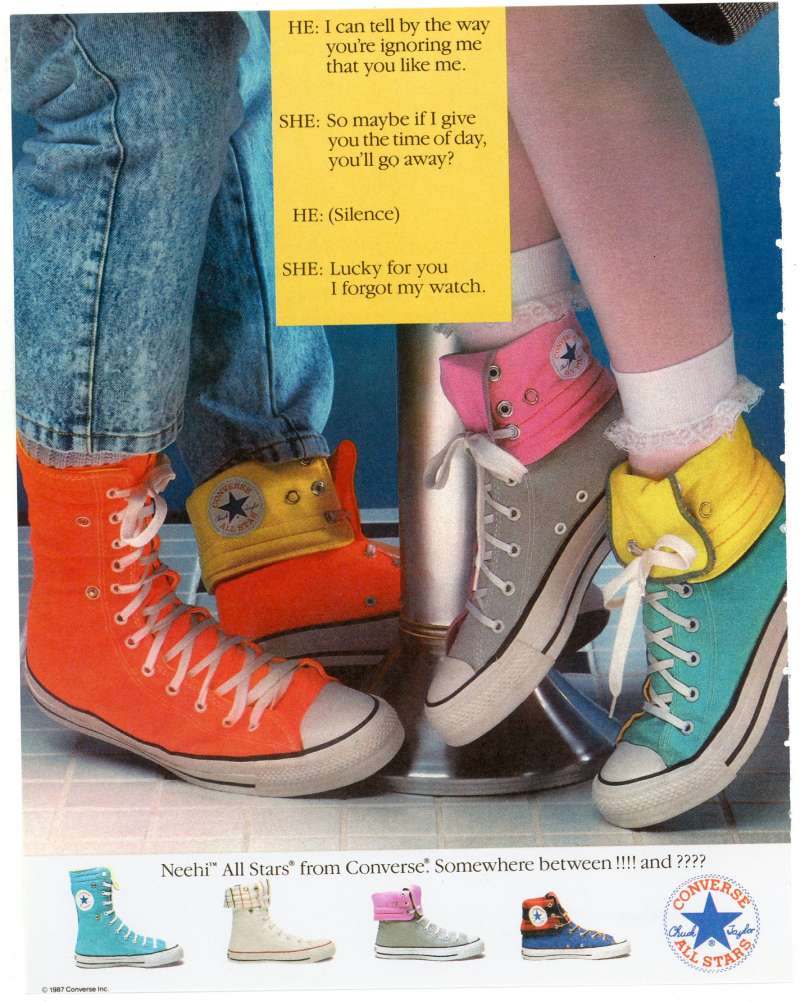
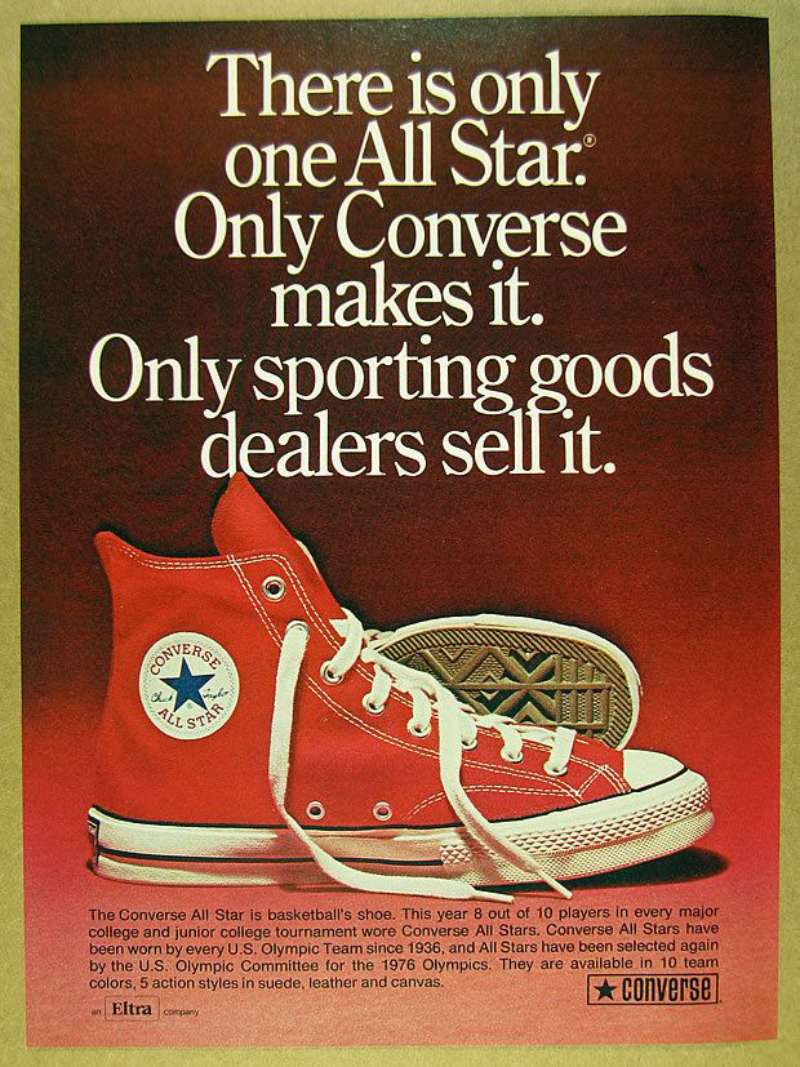
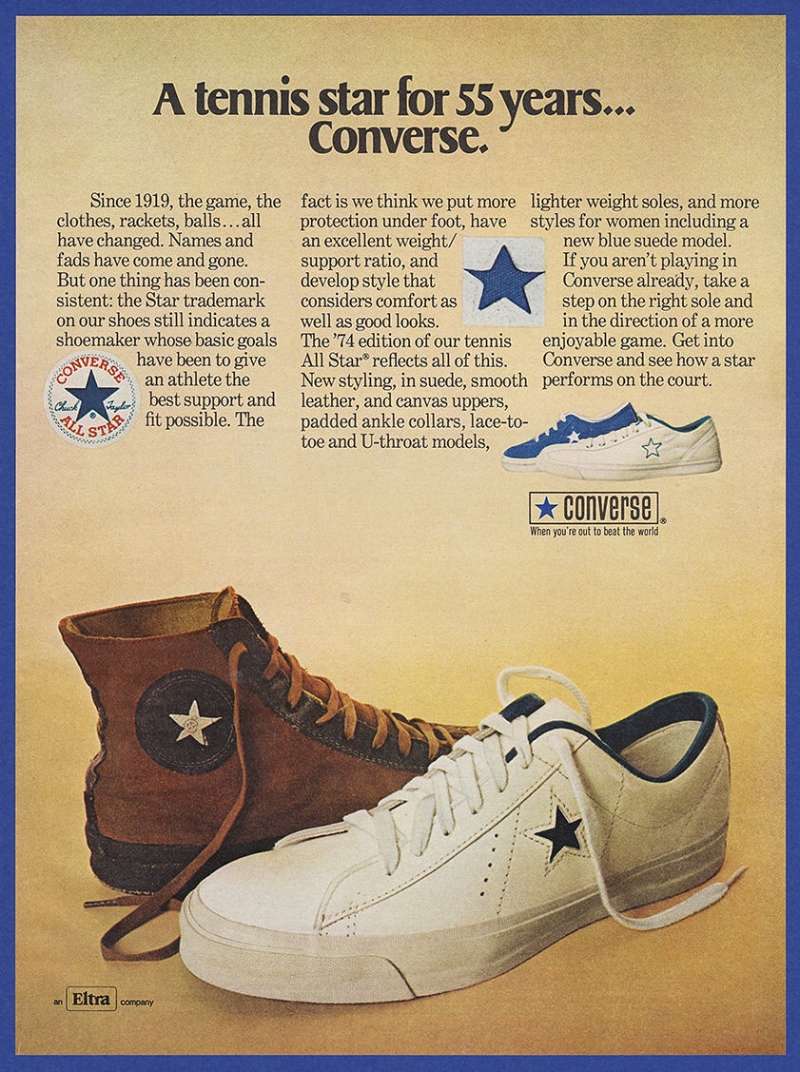
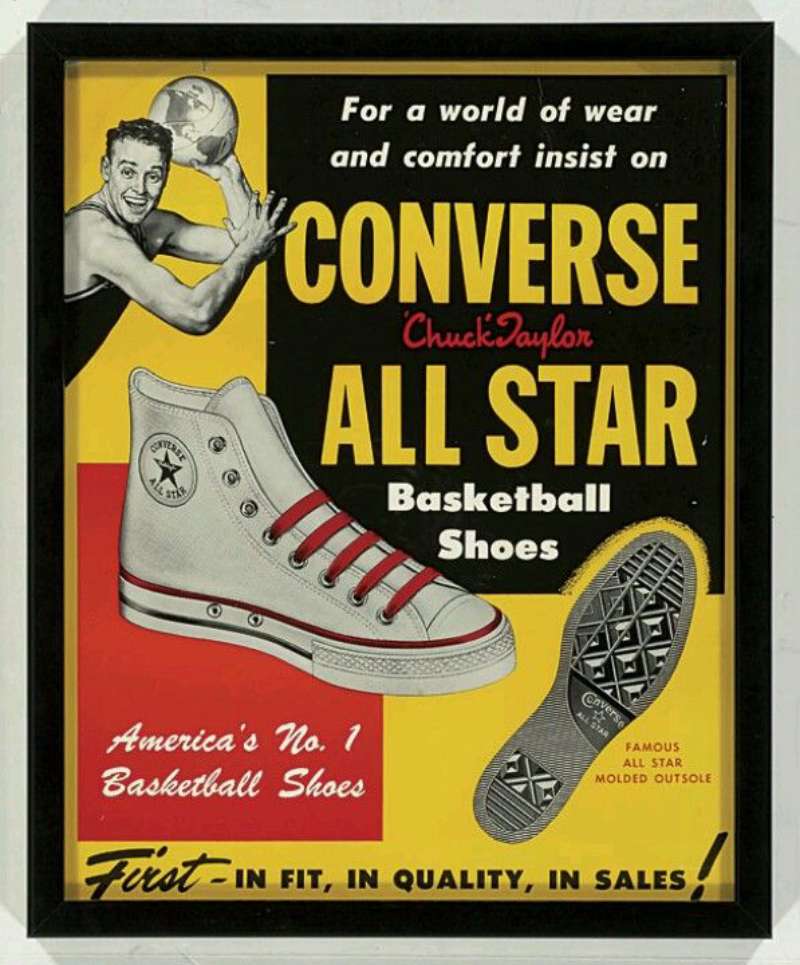
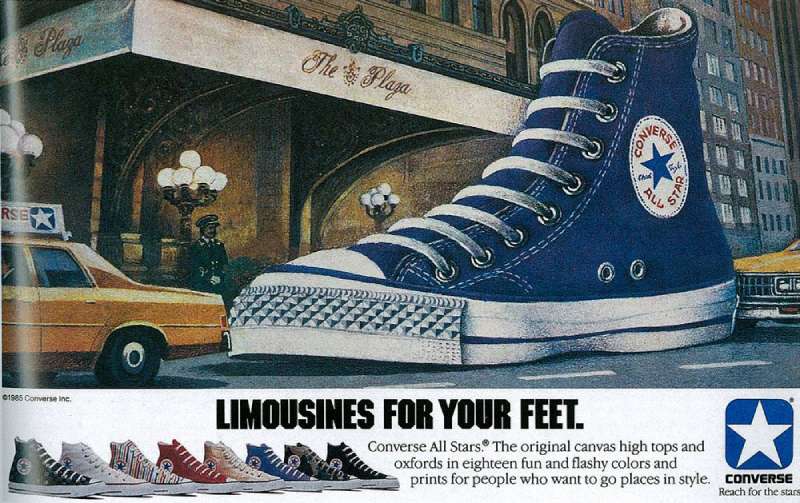
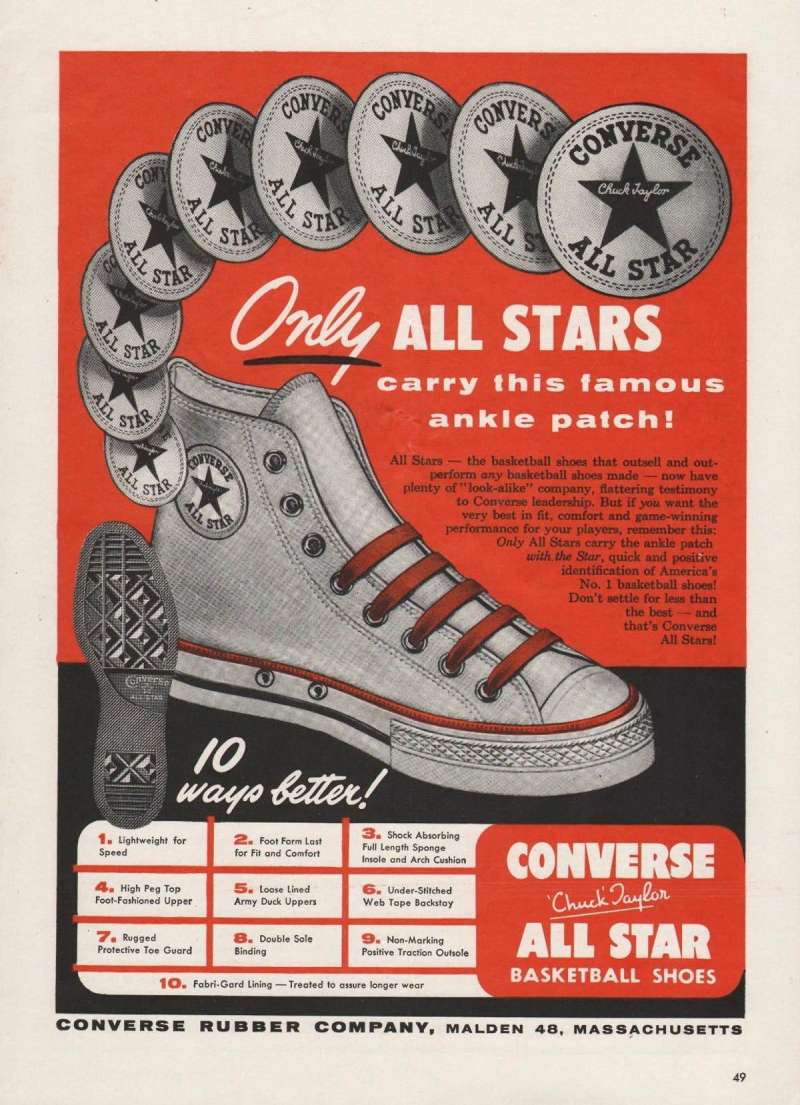
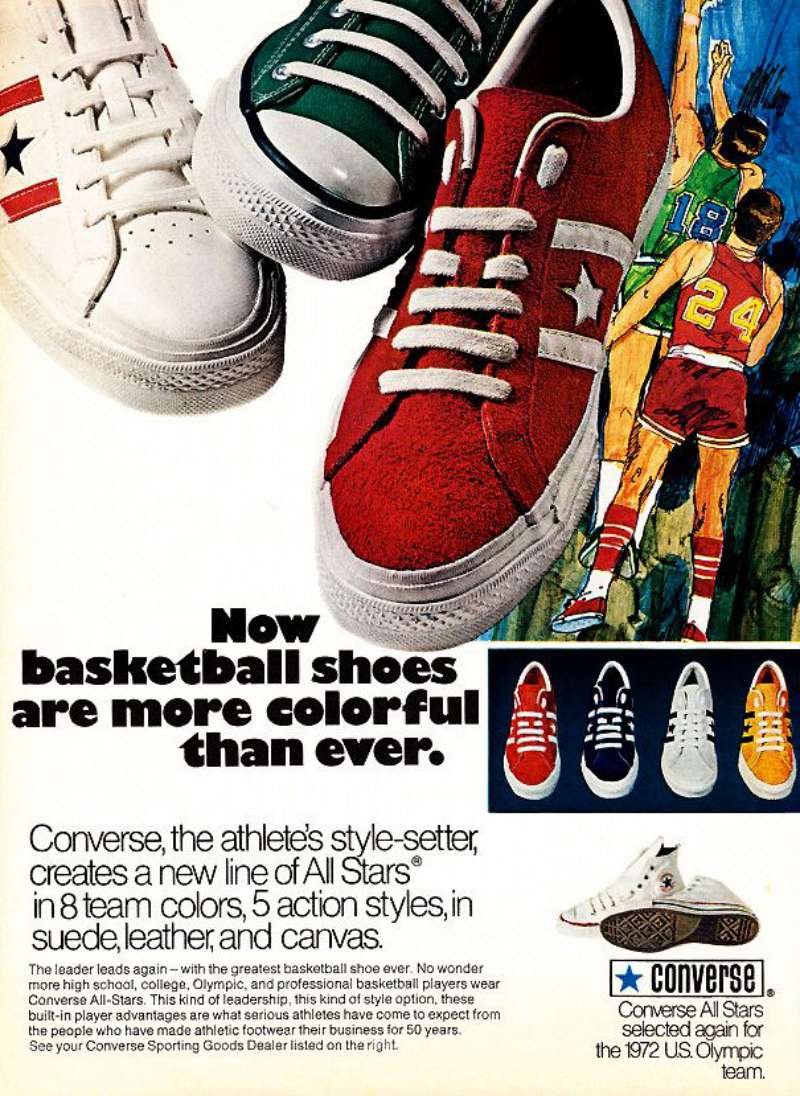
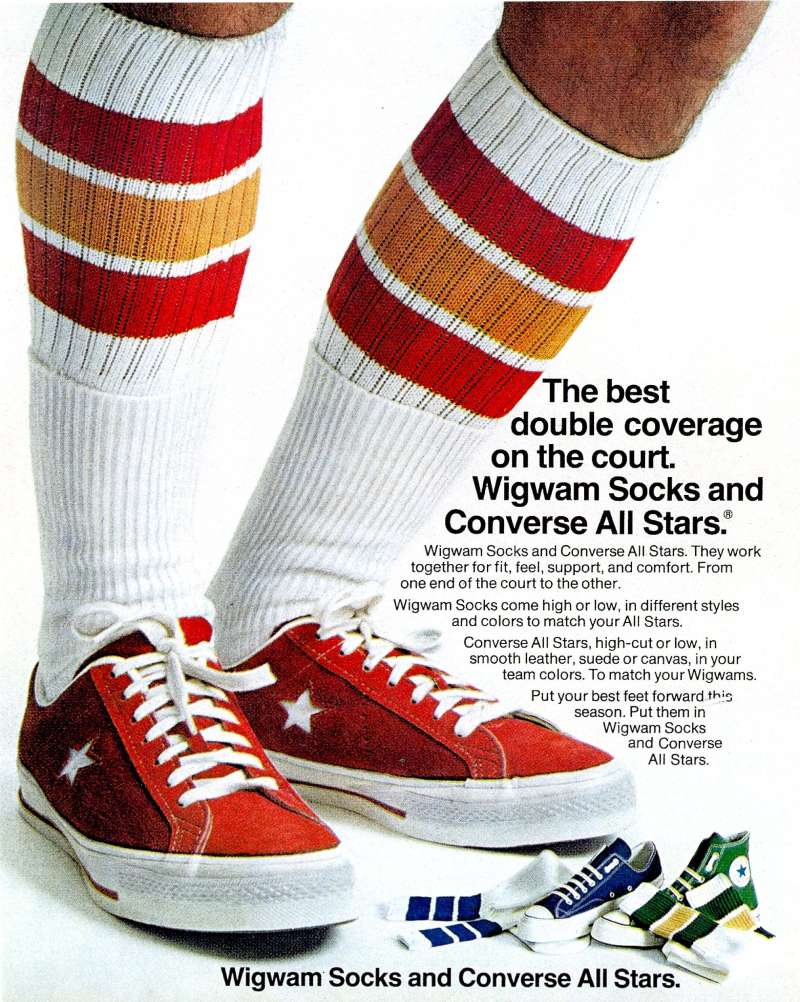
Converse Ads Examples
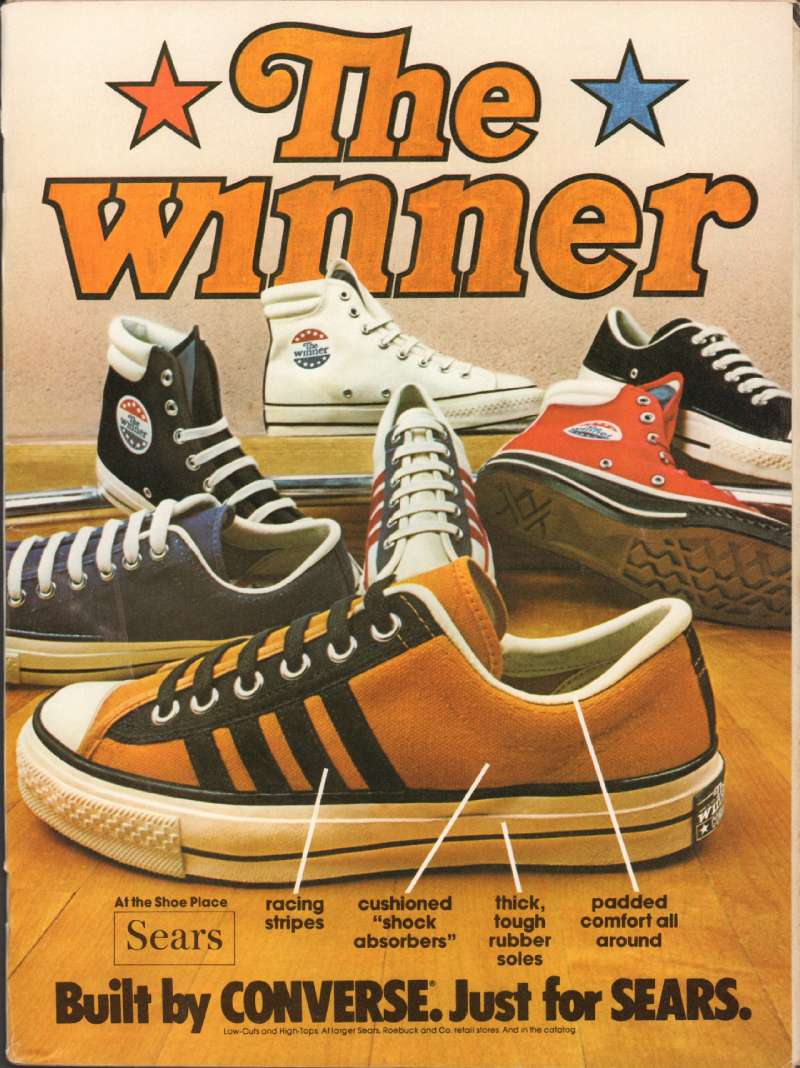
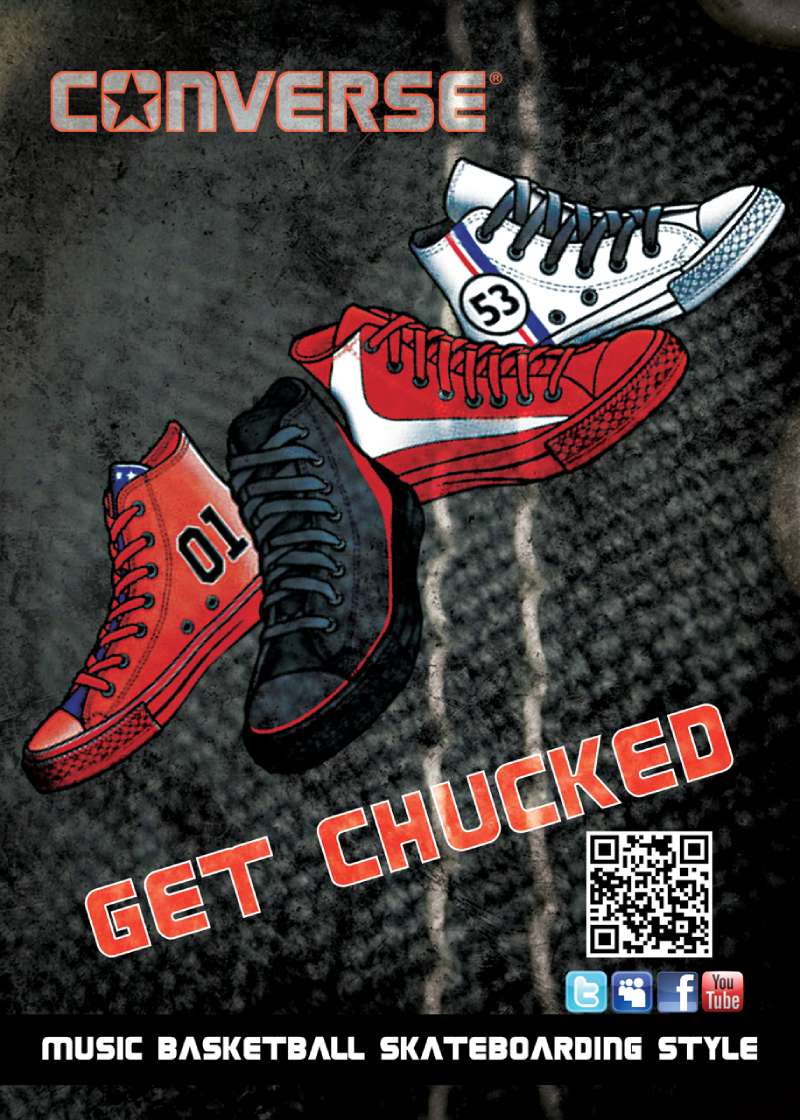
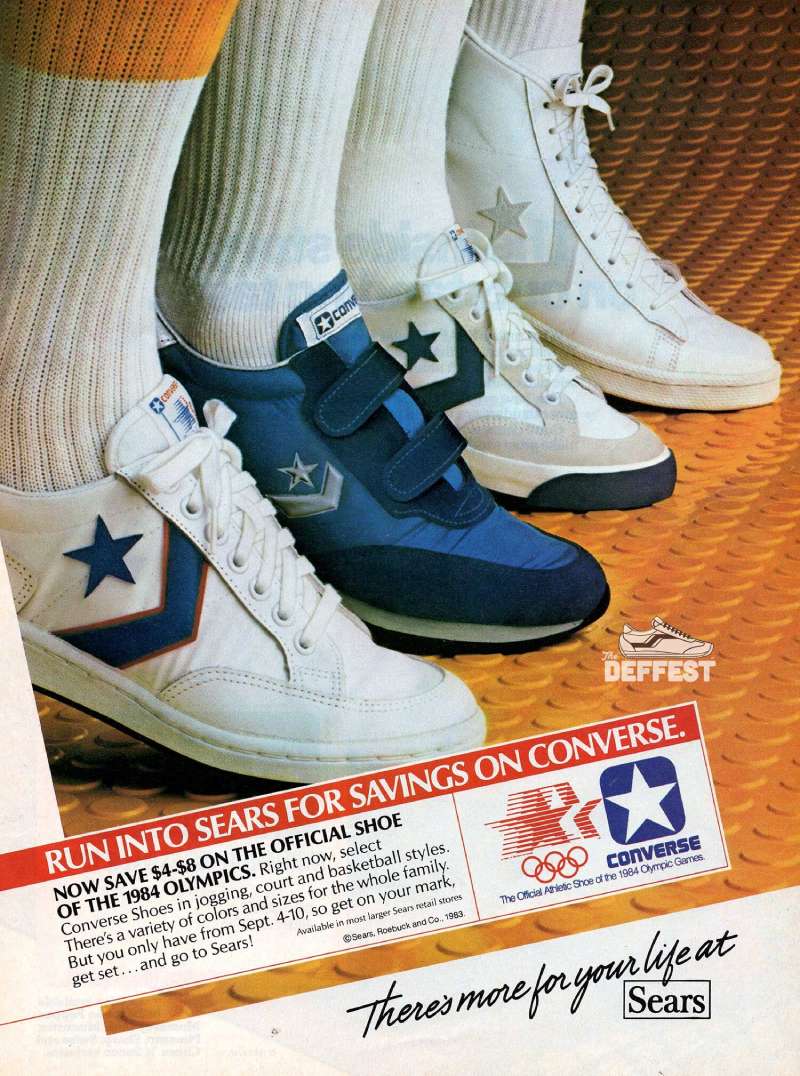
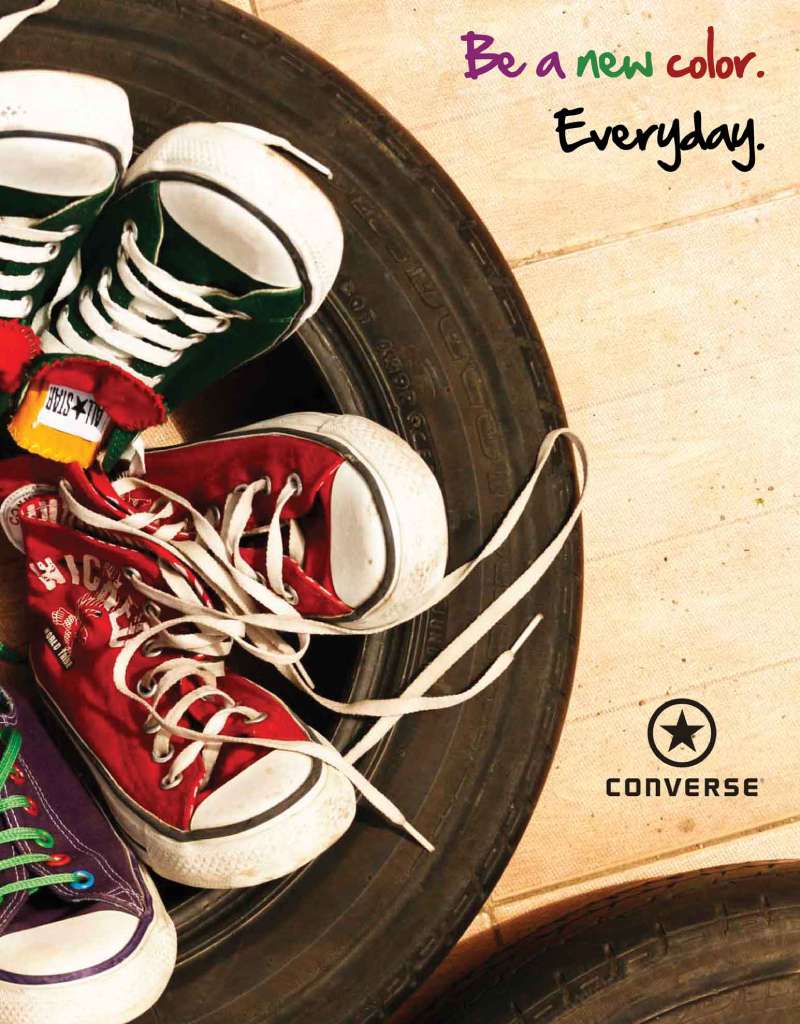
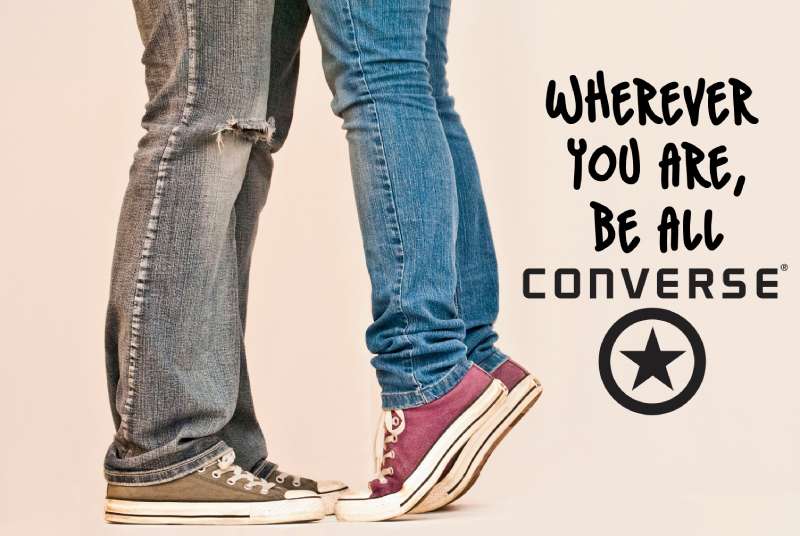
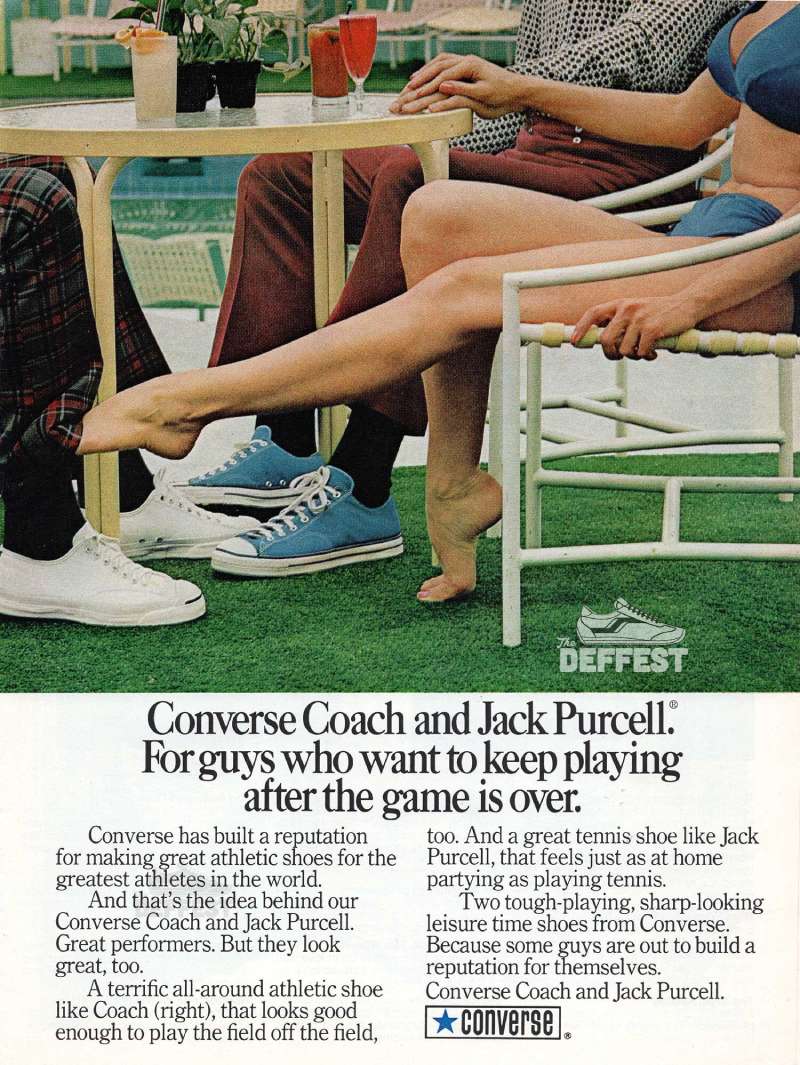
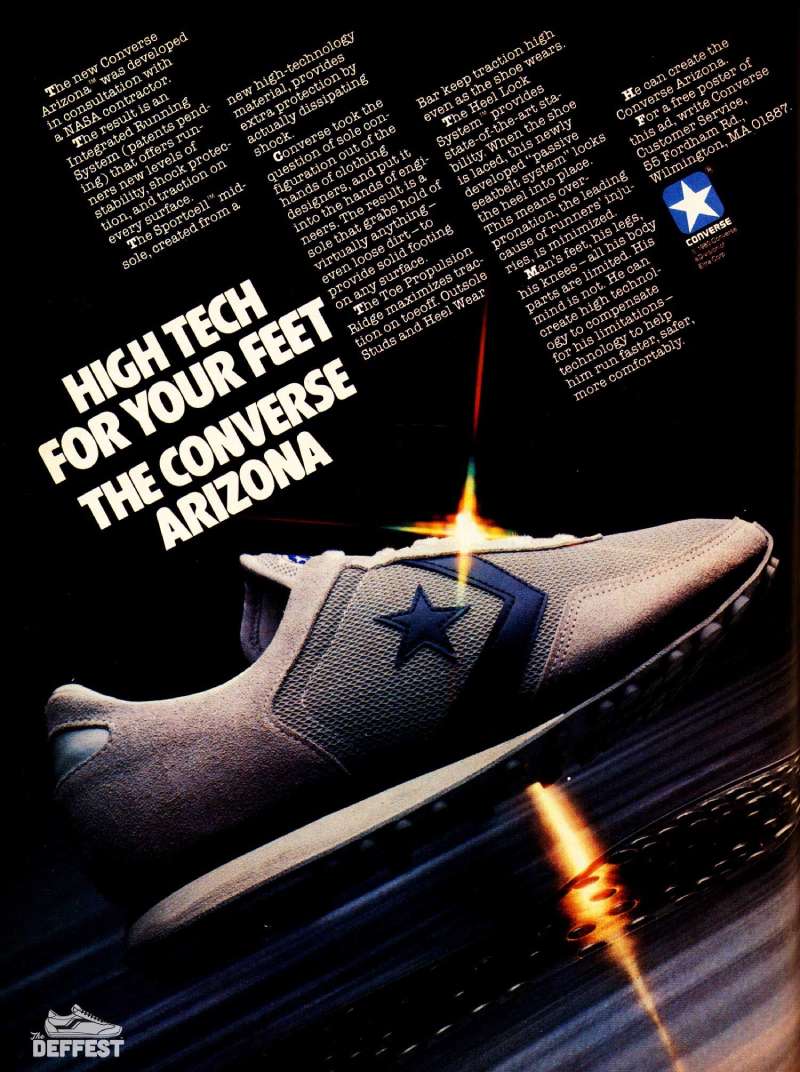
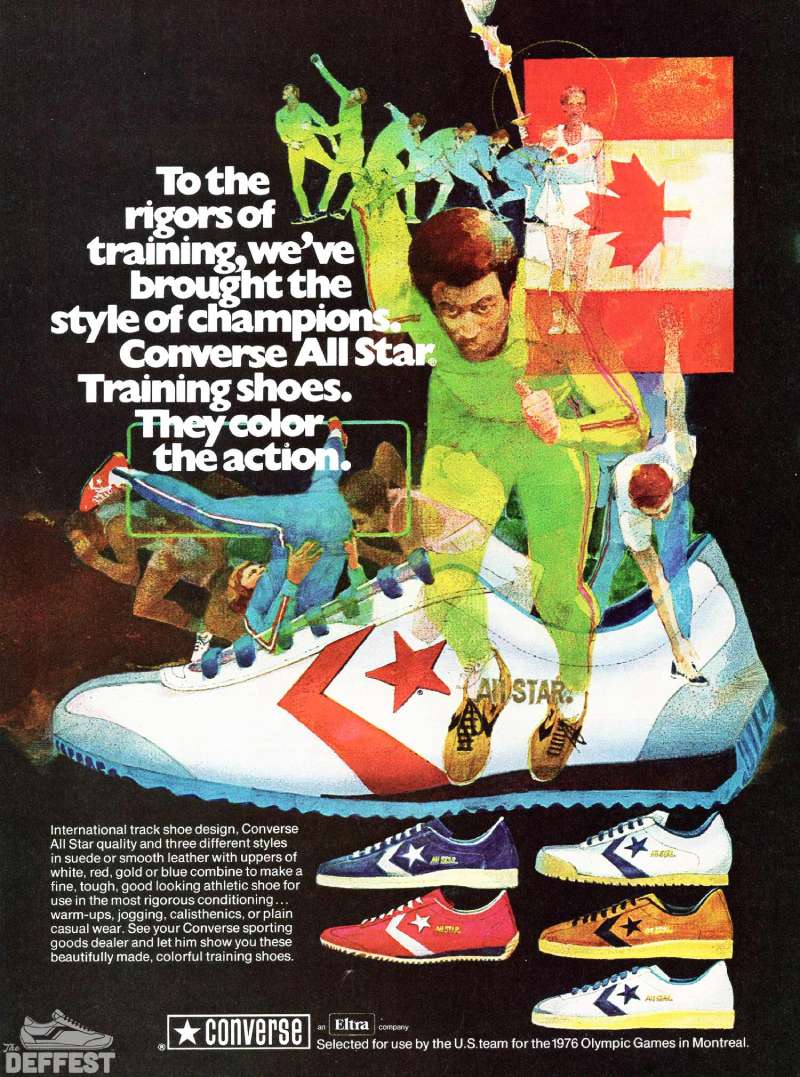
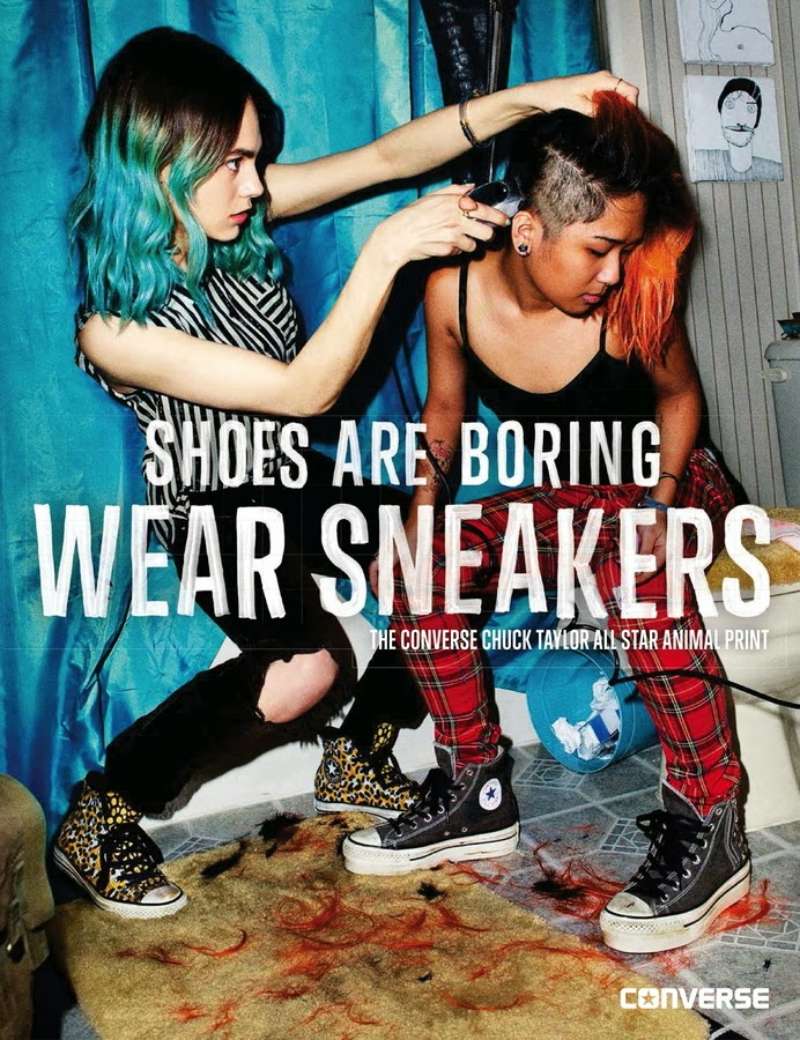
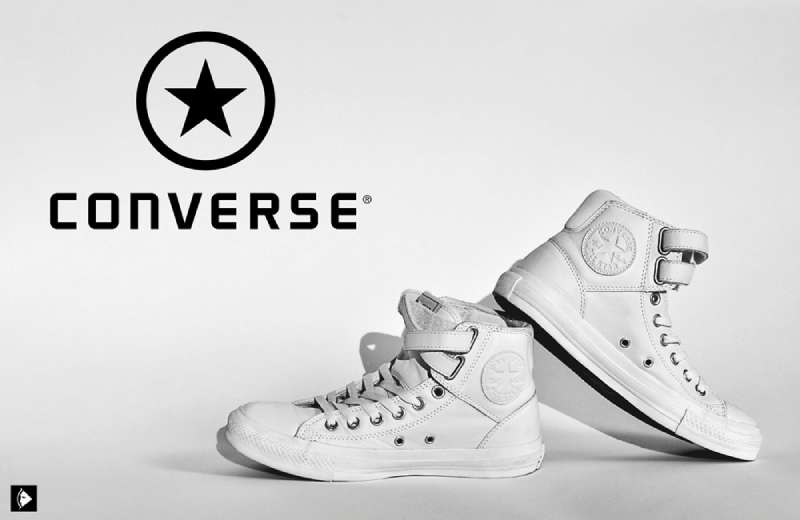
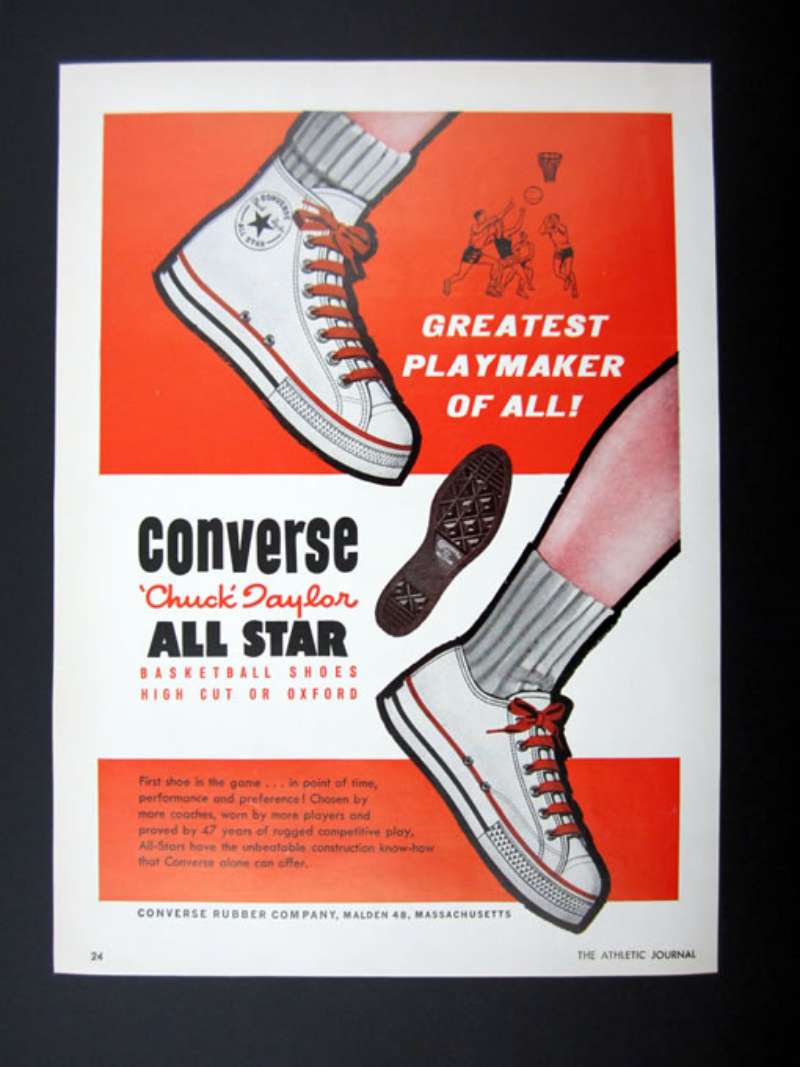
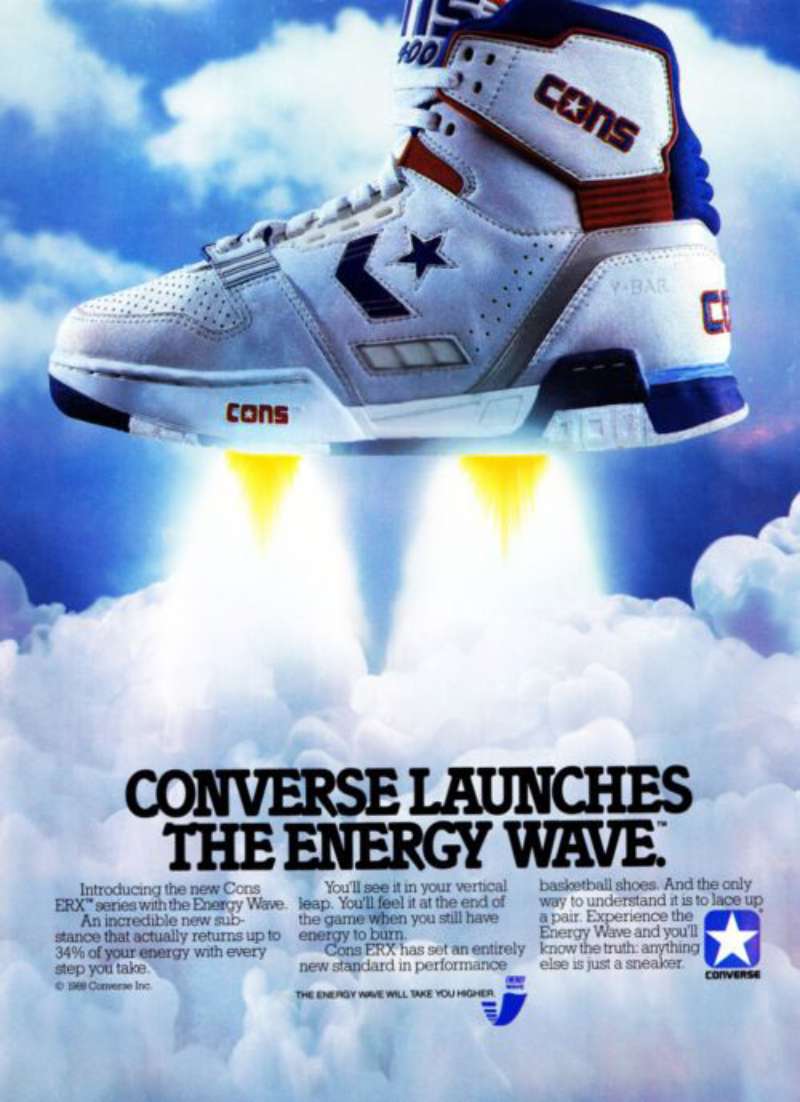


FAQ on Converse Ads
What is the most famous Converse ad?
The 1986 Choose Your Weapon poster, showing Larry Bird and Magic Johnson standing back to back holding their team-coloured Converse Weapon sneakers like pistols. Nothing else in the brand’s print archive gets reprinted, parodied or resold as often.
What is the Converse slogan in 2026?
Go Do That, the closing line of the Love, Chuck campaign that launched in February 2025. Create Next remains active as the platform wordmark. Made By You and Forever Chuck are both retired taglines.
Which celebrities have appeared in Converse ads?
Larry Bird, Magic Johnson and Larry Johnson in the basketball era. More recently: Millie Bobby Brown, Maisie Williams, Vince Staples, Tyler the Creator, Charli XCX, Lil Yachty, Shai Gilgeous-Alexander and skateboarder Alexis Sablone.
Why do Converse ads show worn and dirty sneakers?
Because damage is the proof of ownership. The Made By You portraits treated scuffs, ink and split canvas as the content of the ad, which no competitor could copy without a hundred-year-old product.
Who owns Converse advertising now?
Nike, Inc., which acquired Converse in July 2003 for just over $305 million. Converse keeps its own brand and marketing team at 1 Lovejoy Wharf in Boston, but campaign budgets sit inside Nike’s reporting.
How much does Converse spend on advertising?
Nike does not break out a dollar figure. Its FY2025 filing reports Converse demand creation expense up 11 percent, then down 44 percent in the second quarter of FY2026 as brand marketing was cut.
What was the first Converse ad?
The Converse Basketball Yearbook, launched in 1922 by Chuck Taylor. It ran annually until 1983 and functioned as paid editorial, covering All-American selections and coaching notes with the product kept to the margins.
Why does Converse advertise with musicians instead of athletes?
Because the audience shifted off the court decades ago. Rubber Tracks gave unsigned bands free studio time from 2011, and Three Artists One Song produced original tracks with Pharrell Williams, Frank Ocean and Diplo.
Have Converse ads won awards?
Yes. Three Artists One Song took a One Show Merit Award in Branded Entertainment: Music. Made By You was entered in the D&AD 2015 Outdoor Advertising category. Neither has a Cannes Lions Grand Prix.
Do Converse ads target skateboarders?
Directly, through the CONS line. The Fall 2023 global campaign was built entirely around skate culture, and the We Create Next film Sky was shot by director and skateboarder Paul Hermann.
Conclusion
Converse ads hold up as a design reference because the constraint never moved. One silhouette, one ankle patch, a century of art direction stacked on top.
The archive rewards close reading. Anomaly’s out-of-home portraits, the Forever Chuck films, the Create Next type system and the 2025 Carson collages all answer the same brief with different tools.
Steal the method, not the look.
Photograph the product plainly, keep the palette narrow, set the copy small, and let the wearer sign the work. That approach survives a format change, which is why the 1986 poster and a vertical social cut can share a visual identity.
Few sneaker campaigns get to age this publicly. Converse spent a hundred years proving a brand with no new features can still make work worth studying.

Renowned for his expertise in logo design and visual branding, Bogdan has developed a multitude of logos for various clients.
His skills extend to creating posters, vector illustrations, business cards, and brochures. Additionally, Bogdan's UI kits were featured on marketplaces like Visual Hierarchy and UI8.
He also wrote in the past years on sites like Design Your Way, WebDesignerDepot, WPDean, Designmodo, Speckyboy, Slider Revolution, and more.
- Canva vs PowerPoint: Which Is Better for Presentations? - 22 September 2026
- How to Install Fonts on Mac (Step-by-Step Guide) - 20 September 2026
- From Mockup to Code: How AI-Augmented Development Speeds Up the Design Handoff - 19 September 2026

Bogdan Sandu is a seasoned designer who has been designing websites since 2008. Renowned for his expertise in logo design and visual branding, Bogdan has developed a multitude of logos for various clients. His skills extend to creating posters, vector illustrations, business cards, and brochures. Additionally, Bogdan's UI kits were featured on marketplaces like Visual Hierarchy and UI8. He also wrote in the past years on sites like Design Your Way, WebDesignerDepot, WPDean, Designmodo, Speckyboy, Slider Revolution, and more.
You Might Also Like