


Some magazine covers just stick with you. A single image, a bold headline, a physique that made you rethink your gym routine.
Men’s Health Magazine covers have been doing exactly that since the late 1980s, when Rodale Inc. first launched the publication as a quarterly health guide out of Emmaus, Pennsylvania.
The magazine has since grown into one of the best-selling fitness publications in the world, published by Hearst Communications across dozens of international editions. Its cover stars have ranged from unknown readers to A-list actors like Dwayne Johnson and Chris Hemsworth.
Each cover tells a story about fitness culture, body transformation, and what it means to be a cover model for the biggest men’s health publication on the planet.
This article breaks down the most memorable covers in the magazine’s history, what made them work from a design and editorial perspective, and why they still matter.
Best Men’s Health Magazine Covers
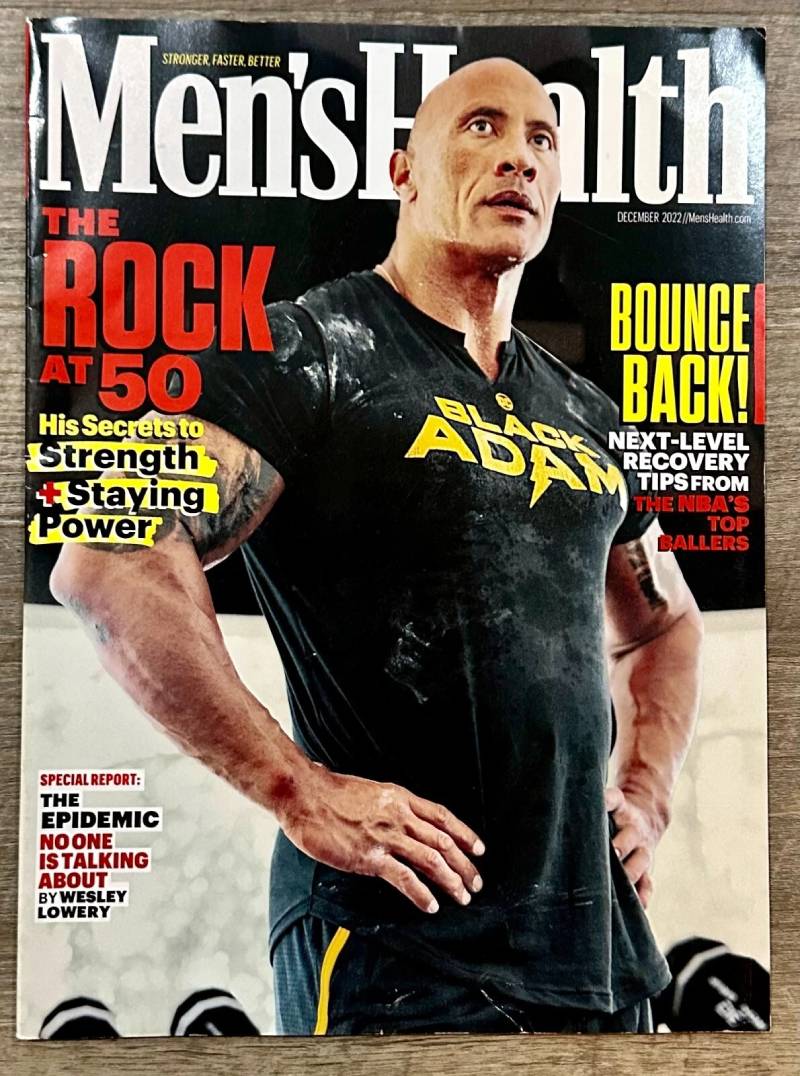
Dwayne “The Rock” Johnson – December 2022
Why This Cover Stands Out
This wasn’t Johnson’s first time on the front page of Men’s Health. But the December 2022 issue hit different.
At 50, he showed up looking better than most guys half his age. The cover lines focused on getting in the best shape of his life for Black Adam, and that promise delivered.
No muscle pads in the suit. All real.
The Cover Star
Dwayne Johnson has been a Men’s Health cover model multiple times across different editions, from the US to Australia. He’s probably the closest thing the magazine has to a permanent cover athlete.
Former WWE champion. Highest-grossing actor in Hollywood for years. The guy travels with a portable gym called “The Iron Paradise,” which weighs about 20 tonnes. That alone tells you everything.
Cover Design Breakdown
The photography by Flannery Underwood placed Johnson center frame with direct eye contact. Classic Men’s Health magazine cover layout with bold typography pushing headlines around his frame.
The visual hierarchy kept his physique as the focal point, with cover story text layered around the edges. Strong use of contrast between the background and the white headline text.
The Cover Story
Johnson talked openly about maintaining happiness, muscle, and balance after 50. He also broke down his diet, calling it “boring” but effective.
The interview covered his refusal to use muscle padding in his Black Adam suit. Most superhero films use padding. Johnson wanted the real thing, and he trained for months to make it happen.
Body Transformation and Fitness Routine
Johnson trains six days a week, splitting muscle groups across different sessions. His routine for Black Adam included:
- Chest and triceps on Fridays
- Legs on Saturdays
- Back and biceps on Mondays
- Five to seven meals per day, roughly 6,000+ calories
He consumes gallons of water daily and skips coffee in favor of energy powder drinks.
Cultural Impact and Reception
The cover reinforced Johnson’s status as probably the biggest male fitness icon in mainstream media. He’s moved beyond the magazine cover into launching Papatui, his own men’s care line, further cementing his wellness brand.
Where to Find This Issue
Collector copies appear regularly on eBay and Amazon. The November 2022 newsstand release is still available through secondhand magazine sellers.
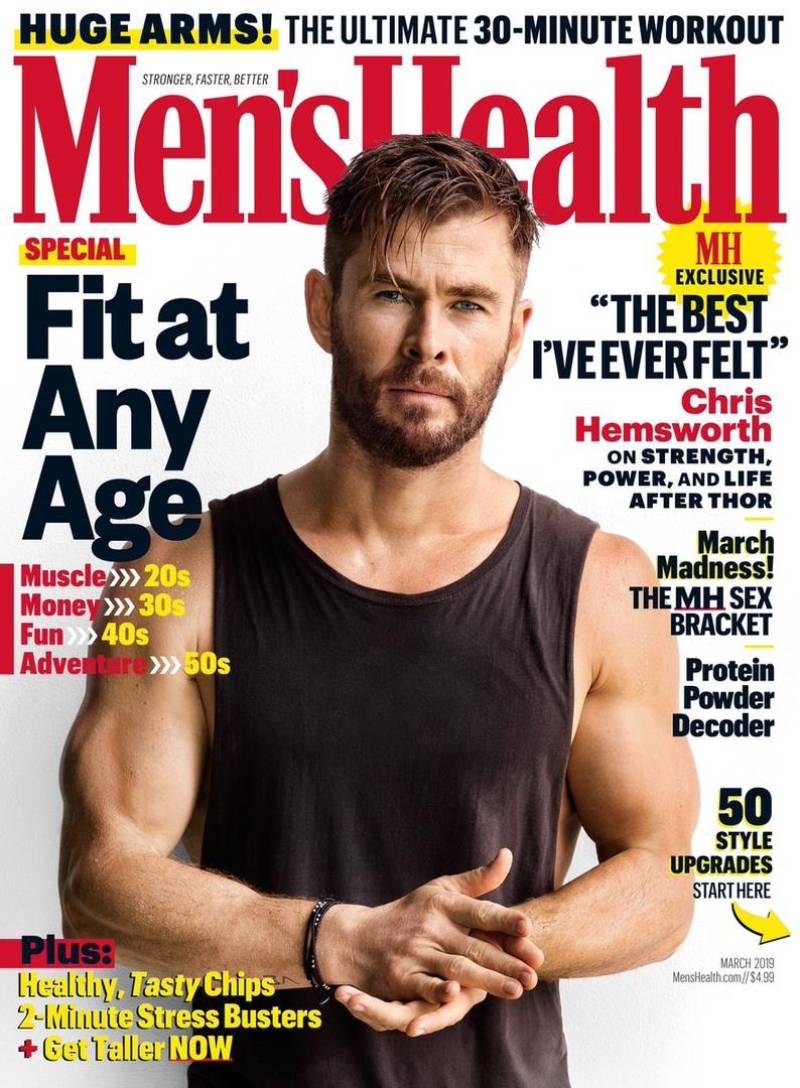
Chris Hemsworth – March 2019
Why This Cover Stands Out
This cover wasn’t just about muscles. Hemsworth used it to launch his fitness app Centr, which made it feel more like a brand moment than a typical celebrity shoot.
Shot by photographer Steven Chee in Byron Bay, the images had a raw, Australian feel that broke from the usual studio setup.
The Cover Star
Chris Hemsworth doesn’t need much introduction. He’s the guy who became Thor and never really stopped looking like him.
At the time of this shoot, Hemsworth was coming off multiple Marvel films and preparing for Avengers: Endgame. His net worth sat around $90 million.
Cover Design Breakdown
The outdoor shoot gave the cover a different texture compared to standard studio photography. Natural lighting, no artificial backdrops. The emphasis was on Hemsworth’s physique in workout gear rather than the typical shirtless pose.
Cover text stayed minimal. The masthead sat at the top with clean sans-serif lettering.
The Cover Story
Hemsworth opened up about anxiety early in his career. He almost quit acting before landing Thor.
“I was about to quit,” he said. “I got more and more anxious to the point where I couldn’t harness or use that energy.”
The interview also covered his Centr app launch and his approach to holistic health beyond just lifting weights.
Body Transformation and Fitness Routine
Hemsworth was pumping 25kg dumbbells during the shoot itself. His training for Thor roles typically involves heavy compound lifts, functional training, and surfing for cardio.
He mentioned maintaining fitness because it makes him feel better, not just for the camera. Though he admitted checking his physique when paparazzi are around.
Cultural Impact and Reception
The cover was picked up by Men’s Health editions around the world. It helped position Hemsworth not just as an actor, but as a legitimate fitness entrepreneur.
Centr went on to become one of the more successful celebrity fitness apps on the market.
Where to Find This Issue
The March 2019 issue is available on Amazon. Look for the version without a subscriber label on the cover if you want the newsstand edition.
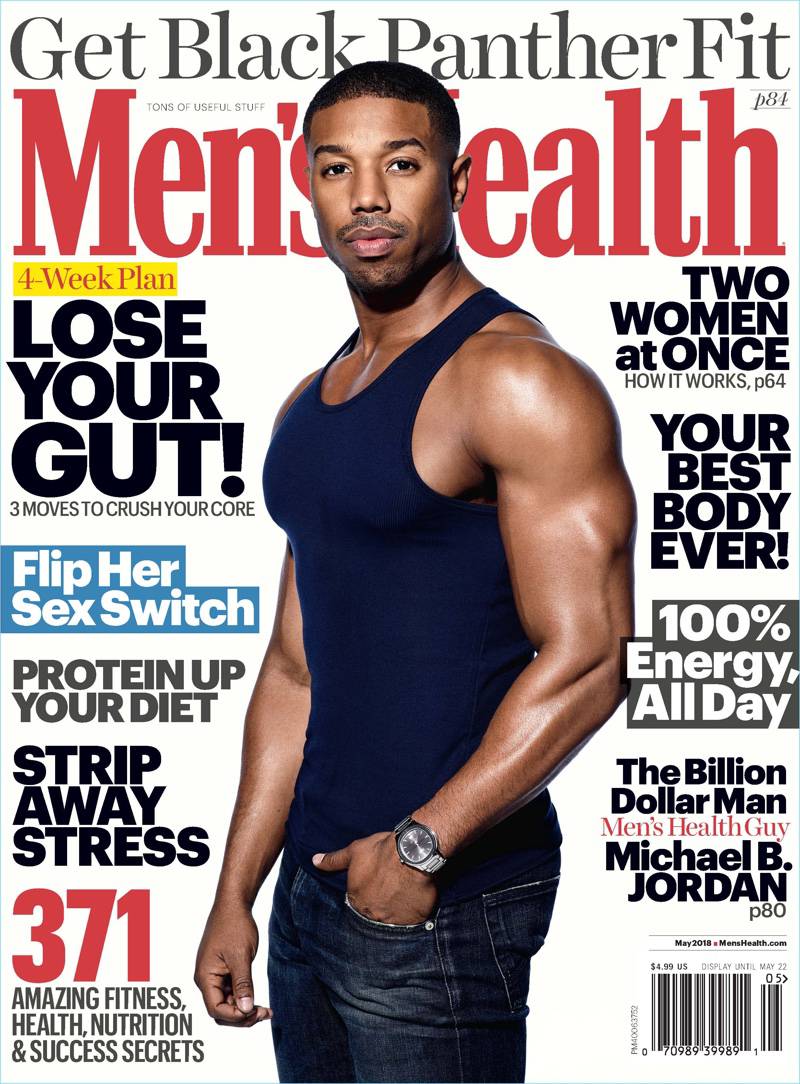
Michael B. Jordan – 2018
Why This Cover Stands Out
Jordan was at the peak of his career trajectory when this cover dropped. Fresh off Black Panther and riding high from his Creed physique, the cover captured a guy who had genuinely transformed his body multiple times for film roles.
The Cover Star
Michael B. Jordan went from The Wire and Friday Night Lights to becoming one of Hollywood’s most bankable actors. His roles as Adonis Creed and Erik Killmonger required him to look like two very different kinds of fighter.
For Killmonger, he added 15 to 20 pounds of muscle on top of his already impressive Creed physique.
Cover Design Breakdown
The cover photography showed Jordan’s muscular frame with the standard Men’s Health approach. Direct gaze, squared shoulders, bold headline text.
The alignment kept the cover star centered, with text blocks positioned to frame his silhouette. The color palette stayed within warm tones that complemented his skin.
The Cover Story
Jordan talked about competition. Growing up with the name “Michael Jordan” meant he had something to prove in everything he did.
“I’m competitive; I want to compete in anything I do; that came from my name,” he told Men’s Health. He also discussed his production company and opening doors for other actors.
Body Transformation and Fitness Routine
His trainer Corey Calliet designed programs that shifted dramatically between films:
- For Creed: Cardio-heavy. Boxing, interval training, sprint work, plyometrics
- For Black Panther: Bodybuilding-style. Heavy dumbbells, bench presses, two to three gym sessions per day
- Six meals per day, a gallon and a half of water daily
- Seven days a week training at his peak
He was pushing 110-pound dumbbells on incline presses for the Killmonger role. That’s not casual gym work.
Cultural Impact and Reception
Jordan’s cover represented a shift in who Men’s Health was putting on its front page. He brought a younger, more diverse audience to the magazine. The Killmonger role specifically resonated with readers as a fitness transformation story with real stakes.
He later sought therapy because of how deeply he immersed himself in the role.
Where to Find This Issue
Available through online magazine retailers and eBay. The 2018 issue is a collector’s item given the cultural moment around Black Panther.
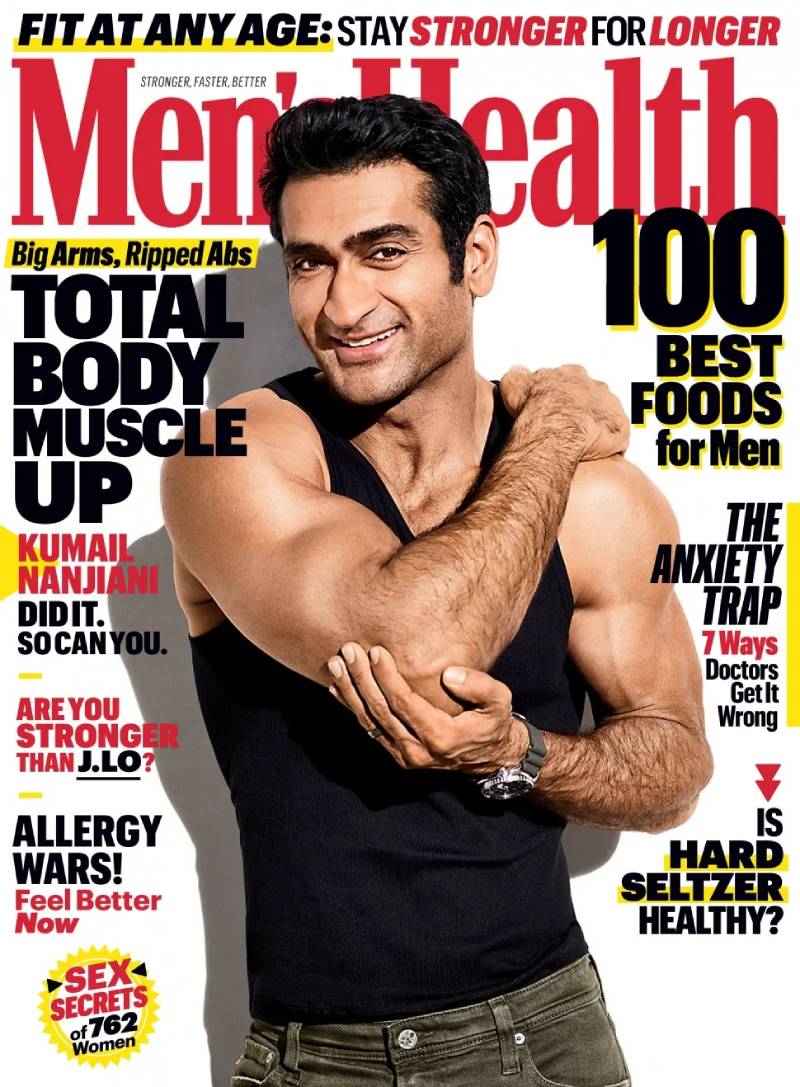
Kumail Nanjiani – April 2020
Why This Cover Stands Out
Nobody saw this one coming. Nanjiani was known as the funny, skinny guy from Silicon Valley. Then he showed up looking completely different, and the internet lost its mind.
The cover shoot by Emily Shur had Nanjiani recreating classic movie scenes from Top Gun, Die Hard, and American Psycho. It was equal parts humor and genuine shock factor.
The Cover Star
Kumail Nanjiani is a Pakistani-American comedian, actor, and Oscar-nominated screenwriter (for The Big Sick). He transformed his body to play Kingo in Marvel’s Eternals.
His transformation photos broke social media before the cover even launched.
Cover Design Breakdown
The April 2020 issue leaned into the humor angle. Nanjiani posed in scenarios that played against his previous image, and the cover design matched that energy with playful balance between fitness photography and comedic staging.
The Cover Story
Nanjiani was honest about the mental side of his transformation. He talked about developing body dysmorphia after getting in shape.
“I’d look in the mirror and I’d see my abs, and when I looked again, they would fade. I would just see the flaws.”
His wife Emily V. Gordon described the early days of his training: “For an hour, you couldn’t really count on him to have a conversation. His body was adjusting.”
Body Transformation and Fitness Routine
Nanjiani trained intensely for over a year. The goal was specific: he didn’t just want to be in a Marvel movie, he wanted to be a Marvel superhero.
His Silicon Valley co-star Thomas Middleditch noted that comedians often secretly want the tough-guy physique, and when Nanjiani got the chance, he went all in.
Cultural Impact and Reception
This cover challenged the typical Men’s Health cover model archetype. Nanjiani wasn’t an action star or professional athlete. He was a comedian who got jacked, and that made the cover feel more relatable to a lot of readers.
The response was massive. Half the reactions were amazement at his body. The other half were conversations about body image and what it means when a comedian suddenly has abs.
Where to Find This Issue
The April 2020 issue is available on Amazon. It dropped during the early pandemic, which makes physical newsstand copies a bit harder to find.
Noah Galloway – November 2014
Why This Cover Stands Out
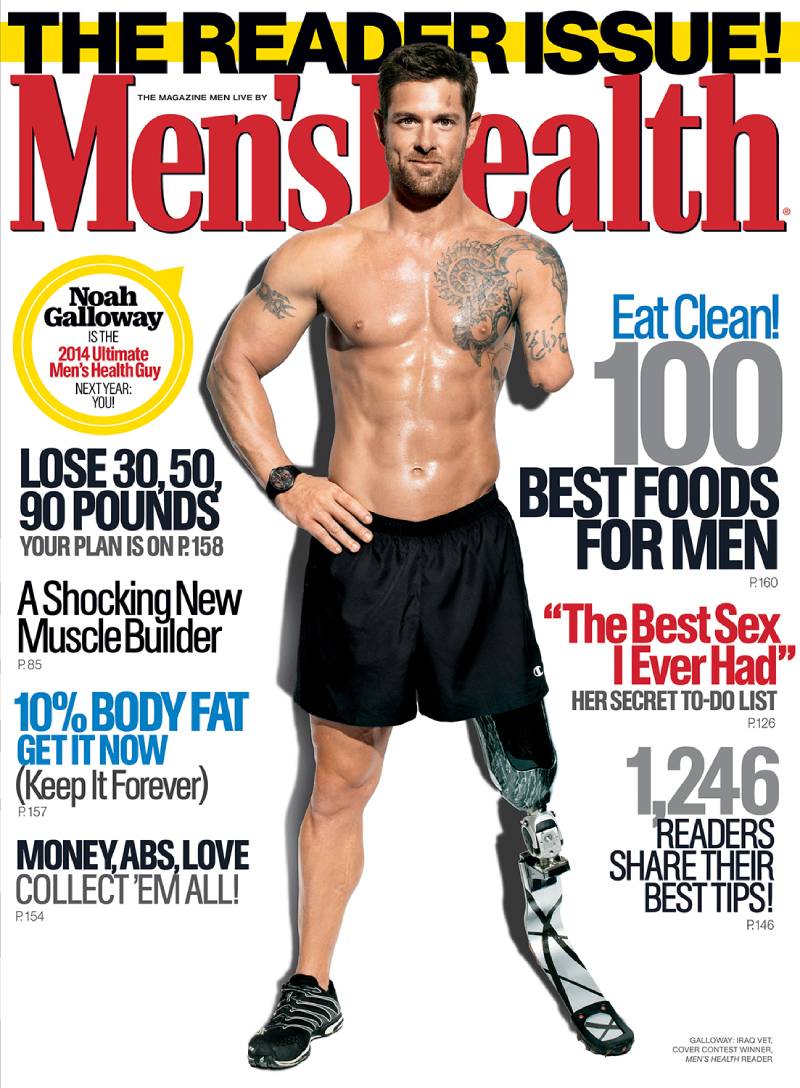
This is probably the most important cover in Men’s Health history. Noah Galloway became the first reader ever to appear on the cover in the magazine’s 26-year run. He was also the first amputee and veteran to land the spot.
No celebrity. No actor. A real guy who fought his way back.
The Cover Star
Noah Galloway is a former U.S. Army Sergeant from Birmingham, Alabama. He served with the 101st Airborne Division during Operation Iraqi Freedom.
On December 19, 2005, his Humvee hit an IED in Yusafiah, Iraq. He lost his left arm above the elbow and his left leg above the knee. His jaw had to be wired shut.
What followed were years of depression, drinking, and smoking. Then everything changed.
Cover Design Breakdown
Shot by photographer Peter Yang, the cover showed Galloway standing strong with his prosthetic leg visible. No attempt to hide his injuries. The design choice to show his body honestly made this cover stand apart from decades of airbrushed perfection.
The storytelling was built into the image itself, no headline needed to explain what made this man remarkable.
The Cover Story
Galloway was selected from nearly 1,300 entries in the magazine’s first-ever “Ultimate Men’s Health Guy” search. Readers cast over 400,000 votes to narrow the field.
“I looked back, and my depression terrified me,” Galloway told the magazine. “I never wanted to experience that again. That’s why I got into races.”
Body Transformation and Fitness Routine
Galloway started working out at a 24-hour gym at 2 a.m. to avoid being seen. He progressed from basic workouts to:
- Multiple marathons
- Seven Tough Mudder events
- A dozen Spartan Races
- The Spartan Death Race in Vermont (finishing in the top 20 out of 100 entrants)
- CrossFit training
Cultural Impact and Reception
The cover changed the conversation about what a fitness magazine cover could represent. It wasn’t about aesthetics anymore. It was about resilience.
Galloway went on to appear on Dancing with the Stars (finishing third), The Ellen DeGeneres Show, and Fox’s American Grit. He launched the No Excuses Charitable Fund and became a Kenneth Cole fragrance spokesman.
Where to Find This Issue
The November 2014 issue appears regularly on eBay. Given its historical significance, it commands a slight premium over standard back issues.
Vin Diesel – January/February 2017
Why This Cover Stands Out
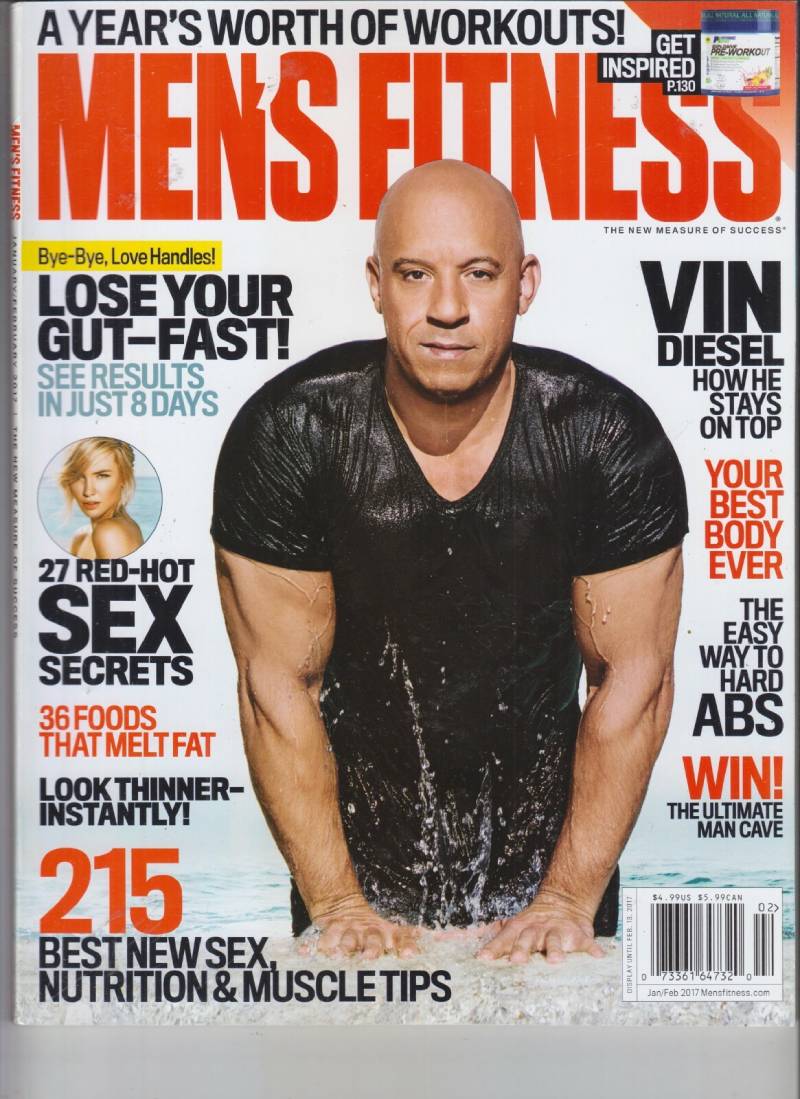
Vin Diesel on the cover of Men’s Health was a deliberate shift. Starting in 2004, the magazine moved toward putting celebrities on the cover with their shirts on, departing from the shirtless anonymous models of the 1990s. Diesel’s cover was a peak example of this strategy working.
The Cover Star
Vin Diesel is an icon of Hollywood action films, best known for the Fast & Furious franchise and the Chronicles of Riddick series. His physique has been part of his brand since the beginning of his career.
Men’s Health’s target reader, a male with a median age of 44.7 and income over $92,000, maps closely to Diesel’s fanbase.
Cover Design Breakdown
Diesel stood square to the camera with direct eye contact. This is standard print magazine cover convention, but Diesel’s presence made it work harder than usual.
The cover used his full name prominently. The typographic hierarchy placed his name near the top with the main headline “blueprint to wage war on flab” below. Aggressive language, very on-brand for the magazine’s fitness-focused cover text.
The Cover Story
The feature covered Diesel’s health routine, lifestyle, and his approach to fitness in his late 40s. The magazine positioned him as both aspirational and accessible.
Body Transformation and Fitness Routine
Diesel’s routine has been consistent over the years: heavy compound movements, a protein-focused diet, and a schedule that works around demanding film shoots. Nothing flashy, just consistent.
Cultural Impact and Reception
Media studies courses have used this cover as a case study in magazine design and representation of masculinity. The image became a standard reference point for analyzing how men’s fitness magazines position their subjects.
Where to Find This Issue
Available through eBay sellers and Amazon. The January/February 2017 combined issue is easy to find at standard prices.
David Beckham – March/April 2025 (Fit at Any Age Issue)
Why This Cover Stands Out
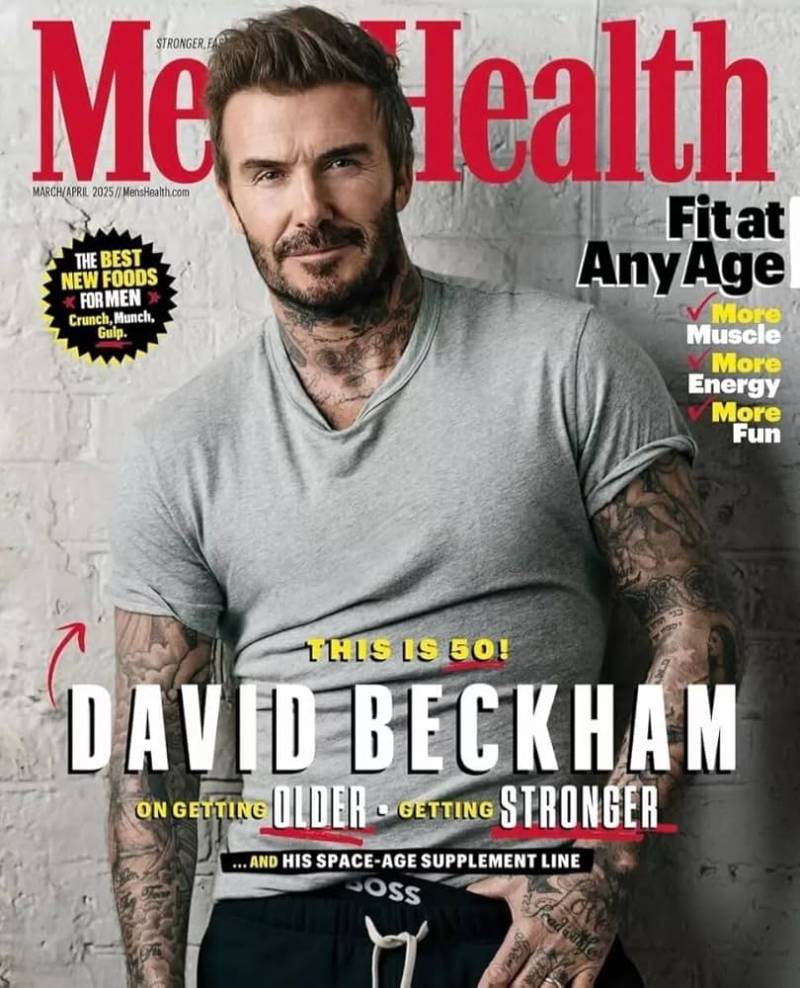
Beckham at nearly 50 looking better than he did during his playing days. That’s the headline, and that’s what sells this cover.
He fronted 10 international editions of Men’s Health simultaneously with this issue. That kind of global reach is rare even for the biggest celebrities.
The Cover Star
David Beckham retired from professional football 12 years ago. He’s 49 (turning 50 in May 2025), co-owns Inter Miami CF, and somehow keeps getting fitter.
He was previously named People’s “Sexiest Man Alive” and has covered Men’s Health before (March 2012), but this issue was a different beast.
Cover Design Breakdown
The cover featured bold “Fit at Any Age” headline treatment with Beckham’s physique front and center. At 140 pages, the issue was thicker than usual. A flip cover dedicated to Pharrell Williams added 60 extra pages of fashion content.
The Cover Story
Beckham was refreshingly honest. He admitted he “hated pull-ups” during his playing career and could barely do two or three.
Now he does them daily. His trainer Bobby Rich convinced him to add upper-body work, which helped address the back pain he’d been dealing with since retirement.
On turning 50: “As long as I’m fit and healthy and my family is healthy, that’s all I care about.”
Body Transformation and Fitness Routine
Beckham trains five to six days a week with four pillars:
- Calisthenics: Pull-ups, hanging knee raises, pushups daily
- Strength: Deadlifts, squats, bench presses with rotating variations
- Cardio: Padel tennis three times a week
- Recovery: Ice baths, acupuncture, cupping, contrast sauna sessions
Diet is straightforward. Cheese omelet for breakfast. Fish, chicken, and greens for lunch and dinner. His friends say he has a “metabolism like a Ferrari.”
Cultural Impact and Reception
The cover resonated with Men’s Health’s aging readership. It addressed a real concern: can you actually get fitter after 50? Beckham’s answer was convincingly yes.
Where to Find This Issue
The March/April 2025 issue is currently available on newsstands and through online retailers including eBay. Both the US and UK editions are in circulation.
Terry Crews – May 2019
Why This Cover Stands Out
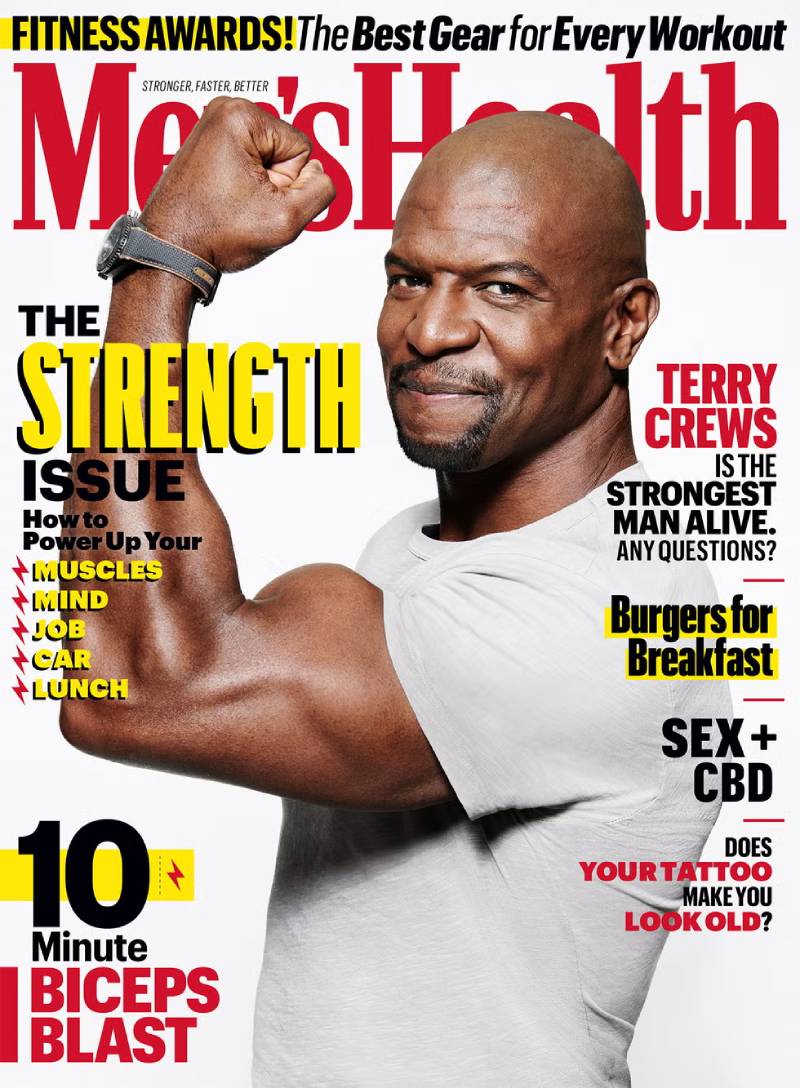
Terry Crews on the cover of Men’s Health wasn’t just about his physique. By 2017, Crews had become one of the most vocal male celebrities talking about mental health, toxic masculinity, and personal accountability.
The cover combined physical fitness with emotional vulnerability in a way the magazine hadn’t done much before.
The Cover Star
Former NFL linebacker turned actor. Crews played in the league for six seasons before transitioning to Hollywood, landing roles in White Chicks, the Expendables franchise, and Brooklyn Nine-Nine.
He’s also known for his Old Spice commercials, which became viral cultural moments on their own.
Cover Design Breakdown
The cover design kept things relatively clean with Crews’ massive frame doing most of the work. His expression was approachable rather than intimidating, which matched the tone of the interview inside.
The Cover Story
Crews spoke about his personal struggles, including his past addiction to adult content and how it nearly destroyed his marriage. He also discussed his experiences with toxic masculinity and the importance of vulnerability for men.
This was before his highly publicized #MeToo testimony in 2018, but the seeds of that honesty were already visible in this cover story.
Body Transformation and Fitness Routine
Crews is known for his dedication to daily training. His routine is built around functional movements and bodybuilding-style splits. He’s been open about training being a form of therapy for him, not just physical maintenance.
Cultural Impact and Reception
The cover positioned Crews as more than a fitness figure. It helped redefine what a Men’s Health cover star could talk about. Emotional health, addiction, marriage. Topics that the magazine’s readership didn’t always get from their cover athletes.
Where to Find This Issue
Copies are available through eBay and Amazon. Standard pricing for back issues.
Zac Efron – May 2016
Why This Cover Stands Out
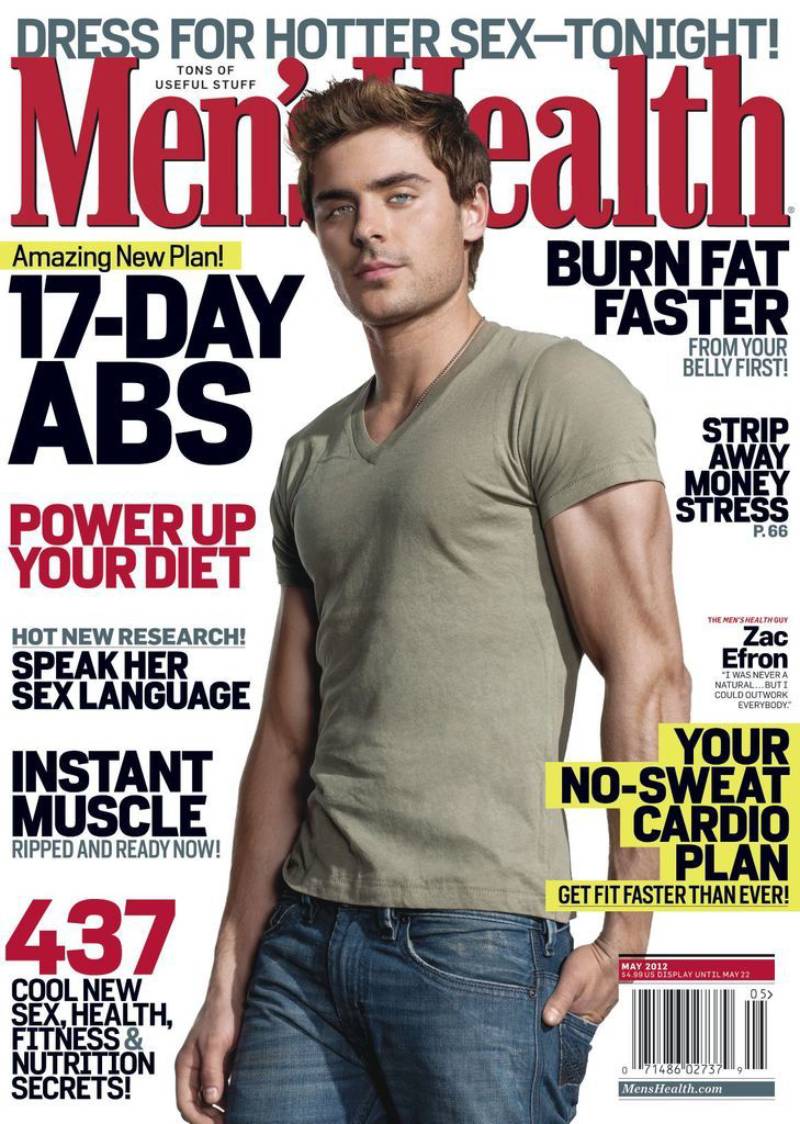
Efron’s transformation for Baywatch was one of the most talked-about celebrity body changes of the 2010s. The Men’s Health cover captured him at peak condition, and it became a reference point for fitness transformation content across the internet.
The Cover Star
Zac Efron went from Disney Channel teen star (High School Musical) to legitimate action film presence. His Baywatch physique put him alongside Dwayne Johnson, which is not a comparison most actors can survive.
He did more than survive. He held his own.
Cover Design Breakdown
Standard Men’s Health approach. Shirtless pose, direct eye contact, clean background. The design elements were kept minimal to let Efron’s physique do the talking.
The Cover Story
The feature focused on his Baywatch training and the intensity required to film alongside The Rock. Efron discussed pushing his body beyond previous limits and the mental discipline that required.
Body Transformation and Fitness Routine
Efron’s trainer designed a bodyweight-focused program that included a 1,000-rep workout. The routine mixed bodyweight exercises for fat loss with functional muscle-building movements.
What surprised people: Efron relied heavily on bodyweight training rather than heavy weights. Pushups, pull-ups, explosive movements. Practical stuff that translated to what his character needed to do on screen.
Cultural Impact and Reception
The cover became one of the most shared Men’s Health issues on social media. Efron’s physique went viral and spawned hundreds of “get Zac Efron’s Baywatch body” workout articles across the fitness media.
Where to Find This Issue
Widely available on eBay and Amazon. One of the more sought-after Men’s Health back issues from the mid-2010s.
FAQ on Men’s Health Magazine Covers
Who was the first reader to appear on a Men’s Health cover?
Noah Galloway, a double-amputee Iraq War veteran, became the first reader on the cover in November 2014. He won the magazine’s “Ultimate Men’s Health Guy” search, beating nearly 1,300 entries and receiving over 400,000 reader votes.
Who has appeared on the most Men’s Health covers?
Dwayne “The Rock” Johnson holds the record across multiple international editions. He’s covered the US, Australian, and Korean versions several times. David Beckham also fronted 10 global editions simultaneously with his 2025 “Fit at Any Age” issue.
When did Men’s Health start putting celebrities on the cover?
The magazine shifted to celebrity cover stars in 2004 under editor David Zinczenko. Before that, covers featured anonymous fitness models, often shirtless. The celebrity move helped boost newsstand sales significantly.
What is the standard Men’s Health magazine cover size?
The standard US print edition uses a trim size of roughly 7.875 x 10.5 inches. Digital editions vary by device. If you’re working on a design project, converting between pixels and inches helps match screen layouts to print specs.
Who publishes Men’s Health Magazine?
Hearst Communications currently publishes Men’s Health. The magazine was originally founded by Rodale Inc. in 1986 and started as a quarterly publication in Emmaus, Pennsylvania. Hearst acquired Rodale’s assets in 2018.
How are Men’s Health cover models chosen?
The editorial team selects cover stars based on cultural relevance, fitness credibility, and newsstand appeal. Celebrity covers typically tie to a film release or brand launch. The magazine occasionally runs reader cover model competitions in both US and UK editions.
What makes a Men’s Health cover design effective?
Strong covers use direct eye contact, bold headline text, and a clear rule of thirds composition. The cover star is always the dominant visual element. Clean font choices and high-contrast text keep everything readable on the newsstand.
Are old Men’s Health Magazine covers worth collecting?
Some issues hold collector value. The November 2014 Noah Galloway cover and early celebrity issues from 2004 onward tend to sell above standard back-issue pricing. Most copies are available on eBay for $5 to $30 depending on condition and cover star.
Does Men’s Health have international cover editions?
Yes. Men’s Health publishes in over 30 countries, including the UK, Australia, Germany, South Africa, and South Korea. Each edition has its own editorial team and often features local cover stars alongside global celebrities.
Can you buy digital versions of past Men’s Health covers?
Past issues are available through digital magazine platforms and the Men’s Health app. Some older editions were accessible via the now-discontinued Texture service. Amazon and eBay remain the best sources for physical back issues.
Conclusion
Men’s Health Magazine covers have shaped how fitness culture looks and feels for nearly four decades. From Hearst’s editorial direction to the celebrity cover shoots that drive newsstand sales, each issue reflects a specific moment in men’s health media.
The best covers go beyond a shirtless photo. They tell a story. Noah Galloway’s cover proved that. So did Kumail Nanjiani’s.
Whether you’re interested in the magazine cover photography, the fitness transformation behind a cover star’s physique, or the print design choices that make an issue stand out on the rack, these covers reward a closer look.
They document how body image, masculinity, and wellness have shifted over time. And they’re still doing it with every new issue that hits the shelf.

Renowned for his expertise in logo design and visual branding, Bogdan has developed a multitude of logos for various clients.
His skills extend to creating posters, vector illustrations, business cards, and brochures. Additionally, Bogdan's UI kits were featured on marketplaces like Visual Hierarchy and UI8.
He also wrote in the past years on sites like Design Your Way, WebDesignerDepot, WPDean, Designmodo, Speckyboy, Slider Revolution, and more.
- The Windsurf Logo History, Colors, Font, And Meaning - 10 October 2026
- How to Remove Background From Product Photos (No Photoshop) - 10 October 2026
- How Designers can Build a Stronger Online Creative Identity - 9 October 2026

Bogdan Sandu is a seasoned designer who has been designing websites since 2008. Renowned for his expertise in logo design and visual branding, Bogdan has developed a multitude of logos for various clients. His skills extend to creating posters, vector illustrations, business cards, and brochures. Additionally, Bogdan's UI kits were featured on marketplaces like Visual Hierarchy and UI8. He also wrote in the past years on sites like Design Your Way, WebDesignerDepot, WPDean, Designmodo, Speckyboy, Slider Revolution, and more.
You Might Also Like


