The UI/UX trends that matter most for restaurant websites are mobile-first layouts, fast and simple online ordering, personalized menus and recommendations, strong food photography, and consistent branding. A restaurant website has one job: help a hungry person decide and order in a few taps. Industry surveys regularly report that around three quarters of diners check a restaurant’s website before they dine in, collect takeout or order delivery, so the site often decides the visit before anyone walks through the door.
Why does mobile-first design matter for restaurant websites?
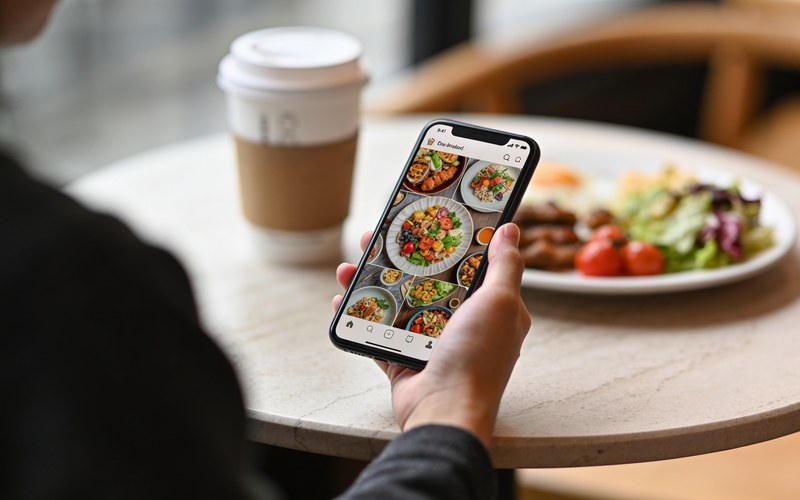
Most restaurant visitors are on a phone, often standing outside, on a commute or deciding where to eat in the next ten minutes. A mobile-first approach designs for the small screen first and adds layout for larger ones, so the essentials (menu, hours, location, order button) are never an afterthought.
Responsive design techniques
Responsive design means the layout adjusts to any screen size and orientation. Fluid grids, flexible images and media queries are the core techniques, and together they keep the site usable on both phones and desktops. If you need a refresher on where layouts should change, see this guide to responsive website dimensions.
Touch-friendly navigation
Large buttons, clear icons and simple gestures make a site easy to use with a thumb. Tap targets that are too small or too close together frustrate people, and a frustrated customer will order somewhere else.
Speed matters as much as layout, so check why a website is slow if your menu pages take a while to load.
What makes an online ordering experience easy to use?
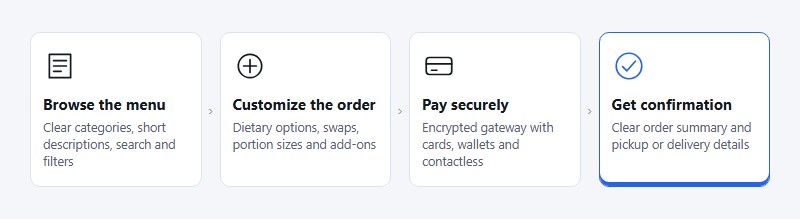
It lets customers browse the menu, customize an item and pay without leaving the page or creating friction. The more people prefer ordering online, the more the ordering flow becomes the main part of the site. Many restaurants use a dedicated restaurant online ordering system, such as SpotOn’s, to handle menus, customization and checkout in one place.
Easy menu navigation
A well-organized menu with clear categories and short descriptions helps people find what they want quickly. Search, filters and sorting make longer menus manageable, for example filtering by vegetarian, gluten-free or price.
Secure payment options
People will not enter card details on a site that feels unsafe. Use a trusted payment gateway with encryption, and offer several ways to pay: cards, digital wallets and contactless options. Flexibility at checkout reduces abandoned orders.
How does personalization improve a restaurant website?
Personalization makes the site feel tailored to each guest, which supports repeat visits and loyalty. It works best when it saves people effort instead of showing off technology.
Personalized recommendations
Suggesting dishes based on past orders or stated preferences helps diners find something they will enjoy faster. A “your usual” button for returning customers is a simple version that works well.
Customizable menus
Guests want to adjust dishes to their needs. That can mean dietary options, ingredient swaps, portion sizes, build-your-own meals and add-ons. The easier customization is, the more likely people are to complete an order instead of calling to ask.
How do visuals and branding affect restaurant conversions?
Visuals sell food before a single word is read, and branding tells guests what kind of place this is. Widely quoted figures, such as those collected in these website design statistics, claim that strong UI can lift conversion by up to 200 percent and strong UX by as much as 400 percent. Treat numbers like that as best-case claims, not guarantees, but the direction is sound: sites that look good and are easy to use convert better.
High-quality images
Use professional photos of dishes, the dining room and the team. Galleries and short videos give a sense of atmosphere, and real images of your own food beat generic stock every time. For more on this, see how to use original images in your designs.
Consistent branding
Logo, colours and typography should look the same on the website, the online menu, social profiles and printed materials. Consistency makes a restaurant recognizable and professional, and it reassures customers that what they see online is what they will get.
Which restaurant website mistakes should you avoid?
- Menus published only as a PDF that is hard to read on a phone.
- Hours, address and phone number hidden several clicks deep.
- Order buttons that are small, hard to find or lead to a separate site with a different look.
- Heavy images and sliders that slow down the page.
- No clear way to filter for dietary needs.
- Checkout flows that require an account before ordering.
Many of these also push visitors away early, which is why it helps to know which web design practices reduce bounce rates.
Frequently asked questions
Do small restaurants need their own website?
Yes. Social profiles and delivery apps help, but your own site is the one place you control the menu, the branding and the ordering experience, and it avoids paying third-party commissions on every order.
What should be on a restaurant homepage?
A clear order or reservation button, the menu, opening hours, location with a map, a phone number and a few strong photos. Everything else is secondary.
Is a mobile app necessary?
Usually not. A fast, well-built mobile website with online ordering covers most needs and does not require customers to download anything.
How often should the menu be updated online?
Whenever prices, ingredients or availability change. An outdated online menu is one of the quickest ways to disappoint a customer.
What should a restaurant fix first?
Open your site on a phone and try to place an order as a stranger would. Whatever slows you down, whether it is a hidden menu, tiny buttons or an awkward checkout, is the first thing to fix. Then add real photos and keep your branding consistent across every page.

Renowned for his expertise in logo design and visual branding, Bogdan has developed a multitude of logos for various clients.
His skills extend to creating posters, vector illustrations, business cards, and brochures. Additionally, Bogdan's UI kits were featured on marketplaces like Visual Hierarchy and UI8.
He also wrote in the past years on sites like Design Your Way, WebDesignerDepot, WPDean, Designmodo, Speckyboy, Slider Revolution, and more.
- How to Design Marketing Materials That People Actually Keep - 27 November 2026
- Behind the Logo: What Font Does Starbucks Use? - 26 November 2026
- Visual Hierarchy in Short Videos: How to Guide Attention Across a Sequence - 26 November 2026

Bogdan Sandu is a seasoned designer who has been designing websites since 2008. Renowned for his expertise in logo design and visual branding, Bogdan has developed a multitude of logos for various clients. His skills extend to creating posters, vector illustrations, business cards, and brochures. Additionally, Bogdan's UI kits were featured on marketplaces like Visual Hierarchy and UI8. He also wrote in the past years on sites like Design Your Way, WebDesignerDepot, WPDean, Designmodo, Speckyboy, Slider Revolution, and more.
You Might Also Like