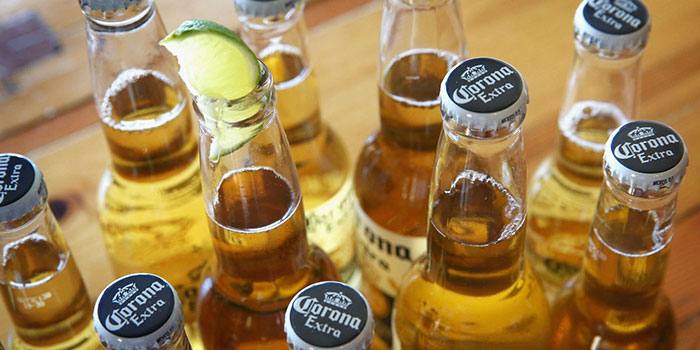
Corona ads have used the same three elements since 1979: a clear bottle, a lime wedge and a horizon line. Almost no copy, almost no faces.
Five agencies handled that work across 47 years, from The Richards Group to GSD&M, and the layout barely moved.
What follows breaks down the campaigns and the design decisions behind them:
- Every flagship campaign with its agency, years and market
- The palette, grid and typography rules holding the system together
- How the print ads differ from the TV commercials
You will finish knowing why this beer advertising formula still holds up.
Corona advertising spans 47 years of U.S. media, 6 lead agencies and 6 flagship campaign platforms, running from the brand’s 1979 American launch to “La Playa Awaits” in 2025. The work rests on one repeated device: a clear bottle, a lime wedge and a horizon line, carried by almost no copy.
This page covers the Corona ad campaigns by name, with the agency, year and market behind each one, plus the layout, palette and typography decisions that hold the system together across print, TV and out-of-home.
Corona Advertising at a Glance
Corona has advertised in the United States since 1979, working primarily with The Richards Group, Cramer-Krasselt and GSD&M. Its best-known campaigns are Miles Away From Ordinary, Find Your Beach and La Playa Awaits. The visual signature combines a clear glass bottle, a hard horizon line and a blue-and-gold palette.
| Attribute | Value |
|---|---|
| First major U.S. campaign | Miles Away From Ordinary, 1997 |
| Lead agencies | The Richards Group (1997), Cramer-Krasselt (1999–2024), MullenLowe LA (2020), Wieden+Kennedy Amsterdam (global, 2019–), GSD&M (U.S., 2024–) |
| Best-known taglines | La Cerveza Mas Fina, Miles Away From Ordinary, Find Your Beach, This Is Living, La Vida Mas Fina, La Playa Awaits |
| Primary media | TV, print, billboards and OOH, digital, sports sponsorship |
| Primary markets | Mexico, United States, Brazil, China, South Africa; presence in 180 countries |
| Awards | 3 Gold, 1 Silver and 1 Bronze Cannes Lions (2022); Bronze Lion (2023); D&AD pencils; OBIE Hall of Fame (2016) |
| Visual signature | Clear bottle, lime wedge, horizon line, crown and griffins, blue PMS 7686 C and gold PMS 7408 C |
| Measurable results | 116 million U.S. cases in 2015; valued above $19 billion by Kantar BrandZ in 2024; 8.3% revenue growth outside Mexico in 2025 |
Which Corona Ad Campaigns Are the Most Famous?
Corona has run 6 flagship campaign platforms since 1997: Miles Away From Ordinary (1997), Find Your Beach (2010), This Is Living (2019), La Vida Mas Fina (2020), the Plastic Fishing Tournament (2021) and La Playa Awaits (2025). Three of them lasted a decade or longer.
Miles Away From Ordinary (1997-2010)

Miles Away From Ordinary launched in 1997 for The Gambrinus Company, created by The Richards Group and later run with Cramer-Krasselt. The campaign pushed Corona past its 1980s yuppie-fad image and toward a relaxed-attitude position it never abandoned.
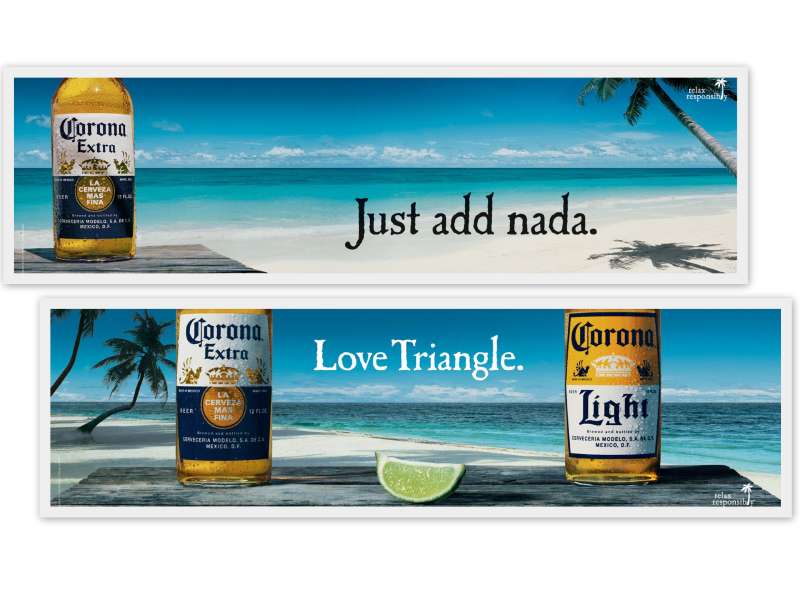
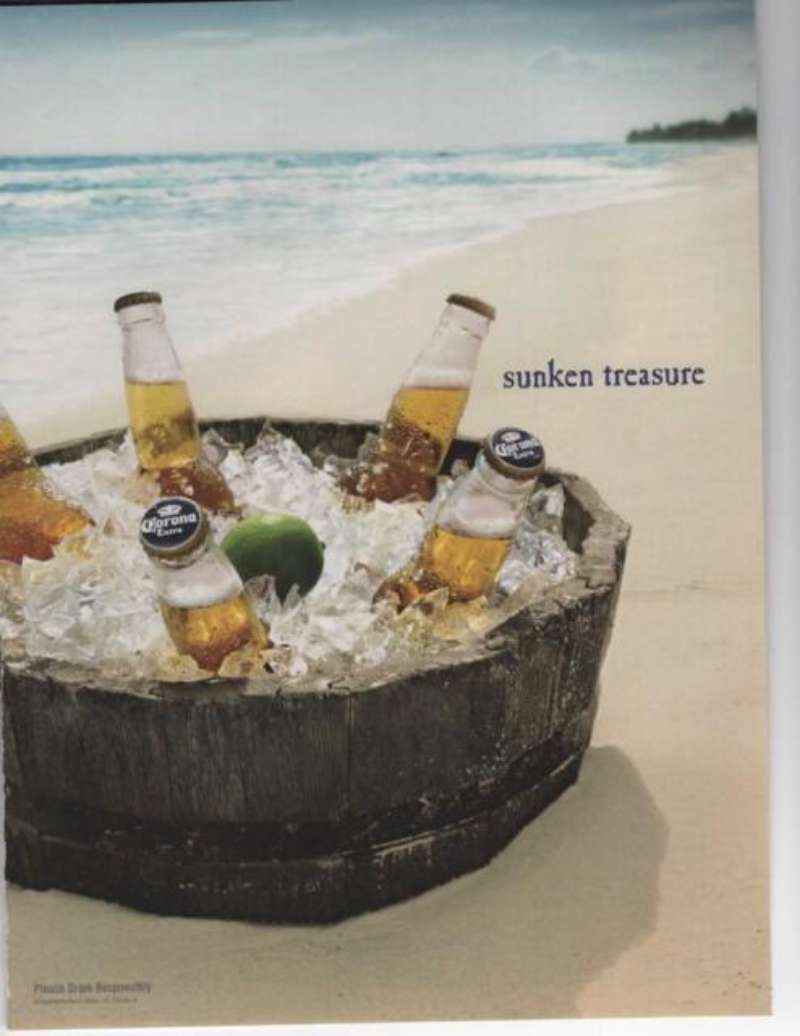
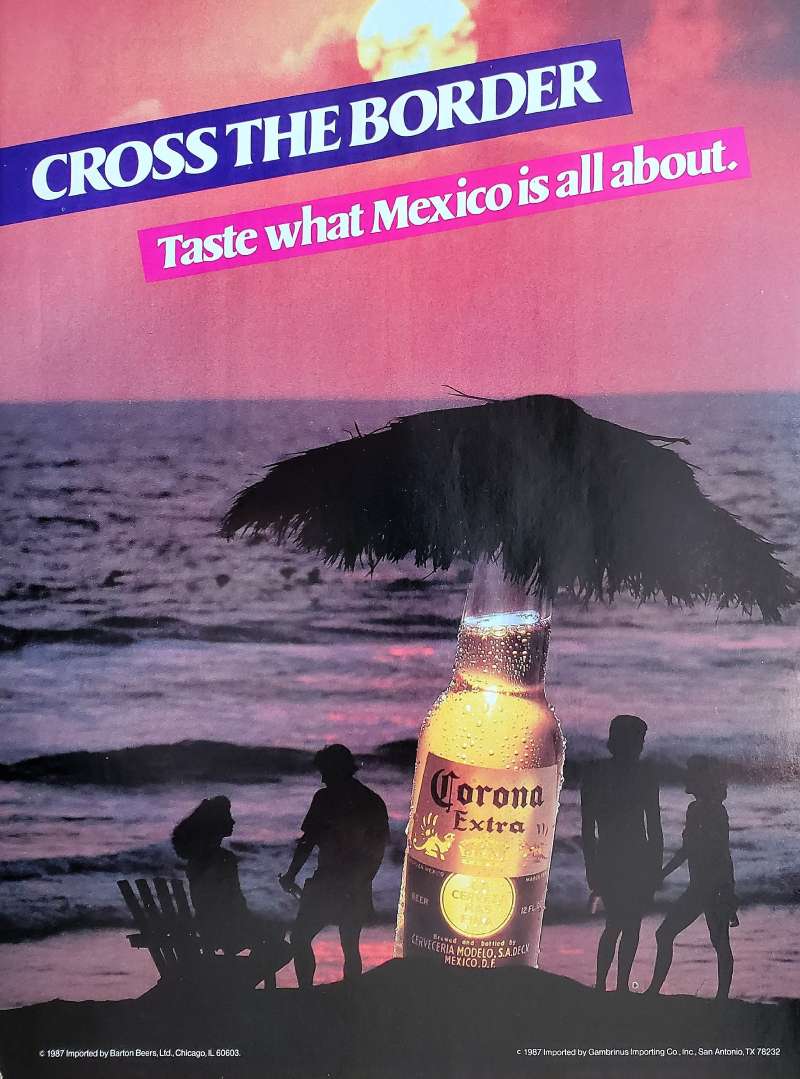
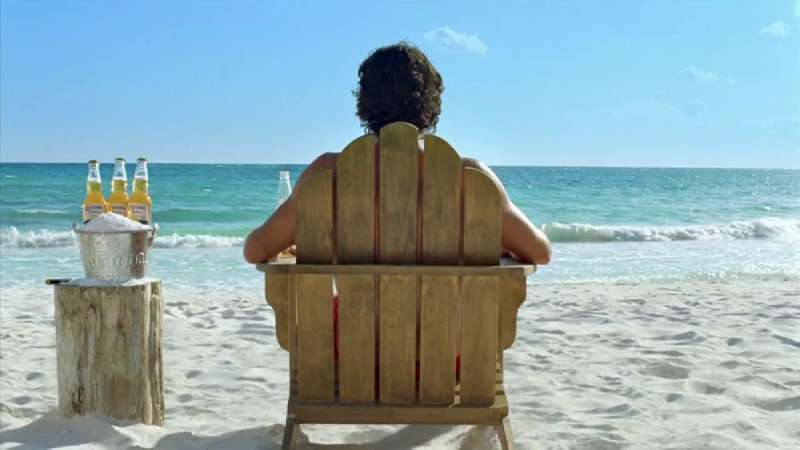
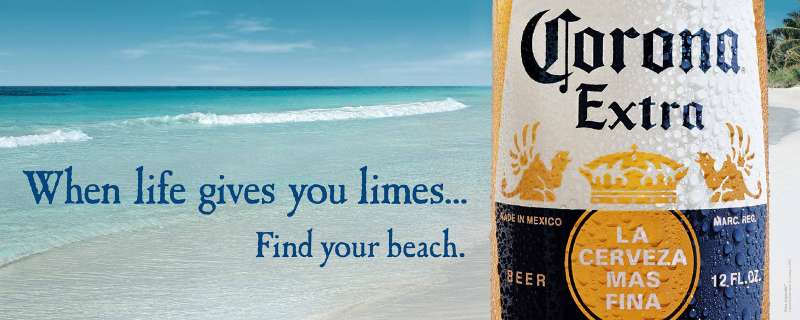
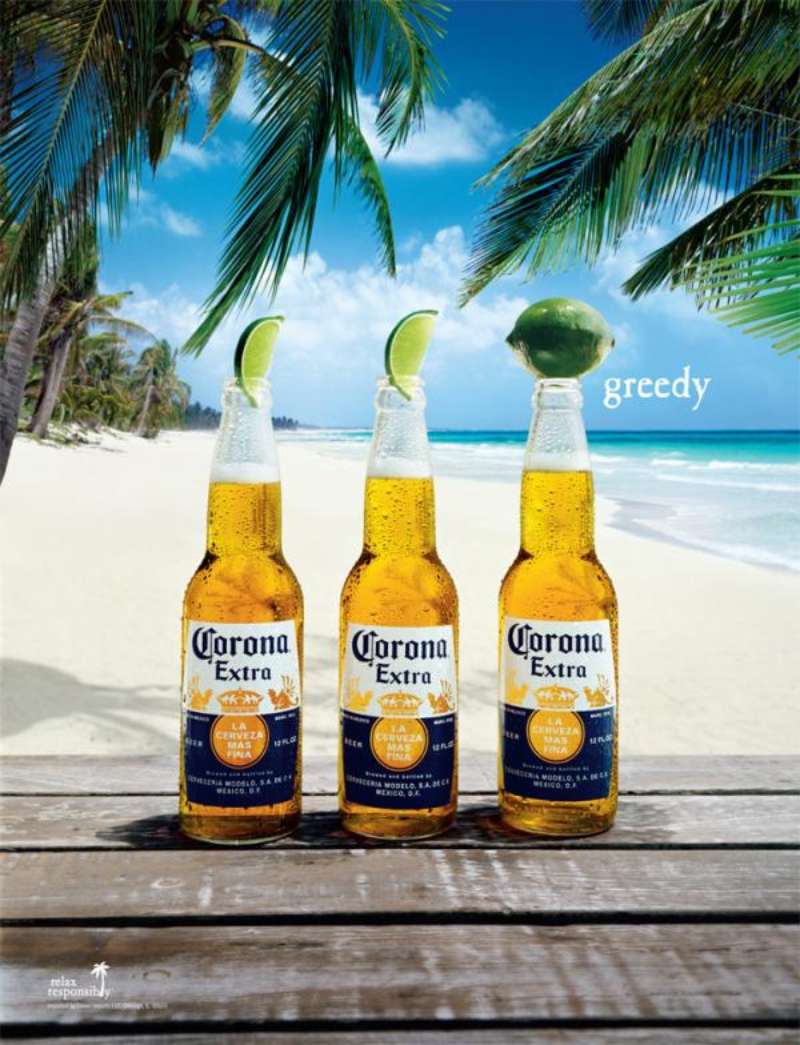
The print executions kept a fixed compositional rule: bottle in the foreground, water and sky behind, no models, no faces. Copy sat in a single short line, usually bottom-left, well below the optical center.
WARC documented the platform as a 16-year sustained-success case, spanning the years Corona became the number one imported beer in the U.S. and Canada.
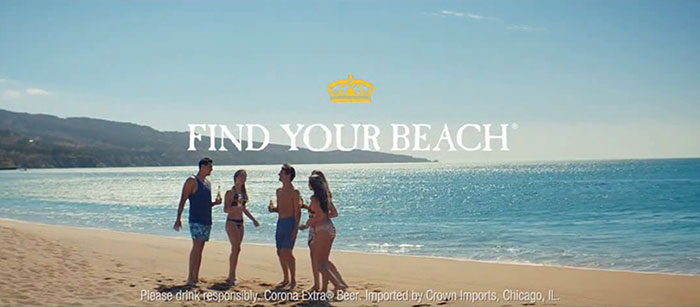
Find Your Beach (2010-2020)

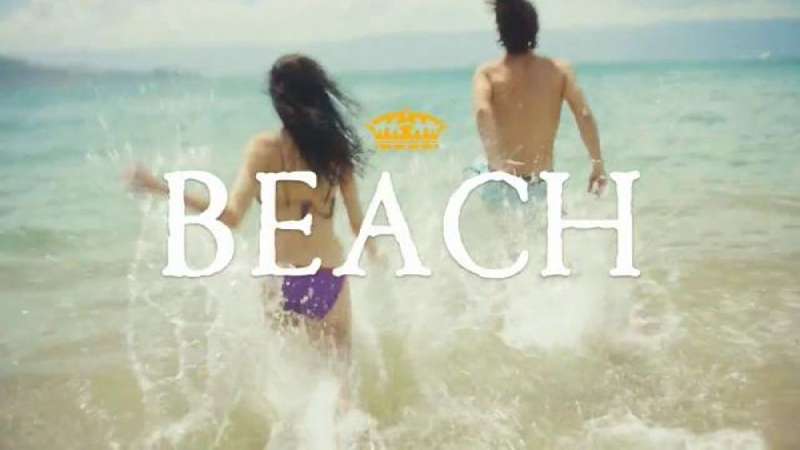
Cramer-Krasselt had been agency of record since 1999 and launched Find Your Beach in September 2010 with the TV spot “Moments.”
The strategic move: the beach stopped being a location and became a mental state, freeing the brand from a single occasion.
The layout consequence: billboards could drop the ocean entirely and still read as Corona, because the bottle and the lime carried recognition on their own.
The result: 2015 became Corona’s biggest U.S. sales year to that point, with more than 116 million cases sold.
Very little of this work would function without a minimalist approach to layout, since most frames contain three elements or fewer. The Outdoor Advertising Association of America inducted the campaign into its OBIE Hall of Fame in 2016.
This Is Living (2019 to Present)
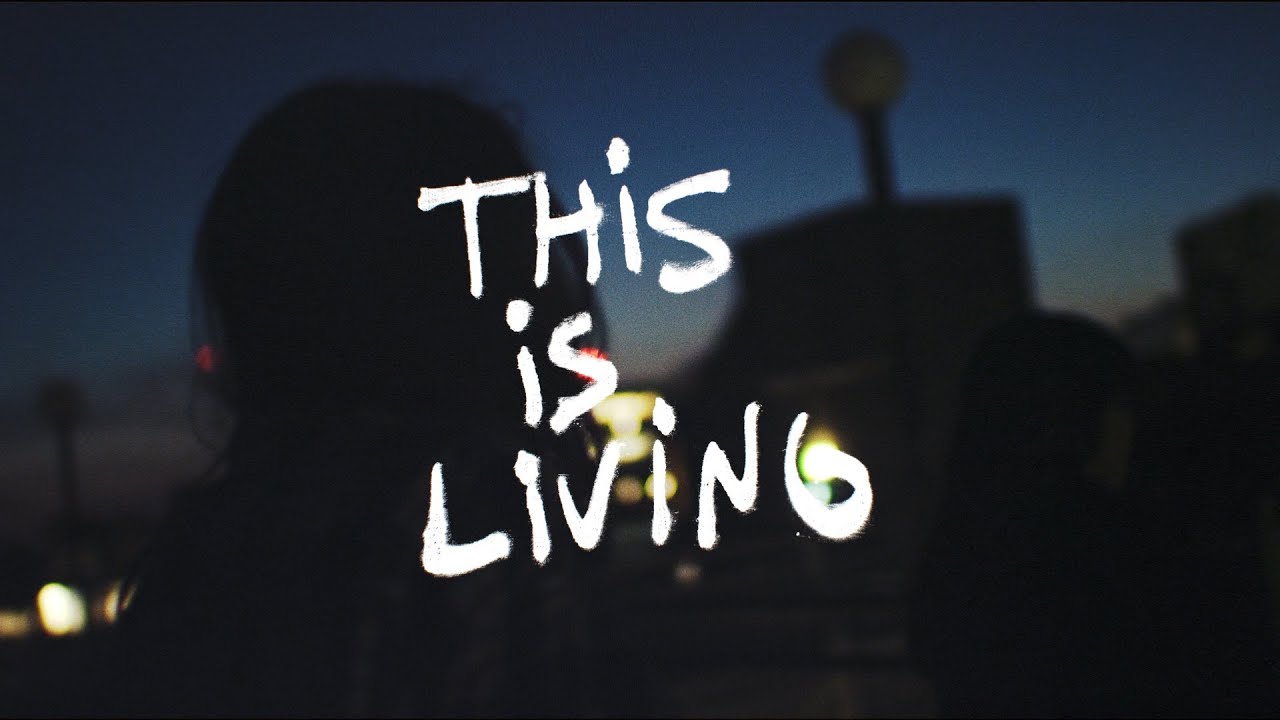
This is the global platform, and it belongs to Anheuser-Busch InBev rather than Constellation Brands.
Wieden+Kennedy Amsterdam created This Is Living in 2019 for markets outside the United States. The brief kept the beach as the visual anchor but attached a reason for going there.
- Chris Hemsworth served as global ambassador for the Oceans Week extension
- The Paradise? Shirt, designed by Adolfo Correa with Parley for the Oceans, printed ocean plastic as a Hawaiian-shirt pattern
- In May 2026, W+K Amsterdam extended the platform with “Living is Calling,” a Tripadvisor partnership covering more than 300,000 experiences
The 2026 hero film, directed through Somesuch, was shot entirely in first-person point of view, a first for the brand and a real shift in how the work handles visual storytelling.
La Vida Mas Fina (2020-2024)

Agency: MullenLowe LA, which joined the Constellation Brands roster in March 2019.
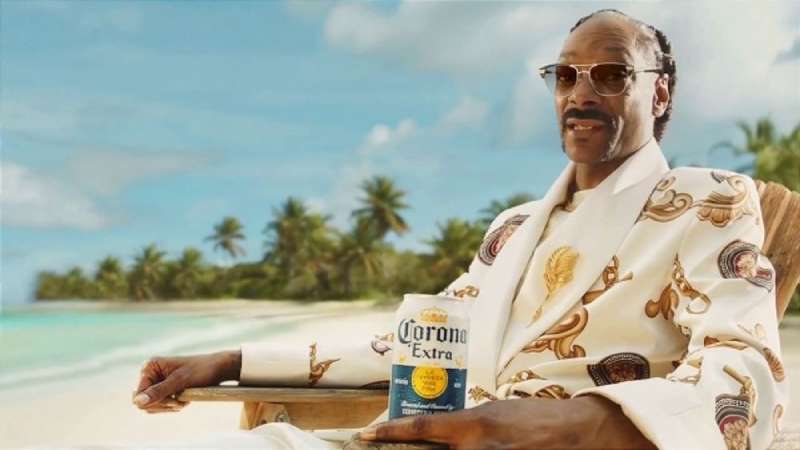
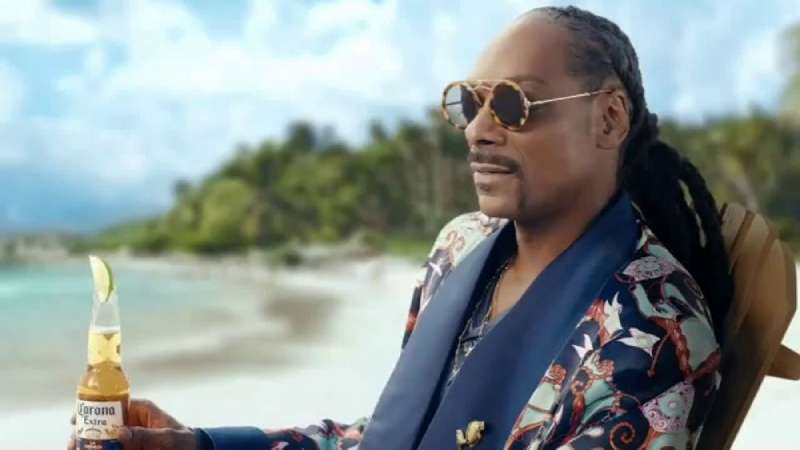
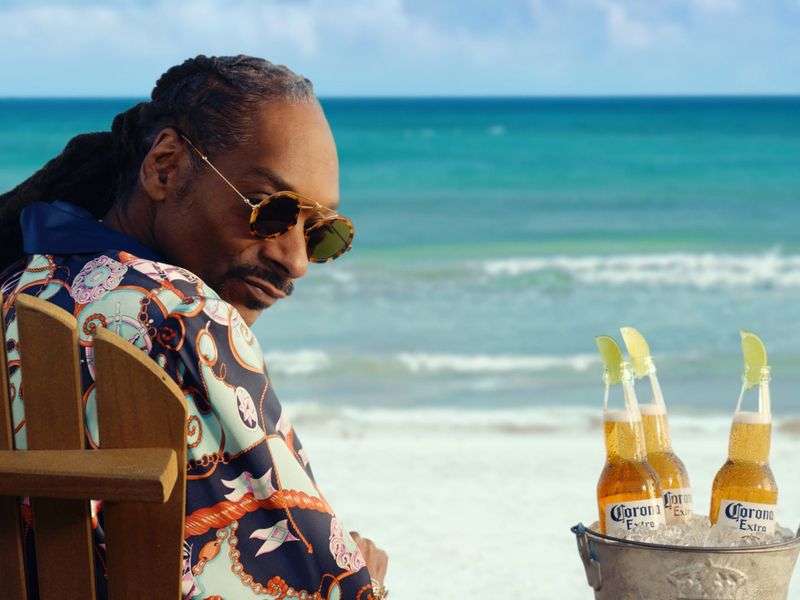
Launch: August 2020, with Snoop Dogg fronting the first films.
Extension: Bad Bunny joined in September 2020, and the Spanish-language tagline made Corona’s Mexican heritage explicit for the U.S. market.
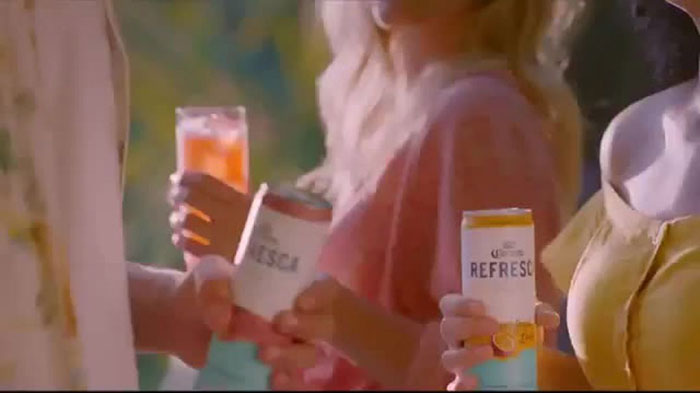
The campaign was the first to unify Corona Extra, Corona Light, Corona Premier, Corona Refresca and Corona Hard Seltzer under one line. It also marked Corona’s clearest bet on celebrity brand ambassadors, a device the brand had mostly avoided for 20 years.
Corona sales rose more than 20% between March and September 2020, according to IRI tracked data.
La Playa Awaits (2025 to Present)

GSD&M won the Corona Extra creative account in July 2024 and launched La Playa Awaits on 27 March 2025, timed to MLB opening day.
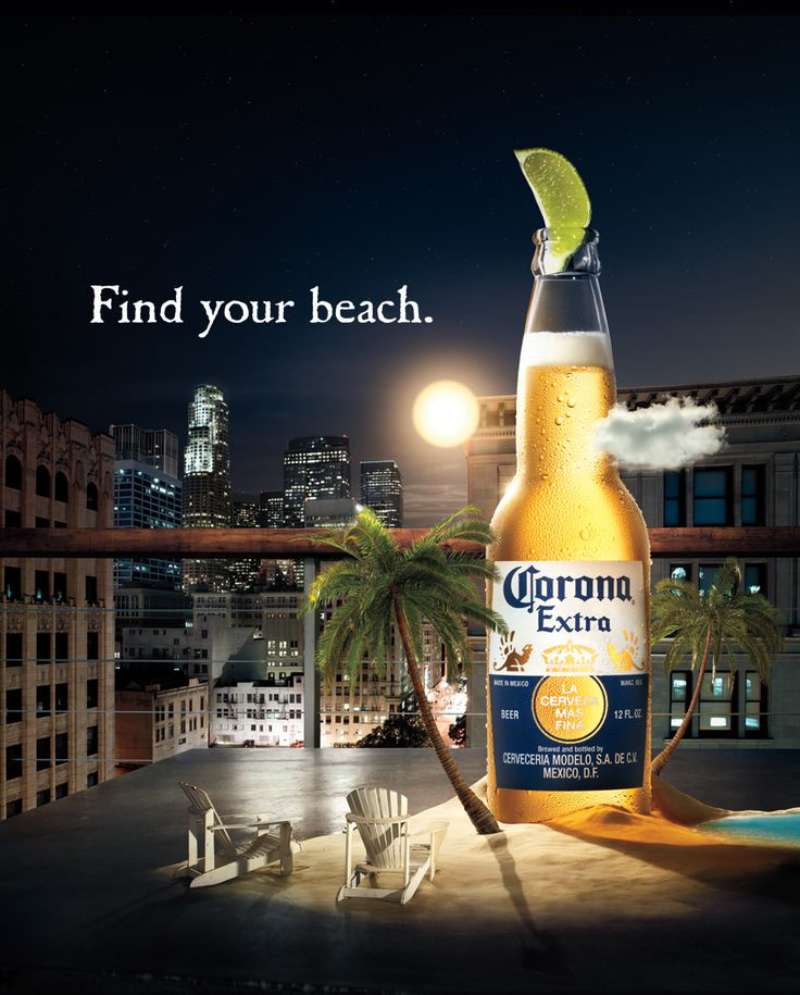
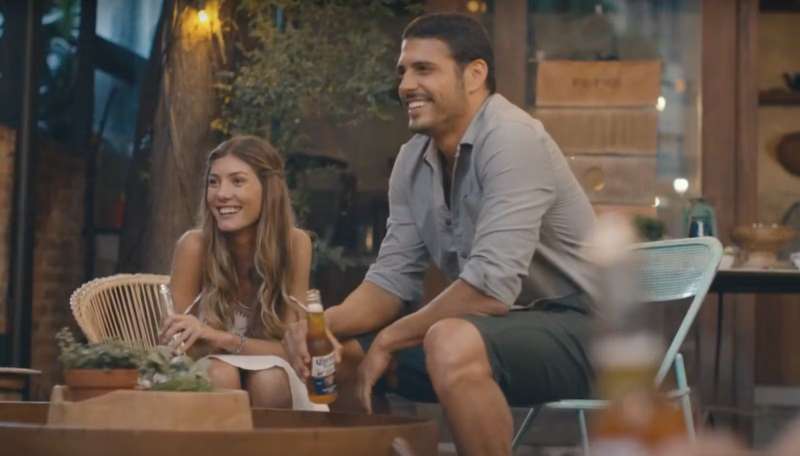
The platform drops the celebrity format and returns the beach to the center, this time as a mindset rather than a backdrop. In the spot “Extension Cord,” two friends on a hot rooftop open a Corona and the rooftop becomes shoreline.
Corona increased its MLB media investment by 66% and its NBA spend by 40% for the launch year (Marketing Dive, 2025).
The push followed a soft 2024, when Corona posted flat dollar sales and a 1.5% volume decline in Circana-tracked off-premise channels.
Plastic Fishing Tournament (2021-2023)

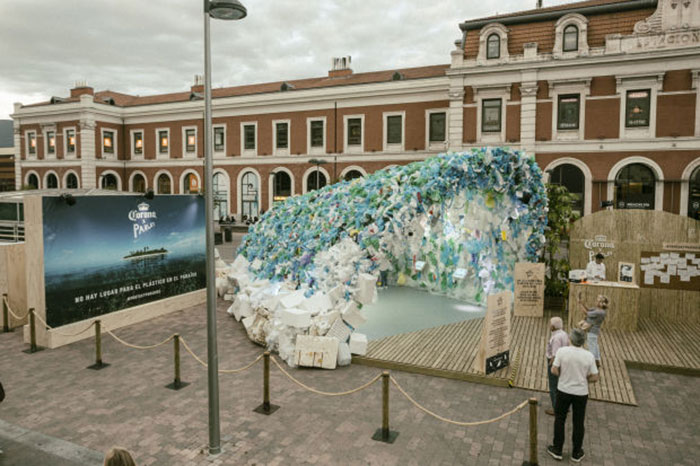
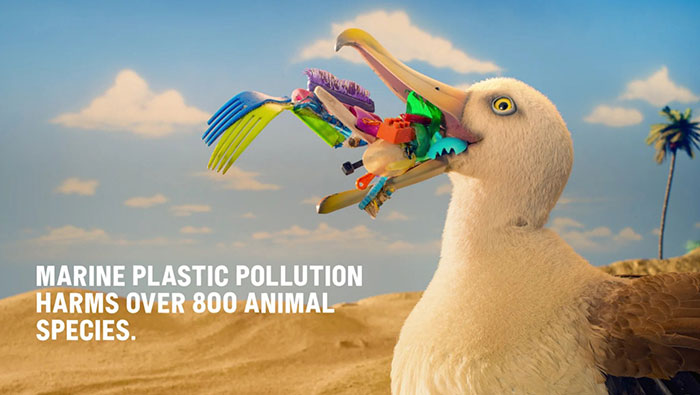
We Believers New York built the Plastic Fishing Tournament for AB InBev, starting in Sinaloa, Mexico, and paying fishing crews for plastic hauled out of the Pacific instead of fish.
The winning boat pulled 319 kg and took MX$15,000. Across markets, crews recovered roughly 20 tons of ocean plastic.
- 3 Gold, 1 Silver and 1 Bronze Cannes Lions in 2022, across Brand Experience & Activation, Outdoor, SDG and Direct
- 3 D&AD pencils, including two graphite
- Global Campaign of the Year, PRovoke SABRE Awards, 2023
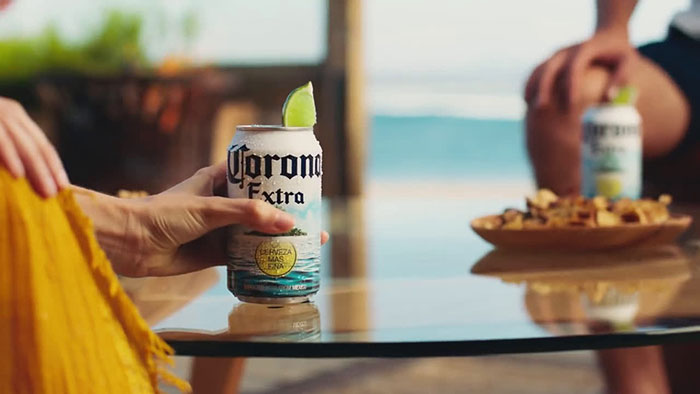
Corona Print Ads Built on the Lime Ritual
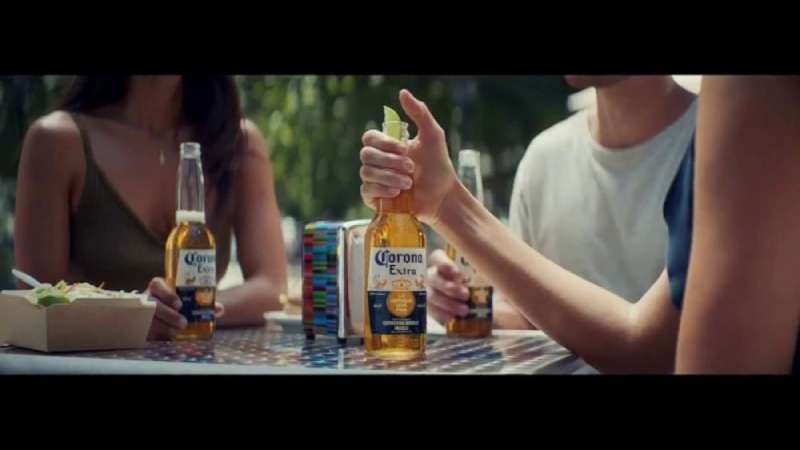
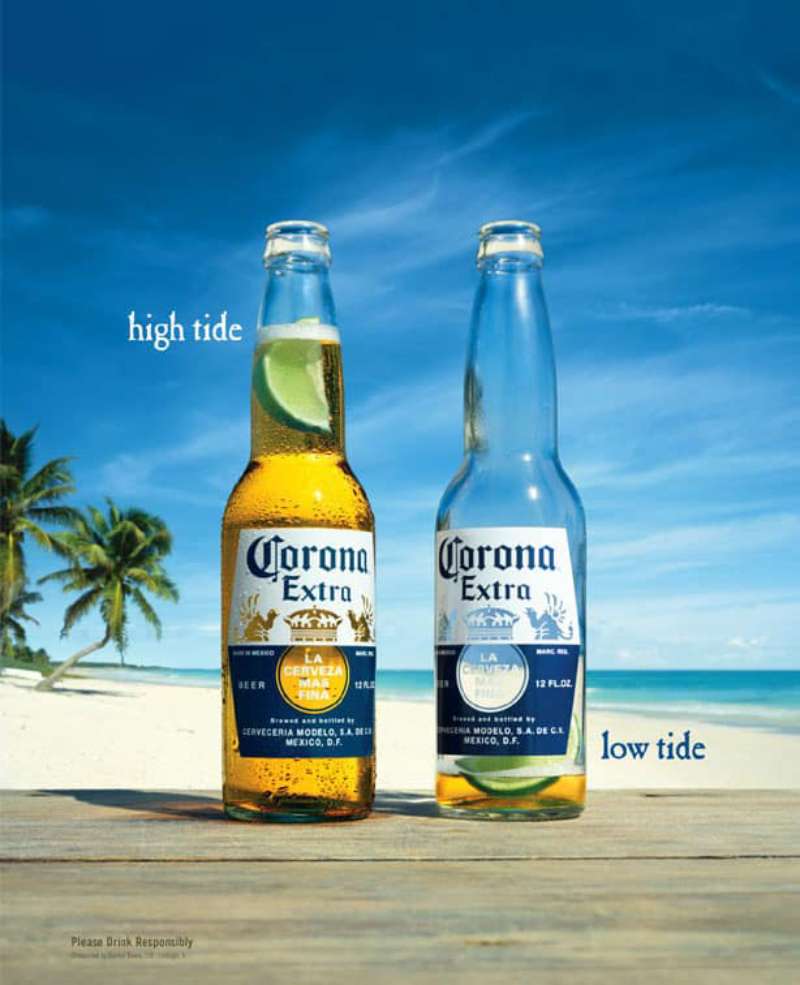
A large share of Corona print work has no campaign name attached. These are the seasonal and regional executions built on a single object: the wedge of lime in the neck of the bottle.
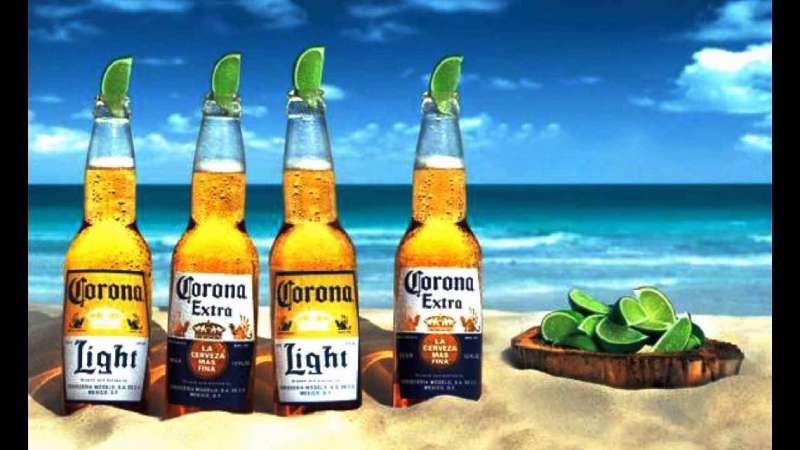
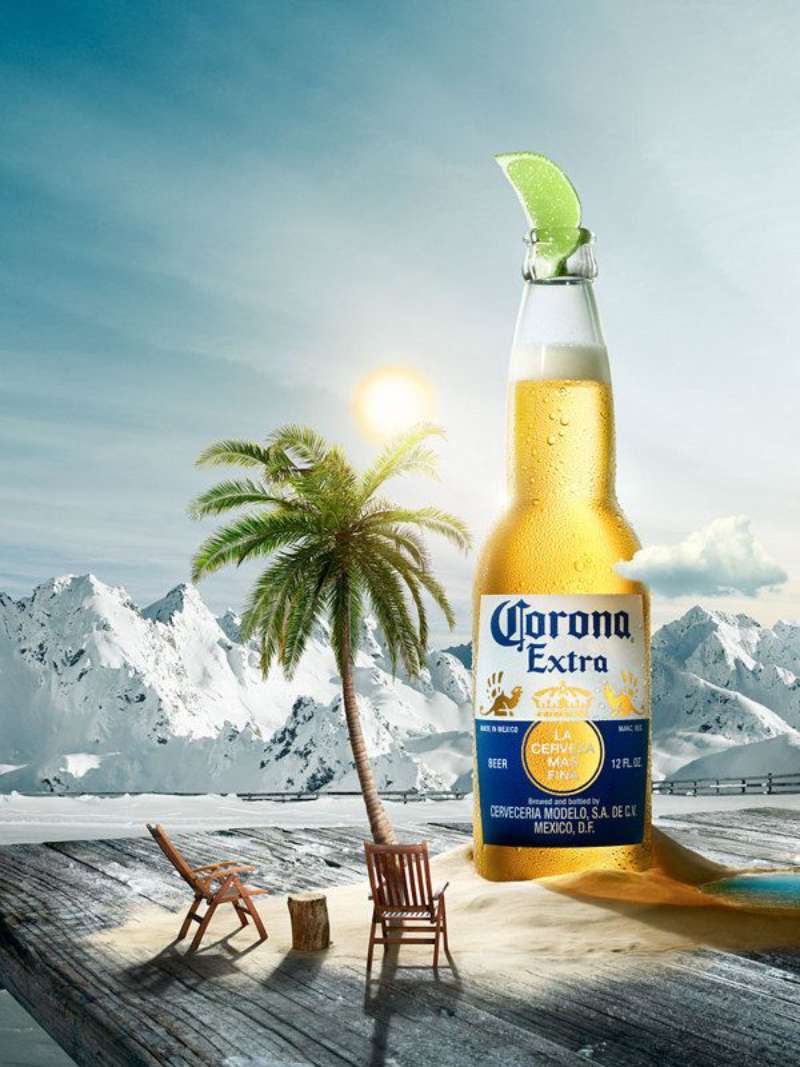
The layouts repeat two moves. Lime as sun, and lime as a punctuation mark against an otherwise empty sky.
Kantar’s 2025 BrandZ analysis credited the lime ritual itself, not just the logo, as a core source of brand strength. The restricted color palette makes that ritual legible at 3 meters or 300.
How Do Corona Print Ads Work Visually?
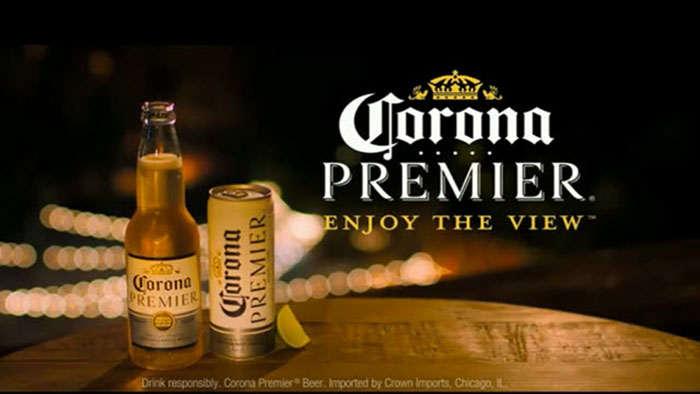
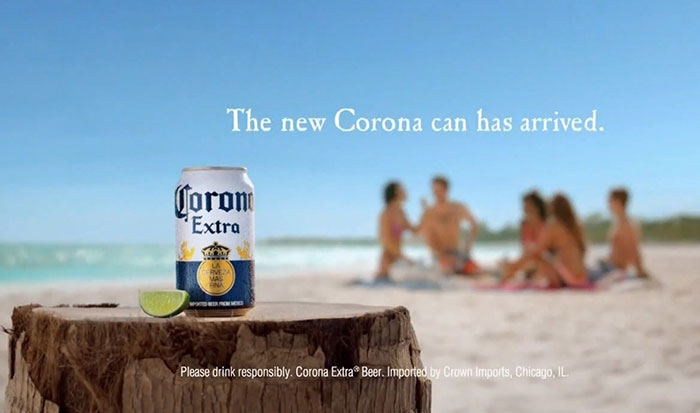
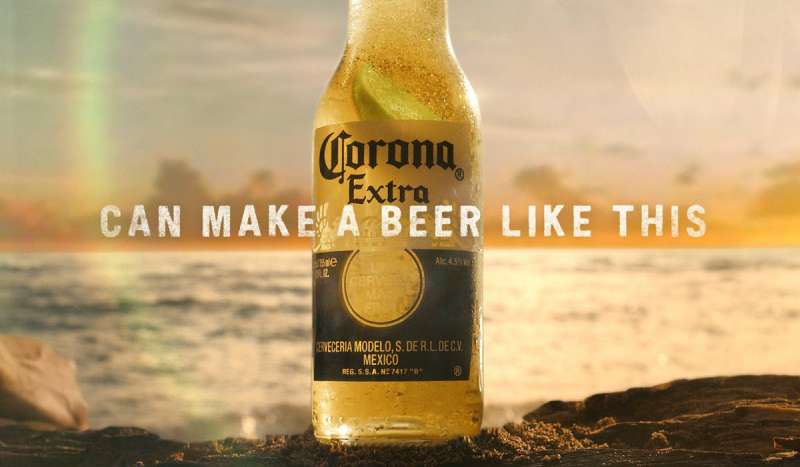
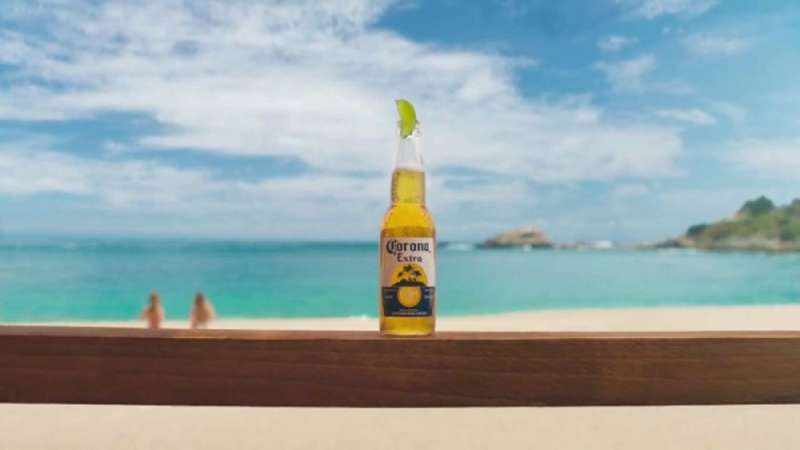
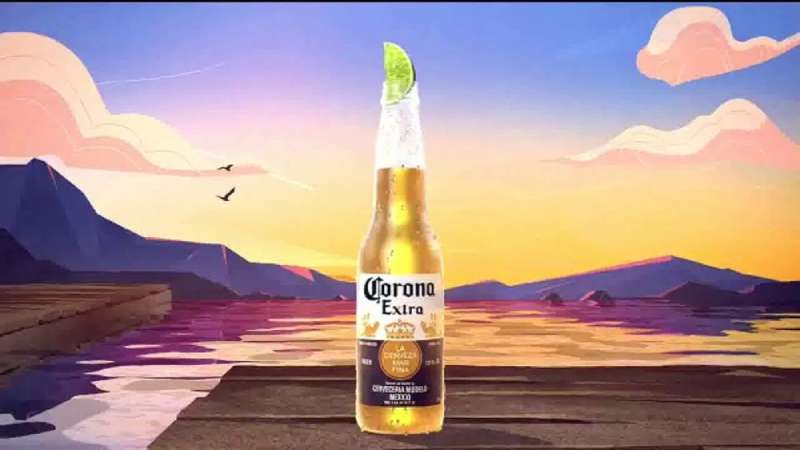
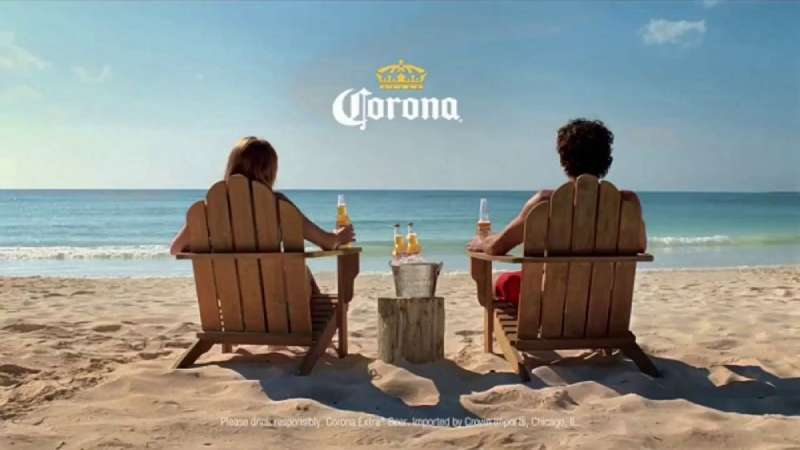
Corona print ads use a horizon line as a structural grid, a bottle placed on or just above that line, and a copy block under the optical center. The palette is fixed at deep blue PMS 7686 C, gold PMS 7408 C and white. Text rarely exceeds 8 words.
The Horizon Line as a Grid Device
The horizon does the work a column grid does in editorial layout: it sets a fixed division between sky and water, then everything else aligns to it.
Placing that division roughly one third from the top follows the rule of thirds, which is why the compositions read as photographic rather than designed.
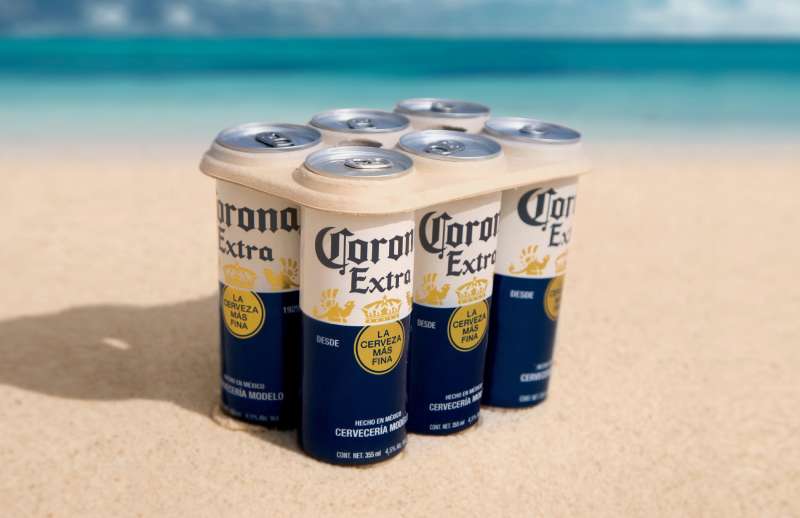
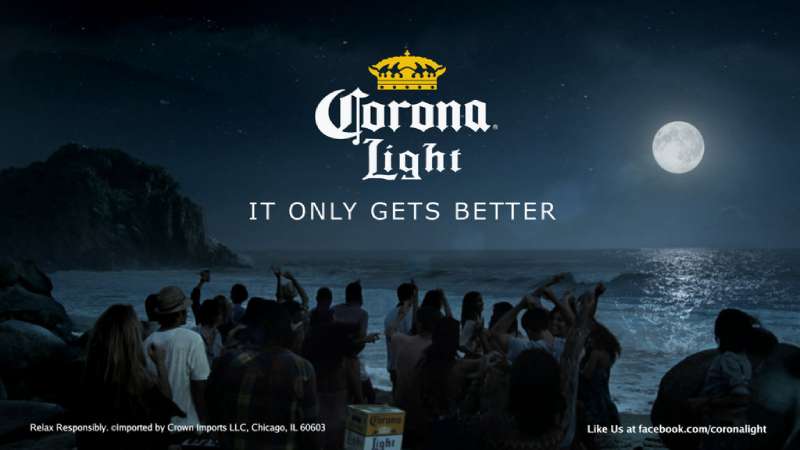
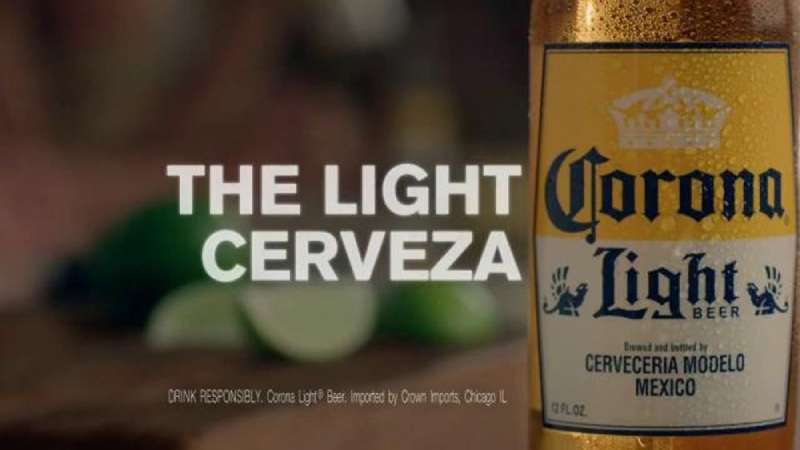
Corona Extra packaging uses white above the horizon and blue below. Corona Light inverts it with yellow above and white below, a small distinction that keeps both products family-legible on shelf.
Palette, Space and Reproduction
The brand has held the same blue-and-gold pairing since the late 1920s, with Pantone references locked in brand guidelines and spot-matched for print rather than built from process inks.
Empty sky is doing more than it looks like it is doing. That volume of negative space is what lets a 4-word tagline hold a full page.
The visual hierarchy runs bottle, then lime, then wordmark, then copy. Logo placement stays small and low, which is unusual for a category that normally leads with the mark.
How Do Corona TV Commercials Differ From Its Print Ads?
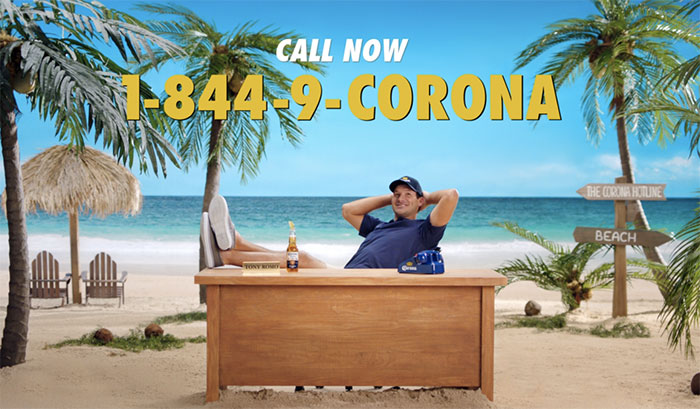
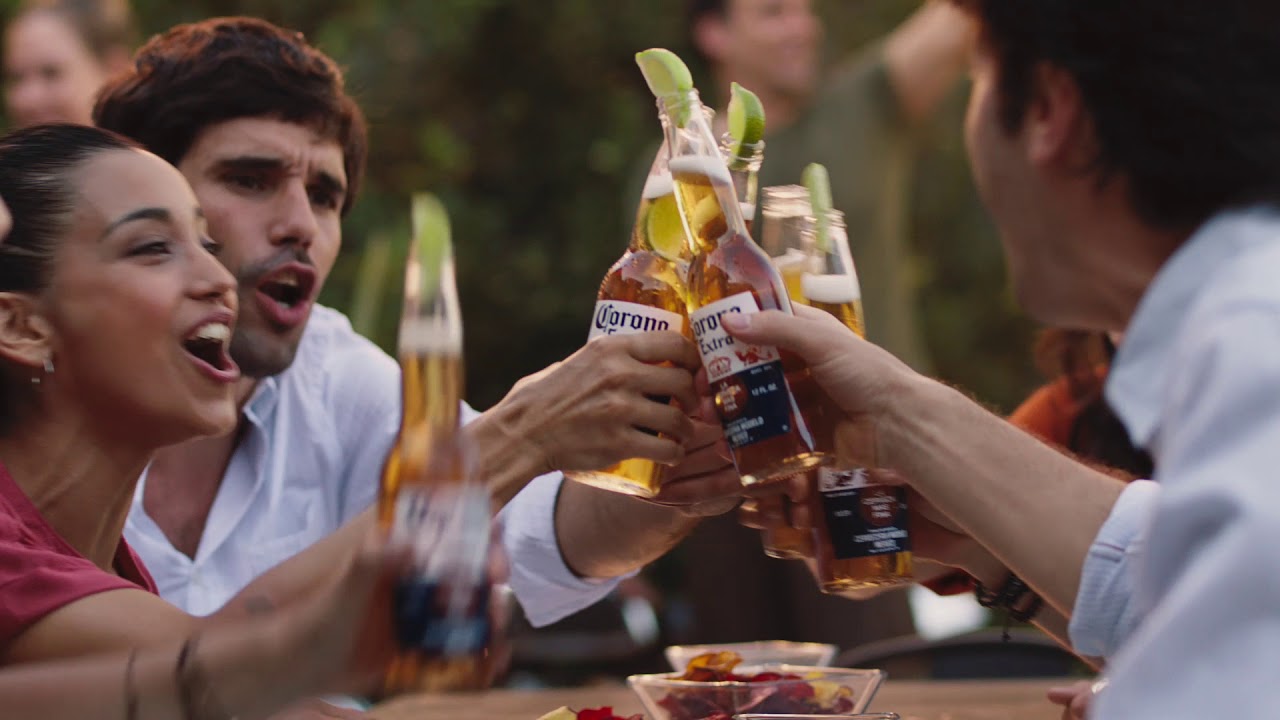
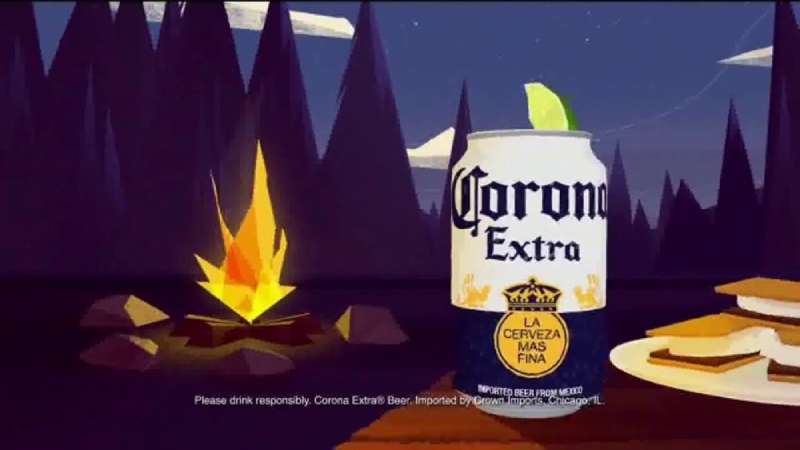
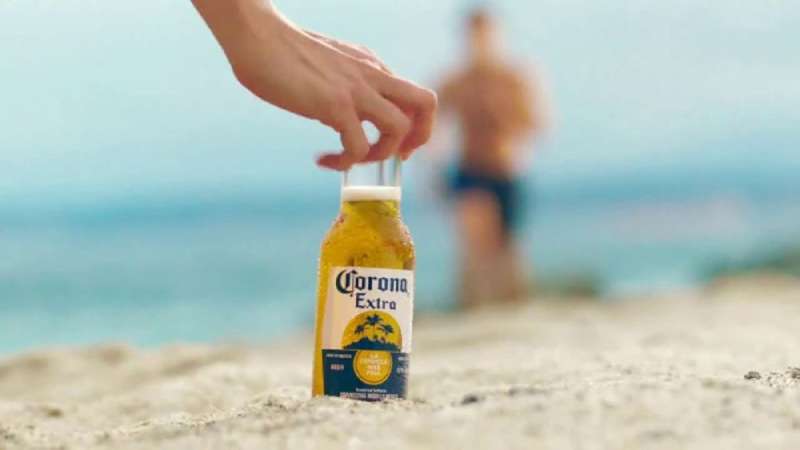
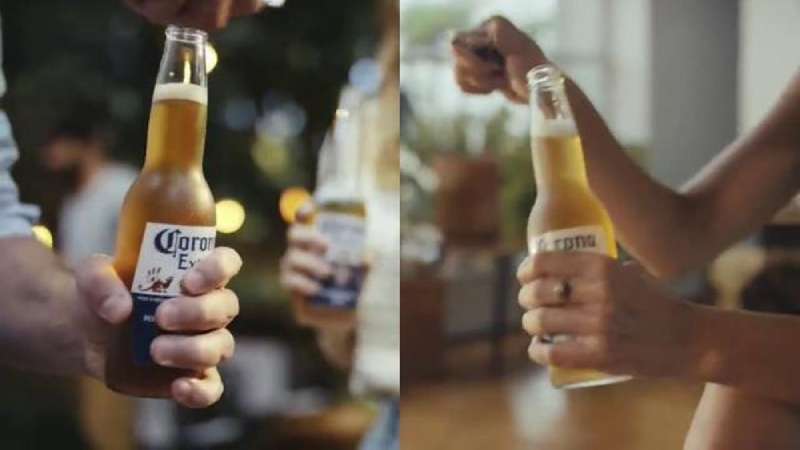
Corona TV commercials add sound, ambient motion and a time dimension the print work cannot use, but keep the same frame logic: horizon, bottle, minimal copy. Most spots run 15 or 30 seconds and carry no dialogue.
“Moments” (2010, Cramer-Krasselt). The debut Find Your Beach film cuts between a mountain overlook, a Big Sur cliff and a New York rooftop before closing on the classic beach two-shot.
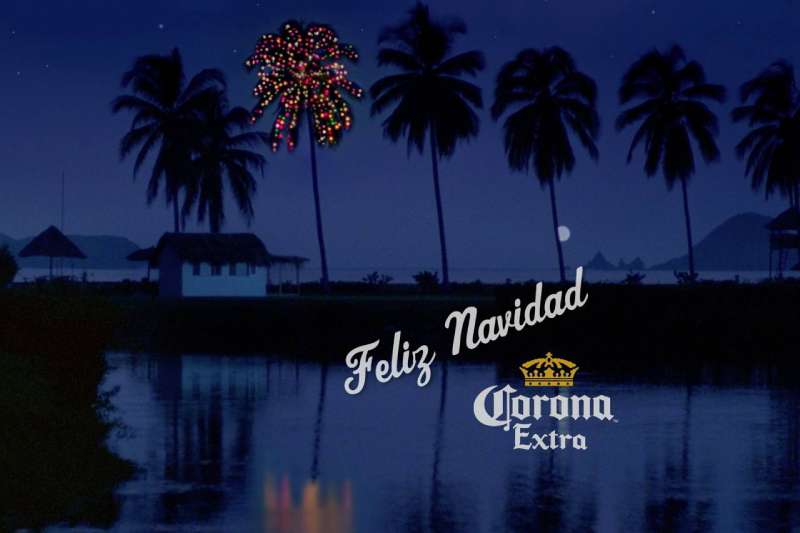
“Sandman” (2003, The Richards Group). A 30-second holiday spot under the Miles Away From Ordinary banner, built on a sand snowman. The holiday sand-sculpture idea became an annual fixture.
“Shellphone” (2020, MullenLowe LA). Bad Bunny and Snoop Dogg share a call through a conch shell. The first Corona film in years to lead with faces rather than landscape.
“Extension Cord” (2025, GSD&M). Two friends run a fan on a rooftop in summer heat until a Corona transports them to shoreline. The transition is the whole idea.
“Living is Calling” (2026, Wieden+Kennedy Amsterdam and Somesuch). Seven friends cross a series of natural landscapes, shot entirely in first person so viewers see their own hands in frame.
How Has Corona Advertising Evolved Since 1979?
Corona advertising moved through 5 strategic phases in 47 years: import novelty in the 1980s, relaxation positioning in the 1990s, mental-state positioning in the 2010s, purpose and celebrity work around 2020, and a return to the literal beach in 2025.
| Period | Strategic shift | Representative campaign |
|---|---|---|
| 1979-1989 | Import novelty, sold on the clear bottle | U.S. launch through Gambrinus, Corona Light added 1989 |
| 1997-2009 | Escape from the ordinary, no models | Miles Away From Ordinary |
| 2010-2019 | Beach as mental state, occasion expansion | Find Your Beach |
| 2020-2024 | Cultural and environmental proof points | La Vida Mas Fina, Plastic Fishing Tournament |
| 2025-2026 | Beach as mindset, heavy sports media | La Playa Awaits, Corona 100 |
The centenary year mattered commercially. Corona took the Kantar BrandZ most valuable beer brand title for a third consecutive year in 2026, after growing 16% outside Mexico in Q1 and becoming the first global beer sponsor of a Winter Olympics.
Which Agencies Created Corona Advertising?
Corona’s advertising has passed through 5 lead agencies across two owners, because the brand is marketed by Constellation Brands in the United States and by AB InBev everywhere else.
The Richards Group created Miles Away From Ordinary for The Gambrinus Company in 1997.
Cramer-Krasselt held the Corona Extra account of record from 1999 and created Find Your Beach in 2010, plus the “Corona gets its lime” work from 2017.
MullenLowe LA developed La Vida Mas Fina for Constellation Brands in 2020, working with Snoop Dogg and Bad Bunny.
Wieden+Kennedy Amsterdam created the global This Is Living platform for AB InBev in 2019 and extended it with Living is Calling in 2026.
GSD&M won the Corona Extra creative account in July 2024 and launched La Playa Awaits in March 2025.
Two specialists sit alongside them. We Believers New York produced the Plastic Fishing Tournament, and The Community handled Hispanic-market work during the Cramer-Krasselt years.
What Can Designers Learn From Corona Ads?
Corona’s system survives agency changes because the rules are written at the level of composition, not concept. Five of them transfer directly.
- Anchor the layout on a single horizontal division and align everything to it
- Limit the palette to two spot colors plus white, and specify them by Pantone reference in the brand’s typographic and color standards
- Let the product silhouette carry recognition so the logo can sit small and low
- Cap headline copy at 8 words, which is roughly the ceiling for legibility when setting type for billboards
- Build one repeatable ritual object into the frame, the way the lime wedge works every single time
- Test the composition at poster scale before signing it off, which is where beer poster layout practice exposes weak hierarchy fast
How Do Corona Ads Compare to Modelo, Stella Artois and Guinness Ads?
Corona and its closest rivals split along a clean line: place versus product versus craft.
Modelo advertising sells effort and origin, using tight portraiture, warm amber grading and a “Fighting Spirit” narrative built around people at work. Corona removes people almost entirely and sells the absence of effort. Same parent brewery lineage, opposite emotional register.
Stella Artois campaigns lean on European heritage cues, chalice glassware and gold-heavy typography, positioning the beer as a premium object rather than a setting.
Guinness advertising is the outlier and the most formally ambitious of the four, built on high-contrast black and white, surrealist film and a patience theme that has no equivalent in Corona’s work.
Budweiser ads run on Americana, Clydesdales and event-scale emotion, which puts them closest to Corona in media weight and furthest in palette.
Corona’s advantage in this group is compositional consistency. Budweiser and Stella have both rebuilt their creative platforms more than once in the period Corona held two.
What Makes Corona Advertising Work?
Corona’s advertising works because the brand treats composition as an asset and protects it the way most companies protect a trademark.
Five agencies across 47 years produced work that still reads as one brand, because each inherited the same non-negotiables: horizon line, bottle, lime, two spot colors, almost no copy.
The strategy shifted repeatedly. From escape, to mental state, to purpose, to Latino cultural identity, and back to the literal beach in 2025.
The layout never did.
That gap between strategic flexibility and visual discipline is the actual lesson. Most brands do the opposite, holding a message steady while redesigning the frame every three years, and end up recognizable to nobody.
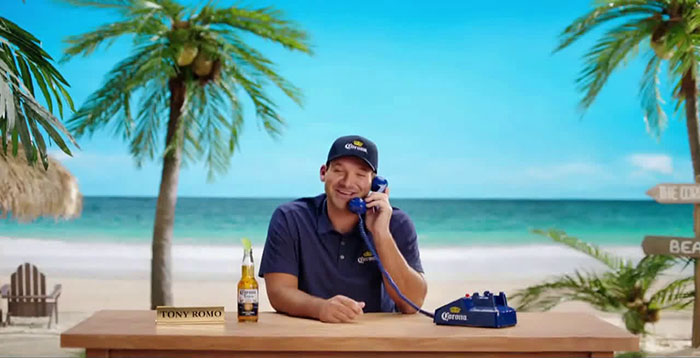
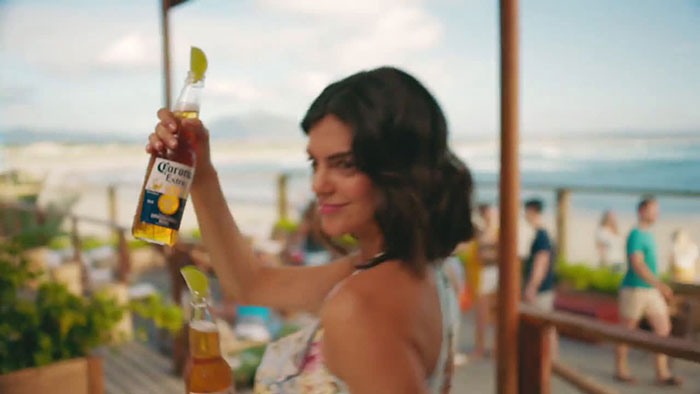
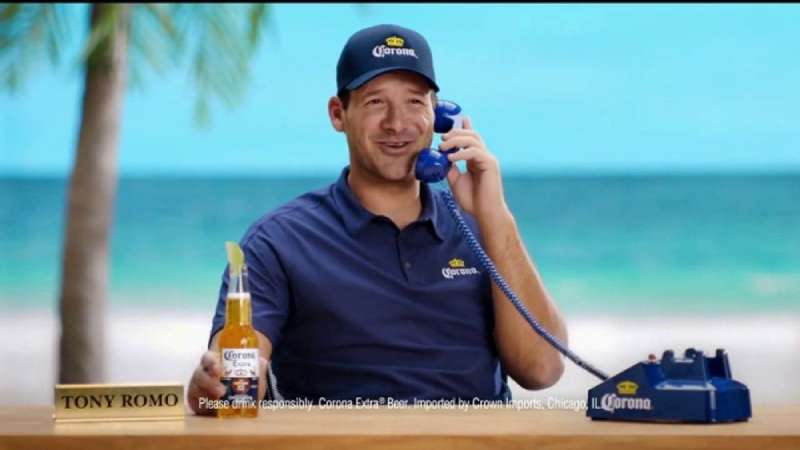
Corona Ads examples
Connections
https://vimeo.com/40602071
FAQ on Corona Ads
Who pays for Corona advertising?
Two companies split it. Constellation Brands funds and controls all Corona advertising in the United States, while AB InBev owns the brand and its media everywhere else, across 180 countries.
What is Corona’s current tagline?
Two run in parallel. La Playa Awaits carries the U.S. work launched in March 2025, and This Is Living carries the global platform. La Cerveza Mas Fina still sits on the label.
What font does the Corona logo use?
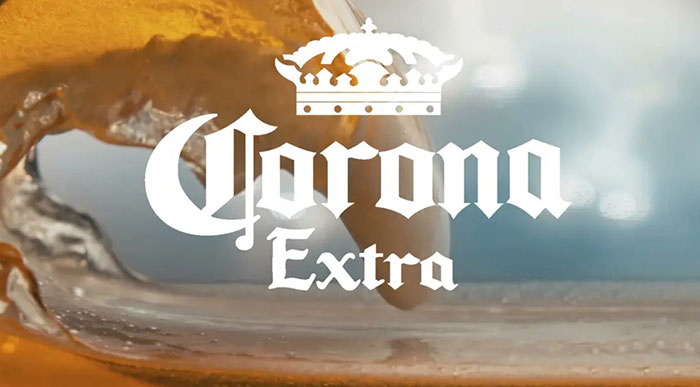
A custom Gothic blackletter, closest to Old London and Ancient. Eduardo Cataño drew the mark in 1935 under Galas de Mexico, and the typeface has stayed essentially unchanged since.
What colors do Corona ads use?
Deep blue PMS 7686 C, gold PMS 7408 C and white, locked since the late 1920s. Blue reads as reliable and gold echoes the liquid, a pairing rooted in basic color psychology.
How much does Corona spend on advertising?
Constellation Brands does not publish brand-level figures. Its fiscal Q4 2026 call reported mid-single-digit growth in advertising and promotional spending, driven mainly by Modelo and Corona, with elevated investment planned through fiscal 2027.
Which sports does Corona sponsor?
Major League Baseball anchors the U.S. plan, with NBA support alongside it. Corona Premier sponsors the U.S. Open Golf Championship and the American Century Championship, and Corona Cero handles Olympic activation.
Why did Corona stop running Find Your Beach?
The account moved. Cramer-Krasselt held Corona Extra for roughly 25 years, then Constellation Brands appointed GSD&M as lead creative agency in July 2024, and the new team built a new platform.
Are Corona ads different in Spanish?
Yes, and deliberately so. The Community produced Spanish-language work during the Cramer-Krasselt era, and the La Vida Mas Fina tagline stayed untranslated to signal Corona’s Mexican heritage to U.S. Hispanic audiences.
Where are Corona commercials filmed?
Rarely where they look filmed. The La Vida Mas Fina work shot primarily in Los Angeles, using Puerto Rico landscape plates backed by roughly $800,000 in commonwealth tax subsidies, per Bloomberg Tax.
How is Corona Sunbrew marketed?
Digital and social first, not TV first. Corona Sunbrew Citrus Cerveza launched in 2024, delivered more than 800 million impressions, and became the number one beer innovation that year, according to Constellation Brands.
Conclusion
Corona ads are worth studying because the design system outlived every strategy layered on top of it.
Cramer-Krasselt, MullenLowe LA and Wieden+Kennedy Amsterdam each rebuilt the message. None of them touched the horizon line, the clear glass bottle or the two-color palette.
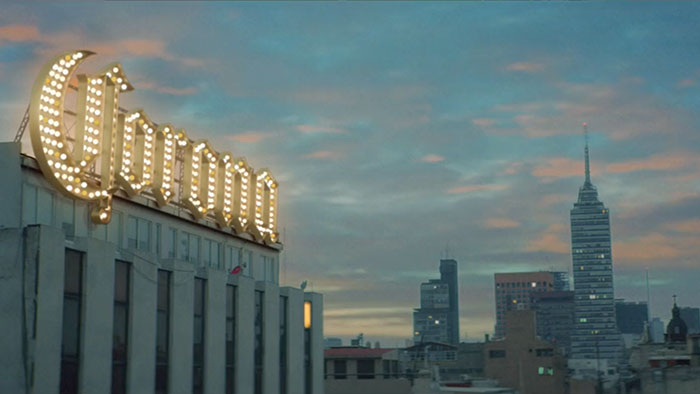
The out-of-home work proves it best. Strip a Corona billboard down to a bottle and a wedge of lime against open negative space, and it still reads at highway speed.
Kantar has named Corona the most valuable beer brand in the world three years running, a strange outcome for a brand whose print ads say almost nothing.
The takeaway for designers: protect the frame, then let the message move.

Renowned for his expertise in logo design and visual branding, Bogdan has developed a multitude of logos for various clients.
His skills extend to creating posters, vector illustrations, business cards, and brochures. Additionally, Bogdan's UI kits were featured on marketplaces like Visual Hierarchy and UI8.
He also wrote in the past years on sites like Design Your Way, WebDesignerDepot, WPDean, Designmodo, Speckyboy, Slider Revolution, and more.
- The Windsurf Logo History, Colors, Font, And Meaning - 10 October 2026
- How to Remove Background From Product Photos (No Photoshop) - 10 October 2026
- How Designers can Build a Stronger Online Creative Identity - 9 October 2026

Bogdan Sandu is a seasoned designer who has been designing websites since 2008. Renowned for his expertise in logo design and visual branding, Bogdan has developed a multitude of logos for various clients. His skills extend to creating posters, vector illustrations, business cards, and brochures. Additionally, Bogdan's UI kits were featured on marketplaces like Visual Hierarchy and UI8. He also wrote in the past years on sites like Design Your Way, WebDesignerDepot, WPDean, Designmodo, Speckyboy, Slider Revolution, and more.
You Might Also Like