Imagine landing your dream client, only to have the project spiral into chaos because of unclear terms and expectations. This scenario is every designer’s nightmare and underscores the crucial need for a solid graphic design contract.
In the dynamic world of freelance design, a well-drafted agreement not only protects your work but also sets clear boundaries and deliverables, ensuring both you and your client are on the same page.
As professionals, we know the devil is in the details, from payment schedules to intellectual property rights.
By the end of this article, you’ll have a collection of graphic design contract examples to guide you through creating a robust design service agreement. We’ll delve into essential clauses, scope of work, and the nuances of client responsibilities.
Whether you’re drafting your first contract or refining an existing one, these insights will empower you to safeguard your projects and professionalism.
Graphic design contract tips
Key points that cannot be missing

Every contract needs to cover certain aspects regardless of work. In this way, both you and your client will have everything they need to know in a paper. In the designer contracts, the following cannot be missing:
Brief project summary
It does not have to be something very complex, it will be enough to indicate what are you offering to the client. They may be the basic details that they had previously agreed.
If you want to be a little more specific, you can always add other information, such as the start date of the work, or if communications will be made by mail or phone.
The format in which the work will be delivered
Not everyone has the software or the means to view a file, so it is good that, before starting to design, make it clear how you can or will deliver the final design to the client. It is very unpleasant to finish a job and that the client cannot see it later because it is a format that he does not know.
When and how will you get paid
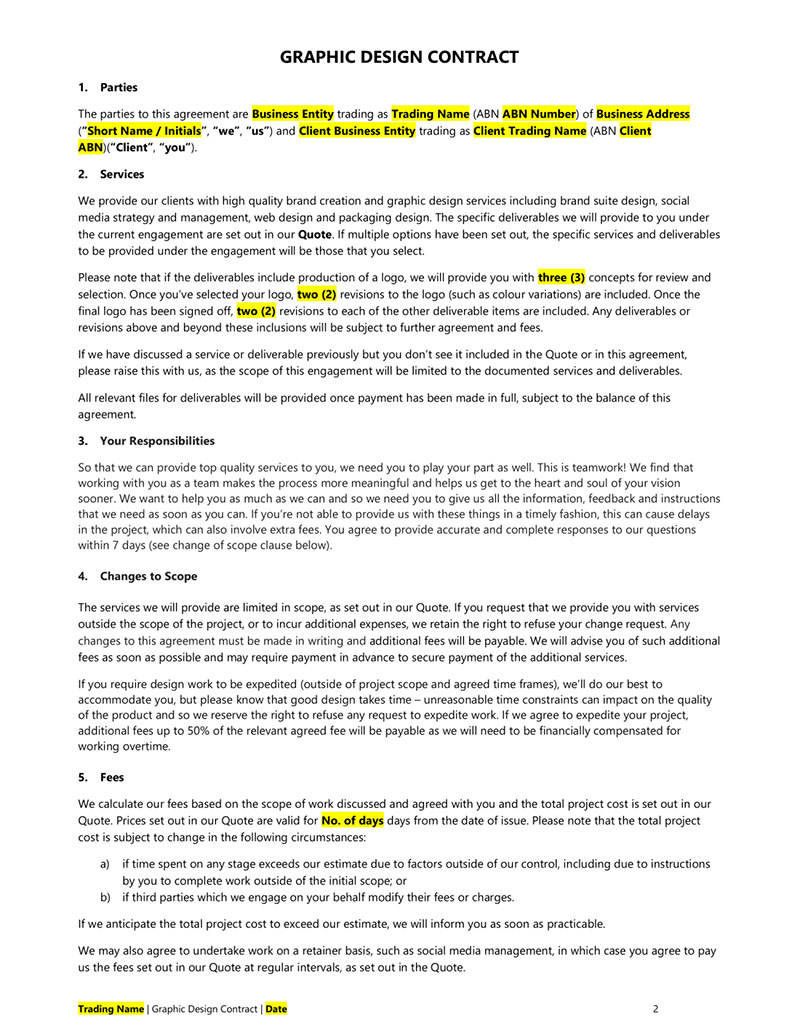
A graphic design contract cannot be ready if you do not specify how the client will make the payments for the work.
Remember to include in this section the project fee, the payment deadline, the payment methods (and if it will be by fee), and make it clear if you will have an additional fee in case the customer pays late.
Deadline
This is probably the most common cause of problems among designers and their clients. Not having a stipulated time to deliver can despair the client, who will feel in full right to make claims when something does not fulfill what it wants.
In this section, you cannot miss the dates on which you will deliver the project updates, as well as the time it will take you to make modifications if needed. Remember that, to make modifications, you need the client’s comments, so you must also stipulate a feedback period.
Place a termination clause
You never know what the future holds, so having a termination clause is always useful. This will work for both you and your client in case one of the two cannot (or does not want to) continue with the project.
Usually, most designer contracts simply stipulate that the client must pay for the work done to date, but you can modify this at your will.
Copyright Transfer
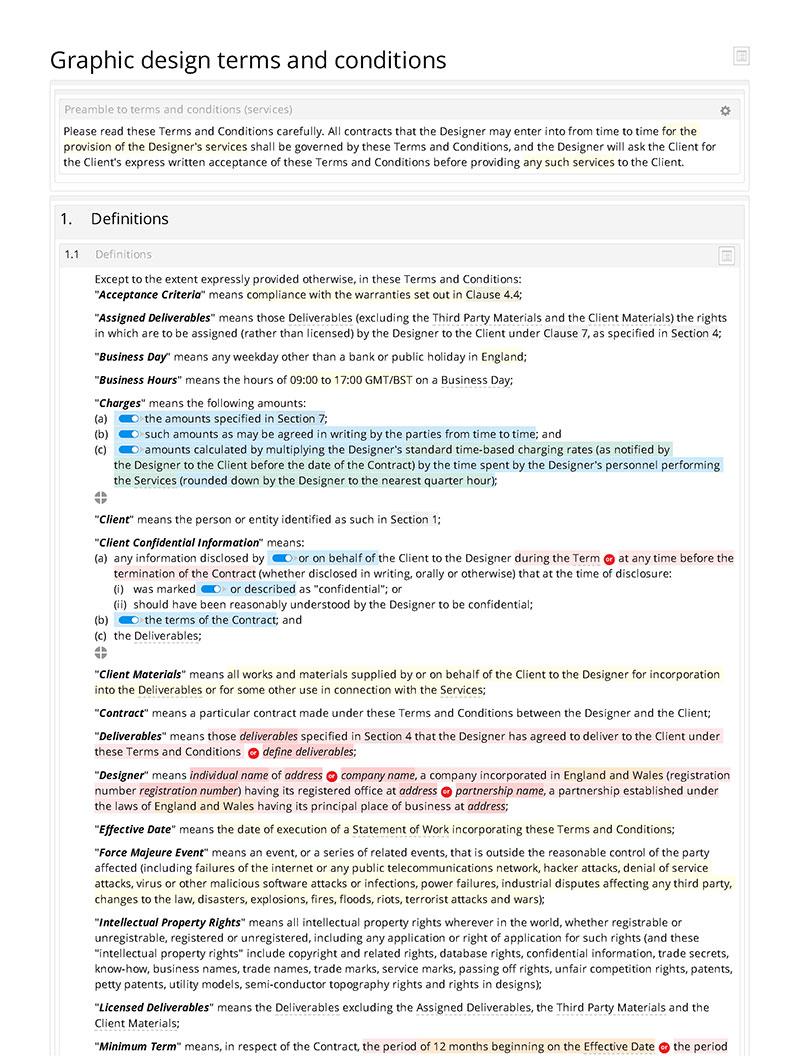
As designers, all the work we create is exclusive to our intellectual property, which means we have every right to it. That is why it will depend exclusively on us whether or not we transfer this property.
The professional association for design (AIGA) suggests four types of licenses:
- Full assignment: in this, you give up all rights to the work, so that the client can modify it.
- Exclusive, but without freedom of modification: as the name suggests, in this case, the work is delivered for the exclusive use of the client, but it cannot make any changes.
- Limited use: this type of transfer is granted when you are going to charge additional fees so that the client can make use of your work for secondary purposes.
- Personal use: finally, you can keep part of the rights of your work to use it for non-commercial and merely advertising purposes. Although in this case it may happen that the client does not allow it.
Optional sections that you can include in your graphic design contract
If you want to create a more complete document, you can add some additional data such as:
- Work credits
- Confidentiality clause
- Extra intellectual property protections
- Types of additional work
Additional tips
Keep the wording simple
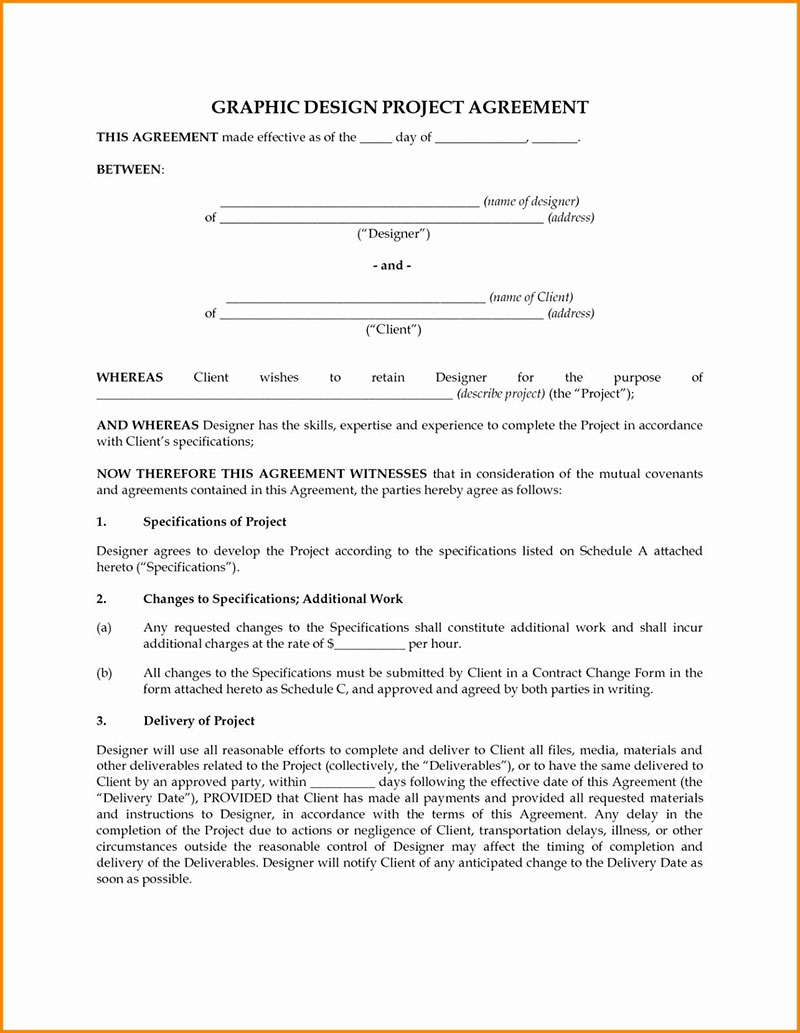
We are not lawyers, and it is likely that our client either, so all legal jargon is unnecessary if we want to make an understandable contract. Avoid confusion between you and your client by clearly describing the details of the contract.
Remember that wording also plays an important role, so you should avoid writing huge paragraphs.
Determine a maximum scope for the project
The client cannot add unlimited modifications to the project or your work would be worthless. You must specify the extent to which you will make changes. Anything outside this scope must be charged additionally.
Work through small goals
One way to work in the industry, especially as a freelancer, is if you create small goals or “milestones” that you will gradually complete.
Make customer collaboration clear
The client must be constantly present when making a design. You must hear your client’s opinion to make corrections on time. It is good to leave specified within the graphic design contract with whom you will communicate to discuss the project so that you always exchange ideas with a single person.
Sample contract templates to use
If you do not have enough time to think about a freelance graphic design contract from scratch, you can always use the multiple templates found on the internet to advance part of the work.
The following is a list with some examples that may be useful for creating your own contract, but remember that each job has different aspects.
Basic Freelance Contract Template – For all purposes
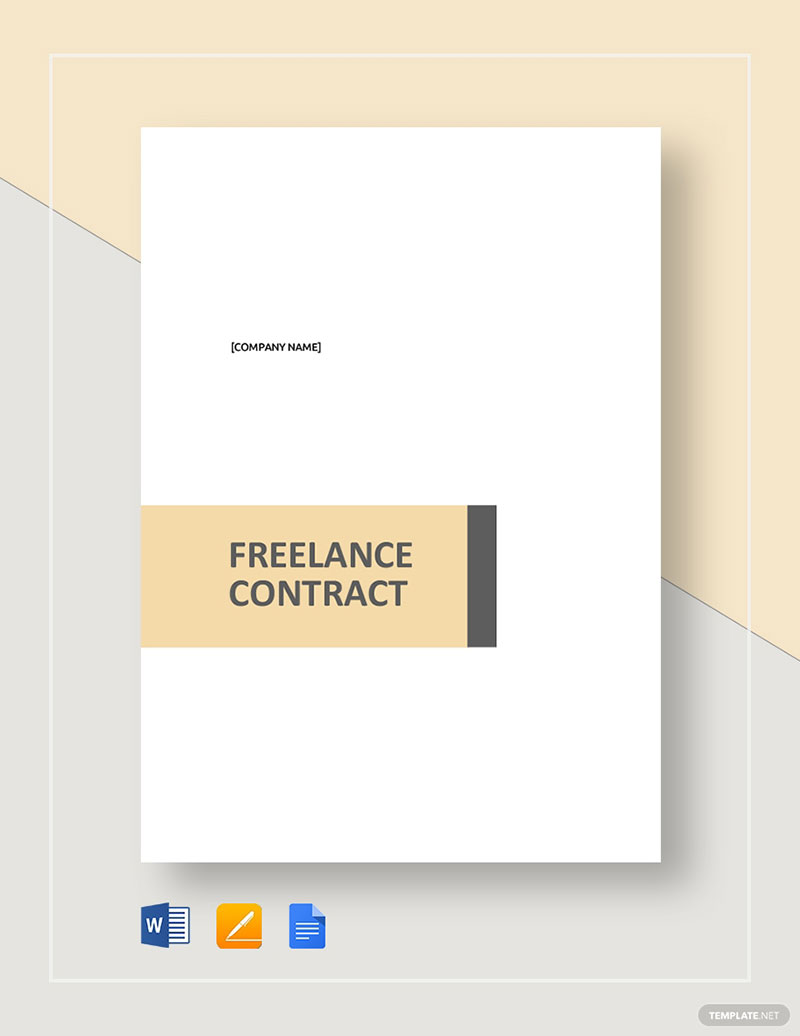
This template will work for any type of freelance work you want to address since it has an elegant and professional appearance.
Simple Freelance Graphic Design Contract Template – Adapted to the present
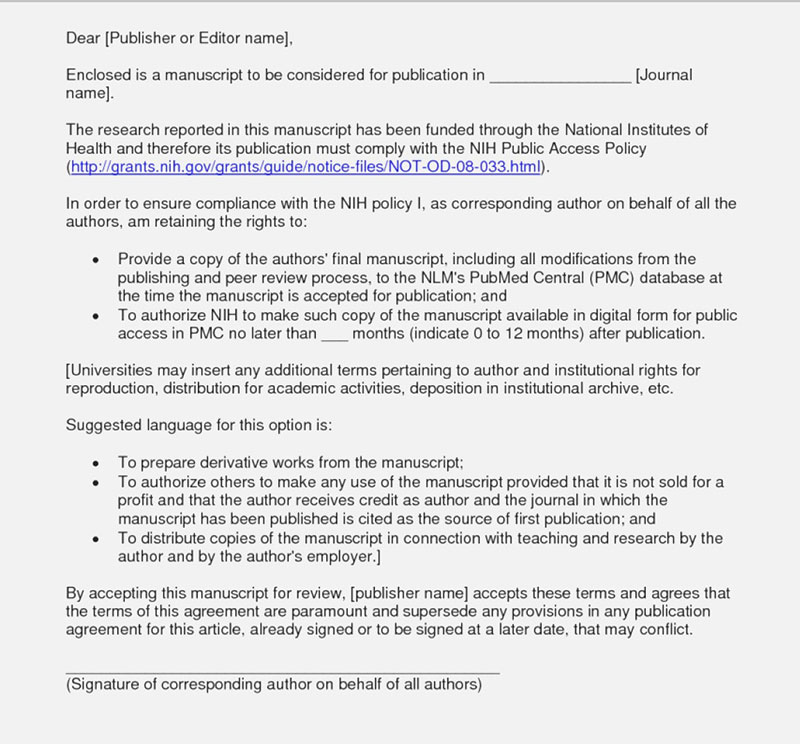
This template is specially created for graphic design projects. Within it, you can find some clauses to use, as well as several recommendations for writing.
Design Contract Template – Friendly Design
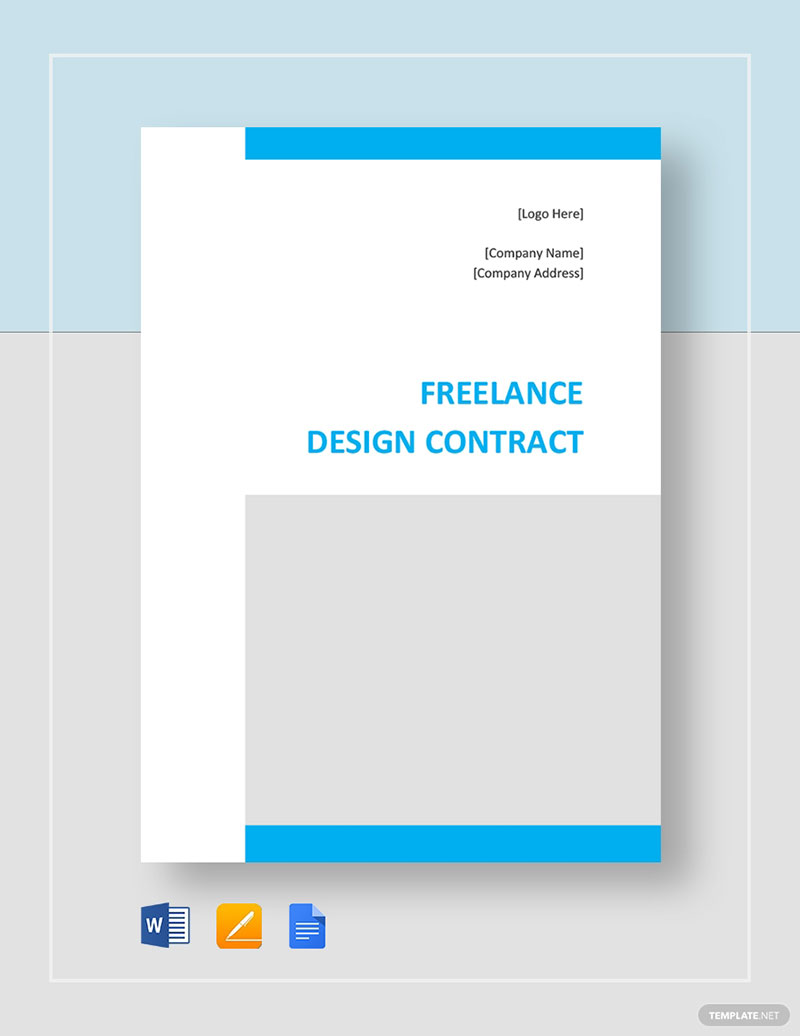
This contract alternative has a more pleasant format with light colors and texts written in a simple way.
WORK FOR HIRE – A page to make everything clear
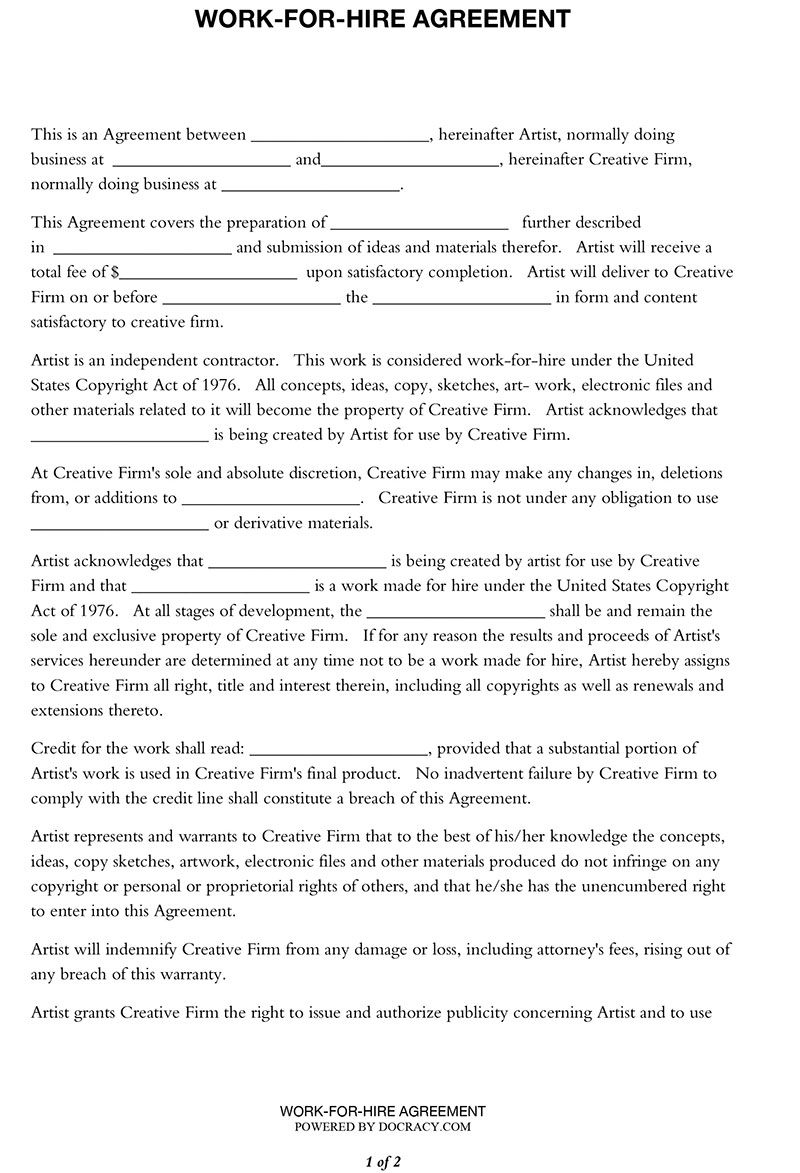
This contract template will make transferring the copyright of your work an easy task. If you are constantly working for creative companies, this is the contract you need.
Graphic Design Contract Style 2 – The conventional contract
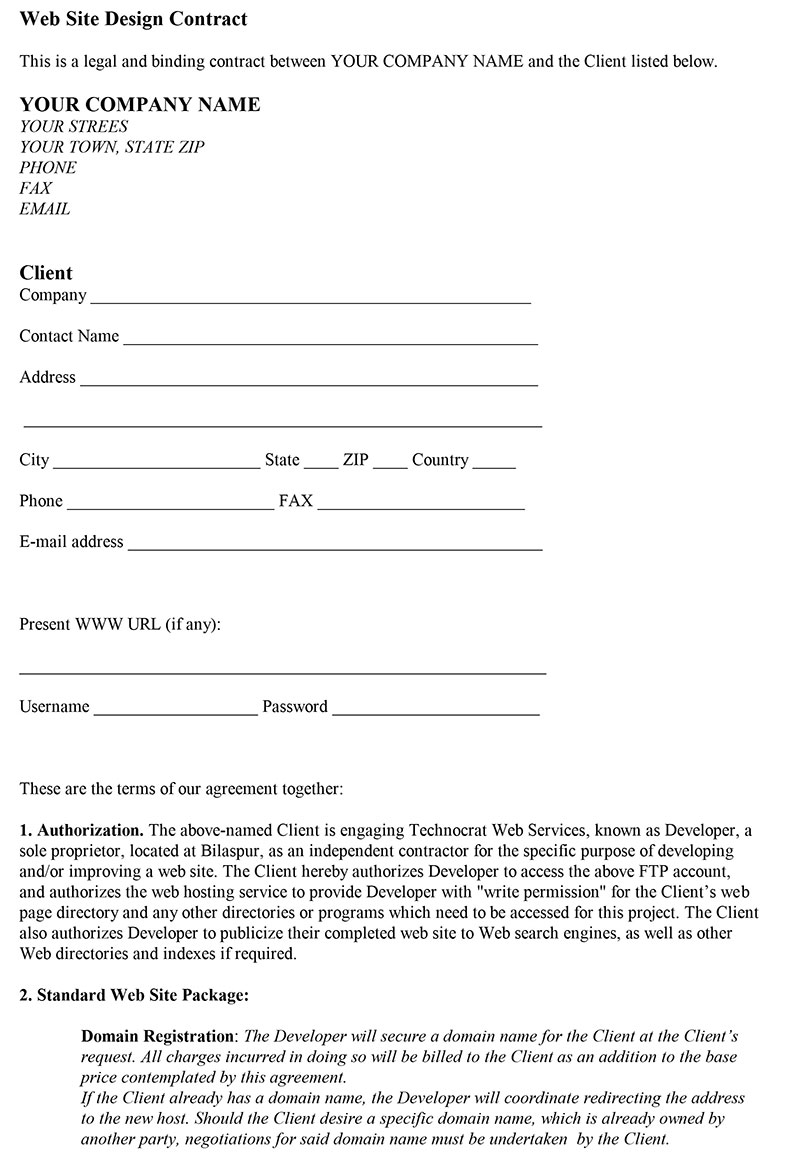
This conventional design offers us the possibility of collecting all the data that we require from the client, as well as offering different packages and services.
Graphic design contract: logo or other artwork – Specific works
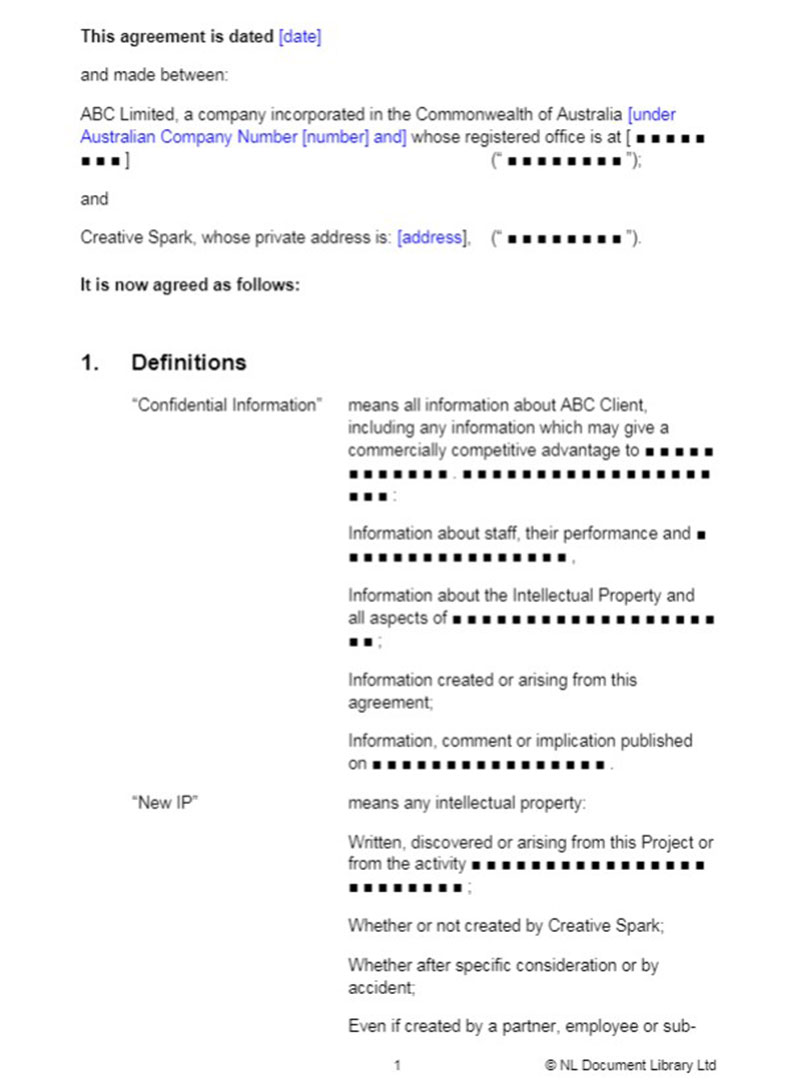
This contract offers spaces to place schedules, payments, and even the copyright that you are willing to assign. You can add any type of service within the template
Graphic Design Contract Template – Professional Quality
We conclude these examples with a somewhat more complex contract, which practically emulates what a lawyer would write.
FAQ On Graphic Design Contract Examples
What should a graphic design contract include?
A graphic design contract must cover key elements: scope of work, payment terms, project timeline, and deliverables.
It should also address intellectual property rights, revisions policy, and confidentiality. Clearly define each party’s responsibilities to avoid misunderstandings and ensure a smooth workflow.
How do I create a freelance design contract?
Start by outlining the project details, including design deliverables and deadlines. Use templates as a foundation, but customize them to reflect your unique needs and protect your intellectual property.
Make sure to include sections for payment terms, revisions policy, and termination clauses.
Why is a graphic design contract important?
A contract sets clear expectations, protecting both parties. It outlines payment schedules, scope of work, and client responsibilities, reducing potential conflicts.
By specifying terms and conditions, it ensures that all parties understand their roles, fostering a professional relationship.
Can I use a template for my design contract?
Yes, templates are a great starting point. Customize them to include specific project details, payment terms, and legal terms.
Make sure to address your unique requirements, such as the number of revisions, project milestones, and confidentiality agreements.
What are intellectual property rights in a design contract?
These rights determine who owns the final design. Typically, the designer retains intellectual property rights until full payment is received. Specify how the client can use the design, whether they have exclusive rights, and any limitations on reproduction or modification.
How should payment terms be structured in a design contract?
Clearly outline the payment schedule, including initial deposits, milestones, and final payment upon project completion.
Specify accepted payment methods and any late fees. This ensures you are compensated fairly and on time, maintaining a professional business relationship.
What happens if a client wants to terminate the contract?
Include a termination clause that details the conditions under which either party can end the contract.
Specify any fees for work completed up to the termination point and outline the return or destruction of any confidential information or design deliverables.
How can I handle revisions in a design contract?
Define the number of revisions included in the project fee. Specify the cost for additional revisions beyond the agreed number. This helps manage client expectations and ensures you are compensated for extra work, keeping the project on track and within scope.
What is a force majeure clause in a design contract?
A force majeure clause protects both parties in case of unforeseen events, like natural disasters or other major disruptions.
It allows for the suspension or termination of the contract without penalty if these events prevent either party from fulfilling their obligations.
Are graphic design contracts legally binding?
Yes, when properly drafted and signed, they are legally binding. Ensure your contract includes all necessary legal terms and conditions, and consider having it reviewed by a legal professional. This provides a solid foundation for your business and protects your interests.
Conclusion
In the realm of graphic design, contracts are your safeguard. The graphic design contract examples we’ve explored offer a roadmap to solidify professional agreements and protect your work.
Each contract must encompass essential elements: scope of work, payment terms, intellectual property rights, and revisions policy. Clear definitions and mutual understanding between you and your client lay the groundwork for a successful project.
Integrating semantic keywords and LSI keywords in your contract not only improves clarity but ensures comprehensive coverage of all necessary aspects. By addressing client responsibilities, project timelines, and confidentiality agreements, you build a professional, trust-based relationship.
The practical examples provided empower you to draft robust agreements, minimizing risks and maximizing efficiency. As you implement these insights, you’ll find yourself better equipped to handle the complexities of freelance design work, ensuring smooth, successful collaborations. Stay informed, stay protected, and let your contracts work as hard as you do.
If you enjoyed reading this article about graphic design contract tips and examples, you should read these as well:
- Is graphic design a good major? The pros and cons
- Graphic Designer Websites: Portfolios and Resources
- 7 Tips How to Start Education as a Graphic Designer
- Japanese Graphic Design Artwork and Typography To Check Out
- Photography contracts

Renowned for his expertise in logo design and visual branding, Bogdan has developed a multitude of logos for various clients.
His skills extend to creating posters, vector illustrations, business cards, and brochures. Additionally, Bogdan's UI kits were featured on marketplaces like Visual Hierarchy and UI8.
He also wrote in the past years on sites like Design Your Way, WebDesignerDepot, WPDean, Designmodo, Speckyboy, Slider Revolution, and more.
- How to Embed Fonts in PDF for Reliable Printing - 30 September 2026
- How to Create Product Design Principles That Evolve With Your Product - 29 September 2026
- Canva vs Midjourney: AI Design Tools Compared - 28 September 2026

Bogdan Sandu is a seasoned designer who has been designing websites since 2008. Renowned for his expertise in logo design and visual branding, Bogdan has developed a multitude of logos for various clients. His skills extend to creating posters, vector illustrations, business cards, and brochures. Additionally, Bogdan's UI kits were featured on marketplaces like Visual Hierarchy and UI8. He also wrote in the past years on sites like Design Your Way, WebDesignerDepot, WPDean, Designmodo, Speckyboy, Slider Revolution, and more.
You Might Also Like