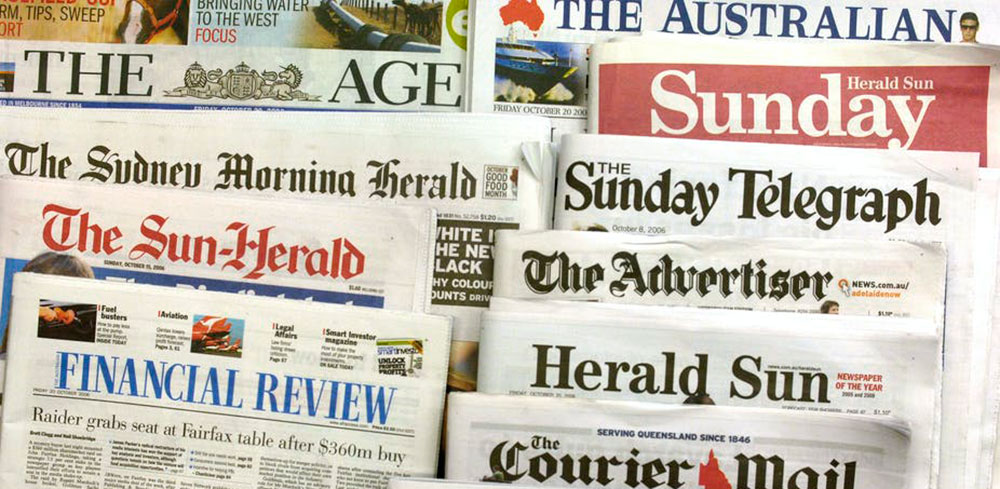
The typeface you choose shapes how readers perceive your content before they read a single word.
Finding the best newspaper fonts means balancing legibility, tradition, and the practical demands of print and digital publishing. Some faces have been setting headlines for over a century. Others were designed last decade for screens.
This guide covers 14 typefaces that define editorial typography. You’ll learn which serifs work for body copy, which sans-serifs command attention in headlines, and why certain fonts survive rough newsprint while others fall apart.
Whether you’re designing a broadsheet, a digital newsletter, or a magazine layout, these fonts have proven themselves in real publications worldwide.
The Best Newspaper Fonts
| Font Name | Primary Use Context | Key Attributes | Readability Profile |
|---|---|---|---|
| Times New Roman | Body text, compact layouts | High x-height, short descenders, condensed spacing | Excellent for small sizes, space-efficient |
| Poynter | Body text, narrow columns | Serif typeface, 12 styles, designed for newspaper printing | Most popular (36 newspapers use it), optimized legibility |
| Franklin Gothic | Headlines, advertisements | Sans-serif, bold appearance, double-storey a and g | Strong for display sizes, less suitable for body text |
| Helvetica | Headlines, infographics, signage | Tall x-height, tight spacing, 34 font weights | Dense and solid, readable from distance |
| Utopia | Body text, formal editorial | Transitional serif, vertical stress, stroke contrast | Clean appearance, large x-height for clarity |
| Nimrod | Headlines and body text | Designed specifically for newspapers, extremely versatile | Dual-purpose font for both display and body |
| Century Old Style | Body text, headlines | Serif typeface, balanced proportions | Traditional look, highly legible |
| Interstate | Subheadings, captions, modern layouts | Sans-serif, highway signage inspired | Clear and direct, contemporary feel |
| Bureau Grotesque | Headlines, display text | Grotesque sans-serif, industrial style | Bold presence, attention-grabbing |
| Cheltenham | Headlines (NYT uses it) | Serif, tall ascenders, extensive family variants | Strong for headlines, nicknamed “Chelt” |
| Miller | Body text, editorial content | Scotch Roman style, warm character | Comfortable for extended reading |
| Garamond | Body text, books, magazines | Old Style serif, elegant proportions, designed 16th century | Timeless elegance, excellent for long-form text |
| Caslon | Body text, traditional publications | Old Style serif, designed 1722, “When in doubt, use Caslon” | Comfortable and inviting, historically significant |
| Spectral | Digital newspapers, on-screen reading | Serif, 7 weights, substantial triangular serifs | Optimized for screens, efficient long-form design |
Times New Roman
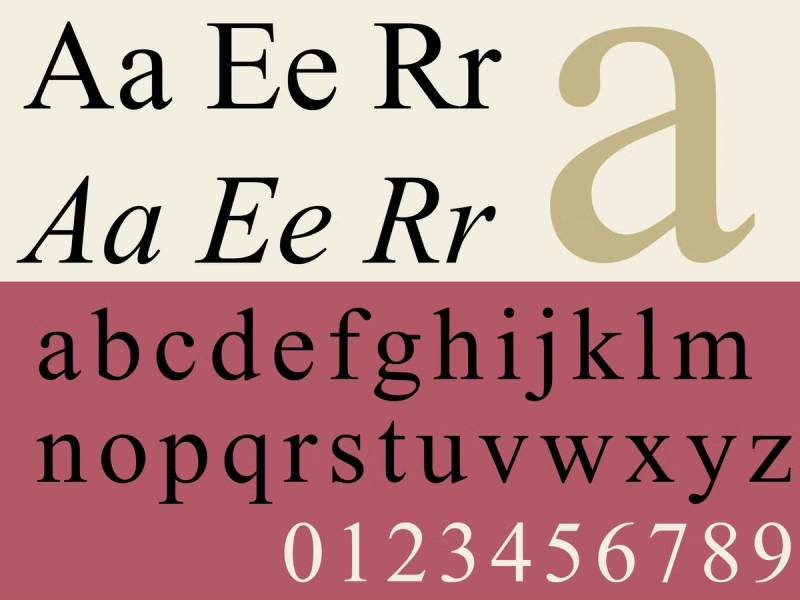
The most recognized newspaper typeface in the world. Times New Roman was purpose-built for newsprint and remains a benchmark for editorial typography.
Historical Context
Stanley Morison designed it in 1931 for The Times of London after criticizing their dated printing quality. Victor Lardent, an artist in the advertising department, drew the letterforms under Morison’s direction.
The face debuted on October 3, 1932. Within 18 months, over 3,000 newspapers had adopted it.
Morison based the design on Plantin but added sharper serifs and increased stroke contrast. The companion italic drew influence from Didot.
Design Characteristics
Times New Roman is a transitional serif font with these features:
- High x-height relative to cap height
- Strong thick-thin stroke contrast
- Vertical stress on curved letters
- Sharp, bracketed serifs
- Economical character width
The large counters on letters like “a” and “e” improve legibility at small sizes.
Readability Performance
Designed specifically for narrow newspaper columns. The condensed proportions fit more characters per line without sacrificing clarity.
Performs best between 8pt and 12pt for body text. Larger sizes reveal its newspaper origins, which can feel workmanlike in book settings.
Reading speed studies from the 1932 British Medical Research Council informed its construction.
Notable Publications Using It
The Times used it from 1932 until switching to Times Classic in 2002, then Times Modern in 2009. The face spread globally through Monotype and Linotype distribution.
Microsoft bundled it with Windows. Apple licensed Linotype’s version (Times Roman). This made it the default for digital documents everywhere.
Print vs Digital Performance
The original cut was optimized for letterpress ink spread on newsprint. Early digital versions lost some crispness.
Microsoft refined it for screen rendering. The tall x-height helps at low resolutions, though true text optimization came later with ClearType.
Modern web use is declining. Georgia and other screen-first serifs have displaced it online.
Best Use Cases
- Body copy in newspapers and newsletters
- Tight column widths (best under 45 characters per line)
- Documents requiring space efficiency
- Academic papers and legal documents
Not ideal for: large display headlines, premium book typography, or branding that needs distinction.
Poynter

A serif built from scratch for American newspapers entering the digital age. Poynter solved a specific problem: how to maintain consistent text quality across different printing conditions.
Historical Context
Tobias Frere-Jones designed it for Font Bureau in 1997. The Poynter Institute commissioned extensive testing with newspapers including The Washington Post and the St. Petersburg Times.
The design descends from Hendrik van den Keere’s Dutch romans of the 17th century. Those types merged Flemish blackletter strength with French elegance.
Rising newsprint costs in the 1990s forced publishers to narrow columns. Poynter’s oldstyle diagonal stress fits more characters per line than vertical-stress alternatives.
Design Characteristics
Poynter is an oldstyle serif with these attributes:
- Moderate x-height for comfortable reading
- Diagonal stress on round letters
- Bracketed serifs without excessive decoration
- Multiple font weights built on identical character widths
- Four optical grades for different printing conditions
That last feature is critical. Papers using offset presses with ink spread choose lighter grades. Better letterpress conditions use heavier weights. The text reflows identically regardless.
Readability Performance
A 2002 study found 36 of 97 leading U.S. newspapers used Poynter as their primary text face.
The graded weight system means a paper printing features on high-quality stock can use one weight while news pages going through paste-up use another. Copy moves between sections without reflowing.
Performs well at small sizes (down to 7pt) in narrow columns.
Notable Publications Using It
Multiple major American dailies adopted Poynter in the late 1990s and 2000s. Font Bureau designed custom versions for specific publishers.
The family includes Poynter Gothic for subheads, based on Morris Fuller Benton’s Franklin Gothic drawings at ATF.
Print vs Digital Performance
Primarily a print face. The grading system solves analog printing problems that don’t exist on screens.
Web versions exist but lack the grade variations. Standard weights work adequately on digital platforms without the fine-tuning possible in print.
Best Use Cases
- Newspaper body text (its primary purpose)
- Publications with variable print quality across sections
- Compact column settings
- Long-form editorial content
Works particularly well paired with Poynter Gothic for headlines and subheads.
Franklin Gothic
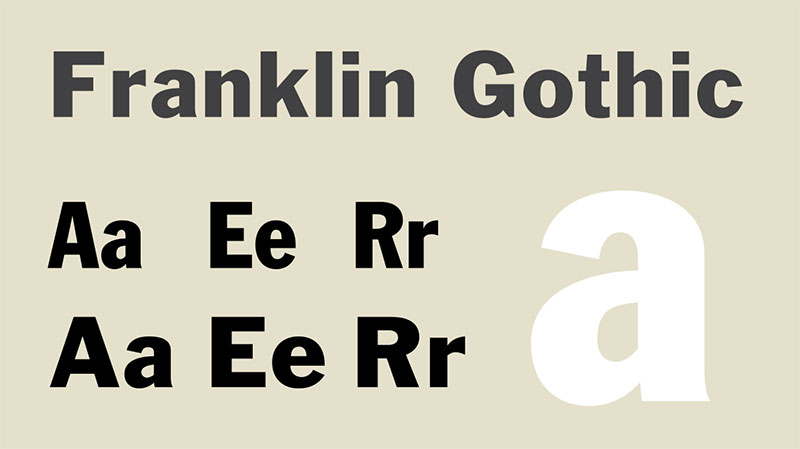
The patriarch of American grotesque sans-serif fonts. Franklin Gothic brought bold, no-nonsense authority to newspaper headlines over a century ago. It still does.
Historical Context
Morris Fuller Benton designed it around 1902 at American Type Founders. The foundry released it in 1905.
Named for Benjamin Franklin (also a printer), the face competed with German grotesques like Berthold’s Akzidenz-Grotesk. Benton created a distinctly American interpretation.
The 1930s saw a dip in popularity when geometric sans like Futura arrived from Europe. American designers rediscovered Franklin Gothic in the 1940s.
ITC revived it in 1980. Font Bureau’s David Berlow later expanded it further for newspaper and magazine clients.
Design Characteristics
Franklin Gothic follows the grotesque model:
- Two-story lowercase “a” and “g” (unusual for sans-serifs following German models)
- Wide, square capitals
- Noticeable thick-thin stroke contrast (more than later neo-grotesques)
- Large x-height
- Compact descenders
The double-story letters connect it visually to serif text. This makes it complement body copy better than more homogenous designs like Helvetica.
Readability Performance
Best suited for headlines and display text rather than extended reading.
The stroke contrast and slightly humanist proportions give it warmth that pure geometric sans lack. But the weight prevents comfortable long-form reading.
Condensed versions pack headlines into tight column spaces.
Notable Publications Using It
Newspapers and magazines have used Franklin Gothic for headlines since its release. The Star Wars opening crawl (partly) uses it. Columbia College Chicago uses it for branding.
Font Bureau’s customizations served major American publications throughout the 1990s and 2000s.
Print vs Digital Performance
Performs well in both environments. The clear letterforms survive low-resolution rendering.
Bold and Extra Condensed weights work particularly well for digital headlines where space is tight.
Multiple digital revivals exist. ITC Franklin Gothic remains widely available through Adobe Fonts and other platforms.
Best Use Cases
- Newspaper and magazine headlines
- Advertising and display text
- Subheadings and pull quotes
- Any application needing bold, clear authority
Not recommended for body text at length. The weight creates eye fatigue.
Helvetica
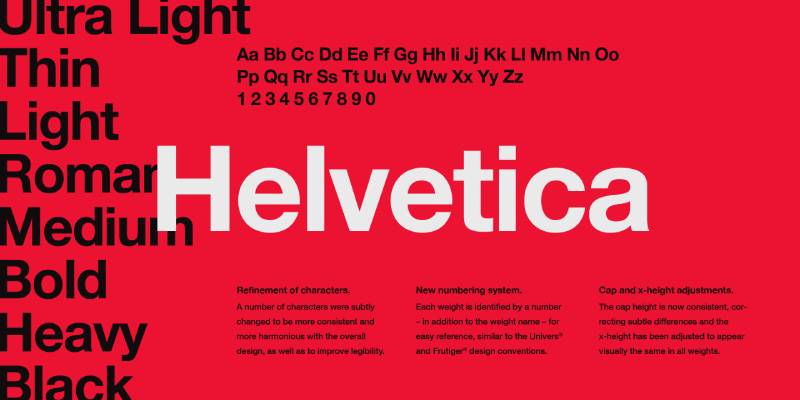
Not a newspaper typeface by origin. Yet Helvetica’s influence on editorial design warrants its inclusion here. Its neutrality defined an era and continues to shape how we think about sans-serif typography.
Historical Context
Max Miedinger designed it in 1957 at the Haas Type Foundry in Switzerland. Eduard Hoffmann directed the project.
Originally called Neue Haas Grotesk, it aimed to modernize 19th-century grotesques like Akzidenz-Grotesk. The name changed to Helvetica in 1960 when Linotype licensed it for broader distribution.
“Helvetica” derives from Helvetia, the Latin name for Switzerland. The name capitalized on Swiss design’s reputation for precision.
Design Characteristics
Helvetica is a neo-grotesque with distinctive traits:
- High x-height
- Uniform stroke weight (less contrast than Franklin Gothic)
- Horizontal or vertical stroke terminals
- Tight default letter spacing
- Neutral, anonymous aesthetic
The tight spacing gives it a dense, solid appearance at display sizes. But those same tight metrics hurt small-size legibility.
Readability Performance
Problematic for newspaper body text. The narrow apertures and tight spacing reduce legibility in small sizes and on newsprint.
Works better for headlines and display. The neutral forms don’t impose personality on content.
Reading speed suffers compared to serifs or more open sans-serifs in extended text settings.
Notable Publications Using It
More common in corporate identity than editorial work. NASA, NYC Subway, Lufthansa, and countless others adopted it.
Some newspapers used it for section headers or navigational elements. Rarely for body copy.
Print vs Digital Performance
The original design assumed phototypesetting and offset printing. Early digital versions struggled with spacing issues at text sizes.
Helvetica Neue (1983) addressed some problems. Helvetica Now (2019) added optical sizing for better performance across scales.
iOS used Neue Helvetica as its system font until Apple developed San Francisco. MacOS 10.10 briefly used it before also switching.
Best Use Cases
- Headlines and display type
- Signage and wayfinding
- Corporate identity systems
- Any context where neutrality matters more than warmth
Avoid for: newspaper body text, long-form reading, applications requiring high legibility at small sizes.
Utopia
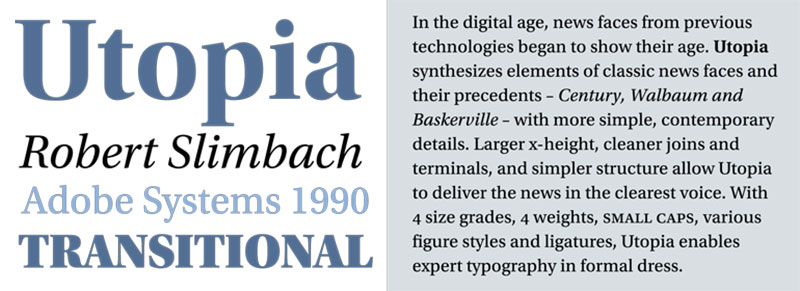
A transitional serif that bridged 18th-century elegance with late 20th-century technology. Robert Slimbach designed it for Adobe in 1989, making it one of the earliest Adobe Originals.
Historical Context
Slimbach drew on Baskerville and Walbaum for inspiration. Hermann Zapf’s Melior also influenced the direction.
Utopia arrived when desktop publishing was exploding. Adobe needed professional-quality faces for their Originals program. This was among the first.
The design aimed for versatility. Corporate communications, advertising, books, and newspapers could all use the same family.
Design Characteristics
Utopia combines 18th-century transitional forms with modern practicality:
- Vertical stress on round letters
- Pronounced stroke contrast (thick-thin variation)
- Large x-height
- Four optical sizes (display, headline, regular, caption)
- Multiple weights from light to bold
The optical sizes matter. Caption cuts use thicker strokes and more open spacing. Display cuts have finer details.
Readability Performance
Solid performer for newspaper body text. The large x-height and sturdy stroke weights survive rough printing conditions.
Four optical sizes mean designers can optimize for each use case rather than compromising with a single cut.
Reading comfort at small sizes exceeds many transitional serifs because Slimbach anticipated practical use.
Notable Publications Using It
Several newspapers adopted Utopia after its release. Its reliability on variable-quality output made it practical.
Adobe open-sourced the basic styles (regular, italic, bold, bold italic) in 2006, expanding its accessibility. The full family with optical sizes remains commercial.
Print vs Digital Performance
Designed during the PostScript era. Works well in both print and digital environments.
The OpenType version includes ligatures and small capitals. Screen rendering improved as hinting technology advanced.
Type designers later forked the open-source version into variants like Heuristica (adding Cyrillic) and Linguistics Pro.
Best Use Cases
- Newspaper and magazine body text
- Corporate communications
- Book publishing
- Mixed media where one family must serve many purposes
The optical sizes make it genuinely useful across the scale and proportion range from captions to headlines.
Nimrod
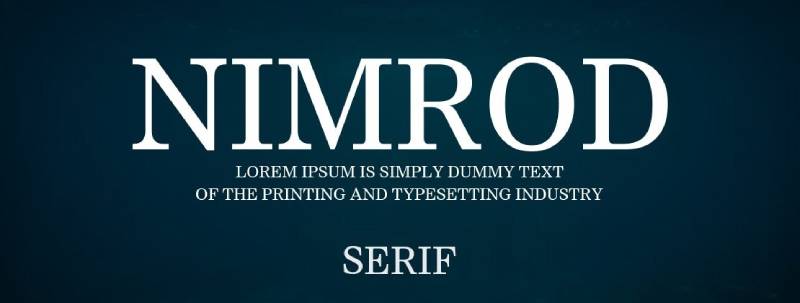
Built for speed. Robin Nicholas designed Nimrod at Monotype in 1980 specifically for digital newspaper production on their Lasercomp system. It solved real problems.
Historical Context
Monotype wasn’t strong in high-speed newspaper typesetting before digital. The Lasercomp changed that, but they lacked appropriate faces.
Nicholas developed Nimrod after conversations with the Financial Times. Victor Clark at FT had ideas about digital-native typefaces.
The Leicester Mercury became the first newspaper to use it. Eddie Shah’s Today newspaper (launched 1986) also adopted it.
The Guardian used Nimrod from its late-1980s redesign until Matthew Carter’s Miller replaced it in 1998.
Design Characteristics
Nimrod borrows from traditional newspaper Ionics but cleans them up:
- Large x-height for small-size legibility
- Sturdy, unadorned serifs
- Minimal decorative details
- Clear, unambiguous letterforms
- Multiple weights for text, headlines, and small ads
The simplified forms help it survive the degradation of newspaper printing. Nothing fussy to break down.
Readability Performance
Optimized for small sizes in narrow columns. The large x-height and open counters maintain legibility where other faces fail.
The Concise Oxford English Dictionary (1990 edition) used it. That’s a serious small-type stress test.
Works less well at display sizes where its workmanlike construction becomes obvious.
Notable Publications Using It
The Guardian (1988-1998), Leicester Mercury, Today newspaper. Various UK regional papers.
Extended versions now include Greek and Cyrillic support for international publications.
Print vs Digital Performance
Born digital. Nimrod was one of the first typefaces designed specifically for digital output rather than adapted from metal.
Screen performance is decent but not its primary purpose. The design prioritizes physical printing.
Best Use Cases
- Newspaper body text
- Small-size text settings (classifieds, captions)
- Publications with variable print quality
- Any context where type must survive rough reproduction
Not ideal for: display headlines, premium book work, digital-first publications.
Century Old Style
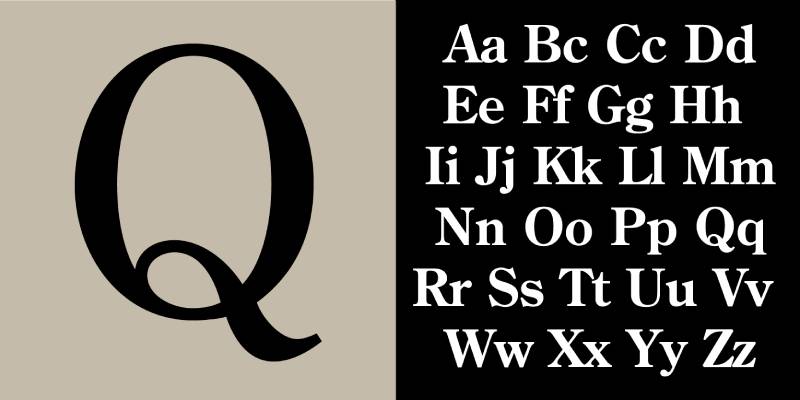
Morris Fuller Benton designed this between 1908 and 1909 at American Type Founders. It takes the Century family’s newspaper-friendly proportions and adds oldstyle warmth.
Historical Context
Century Old Style arrived during a shift toward heavier faces with bracketed serifs. The original Century Roman had been designed by Benton’s father, Linn Boyd Benton, for Century Magazine in the 1890s.
The younger Benton kept Century’s large x-height and short descenders but replaced the transitional serifs with oldstyle brackets. The result reads as warmer and more traditional.
ATF positioned the full Century family as one of the first comprehensive type families. Newspapers could use related faces throughout their publications.
Design Characteristics
Century Old Style shares proportions with Century Expanded:
- Large x-height
- Short ascenders and descenders
- Large capitals relative to lowercase
- Bracketed oldstyle serifs (not the sharper transitional serifs of other Century variants)
- Good stroke contrast for readability
The short descenders allowed tight leading without letters colliding across lines. Newspapers saved space.
Readability Performance
Strong legibility at text sizes. The combination of large x-height and oldstyle serifs creates comfortable reading.
The compact vertical proportions suited newspaper column depths. Text could fit more lines without feeling cramped.
Better for body text than Century Schoolbook, which was optimized for children’s textbooks with even larger features.
Notable Publications Using It
Newspapers and magazines adopted various Century variants throughout the early 20th century.
Adobe’s digital version maintains the original’s readability. Font Bureau created Benton Modern based on Century Expanded for newspapers including the Boston Globe and Detroit Free Press.
Print vs Digital Performance
The original metal type performed well on newsprint. Digital versions maintain that character.
The large x-height helps screen legibility, though Century Old Style wasn’t designed with screens in mind.
Available through Adobe Fonts and other distributors.
Best Use Cases
- Magazine and newspaper body text
- Publications wanting traditional warmth with modern economy
- Any setting where vertical space matters
- Text requiring readable serif type without formality
The oldstyle character makes it friendlier than transitional Century variants while keeping their practical proportions.
Interstate
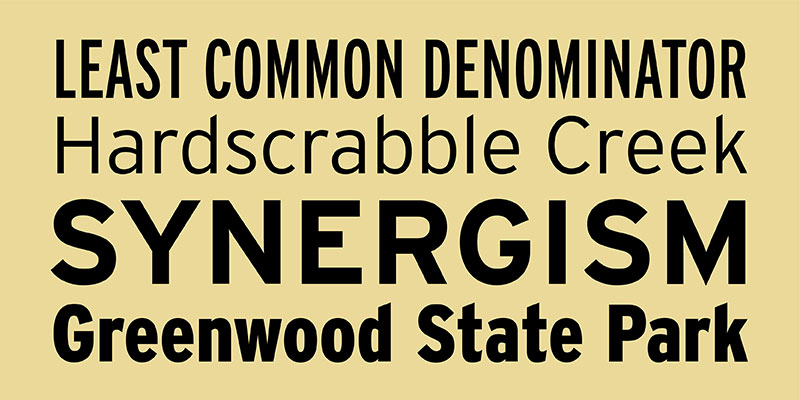
Tobias Frere-Jones designed Interstate between 1993 and 1999 at Font Bureau. It translates U.S. highway signage into a versatile editorial typeface.
Historical Context
The Federal Highway Administration commissioned signage alphabets in the late 1940s. Dr. Theodore Forbes led the development of what became Highway Gothic.
Those letters optimize for one thing: reading road signs at speed from a distance. Frere-Jones saw potential beyond highways.
Interstate keeps the utilitarian clarity while adding refinements for print and screen. Communication Arts called it “one of the most popular faces of the 90s.”
Design Characteristics
Interstate follows neo-grotesque principles with signage DNA:
- Angled terminals on strokes (especially visible on lowercase “t” and “l”)
- 90-degree cuts on curved stroke endings
- Wide default spacing for legibility
- Multiple weights from thin to black
- Condensed variants for tight spaces
The angled cuts give Interstate more character than sterile neo-grotesques while maintaining clarity.
Readability Performance
Works across a wider range than most display sans-serifs. The wide spacing helps text sizes.
Headlines remain its strength. The bold weights command attention without shouting.
The wide spacing makes it less economical than tighter faces for body copy in print. But that spacing improves screen legibility.
Notable Publications Using It
Los Angeles Times, Radio Times, and the Daily Mirror’s TV guide all adopted Interstate.
Citibank, Sainsbury’s, Southwest Airlines, and The Weather Channel use it for branding. Barack Obama’s 2008 campaign did not use Interstate (that was Gotham, also by Frere-Jones).
Print vs Digital Performance
Designed in the digital era, Interstate works in both environments.
Screen rendering benefits from the clear, open letterforms. The wide spacing translates well to pixel grids.
Font Bureau recommended it for “Newspaper, Magazine, Book, Web and Corporate use.” That versatility holds up.
Best Use Cases
- Newspaper and magazine headlines
- Wayfinding and signage
- Corporate identity
- Screen interfaces and digital publications
Body text works in short passages. Long-form reading benefits from tighter faces or serifs.
Bureau Grotesque
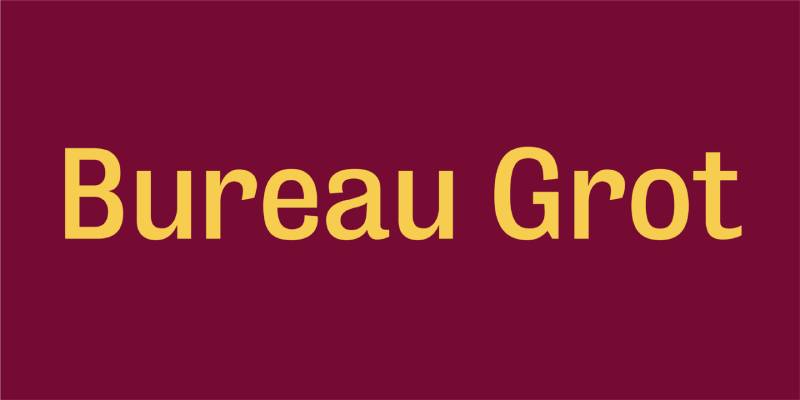
A tough, editorial sans-serif with 19th-century British DNA. David Berlow created Bureau Grotesque in 1989 for Font Bureau, drawing from Stephenson Blake’s grotesque specimens.
Historical Context
Roger Black and David Berlow founded Font Bureau specifically to serve magazine and newspaper publishers. Bureau Grotesque was among their first releases.
Stephenson Blake’s original grotesques date to the late 1800s. They featured folded-up letterforms, solid structure, and irregular details that gave them personality. Berlow digitized that character for modern editorial use.
The Tribune Companies and Newsweek commissioned custom versions immediately. Entertainment Weekly and the Madrid daily El Sol followed. By 1993, the family had grown to twelve styles.
Jill Pichotta, Christian Schwartz, and Richard Lipton later expanded it further. The name shortened from Bureau Grotesque to Bureau Grot.
Design Characteristics
Bureau Grot follows the traditional grotesque model:
- Moderate to high stroke contrast (unusual for sans-serifs)
- Tall x-height with short ascenders and descenders
- Folded-up, compact letterforms
- Strong, blocky structure
- 27 styles from Extra Compressed to Ultra Black
The stroke contrast gives it more visual interest than homogenous neo-grotesques. That variation creates texture on the page.
Readability Performance
Built for headlines and display, not body text. The intense weight variations and compact forms create impact at large sizes.
Lighter weights in normal and wide styles work down to 14px. But the design favors bold, attention-grabbing uses.
Narrow and wide styles let designers pack headlines into tight columns or stretch across full pages.
Notable Publications Using It
Newsweek, Entertainment Weekly, El Sol (Madrid), and Tribune Company newspapers used custom versions.
Font Bureau’s client list reads like a who’s who of American publishing: The New York Times Magazine, Esquire, Rolling Stone, Wall Street Journal.
Monotype acquired 39 Font Bureau typefaces in 2023, including Bureau Grot.
Print vs Digital Performance
Designed in the digital era for editorial use. Works well in both print and screen environments.
The range of weights and widths provides flexibility across media. Condensed versions suit digital layouts where space is tight.
Best Use Cases
- Newspaper and magazine headlines
- Display text requiring character and grit
- Subheadings that need to stand out
- Any editorial context wanting vintage authority
Not for: body text, long-form reading, applications requiring a polished modern look.
Cheltenham
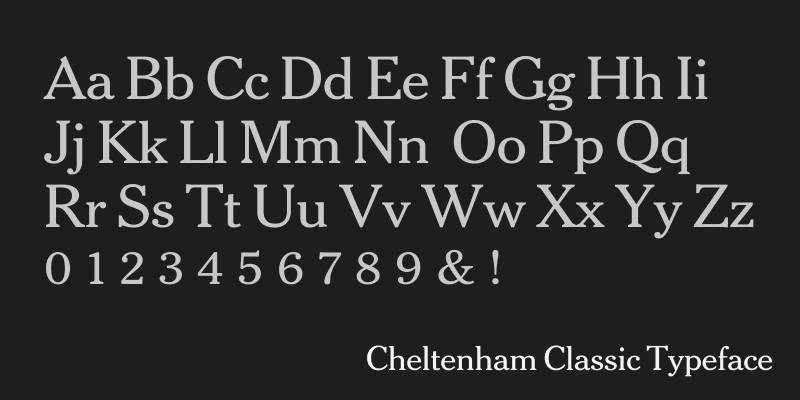
The “king of display faces” dominated American newspaper headlines for decades. Architect Bertram Goodhue designed it in 1896 for the Cheltenham Press in New York.
Historical Context
Ingalls Kimball of Cheltenham Press commissioned the design. Goodhue completed drawings originally called Boston Old Style at roughly 14 inches high.
American Type Founders bought the design in 1902. Morris Fuller Benton refined it and expanded it into one of the first true type families. By 1915, Benton had cut 21 variations.
The face shows Arts and Crafts Movement influences but doesn’t copy any single historical model. Goodhue intended it for book work, but it became wildly successful for display.
Linotype, Monotype, and Ludlow all produced their own versions. The name “Chelt” became industry shorthand.
Design Characteristics
Cheltenham blends old-style and transitional characteristics:
- Lengthened ascenders, shortened descenders (Goodhue believed the upper half of text matters more for recognition)
- Clarendon-style serifs with sturdy brackets
- Relatively uniform construction
- Large x-height for its era
- Multiple widths and weights
The shortened descenders allowed tight leading without collisions. Newspapers saved vertical space.
Readability Performance
Critics called it “ungainly” for extended reading. Daniel Berkeley Updike complained it “cannot be read comfortably for any length of time.”
But for headlines and display? Excellent. A Cheltenham headline complements almost any body text because it bridges old-style and transitional conventions.
The variety of widths lets editors fit copy to available space while maintaining family consistency.
Notable Publications Using It
The New York Times adopted Cheltenham for headlines around 1906 and still uses a custom version today. Matthew Carter redesigned it for the Times in 2003.
The U.S. Congress uses Cheltenham for bill and resolution numbers. L.L.Bean’s logo uses it. The …For Dummies book series is set in ITC Cheltenham.
Print vs Digital Performance
Designed for metal type and print. Digital versions from ITC (Tony Stan’s 1975 revival), Bitstream, and others perform adequately on screen.
The Carter version for The New York Times optimizes legibility for newsprint while maintaining the design’s authority.
Best Use Cases
- Newspaper headlines (its natural habitat)
- Display text requiring traditional authority
- Mastheads and section headers
- Any application where a single family must serve many headline needs
Avoid for: extended body text, modern/minimalist contexts, screen-first digital products.
Miller

Matthew Carter’s Scotch Roman revival for the digital age. Miller launched in 1997 through Font Bureau and quickly became one of the most used newspaper text faces in America.
Historical Context
Carter drew on 19th-century Scottish type foundry traditions. The “Scotch Roman” style originated in Edinburgh and Glasgow around 1810-1820, likely cut by punchcutter Richard Austin.
Carter didn’t copy any single historical example. He captured the style’s spirit: good color, generous breadth, and robust modeling.
James Mosley at the St Bride Library encouraged the project. Tobias Frere-Jones and Cyrus Highsmith at Font Bureau assisted with development. The face is named for William Miller, founder of Miller & Richard type foundry.
Design Characteristics
Miller displays transitional serif characteristics:
- Vertical stress on round letters
- Moderate stroke contrast
- “Hybrid” or semi-lining numerals by default
- Two optical sizes: Text (for body copy) and Display (for headlines)
- Sharpened serifs in the Display version
Carter related it to his earlier Georgia. Both revive Scotch Roman traditions, but Georgia was designed for screens while Miller prioritizes print.
Readability Performance
Optimized for newsprint reproduction. The Text version features robust strokes that survive rough printing conditions.
A 2005 Ascender Corporation survey found Miller to be the tenth most popular typeface in American newspapers. It remains Carter’s biggest royalty source.
The optical sizes matter. Display cuts work at 18pt and above. Text cuts handle the small sizes where newspapers live.
Notable Publications Using It
The Washington Post uses Miller Daily for body copy. The Guardian commissioned Miller News for its 1998 redesign. The Boston Globe got a custom Miller Globe variant.
Other users include: National Post, The Straits Times, The Dallas Morning News, Hindustan Times, San Jose Mercury News, and Glamour magazine (Miller Banner).
MoMA acquired Miller as one of 23 typefaces of historical significance.
Print vs Digital Performance
Miller was designed for print. The graded weights (four closely spaced options in Miller Daily) let newspapers tune appearance to their specific printing conditions.
Screen performance is acceptable but not the primary concern. Georgia handles digital better.
Best Use Cases
- Newspaper body text (its core purpose)
- Magazine text columns
- Any print publication requiring workhorse reliability
- Editorial contexts wanting historical resonance without stuffiness
Works less well for: screen-first publications, display headlines (use Miller Headline or Display), casual or modern contexts.
Garamond

The 16th-century French classic that defined old-style typography. Claude Garamond’s work influenced virtually every serif text face that followed.
Historical Context
Claude Garamond worked in Paris from roughly 1510 until his death in 1561. He was among the first independent punchcutters, selling his work to multiple printers rather than working in-house for one.
His roman types drew from Aldus Manutius’s Venetian models (specifically Francesco Griffo’s 1495 type for De Aetna). But Garamond adapted the style for French tastes and printing conditions.
King Francis I commissioned his famous Grecs du Roi Greek typefaces in 1540. The typefaces he produced between 1530 and 1545 represent the typographic pinnacle of the century.
Modern “Garamond” typefaces are interpretations, not exact copies. Many actually derive from Jean Jannon’s 17th-century types once misattributed to Garamond.
Design Characteristics
Garamond exemplifies old-style serif design:
- Diagonal stress on round letters
- Low stroke contrast (subtle difference between thick and thin)
- Bracketed serifs
- Relatively small x-height compared to modern faces
- Organic structure resembling pen-written letters
The forms feel hand-crafted. Details like the capital T’s angled serifs add decoration without overwhelming the text.
Robert Slimbach’s Adobe Garamond (1989) is one of the most successful digital revivals. It interprets Garamond’s romans and Robert Granjon’s italics.
Readability Performance
Excellent for extended reading. The organic letterforms and balanced proportions create comfortable text pages.
The lower x-height means Garamond appears smaller than more modern faces at the same point size. But that proportion contributes to elegance.
Less suited for small sizes on newsprint than faces with larger x-heights. The delicate details can break down.
Notable Publications Using It
Book publishing loves Garamond. The Harry Potter series and Dr. Seuss books use Garamond variants.
For newspapers, Garamond works better for feature sections than hard news. The Guardian’s masthead once combined italic Garamond (“The”) with bold Helvetica (“Guardian”).
Academic and literary publications frequently choose Garamond for its scholarly associations.
Print vs Digital Performance
Garamond was designed for letterpress printing on quality paper. The fine details that make it elegant can become problems at small sizes on screens.
Digital versions vary widely in quality. Adobe Garamond, Garamond Premier, and Stempel Garamond are among the better ones.
For screen text, Georgia (which shares some Scotch Roman DNA) often substitutes better.
Best Use Cases
- Book publishing
- Literary and academic journals
- Feature articles and long-form editorial
- Any context prioritizing elegance over efficiency
Less ideal for: newspaper body text (use faces with larger x-heights), small-size screen text, dense news columns.
Caslon
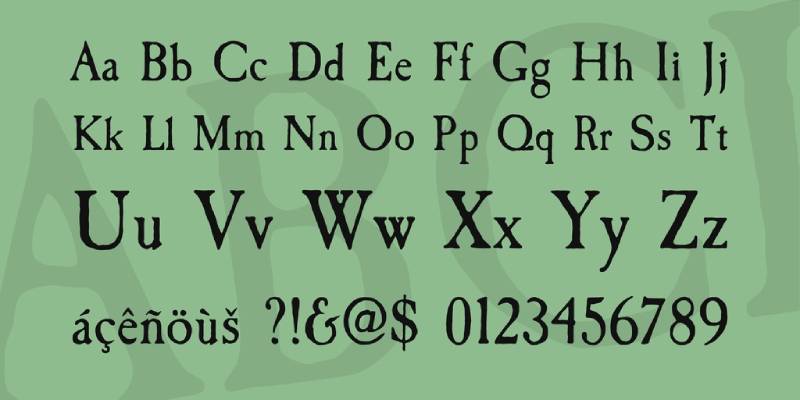
The first original English typeface. William Caslon I created it in the 1720s, establishing British typographic identity and dominating English-language printing for decades.
Historical Context
Caslon trained as a gun-barrel engraver before printers encouraged him to cut type. By 1722, he’d created his first romans and italics for printer William Bowyer.
The types drew on Dutch Baroque models that dominated English printing at the time. But Caslon’s versions combined “delicate modeling with typically Anglo-Saxon vigour,” as Britannica put it.
The first printed U.S. Declaration of Independence was set in Caslon. Benjamin Franklin used almost no other typeface.
Interest faded in the late 18th century as Baskerville and Bodoni arrived. The Arts and Crafts movement revived Caslon between 1840-1880. It has never fully disappeared since.
Design Characteristics
Caslon is an old-style serif with these traits:
- Concave hollow on the capital “A” at top left
- Capital “G” without a downward-pointing spur
- Straight-sided “M”
- Short ascenders and descenders
- Bracketed serifs
- Moderate stroke contrast
The letterforms have quirks and irregularities that add character. Some critics note the capitals can appear too heavy against the lowercase.
Many digital “Caslon” faces exist with varying faithfulness to the originals. Adobe Caslon (Carol Twombly, 1990) and Big Caslon (Matthew Carter) are respected versions.
Readability Performance
Excellent for body text. The phrase “When in doubt, use Caslon” became a design maxim because the face works reliably in most contexts.
William Berkson, designer of another Caslon revival, describes it in body text as “comfortable and inviting.”
Better suited for quality printing than rough newsprint. The delicate modeling requires decent reproduction.
Notable Publications Using It
The New Yorker uses Caslon. So does Audubon magazine.
Historical documents set in Caslon include the Declaration of Independence and the U.S. Constitution (chosen partly because Baskerville’s designer was too openly atheist).
Family historians often choose Caslon for reproducing old newspaper articles because it matches the period aesthetic.
Print vs Digital Performance
Designed for letterpress printing. Digital versions vary in how well they translate Caslon’s hand-cut character.
Serif fonts generally lose legibility on screens at small sizes. Caslon follows this pattern. Reserve it for print or large digital display.
Adobe Caslon Pro works well at 6-14pt in print applications.
Best Use Cases
- Book text and literary publishing
- Official documents and stationery
- Historical recreations
- Any context wanting English typographic tradition
Avoid for: pixel-based screens at small sizes, modern or futuristic designs, rough newsprint reproduction.
Spectral

A screen-first serif designed for the document age. Production Type created Spectral for Google in 2017, specifically for Docs, Sheets, and Slides.
Historical Context
Google commissioned Production Type, the Paris and Shanghai foundry led by Jean-Baptiste Levée, to create a versatile serif for their productivity apps.
The design draws on 19th-century Elzevir types, particularly a Warnery foundry face called “Elzévir № 9” from 1882. But Spectral selectively adopts shapes rather than copying them.
Levée cites historical digital serifs as influences: Trinité, Demos, Colorado, and especially Georgia. These proved that screen typefaces don’t need to be caricatures of themselves.
Spectral released as open-source under the SIL Open Font License. Anyone can use, modify, and redistribute it.
Design Characteristics
Spectral offers these features:
- Seven weights from Extra Light to Extra Bold
- Matching italics throughout
- Small capitals
- Heavy, triangular serifs
- Proportions tuned for on-screen display
- Standard and tabular figures, discretionary ligatures
The design stays “unobtrusive and transparent” while remaining interesting enough to serve many voices.
Yury Ostromentsky and Ilya Ruderman from CSTM Fonts created the Cyrillic version.
Readability Performance
Optimized for screen reading at text sizes. The proportions and spacing work in productivity documents where users didn’t choose the font.
Works in print too, but screen performance is the priority. The design survives low resolutions better than historical serifs.
Long-form reading on screens is Spectral’s home territory.
Notable Publications Using It
Rather than traditional publications, Spectral appears wherever Google Docs appear. It’s built into the Google productivity suite.
The open-source license means any digital publication can use it without font licensing costs.
Web designers use it for text-heavy sites and applications requiring a professional serif without licensing complexity.
Print vs Digital Performance
Screen first, print second. That’s the opposite of most historical newspaper faces.
Spectral doesn’t pretend to be a print-optimized face adapted for screens. It was drawn for pixels from the start.
Print performance is acceptable but not the design’s strength.
Best Use Cases
- Digital documents and productivity applications
- Web content requiring readable body text
- Screen-first publications
- Projects needing a free, open-source professional serif
Less suited for: traditional print newspapers, contexts requiring historical typographic authority, premium book publishing.
FAQ on The Best Newspaper Fonts
What makes a font suitable for newspapers?
Legibility at small sizes matters most. Newspaper fonts need large x-heights, clear letterforms, and sturdy serifs that survive rough printing conditions. They must also fit efficiently in narrow columns without sacrificing readability.
Should newspapers use serif or sans-serif fonts?
Both work, but for different purposes. Serif typefaces like Times New Roman and Miller handle body text well. Sans-serif fonts like Franklin Gothic and Helvetica work better for headlines where bold impact matters more than extended reading comfort.
What font does The New York Times use?
The Times uses Cheltenham for headlines, a custom version refined by Matthew Carter in 2003. For body copy, they use a proprietary serif. The paper has used Cheltenham since around 1906.
Why do most newspapers use serif fonts for body text?
Serifs guide the eye along text lines, improving reading flow. The small strokes create visual connections between letters. Research suggests this helps readers process dense columns of text faster and with less fatigue.
What’s the difference between display and text fonts?
Text fonts are optimized for small sizes with open spacing and sturdy details. Display fonts have finer details and tighter spacing that look elegant at large sizes but become illegible when shrunk for body copy.
Can I use free fonts for newspaper design?
Yes. Google Fonts offers quality options like Spectral for body text. However, professional publications often license premium typefaces from foundries like Monotype or Font Bureau for more refined options and better support.
What font size works best for newspaper body text?
Most newspapers set body copy between 9pt and 11pt, depending on the typeface’s x-height and the column width. Faces with larger x-heights like Nimrod can go smaller. Always test on actual newsprint.
How many fonts should a newspaper use?
Two to three font families typically work best. One serif for body text, one sans-serif for headlines, and possibly a third for special sections. Too many fonts create visual chaos and weaken brand identity.
What fonts work well for digital newspapers?
Screen-optimized faces like Georgia, Spectral, and well-hinted versions of classic serifs perform best. Fonts designed before digital publishing often need adjustment for web use. Check rendering across devices before committing.
How do I pair headline and body fonts effectively?
Contrast creates clarity. Pair a bold sans-serif headline font with a readable serif body font. Or use different weights within one family. The headline should grab attention while the body text disappears into comfortable reading.
Conclusion
Choosing the best newspaper fonts comes down to understanding your medium and audience. Print demands faces that survive newsprint reproduction. Digital requires screen-optimized typography.
The 14 typefaces covered here represent over a century of editorial design. From Times New Roman’s 1932 debut to Spectral’s screen-first approach, each solves specific problems.
Start with proven combinations. A sturdy serif like Miller or Poynter for body copy. A bold sans like Franklin Gothic for headlines. Test everything at actual size on your output medium.
Typography shapes reader trust. The right font family makes content feel authoritative and professional. The wrong choice creates friction before anyone reads a word.
Pick fonts that serve your readers, not your ego.

Renowned for his expertise in logo design and visual branding, Bogdan has developed a multitude of logos for various clients.
His skills extend to creating posters, vector illustrations, business cards, and brochures. Additionally, Bogdan's UI kits were featured on marketplaces like Visual Hierarchy and UI8.
He also wrote in the past years on sites like Design Your Way, WebDesignerDepot, WPDean, Designmodo, Speckyboy, Slider Revolution, and more.
- From Mockup to Code: How AI-Augmented Development Speeds Up the Design Handoff - 19 September 2026
- The Beehiiv Logo History, Colors, Font, And Meaning - 18 September 2026
- Why Small Teams Wait Too Long to Bring On Specialist Engineers - 17 September 2026

Bogdan Sandu is a seasoned designer who has been designing websites since 2008. Renowned for his expertise in logo design and visual branding, Bogdan has developed a multitude of logos for various clients. His skills extend to creating posters, vector illustrations, business cards, and brochures. Additionally, Bogdan's UI kits were featured on marketplaces like Visual Hierarchy and UI8. He also wrote in the past years on sites like Design Your Way, WebDesignerDepot, WPDean, Designmodo, Speckyboy, Slider Revolution, and more.
You Might Also Like