The San Francisco Giants logo is one of the most recognizable marks in professional baseball. It has gone through multiple redesigns since the franchise was founded in 1883, originally as the New York Gothams. The current version, introduced in 2000, features the word “GIANTS” placed diagonally across an orange-stitched baseball. It is a combination mark that blends custom typography with a graphic element tied directly to the sport.
The team’s brand identity sits among the oldest in Major League Baseball. Across both the New York and San Francisco eras, there have been roughly 23 logo variations. That number alone tells you how much the visual identity has shifted over 140-plus years. And yet, the core idea has stayed surprisingly consistent: bold lettering, strong colors, and an unmistakable connection to the game.
What Is the San Francisco Giants Logo?
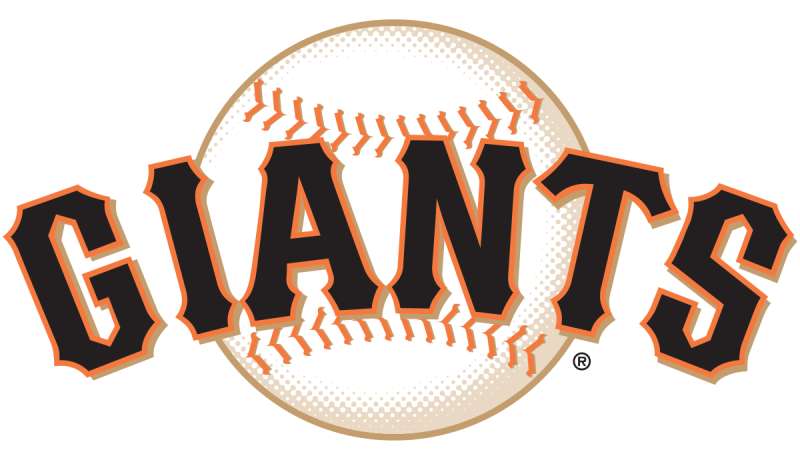
The San Francisco Giants logo is a combination mark featuring the word “GIANTS” set in a custom serif typeface, placed diagonally across a baseball graphic with orange stitching. Introduced in its current form around 2000, the mark uses orange, black, cream, and gold. The designer remains publicly unattributed, but the franchise’s in-house creative team and design firm Sidjakov Berman & Gomez handled earlier uniform redesigns.
Here are the key attributes of the current logo:
- Design Type: Combination mark (wordmark plus graphic element)
- Primary Elements: “GIANTS” wordmark in custom serif lettering, orange-stitched baseball, interlocking “SF” cap insignia
- Official Introduction Date: 2000 (coinciding with the move to Pacific Bell Park, now Oracle Park)
- Designer/Agency: Not publicly credited for the primary logo. Sidjakov Berman & Gomez handled the 1983 uniform overhaul. The interlocking “SF” cap logo dates to 1958 and its original designer is unknown.
- Trademark Status: Registered under San Francisco Giants Baseball Club LLC. The “SF” mark was filed with the USPTO in 2005. The “GIANTS” wordmark and “SAN FRANCISCO GIANTS” name are separately registered trademarks.
- Color Palette: Orange (#FD5A1E), Black (#27251F), Beige/Cream (#EFD19F), Gold (#AE8F6F)
- Usage Context: Uniforms, caps, merchandise, Oracle Park signage, digital platforms, broadcast graphics, and all licensed MLB products
How Has the San Francisco Giants Logo Evolved Over Time?
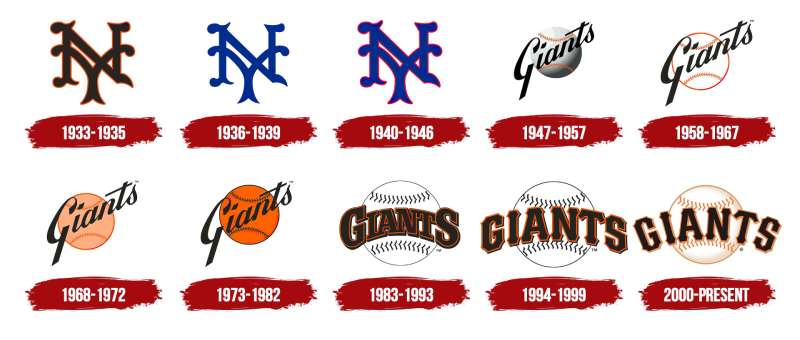
The Giants’ logo history stretches across two cities and more than a century. The New York era featured “NY” monograms in various styles. After moving to San Francisco in 1958, the team adopted the interlocking “SF” and a baseball-based primary mark.
Major redesigns happened in 1958, 1977, 1983, 1994, and 2000. Each one reflected shifts in team ownership, stadium moves, or broader design trends in professional sports.
Original New York Giants Logo (1904-1957)
- Years Active: 1904-1957 (with several iterations)
- Design Description: The earliest version from 1904 was a blue “NY” monogram with square serif letters, thick and widely spaced. By 1908, the monogram shifted to an intertwined “NY” with flowing, decorative lines. Some ends were forked, others rounded. The 1923 version turned this same intertwined design orange. In 1947, a baseball graphic appeared for the first time alongside the “Giants” name.
- Color Scheme: Blue (1904), black (1908), orange (1923), red and white (1954)
- Context: This era covered the Polo Grounds years in Manhattan. The team won five World Series titles during this period and featured legends like Christy Mathewson and Willie Mays.
- Cultural Significance: The intertwined “NY” monogram from 1908 is often confused with the New York Yankees’ logo. Both used similar styles, though the Giants’ version predates the Yankees’ famous mark.
First San Francisco Giants Logo (1958-1976)
- Years Active: 1958-1976
- Design Description: Two marks were introduced. The primary logo featured a white-and-gray baseball with orange stitching and the word “Giants” written diagonally in black cursive. The secondary mark was the interlocking “SF” monogram in orange on a black background, using a serif style with sharp, angular edges.
- Color Scheme: Orange, black, white, gray
- Designer: Unknown. A San Francisco Chronicle investigation in 2024 noted that no public record exists of who designed the interlocking “SF” mark. The original cap logo shown to Willie Mays at Seals Stadium in late 1957 used a thinner sans-serif version that was scrapped before Opening Day 1958.
- Context: Created for the team’s relocation from New York. The move was part of a broader shift of baseball to the West Coast, alongside the Brooklyn Dodgers becoming the Los Angeles Dodgers.
- Key Changes from Previous: Complete departure from the “NY” monogram. Introduced a baseball graphic and the city’s initials as separate identifiers.
- Cultural Significance: The interlocking “SF” became the franchise’s most enduring symbol. It has remained on the cap, virtually unchanged, for over 66 years.
Pullover Era Logo (1977-1982)
- Years Active: 1977-1982
- Design Description: The team switched to pullover uniforms (a trend across MLB at the time). The primary logo kept the baseball graphic, but the color shifted. The baseball now featured a combination of orange and black. Uniform lettering changed from serifed block to cursive script “Giants” in orange with black trim.
- Color Scheme: Orange, black, white
- Context: This was a rough stretch for the franchise. Attendance dropped. The team nearly relocated to Toronto in 1976. The branding reflected the era’s looser, less traditional approach to sports uniforms.
- Key Changes from Previous: Cursive script replaced block letters on uniforms. Orange became more dominant across the entire visual identity.
Classic Revival Logo (1983-1993)
- Years Active: 1983-1993
- Design Description: A return to traditional button-down uniforms and a more classic aesthetic. The design firm Sidjakov Berman & Gomez led the uniform overhaul. The caps went back to an all-black design with the interlocking “SF.” Uniform lettering used block letters. The primary baseball logo remained largely the same.
- Color Scheme: Orange, black, white
- Designer: Sidjakov Berman & Gomez (uniform redesign)
- Context: New ownership under Bob Lurie wanted to reconnect with the franchise’s earlier San Francisco identity. The design pulled from the 1958-1976 look while cleaning up details.
- Cultural Significance: This era coincided with the rise of Will Clark and the 1989 World Series (the “Earthquake Series”). The stripped-back branding became closely tied to that generation of fans.
Updated Block Letter Logo (1994-1999)
- Years Active: 1994-1999
- Design Description: The “Giants” wordmark switched to stylized block letters with pointed edges, moving away from the rounder forms of earlier versions. The “SF” on the cap was also updated to match. Road uniforms reverted to spelling out “San Francisco” across the chest.
- Color Scheme: Orange, black, white
- Context: Peter Magowan’s ownership group took over in 1993 and signed Barry Bonds. The logo tweaks came with renewed energy around the franchise.
- Key Changes from Previous: Sharper, more angular letterforms. Pointed serifs replaced the earlier block style.
Current San Francisco Giants Logo (2000-Present)
- Years Active: 2000-present
- Design Description: Introduced alongside the move to Pacific Bell Park (now Oracle Park). The “GIANTS” wordmark kept the stylized block treatment but changed from vertical to a radial arch. Home uniforms switched from white to cream. Gold drop shadows were added to lettering. A sleeve patch reading “San Francisco Baseball Club” appeared. The baseball in the primary logo gained a cream tint for a slight 3D effect.
- Color Scheme: Orange (#FD5A1E), Black (#27251F), Cream/Beige (#EFD19F), Gold (#AE8F6F)
- Context: The new ballpark was a turning point. Everything about the brand got a refresh, but the design stayed rooted in tradition. The addition of gold as an accent color was a nod to San Francisco’s Gold Rush history and the broader Bay Area identity.
- Key Changes from Previous: Gold introduced as an accent color. Cream replaced white on home uniforms. Radial arch layout for the wordmark. Refined proportions on the interlocking “SF.”
- Cultural Significance: This is the logo that fans associate with the three World Series championships of 2010, 2012, and 2014. It has become deeply tied to a golden era for the franchise.
What Do the Design Elements of the San Francisco Giants Logo Mean?
Every piece of the Giants logo ties back to the team’s identity and the sport itself. The baseball graphic makes the connection to the game immediate. The diagonal “GIANTS” wordmark adds energy and forward motion.
The interlocking “SF” on the cap is the most iconic part of the identity. It links the team to its city in two letters.
What Is the Symbolism Behind the Giants Logo?
The baseball in the primary mark is straightforward. It anchors the logo in the sport. The orange stitching on the ball mirrors the team’s primary color, which ties the graphic element directly to the brand.
The diagonal placement of “GIANTS” across the ball creates a sense of movement. It reads as upward motion, which, whether intentional or not, gives the mark a feeling of ambition.
The interlocking “SF” functions differently. It is a geographic identifier, but the way the letters overlap also suggests connection and unity.
Why Did the San Francisco Giants Choose These Specific Colors?
The Giants’ color palette has four official colors. Each one plays a specific role in the brand.
- Orange – Hex: #FD5A1E, Pantone: PMS 172 C. Orange is the dominant brand color. It carries energy, warmth, and visibility. In color psychology, orange signals enthusiasm and confidence. It also connects to the broader San Francisco identity and the Golden Gate Bridge’s International Orange.
- Black – Hex: #27251F, Pantone: PMS Process Black C. Black provides weight and contrast. It grounds the orange and keeps the overall look from feeling too loud. Black logos tend to communicate power and sophistication, which fits the franchise’s status as one of baseball’s historic clubs.
- Cream/Beige – Hex: #EFD19F, Pantone: PMS 155 C. Used on home uniforms and select branding. It replaces pure white and gives the brand a vintage feel. This was a deliberate choice when the team moved to Oracle Park, nodding to the early San Francisco-era uniforms.
- Gold – Hex: #AE8F6F, Pantone: PMS 874 Matte C. Added in 2000 as a drop shadow accent. Gold references the California Gold Rush and San Francisco’s history. It also appears in the “San Francisco Baseball Club” sleeve patch.
What Typography Style Is Used in the San Francisco Giants Logo?
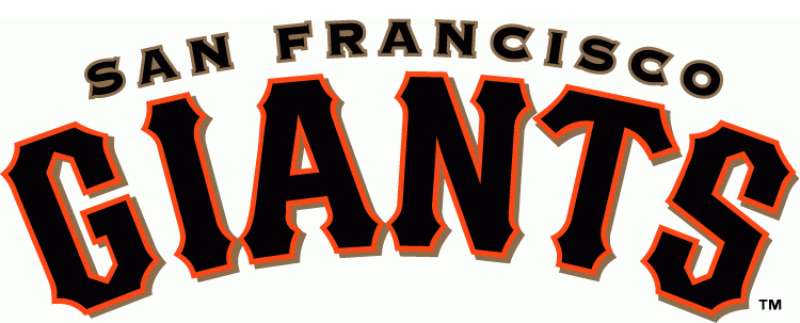
The “GIANTS” wordmark uses a custom serif typeface with sharp, angular serifs and bold strokes. The closest commercially available match is IFC Hardball, designed by Anton Krylov. But the team’s actual lettering is proprietary.
The letterforms have pointed edges that give them a slightly aggressive quality. They read well at small sizes on caps and at large sizes on stadium signage, which is the whole point of a sports font.
Over the decades, the typography has bounced between cursive script (1977-1982), rounded block letters (1983-1993), and the current angular style. The 2000 redesign settled on a look that feels both modern and rooted in tradition.
What Are the Hidden Meanings in the San Francisco Giants Logo?
The interlocking “SF” on the cap is the part that gets the most attention. The way the S and F overlap creates a visual lock, like two pieces that only work together. It is a subtle nod to city pride.
The cream color on home uniforms is sometimes overlooked, but it carries meaning. It references the original 1958 San Francisco uniforms and gives the brand a historical anchor that pure white would not.
There is no widely documented “easter egg” hidden in the logo. The design is direct. But the radial arch of the “GIANTS” text across the baseball mimics the curve of a ball in flight, which some fans have pointed out feels intentional.
How Does the San Francisco Giants Logo Compare to Competitor Logos?
Within MLB’s NL West Division, the Giants’ branding sits at the more traditional end of the spectrum. The Arizona Diamondbacks logo leans aggressive and modern. The Colorado Rockies logo uses a mountain motif. The San Diego Padres logo recently went retro. And the Dodgers keep it timeless with their script wordmark.
The Giants’ combination of a baseball graphic plus wordmark is shared by several clubs across the league, including the Cincinnati Reds and the Minnesota Twins.
What sets the Giants apart is the orange. Most baseball team logos lean on red, blue, or navy. Orange gives the Giants a distinct visual lane. Among the 30 MLB teams, only a handful use orange as a primary color, with the Baltimore Orioles and the Houston Astros being the closest comparisons.
The interlocking letter format on the cap also has company. The New York Yankees use an interlocking “NY.” The St. Louis Cardinals use an interlocking “STL.” But the Giants’ “SF” remains one of the most clean and balanced versions of this approach in professional sports.
What Are the Technical Specifications of the San Francisco Giants Logo?
Official Color Codes
- Orange – Hex: #FD5A1E, RGB: (253, 90, 30), CMYK: (0, 65, 83, 0), Pantone: PMS 172 C
- Black – Hex: #27251F, RGB: (39, 37, 31), CMYK: (0, 0, 0, 100), Pantone: PMS Process Black C
- Cream/Beige – Hex: #EFD19F, RGB: (239, 209, 159), CMYK: (4, 10, 18, 5), Pantone: PMS 155 C
- Gold – Hex: #AE8F6F, RGB: (174, 143, 111), CMYK: (11, 30, 55, 15), Pantone: PMS 874 Matte C
Dimensions and Proportions
MLB teams follow league-wide brand guidelines for logo usage. The San Francisco Giants logo must maintain its original proportions when resized. Clear space around the logo is typically equal to the height of the “G” in “GIANTS” on all sides.
For digital use, the logo should not appear smaller than 30 pixels in height to keep the wordmark readable. For print, a minimum size of roughly 0.5 inches wide ensures the stitching detail on the baseball remains visible. Higher DPI values (300+) are required for print reproduction.
The primary logo is available as vector graphics (AI, EPS, SVG formats) through MLB’s official licensing channels. This keeps the mark sharp at any size, from a cap embroidery to a stadium banner.
What Cultural Impact Has the San Francisco Giants Logo Had?
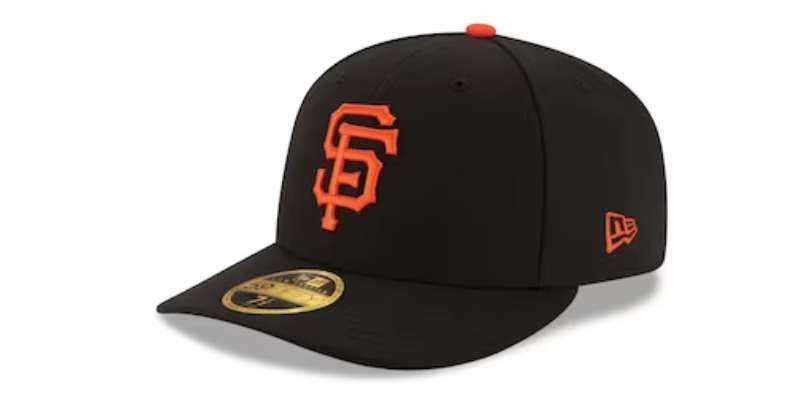
The interlocking “SF” transcends baseball in the Bay Area. You see it on hats worn by people who have never watched an inning. It has become a city symbol, almost like a coat of arms for San Francisco.
After the team’s three World Series wins in 2010, 2012, and 2014, the logo became even more tied to civic pride. Those championship parades through Market Street turned the orange and black into a visual shorthand for the city’s identity during that period.
The orange and black color scheme also overlaps with Halloween, which has made Giants gear a seasonal crossover item. That is a small thing, but it gives the brand extra cultural real estate that most orange logos don’t naturally get.
Willie Mays, Barry Bonds, and Buster Posey all wore the “SF” on their caps. Those players and their moments are inseparable from the mark itself. The logo carries their legacy, and they, in turn, gave the logo its weight.
How Does the San Francisco Giants Logo Fit Into the Overall Brand Identity?
The logo does not exist in a vacuum. It is part of a system. The primary baseball mark, the interlocking “SF” cap logo, the “Giants” wordmark, and the “San Francisco Baseball Club” sleeve patch all work together to form a layered identity.
Oracle Park reinforces the brand at every turn. From the signage to the scoreboard graphics to the brick exterior, the orange, black, cream, and gold palette shows up consistently. The brand style guide keeps everything tight.
Merchandise is a big piece of it too. New Era produces the official caps. Nike handles the uniforms. Fanatics runs the broader licensing. Across all of those partners, the logo specs stay locked down so you don’t see color drift or proportion issues on licensed products.
The 2021 City Connect uniform added a new wrinkle. It featured a stylized “G” with an orange-to-white gradient representing San Francisco’s famous fog. That shows the brand can stretch without breaking, which is the sign of a healthy identity system.
How Should the San Francisco Giants Logo Be Used?
If you want to use the Giants logo, there are clear rules. MLB and the Giants organization control all licensing.
- Official Usage Do’s: Always reproduce from official vector files. Maintain original proportions. Use only the approved color combinations. Allow proper clear space around the mark.
- Official Usage Don’ts: Don’t stretch, rotate, or skew the logo. Don’t change the colors. Don’t place it on backgrounds that reduce legibility. Don’t combine it with other logos in ways that suggest a partnership that doesn’t exist.
- Where to Access Official Logos: Licensed partners receive brand assets directly through MLB Properties. Fans and media can find PNG downloads on sites like SportsLogos.net and the team’s official MLB page, though these are typically for editorial use only.
- Licensing Information: Commercial use of the Giants logo requires a license from Major League Baseball Properties (MLBP). This covers merchandise, apparel, promotional materials, and any product bearing the mark.
- Trademark Protection: The “SF” mark, “GIANTS” wordmark, and “SAN FRANCISCO GIANTS” name are all federally registered trademarks owned by San Francisco Giants Baseball Club LLC. Unauthorized use can result in legal action. The team learned the importance of registration the hard way when a 2011 dispute with Gogo Sports revealed that the script “San Francisco” logo had never been formally registered, despite being in use since 1993.
FAQ on The San Francisco Giants Logo
What does the San Francisco Giants logo look like?
The primary logo shows the word “GIANTS” in a custom serif typeface placed diagonally across an orange-stitched baseball. The cap features an interlocking “SF” monogram in black with an orange outline. Both marks use orange, black, cream, and gold.
When was the current Giants logo introduced?
The current version launched in 2000 when the team moved to Pacific Bell Park, now called Oracle Park. It refined the earlier baseball graphic with cream tinting and gold drop shadows on the lettering. The interlocking SF cap logo stayed mostly the same.
Who designed the San Francisco Giants logo?
No designer has been publicly credited for the original interlocking “SF” mark from 1958. The firm Sidjakov Berman & Gomez handled the 1983 uniform redesign. The specific creator of the current primary logo remains unknown to the public.
What are the official Giants logo colors?
The official team color palette includes four colors. Orange (#FD5A1E), black (#27251F), cream (#EFD19F), and gold (#AE8F6F).
Orange is the dominant brand color. Gold was added in 2000 as an accent referencing California’s Gold Rush history.
What font is used in the Giants logo?
The “GIANTS” wordmark uses a custom typeface with sharp, angular serifs and bold strokes. The closest public match is IFC Hardball by Anton Krylov. But the actual lettering is proprietary to the team.
How many logos have the Giants had?
The franchise has used roughly 23 logo variations across both the New York and San Francisco eras. The New York period (1883-1957) accounts for about 18 of those. San Francisco has seen around 5 major versions since 1958.
What does the interlocking SF on the Giants cap mean?
It stands for San Francisco. Simple as that. The two letters lock together in a way that creates a single, tight visual unit. It first appeared in 1958 and has barely changed since, making it one of the longest-running cap designs in Major League Baseball.
Is the San Francisco Giants logo trademarked?
Yes. The “SF” mark, “GIANTS” wordmark, and “SAN FRANCISCO GIANTS” name are all federally registered trademarks. They are owned by San Francisco Giants Baseball Club LLC.
A 2011 dispute with Gogo Sports highlighted the risks of delayed trademark registration for sports brands.
Can I use the Giants logo for personal projects?
For personal, non-commercial use like a fan blog or school project, you are generally fine. Commercial use requires a license from Major League Baseball Properties. Selling merchandise with the Giants logo without authorization can lead to legal action.
How does the Giants logo compare to other MLB team logos?
The Giants sit on the traditional end of baseball team branding. Most NL West rivals use bolder, more modern designs. The orange color scheme gives San Francisco a distinct look since few MLB clubs use orange as a primary color.
The interlocking letter cap format is shared with clubs like the Detroit Tigers and Kansas City Royals. But the Giants’ “SF” remains one of the cleanest executions of that approach in professional sports branding.
Conclusion
The San Francisco Giants logo has held up for over six decades because it gets the basics right. Clean lettering, a tight color scheme, and an interlocking monogram that works at every size.
From the New York era to Oracle Park, each redesign kept the franchise connected to its roots while adjusting to the moment. The orange and black palette, the custom serif wordmark, the baseball graphic. None of it is accidental.
Few MLB team emblems carry this kind of staying power. The Giants brand identity proves that strong logo design principles and a clear visual hierarchy can turn a sports mark into a lasting cultural symbol.

Renowned for his expertise in logo design and visual branding, Bogdan has developed a multitude of logos for various clients.
His skills extend to creating posters, vector illustrations, business cards, and brochures. Additionally, Bogdan's UI kits were featured on marketplaces like Visual Hierarchy and UI8.
He also wrote in the past years on sites like Design Your Way, WebDesignerDepot, WPDean, Designmodo, Speckyboy, Slider Revolution, and more.
- Canva AI Features Reviewed: Are They Actually Useful? - 4 October 2026
- The Substack Logo History, Colors, Font, And Meaning - 2 October 2026
- How UX Design Impacts SaaS User Retention and Churn - 1 October 2026

Bogdan Sandu is a seasoned designer who has been designing websites since 2008. Renowned for his expertise in logo design and visual branding, Bogdan has developed a multitude of logos for various clients. His skills extend to creating posters, vector illustrations, business cards, and brochures. Additionally, Bogdan's UI kits were featured on marketplaces like Visual Hierarchy and UI8. He also wrote in the past years on sites like Design Your Way, WebDesignerDepot, WPDean, Designmodo, Speckyboy, Slider Revolution, and more.
You Might Also Like