A laundry detergent invented the soap opera. Oxydol sponsored the first daytime radio serial in 1933, and Procter & Gamble ads have been setting the rules of household advertising ever since.
The company spent $9.2 billion on advertising in fiscal 2025, across more than 60 brands and roughly 180 countries.
This page covers the work that budget bought:
- Ivory Soap’s purity claim and the magazine-era print ads
- Old Spice, Thank You Mom, #LikeAGirl and It’s a Tide Ad
- The agencies, directors and taglines behind each campaign
- The layout, typography and colour decisions worth stealing
Every campaign here carries a year, an agency and a market, so you can trace the design logic rather than just scroll the gallery.
Procter & Gamble advertising spans 144 years, 6 lead agencies and more than 60 brands, from the Ivory Soap “99 44/100% Pure” newspaper insertions of 1882 to the Olympic films of the 2020s. The work runs on one device: name the household problem, then hand it to a face the viewer recognises.
P&G reported $9.2 billion in advertising costs for fiscal 2025, covering television, print, radio, digital and in-store (P&G annual report).
This page covers the campaigns that shaped consumer packaged goods marketing, grouped by campaign, with the agency, year and market behind each one, plus the layout and typography decisions holding them together.
Procter & Gamble Advertising at a Glance
P&G has advertised since 1882 and now works with Saatchi & Saatchi, Grey, Leo Burnett, Wieden+Kennedy, BBDO and Publicis. Its best-known campaigns are Thank You Mom, Always #LikeAGirl and It’s a Tide Ad. The visual signature combines product-forward packaging, high-key domestic lighting and faces shot close.
| Attribute | Value |
|---|---|
| First major campaign | Ivory Soap “99 44/100% Pure”, December 1882, US newspapers |
| Lead agencies | Saatchi & Saatchi NY (Tide), Grey NY (Gillette), Leo Burnett (Always), Wieden+Kennedy Portland (Old Spice, Olympics), BBDO (The Talk, Ariel India), Publicis Singapore (Vicks) |
| Best-known taglines | “99 44/100% Pure” (1882), “The Best a Man Can Get” (1989), “Proud Sponsor of Moms” (2010), “The Best Men Can Be” (2019) |
| Primary media | Newspaper, radio serial, network TV, Super Bowl, YouTube, in-store |
| Awards | Cannes Film Grand Prix 2010 and 2018 (two in one year), Titanium Lion 2018, Primetime Emmy 2012, D&AD Black Pencil |
| Visual signature | Pack shot in frame, warm domestic palette, sans-serif tagline lockup at lower third |
| Ad spend trend | $8.0bn (2023), $9.6bn (2024), $9.2bn (2025) |
Which Procter & Gamble Ad Campaigns Are the Most Famous?
Eight campaigns define P&G advertising: Ivory Soap’s purity claim (1882), the Oxydol radio serials (1933), Old Spice’s The Man Your Man Could Smell Like (2010), Thank You Mom (2010), Always #LikeAGirl (2014), It’s a Tide Ad (2018), Gillette’s The Best Men Can Be (2019) and Ariel’s #ShareTheLoad in India (2015).
Ivory Soap “99 44/100% Pure” (1882 onward)

The Ivory purity line first ran in US newspapers in December 1882 as long-form reason-why copy, and P&G kept the fraction on magazine pages for more than a century.
Layout logic: a full-bleed illustration carries the top two thirds, the claim sits under it in a single line, and body copy fills a narrow measure below. The fraction does the work a focal point normally does, because an odd number reads as measured rather than boastful.
P&G donated over 5,000 original Ivory advertising items to the Smithsonian’s National Museum of American History in 2001.
The Oxydol Radio Serials (1933-1956)

Show: Ma Perkins, first aired on WLW Cincinnati on 14 August 1933, then NBC from December 1933.
Agency: Blackett-Sample-Hummert, described by Time in 1942 as the largest soap-opera operation in the world.
Scale: 7,065 episodes across 27 years, with Virginia Payne in the title role for every one.
Oxydol sponsorship of daytime serials is where the phrase “soap opera” comes from. The format was invented as a delivery system for detergent, which is worth remembering before calling branded content new.
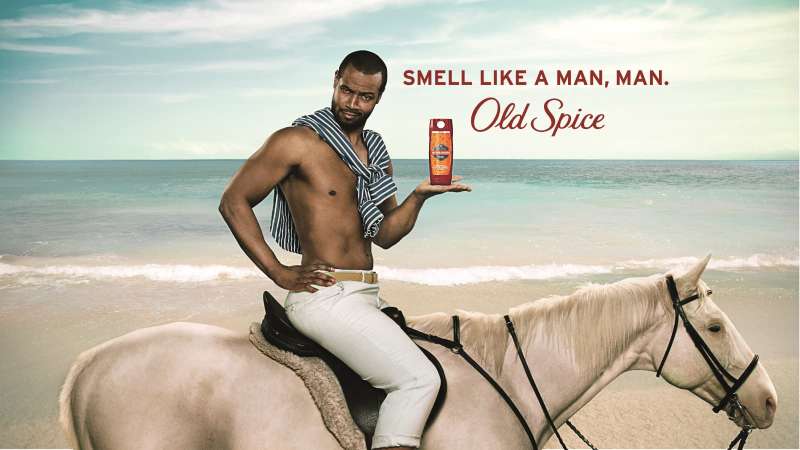
The Man Your Man Could Smell Like (2010-2012)

Old Spice Red Zone body wash sales rose 60% by May 2010 and doubled by July, against an internal target of 15% (Wieden+Kennedy).
Wieden+Kennedy Portland created the spot, Tom Kuntz directed it in a single continuous take, and Isaiah Mustafa addressed women directly as the actual buyers of men’s grooming products. It ran online on 4 February 2010 and on television four days later.
- Cannes Film Lions Grand Prix, 2010
- 186 personalised video responses filmed in two and a half days
- Wieden+Kennedy replaced Saatchi & Saatchi on the account in 2006
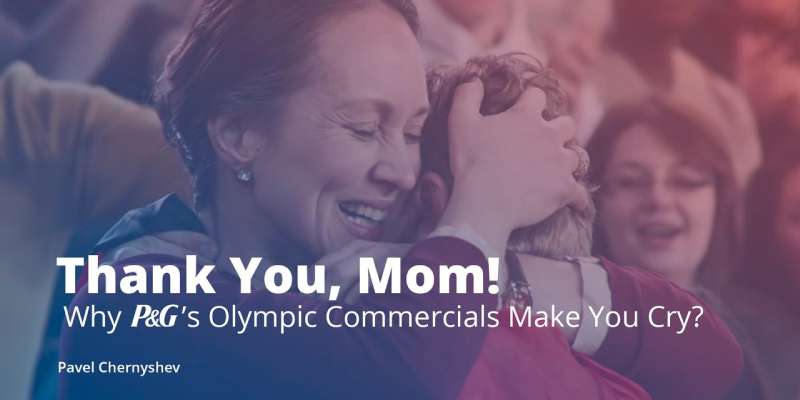
Thank You, Mom (2010-2021)
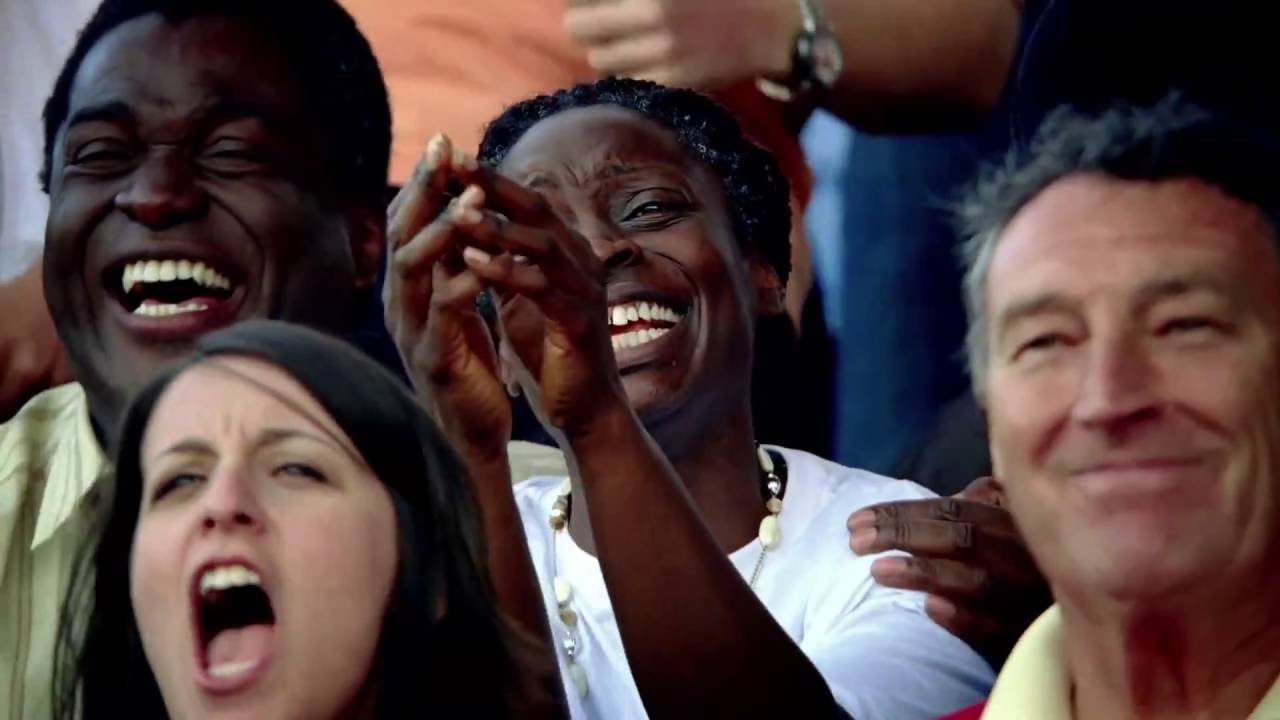
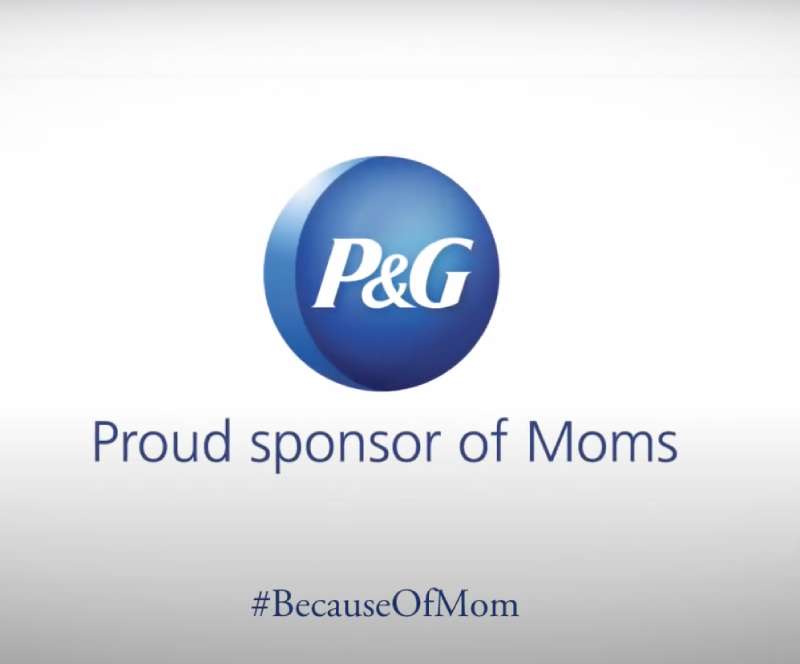
P&G’s first corporate campaign launched at the Vancouver 2010 Winter Olympics, uniting 34 brands under the tagline “Proud Sponsor of Moms”. Wieden+Kennedy Portland created it after Marc Pritchard opened the brief to the full agency roster.
| Edition | Games | Result |
|---|---|---|
| Kids | Vancouver 2010 | $500m incremental sales, 76bn media impressions |
| Best Job | London 2012 | Primetime Emmy, Gold at Cannes |
| Pick Them Back Up | Sochi 2014 | Bronze Lion |
| Strong | Rio 2016 | Two-minute film, four athlete stories |
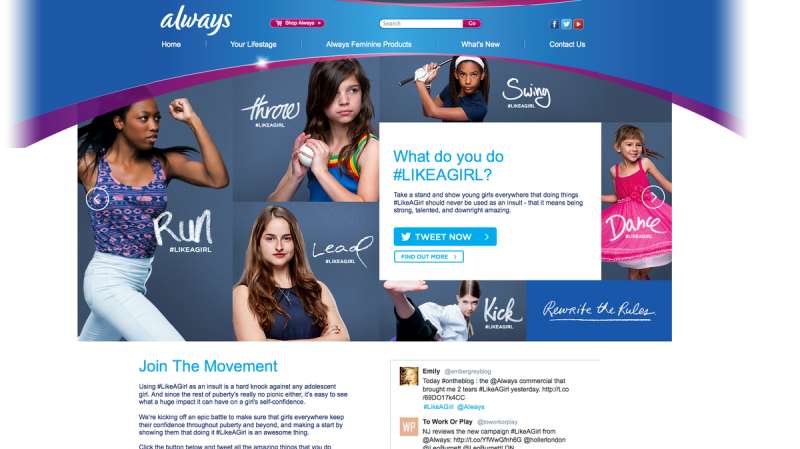
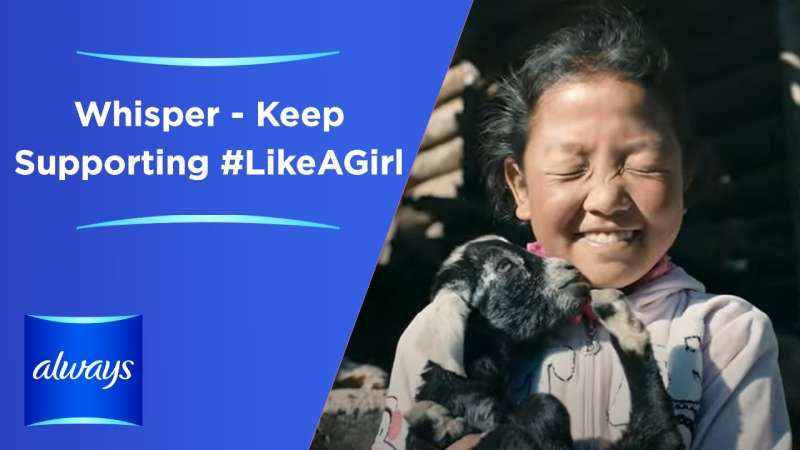
Always #LikeAGirl (2014-2019)

Leo Burnett took an insult and filmed what it actually looks like. Documentary director Lauren Greenfield asked adults and pre-teen girls to run, throw and fight “like a girl”, and the age split did the argument for her.
The three-minute film launched on YouTube in June 2014 with limited paid support, then ran as a 60-second cut during Super Bowl XLIX in February 2015.
It passed 85 million views across 150 countries and won more than 200 awards, including a Cannes Grand Prix, Titanium and Glass Lions (Campaign). In a December 2014 study, nearly 70% of women and 60% of men said the film changed how they heard the phrase.
It’s a Tide Ad (2018)

Agency: Saatchi & Saatchi New York, briefed in August 2017 under CCO Javier Campopiano.
Device: David Harbour hijacks the visual grammar of a car ad, a beer ad, an insurance ad and a perfume ad, then points at the clean clothes in each.
Result: #TideAd was used 45,000 times during Super Bowl LII, and the campaign won the Film Lions Grand Prix plus a Titanium Lion at Cannes 2018.
P&G took both Film Grands Prix that year. BBDO New York’s “The Talk”, on racial bias in America, shared the top prize with a laundry gag, which tells you something about the breadth of the portfolio.
Ariel #ShareTheLoad (2015-2023)

When BBDO India launched the campaign in 2015, a Nielsen survey found 79% of Indian men believed laundry was a woman’s job. By 2020 that figure had fallen to 41% (Exchange4media).
- 2015: “Is laundry only a woman’s job?” drew over 1.5 million pledges from Indian men
- 2016: “Dads Share The Load” generated $12.3m in earned media and 111% sales growth for Ariel Matic
- 2023: “See the Signs” extended the platform to a sixth edition
Ten-plus Cannes Lions across the run, including Gold in 2015, 2016 and 2017.
Gillette “The Best Men Can Be” (2019)

Grey New York rewrote a 30-year-old tagline and directed the traffic straight into a wall. Kim Gehrig shot the 1:48 film, released 13 January 2019, built as vignettes of catcalling, bullying and workplace harassment.
The video passed 4 million views in 48 hours and collected roughly 347,000 dislikes against 85,000 likes in its first week, with boycott calls aimed at both Gillette and P&G.
The honest read: the craft is fine and the strategy was legible, but rewriting a tagline that consumers had internalised since 1989 cost more equity than the campaign returned.
Procter & Gamble Print Ads From the Magazine Era (1900-1940)

The Ivory Soap Advertising Collection at the Smithsonian holds work commissioned from J.C. Leyendecker, Jessie Willcox Smith and Elizabeth Shippen Green, running in The Century Magazine, Ladies’ Home Journal, Pictorial Review and National Geographic.
Subjects tracked the reader rather than the product: circus workers washing a wagon (1913), soldiers bathing in a river (1918), a father preparing two boys for the bath (1919).
How Do Procter & Gamble Print Ads Work Visually?
P&G print ads use a three-band structure: illustration or photograph on top, claim line in the optical centre, pack shot and body copy at the base. The palette stays warm and desaturated, the tagline sits in a single weight, and the pack is never larger than the human face in frame.
That band structure is a straightforward visual hierarchy problem solved the same way for a hundred years. Image pulls the eye, claim resolves it, pack closes it.
Early Ivory pages ran generous margins because magazine stock was cheap and reader attention was not. Modern P&G layouts compress that white space hard, since a shelf-adjacent print insert competes with a packaging design two feet away.
| Era | Type treatment | Image ratio |
|---|---|---|
| 1882-1920 | Serif display, heavy body copy | 60% image, 40% text |
| 1950-1980 | Condensed headline, demo panel | 70% image, 30% text |
| 2000-present | Single-weight sans lockup | 90% image, 10% text |
The tagline is almost always set in a sans-serif font at one weight, with the brand mark locked to a fixed corner. Nothing annoys me more than a CPG layout that sets the claim in three weights and calls it typographic hierarchy. P&G rarely does that.
Colour discipline follows the pack. Tide reads orange and navy, Dawn reads blue, Old Spice reads red, and the color palette of the ad is inherited from the bottle rather than invented for the page.
How Do Procter & Gamble TV Commercials Differ From Its Print Ads?
P&G television work carries narrative; the print work carries proof. Commercials build a two-minute emotional arc with the product appearing in the final ten seconds, while print ads state the benefit in the first line and demonstrate it in the image.
The Man Your Man Could Smell Like (2010, Wieden+Kennedy, dir. Tom Kuntz). Isaiah Mustafa speaks to camera in one unbroken take while the set changes around him, moving from bathroom to sailboat to horseback. Practical transitions, almost no CGI.
Best Job (2012, Wieden+Kennedy Portland). Four mothers across four countries wake before dawn for years of training runs. The P&G corporate mark appears once, at the end, for three seconds.
We Believe: The Best Men Can Be (2019, Grey New York, dir. Kim Gehrig). Vignette structure, handheld camera, cool grade. The razor never appears.
It’s a Tide Ad (2018, Saatchi & Saatchi NY, dir. Traktor). Four linked spots parodying category conventions, each ending on the same reveal.
The storytelling pattern across all four is identical: withhold the product, earn the last frame.
How Has Procter & Gamble Advertising Evolved Since 1882?
P&G advertising moved through five distinct phases: newspaper reason-why copy, radio serial sponsorship, network TV demonstration, purpose-driven film, and in-housed programmatic video. Each shift followed a change in where households spent their attention, not a change in creative fashion.
| Period | Strategic shift | Representative work |
|---|---|---|
| 1880s-1920s | Purity claim, long body copy | Ivory “99 44/100% Pure” |
| 1930s-1950s | Own the programme, not the break | Oxydol’s Own Ma Perkins |
| 1960s-1990s | Side-by-side product demonstration | Tide, Mr. Clean, Head & Shoulders |
| 2010-2019 | Brand purpose and social argument | Thank You Mom, #LikeAGirl, The Talk |
| 2020-present | In-house production, AI-assisted testing | Vicks #TouchOfCare, Widen the Screen |
The most recent phase is operational rather than creative. P&G told the 2024 CAGNY conference that in-house media operations save up to $500m a year, in-house production saves over $100m, and pre-market ad testing now runs in days at a tenth of the previous cost.
Vicks #TouchOfCare, created by Publicis Singapore from 2017, is the clearest example of the purpose phase working commercially. Penetration grew to 6.5 million households, market share rose 5%, and the brand averaged 19% year-on-year sales growth (WARC).
Which Agencies Created Procter & Gamble Advertising?
Six agency relationships account for most of the recognised work. P&G has also spent a decade cutting the roster around them.
Wieden+Kennedy Portland won the Old Spice account in 2006 and created Thank You Mom for the Vancouver 2010 Games.
Leo Burnett has worked on Always since 2001 and created #LikeAGirl in 2014 under CCO Judy John, with offices in Chicago, Toronto and London.
Saatchi & Saatchi New York created It’s a Tide Ad for Super Bowl LII in 2018.
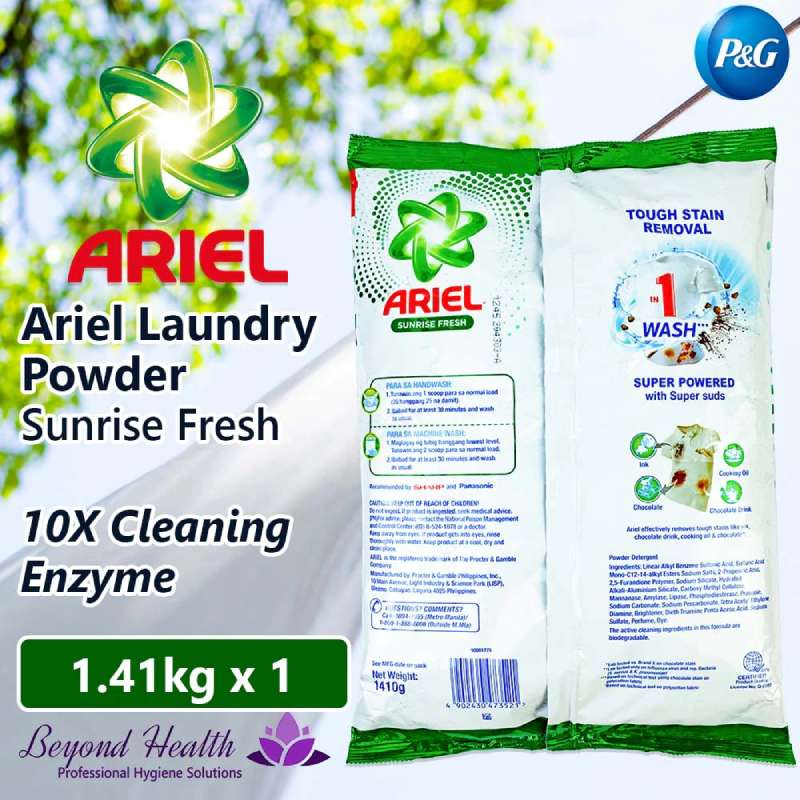
BBDO New York created The Talk in 2017, directed by Malik Vitthal. BBDO India, under chairman Josy Paul, created Ariel #ShareTheLoad in 2015.
Grey New York created The Best Men Can Be for Gillette in 2019. Publicis Singapore created Vicks #TouchOfCare in 2017.
P&G cut its roster from roughly 6,000 agencies in 2014 to about 1,300 by 2018, saving $1bn in fees and production costs over four years (The Drum). Marc Pritchard, chief brand officer, ran that consolidation.
What Can Designers Learn From Procter & Gamble Ads?
- Inherit the palette from the pack, not from a mood board, so the ad and the shelf agree
- Set the claim in one weight and let the image carry the emphasis
- Lock the brand mark to a fixed corner and keep it smaller than the human face in frame
- State the benefit in the first line of body copy, then prove it visually
- Write the tagline to survive 30 years, because rewriting one costs more than launching one
- Treat packaging design as the primary asset and the ad as its extension
The last point is the one most portfolios miss. P&G brand guidelines treat the bottle as the master artwork and every layout downstream of it, which is why a Tide print ad from 1998 and a Tide Super Bowl frame from 2018 still read as the same brand.
How Do Procter & Gamble Ads Compare to Unilever and Colgate-Palmolive Ads?
P&G, Unilever and Colgate-Palmolive all run multi-brand portfolios through purpose-led film, but they resolve the product differently. Unilever’s Dove Real Beauty work removes the product almost entirely and argues from casting. P&G keeps a pack shot in nearly every execution, even in its most emotional Olympic films.
Colgate-Palmolive sits closer to demonstration than either, with the clinical-proof layout still dominant across oral care. Anyone comparing category conventions should look at Colgate ads next to Listerine ads, where two brands in the same aisle solve the same trust problem with opposite palettes.
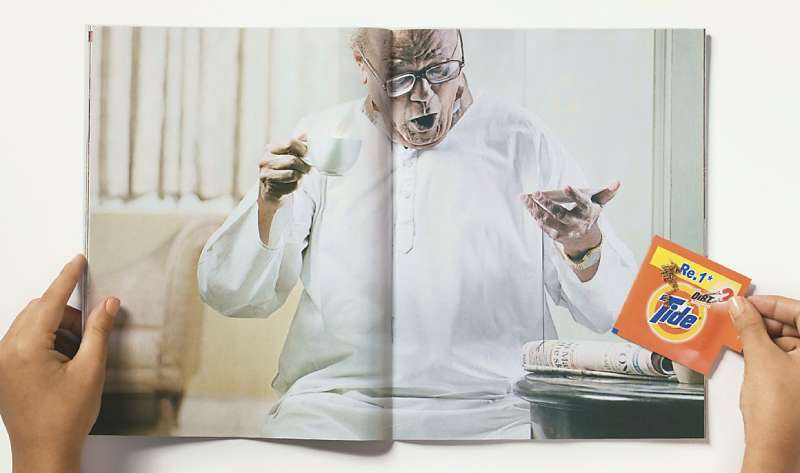
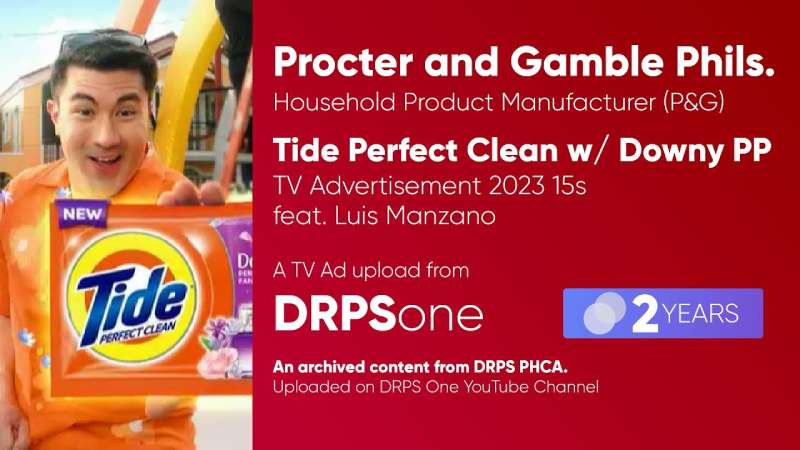
Within P&G’s own portfolio, the range is wider than any competitor’s. The detergent work alone justifies a separate look at Tide ads, which swing from straight stain demonstration to Super Bowl format parody inside the same decade.
What Makes Procter & Gamble Advertising Work?
The through line is restraint about the product and generosity about the person using it.
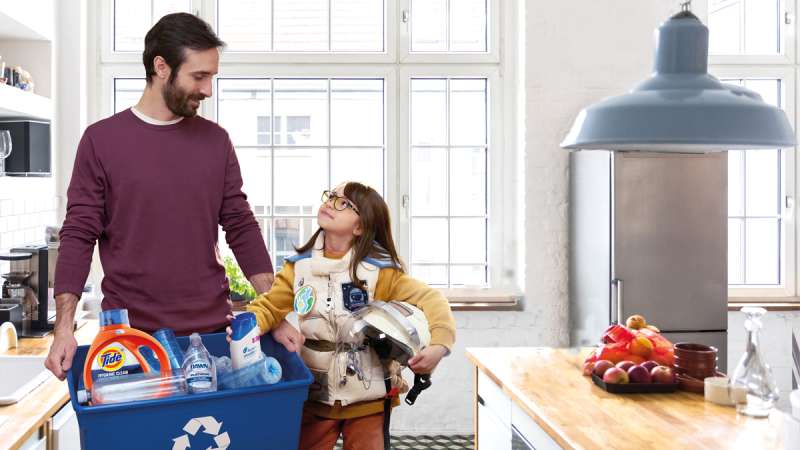
A detergent cannot carry two minutes of screen time on its own merits, so the work spends that time on a mother, a daughter, a husband who never touched the washing machine, and reserves the last few seconds for the pack.
The layouts follow the same discipline. One claim, one weight, one dominant image, and a brand mark that never competes with a human face.
That structure survives format changes because it is not tied to a format. It moved from newspaper columns to radio serials to network television to vertical video without losing the brand narrative underneath.
The failures follow the same logic in reverse. When the argument gets louder than the household in frame, the audience stops recognising itself, and the work stops selling.
Procter & Gamble Ads Examples






FAQ on Procter & Gamble Ads
Who makes Procter & Gamble’s ads?
Six agencies handle most of the recognised work: Saatchi & Saatchi New York for Tide, Grey New York for Gillette, Leo Burnett for Always, Wieden+Kennedy Portland for Old Spice and the Olympics, BBDO for The Talk and Ariel, Publicis for Vicks.
How much does Procter & Gamble spend on advertising?
P&G reported $9.2 billion in advertising costs for fiscal 2025, against $9.6 billion in 2024 and $8.0 billion in 2023. The figure covers television, print, radio, digital and in-store advertising across the full portfolio.
What is the most famous Procter & Gamble ad?
The Man Your Man Could Smell Like, released 4 February 2010. Isaiah Mustafa, one continuous take, Wieden+Kennedy Portland. It won the Cannes Film Grand Prix and doubled Old Spice body wash sales by July that year.
Did Procter & Gamble invent the soap opera?
Effectively, yes. Oxydol sponsored Ma Perkins from August 1933, and the serial ran 7,065 episodes across 27 years. Detergent money funded the daytime format, which is exactly where the phrase soap opera comes from.
Which brands does Procter & Gamble advertise?
More than 60, including Tide, Ariel, Dawn, Pampers, Gillette, Old Spice, Always, Head & Shoulders, Vicks, Secret, Charmin, Bounty, Febreze, Olay and Mr. Clean. Most run separate agency relationships rather than one shared creative platform.
Has Procter & Gamble won a Cannes Lion?
Repeatedly. P&G took both Film Grands Prix in 2018, for It’s a Tide Ad and The Talk, plus a Titanium Lion. Old Spice won Film in 2010, and Always #LikeAGirl took a Grand Prix in 2015.
Why was the Gillette ad controversial?
We Believe: The Best Men Can Be rewrote a tagline running since 1989 and confronted male behaviour head on. It drew roughly 347,000 dislikes against 85,000 likes in its first week, alongside boycott calls.
Where can I see old Procter & Gamble print ads?
The Smithsonian’s Archives Center holds the Ivory Soap Collection, 1883 to 1998, at the National Museum of American History. Duke University’s AdAccess covers US and Canadian magazine advertising published between 1911 and 1955.
Does Procter & Gamble advertise during the Olympics?
Since Vancouver 2010. Thank You Mom united 34 brands under the line “Proud Sponsor of Moms” and delivered $500 million in incremental sales, 76 billion media impressions, and a Primetime Emmy for Best Job in 2012.
Are Procter & Gamble ads made in-house?
Partly. In-house media operations save up to $500 million a year and in-house production over $100 million, per P&G’s CAGNY presentation. Creative still runs through agencies, though the roster fell from 6,000 to about 1,300.
Conclusion
Read across 144 years, Procter & Gamble ads look less like a portfolio and more like one long argument about who does the housework.
Ariel #ShareTheLoad put that question to India directly. Gillette put it badly in 2019 and paid for the phrasing.
The craft underneath stays consistent. One claim, a legible pack shot, and casting that resembles the household actually buying the product.
That discipline explains how Wieden+Kennedy, BBDO and Saatchi & Saatchi have all taken Cannes Lions on the same client without the work fragmenting.
Copy the structure, not the budget. A seven-figure Super Bowl commercial and a single-page trade ad answer to exactly the same rules.

Renowned for his expertise in logo design and visual branding, Bogdan has developed a multitude of logos for various clients.
His skills extend to creating posters, vector illustrations, business cards, and brochures. Additionally, Bogdan's UI kits were featured on marketplaces like Visual Hierarchy and UI8.
He also wrote in the past years on sites like Design Your Way, WebDesignerDepot, WPDean, Designmodo, Speckyboy, Slider Revolution, and more.
- The Windsurf Logo History, Colors, Font, And Meaning - 10 October 2026
- How to Remove Background From Product Photos (No Photoshop) - 10 October 2026
- How Designers can Build a Stronger Online Creative Identity - 9 October 2026

Bogdan Sandu is a seasoned designer who has been designing websites since 2008. Renowned for his expertise in logo design and visual branding, Bogdan has developed a multitude of logos for various clients. His skills extend to creating posters, vector illustrations, business cards, and brochures. Additionally, Bogdan's UI kits were featured on marketplaces like Visual Hierarchy and UI8. He also wrote in the past years on sites like Design Your Way, WebDesignerDepot, WPDean, Designmodo, Speckyboy, Slider Revolution, and more.
You Might Also Like