Unveiling the world of Absolut Vodka ads feels like unlocking a treasure chest of creativity and innovation. For decades, this brand has masterfully blended visual storytelling with compelling narratives, creating advertisements that resonate deeply with audiences.
From vibrant print ads that adorn magazines to captivating digital ads that dominate social media channels, Absolut Vodka’s advertising campaigns have set the gold standard in the industry.
Each ad is a testament to the brand’s commitment to pushing boundaries and redefining what marketing can achieve.
In this article, we’ll dive deep into some of the most famous Absolut Vodka ads, exploring the strategies behind these iconic campaigns.
You’ll discover how Absolut Vodka has harnessed the power of creative directors, graphic designers, and brand managers to craft advertisements that not only catch the eye but also build lasting brand loyalty.
By the end of this journey, you’ll gain a comprehensive understanding of how Absolut Vodka’s ad campaigns have shaped the landscape of beverage advertising and learn valuable insights that you can apply to your own marketing strategies.
How did the Absolut vodka advertisement story begin?
In order to attach a meaning to all communication messages conveyed by the popular brand, we need to delve into the history of this product, way before it got promoted worldwide. We will be doing this mostly to understand why and how certain layers got added to the product’s imagery.
Absolut is a Swedish vodka brand manufactured in Ahus (the southern area of Scania). In the early days of its development, the product was still unrefined, and it took a while for other countries and regions to appreciate the raw, yet very fine ingredients it contained: rich Swedish wheat, and pure, unprocessed water.
At the time, developer Lars Olsson Smith gave the product a Swedish name (Absolut rent bravin), which translated to English means ‘Pure Vodka’. During the 1970s, production and distribution of alcohol beverages in Sweden was highly controlled by the government, which acknowledged Absolute’s distillery quality soon enough to start exporting it to other countries.
The ownership company Vin & Spirit focused efforts on the American market, which even at that time covered more than 60% of the free world’s vodka consumption. Nevertheless, 99% Americans at the time consumed exclusively homemade products as a more inexpensive option, considerably convinced that there is little difference from one product to the other.
According to them, the limited number of ingredients and easy manner of production made vodka pretty similar around the world, something they also agreed on for whiskey brands and Scotch. The trend at the time was also to consume vodka in combination with fruit juices and mixers, and its quality didn’t really matter – the cheaper it was, the better.
The sole 1% of imported vodka in the States was still coming from Russia (Stolichnaya), a brand they started importing since 1968 as compensation for exporting Pepsi products across the Soviet Union. Due the fact that a portion was developed exclusively for the American market, Russia exported the finest of their Vodka to America, making Stoli the sole and authentic representative of consumers’ picture of Russian symbolism – vodka and celebrated czars and revolutions.
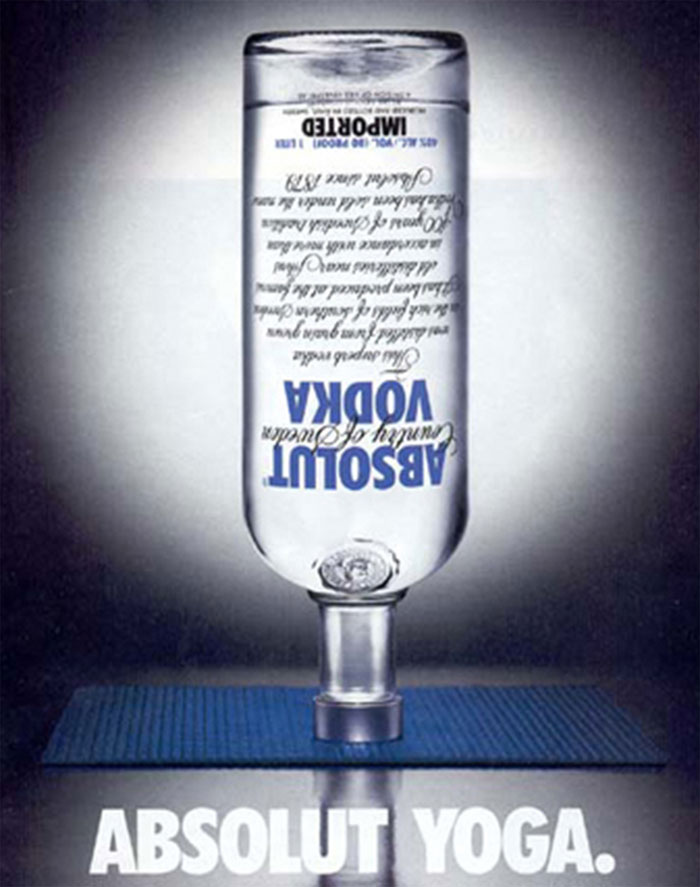
Even the vodka that was produced in America often had Russian-inspired names (Smirnoff, Georgi, Romanoff, and so on). This is why it took more than two decades for Vin & Sprit to place their products on the American marketing, sending a delegation only in 1978, still unsure whether they can find a local distributor.
The reception was not exactly the friendliest one – in the States, people had hardly any interest to try Swedish vodka, especially one that doesn’t have a label to promote it. As simple as that, Vin & Sprit representatives were told that their product wasn’t going to sell.
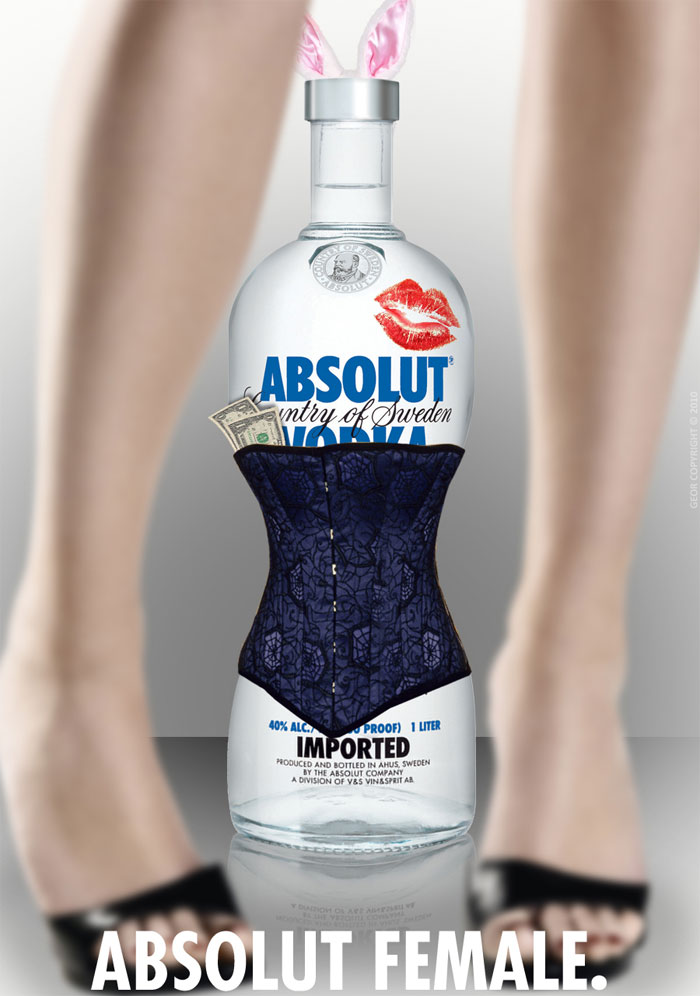
It is hard to blame American consumers for that situation, given that Absolut was not taken seriously even by its producers. Photographers had no idea how to shoot and promote a product with no history – to do so, they had to envision the ideal consumer of the beverage, who was, lamentably, a young college graduate still experiencing nightlife.
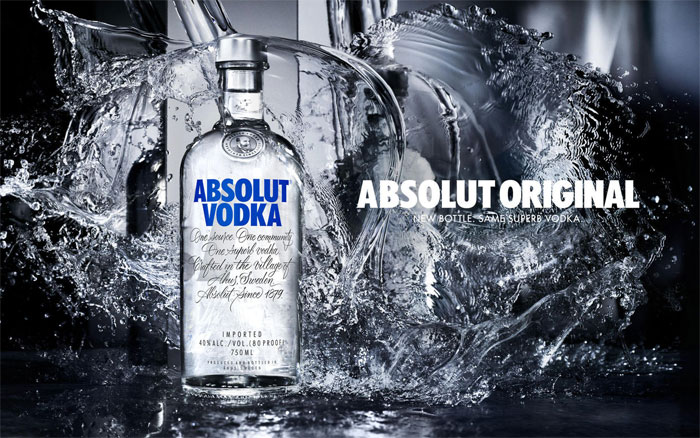
The company that accepted to launch the first Absolute campaign was TBWA, a marketing agency that was at the time involved in supporting LGBT communities, and came up with a simple ad of a bottle in front of a black background in order to promote it as a premium product.
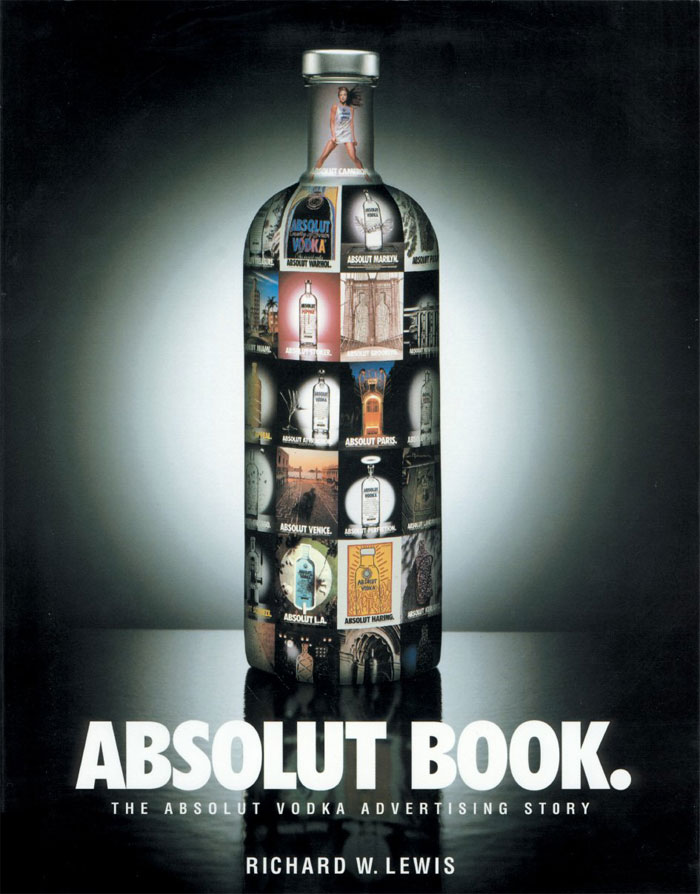
In line with the agency’s priorities, Absolut embraced openly the gay community members’ as its desirable consumers in 1981, soon to launch ads across all gay media, and support a number of their events (including Tom of Finland Clothing’s fall line in early 2000).
Analysis of Absolut Vodka ads
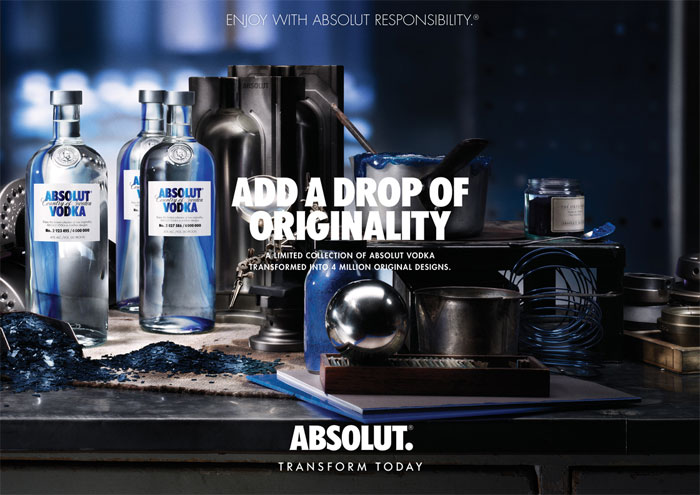
The theme product adverts
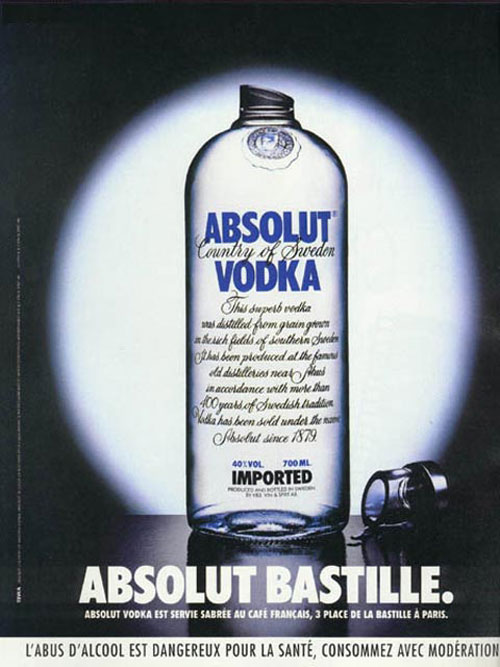
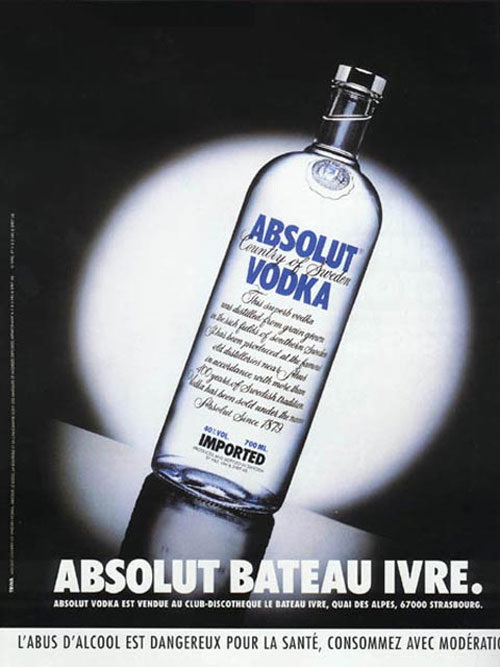
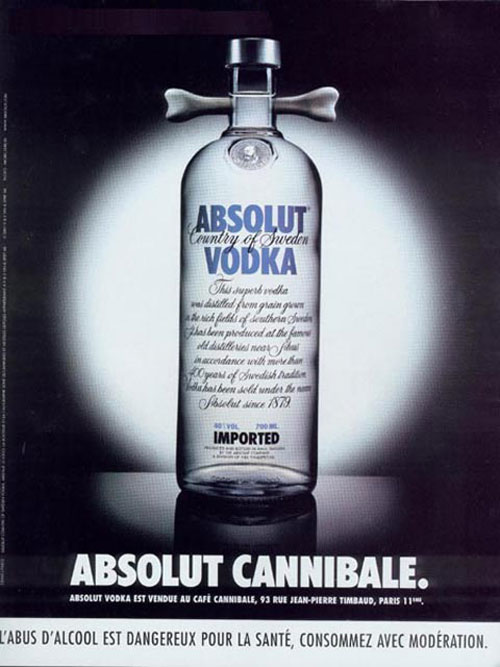
Absolut’s product ads were called like this due to the fact that they showcased an actual Absolut Vodka bottle in the limelight of an otherwise pitch black setting. The most popular Absolut Product Ads are the 1960s’ piercing discourse signifiers – modern and symbolic pierced bottles released to support the gay & punk subculture.
The piercing was also used to convey a non-conforming fashion statement, and as a symbol of human bodies being carved to express non-compliance with codes of conduct and societal norms. Body experiments were made visual using these ads, especially thanks to background lights that help associate the bottle to the upright body posture and body language of a person looking to share his emotions with the world.
Basically, a single ad helped thousands of people share how they feel and voice their openness to the world, and to be absolutely comfortable with themselves and how they’re treating their body.
The black background emphasized in s dramatic manner how such experiments emerged, and what motivated these people to come out from the shadows that stopped them from being themselves, and to cease hiding. This depicts pretty much why people afraid to share their sexual preferences embraced these ads with so much enthusiasm.
Success is not complicated

Car companies have disrupted in many ways how a successful advertising campaign should look – each day, we see flashy and luxurious commercials that make us dream of owning an expensive vehicle, but the truth is that we forget what we saw after only a while.
What we need is an ad we can associate with, namely a simplified, every-day concept that has been effectively branded. Embracing a classic concept is a safe option for every modern marketer, as he is solving an actual problem by simply adjusting the font and the style of his image.
Even large and prominent companies are shifting towards the ‘less is more’ concept, doing something Absolut did 20 years ago. Everyone seems to remember the instant and iconic success of these ads in the early 80s, and want the same, effective synonyms for their brand.
Success connects cultures
Another feature that marked Absolut ad campaigns is the focus on building bridges between cultures, and creating something memorable. You can see as many as 1000 fancy and flashy commercials at a time, but with nothing there to relate to your culture and interest, you will hardly remember any of them.
Absolut invented a marketing device that is universal, and that applies perfectly to all settings, groups, and moods. This is why it is referred to as the role model of marketing efficiency that makes everyone have a piece of luxury, and feel understood and fabulous (without necessarily rolling in cash!).
Dedicated to a premium product that doesn’t break the bank, an Absolute ad tells everybody’s story at once, including even those who don’t like vodka.
Success materializes creativity
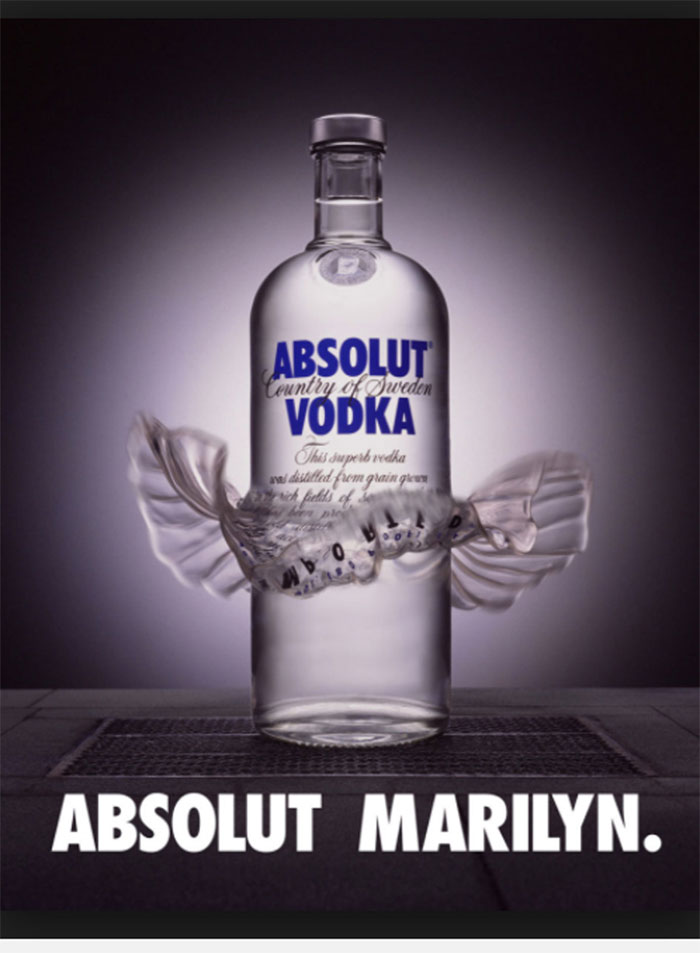
Artwork and icons were and still are the most popular advertising means. Some companies know well how they should use them (think of Coca Cola, or Pepsi, for instance), and have given the world Mean Joe Green Coke-like commercials to talk about for years. Ever heard of Mean Joe’s Coke? It is time to look it up – you will be amazed!
Younger generations, for instance, missed Joe completely, or have a blurred idea of what he meant while they were growing up. Even so, they’d enjoy watching Mean Joe now, and remind them of a number of similar commercials that utilized cool icons to sell a simple product. Well, that’s where Absolut specializes – taking the marketing concept to a whole new level!
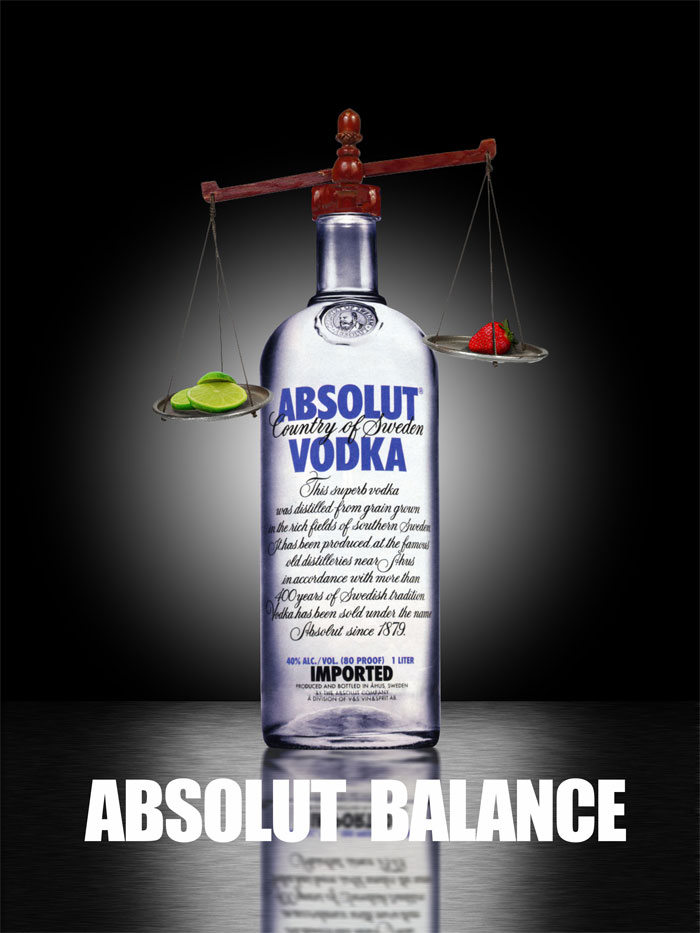
Ever since its ad campaign was first launched, Absolut recruited the best artists, comedians, actors, and musicians to make its commercials hip and recognizable. A good example is the recruitment of Zach Galifianakis, and giving him the leading role in their commercial.
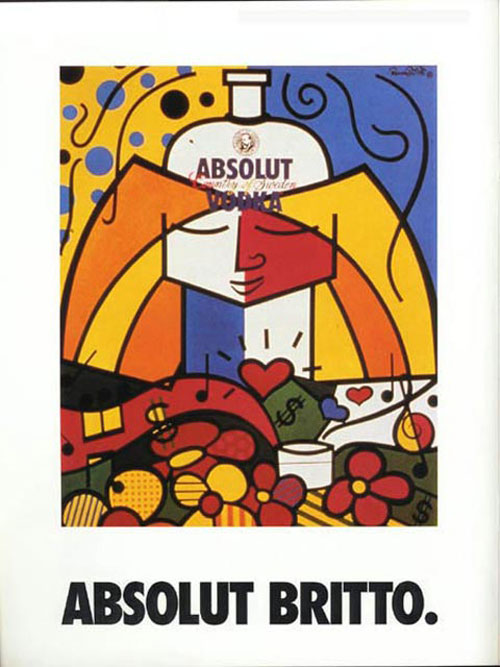
Step by step, Absolut advertising took over icon recruiting, and established a cult of collecting ads among young supporters. This may not sound as a huge achievement when selling a unique product, but what Absolut sold was only vodka. Yet, it didn’t stop it from imposing its marketing achievements on a whole generation of ad fanatics and web ad collectors.
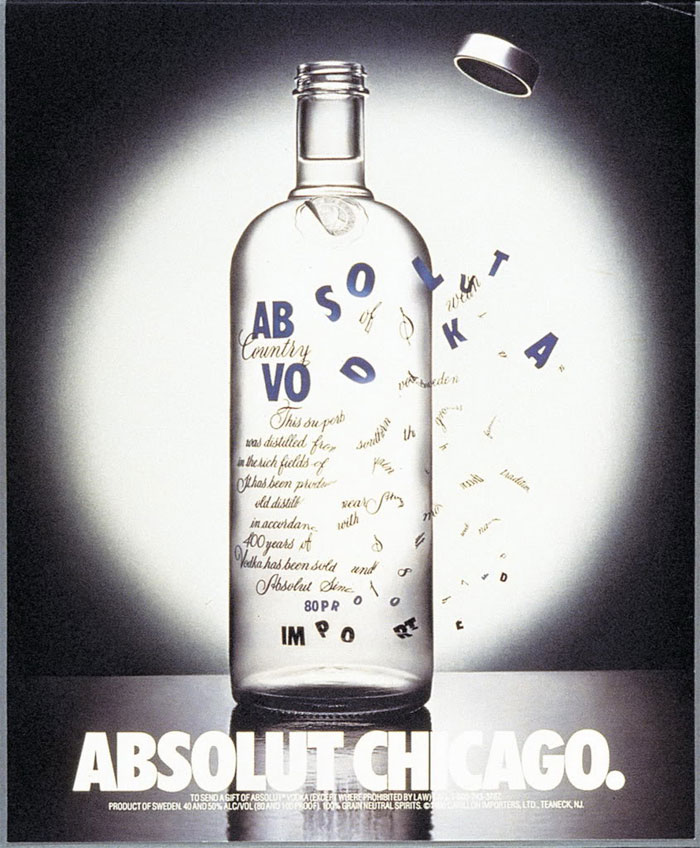
Nowadays, you can even find whole fan websites and social groups for people collecting and reselling Absolute ads, and celebrating in such way the 20-years long and recognized branding campaign.
Another highlight in Absolut Vodka adverts’ history happened in 2012, when the company decided to collaborate with Swedish House Mafia, an electric dance music trio that promoted the beverage in a popular video, and got over 41 million views in YouTube.
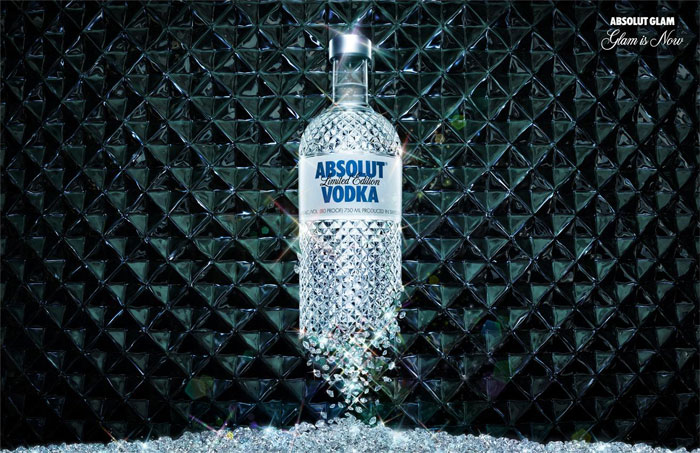
As metrics indicate, the Greyhound marketing effect of Absolut ads worked perfectly, and provided vibrant, premium, exciting, cool, and fun content for wider audiences. As the company’s VP of Flobal Marketing Jonas Tåhlin once said, Absolute made a smash hit all across social media.
According to him, a commercial that doesn’t reveal much about the product or the brand won’t necessarily fail – instead, it will even cooler and attract more attention. Still, Absolut Vodka would probably never get where it is without being promoted in collaboration with popular artists.
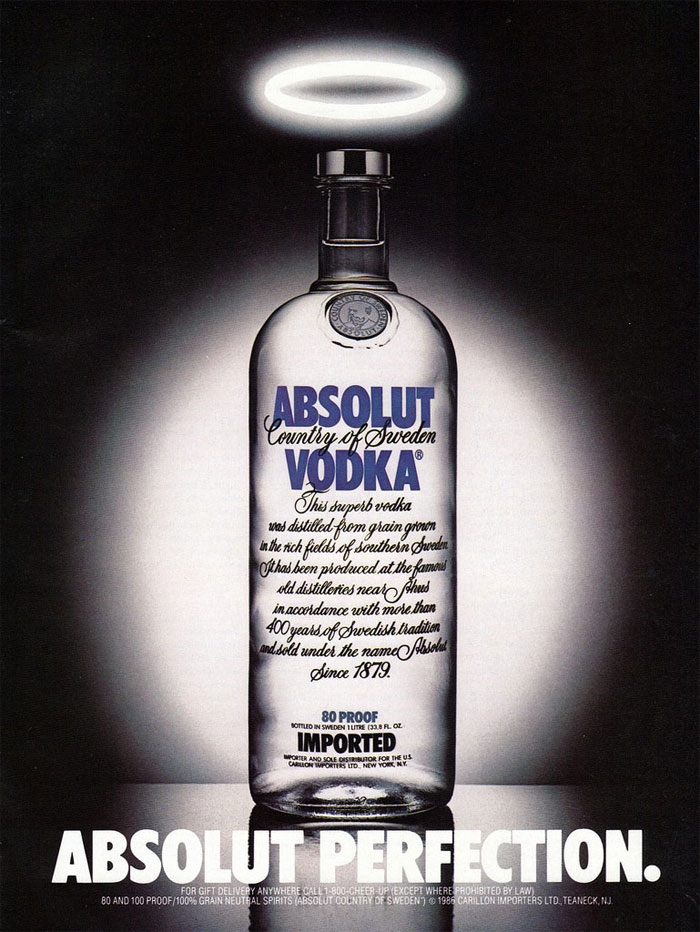
For instance, it is believed that it was its appearance in New York’s Studio 54 that boosted its overall sales in the US. It was also in Studio 54 where an iconic bottle captured the attention of Andy Warhol, and inspired him to create one of the most popular artworks in 1986.
This is how the story via Absolut Book goes: One night over dinner, Andy Warhol and Michel Roux met for dinner, and Warhol shared how impressed he was about Absolut’s new bottle. Along, he mentioned also that he doesn’t drink alcohol at all, but would still like to interpret Absolut’s advertising story in his own painting, and Roux noticed even then what a great ad that was going to be.
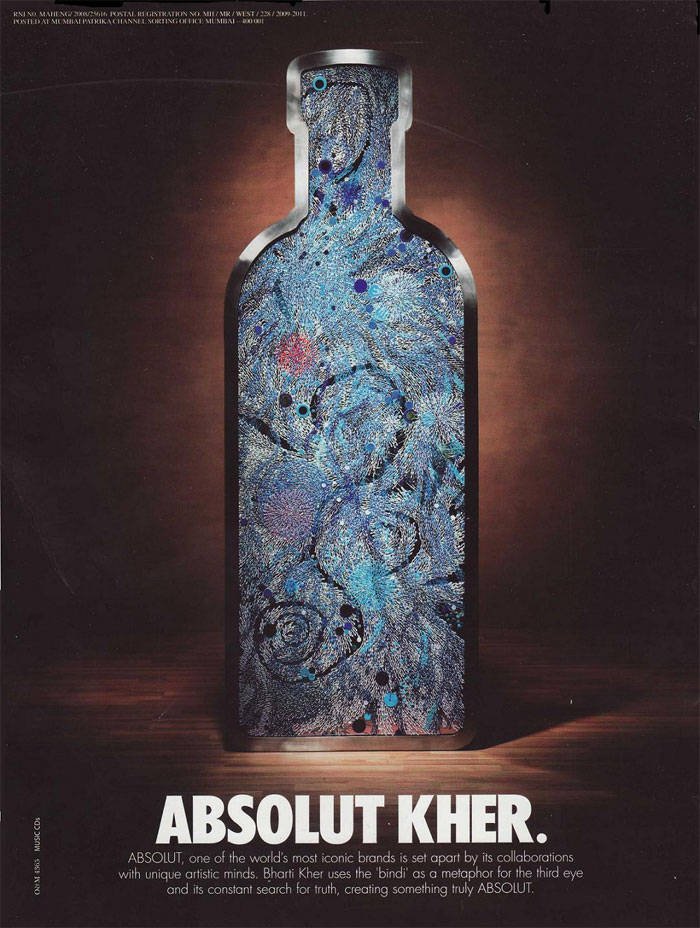
For Absolut, this was the first time to cooperate with a popular artist, and it was then when they launched a large campaign of print ads that lasts even today. 25 years later, Absolut is conquering the interactive digital world, leaning on the legacy CopyRanter once called ‘the best campaign in the history of advertising’.
Conquering the digital world, as Tåhlin points out, was an idea inspired by Red Bull media. The enormous success of this company inspired many brands to start their own media studios, and make sure their ads are original and brought to perfection.
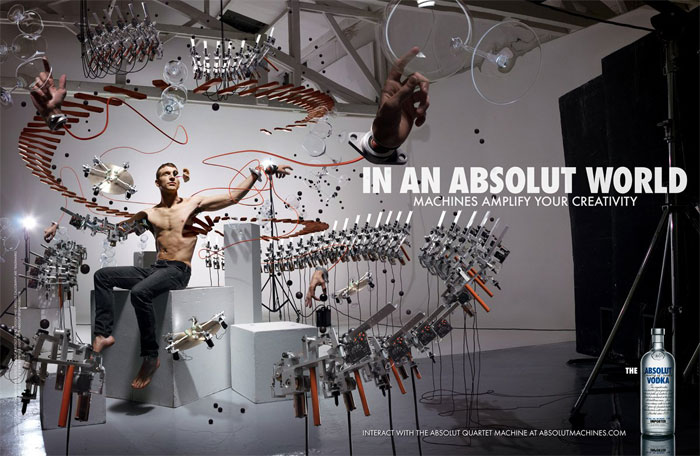
Greyhound is, in fact, Absolut’s original attempt to venture into the content marketing world, and yet stay true to the simplicity deeply embedded in its DNA. The music video, for instance, didn’t say enough about the product, but people still watched it knowing it was Absolut that stood behind it. Therefore, the video got immense popularity, and Absolut Greyhound did its job – there wasn’t a powerful brand message, at least no other than the one of people trying to enjoy themselves.
From then on, Absolut focused on its new, experiential strategy, namely creating an experience instead of static and dynamic commercials. For the purpose, it used its already established connection to clubs and nightlife events, and attempted to leave a memorable mark on customers while they’re actually consuming the product.
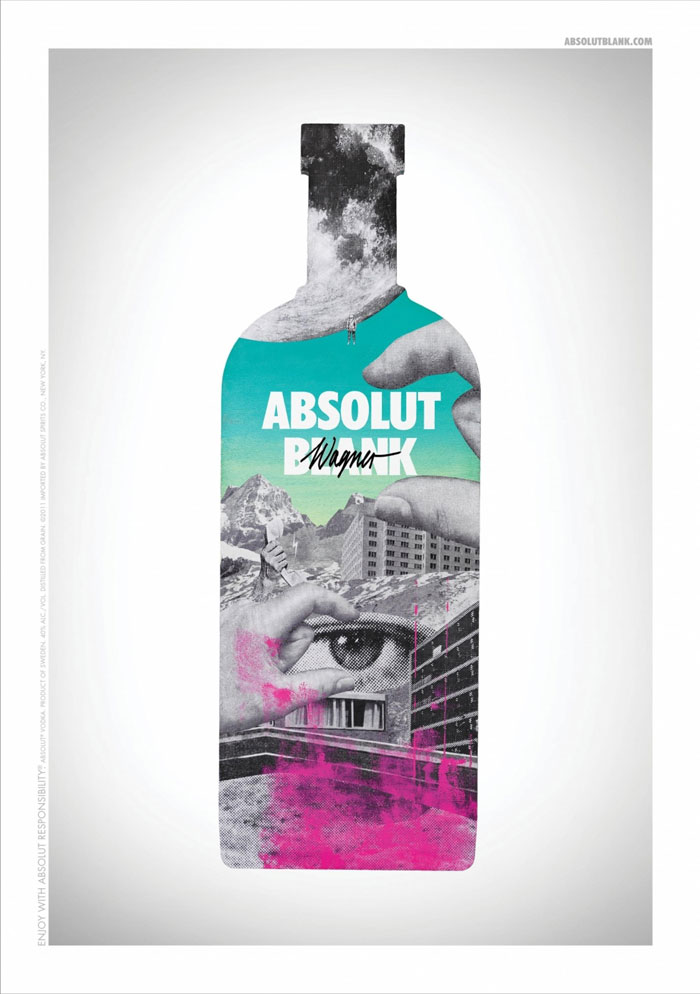
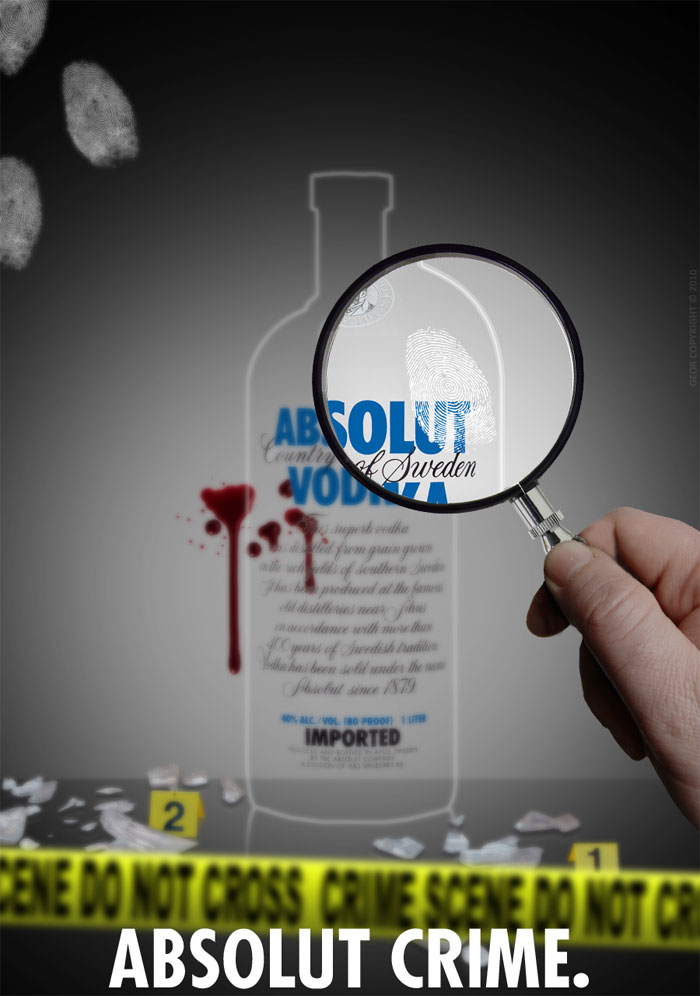
Clarity: The object in this commercial was a magnifying glass that emphasized the origin and native country of the product. In a way, the company made use of a tense period between the USA and the Soviet Union, and relied on the noticeable unpopularity of the Soviet Union due to the war in Afghanistan and the lining of the Korean jetliner.
Basically, they wanted to point out that Absolut is a Swedish and not a Russian product, and managed to boost consumption even among people who were not, at the time, thinking that there was a message to decode. The phenomenon was actually sub-conscious, and filled gaps in consumers’ minds without them even realising it.
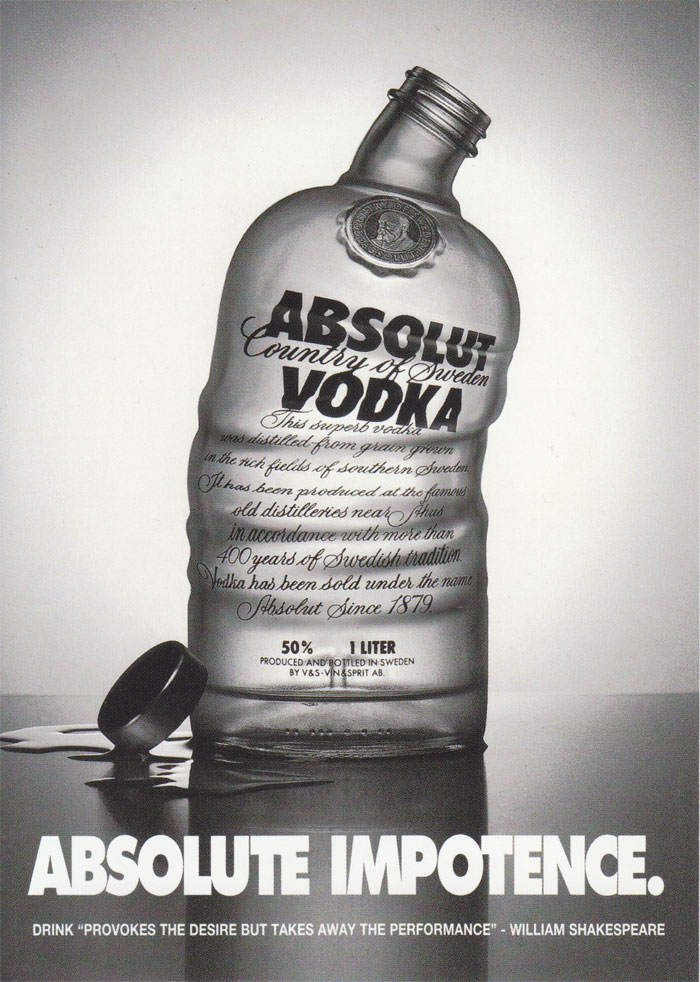
It was a challenging experience for the company, as the connection between vodka and Russia was naturally established, and people wouldn’t really paying that much attention to where they drink was coming from. Advertisers had to work around consumer psychology and downplay Sweden’s connection to the brand, and eventually realized that the best way to do that is to highlight the origin as their primary message.
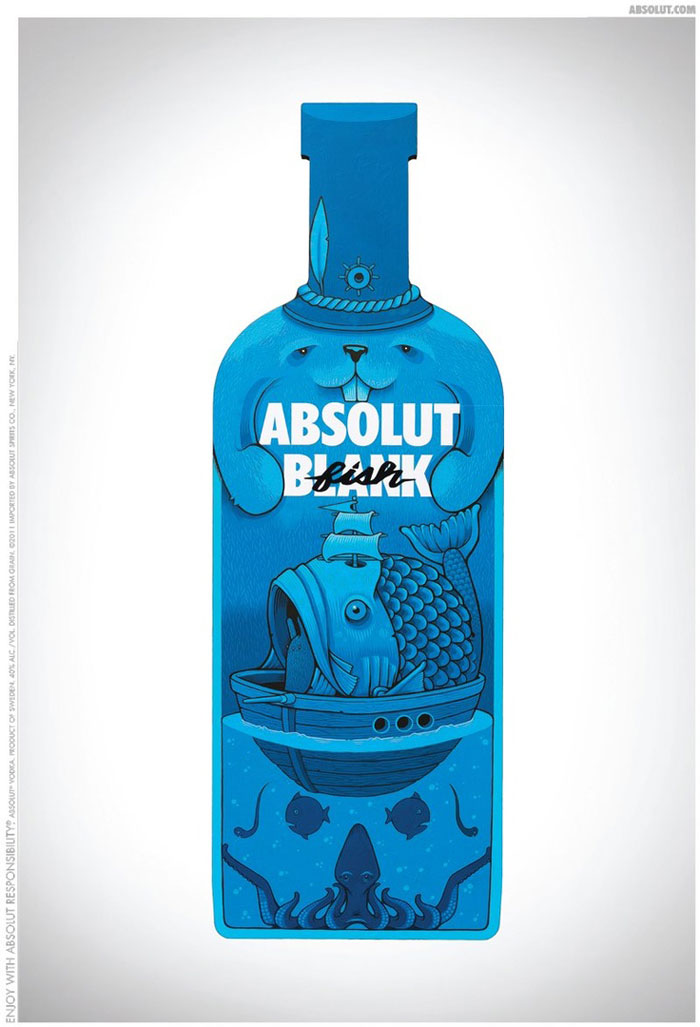
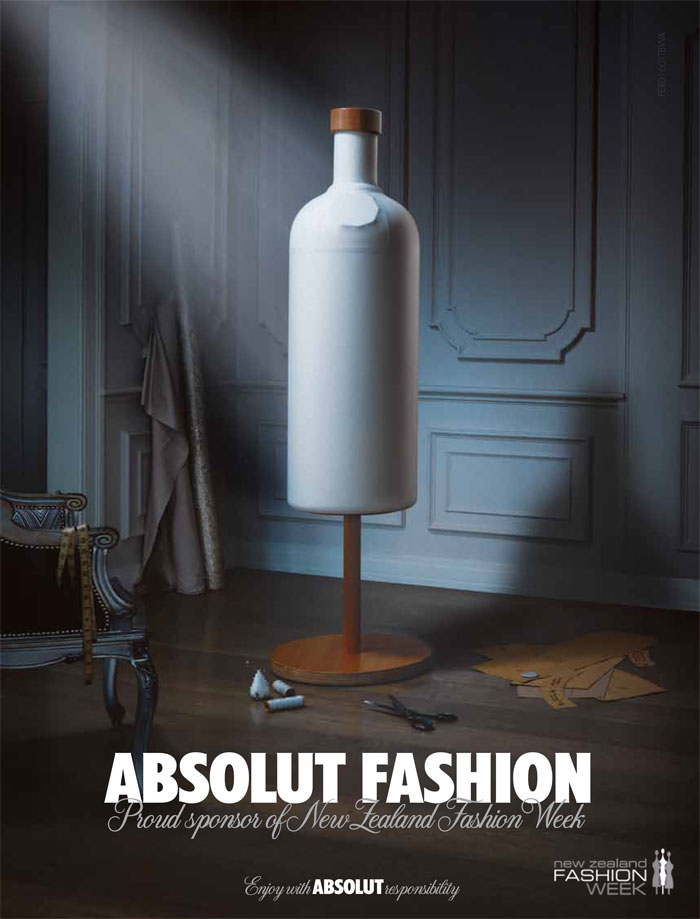
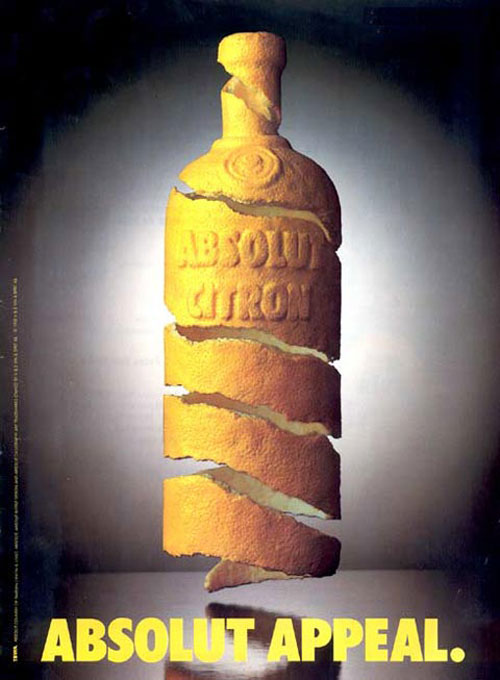
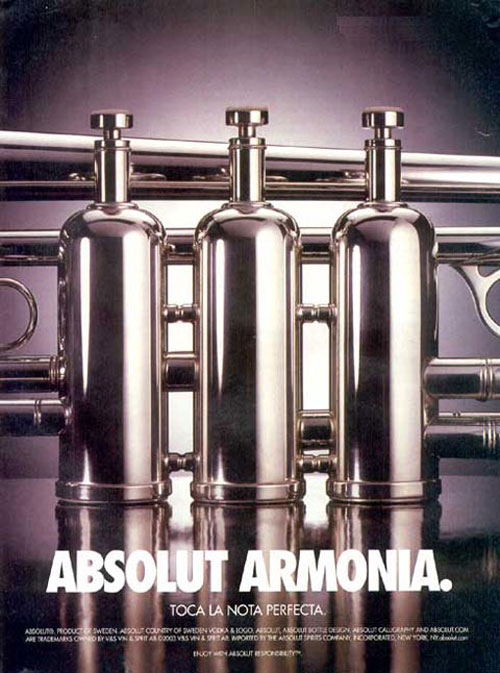
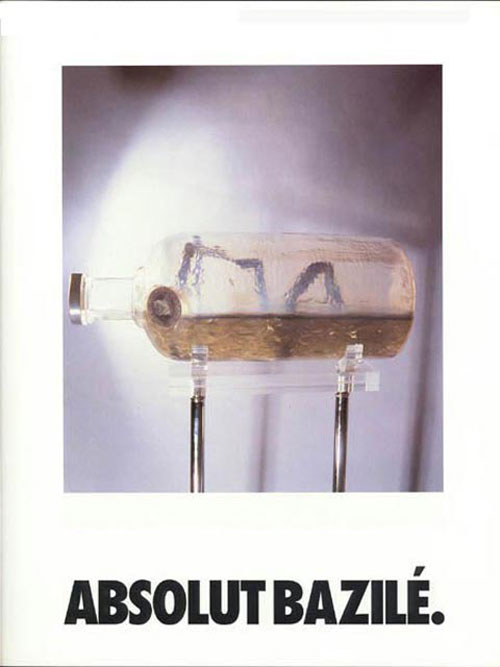
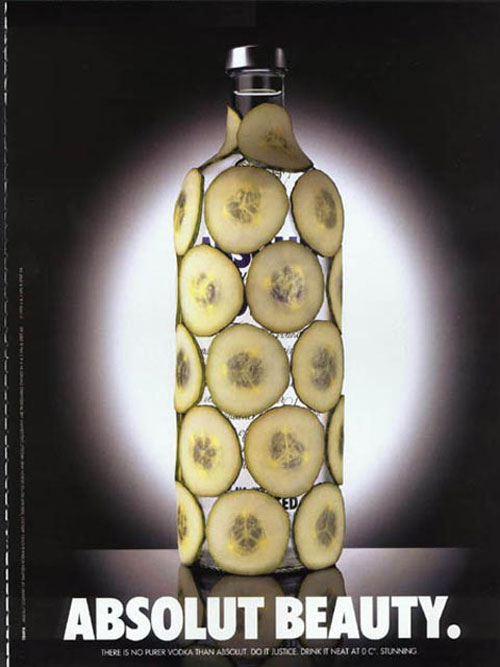
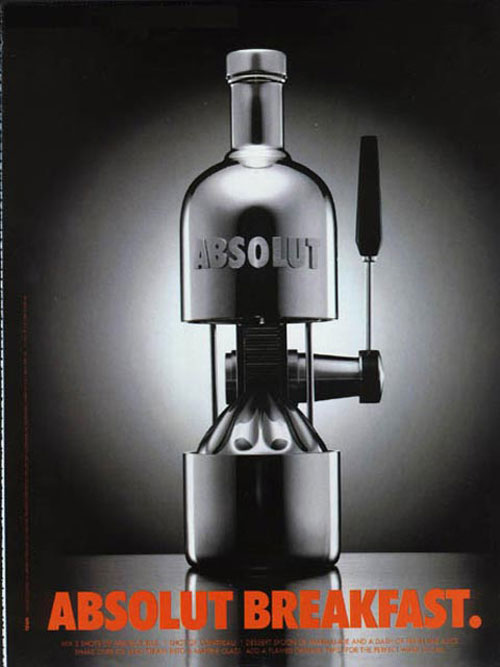
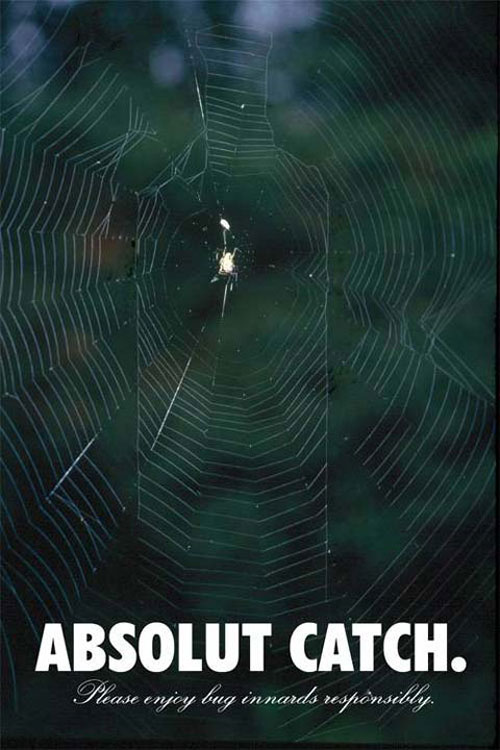
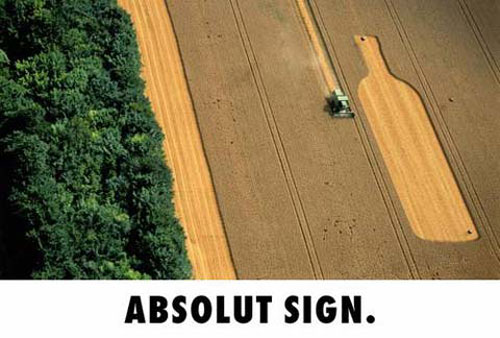
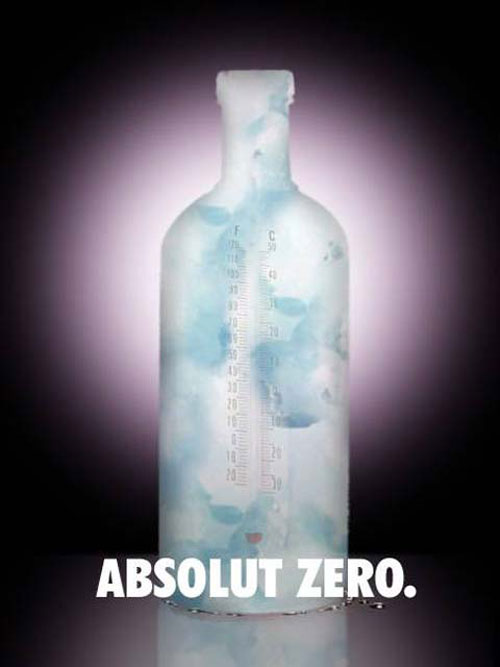
Absolut Theme objects: This is another popular category of Absolute ads where vodka bottles are made of materials different than glass. The shape and size of the object did nevertheless resemble an actual bottle, and conquered easily the attention of consumers who already had the image of an Absolut bottle established in their minds.
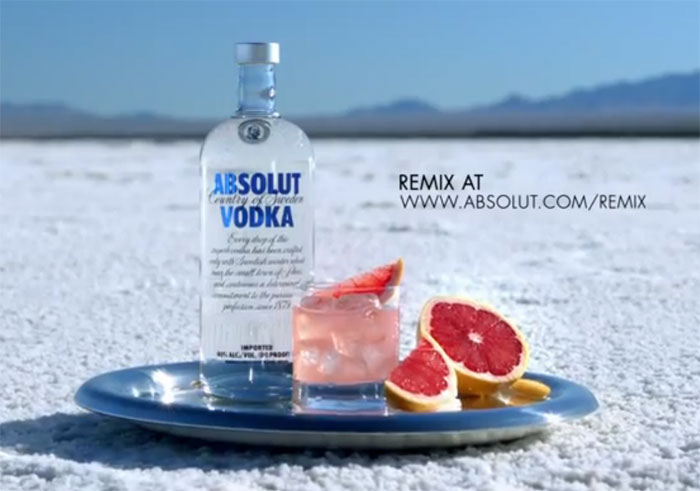
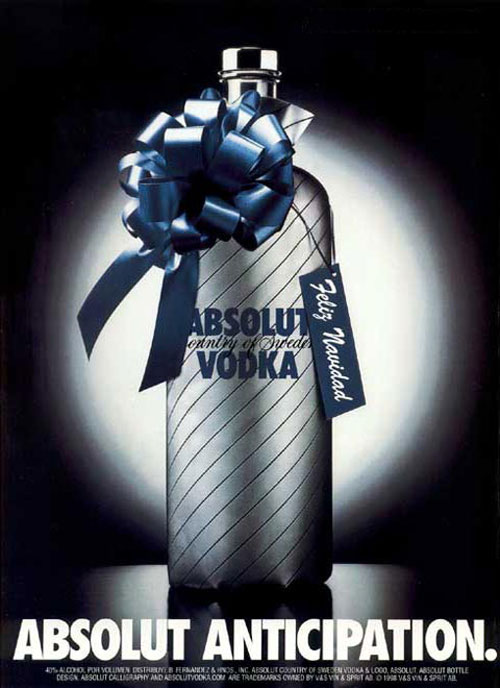
Absolut Tradition: In a line of memorable adverts, Absolut Vodka also made use of icons that symbolize Christmas, as for instance trees, hearths, gifts, and so on. Hearths, in particular, were often associated to warmth, safety, and family. English people use the Yule log for the purpose, and believe that it is good luck to sit on one before it was thrown to the fire.
If the fire went off immediately, it was considered bad luck. In many regions of England, people keep a piece of this log and rekindle it at their next Christmas celebration. Another way in which Absolut symbolizes Christmas is with it a bottle made of toy train, and reminding irresistibly of the epic Polar Express.
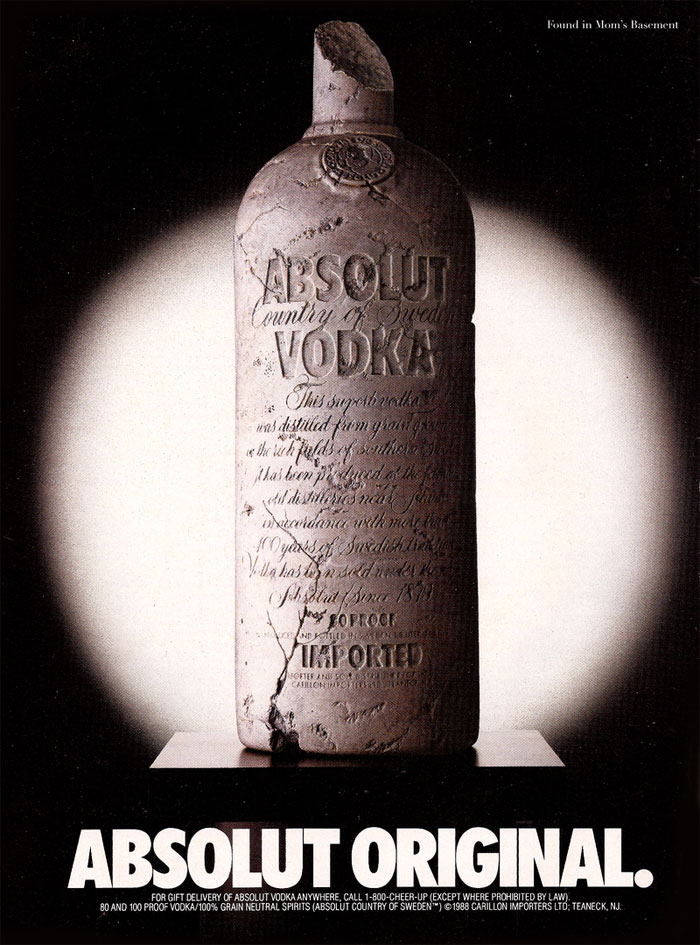
Silhouette Absolut bottles are strategically placed also on other Christmas items, resembling in such way the company’s diplomatic route to depicting in detail a real Christmas celebrations. Basically, if you see an Absolut symbol embedded on a Christmas product, it indicates by default that you should bring up a bottle of vodka as part of your Christmas celebration, or at least that’s how consumers perceive it.
A simple silhouette bottle tells an entire story and finds its place in both pastoral and urban settings, resembling how a true American home should look and feel on Christmas Eve.
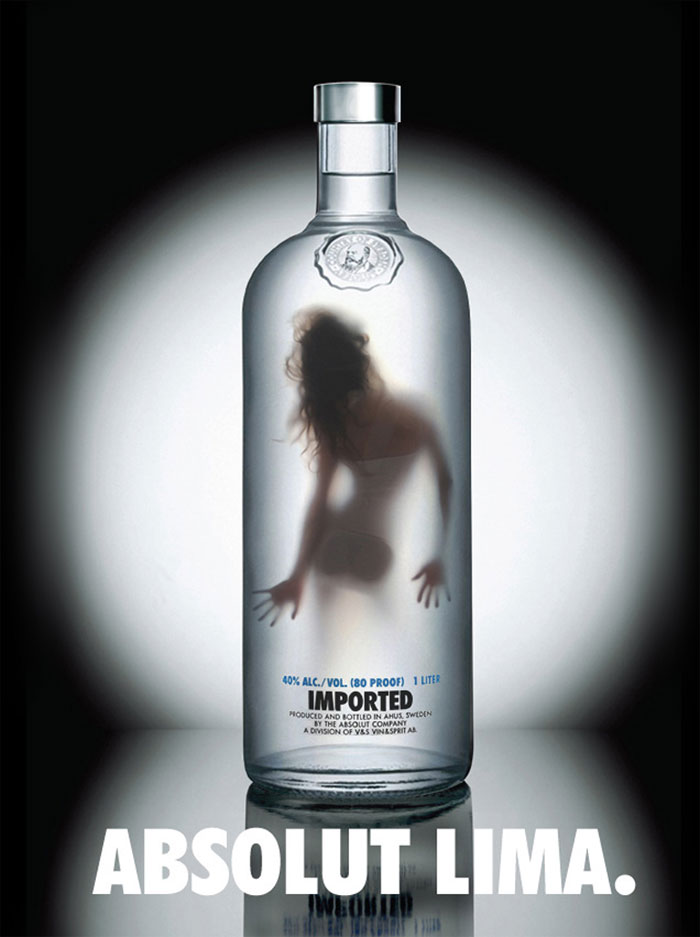
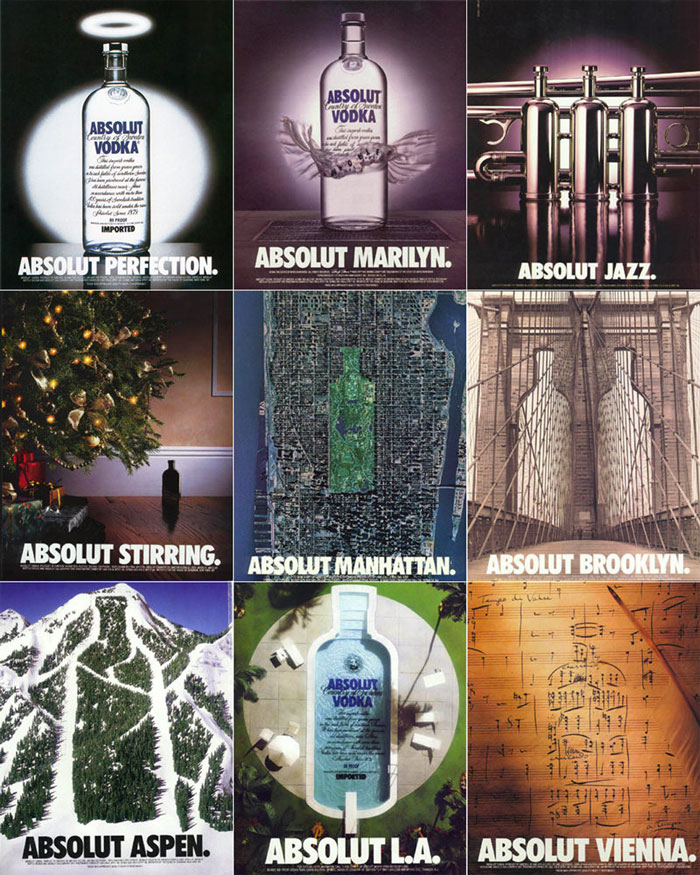
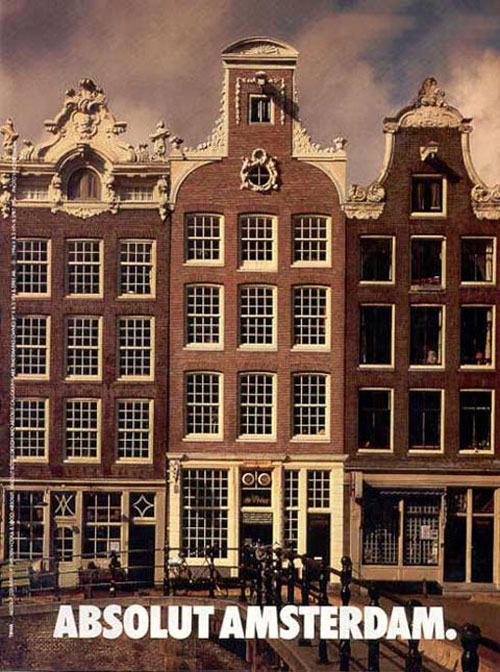
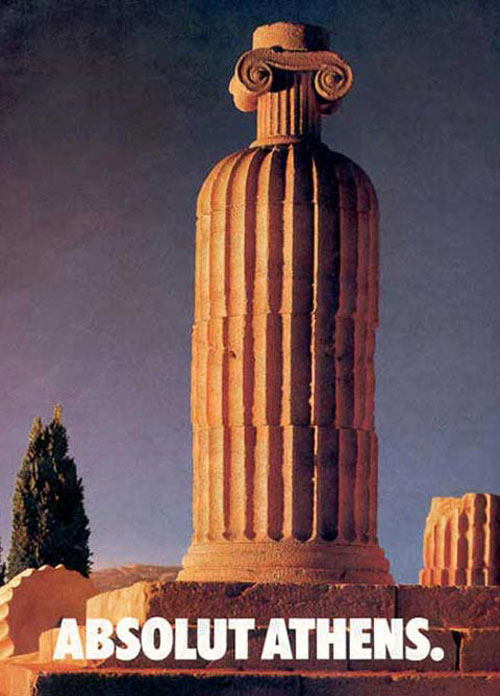
Absolut City themes: Absolut also launched a series of city-specific adverts, such as the 2003 campaign devoted to Las Vegas. In this case, ads define and arrange cities in the shape of an original Absolut bottle, and showcase a connection between the beverage and the cities that may even change how people feel about that city.
Instead, the commercials were artistic, executed with care and taste, and brought up a whole new image of the cities they exposed. The ads also established a visual and logical connection between drinking vodka and eating a meal, excluding in such way the image of vodka being the drink of alcoholics and amateurs. Of course, the connection between Absolut and Las Vegas is not an intuitive one, but you’d be able to guess right away had we told you there were shrimps, sauce and other exotic food.
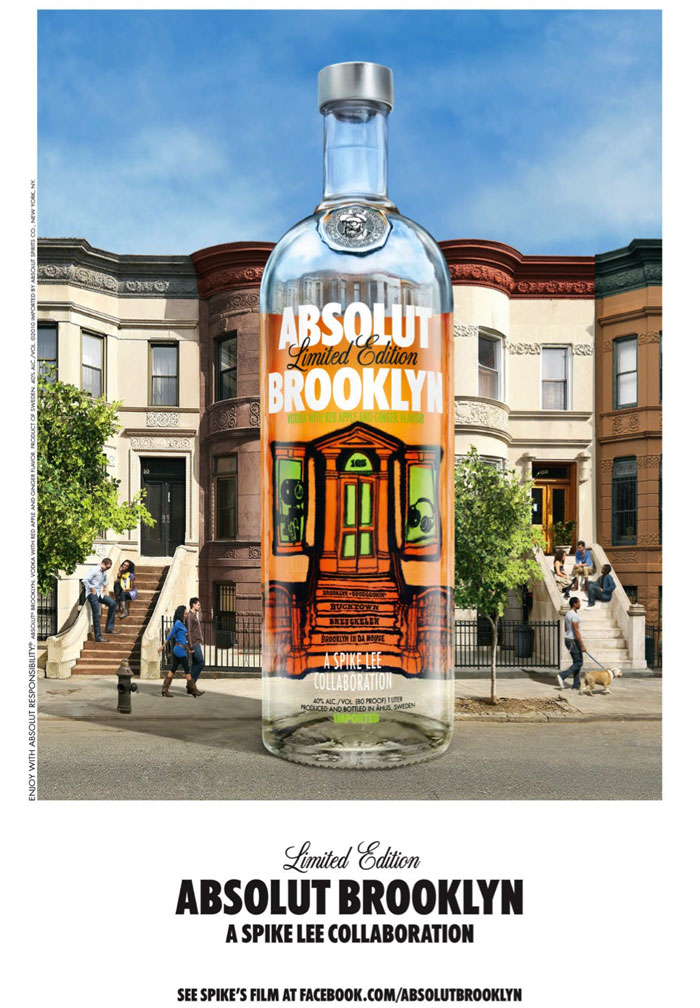
Another interesting detail you can notice from Absolut commercials is the connection with spicy food. Developers tried to push in the idea of vodka being a companion for exotic and modern dishes, so that consumption was to spread on using vodka as a meal ingredient.
It was so successful, that in a popular Las Vegas restaurant run by Chef Alaya, there is a special Mandarin Soup prepared with vodka. This restaurant was originally frequented and acknowledged by a small, elite circuit of people, but has now become the favourite dining venue of most Las Vegas locals.
The marketer’s endeavour is more than obvious – to bring newness in the campaign and the city at a time, and to promote the beverage both as an appetizer that goes well with seafood, but goes even better inside it. Let’s not forget that vodka is not at all perceived as a dangerous drink, but subconsciously connected to water that is pure and harmless.
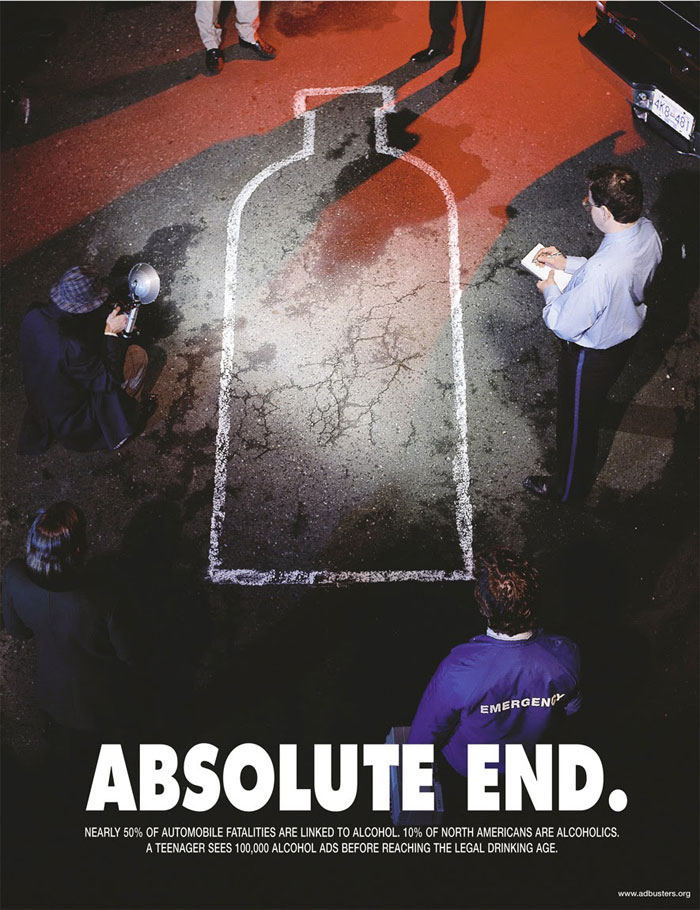
Absolute theme stories: The theme stories were first released in 2008, and are still the company’s main armoury for promoting a common product in an uncomon way. Th story deals with an ‘Absolut World’, where people are not only drinking vodka, but feeling confident about themselves, and happy with who they are. This is why on such commercials we can often see body parts, tattoos, specs, and urban settings exposed, as well as contemporaty decor and lots of modern symbols.
Let’s remind ourselves of a very popular example: Pushing in the idea of this being ‘our world’, where we can do or have anything we want, Absolute created a commercial with a woman receiving a package full of male body parts, and not being surprised by it.
What this should tell to women worldwide is that there is no such thing as a perfect man, and that they should look beyond it. Another thing that draws attention is that the body parts are mixed in terms of colour – there is a white face, white arms, and a peculiarly dark torso.
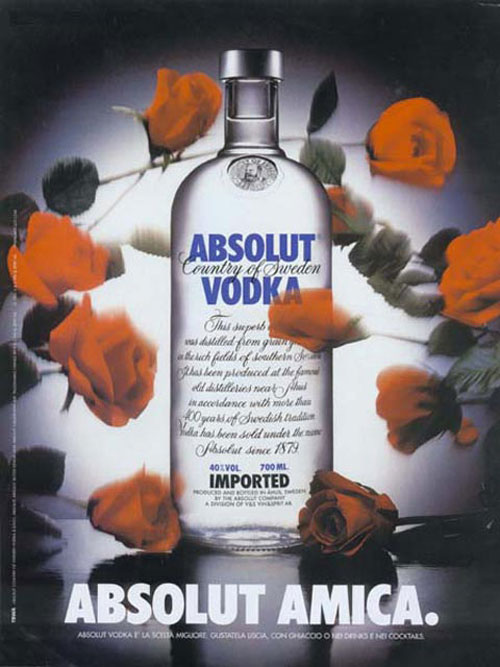
What a woman would expect from a perfect man is also to buy her roses, and be gentle to her despite of being strong and very professional. He should ideally have an inspiring hobby, such as playing the guitar, and a perfectly toned, young, and fit body with a six pack.
On top of that, the carton has a Mars Male on it to underline heterosexuality. While the woman is unpacking the body parts, there is a dog observing her, and looking both scared and confused by seeing a human body in that form.
Ending thoughts
Absolut Vodka adverts set a precedent in the marketing industry, and the proof of that is them still bearing the crown of success after 20 years. These great ad ideas withstood the test of time, and despite of the changes they were submitted to over the years, managed to preserve the original semiotic of a person and the world he lives in.
From that point, Absolut vodka ads transited to campaigns that that represent all people in the world, and that’s exactly what makes them brilliant. For marketers today, Absolut is no longer branded for the American market – its reach is global, focused on a larger picture of how we all want to be, rather than embracing a particular identity.
The many-to-one phenomenon works with today’s homogeneity and vast diversity, tackling common fears such as deadly viruses and terrorism threats, and uses these unifying factors to connect individuals, communities, and whole countries. to still being popular even 20 years From a completely unfamiliar product, Absolut Vodka became Absolut Vodka ad campaign is undisputedly one of the big ideas in the ad industry. In short, these ads tell us how an Absolut World should look like.
More Absolut Vodka ads to check out

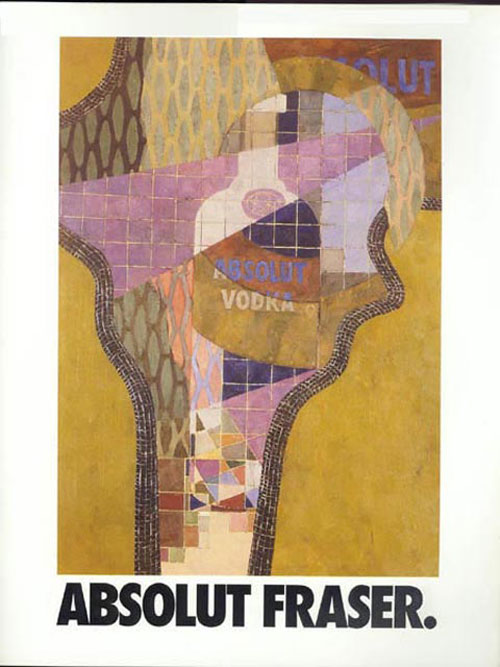
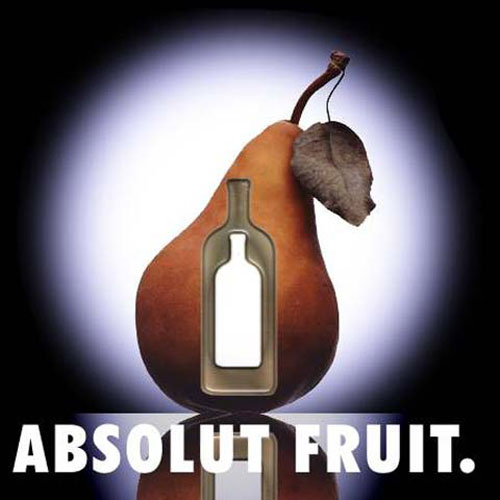
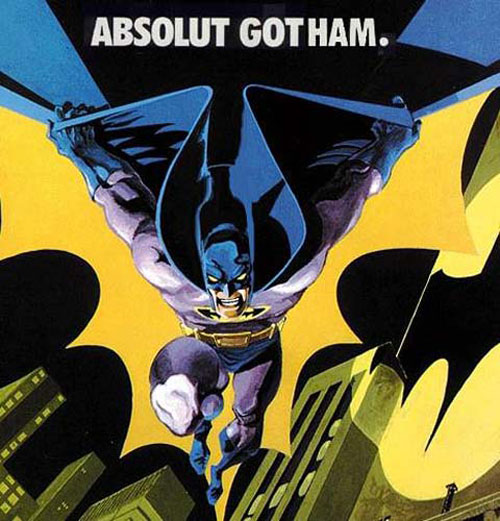


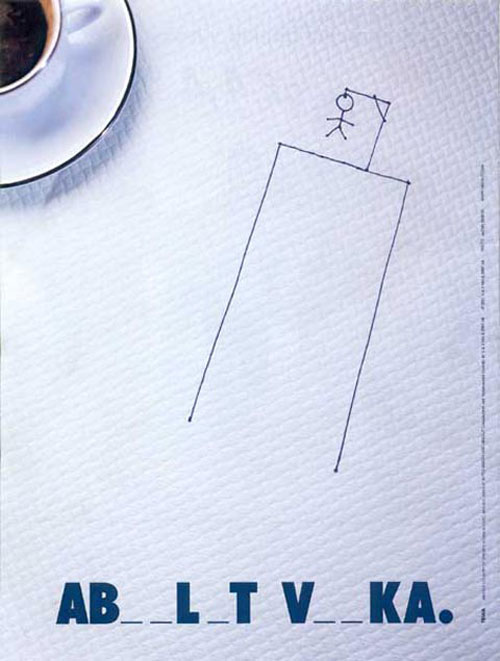





FAQ On Absolut Vodka Ads Examples
What makes Absolut Vodka ads so iconic?
Absolut Vodka ads have consistently pushed the boundaries of visual storytelling. Their innovative use of graphic designers and creative directors results in visually stunning advertisements that capture attention.
The brand’s commitment to high-quality print ads and memorable digital ads ensures a lasting impact on audiences worldwide.
How did Absolut Vodka’s advertising strategy evolve over time?
Absolut’s advertising journey began with minimalist print ads, evolving into diverse digital marketing and social media marketing campaigns.
By collaborating with top advertising agencies and embracing new marketing strategies, Absolut Vodka has kept its ads fresh, engaging, and relevant to modern consumers.
What are some of the most famous Absolut Vodka ads?
Some of the most famous Absolut Vodka ads include the “Absolut Perfection” campaign, which featured the iconic bottle in various artistic interpretations.
Another standout is the “Absolut Cities” series, showcasing the brand’s creativity by blending visual storytelling with urban landscapes, enhancing its brand identity.
Why is visual storytelling important in Absolut Vodka ads?
Visual storytelling in Absolut Vodka ads creates an emotional connection with viewers. By using compelling imagery and brand identity elements, these ads convey complex messages quickly and effectively, making them memorable and impactful.
This technique enhances brand loyalty and engagement among consumers.
How does Absolut Vodka incorporate brand identity in its ads?
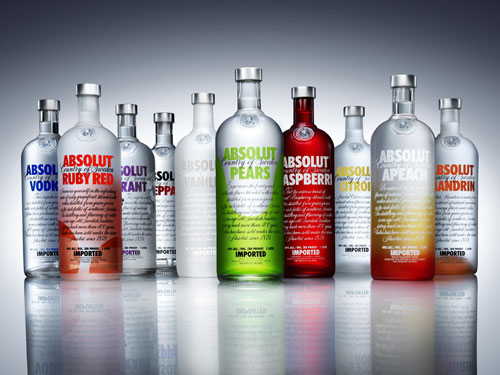
Absolut’s brand identity is woven into every ad through consistent use of its iconic bottle shape, bold colors, and innovative designs.
This approach reinforces the brand’s uniqueness and recognizability, ensuring that Absolut Vodka ads stand out in the crowded landscape of beverage advertising.
What role do advertising agencies play in Absolut Vodka’s campaigns?
Top advertising agencies bring fresh perspectives and creative expertise to Absolut Vodka’s marketing campaigns.
They collaborate with art directors, graphic designers, and copywriters to craft ads that resonate with audiences, ensuring the brand’s messages are both impactful and aligned with its market positioning.
How has digital marketing influenced Absolut Vodka ads?
Digital marketing has expanded the reach of Absolut Vodka ads, allowing them to engage with a global audience.
By leveraging social media channels and online platforms, Absolut can create interactive and dynamic content that enhances consumer engagement and keeps the brand relevant in the digital age.
What are some creative techniques used in Absolut Vodka ads?
Absolut employs a variety of creative techniques, including surreal imagery, bold graphics, and clever ad slogans.
These elements are crafted by talented creative directors and graphic designers to ensure each ad is visually captivating and conveys the brand’s message effectively, enhancing its ad effectiveness.
How do Absolut Vodka ads achieve high consumer engagement?
Absolut Vodka ads achieve high consumer engagement by being visually appealing, emotionally resonant, and highly shareable.
The brand’s use of striking visuals and clever concepts encourages viewers to interact with and share the ads, increasing their reach and impact across various digital platforms.
Why is it important for Absolut Vodka ads to avoid keyword stuffing?
Avoiding keyword stuffing ensures that Absolut Vodka ads appear natural and genuine. This approach improves the overall user experience and avoids penalties from search engines.
Instead, semantically relevant keywords and LSI keywords are used to enhance the content’s relevance and readability, benefiting both SEO and consumer perception.
Conclusion
Exploring Absolut Vodka ads examples reveals a masterclass in advertising brilliance. From striking print ads to dynamic digital marketing campaigns, Absolut Vodka has consistently set the bar high. The brand’s unwavering commitment to visual storytelling, paired with innovative advertising agencies and talented creative directors, has cemented its place in the annals of beverage advertising history.
Absolut Vodka not only captivates with its iconic imagery but also cleverly integrates semantically relevant keywords and LSI keywords into its campaigns, ensuring relevance and engagement. The strategic use of brand identity, consumer engagement, and market positioning keeps the brand ahead of the curve.
In essence, Absolut Vodka’s ads are not just advertisements; they are visual narratives that evoke emotion, inspire creativity, and build enduring brand loyalty. This deep dive into their advertising strategies offers invaluable insights for anyone looking to master the art of impactful marketing.
If you liked this article about Absolut Vodka ads, check out these other articles as well:
- Nike Print Magazine Ads That Boosted The Brand’s Popularity
- Advertising Ideas: 500 Creative Print Advertisements
- Car Ads: 70 Creative And Clever Print Advertisements

Renowned for his expertise in logo design and visual branding, Bogdan has developed a multitude of logos for various clients.
His skills extend to creating posters, vector illustrations, business cards, and brochures. Additionally, Bogdan's UI kits were featured on marketplaces like Visual Hierarchy and UI8.
He also wrote in the past years on sites like Design Your Way, WebDesignerDepot, WPDean, Designmodo, Speckyboy, Slider Revolution, and more.
- How to Install Fonts on Mac (Step-by-Step Guide) - 20 September 2026
- From Mockup to Code: How AI-Augmented Development Speeds Up the Design Handoff - 19 September 2026
- The Beehiiv Logo History, Colors, Font, And Meaning - 18 September 2026

Bogdan Sandu is a seasoned designer who has been designing websites since 2008. Renowned for his expertise in logo design and visual branding, Bogdan has developed a multitude of logos for various clients. His skills extend to creating posters, vector illustrations, business cards, and brochures. Additionally, Bogdan's UI kits were featured on marketplaces like Visual Hierarchy and UI8. He also wrote in the past years on sites like Design Your Way, WebDesignerDepot, WPDean, Designmodo, Speckyboy, Slider Revolution, and more.
You Might Also Like