


Few southern rock bands have ever matched the visual punch that Molly Hatchet album covers delivered from 1978 onward. Frank Frazetta’s Death Dealer painting on the debut LP didn’t just sell records. It turned a Jacksonville, Florida bar band into a fantasy art icon overnight.
Every release that followed built on that foundation. Boris Vallejo, Ezra Tucker, Paul Raymond Gregory. Each artist added a new layer to the band’s visual identity while keeping the barbarian warrior theme alive across four decades of vinyl, CD, and reissue artwork.
This article breaks down the best Molly Hatchet covers, from the 1978 self-titled debut through Warriors of the Rainbow Bridge. You’ll get the story behind each painting, who created it, why it matters, and where the original art ended up (spoiler: one sold for $6 million).
Best Molly Hatchet Album Covers
Molly Hatchet (1978)

The Artist Behind the Cover
Frank Frazetta painted this one. The piece is called “Death Dealer,” originally created in 1973. Frazetta was already a legend in fantasy art circles before this LP sleeve ever hit record store shelves.
He’d built his reputation on paperback covers for Edgar Rice Burroughs novels and Conan stories. But this painting, sitting on the front of a southern rock debut from Jacksonville, Florida, pushed it into a completely different audience.
Visual Breakdown
A mounted warrior in dark armor rides a massive horse. An axe dripping with blood. A horned helmet hiding the face entirely, except for two glowing eyes peering out from the shadow.
The color palette leans heavily into dark reds, blacks, and muddy browns. There’s very little brightness here. Everything feels heavy and threatening, like the cover wants to fight you.
Why This Cover Stands Out
It set the entire visual identity for the band going forward. Before this record, southern rock bands looked like, well, southern rock bands. Denim. Long hair. Stage photos. Danny Joe Brown and Dave Hlubek changed that completely by licensing Frazetta’s oil painting for their Epic Records debut.
People who had no idea who Molly Hatchet was picked this vinyl record off the shelf purely because of that image. I’ve seen collectors say the same thing over and over. The cover sold the album before the needle even touched the groove.
Cultural Impact and Legacy
The Death Dealer character went on to spawn novels and comic books. Glenn Danzig actually wrote one of those comics. That’s the kind of reach this single painting had.
It became the template for what fantasy art on album covers could do. Bands in the heavy metal scene took notes. And custom van painters across America tried (and mostly failed) to recreate it with airbrush.
Where You’ve Seen It Before
T-shirts, concert posters, and basically every Molly Hatchet greatest hits compilation ever printed. The image also shows up regularly at Heritage Auctions whenever Frazetta originals go on the block. You’ll spot it on vintage LP bins at any record store that carries classic rock vinyl.
Flirtin’ with Disaster (1979)
The Artist Behind the Cover
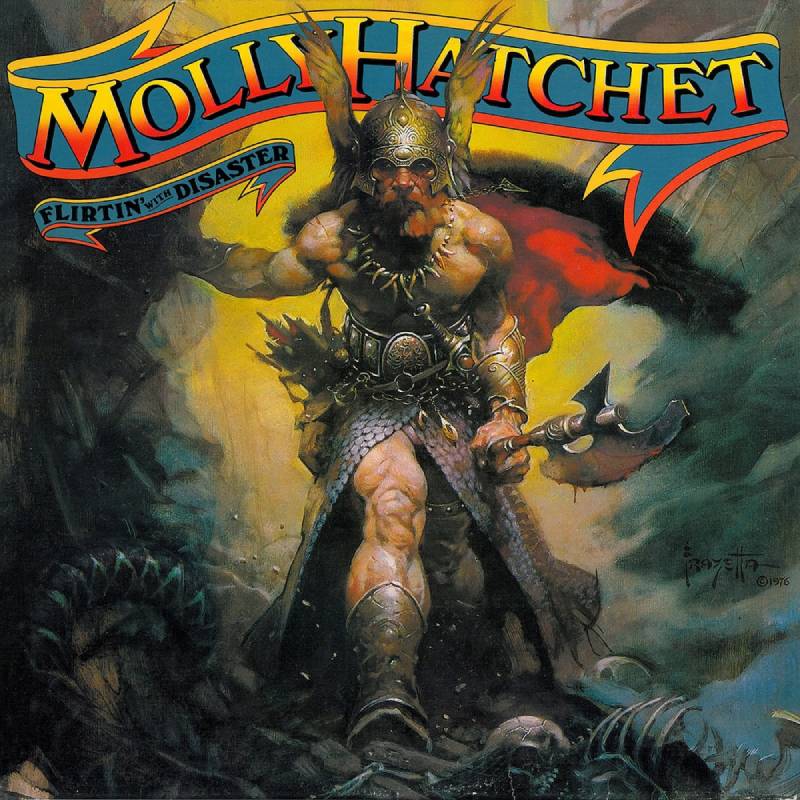
Frank Frazetta again. The painting is called “Dark Kingdom,” and he originally created it in 1976 for the cover of Karl Edward Wagner’s novel Dark Crusade.
But nobody remembers it as a book cover. This is the Molly Hatchet painting now. The original sold at Heritage Auctions in 2023 for $6 million, setting the all-time record for fantasy art.
Visual Breakdown
A heavily armored barbarian warrior stands on a pile of bones and skulls. He’s gripping a weapon, staring straight at you. There’s a snake coiling nearby. The background glows with a sickly, warm light.
The hue shifts between warm amber and cold shadow, creating a strong contrast that pulls your eye directly to the central figure. Frazetta’s brushwork here is looser than on Death Dealer, almost impressionistic in places.
Why This Cover Stands Out
This is Molly Hatchet’s best-selling album. Double platinum. Over two million copies in the US alone. And the cover art played a real part in that success.
The focal point is impossible to miss. Your eyes lock onto the warrior immediately. The composition works perfectly at the 12-inch vinyl sleeve size, where every detail in Frazetta’s brushwork gets room to breathe.
Cultural Impact and Legacy
The $6 million auction price tells you everything. That sale surpassed Frazetta’s previous record holder, “Egyptian Queen,” which had fetched $5.4 million in 2019.
For a lot of people, this was their first encounter with sword-and-sorcery illustration. Not through a book. Through a record in a bin at a music shop. The painting basically introduced an entire generation to fantasy art as a legitimate form.
Where You’ve Seen It Before
Promotional posters from 1979 still turn up on eBay and Etsy. The image was used on 23×23 inch record store display prints. It appears on reissued CD booklets, including the 2001 remaster with bonus tracks.
Beatin’ the Odds (1980)
The Artist Behind the Cover
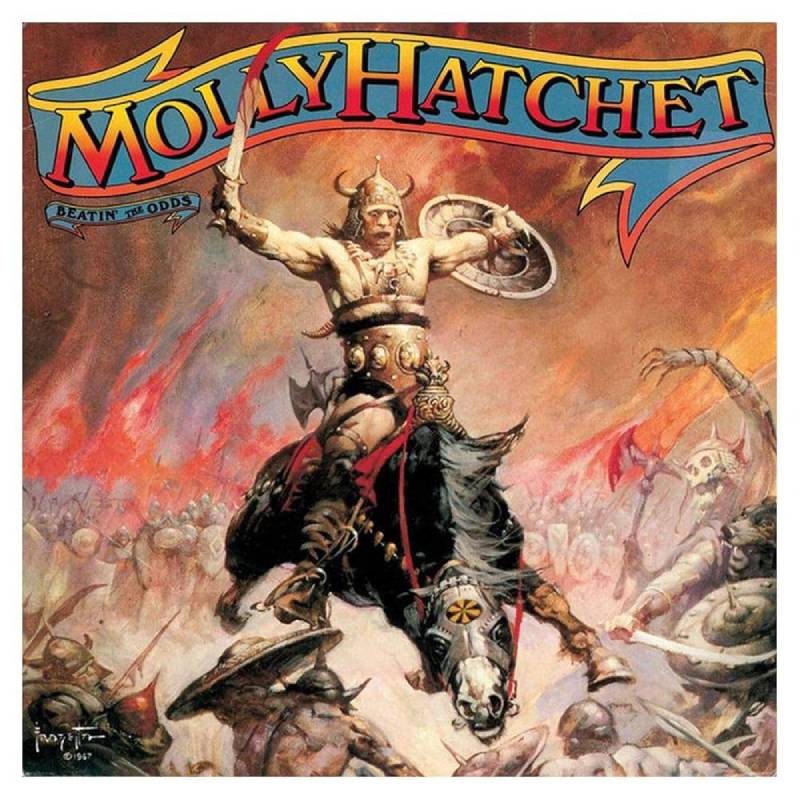
The last of the three consecutive Frank Frazetta covers for Molly Hatchet. This one uses “Conan the Conqueror” (also known as “Berserker”), painted in 1967 for the Lancer paperback edition of Robert E. Howard’s novel.
Kirk Hammett of Metallica owned this original painting for years. In late 2025, it went up for auction through Heritage with a starting bid of $10 million.
Visual Breakdown
A muscular barbarian stands in a battle-ready pose, sword raised. The figure takes up nearly the entire frame. Warm earth tones dominate, with deep oranges and reds that give the whole scene a fiery intensity.
Compared to the previous two covers, this one feels more aggressive. More movement. The warrior looks like he’s about to charge right off the sleeve.
Why This Cover Stands Out
This was the first Molly Hatchet album with vocalist Jimmy Farrar replacing Danny Joe Brown. The music shifted. But the cover kept the visual brand locked in tight. Fans knew exactly what they were getting when they saw another Frazetta painting on the front.
The album went platinum. And the three Frazetta covers together created a trilogy of fantasy album artwork that no other southern rock band has matched.
Cultural Impact and Legacy
Frazetta reportedly tripled his asking price after this album, which is why the band moved on to Boris Vallejo for the next record. So in a way, this cover marked the end of an era.
It remains one of the most recognized Conan illustrations ever painted. More people probably know it from this album than from any of the Conan paperback editions.
Where You’ve Seen It Before
Remastered editions by Rock Candy Records (2008) and SPV/Steamhammer (2013) both kept the original Frazetta art intact. The image circulates heavily in fantasy art collector communities and Frank Frazetta retrospective books.
Take No Prisoners (1981)
The Artist Behind the Cover
Boris Vallejo, the Peruvian-born fantasy artist, stepped in after Frazetta priced himself out. Vallejo had already built a strong reputation for his own brand of hyper-muscular, detail-rich figure painting.
The original painting was sold through Heritage Auctions in 2007.
Visual Breakdown
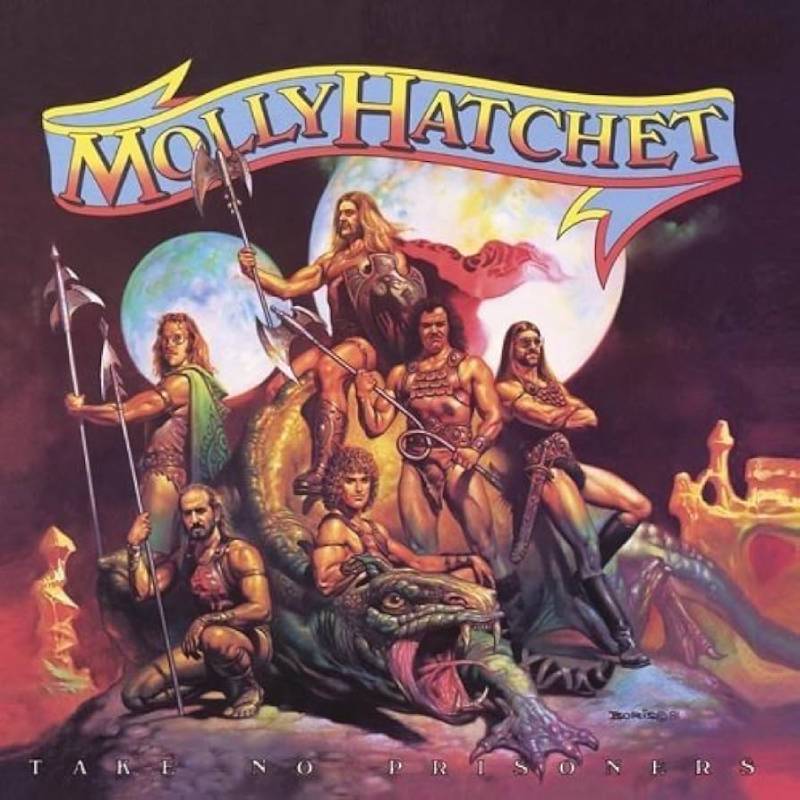
Here’s where it gets interesting. Instead of a fictional warrior, Vallejo painted the actual band members as fantasy characters. Dave Hlubek, Duane Roland, Jimmy Farrar, Banner Thomas, and Bruce Crump all appear, rendered as sword-wielding barbarian versions of themselves.
Rich saturation throughout. Deep blues, purples, and warm skin tones. Vallejo’s style is smoother and more polished than Frazetta’s rougher brushwork. It almost has a photorealistic quality to the figures.
Why This Cover Stands Out
It’s the only Molly Hatchet cover where the band members are depicted directly in the artwork. A clever twist on the established formula. You still get the fantasy warrior theme. But now the warriors are the guys actually playing the music.
The album peaked at number 36 on the Billboard charts. Actress Katey Sagal appears as a backup singer on the record, which is a fun bit of trivia.
Cultural Impact and Legacy
The shift from Frazetta to Vallejo marked a visual turning point. The artwork became slightly more commercial, slightly more accessible. Some fans preferred Frazetta’s raw energy. Others liked the added clarity Vallejo brought.
Either way, the cover maintained the band’s storytelling approach to album packaging. You weren’t just buying music. You were buying into a visual world.
Where You’ve Seen It Before
Boris Vallejo art books frequently feature this piece alongside his other album and book cover work. It also pops up in discussions comparing Vallejo and Frazetta’s approaches to fantasy illustration.
No Guts… No Glory (1983)
The Artist Behind the Cover
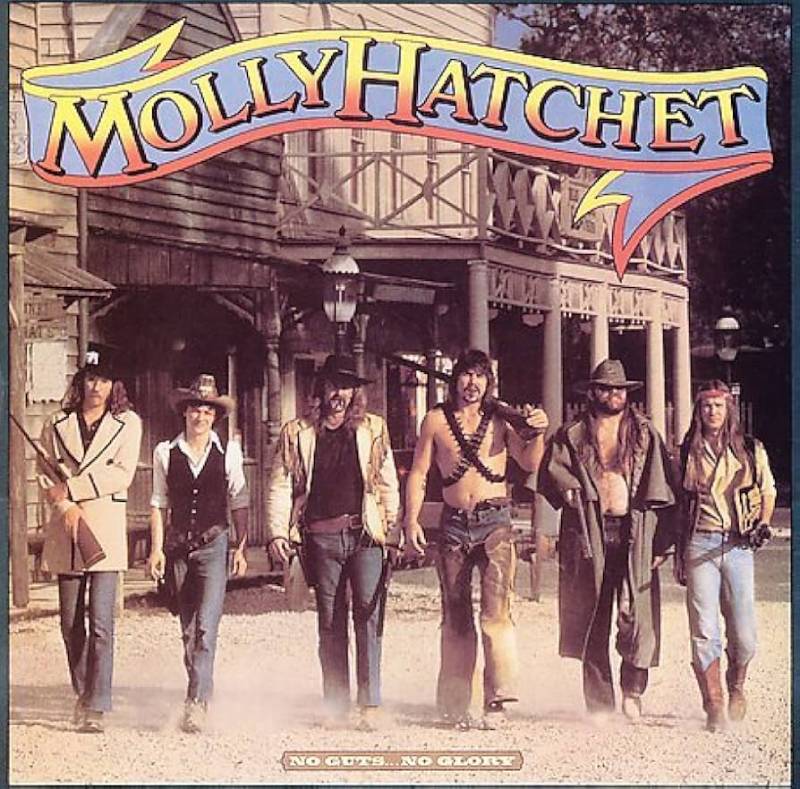
No painter this time. Photographer Bob Seidemann shot the cover image. This is the one album where Molly Hatchet completely ditched the fantasy art theme.
Visual Breakdown
The band posed in Western outfits at what appears to be Six Gun Territory, a now-defunct western theme park near Ocala, Florida. Cowboys instead of barbarians. Dusty frontier vibes instead of dark fantasy landscapes.
It looks like a snapshot from a period film set. The monochrome tones and muted earth colors give it an old-timey feel, far removed from the vibrant oil paintings that defined earlier releases.
Why This Cover Stands Out
Precisely because it breaks the pattern. Every other Molly Hatchet album cover features a painted fantasy scene. This one features… the band in cowboy hats. Danny Joe Brown had returned to the group for this record, which includes fan-favorite track “Fall of the Peacemakers.”
The departure from fantasy art made this cover instantly recognizable in the discography, even if it’s the least discussed visually.
Cultural Impact and Legacy
The experiment didn’t stick. They went right back to painted fantasy covers on the next album. But it proved the band could work outside their established visual brand, even if they chose not to.
Where You’ve Seen It Before
Compilation booklets and discography retrospectives. It’s often used as the “odd one out” example when people discuss the band’s visual history.
The Deed Is Done (1984)
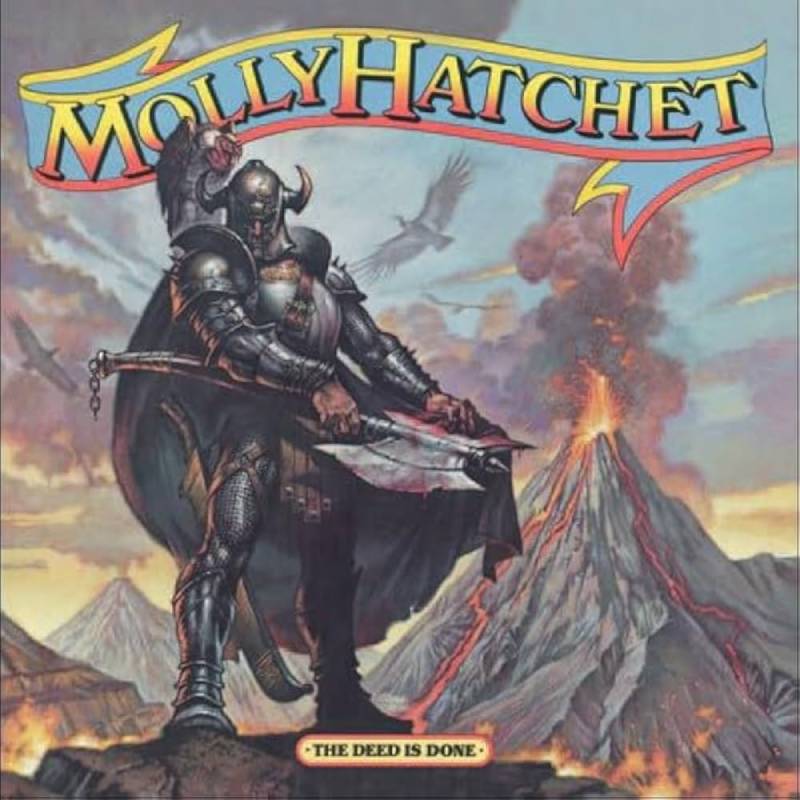
The Artist Behind the Cover
Ezra Tucker provided the illustration. Tucker is a commercial artist known for his hyper-detailed, realistic style that he calls “Nouveau Victorian Realism.” His client list includes Walt Disney, Universal Studios, and Anheuser-Busch. He graduated from the Memphis Academy of Arts with a BFA in Advertising Design.
Visual Breakdown
Back to fantasy. A warrior figure in dramatic lighting, continuing the sword-and-sorcery tradition. Tucker’s style sits somewhere between Frazetta’s raw energy and Vallejo’s polished realism.
The composition feels more commercial. Cleaner lines. More deliberate use of emphasis on the central figure. It matched the album’s own shift toward a more FM-friendly hard rock sound.
Why This Cover Stands Out
This was the last Molly Hatchet album released on Epic Records. It was also the last record to chart on the Billboard for the band. The cover represents a transitional moment, both musically and visually.
Original guitarist Steve Holland had left. The triple-guitar lineup was gone. The artwork reflected this change, looking slightly less aggressive than what came before.
Cultural Impact and Legacy
Tucker went on to do the cover for Lightning Strikes Twice as well, making him the second artist (after Frazetta) to do consecutive Molly Hatchet covers. His work doesn’t get as much attention as Frazetta’s or Vallejo’s, but it’s solid fantasy illustration that kept the band’s visual identity intact during a rough patch.
Where You’ve Seen It Before
The 2013 SPV/Steamhammer reissue reproduced the original Tucker artwork. It appears in discussions of mid-80s album art and rock band visual branding from the Epic Records era.
Lightning Strikes Twice (1989)
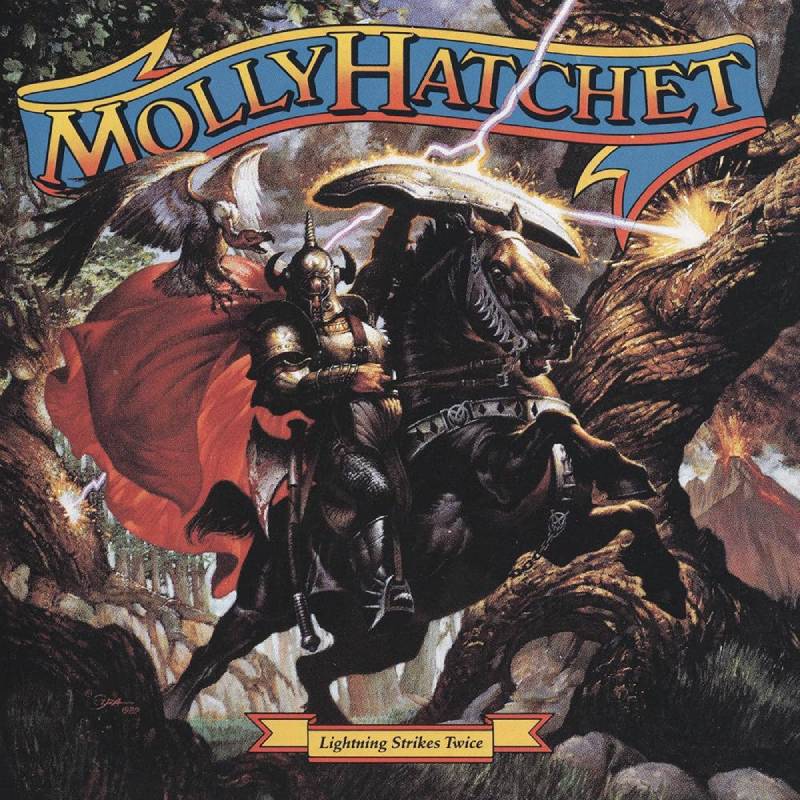
The Artist Behind the Cover
Ezra Tucker again. His second consecutive cover for the band. This was released on Capitol Records, marking a new label chapter for Molly Hatchet.
Visual Breakdown
Another fantasy warrior scene, this time incorporating lightning elements that tie into the album title. Tucker kept the dark, moody atmosphere that fans expected. The palette mixes cool blues with warm highlights, creating an electric feel that’s distinct from the earlier earth-toned covers.
Why This Cover Stands Out
This was the first Molly Hatchet record without co-founder Dave Hlubek, who’d left in 1987 due to personal issues. Bobby Ingram had replaced him. The cover maintained visual continuity even as the lineup changed dramatically behind the scenes.
The album came after a four-year gap following The Deed Is Done. Capitol was trying to relaunch the band, and keeping familiar fantasy artwork on the sleeve was part of that strategy.
Cultural Impact and Legacy
Lightning Strikes Twice didn’t match the commercial success of the early Epic years. But visually, it kept the Molly Hatchet brand alive during a decade when southern rock was mostly out of fashion. You could find it in cut-out bins everywhere by 1990, which actually helped new fans discover the band at discount prices.
Where You’ve Seen It Before
Bargain vinyl sections. Budget CD racks. It’s become a bit of a cult item among collectors who appreciate late-80s hard rock artwork that didn’t follow the glam metal visual trends of the era.
Devil’s Canyon (1996)
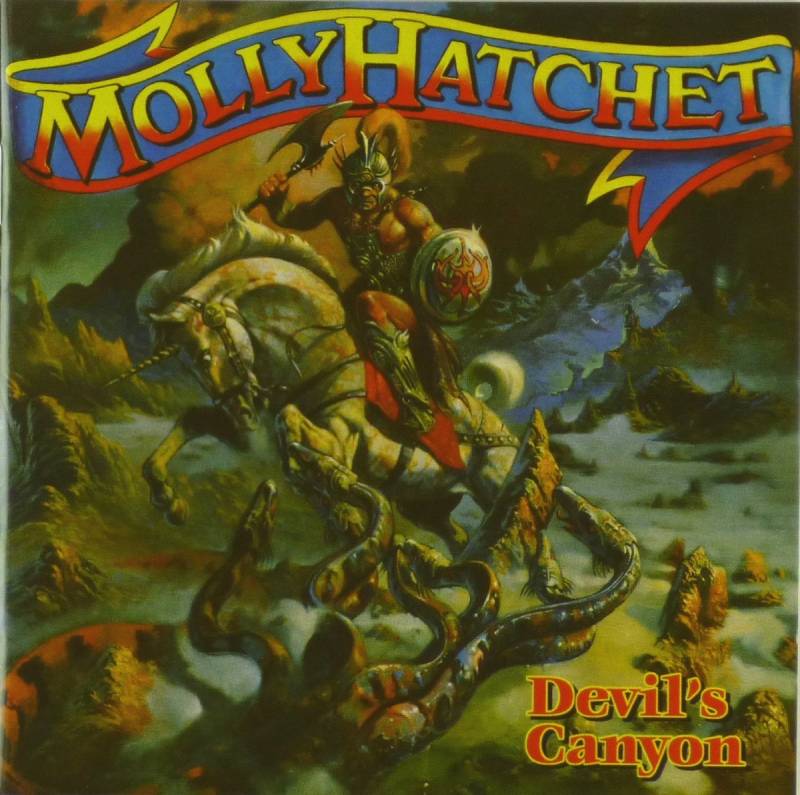
The Artist Behind the Cover
Paul Raymond Gregory, a British fantasy artist who had already built a strong resume doing covers for Saxon, Blind Guardian, Uriah Heep, and Dio. This was his first of seven album covers for Molly Hatchet.
Visual Breakdown
Gregory’s style is distinct from both Frazetta and Vallejo. It’s more atmospheric. More detail in the environments. The painting has a cinematic quality, almost like a still from a fantasy film rather than a traditional illustration.
Dark, moody lighting with a strong sense of depth. The gradient from shadow to light pulls you into the scene. Gregory’s background in Tolkien-inspired art shows in the level of world-building packed into a single frame.
Why This Cover Stands Out
Devil’s Canyon was recorded in Hamburg, Germany at KARO Studios, and it was the first Molly Hatchet studio album in seven years. Danny Joe Brown started the vocal sessions but had to step aside due to health problems. Phil McCormack finished the record.
The cover marked a visual rebirth for the band. Gregory brought a more modern, detailed approach that updated the fantasy theme without abandoning it.
Cultural Impact and Legacy
The album was voted the number one rock record in Europe in 1996. Gregory’s involvement brought a new wave of credibility. His limited edition prints of this cover (strictly 500 copies, individually signed and numbered) are now sought-after items among collectors.
Where You’ve Seen It Before
Gregory’s portfolio and print series. SPV Records catalogs. European rock press from the mid-90s, where the album got significantly more attention than in the US.
Silent Reign of Heroes (1998)
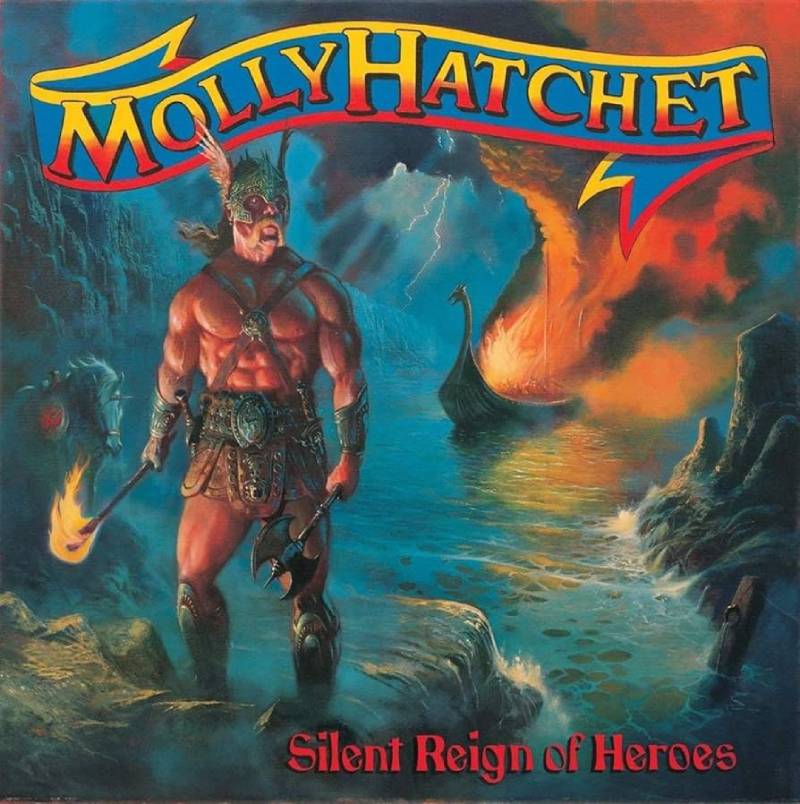
The Artist Behind the Cover
Paul Raymond Gregory returned for his second Molly Hatchet cover. By this point, his relationship with the band was becoming as consistent as Frazetta’s had been in the late 70s.
Visual Breakdown
A darker, more foreboding composition than Devil’s Canyon. The warrior figure is more menacing. The color scheme pushes further into shadow, with less of the warm tones that characterized the Frazetta era.
Gregory leaned into a grittier aesthetic here. The painting has a visual hierarchy that guides you from the dominant figure down through layered elements of landscape and atmosphere.
Why This Cover Stands Out
This was released on CMC International. The lineup had solidified around Bobby Ingram, Phil McCormack, and returning keyboardist John Galvin. The cover matched the album’s tone, which fans described as dealing with darker themes compared to the comeback energy of Devil’s Canyon.
Cultural Impact and Legacy
Some commentators noted the artwork had a more aggressive, almost militaristic feel compared to earlier covers. The Gregory era of Molly Hatchet artwork became its own distinct chapter in the band’s visual history, separate from the Frazetta, Vallejo, and Tucker periods.
Where You’ve Seen It Before
CD reissues and streaming platform thumbnails. Paul Raymond Gregory retrospective exhibitions. It’s referenced in discussions about how bands maintain visual brand continuity across decades of lineup changes.
Warriors of the Rainbow Bridge (2005)
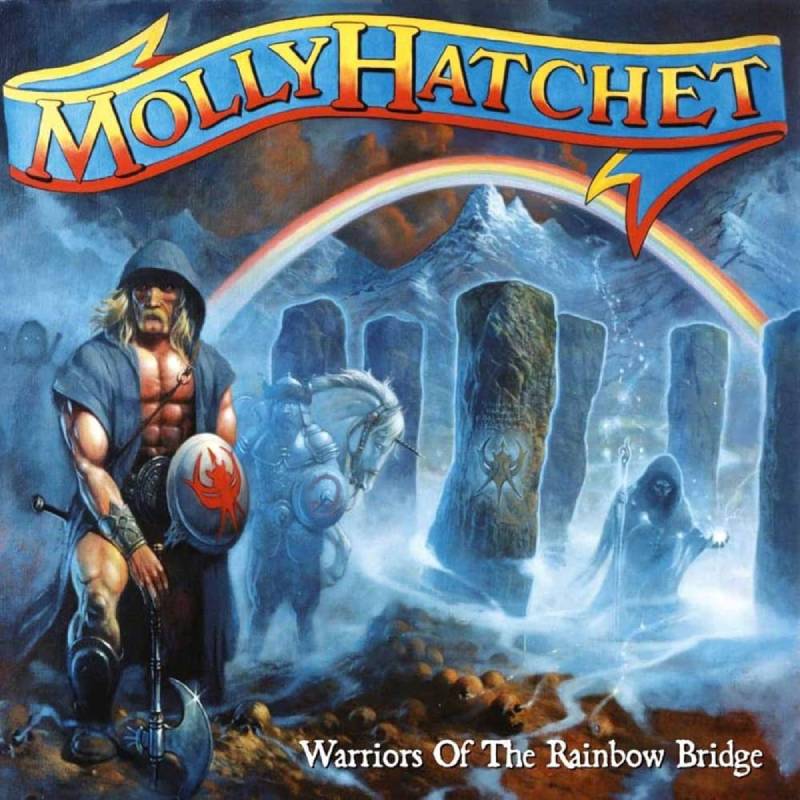
The Artist Behind the Cover
Paul Raymond Gregory once more. By 2005, he’d become the band’s go-to cover artist, filling the role Frazetta had occupied in the late 1970s.
Visual Breakdown
The title references Norse mythology, and Gregory’s painting reflects that. Warrior figures, a bridge motif, and a sense of passage or transition. The composition has more color range than Silent Reign of Heroes. Cooler blues and silvers mix with the expected warm reds.
Gregory packed more environmental detail into this cover than any previous Molly Hatchet artwork. It’s almost a landscape painting with figures rather than a figure painting with a background.
Why This Cover Stands Out
This album dropped just months after original vocalist Danny Joe Brown died in March 2005 at age 53. Dave Hlubek had rejoined the band earlier that year, making it the first record with an original member back in the fold.
The cover carries a weight to it. Whether intentional or not, the “rainbow bridge” concept (in Norse mythology, the path between the living world and the afterlife) took on deeper meaning given the circumstances.
Cultural Impact and Legacy
Released on SPV/Steamhammer, this record continued Molly Hatchet’s stronger following in Europe versus the US. Gregory’s cover helped position the band alongside other acts on the label that valued high-quality painted album cover art.
It remains one of the more emotionally resonant covers in the discography, given the context of Danny Joe Brown’s passing and Hlubek’s return.
Where You’ve Seen It Before
SPV Records catalogs. Combined reissues (Kingdom of XII/Warriors of the Rainbow Bridge was released as a two-disc package in 2008). Paul Raymond Gregory’s signed print collections. And of course, any “complete Molly Hatchet discography” feature that covers the band’s four-decade career from Jacksonville, Florida to the present day.
FAQ on Molly Hatchet Album Covers
Who painted the original Molly Hatchet album covers?
Frank Frazetta painted the first three covers (1978-1980). Boris Vallejo did Take No Prisoners in 1981. Ezra Tucker handled the mid-80s releases. Paul Raymond Gregory took over starting with Devil’s Canyon in 1996.
What is the painting on the first Molly Hatchet album?
It’s “Death Dealer,” an oil painting Frank Frazetta created in 1973. It shows a mounted warrior in dark armor holding a bloody axe. The image became the band’s signature and one of the most recognized pieces of fantasy art ever made.
How much did the Flirtin’ with Disaster cover art sell for?
Frazetta’s “Dark Kingdom” painting sold for $6 million at Heritage Auctions in 2023. That set the all-time record for fantasy art, beating his own previous record of $5.4 million for “Egyptian Queen.”
Why did Molly Hatchet use fantasy art on their album covers?
The Jacksonville, Florida southern rock band wanted artwork that felt aggressive and larger than life. Licensing Frazetta’s existing paintings gave their Epic Records debut a visual identity that set them apart from every other band in the genre.
Which Molly Hatchet album cover does not feature fantasy art?
No Guts… No Glory (1983). Photographer Bob Seidemann shot the band in western outfits at Six Gun Territory, a theme park near Ocala, Florida. It’s the only studio album that broke from the painted warrior theme.
What is the difference between the Frazetta and Vallejo covers?
Frazetta’s work is rawer, with loose brushwork and darker tones. Boris Vallejo’s style on Take No Prisoners is smoother, more polished, and nearly photorealistic. Vallejo also painted the actual band members as fantasy warriors.
Who owns the original Molly Hatchet cover paintings?
They’ve changed hands over the years through private sales and auctions. Kirk Hammett of Metallica owned the “Conan the Conqueror” painting from Beatin’ the Odds. Heritage Auctions has handled several Frazetta originals.
Are Molly Hatchet album covers available as prints or posters?
Yes. Paul Raymond Gregory sells signed limited edition prints of his covers. Vintage promotional posters from the Frazetta era turn up on eBay and Etsy. Reissued vinyl records also reproduce the original artwork at full 12-inch sleeve size.
How many artists have created Molly Hatchet album covers?
At least five. Frank Frazetta, Boris Vallejo, Ezra Tucker, Bob Seidemann (photography), and Paul Raymond Gregory are the main contributors. Gregory has done the most covers overall, starting in 1996 with seven total.
Did the album cover art influence Molly Hatchet’s popularity?
Absolutely. Fans have said for decades that Frazetta’s Death Dealer painting on the debut made them pick up the vinyl before hearing a single note. The fantasy artwork gave a southern rock band the visual identity of a heavy metal act.
Conclusion
Molly Hatchet album covers did something no other southern rock band managed. They built a visual legacy that rivaled the music itself.
From Frank Frazetta’s oil paintings on the first three Epic Records releases to Paul Raymond Gregory’s detailed fantasy illustrations in the late 90s and 2000s, every LP sleeve told its own story. Boris Vallejo’s barbarian warrior portraits, Ezra Tucker’s detailed commercial work, even that one cowboy photo shoot at Six Gun Territory. Each cover added a chapter.
The original Dark Kingdom painting fetching $6 million at auction says it all. These weren’t just record sleeves. They were gallery-worthy pieces of fantasy art that happened to wrap around vinyl from a band out of Jacksonville, Florida.
That combination of hard rock energy and sword-and-sorcery imagery created something lasting. Something collectors still chase decades later.

Renowned for his expertise in logo design and visual branding, Bogdan has developed a multitude of logos for various clients.
His skills extend to creating posters, vector illustrations, business cards, and brochures. Additionally, Bogdan's UI kits were featured on marketplaces like Visual Hierarchy and UI8.
He also wrote in the past years on sites like Design Your Way, WebDesignerDepot, WPDean, Designmodo, Speckyboy, Slider Revolution, and more.
- Best Visual Regression Testing Tools for Web and App Design in 2026 - 13 October 2026
- Jujutsu Kaisen Font Generator - 12 October 2026
- The Windsurf Logo History, Colors, Font, And Meaning - 10 October 2026

Bogdan Sandu is a seasoned designer who has been designing websites since 2008. Renowned for his expertise in logo design and visual branding, Bogdan has developed a multitude of logos for various clients. His skills extend to creating posters, vector illustrations, business cards, and brochures. Additionally, Bogdan's UI kits were featured on marketplaces like Visual Hierarchy and UI8. He also wrote in the past years on sites like Design Your Way, WebDesignerDepot, WPDean, Designmodo, Speckyboy, Slider Revolution, and more.
You Might Also Like


