In August 1982 a seven-story billboard on Broadway stopped traffic. It showed one man, one whitewashed wall and a pair of white briefs.
Calvin Klein ads have run on that arithmetic for 46 years: one body, no background, four words of copy.
Richard Avedon, Bruce Weber, Herb Ritts, Steven Meisel and Mert Alas all shot for the label. The composition barely moved between them.
This page covers the campaigns by name, with the photographer, year and market behind each one. You will also get:
- The layout, typeface and palette rules behind the print work
- How the TV commercials differ from the billboard imagery
- What the archive teaches about minimalist advertising design
Calvin Klein advertising spans 46 years, 6 lead photographers and 9 flagship campaigns, from the 1980 Brooke Shields denim spots to the 2025 Bad Bunny underwear series. The work runs on cropped bodies, black-and-white film and a waistband logo that doubles as the signature.
This page covers the campaigns by name, with the photographer, year and market behind each one, plus the composition, typeface and copy choices that hold them together.
Calvin Klein Advertising at a Glance
Calvin Klein has advertised since the label launched in 1968, working mainly with Richard Avedon, Bruce Weber, Herb Ritts, Steven Meisel and Mert Alas. Its best-known campaigns are the 1980 jeans ads, the 1982 Tom Hintnaus underwear billboard and CK One.
| Attribute | Value |
|---|---|
| First major campaign | Calvin Klein Jeans with Brooke Shields, November 1980 |
| Lead photographers | Richard Avedon (1979-1985), Bruce Weber (1979-1991), Herb Ritts (1992), Steven Meisel (1994-1995), Mert Alas (2015-present) |
| Best-known taglines | “Nothing comes between me and my Calvins” (1980), “I in #mycalvins” (2016), “Calvins or nothing” (2023) |
| Primary media | Print, TV, billboards, city buses, Instagram, TikTok |
| Visual signature | Black-and-white photography, cropped torso, all-caps sans-serif logotype |
| Recurring copy device | Short declarative line, first person, no product description |
| Owner | PVH Corp (since 2003) |
| Fragrance licensee | Coty Inc. |
Which Calvin Klein Ad Campaigns Are the Most Famous?
Nine campaigns carry the brand’s reputation: Brooke Shields jeans (1980), Tom Hintnaus underwear (1982), Obsession (1985), Eternity (1988), Marky Mark and Kate Moss (1992), CK One (1994), the withdrawn 1995 jeans series, #mycalvins (2014) and the celebrity ambassador era that began in 2023.
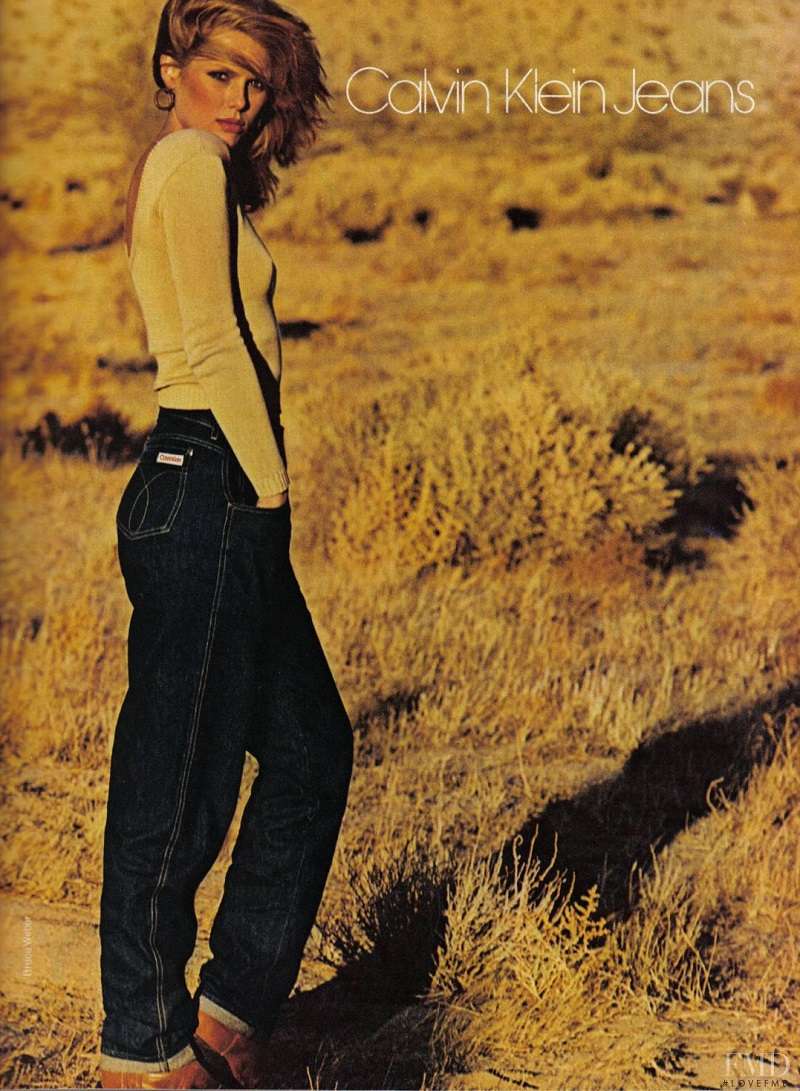
Calvin Klein Jeans With Brooke Shields (1980-1981)

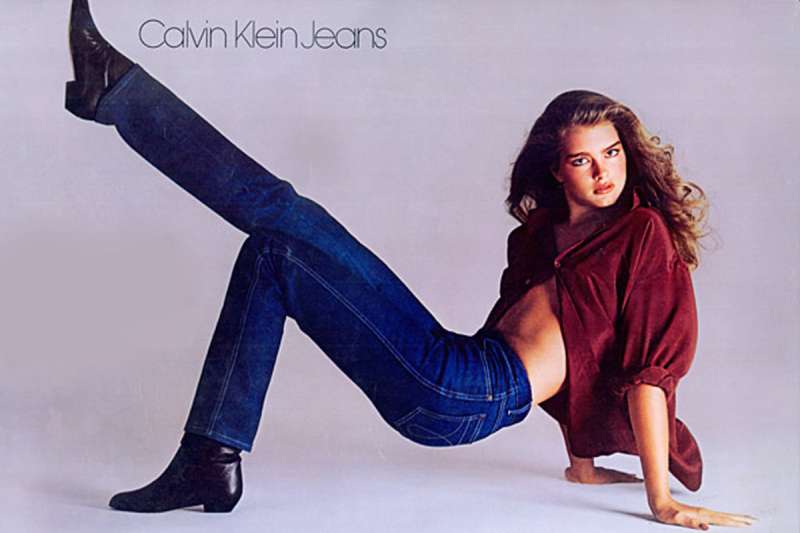
The campaign debuted on November 19, 1980, shot and directed by Richard Avedon with copy by Doon Arbus. Shields, then 15, delivered the line “You want to know what comes between me and my Calvins? Nothing.”
Layout: full-bleed body on plain seamless, the model turned into a diagonal, the logotype dropped small at the base. Nothing else on the page. The emphasis sits entirely on the figure, and the copy runs as one unbroken sentence rather than a headline plus body.
ABC and CBS pulled the spots. Shields told Vogue in 2021 that the backlash rebounded on itself and the campaign sold.
Calvin Klein Underwear With Tom Hintnaus (1982-1984)

Bloomingdale’s sold $65,000 of briefs in two weeks, with first-year sales projected at $4 million, according to WWD. Women’s underwear followed with 80,000 pairs in 90 days.
Klein spent $500,000 on the launch and hired Bruce Weber. Olympic pole vaulter Tom Hintnaus was photographed in Santorini against a whitewashed wall, shot from a low angle, and blown up on a seven-story Broadway billboard.
Why the low angle works: it puts the horizon below the frame, so the figure reads as monument rather than model. The white wall and the white briefs share a value, which forces the eye to the only warm mass in the composition.
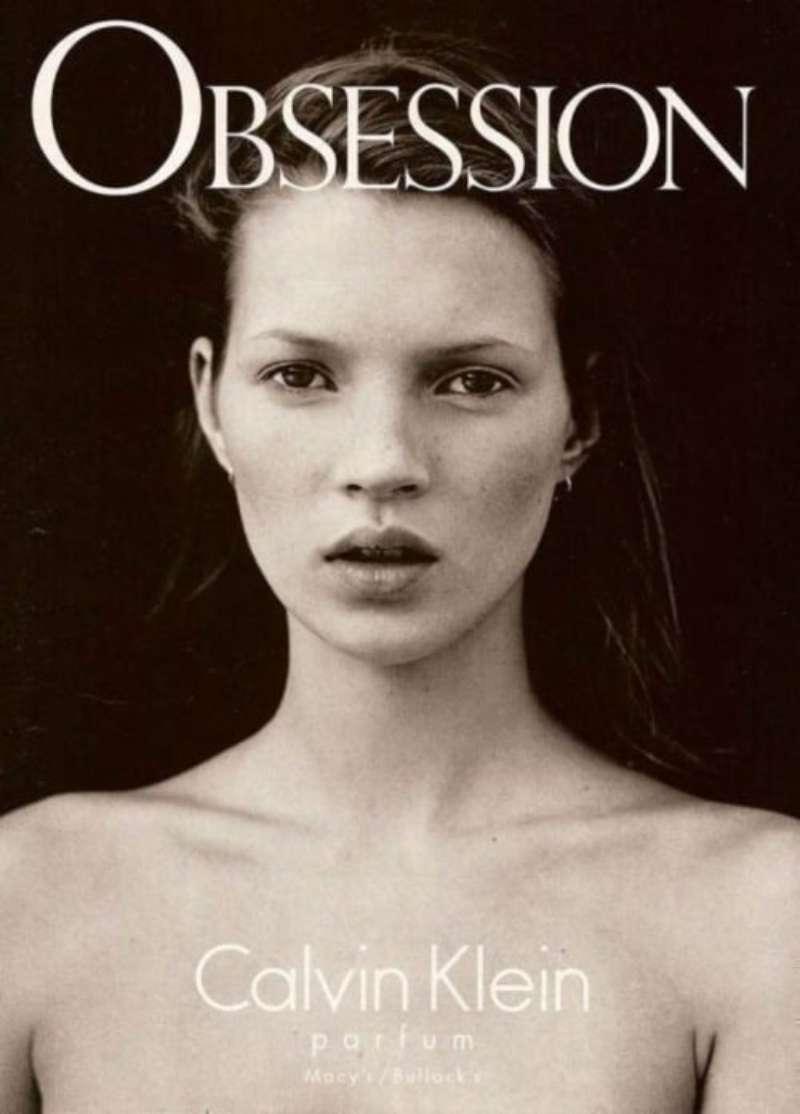
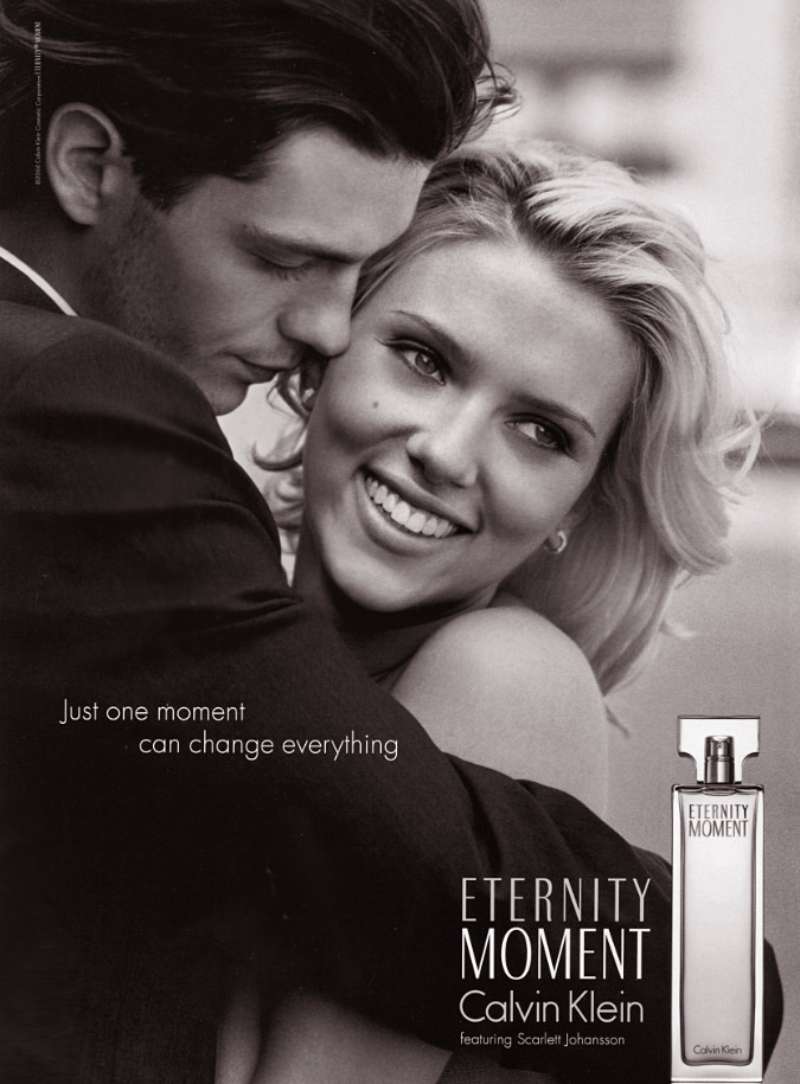
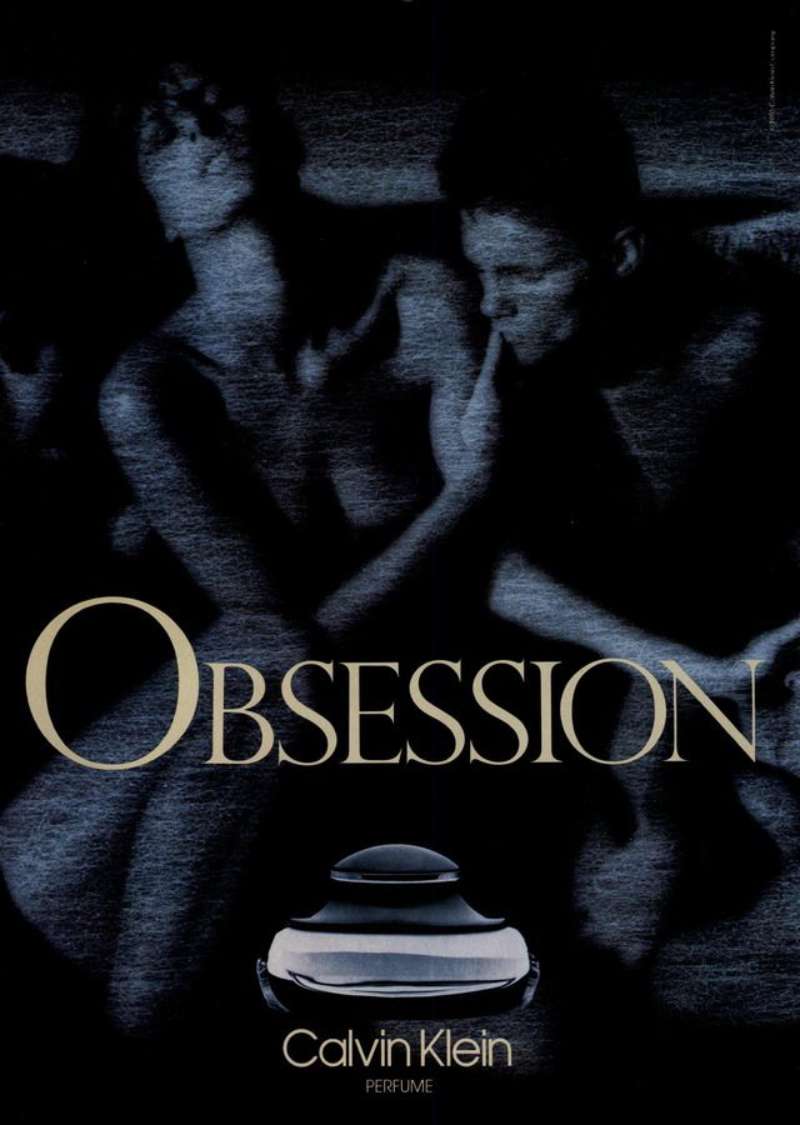
Obsession and Eternity Fragrance Ads (1985-1990)

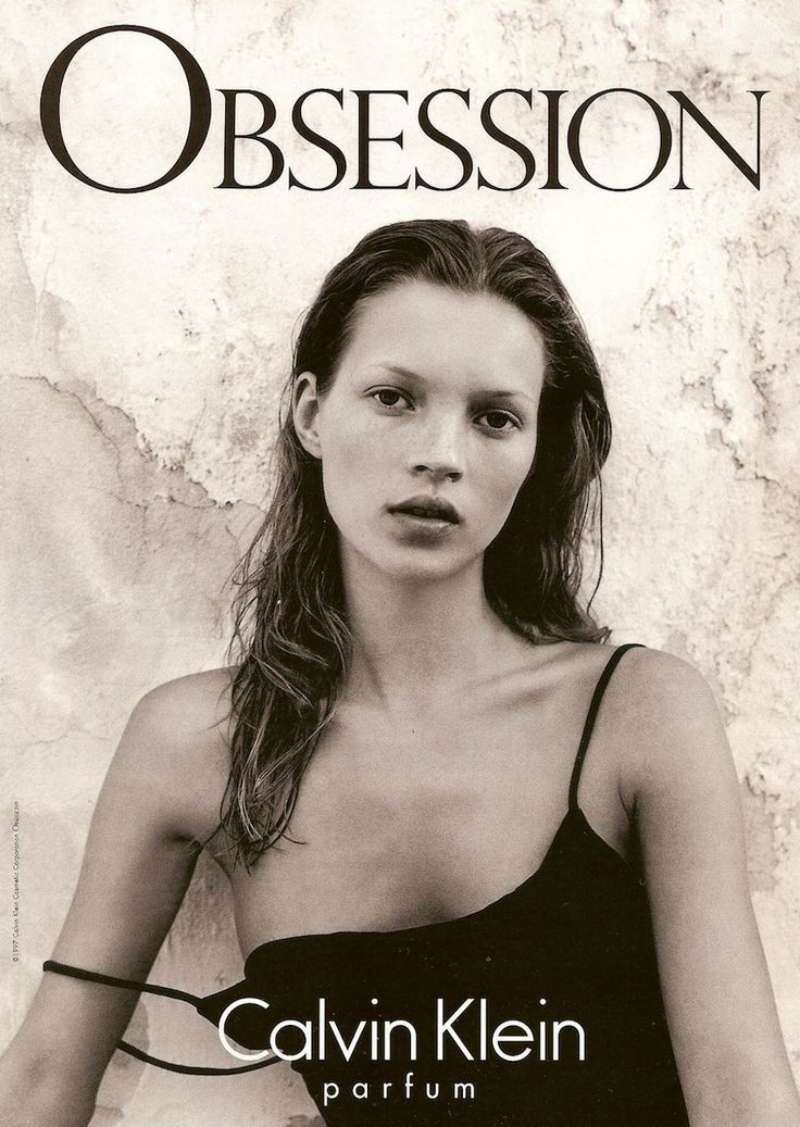
Obsession (1985): Weber shot nudes in tangled group compositions, most famously the 1989 image of a couple on a swing.
Eternity (1988): Christy Turlington at 19, domestic settings, soft grain, wedding-adjacent styling.
Spend and return: Calvin Klein put $18 million behind the Eternity launch, and the fragrance took $35 million in its first year, overtaking Obsession as the house’s highest grossing scent (WWD).
The two campaigns split the brand’s emotional register in half. Obsession sold appetite. Eternity sold permanence, and it did so with warmer hue ranges and softer edges.
Marky Mark and Kate Moss Underwear Ads (1992-1993)

Herb Ritts shot it. That single black-and-white frame of Kate Moss and Mark Wahlberg did more for both careers than anything either had done before.
Investor David Geffen suggested Wahlberg after seeing him wear the brand’s underwear on a Rolling Stone cover. Moss was 18. She has since described the shoot as an experience she remembers badly, telling BBC Desert Island Discs in 2022 that she felt vulnerable on set.
The frame crops at mid-thigh and mid-chest. The waistband logotype sits almost exactly on the lower third line, which is the only piece of type in the image.
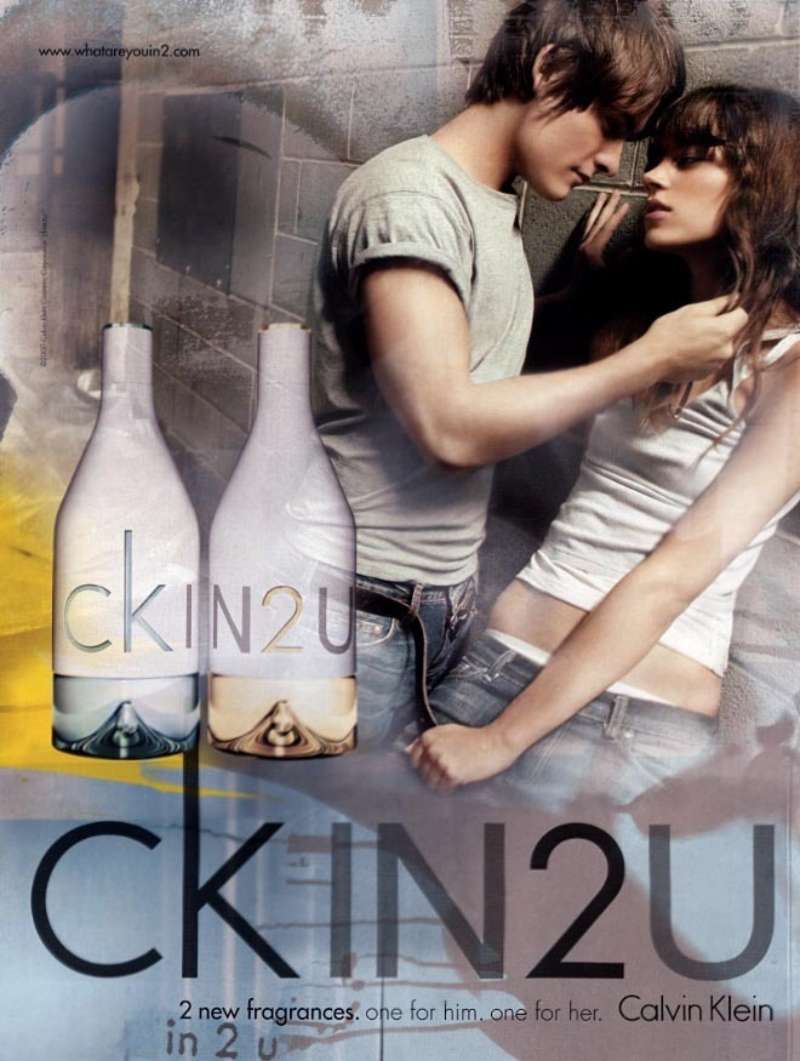
CK One (1994-1996)
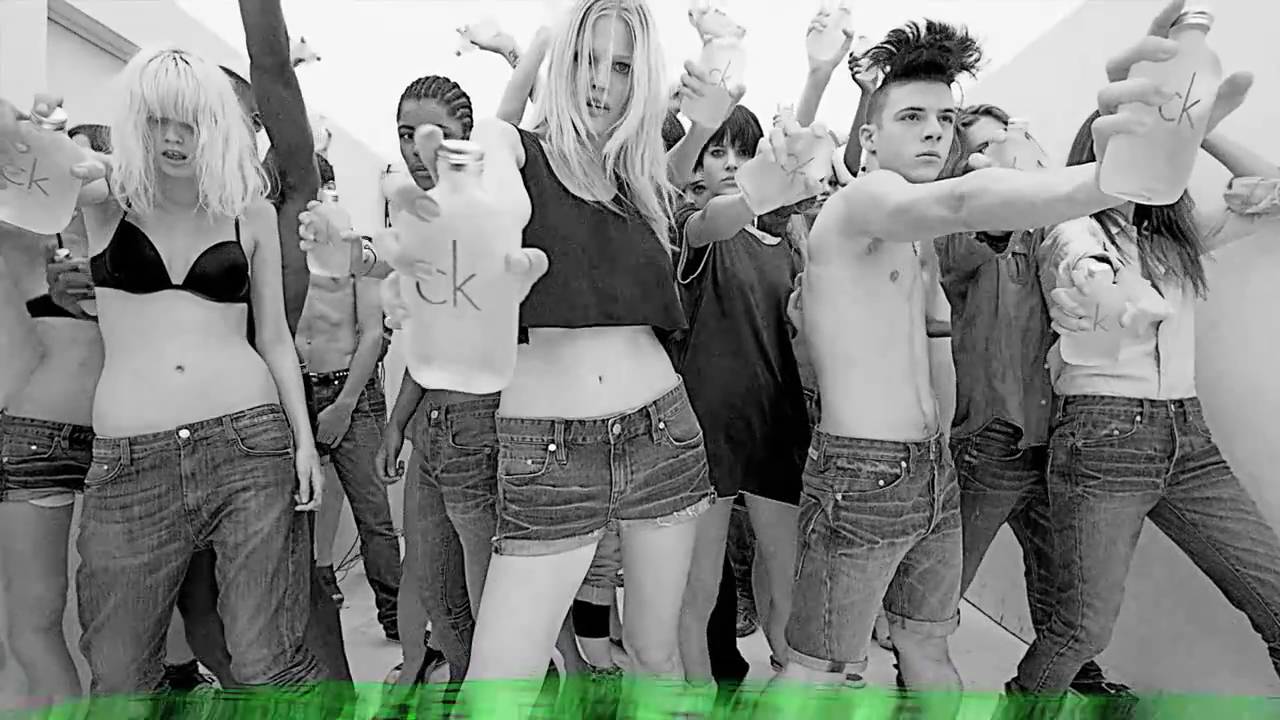
Steven Meisel shot the launch as a group portrait on a blown-out white cyclorama: Kate Moss, Stella Tennant, Jenny Shimizu and a street-cast crowd, no styling gloss, tagline “A fragrance for a man or a woman.”
Fabien Baron art directed and designed the aluminium flask bottle with a twist cap, borrowed deliberately from a soda bottle. Glenn O’Brien wrote the overlapping dialogue for the spots.
The New York Times reported peak sales of 20 bottles per minute. Dazed put the rate at roughly 15 a minute as late as 2019, 25 years after launch.
The Withdrawn 1995 Jeans Campaign
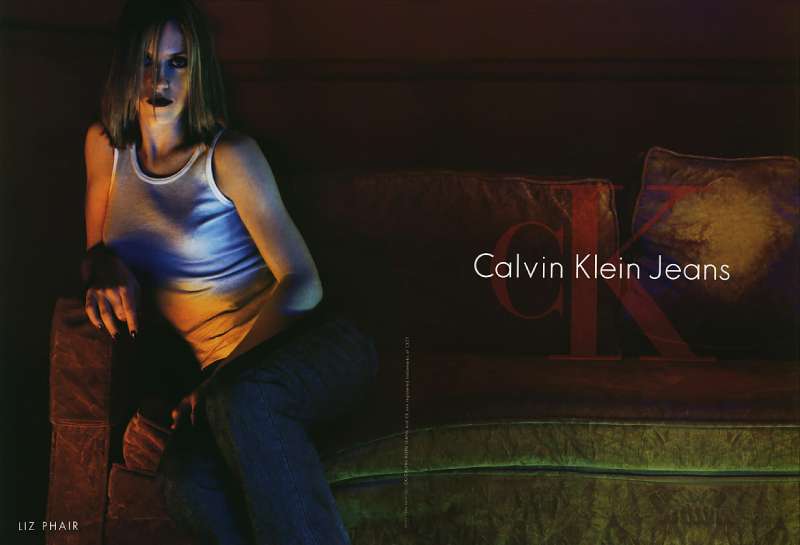
Meisel photographed models in a set built to look like a wood-panelled basement, with off-camera direction audible in the TV spots. The campaign ran across print, television, billboards and city buses.
Timeline:
- Early August 1995: campaign launches
- August 28, 1995: pulled, 3.5 weeks in, the first time Klein withdrew work under pressure
- Justice Department’s Child Exploitation and Obscenity Section opens an inquiry; it closes once the company documents that every model was an adult
Dayton Hudson, Macy’s and Bloomingdale’s all moved against it. President Bill Clinton criticised the campaign publicly.
#mycalvins (2014-2016)

Calvin Klein picked up 3.6 million additional social followers across platforms after the Justin Bieber campaign, WWD reported.
Tyrone Lebon shot the spring 2016 global campaign, working alongside Harley Weir, Jamie Hawkesworth, Tobin Yelland and David Sims. The tagline turned into a fill-in-the-blank: “I in #mycalvins.” Bieber got “glow.” Fetty Wap got “I am a star.”
It was the first campaign to present Collection, Platinum, Jeans and Underwear under one visual system, and the first to hand the layout to the audience. Type sat directly on the image, in the same weight as the logotype.
American Classics Under Raf Simons (2017-2018)
Willy Vanderperre photographed the spring/summer 2017 campaign inside the Andy Warhol Museum in Pittsburgh and the Rubell Family Collection in Miami, placing models in front of works by Warhol, Richard Prince, Sterling Ruby and Dan Flavin.
Peter Saville redrew the logotype in the same period. He set it in all caps, tightened the tracking, and dropped the lowercase “ck” lockup that had sat above the name.
The art references gave the campaign an editorial alibi. It also marked the only stretch when Calvin Klein advertising leaned on borrowed cultural authority rather than the body.
Celebrity Ambassador Campaigns (2023-2025)
Launchmetrics measured media impact value across the brand’s 2024 roster:
| Talent | Campaign | MIV in first 48 hours |
|---|---|---|
| Jung Kook | CK Jeans, fall 2023 | $13.4 million |
| Jeremy Allen White | Underwear, spring 2024 | $12.7 million |
| Jennie Kim | Spring 2024 | $8.6 million |
| FKA twigs | Spring 2023 | $5.2 million |
PVH put the total media impact value of the January 2024 White campaign at $74 million. Brandwatch data commissioned by The Business of Fashion recorded brand mentions running 567% above average and 100,000 new TikTok followers.
Q1 2024 was the first quarter since 2022 in which Calvin Klein North America posted a revenue increase.
How Do Calvin Klein Print Ads Work Visually?
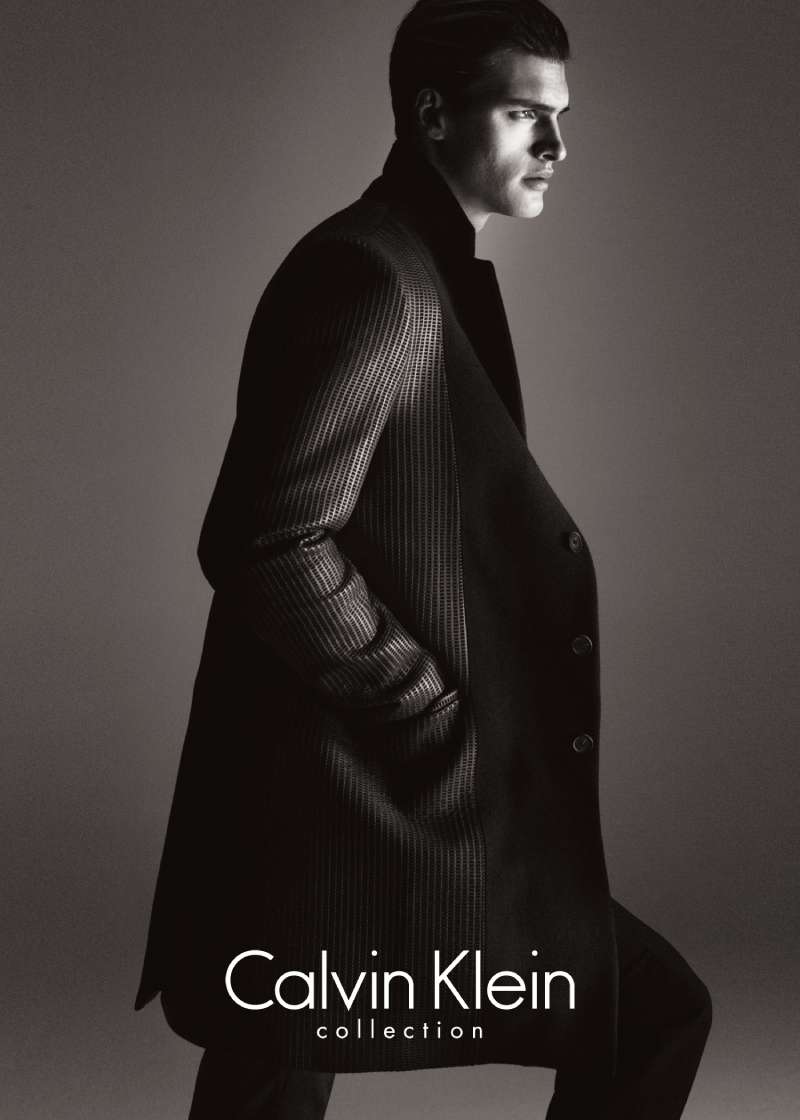
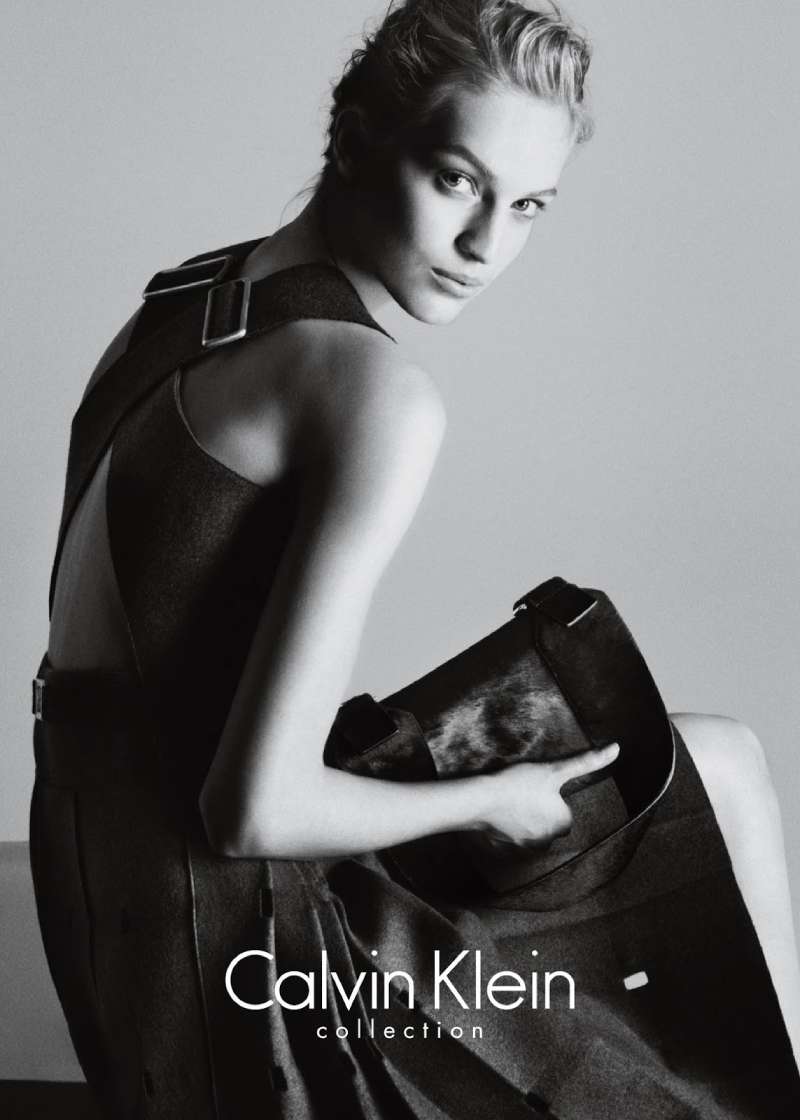
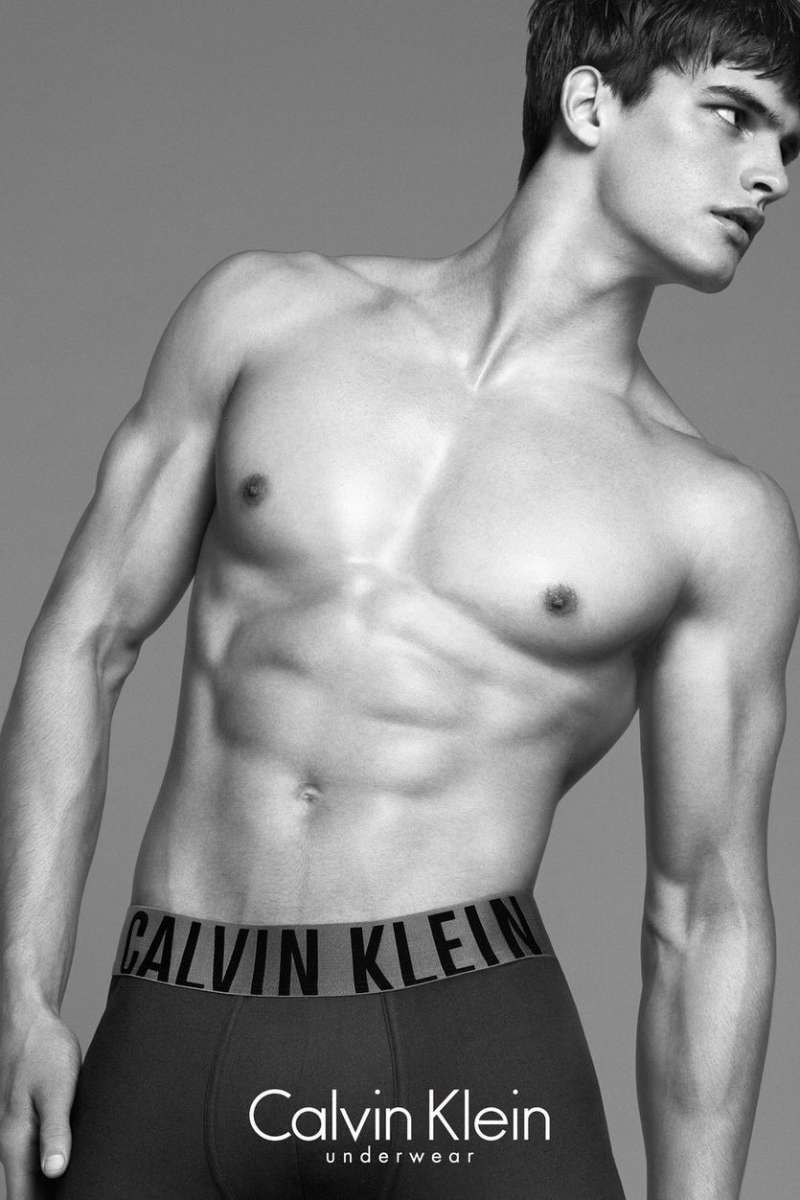
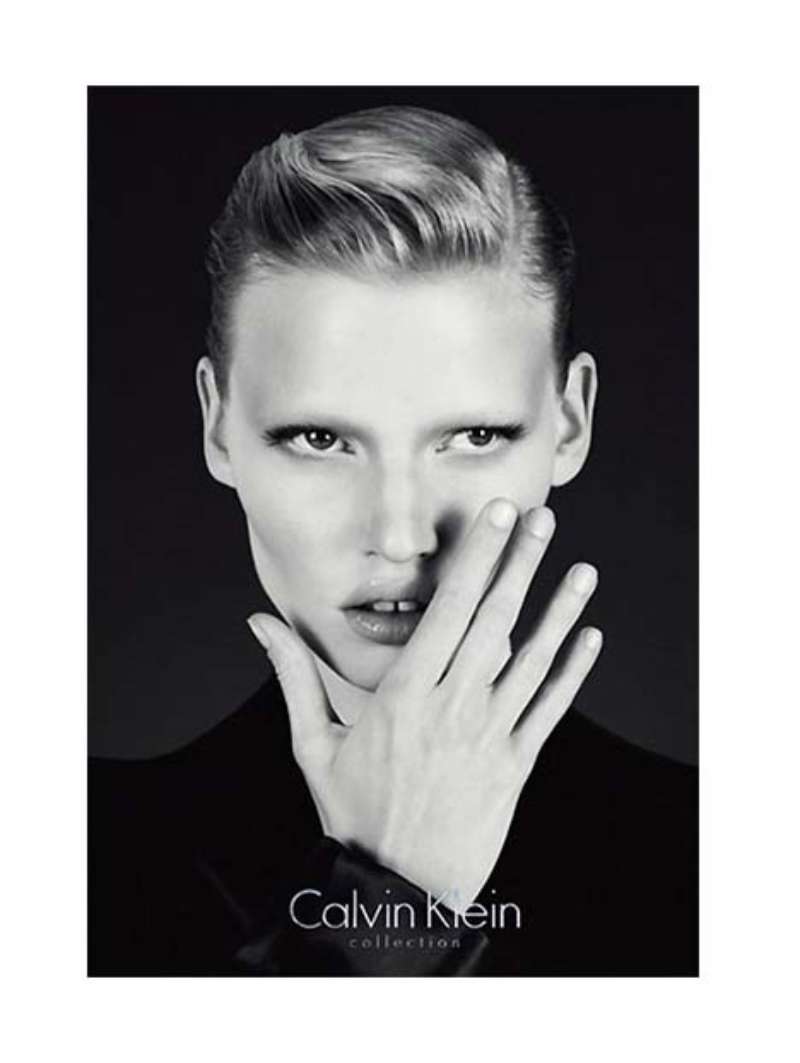
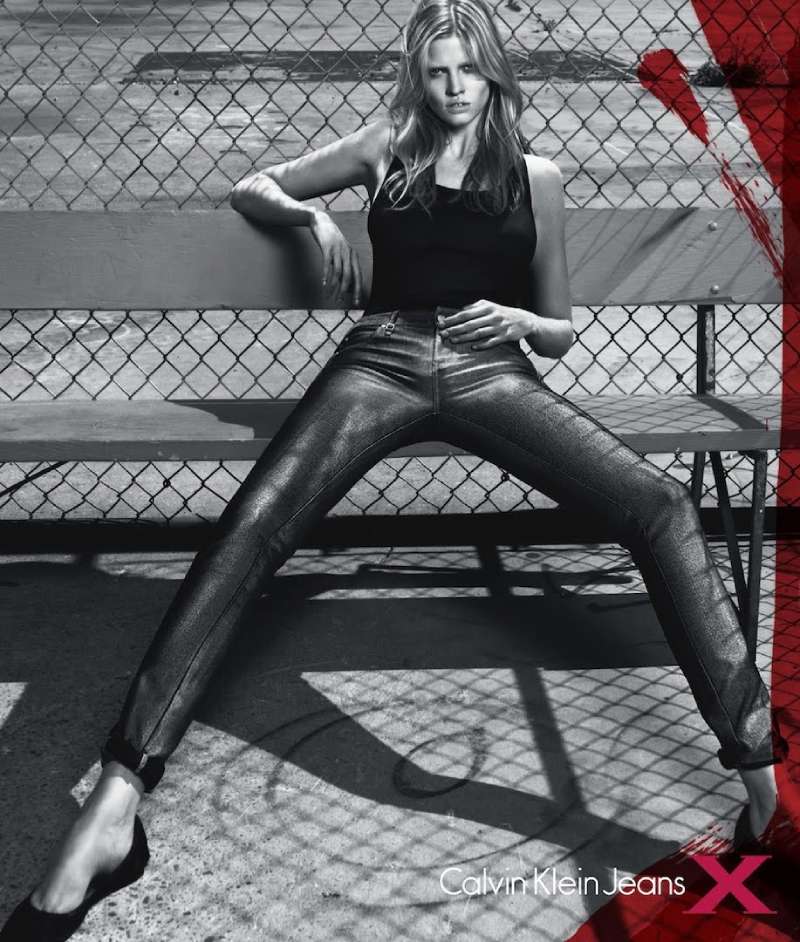
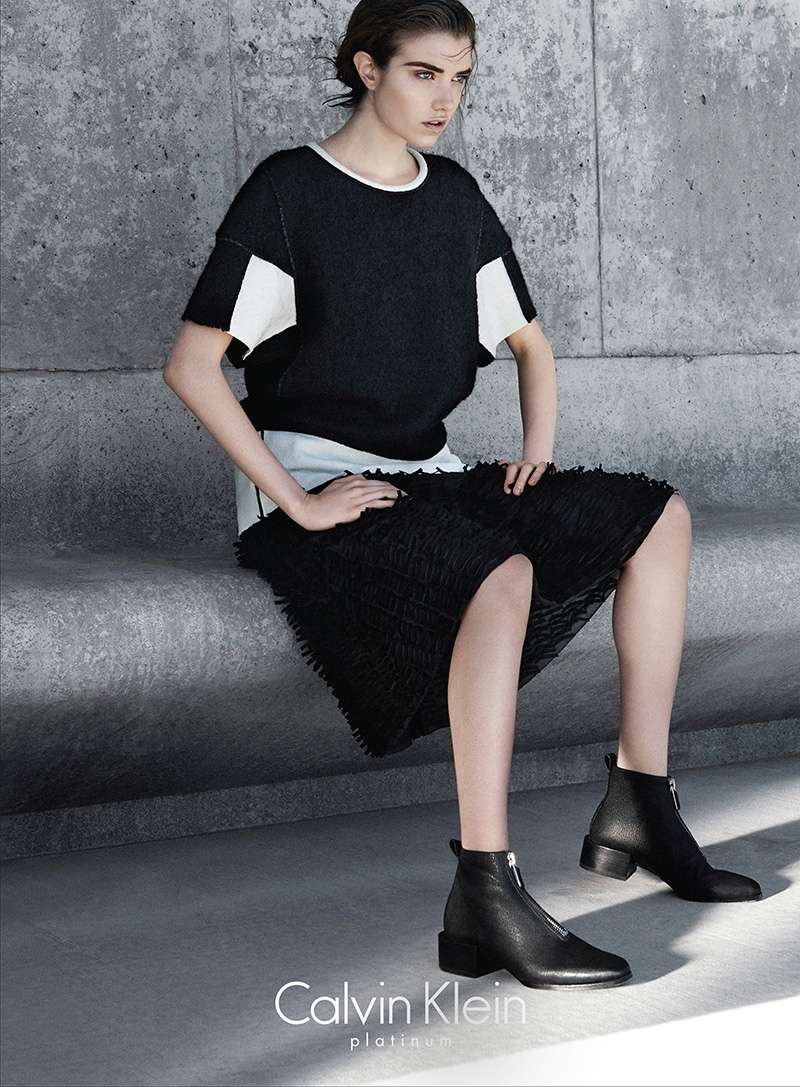
Calvin Klein print ads use a single figure on a neutral ground, black-and-white film, a crop that removes context, and one line of type. The logotype sits small and low. No product callouts, no price, no secondary image, no border.
Composition and crop
The focal point is almost always a body part rather than a face, and the crop cuts through the limbs so the frame edge does structural work.
Removing the background removes scale cues. A torso on seamless paper could be six inches or six feet, which is exactly why the images survive the jump from a magazine page to a 40-foot billboard without redrawing.
Typography
The house sets everything in a light sans-serif font, one weight, generous letterspacing, all caps since 2017.
There is no typographic hierarchy in the conventional sense. Headline and logotype are frequently the same size and weight, which flattens the page and makes the photograph the only thing carrying rank. That choice is unusual, and most brands cannot get away with it.
Color and tone
Monochrome colors do most of the work. Grayscale removes the wardrobe from the equation, since a white cotton brief and bare skin separate on tone alone.
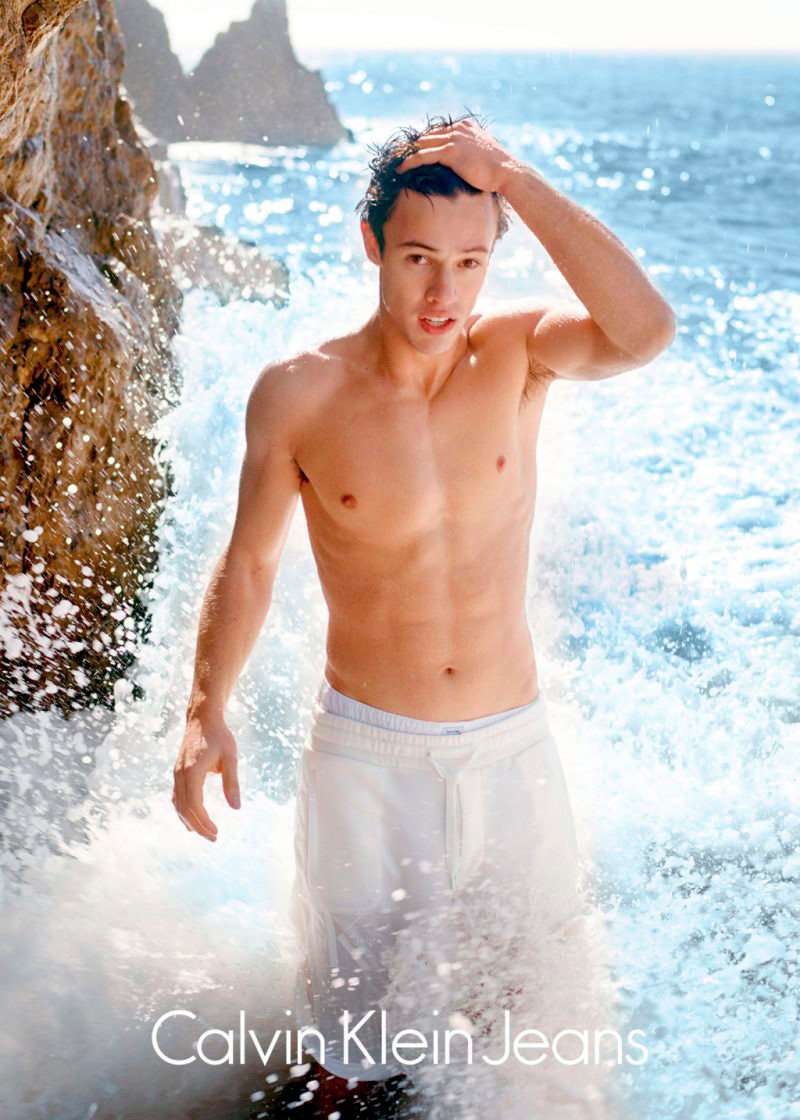
When color appears, it is desaturated and warm. The 2024 White campaign and the 2025 Bad Bunny series both sit in a narrow tonal band, and the contrast is pushed at the shadow end rather than the highlight end.
The waistband as identity
The elastic band is the only place the logo appears in most underwear ads. It is repeated, wrapped, and partially obscured, which is a rare case of a mark gaining recognition by being cropped rather than protected.
How Do Calvin Klein TV Commercials Differ From Its Print Ads?
Calvin Klein TV spots add voice, and voice is what generated every regulatory problem the brand has had. Print carried the image. Television carried the line, the whisper, the off-camera question. The controversies of 1980 and 1995 were both audio problems, not photographic ones.
Calvin Klein Jeans, 1980, directed by Richard Avedon
Thirty seconds, static camera, Shields seated on the floor in a buttoned silk shirt and jeans. The camera moves up the body to the face before the line lands. Avedon directed; Doon Arbus wrote.
CK One, 1994, directed by Steven Meisel
Black-and-white, one white room, a rotating cast talking over each other in several languages. The script by Glenn O’Brien reads as a list of adjectives rather than a pitch. Product appears in the last four seconds.
Calvin Klein Fall 2024, directed by Mert Alas
Jeremy Allen White poolside in Los Angeles, cut to “Crimson and Clover” by The Shacks, styled by Emmanuelle Alt. The storytelling is deliberately eventless: a man, a dog, a swimming pool, no arc. The brand’s first TikTok cut passed 4.5 million views.
How Has Calvin Klein Advertising Evolved Since 1980?
Calvin Klein advertising has moved through four strategic phases in 46 years: designer denim (1980-1984), fragrance narrative (1985-1993), youth-culture casting (1994-1999) and platform-native celebrity (2014-present). The visual grammar barely changed. The distribution changed completely.
| Decade | Strategic shift | Representative campaign |
|---|---|---|
| 1980s | Turn commodity goods into designer categories | Tom Hintnaus underwear, 1982 |
| 1990s | Cast unknowns, sell attitude over product | CK One, 1994 |
| 2000s | Licensed expansion, softer imagery, less risk | Underwear print with Eva Mendes, 2008 |
| 2010s | Hand the campaign to the audience | “#mycalvins,” 2014-2016 |
| 2020s | Buy attention through global ambassadors | Jeremy Allen White, January 2024 |
One constant across all five decades: the brand has never run a comparative claim, a price point or a product feature in its flagship advertising.
Which Agencies Created Calvin Klein Advertising?
Calvin Klein has run its advertising in-house for most of its history. CRK Advertising, the brand’s own agency, produced the 1995 jeans campaign and handled the fallout when retailers pushed back. That structure explains both the consistency and the absence of a traditional agency credit on the work.
Fabien Baron art directed CK One in 1994 through Baron and Baron, and designed the bottle. He also recommended Steven Meisel for the campaign.
Peter Saville redesigned the Calvin Klein logotype in February 2017, working with chief creative officer Raf Simons. Saville came from Factory Records sleeve design, not fashion.
Mert Alas has shot and directed the underwear and denim campaigns since 2015, with Emmanuelle Alt styling the 2024 work.
The in-house model means the visual identity and the campaign photography are decided by the same people, which is why the brand typography and the image style have never drifted apart the way they do at houses that rotate agencies.
What Can Designers Learn From Calvin Klein Ads?
Six rules carry across the entire archive, and every one of them is subtractive. The brand’s whole method is deciding what to leave out of the frame.
- Crop until the background disappears, so the image scales from page to billboard without a redraw
- Set the logotype at the same weight as the headline and let the photograph carry the rank
- Limit the palette to grayscale plus skin, and push contrast in the shadows
- Write one declarative line in first person, and cut every product descriptor
- Place the mark low and small, near the lower third, never centred
- Build the layout on a single figure and treat white space as the second subject
Anyone working in minimalist design will recognise the discipline here. What is harder to copy is the nerve required to ship a full page with four words on it.
How Do Calvin Klein Ads Compare to Ralph Lauren and Balenciaga Ads?
Calvin Klein and Ralph Lauren built American fashion advertising in the same decade and went opposite directions. Ralph Lauren ads add context: a house, a horse, a family, a whole set dressed to imply lineage. Calvin Klein removes context until only a body and a logotype remain.
The two approaches produce different failure modes. Lauren’s work risks looking like a catalogue for a life nobody lives. Klein’s risks looking like nothing at all, which is the charge critics made about the 2000s underwear print.
Balenciaga ads sit closer to Calvin Klein in composition, flat backgrounds and cropped figures, but use deliberate ugliness and hard flash where Klein uses soft natural light. Dior ads and Gucci ads both build sets and casts; neither has ever run a campaign as visually bare as the 1982 Hintnaus billboard.
The regulatory record separates them too. The UK’s Advertising Standards Authority banned the FKA twigs poster in January 2024, then partially reversed itself that March, the first time it has withdrawn a ruling made on objectification grounds.
What Makes Calvin Klein Advertising Work?
The method has not changed in 46 years: put one body on a blank ground, crop it hard, add four words, and set the logotype small.
Everything else is variable. Photographers change, talent changes, the media plan moves from magazine spreads to billboards to TikTok. The composition does not.
That consistency is why a 1982 briefs image and a 2024 underwear image read as the same brand without sharing a photographer, a decade or a distribution channel.
The cost is real. Work this bare has no product story to fall back on when it misfires, which is why the failures are regulatory rather than commercial.
For anyone practising advertising design, the transferable lesson is not the nudity. It is the refusal to add a second element to the page.
Calvin Klein Ads Examples









FAQ on Calvin Klein Ads
When did Calvin Klein start advertising?
The label launched in 1968 and advertised in print through the 1970s. Klein resisted television until 1980, when the first Calvin Klein Jeans commercials aired and turned a denim line into a national argument.
What is the most famous Calvin Klein tagline?
“Nothing comes between me and my Calvins.” Doon Arbus wrote it for the 1980 denim campaign. Later lines follow the same rule: first person, present tense, no mention of the product’s features.
Who owns Calvin Klein now?
PVH Corp has owned the brand since 2003 and reports it as two segments, North America and International. Coty Inc. holds the fragrance licence, which covers Obsession, Eternity and CK One.
Why are Calvin Klein ads controversial?
Nudity, casting and audio. The campaigns place bare bodies in untargeted media like billboards and buses, and regulators have repeatedly judged that placement rather than the images themselves.
Which photographer shot the most Calvin Klein campaigns?
Bruce Weber, who worked closely with the brand from 1979 to 1991 across denim, underwear and Obsession. Mert Alas has held the equivalent position since 2015, often with Marcus Piggott.
Who is the current face of Calvin Klein?
There is no single face. Bad Bunny fronted spring 2025, Rosalia the Icon Cotton Modal range, and Jung Kook has been a global ambassador since 2023, alongside athletes Jalen Green and Trent Alexander-Arnold.
Did Calvin Klein invent designer underwear advertising?
Effectively, yes. Before 1982, men’s underwear ads were clinical or athletic. Klein spent $500,000 on Bruce Weber and a pole vaulter, and the category has never gone back to product diagrams.
Which Calvin Klein fragrance campaign sold best?
Eternity. An $18 million launch in 1988 returned $35 million in the first year, overtaking Obsession. CK One later hit a reported peak of 20 bottles a minute.
Where is the famous Calvin Klein billboard?
Two locations carry the history. The 1982 Tom Hintnaus image ran on a seven-story board on Broadway at Times Square. The current site sits on Houston Street in SoHo, where the 2024 underwear campaign appeared.
What does “Calvins or nothing” mean?
It is the campaign concept introduced in 2022 and continued through spring 2023, shot by Mert Alas and Marcus Piggott. The line rewrites the 1980 tagline as a choice rather than a boast.
Conclusion
Calvin Klein ads reward close study because the archive is so consistent. Nearly six decades, one composition.
The recurring devices are easy to list and hard to execute: a hard crop, a grayscale palette, a waistband logo doing the job of a wordmark, and copy short enough to read from a moving bus.
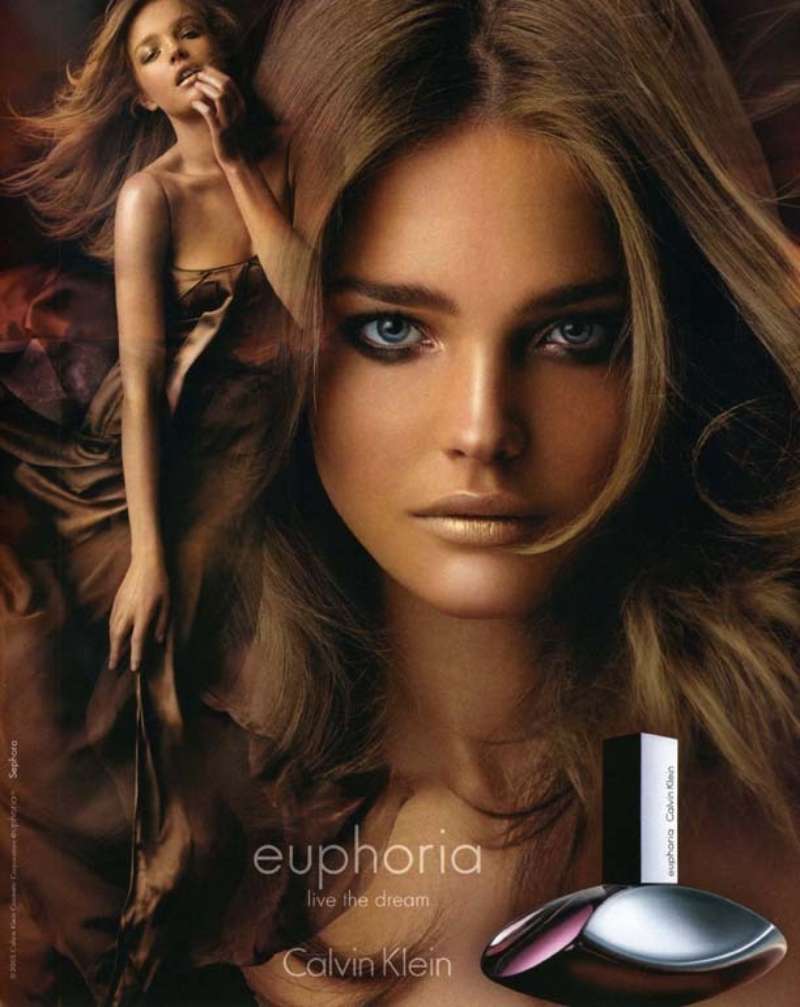
Art direction carried the fragrance campaigns as much as the underwear ones. Fabien Baron’s aluminium bottle for CK One is still the reference point for that.
What changed is the scoreboard. The 1982 launch was measured in briefs sold at Bloomingdale’s, the 2024 work in media impact value within 48 hours.
Same picture. Different metric.
Steal the discipline, not the nudity.

Renowned for his expertise in logo design and visual branding, Bogdan has developed a multitude of logos for various clients.
His skills extend to creating posters, vector illustrations, business cards, and brochures. Additionally, Bogdan's UI kits were featured on marketplaces like Visual Hierarchy and UI8.
He also wrote in the past years on sites like Design Your Way, WebDesignerDepot, WPDean, Designmodo, Speckyboy, Slider Revolution, and more.
- The Windsurf Logo History, Colors, Font, And Meaning - 10 October 2026
- How to Remove Background From Product Photos (No Photoshop) - 10 October 2026
- How Designers can Build a Stronger Online Creative Identity - 9 October 2026

Bogdan Sandu is a seasoned designer who has been designing websites since 2008. Renowned for his expertise in logo design and visual branding, Bogdan has developed a multitude of logos for various clients. His skills extend to creating posters, vector illustrations, business cards, and brochures. Additionally, Bogdan's UI kits were featured on marketplaces like Visual Hierarchy and UI8. He also wrote in the past years on sites like Design Your Way, WebDesignerDepot, WPDean, Designmodo, Speckyboy, Slider Revolution, and more.
You Might Also Like