


Plenty of job boards treat these two titles as if they mean the same thing. They don’t, and most of the difference comes down to where the finished work ends up.
A graphic designer usually reports to marketing or a creative director. Their week goes into logos and packaging, plus whatever the next campaign needs. A visual designer works inside a product or design team. What they hand off is screens and icons, along with the components engineers build the design system from.
Only one of these jobs gets counted by the government. The U.S. Bureau of Labor Statistics counted 197,830 graphic designers working nationally in its May 2025 Occupational Employment and Wage Statistics release. Visual designer roles are still folded into broader digital design categories instead of being tracked as their own occupation.
What Is a Graphic Designer?
Take a message and turn it into something people look at. That’s most of the job, whether the result goes on a business card or a billboard. The output is branded material, for print and for digital.
In practice the work splits into brand identity (logos, color palettes, brand marks) and print collateral like brochures and signage. Marketing assets fill in the rest of the week: social graphics, ads, email templates.
Digital output keeps growing across the industry. Most graphic designers still spend a real chunk of their week on print design, though.
Agency and freelance designers also do a lot of packaging design for consumer brands, which means taking a brand system and making it work on a physical product. It’s harder than it looks. Curved surfaces and mandatory legal copy eat a layout fast.
Research on hiring for both roles found that graphic designers typically report into marketing or creative direction, and brand strategy guides their work more than any product roadmap does.
What Is a Visual Designer?

If you’ve opened an app and thought it looked clean (or cluttered), someone in this role made most of the decisions behind that. Visual designers handle how a website, app, or software product looks and feels on screen.
The job sits much closer to product development than to advertising. Print isn’t really part of it.
Mostly they produce UI screens. Icon sets too, and the visual side of whatever design system the team runs.
What separates a good visual designer from a mediocre one is usually visual hierarchy. Screen space is tight and everything on it competes for attention, so deciding what the eye lands on first is a big part of the skill.
They tend to work next to researchers and engineers, not a marketing department. A lot of listings for the role still ask for web design skills, which makes sense. Websites are still one of the most common things these designers work on.
Graphic Designer vs Visual Designer: Core Differences
Both jobs rest on the same design basics. Where they split hard is the medium and color mode.
| Attribute | Graphic Designer | Visual Designer | Shared Ground |
|---|---|---|---|
| Primary medium | Print and static digital | Screens and interactive products | Digital ads, landing pages |
| Color mode | CMYK for print runs | RGB for screen display | Brand color palette |
| Core output | Brand systems, campaigns | UI screens, design systems | Style guides |
| Reports to | Marketing or creative director | Product or design lead | Creative director (small teams) |
Print uses CMYK color separation, because layers of ink build color differently than light does.
Screens use RGB. Hand a print vendor an RGB file and you’ll usually get a color mismatch back. Bright brand blues are the classic casualty, they come back looking flat and a little dead.
The two meet on branding-heavy digital products. A single landing page might pass through both people’s hands.
Skills Required for Each Role

Graphic Designer Skills
- Layout and composition, for print pieces and digital ones
- Typography and font pairing
- Color theory that holds up in both CMYK and RGB
- Some illustration or photo editing, even if it’s just the basics
Software skills get people hired. The client side is what keeps them employed.
That means working from creative briefs and telling a brand’s story in a way the client actually recognizes. It also means hitting production deadlines, which in agency work are usually tighter than anyone admits.
Visual Designer Skills
Many of the same skills, with more weight on systems.
You need to be comfortable with grid systems, since interface layouts depend on spacing that stays consistent across dozens of screens.
Working across teams isn’t optional either. The role sits between design and engineering, with product managers in the middle of most conversations, and a visual designer who can’t talk to developers will have a rough time.
Figma’s 2025 State of the Designer report ranks visual design as the most in-demand design skill overall, at 58%. AI tool proficiency came in just behind it at 54%.
Tools and Software Used by Each Role
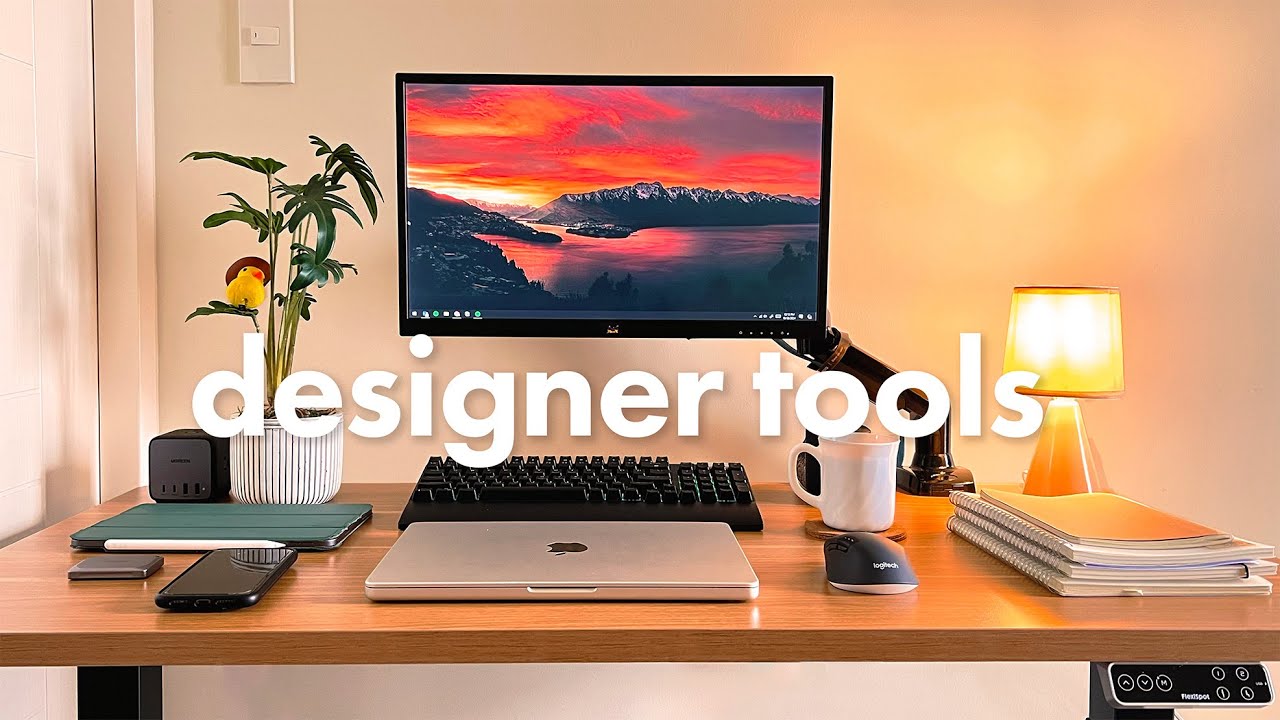
Look at what’s open on a designer’s screen and you’ll usually know which role they hold.
| Tool | Primary Role | Main Use |
|---|---|---|
| Adobe Illustrator | Graphic Designer | Vector logos, print layouts |
| Adobe InDesign | Graphic Designer | Multi-page print layouts |
| Figma | Visual Designer | UI screens, design systems |
| Adobe Photoshop | Shared | Raster image editing |
Graphic Design Software
Adobe still runs this side. Illustrator handles vector work like logos. InDesign is for multi-page layouts, brochures and the like, and Photoshop covers image editing (both roles use it).
Agency work moves fast, so a lot of studios expect new hires to already know the basic Adobe Illustrator shortcuts.
Canva has become a common starting point for junior graphic designers doing lighter marketing tasks. Some senior designers grumble about it. For quick social graphics, it’s fine.
Visual Design Software
Figma, mostly. The 2024 UX Tools Design Tools Survey of 2,220 designers gave it an 82.3% share of the interface design tool market.
Screens get designed right in Figma. Reusable components go into the design system as they’re built, and interactions get prototyped before anything is handed to engineering.
New hires often keep a UI design cheat sheet open for their first few weeks while they learn the shortcuts and layout conventions.
Deliverables Each Role Produces
Job titles can be misleading. The files someone actually produces are a better guide.
A graphic designer turns out logos and brand marks, poster design for events and campaigns, and the physical stuff: brochures, packaging, signage.
A visual designer’s handoff looks different. It’s usually complete UI flows that engineers can build from. Add icon sets that stay consistent across the product, and component libraries, the reusable UI pieces that keep a design system from drifting.
Once a company writes down its brand guidelines, both roles end up working from the same document. They just apply it to different surfaces.
Graphic Designer vs Visual Designer Salary
This is where the data shows the biggest gap.
- Graphic designer median pay: $62,960 per year (U.S. Bureau of Labor Statistics, OEWS, 2025)
- Mean pay for graphic designers is a bit higher, at $70,560 per year (BLS OEWS, 2025)
- At the 90th percentile, graphic designers earn $104,910 per year (BLS OEWS, 2025)
- Visual designer average pay: $97,766 per year, based on job postings from the past 36 months (Indeed, 2026)
Keep in mind the visual designer number comes from job postings, not a government survey, so it’s not a perfect apples-to-apples comparison. The gap still has a clear cause. Visual designer jobs cluster in tech and product companies, and digital-first budgets there usually run higher than traditional marketing or agency budgets.
Graphic designer pay also swings more depending on the setting. A print production job and an in-house brand job can share a title and pay very differently.
Over a career, graphic designer pay climbs steadily from entry level to senior. The big jump usually comes at the creative director step, not the regular promotion to senior designer.
Which Role Should You Hire for Your Project?
Hire for what the project has to produce. Whichever title sounds more senior shouldn’t factor in.
Demand is holding up across company types right now. According to Figma’s State of Design hiring survey, 82% of hiring managers say their organization’s need for designers has increased or stayed steady.
Hiring a Graphic Designer
You get print and digital coverage in one person, and brand or marketing work costs less. They also get up to speed quickly on campaign-style deliverables.
The weak spot is interaction design and usability testing, where most have limited exposure. Some also won’t know the handoff process engineering teams expect. You find that out the first time a developer asks for specs and gets a flattened PNG.
Hiring a Visual Designer
They’re built for product and interface work at scale. Working inside a design system and component library is normal for them, and they speak the same language as product managers and engineers.
Print production knowledge is often thin, though. And in markets where product design salaries run high, they’ll cost you more.
A small team with one marketing site and the occasional print job usually does better hiring a graphic designer first.
Building a software product? Get a visual designer before you get a generalist.
Education and Degree Paths for Each Role
Formal training counts for more on one of these paths than the other.
For graphic design, a BFA or BA in graphic design is still the standard way in, often from a program like RISD, Parsons, or SCAD.
Visual designers come from all over. Some have design degrees, some took human-computer interaction coursework, and plenty got there through self-directed certificate programs.
Bootcamp-style certificates have become a legitimate side door into visual design. Google’s own UX Design Certificate, which explicitly prepares learners for both UX designer and visual designer roles, reports that 75% of graduates land a new job, promotion, or raise within six months of finishing. That’s Google reporting on its own course, so read it the way you’d read any program’s marketing numbers.
Platforms like Coursera, Skillshare, and Domestika fill the gap for designers who want a specific skill without committing to a second degree.
At agencies and publishing houses, a formal degree still carries more weight for graphic designer roles. Clients there often expect to see a traditional design education on a resume.
Career Progression for Each Role
| Level | Graphic Designer Track | Visual Designer Track |
|---|---|---|
| Entry | Junior graphic designer | Junior visual designer |
| Mid | Senior graphic designer | Senior visual designer |
| Senior | Art director | Design lead |
| Top | Creative director | Head of design or VP of design |
On the graphic side, the top of the ladder is usually a leadership role that still deals with visual output directly.
Art directors are the most common next step for a senior graphic designer. They earn a median of $114,850 per year, according to the U.S. Bureau of Labor Statistics OEWS 2025 release for that occupation.
Visual designers who move up tend to end up managing other designers instead of working hands-on in the files.
People switch tracks all the time. It happens most at the senior level, once someone starts picking up brand or product work outside their original lane.
Building a Portfolio for Each Role
Build a portfolio for the wrong role and it gets closed within the first ten seconds.
Graphic Designer Portfolio
- Lead with your three to five strongest brand or campaign projects
- Show one project from start to finish, from the mood board concept through to the finished print piece
- Include at least one packaging or signage example if you’re going after agency work
- Optimize file sizes so the site loads fast when someone reviews it on a phone
Visual Designer Portfolio
- Open with a case study, not a grid of static images
- Walk through the problem, how you worked on it, and the screens that shipped
- Show at least one contribution to a component library or design system
- Link to a live product when you can, not just static mockups
Behance leans toward brand and print-heavy work. Dribbble has more UI and product shots.
Reviewers don’t spend long on any single portfolio. The first project you show carries more weight than the other nine combined.
When the Graphic Designer vs Visual Designer Distinction Does Not Apply
At a company big enough to need both, the split works fine. Everywhere else it falls apart quickly.
A 2026 survey of 1,000 U.S. small business owners, commissioned by Adobe Express, found that 35% personally act as creative director on any given day.
At that size, one person handles the logo and the website, then the social graphics and the pitch deck. Nobody stops to ask which job title technically covers each task.
Titles drift once a company grows past its founding team, too. You’ll see “digital designer” and “brand designer” a lot. There’s also “product designer,” which often covers visual design plus UX research.
The most common mistake here is hiring by title without reading the actual job description.
If a posting says graphic designer but asks for Figma, design systems, and sprint planning, it’s a visual designer role with the wrong title on it.
FAQ on Graphic Designer Vs Visual Designer
Is Visual Design the Same as UI or UX Design?
Not exactly. It overlaps heavily with UI design, and both sit inside UX, which is the broader discipline.
UX also covers research, user flows, and usability testing. Visual design and UI design stay on the surface layer, applying typography, color, and visual hierarchy to the interface.
How Much Overlap Exists Between the Two Roles’ Daily Tasks?
The shared ground is color theory, typography, and layout composition, because the fundamentals don’t change.
Once the output format comes into play, the days look different. One side does print production and static assets. The other does interface design and interactive prototyping.
Can One Person Hold Both Titles and Do Both Jobs?
Yes, and small teams combine the roles all the time.
One designer can cover brand identity and interface work. Quality tends to slip, though, once that person is juggling print production, UI design, and prototyping across several projects at the same time.
What Certifications or Courses Validate Visual Design Skill Specifically?
Google’s UX Design Certificate covers visual design fundamentals along with research and prototyping.
Interaction Design Foundation courses and Adobe certification tracks validate more specific skills. In most hiring decisions a portfolio still counts for more than any certificate.
What Hiring Mistakes Come From Confusing the Two Titles?
The usual one: a company writes a graphic designer job description when what it needs is Figma proficiency, design systems experience, and someone who can work in sprints.
Qualified visual designers skip postings that read like print production jobs. So the applicant pool comes back weak and the hire drags on for months.
How Do You Transition From a Graphic Design Role Into a Visual Design Role?
Get comfortable with grid systems, wireframing, and a tool like Figma before you apply anywhere.
Then rebuild your portfolio around case studies and shipped screens instead of print pieces. Contributing to a design system project is good proof that you can handle product-focused visual work.
What Should You Decide First in Graphic Designer Vs Visual Designer?
Start with where the work will live. Print and brand collateral points to a graphic designer, and on-screen product interfaces point to a visual designer. That one answer shapes the tools, the reporting line, and the pay band.
If it’s still unclear, look at the main output (print or UI screens) and the color mode it needs, CMYK or RGB. Whether the person would report to creative or product leadership usually settles it.
The pay difference at the top of each career is also bigger than the medians suggest.
Graphic designer pay sits at a $62,960 median, while art director pay clears $114,850. That’s a $51,890 gap that neither figure shows on its own, because the BLS files the two under separate occupation codes.
If the role you have in mind leans toward research and interaction work, the comparison you want is graphic designer vs UX designer.

Renowned for his expertise in logo design and visual branding, Bogdan has developed a multitude of logos for various clients.
His skills extend to creating posters, vector illustrations, business cards, and brochures. Additionally, Bogdan's UI kits were featured on marketplaces like Visual Hierarchy and UI8.
He also wrote in the past years on sites like Design Your Way, WebDesignerDepot, WPDean, Designmodo, Speckyboy, Slider Revolution, and more.
- The Windsurf Logo History, Colors, Font, And Meaning - 10 October 2026
- How to Remove Background From Product Photos (No Photoshop) - 10 October 2026
- How Designers can Build a Stronger Online Creative Identity - 9 October 2026

Bogdan Sandu is a seasoned designer who has been designing websites since 2008. Renowned for his expertise in logo design and visual branding, Bogdan has developed a multitude of logos for various clients. His skills extend to creating posters, vector illustrations, business cards, and brochures. Additionally, Bogdan's UI kits were featured on marketplaces like Visual Hierarchy and UI8. He also wrote in the past years on sites like Design Your Way, WebDesignerDepot, WPDean, Designmodo, Speckyboy, Slider Revolution, and more.
You Might Also Like


